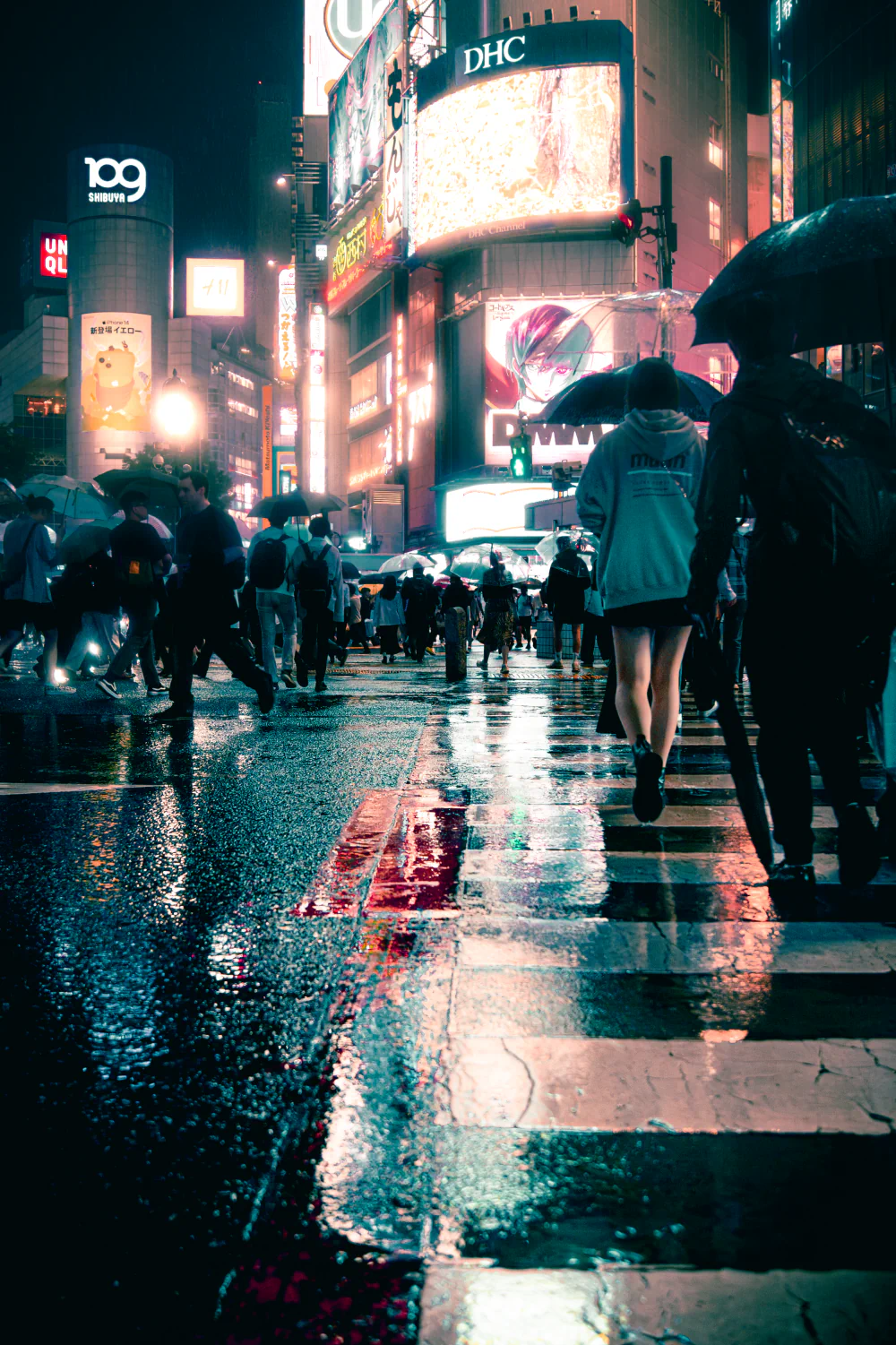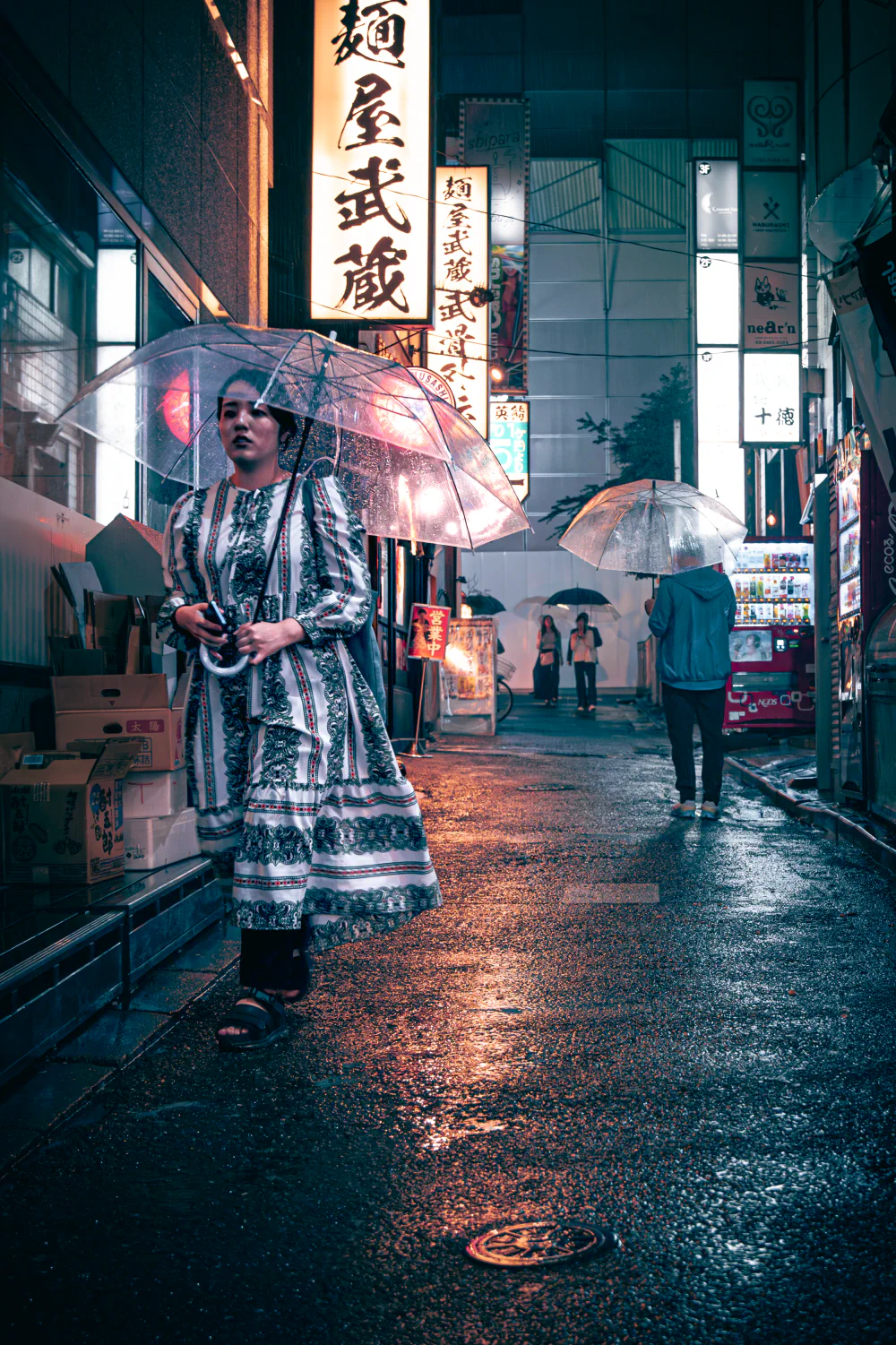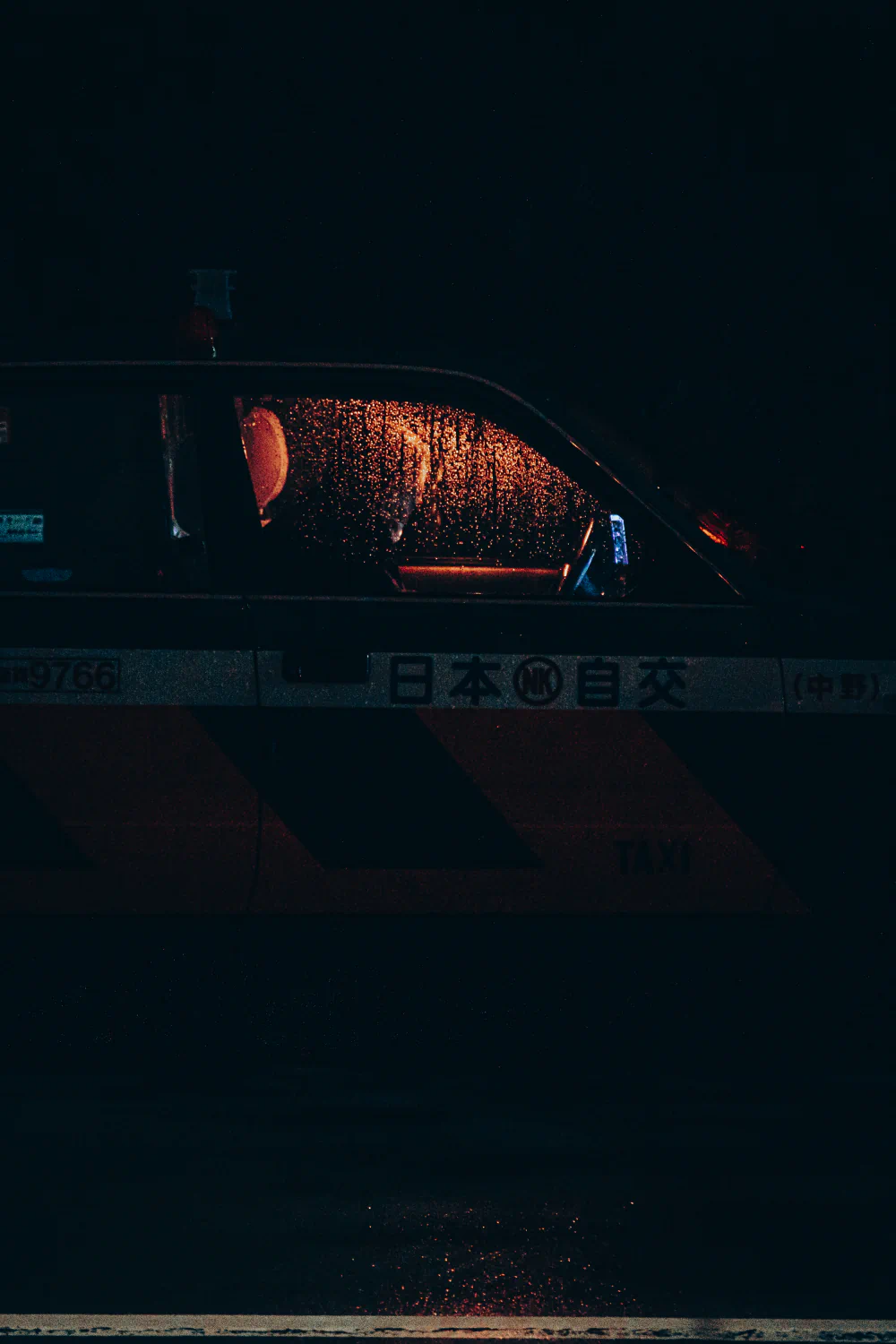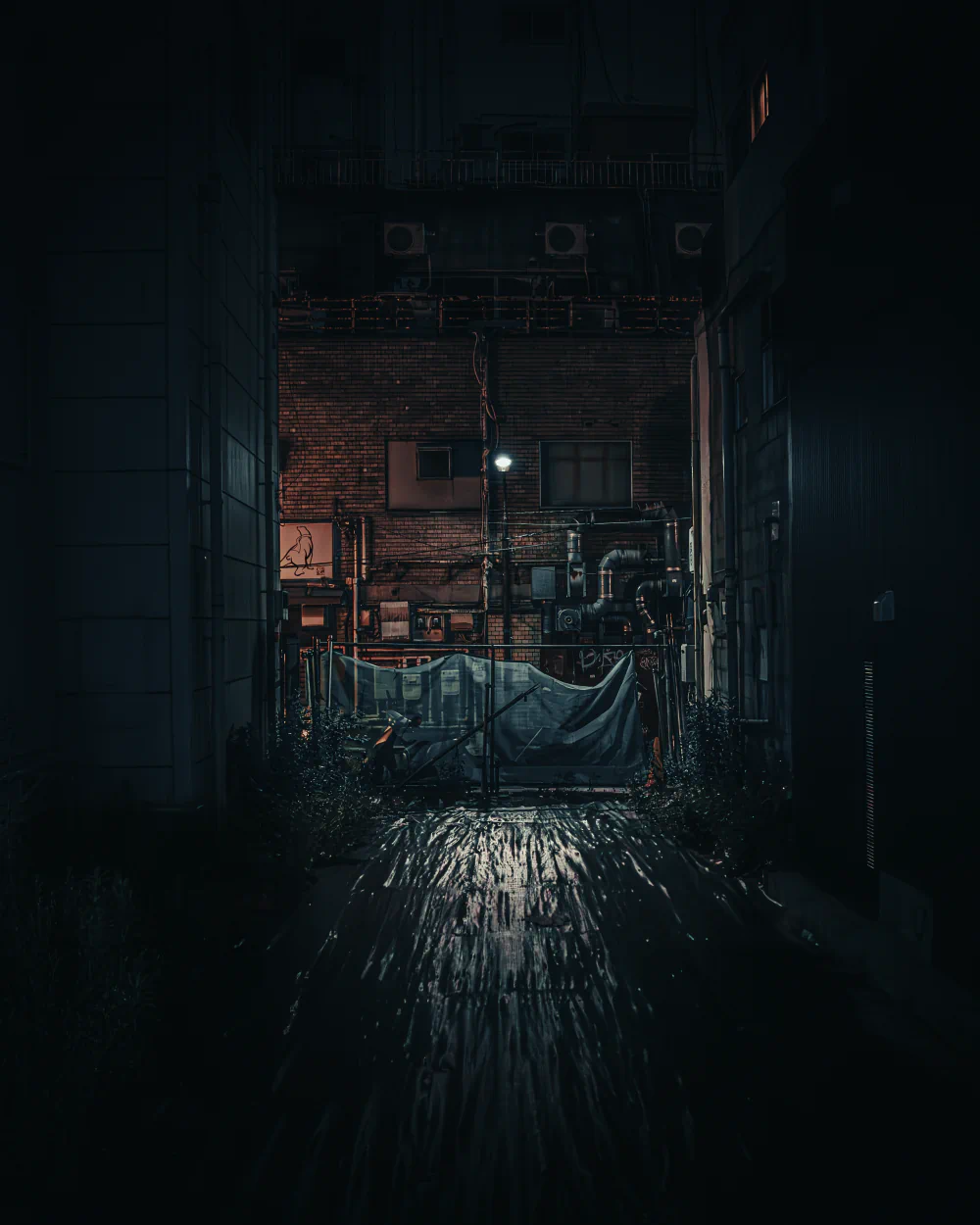

Moving through Japanese cities after dark reveals a landscape shaped as much by absence as by illumination.
In In the Shadow of Neon, light fragments the urban environment, while darkness invites speculation about what remains unseen.
Japan occupies a peculiar position in the Western imagination. It is a society that feels closely related to the West, yet remains fundamentally different in how it organizes space, behavior, and daily life. Walking through its cities can feel like moving through a parallel universe, one in which Western modernity has been reassembled according to another internal logic. This tension between familiarity and alienation forms the conceptual backbone of In the Shadow of Neon.
The project originates from my first visit to Japan in 2017. At the time, photography was not the primary purpose of the trip. I carried a camera almost incidentally, without a clear intention to produce a coherent body of work. Only after immersing myself in the urban environment did I begin to recognize how visually charged these cities were: their density, the rhythm of movement, the omnipresence of artificial light, and the particular way darkness operates within public space. That initial encounter laid the foundation for a more deliberate photographic project, later refined through subsequent visits. In the Shadow of Neon represents the third visit and the most focused articulation of that sustained investigation.
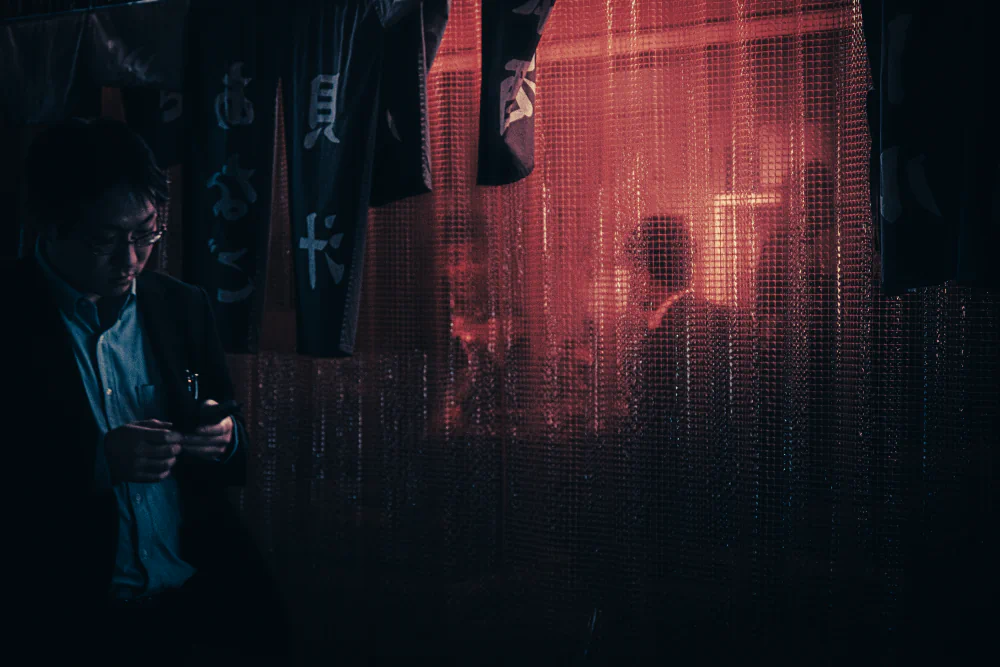
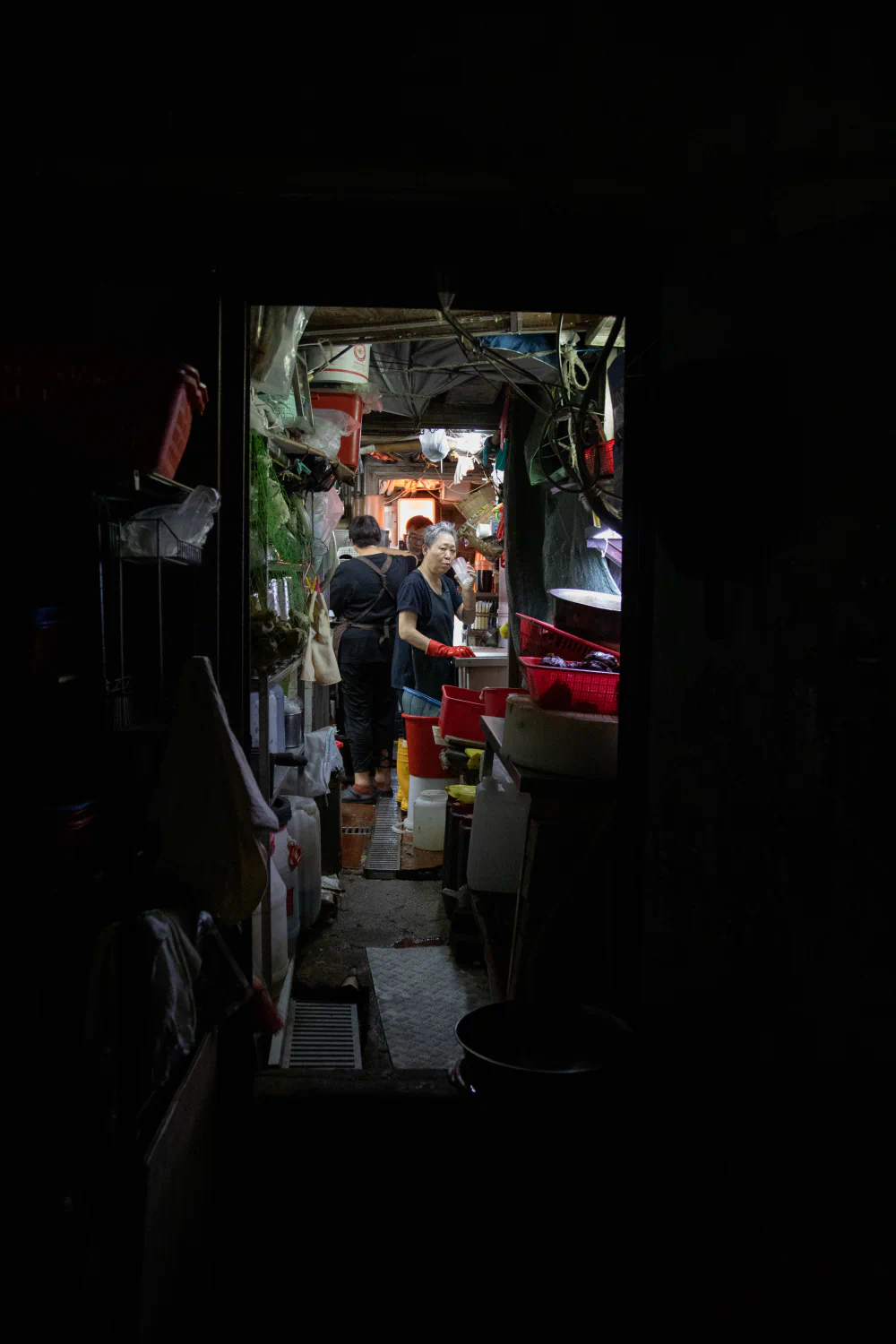
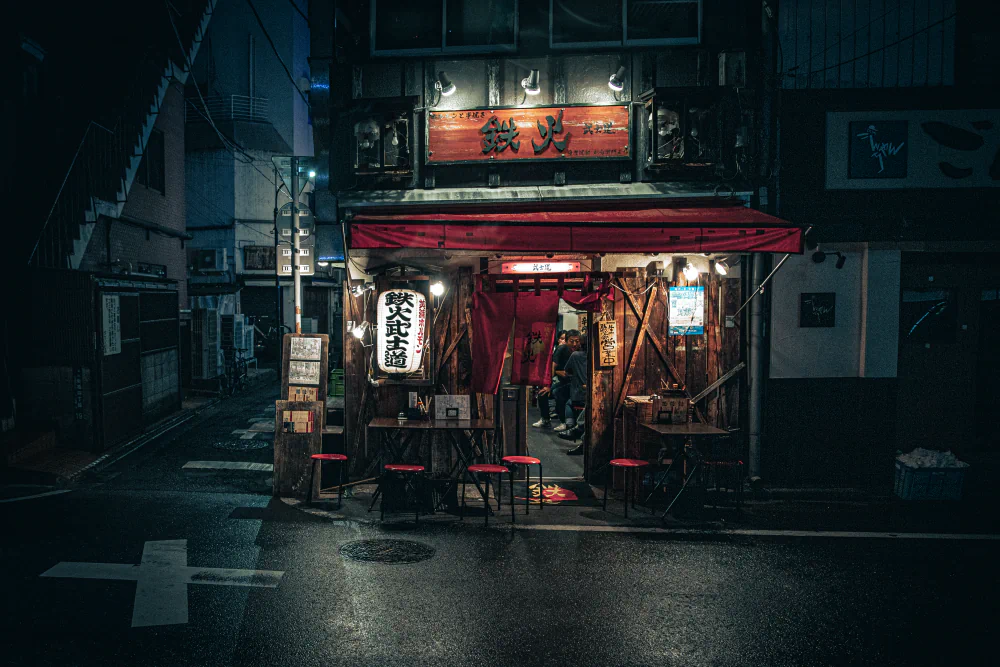
The series aims to strengthen and clarify themes that have guided my earlier work, particularly the interplay between darkness and light, and the coexistence of strict compositional control with visual chaos. The images are predominantly made during the darker hours, when the city reveals a different structure, one shaped less by architecture and more by illumination. Neon signs, illuminated windows, reflections on wet pavement, and isolated light sources fragment the urban landscape into distinct visual planes. What becomes visible is selective and incomplete; what remains hidden gains equal importance.
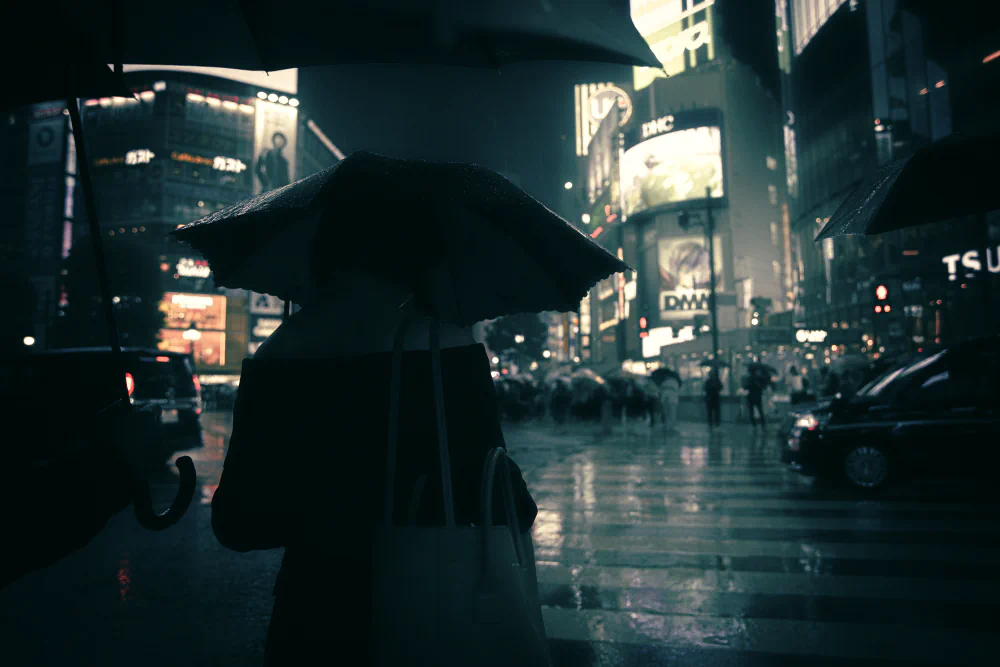
Darkness in this work functions not merely as an absence of light, but as an active visual and narrative element. It obscures information, limits perception, and invites the viewer to speculate about what lies beyond the illuminated surfaces. This reliance on suggestion draws from cinematic language, particularly the use of shadow in suspense and noir films, where meaning often resides in what is withheld rather than what is fully revealed. In In the Shadow of Neon, the viewer is encouraged to slow down, to dwell in uncertainty, and to question what the eye fails to register.
While the work can be situated within the tradition of street photography, it deliberately distances itself from the genre’s more conventional emphasis on decisive moments or explicit human interaction. Human presence is frequently indirect, glimpsed through silhouettes, reflections, or implied through traces left behind. The city itself becomes the primary subject: its surfaces, clutter, signage, and apparent randomness. Within this visual noise, I search for moments where disorder resolves into structure through framing, contrast, or repetition. The images do not deny chaos; instead, they attempt to reveal its latent coherence.
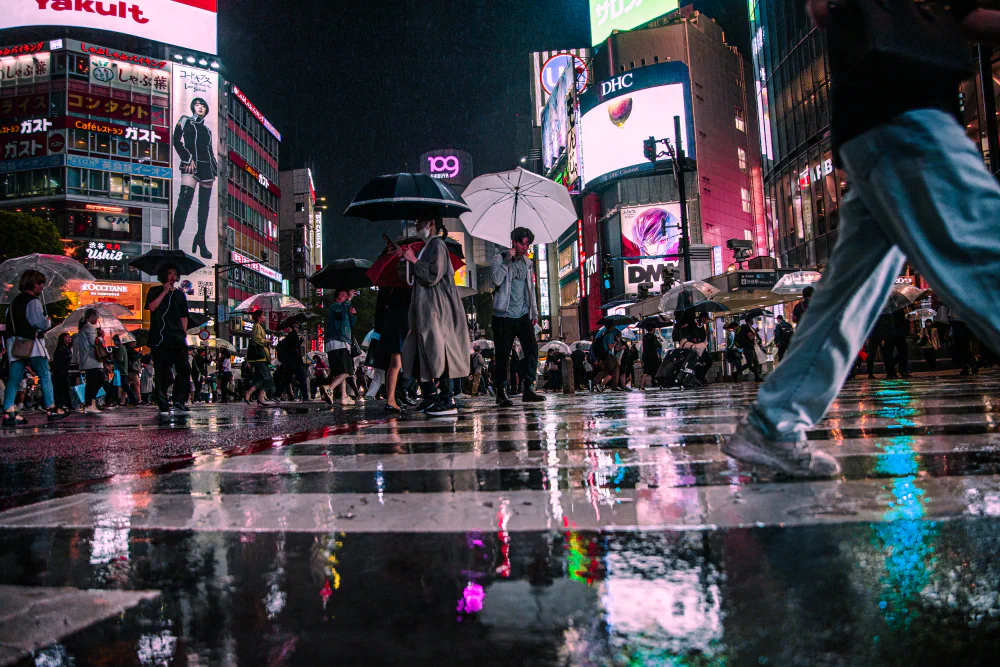
Color plays a critical role in shaping the atmosphere of the series. The irradiating glow of neon light cannot be reduced to monochrome without losing much of its spatial and emotional resonance. Color here is functional rather than ornamental: it defines depth, separates visual layers, and reinforces mood. Reds, blues, and greens interact with darkness to create an immersive nocturnal environment, mirroring the experience of moving through the city after nightfall.
My photographic approach balances intuition with a clearly defined conceptual framework. Although the underlying themes guide the work, the act of photographing remains responsive and open. Images are discovered rather than staged, allowing for chance encounters and unexpected alignments within the urban fabric. This intuitive process ensures spontaneity, while the conceptual structure maintains coherence across the series.
Being a non-Japanese photographer is a significant aspect of the project. Approaching these environments as an outsider allows for a neutral, unconditioned way of seeing, less informed by habit and more driven by observation. Rather than attempting to describe or define Japan, In the Shadow of Neon reflects my personal experience of navigating its cities, shaped by distance, curiosity, and visual attraction.
The final selection of images was guided by the pursuit of variation within constraint. Each photograph contributes something distinct, while remaining anchored to the overarching themes of light, darkness, and urban disorder. The series does not seek to explain, but to suggest, inviting the viewer into a nocturnal landscape where meaning emerges gradually, in the space between illumination and shadow.
About Ties van Brussel
Ties van Brussel is a Dutch street photographer whose work focuses on urban environments in East Asia, particularly Japan and Hong Kong. His photographs explore the relationship between light, darkness, and spatial disorder within densely built cities, often made during nighttime hours. He approaches street photography with an intuitive yet concept-driven methodology, emphasizing atmosphere and suggestion over explicit narrative. Van Brussel has participated in several group exhibitions across Europe and the United States. [Official Website]