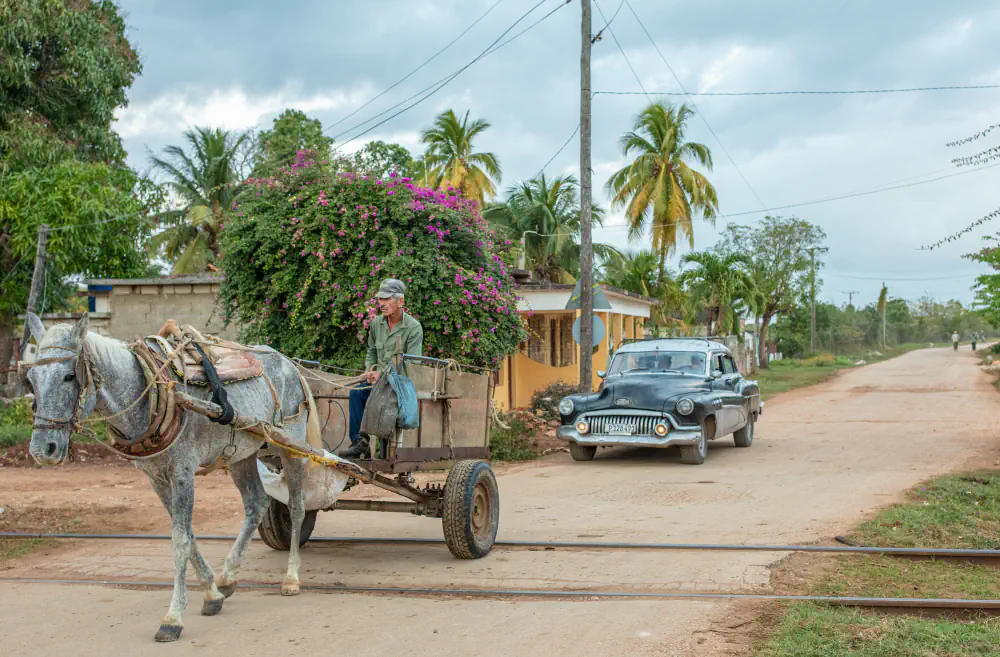

The photographs most often made in Cuba are easy to recognize.
Vintage American cars. Colonial architecture. Revolutionary murals. Buildings marked by time, climate, and necessity.
The visual language is so familiar that viewers can identify the country before reading the caption.
Those photographs are not wrong. They are simply incomplete.
What interested me was not what Cuba looked like, but how people lived within it.
Over several weeks traveling through Havana, Cojímar, Remedios, Caibarién, Topes de Collantes, and Trinidad, I found myself paying less attention to the symbols that have come to define Cuba and more attention to the spaces between them. The places where life was actually happening.
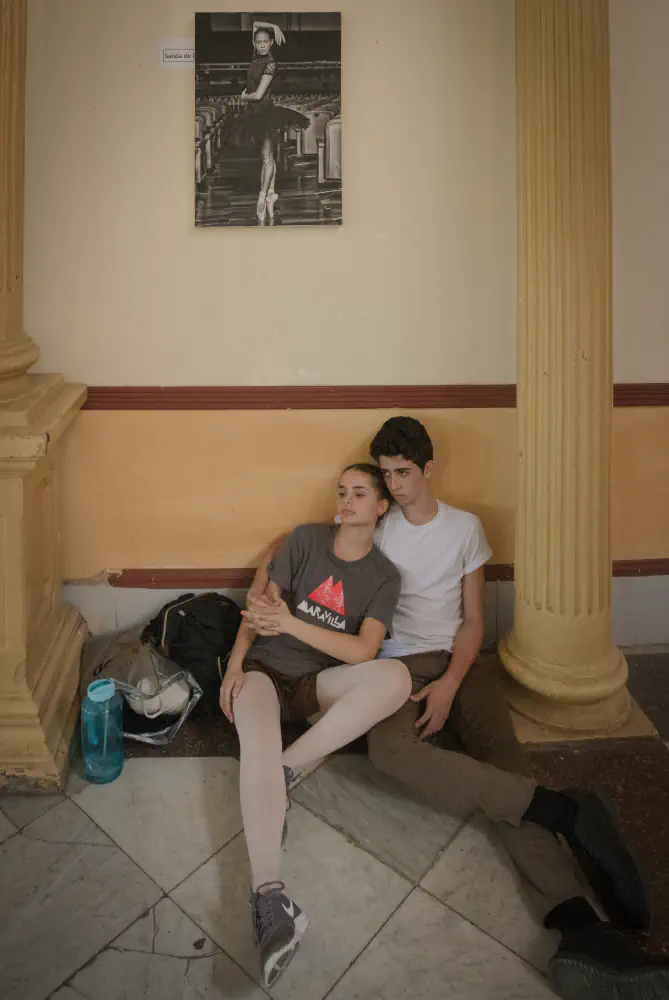
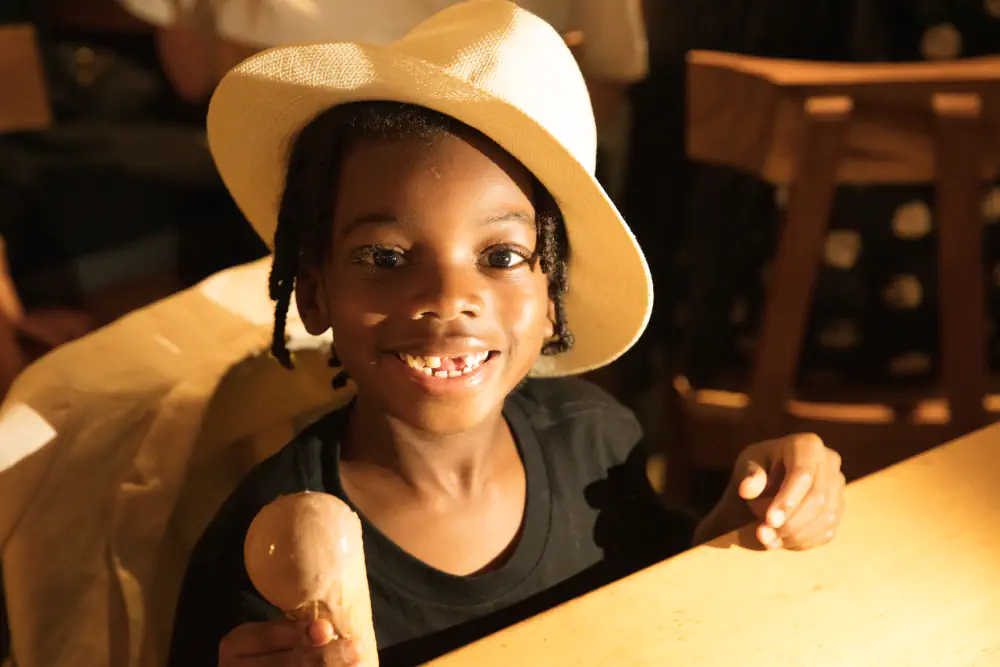
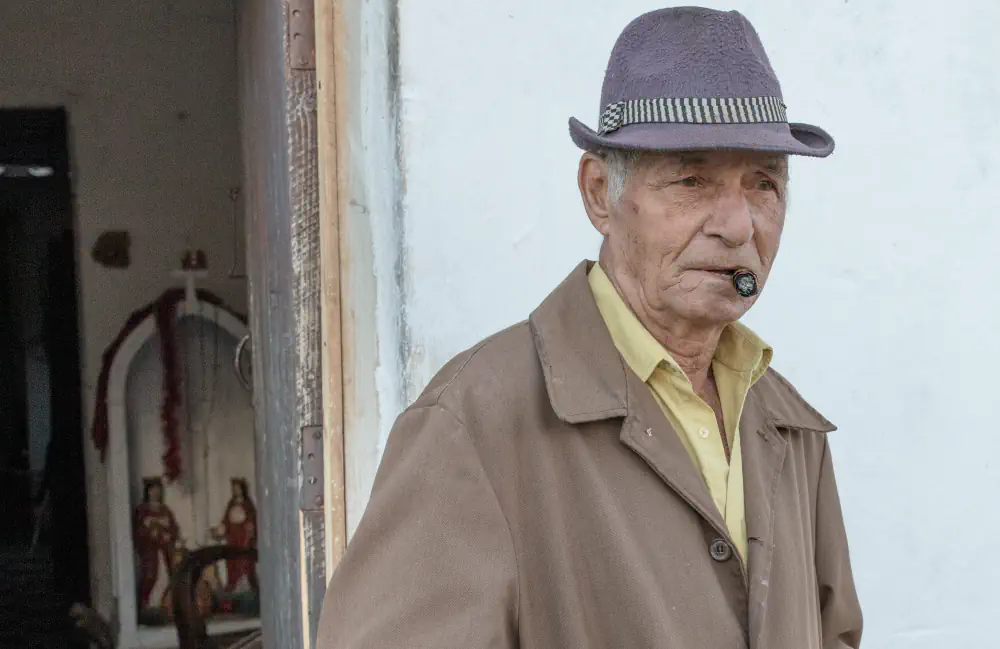
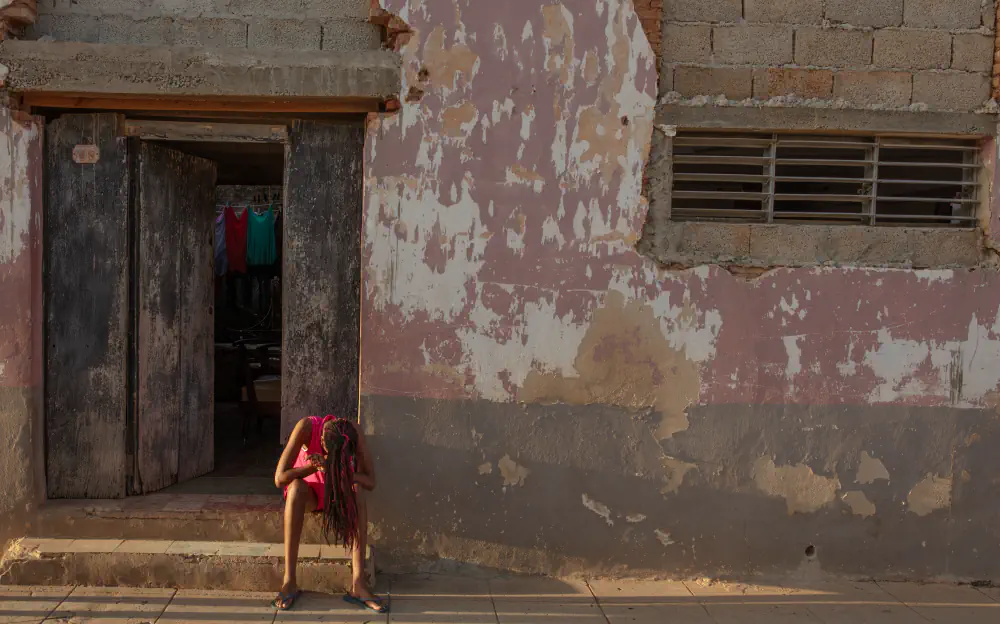
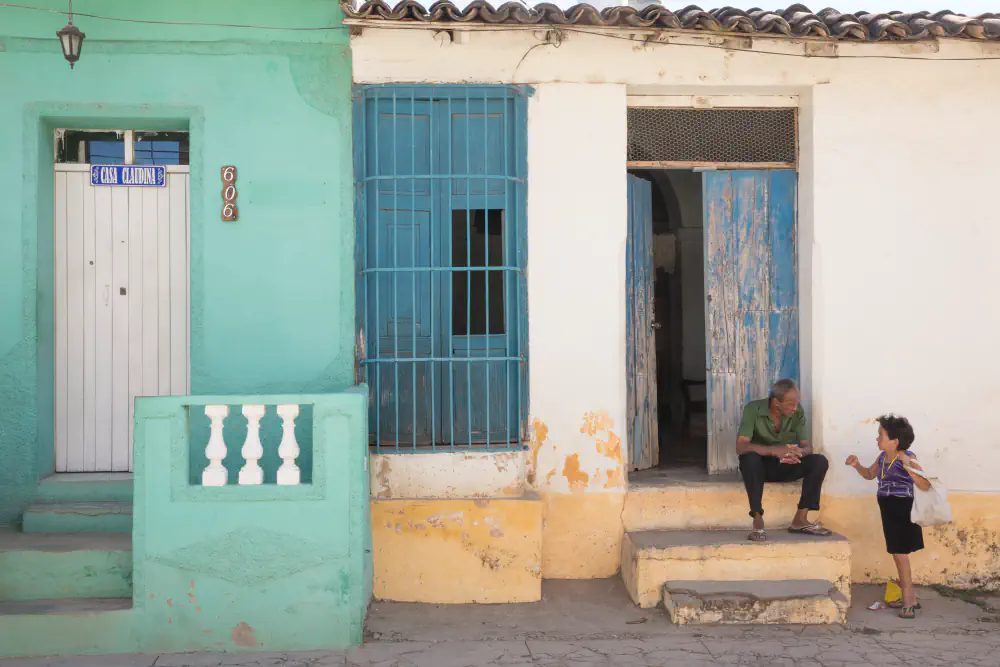
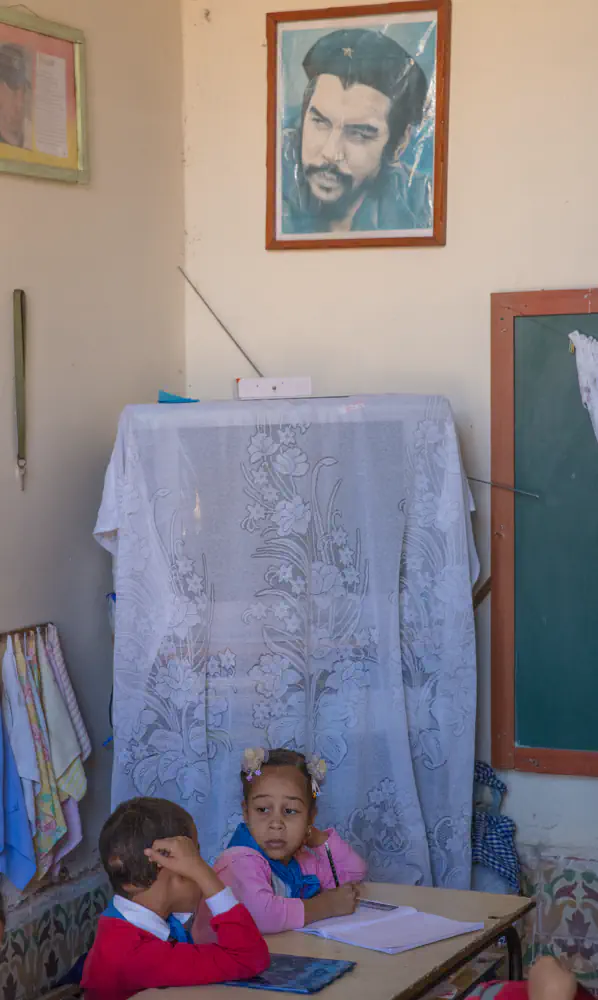
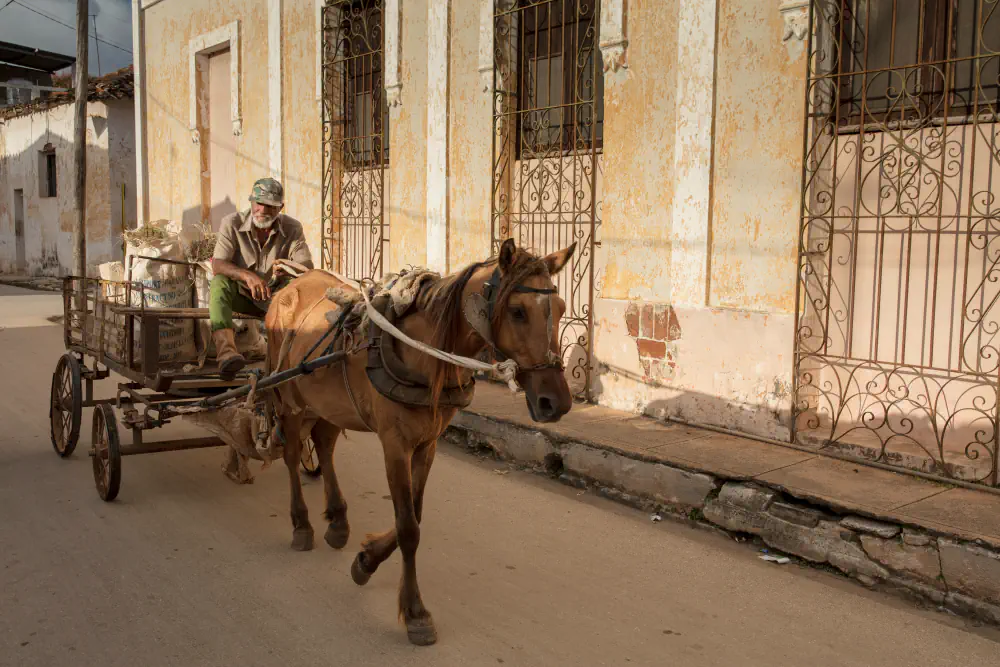
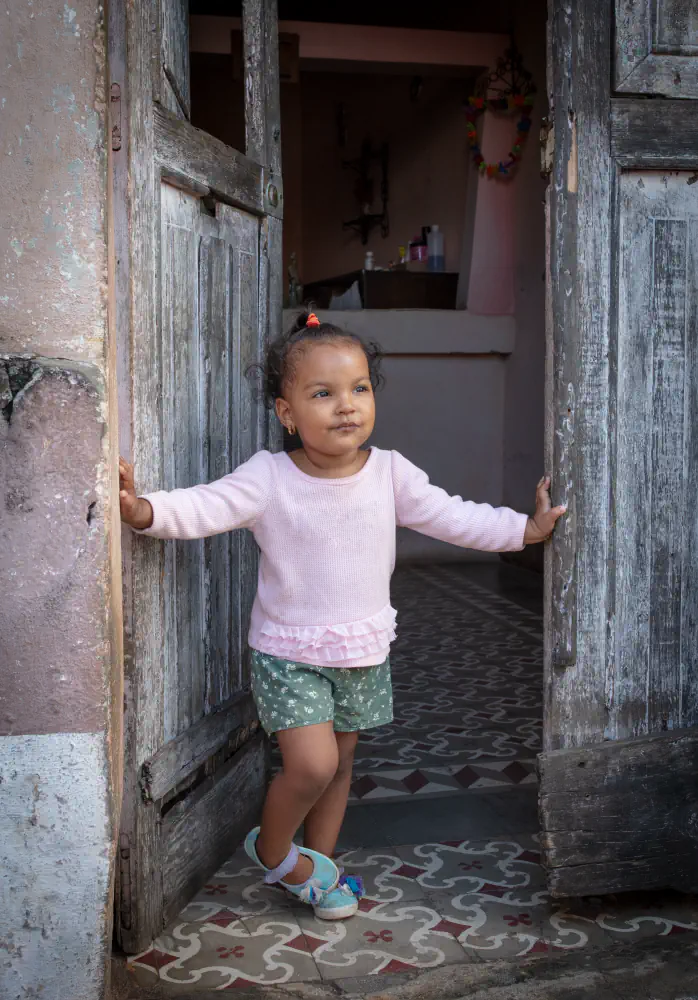
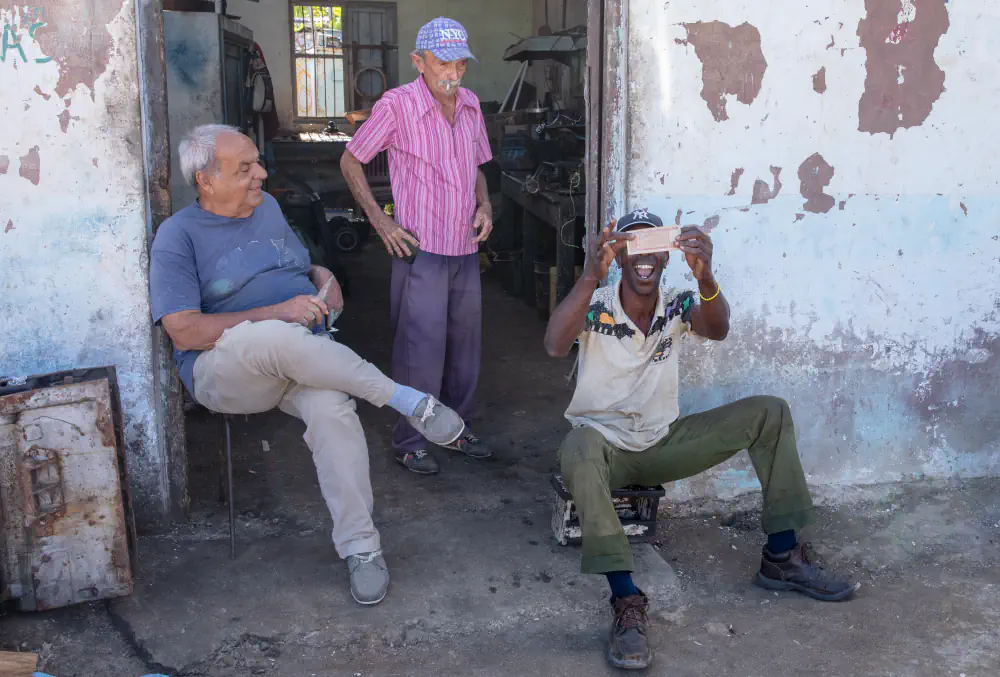
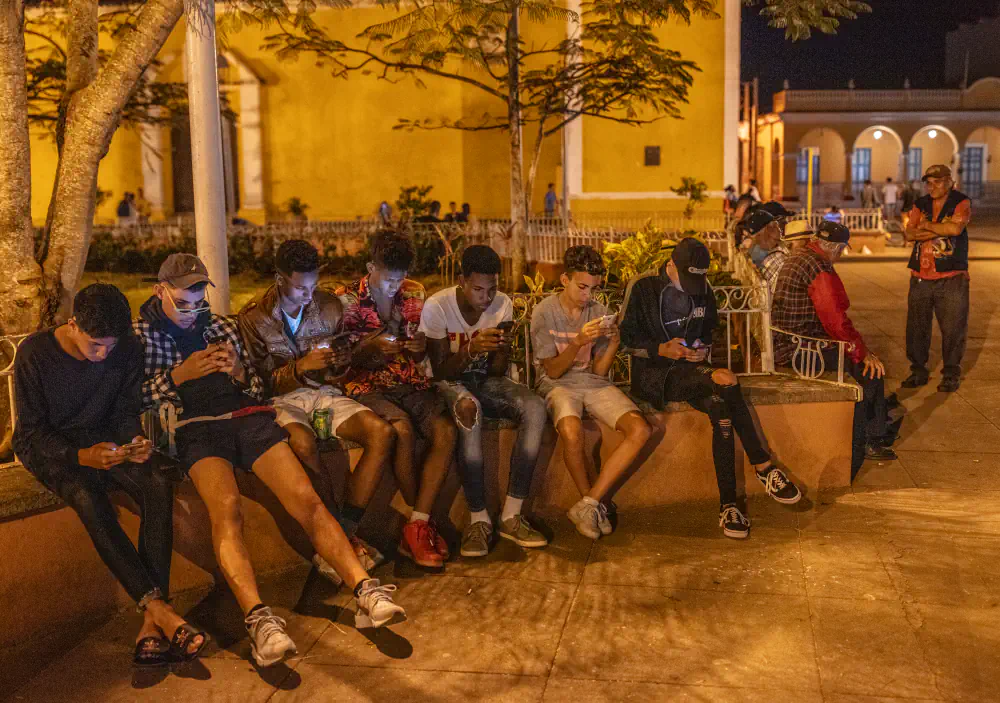
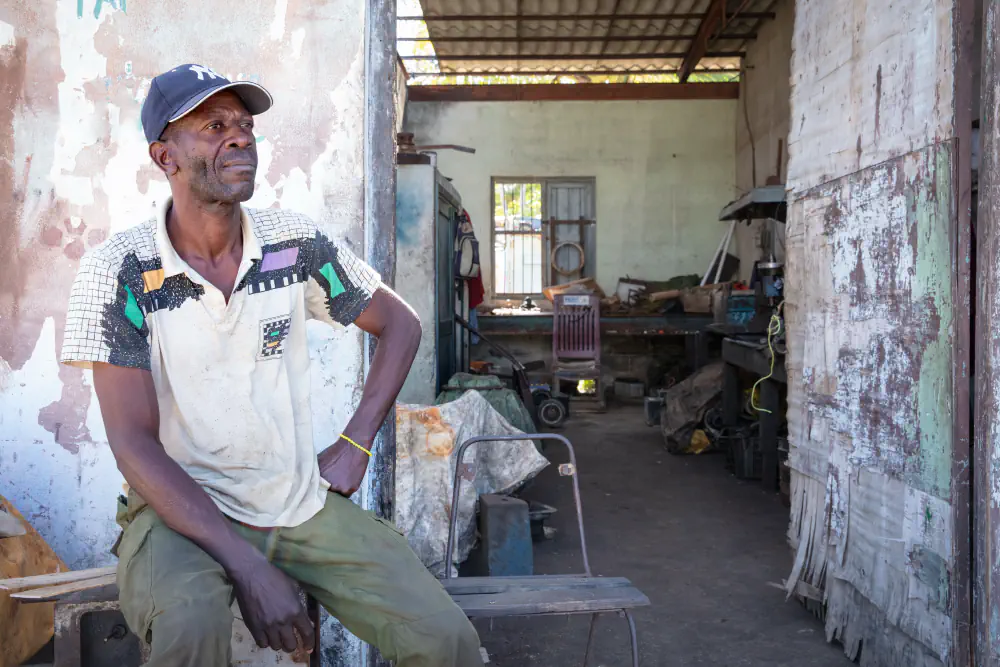
An older man sitting outside his home. A young girl turning a sidewalk into a stage. Teenagers gathered in a square, illuminated by the glow of their phones. Children sitting beneath a portrait of Che Guevara. A woman framed by a doorway. Men talking in a garage. Nothing extraordinary is taking place.
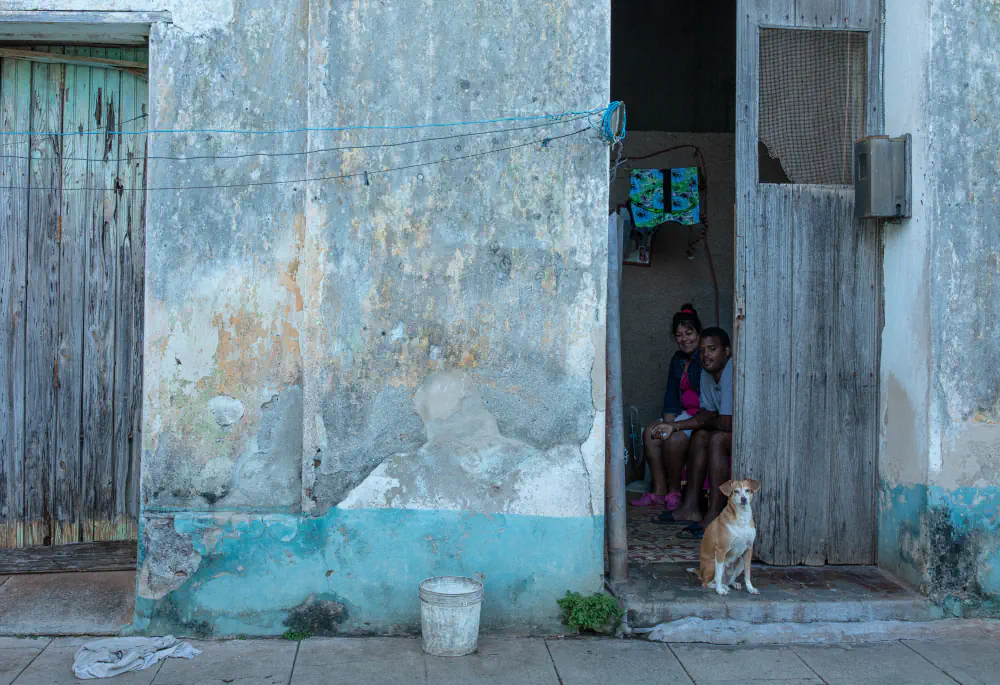
Yet these moments reveal something larger than any landmark or political slogan. They reveal a society in which people remain visible to one another.
In much of the developed world, daily life has steadily retreated indoors. We move from houses to cars to offices to screens. We communicate constantly, yet often know very little about the people who live beside us. Public space has become a place of movement rather than a place of encounter.
Cuba feels different.
Not because it exists outside the modern world. Smartphones are everywhere. Teenagers scroll through the same feeds and consume the same culture as their peers across the globe.
But much of life still unfolds in public view.
People sit outside. They watch. They wait. They talk. They notice one another.
That visibility became the subject of this work.
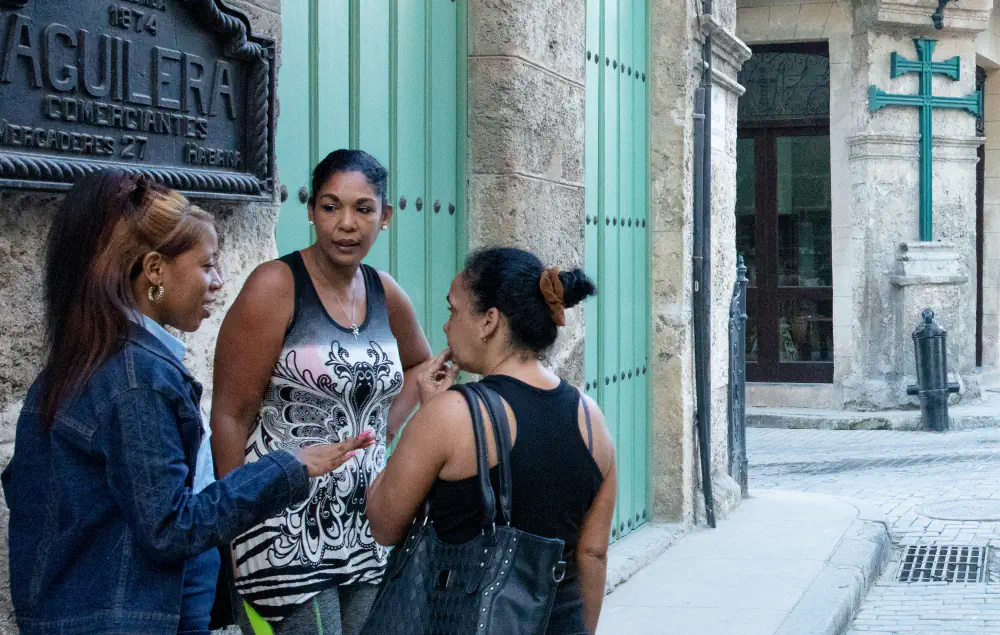
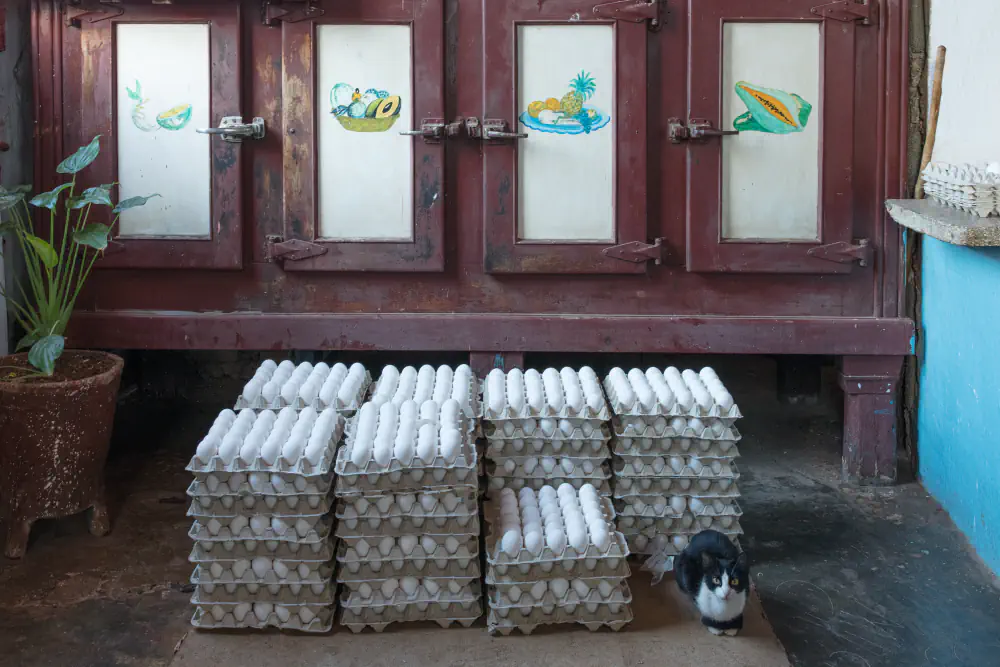
Much has been written about Cuba’s economic challenges. The effects of the U.S. embargo, chronic shortages, limited resources, and decades of economic stagnation are visible throughout the country. Buildings are continually repaired. Vehicles remain in service long beyond their intended lives. Everyday tasks often require ingenuity, patience, and adaptation.
These realities shape daily existence. But they do not fully define it. What interested me was a paradox.
Economic scarcity has not necessarily produced social scarcity.
In many affluent societies, prosperity has delivered extraordinary benefits: longer lives, greater comfort, more freedom, more opportunity. Yet it has also enabled a kind of separation. We can live entire days without meaningful contact with the people around us. We can know hundreds of people online while remaining strangers to our neighbors.
The photographs kept pulling me back to the same question:
What do human beings actually need?
The modern world tends to answer with more choices, more convenience, more efficiency.
The people in these photographs suggest another answer. They suggest that human beings need one another. Not abstractly. Physically. Regularly. In the same spaces.
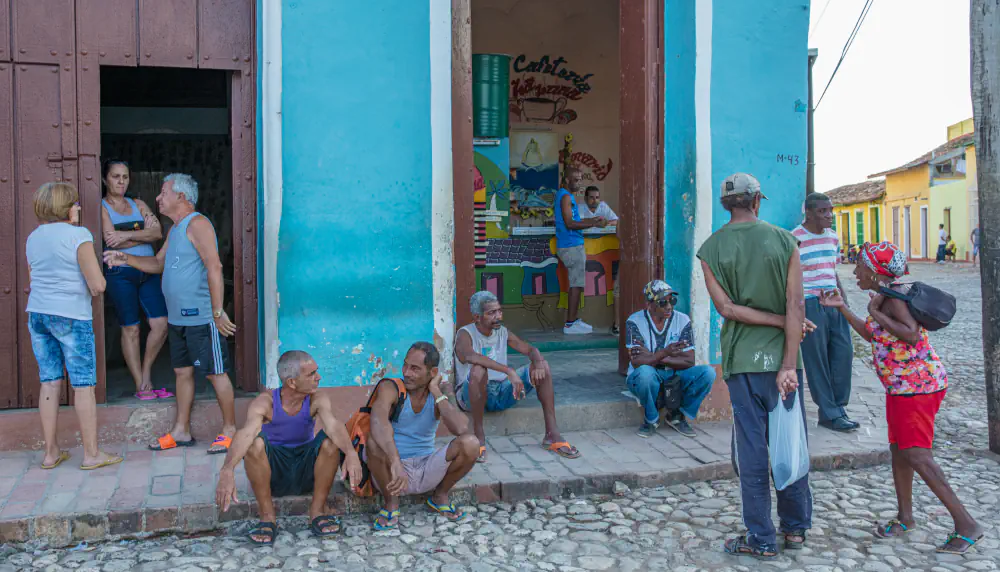
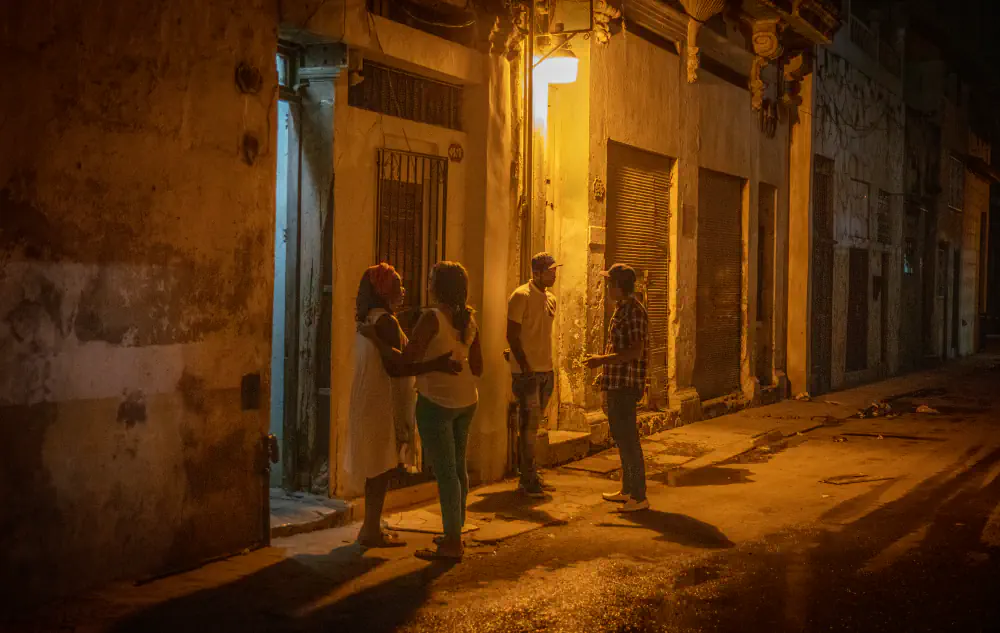
Again and again, I found myself photographing thresholds: doorways, porches, windows, garages, sidewalks. Places that were neither fully private nor fully public. Places where people remained connected to the life around them.
An older man watching the street. A woman leaning against a gate. Children moving freely between home and neighborhood. Teenagers gathering simply because there was nowhere else they needed to be.
These are ordinary moments.
Yet the older I become, the less convinced I am that ordinary moments are ordinary.
They are where life actually happens.
Not in the milestones we remember, but in the thousands of small interactions that make belonging possible.
The photographs in this essay are not an argument for romanticizing hardship. No one should confuse economic limitation with virtue. Cuba faces real challenges, and the people who live there carry burdens that are often invisible to visitors.
But the work does raise a question.
What have we gained in exchange for modern life?
And what have we quietly given up?
Long after I stopped thinking about the cars, the buildings, and the politics, I kept thinking about the people sitting outside.
Watching. Talking. Being present to one another.
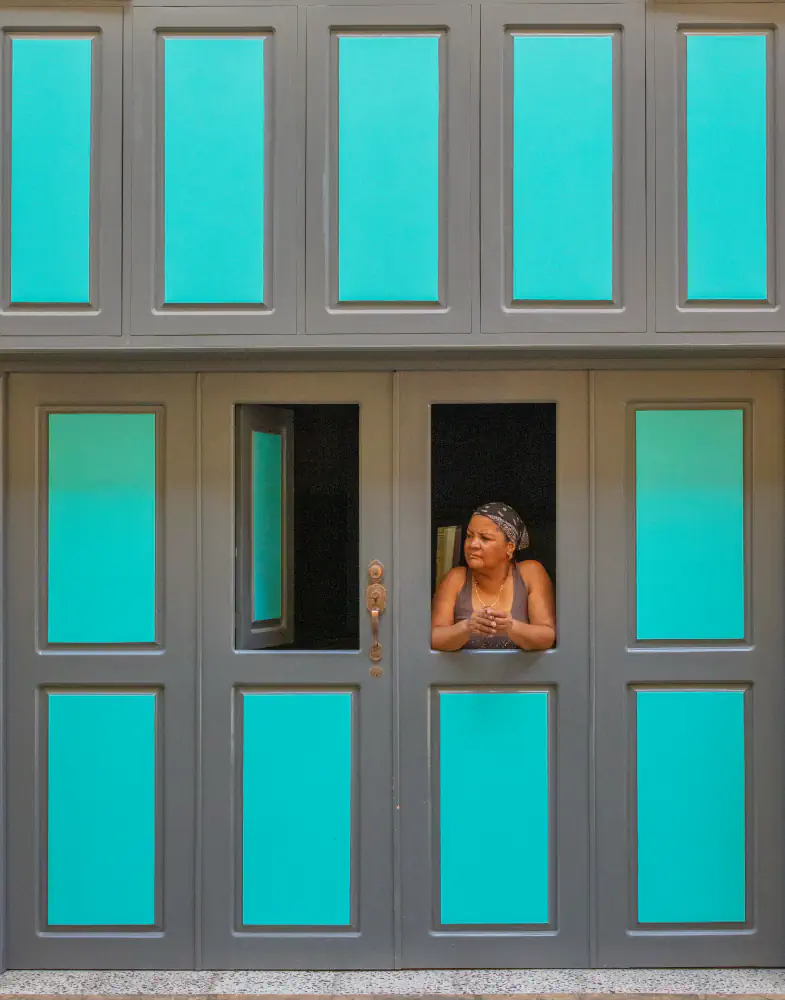
The future we have been promised is built on speed, efficiency, privacy, and endless connection.
Yet the thing human beings may need most cannot be delivered by any of them.
We need to be seen. Not by an algorithm. Not by an audience. By other people.
Perhaps that is why these moments stayed with me.
Because beneath the history, beneath the economics, and beneath the narratives that have long defined Cuba, I encountered something increasingly rare:
A society where people still have time for one another.
And in the end, that may be a form of wealth we have learned to undervalue.
About Donald Graham
Donald Graham is an internationally acclaimed portrait, fashion, and fine art photographer whose work is recognized for its rare emotional intensity, psychological depth, and unwavering commitment to authenticity. Across more than four decades, he has created a body of work that moves seamlessly between editorial photography, commercial photography, and fine art, while remaining singularly focused on the human condition. His portraits are distinguished by their ability to reveal not only the outward presence of a subject, but also the interior life beneath the surface: the vulnerability, resilience, and complexity that define human experience. His photographs are held in the permanent collections of major institutions, including The Metropolitan Museum of Art, the Detroit Institute of Arts, and the International Center of Photography.
Born in the United States, Graham began his career in Paris, where he quickly established himself within the world of high fashion photography. The discipline and sophistication of the Parisian fashion scene shaped his technical precision and visual sensibility, but his artistic instincts ultimately drew him beyond the constructed elegance of fashion imagery toward portraiture rooted in emotional truth. After relocating to New York and later to Los Angeles, he expanded his practice to include editorial portraiture, advertising, celebrity photography, and deeply personal fine art projects.
Throughout his career, Graham has photographed for many of the world’s most influential publications, including Vogue, Vanity Fair, Sports Illustrated, and Time, while also creating campaigns for Fortune 500 companies across multiple industries. Yet even within the demands of commercial work, Graham has maintained a distinct visual language, one defined by intimacy, precision, and an insistence on revealing something genuine.
His artistic vision has been profoundly shaped by extensive travel. Graham has worked in more than sixty countries across Europe, Asia, Africa, Latin America, and the Caribbean, photographing in places as diverse as India, Tibet, Senegal, Madagascar, Morocco, and Jamaica. These experiences deepened his understanding of portraiture as a universal language and reinforced his belief that, regardless of culture or geography, the face carries an unspoken narrative. Across borders and circumstances, Graham has sought to capture the emotional truths that connect people to one another.
At the core of his practice is a deeply collaborative approach to portraiture. Graham often speaks of seeking “the stories told in a person’s face,” and his process depends on creating an atmosphere of trust that allows subjects to move beyond performance and self-consciousness. Whether photographing internationally known cultural figures or individuals encountered by chance during his travels, he works to reveal moments of unguarded presence, those fleeting instances when the mask falls away and something essential emerges.
This philosophy is powerfully embodied in his landmark monograph, One of a Kind, published by Hatje Cantz, a collection of one hundred black-and-white portraits that brings together celebrated figures such as Snoop Dogg, Frances McDormand, and Steven Tyler alongside anonymous individuals encountered around the world. The project was inspired by a formative portrait of his mother following her battle with multiple sclerosis and a devastating stroke. Though physically diminished, she radiated extraordinary dignity and grace. That experience became the emotional foundation of Graham’s work, shaping his lifelong commitment to photographing with compassion, reverence, and honesty.
His work has been exhibited internationally and is represented by galleries including A Galerie in Paris and Edition One Gallery in Santa Fe. He also played a significant role in shaping contemporary conversations around artists’ rights through his successful copyright case against Richard Prince and Gagosian Gallery, securing a landmark legal victory that affirmed critical protections for photographers in the digital age.
Now based in Los Angeles and Taos, New Mexico, Graham continues to create work that explores identity, presence, and the profound individuality of the people he photographs. Across every image runs the same guiding intention: to illuminate the humanity that exists beneath appearance and to create portraits that endure not because of who is pictured, but because of what is revealed. [Official Website]