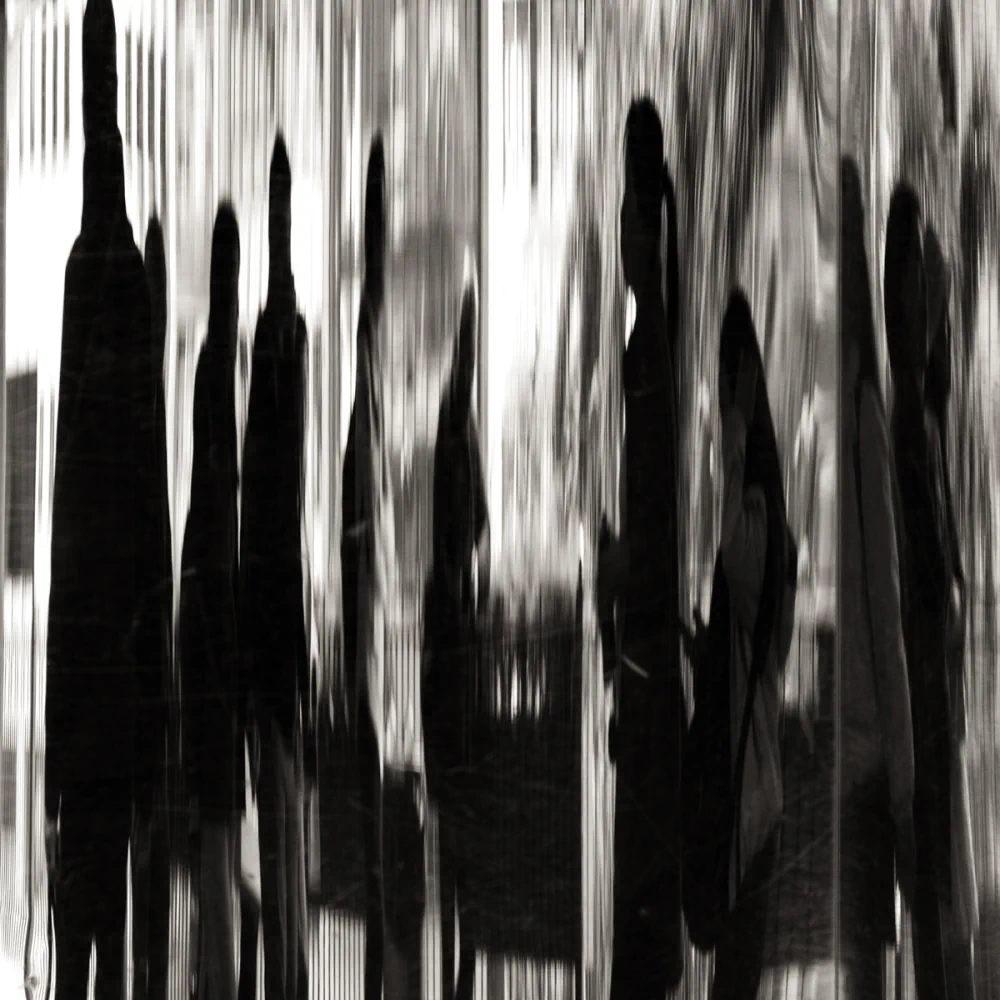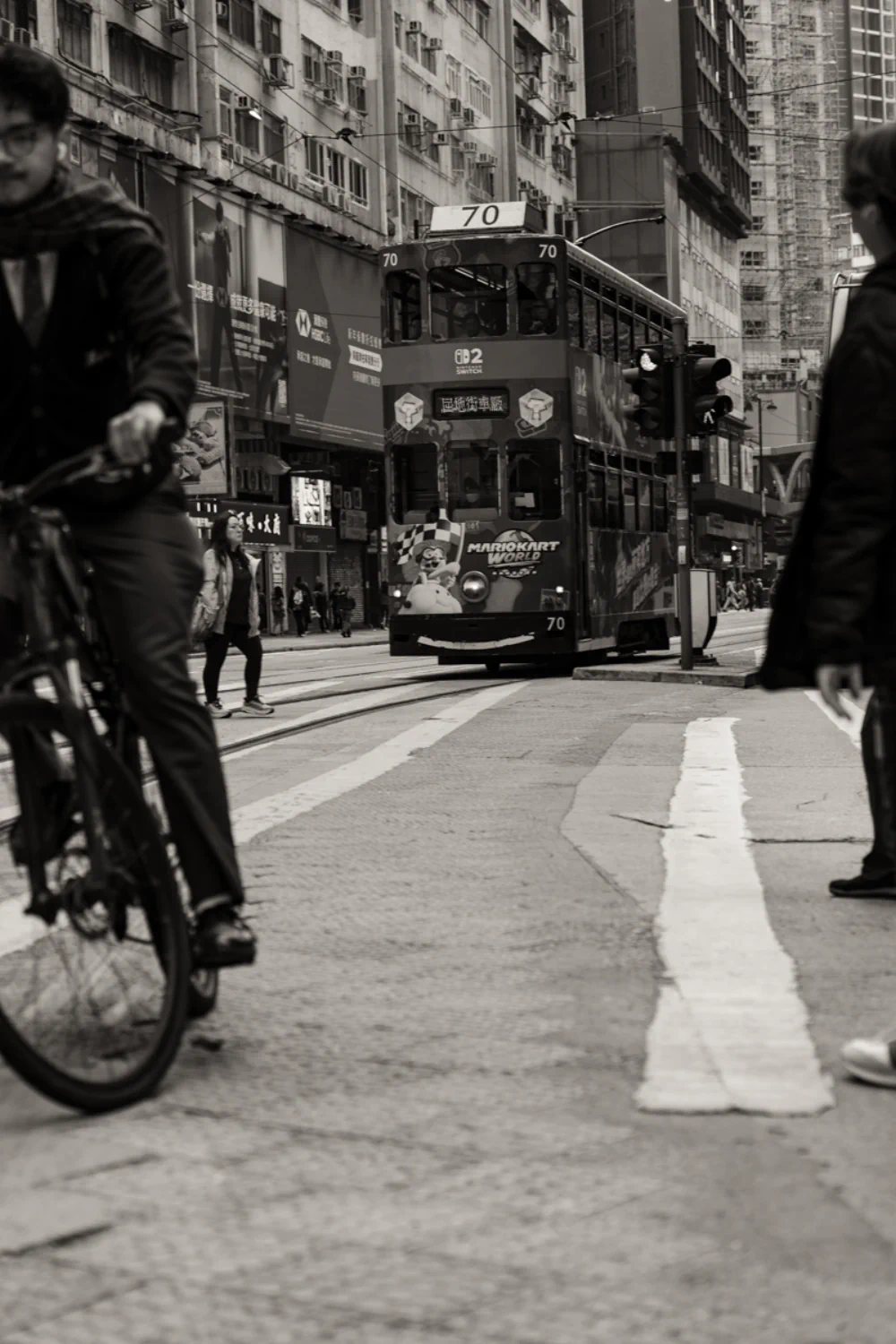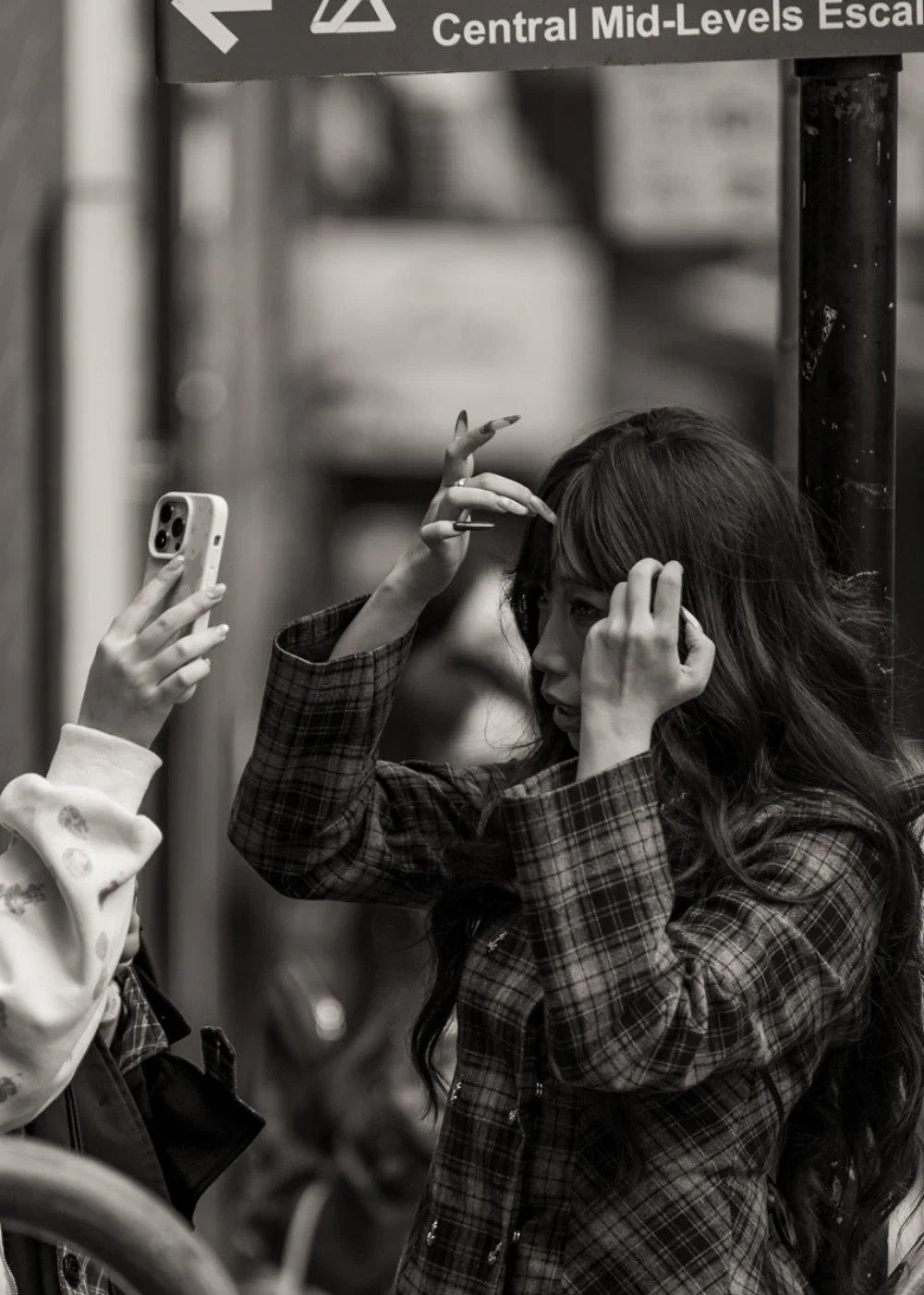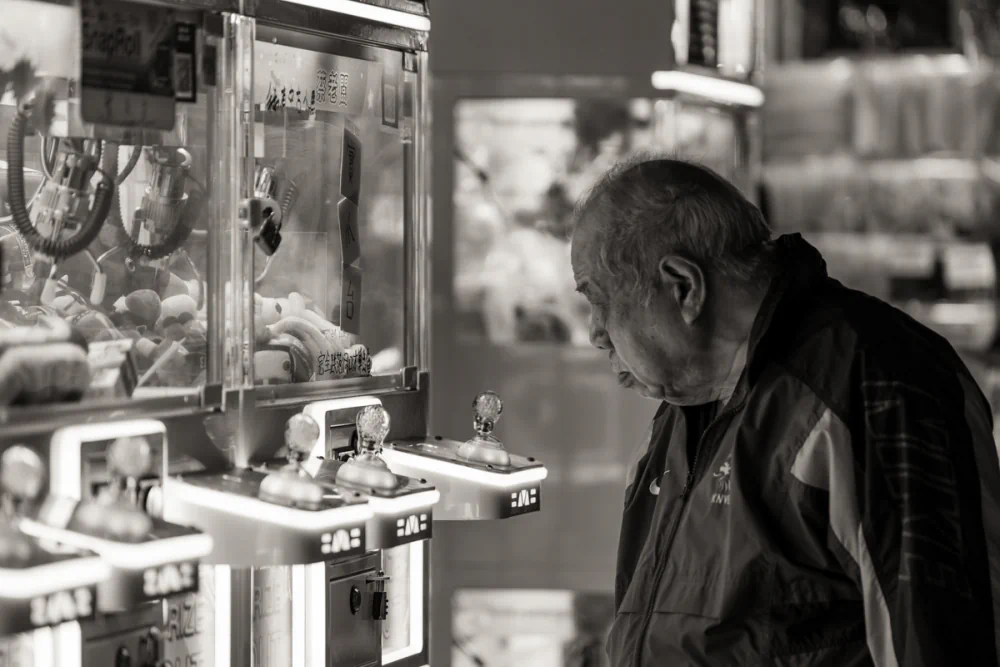

This collection, “Fragments of Life”, brings together images from his third visit to Hong Kong, a city that appears to be the same vertical, hyper-dense labyrinth on the surface, yet feels very different through the lens.
His first two trips were separated by roughly seven years, each time traveling as a tourist with a wide-angle camera, eager to capture the city’s most obvious landmarks.
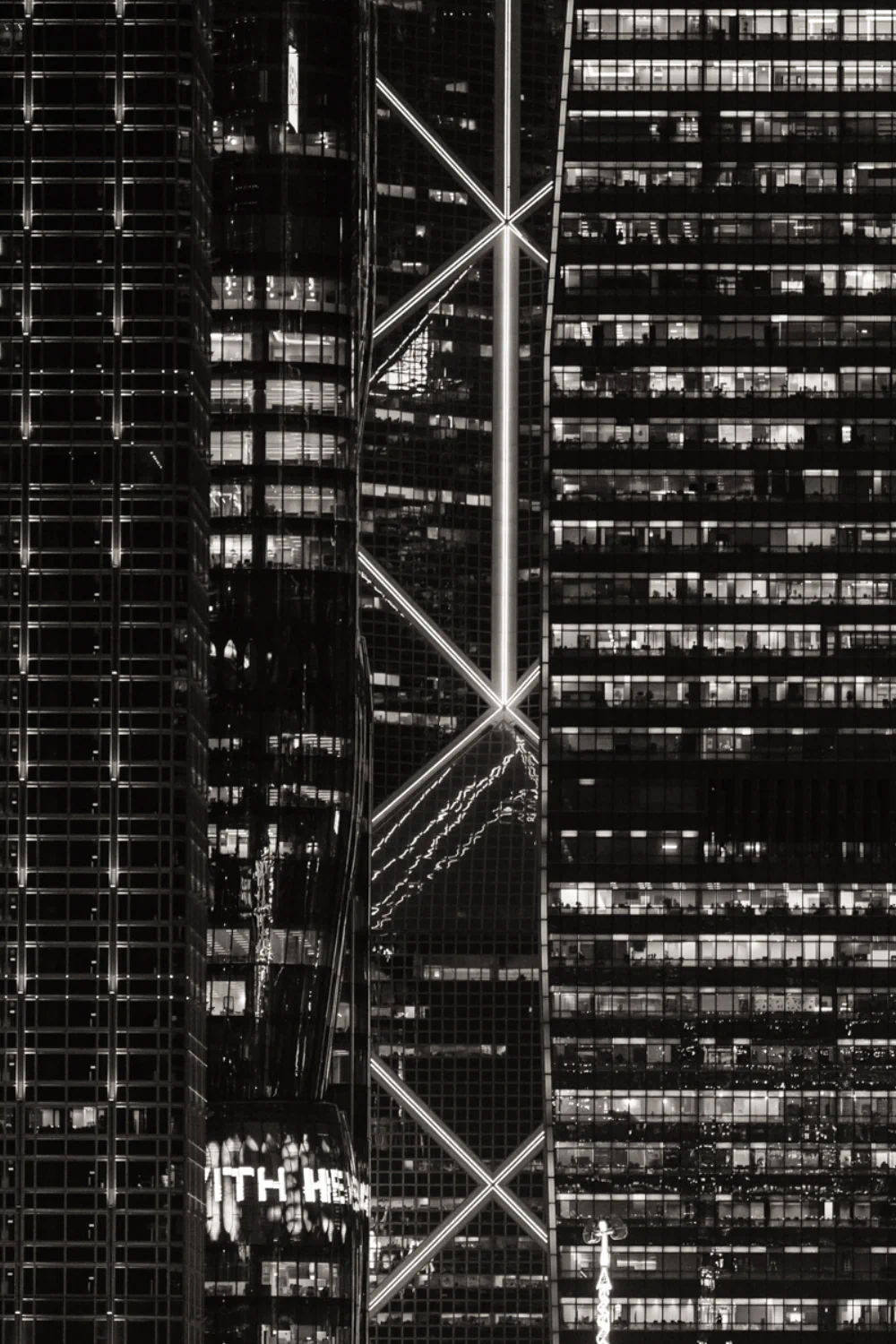
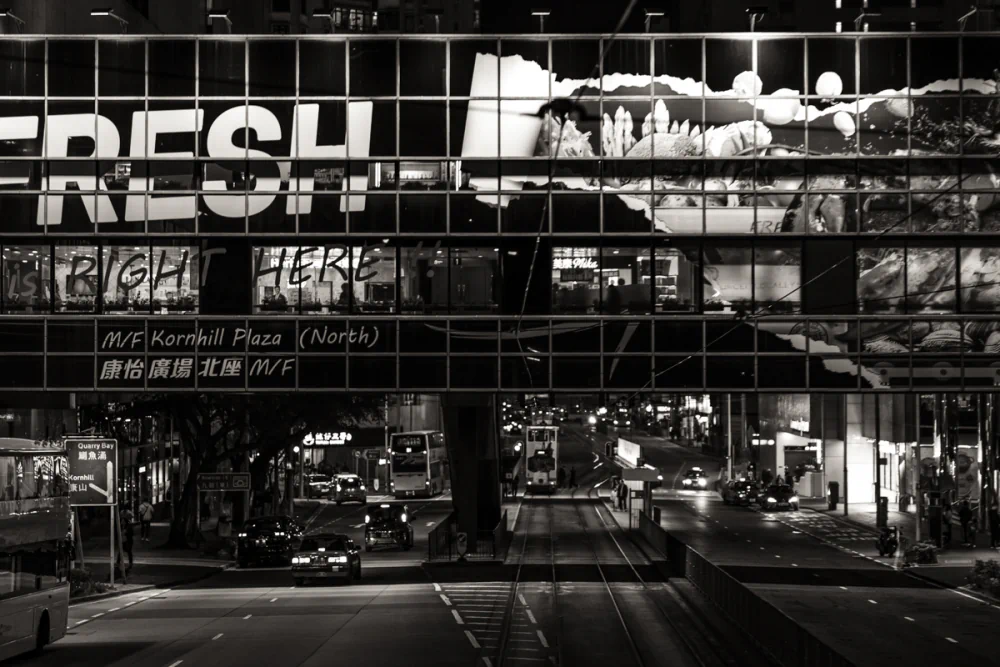
This time, he returned with a singular photographic mission: to find the essence of life, the hidden pulse of the metropolis. He arrived equipped with a telephoto lens. This technical shift was a deliberate choice to transform his perception of the city. Instead of the expansive breathing space of a wide view, the telephoto lens allowed him to compress the chaos. It stacked the skyscrapers, brought distant mountains of concrete into an intimate dialogue with laundry hanging from private balconies, and isolated the individual.
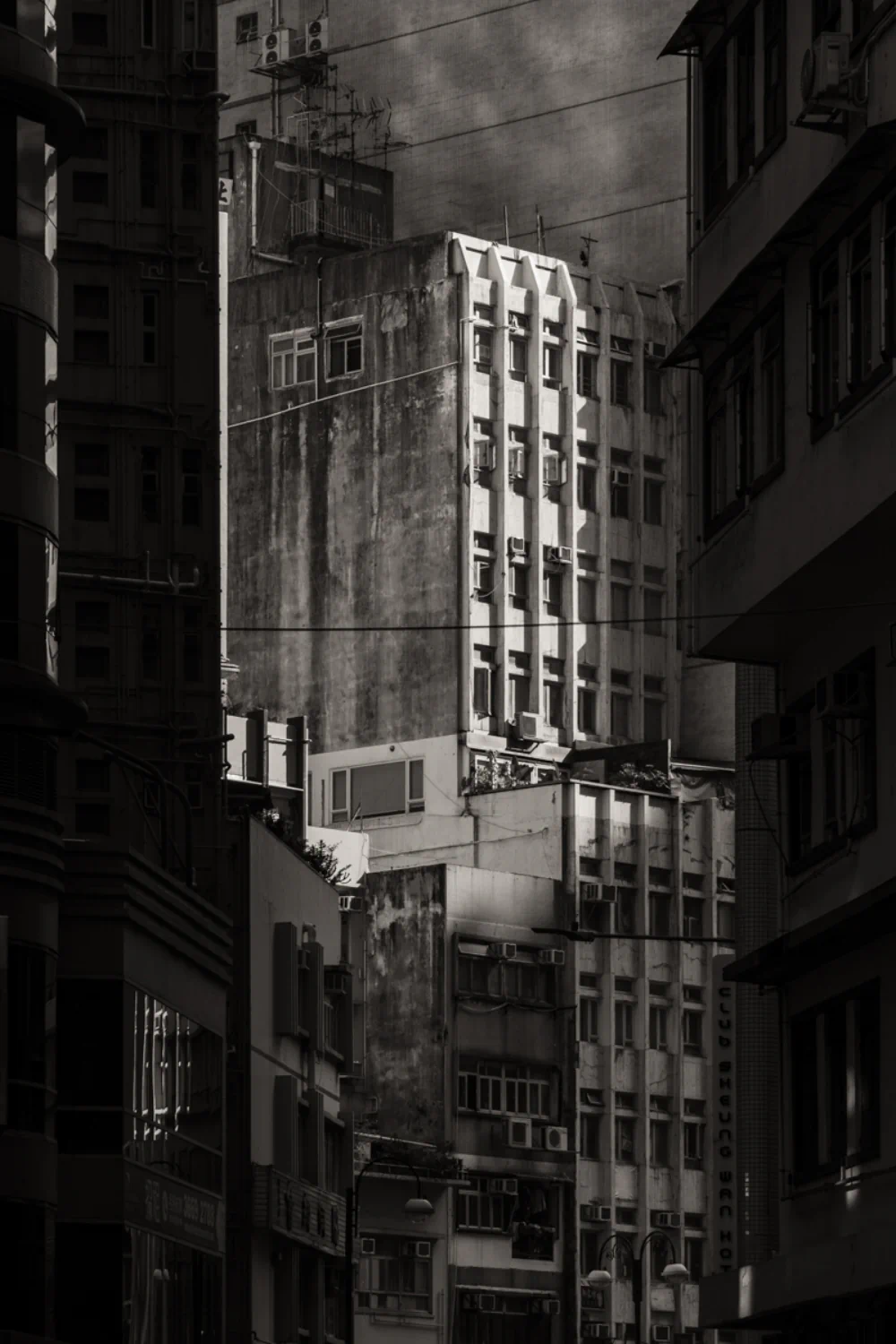
The Geometry of Living. Hong Kong is perhaps one of the most surprising playgrounds for a photographer. While many urban centers have “dead zones”, areas where visual interest fades into monotony, Hong Kong remains relentlessly, almost exhaustively, visual. At nearly every corner, a theme reveals itself. There is no need for a map or a list of landmarks, only the patience to stand still and allow the city’s rhythm to unfold.
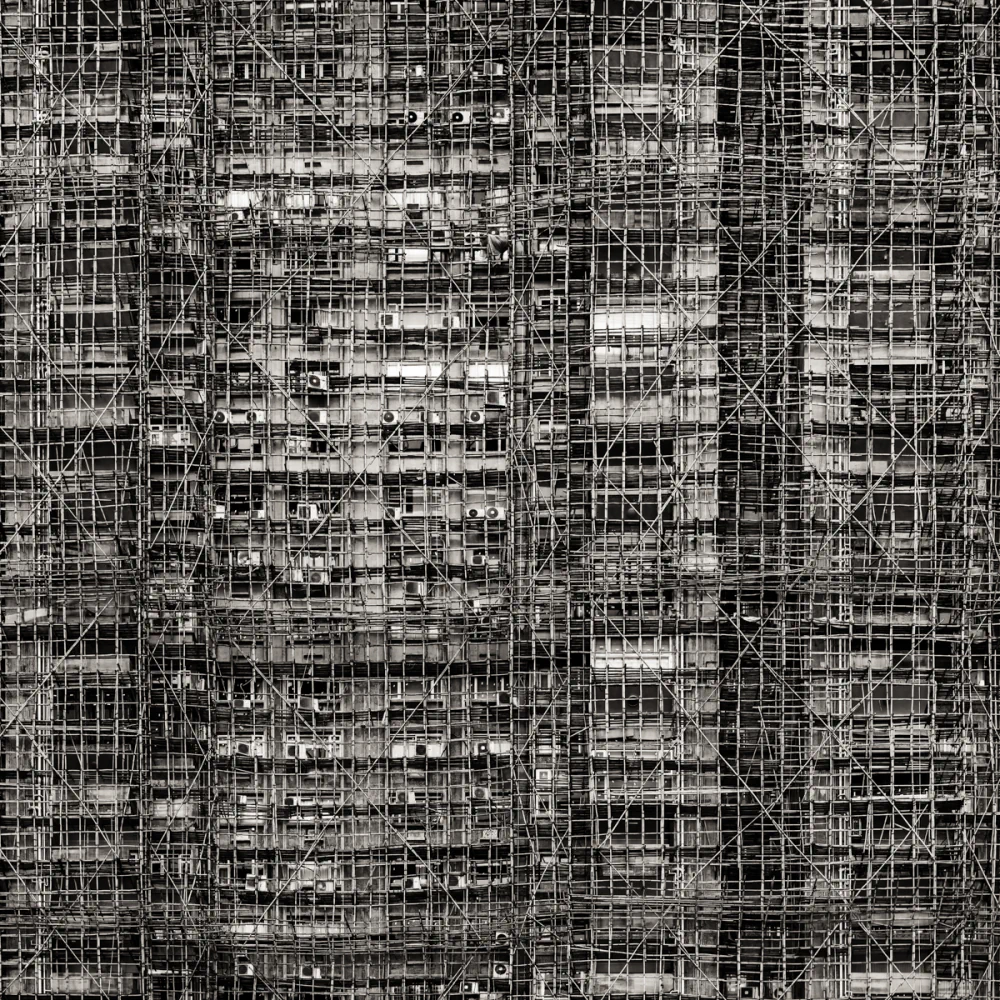
In many parts of the world, construction is considered an eyesore. In Hong Kong, traditional bamboo scaffolding has become a form of art. It creates a dense, organic grid over cold concrete, a web of lines that challenges the eye to find a focal point. It stands as a testament to the city’s unique blend of ancient tradition and hyper-modern ambition.
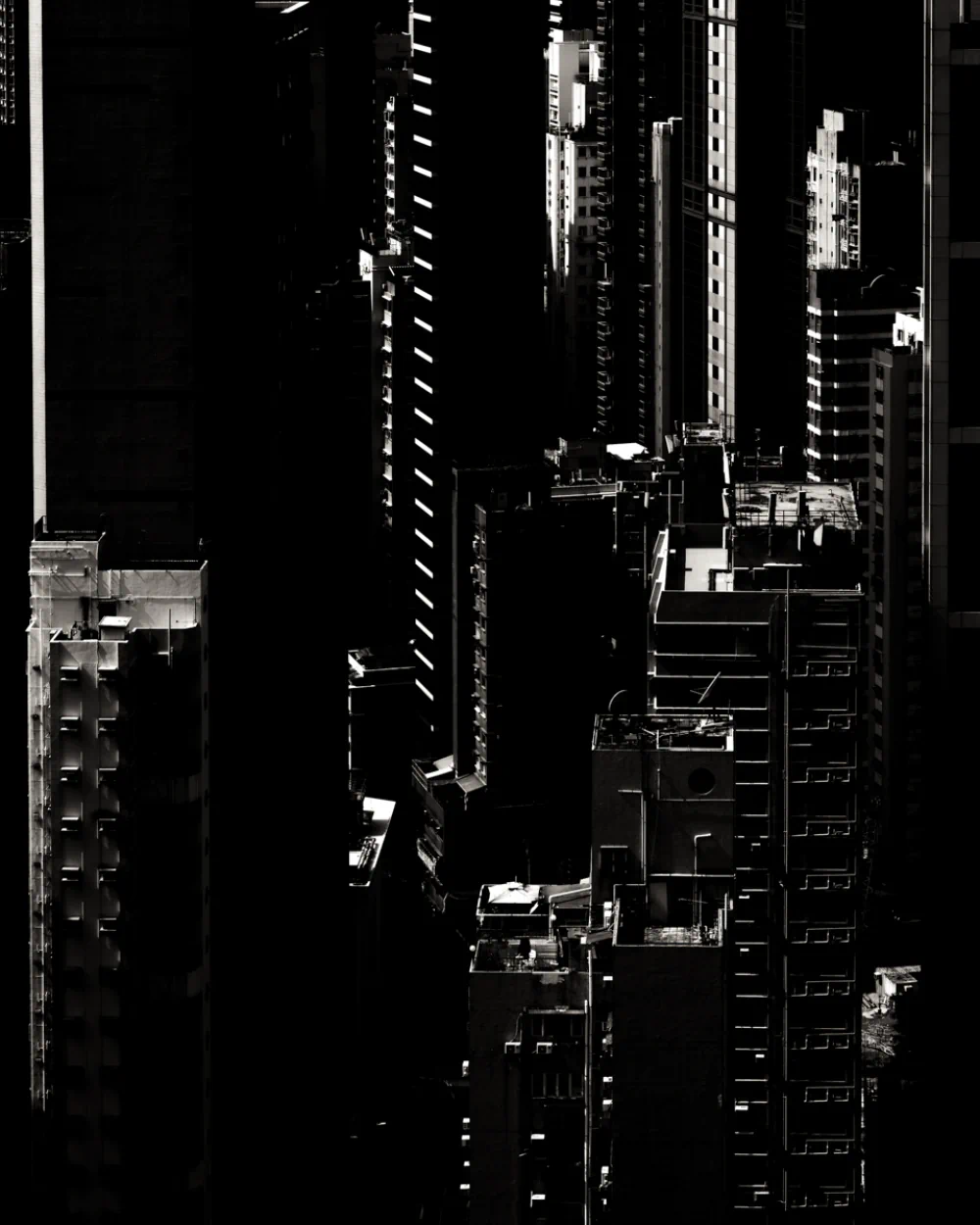
What struck him most during this visit was the unique behavior of light within such a vertical environment. In most cities, sunlight is constant. In Hong Kong, it becomes a rare visitor at street level. Due to the sheer height of the buildings, streets remain in a cool twilight for much of the day.
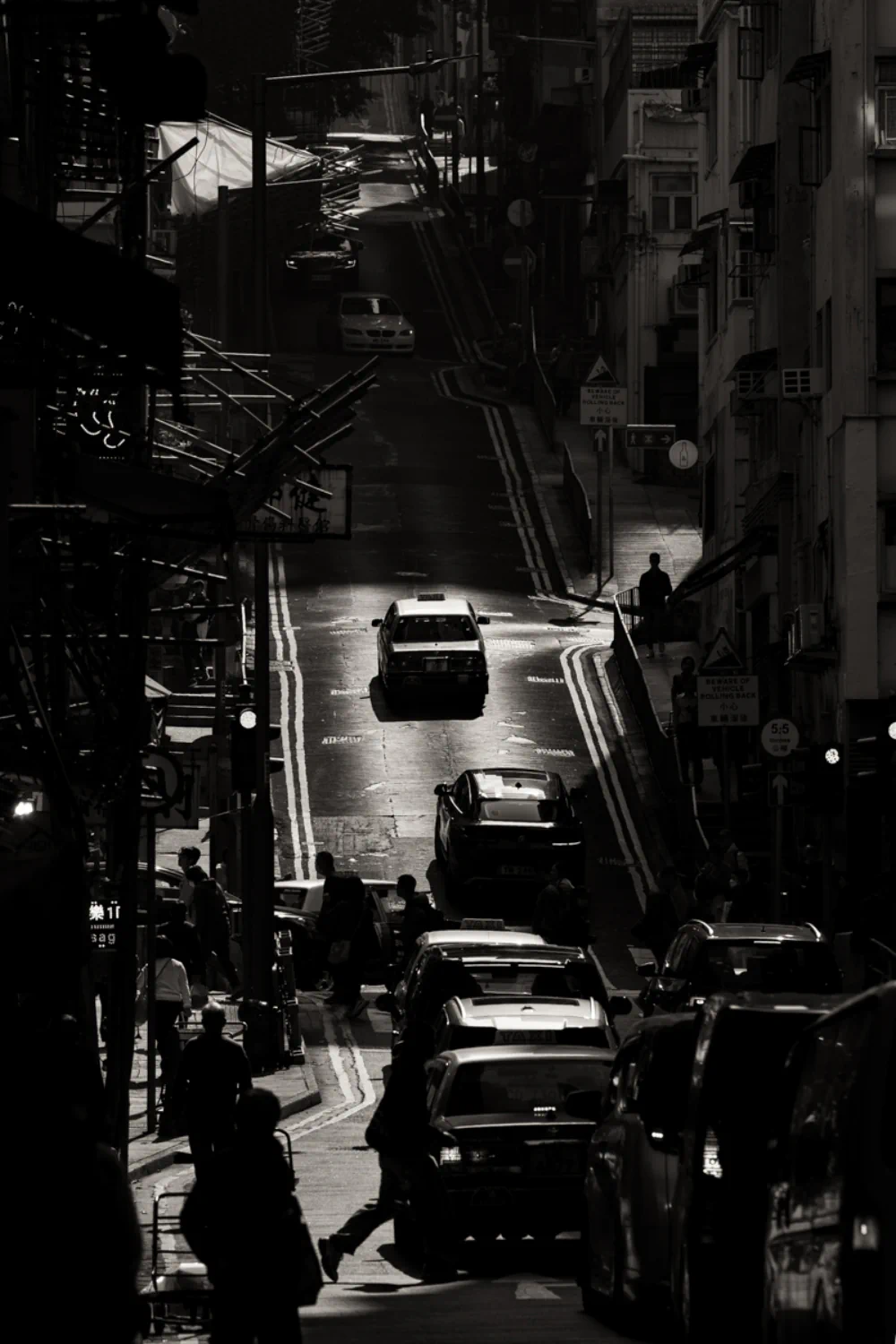
Direct sunlight reaches the ground only through narrow gaps between skyscrapers. It becomes a fleeting, theatrical event. At specific times of the day, when the sun aligns with canyon-like street grids, a beam of light pierces through to the pavement.
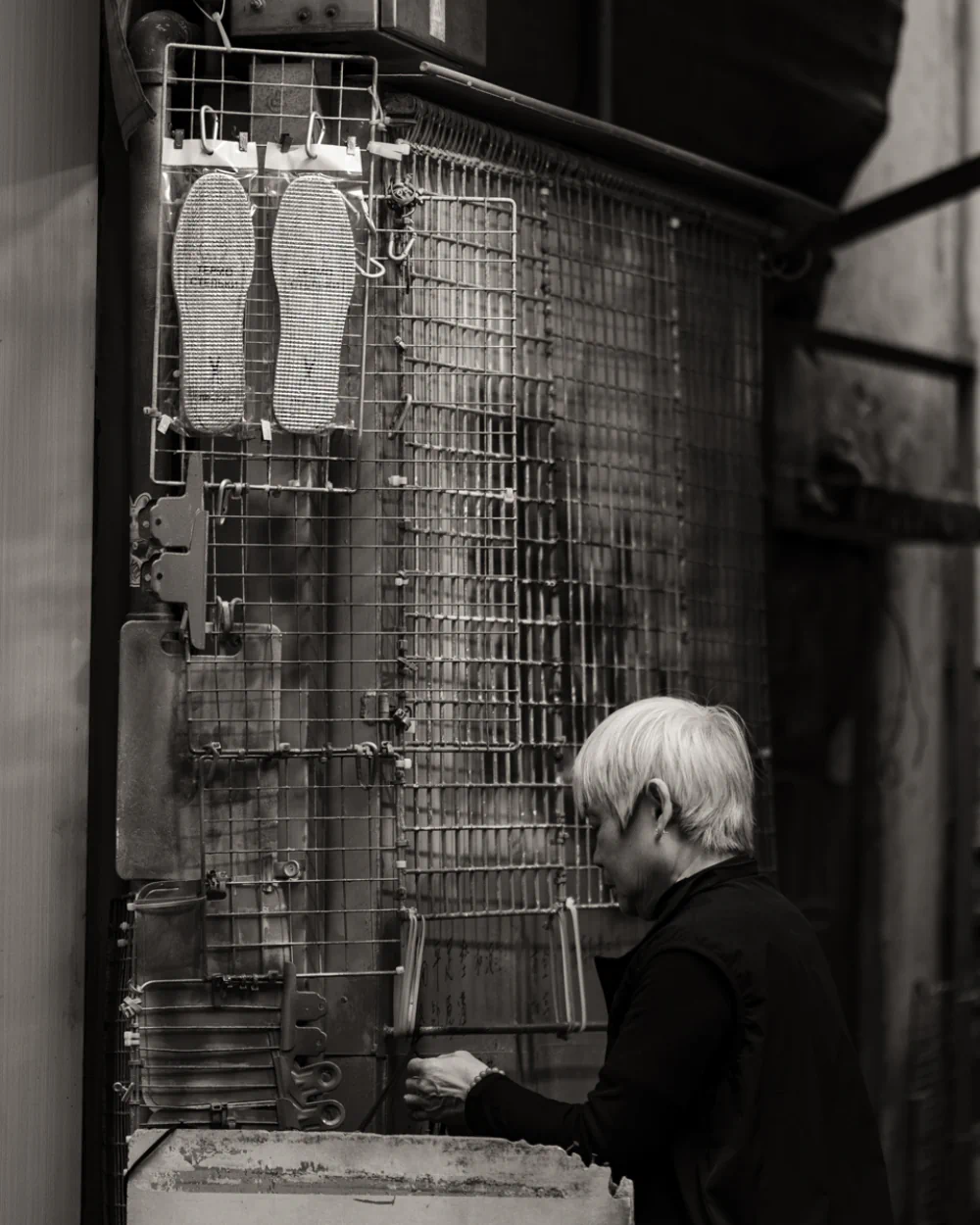
These moments occur primarily at street intersections, where openings in the dense urban structure briefly allow light to enter. For a few minutes, a crosswalk or a newsstand is illuminated by harsh, reflective light from mirrored facades, creating a celestial spotlight while the rest of the environment remains in deep shadow. Capturing these transient moments became a central theme of the series, where the “Urban Noir” atmosphere fully emerges.
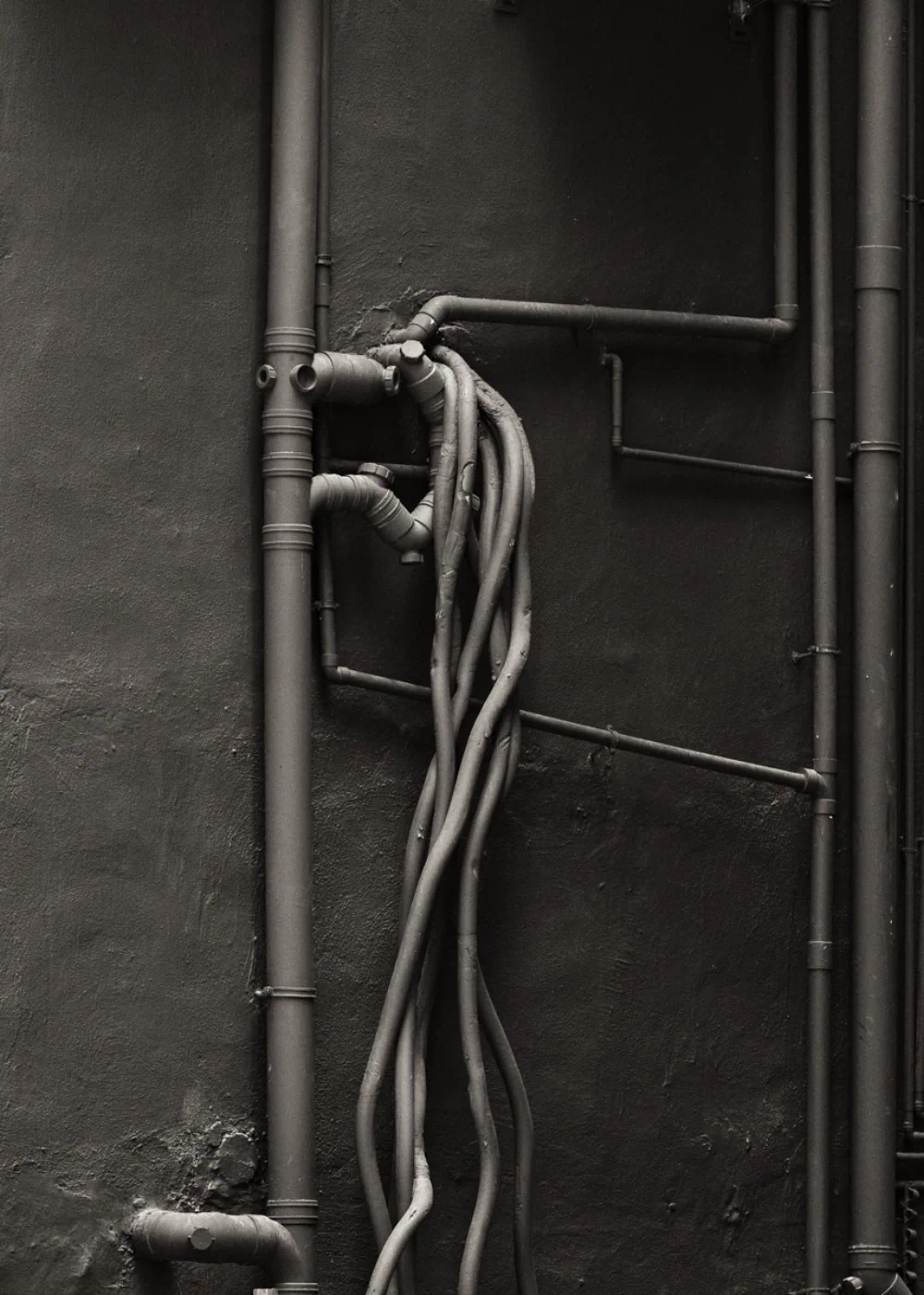
The City beyond Color. The decision to process the series in high-contrast monochrome was essential to emphasize the city’s structural essence. By removing the iconic neon reds and electric blues, he was able to focus on the raw textures that define Hong Kong: the slick reflection of a taxi on sun-drenched asphalt, the rusted, almost organic veins of external piping.
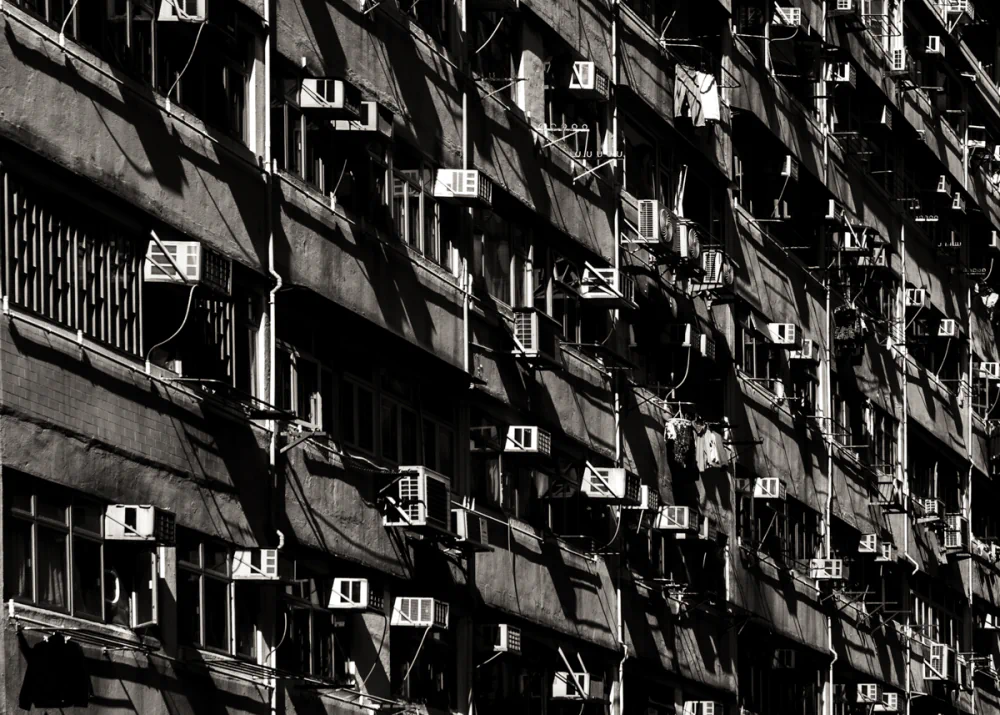
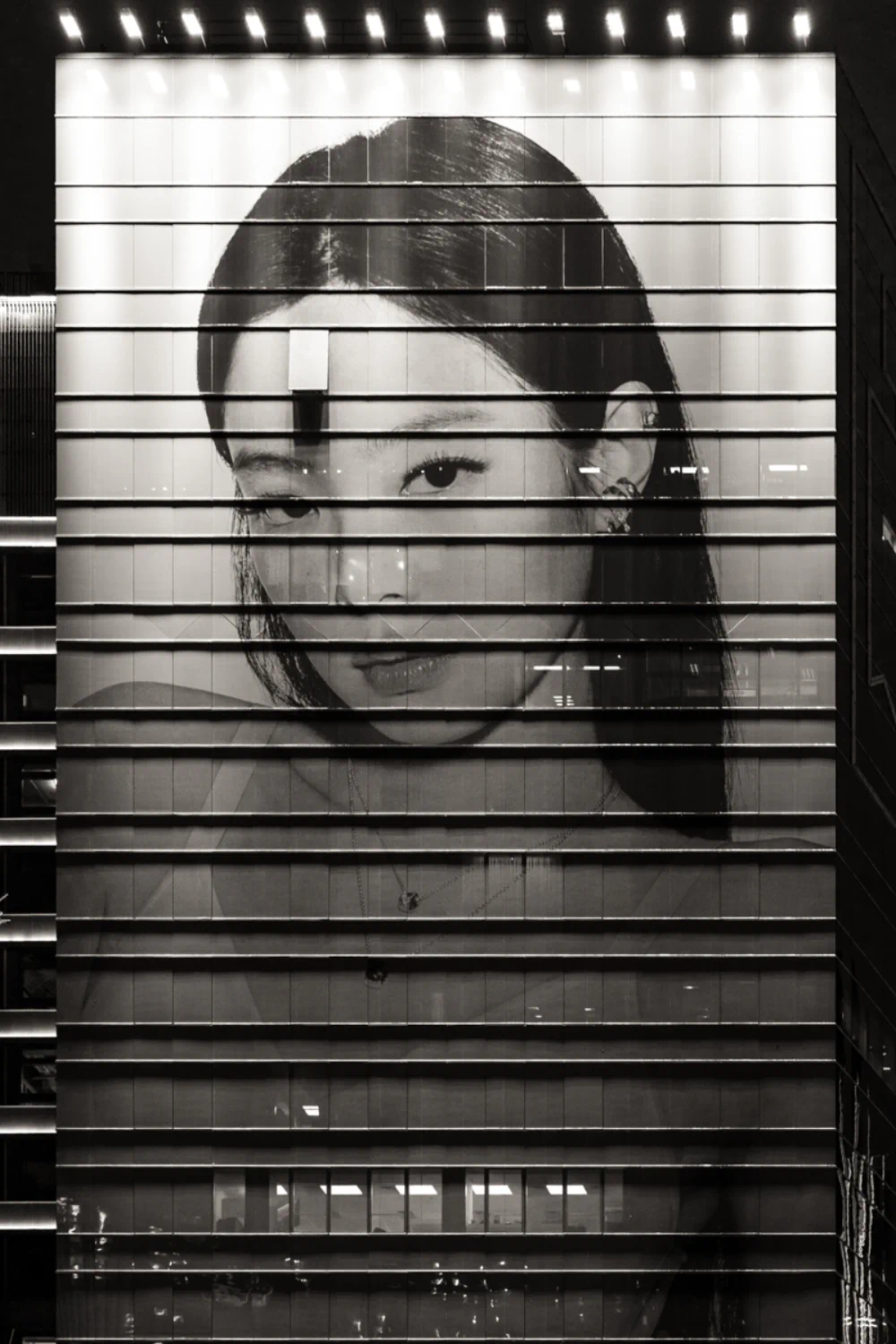
The telephoto lens transforms massive structures into abstract compositions. A facade filled with air-conditioning units becomes a rhythmic, mechanical skin, a metallic tapestry that reflects the density of life contained within. This visual compression creates a sense of pressure, highlighting the resilience required to inhabit such an environment.
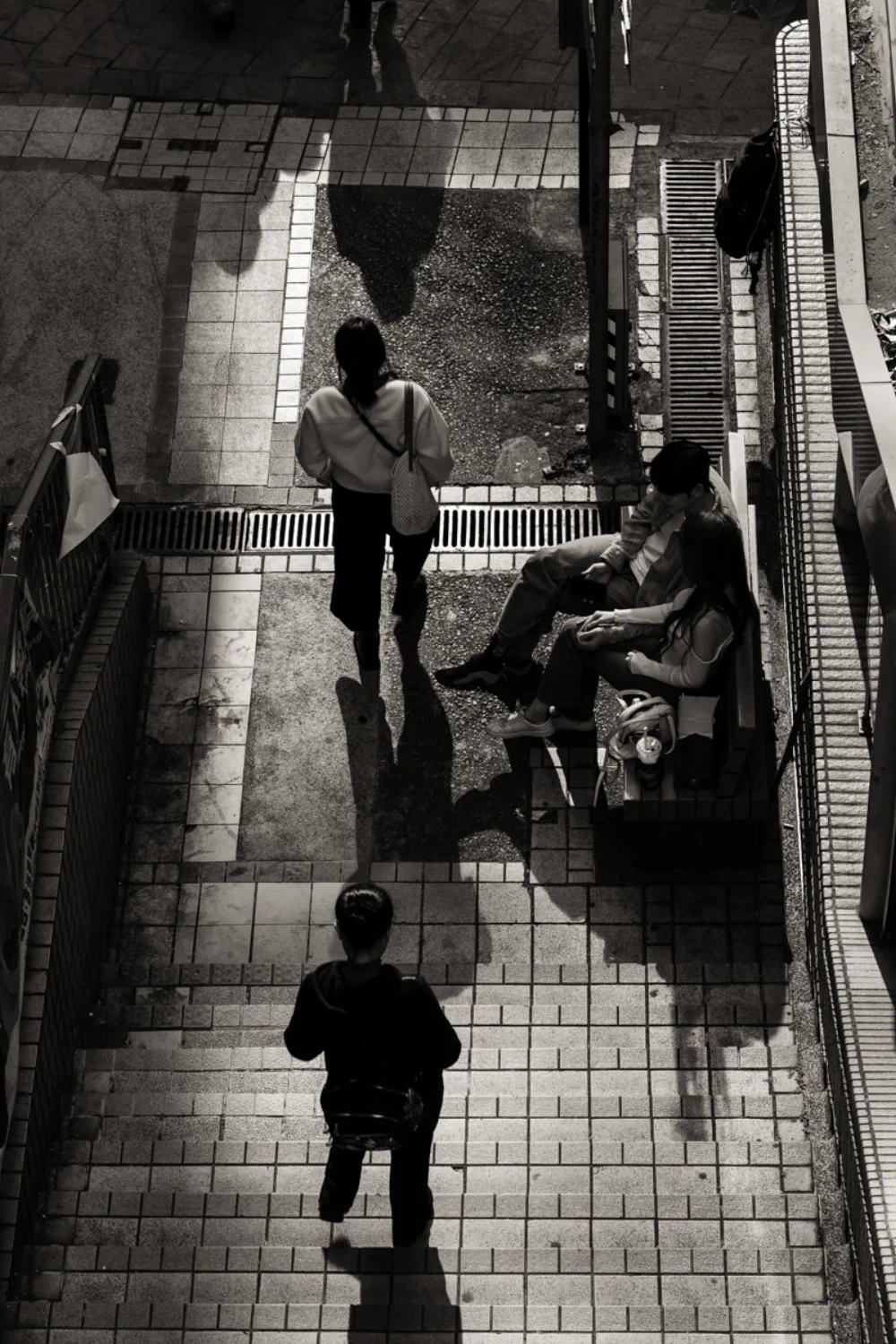
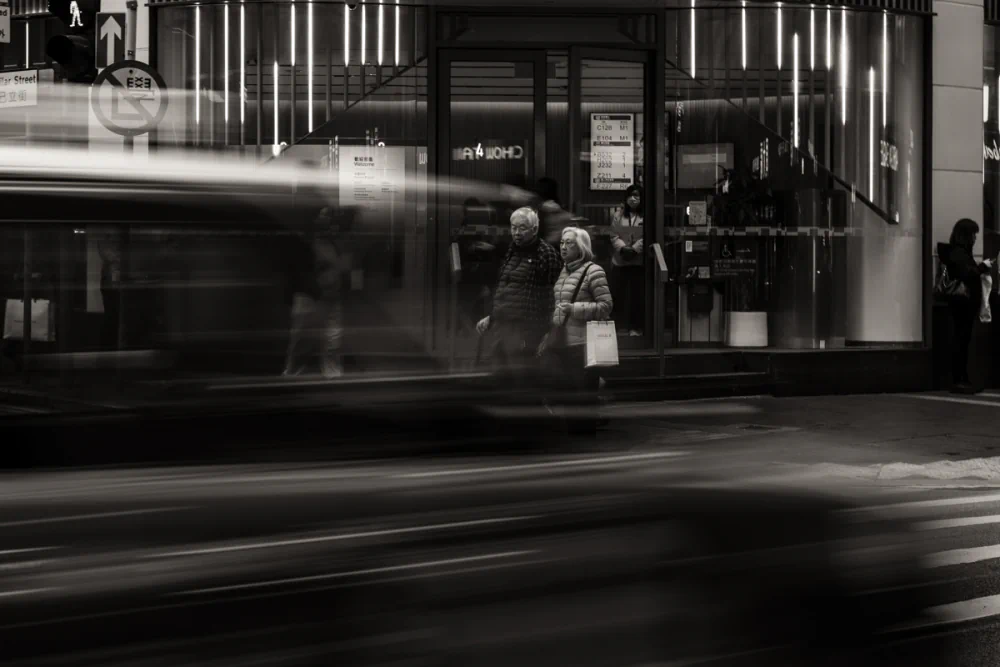
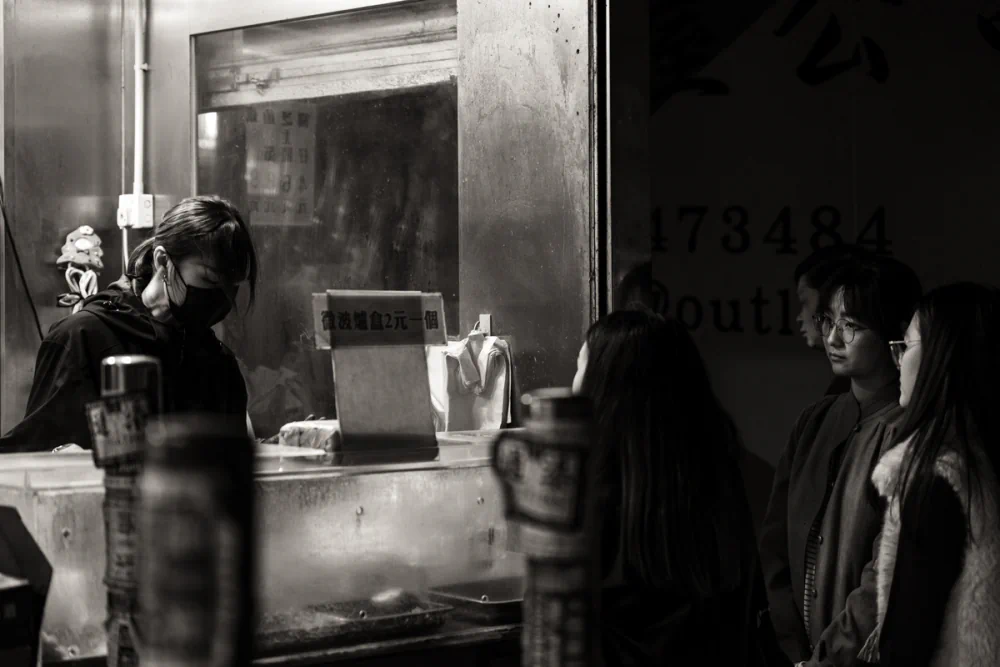
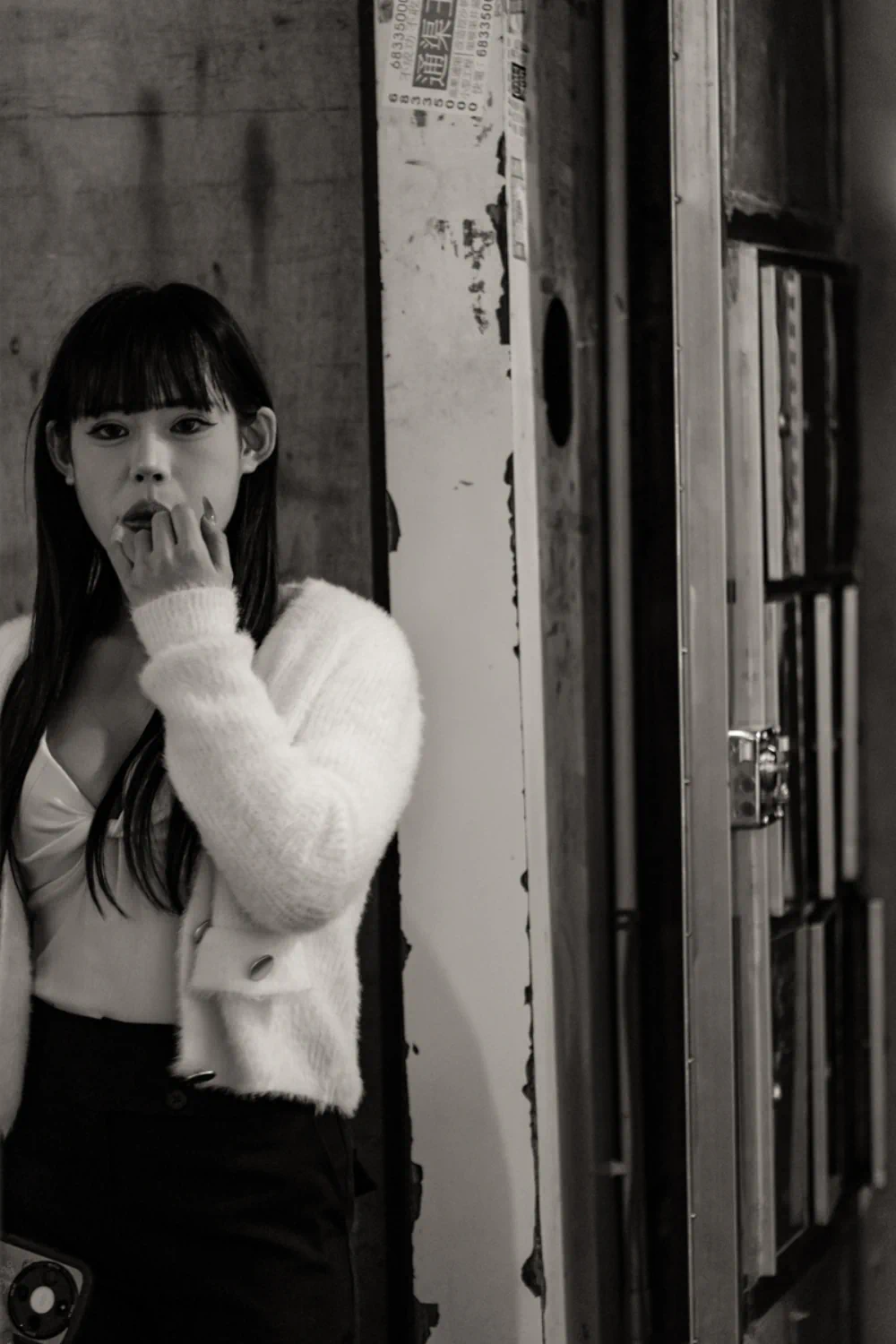
The Human Element. Despite the overwhelming presence of concrete and steel, the core of the series remains human. In his previous wide-angle explorations, the inhabitants of Hong Kong appeared as distant figures within a vast landscape. With the telephoto lens, they become central protagonists.
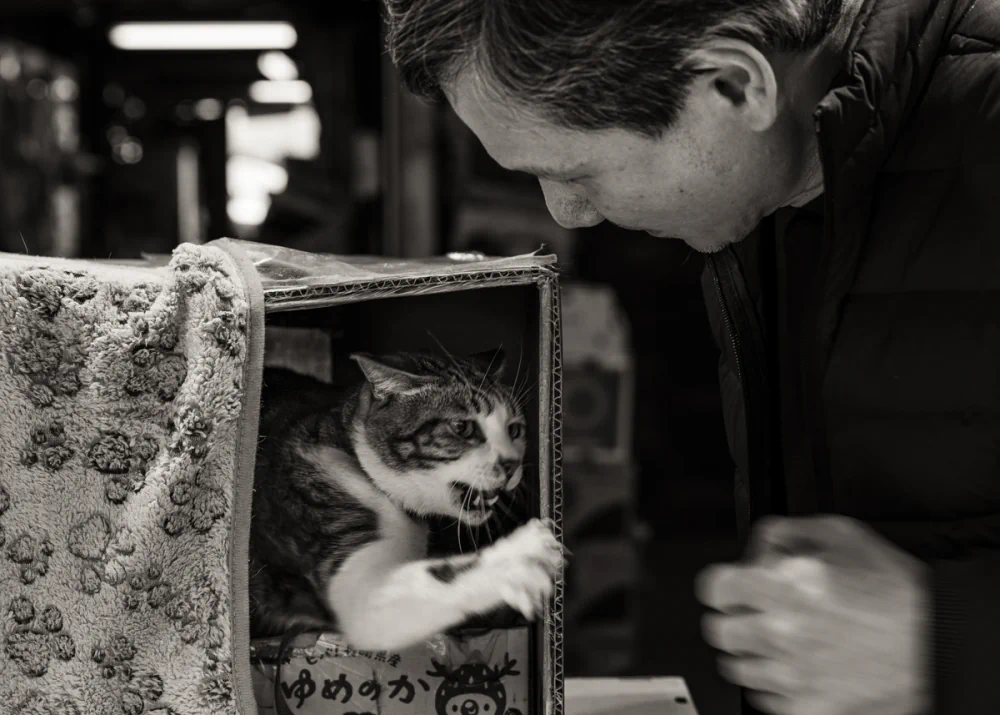
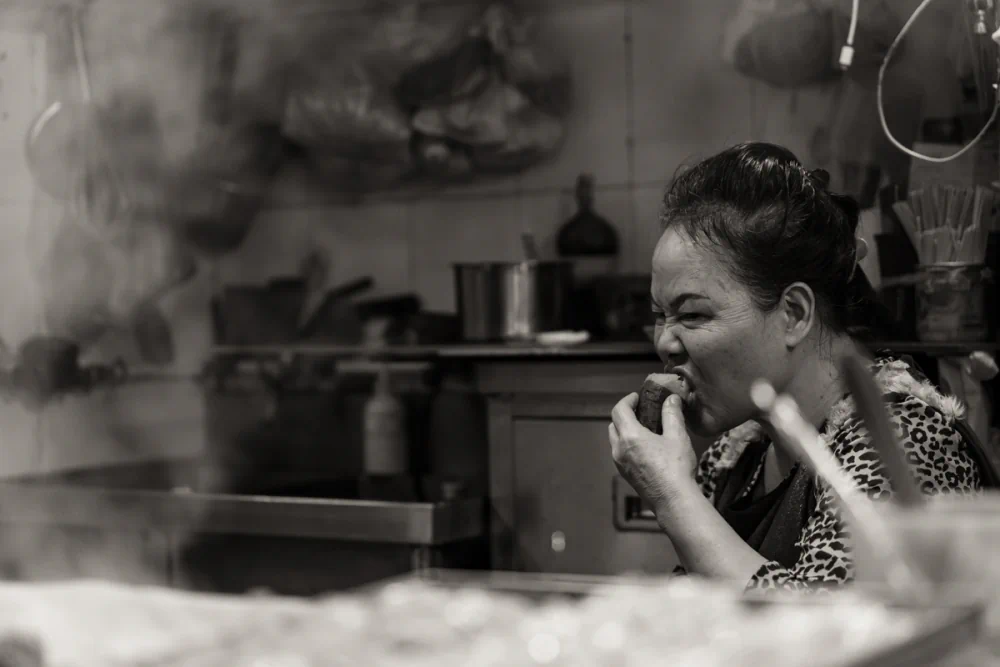
The compression effect makes the background seem to press against the subjects, generating a sense of intimacy that borders on claustrophobia. He seeks to capture subtle, everyday moments: a worker enveloped in the steam of a street-side kitchen, or a quiet interaction between a shopkeeper and a cat resting in a cardboard box. These fragments reveal the human essence of the city.
“Fragments of Life” reflects the realization that understanding a city does not require seeing it in its entirety. Instead, it invites a slower, more attentive gaze, focused on individual elements. In abandoning the attempt to capture the whole, he discovered that the soul of Hong Kong resides not only in its panoramic views, but in the textures of its walls, the rhythm of its shadows, and the resilience of its people.
About Andreas Theologitis
Andreas Theologitis is a photographer whose artistic vision is informed by his background as an architect and urban planner. His early studies in Belgium during the 1980s provided him with a unique understanding of composition and structure, which is evident in his photography. His engagement with photography began in the era of the darkroom.
His work has been exhibited in numerous galleries in Athens, Brussels, London, Milan, Washington, D.C., Los Angeles, and New York City. His photographic achievements have been recognized through awards in several international competitions.
He also applies his expertise as the owner of PATH Space, a fully equipped photography studio in Athens. In recent years, his photographic exploration has moved beyond a general study of the human form, focusing instead on specific aspects of the nude. In this work, aesthetics intertwine with an almost ideological dimension, where the structured language of geometry meets the organic and vulnerable human form, creating a dialogue between the built and the natural, the defined and the fluid. [Official Website]