

“Sylvan Weaves” approaches trees not as scenery, but as fellow beings: resilient presences whose trunks, roots and branchwork seem to remember, endure and respond.
The series begins with threshold and entry, drawing the viewer into a forest that is less a backdrop than a field of encounter.
At first, the trees appear as companions and watchful presences; then, more insistently, as bodies with their own gravity, tension and will. Root systems grip the earth, branchwork thickens into almost neural or fractal structures, and the woodland world begins to feel woven, sentient and self-possessed.
Midway through the sequence, perception itself starts to shift. The forest is no longer only a place of presence and relation, but one in which another order seems to emerge: older, stranger, less fully available to human reason. From that point onward, the series opens towards a quieter contact with the human sphere. Ruin, path, infrastructure and altered energy landscapes appear not as dominant motifs, but as traces of entanglement. Trees become witnesses, survivors and, at times, silent escorts – figures of continuity within a world marked by passage, loss and historical change. In Silent Spring, this relation reaches its most fragile register: a tree image that still carries the memory of romantic landscape, yet also bears the signs of climatic stress and ecological damage.
The series closes not in catastrophe, but in a quieter, unsettled openness, where the forest remains companion, threshold and more-than-human presence.
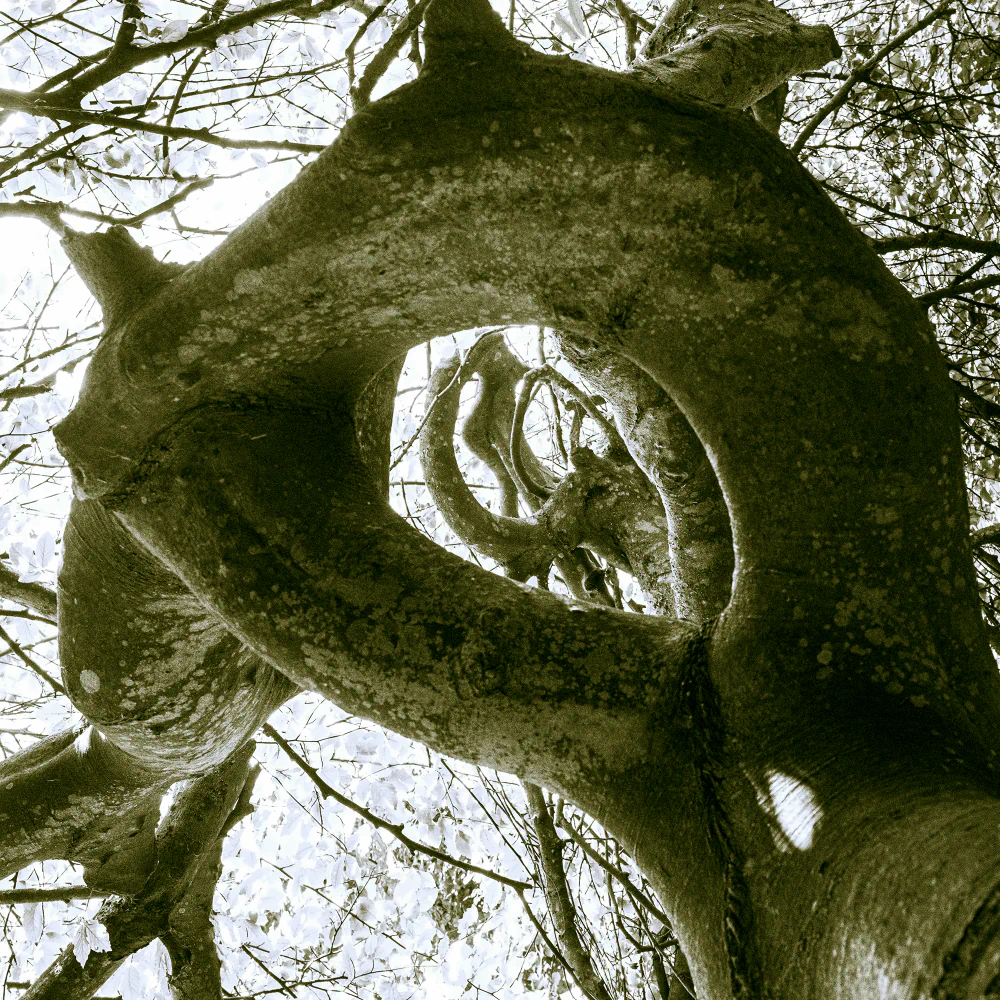
The tree opens like an eye or threshold, evoking Yggdrasil, the world-tree of Norse mythology, and a gateway to Alfheim, the realm of the light elves. More than a striking form, it imagines the tree as a portal of human transition: a vegetal passage from ordinary sight into another order of presence. As the opening image, it establishes the forest not as backdrop, but as threshold, guide and possibility of passage.
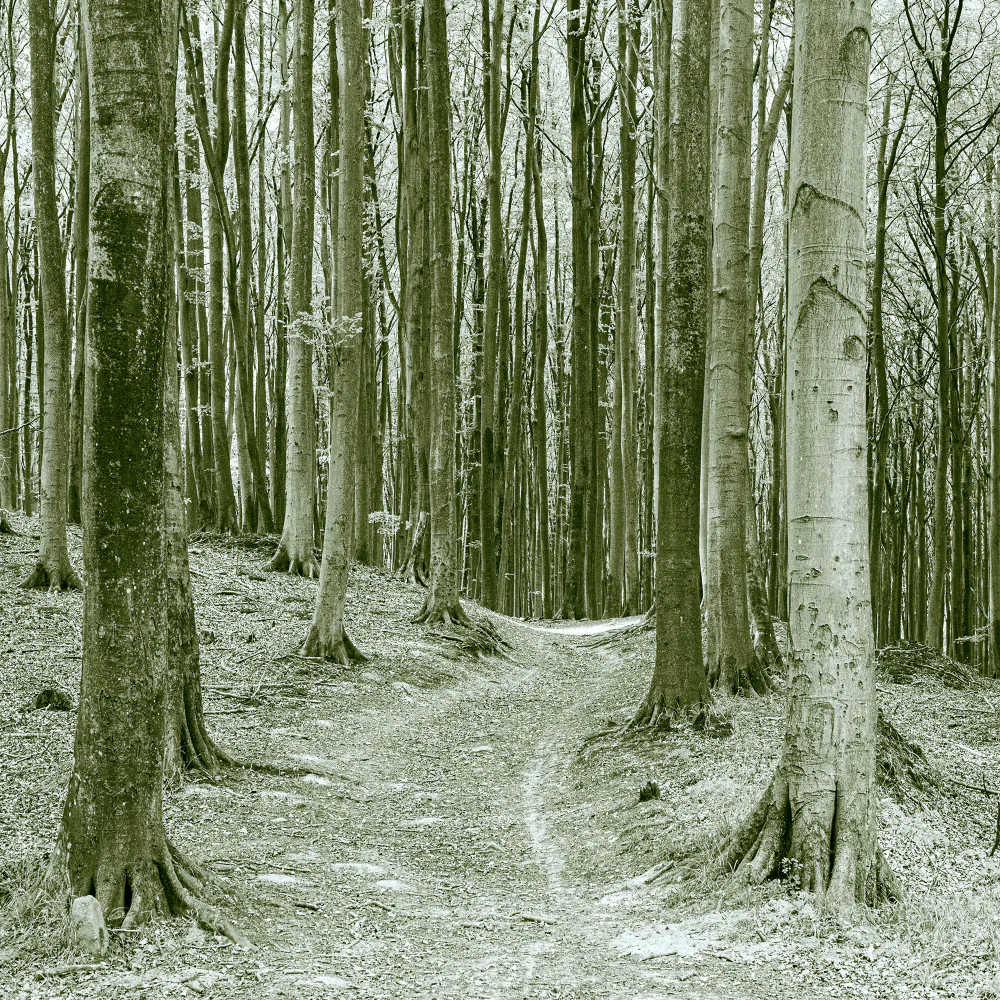
The upright trunks form a silvery colonnade, but the image is animated by the small, winding path glimpsed beyond them. It feels less like a static woodland view than an invitation: a hall of trees quietly prepared for human passage, where ordered verticals open onto secrecy and inward movement. Early in the sequence, the forest becomes a place that receives, guides and gently tests the one who enters.
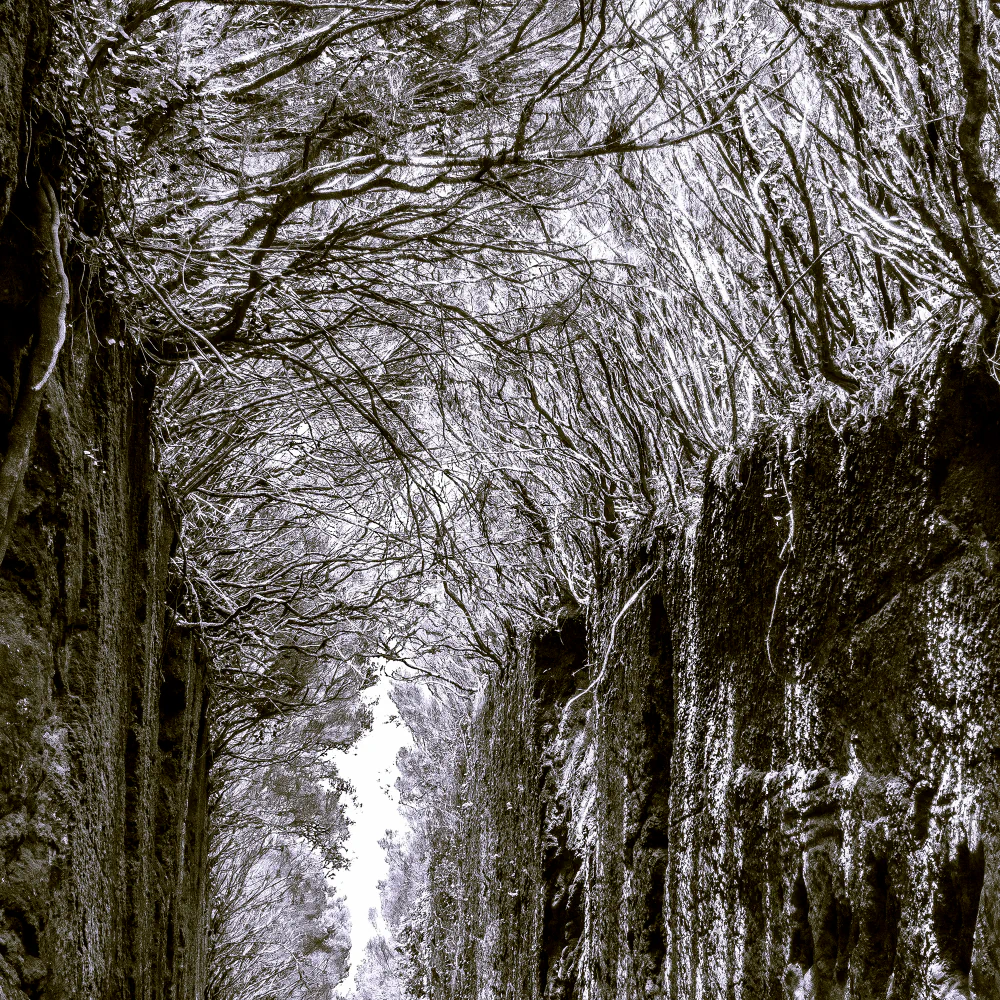
A path appears, but not as a simple route through landscape. It suggests movement deeper into relation, drawing the viewer from observation into participation, as if the forest were beginning to admit a guest. In the series, the image extends the threshold motif from entry into immersion.
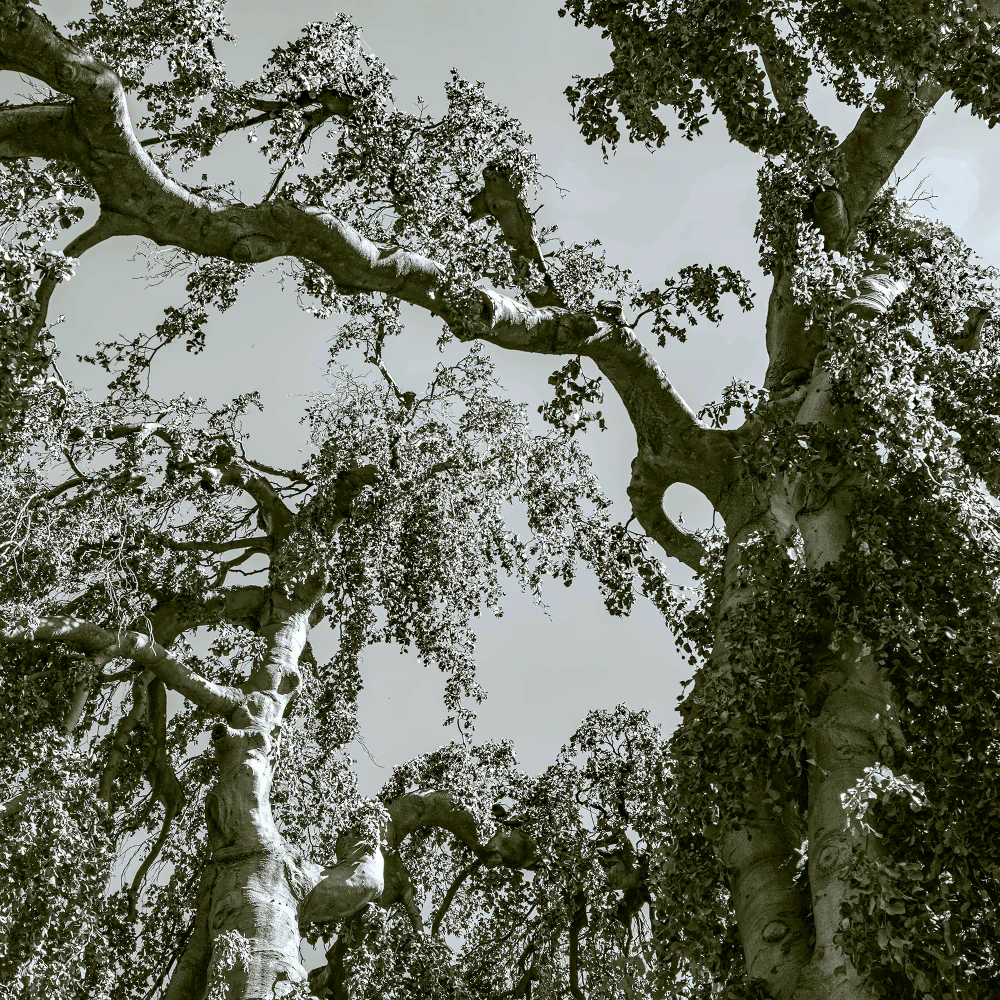
The branches above gather into a dense, tense canopy of force and gesture. Here the woodland begins to feel less passive and more animate, as though the trees possessed their own inner tensions, memory and expressive life. The image thickens the sense that the forest is not merely seen, but encountered as a field of active presences.
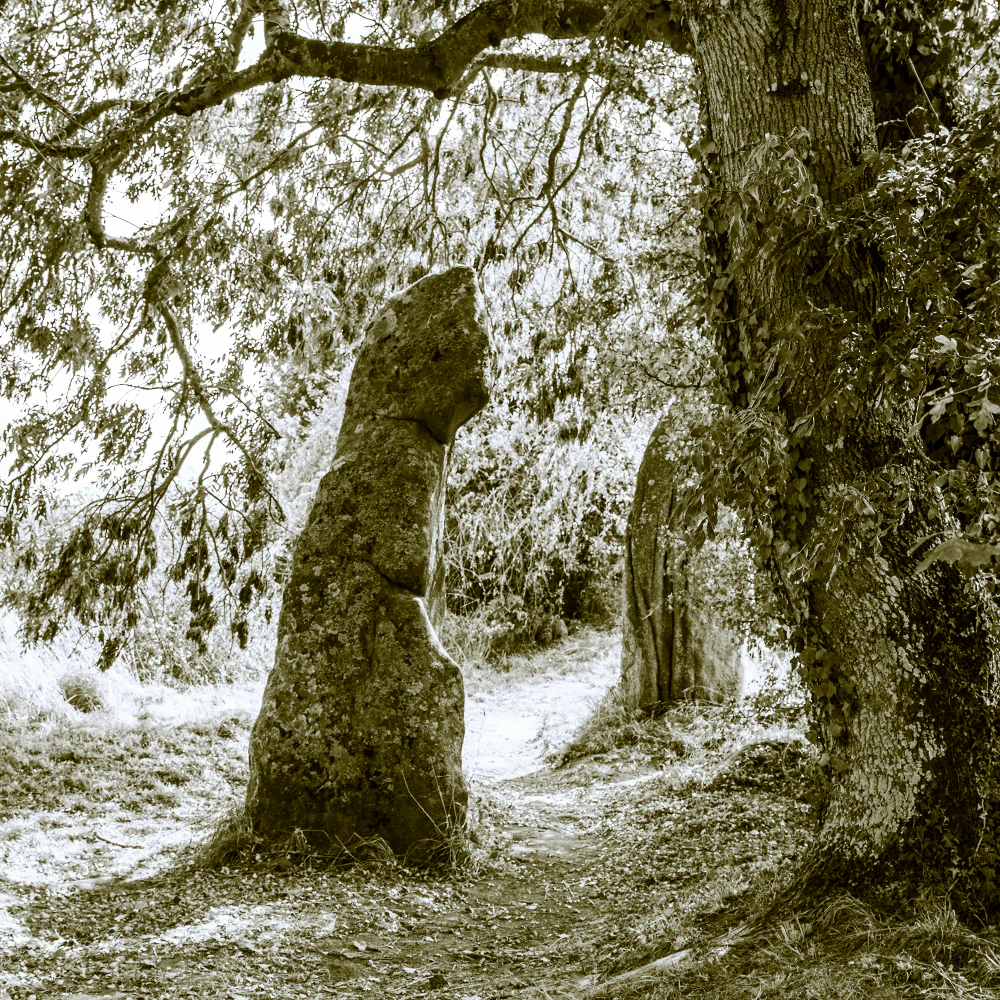
This image stages a meeting between radically different temporalities: the geological time of the Carnac stone and the generational time of the tree. Both forms seem gently inclined towards one another, as if stone and tree were not merely coexisting, but entering relation. Within the series, the image deepens the idea of fellowship by extending it beyond the vegetal alone, towards a kinship between living growth and geological endurance.
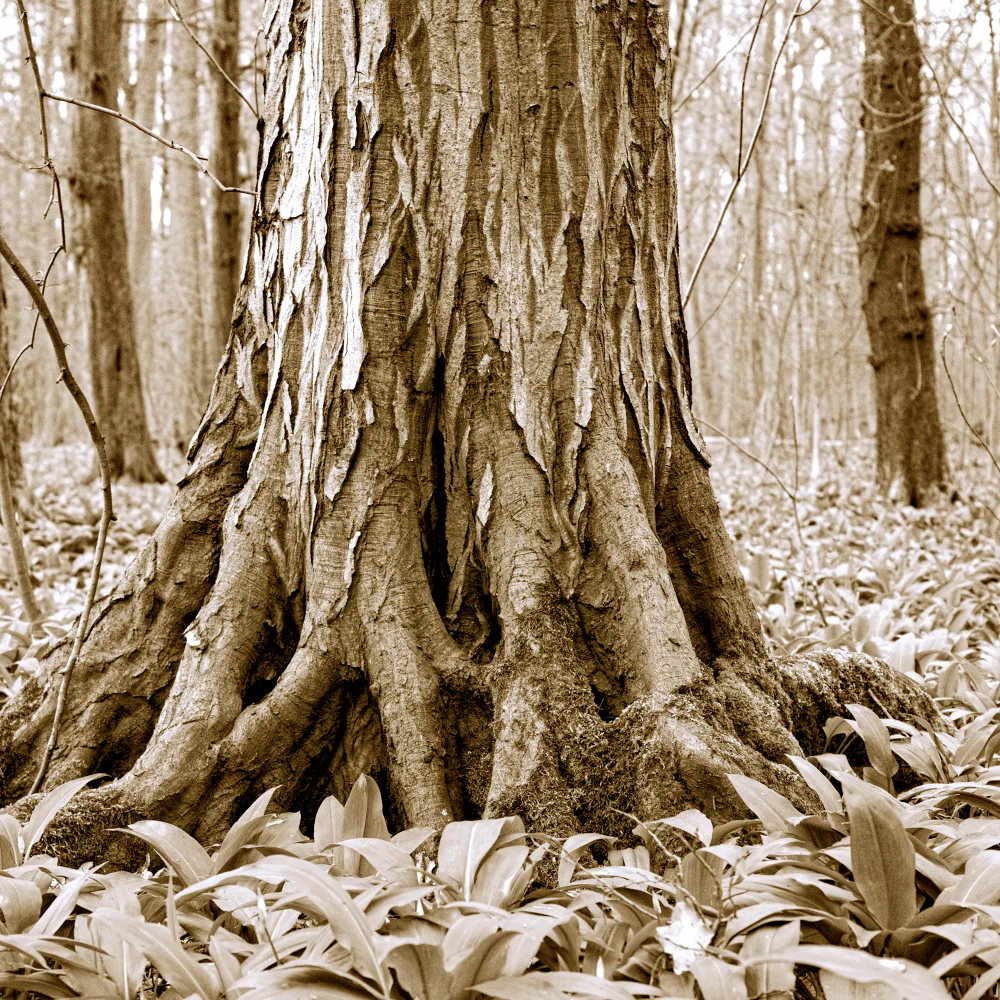
Standing apart yet rooted within a carpet of small wild-garlic beings, the tree appears both guardian and participant. The low, bright growth gathers around it like a murmuring community, turning the forest floor into a living social field rather than empty ground. In the sequence, the image sharpens the sense that the woodland is inhabited not by isolated specimens, but by layered forms of presence.
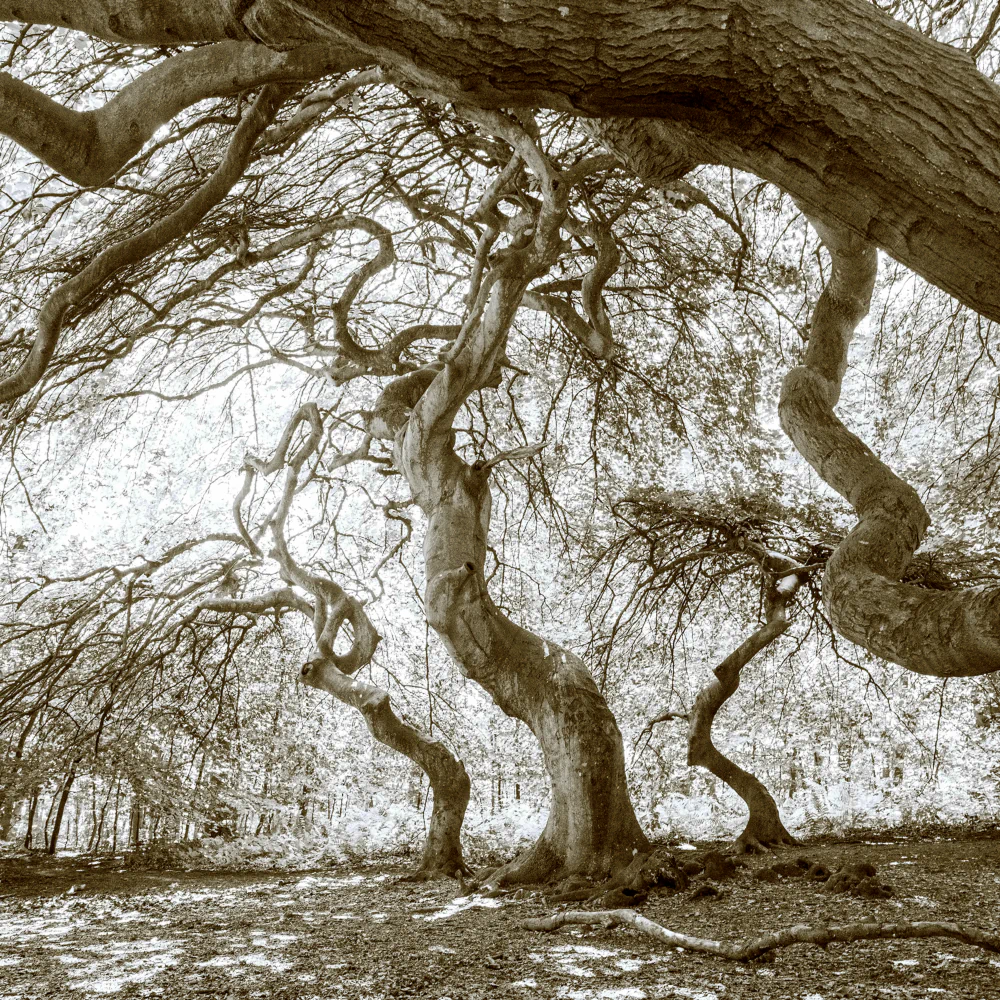
The grove gathers like a circle of bodies in motion, almost a witch-dance suspended between arboreal stillness and ritual animation. Here the trees appear not singly, but as a charged collective presence, as if myth and ecology had briefly entered the same clearing. The image marks the moment in the series when companionship expands into assembly and the forest becomes community.
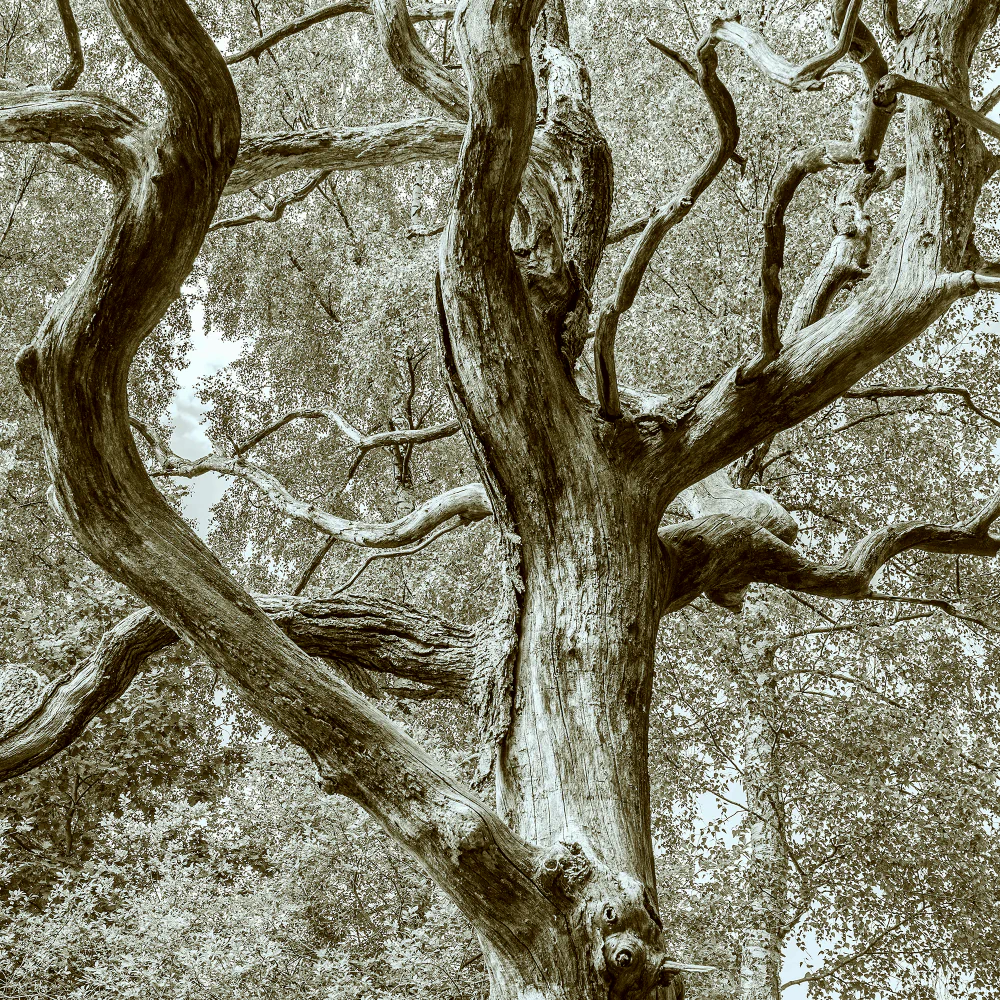
Branchwork multiplies into a nervous, almost fractal weave. The forest is no longer only encountered as body and companion, but as structure, thought and tension – a living network of lines that seems to think through form. This image pushes the series towards a denser and more intricate sense of arboreal intelligence.
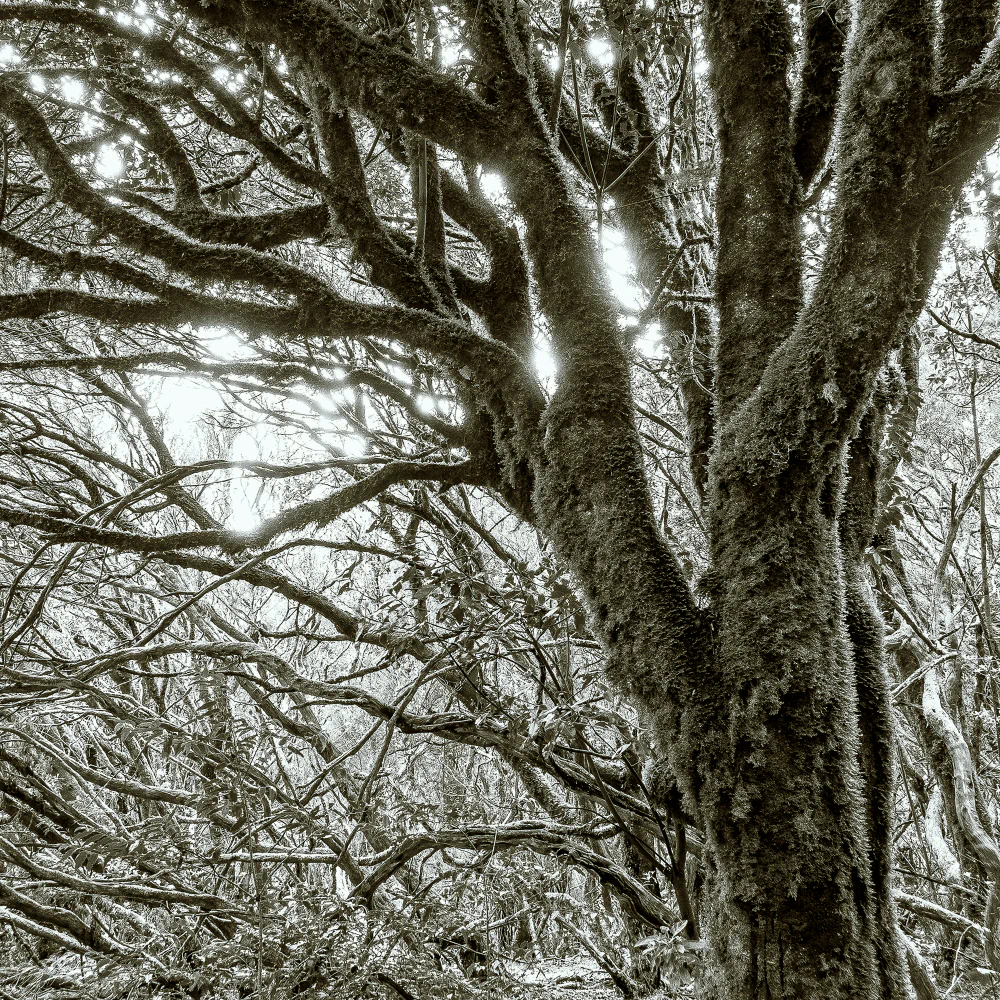
Texture and darkness make the tree appear almost animal or furred, unsettling the boundary between species and surface. The image deepens the sequence into a tactile and slightly uncanny register, where vegetal life becomes strangely embodied. It helps shift the series away from landscape and towards more intimate, sentient presences.
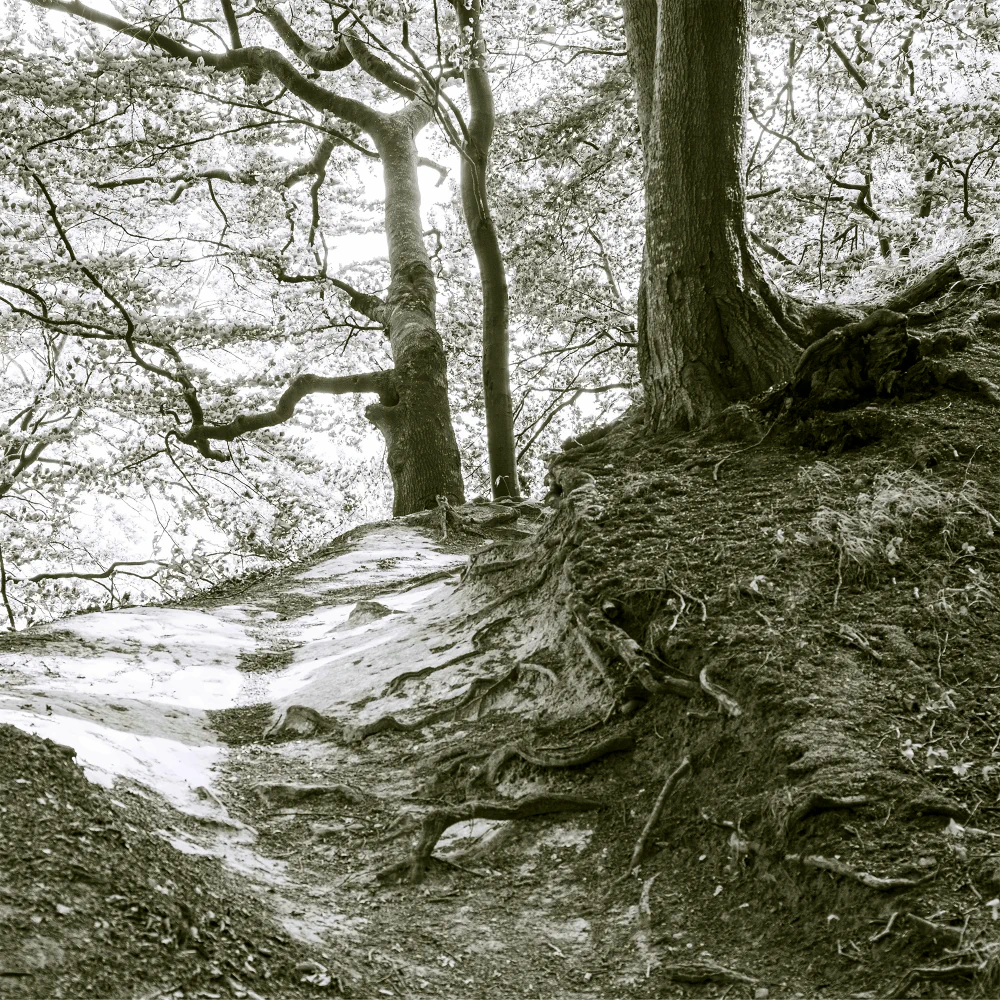
Roots, incline and path combine in an image of effort and persistence. It marks a passage from encounter towards endurance, showing the forest as something climbed with and through, not merely looked at. The emphasis here is on resilience: the woodland as terrain of tension, grip and upward movement.
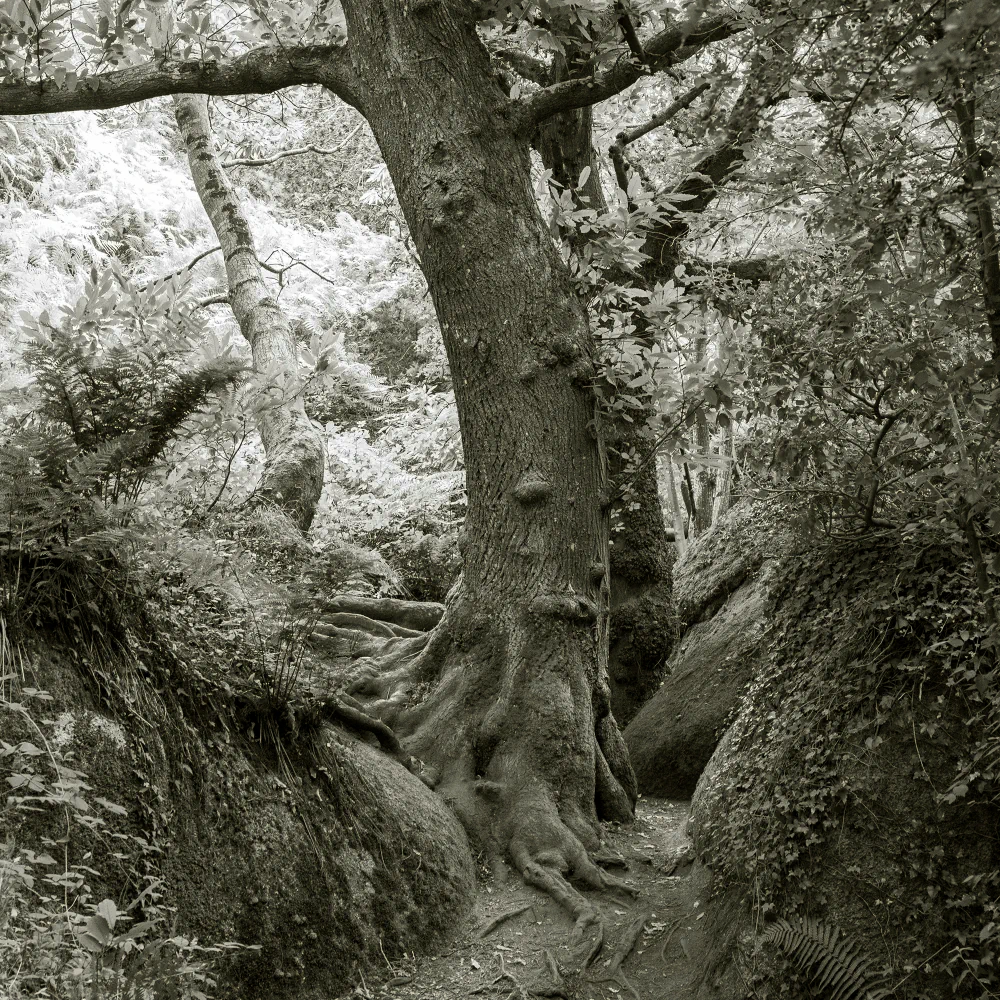
These forms appear as a small assembly of presences, almost human in their stance and mutuality. Positioned here, the image reinforces the series’ central idea of trees as fellow beings rather than backdrop. It gathers the earlier motifs of companionship and bodily presence into a clearer communal form.
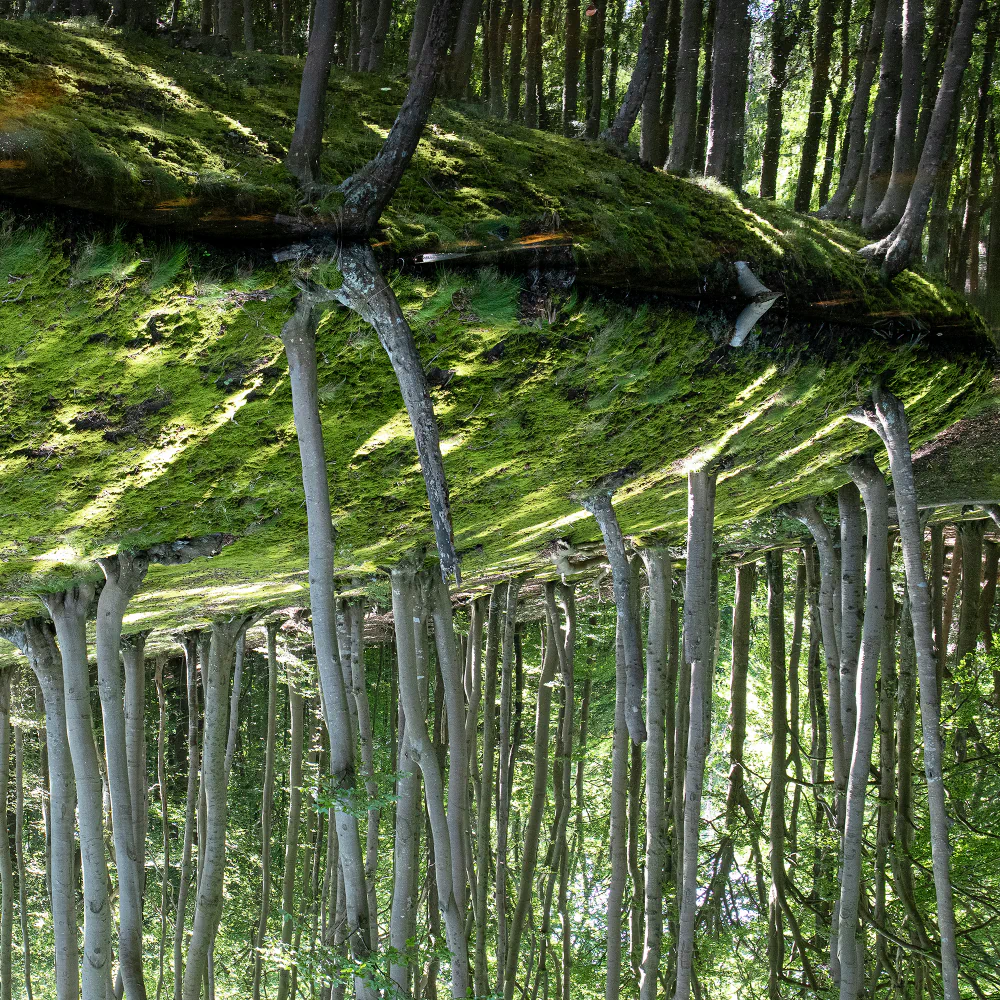
This is not a mirrored construction, but a photograph of a water reflection simply turned by 180 degrees. Through that rotation the woodland becomes a green UFO, a vexier image in which trunks, slope and light lose their ordinary orientation and the gaze itself seems bewitched. Positioned here, the work marks the decisive shift in the series: perception no longer merely encounters the forest, but falls under its spell.
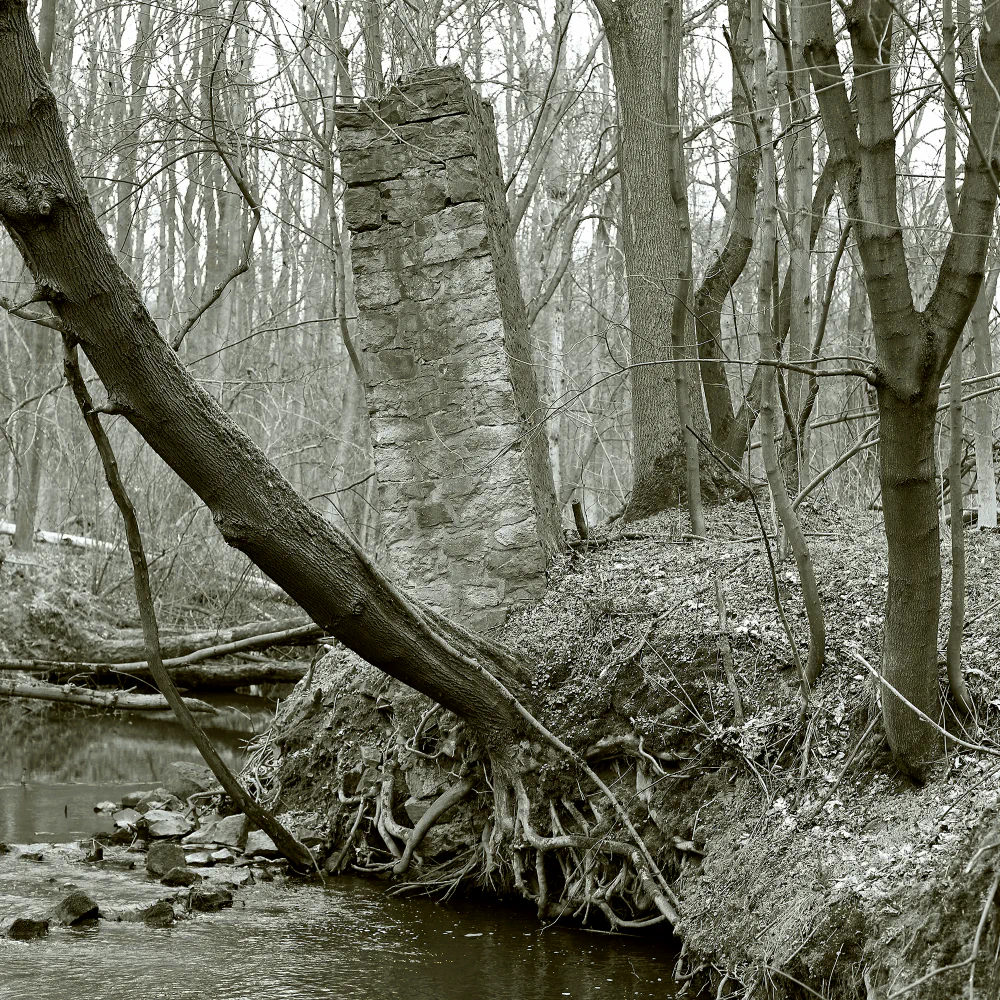
After the visual spell of Witch Wood, this image reintroduces calm, but not innocence. The bank and ruined edge suggest a more historical and reflective register, where the forest begins to meet traces of human passage and persistence. It opens the series towards a quieter entanglement with the human sphere.
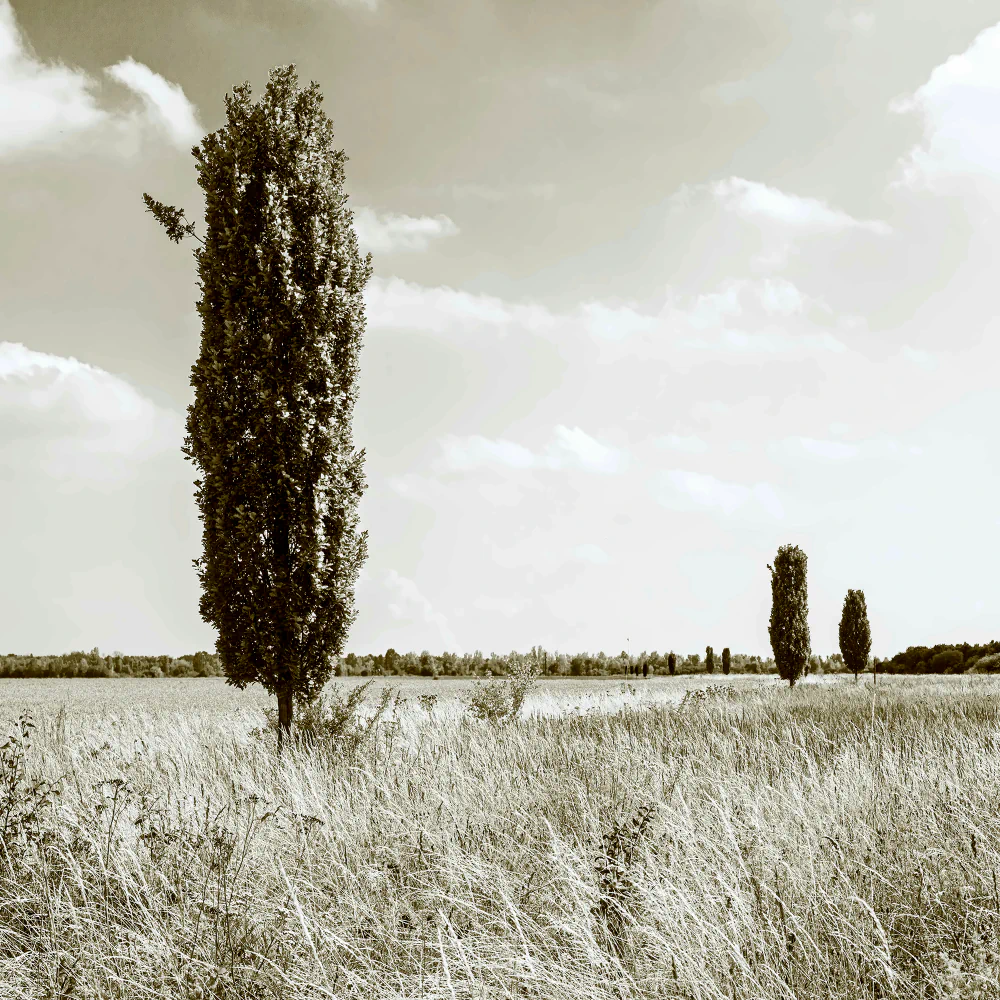
The poplars stand like escorts along a final road, lending the image a funerary and threshold-like gravity. Here the trees are not only presences in themselves, but companions to human finitude, guiding figures at the edge of another realm. Within the narrative arc, this is the clearest image of trees as silent attendants on the last passage.
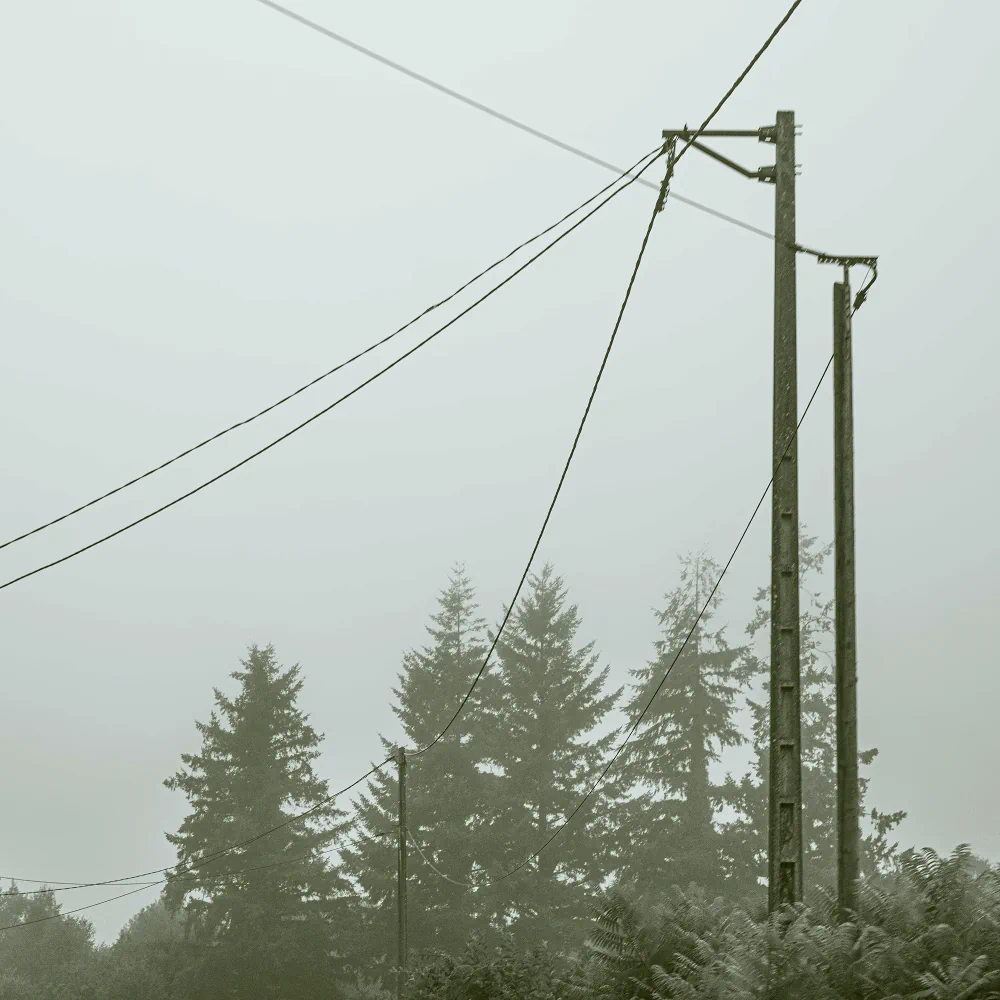
Poles and wires enter the woodland atmosphere almost ghost-like, threading infrastructure into the mist. The image introduces the human sphere not through dominance, but through subtle penetration, showing how the forest is entangled with systems of transmission, distance and control. Its restraint makes the contact feel all the more pervasive.
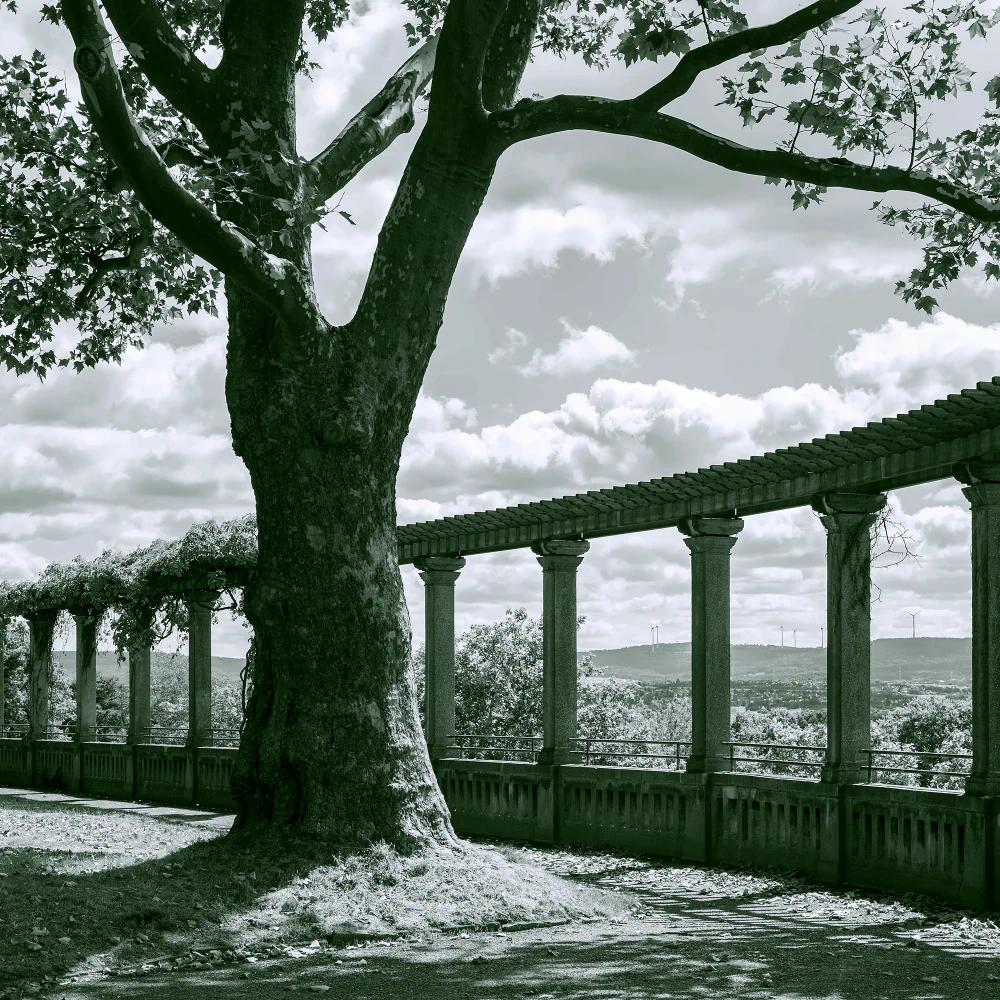
A tree stands before a landscape already altered by new energy infrastructures in the distance. The image suggests not a simple fall from innocence, but a redefinition of the relationship between nature, technology and the pastoral ideal itself: Arcadia is not destroyed so much as transformed. In the sequence, it sharpens the question of how trees continue to exist as fellow beings within newly engineered environments.
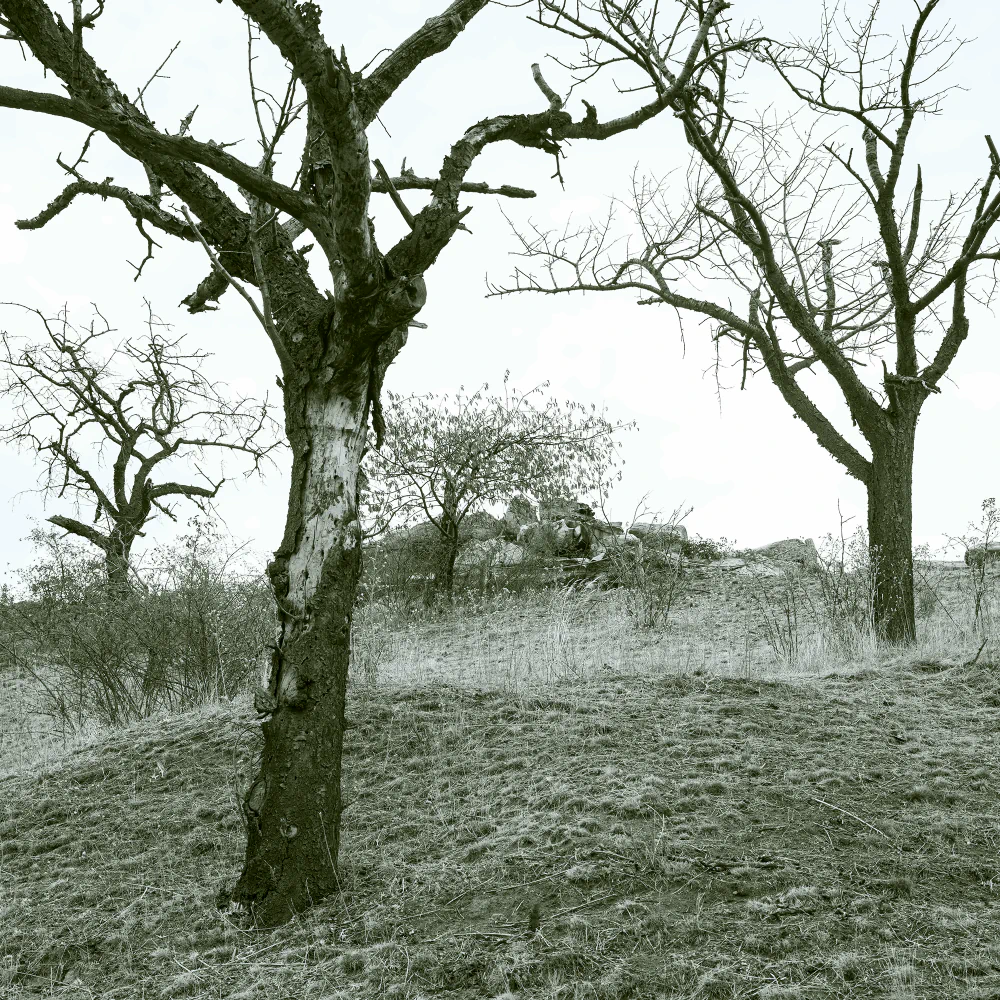
This sparse tree group recalls the memory of romantic landscape, yet bears the signs of climatic stress and damage. The title invokes a world in which the seasonal promise of renewal has fallen silent, and the image can be read as a trace of heat stress, fire damage or ecological depletion. As the penultimate work, it becomes the strongest sign of human impact in the series: beauty remains, but under pressure.
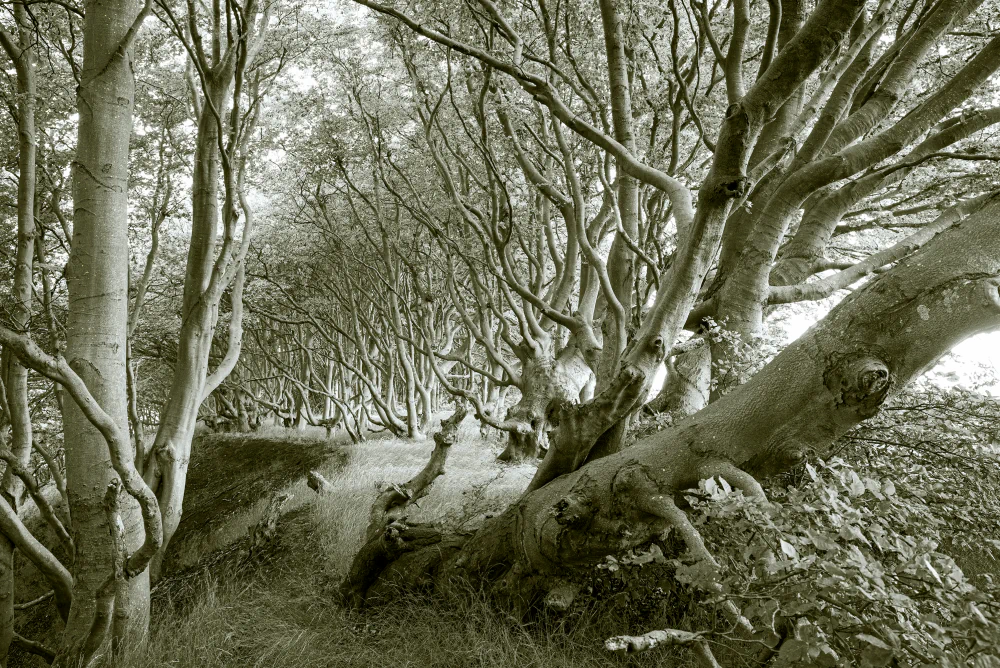
The sequence closes in a quieter register, not with resolution, but with lingering openness of a coda. After thresholds, spells, infrastructures and signs of damage, the forest remains a place of companionship and strangeness – altered, but still capable of wonder. Unlike the preceding square works, this final image opens into a wider landscape format, allowing the series to end not in enclosure, but in distance, release and a more spacious, unsettled calm.
All works in “Sylvan Weaves” are captured strictly in-camera.
With the exception of the final image, the series is conceived in a square format. The square reinforces the sense of encounter, concentration and reciprocity: it gives each tree a self-contained field of presence rather than dissolving it into scenic landscape.
The closing image departs from this structure in a wider landscape format. As a coda, it opens the sequence outward again, allowing the forest to recede into a quieter, more spacious and unresolved register.
About Marcel van Beek
His photography brings together the refined visual language of fine art photography with the reflective and analytical approach of conceptual practice. Through a sustained engagement with nature, space and the environments that surround us, his work seeks to reveal not only the beauty of the world, but also its vulnerability in the face of human intervention. His images operate as visual narratives, inviting viewers to establish their own relationship with nature, with space and with the cycles that continuously shape and transform them.
Among his sources of inspiration are Pictorialism, as well as the later work of Mimmo Jodice and Josef Sudek. Their use of light and shadow, their attention to form and structure, and their subtle ability to capture atmosphere have influenced the development of his own visual language. His photographs move beyond simple representation, unfolding as poetic and at times painterly images, while also addressing questions of social and environmental relevance. Marked by a deep sensitivity to detail and a strong aesthetic awareness, his work approaches photography as an artistic medium capable of renewing perception and encouraging a more critical reflection in the viewer. [Official Website]