Salvatore Montemagno’s work unfolds in a space where photography moves closer to painting, building images defined by silence, restraint, and symbolic tension.
His practice, developed in a self-taught way, draws from twentieth-century pictorial traditions, where light, composition, and gesture are carefully constructed to explore themes such as identity, memory, and the fragile boundary between presence and absence.
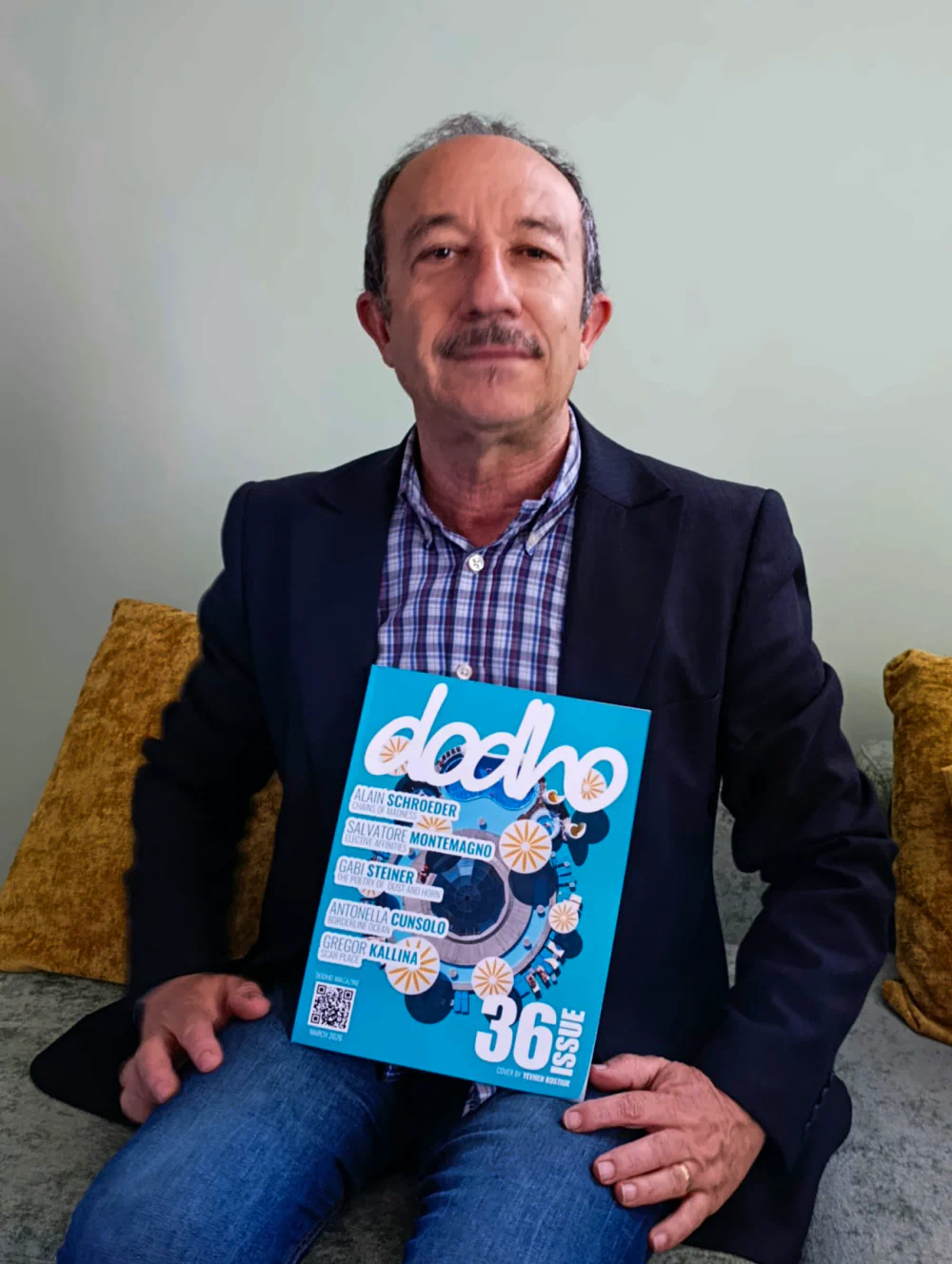
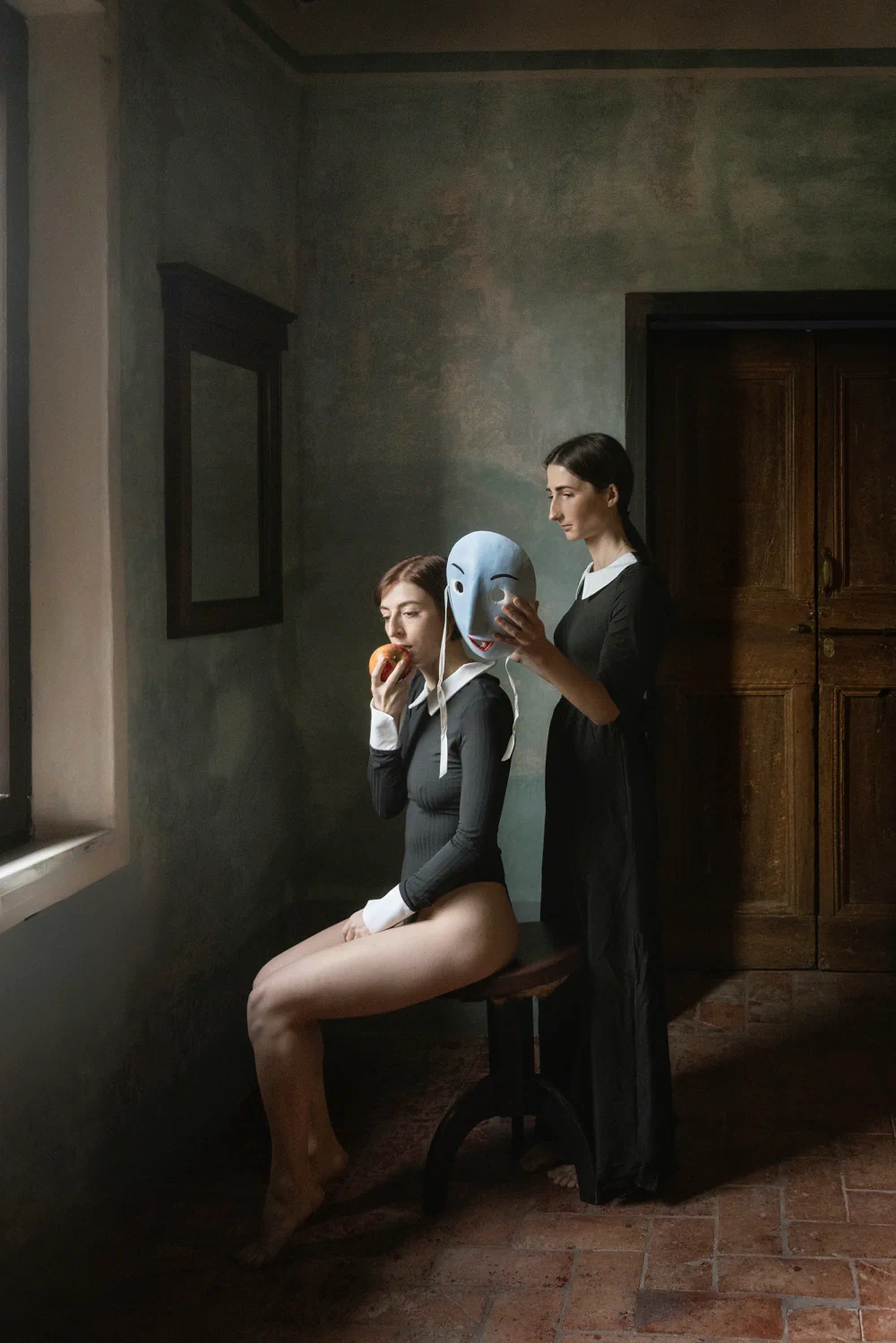
In Issue 36 of Dodho Magazine, we presented his series “Elective Affinities”, a project that navigates the space between the inner and the relational. Through the presence of two female figures and a universe of symbolic elements, the work constructs a visual narrative suspended in time, where meaning is never fixed and interpretation remains open. From this series, we speak with him about his process, his influences, and the way he approaches photography as a language of suggestion rather than definition.
How did your relationship with photography begin, and what led you to develop it as a self-taught practice into your main visual language?
I started taking photographs at a very young age, but I began creating what I truly consider my photographs only relatively recently. For many years, photography was a constant yet intermittent presence in my life: a deep interest that coexisted with other personal and professional paths.
I did not come from an academic background or traditional technical training. At first, I photographed out of curiosity, as many people do, but quite soon I realized that what interested me was not documenting reality, but transforming it.
I felt the need to create images with a more interior than descriptive dimension—something closer to painting, cinema, and literature than to documentary photography.
I learned mainly through mistakes, constant practice, and a long period of experimentation. I explored different genres before understanding that my true language lay in staging, narrative suspension, and in creating images where silence, ambiguity, and emotional tension become central elements.
At a certain point, photography stopped being simply an interest and became the most natural language through which I could express inner questions that I could not translate in any other way. Today, I still experience it in the same way: as a space of absolute freedom, where I can give visual form to what often remains undefined or invisible.”
Your work is clearly influenced by twentieth-century painting. What draws you to that universe, and how do you translate it into photography?
My visual imagination has certainly been shaped by painting, although not exclusively by twentieth-century painting. I feel equally connected to earlier artists such as Johannes Vermeer or Michelangelo Merisi da Caravaggio, as well as to more modern figures like Edward Hopper and certain strands of metaphysical and Northern European painting.
What attracts me is their ability to create silence, tension, and psychological depth through stillness. In many of those paintings, very little seems to happen on the surface, yet you feel that something invisible is taking place beneath the image. That suspended emotional dimension deeply resonates with me.
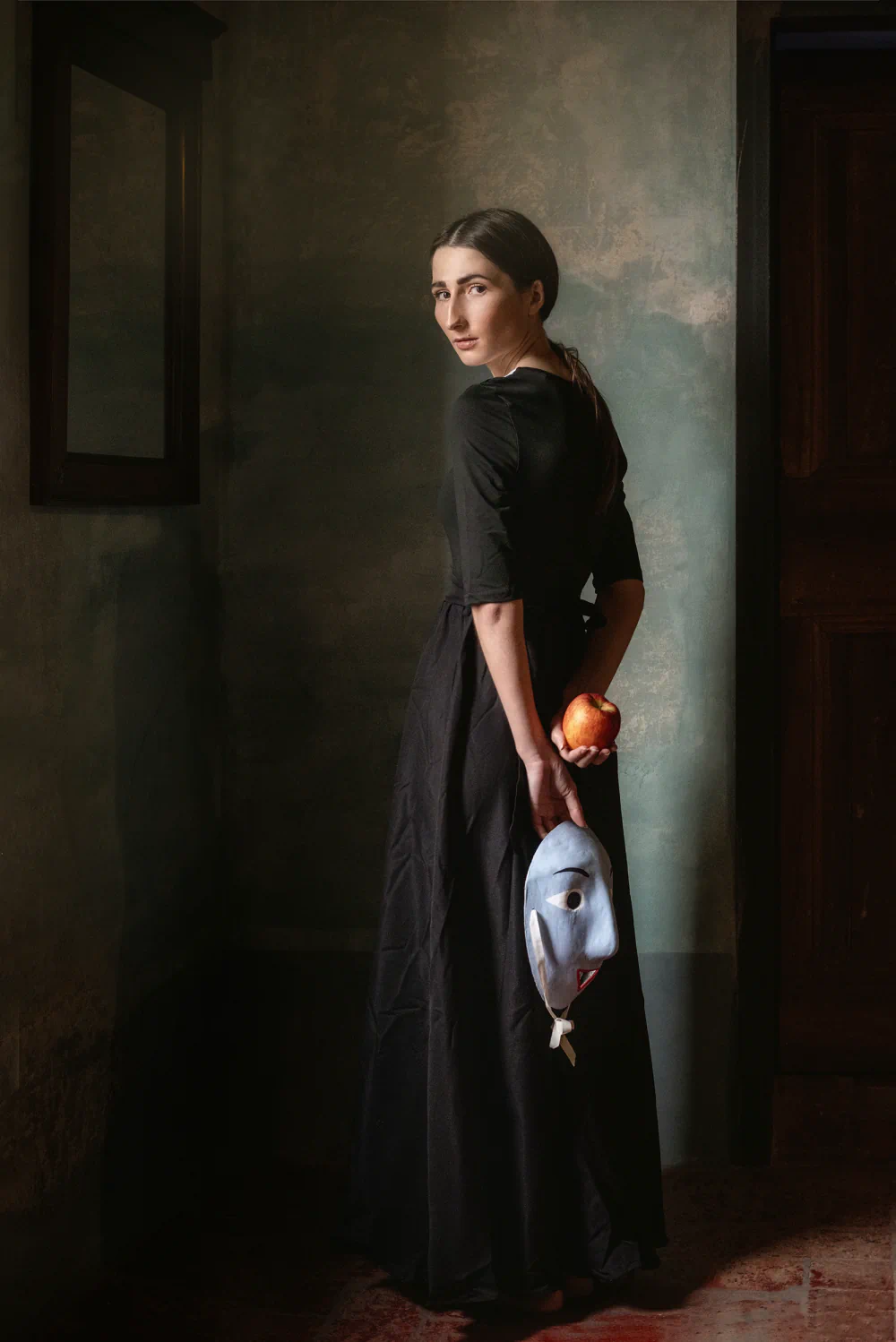
I’m also fascinated by their use of light, composition, and symbolic details. A window, a gesture, an object placed in a certain way can completely alter the emotional weight of an image. In my photographs, recurring elements such as mirrors, apples, books, masks, doors, or empty interiors often function as visual metaphors rather than narrative explanations.
I don’t try to imitate painting literally. My goal is not to recreate a painting through photography, but to absorb certain atmospheres and translate them into a contemporary photographic language. Photography allows me to work with reality, while simultaneously transforming it into something more ambiguous, theatrical, and emotionally suspended.”
Your images are built through restraint, minimal gesture, and atmosphere. How would you define your visual language today?
Today, I would define my visual language as a form of essential and suspended storytelling. I’m more interested in removing than adding—eliminating everything unnecessary in order to leave space for small gestures, details, and relationships that can suggest something without ever stating it explicitly.
I try to create images where emotional tension emerges precisely from what is restrained: a gaze, a distance between two bodies, a symbolic object, a barely hinted posture. Narrative ambiguity is very important to me because it allows the viewer the freedom to complete the image through their own sensitivity.
Ultimately, my visual language exists in this balance between formal control and restrained emotion: highly constructed images that remain open to multiple interpretations.”
There is a strong attention to composition and light in your work. What role does the pictorial play in the way you construct an image?
It plays a very important role, but not in a purely aesthetic way. For me, the painterly aspect is mainly about image construction. When I choose a room, a pose, or the position of a subject within a space, an almost instinctive process takes place: my eye naturally searches for lines of balance, geometries, proportions, and points of visual tension.
It’s a kind of spatial intuition that often happens before I even take the photograph. Then light becomes essential in defining the emotional atmosphere of the image. I often work with soft natural light, and in post-production I further refine the color tones and emotional density of the scene.
I’m looking for photographs that are formally constructed, yet still retain a sense of mystery and inner life.
In “Elective Affinities”, you present a relationship between two female figures that is never fully defined. How did this project originate?
Not every photograph begins with an idea—some begin with an encounter. Elective Affinities was born exactly in that way: through two encounters that happened at different times with Cristina and Giulia, the two protagonists of the project.
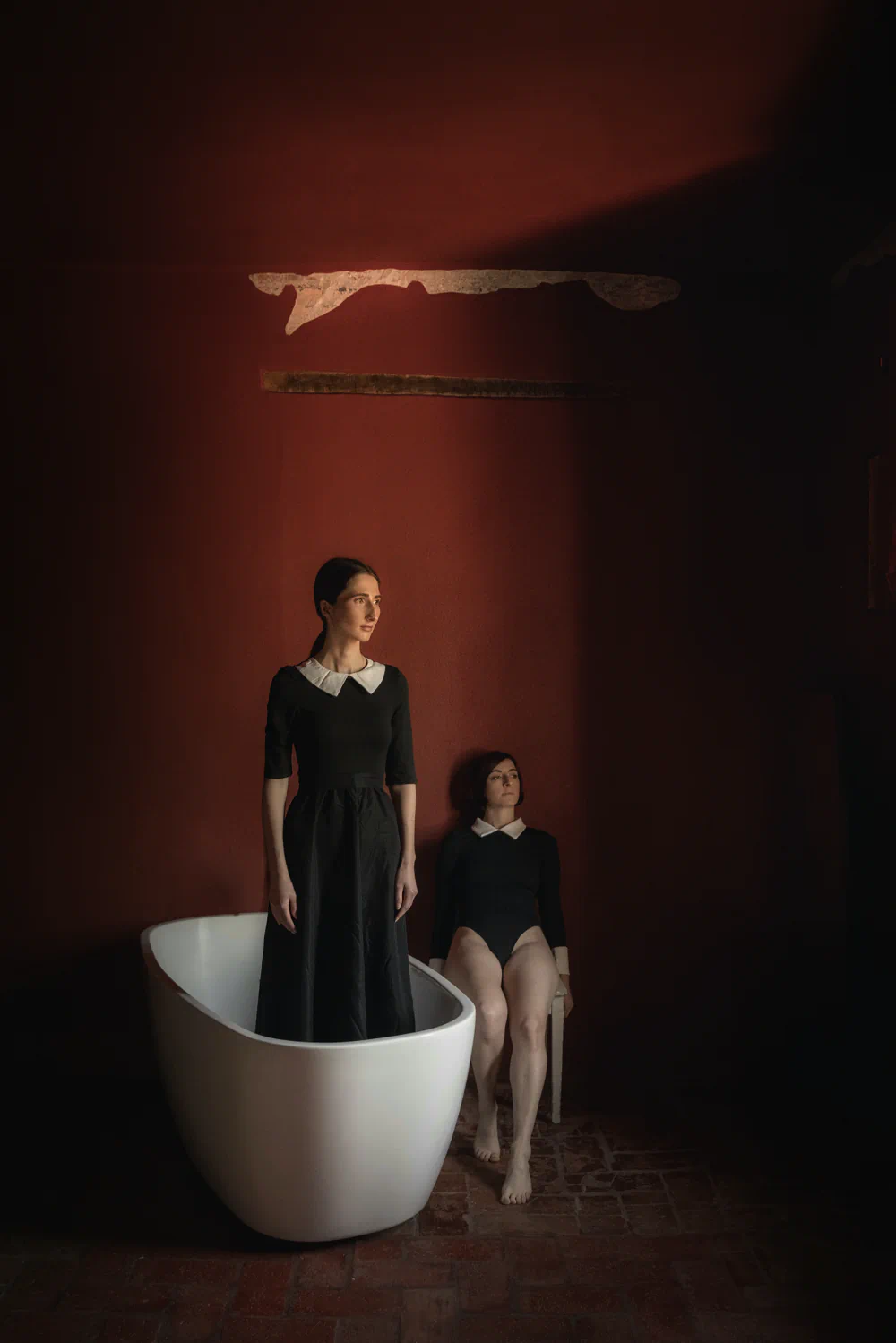
They both had very distinctive presences—an intense, melancholic, almost timeless beauty. When I met them separately, in my mind they immediately seemed to be searching for each other. I sensed a visual and symbolic affinity between them, and that became the starting point for creating a project built around an ambiguous relationship between two female figures. I had already imagined the location, chosen the outfits, and envisioned a very specific atmosphere. I wanted to create a suspended narrative that could enhance their enigmatic, timeless faces.
When we finally created the images, everything happened with a rare sense of naturalness. The photographs seemed to emerge almost on their own, as if they already existed and we were simply bringing them to light. It felt like one of those rare days when every element falls perfectly into place.
Only later did I realize that those images were expressing something deeper: an undefined bond made of attraction, distance, mirroring, and mystery. That’s when the project truly began to take shape.
The series moves between inner space and relational space. What were you interested in exploring within this ambiguity?
I was interested in exploring precisely what cannot be clearly defined. The two figures could be sisters, friends, rivals, inner projections, or even two fragments of the same identity. I didn’t want to provide a precise answer, because I believe the deepest human relationships always contain an element of ambiguity and mystery.
I was fascinated by the idea that physical interiors could also become mental spaces: rooms, corridors, windows, and symbolic objects become extensions of the characters’ emotional states.
Ultimately, I wanted to explore that subtle space where a relationship with another person also becomes a confrontation with hidden parts of ourselves.
Elements such as masks, mirrors, and apples appear as recurring symbols. How do you approach this symbolic construction within the image?
I never include an object with a fixed meaning in mind or with the intention of creating a rigid symbolic system. Elements such as masks, mirrors, apples, books, or windows appear in my photographs because I feel they add something to the image, creating questions or tension.
A mirror can suggest a double, a mask can speak about identity or what we hide, and an apple can evoke desire, temptation, or knowledge. But I’m not interested in giving these elements a single interpretation.
I like these objects to remain open to different readings. They should enrich the atmosphere of the image and make it more ambiguous—not explain it too clearly.
There is a constant tension between identity, reflection, and doubling. To what extent can the two figures be understood as parts of the same identity?
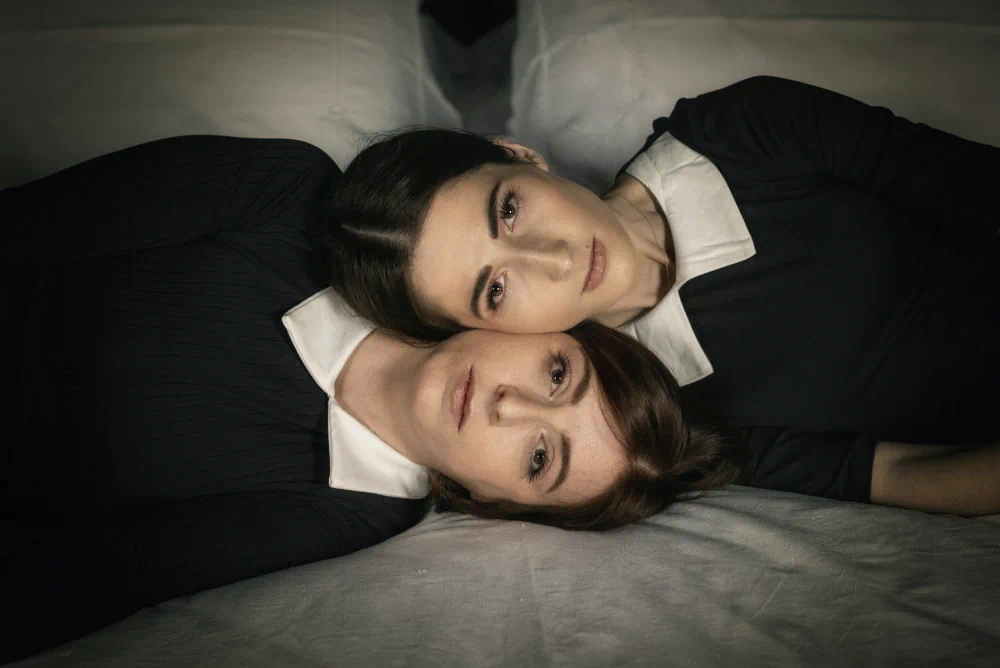
That possibility is definitely part of the project. I was interested in creating a relationship that could be read on different levels. The two figures can be seen as two distinct individuals, but they can also be interpreted as two sides of the same identity.
I’m interested in the idea that human beings are often divided between opposing forces: desire and restraint, innocence and awareness, attraction and distance. In Elective Affinities, this inner duality can take the form of two separate bodies sharing the same space.
I never wanted to define that relationship too clearly. For me, ambiguity is essential because it allows the images to remain emotionally open and gives viewers the freedom to recognize their own experiences within them.
Your images do not tell a fixed story but open multiple interpretations. Is this ambiguity an essential part of your work?
Yes, absolutely. Ambiguity is an essential part of my work because I’m not interested in creating images with only one meaning or telling closed stories.
I prefer photographs that suggest rather than explain. When everything is too clear, an image often loses its mystery and the viewer becomes passive. I want people to enter the image with their own emotions, memories, and interpretations.
Sometimes I even reject technically perfect photographs—images that are objectively well made—because they remain only on the surface of what they show. If they lack that small sense of unease, that slightly ‘wrong’ element, that secret passage toward other layers of meaning, the image feels incomplete to me.
Even when my photographs are carefully constructed, I always try to leave an open space—something unresolved. Very often, that’s where the emotional power of an image exists.