
To speak about Minor White is not simply to speak about a photographer. It is to speak about a way of understanding the image as a transformative experience.
In a century dominated by speed, information, and visual testimony, White pursued something radically different: photography as a path toward inner knowledge.
Born in 1908 in Minneapolis, White began his career within the parameters of American modernism. His early images dialogued with the tradition of straight photography shaped by Edward Weston and Ansel Adams: extreme sharpness, attention to detail, reverence for form. Yet while Weston discovered sensuality in peppers and Adams monumentalized the American West, White seemed to be searching for something else. He did not want to describe the world. He wanted to pass through it.
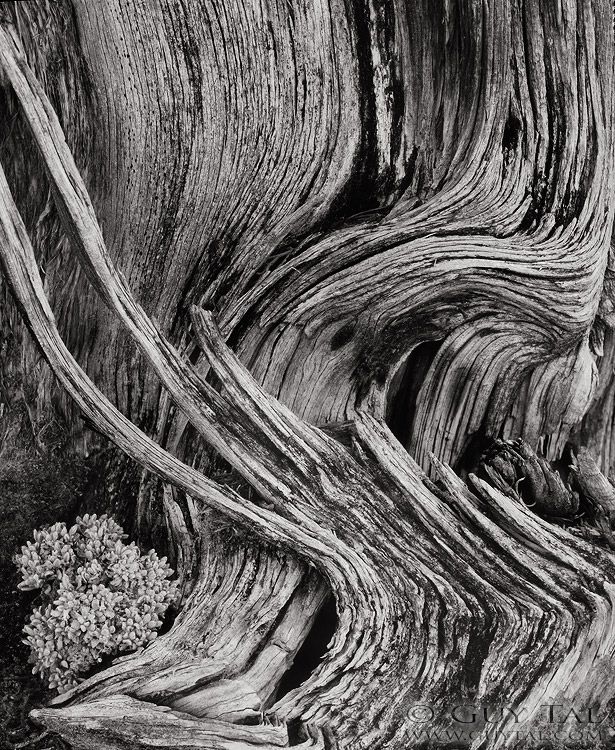
The distinction is fundamental. For White, a rock was never just a rock. It was latent form, condensed energy, a mirror of the viewer’s interior state. In his photographs of bark, frost, weathered walls, and dunes, the literal subject loses weight and gains symbolic density. The visible becomes threshold.
In this sense, White diverged from the dominant documentary tradition in the United States during the 1930s and 1940s. While photographers associated with the Farm Security Administration recorded the harsh social realities of the Great Depression, he turned his camera toward surfaces that seemed almost silent. This was not escapism. It was depth.
Over time, his approach intensified. Influenced by mystical thought, Eastern philosophy, and the teachings of Gurdjieff, White argued that photography required a state of inner emptiness. The photographer should not impose meaning but allow the image to emerge. The act of seeing became inseparable from the act of being present.
This perspective places his work in a category that resists easy classification. It is not purely straight photography, nor is it abstraction in a formalist sense. It is not conventional symbolism either. It is inquiry. And that inquiry runs through his entire body of work.
White did not photograph in order to show. He photographed to reveal. That revelation was not merely formal but spiritual. At a time when photography sought legitimacy as modern art through technical mastery and compositional clarity, he introduced an introspective dimension that unsettled many of his contemporaries.
What we now call contemplative or meditative photography finds one of its foundational figures in Minor White. His work demands more than observation. It demands presence.

Sequences and Pedagogy
The Image as Expanded Language
One of Minor White’s most decisive contributions was not a single iconic photograph but a structure: the sequence. For him, an individual image could be powerful, but a consciously ordered series could generate an experience akin to music.
White constructed sequences in which each photograph resonated with the previous one and anticipated the next. He did not pursue linear narrative but emotional continuity. The sequence functioned as a visual score built from rhythm, pause, repetition, and contrast.

This philosophy extended into his editorial and pedagogical roles. He was a central figure in the magazine Aperture, a publication crucial to establishing photography as an intellectual and artistic discourse in the United States. Through Aperture, he promoted the idea of photography as a vehicle for self-knowledge rather than mere representation.
As a teacher at institutions such as the California School of Fine Arts and later at MIT, White did not limit instruction to technical precision. He taught perception. His classes often included meditation exercises, philosophical readings, and in-depth discussions about the psychological experience of viewing images. Students were encouraged to photograph emotional states, not just objects.
His influence on later generations, though often subtle, has been profound. Many conceptual and experimental photographers inherited from him the conviction that photography can operate on psychological and symbolic levels beyond surface description.
Moreover, his emphasis on sequence anticipated contemporary practices where the project outweighs the single image. In an era dominated by fragmented circulation through social media, White’s lesson feels almost radical: photography requires duration.
Time to be seen. Time to unfold. Time to resonate.
White understood that the viewer is not passive. The image is completed in the act of contemplation. This insight aligns with his belief that a photograph should function as a mirror with memory. The viewer does not simply look. The viewer recognizes.
In today’s landscape of visual saturation and rapid consumption, White’s pedagogical approach regains urgency. He invites us to slow down. To look beyond impact. To experience.
Form, Eroticism, and Abstraction
The Hidden Body in Matter
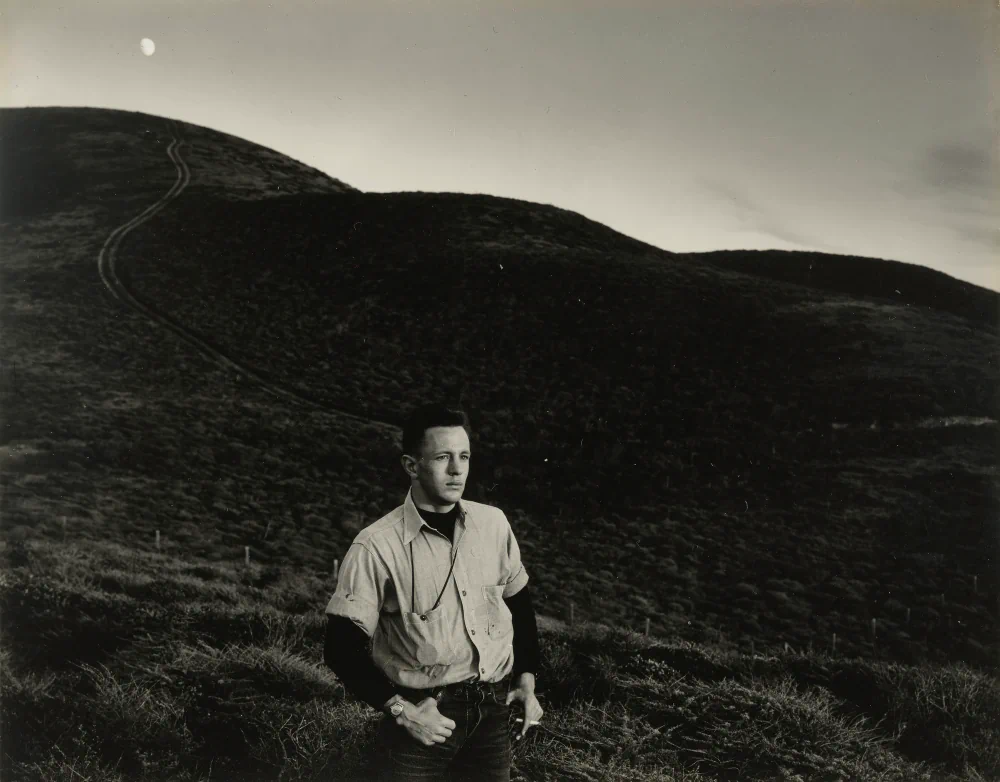
A less frequently discussed yet essential dimension of Minor White’s work is sublimated eroticism. As a gay man living during a period of intense repression, White channeled much of his emotional and sensual tension into symbolic form.
His photographs of surfaces—walls, fissures, dunes, frost—vibrate with tactile sensuality. Matter seems to breathe. Textures suggest skin. Landscape becomes body.
Rather than explicit representation, White chose suggestion. Abstraction allowed him to transmit energy without revealing object. In that displacement lies much of the emotional charge of his work. What remains unsaid becomes more powerful.
This strategy connects him to modernist abstraction while simultaneously moving beyond it. Where others explored abstraction as formal exercise, White used it as emotional conduit. Lines and shapes were not aesthetic games. They were coded confession.
The relationship between spirituality and eroticism in his work is not contradictory but complementary. Vital energy manifests both in contemplation and desire. White conceived photography as a total act in which mind and body converge.
In his studies of fractured ice or light striking weathered surfaces, formal tension transforms into metaphor. A crack becomes wound. An opening becomes possibility.
This capacity to operate simultaneously on formal, psychological, and symbolic levels explains the enduring relevance of his work. It does not rely on immediate socio-political context or anecdotal explanation. It functions as a field of resonance.
At a moment when contemporary photography often oscillates between hyper-conceptualization and aesthetic spectacle, returning to Minor White means returning to quiet intensity. To the image that does not shout yet remains.
His legacy is not measured by viral visibility or mass recognition. It is measured by depth. By the ability to transform perception.
Minor White did not pursue fame. He pursued clarity. In doing so, he left one of the most coherent and radical propositions in twentieth-century photography.