

The twentieth century was not only the century of wars, revolutions, industrial expansion, and cultural upheaval. It was also the century of images. Photography became the dominant language through which events were witnessed, interpreted, and ultimately remembered. Newspapers, magazines, illustrated books, and later television relied on photographs to compress complex realities into frames that could travel across continents in hours.
But some photographs did more than document history. They replaced it.
When we think about the Great Depression, we do not visualize economic data or policy debates. We see a mother with worried eyes surrounded by her children. When we think of the Vietnam War, we do not recall geopolitical analysis. We see a gunshot on a Saigon street. When we imagine industrial America, we see men eating lunch suspended above Manhattan. The image becomes the event.
This article gathers some of the most iconic photographs of the 20th century, n
ot simply as a list of famous images, but as a map of how visual memory is constructed. Each of these photographs has transcended its original context. Each has become shorthand for an era. Each has contributed to the mythology of modern history.
Lunch atop a Skyscraper (1932)
Industrial America Suspended in the Sky
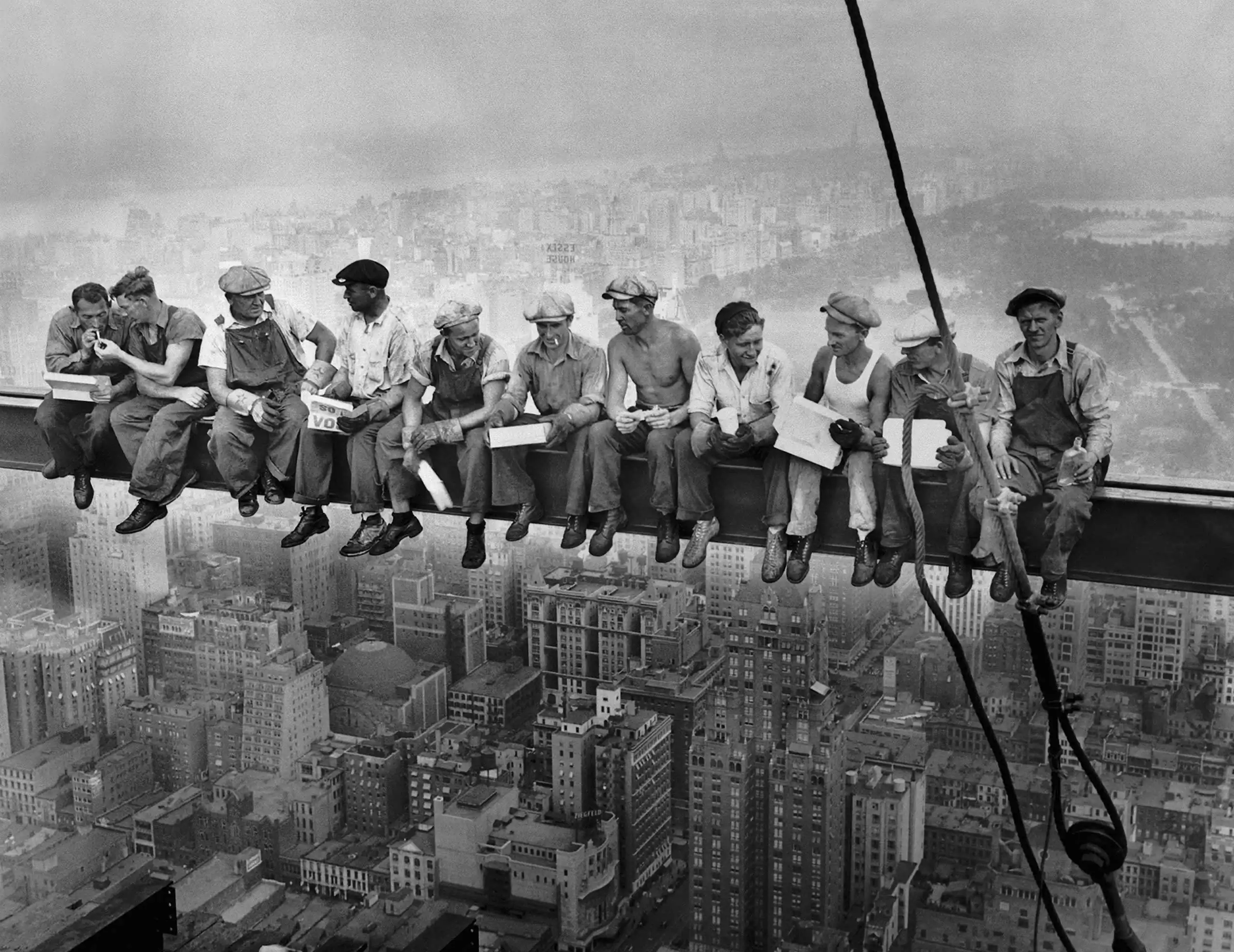
Few photographs are as instantly recognizable as the image of eleven ironworkers seated on a steel beam high above New York City. Known as Lunch atop a Skyscraper, the photograph captures a moment of apparent casualness amid vertigo. The men smoke, chat, and eat, their legs dangling over Manhattan’s expanding skyline.
Originally part of a publicity effort during the construction of Rockefeller Center, the image has since become a symbol of American industrial ambition. It condenses the mythology of modernity into one frame: courage, labor, risk, masculinity, progress. Whether staged or spontaneous has become almost secondary to its symbolic function.
The photograph no longer belongs solely to its historical moment. It represents the idea of building a nation from steel and height. It stands for resilience during the Great Depression. It simplifies economic collapse into daring optimism. Through repetition, it has evolved into a visual metaphor for twentieth century industrial confidence.
Migrant Mother (1936)
The Face of the Great Depression
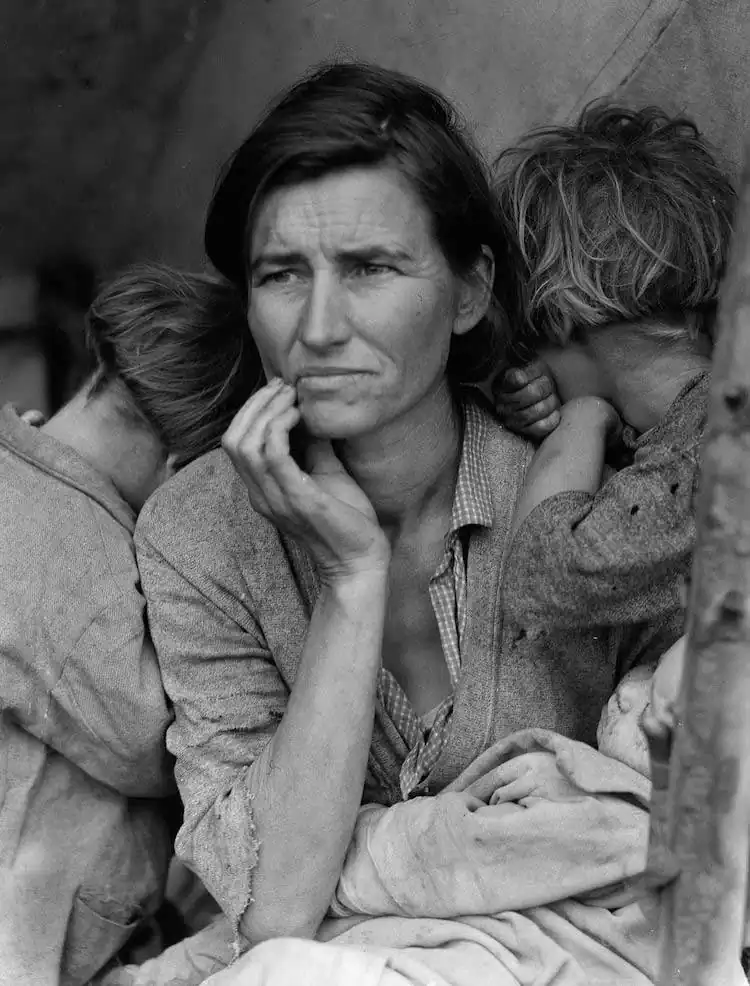
Dorothea Lange’s photograph of Florence Owens Thompson and her children is perhaps the most reproduced image of the Great Depression. Commissioned by the Farm Security Administration, the image was intended to document poverty in rural America. It succeeded far beyond that mandate.
The mother’s furrowed brow and distant gaze have come to symbolize national hardship. The photograph transformed an individual woman into an emblem of collective suffering. It mobilized public empathy and influenced government response, demonstrating the political force of documentary photography.
Yet its iconic status also raises ethical questions. Thompson herself later expressed discomfort with the photograph’s widespread use. The image immortalized her struggle but fixed her identity in one moment of vulnerability. The icon simplified her life into a symbol.
Still, Migrant Mother endures because it captures something archetypal: endurance in the face of uncertainty. It stands not only for a historical crisis, but for the universal fragility of security.
The Falling Soldier (1936)
War, Authenticity, and the Myth of the Decisive Moment
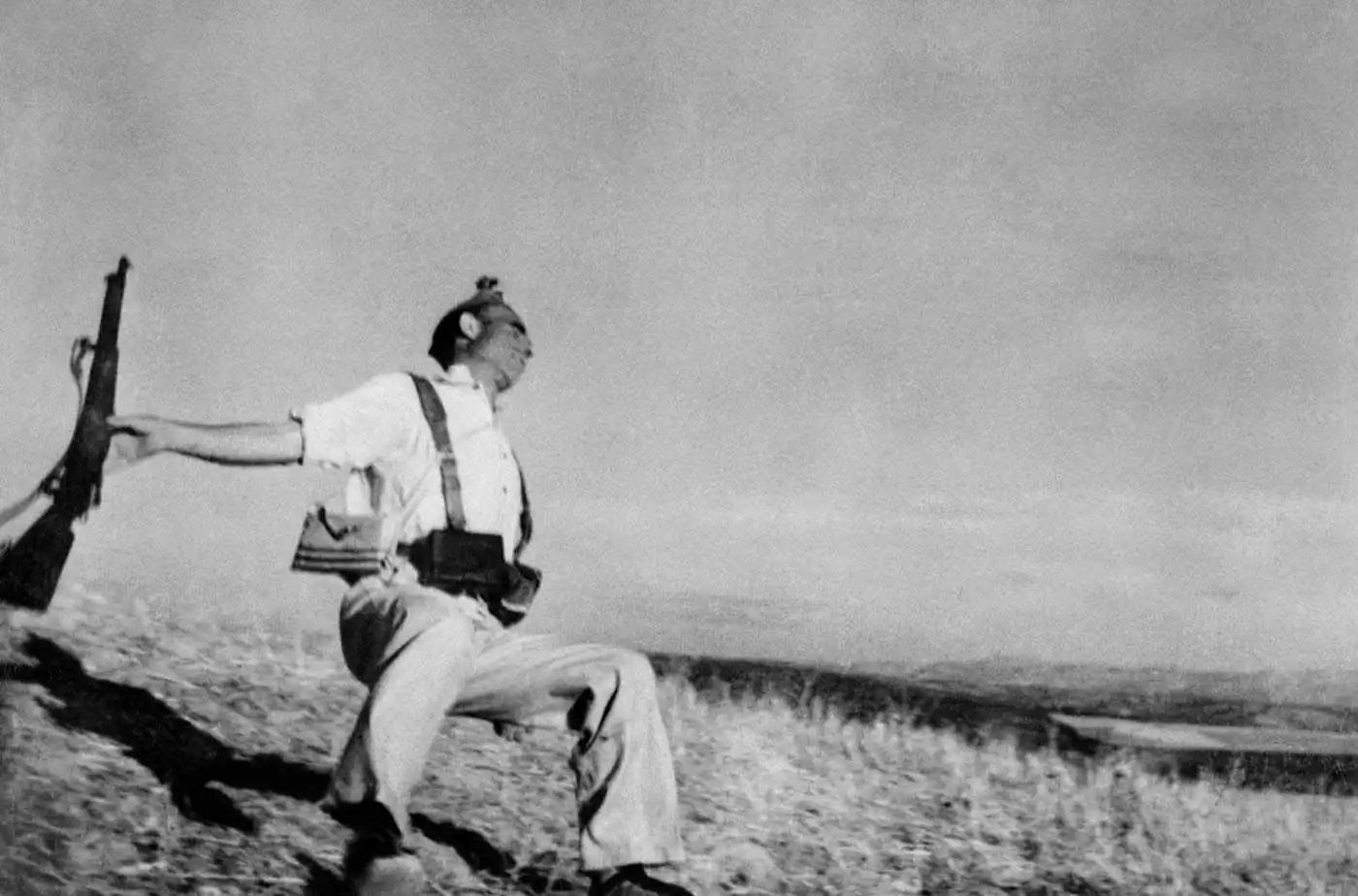
Attributed to Robert Capa, The Falling Soldier depicts a Republican fighter at the instant of death during the Spanish Civil War. The soldier’s body tilts backward, rifle slipping from his hands. The frame appears to capture the exact second life leaves the body.
Few war photographs have generated more debate. Was it staged? Was it spontaneous? The controversy has persisted for decades. Yet regardless of authenticity, the image has become synonymous with wartime sacrifice.
The photograph functions less as documentation of a specific battle and more as a universal symbol of war’s fragility. It distills the chaos of conflict into a single human collapse. Through repetition in books, exhibitions, and essays, it has come to represent the vulnerability of soldiers everywhere.
Authenticity may matter historically, but myth has secured its prmanence.
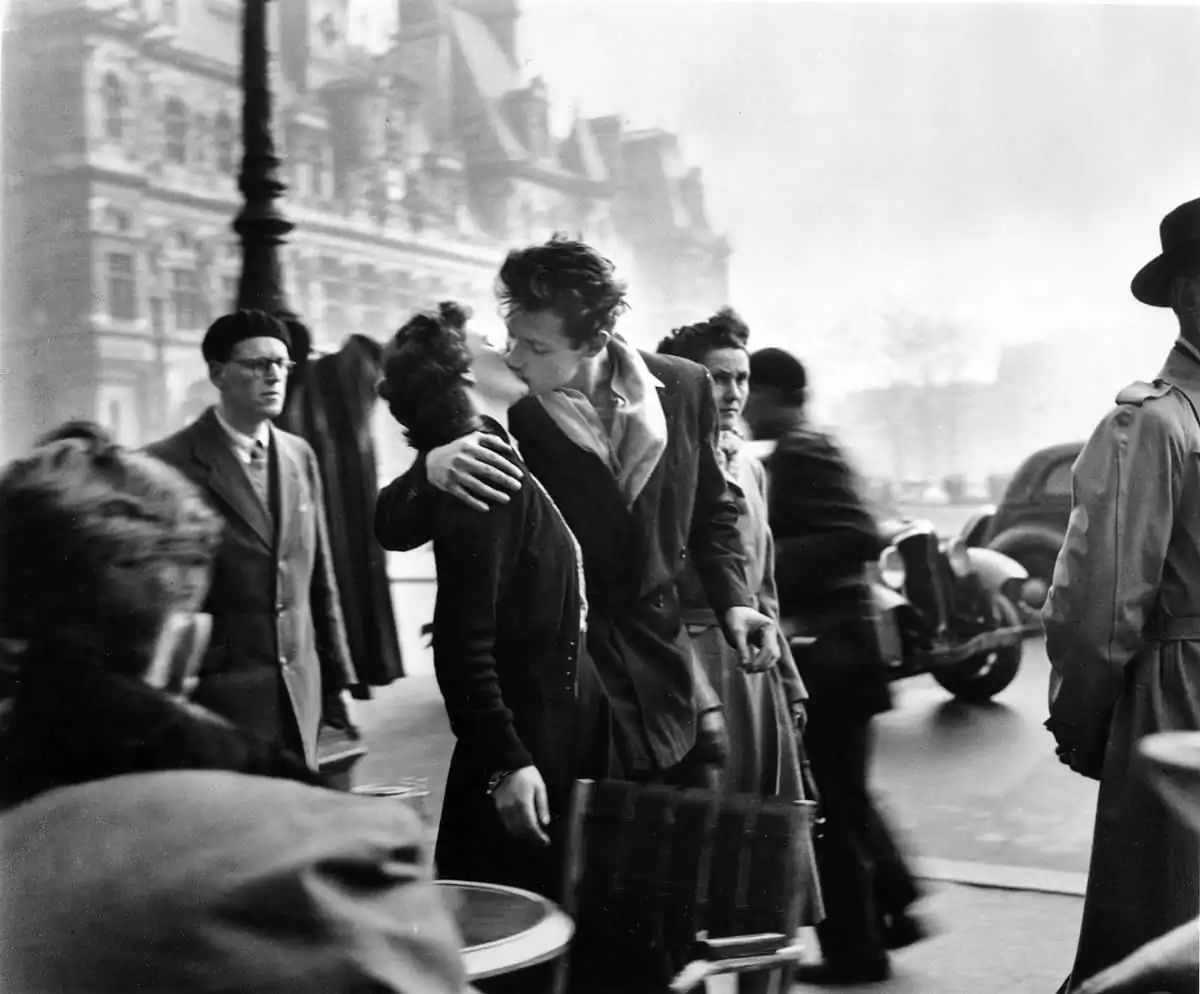
Kiss by the Hôtel de Ville (1950)
Romance, Staging, and the Invention of Paris
Robert Doisneau’s image of a couple kissing in front of Paris’s City Hall became one of the most reproduced photographs of the postwar period. For decades it was believed to be a spontaneous capture of urban romance. Later revelations confirmed it had been staged with actors.
Yet the revelation did little to weaken its symbolic power. The photograph continues to embody an idea of Paris as the city of love. It is less about two individuals than about the cultural fantasy of intimacy in public space.
The image illustrates how myth often overrides fact. The public embraced the emotional truth of the scene over its documentary accuracy. In doing so, the photograph transcended journalism and entered collective imagination.
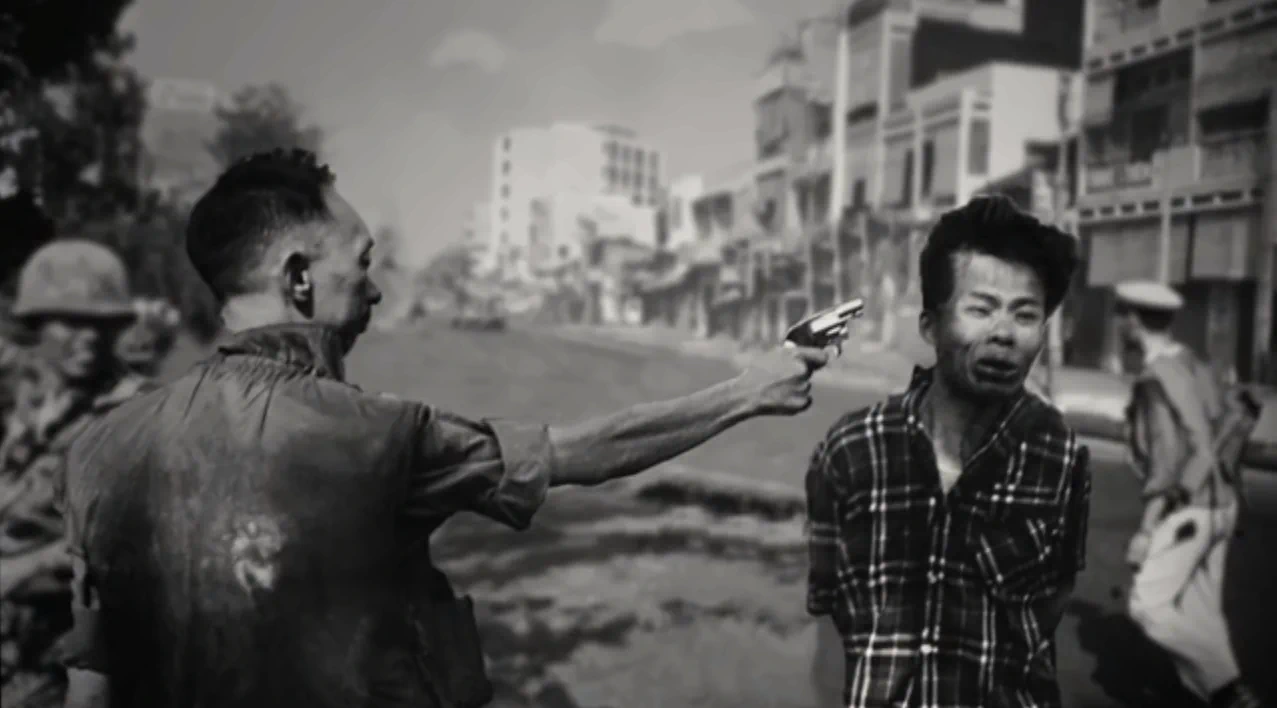
Saigon Execution (1968)
A Gunshot That Shaped Public Opinion
Eddie Adams’s photograph of General Nguyễn Ngọc Loan executing a Viet Cong prisoner in Saigon became one of the defining images of the Vietnam War. The moment of the gunshot, captured with brutal clarity, circulated globally.
The image appeared decisive. It seemed to explain the war’s moral complexity in a single instant. Yet Adams himself later reflected on the unintended consequences. The photograph destroyed reputations and simplified a deeply complicated context.
The power of the image lay in its immediacy. Violence, frozen mid-action, required no explanation. Through repetition, the photograph became emblematic of the war’s brutality, influencing public perception far beyond the circumstances of that street corner.
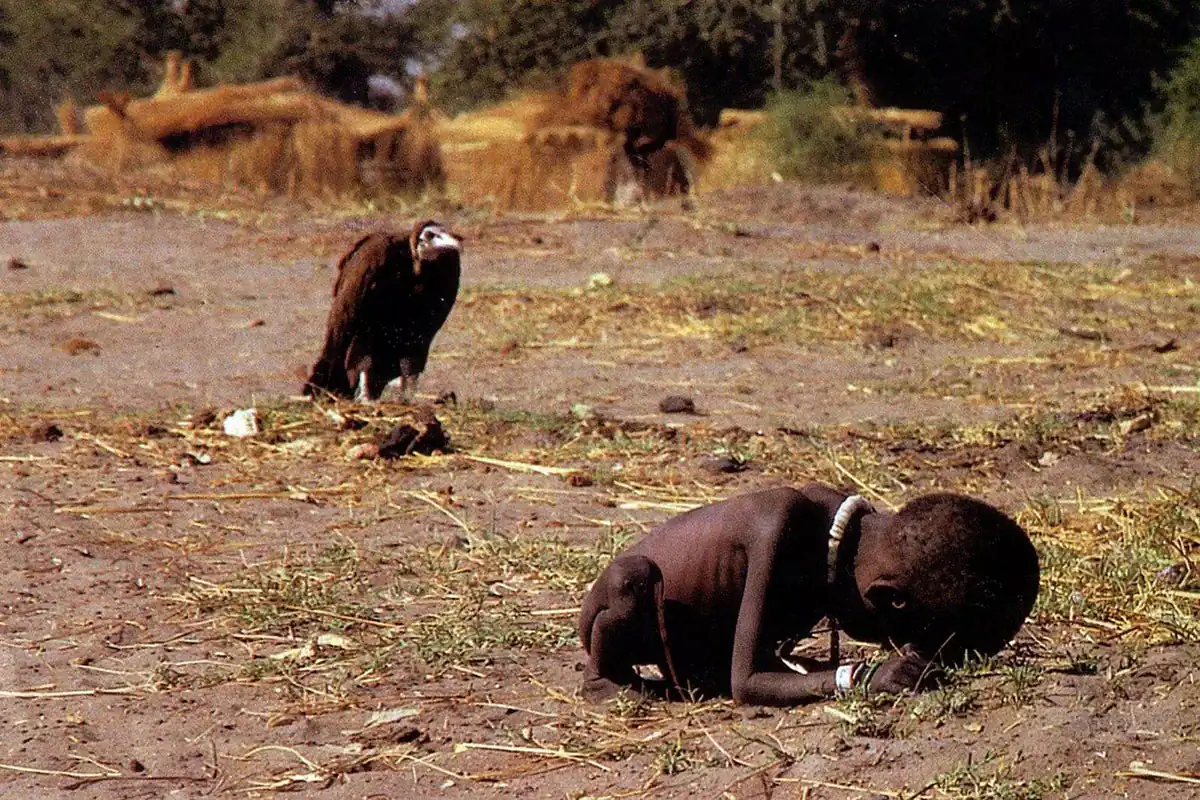
The Vulture and the Little Girl (1993)
Witnessing Famine and the Ethics of Seeing
Kevin Carter’s photograph of a starving child in Sudan stalked by a vulture won the Pulitzer Prize and ignited global debate. The image became a symbol of famine in Africa, reproduced endlessly in newspapers and humanitarian campaigns.
But the photograph also generated moral scrutiny. Should the photographer have intervened? Did witnessing become complicity? The image evolved into a permanent ethical question about the responsibilities of photojournalism.
It stands as a reminder that iconic images can carry immense psychological and moral weight. The frame became larger than the event, and larger than Carter himself.
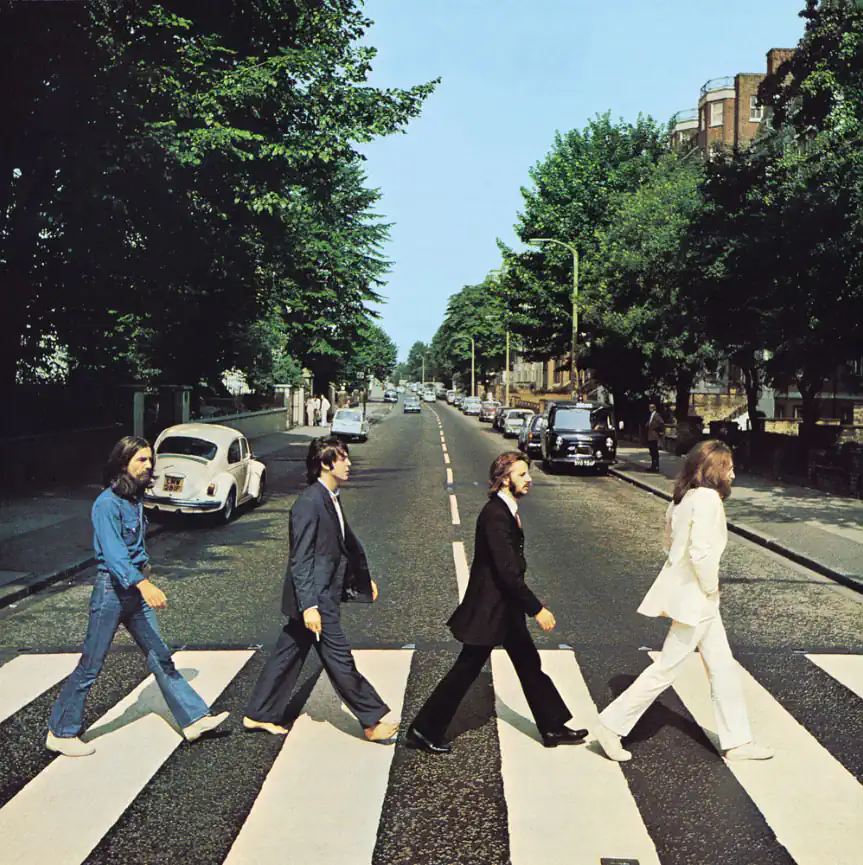
Abbey Road (1969)
Popular Culture and Generational Identity
Photographed by Iain Macmillan, the cover of The Beatles’ Abbey Road album appears deceptively simple: four musicians crossing a zebra crossing outside a London studio. Yet the image became one of the most recognizable cultural photographs in history.
Beyond music, it symbolizes the late 1960s. It encapsulates transition, creativity, youth, and the end of an era. The street itself became a site of pilgrimage. The image generated analysis, conspiracy theories, and endless imitation.
It is proof that icons do not need violence or crisis to endure. Cultural resonance alone can secure immortality.
Why These Images Endure
What unites these photographs is not only aesthetic strength. It is repetition. Each image has been reproduced, taught, debated, and circulated across decades. Through media systems, institutions, and markets, they were selected as representatives.
They simplify complexity. They condense history. They function as visual anchors in collective memory.
But they also exclude. For every photograph that becomes iconic, thousands vanish into archives. The icon is not necessarily the most comprehensive representation of an event. It is the most adaptable.
The twentieth century taught us that photography does not merely record history. It frames how history will be remembered.
And in an era of digital acceleration, understanding how these images achieved their status becomes essential. The next icon may emerge tomorrow. The mechanism remains the same.
Repetition. Circulation. Myth.