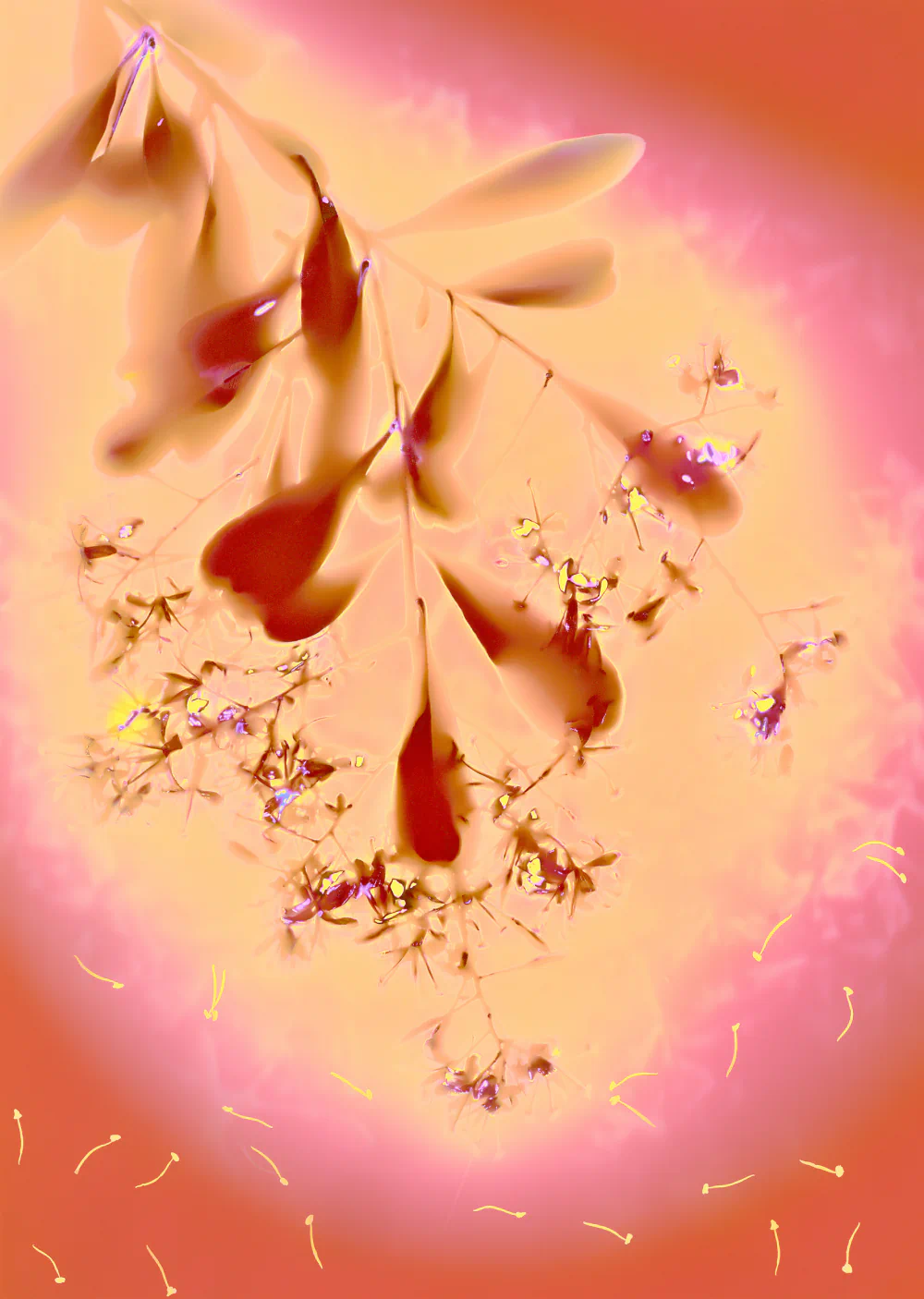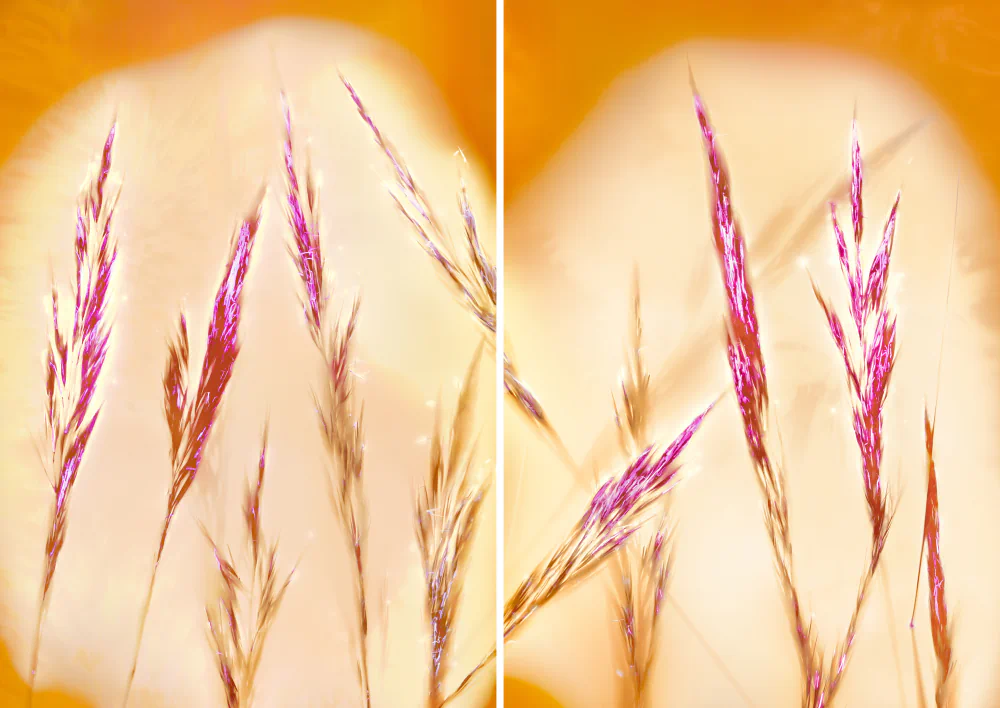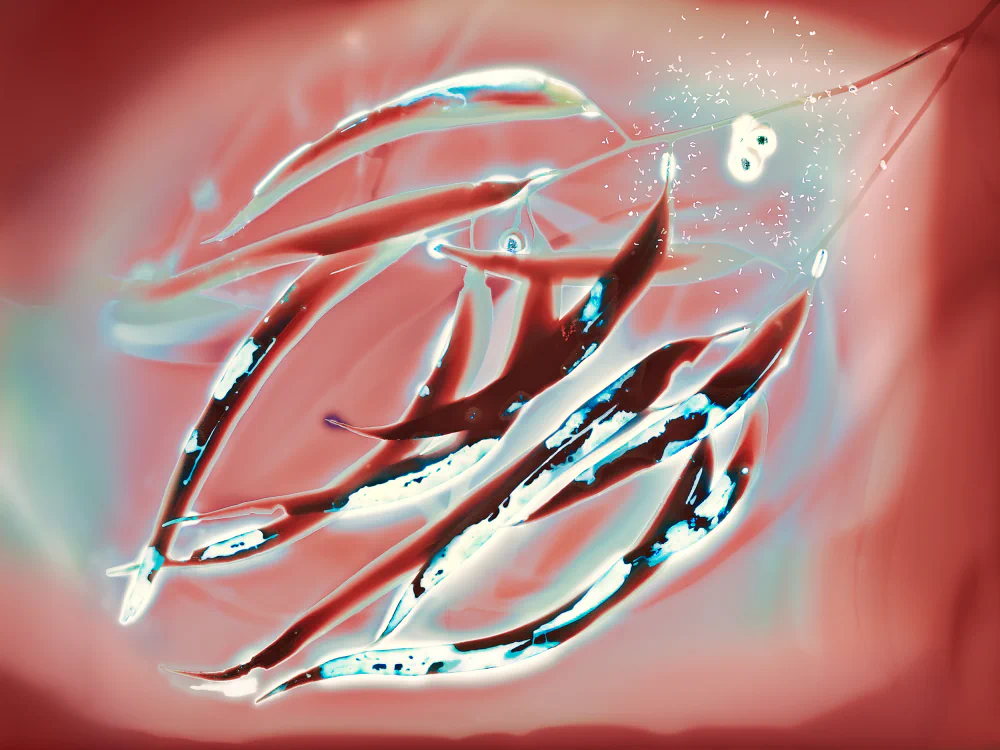

In this body of work, Australian artist Kate Robertson investigates how ecological systems and photographic processes intersect as sites of transformation.
By working with native flora found on Wadawurrung Country, the images become traces of interaction between plants and film, light and chemistry, the artist and the environment, echoing broader networks of interdependence.
A mixture of plants was used, including the low-growing groundcover succulent pigface, the silver banksia shrub, and the manna gum tree. In Australia, it is illegal to damage or remove flora from national parks and reserves. As such, the plant material was sourced from her family’s garden.
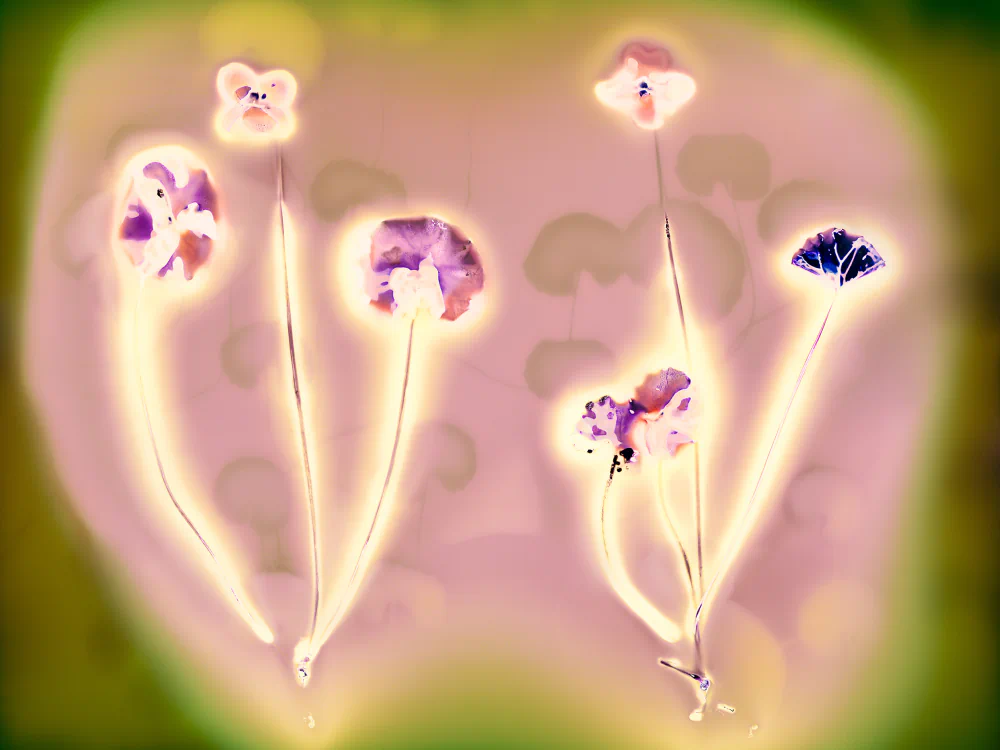
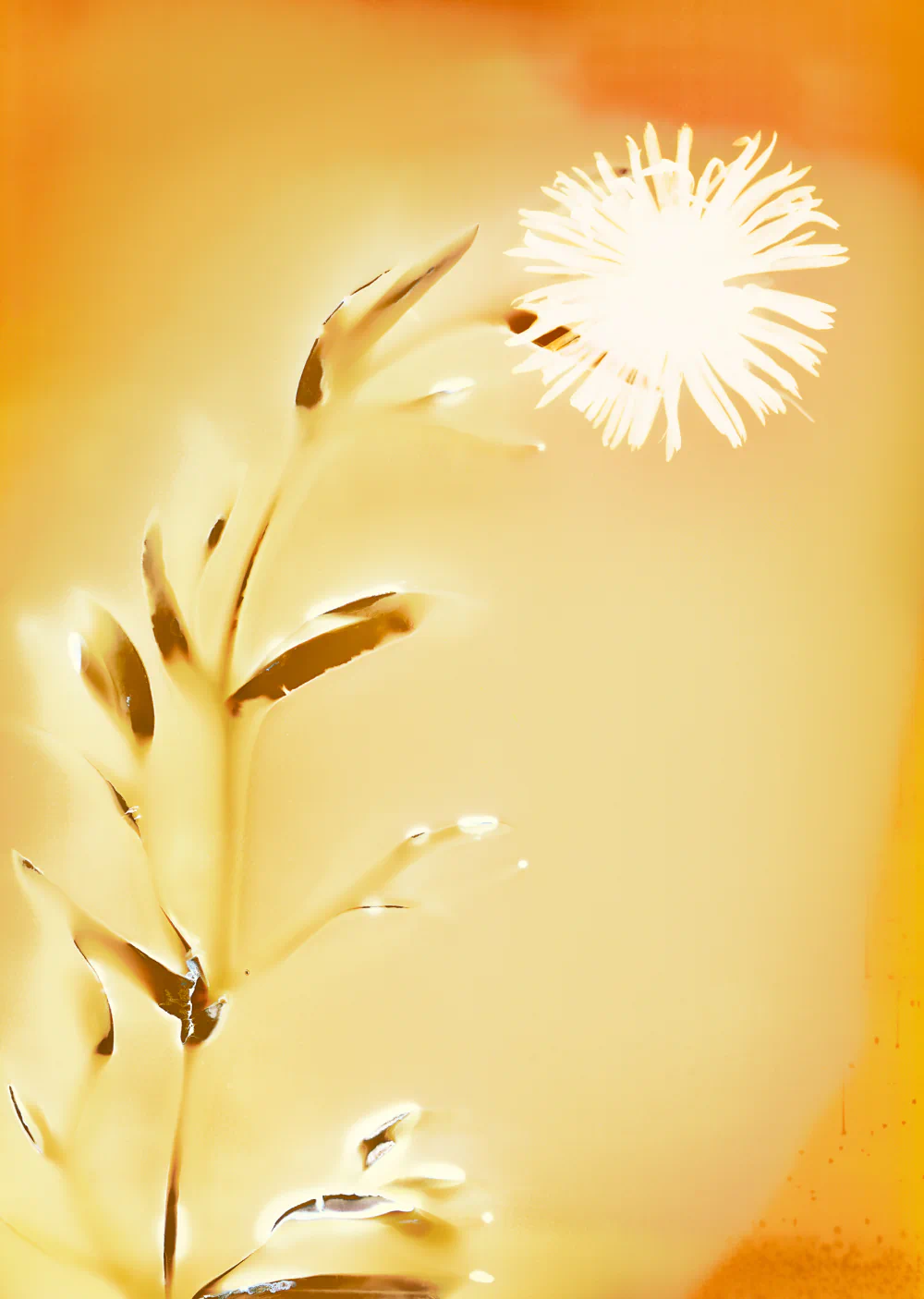
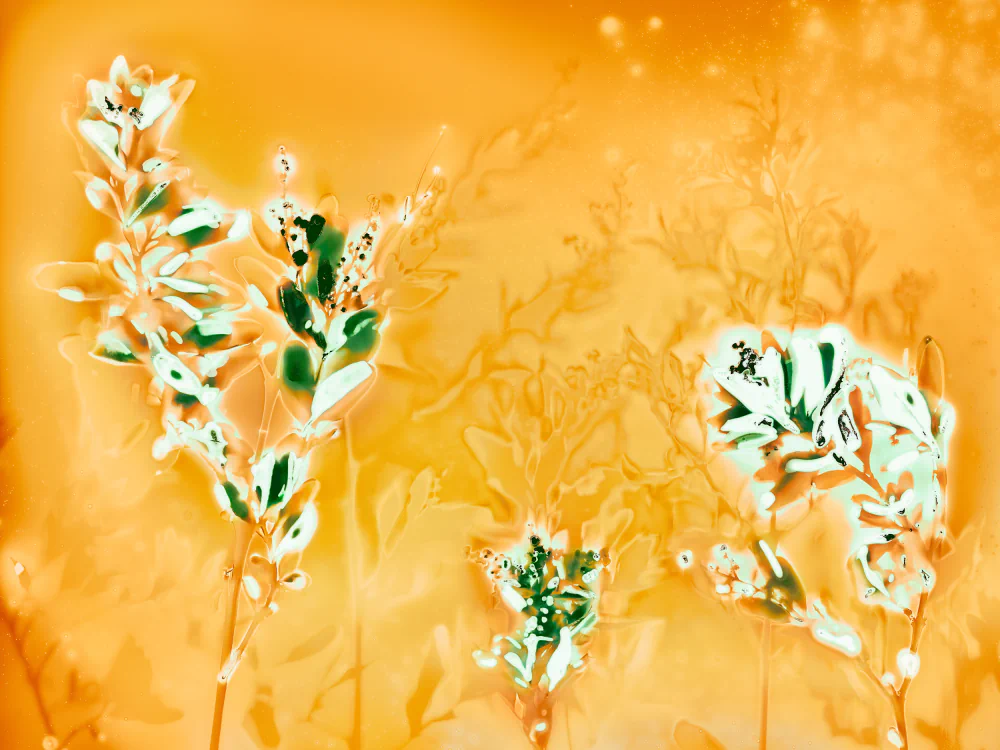
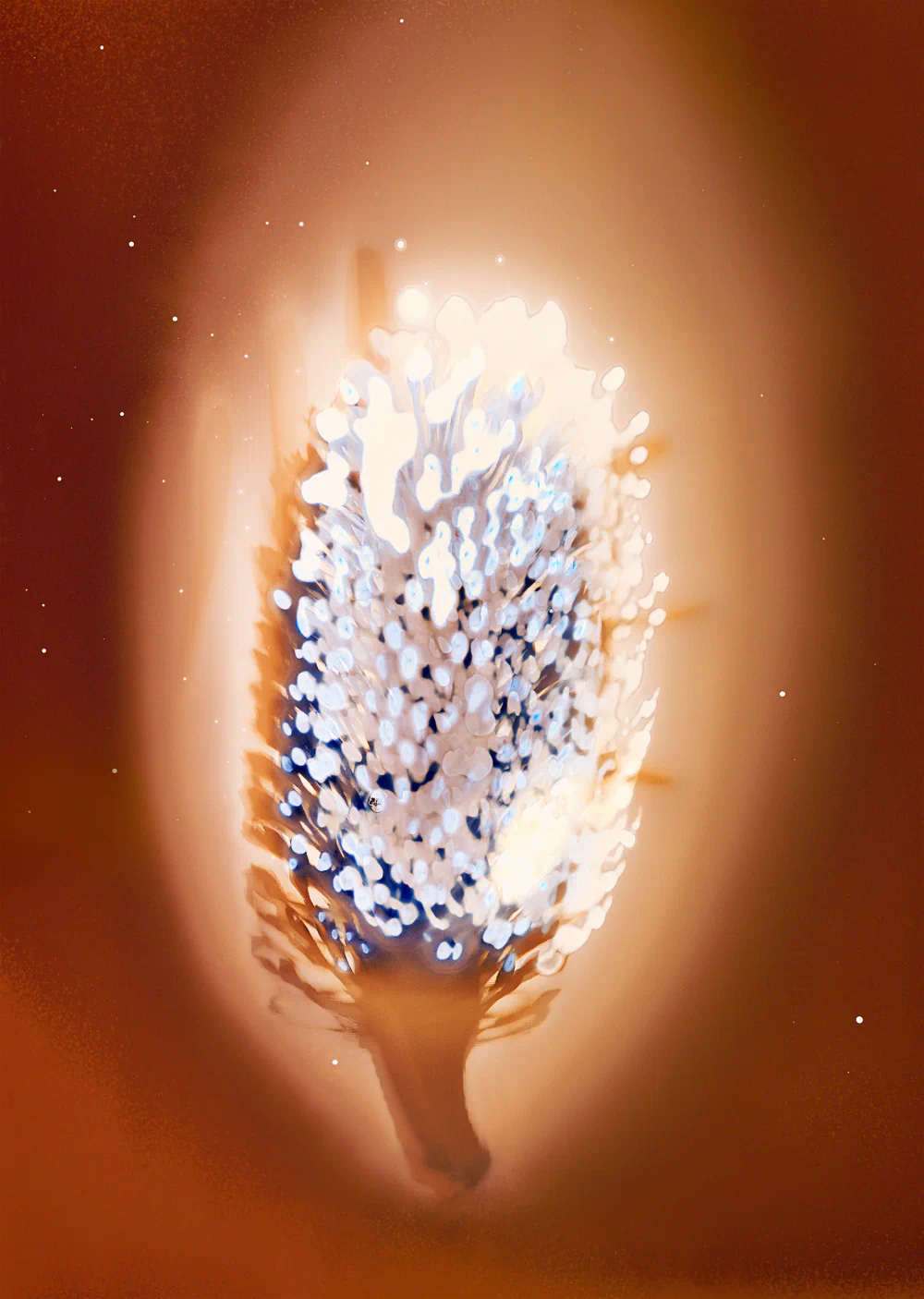
Using the analogue photographic method of phytograms, Kate creates cameraless images that arise through direct physical and chemical exchange. In this process, plant material is soaked in a non-toxic solution and placed directly onto expired photographic sheet film. Exposed to UV light over the course of a week, the plants react with the photosensitive surface. Their inherent moisture, mineral composition, and structure interact with ambient temperature and light, as well as with the chemicals within the film substrate, producing subtle imprints.
By relinquishing the camera and a degree of control, Kate allows the work to unfold within more-than-human systems. The extended exposure time foregrounds slowness as both a methodology and an ethic. Rather than positioning the photographic surface as passive, the film becomes responsive, a site of exchange that absorbs and holds information. In this way, the process mirrors ecological systems themselves, which are relational and contingent, shaped beyond singular control.
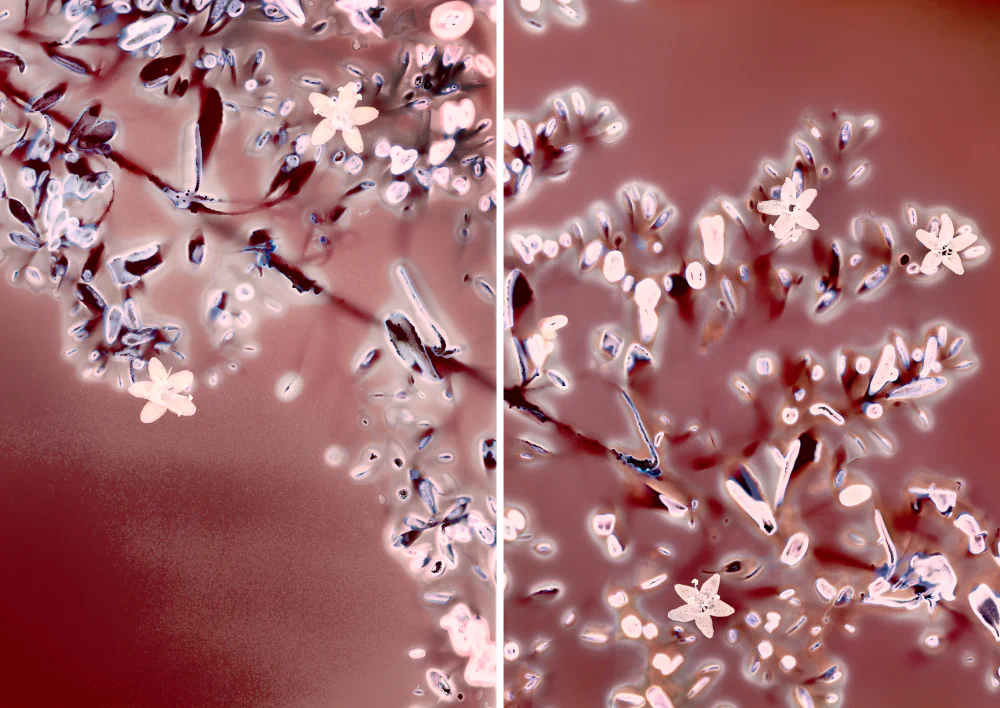
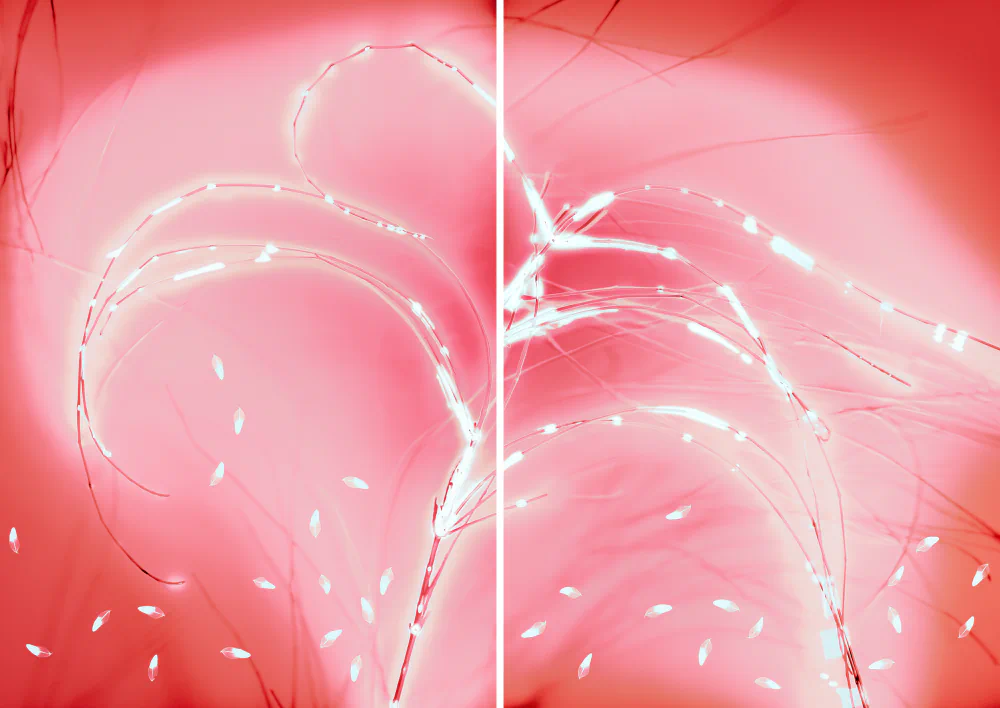
Each phytogram develops uniquely. Gradients appear across the surface, and traces of stems, flowers, and leaves emerge as ghostly silhouettes. The resulting works are abstract and atmospheric, recording the plant material’s encounter with the photographic film sheets. The unpredictable nature of the outcome is embraced as an essential element of the work, supporting the idea that transformation is not imposed but allowed to occur.
Following this analogue phase, Kate scans the film with physical plant elements intact and then digitally colors the images, extending the process into a second transformation. Color is heightened to create luminous, otherworldly effects that intensify the plant’s liveliness. This digital intervention does not override the analogue trace; rather, it deepens the dialogue between organic and technological systems. The final images embody a layered meeting of organic, digital, and photographic matter.
Sustainability and care are embedded within the process. Kate uses non-toxic solutions and upcycles expired photographic materials, extending their lifespans. Expired large-format sheet film that had been in her possession for many years was used once again. These choices align with her broader interest in regeneration, not only ecological regeneration, but also the renewal of photographic practice itself. By working slowly and attentively, she aims to resist extractive modes of image production and instead develops a practice grounded in reciprocity.
Kate positions the photographic medium as a living, feeling entity and invites viewers to consider what images can hold beyond representation, toward more embodied outcomes. Through slow looking and contemplative engagement, she encourages reflection on how we might exist within environmental contexts with greater sensitivity and care.
She acknowledges that she lives and works on unceded Aboriginal land, which has been cared for by the Wadawurrung people for thousands of years. In response, she worked only with native flora, selected in consultation with Wadawurrung Traditional Owners, to ensure the imaged plants did not hold sensitive cultural meaning. The work was shared throughout its development to uphold cultural integrity and appropriate representation, situating the project within an ethic of accountability and respect for the land on which one works and lives.
Her work is held in numerous collections, including the Art Gallery of New South Wales (AUS), the Southeast Museum of Photography (USA), and the Center for Creative Photography (USA). In 2018, her work was published in a book titled Kuna Siwai Pokong, which has been accessioned into the Papua New Guinea National Museum and Art Gallery (PNG), the Australian Museum (AUS), and the Field Museum (USA). She has exhibited in Australia, Papua New Guinea, the United States, the United Kingdom, Germany, the Netherlands, China, and New Zealand.
Kate is a researcher and academic in Communication Design at Swinburne University of Technology.