

Street photography is often imagined as a spontaneous act, a quick reaction to something unexpected.
In reality, it is built on a method that is both physical and mental, structured around movement, patience, and sustained observation. The photographer does not simply wander aimlessly; they engage in a deliberate practice of being present within the rhythms of the city.
Walking is central to this process. Unlike photographic disciplines that rely on fixed locations or controlled environments, street photography unfolds through continuous movement. By walking, photographers place themselves within the same spatial experience as the people they observe. This shared condition allows them to sense how environments change from one block to another, how light shifts during the day, and how patterns of activity repeat or dissolve. Walking becomes a form of research conducted through the body.
Waiting is equally important. Many practitioners spend extended periods in a single location, allowing situations to develop naturally rather than chasing images. This stillness contrasts with the apparent motion of urban life. By remaining attentive, the photographer begins to notice subtle variations in behavior, anticipating how interactions might unfold. Waiting transforms chance into possibility, creating the conditions under which meaningful moments can emerge.
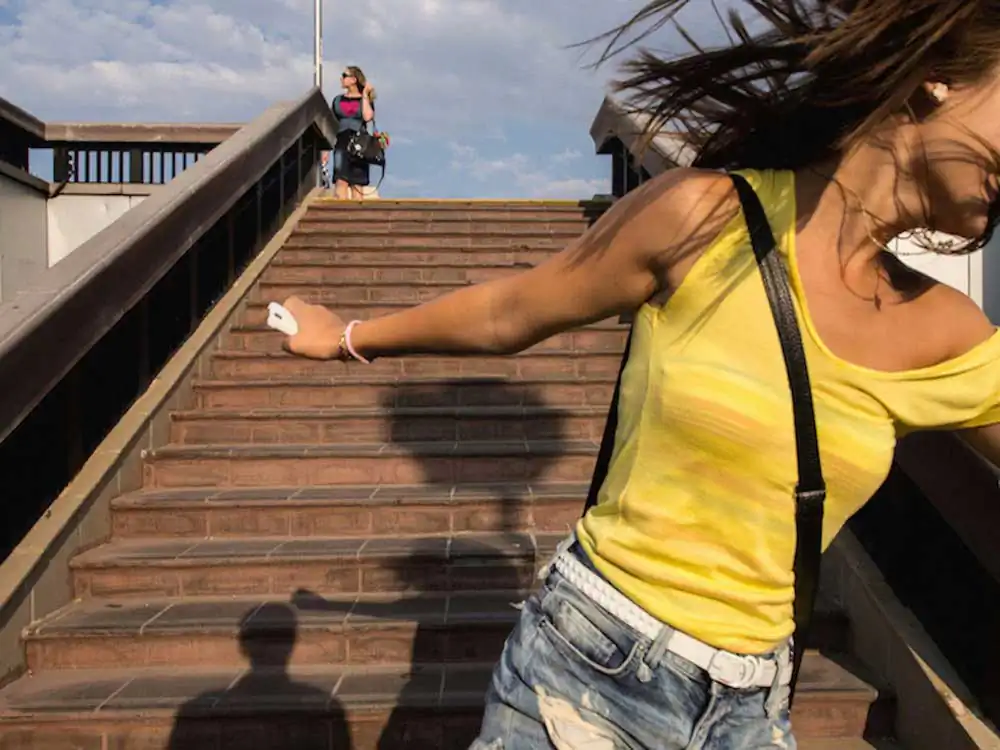
Observation ties these actions together. Street photographers cultivate a heightened awareness of gestures, relationships, and spatial dynamics. They learn to read environments, recognizing how architecture frames movement or how people respond to one another in shared spaces. This attentiveness is not passive; it is an active process of interpreting visual information before deciding whether to photograph.
The camera, in this context, functions as a responsive tool rather than a dominating presence. Many street photographers prefer equipment that allows them to work discreetly, minimizing disruption while remaining ready to react. Technical simplicity often supports this approach, enabling concentration on perception rather than mechanics. The emphasis lies not in elaborate preparation, but in readiness.
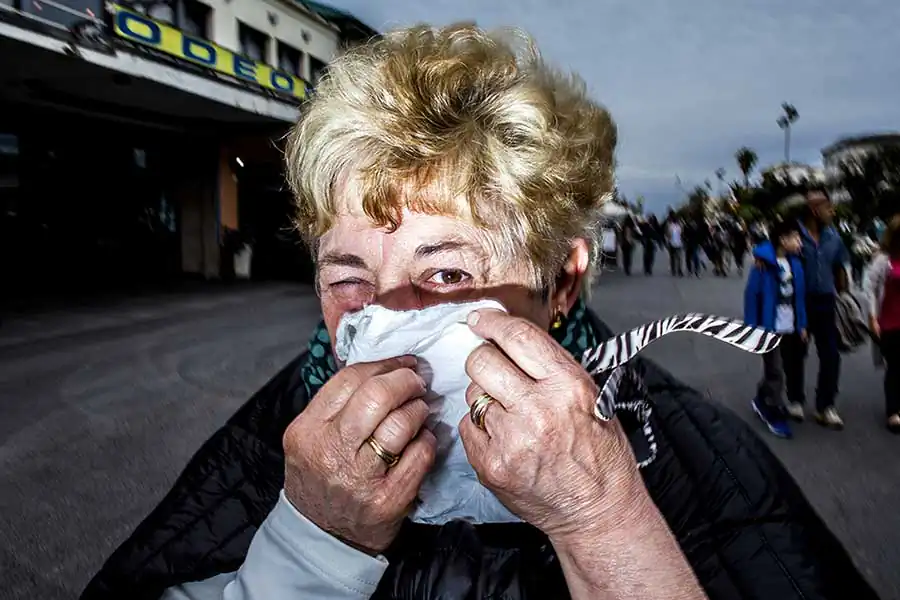
Repetition also plays a significant role. Returning to familiar locations enables photographers to develop a deeper understanding of their environments. Over time, they recognize recurring gestures, seasonal variations, and shifts in atmosphere. This familiarity does not eliminate unpredictability; instead, it sharpens the photographer’s ability to respond to it.
Editing forms the final stage of the working process. After photographing, practitioners review their images carefully, selecting those that convey the clarity or tension they experienced. This stage requires discipline, as strong street photography depends as much on what is excluded as on what is shown. The process of selection transforms observation into coherent visual expression.
Street photography, therefore, is less about capturing isolated moments than about cultivating a way of engaging with the world. Through walking, waiting, and observing, photographers develop a sustained relationship with public space, one that allows them to translate fleeting experiences into images that endure.