


Germany has played a decisive role in the development of modern photography.
From the experimental movements of the early twentieth century to the conceptual and documentary traditions that emerged after the Second World War, German photographers have consistently shaped the visual language of the medium.
The country’s photographic culture has been marked by a strong intellectual foundation, where photography is often approached not only as a visual practice but also as a way of reflecting on history, politics and the complexities of human experience.
German photographers are frequently associated with precision, conceptual clarity and a deep engagement with narrative structure. Whether working in documentary, fine art or staged photography, many artists from Germany approach their projects with a carefully constructed visual strategy. The image becomes a space where form and meaning coexist, where aesthetic decisions are closely linked to conceptual intentions. This tradition can be traced through generations of influential figures, from the pioneering work of the Bauhaus photographers to the Düsseldorf School that redefined contemporary photographic practice.
The projects gathered in this selection reveal the breadth of contemporary German photography. Each photographer approaches the medium from a different angle, exploring themes that range from historical reconstruction and political theatre to psychological narrative, architectural emptiness and spiritual reflection. Together they demonstrate how German photographers continue to push the boundaries of visual storytelling while maintaining the intellectual depth that has long characterised the country’s photographic tradition.
In In Service by Julia Fullerton-Batten, the photographer reconstructs the hidden world of domestic servants during the Edwardian era in Britain. Through carefully staged scenes and cinematic lighting, the project reveals the harsh realities behind what was often portrayed as a respectable profession. During the early twentieth century more than one and a half million men and women worked as servants in wealthy households, many of them beginning their careers as teenagers in positions that involved exhausting labour and strict social hierarchies. Fullerton-Batten’s images expose the invisible dynamics of class and power that existed behind the walls of privileged homes, transforming historical research into a visually compelling narrative.
A quieter yet equally evocative atmosphere appears in Vacancy by Ralph Gräf. The project focuses on abandoned houses and former military bases where empty interiors wait silently for new occupants. Rather than emphasising decay in a dramatic or sensational way, Gräf explores the aesthetic qualities of emptiness. His images are characterised by balanced compositions, soft natural light and a calm symmetry that contrasts with subtle signs of deterioration. The result is a series that invites viewers to reflect on absence, memory and the passage of time within architectural spaces.
Politics becomes the central subject in Wahl Kampf Ritual by Bernd Arnold. The project examines German election campaigns as carefully orchestrated performances where politicians construct their public identities through calculated gestures and symbolic appearances. Arnold’s photographs capture figures such as Willy Brandt, Helmut Schmidt, Helmut Kohl, Gerhard Schröder and Angela Merkel, presenting them not simply as political leaders but as actors participating in a ritual of power. The series reveals how democratic politics often operates through spectacle and staging, transforming political communication into a form of visual theatre.
Narrative fiction enters the photographic field in Hanjo – A photographic novel by Yoram Roth. Inspired by the structure of a literary story, Roth constructs a visual narrative centred on the character of Hanako, a geisha who patiently waits at a train station for the return of a lost lover. The images unfold like chapters of a novel, blending cinematic atmosphere with emotional storytelling. Through carefully staged scenes and a poetic narrative framework, Roth transforms photography into a medium capable of conveying complex fictional worlds.
A spiritual dimension emerges in Bodhgaya by Victoria Knobloch, a project set in one of the most sacred pilgrimage sites in Buddhism. Bodhgaya in India is believed to be the place where Siddhartha Gautama attained enlightenment beneath the Bodhi Tree. Every year thousands of pilgrims travel there seeking spiritual understanding and personal transformation. Knobloch’s photographs explore this atmosphere of devotion and contemplation, capturing moments where faith, ritual and human presence merge within a space that has held profound spiritual significance for centuries.
Together these photographers demonstrate the intellectual diversity and narrative ambition that characterise contemporary German photography. Their projects move between history, politics, architecture, fiction and spirituality, showing how the photographic medium can serve as both a document of reality and a vehicle for deeper reflection on the world we inhabit.
In Service by Julia Fullerton-Batten
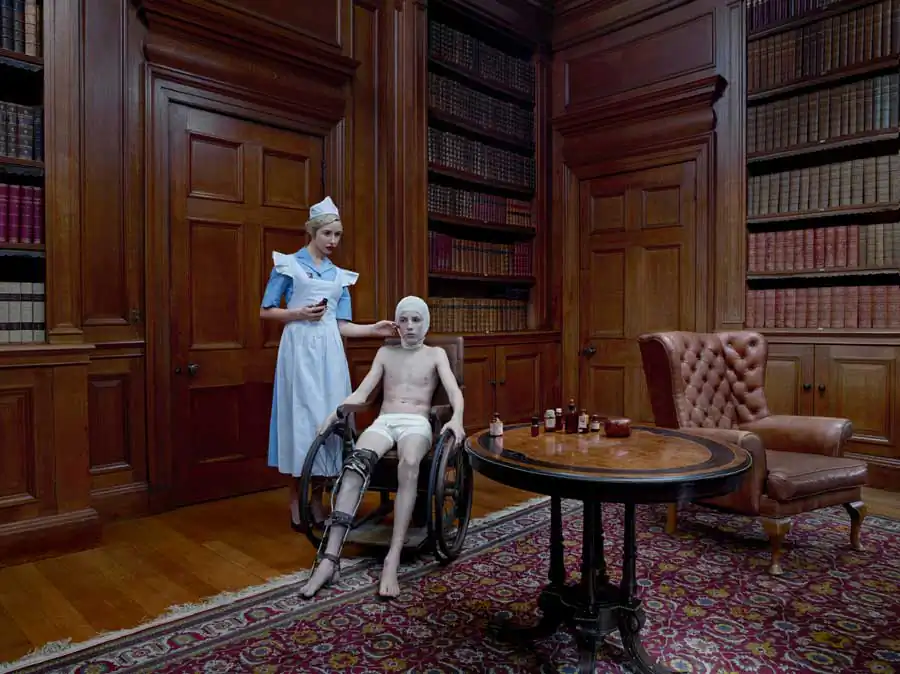
Julia Fullerton-Batten – During the Edwardian era in Britain (1901 to 1911) over 1.5 million men and women were employed as servants in the homes of the wealthy. Being ‘In Service’ was a way to escape poverty, but it was not the relatively comfortable life frequently illustrated in today’s media. It was hard work, and there was exploitation and abuse, some of it sexual in nature. “In Service” exposes some of the going-on behind the walls of the houses of the privileged class in that era. A scullery maid in a great London house in the early 1900s was the lowest rank of servant. She had to do the most menial of tasks, scrub the floors, wash dishes and clothes, carry heavy buckets full of water, iron using primitive flat-irons heated on the stove, clean the fireplace and front steps, polish shoes and boots of everyone in the household – also those of fellow servants – even iron shoe-laces. Starting in her early teenage years she would have had hopes in time of working her way up to better positions, perhaps a maid at table or a lady’s maid waiting on the lady of the house. More……
Vacancy by Ralph Gräf
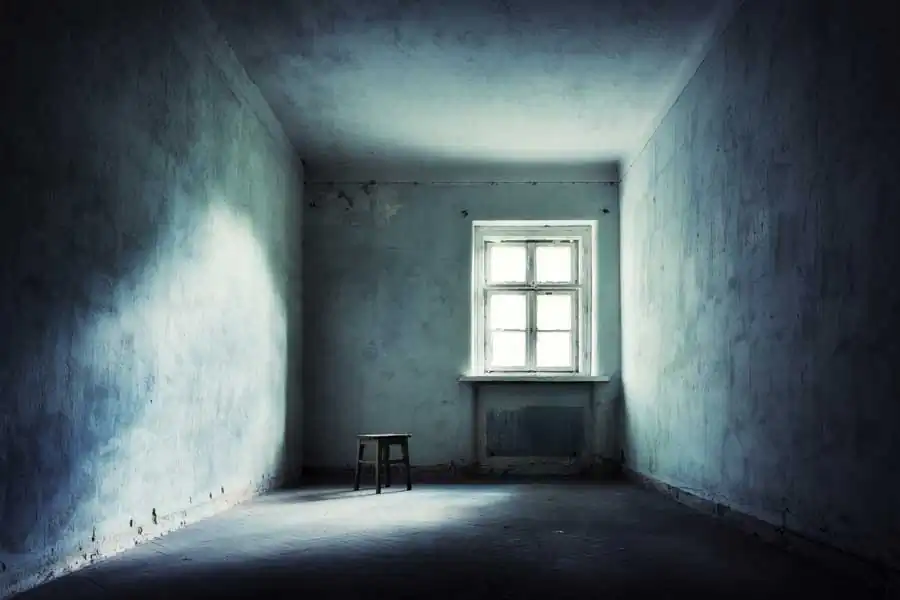
Ralph Gräf’s project “Vacancy” (”Zimmer frei“ in German) discloses empty rooms of abandoned houses and military bases waiting to be suffused with new life. In contrast to documentation of decay in hyperrealistic, plastic HDR images as they are often encountered in this photographic genre, he puts emphasis on the aesthetics of emptiness and abandonment.Opposing aspects in his images generate suspense. The often almost clinical cleanliness of the rooms contrasts with an at best parenthetically noticed aspect of dilapidation. Image parts flooded with soft light stand in contrast with deep shadows. The often used symmetric, central perspective underscores the serenity of these interiors. Bright windows with no visible structures behind increase the mysterious aspect of these rooms. More…..
Wahl Kampf Ritual by Bernd Arnold
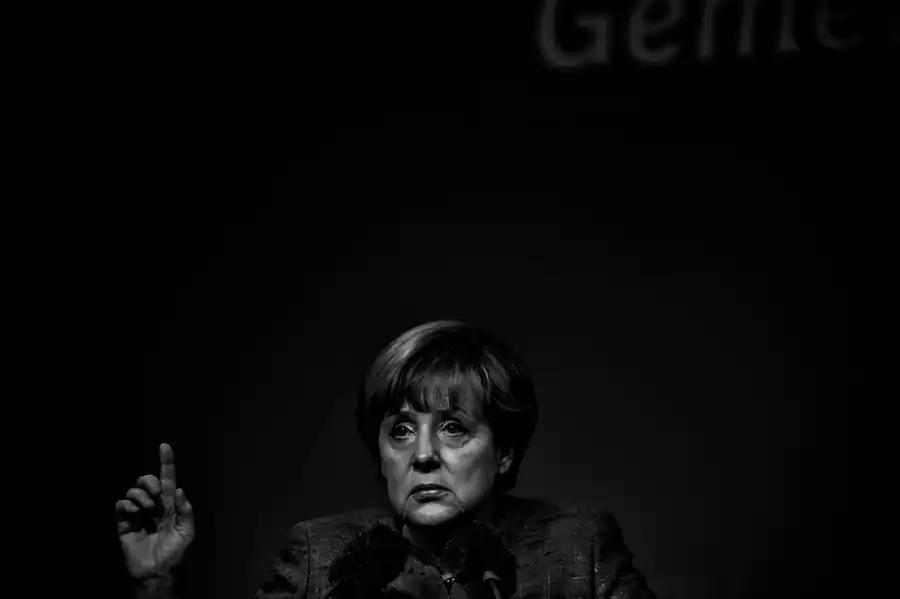
The election campaigns for the German Bundestag are an ideal occasion to explore strategies of production and self-production across all political parties. It is a work about the endeavour of shading light on the precisely calculated gestures of the actors of these public orchestration, their success in radiate aspects of power and its fascination. It is a view behind the scenes withoutstepping into them. These photographs expose politics as theatre and a root of acquisition of power in our contemporary democratic society. These photographs are about the German chancellors Willy Brandt, Helmut Schmidt, Helmut Kohl, Gerhard Schroeder, Angela Merkel and their challengers. More….
I have mixed feelings about those sorts of things. When I see it done by interesting young people, I think it’s very valid. But when established photographers, people in their forties, copy me and get a lot of money, well, I find that to be very stupid.
Helmut Newton (German Photographer)
Hanjo – A photographic novel by Yoram Roth

These images are part of a photographic novel… a limited-edition book that will be introduced at Tokyo Photo in September 2013. The story unfolds… A young woman with a fan in her hand waits at the station – just as she did yesterday and the day before and every other day, for years. This is Hanako, a geisha. Some years ago she fell in love forever with Yoshio, as he did with her. When they had to part, they exchanged fans – as a promise that they would see each other again. Yoshio has gone missing, and so Hanako sits there at the station, no longer able to perform as a Geisha, waiting patiently for her lover’s return. Her waiting has left her increasingly detached from the world, and the world regards her as mad. More….
Bodhgaya by Victoria Knobloch
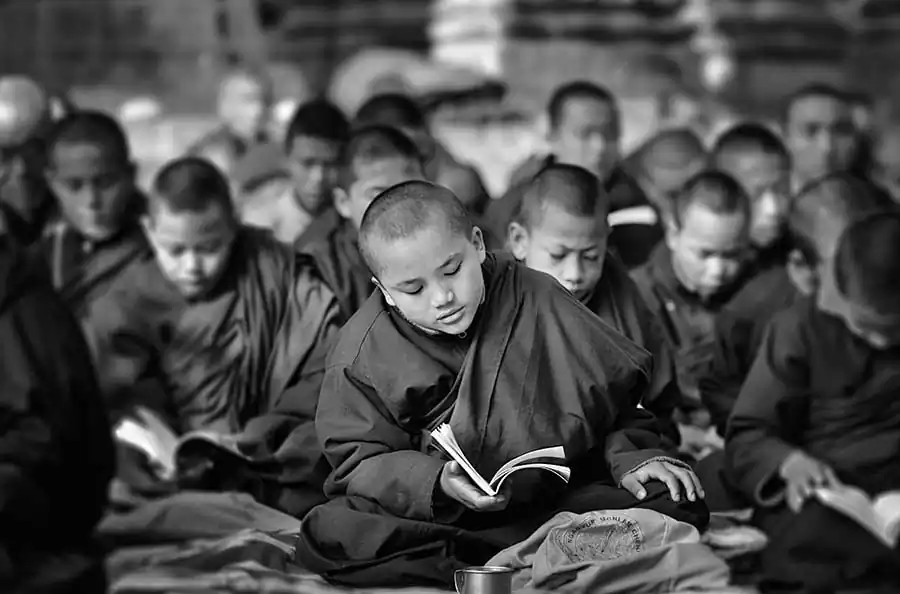
Bodhgaya is the most important place of pilgrimage for Buddhists in India. It is said that the Buddha has obtained Enlightenment there under what became known as the Bodhi Tree. Such sacred places like Bodhgaya can be sources of inspiration and encouragement for practitioners. Therefore thousands of people come to Bodhgaya every day with the wish of building up or accelerating their connection and faith. In Buddhism it is all about developing confidence in one’s own pure nature. Because when we act in accordance with this pure nature we automatically act in tune with the universal cosmic laws and not against them. If that happens, we live and act for the benefit of all, including ourselves. But to be able to do that we need to develop spiritual understanding. What exactly does that mean? One aspect of it is to remove the roots of human suffering by eliminating wrong view and therefore wrong action. Another aspect is to learn to perceive one’s life and the matters of the world out of a larger context and a broader perspective than only the “Egoperspective”. More….