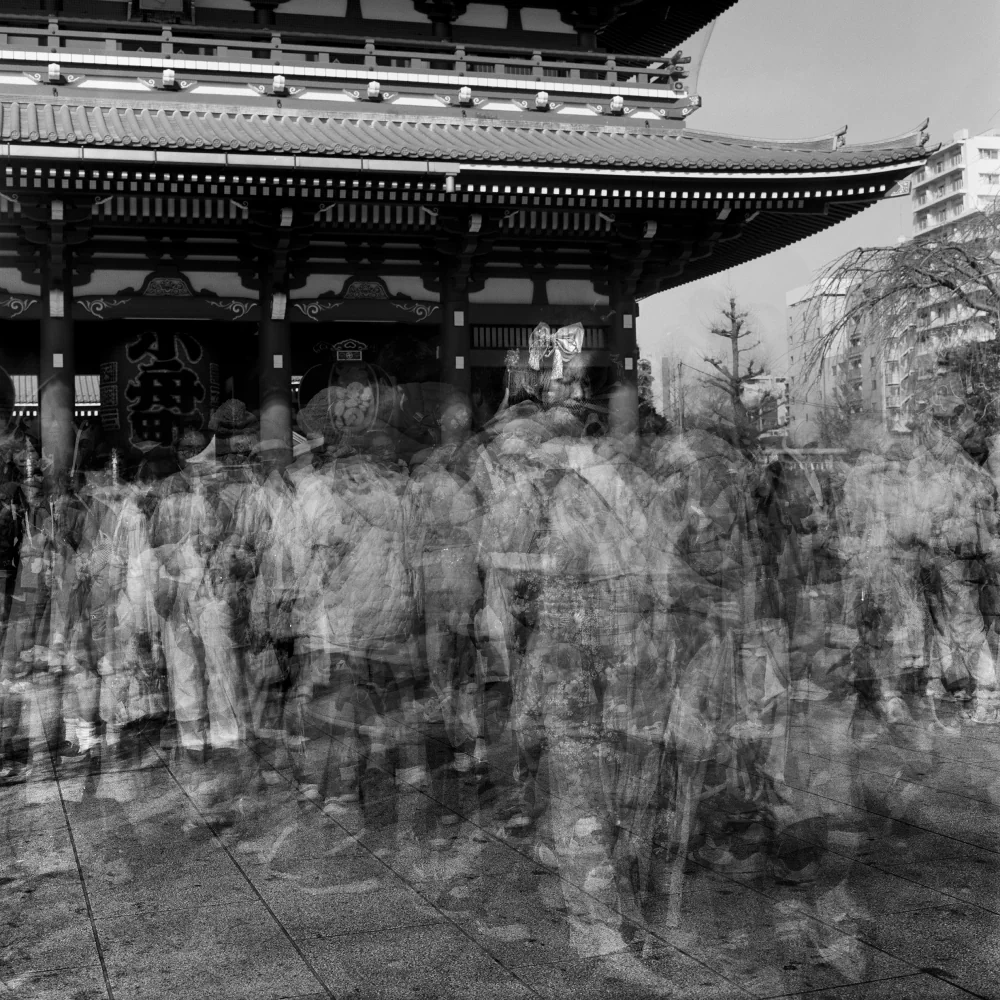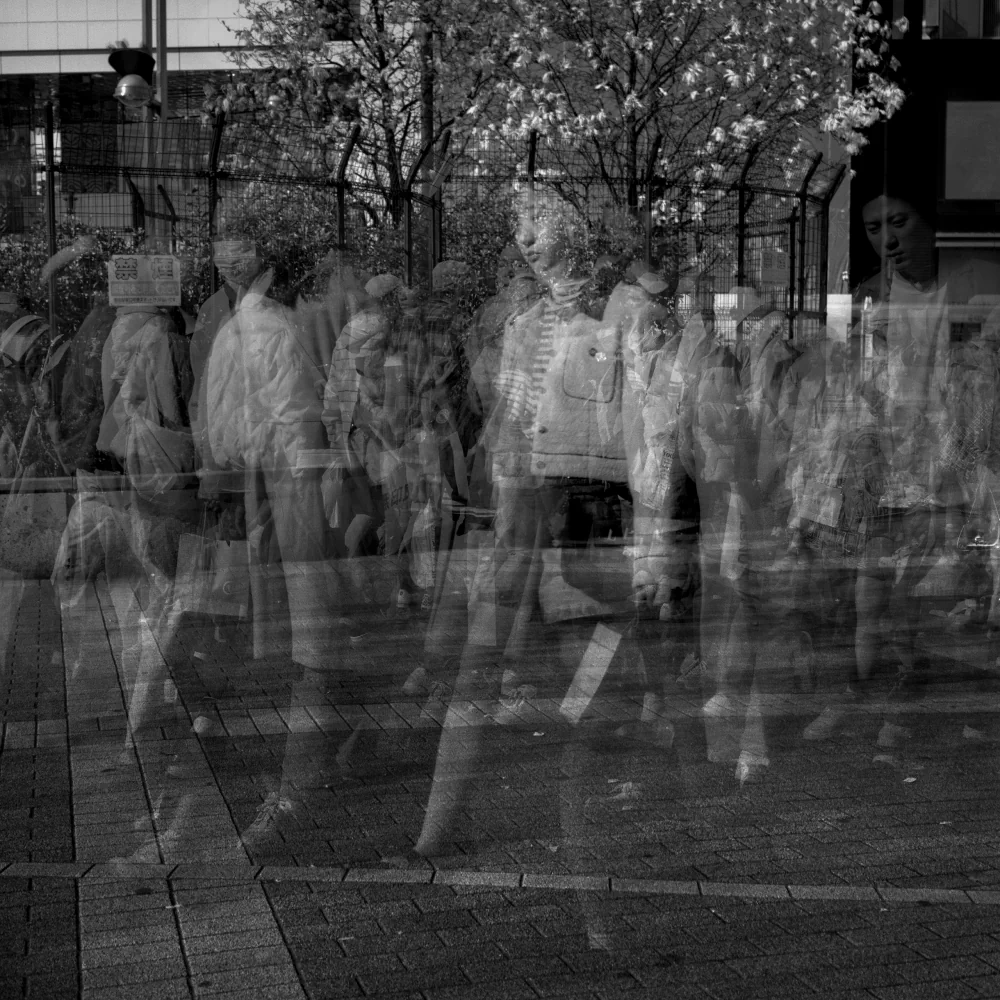


Frenetic Tokyo is an extension of Zhou HanShun’s earlier series, Frenetic City, which examined the tension, velocity, and psychological density of urban life in Hong Kong.
In this body of work, he shifts his focus to Tokyo, another hyper-concentrated metropolis shaped by relentless movement, layered infrastructures, and the compression of human activity.
While Tokyo is often perceived as orderly and controlled, beneath its surface lies an intense accumulation of motion, repetition, and sensory overload. The city functions through continuous cycles of transit, labour, consumption, and routine, producing an environment where individuals are simultaneously connected and isolated within the urban mass.
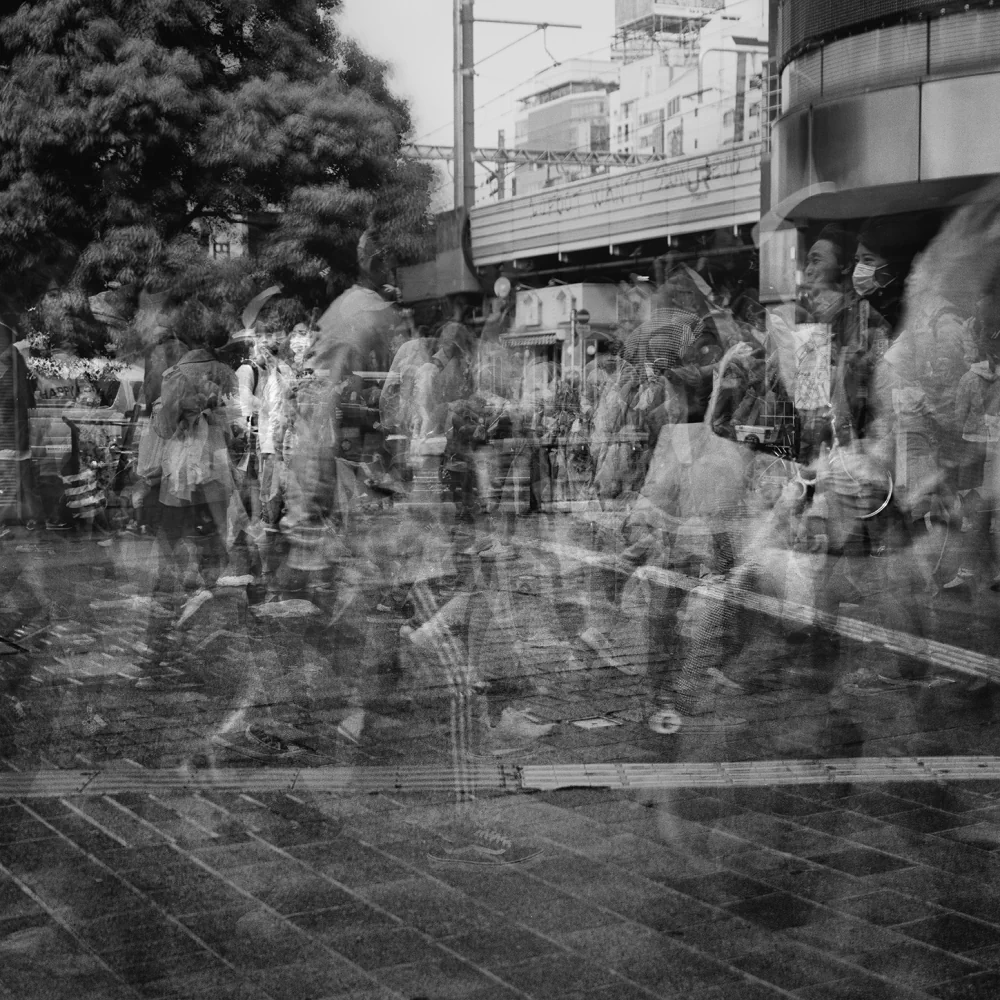
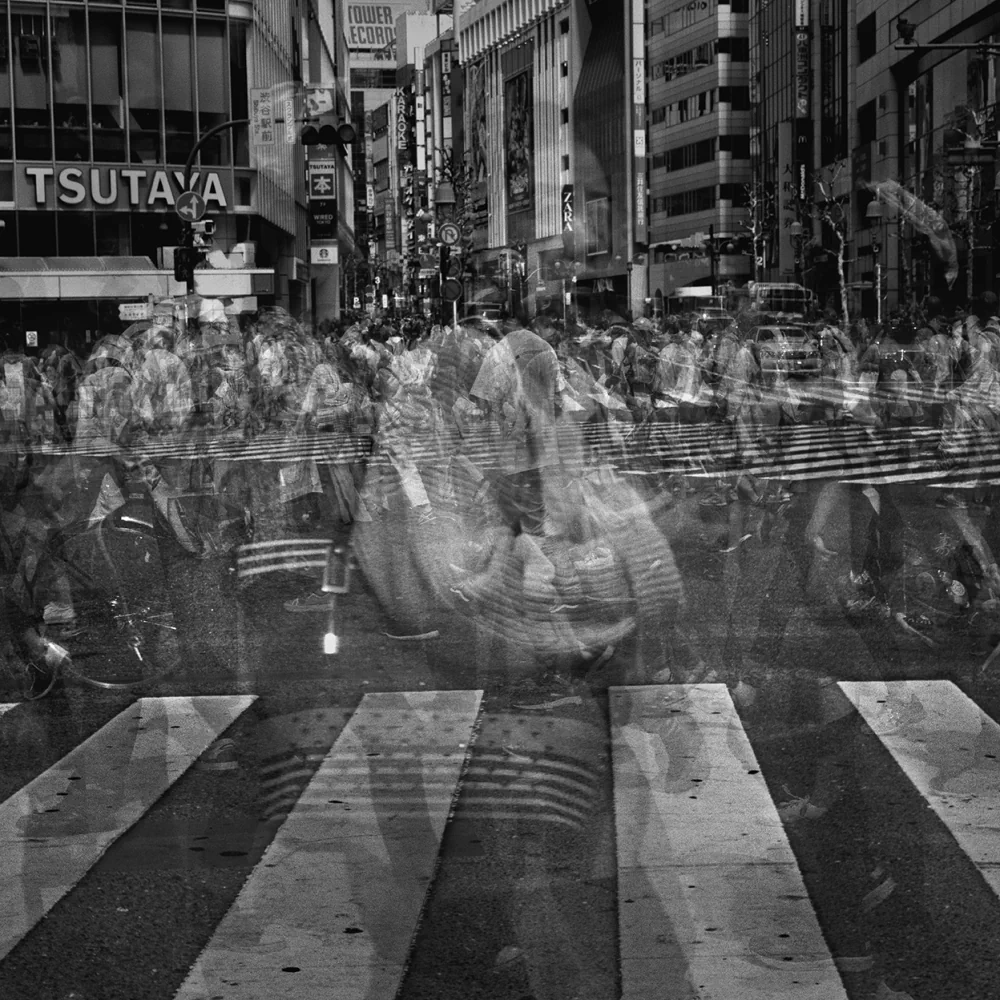
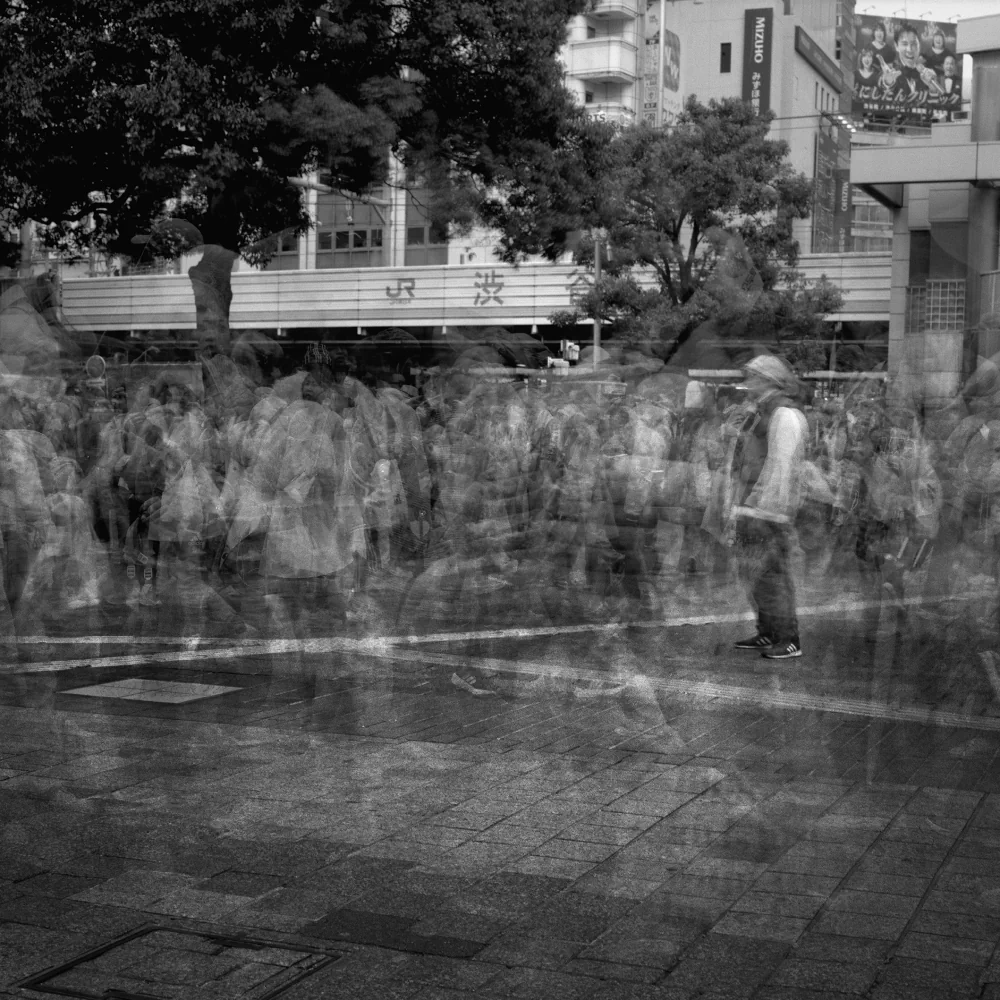
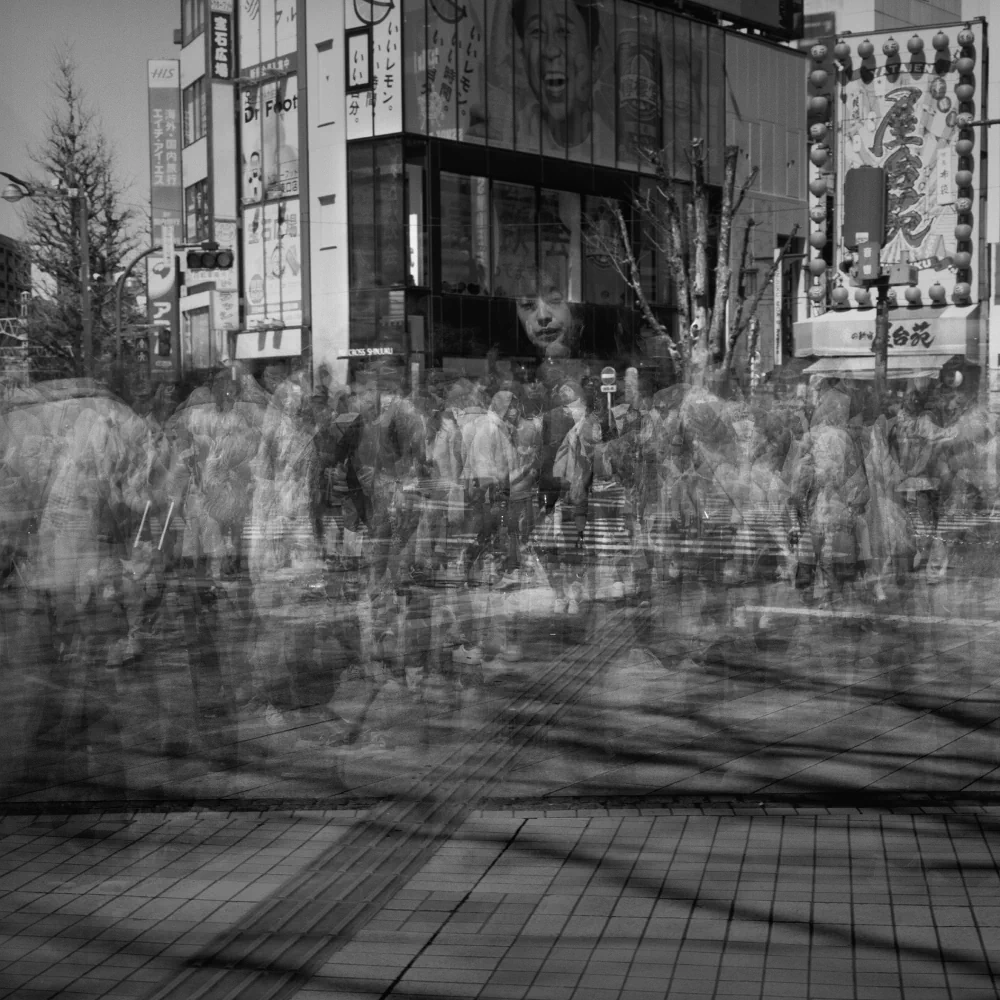
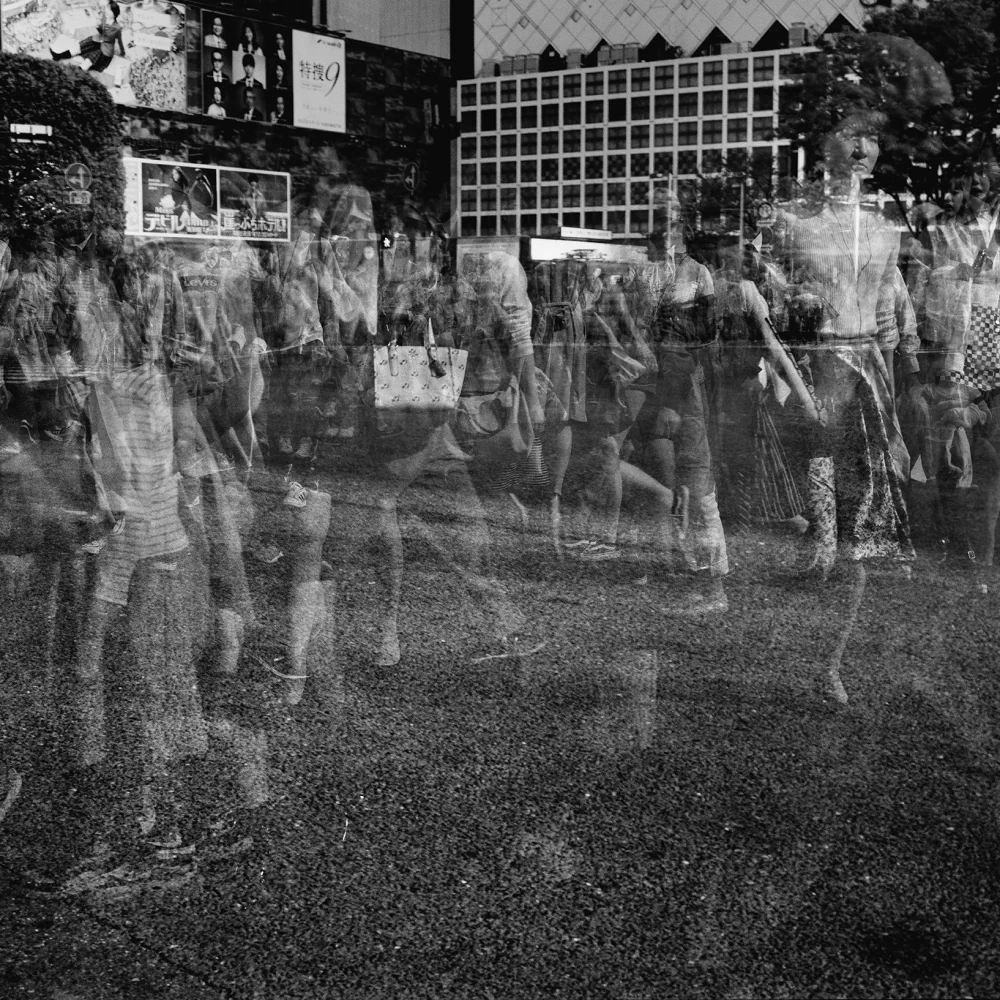
Each photograph in this series is created through multiple exposures on a single black-and-white negative. Rather than documenting a single decisive moment, the images collapse numerous moments into one frame, constructing fragmented temporal landscapes that mirror the psychological experience of moving through the city itself.
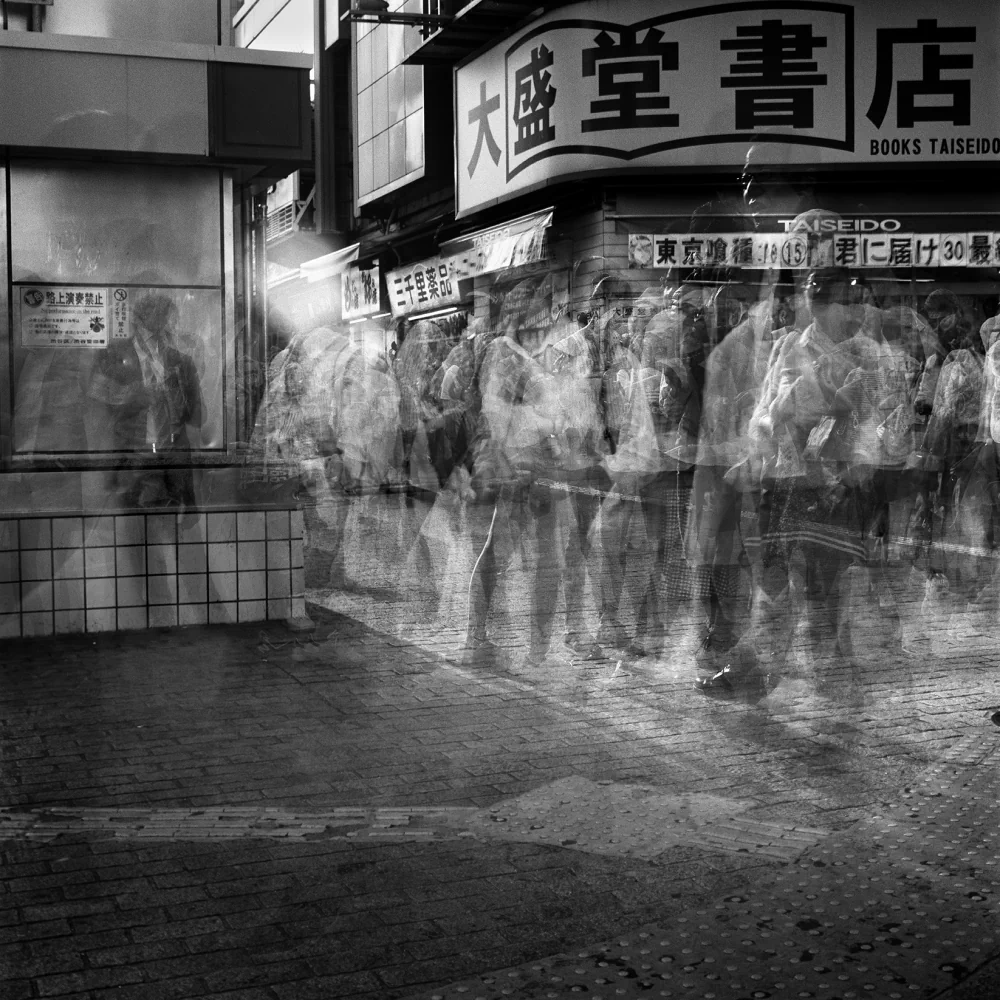
Through this process, the camera becomes not merely a recording device but a mechanism for compressing time, movement, and memory. Familiar urban spaces dissolve into layered currents of bodies, lights, architecture, and gestures, oscillating between recognition and abstraction.
The resulting images reflect the instability of perception in contemporary metropolitan life, where the city’s speed continually overwhelms the ability to fully process, remember, or remain still. In Frenetic Tokyo, the city is not presented as a fixed geography, but as a constantly shifting psychological condition.
About Zhou HanShun
Born and raised in Singapore, Zhou HanShun is an artist working across photography, moving image, and research-led practice. His work explores perception, memory, and the psychological experience of place through urban environments, landscapes, and lived cultural realities across Asia.
After more than two decades working across Asia as a creative director in advertising, Zhou HanShun transitioned into a contemporary art practice grounded in long-term observation, site engagement, and experiential research. Moving between metropolitan centres, coastal regions, and riverine communities, his projects examine how individuals and communities negotiate conditions of acceleration, displacement, belief, and environmental transformation.
Working across photography, moving image, and collaborative forms of inquiry, Zhou HanShun investigates the tensions between visibility and invisibility HanShun transitioned into a contemporary art practice grounded in long-term observation, site engagement, and experiential research. Moving between, material environments and subjective experience, as well as the ways contemporary life is shaped by memory, ritual, and systems of meaning. His recent work increasingly engages with vernacular cosmologies, spiritual practices, and the relationships between ecology and cultural imagination in Southeast Asia.
His work has been exhibited internationally, including at the 18th Arte Laguna Prize in Venice in 2024, Revela’T Contemporary Analog Photography Festival in 2020, Lishui Photography Festival in 2019, Mt. Rokko International Photography Festival in 2019, KG+ Kyotographie in 2018 and 2022, Tumbas Cultural Center in Thessaloniki for Photoeidolo in 2017, Molekyl Gallery in Sweden during the Malmö Fotobiennal in 2017, the Czech China Contemporary Museum in Beijing for the SongZhuang International Photo Biennale in 2017, and Addis Foto Fest in Ethiopia in 2016 and 2023, among others.
Zhou HanShun is the recipient of the Graciela Iturbide MA-g Award from The Museum of Avant-garde in 2024, finalist recognition at the 18th Arte Laguna Prize in 2024, 3rd Prize at the Mt. Rokko International Photography Festival in 2019, a Special Mention at the Balkan Photo Festival in 2016, multiple shortlistings for the Hariban Award from 2017 to 2019, and finalist recognition for Photolucida Critical Mass in 2016. [Official Website]