
Photography has long been evaluated according to narrative criteria, as though every serious body of work were obligated to articulate a clear progression, a thesis, or at least an implicit storyline that guides the viewer from uncertainty to resolution.
The legacy of documentary humanism, photojournalism, and even much contemporary visual storytelling has reinforced the idea that images gain legitimacy when they participate in a structured arc. We expect photographs to explain, to clarify, to take us somewhere. When they do not, we often accuse them of being incomplete, obscure, or conceptually weak.
Parataxis challenges that assumption at its core. Borrowed from classical rhetoric, the term describes a construction in which elements are placed side by side without hierarchical subordination or explanatory connectors. There is no because, no therefore, no narrative glue that dictates how the parts relate. Transposed into photography, parataxis becomes a structural principle in which images coexist without being subordinated to a central storyline. Meaning does not descend from an overarching narrative. It emerges from adjacency.
This shift is not merely formal. It is philosophical. To insist that photography must narrate is to assume that experience itself unfolds in a coherent, sequential manner. Yet contemporary life is rarely experienced as a stable narrative. It is fragmentary, discontinuous, layered with contradictions. The stream of visual information we consume daily is not organized into thoughtful chapters but arrives in abrupt juxtapositions. News, intimacy, catastrophe, humor, banality, all appear within seconds of one another. The structure of perception itself has become paratactic.
In that context, the demand for narrative clarity begins to feel artificial. Parataxis does not abandon meaning. It redistributes it. Instead of guiding the viewer toward a predefined conclusion, it creates a field of tensions where interpretation remains open and dynamic. This openness is not confusion; it is responsibility. The viewer is no longer a passive recipient of a message but an active participant in constructing relationships between images.
In my view, defending parataxis today is not about celebrating ambiguity for its own sake. It is about resisting the reduction of complex realities into digestible stories. The fragment, when carefully placed next to another fragment, can evoke a truth that no linear argument could adequately contain. Photography, liberated from the obligation to narrate, can begin to reflect the complexity of lived experience rather than smoothing it into coherence.
The Photobook as Resonant Structure
Sequencing Without Explanation
Nowhere is parataxis more powerful than in the photobook, where the sequence itself becomes a silent architecture shaping the viewer’s experience. Unlike a magazine spread or a single exhibition wall, the photobook unfolds over time, inviting a rhythm of turning pages and forming associations. Yet that rhythm does not have to follow a traditional narrative progression. It can operate through resonance instead of plot.
A foundational example is The Americans by Robert Frank. Rather than constructing a didactic essay about mid twentieth century America, Frank assembled a constellation of moments that refuse to settle into a tidy thesis. A flag in one image may precede a segregated trolley in another. A roadside diner might follow a solemn portrait. The relationships are not spelled out. They are implied through proximity.
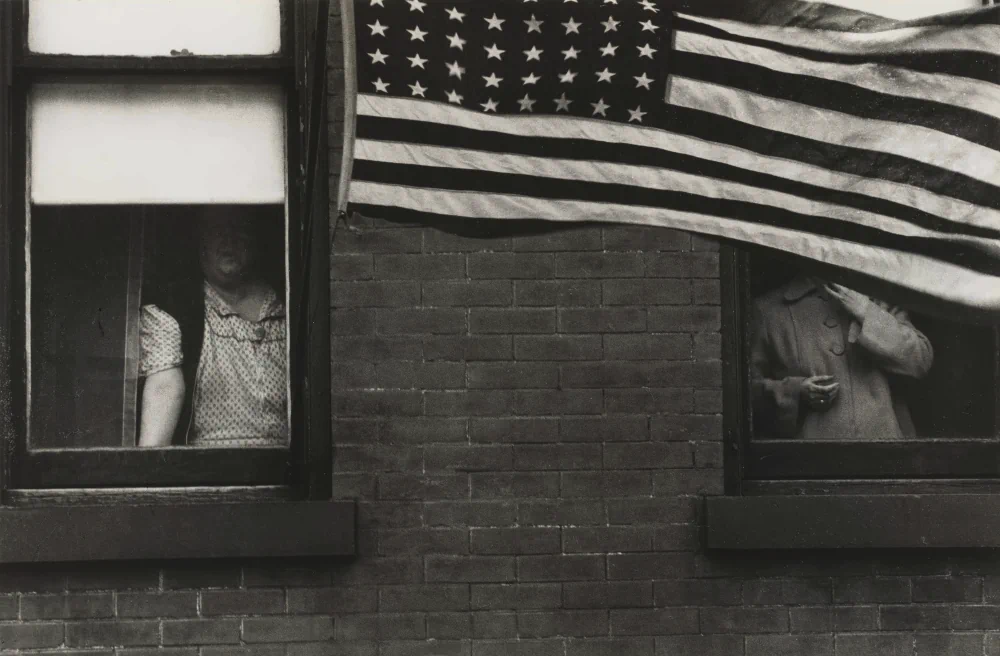
The power of this structure lies in its refusal to overdetermine meaning. Frank does not instruct the reader how to interpret the juxtaposition of patriotic symbolism and social division. He places them together and allows tension to accumulate. The sequence functions less like a report and more like a composition in which motifs echo across pages, subtly altering one another’s significance.
Decades later, Daido Moriyama would radicalize this logic. His books do not attempt to narrate Japan in sociological terms. Instead, they assemble raw, high contrast fragments of urban experience that collide visually and emotionally. Grain, shadow, gesture, signage, anonymity. The sequencing operates through intensities rather than explanations. One image does not clarify the previous one. It destabilizes it.
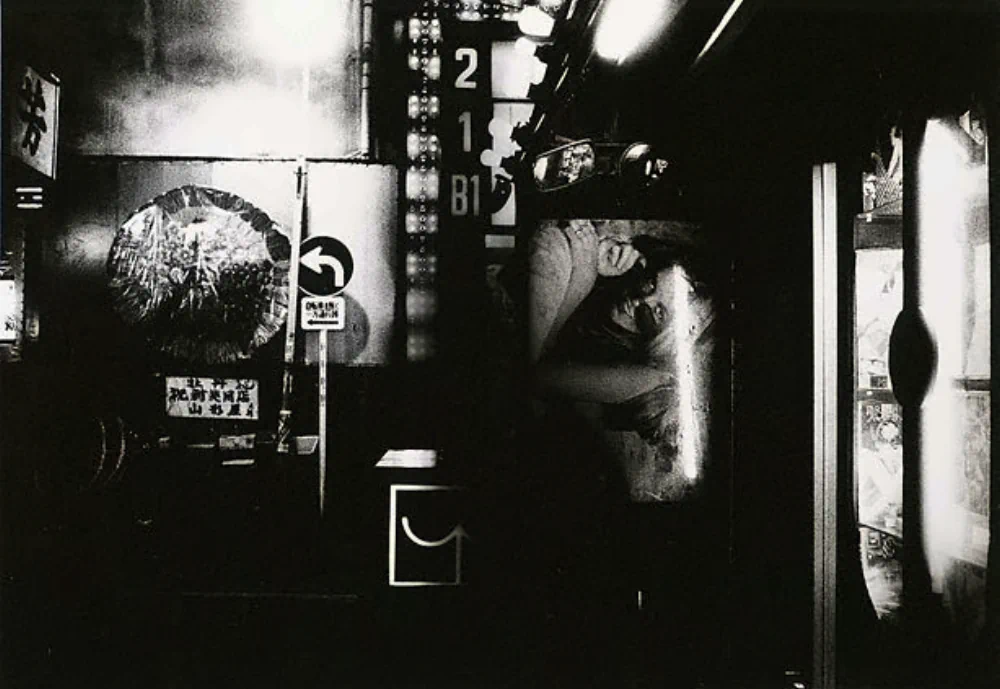
In both cases, the photobook becomes a space of paratactic construction where adjacency replaces causality. The experience resembles listening to music more than reading a conventional essay. Themes recur. Visual rhythms accelerate and slow. Meaning builds not through argument but through accumulation. This approach requires a different kind of editorial discipline. Parataxis is not randomness. It is precision without didacticism. Each image must sustain its autonomy while contributing to a larger resonance. The absence of explicit narrative does not imply the absence of structure. On the contrary, it demands a more subtle and rigorous one.
Parataxis Within the Frame
Simultaneity and the Active Viewer
Parataxis is not limited to sequencing. It can also inhabit a single image when the frame refuses to organize its elements into a clear hierarchy. In such cases, the photograph becomes a site of simultaneity where multiple visual events coexist without being subordinated to a central protagonist.
The work of Garry Winogrand offers a compelling illustration of this internal parataxis. His street photographs often appear unstable, tilted, dense with overlapping figures whose gestures and gazes do not align into a coherent story. Several micro narratives unfold at once, yet none claims dominance. The viewer must navigate the scene, choosing where to look and how to connect the fragments.
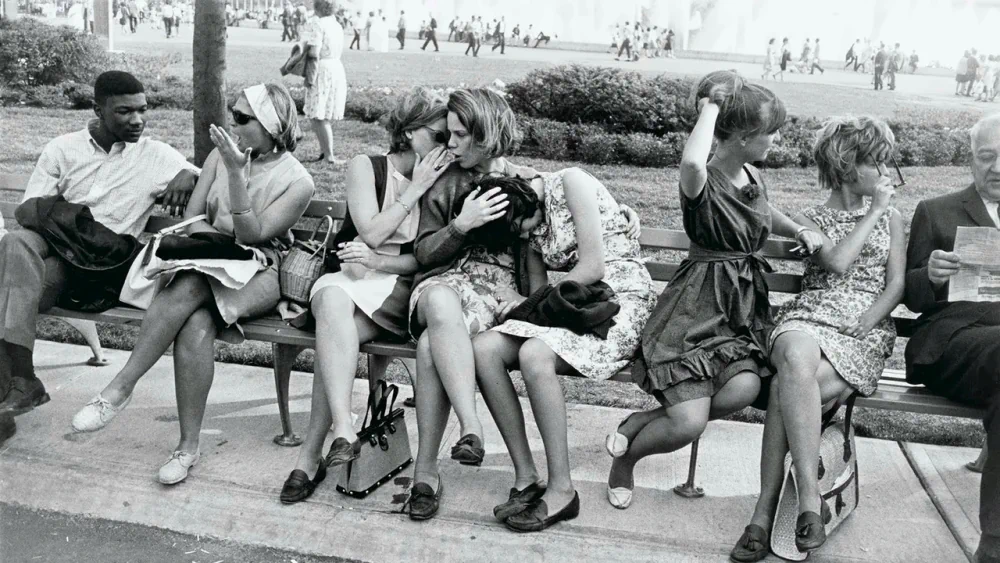
This compositional strategy resists the classical ideal of clarity in which the eye is guided toward a focal point that anchors interpretation. Instead, the image becomes a field of competing energies. Meaning is not delivered. It is discovered through movement across the frame.
Such simultaneity mirrors the way urban life is actually perceived. We do not experience cities as single storylines but as intersecting trajectories. The paratactic frame acknowledges that complexity. It does not simplify it for the sake of legibility. In this sense, parataxis within the image reinforces the ethical dimension of the concept. By refusing to impose a singular narrative center, the photographer respects the multiplicity of perspectives embedded in any public space. The photograph becomes less about illustrating an idea and more about presenting a condition of coexistence.
The Ethics of Fragmentation
Ambiguity as Intellectual Honesty
Beyond its formal implications, parataxis introduces an ethical stance toward representation. Narrative structures tend to produce closure. They imply resolution or at least direction. Yet many contemporary realities resist resolution. Social tensions, political contradictions, cultural identities, none fit comfortably into neat arcs.
To force such complexities into linear stories risks distortion. Parataxis, by contrast, acknowledges fragmentation as a condition rather than a flaw. It does not claim that reality is incoherent, but it accepts that coherence is not always visible or singular.
In documentary practice especially, this has profound consequences. Presenting fragments without explanatory voiceovers or guiding captions can appear evasive, but it can also be more truthful. It avoids the illusion that a single narrative can encapsulate multifaceted situations. Instead, it invites viewers to confront ambiguity and form their own interpretations. This invitation is demanding. It requires intellectual engagement. But it also restores agency to the audience. The photograph becomes a site of dialogue rather than instruction.
In my view, this ethical humility is one of parataxis’s greatest strengths. It shifts the balance of power between author and viewer. Rather than dictating meaning, the photographer constructs a framework within which meanings can emerge. The fragment is not incomplete. It is intentionally open.
Toward a Photography Without Closure
The Productive Space Between Images
Ultimately, the true force of parataxis resides in the space between images, in the silent interval where interpretation takes place. When two photographs are placed side by side without explanation, the viewer’s mind begins to bridge the gap, forming associations that neither image contains alone. This interval is where tension lives. It is also where depth is generated.
In an era saturated with declarative statements and simplified visual messages, the willingness to leave that interval open feels increasingly radical. Parataxis slows down perception. It asks for reconsideration. It resists immediate consumption.
Photography liberated from narrative closure does not become vague. It becomes layered. It recognizes that experience cannot always be distilled into a single storyline. By embracing adjacency over hierarchy and resonance over causality, it aligns more closely with the complexity of contemporary life.
Parataxis, then, is not an aesthetic trend. It is a structural alternative to the dominance of narrative thinking in photography. It redefines the relationship between image and viewer, replacing certainty with inquiry and resolution with sustained tension. In that sustained tension lies its enduring relevance. The fragment, when carefully positioned next to another fragment, can reveal more about the world than a perfectly resolved story ever could.