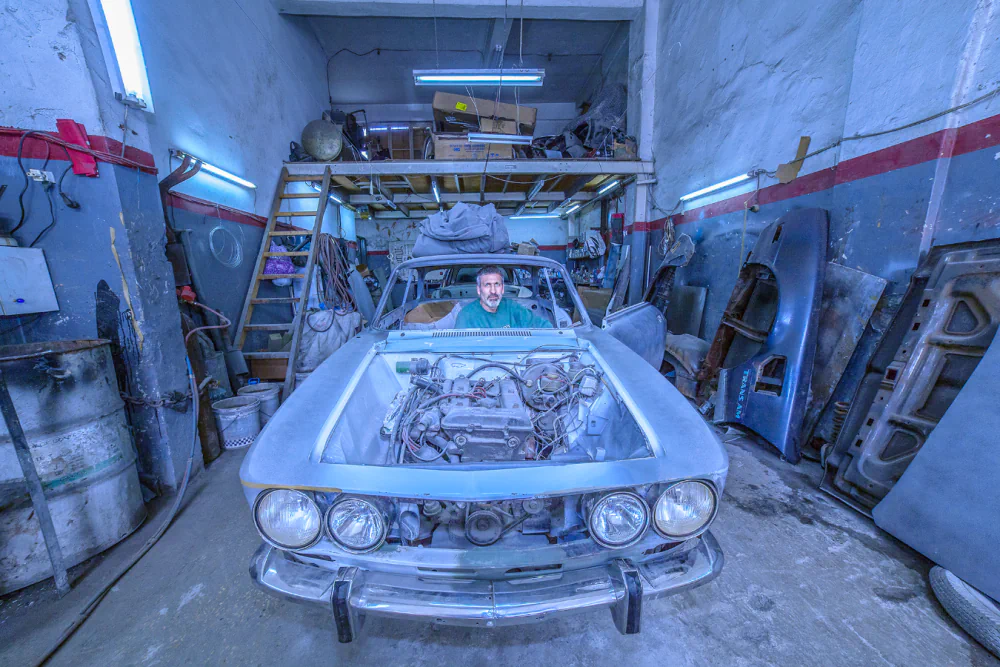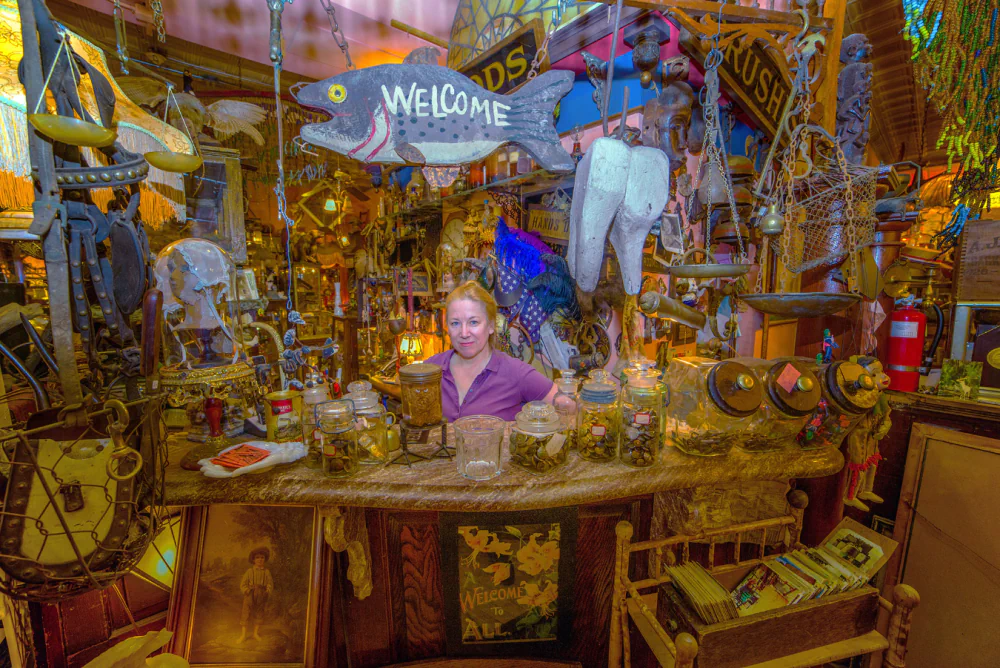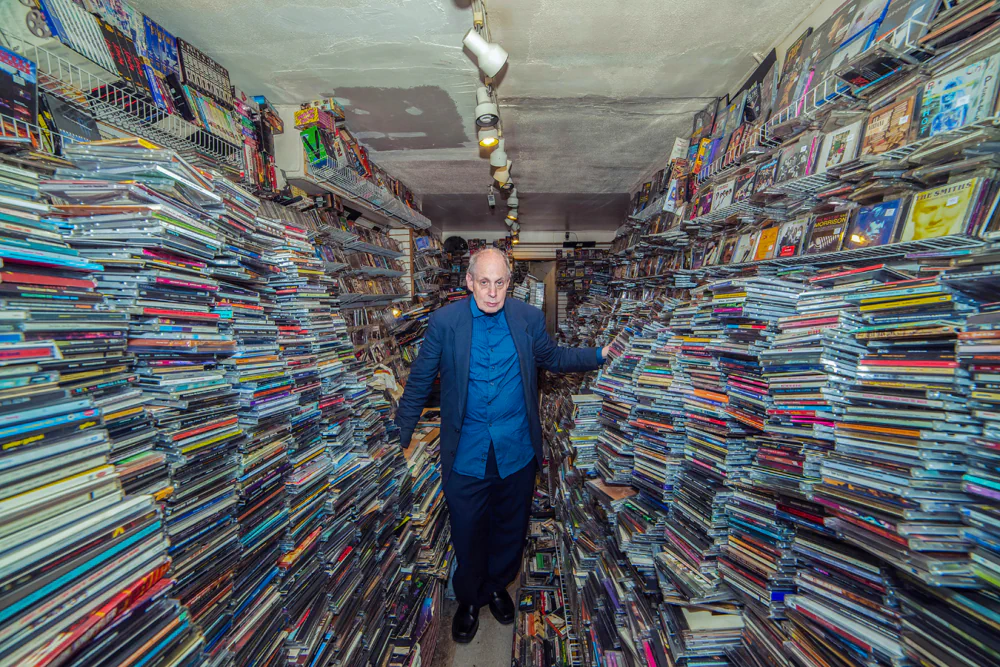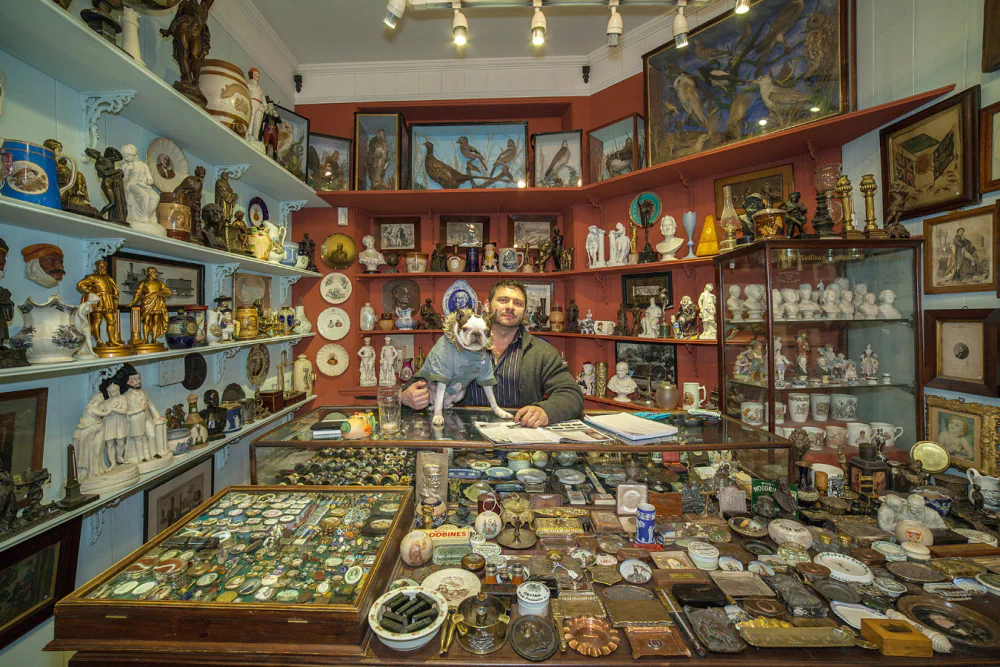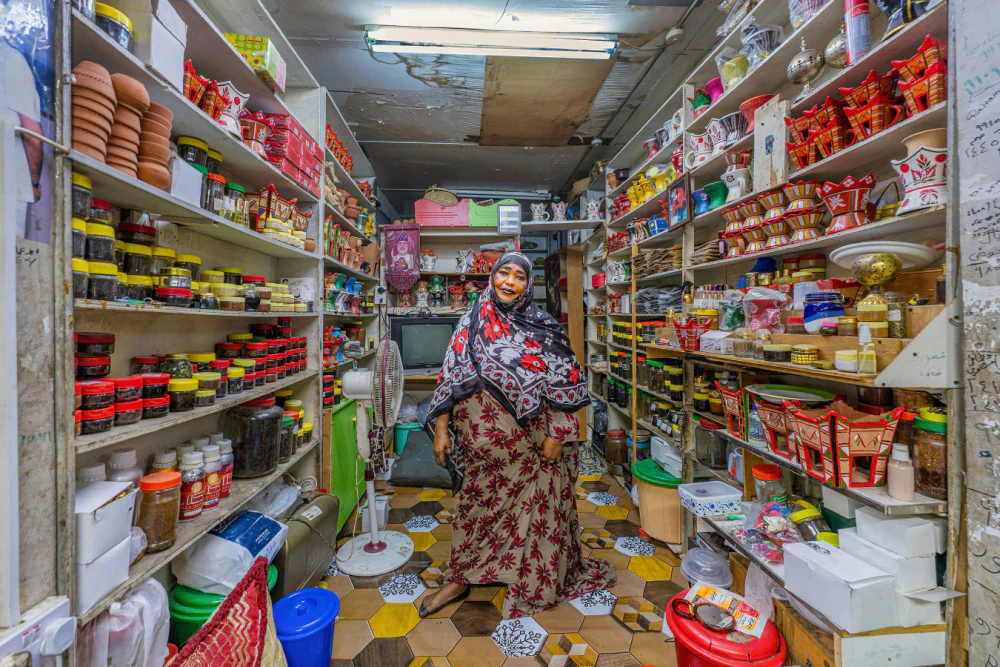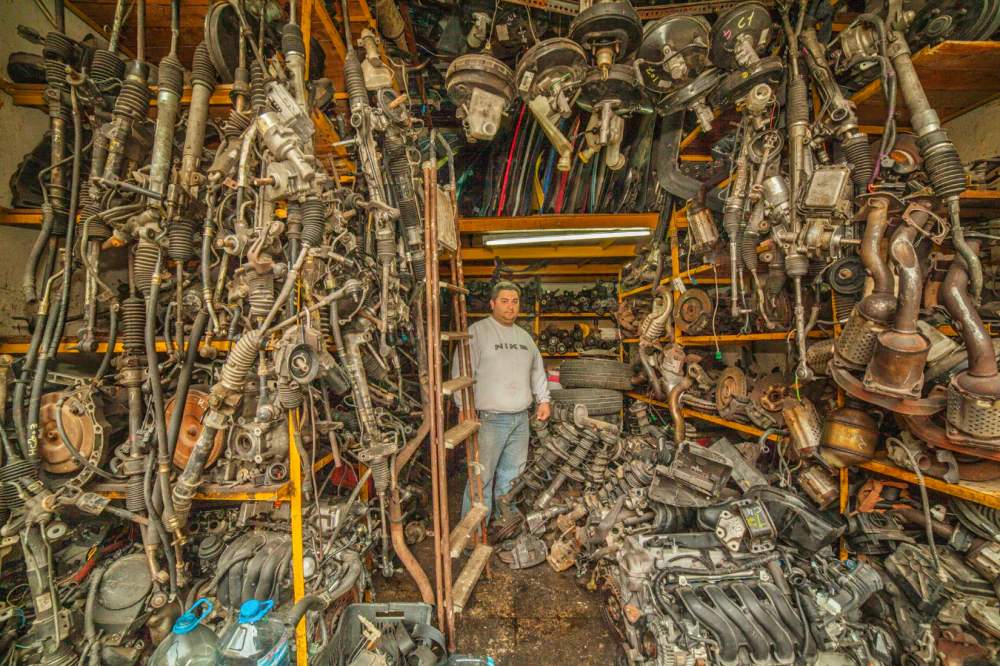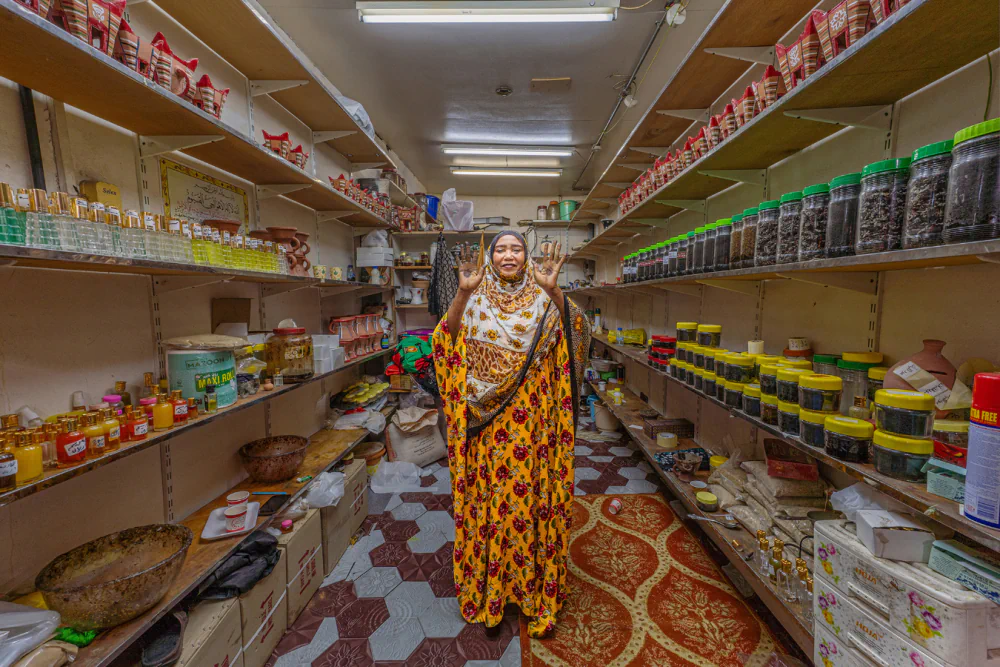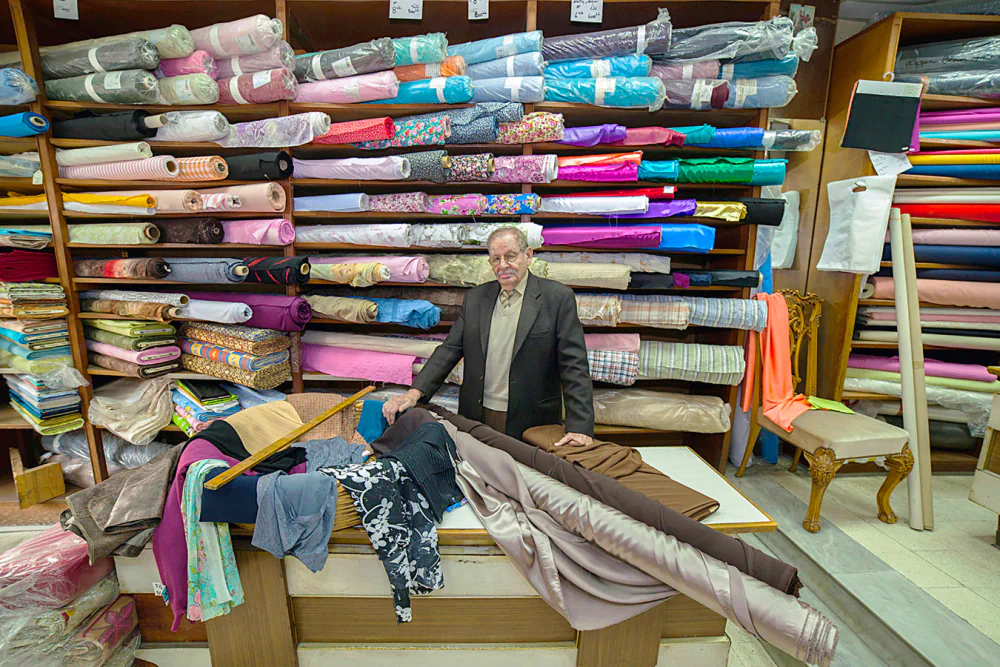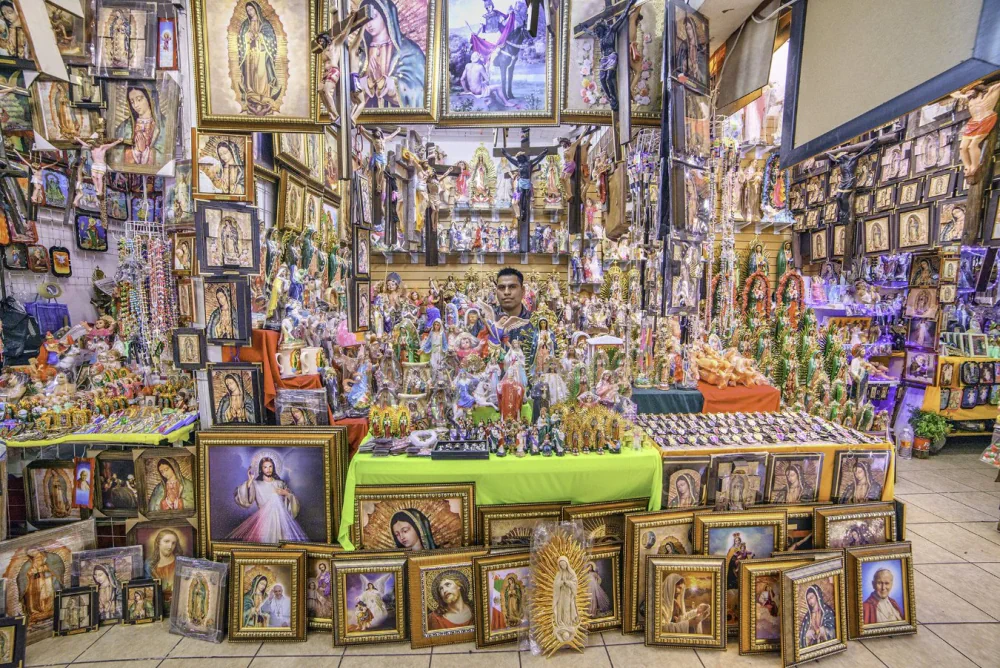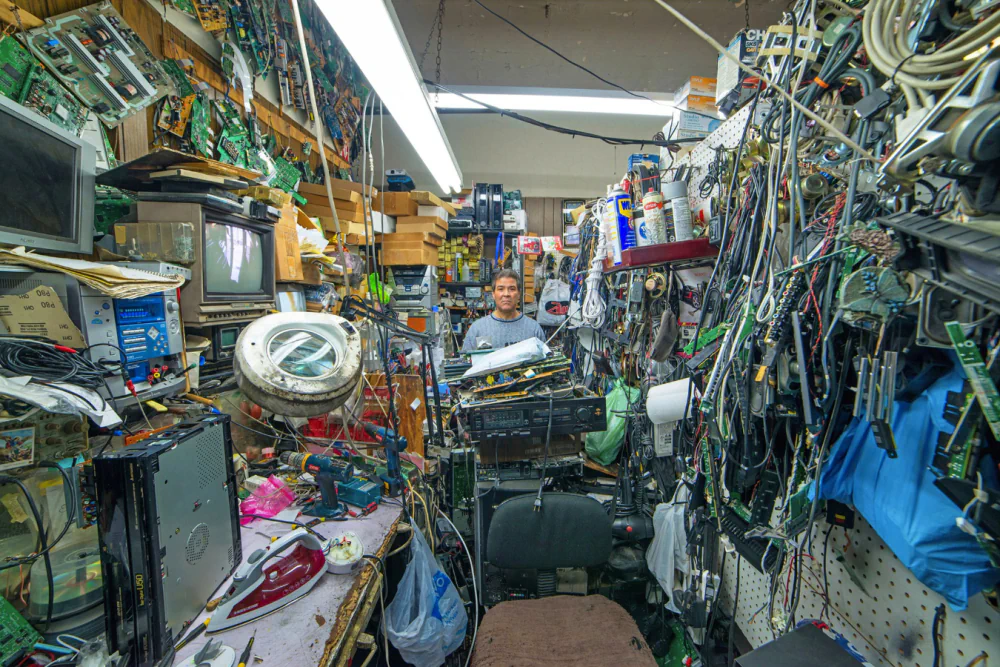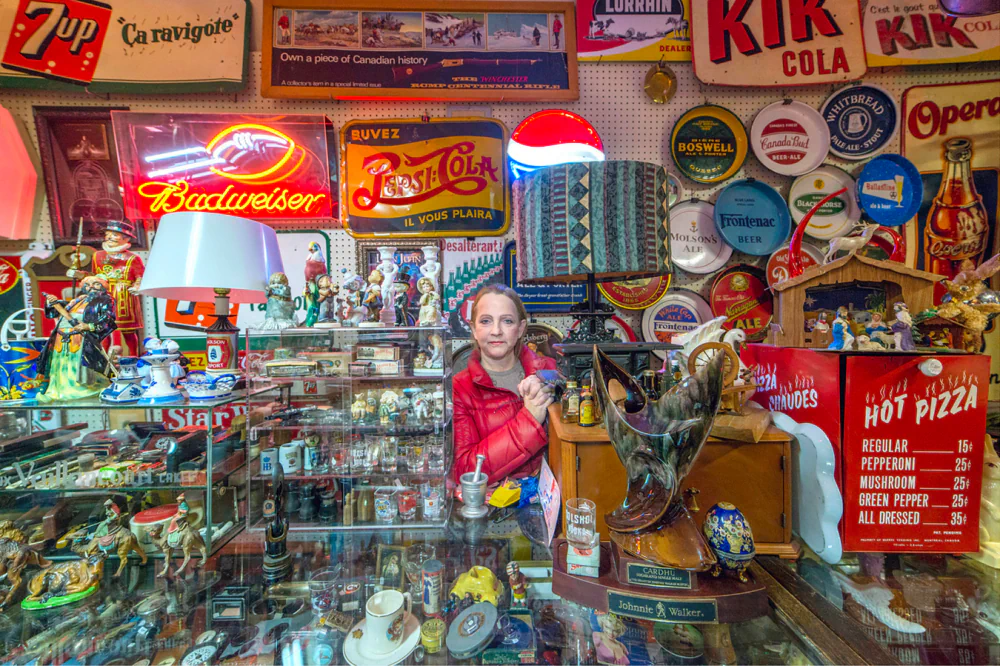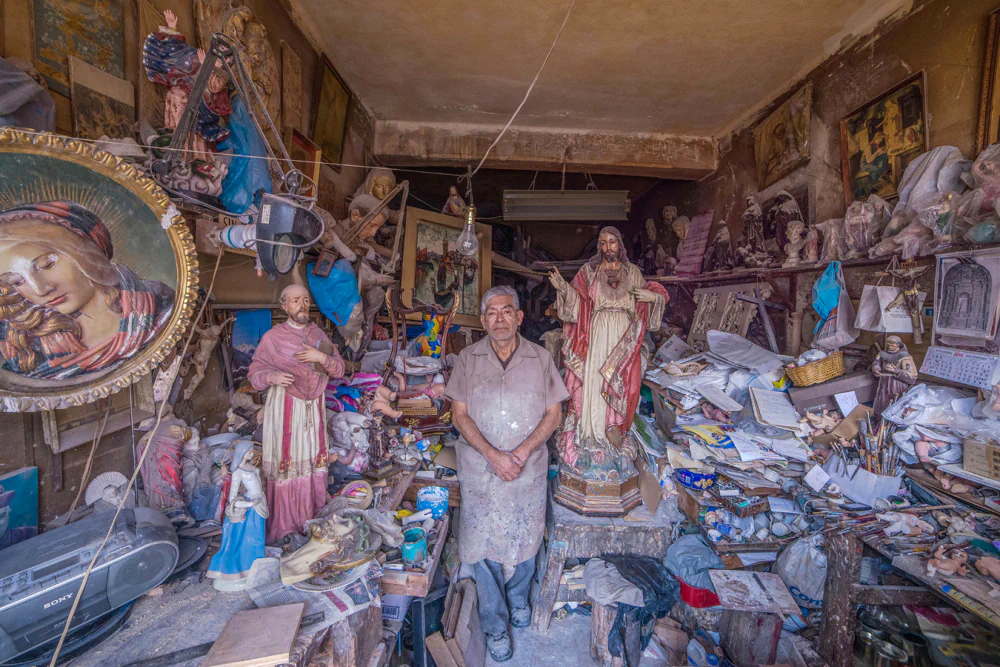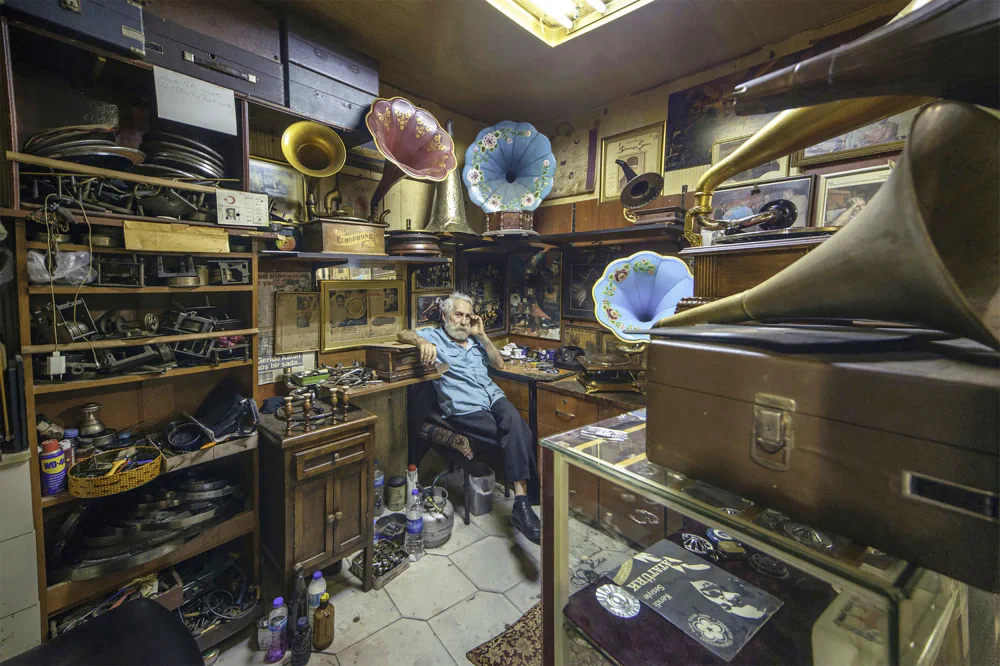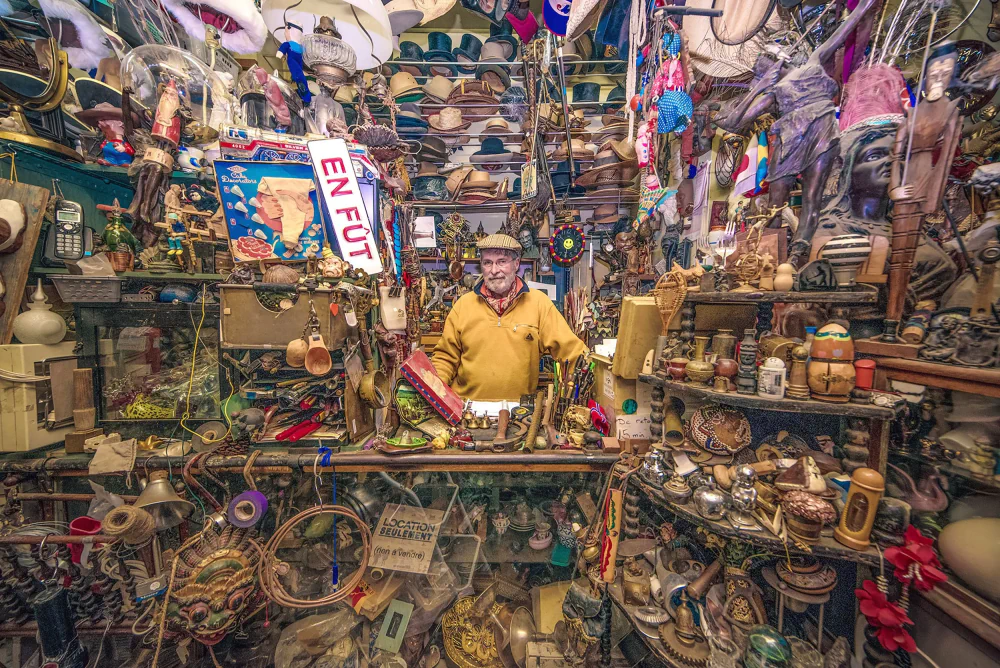
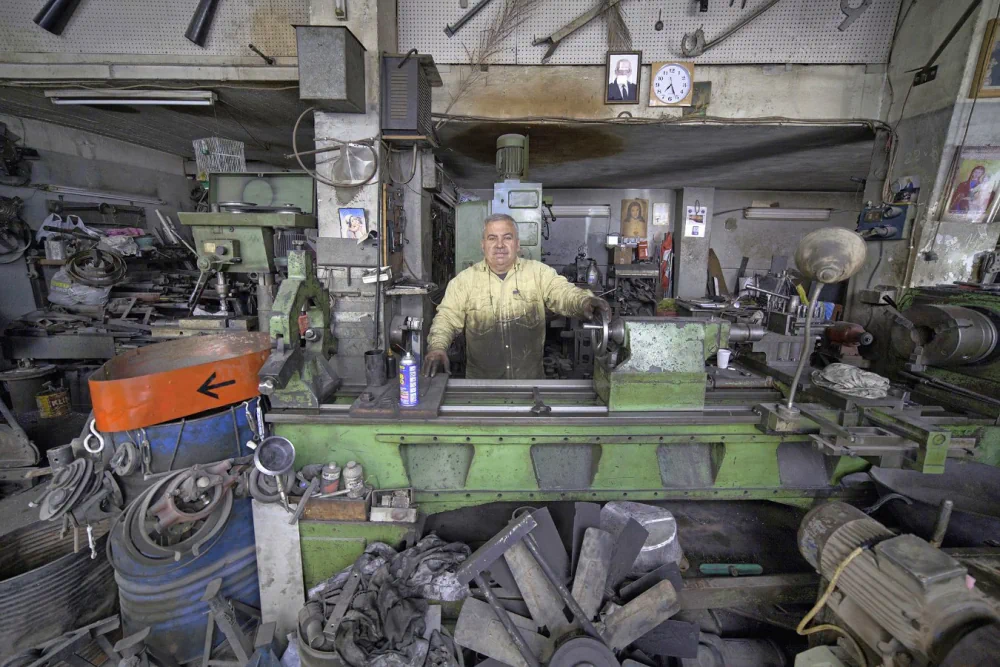
In his photographic series The Guardians, Antaki presents profound and intimate portraits of artisans and shopkeepers, whom he sees as custodians of unique “urban temples.”
These modest spaces—shops, market stalls, and workshops—exist far from conventional landmarks, yet they embody the authentic cultural fabric of their communities.
He deliberately avoids idealized nostalgia and instead seeks to explore the delicate balance between preservation and modernization. Through these portraits, he aims to reveal the inherent resilience, dignity, and cultural continuity of individuals often overlooked in rapidly evolving cities. By elevating these humble spaces to monumental significance, The Guardians becomes a visual inquiry into the importance of preserving cultural authenticity. With this work, he honors and safeguards the memory of spaces that are slowly vanishing, reminding us of their essential role in the soul of our urban landscapes.
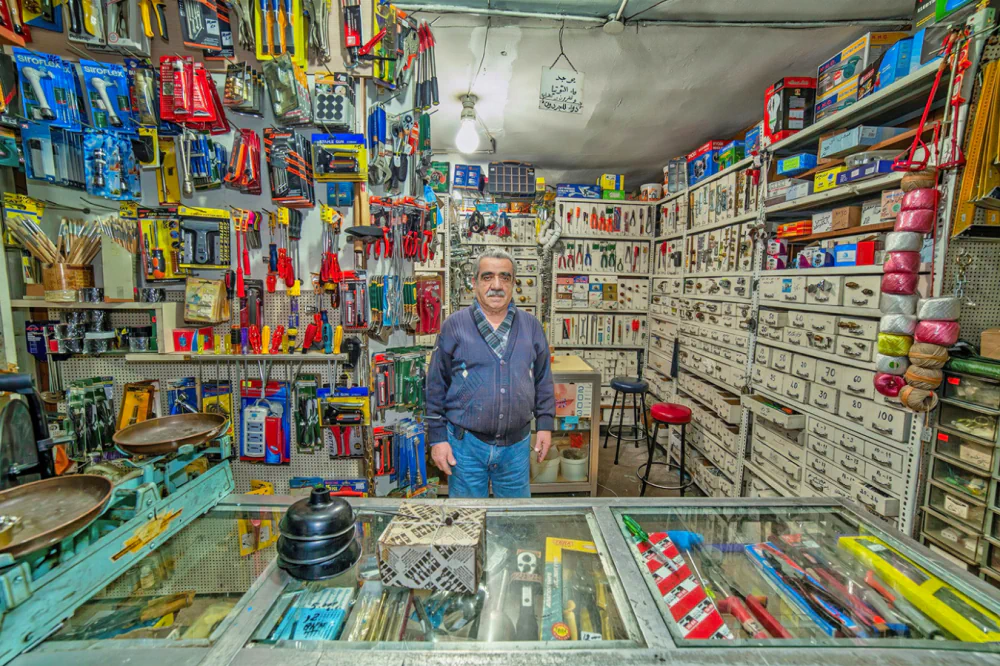
The portraits are often presented as life-size installations, displayed in the empty storefronts of closed shops in various cities or within museum settings, accompanied by immersive soundscapes that share each Guardian’s story. The intention is twofold: to create a face-to-face encounter with the audience, transforming absence into presence, and to raise awareness so that consumers might actively support these individuals by giving them their business, helping them remain open. His deeper intention is to pay tribute to these Guardians and to create lasting proof of their existence, especially in an age defined by speed and digital shopping.
All portraits share a consistent composition and focal line. His deliberate use of a very wide-angle lens amplifies the grandeur of each space and establishes an unusual relationship between the photograph and the viewer, who is immediately drawn into these colorful and visually dense environments. Paradoxically, what might at first appear as clutter, or even hoarding, becomes majestic and almost magical. These spaces transcend their function as simple shops, transforming into urban temples that carry a sacred dimension.
“Through his photographic survey, Antaki addresses the social value and fragile nature of individualized work in an increasingly homogenized, consumerist society. In our highly technological era, where the past is quickly forsaken in favor of the newest, latest, and greatest, the economic conditions supporting those purveyors of our quirky cultural ‘heirlooms’ are gradually becoming more tenuous. Workplaces themselves are increasingly standardized, depersonalized, and scaled up for the sake of commercial efficiency. The artist sees this, and he responds. The sitters tell their stories, but implicit in these images is the close association between each person and the objects that surround them, prompting us to consider the psychological relationship between each subject and their created environment. Antaki steps deeply into the treasured realms of these individuals. With an acute perception of the present moment and a gentle curiosity, he eloquently takes stock, allowing us privileged access to the idiosyncratic wealth of the Guardians.”
— Edward Burtynsky
About Vladimir Antaki
Born in 1980 in Riyadh, Saudi Arabia, Vladimir Antaki discovered his passion for visual storytelling early through cinema. Enriched by film studies in Paris, art history at the Sorbonne, and fine arts training in Montreal, he developed a broad, global perspective on culture and art. Yet his creative impulse led him toward the hyper-local, focusing on modest shops, workshops, and market stalls that most people might pass by without a second glance.
It is precisely this tension between Antaki’s cosmopolitan background and the unassuming places he photographs that drives his artistry. Rather than showcasing grand, instantly recognizable landmarks, he turns his lens toward spaces that could easily fade into anonymity. He refers to these places as “urban temples,” remnants of a bygone era, not because they serve as literal houses of worship, but because he regards them as sacred repositories of culture, memory, and genuine human connection.
Antaki’s work is rooted in a delicate balance between preserving history and adapting to modern realities. He does not advocate halting change or romanticizing the past as an unspoiled paradise. Instead, his photography calls for equilibrium, ensuring that small, traditional hubs survive alongside new developments so that our shared future remains vibrant and multifaceted rather than monotonously uniform.
By treating these modest businesses as monuments worthy of celebration, Antaki redefines the notion of what is monumental. Within towering cityscapes of glass and steel, his subjects become islands of authenticity, reminding viewers that the true essence of a community often resides in places overlooked by the pace of modern life.
Known for his visually striking portraits, Antaki captures the essence of individuals and their environments, inviting viewers to explore the beauty and history of often-overlooked spaces. In 2019, his commitment to historical and cultural preservation was underscored by the publication of the monograph The Guardians by Kehrer Verlag, featuring a preface by Edward Burtynsky.
Antaki’s work serves as a bridge between past and present, bringing the forgotten into the light. His exhibitions, presented in public spaces and galleries across France, the United States, Canada, Lebanon, Lithuania, Saudi Arabia, the United Kingdom, and China, have reached diverse and engaged audiences.
The exhibition Parfums d’Orient (Perfumes of the East), presented in Paris at the Institut du Monde Arabe and in Riyadh at the Saudi National Museum, invited viewers on a sensory journey through the perfume souks of Oman and Riyadh. Featuring life-size portraits paired with soundscapes, the immersive experience reflected Antaki’s dedication to preserving human stories and honoring cultural heritage.
As of 2026, Antaki has completed his next book, an intimate and compelling meditation on memory, inheritance, and the hidden connections linking past and present. He is currently seeking a publisher.
Acquisitions: Limited-edition fine art prints are available upon request. [Official Website]