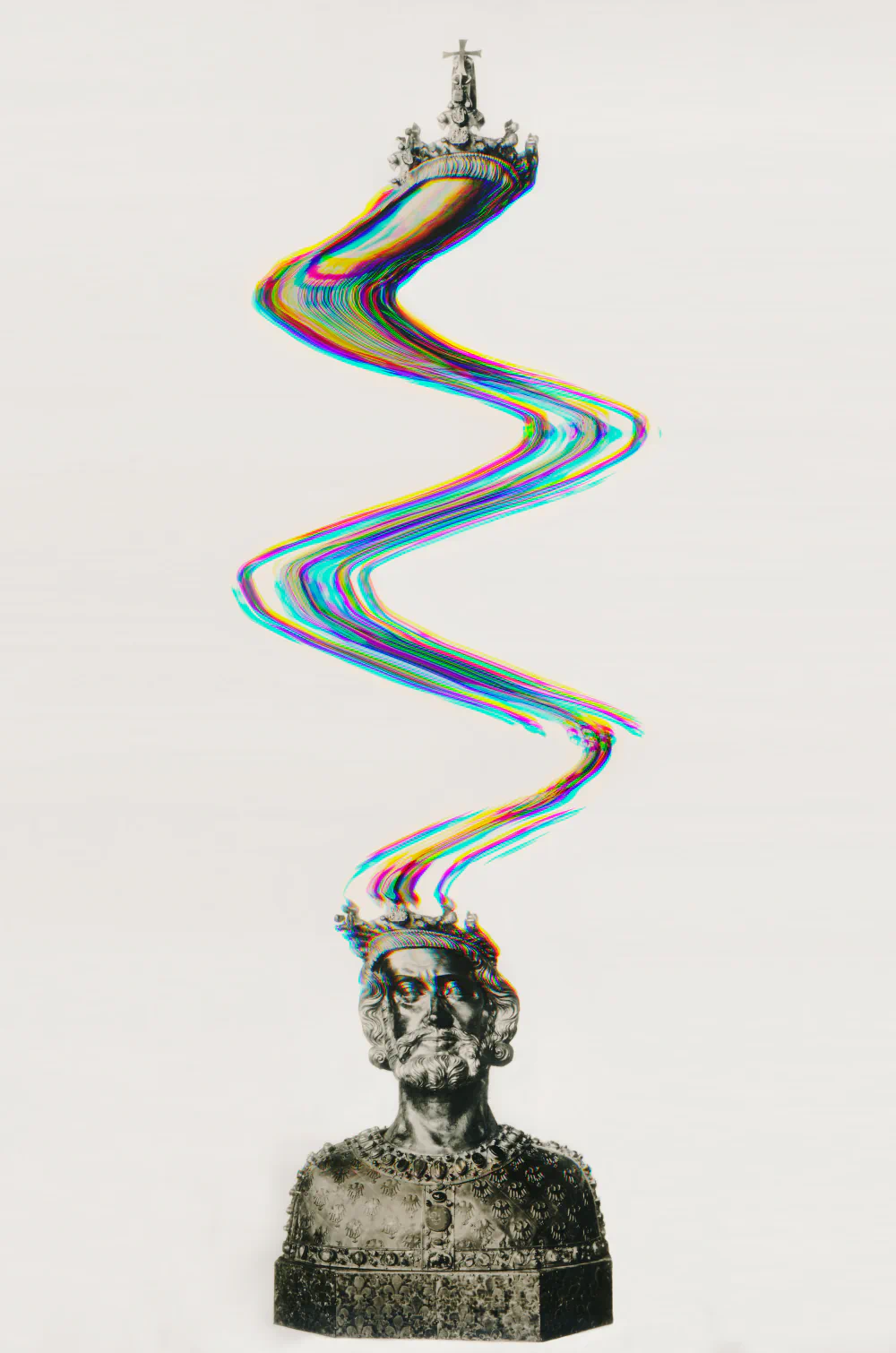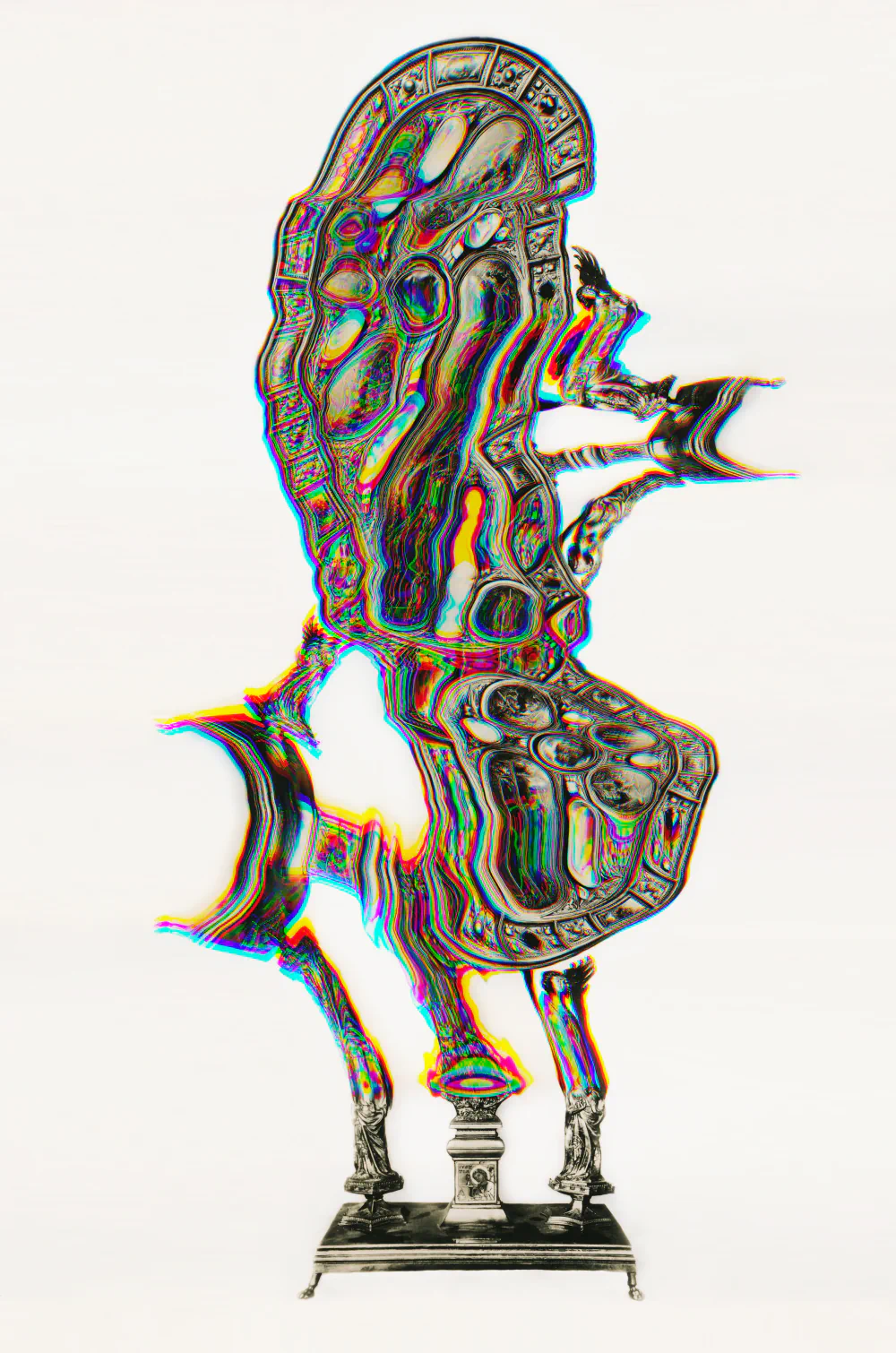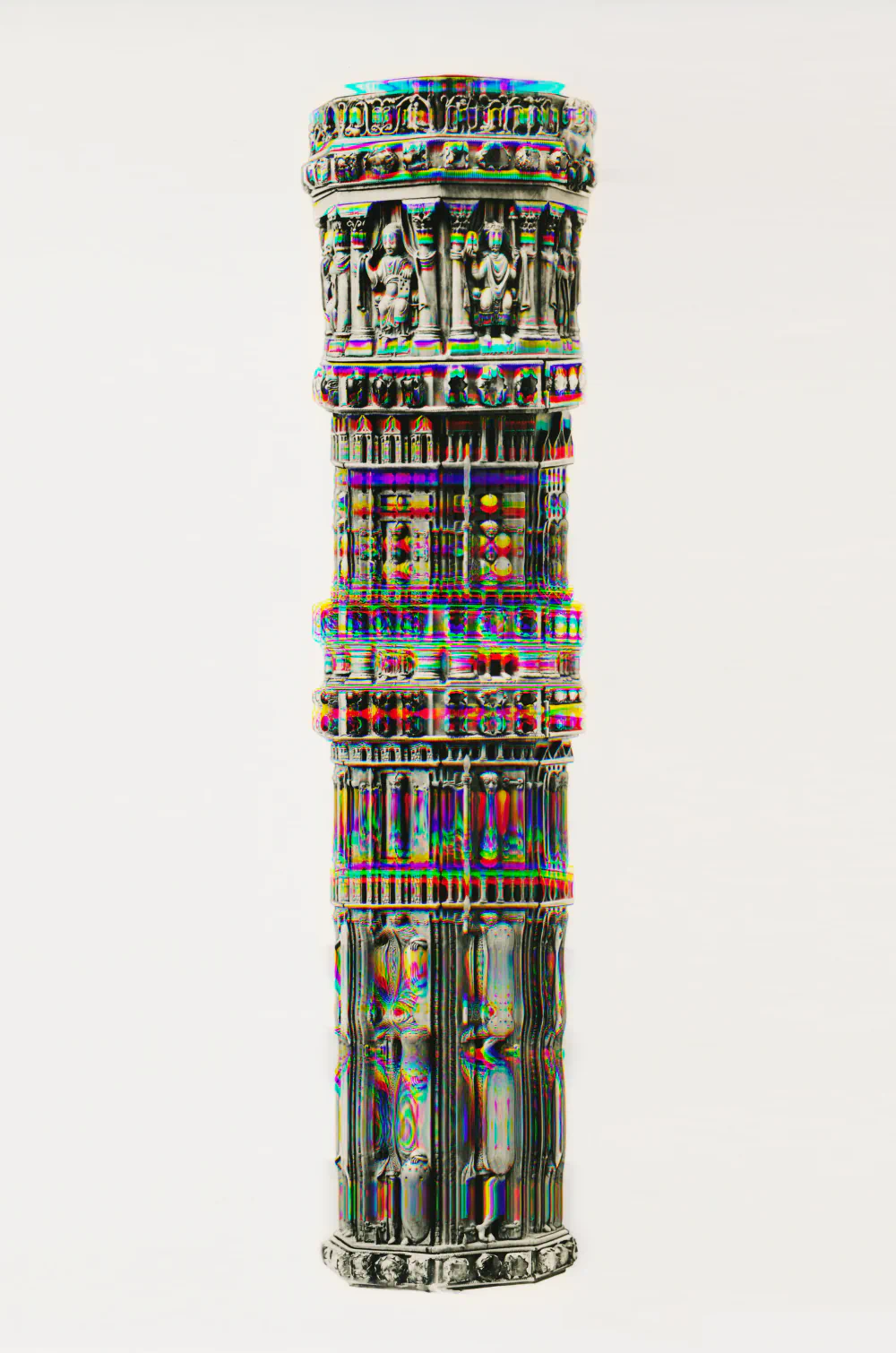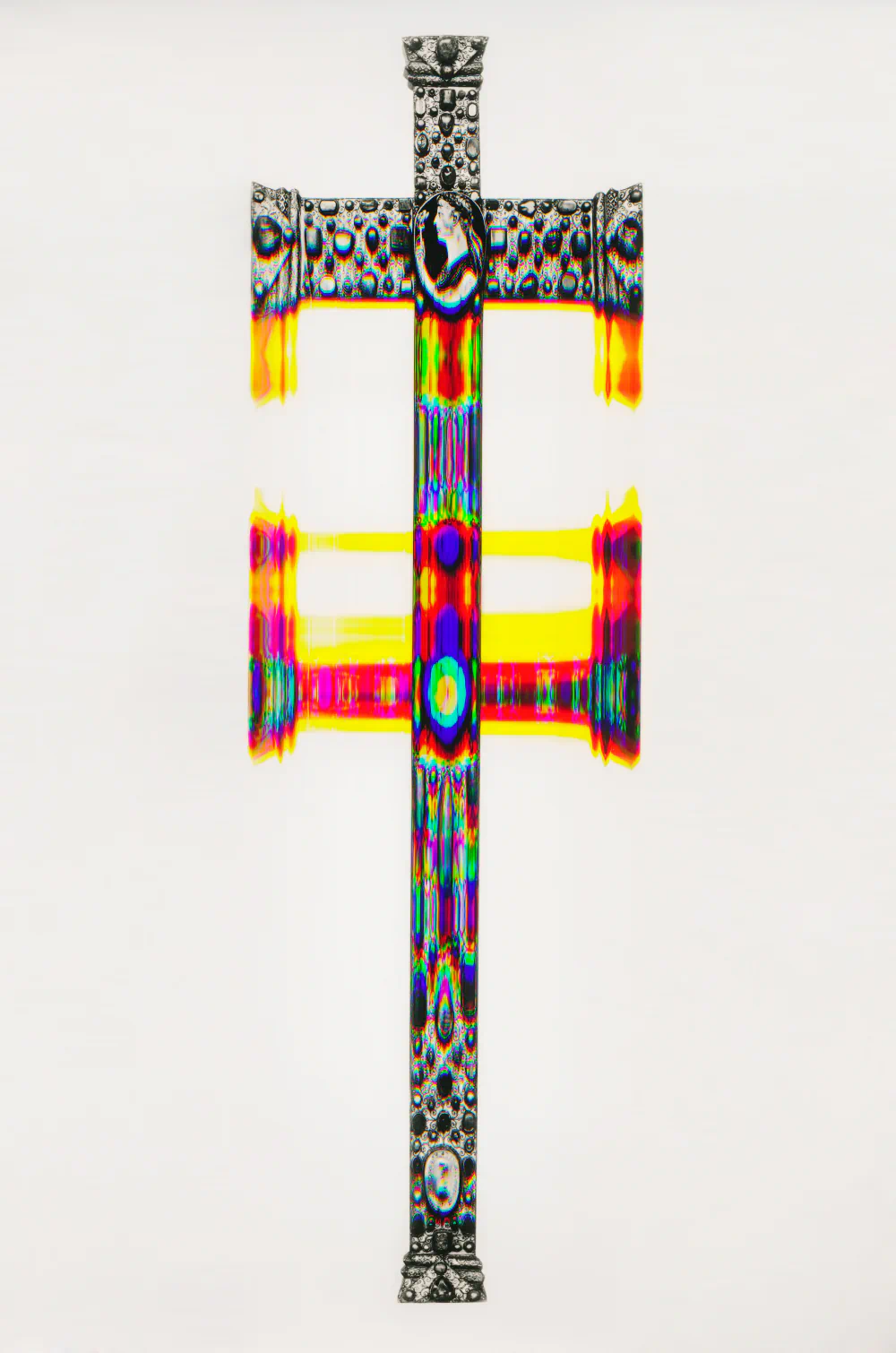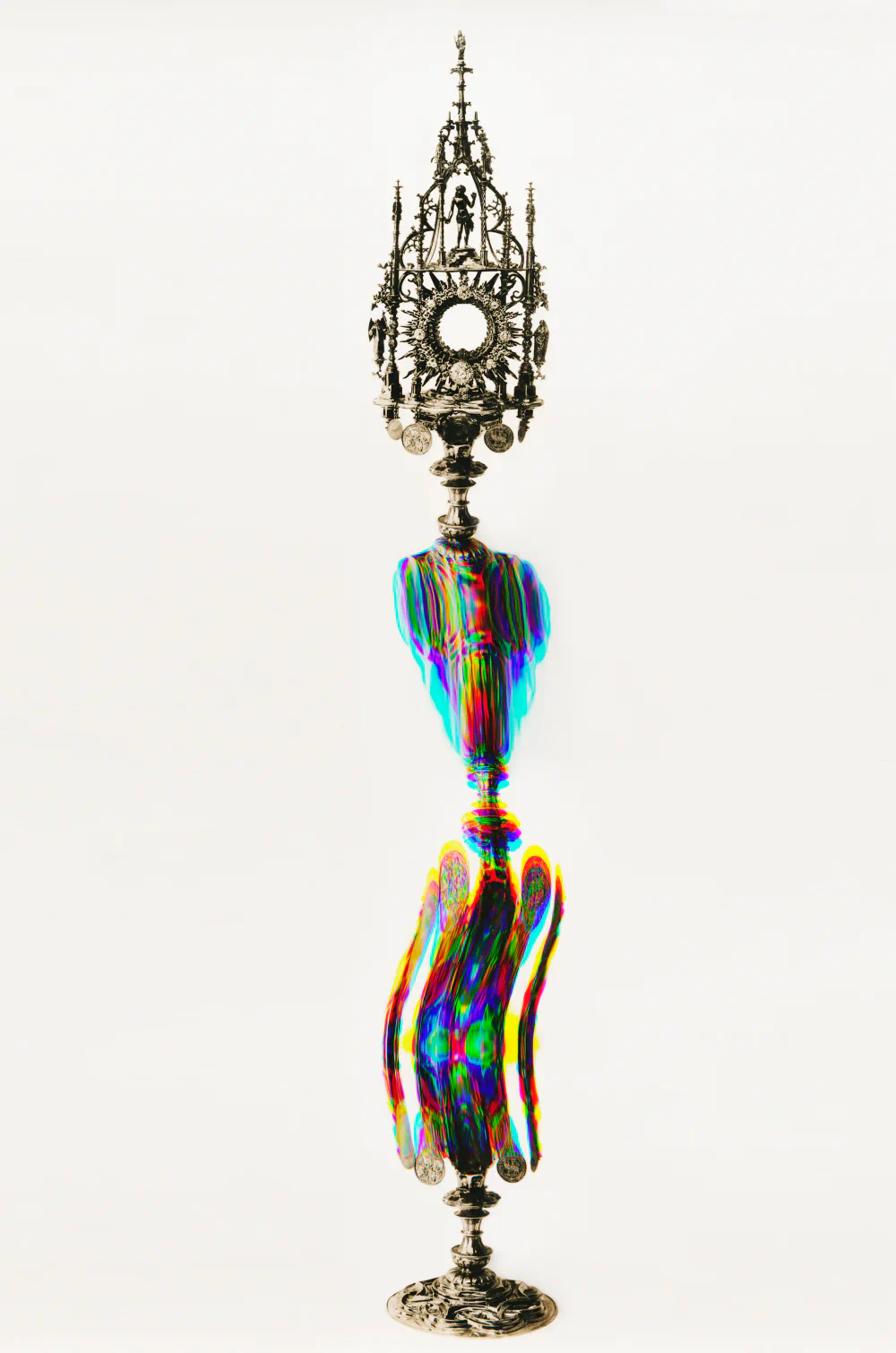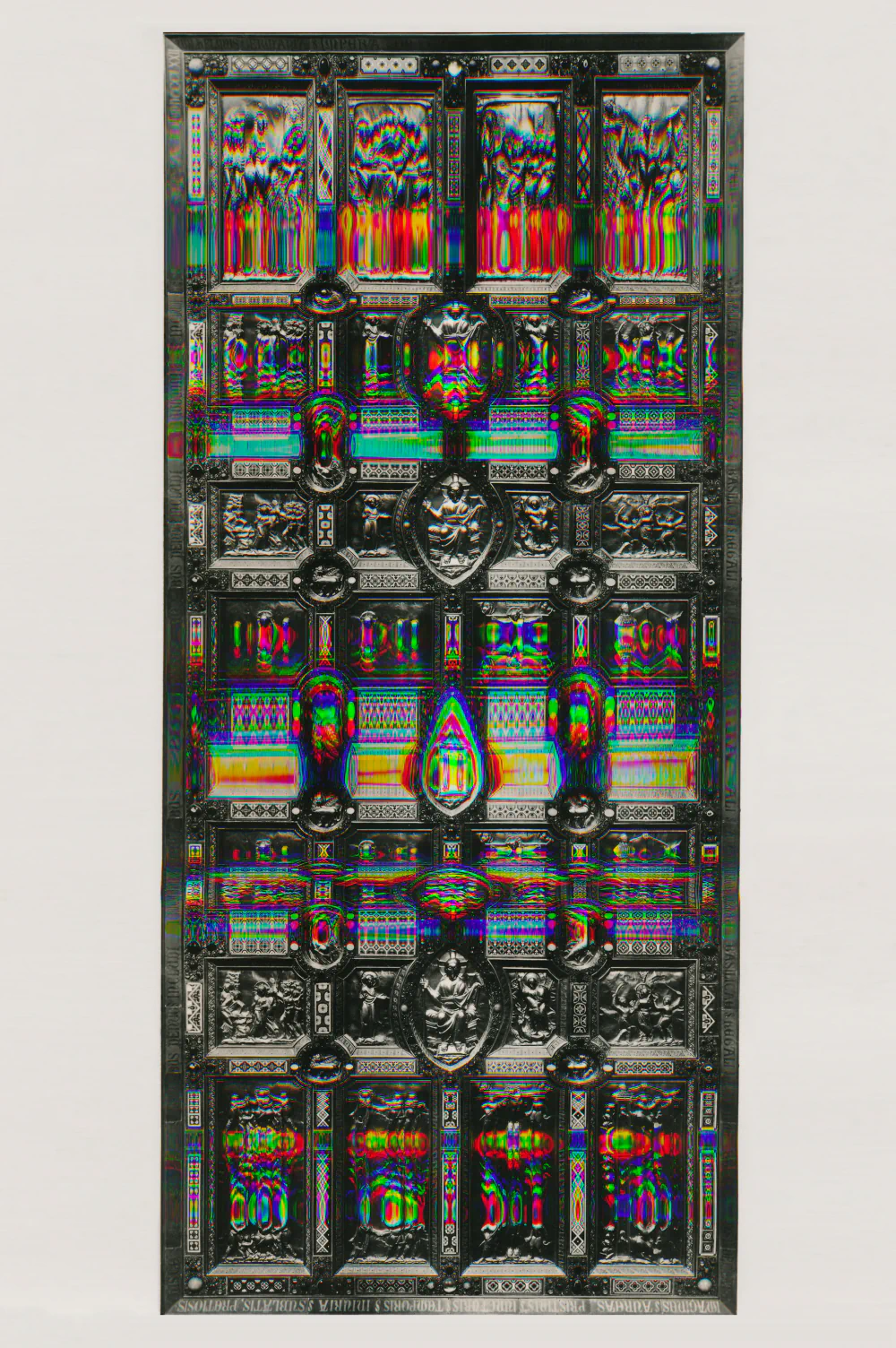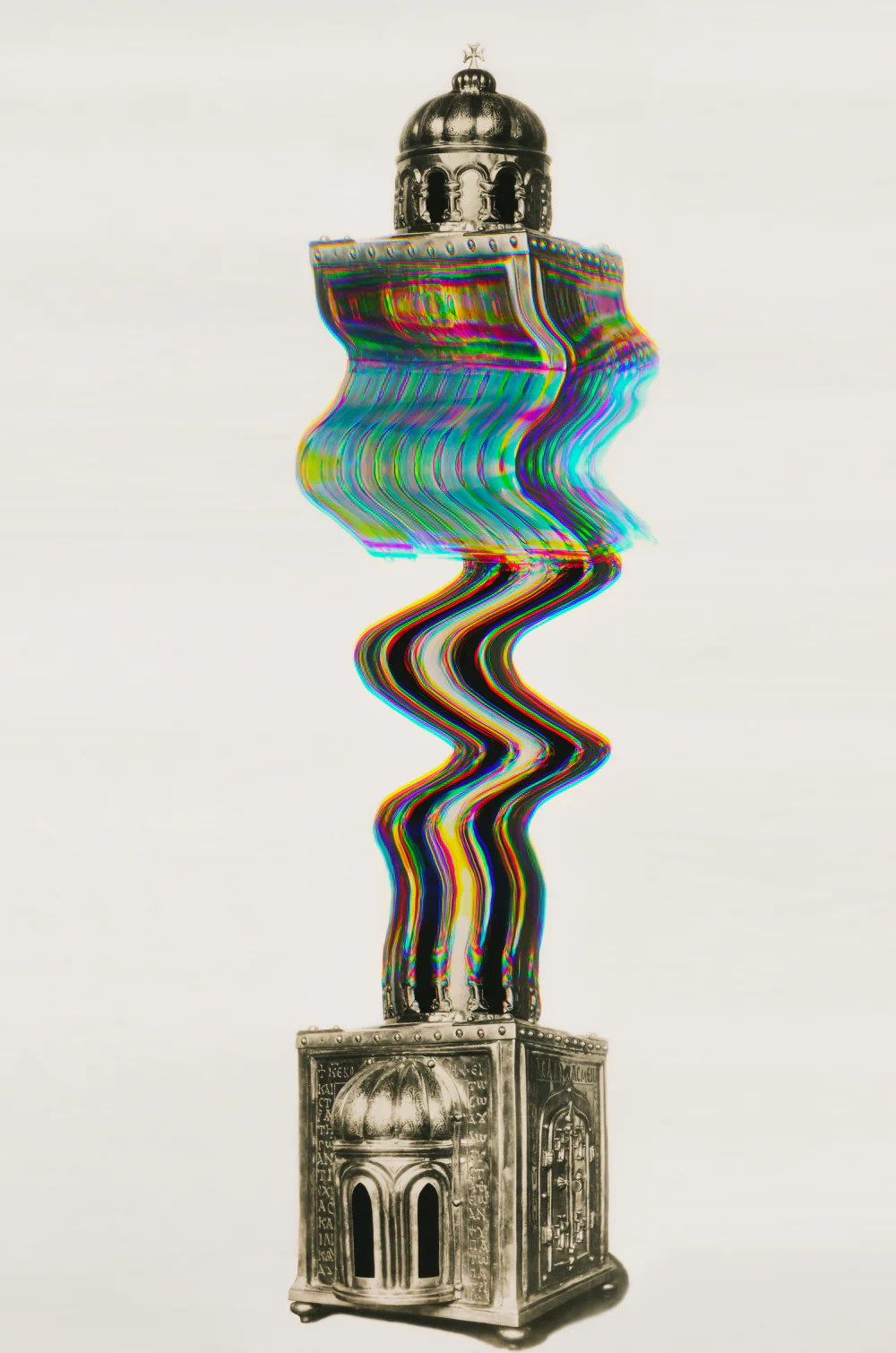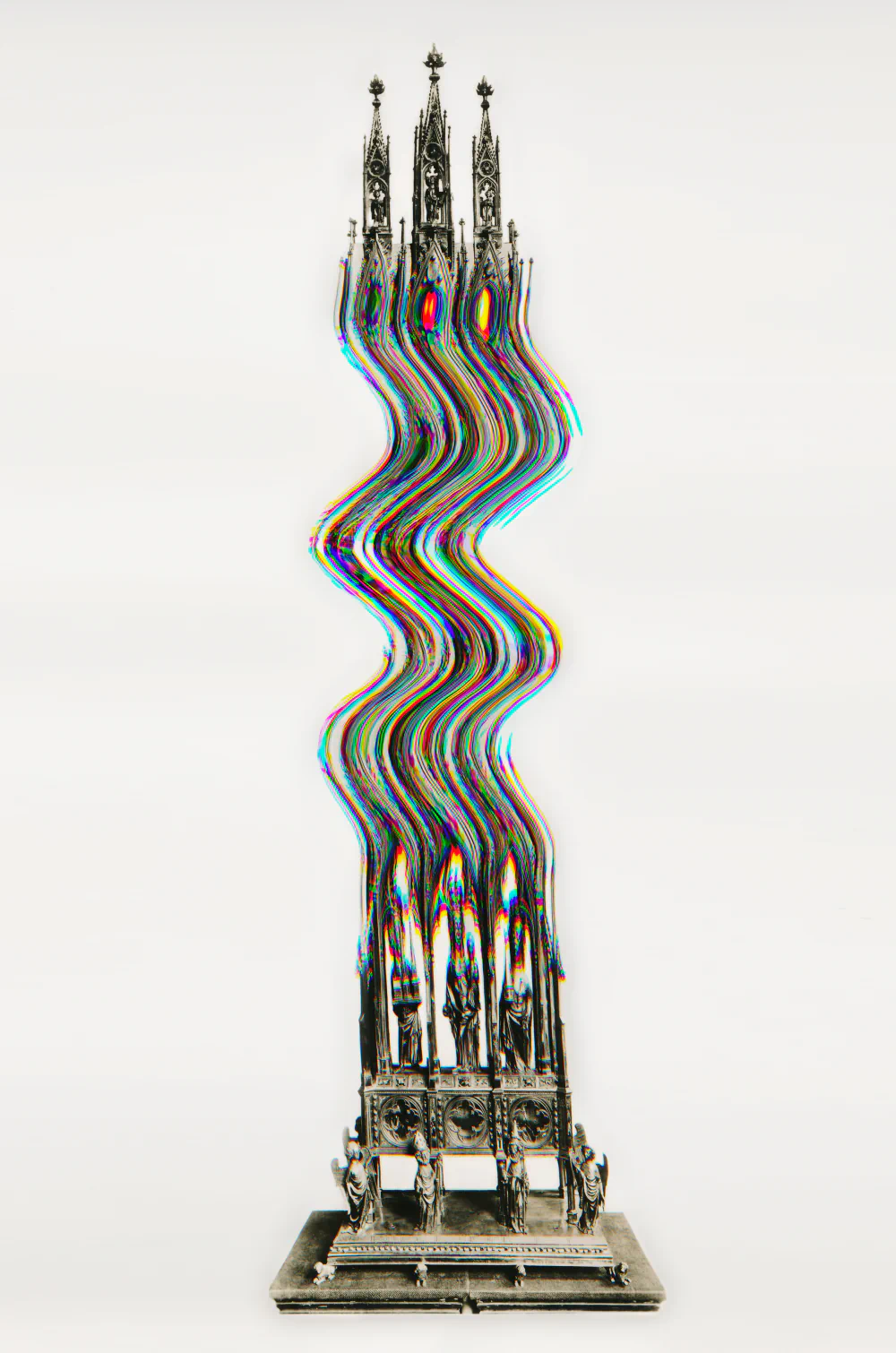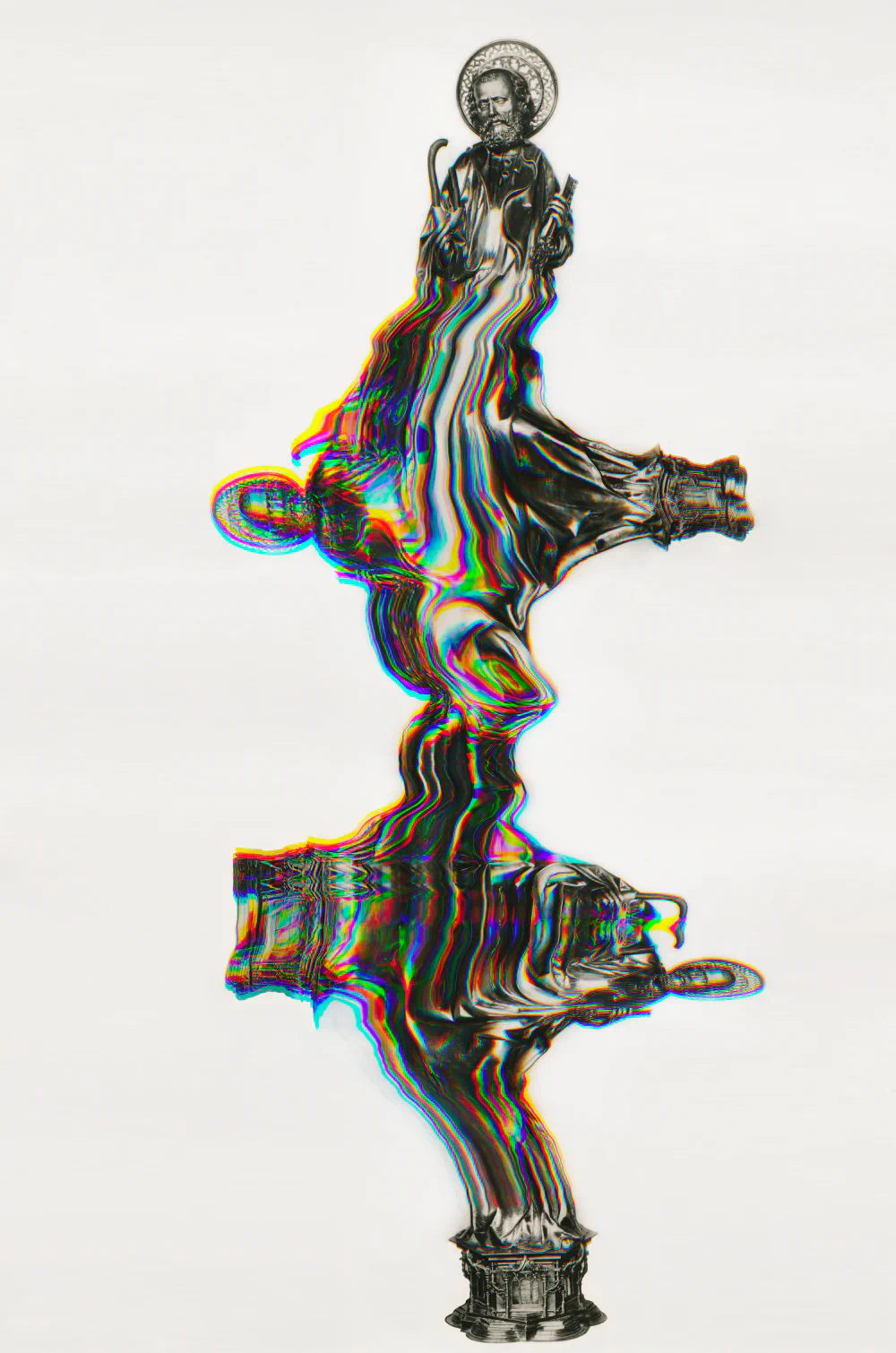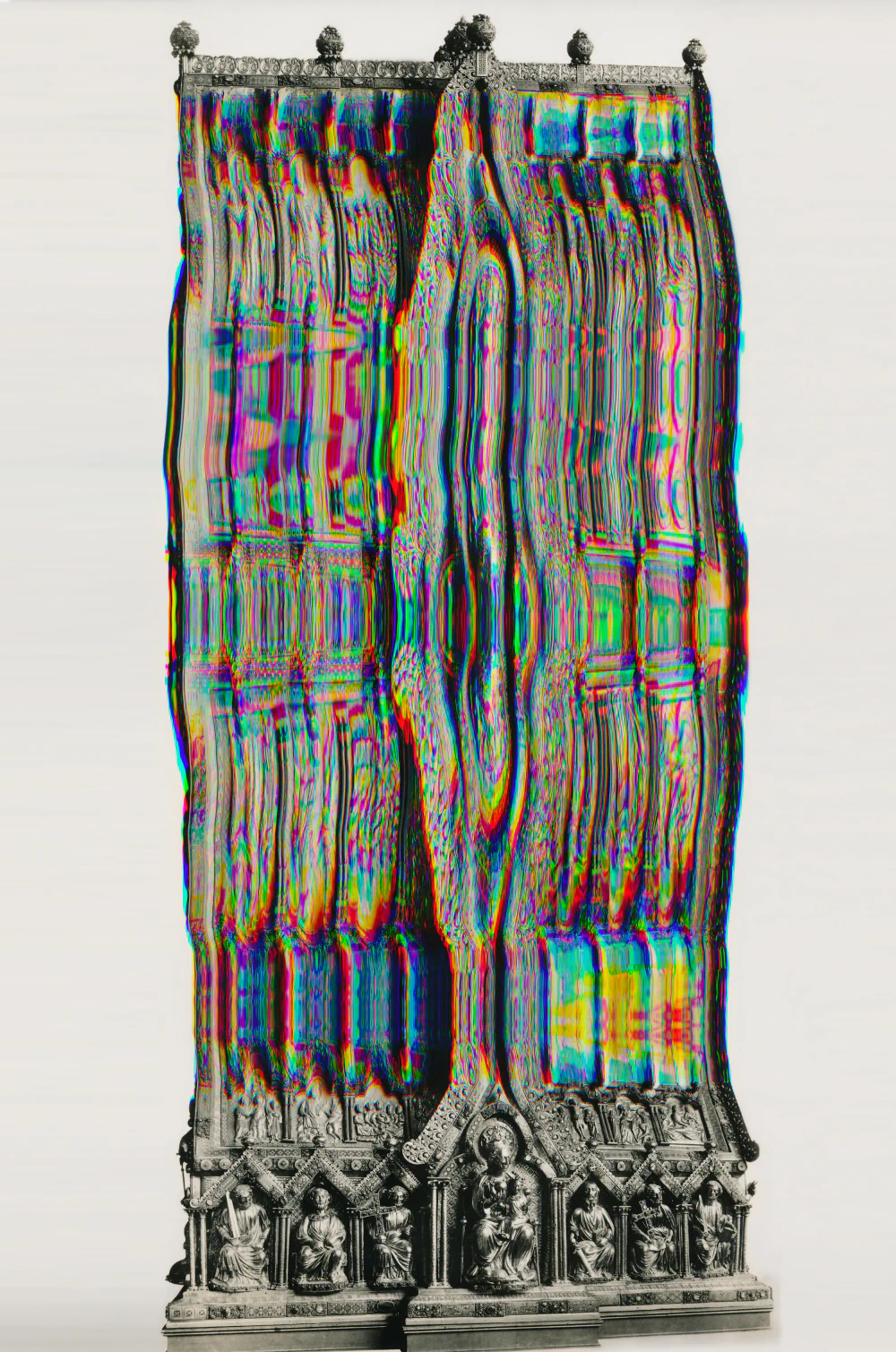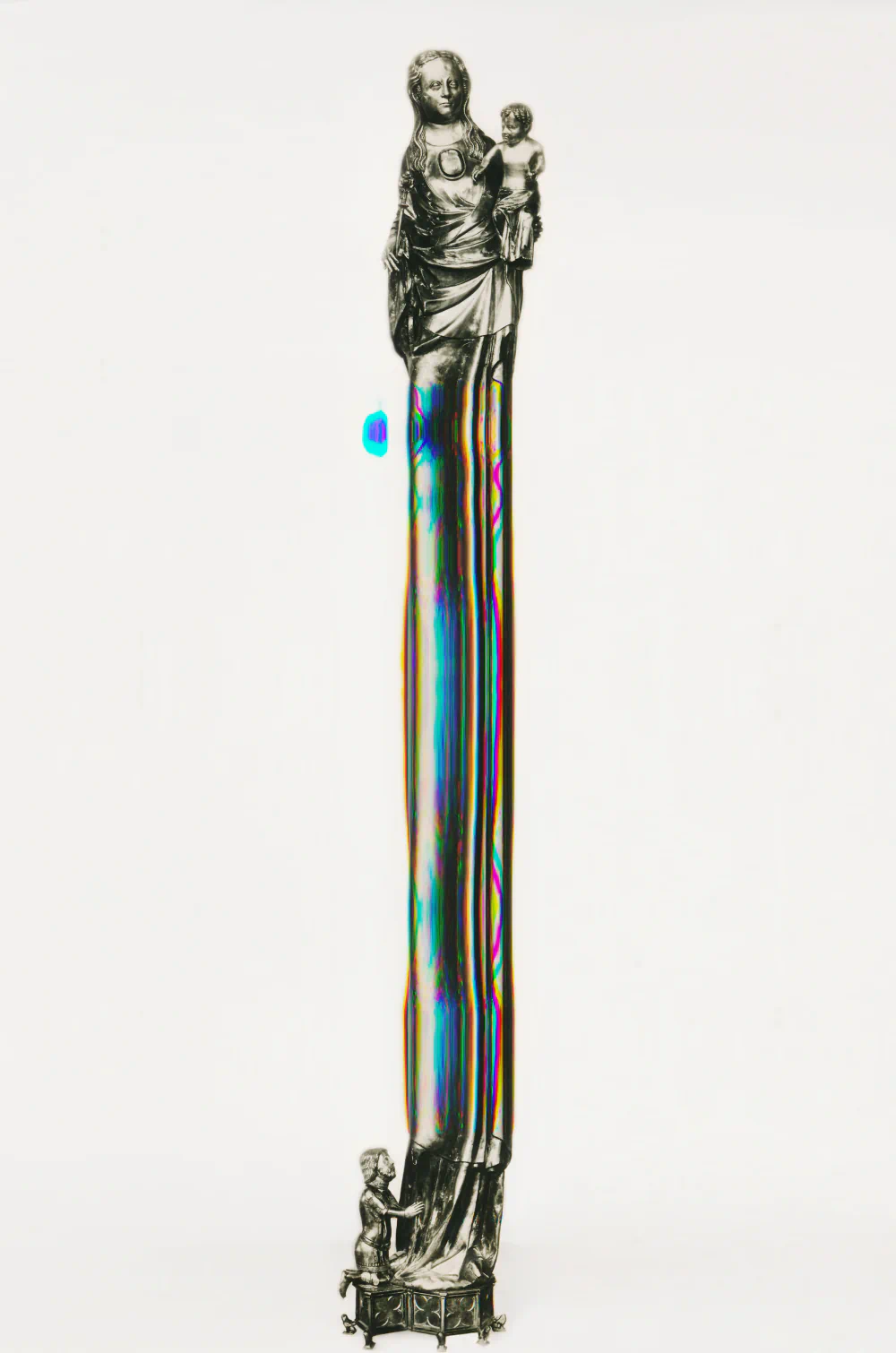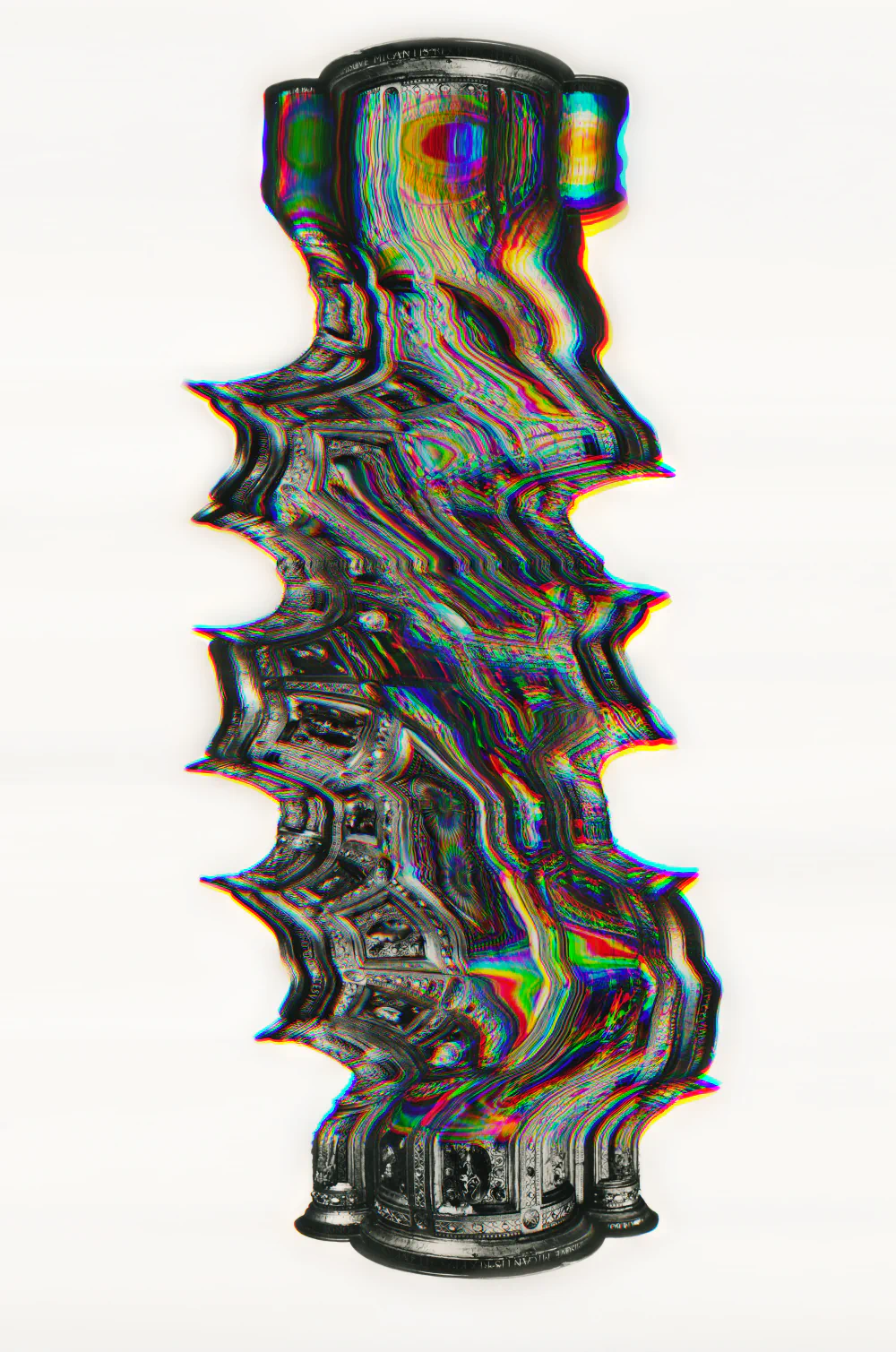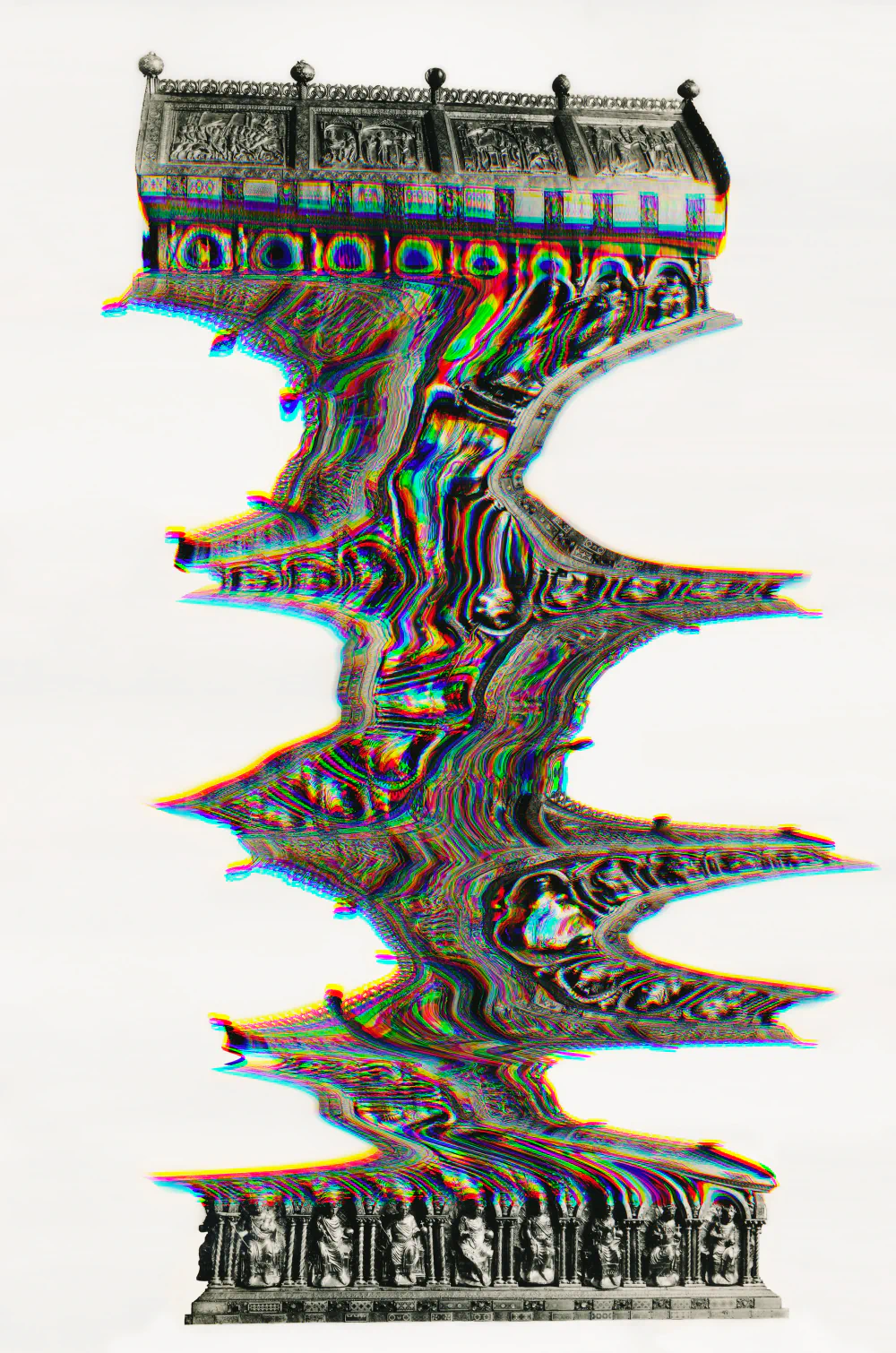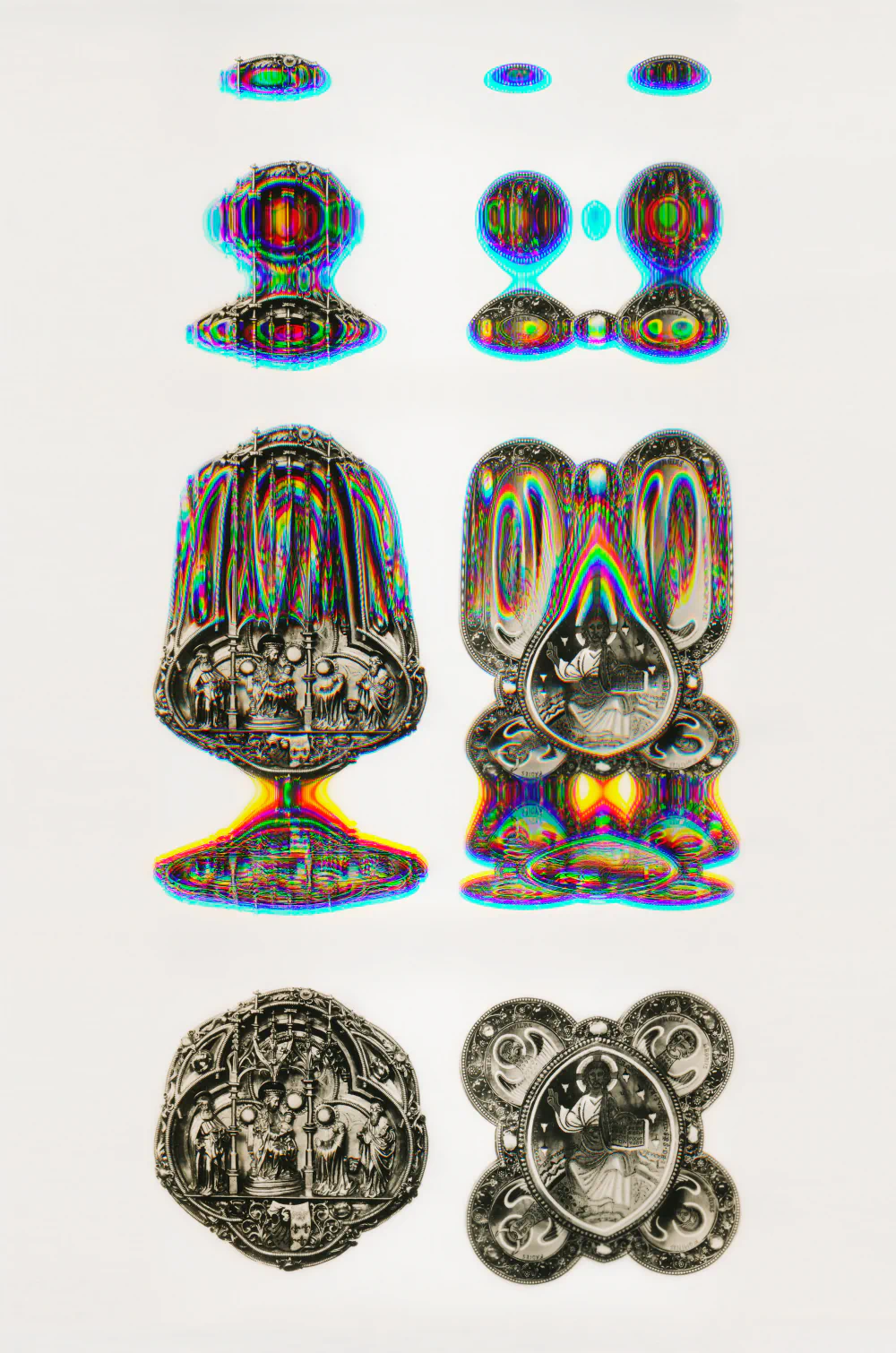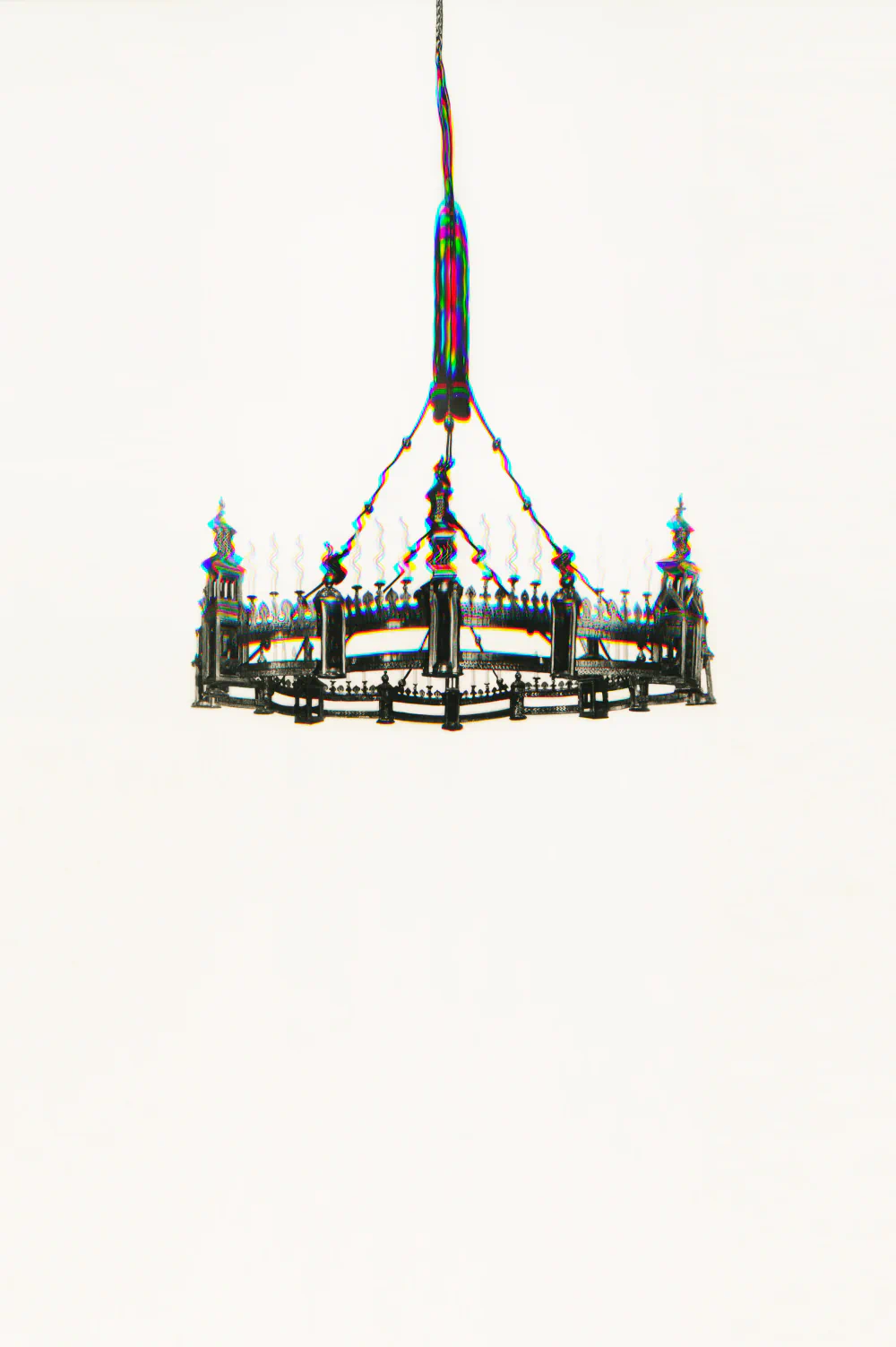
The original images in the photographs were sourced from old postcards purchased by Gao Yutao at second-hand markets in Germany.
These postcards depict sacred relics housed in Aachen Cathedral, each bearing a long history stretching back through the ages.
The artist also made a special trip to the treasury of Aachen Cathedral to view the original relics in person. When these sacred icons were printed on mass-produced postcards in the 1970s and circulated through second-hand markets in Germany, they underwent their first “devaluation,” being demoted from inaccessible miracles to consumer goods for postal delivery. Gao Yutao’s series, Two and a Half, Relic, originated from an effort to recapture this sense of “divinity.”
The artist titled the series Two and a Half, Relic, in which “two” signifies the two-dimensional pictorial world, while the additional “half” represents time—a temporal dimension forcibly inserted by the artist. He resisted the absolute precision of digital imagery through the intervention of tactile sensation. The artist laid the postcards flat on the scanner’s glass plate. As the scanner’s light moved in a downward trajectory, he rotated or dragged the postcards against the scanning beam, ultimately creating striking new images.
For instance, the reliquary of Saint Mary, with its lateral sides adorned with images of the Virgin Mary and the Child, along with the twelve apostles, reveals patterns resembling genitalia through the sculpting of time. Meanwhile, the Cross of Lothair appears as though it were ignited by fire, evoking the Christian scripture Isaiah 43:2: “When you pass through the waters, I will be with you; and when you pass through the rivers, they will not sweep over you. When you walk through the fire, you will not be burned, and the flames will not set you ablaze.”