

Teresa Bandettini was one of the most talented eclectic woman of the XIX century. She was well known as the intellectual dancer due to her captivating and touching extemporization performances.
Writing poetry meant revealing everything about herself, as a woman, an artist, a muse, but always embodying grace and enchantment. Her calling to art was strong and carnal. Her impetuous verses took over her, exposing her naked soul to the response that was always favourable. I invite the viewer to seek the mystery beyond the appearance, in the broken up image, in the place between real and surreal.
Follow what’s new in the Dodho community.
Join the newsletter »
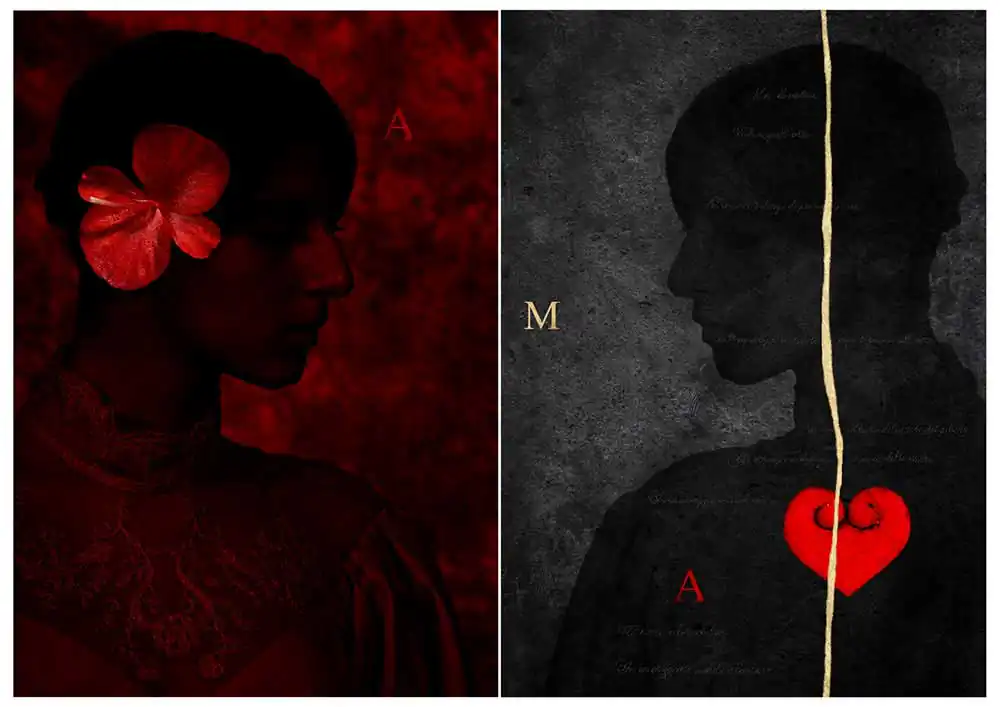
Teresa Bandettini’s wide knowledge of classical culture gave her an enormous background from which she could source to compose her verses. She had a such great aptitude for extemporization that she was capable of moving people to tears.
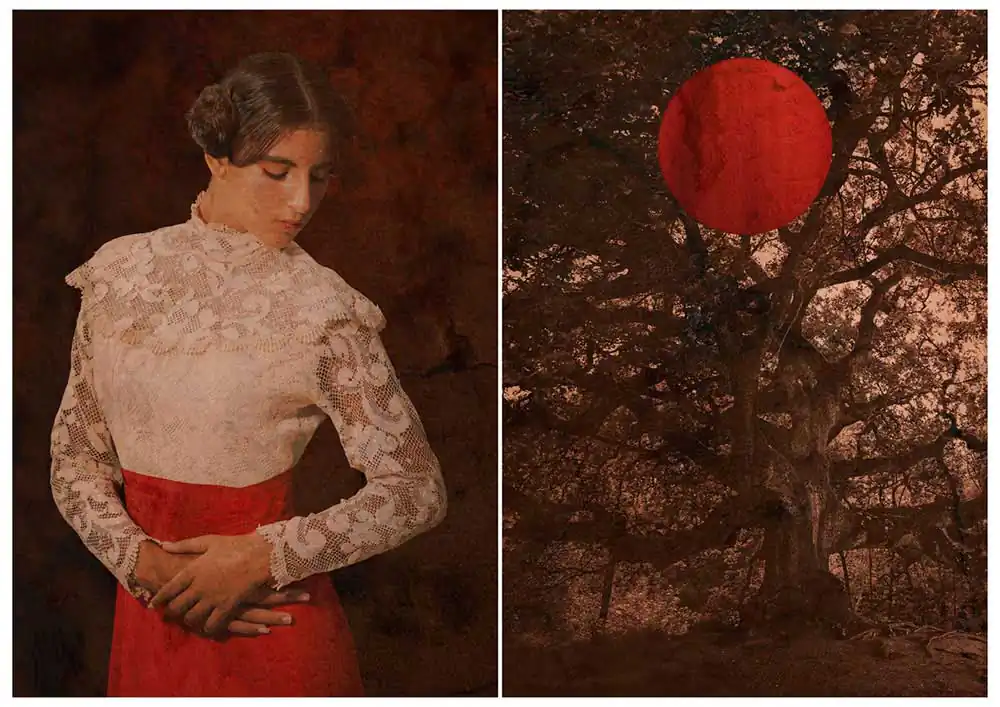
The myth of Adonis is common to many cultural traditions such as Semitic and Classic. From Ovid in the “Metamorphoses” to Teresa Bandettini herself, in the poem “The Death of Adonis”, the myth is related to the sun and moon rituals, archetype of death and resurrection and the dichotomy between life and death.
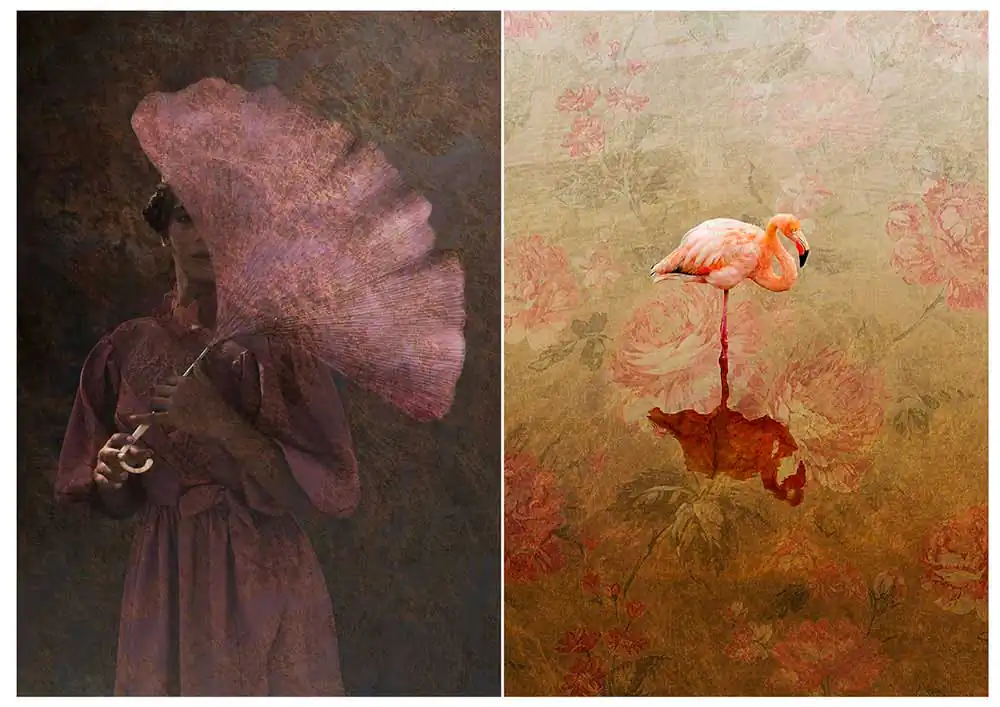
Capable of translating the most important masterpieces from Latin at the age of 13, Teresa Bandettini studied Ovid’s Metamorphoses, in which are told the most popular and important myths of Roman and Greek cultures.
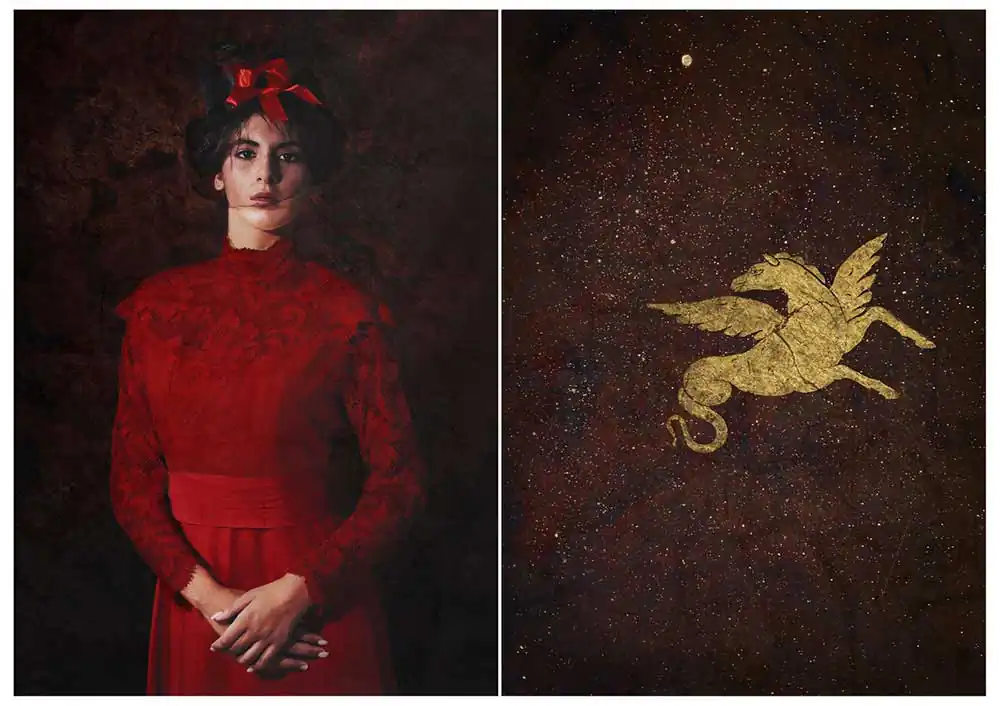
Pegasus was said to have flown toward the sky becoming a constellation. He is the symbol of headless poet spiritual life and inspiration, the representation of poetic fervor seeking for the major ambition.

Recalling the mythology of Ovid’s Metamorphoses through the Medusa’s stone mask, this diptych proposes a parallel between Greek myths told in Teresa Bandettini’s poem “Fall of Giants” and Teresa Bandettini herself.
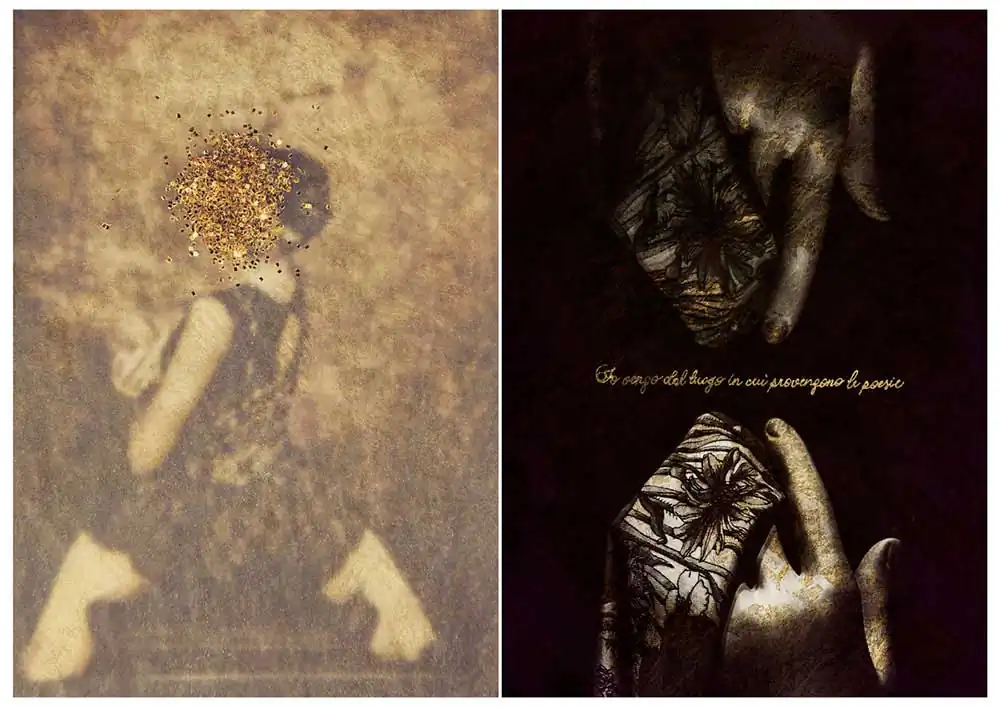
Teresa Bandettini became famous as a dancer, performing in many theatre of Europe. Nevertheless her attitude toward poetry and her deep knowledge of Roman and Greek works made her one of the most extraordinary performer of her time. She was said to have performed 8 different versions of the same topic.
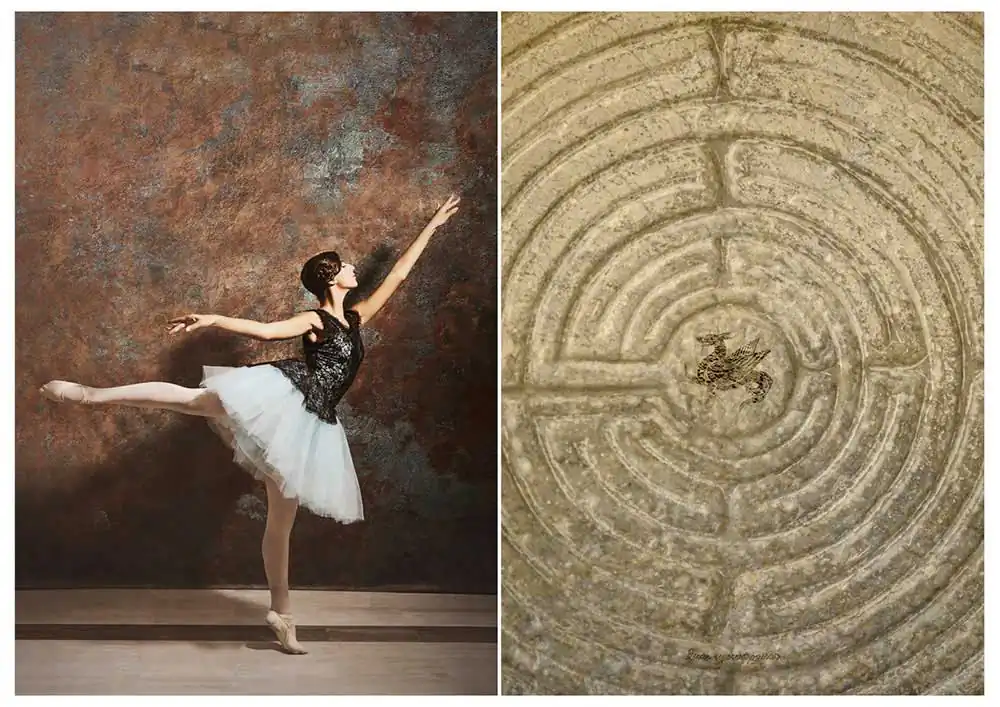
Teresa Bandettini dance and intellectual career is compared with the Labyrinth sculpted on Lucca’s Cathedral, in order to represent her evolution. There is an hidden message here and it is to follow your inspiration.
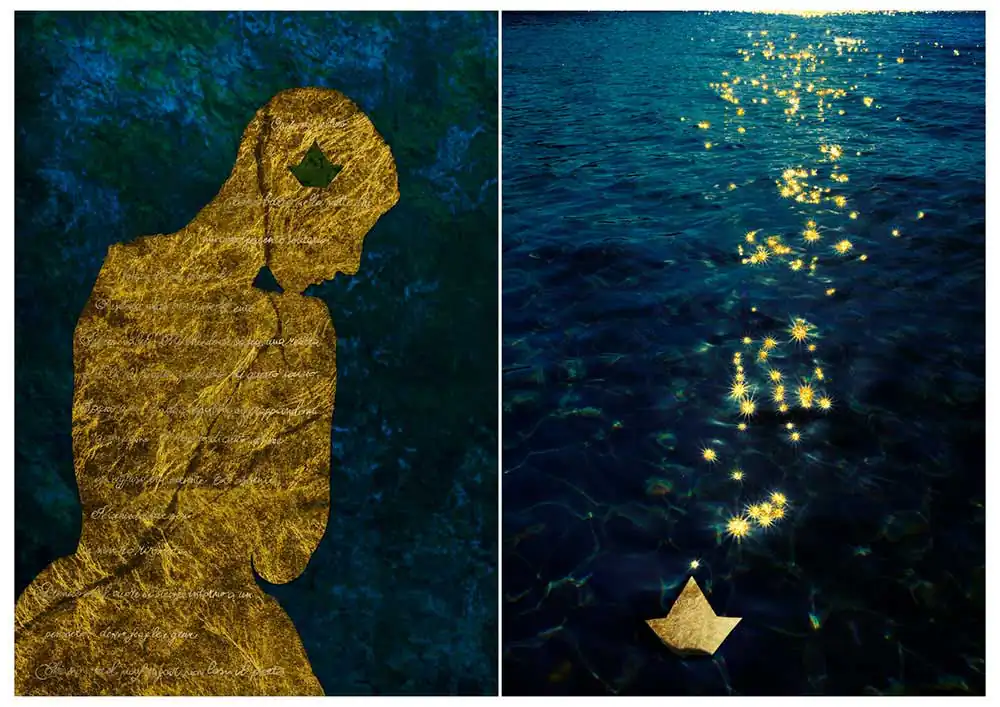
She was admired by princes and poets who competed to applaud her and support her. The journey has just begun and the destination still far away. This diptych refers to Teresa’s expectation.
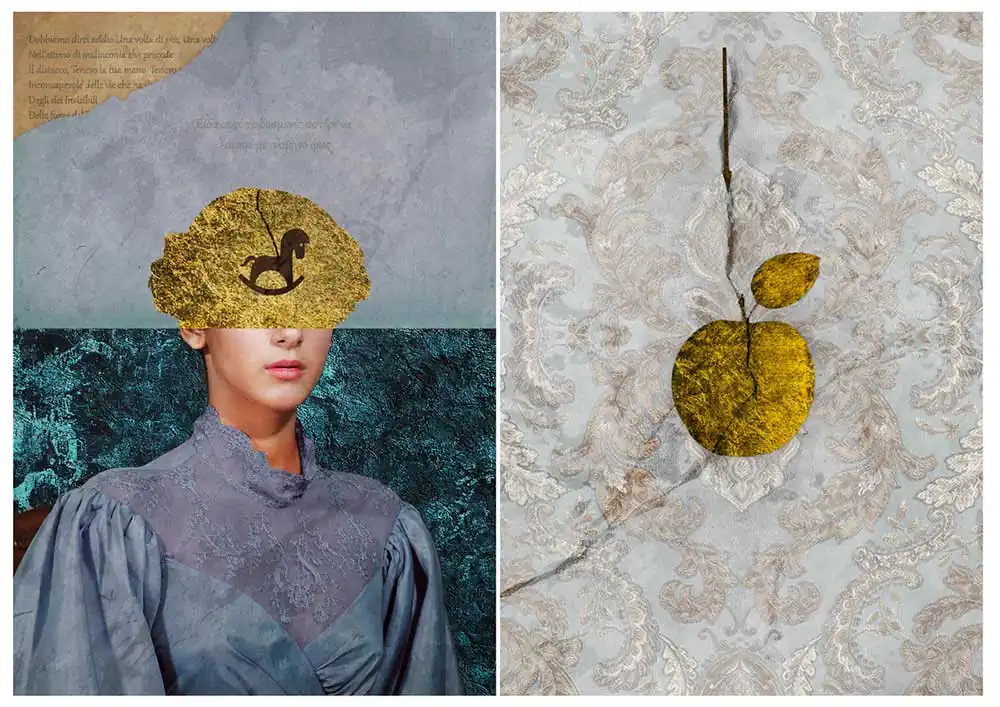
In this diptych there is an explicit referral to the hero’s journey of Homeric myths and the controversial figure of Helen.
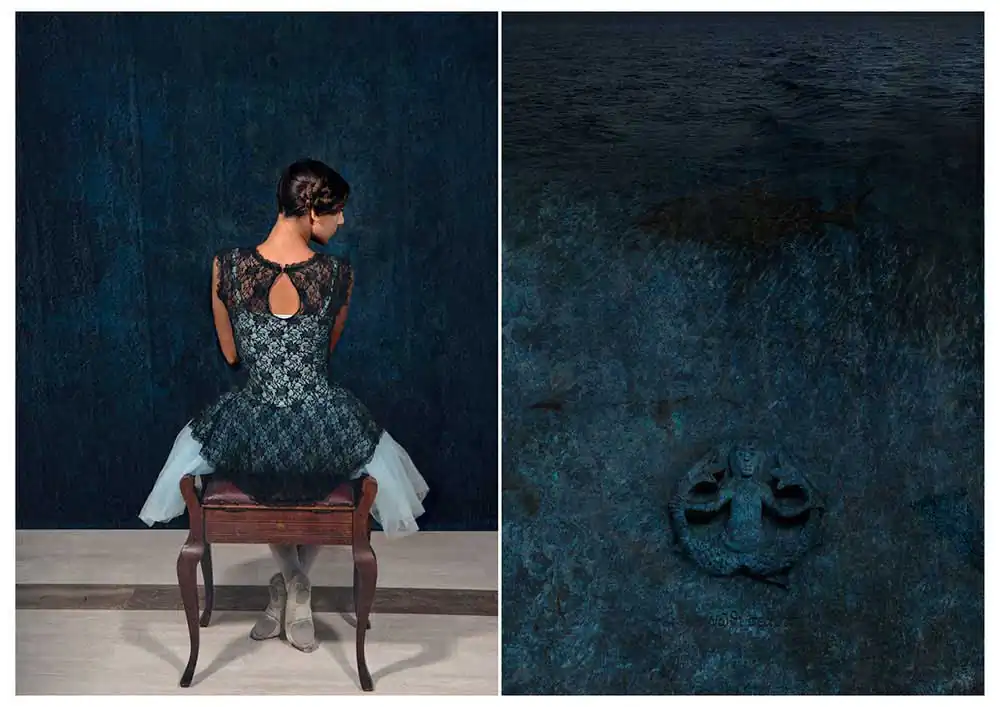
Her life is compared with the myth of sirens here represented by the stone sculpture that belongs to Saint Michael church in Lucca. It suggests Ulysses’ efforts to hold out against not only external temptation but also the inner ones, human will and passion.