

The most reproduced images in the history of photography are not necessarily those with the greatest formal quality, technical complexity, or conceptual depth.
They are reproduced because they work. Because they condense a simple, recognizable, and easily consumable narrative. Because they have been useful. Behind every iconic image there is always a less visible, more uncomfortable story and almost always a more interesting one than the version repeated endlessly in books, exhibitions, and social media.
Photography, since its beginnings, has lived with a constant tension between document and myth. The images that have survived over time are not only those that captured a historical moment, but those that managed to adapt to a dominant narrative. The problem is not that they are reproduced, but that in this process they are simplified until they become flat symbols, stripped of context, intention, and contradiction.
Think of the image of the man standing in front of the tanks in Tiananmen Square. Reproduced endlessly, it has become a universal icon of individual resistance against power. What is rarely mentioned is that it was neither a unique nor an exclusive image. Several photographers captured the scene from different angles, with different framings and formal outcomes. Yet one version prevailed over the others. Not because it was “the best,” but because it was the most functional for the Western narrative about China, dissent, and individual heroism. Repetition did not consolidate truth; it consolidated a narrative.
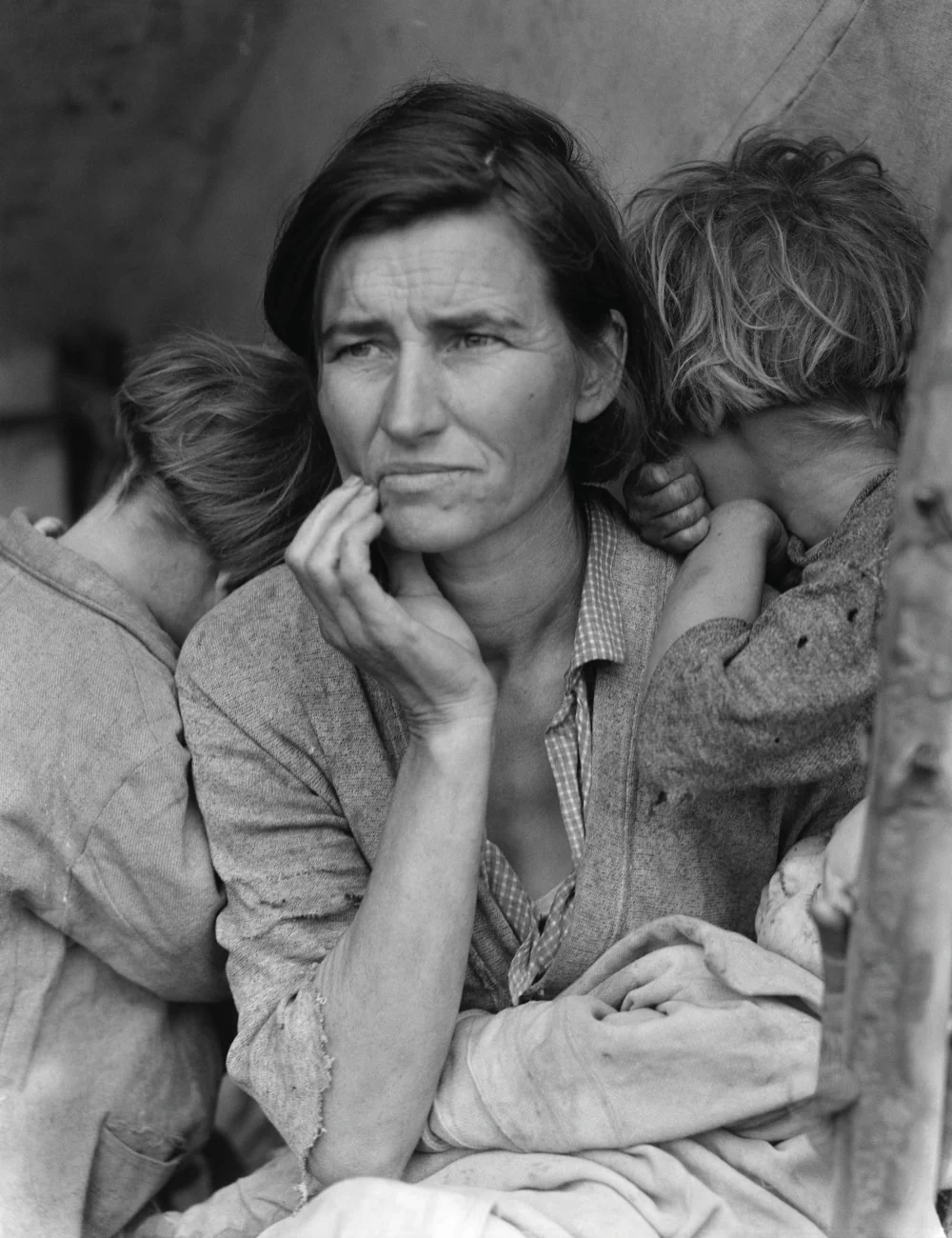
Something similar happens with Migrant Mother, by Dorothea Lange. For decades, the image has been used as a symbol of the Great Depression, of dignified poverty, of resilient motherhood. What is often omitted is the problematic relationship between the photographer and the woman portrayed, Florence Owens Thompson, who never received any compensation and repeatedly expressed her discomfort at being reduced to an archetype. The photograph worked as a social and political emblem, but it did so at the cost of erasing the real identity of its subject. Constant reproduction ended up fixing an image that never fully belonged to the person inhabiting it.
The system of image reproduction is not neutral. It responds to editorial, political, economic, and cultural interests. The photographs that are reproduced are those that can be easily inserted into preexisting discourses. A complex, ambiguous, or uncomfortable image has fewer chances of circulating widely. Not because it is worse, but because it demands more from the viewer and generates less consensus.
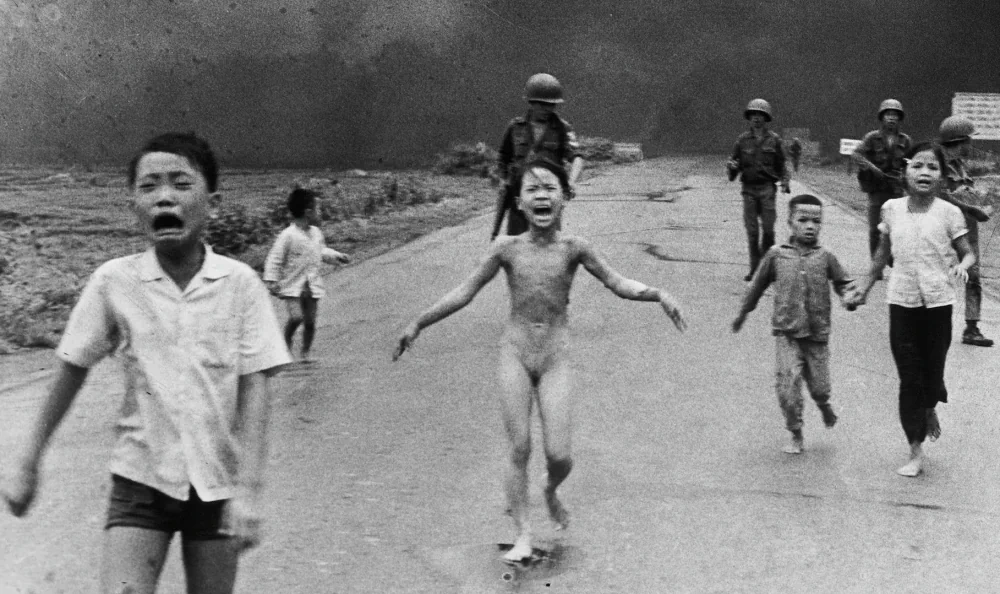
In the field of photojournalism, this logic is especially evident. The most reproduced images of armed conflicts tend to share a recognizable aesthetic: the dramatic gesture, the frozen moment, the emotion legible at first glance. The so-called decisive moment has become an aesthetic alibi that justifies the selection of spectacular images over those that explain processes. The photograph of the napalm-burned girl in Vietnam is a clear example. Its visual power is undeniable, but its massive reproduction has eclipsed thousands of less striking images that showed the structural consequences of the war. A single image cannot explain a conflict, but when repeated endlessly it ends up replacing the entire narrative.
Repetition generates authority. The more an image is reproduced, the more unquestionable it appears. The problem is that this authority does not come from its truthfulness, but from its omnipresence. In the digital era, this phenomenon has intensified to an extreme degree. The same images circulate incessantly, decontextualized, cropped, reinterpreted. Algorithms reward what is recognizable, not what is revealing. A familiar image is far more likely to be shared than a new one, no matter how relevant the latter may be.
This has had a direct impact on how photography is produced today. Many authors, consciously or unconsciously, work in search of the reproducible image, the image that “works,” the image that can become an icon. The risk is obvious: photography stops being a tool for exploration and becomes a factory of visual clichés. Formulas, gestures, framings, and subjects are repeated because they have already proven their symbolic efficiency.
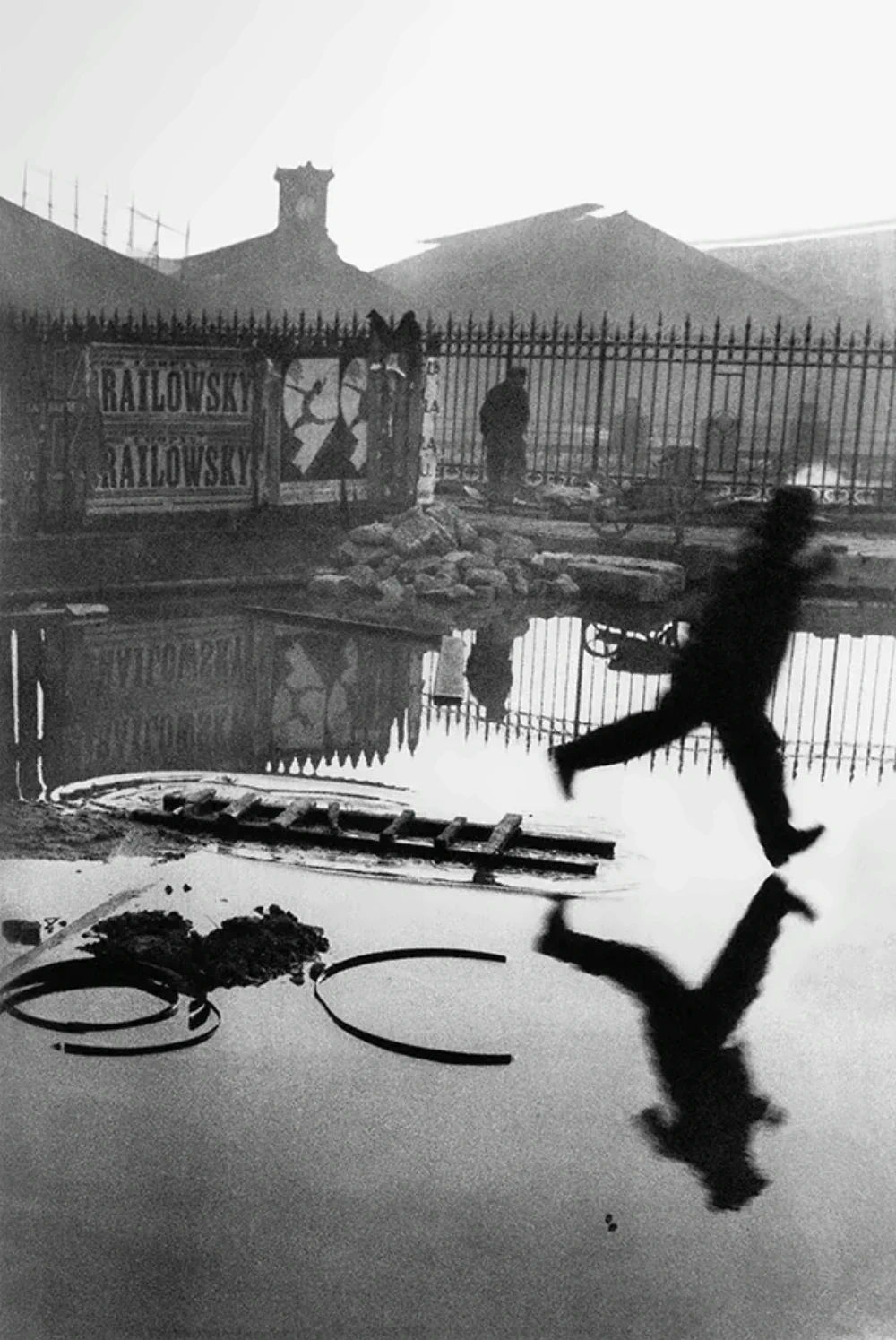
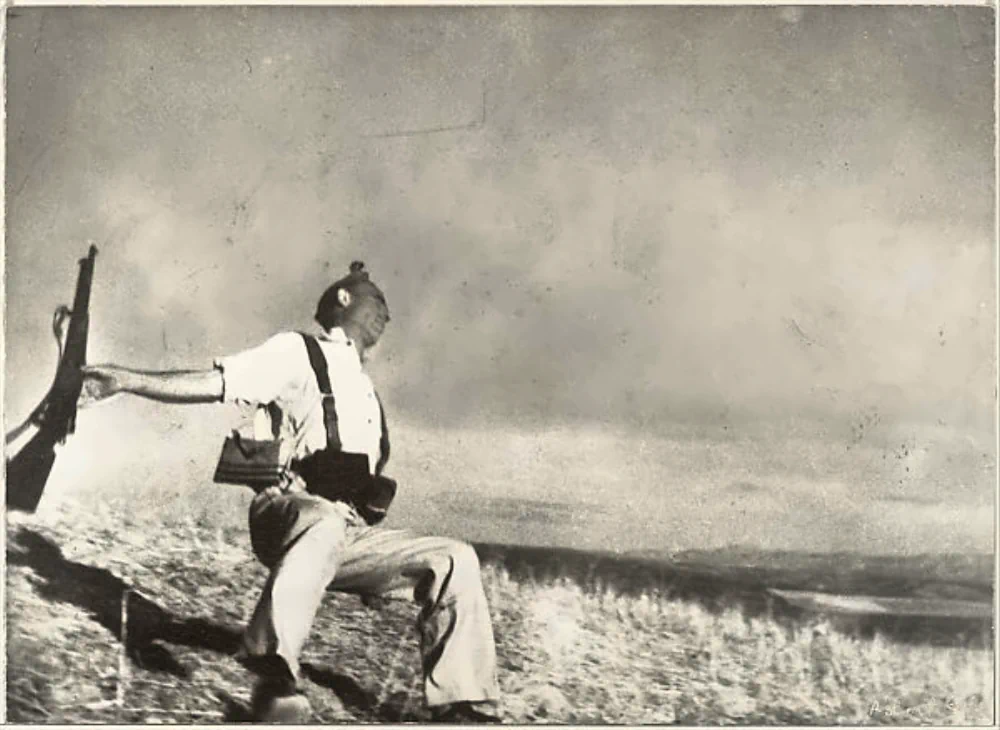
The art world is not immune to this dynamic. The most reproduced images of canonical photographers are almost always the same ones, regardless of the breadth and complexity of their careers. Henri Cartier-Bresson is reduced to the jump over the puddle. Robert Capa, to the falling militiaman. Steve McCurry, to the Afghan girl. These images, although relevant, do not represent the totality of their work nor the richness of their vision. Constant repetition turns them into visual cages that condition the reading of everything else.
There is also an ethical dimension to this repetition. Many of the most reproduced images depict suffering, violence, or vulnerability. Their mass circulation raises uncomfortable questions about the consumption of other people’s pain. What happens when an image of tragedy becomes a decorative icon on a wall, a thumbnail on social media, a visual resource to reinforce a superficial argument? Repetition anesthetizes. What initially shocks eventually becomes scenery.
The real story behind the most reproduced images is not only the story of the moment captured, but of its circulation. Who decides which image is published, which one is archived, which one is forgotten. What interests align for a photograph to become a symbol while another disappears. This story is rarely told because it challenges the romantic idea of photography as pure testimony.
Reclaiming this story does not mean denying the value of iconic images, but restoring their complexity. Understanding that a photograph is not only what it shows, but also what it conceals. That every image reproduced to exhaustion has been selected, edited, and contextualized over and over again until it fits into a dominant narrative.
Perhaps the real challenge for the contemporary viewer is not to discover new images, but to learn to look again at those they think they already know. To ask what was left outside the frame, what other versions existed, what voices were not heard. To resist the comfort of the icon and accept the discomfort of context.
In a world saturated with images, repetition does not guarantee memory, but selective forgetting. The most reproduced photographs do survive, yes, but they often do so emptied of meaning. Recovering the real story behind them is a way of restoring photography’s critical capacity, its ambiguity, and its power to unsettle. Because perhaps the most important image is not the one everyone recognizes instantly, but the one that has not yet been reduced to an easy symbol.