

This series grew out of a need to slow down. A need to step aside from constant movement, from the pressure to react, produce, and explain.
We were looking for a place where time feels less linear, where the rhythm of the outside world softens enough to make space for stillness.
The sea and the shoreline became that place—a space of silence for us. Not an absolute silence, but a quiet that allows internal noise to fade and makes it possible to listen more closely to one’s own thoughts.
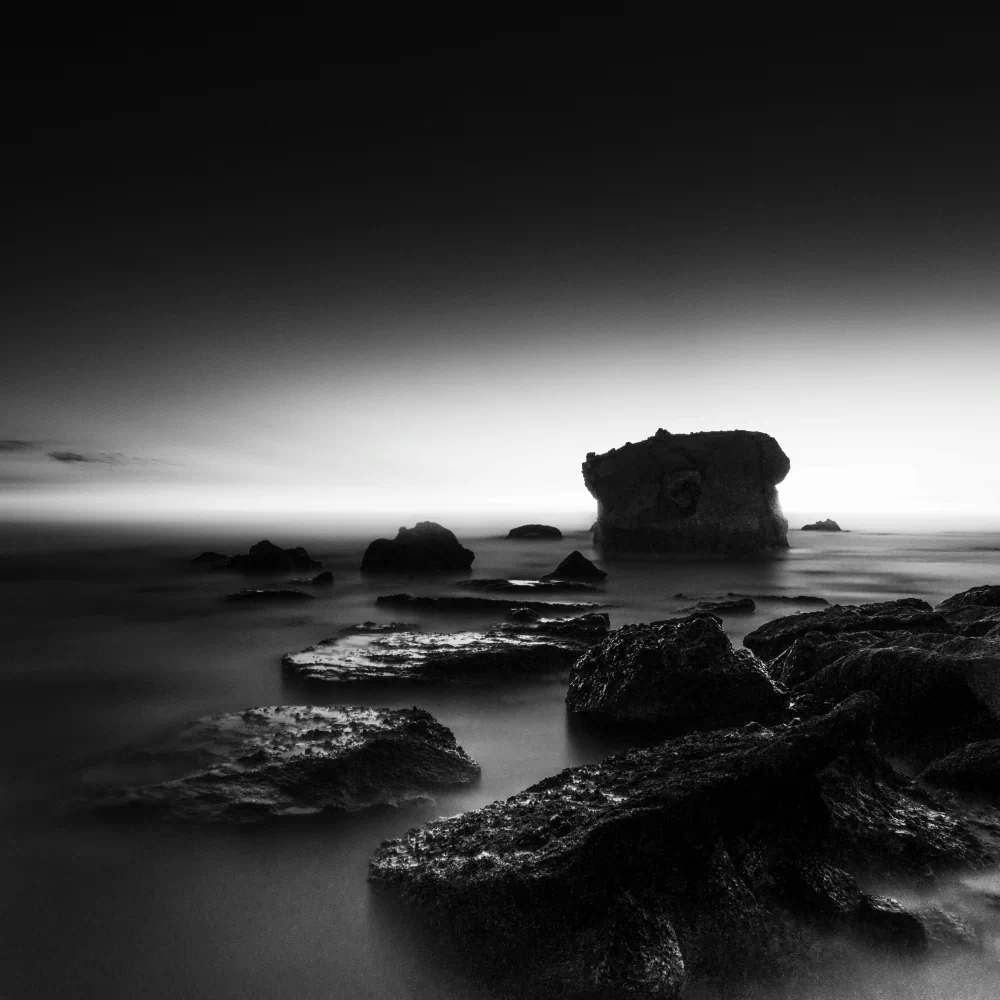
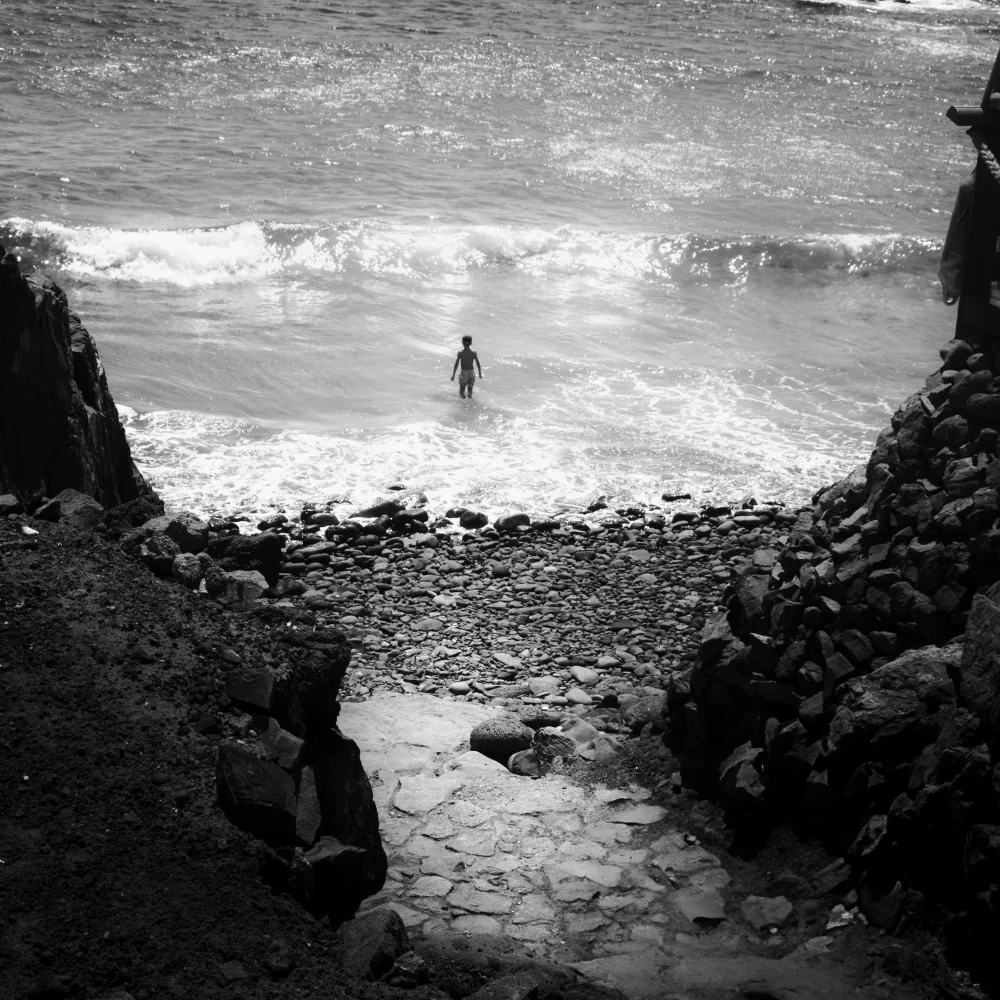
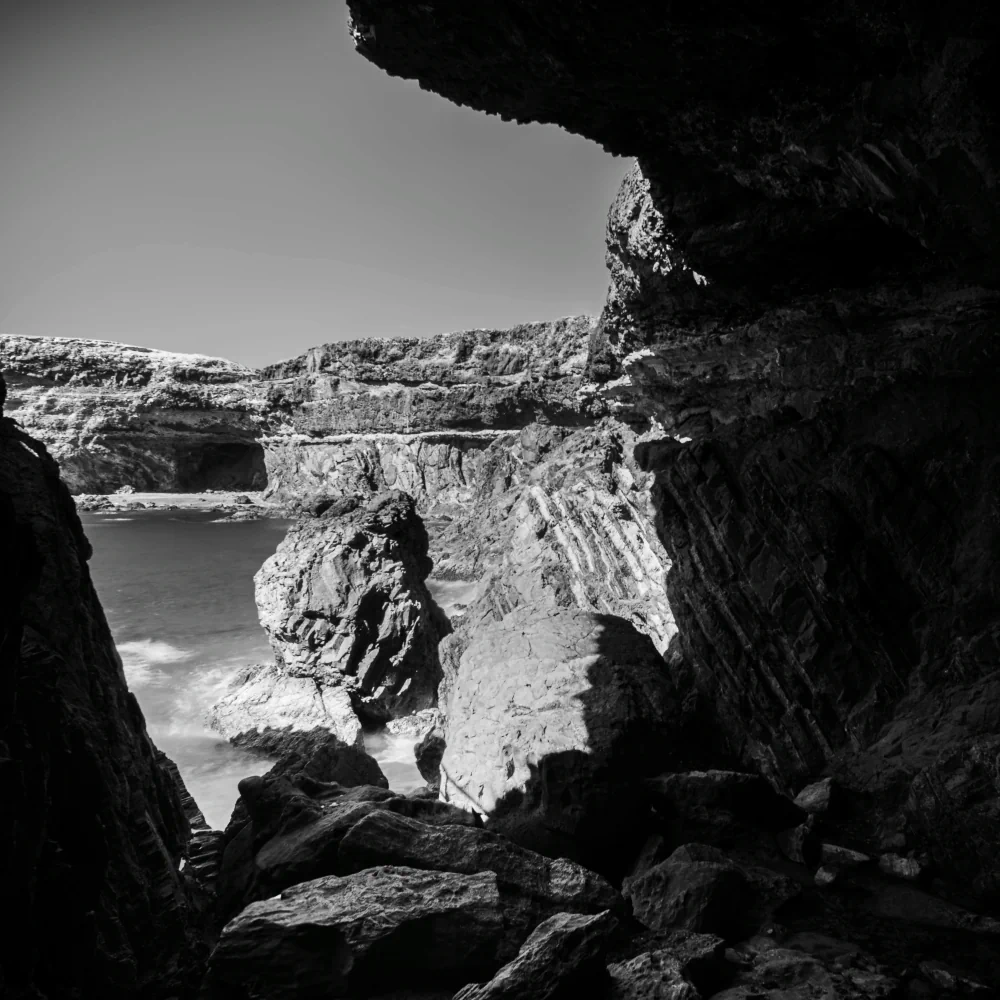
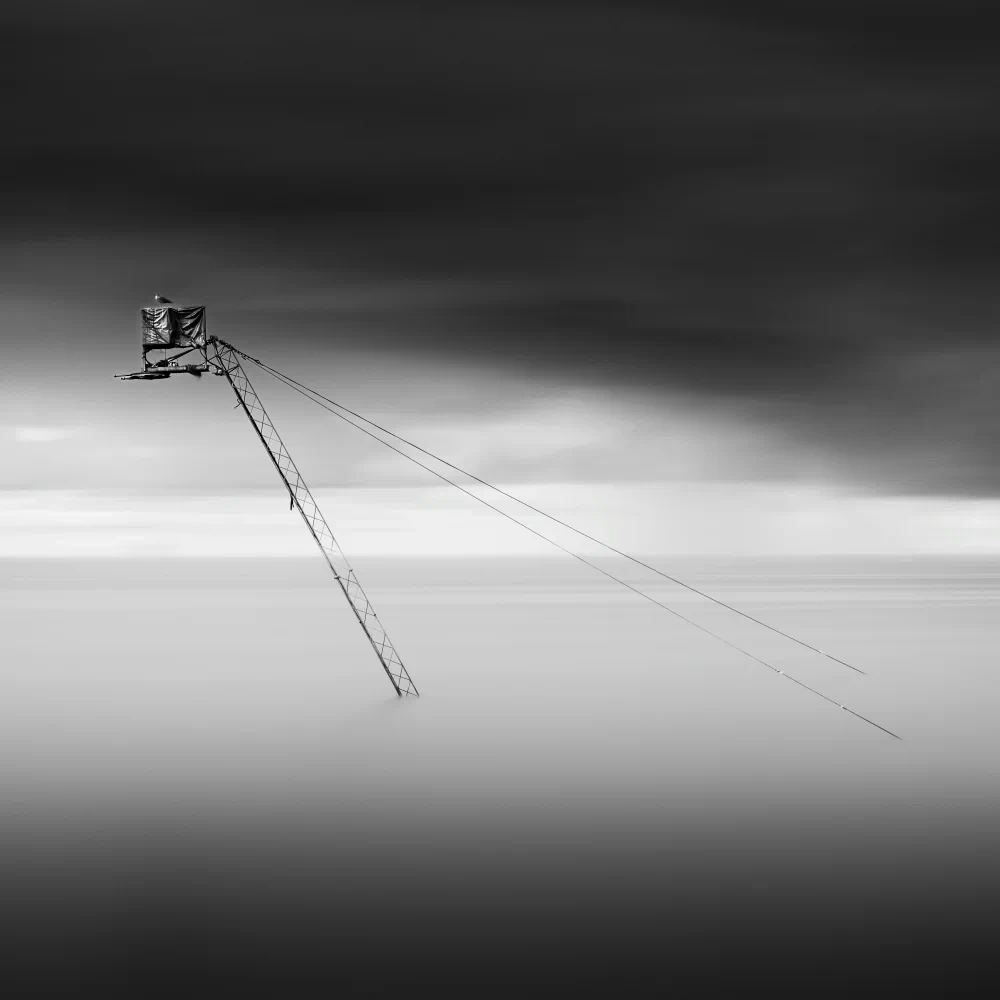
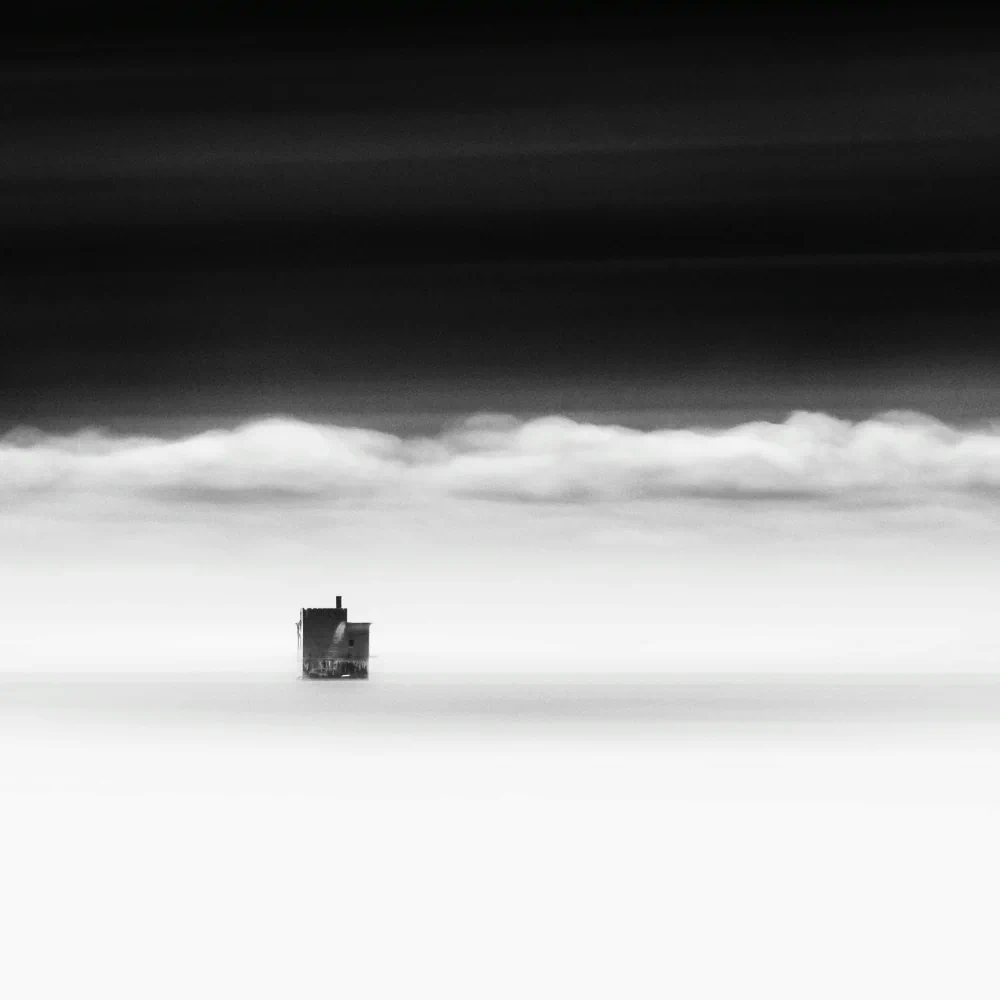
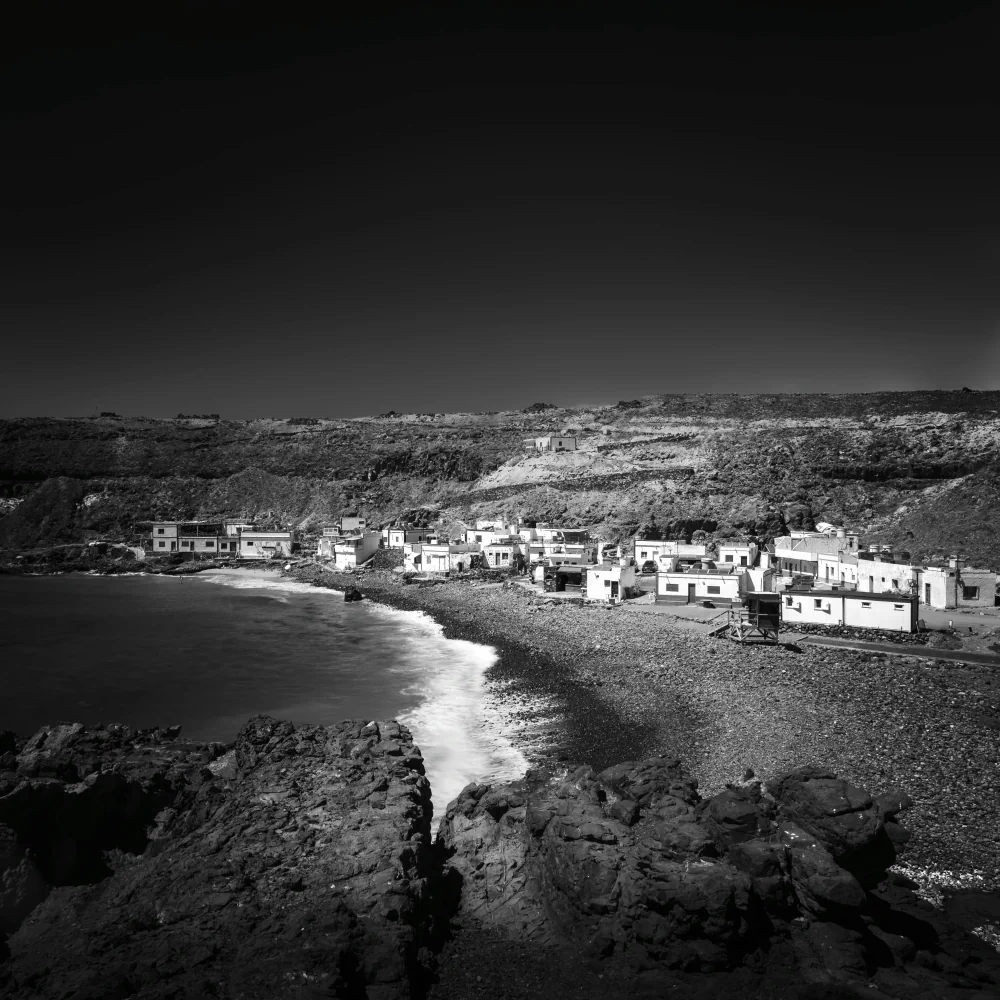
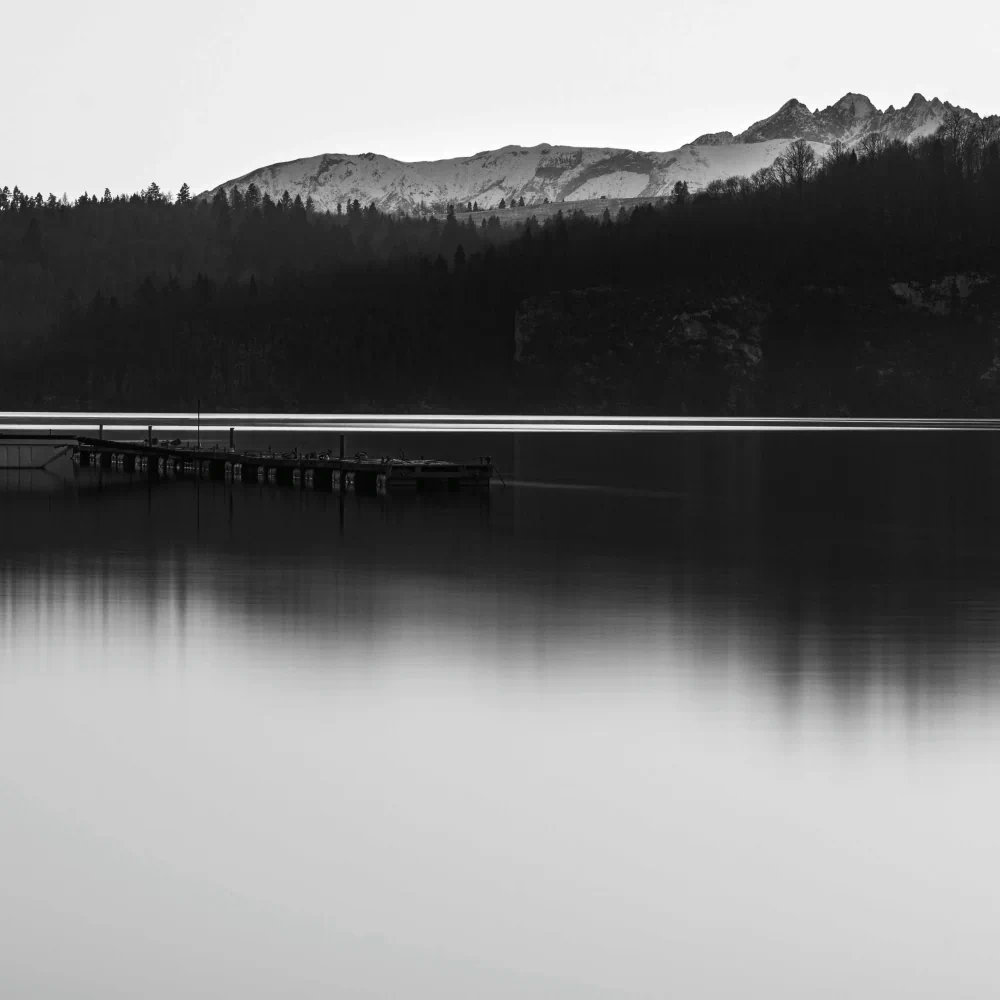
The landscapes photographed here do not refer to any specific location. We deliberately avoided anchoring the images to a recognizable place. What interested us was not geography, but perception—the act of looking itself. We were drawn to moments when the image begins to lose clarity, when forms dissolve and certainty slips away. At this edge of visibility, the photograph stops functioning as a description and begins to operate as an experience. Meaning becomes fluid, and the viewer is invited to linger rather than to identify.
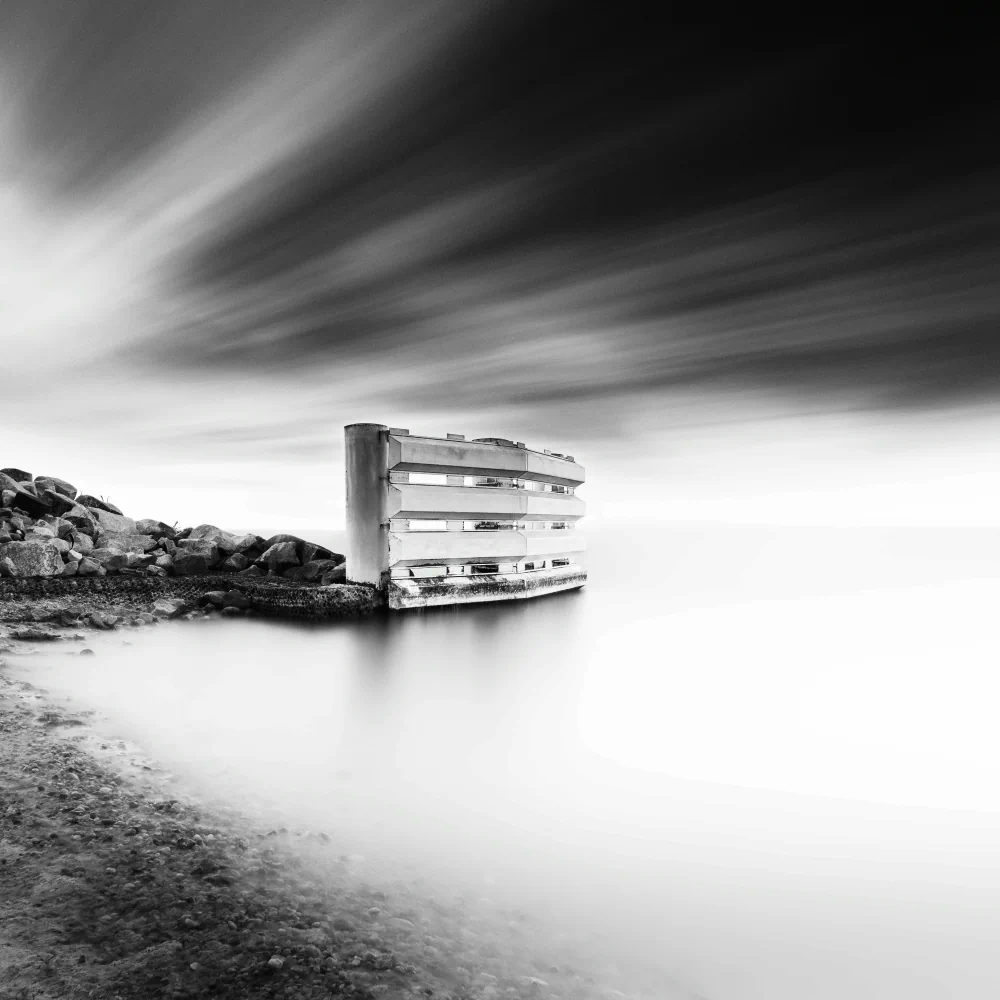
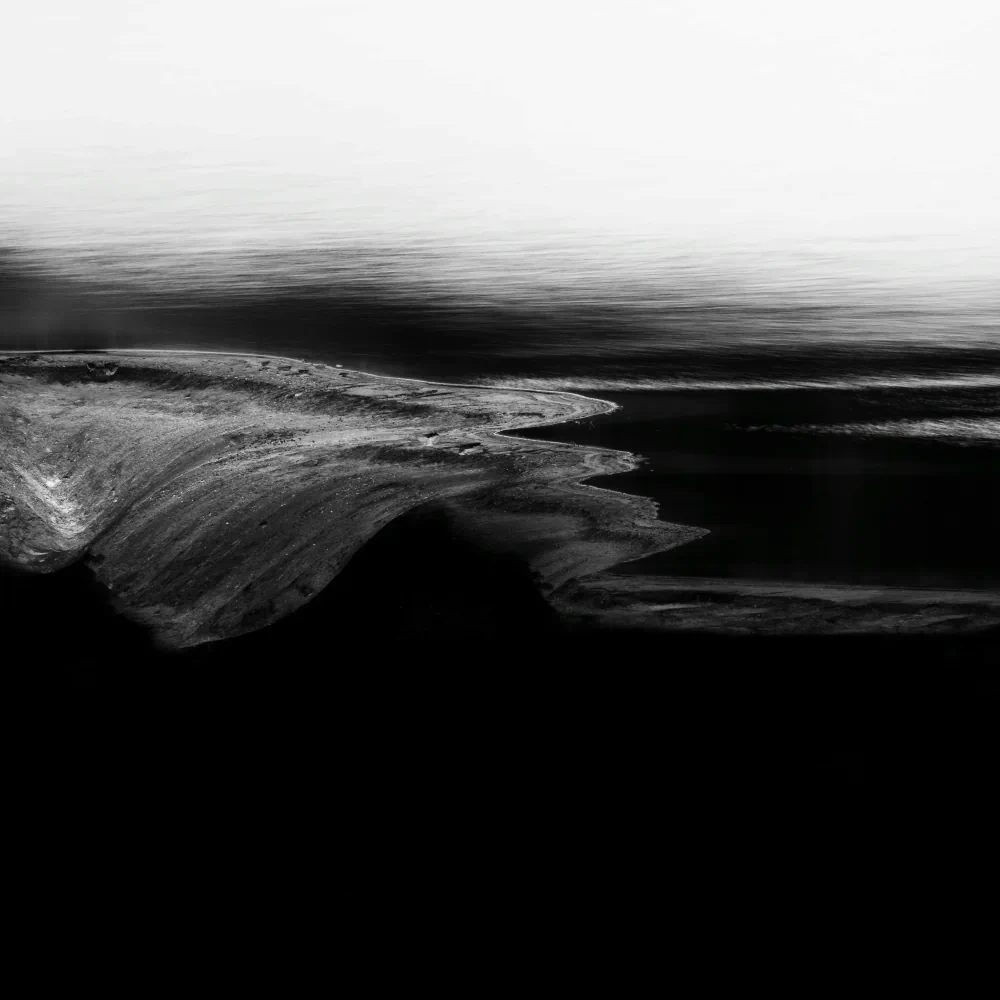
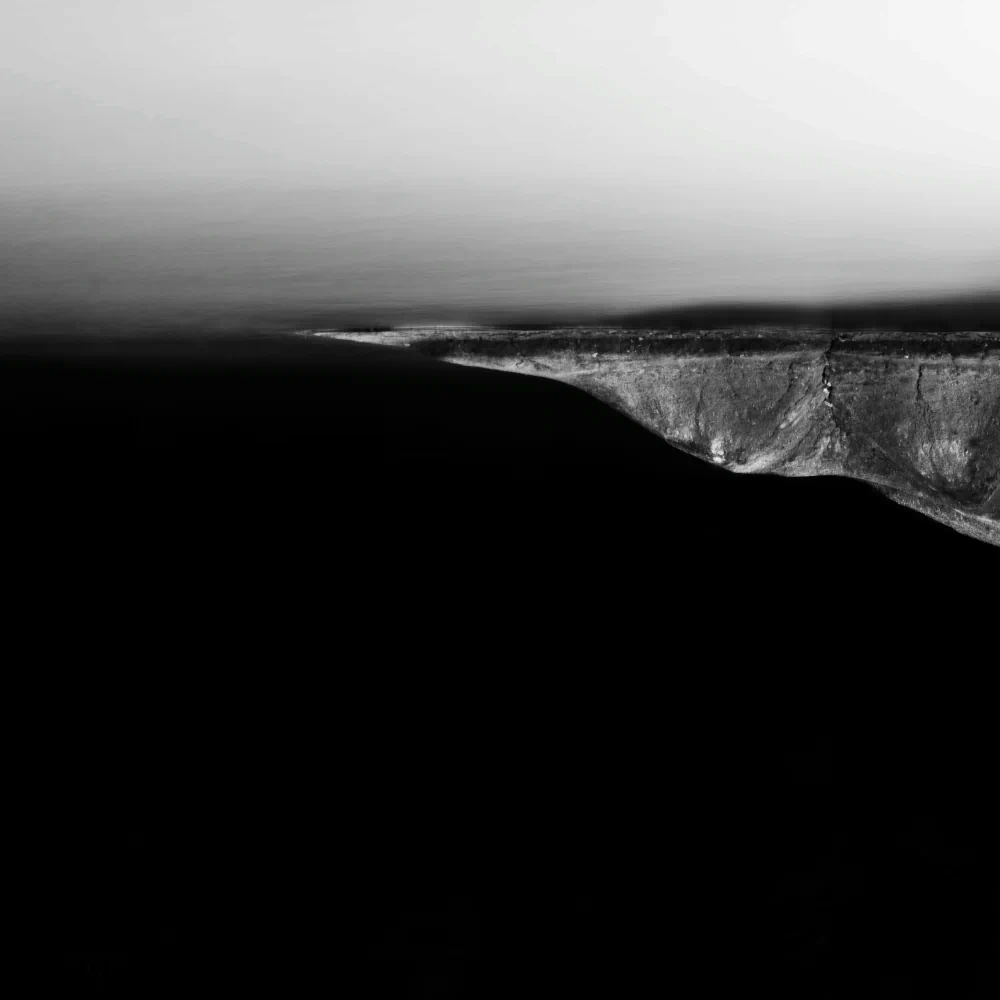
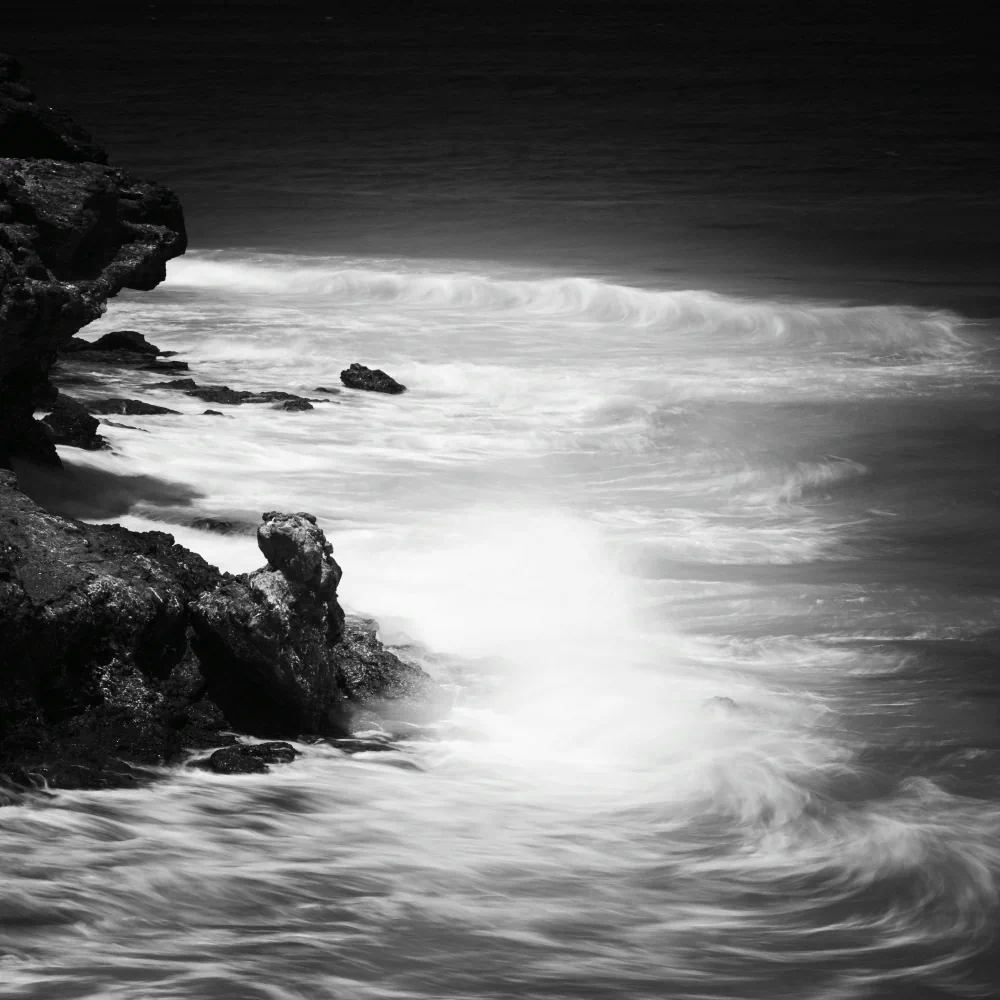
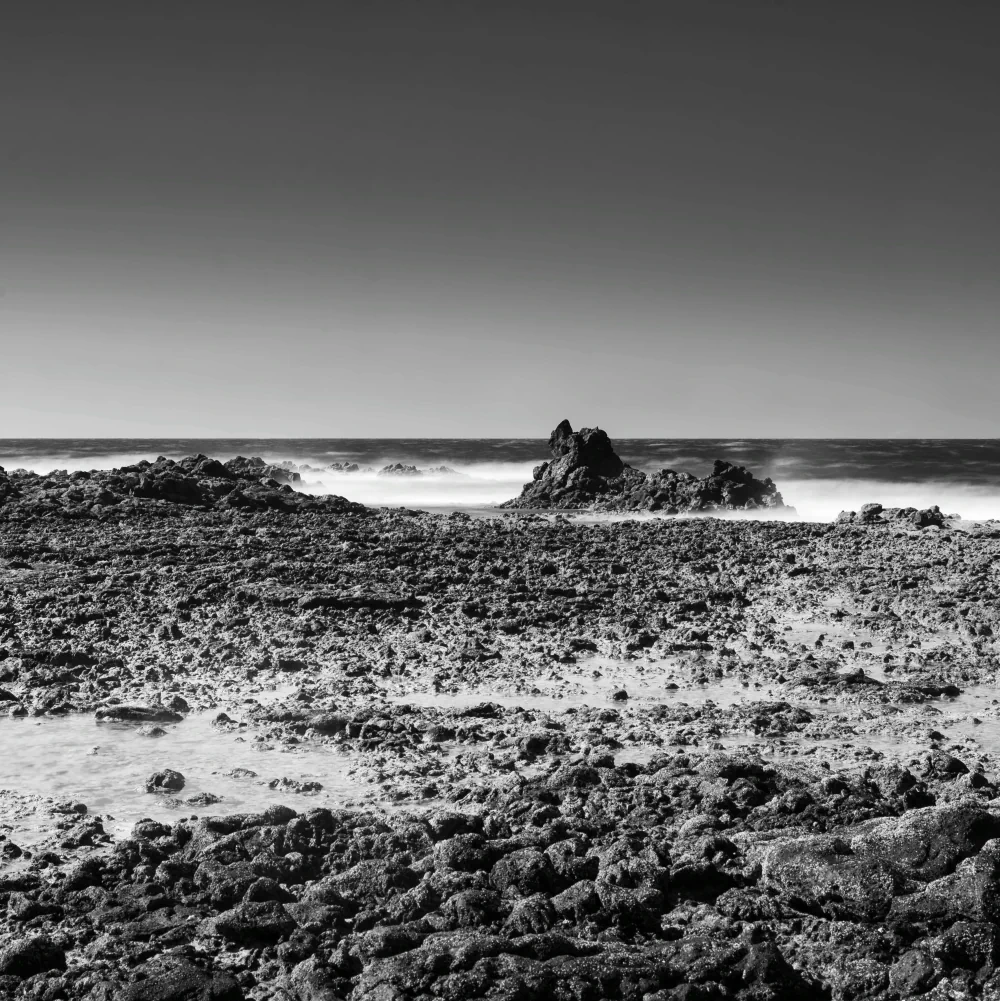
Working in black and white was a conscious decision and a necessary limitation. Color felt too immediate, too expressive, almost persuasive. By removing it, we could strip the image down to its essential elements and allow space for ambiguity. Subtle tonal transitions, shifts between light and darkness, and the texture of water and stone became the primary language of the series. The resulting images are quieter, but they ask more from the viewer—they require attention, patience, and a willingness to remain with uncertainty.
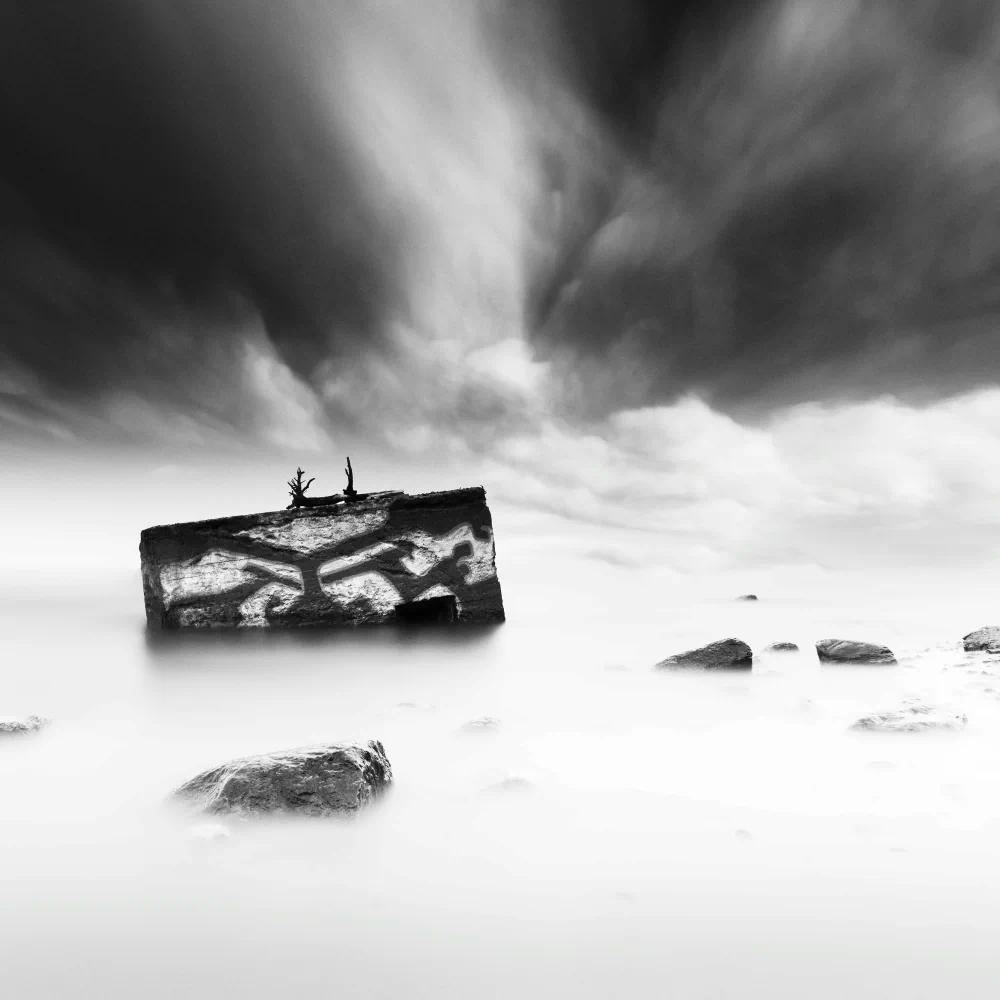
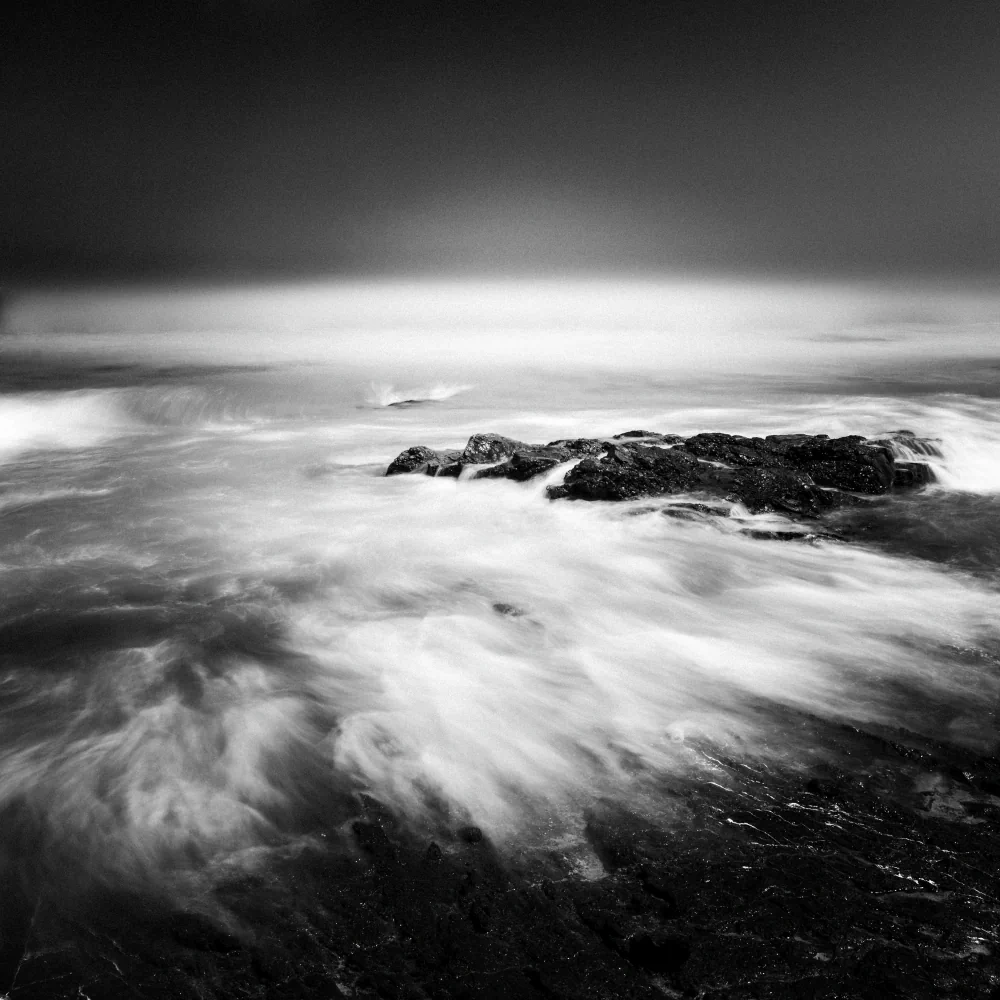
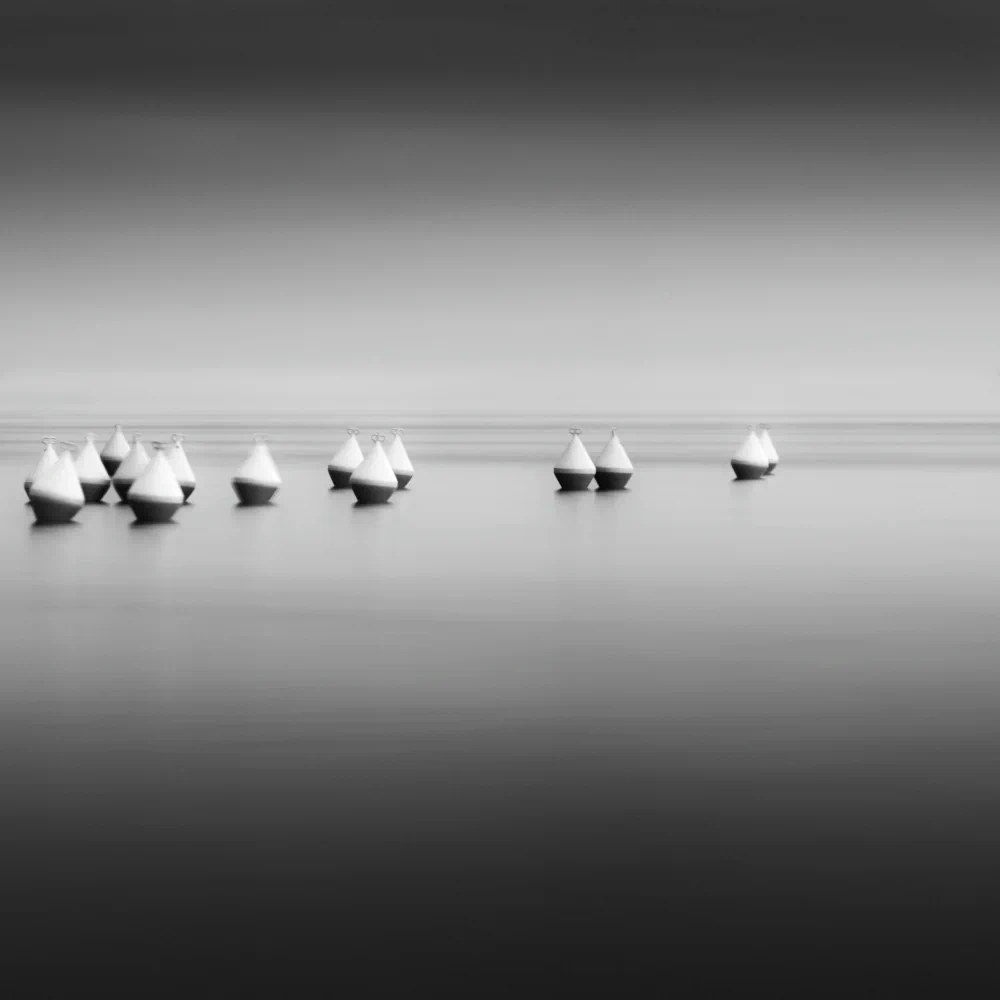
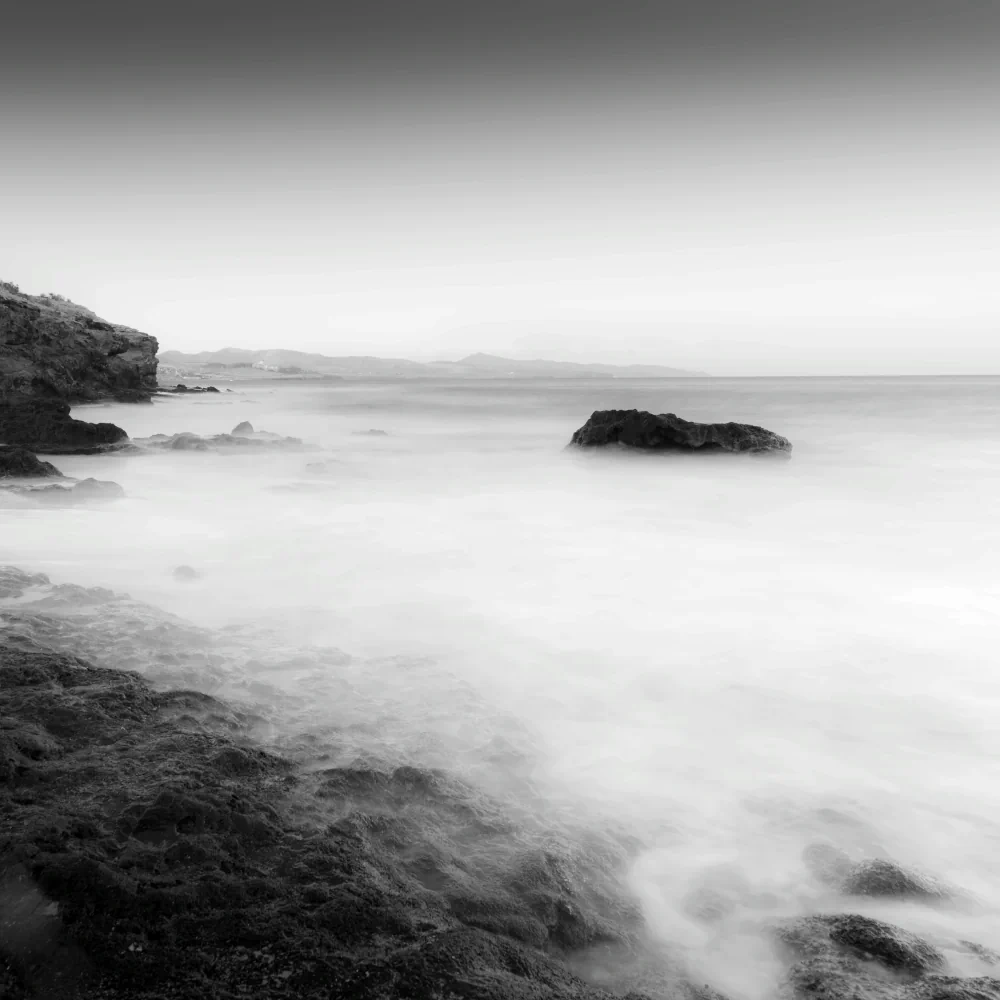
Long exposure plays a central role in shaping the emotional atmosphere of the project. Through extended time, movement is transformed. Waves lose their urgency, water becomes smooth and almost immaterial, and the sea begins to resemble a suspended surface rather than a restless force. This visual stillness is not meant to romanticize the landscape, but to slow down perception. The camera becomes a tool for resisting speed, encouraging a way of seeing that unfolds gradually rather than instantly.
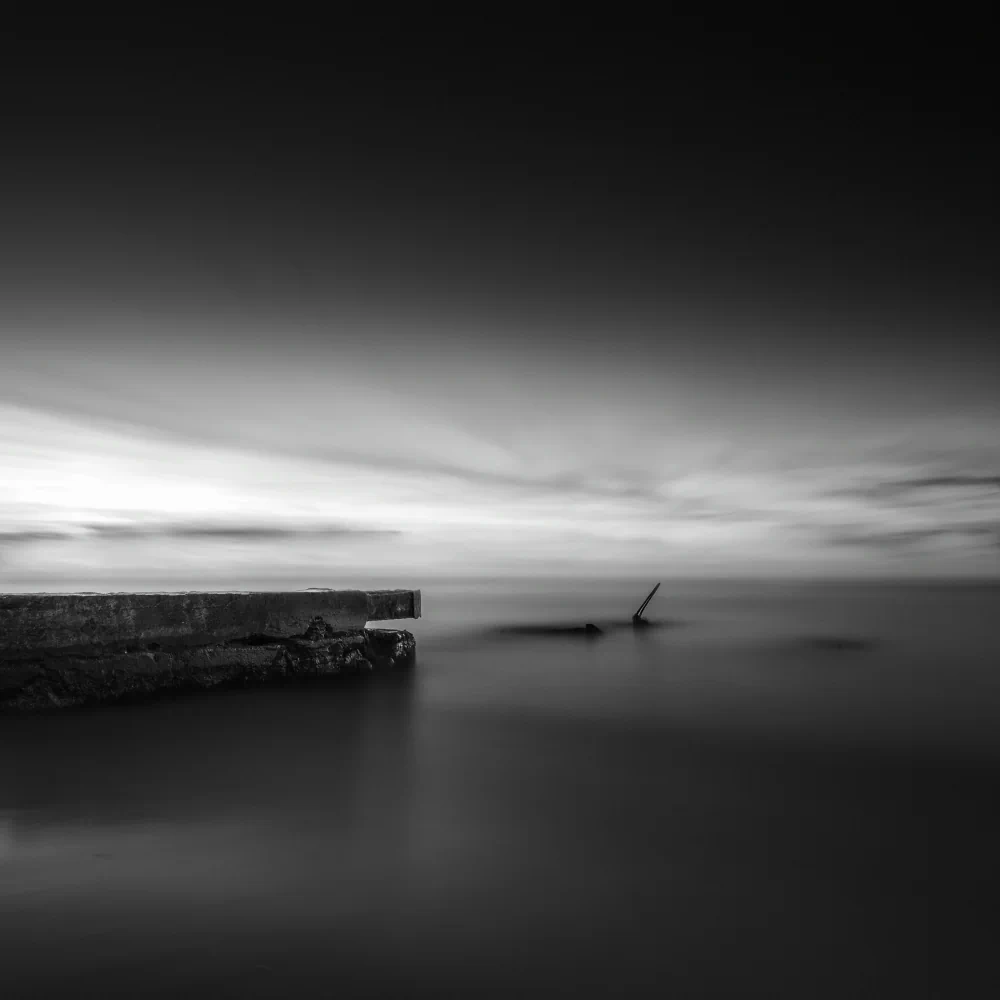
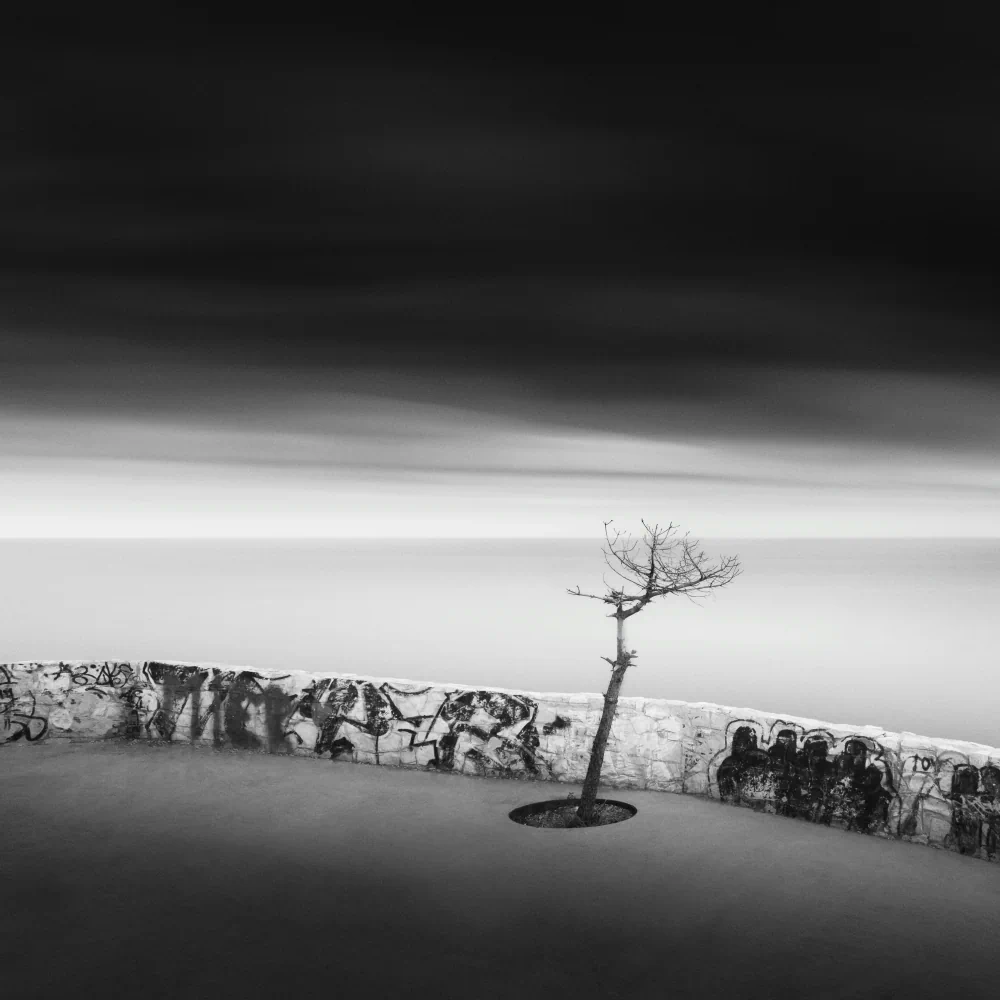
The horizon appears throughout the project, yet it rarely functions as a stable point of orientation. Sometimes it dissolves into light; sometimes it is barely perceptible. We think of the horizon as a boundary—not only between sea and sky, but between certainty and doubt, presence and absence. It is a line that usually structures an image, offering clarity and balance. Here, however, it becomes fragile and unstable, mirroring the mental state that accompanies moments of introspection.
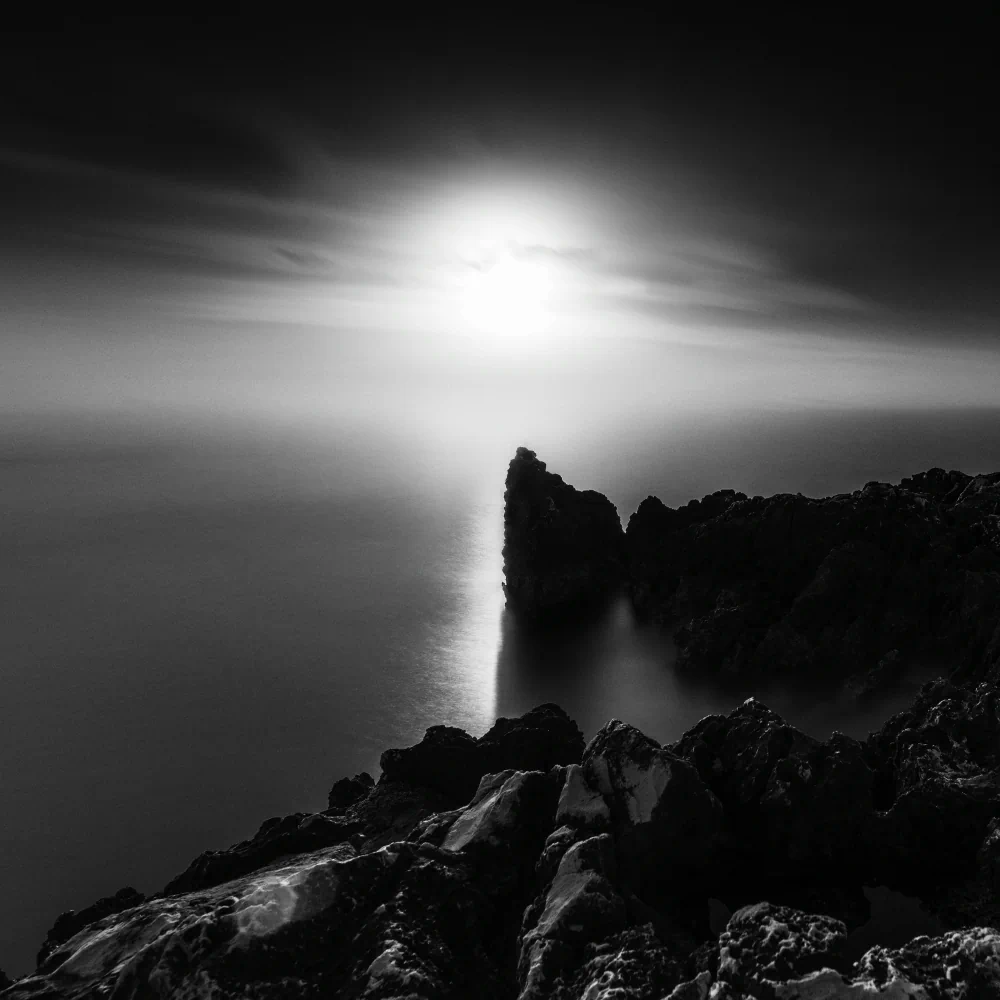
In several images, isolated elements emerge from the reduced landscape: a fragment of rock, a floating form, a faintly drawn shoreline. These minimal presences are intentional. They introduce a quiet tension, something to hold onto without dominating the frame. Although one human figure appears in the photographs, the sense of human presence is not entirely absent. On the contrary, it exists through omission. The absence of the body allows the landscape to function as an emotional stand-in, a space where personal experience can be projected.
The Boundary of Silence does not follow a linear narrative. There is no beginning, climax, or resolution. Instead, the project unfolds as a sequence of visual pauses—intervals between thoughts, moments where time feels suspended. We are interested in photography not as a vehicle for explanation, but as a medium for encounter. These images do not seek to communicate a specific message; they remain open, allowing each viewer to bring their own associations, memories, and emotional states into the experience.
The project is rooted in a desire to resist the saturation and immediacy of contemporary visual culture. In a world overwhelmed by images designed to capture attention instantly, this work moves in the opposite direction. It asks for slowness, for a different kind of engagement. Looking becomes an act of presence rather than consumption.
Ultimately, The Boundary of Silence is an attempt to find balance—between control and surrender, intention and intuition, form and emotion. The landscape became a mirror rather than a subject, and silence revealed itself not as emptiness, but as a condition of awareness. If these photographs manage to hold the viewer’s gaze, even briefly, if they create space for stillness and reflection, then they have fulfilled their role.
About Joanna Krasowska and Dominik Zapaśnik
Joanna Krasowska and Dominik Zapaśnik are photographers drawn to the quiet poetry of light, shadow, and emotion. Their work exists within the realm of black and white minimalism and fine art photography, where simplicity meets depth and silence tells its own story.
For them, photography is more than a craft—it is a language of the soul. They capture what they feel as much as what they see: fleeting whispers of emotion, traces of memory, and the subtle pulse of the world around them. Each image becomes a reflection of an inner landscape—a translation of how they experience reality, imagination, and the delicate magic that binds them together.
They are driven by a love of travel and exploration, constantly seeking moments that transcend time and place. Whether it is a quiet horizon, a forgotten detail, or the play of light across a still surface, their cameras act as extensions of their inner world, revealing stories that words cannot contain.
Their work invites the viewer to slow down, to see differently, and to enter a space where minimalism becomes meaning, and black and white reveals infinite shades of emotion. [Official Website]