

In Chennai’s vibrant performance season, Indian classical dance offers the photographer a subject rich in movement, emotion, and tradition.
Here, one reflects on the visual language of dance, the technical demands of photographing live performance, and the creative possibilities it offers beyond the stage.
By Ashok Viswanathan FFIP, EFIAP, EPSA
I live in Chennai, in South India, where classical dance remains a vivid part of cultural life. During the winter months, the city comes alive with music and dance festivals staged across its many sabhas, performance halls that have long nurtured the classical arts. Audiences gather night after night to watch recitals by established performers as well as emerging talent, and many of these programmes are open to the public without charge, supported by corporate sponsorship. The result is a rare and welcome accessibility: performances of exceptional quality presented to a broad and enthusiastic audience.
For a photographer, this world offers a rich and compelling subject.
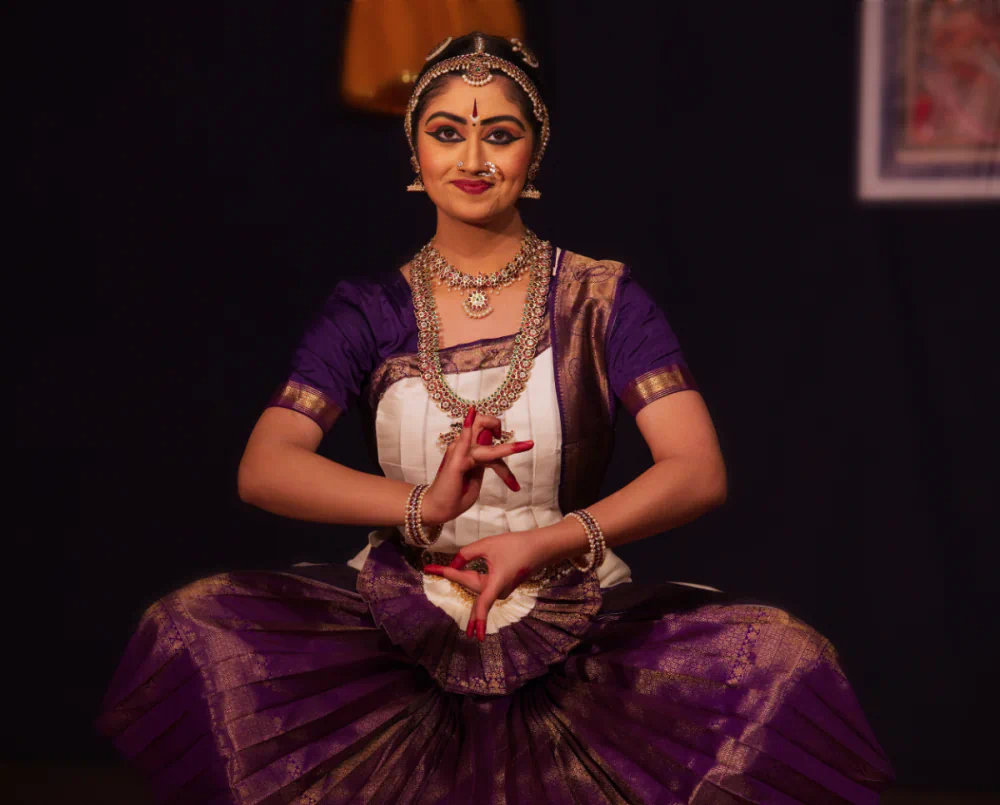
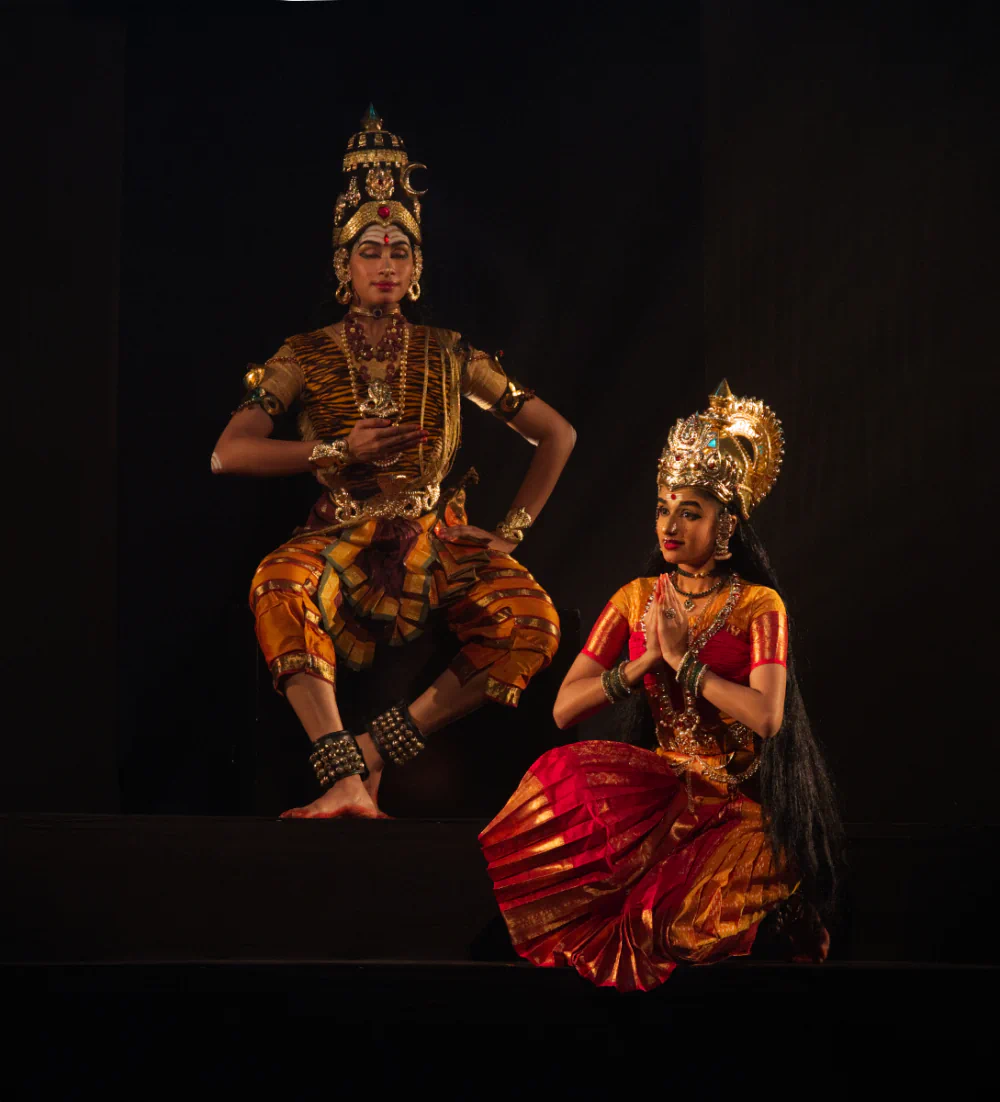
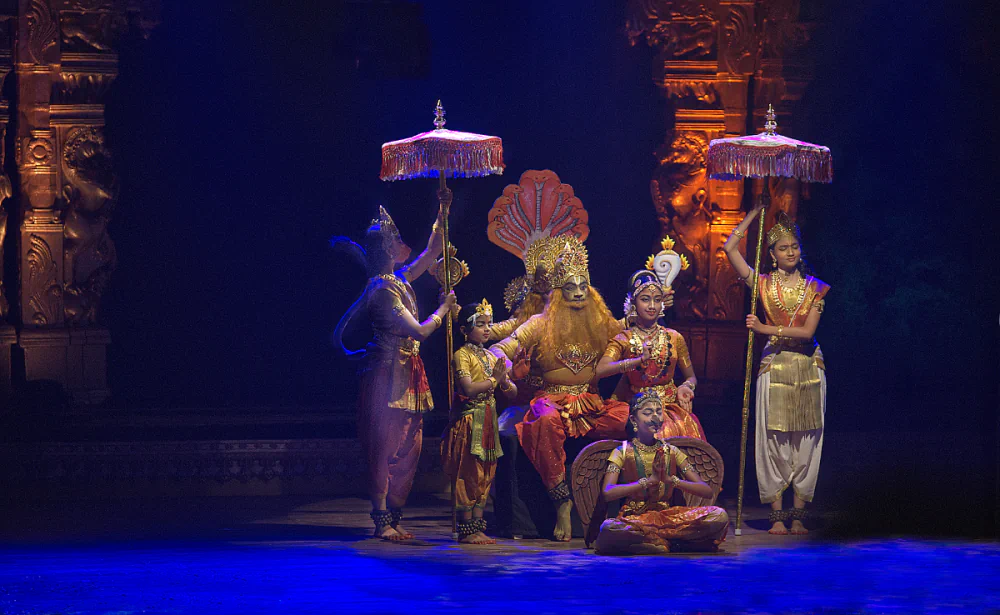
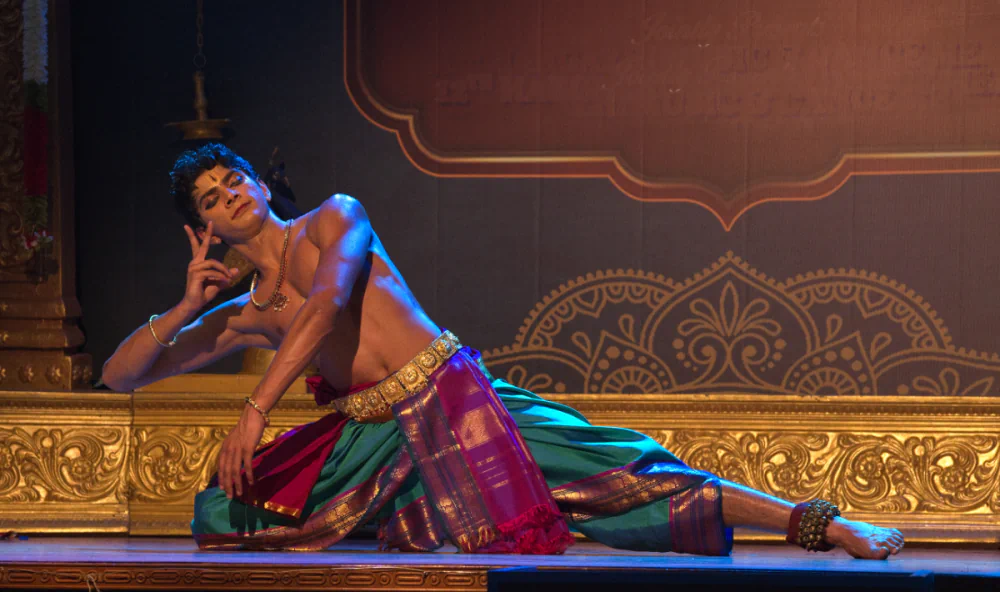
Performances range from intimate solo recitals to large ensemble productions with thirty or more dancers. Bharatanatyam, Kathak, Kuchipudi, and related forms unfold on stage with visual and emotional richness. Vivid costumes, jewellery, expressive eyes, eloquent hand gestures, and precise footwork come together in a complete language of storytelling, accompanied by live classical music. What appears effortless to the audience is in fact the result of years of disciplined training and physical conditioning. Many dancers begin young and train for over a decade before they are ready for public performance. Stamina is essential, with recitals often lasting between sixty and ninety minutes.
Indian classical dance is compelling to photograph because it is far more than movement set to music. It is storytelling through the body. Gesture, expression, rhythm, and posture all carry meaning. The eyes may suggest longing, devotion, joy, authority, or mischief. A turn of the wrist or the placement of the foot can alter the mood of an entire sequence. To photograph such moments well is to do more than document motion. It is to recognise intention.
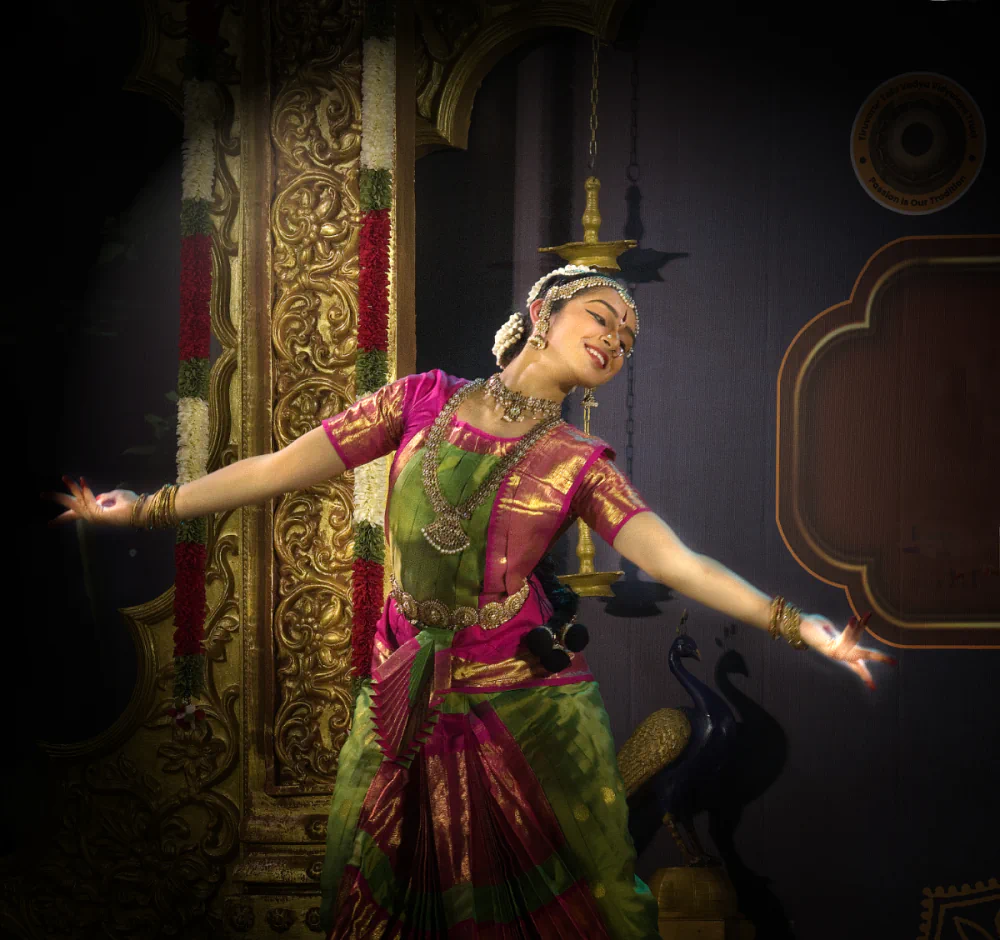
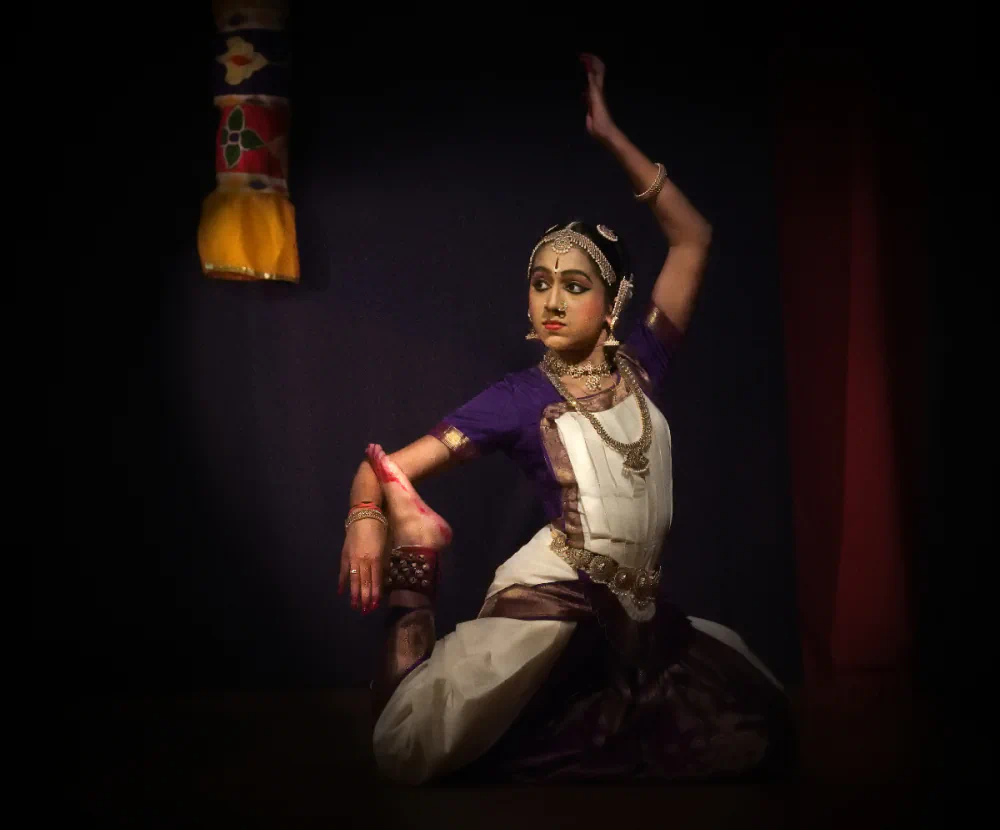
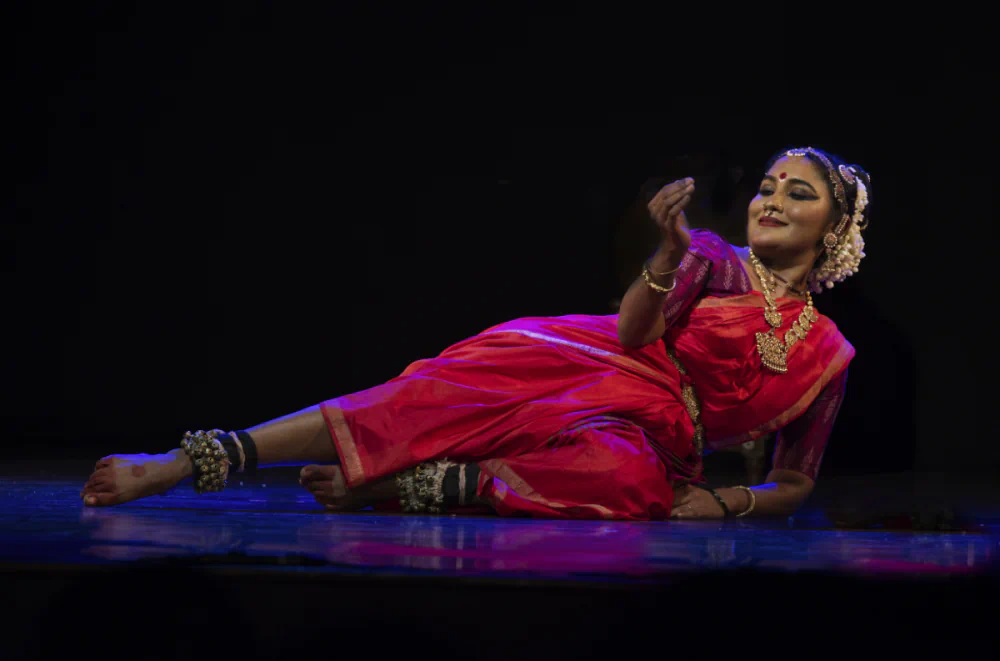
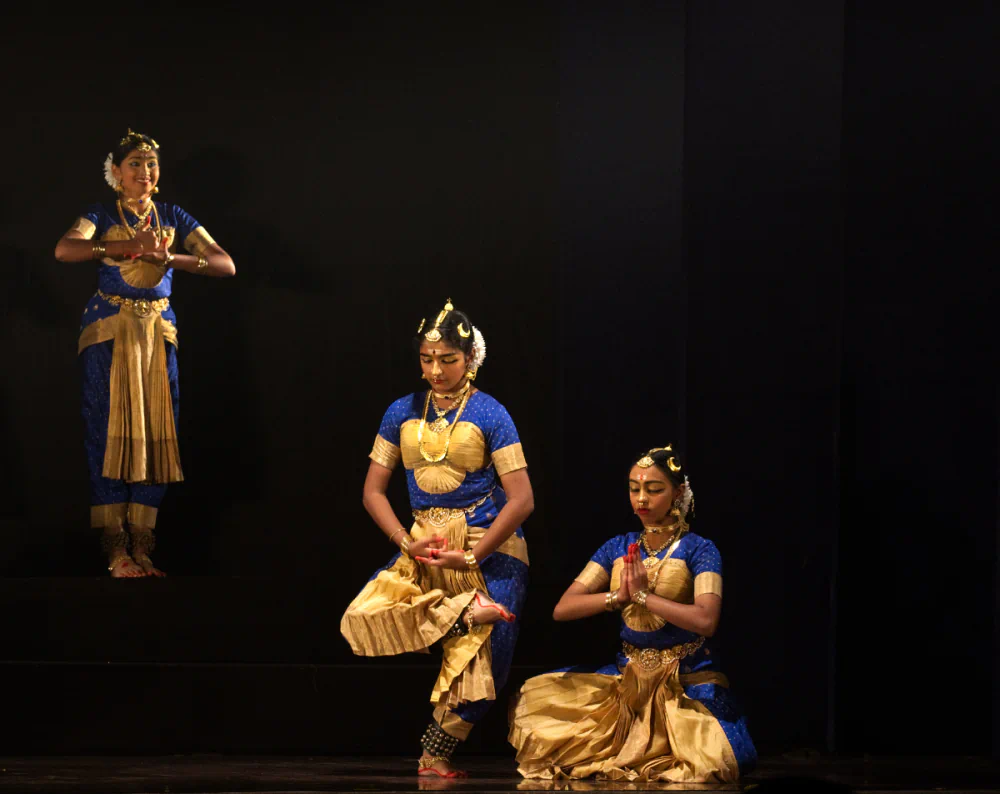
That is perhaps what makes dance photography so absorbing. One is not merely chasing dramatic shapes or elegant lines, but trying to catch the exact instant when expression, movement, and meaning come together. A technically competent image may freeze a pose, but a successful image goes further. It suggests the emotion within the gesture and the narrative behind the form. In some images, this may be found in a single dancer framed in silence and light, as in a spotlighted Bharatanatyam pose where the figure appears almost suspended beneath a shaft of illumination. In others, it may lie in a glance, a hand movement, or the stillness of a held posture after intense motion.
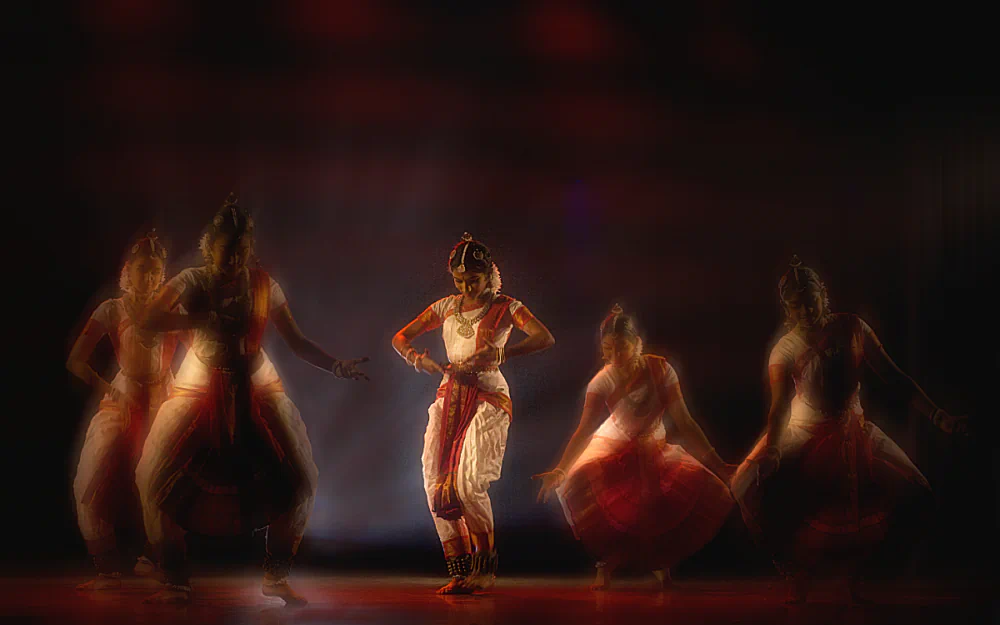
This tradition has deep roots. Its forms can still be seen in ancient temple sculpture, and over centuries it has evolved through different dynasties, regions, and schools, surviving periods of immense political and social change. Historically associated with temples, it retains a sense of structure, discipline, and reverence even in the modern performance hall. That continuity is part of what makes it so rewarding to photograph. However contemporary the stagecraft may be, the visual vocabulary remains linked to something much older.
A recital is never the work of the dancer alone. It depends on close coordination between the dancer, guru, musicians, singer, lighting team, director, and venue. The musicians themselves are often highly accomplished artists, and their contribution is central. The dancer may be the visual focus, but the music provides the emotional and rhythmic architecture that carries the performance. This coordination also shapes the photographer’s experience. A change in lighting, a pause in tempo, or the sudden expansion of a formation can transform the visual field in an instant.
All of this makes for an engaging photographic environment, though not without technical challenges.
Lighting conditions vary enormously from venue to venue. Some stages are softly lit, others brightly illuminated, and coloured gels may be introduced, changing the tone of the light from one moment to the next. Backgrounds are often black, which helps isolate the dancer visually but can complicate exposure. In these situations, spot metering is often more reliable than matrix metering, which can overcompensate for the dark surroundings and misread the scene. Yet these same conditions can also be visually rewarding. A dark stage can heighten the sculptural quality of a pose, while directional light can give unusual prominence to gesture, jewellery, and costume detail.
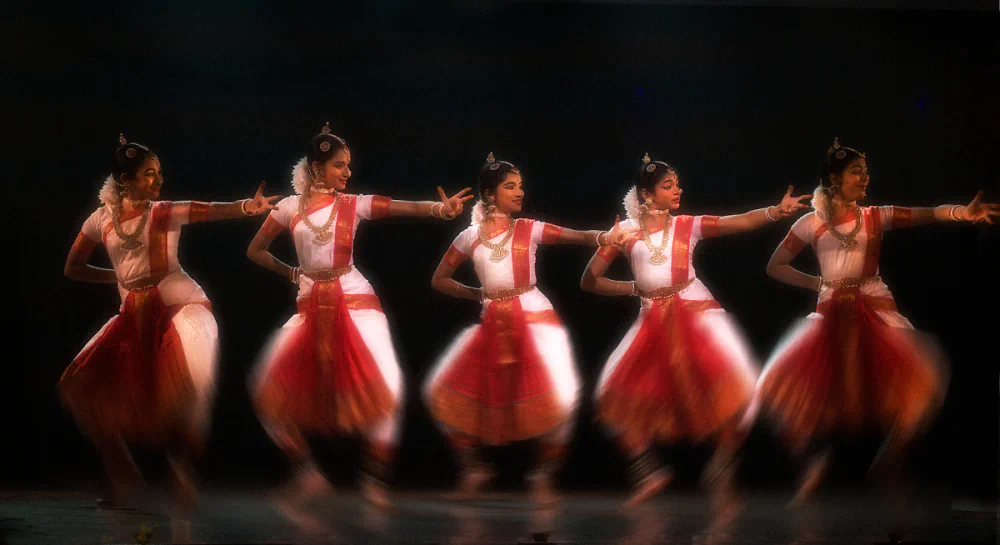
I use a Fuji X-E3, a compact mirrorless camera that is discreet and effective in performance settings. My lens of choice is usually the Fuji 50–140mm f/2.8, though I occasionally use the 18–55mm when a wider field of view is needed. Photography is generally permitted, but with clear limits. Flash and tripods are not allowed, and one remains seated among the audience. This calls for patience, sensitivity, and technical readiness. It also encourages a more observant way of working. Without the freedom to move around, one learns to study the stage carefully and anticipate where the strongest visual moments are likely to occur.
My preferred approach is to shoot in manual exposure, with either a floating ISO [International Organization for Standardization] range of 400 to 1600 or a fixed ISO of 1600 or 3200, depending on the available light. A useful starting point is around 1/250 second at f/5.6, adjusted as required. In earlier years, I often used burst mode at 3 to 6 frames per second to capture peak moments. Over time, however, I have come to rely more on anticipation. Dance has its own rhythm, and with experience one begins to recognise the instant when movement reaches its most expressive point. Those moments are often both visually graceful and technically sharp, as the dancer pauses briefly before moving on.
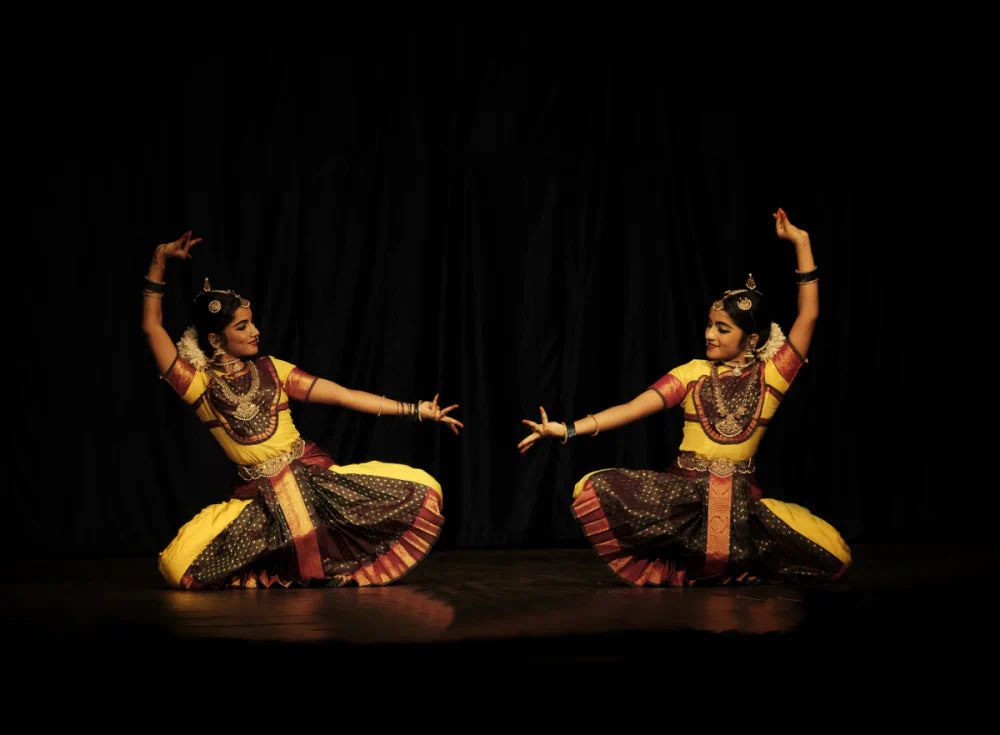
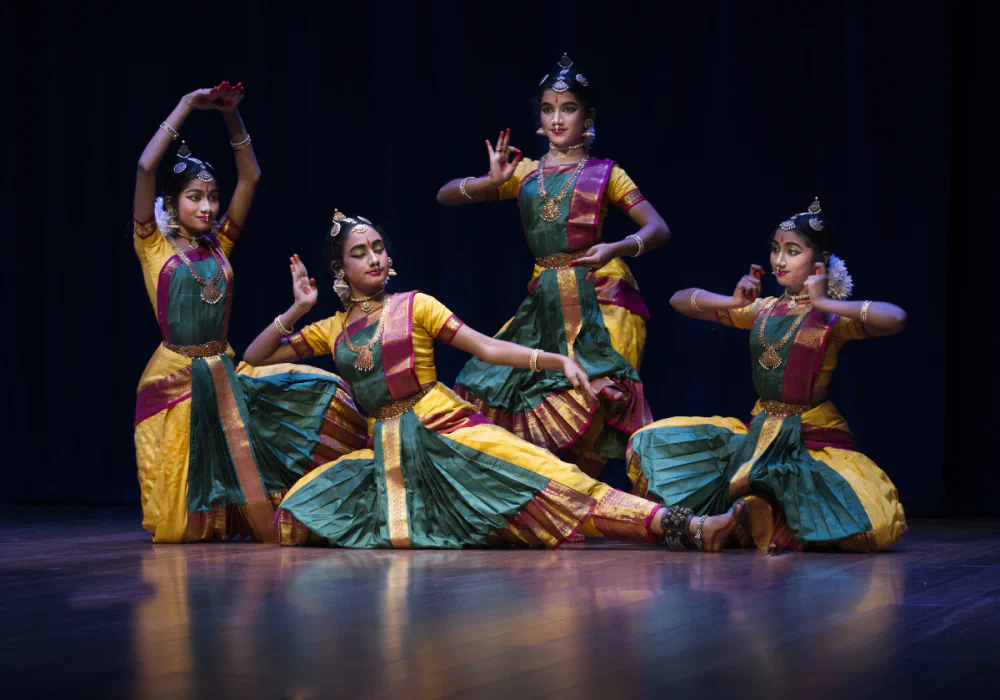
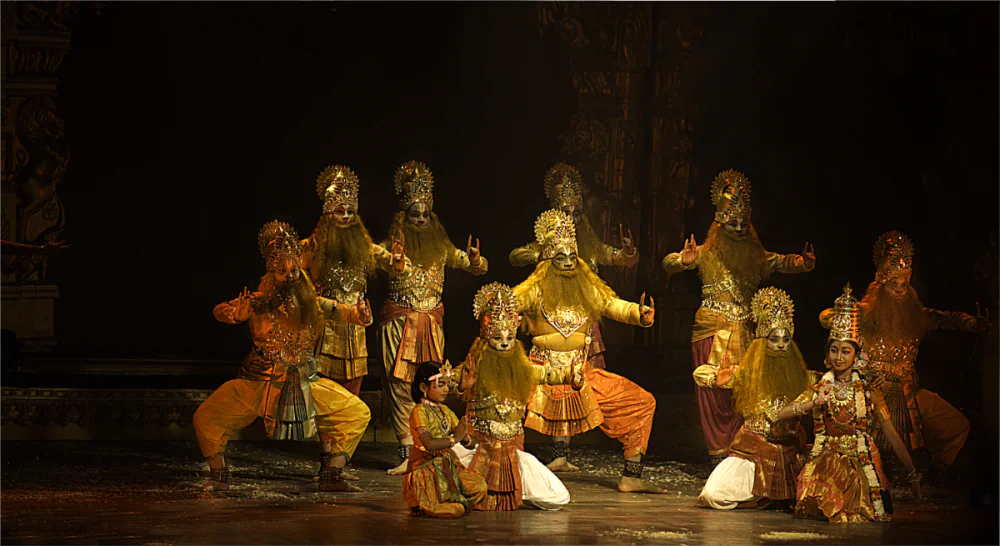
Ensemble performances offer further possibilities. Multiple dancers on stage can create striking compositions, with repeating forms, contrasting gestures, and dynamic relationships between foreground and background. This may be seen in images where several dancers extend a shared line of movement across the stage, or where layered bodies create the illusion of many arms radiating from a central figure. Such formations lend themselves naturally to compositions based on symmetry, spacing, and visual rhythm. Group choreography also offers opportunities for balance and counterpoint that solo performance does not.
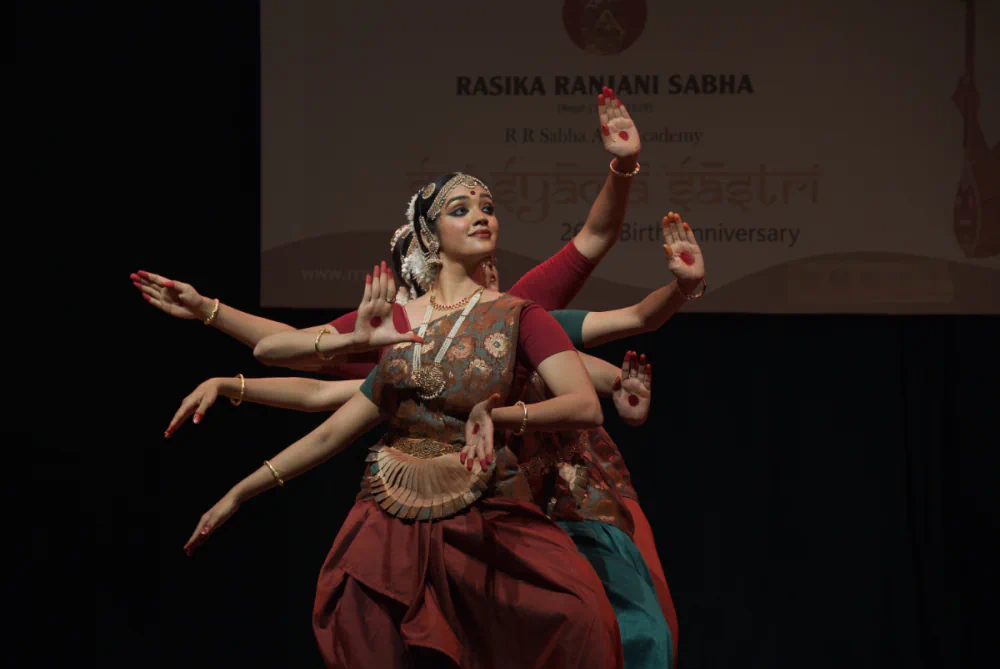
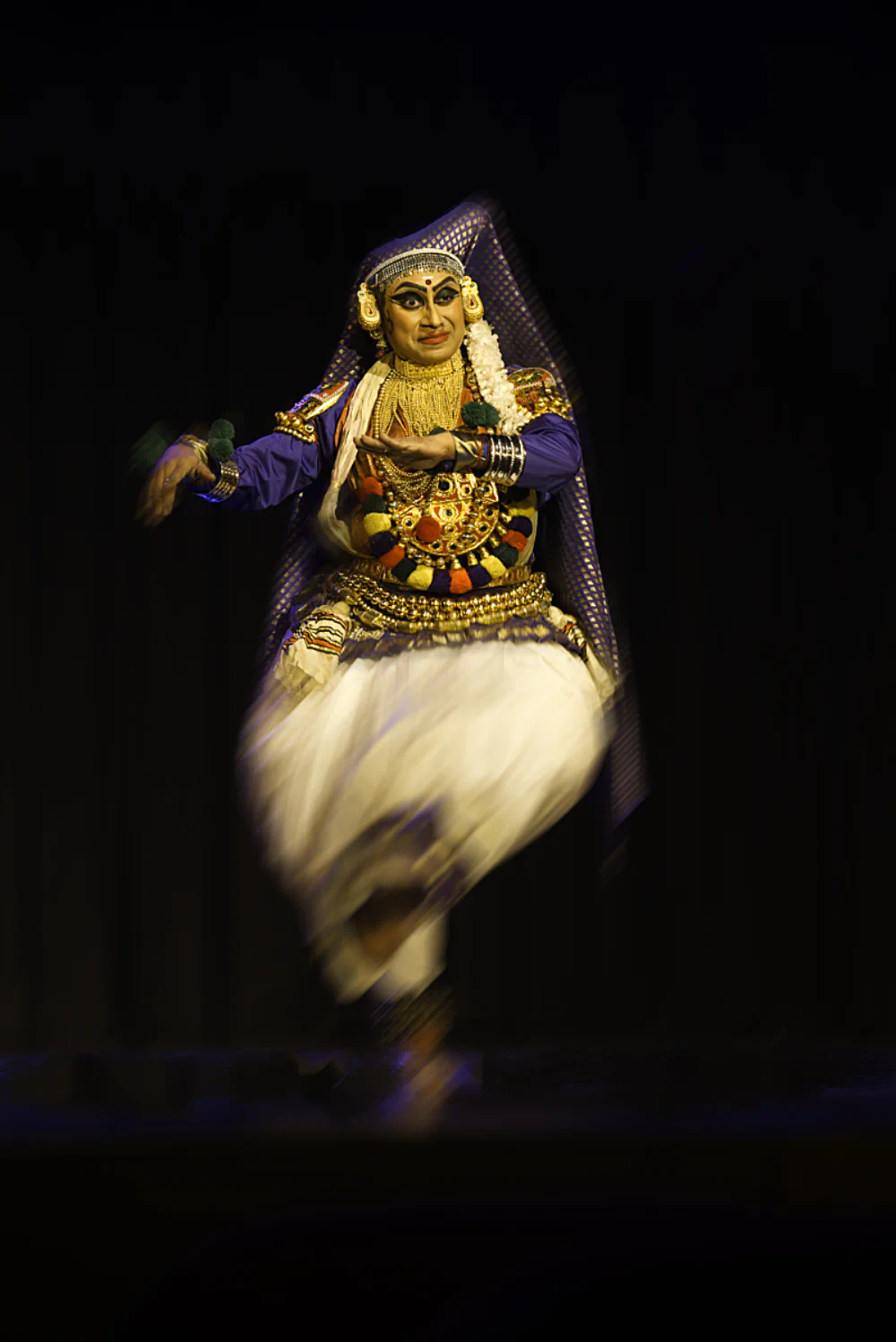
There are, of course, images that depend less on stillness than on motion. Dance is movement, and a completely frozen frame does not always convey its energy. Selective blur can sometimes describe a performance more truthfully than absolute sharpness. A Kathakali dancer caught mid-step, with the body alive in motion while the face remains commanding, can communicate power more vividly than a static portrait. A repeated line of dancers rendered with soft blur can suggest rhythm and continuity. Even a single performer, held sharp against a wash of motion, can evoke the sensation of dance rather than merely its outline.
Post-processing, therefore, plays an important part in how these images are realised. Dance is about movement held within a still image, and digital techniques can help interpret that movement more fully. My RAW [raw image file] conversions are done on an ageing MacBook Air using Affinity Photo, viewed on a profiled EIZO 24-inch monitor. I adjust contrast, tonal values, blacks, and composition, then save the files as PSD [Photoshop Document] or TIFF [Tagged Image File Format] before sharpening. All files are backed up twice on Seagate high-capacity external drives and stored in labelled folders.
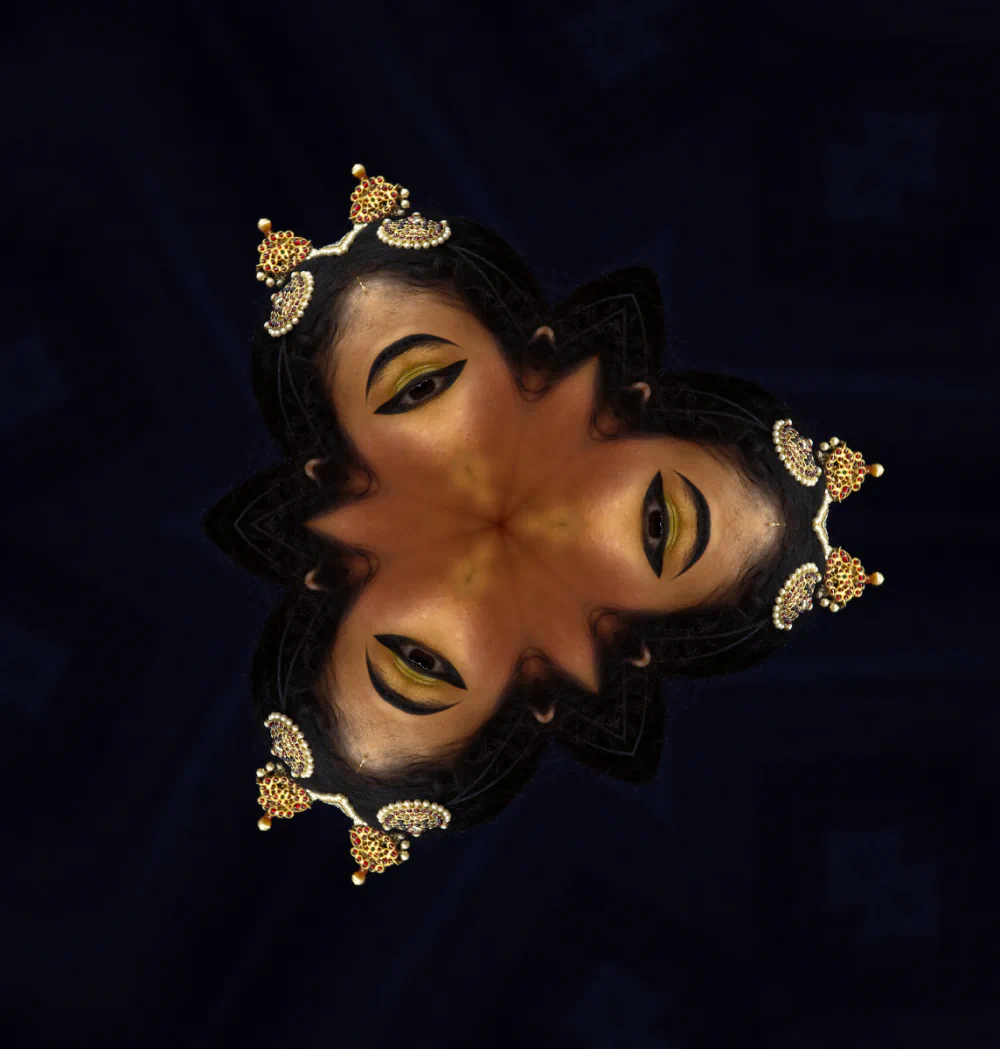
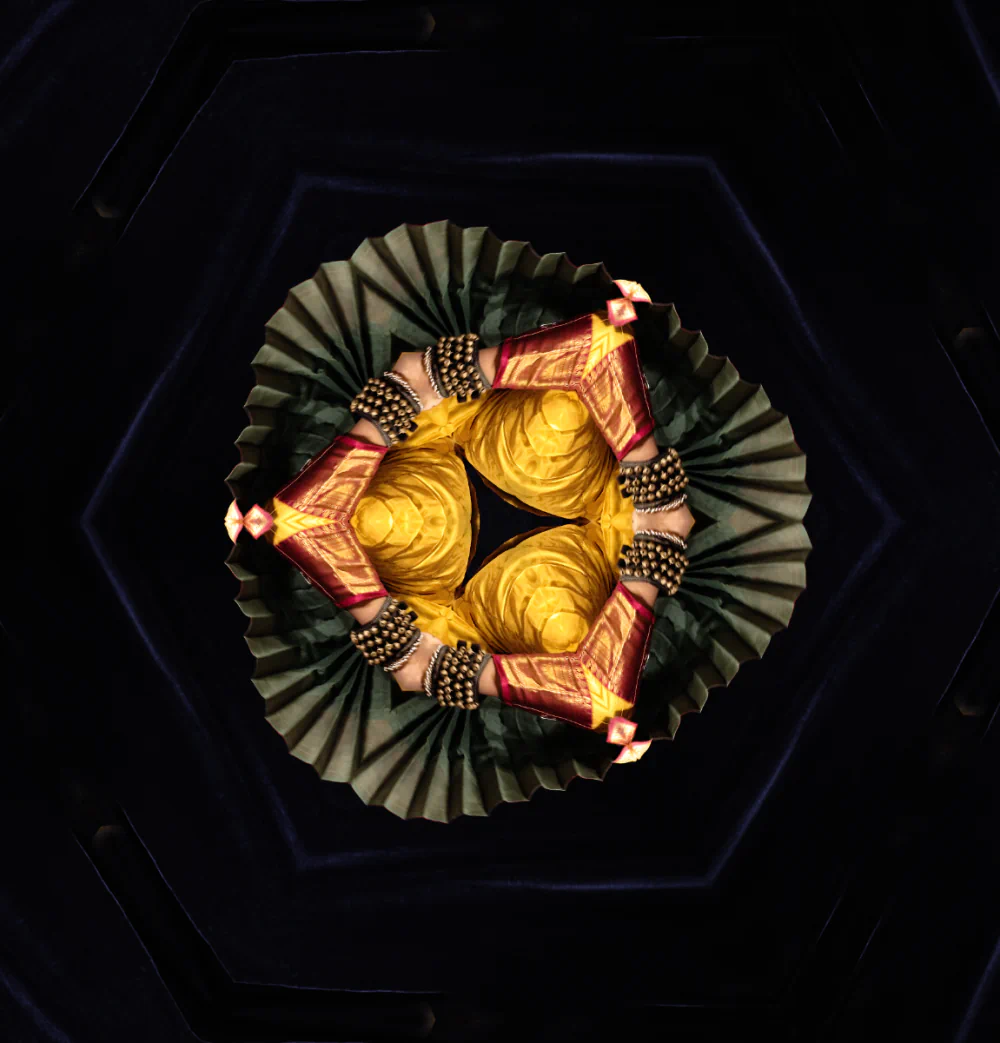
I also enjoy exploring more interpretive possibilities. Techniques such as mirroring, layering, and selective motion blur can convey the energy and fluidity of dance in ways that a literal frame sometimes cannot. Mirrored studies of a dancer’s face can transform expression into pattern, while kaleidoscopic treatments built from costume, jewellery, and gesture can reveal the geometric logic already embedded in classical form. Elsewhere, radial motion blur can turn a swirling costume into a field of colour around a sharply held face or hand. These approaches are not always predictable, but when they work, they bring the image closer to the experience of live performance. The challenge is to use them with restraint, so that interpretation grows out of the dance rather than overwhelming it.
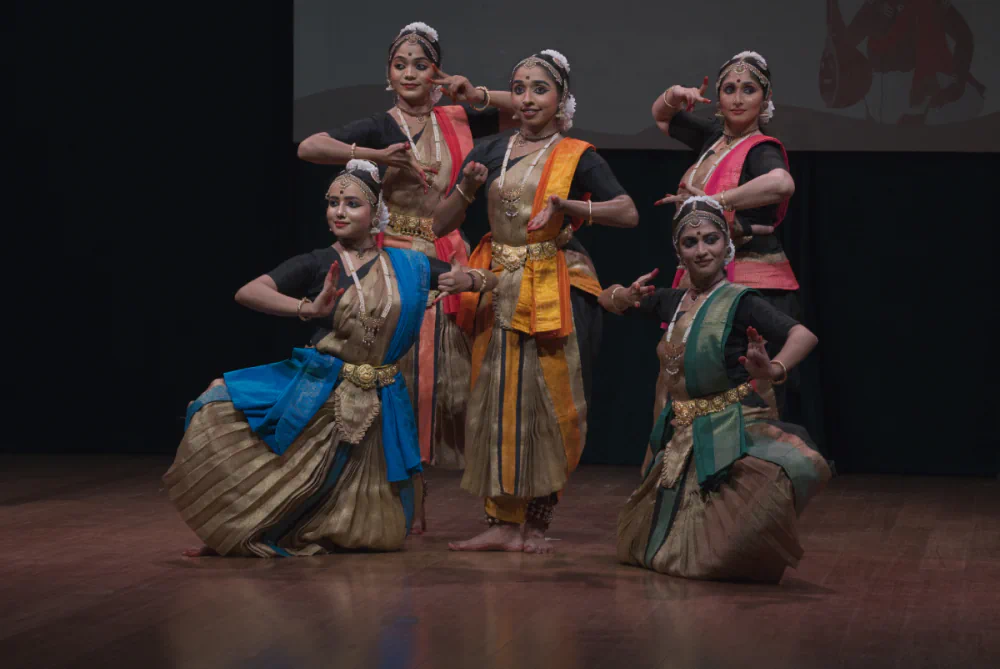
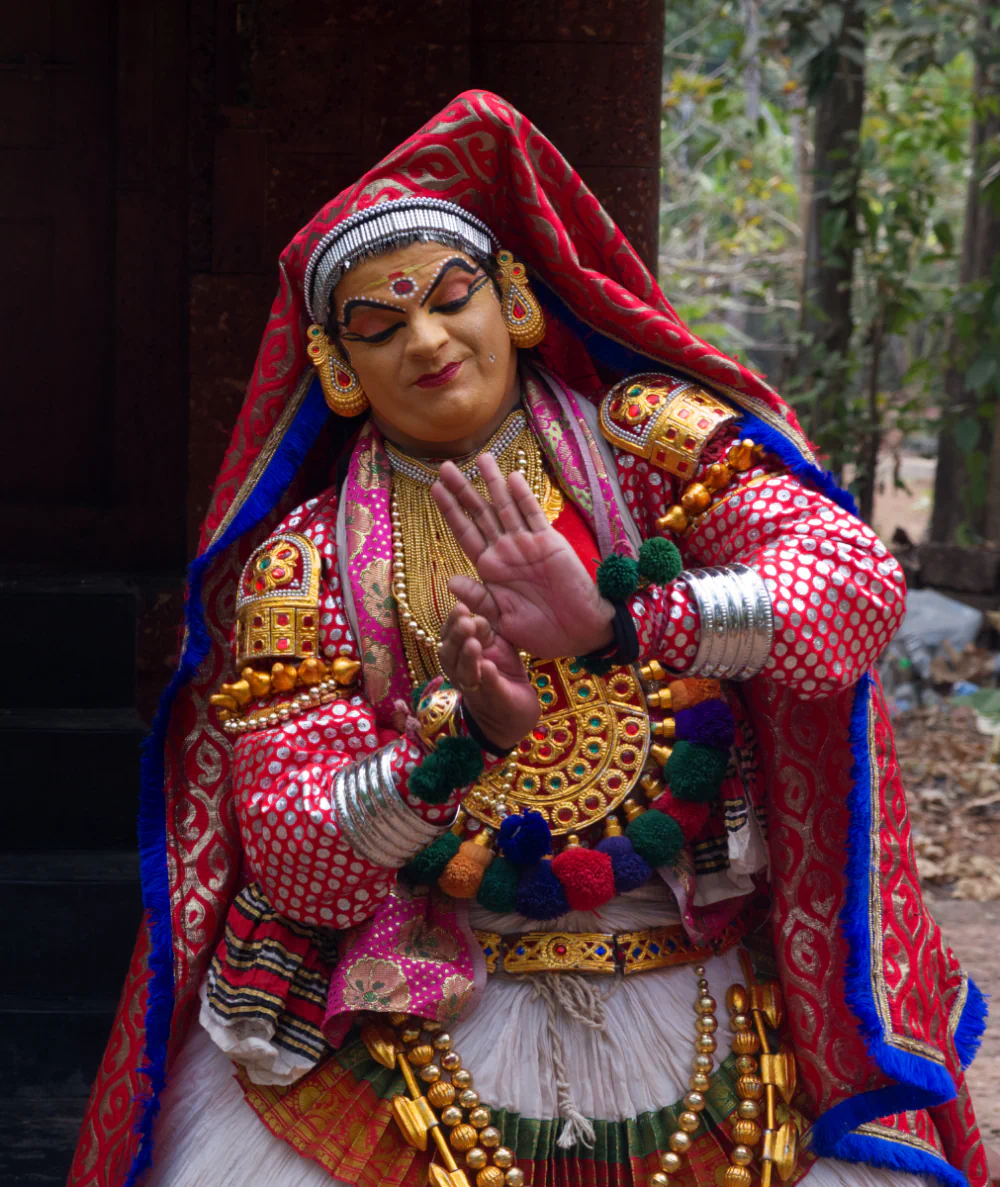
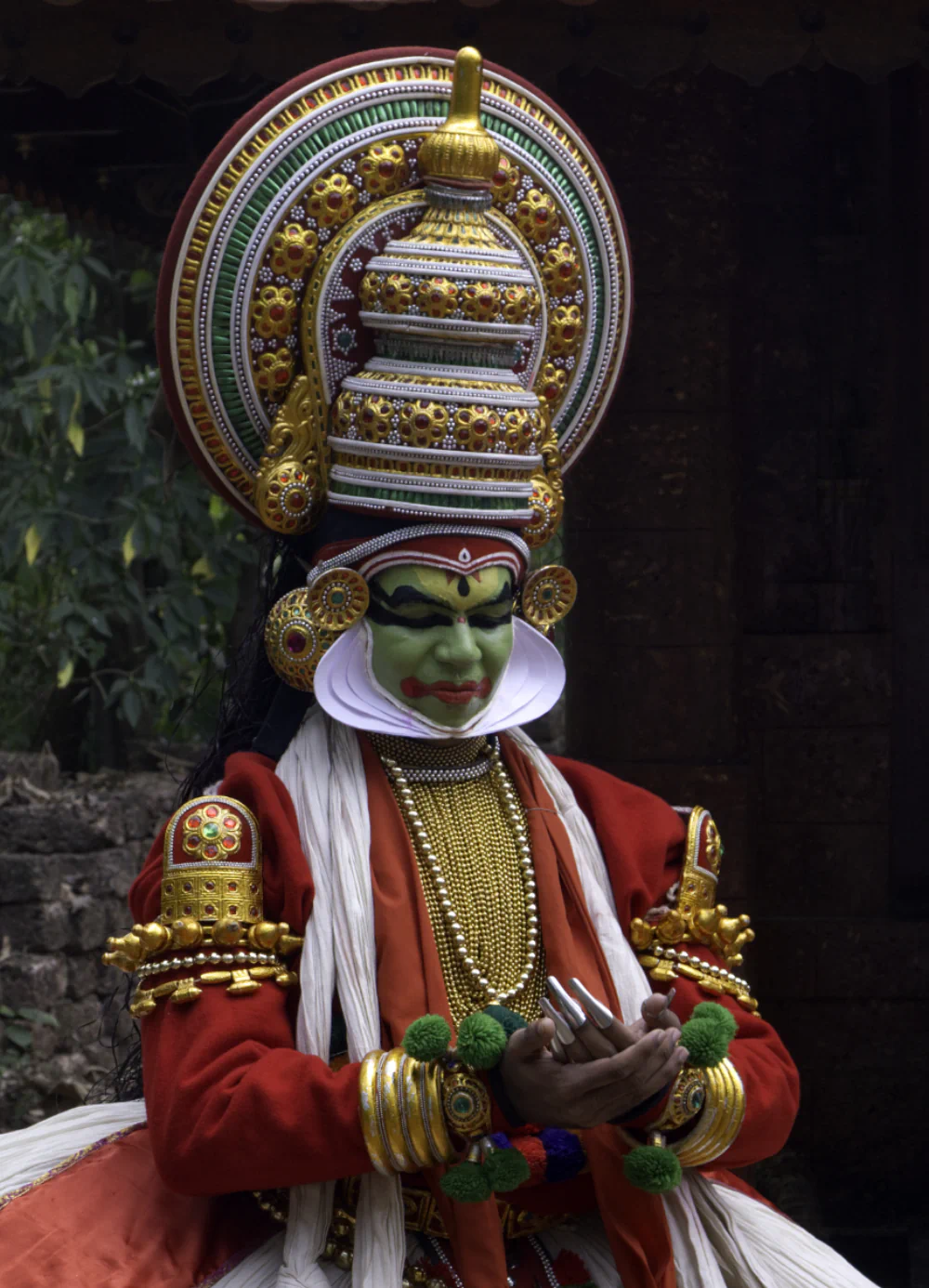
The accompanying images also show that this subject need not remain confined to the proscenium stage. Outdoor portraits of Kathakali performers, for instance, reveal another side of the tradition: less theatrical perhaps, but no less expressive. Away from stage lighting, one sees the richness of costume, make-up, and character with greater clarity, as well as the quiet humanity beneath the role. Such images complement the performance photographs by widening the visual story.
I am now looking at taking this work further through Topaz Studio, exploring more artistic treatments while remaining faithful to the essence of the performance. The aim is not to overpower the subject, but to extend the expressive possibilities already present within it.
For any photographer interested in performance, culture, or movement, Indian classical dance is an immensely rewarding subject. It demands observation, timing, and technical adaptability, but it also offers colour, structure, emotion, and beauty in abundance. More importantly, it provides access to a living tradition that continues to evolve while remaining rooted in centuries of artistic discipline.
To photograph it is to engage, however briefly, with that tradition and, if one is fortunate, to come away with images that reflect not only movement, but meaning.
About Ashok Viswanathan
Ashok Viswanathan FFIP, EFIAP, EPSA is a Chennai-based photographer whose work spans travel, culture, landscape, and portraiture. An award-winning exhibitor, he works in both digital and film and also explores alternative processes, including cyanotypes, bromoil, and Van Dyke printing. In 2025, he presented A Journey Through India, a solo exhibition of colour prints spanning fifty years of photography, at Gallery 1885 in London. [Official Website]