

Charlie Fernández’s Sensitivity Illustrates the Dark Side of Mental Health
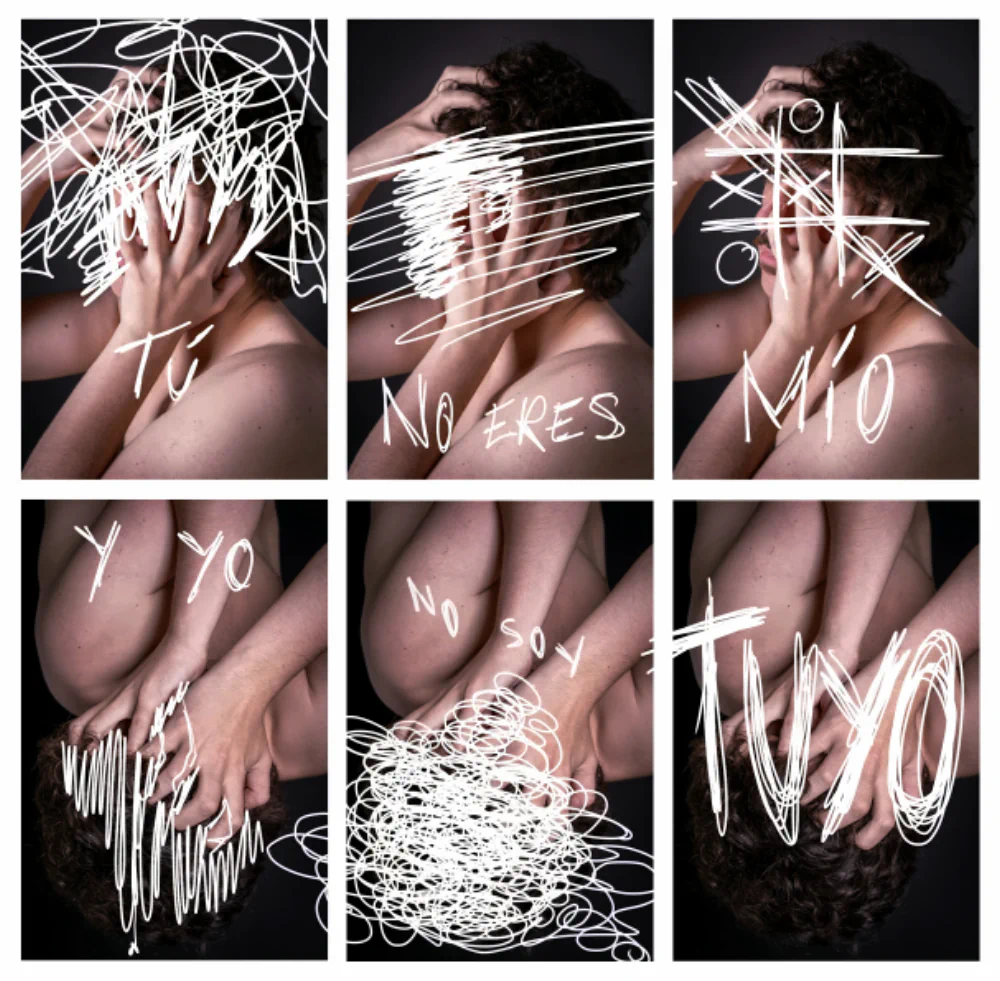
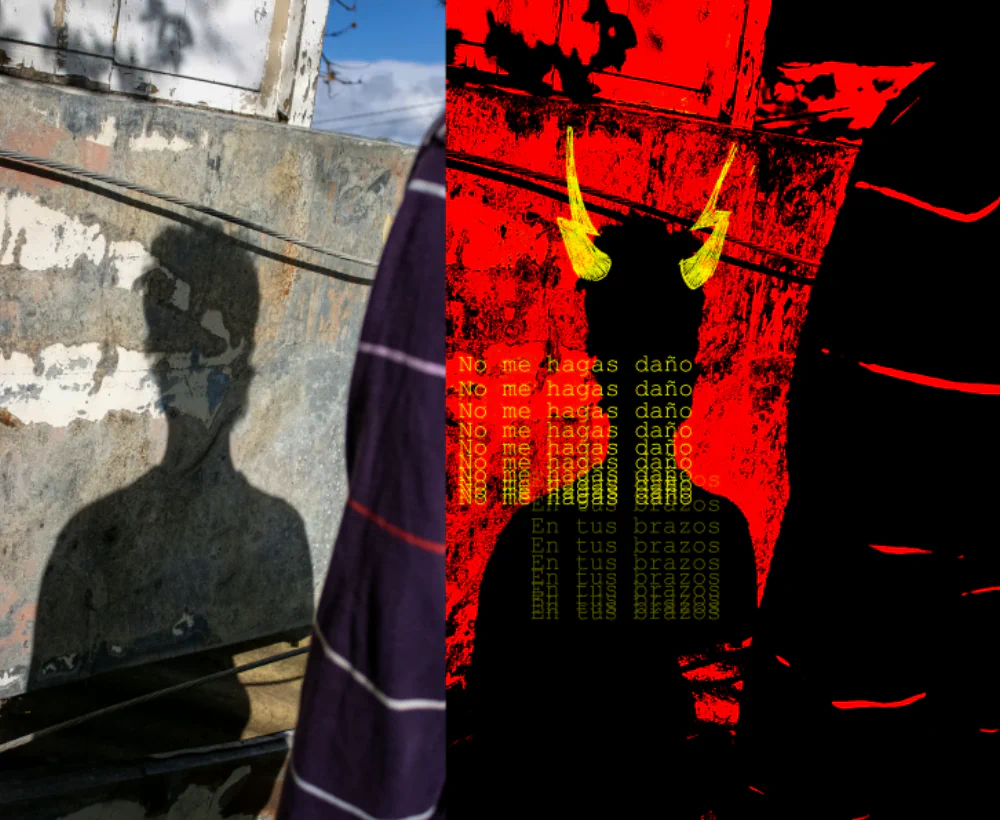
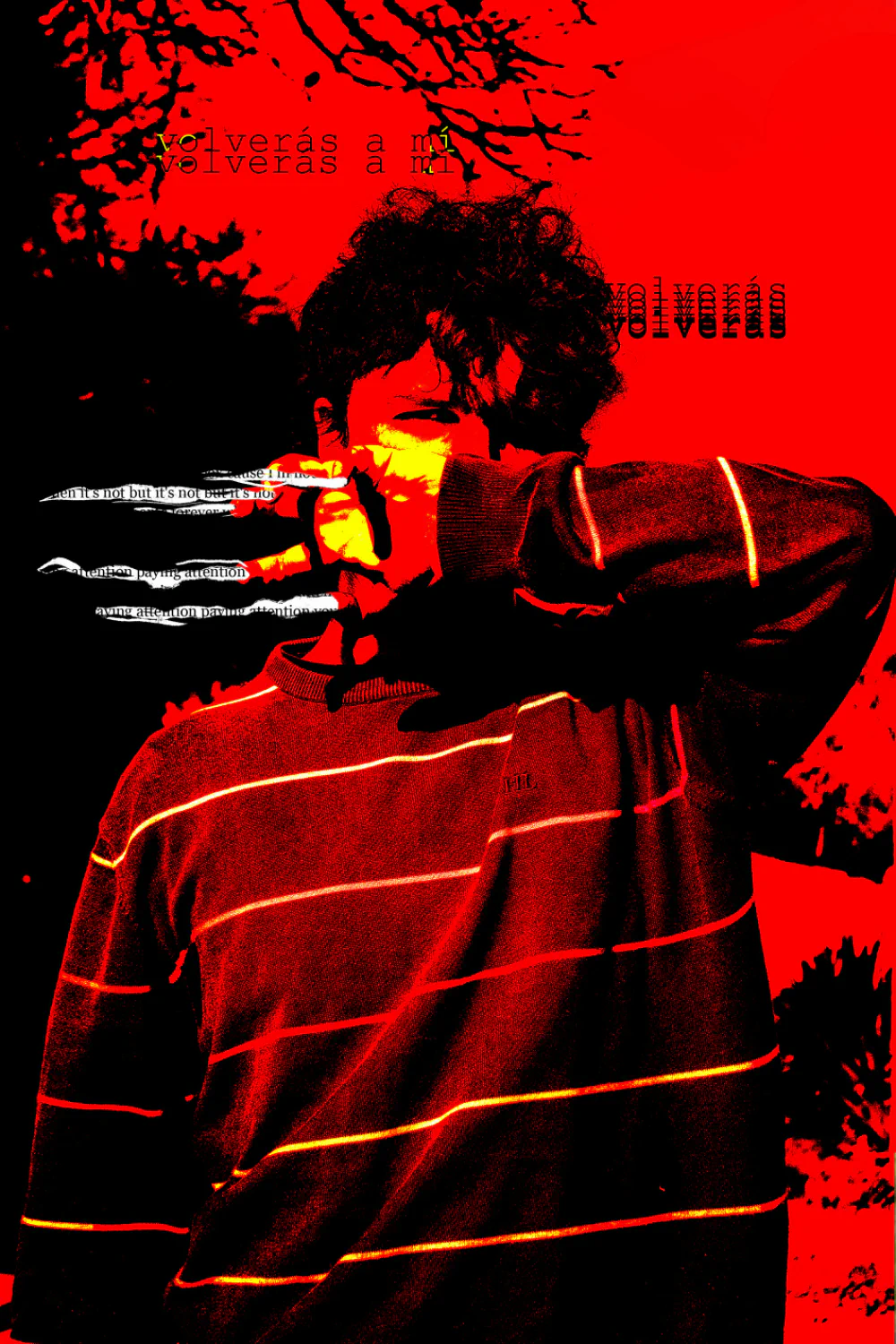
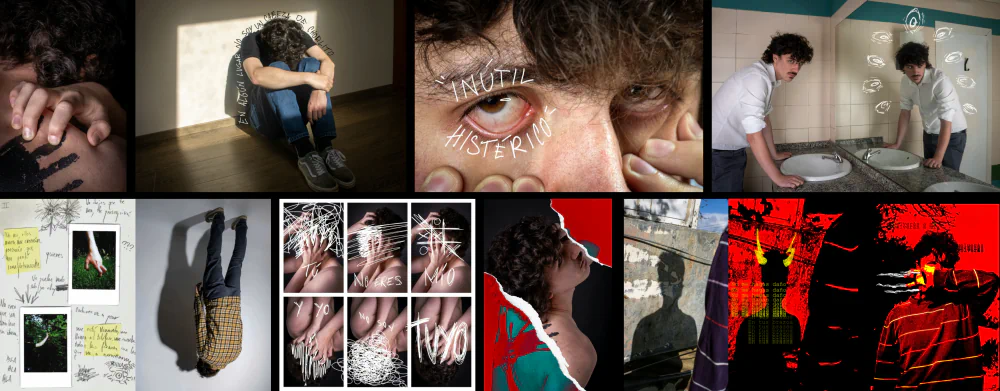
“Piedras sobre mi tejado” (Stones on My Roof) does not merely present images; it exposes a fracture. Through intervened photography, Charlie Fernández Pérez ventures into the unstable territory of youth mental health. For those who experience mental health struggles, two selves coexist in constant conflict. Visually representing this inner battle is a complex and risky challenge—one that Charlie confronts with uncommon sensitivity, deep empathy, and a hybrid language—photography and illustration—that allows visible reality (photography) to coexist with emotional interiority (illustration).
“I was interested in showing what cannot be seen,” Charlie explains. “Not what happens on the outside, but the inner drama and the constant struggle that many people carry within themselves—and that no one seems to hear.”
Charlie is a shy person, not inclined toward self-promotion. She possesses an uncommon sensitivity, one that has allowed her to deeply empathize with those who experience mental health struggles—so much so that she has been able to give them visual form in a photographic series titled “Piedras sobre mi tejado” (“Stones on My Roof”).
Charlie is 22 years old, and through her series she reveals a drama that is all too common among young people today. As she herself explains, on one hand young people feel the pressure of a society that demands productivity and efficiency; on the other, they experience abandonment and a lack of attention from the adult world. This double burden is hard to carry, especially when it rests on a fragile ability to cope with frustration. As a result, depression, anxiety attacks, paranoia, and the splitting of the self increasingly take hold of young souls, severely affecting not only their mental and physical health, but also their capacity to exist and find their place in the world.
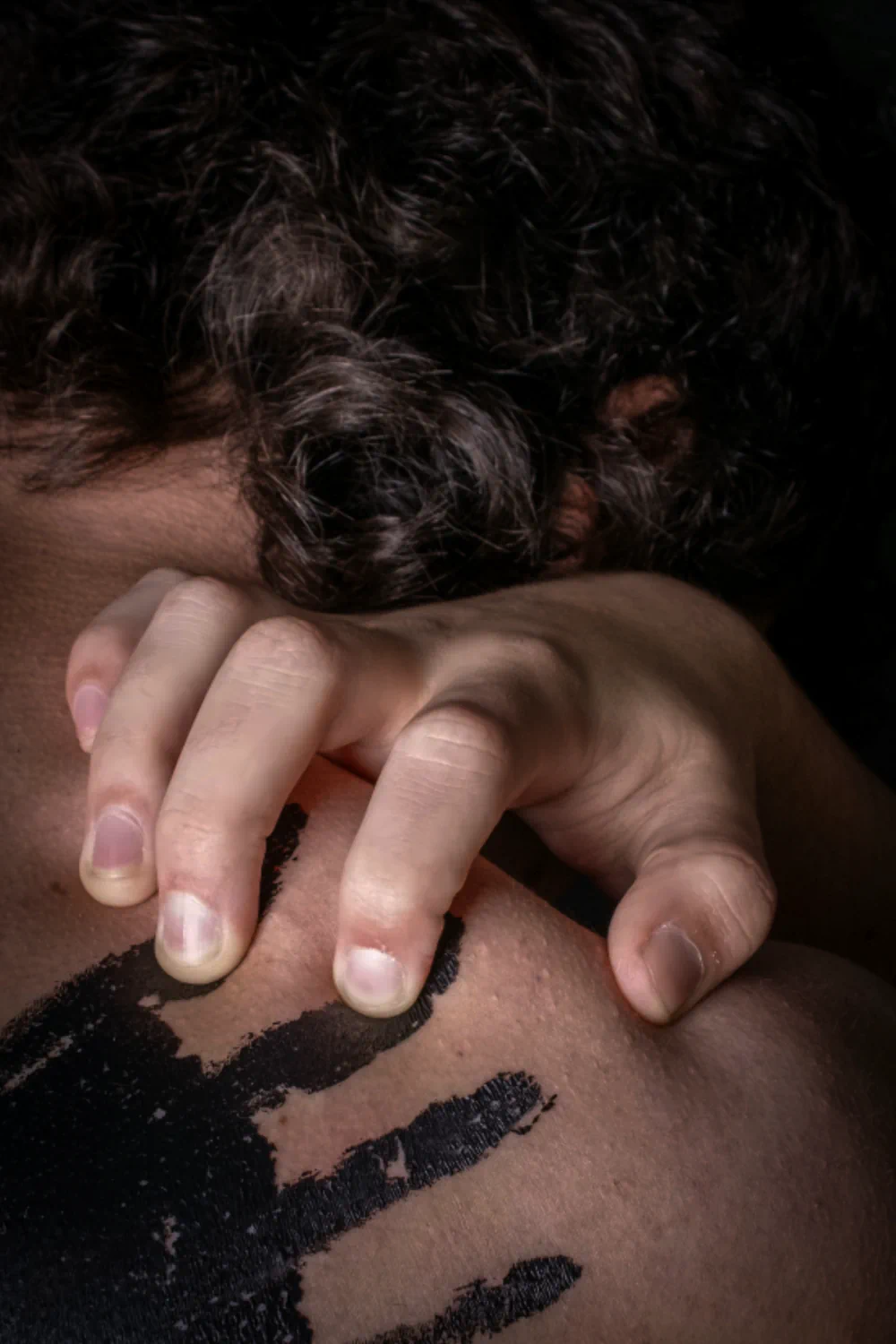
I met Charlie at last year’s Gijón Photography Encounters. Her series was one of those selected to take part in a roundtable with students from the Photography program at the Oviedo School of Art, where each participant presented their final degree project. I was deeply impressed by the theme Charlie chose and by the way she blended illustration and photography to visualize the dualism between the conscious self and the latent self within these individuals. At the end of the session, I approached her and proposed this interview.
A defining aspect of Charlie’s work is her belief that photography represents the real world and therefore has a clear limit: it does not allow for the inclusion of what does not belong to that reality. Illustration, by contrast, enables her to move beyond this boundary, offering the possibility of inserting a small fragment of her inner world into reality. For this reason, she considers it absolutely essential that this dualism be clearly visible in her images: she seeks to explicitly convey the coexistence of the real world and the personal, inner one.
“Photography forces me to remain on the surface of reality,” she states. “Illustration, on the other hand, allows me to pierce through it and add what exists only in the mind.”
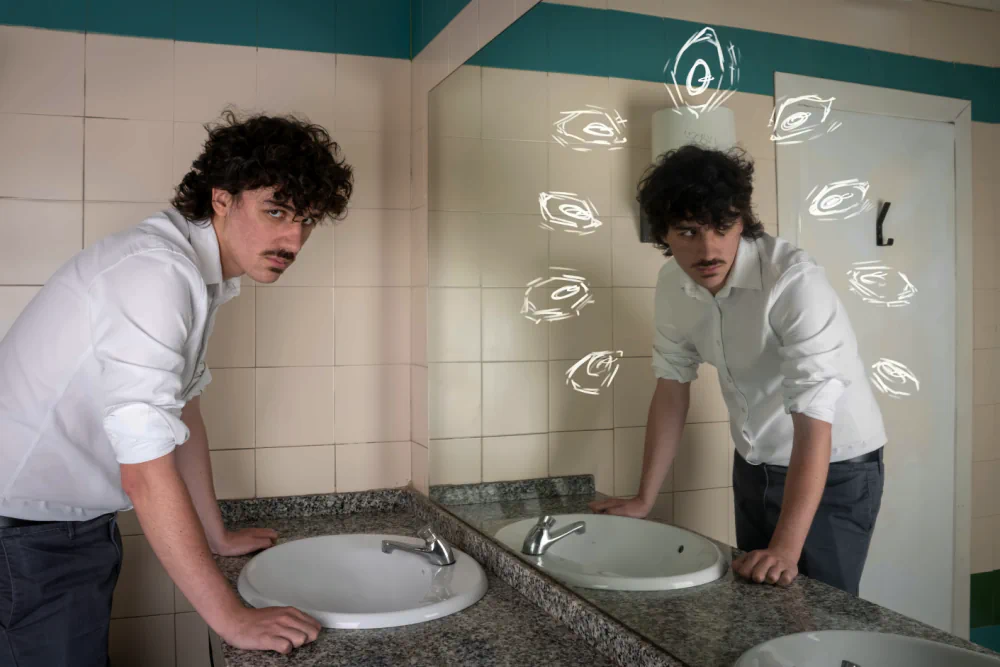
So far, artificial intelligence has not interested her as a tool for creating the imagined dimension of her images, as Charlie masters the “weapon” of drawing, which allows her to visualize her inner self more directly, with immediacy and a fully personal sense of authorship.
When it came time to choose the topic for her final degree project, Charlie decided to focus on youth mental health, as she feels it is a highly relevant issue that hits close to home. In fact, she was able to “tell the story” of two friends in her circle who experience mental health struggles, which allowed her to deepen her empathy and visualize the moods and inner states contained within these individuals.
Charlie’s goal is to try to reveal the inner struggle of those whom society judges superficially and without understanding, labeling them as lazy, weak, useless, or lacking self-respect. Stones on My Roof seeks to offer a personal fragment to help raise awareness about this struggle—a drama that torments many young people.
“Many people are judged as lazy or weak,” Charlie says, “when in reality they are struggling every day with something they did not choose and cannot explain.”
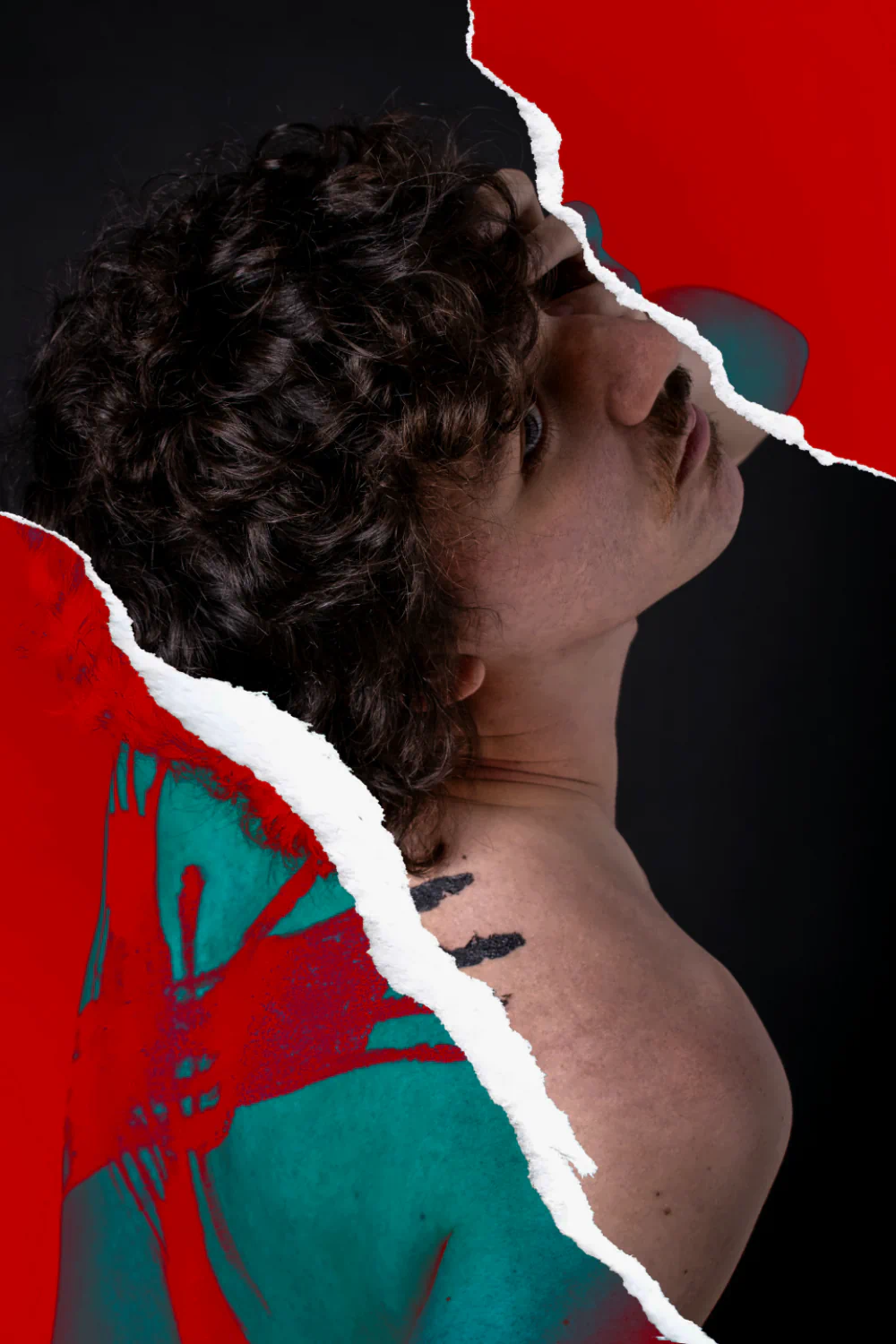
Through her images, Charlie seeks to reveal the chaos and pain experienced by people with mental health struggles. She aims to visualize the self-inflicted harm caused by being overwhelmed by one’s own mind. Drawing on personal experiences and interactions with friends who face these challenges, Charlie has sought in each image of the series to represent that parasitic sensation many people feel in their heads—unable to take control of what is happening within. They sense that something is happening, yet cannot identify it; they feel things that, in reality, are not truly there.
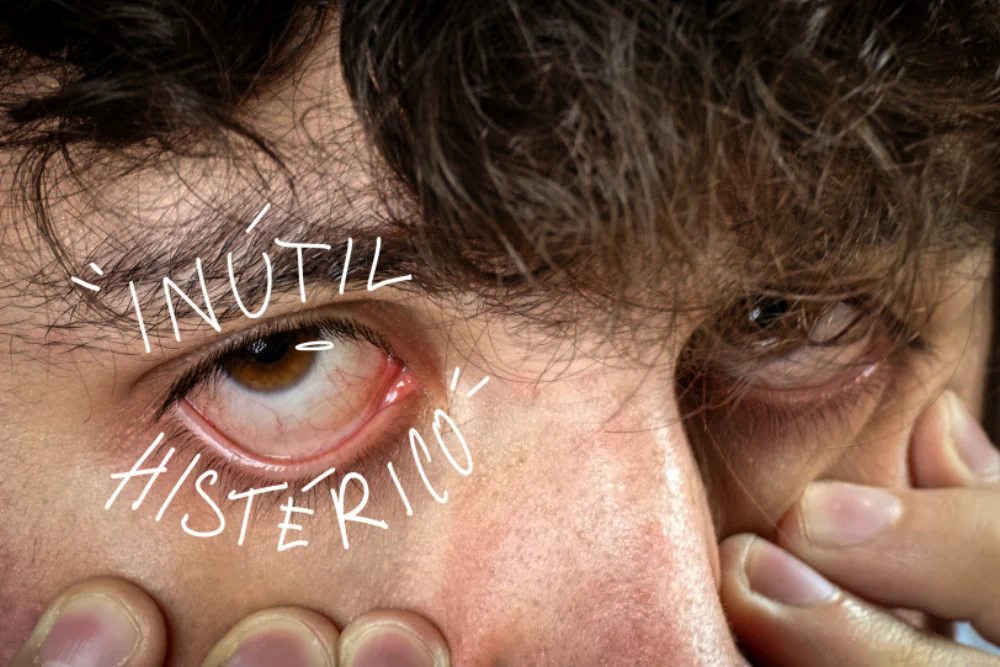
The sequence of the series begins with fully photographic images—thus closely aligned with apparent reality—and culminates in an image where illustrative intervention is nearly total. In this crescendo of interventions on reality (represented by the photographs), Charlie gradually introduces increasingly dominant illustrative elements.
This process mirrors the spiral experienced by someone with a mental health struggle: at first, the person senses that something exists within them that does not belong to their true self but believes they can relegate it to the depths of their soul. Over time, and without external support, this dual self gradually occupies more space until it comes to dominate completely. The person then attempts to flee from what resides inside them and is not truly themselves—but can no longer escape. The only remaining option is to tear it away from themselves, self-sabotaging and self-harming in the process.
In Charlie’s images, this dramatic crescendo is reflected visually: illustration progressively gains more presence and power over photographic reality. The real self gives way to the inner being, which relentlessly overwhelms and imposes itself.
To develop Stones on My Roof, Charlie drew not only on her own sensitivity and empathy, and the contributions of friends experiencing mental health struggles, but also on important external references. The first is the music and lyrics of Radiohead, where themes such as alienation, the inability to fit in, dehumanization, fear, and loss are recurrent. The second reference is illustrator Stanley Donwood, the artist behind all of Radiohead’s album covers.
Regarding photographic influences, Charlie speaks about Helena Almeida and her intervened photography as a way of challenging the physical limits of the medium. She also mentions Robert Frank and his themes of loneliness, alienation, and racism, expressed through photographs with an intentionally “imperfect” appearance: tilted horizons, off-center framing, and deliberate blurs.
Charlie takes as her guiding light the book by Robert Frank, Hold Still, Keep Going, in which the artist, through photomontages and the use of 35mm film strips, makes explicit the tension between stillness and movement. Frank also demonstrates a profound distrust of the “single image,” emphasizing that a single photograph cannot capture a moment of truth; instead, truth emerges in the relationship between images.
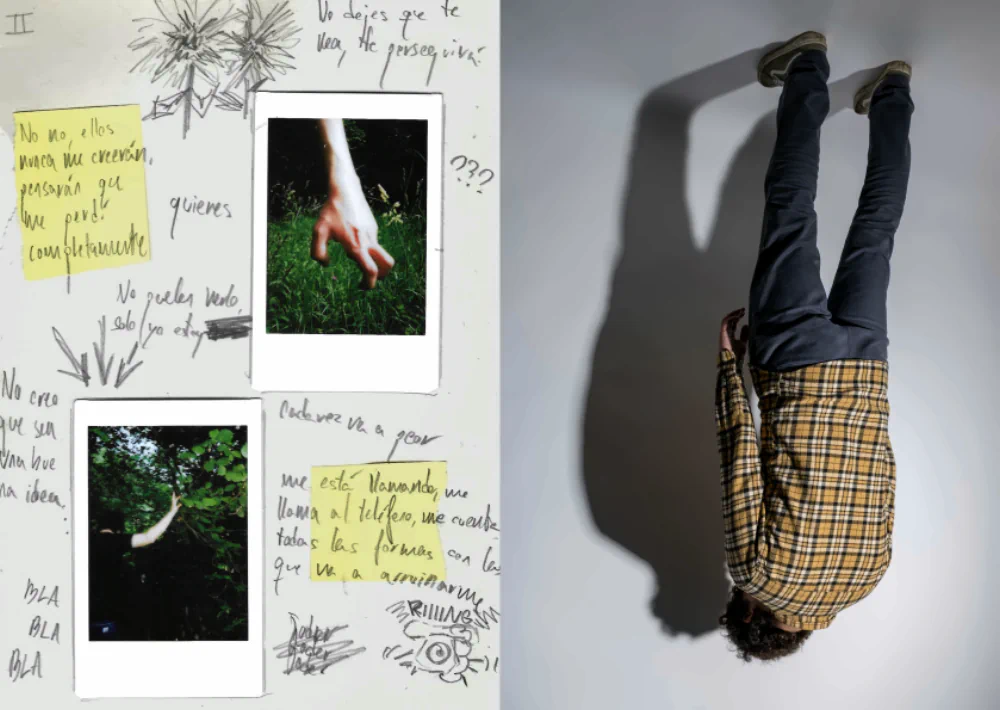
After the significant emotional effort involved in creating Stones on My Roof, Charlie does not currently have any new artistic projects on the horizon, as she is focusing primarily on completing her illustration course at the Oviedo School of Art. Nevertheless, she continues to generate many ideas, exploring them through sketches and, from these, producing occasional photographs.
Charlie’s reality is always a reality that is “thought through” and filtered by her prevailing sensitivity, which, in my opinion, is still somewhat constrained by excessive shyness. I hope this article can have a positive impact on her, helping her gain greater confidence in her abilities and in her capacity to express and evoke emotions.

Photosatriani
I am a curious of life with idealistic tendencies and a fighter. I believe that shadows are the necessary contrast to enhance the light. I am a lover of nature, of silence and of the inner beauty. The history of my visual creations is quite silent publicly but very rich personally, illuminated by a series of satisfactions and recognitions, such as: gold and silver winner in MUSE Awards 2023; Commended and Highly Commended in IGPOTY 2022/19/18, honorable mention in Pollux Award 2019; selected for Descubrimientos PhotoEspaña (2014), Photosaloon in Torino Fotografia (1995) and in VIPHOTO (2014). Winner of Fotonostrum AI Visual Awards 2024. Group exhibitions in: Atlántica Colectivas FotoNoviembre 2015/13; selected for the Popular Participation section GetxoPhoto 2022/20/15. Exhibitions in ”PhotoVernissage (San Petersburgo, 2012); DeARTE 2012/13 (Medinaceli); Taverna de los Mundos (Bilbao); selected works in ArtDoc, Dodho, 1X. A set of my images belongs to the funds of Tecnalia company in Bilbao, to the collection of the "Isla de Tenerife" Photography Center and to the Medicos sin Fronteras collection in Madrid. Collaborator and interviewer for Dodho platform and in Sineresi magazine [Website]