
For over three decades, Myriam Aadli has developed a rigorous photographic practice rooted in the humanist tradition while critically reactivating its relevance in a contemporary visual landscape marked by acceleration and image saturation.
Her work advances a clear artistic position: to slow down, to remain, to encounter.
Photography, in her practice, does not function as an act of visual extraction but emerges as the consequence of shared presence.
Trained first in cinematography in Paris and later as an actor in New York, Aadli brings to photography a distinctly transversal sensibility. From cinema, she inherits an acute awareness of duration and the invisible construction of tension within a scene. From theatre, she develops a refined attention to corporeal presence, to the latent dramaturgy of everyday gestures, and to the expressive force of silence. These influences do not manifest as stylistic effects but operate as structural principles that shape her way of inhabiting situations and allowing images to come into being.
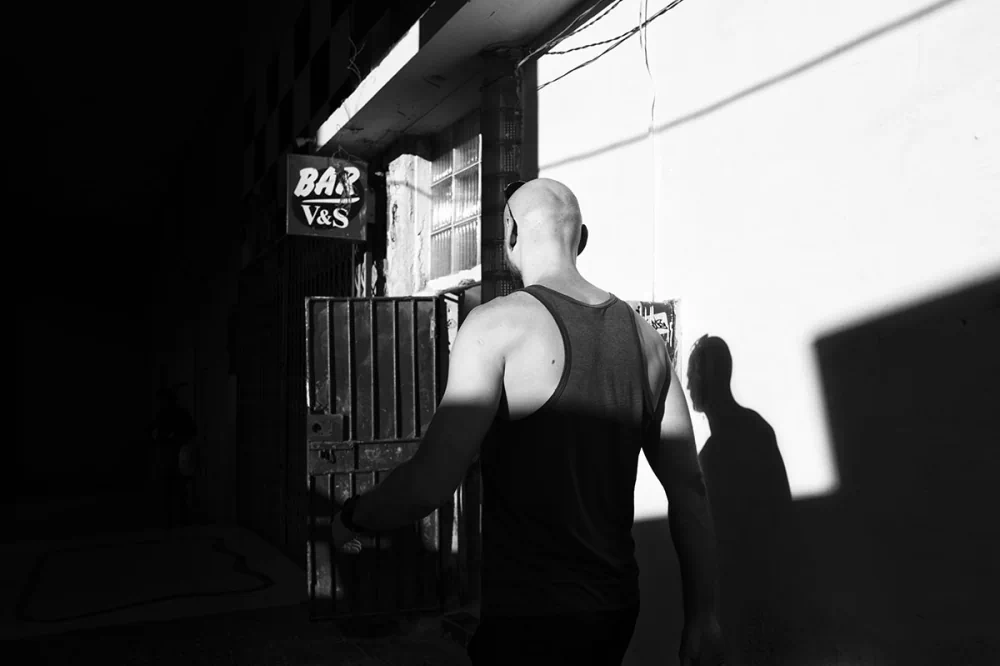
Before photographing, Aadli walks. She moves through urban environments, observing anonymous flows and attending to those fleeting moments when trajectories intersect without recognition. This perceptual discipline situates her practice within a lineage that extends from the modern flâneur to twentieth-century documentary traditions. For Aadli, looking is already relational. The camera enters only when distance begins to transform into the possibility of mutual acknowledgement.
At the core of her work lies a demanding ethics of encounter. She rejects extractive approaches to public space and privileges duration, trust, and reciprocity as conditions for photographic legitimacy. Images that may appear visually compelling are sometimes deliberately withdrawn when the relational balance that produced them feels insufficient. To represent without dominating, to show without reducing—this position functions less as a theoretical stance than as an ongoing practice of responsibility.
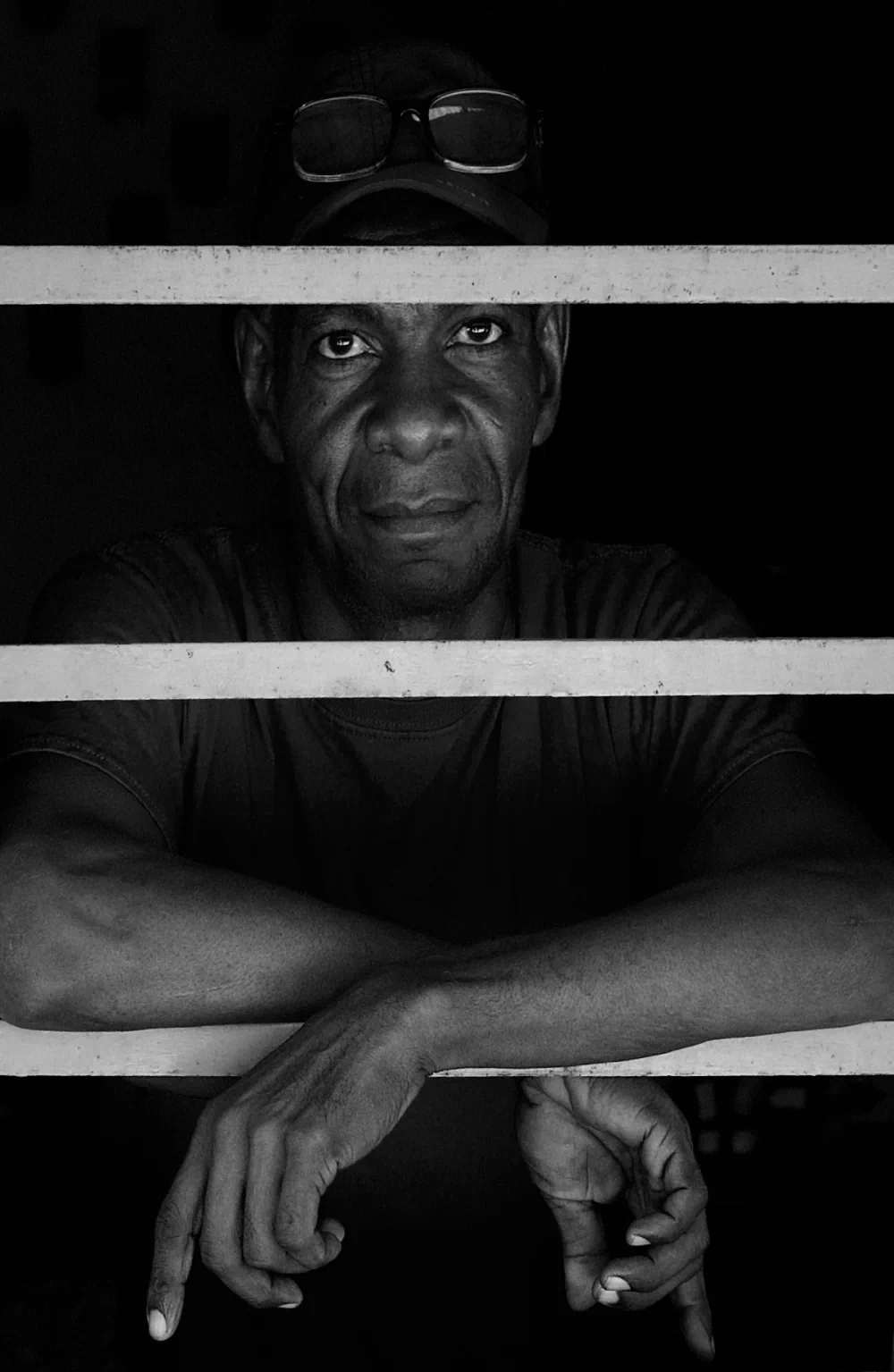
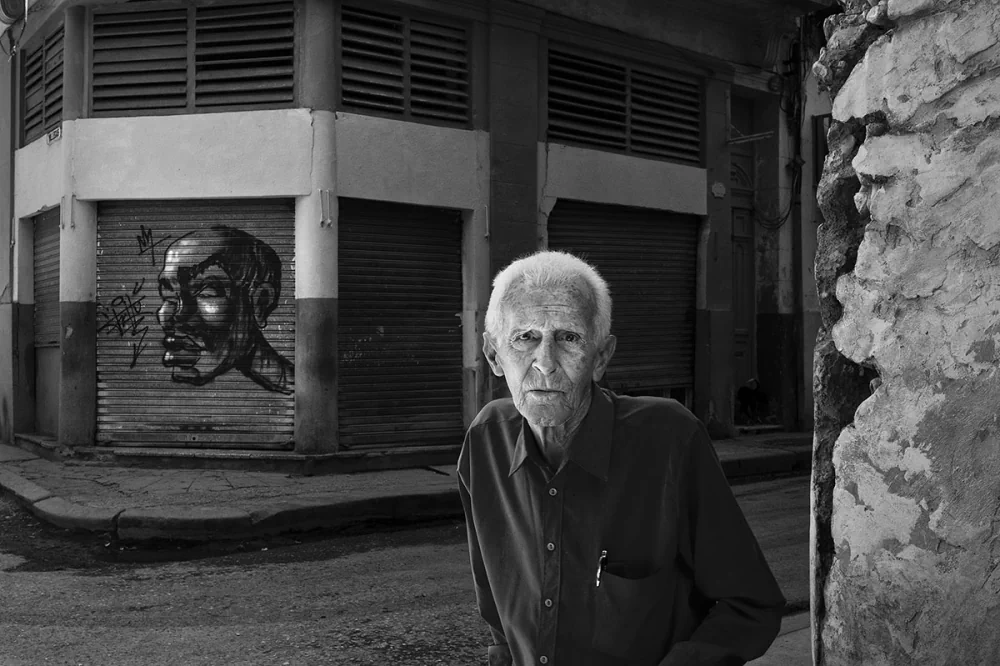
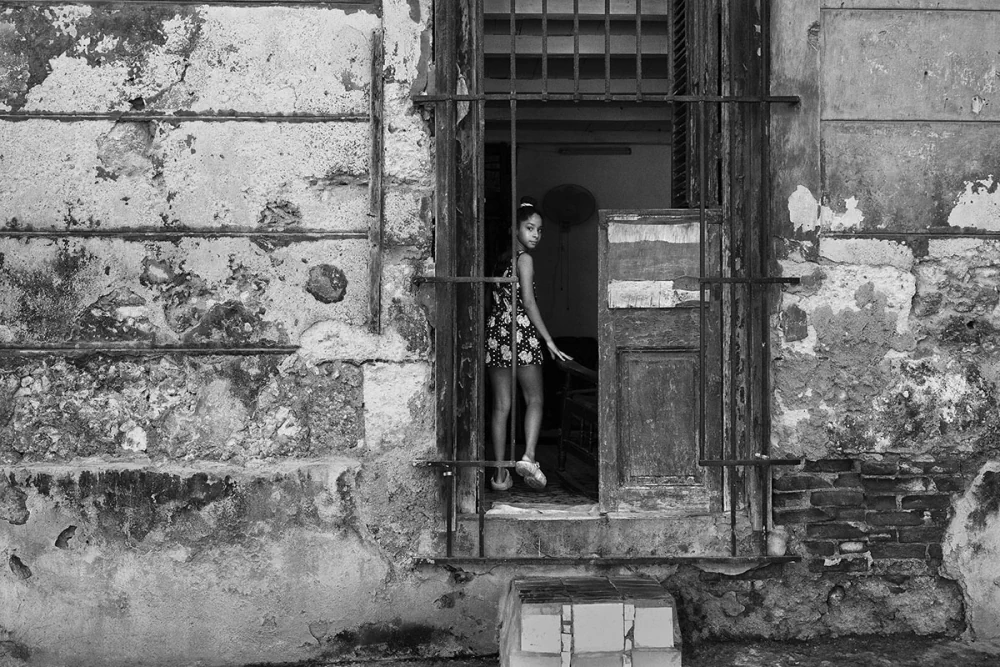
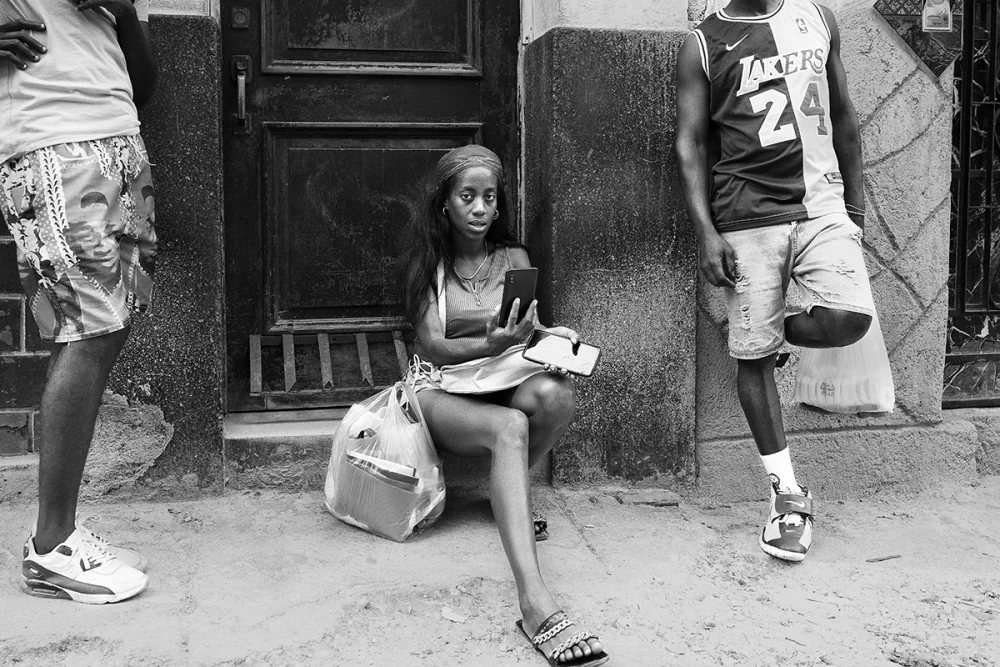
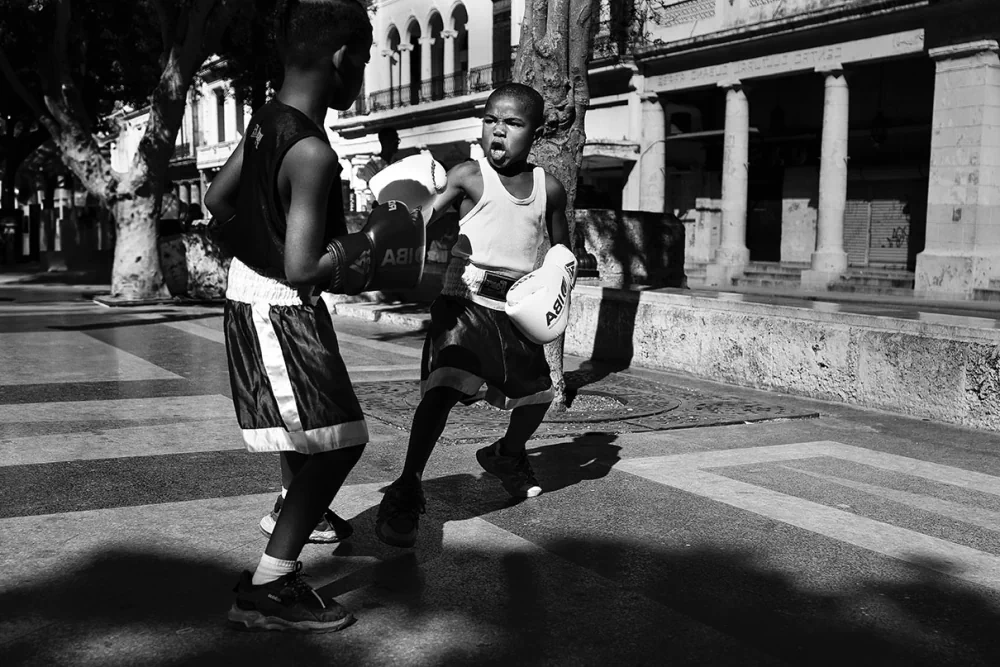
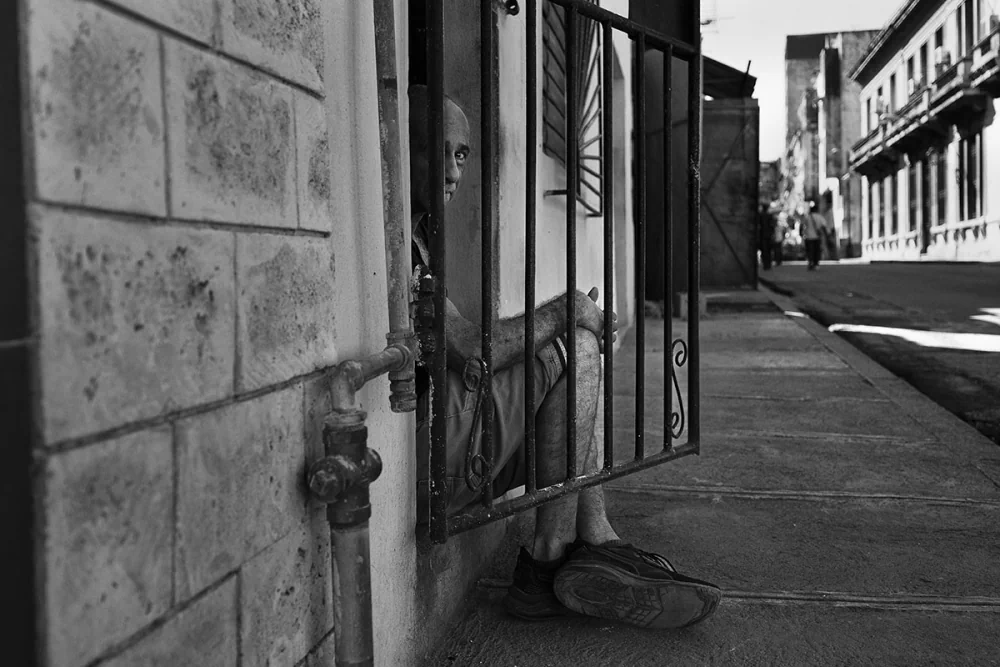
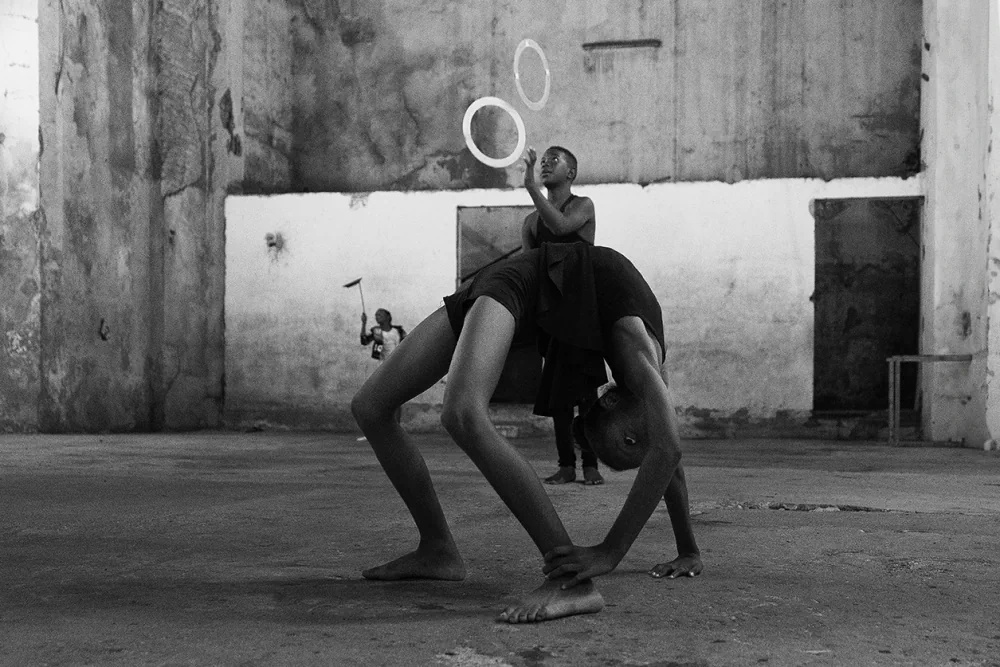
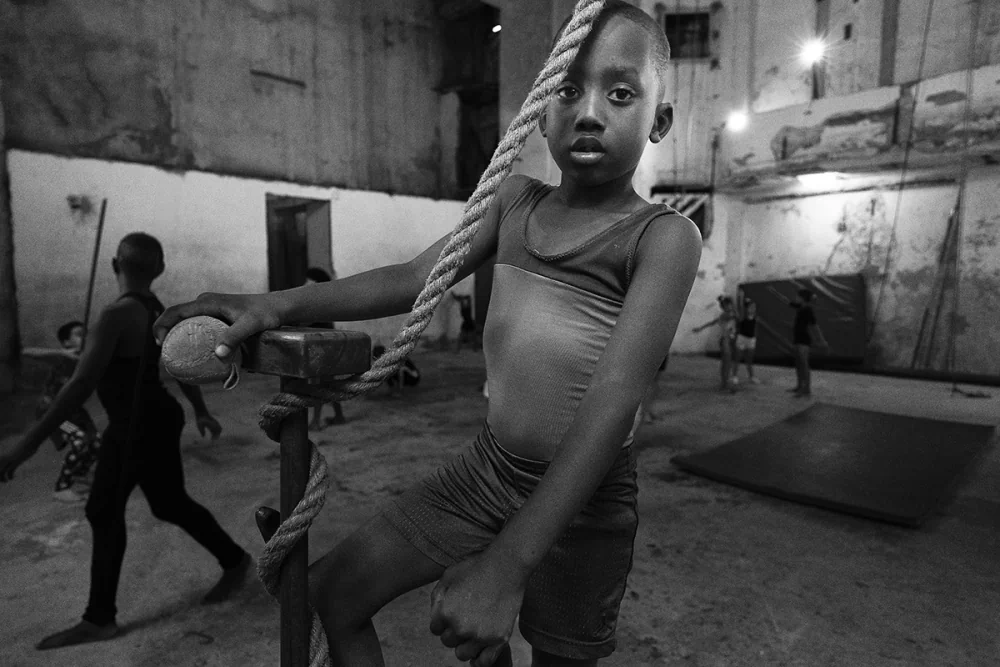
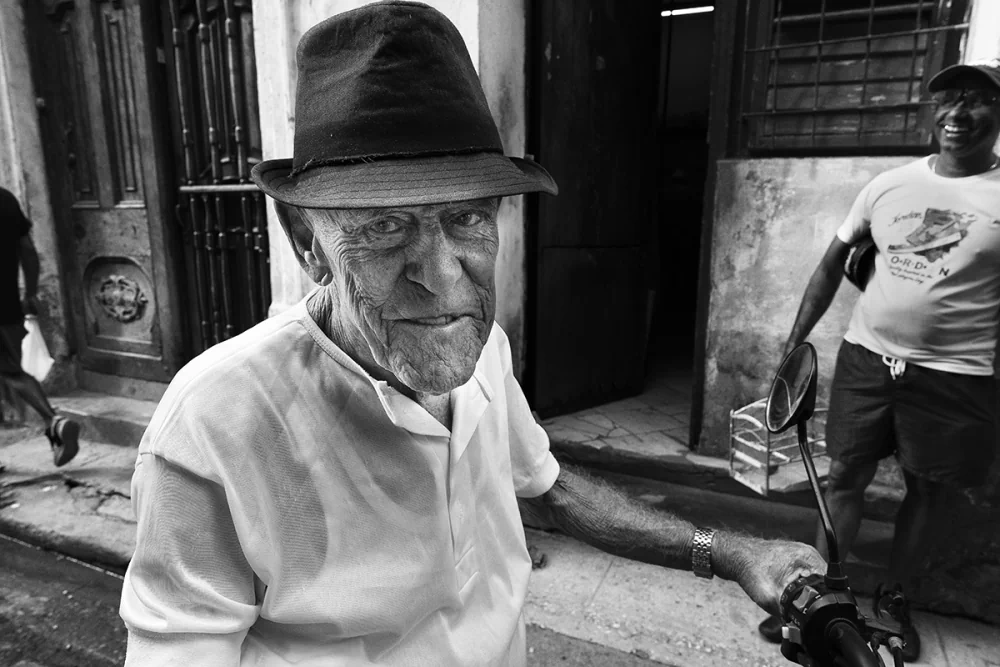
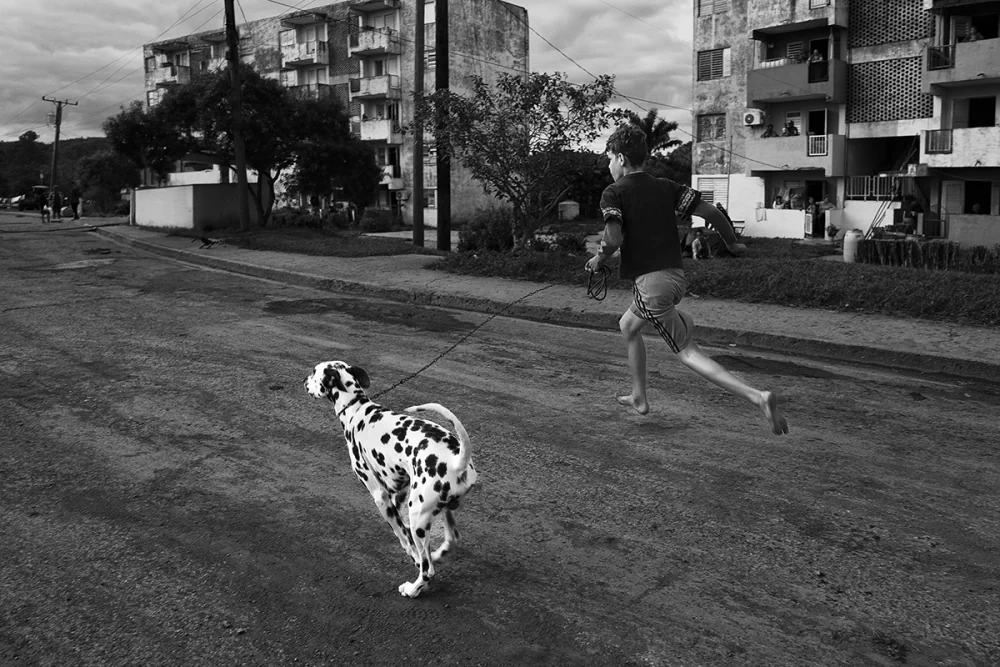
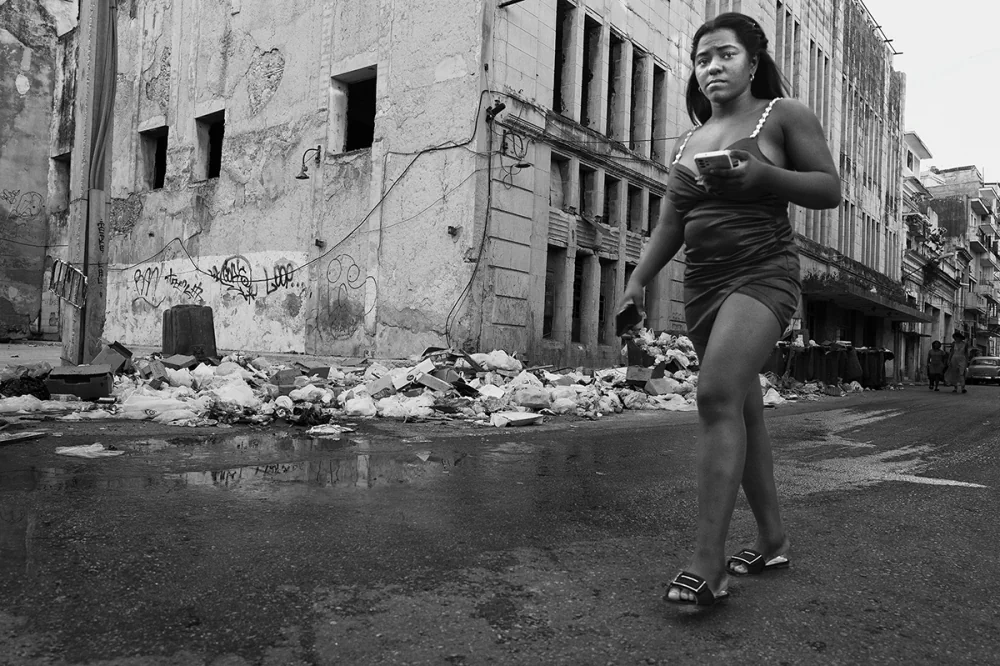
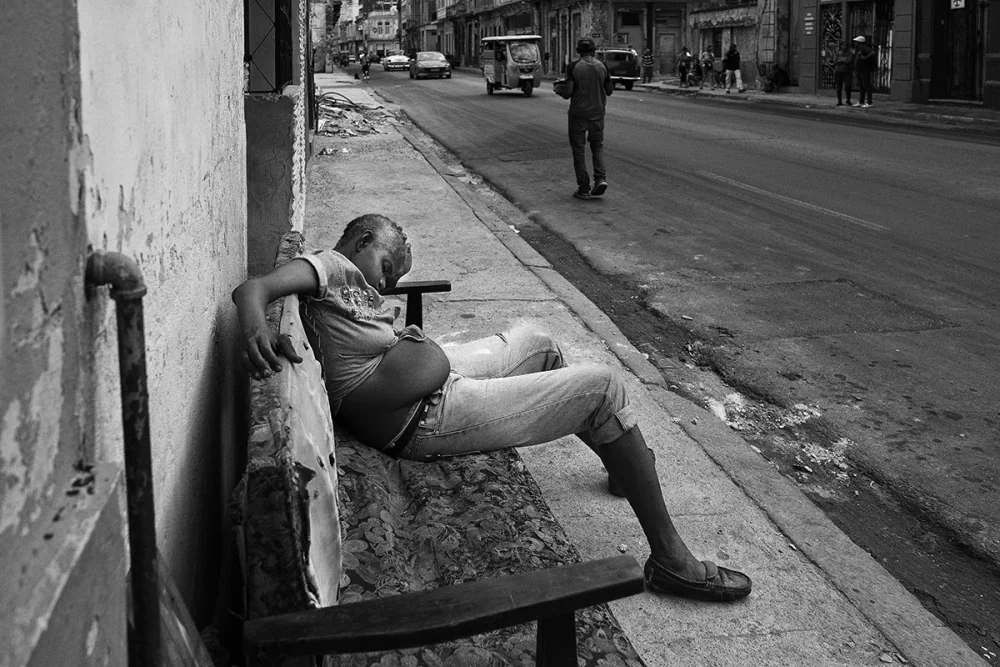
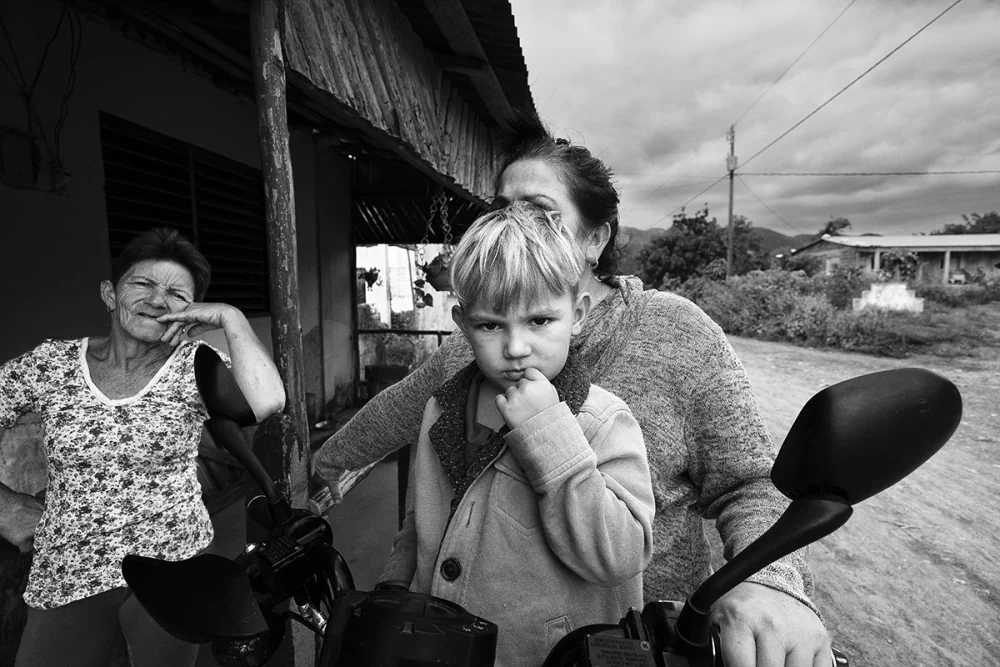
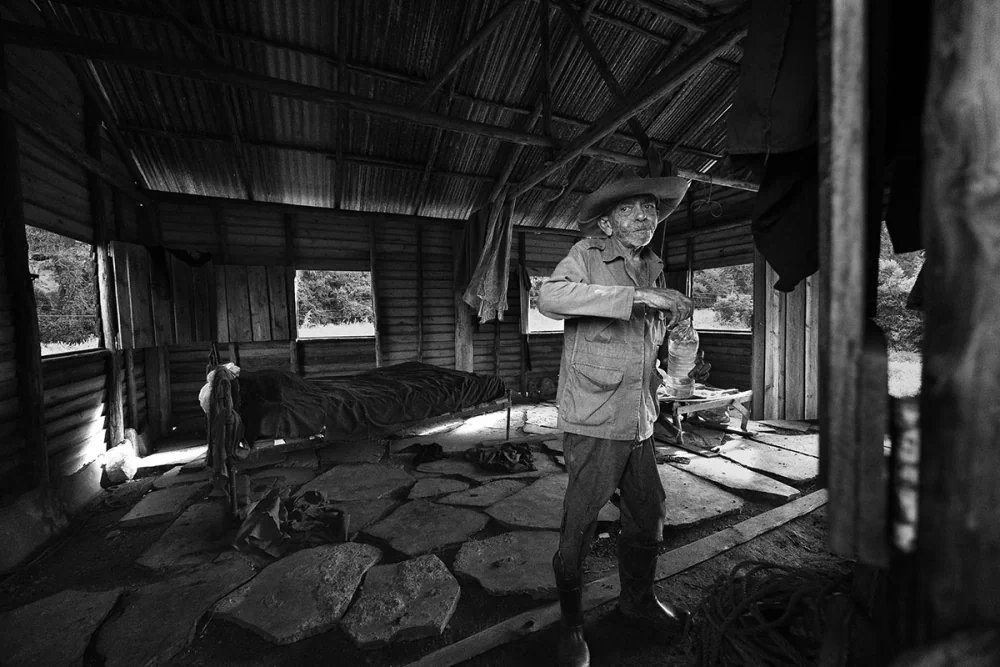
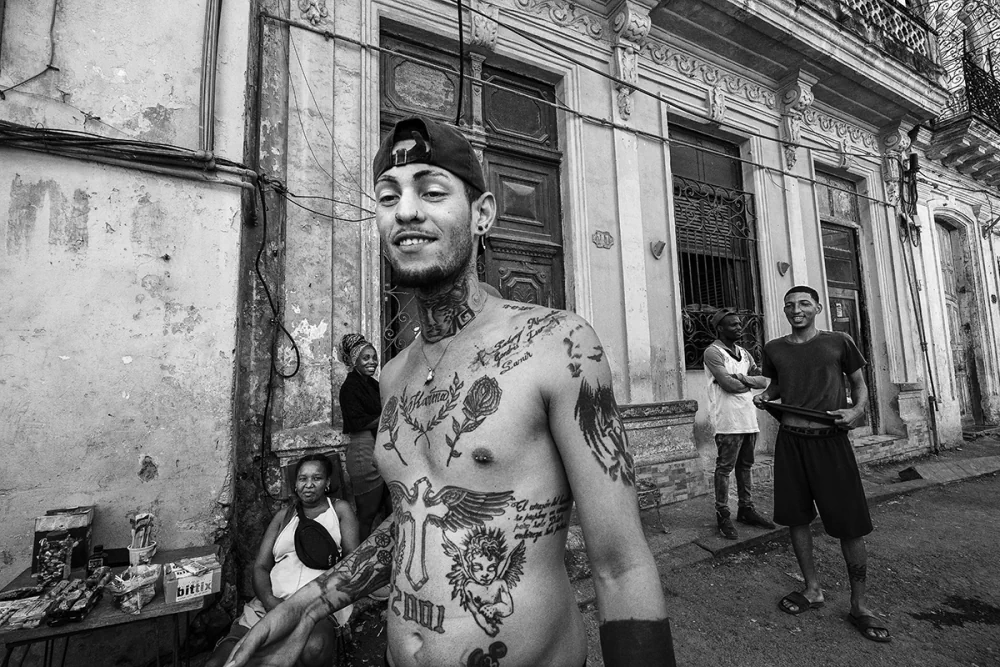
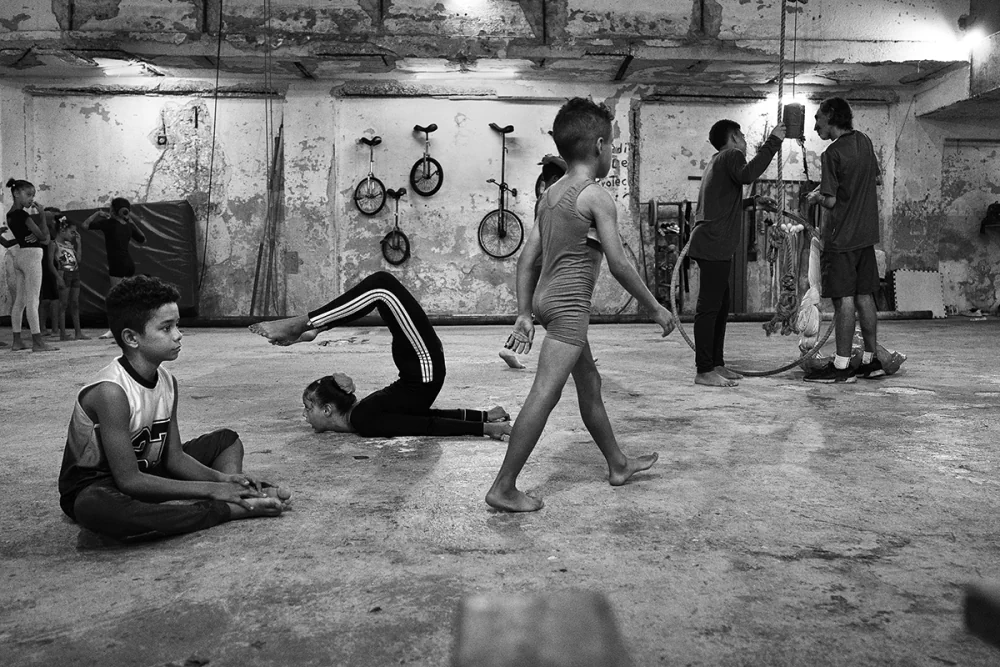
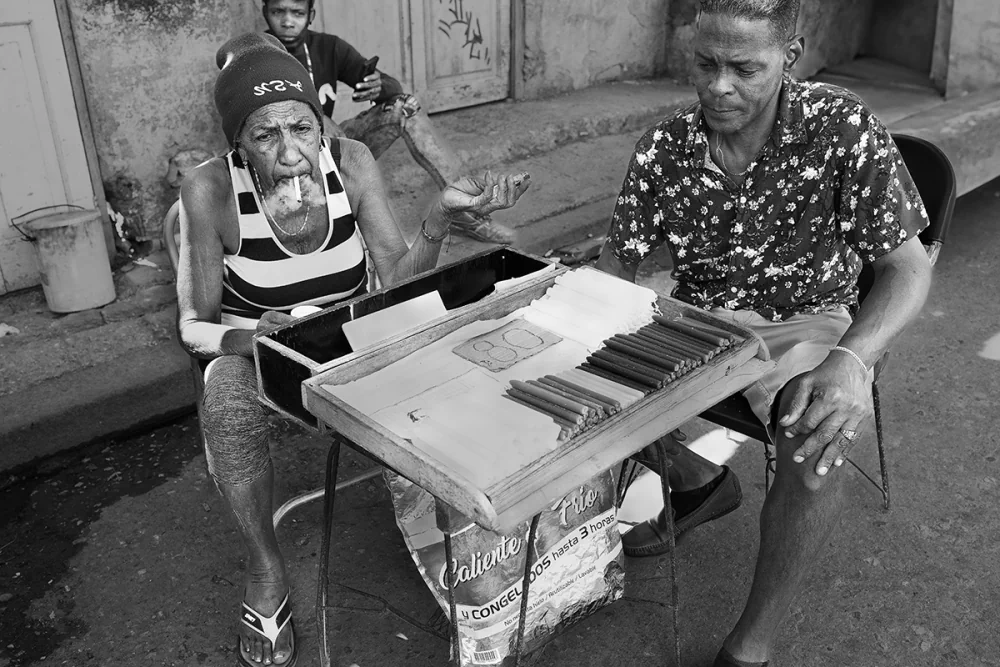
Her recent series produced in Cuba crystallise this approach with particular intensity. In environments marked by architectural fragility and material uncertainty, Aadli observes how bodies continue to inhabit space, to learn, and to transmit. The series unfolds through a tension between three interrelated dimensions: the fragility of a territory, the strength of human relationships, and the transmission between generations.
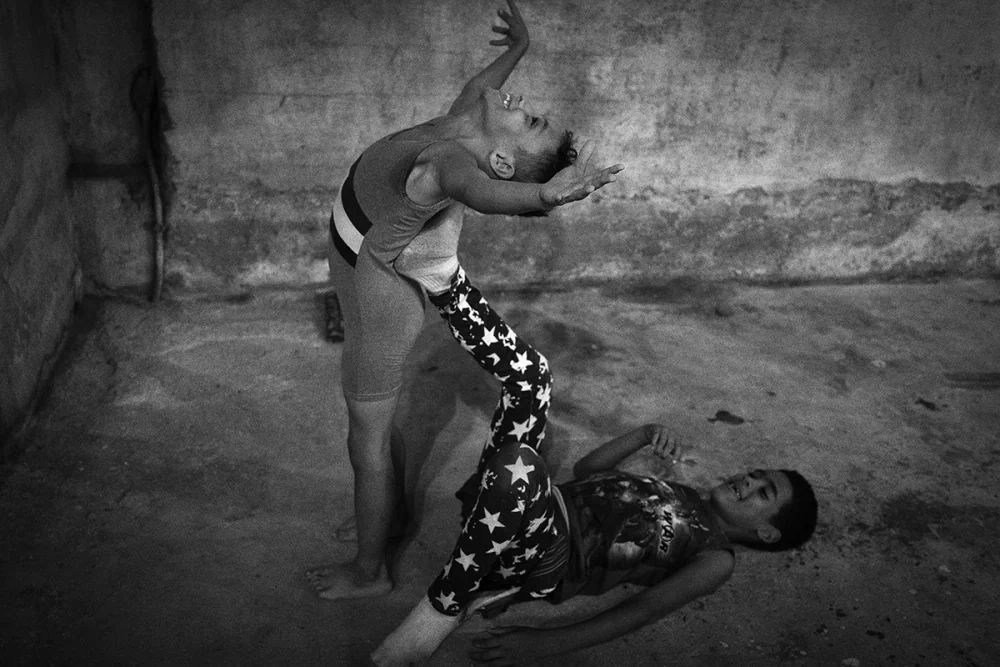
Within this uncertain landscape, the body becomes a site of dignity. Children train in boxing, practice balance through circus exercises, and play in streets open to the sky. Their movements cut through static surroundings of exposed buildings and precarious structures. Between rupture and persistence, life continues. Sport, circus practice, and informal street encounters become vectors of a silent transmission. Gestures repeat. Bodies learn how to endure.
This work neither seeks spectacle nor catastrophe. Instead, it attends to the ways in which human beings continue to live within fragile conditions. When infrastructures falter, bodies invent their own forms of equilibrium. They become discreet points of resistance. In this charged space between vulnerability and persistence, the photographic situation transforms into a shared field of experience.
The camera, in such moments, ceases to operate as an instrument of distance or control. It becomes a mediator of presence. Images arise when initial mistrust can shift toward trust, when anonymity gives way to recognition. Only then does the photograph become possible. What is rendered visible is not merely a social or geographic condition, but a quality of being-in-the-world—a quiet dignity carried through gestures, postures, and durations of attention.
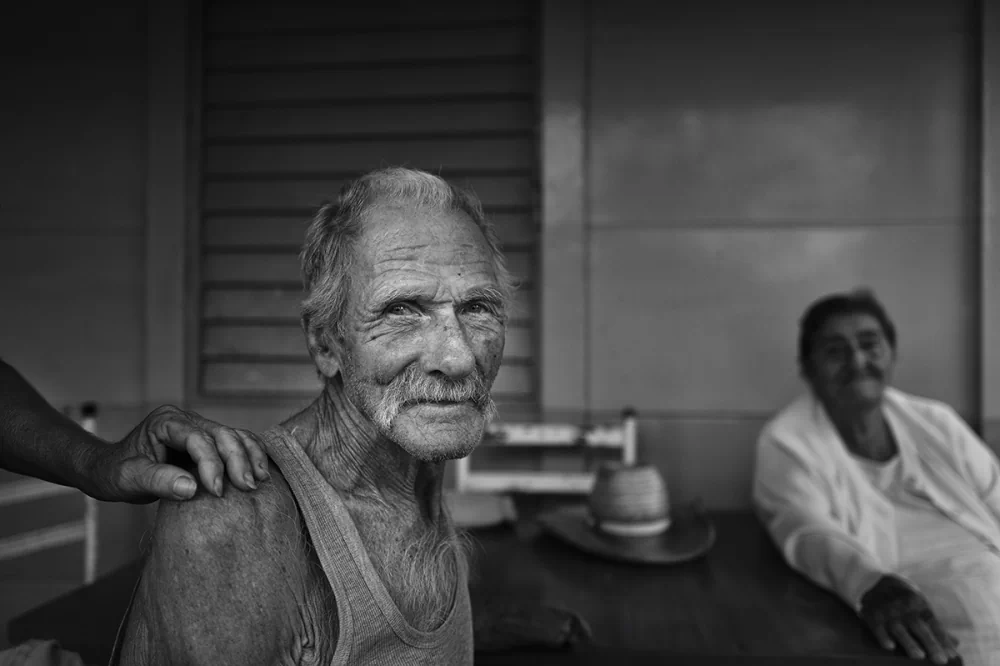
Formally, Aadli favours an economy of means that intensifies emotional resonance. Restrained composition, tonal precision, and her consistent use of baryta paper prints reflect a sustained reflection on photographic materiality and on the image’s capacity to contain lived time. Light, texture, and spatial breathing become structuring elements. The viewer is invited to slow down, to suspend immediate interpretation, and to enter into a contemplative relation with the image.
Aadli’s contribution to contemporary documentary photography lies not in spectacular formal innovation but in the coherent articulation of an ethical and perceptual position. Her practice resists the logic of visual consumption and restores to photography a relational and existential dimension. In an era where images increasingly function as flow, her work insists on a fundamental possibility:
To see can still mean to encounter, and to photograph can still become an act of presence.
About Myriam Aadli
Myriam Aadli (b. 1967, France). Since 1988, Myriam Aadli has developed an independent documentary and street photography practice grounded in a humanist approach that emphasises duration, attention, and relational presence. She studied cinematography at ESEC Paris (1984–1986) and acting at the Actor’s Studio, New York (1986–1988), and worked as a theatre director between 1998 and 2004.
Her photographs have been published internationally in magazines including Géo, B&W World, Inspired Street Photography, and ISP Magazine. In 2025, she received First Prize in Street Photography at the Fine Art Photography Awards, along with distinctions from the Visual Story Photography Awards, Berlin Photo Awards (finalist), Refocus Awards (London), and the Dodho Portrait Awards. She also received 3rd Prize (Professional Category) and two Honourable Mentions at the Mono Awards.
She has exhibited in Paris and will present work at the Rencontres de Chabeuil (France, September 2025) and in Milan (2026). She was represented by Lemarchand Art Consulting. [Official Website]