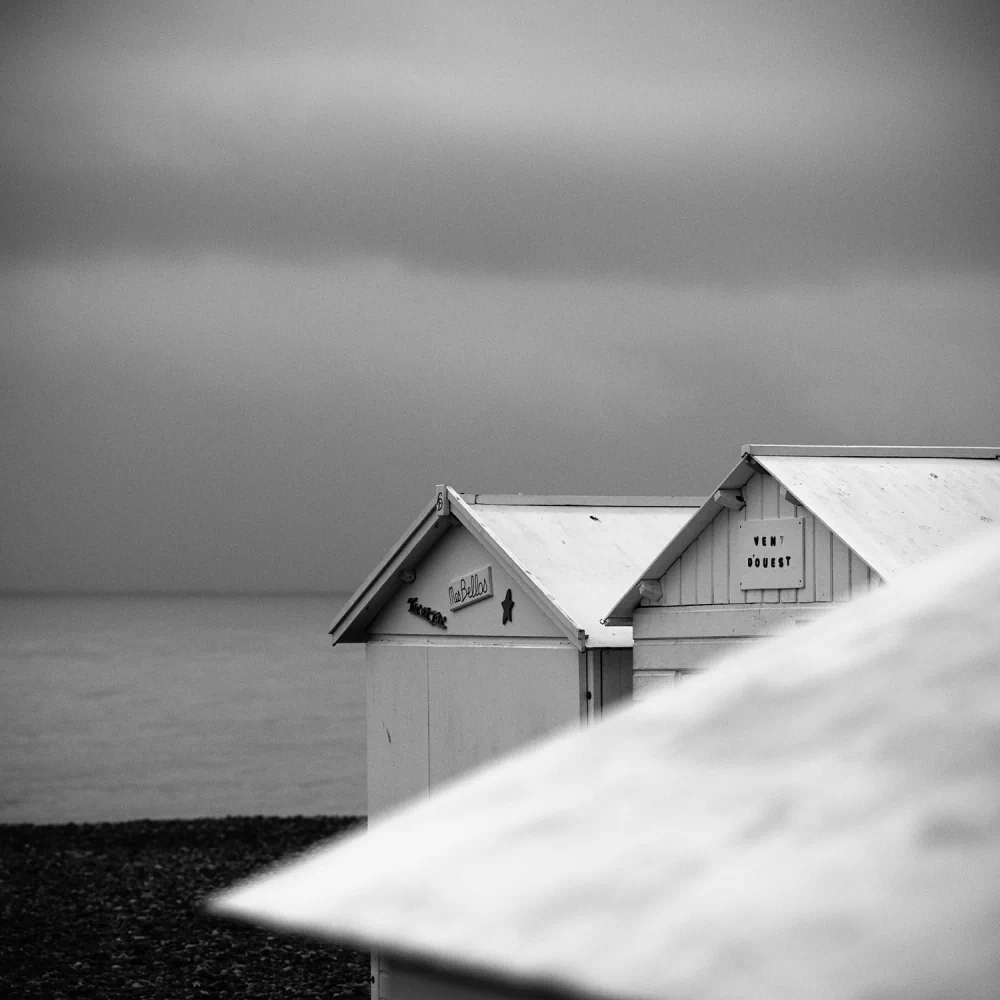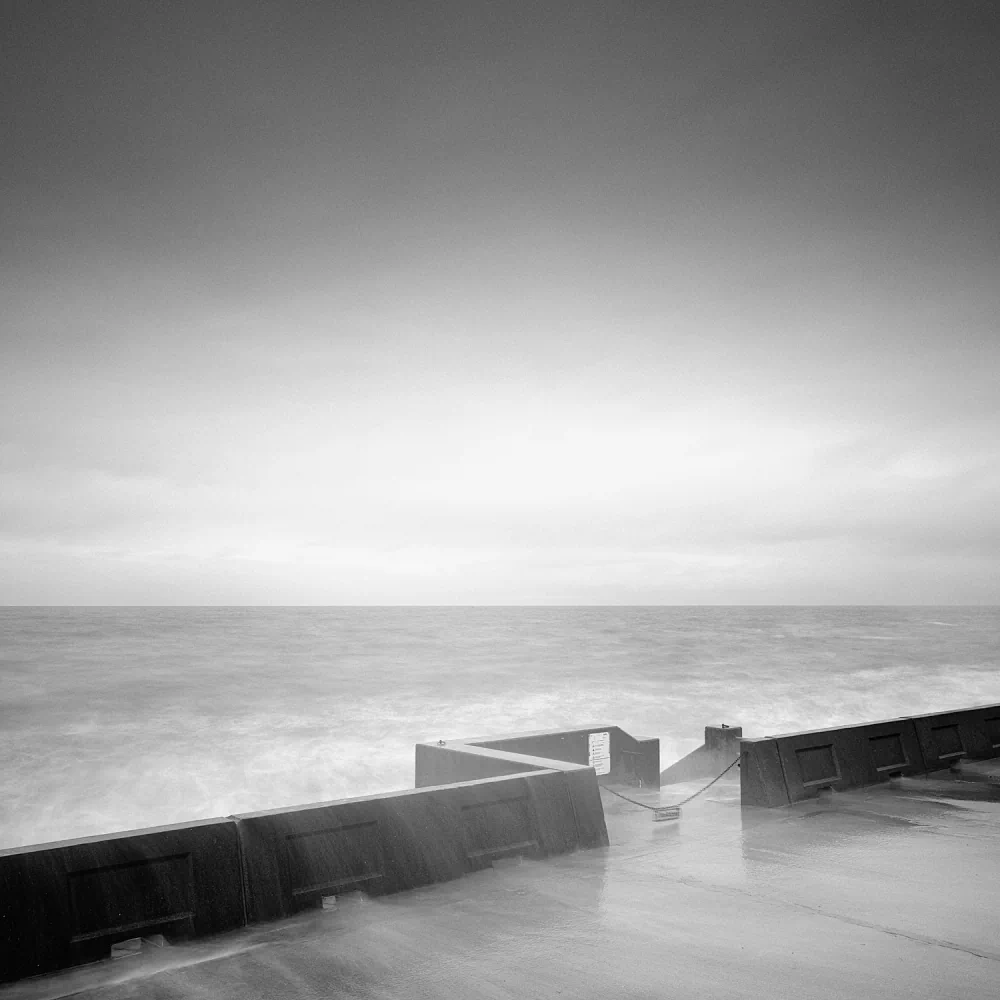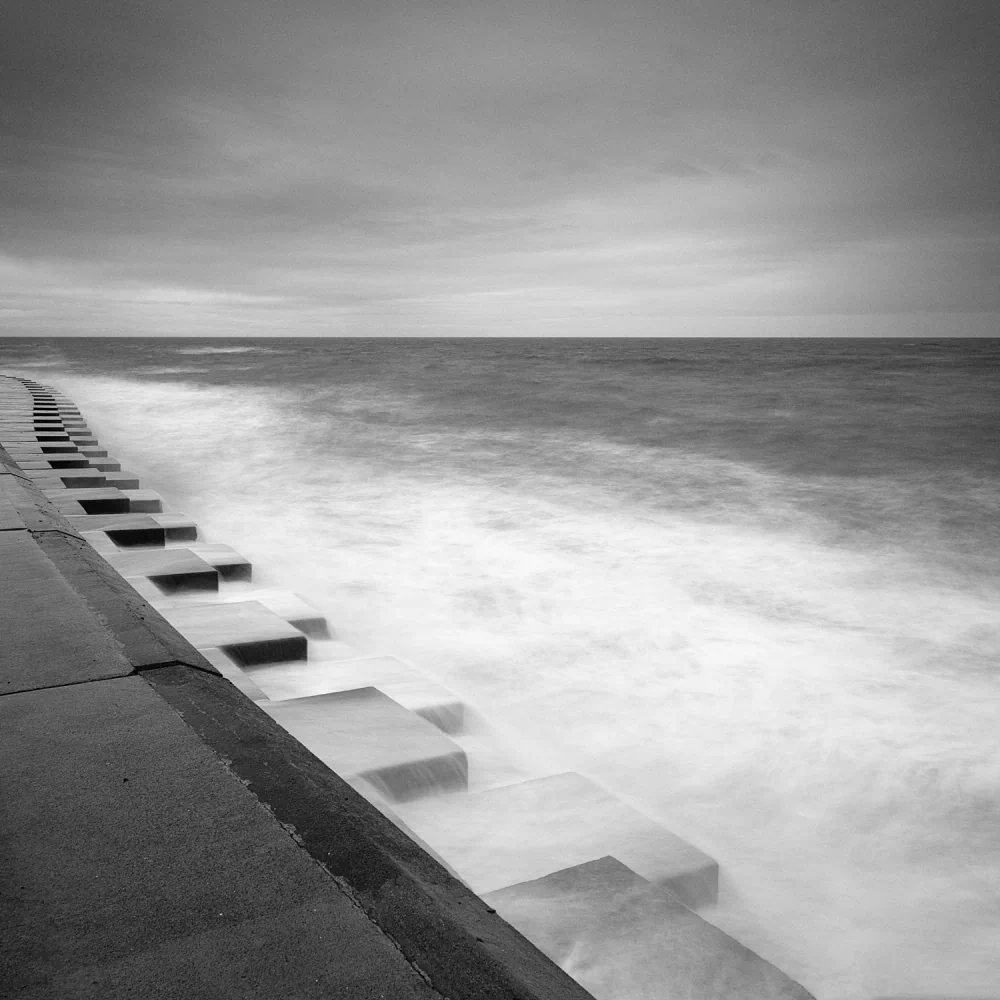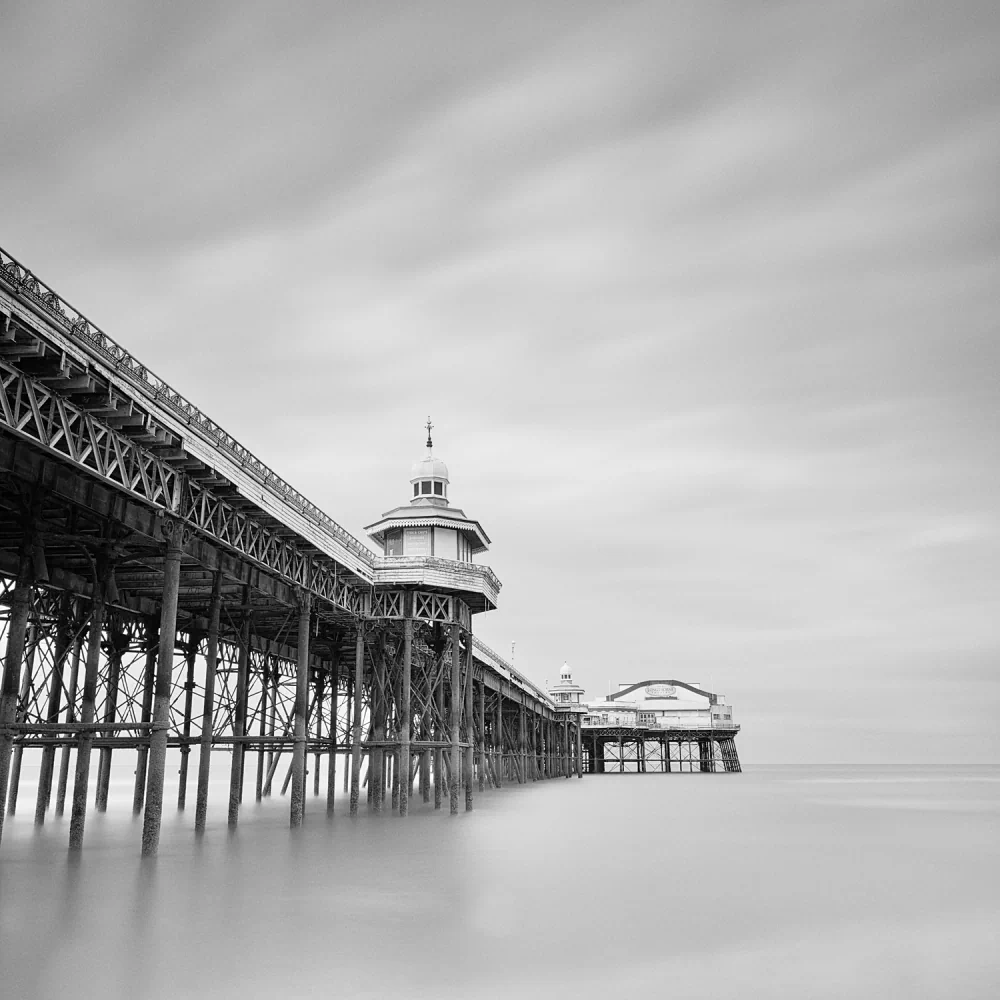


The “By the Sea” project wasn’t an idea that came about overnight.
Looking back, it began 25 years ago, at a time when he was still very much a beginner in photography.
Back then, he lacked a clear vision; he was experimenting with technical aspects and hadn’t yet given any thought to long-term series or thematic projects. Yet one thing remained constant even then: he was constantly drawn to the water.
Perhaps the reason for this lies in the geography of his life. As he lived, and still lives, far inland, the coast was never a destination for a quick afternoon trip. A visit to the seaside was always a journey, a deliberate departure, and therefore always something special. With his growing passion for photography, it was only natural to combine these two aspects of his life. And so, over the decades, this almost organically formed the foundation of his work today.
Over time, his perspective became clearer. He came to understand more and more what the sea means to him and how he wanted to translate that feeling into images. The sea has many faces; it can seem rough, loud, and, on some days, even frightening. But it was above all the gentle, almost meditative side that left a lasting impression on him. When the gaze lingers on the horizon and a sense of infinity sets in, a calmness arises that he seeks to capture in his images. His aim is to make the viewer experience precisely this moment of relaxation and expansiveness.
In this context, the sky plays just as important a role as the water itself. A bright blue, cloudless sky often looks empty and lacks depth. That is why he prefers days when clouds lend structure to the sky. Ideally, the sky acts as an amplifier of the visual impact: it stretches the space outwards and emphasises the vastness of the landscape.
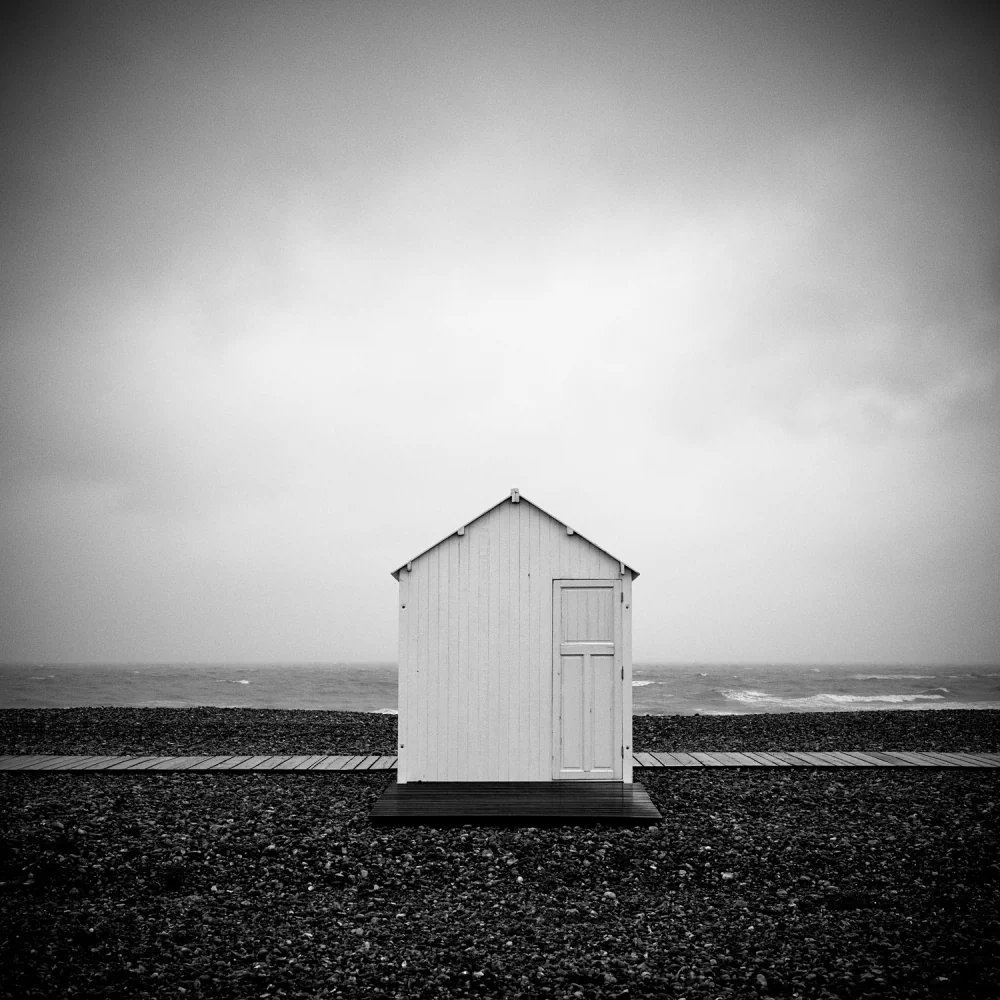
Of course, in practice, landscape photography rarely goes exactly as planned. One can imagine ideal conditions, but the weather follows its own rules. As his time on the coast is usually strictly limited due to travel, he has learned to accept the conditions on the ground. It is about working with the light and atmosphere available, rather than chasing an ideal image that nature has no intention of providing on that particular day.
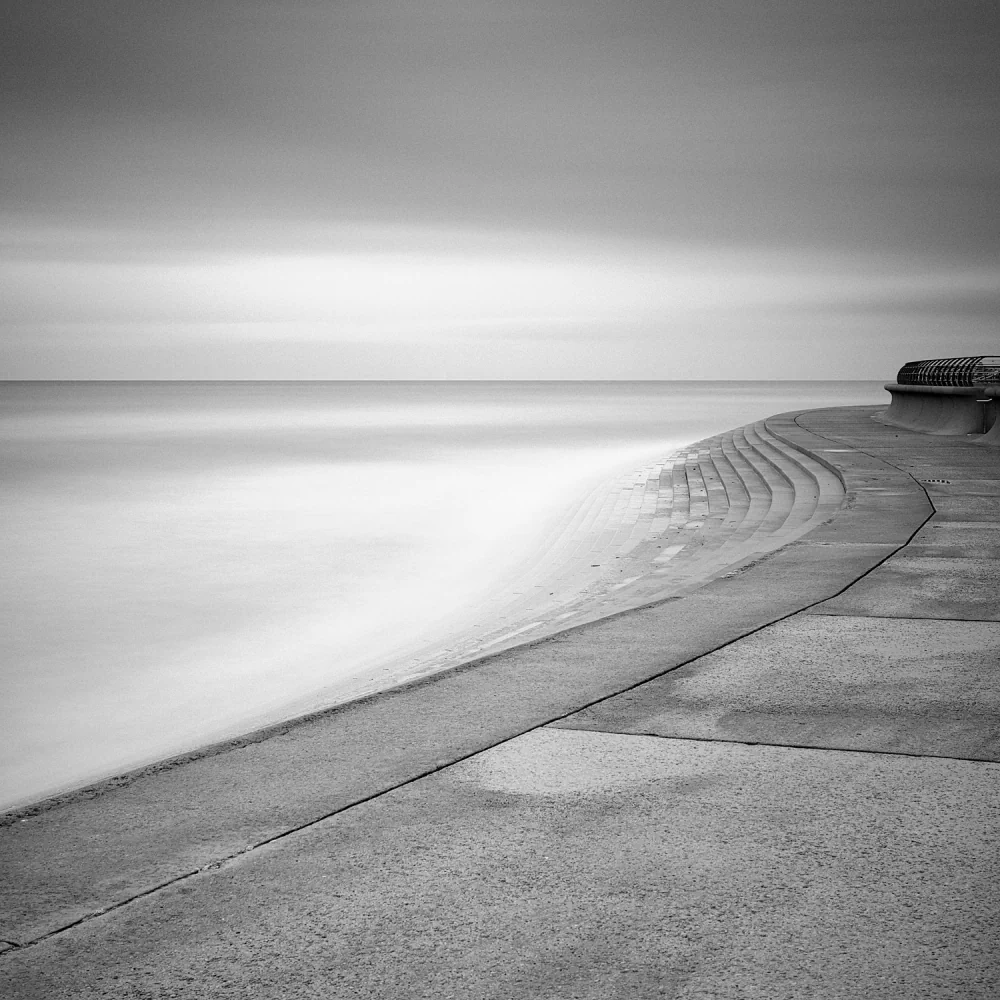
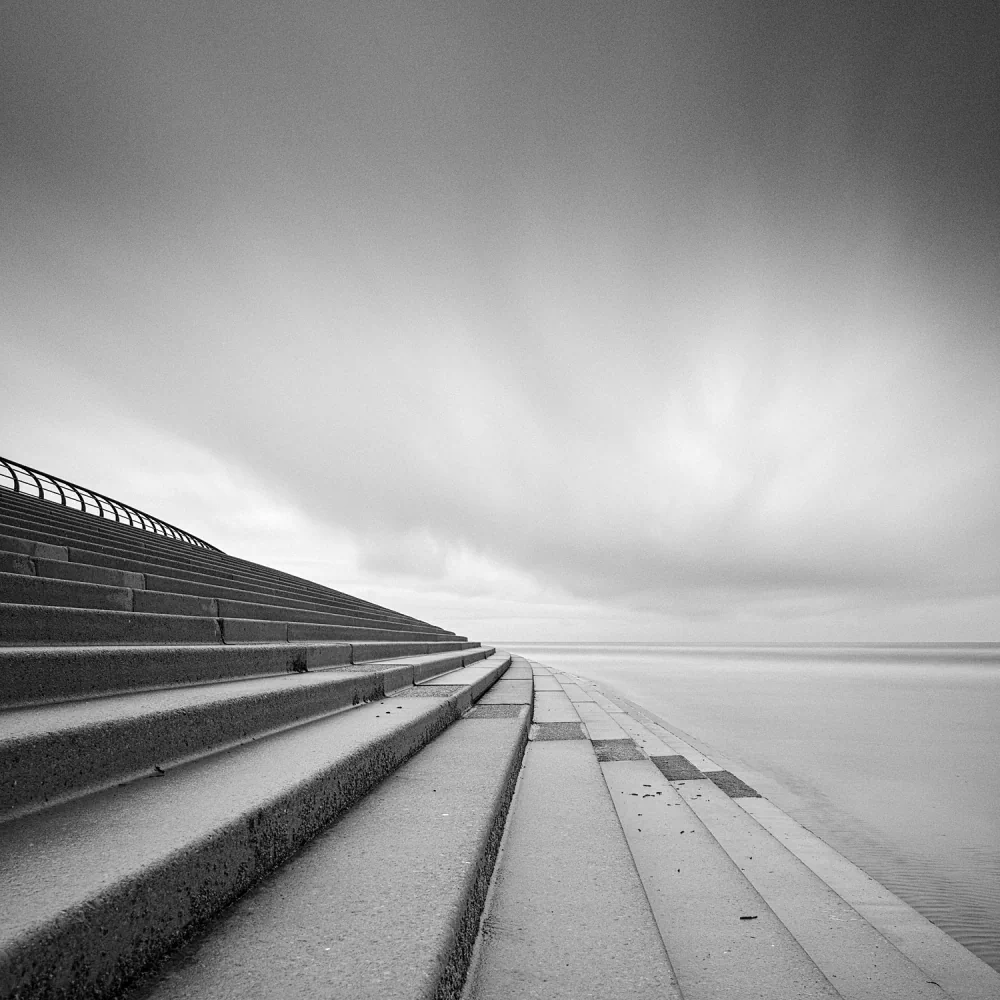
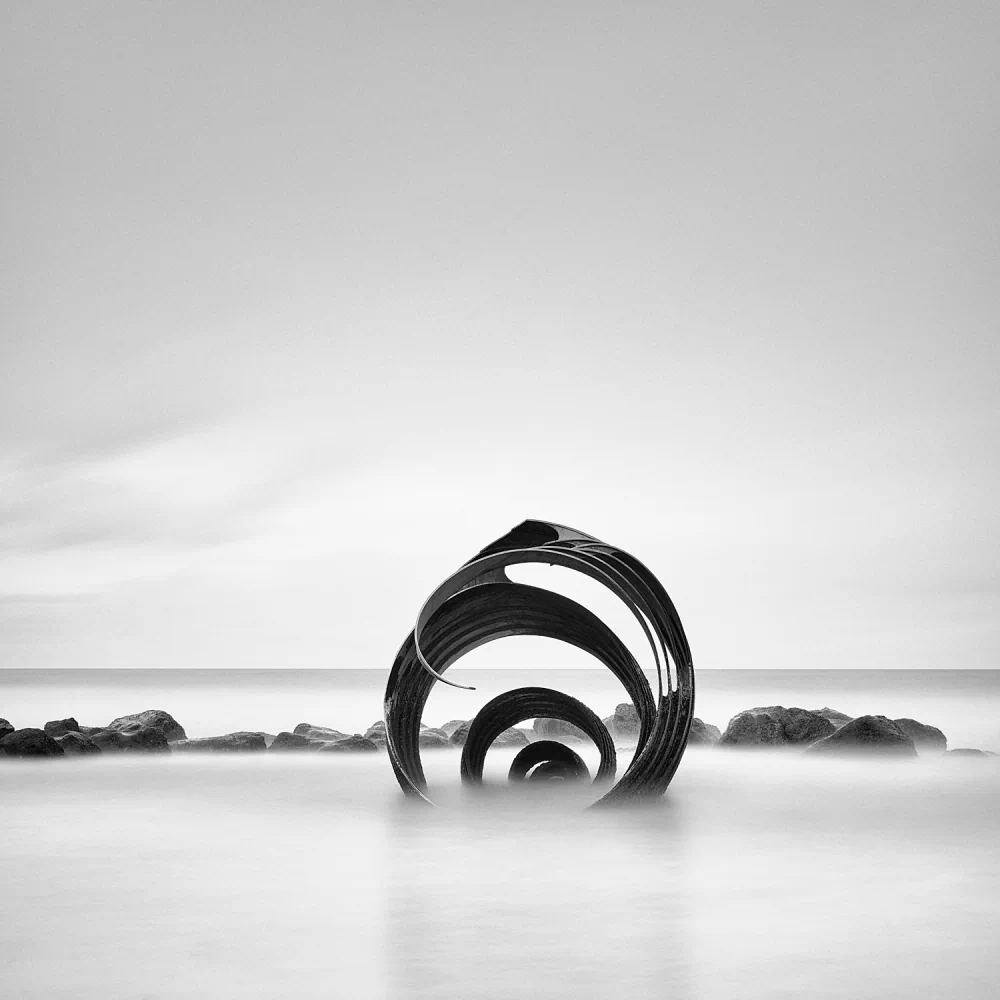
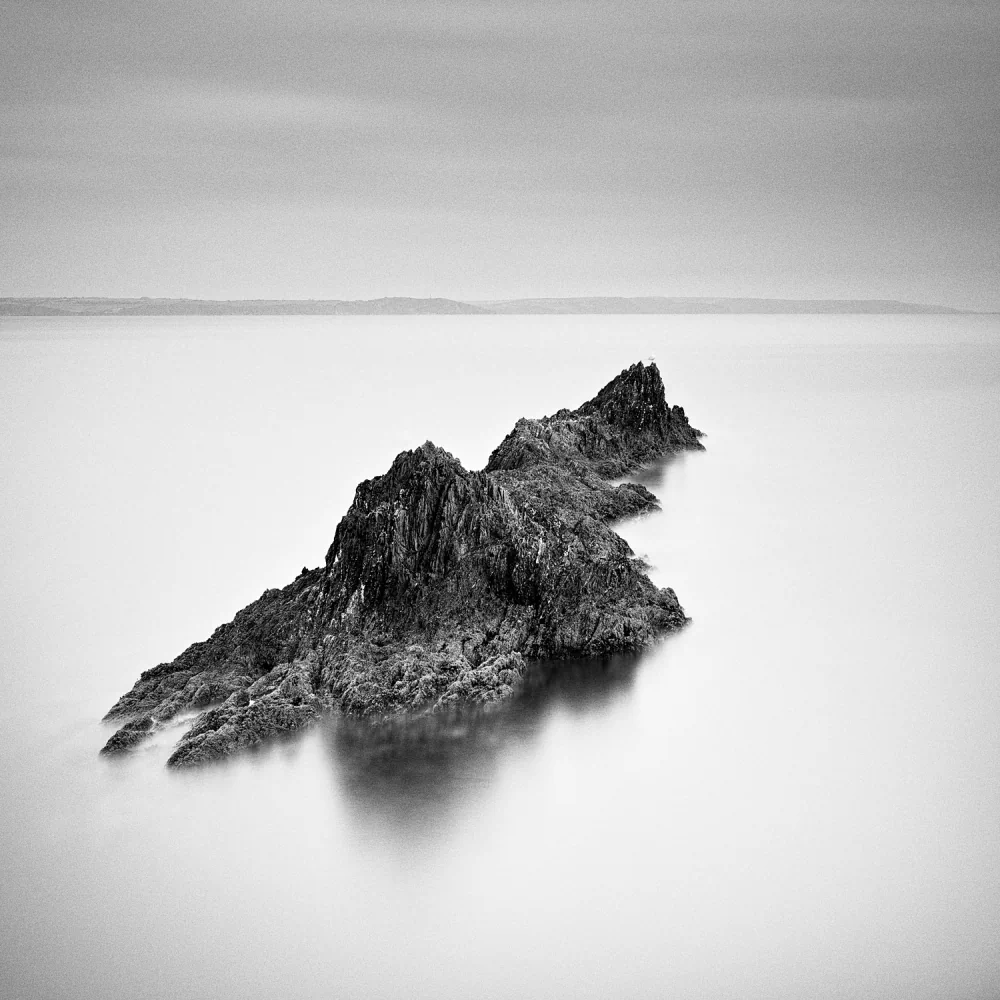
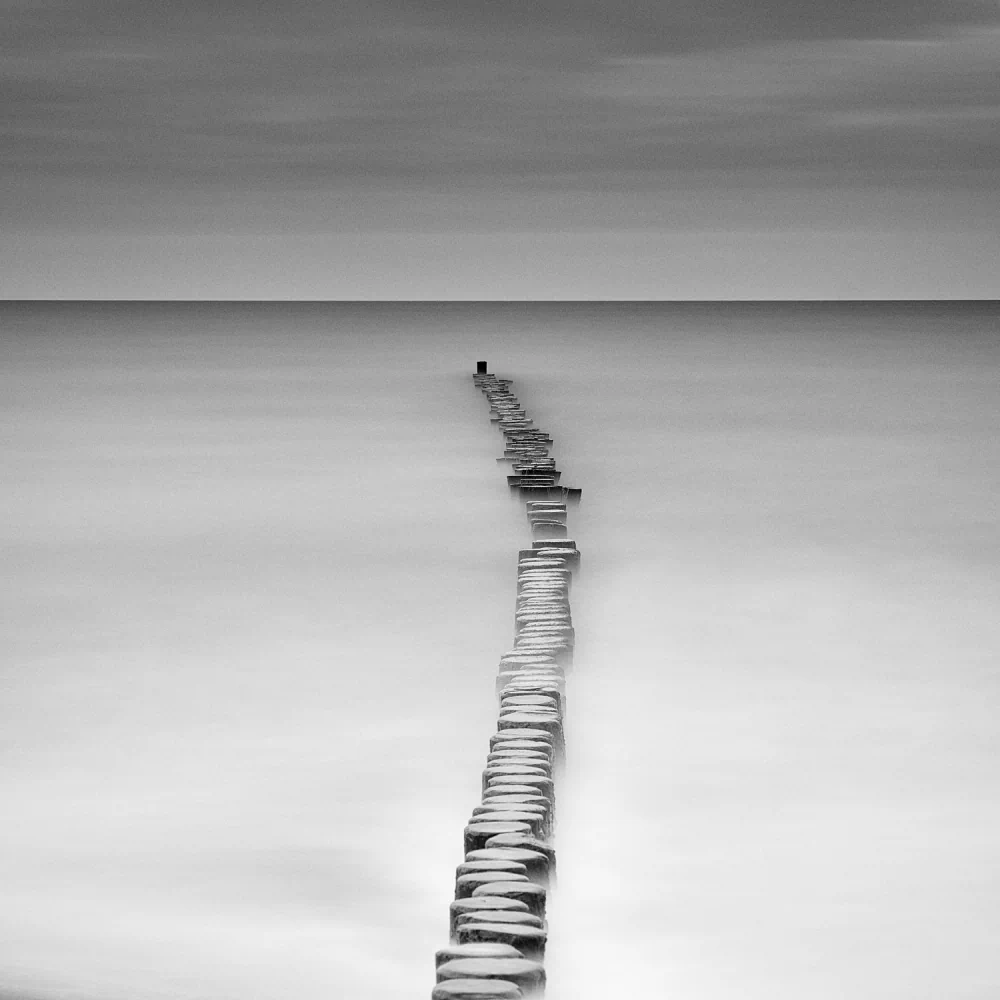
The choice of subjects for the project can best be described by the phrase: “Anything that is lapped by the water.” The spectrum is wide-ranging. Sometimes these are natural elements such as massive rocks standing a hundred metres out in the water, or rugged cliffs against which the surf crashes. Often, however, it is human traces in nature that catch his attention. Piers stretching far out into the sea, or wooden groynes used for coastal protection, provide a strong visual structure.
In his compositional approach, he takes a minimalist direction. He works with plenty of negative space, that is, empty areas within the image, to isolate the main subject and convey the desired sense of tranquillity. The image should be able to breathe; nothing should distract from the central mood.
To achieve this reduction technically, he often resorts to long exposures. Time becomes a creative tool. An exposure time of two minutes is almost standard in his working method, as it smooths the water and transforms fleeting movements into an aesthetic surface. However, when the sea is rougher and he does not wish to eliminate the energy of the waves entirely, he shortens the exposure time to a few seconds. This deliberate adjustment helps to authentically capture the true atmosphere of a stormy day without compromising the project’s minimalist character.
About Ralf Dreier
Ralf Dreier began his photographic journey in the 1970s, initially using his father’s camera. This playful approach later evolved into a personal passion when, in the late 1990s, he discovered photography as a serious form of artistic expression. He was drawn to black-and-white photography from an early age, working with analogue 35mm and medium-format systems and developing and printing the images himself in his own darkroom.
A turning point came at the end of 2006, when Ralf Dreier transitioned to digital technology. He remained committed to black-and-white photography, while the possibilities offered by digital tools allowed him to explore new directions in visual composition. In recent years, his focus has increasingly shifted towards minimalist black-and-white photography, with a clear emphasis on architectural and landscape subjects. His work is characterised by a minimalist visual language, strong structures, and delicate, sharply defined lines. [Official Website]