
AI can be used in many ways that do not necessarily involve creating photographic images. But even when AI is used to produce images that appear photographic, we are not actually engaging in photography. As a photographer, I might say that when I generate photographic-looking images through AI, I am creating them using my eye and my photographic mindset. The result may resemble a photograph, but it is not one, because the “physics” involved are not based on light.
Consequently, it is not photography. However, we must acknowledge and become aware that AI is rewriting the universe of images and their meaning.
This does not mean that photography is not, or will not be, strongly influenced by this new way of seeing and creating. It certainly is, and it will be. Two parallel universes may emerge, but photography will inevitably have to relinquish territories that once belonged to it, without necessarily acquiring new ones. It will have to make space for new ideas and find a way to persist. What is certain is that there is a before and an after: the future will not be a smooth, controllable evolution of the past, but a sudden yet illuminating schism. Photography means knowing how to look, and a gaze will always be necessary, especially one’s own.
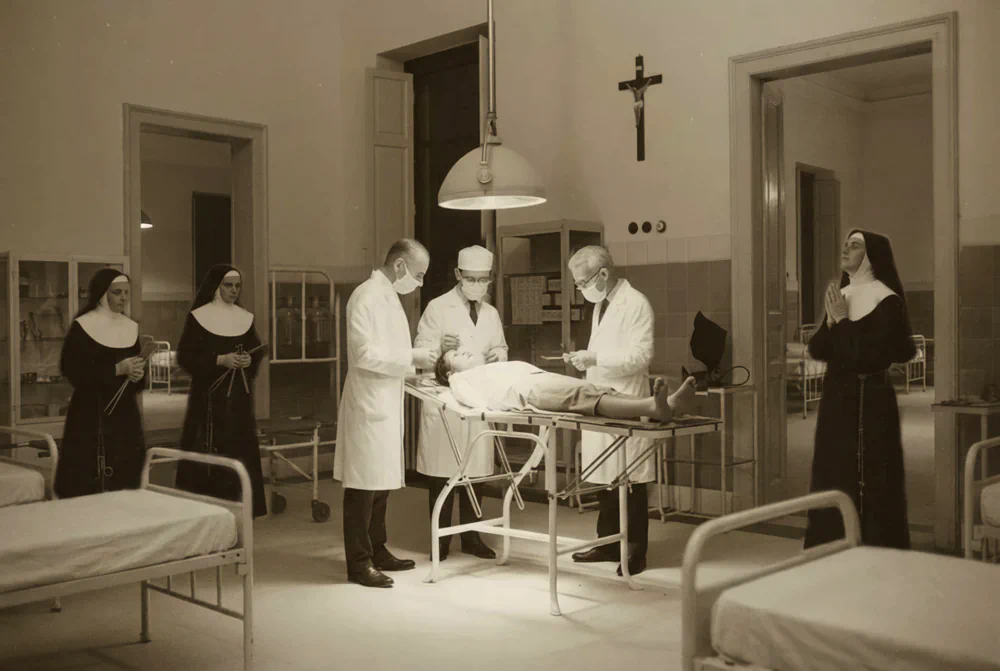
What interests me most, however, is not whether or how photography will survive over time and space, but rather how to use AI as a creative tool to expand my visual capabilities and express, through images (photographic if needed, but not necessarily), concepts and messages that I cannot convey through photography alone. One might argue, “Since you are neither a great nor an average photographer, you are using AI to deceive yourself into thinking you are.” That is not the point—and even if it were, what harm would it do? Why deny someone who has not acquired certain skills the chance to develop others that allow them to express their feelings? I myself found photography as a means of expression, even though I lacked the talent to paint or draw.
Today, I believe I carry two souls within me: souls that nourish and communicate with each other, without ever triggering an internal civil war. They coexist and enrich me more than either creative tool could have done alone.
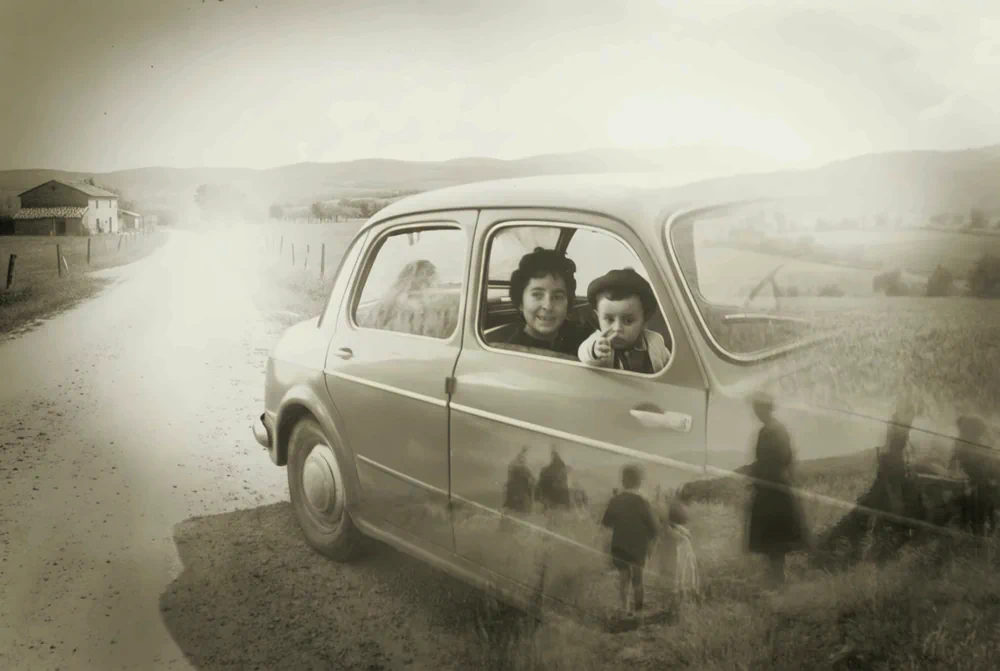
However, there is one thing I believe is necessary in a situation like mine: defining a map that helps me understand the territory in which I will move, along with criteria that allow me to trace paths within that map. This is far from simple, especially in the current context. On one side, there is the astonishing speed at which the AI universe evolves, constantly offering new horizons that make it difficult to define the limits of such a map. On the other, there is the stigmatization and ostracism that the traditional photographic world often unloads on those who use AI to generate photographic images—marking territory, clinging to acquired privileges, and holding onto a nostalgic past that clearly no longer exists.
Since it is not yet possible to fully define a map or reliable navigation criteria, the only way I can conceptualize the dualism between photography and AI-generated photographic images is to attempt a list of statements, and then, over time (not now), look for a broader structure or meaning.
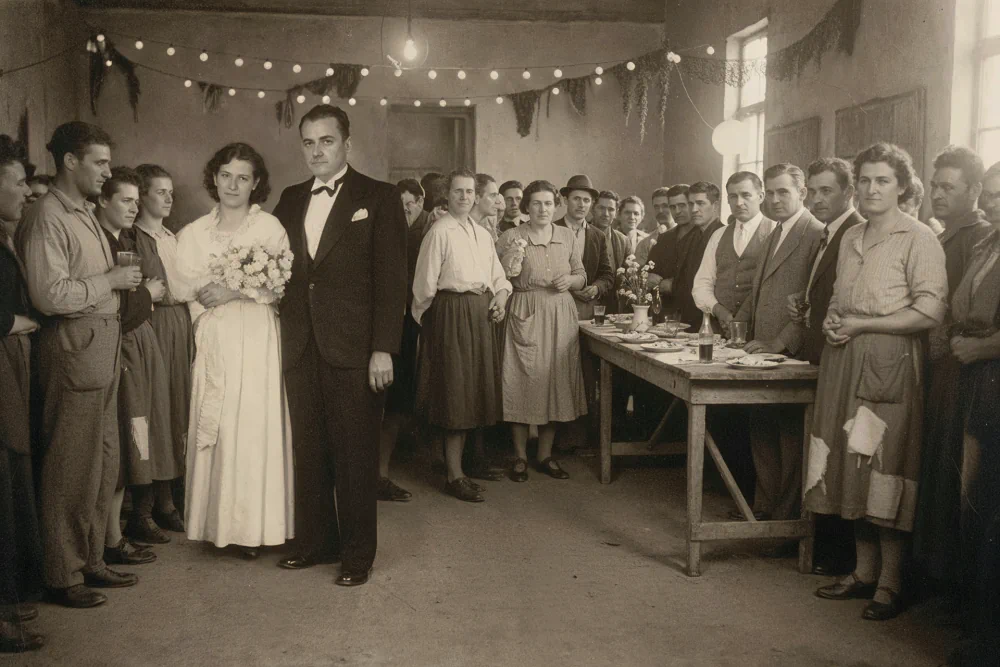
The basic principle, however, is that AI allows us to instantly visualize something we imagine; yet how we do it and the result we obtain, or rather select, depends on how educated our gaze is and on our essence as human beings.
The same principle applies to AI-generated images that the Italian writer and photographer Giorgio Rossi used to define photography itself. Rossi said, “Photography is a mirror with memory,” highlighting photography’s ability to record and preserve fragments of reality, while simultaneously acting as a mirror of the person who creates the image.
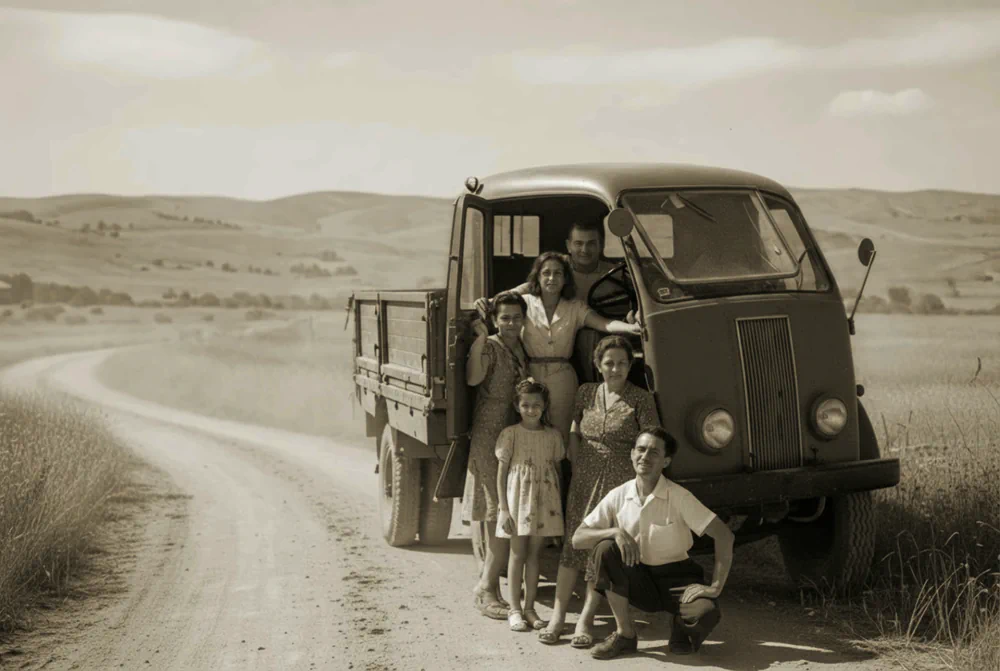
The same is true for AI-generated images. If we merely generate them, the algorithm will provide images that may be aesthetically pleasing but lack authenticity; in that case, we cannot—and should not—feel they truly belong to us. We must challenge the algorithm, forcing it to produce something that carries our own trace, something that visualizes what we are imagining or feeling. It is easy to recognize when we reach this stage, because we experience a sense of inner fulfillment.
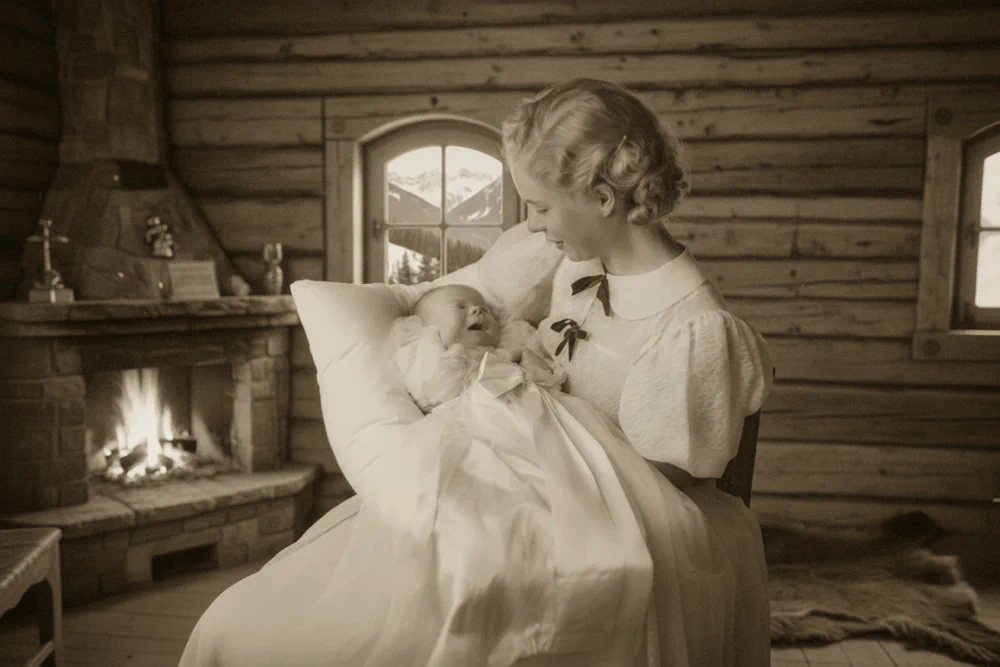
But we must be careful not to confuse ourselves, especially at the beginning, during the infatuation phase with AI. Early on, the results AI offers can easily make us lose our bearings. We might think we have captured an essence without truly having done so, dazzled by the image’s aesthetic beauty or by a surprisingly literal interpretation of what we asked to generate. The risk is silencing our own inner voice. We should always ask ourselves: Do these AI-generated images represent me? Do they belong to me?
I will now attempt the list of statements about AI mentioned earlier.
AI makes it possible to:
- Transform looking into imagining
- Create something that cannot be achieved through photography alone
- Create something that does not exist and that we have never seen
- Visualize personal sensations and one’s own way of feeling
- Rewrite ways of seeing
- Explore the space between reality and fiction; identify cracks in reality and locate the point where reality transforms
- Replace reality with a “magical” sense
- Enable another kind of perception, allowing us to represent the invisible—what we think and imagine
- Bind words to images
Perhaps, then, the question is not whether what emerges from AI is or is not photography. Today, the real issue may be different: how to inhabit a space that does not yet have a name, without losing one’s own voice.
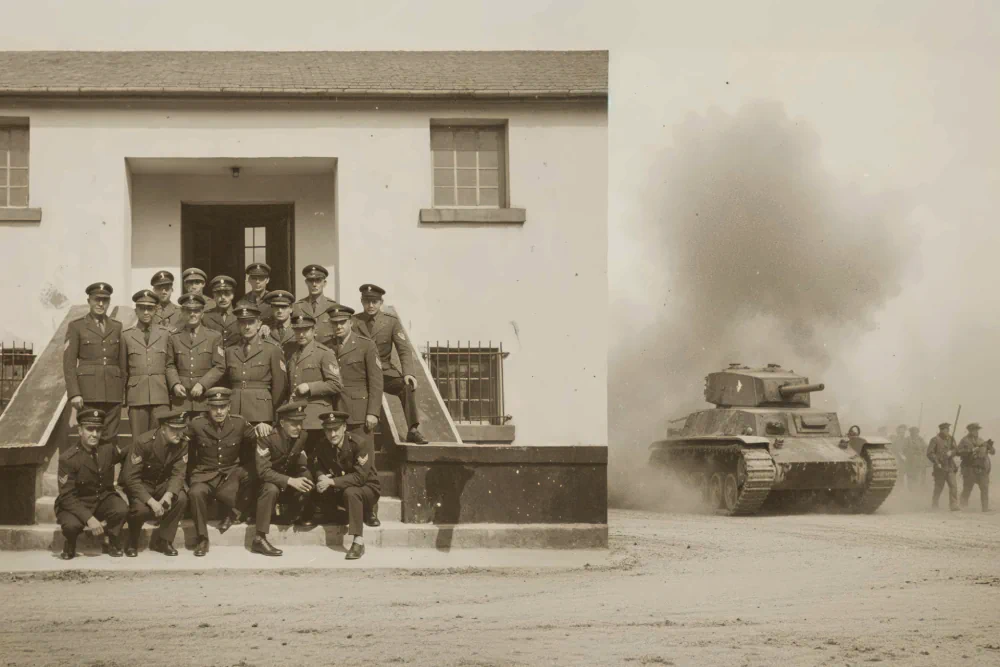
AI does not replace the gaze. It puts it under test. When facing a generated image, we can no longer say, “This happened in front of me.” We can only say, “This belongs to me”, or not. And that is a new responsibility, perhaps more radical than the one photography has always demanded.
If photography is a mirror with memory, then AI-generated images are a mirror without memory, something that can reflect anything. Without an educated gaze and deep listening to what we truly feel, the image remains a purely aesthetic exercise, a glossy surface that holds nothing. With a conscious gaze, however, it can become a place of revelation, an authentic gesture, a fully human expressive act.
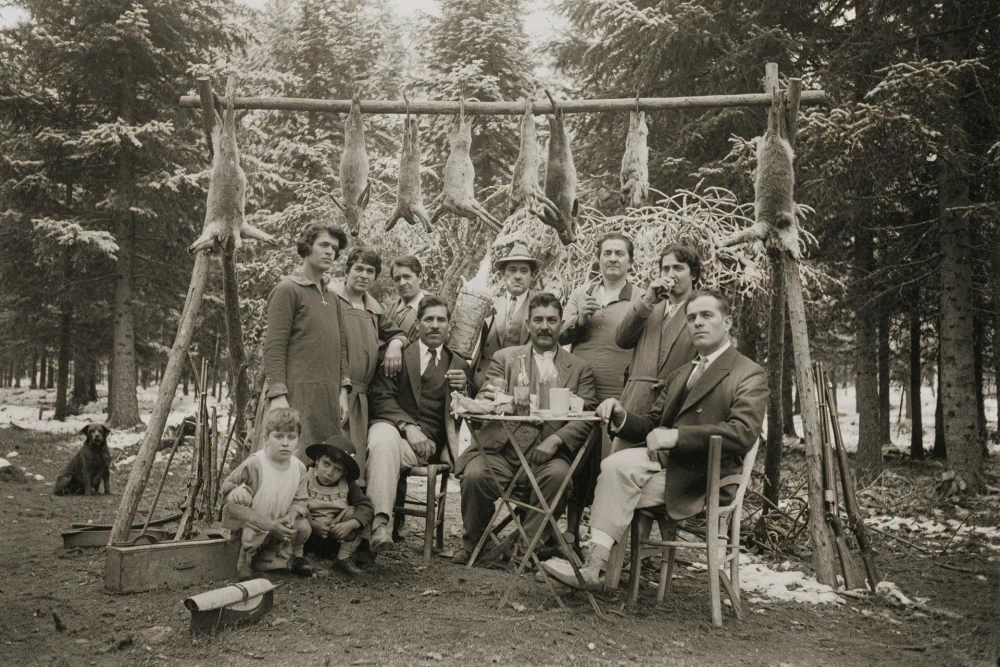
Perhaps the future will not require choosing between photography and generated images but learning how to let them converse without confusing them, allowing each to illuminate the limits of the other. Carrying two souls within oneself is not a contradiction, it is a necessary form of complexity… and I’m going down this path.
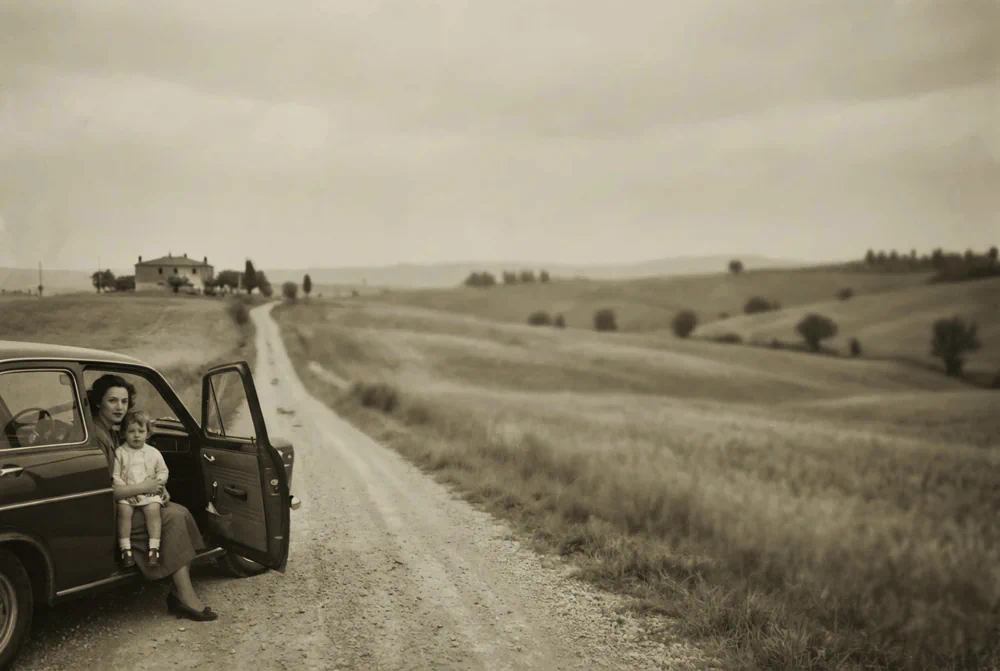

Photosatriani
I am a curious of life with idealistic tendencies and a fighter. I believe that shadows are the necessary contrast to enhance the light. I am a lover of nature, of silence and of the inner beauty. The history of my visual creations is quite silent publicly but very rich personally, illuminated by a series of satisfactions and recognitions, such as: gold and silver winner in MUSE Awards 2023; Commended and Highly Commended in IGPOTY 2022/19/18, honorable mention in Pollux Award 2019; selected for Descubrimientos PhotoEspaña (2014), Photosaloon in Torino Fotografia (1995) and in VIPHOTO (2014). Winner of Fotonostrum AI Visual Awards 2024. Group exhibitions in: Atlántica Colectivas FotoNoviembre 2015/13; selected for the Popular Participation section GetxoPhoto 2022/20/15. Exhibitions in ”PhotoVernissage (San Petersburgo, 2012); DeARTE 2012/13 (Medinaceli); Taverna de los Mundos (Bilbao); selected works in ArtDoc, Dodho, 1X. A set of my images belongs to the funds of Tecnalia company in Bilbao, to the collection of the "Isla de Tenerife" Photography Center and to the Medicos sin Fronteras collection in Madrid. Collaborator and interviewer for Dodho platform and in Sineresi magazine [Website]