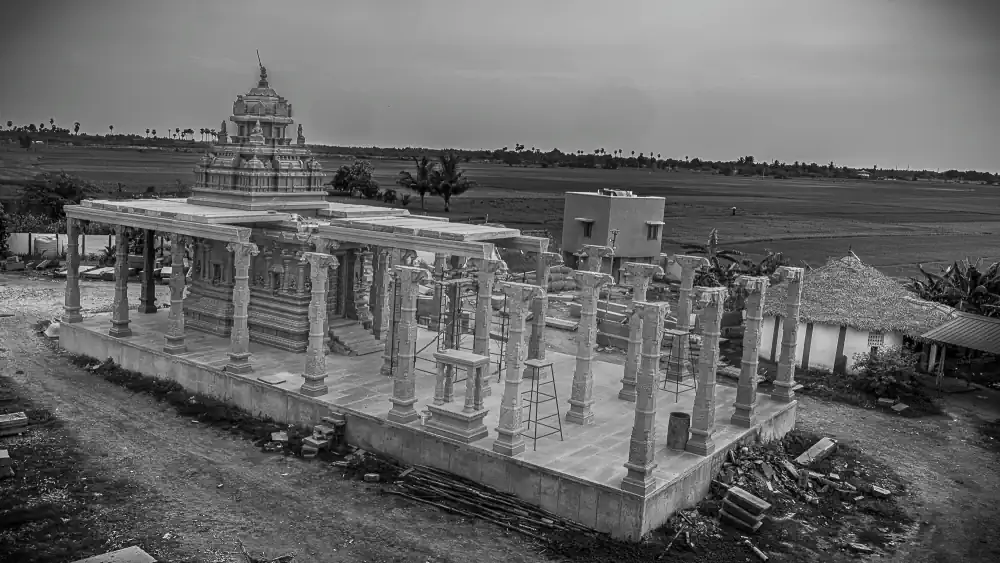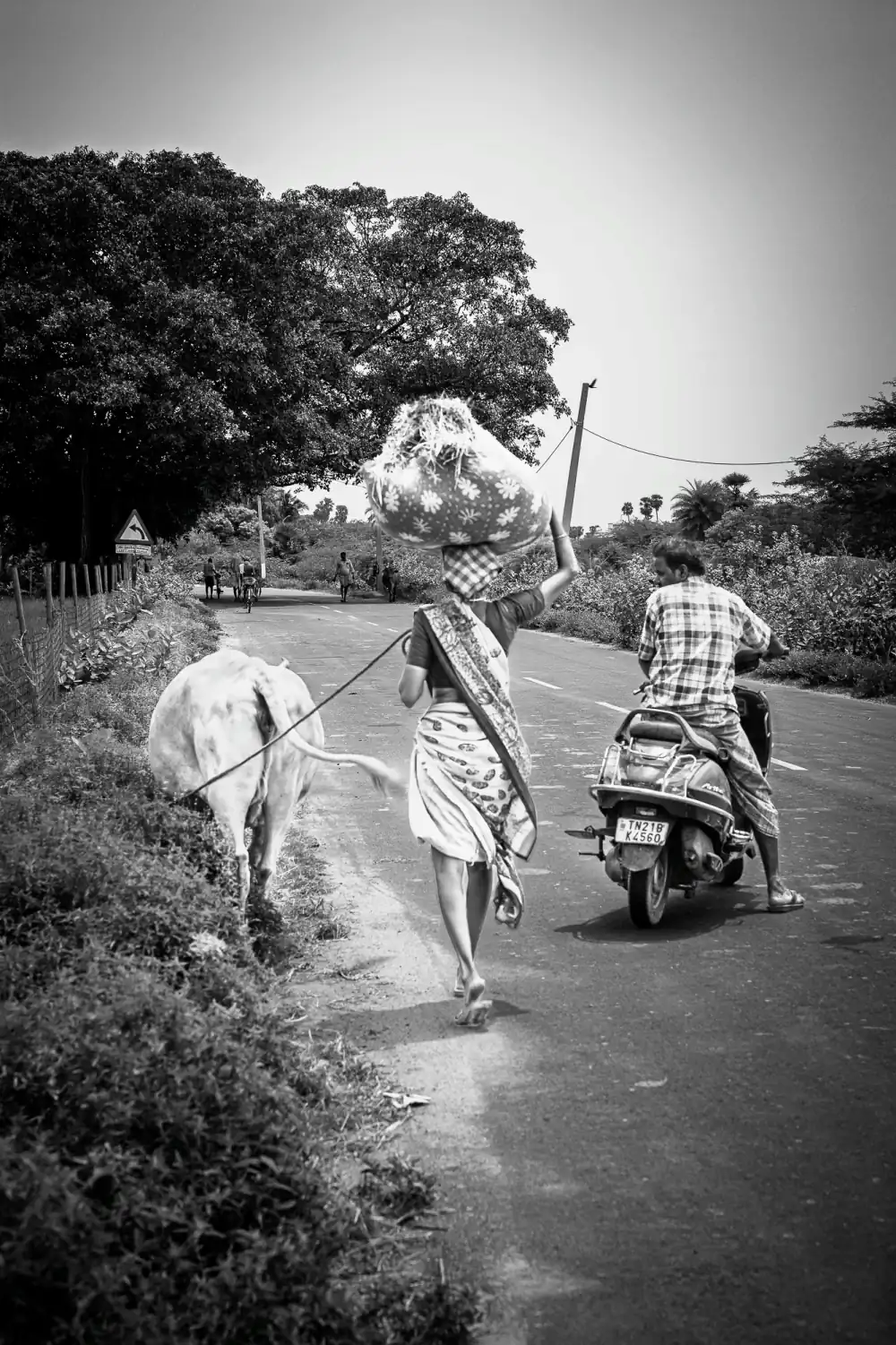

Near the historic town of Kanchipuram in India, a small village surrounded by farmland is bringing an ancient temple back to life.
Believed to have been buried for over a millennium, the temple is now being restored by local people and volunteers using the same type of resonant black stones (stones that make a sound when tapped) found in early South Indian architecture.
The temple is dedicated to Sage Agathiyar (or Agastya) Maharishi and his wife, Lobamudra, figures honoured for their contributions to Siddha medicine, yoga, and the belief that wisdom belongs equally to both men and women. The sculptures reflect values of compassion, balance, and service to humanity.
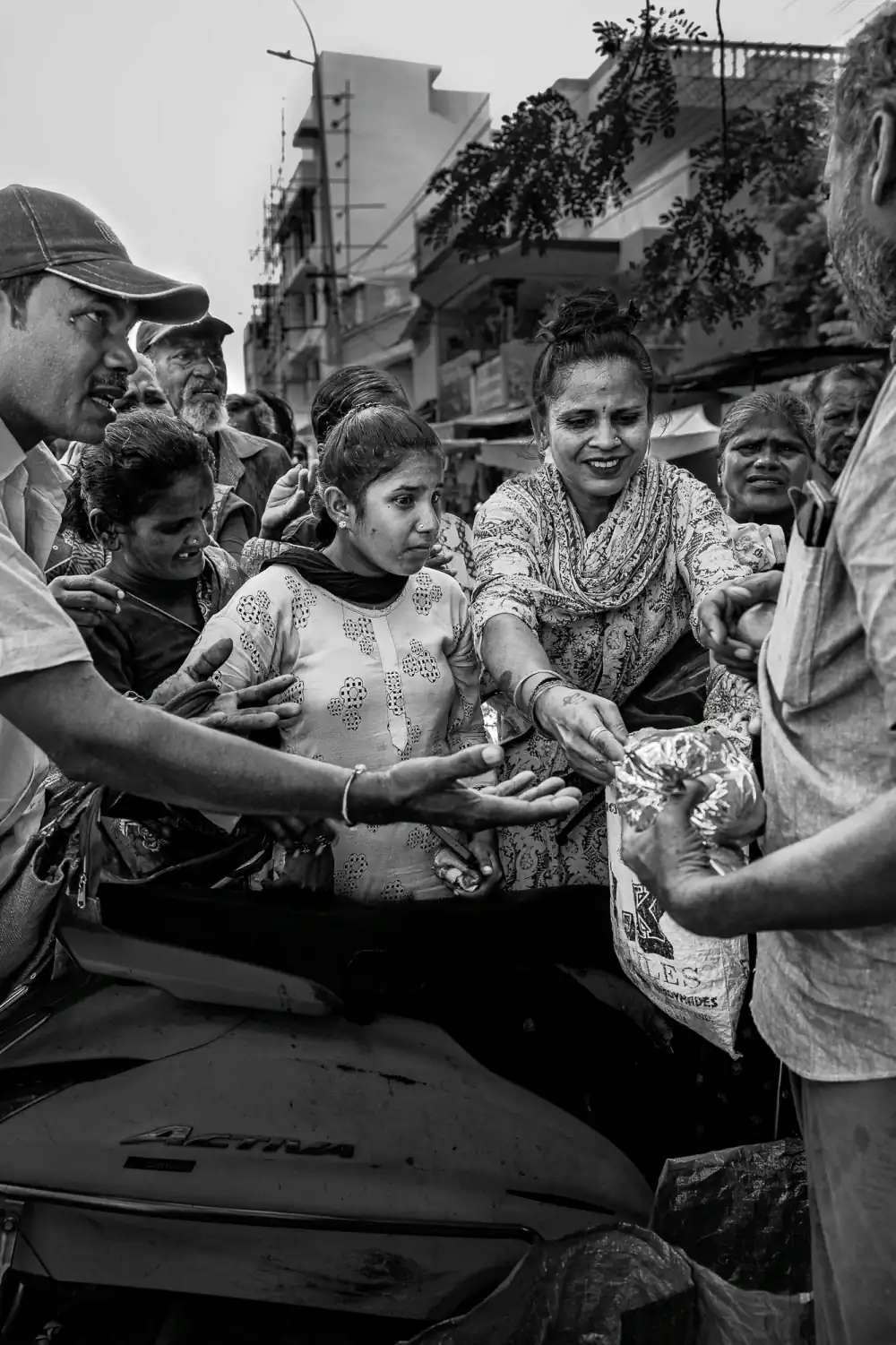
However, this story is not mainly about the temple’s reconstruction or its history. It is about the daily feeding program that takes place within its grounds. Over a century ago, the poet Bharathiyar said, “If there is no food for even one person, we shall destroy this world.” Sadly, despite modern advancements, the number of people suffering from hunger today still shows how serious the situation is.

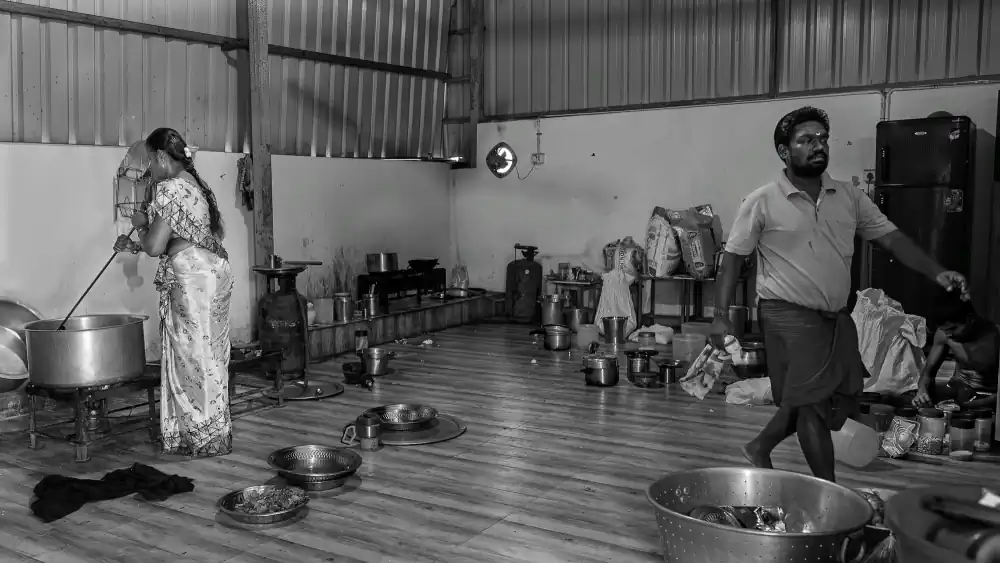
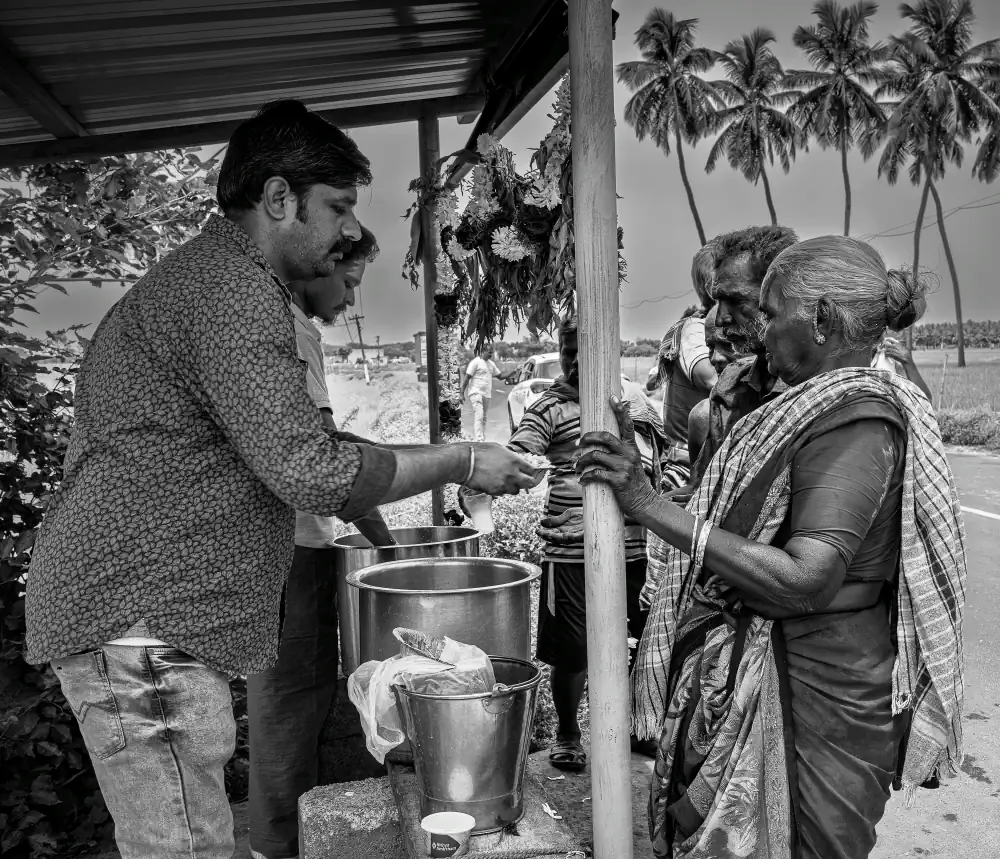
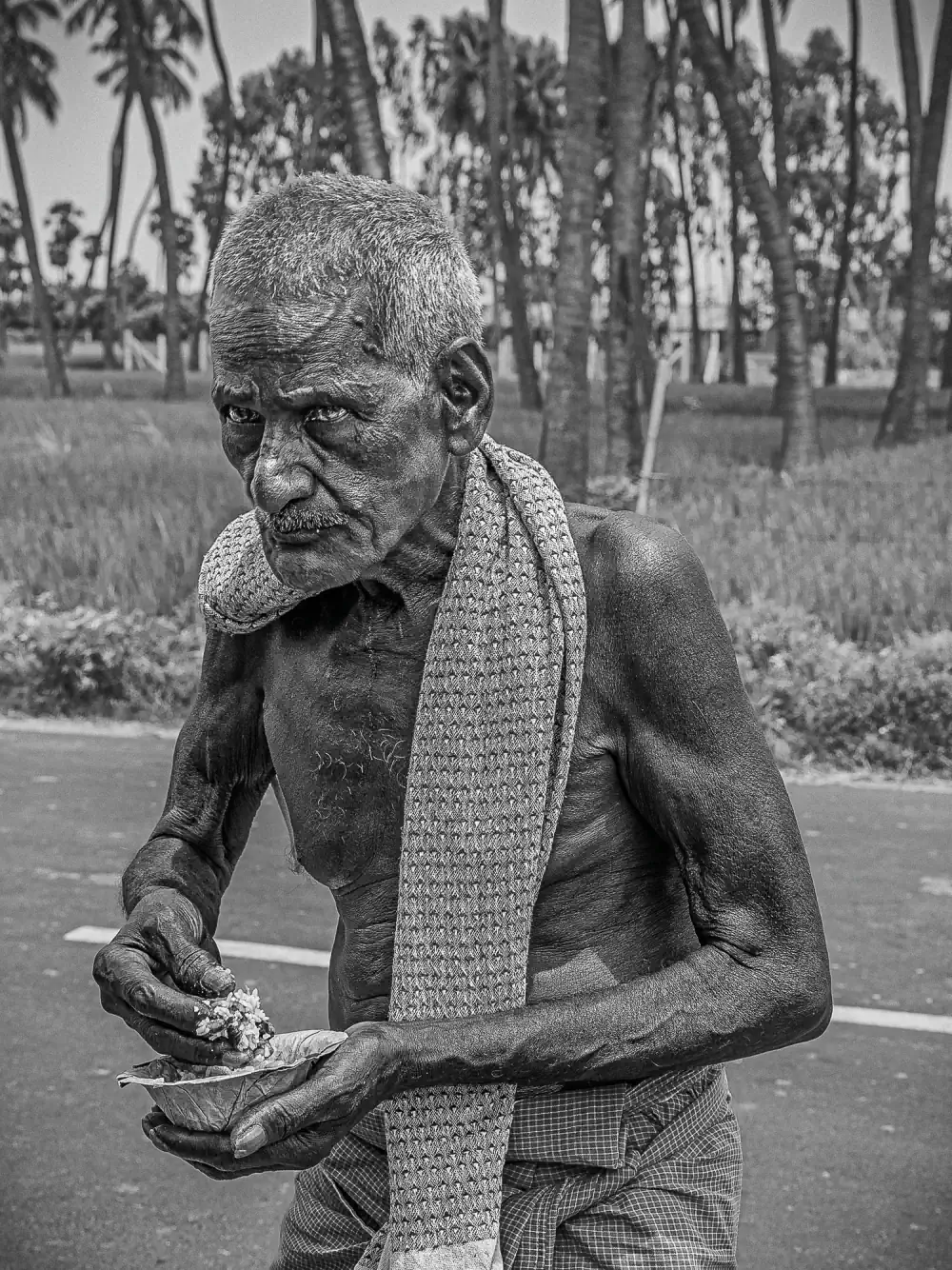
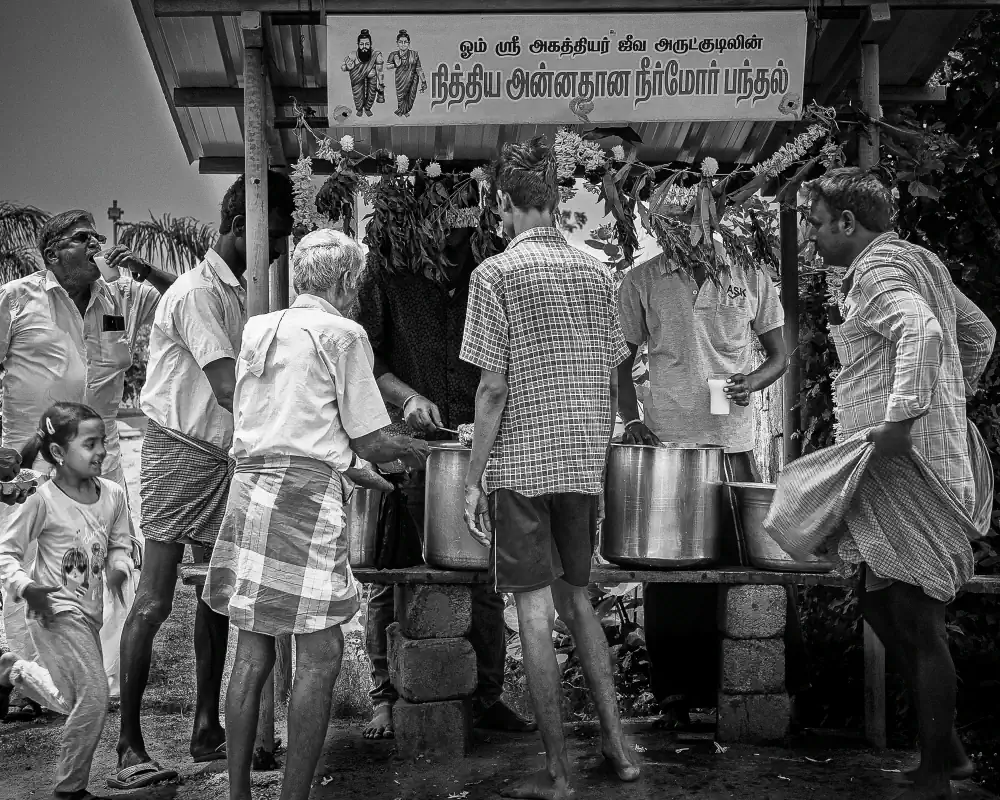
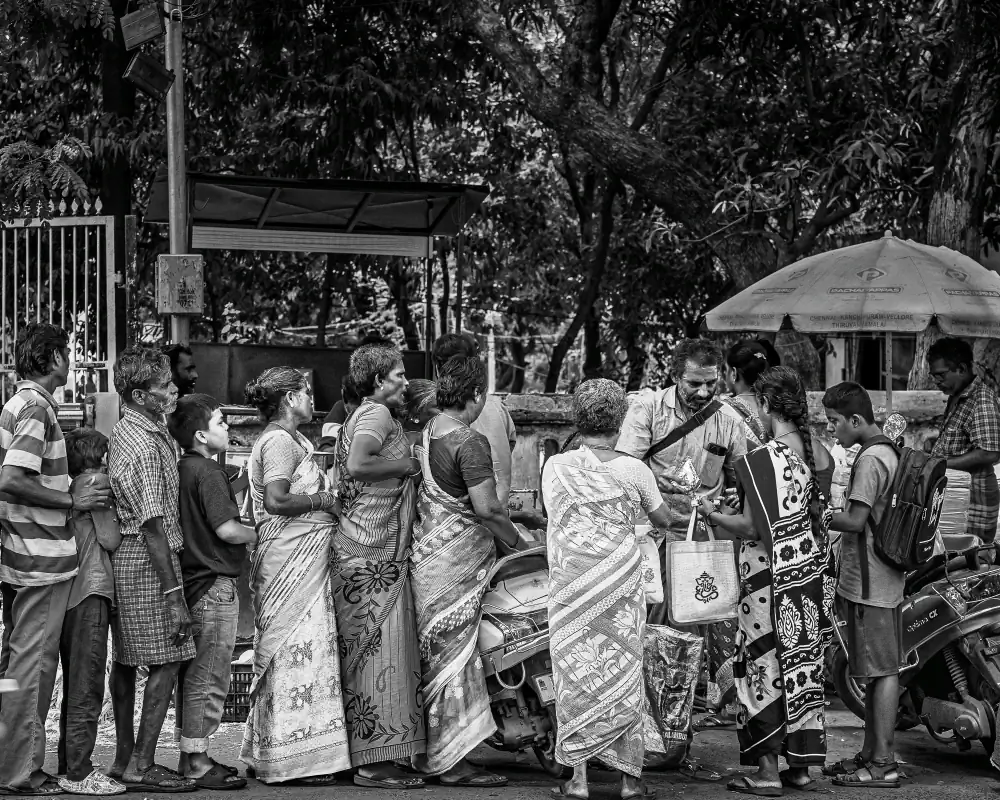
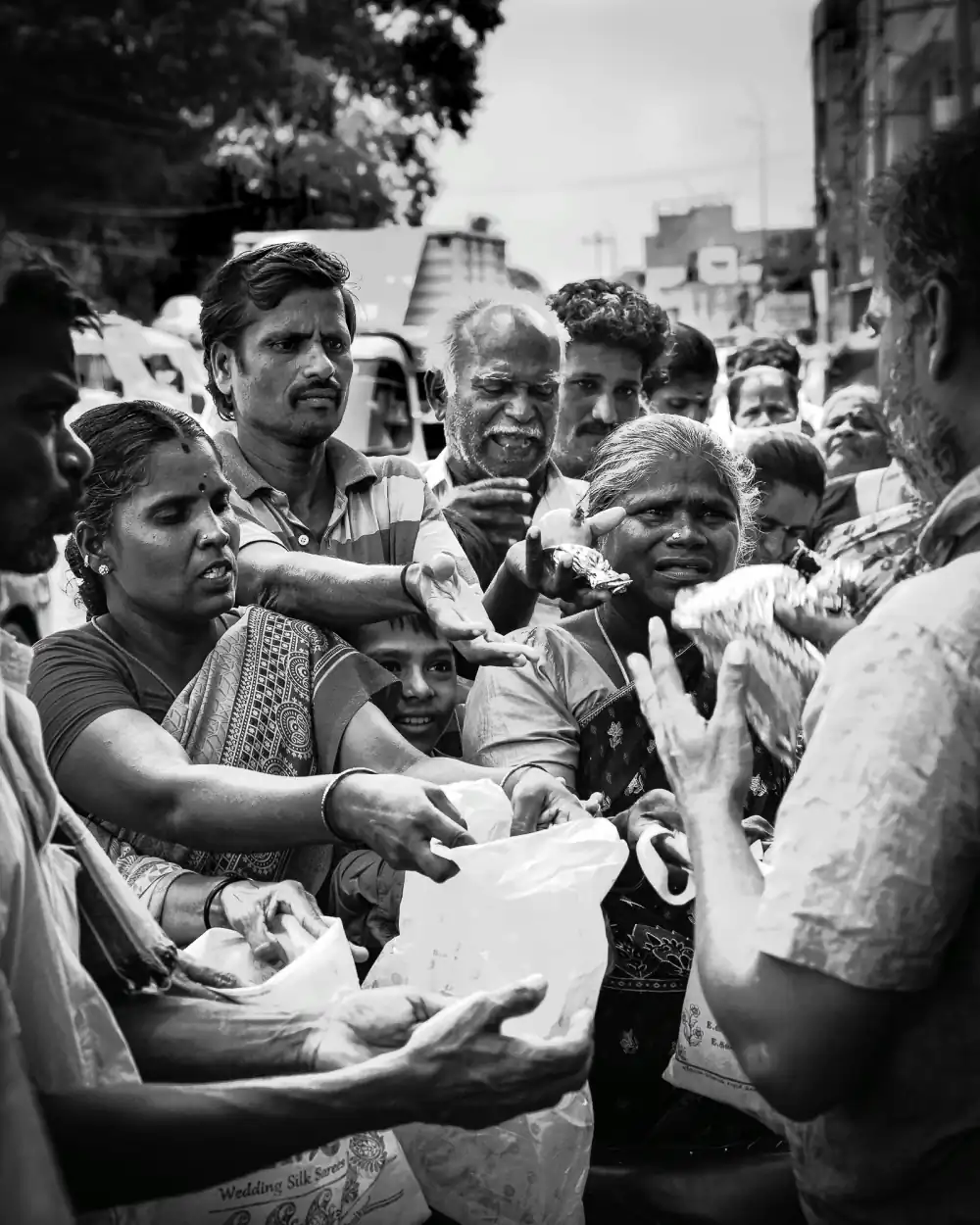
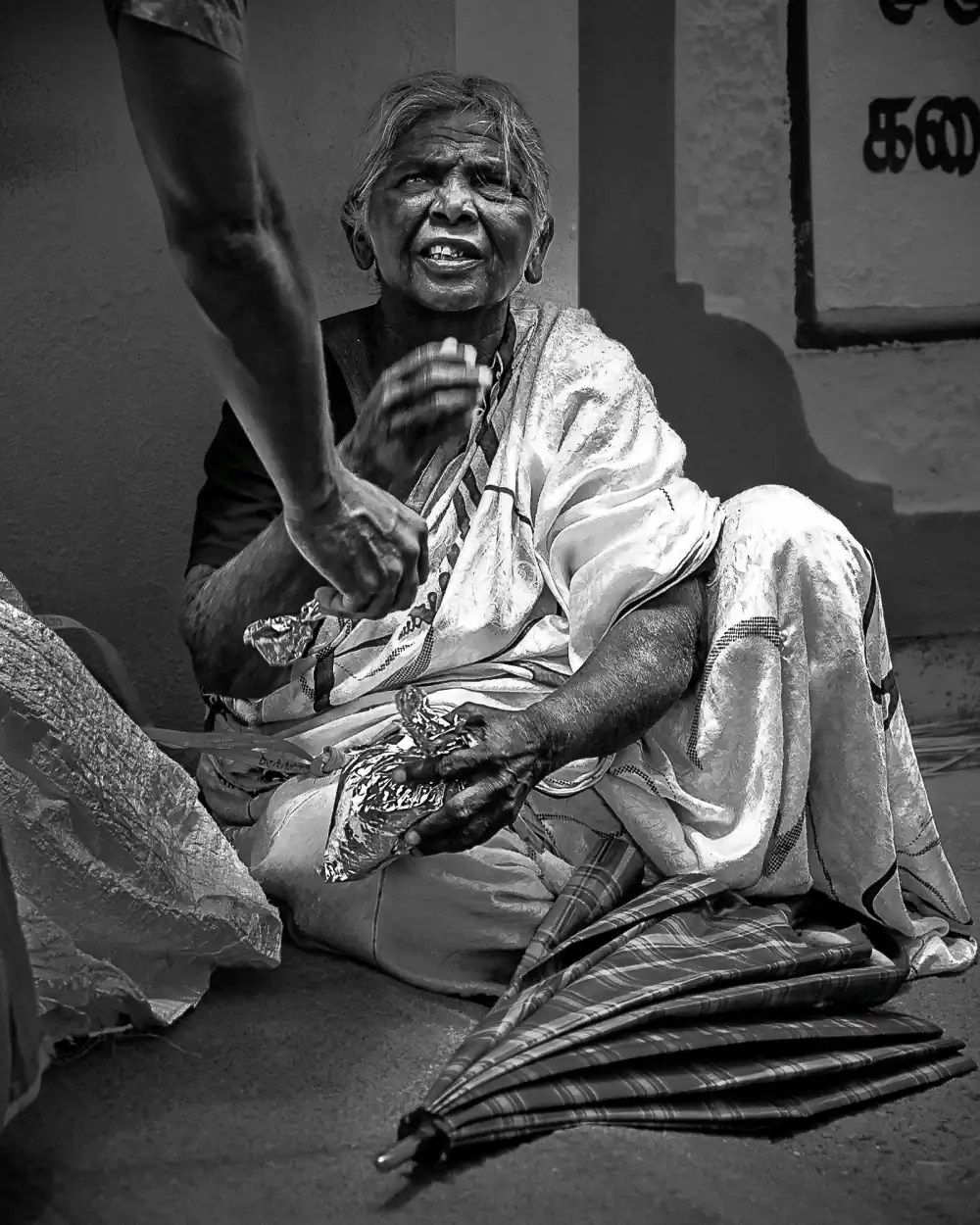
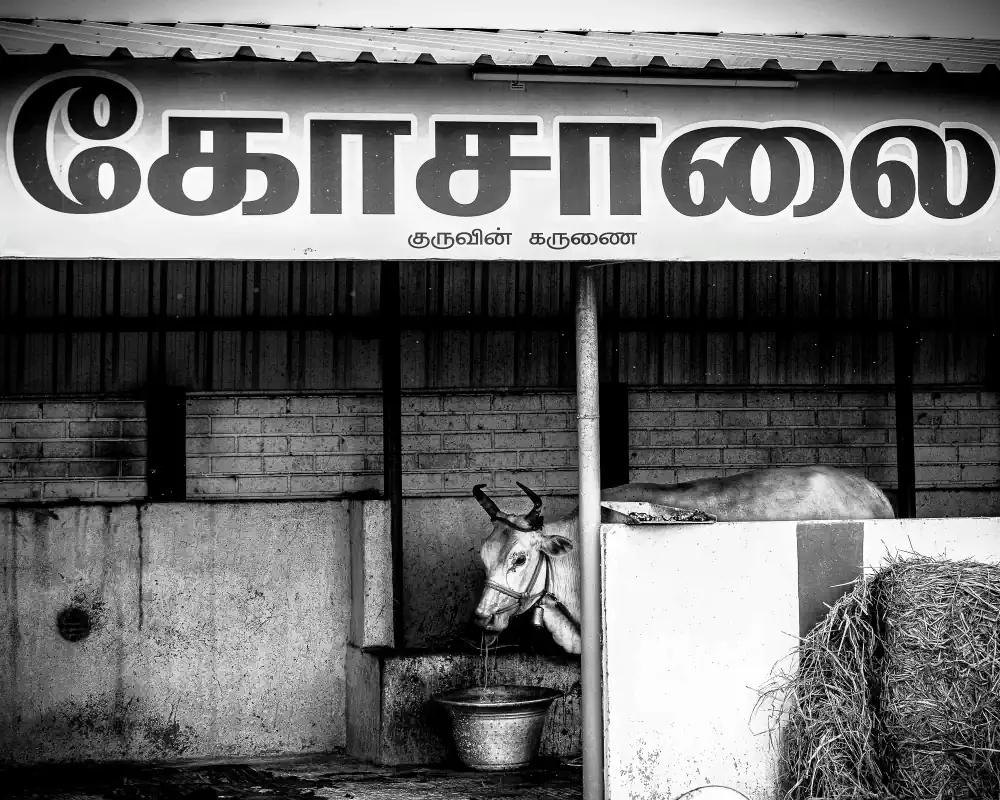
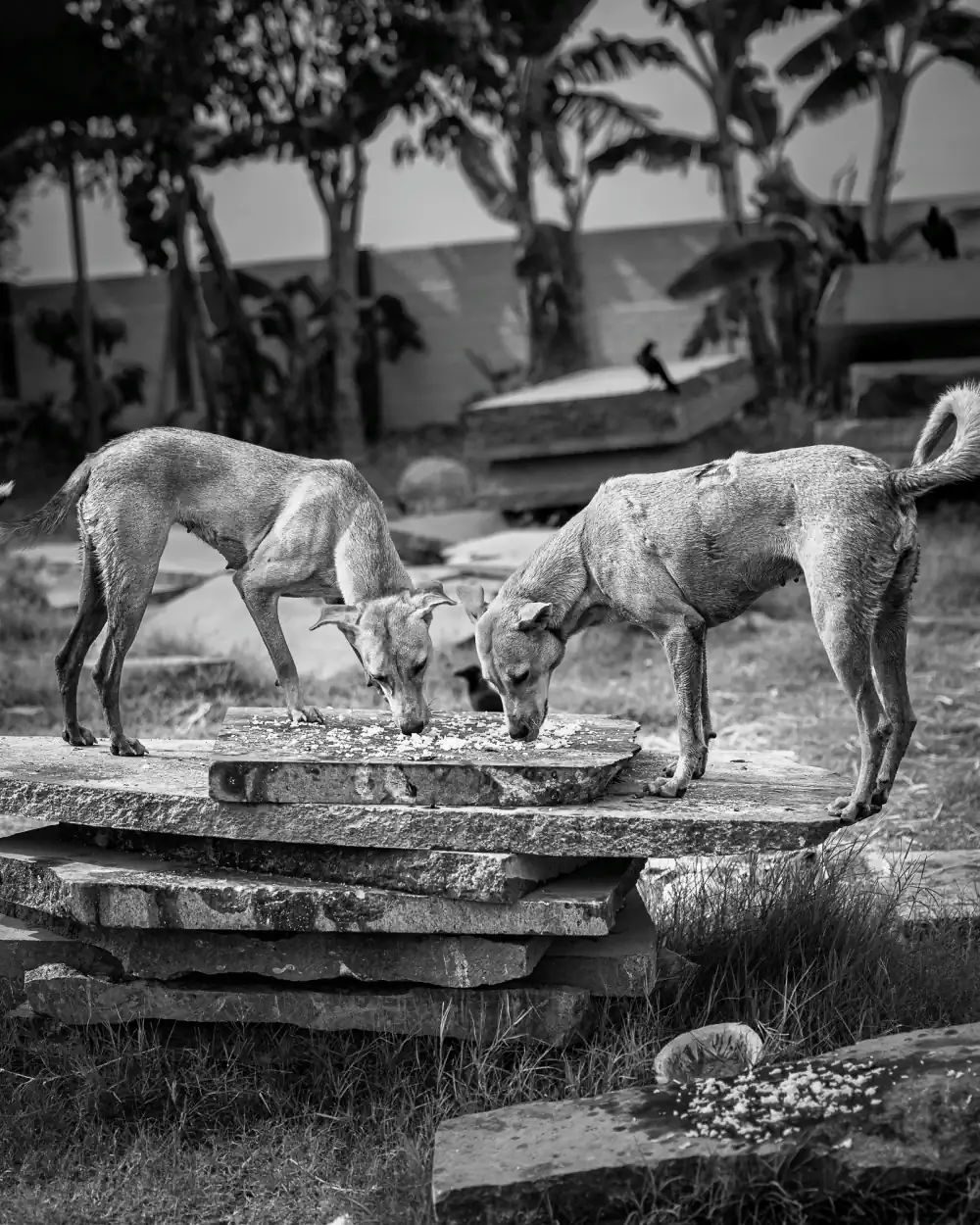
A community kitchen has been built within the temple complex. Each day, volunteers gather to cook and distribute fresh, hot meals. They feed anyone who arrives—elderly farmers, women, children, and even hungry street animals. No one is turned away. Volunteers also travel to nearby towns to distribute food.
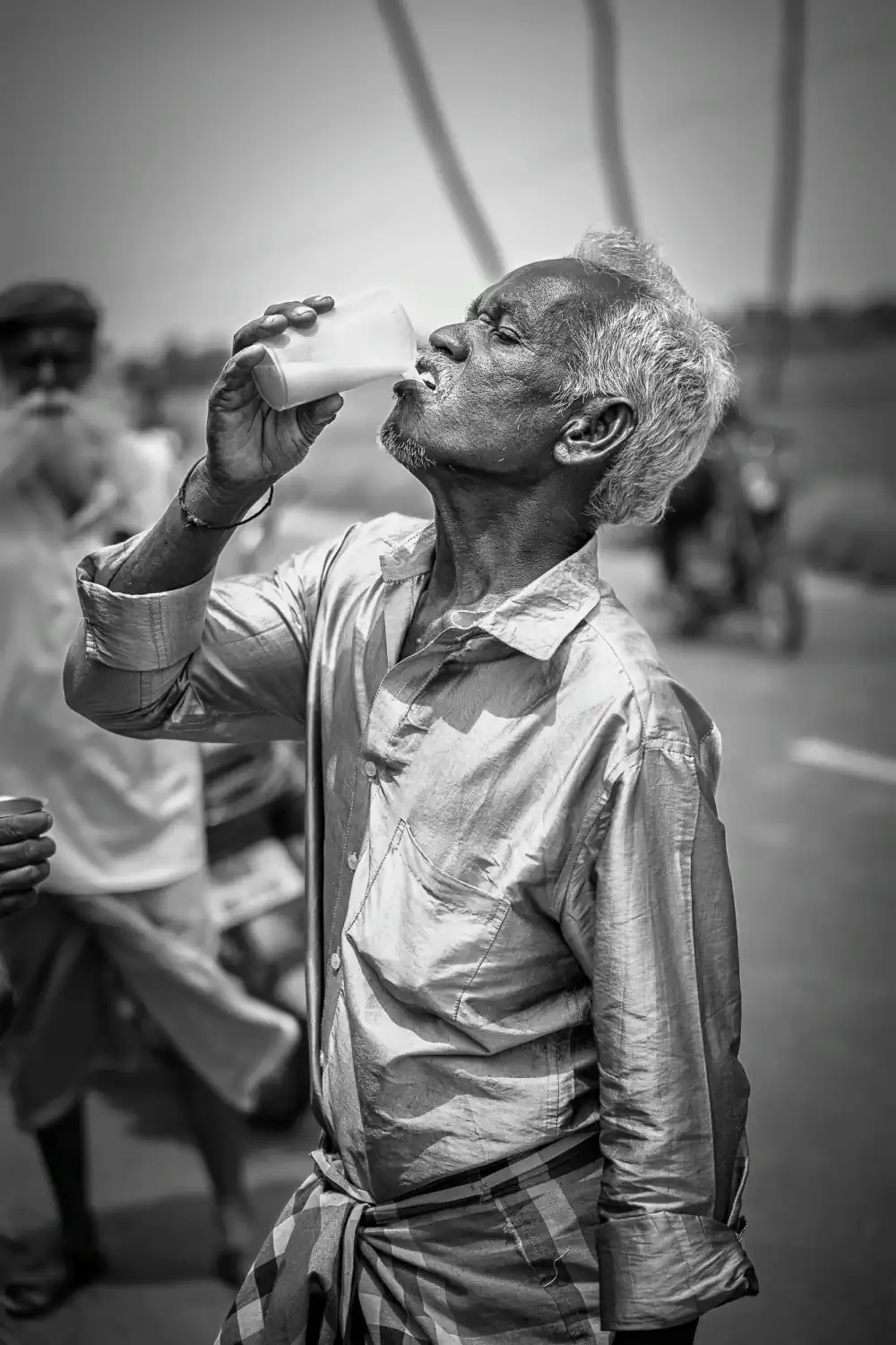
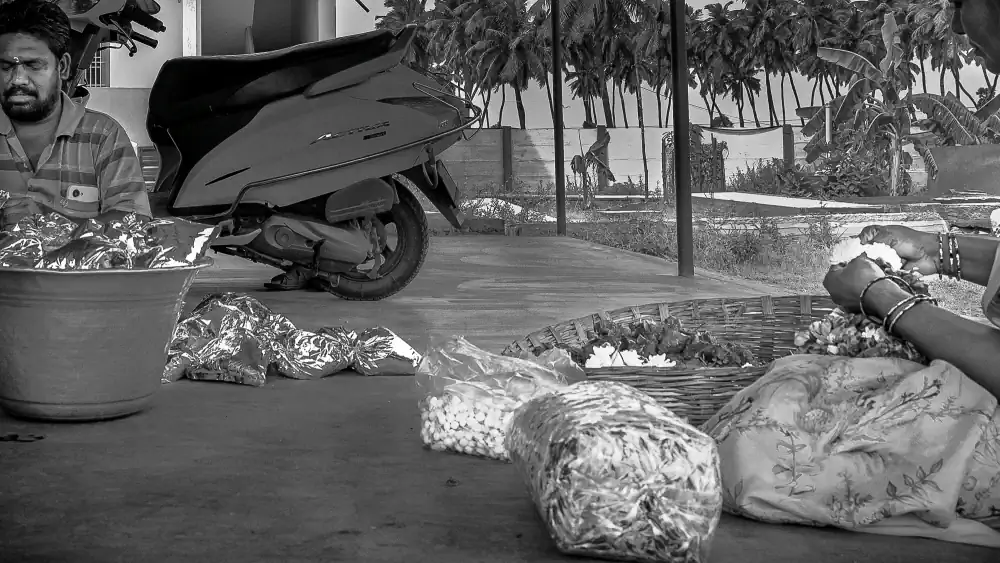
Interestingly, the food prepared here follows the principles of Siddha medicine. The volunteers include herbs and plants recommended in the ancient palm-leaf manuscripts attributed to Agastya Maharishi. These ingredients are believed to support a healthier, disease-free life. Once the meals are cooked, they are first placed before the deity for prayer and only then served to the people. Many consider it not just food, but prasadam—a blessed offering. During the intense summer heat, volunteers also offer buttermilk to help people stay cool.
This documentation captures the stark reality of hunger but also highlights the dignity, hope, and gratitude present in these daily acts of service. It reflects the meaningful bond between the giver and the receiver. This project stands as a testament to how community and kindness can sustain lives that society often overlooks. It serves as a reminder that alleviating hunger is not just an act of charity, but a fundamental human responsibility.
About Senthil K. Rajendran
Senthil K. Rajendran was born in India and now lives in Finland. Senthil holds a doctorate in Chemistry and is the co-founder and a board member of a biotech company developing antiviral therapies. Even though his professional life is focused on developing drugs for unmet medical needs, he is equally passionate about documentary photography. Growing up in India and later building his life in Finland—two very different worlds—has shaped how he sees people, culture, and everyday moments. His photography is about capturing scenes that bring happiness, show genuine human emotion, or highlight situations he hopes to change. Senthil believes that a photograph can carry emotion, inspire empathy, and help people understand one another a little better. [Official Website]