
In the procession of the Christ of Health, we breathe gratitude and devotion, intrinsic realities that are part of my town, Zaraza.
Every first of January, its devotees, impatient, rise at dawn. The aromatic vapor of coffee permeates the house, entering our nostrils as we prepare to attend the Rosary of Dawn, a moment of profound introspection that anticipates what will come after.
At six, Christ leaves the Church of San Gabriel Archangel. The bells toll. One, two, three rockets resound in the air. And from the loudspeakers emerges a voice, a soft voice, a mixture of supplication, a woman’s voice praying and singing.
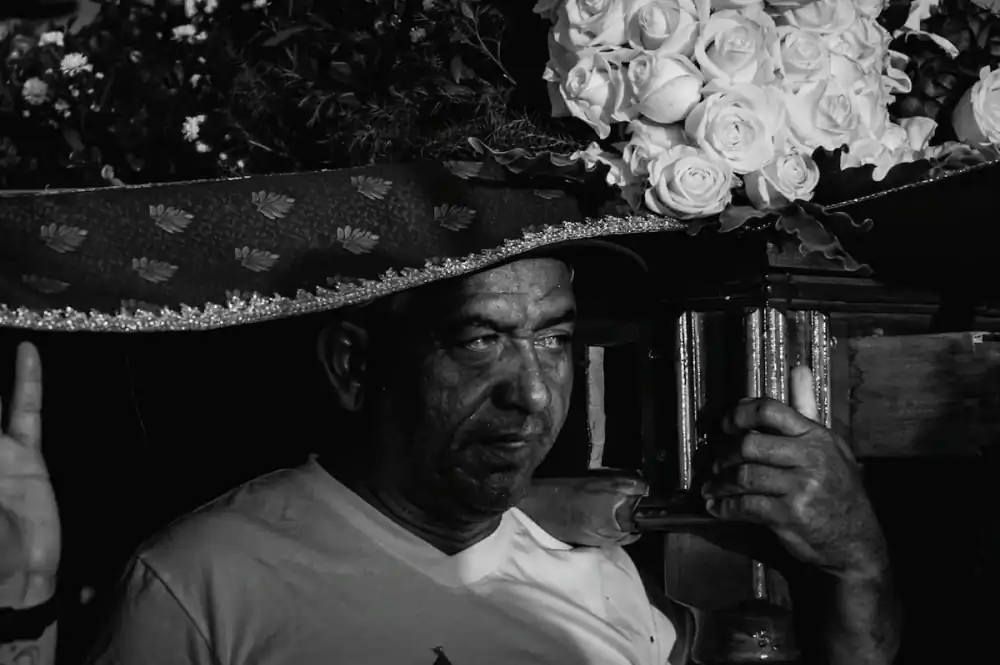
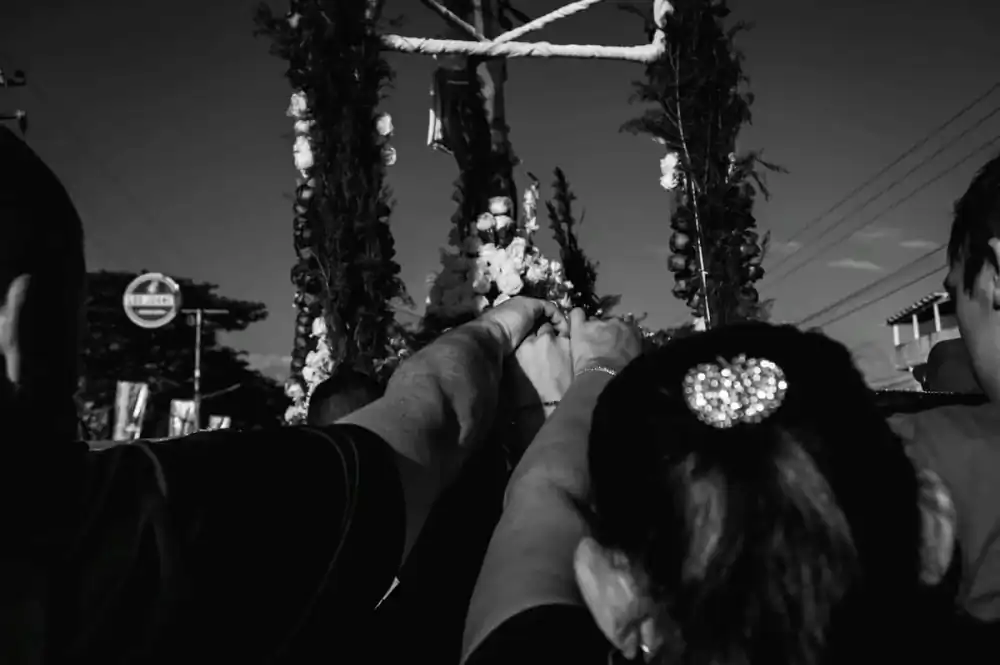
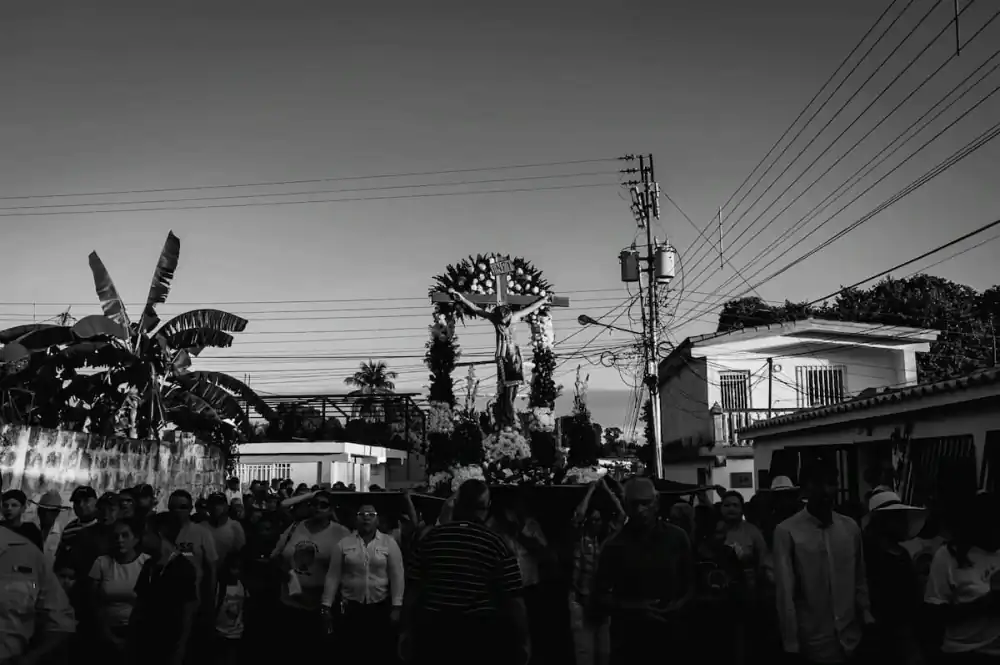
Transformed into an offering, the Crucified One traverses the streets of Zaraza accompanied by a multitude. The whole family, men and women alike, await him, whether from their doors, windows, or balconies. The bearers, weary and joyful, take turns for eight hours so that the procession may advance without hindrance. The people thirst to transcend, to heal. The atmosphere is charged with recollection, with shared memory. But from where does this desire spring, this yearning for the divine? According to local historians, a little girl named Carmen Díaz, shortly before dying of yellow fever, told her parents of a dream in which she saw frail people carrying an image of Christ. They were healed after drinking lemon juice. Some time later, a man walking along Calle Libertad collapsed, overwhelmed by the first symptoms of the disease.
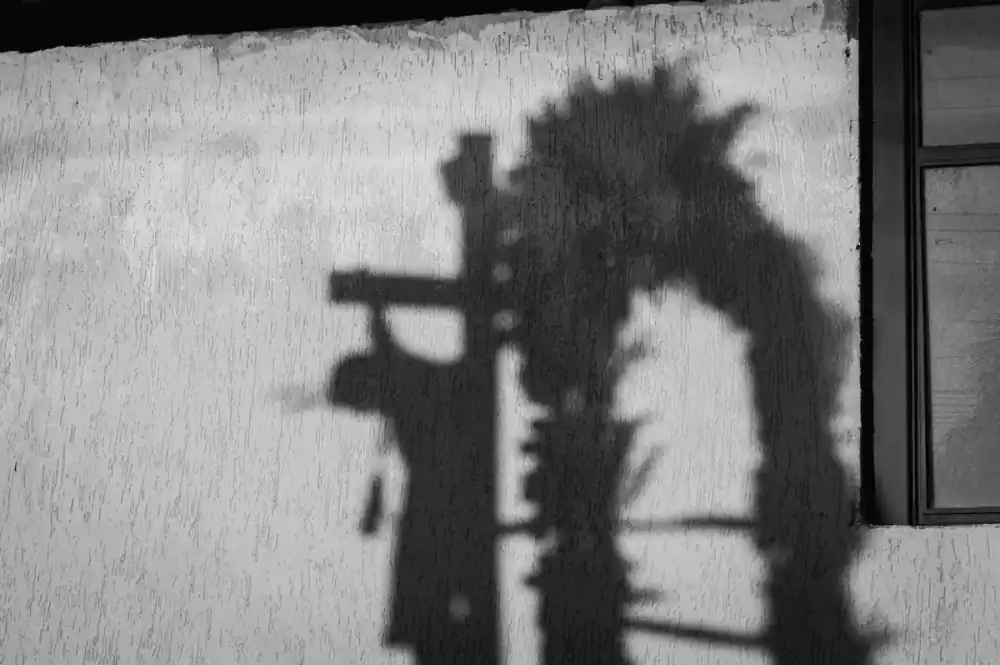
Recalling the girl’s premonition, he drank lemon juice and asked God that, if He healed him, he would make that dream a reality. After miraculously recovering, he kept his word, inaugurating the tradition of the procession of the Christ of Health on January 1, 1857. As the decades passed, that expression of faith became so deeply rooted in the community that, when someone tried to stop it, the answer was inscribed in living history.
Proof of this is that, a hundred years later, the chronicler Francisco Gustavo Chacín wondered about the possibility of suspending it, and his conclusion was clear: “Unthinkable! It has already been proven that such a thing will not happen. Years ago, the one who writes this was able to verify it. A Capuchin, old, with a hard face and a long black beard like a raven’s, whose name we wish to forget so as not to cause offense, tenaciously opposed taking the procession of Christ out on New Year’s Day, alleging reasons that were beside the point. Groups of men went to the church, spoke with the Capuchin, and achieved nothing.
Dawn broke on the first day of the year, and the procession was glaringly absent. People crowded into Bolívar Square. The town smelled of tragedy. At last, another group of men, determined to do whatever was necessary, arrived at the temple. They carried no weapons nor disrespectful words, but inside they bore a resolution that was painted on their faces, burned by the sun.
‘Father,’ they said firmly, ‘as honorable men, we know how to keep our promises. We come to take out the Crucified whether you want it or not, for you know nothing of our commitments because you are not from our town.’ The Capuchin said nothing. He turned to where the image was, thought for a moment, and then withdrew. The procession went out without a priest, but it was more solemn than in previous years.”
Just as the narrators recorded the fervor, I seek for my photographs to be evidence of that same permanence.
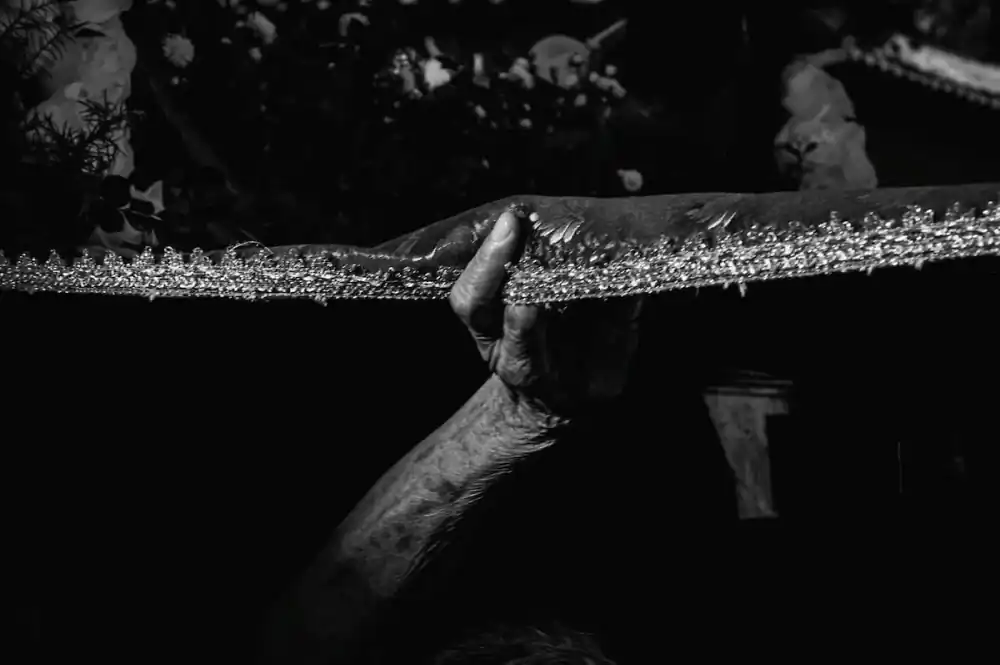
An elderly hand clutching the mantle.
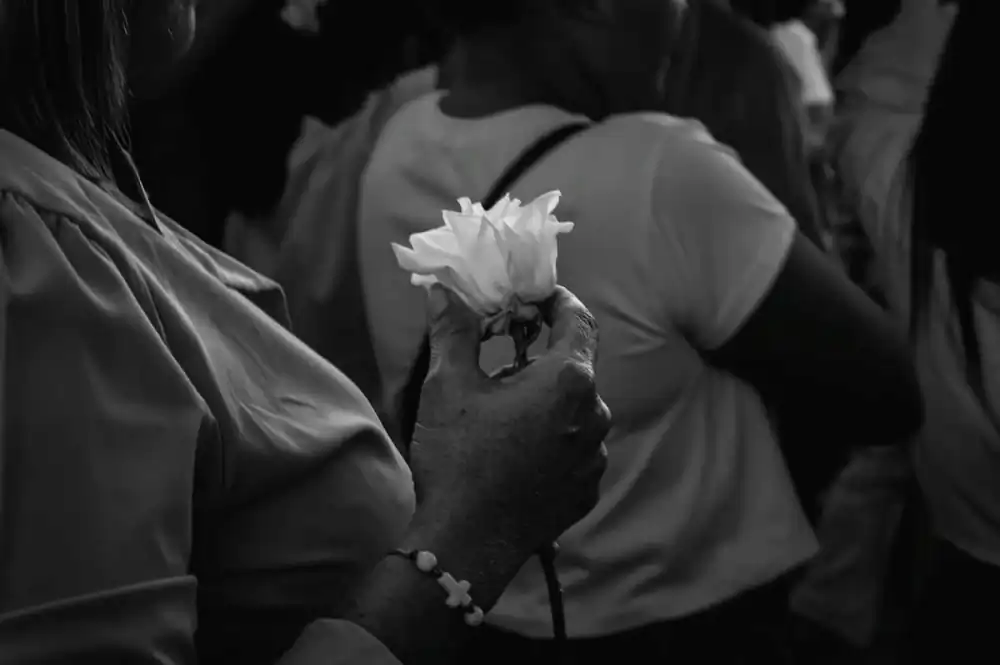
A woman with a white rose in her hands.
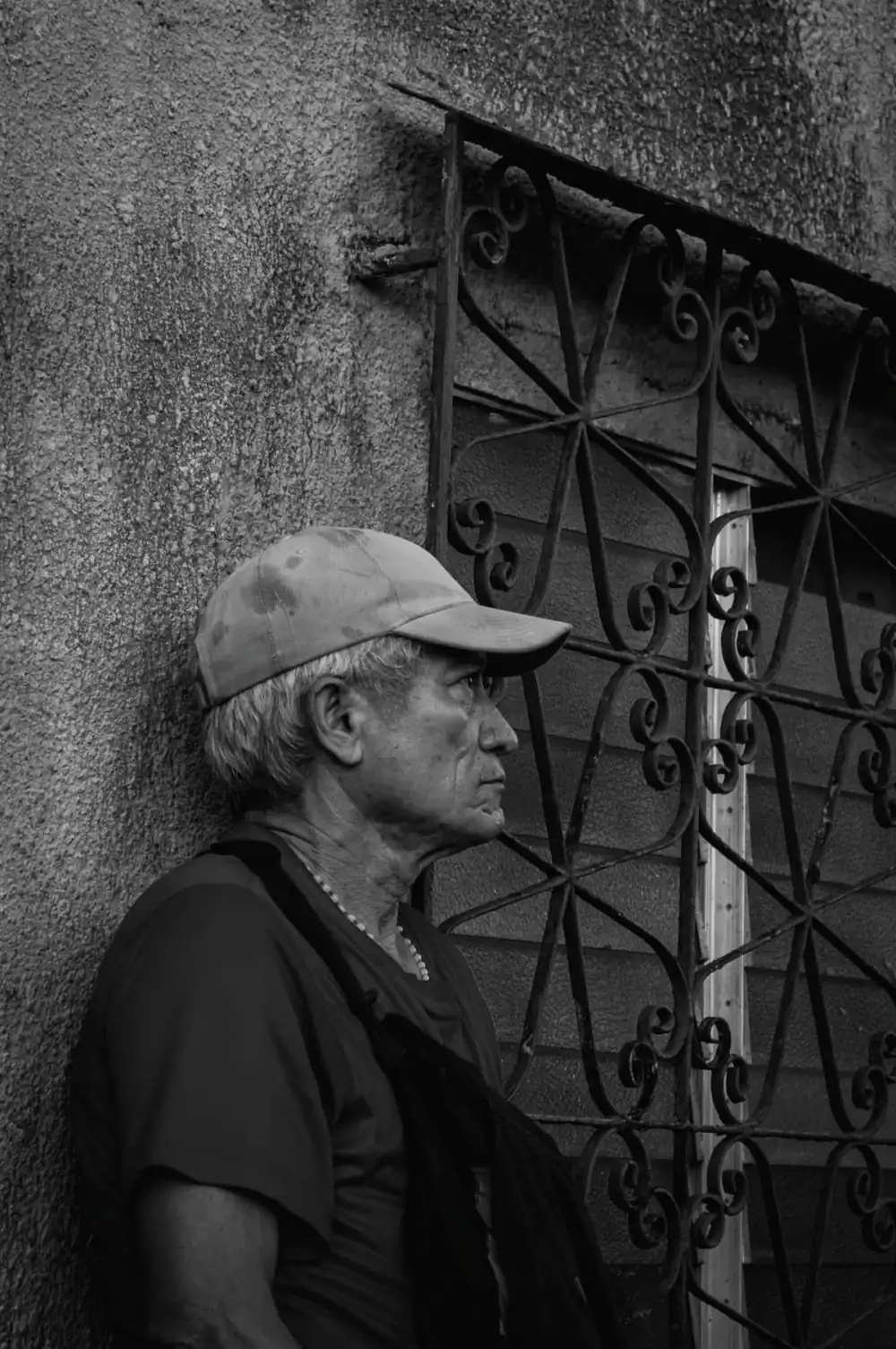
A man leaning against a wall, like one who waits for an old friend.
The strain upon the shoulders, the sweat upon the faces of the bearers.
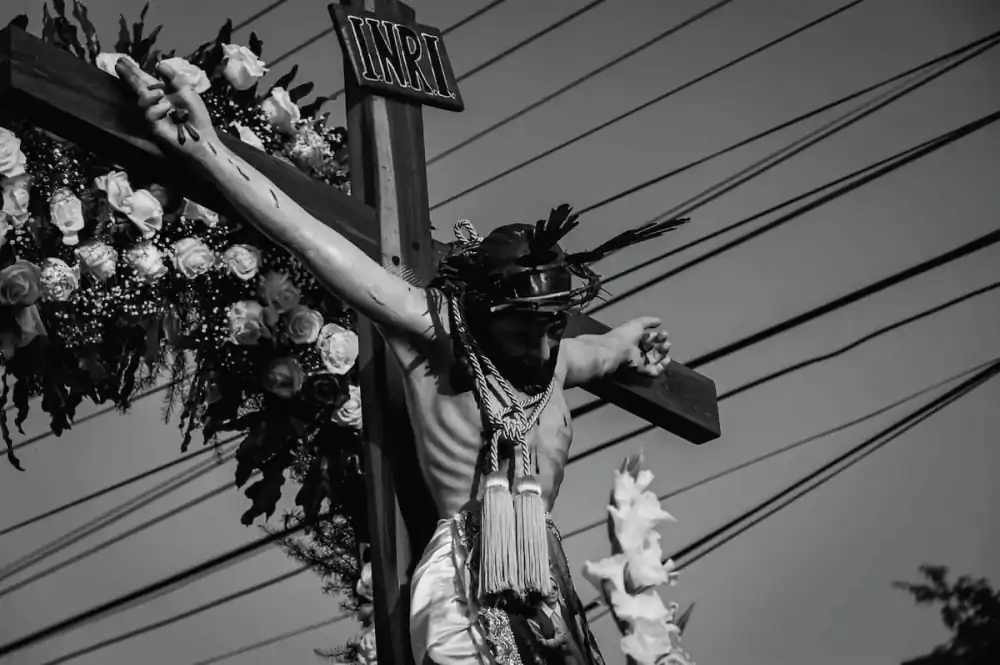
And, at the center, Christ among his people.
In each image, I have sought to document the poetry of the procession. For the Christ of Health reminds us that hope and love dwell in small gestures, not in the grandiloquence of the world.
About Rafael Ayala Páez
Rafael Ayala Páez (Venezuela, 1988) is a photographer, short story writer, and poet. He holds a Bachelor’s degree in Education, with a specialization in Language and Literature, from Simón Rodríguez University. In 2013, he was invited to the 11th International Poetry Gathering at the University of Carabobo. In 2017, together with poet Mario Martín Gijón, he curated the Venezuelan literature dossier for Revista Quimera. In 2025, Nagari magazine published four of his most recent poems. He is currently working on his first book of short stories.