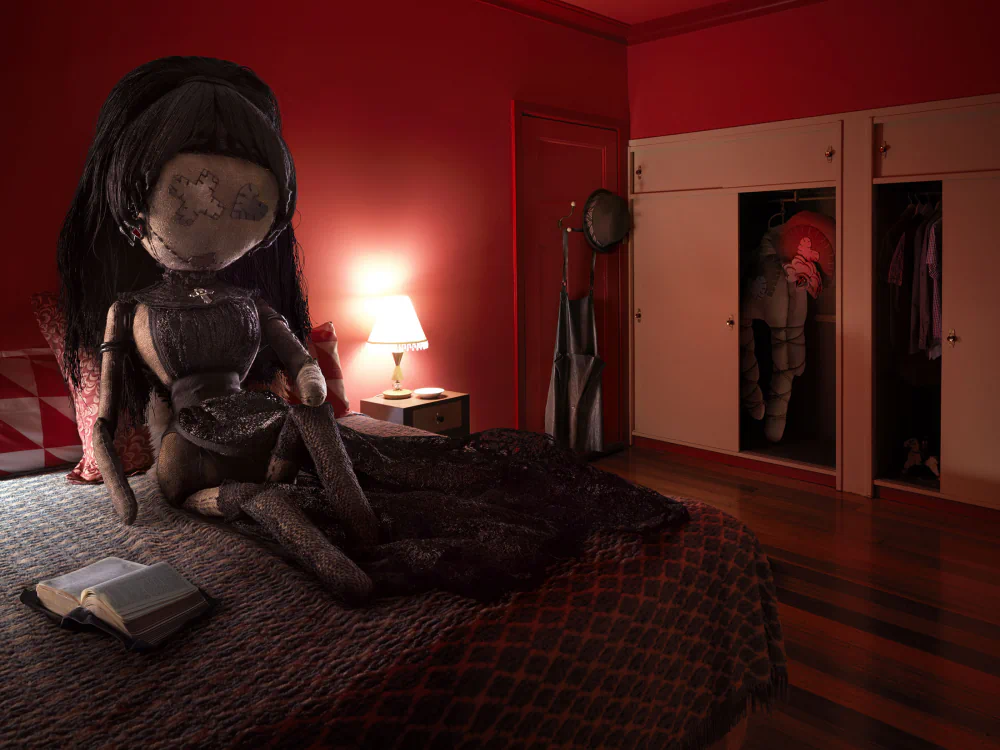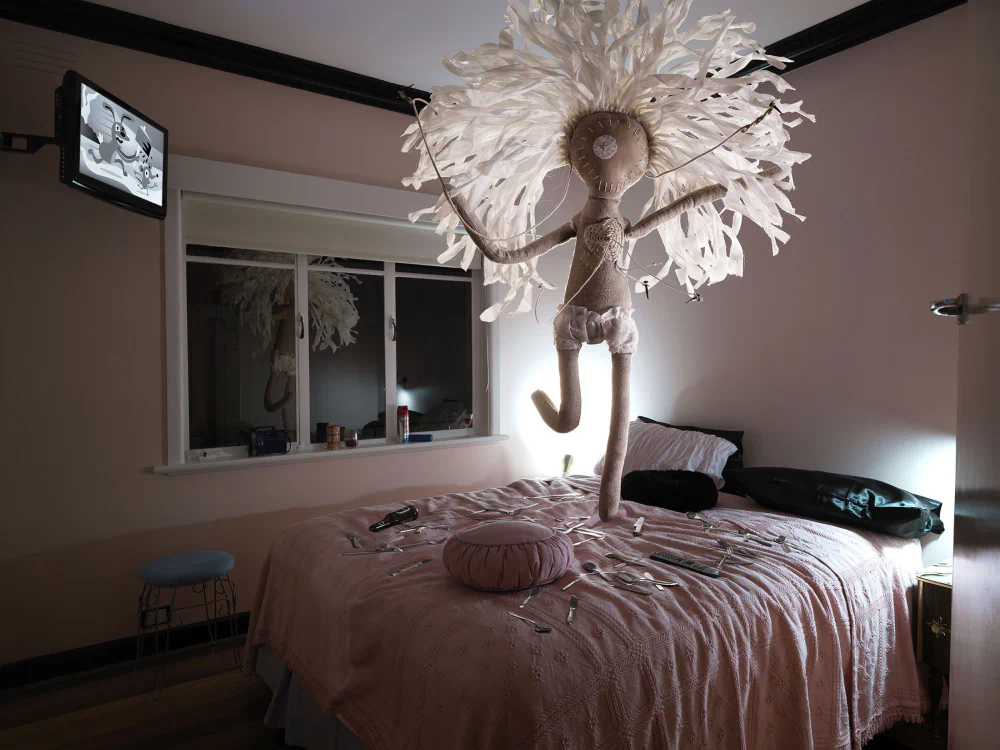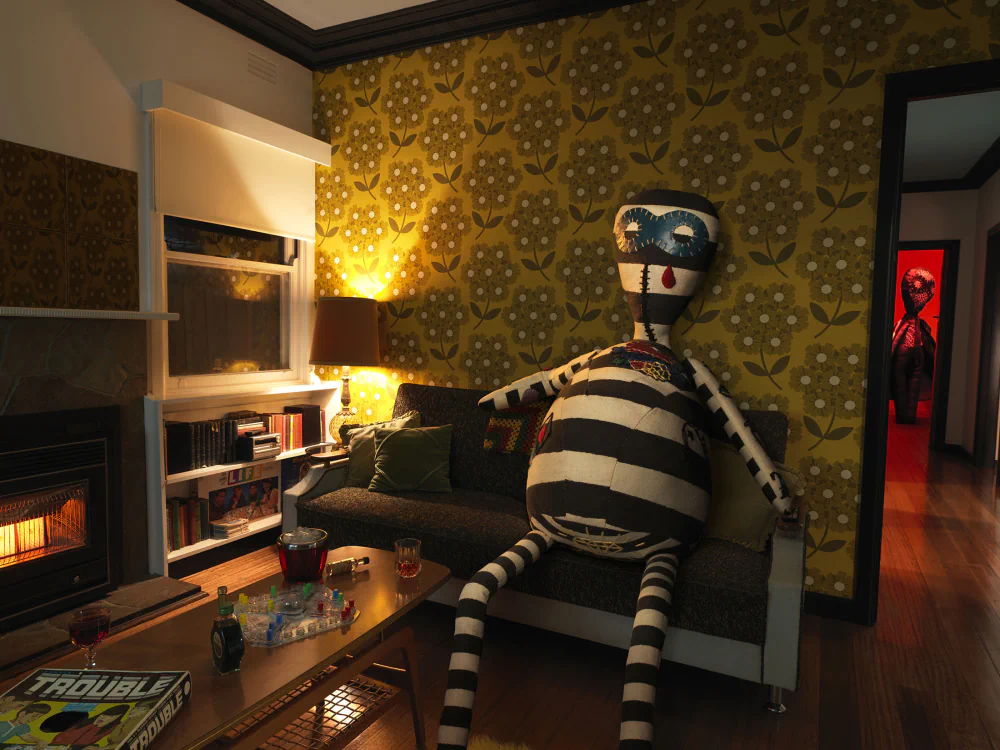


Hugger Mugger unfolds in the quiet spaces behind closed doors.
These are not scenes of spectacle, but of something subtler—a pause, a tension, a sense that something has just happened or is about to.
The work lingers in that in-between state, where meaning is unstable and identity feels uncertain.
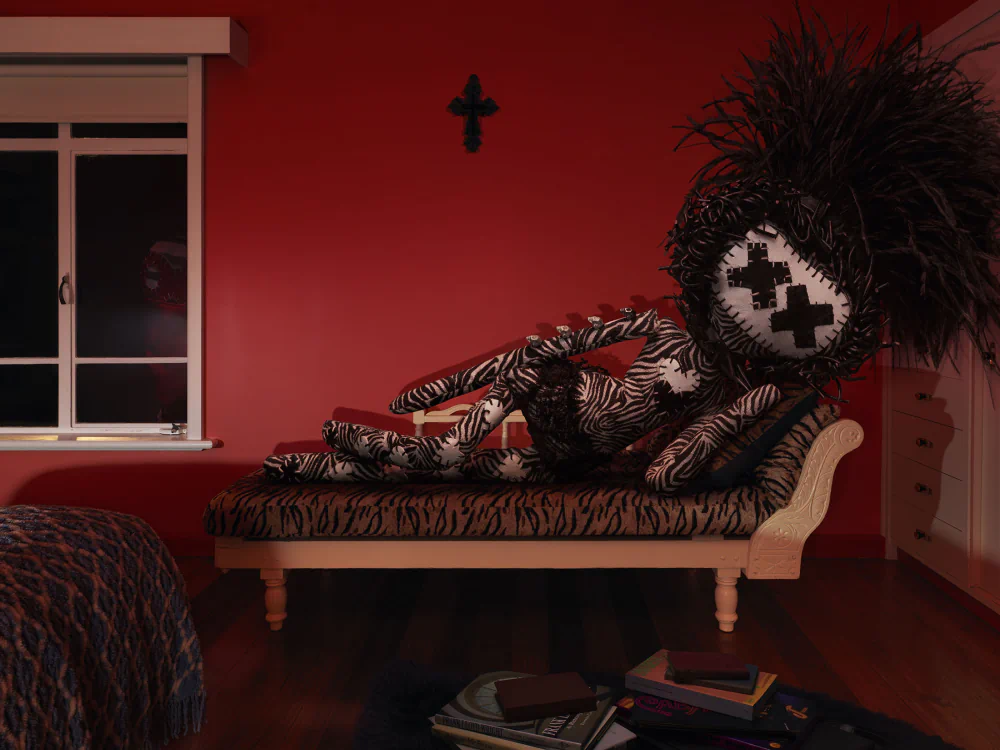
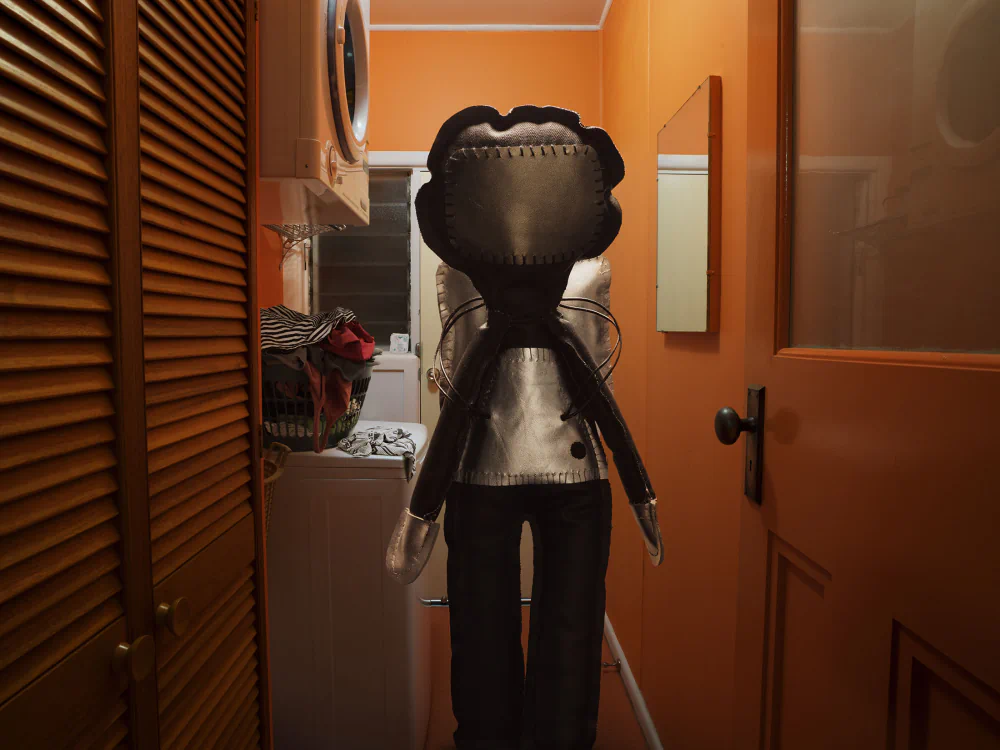
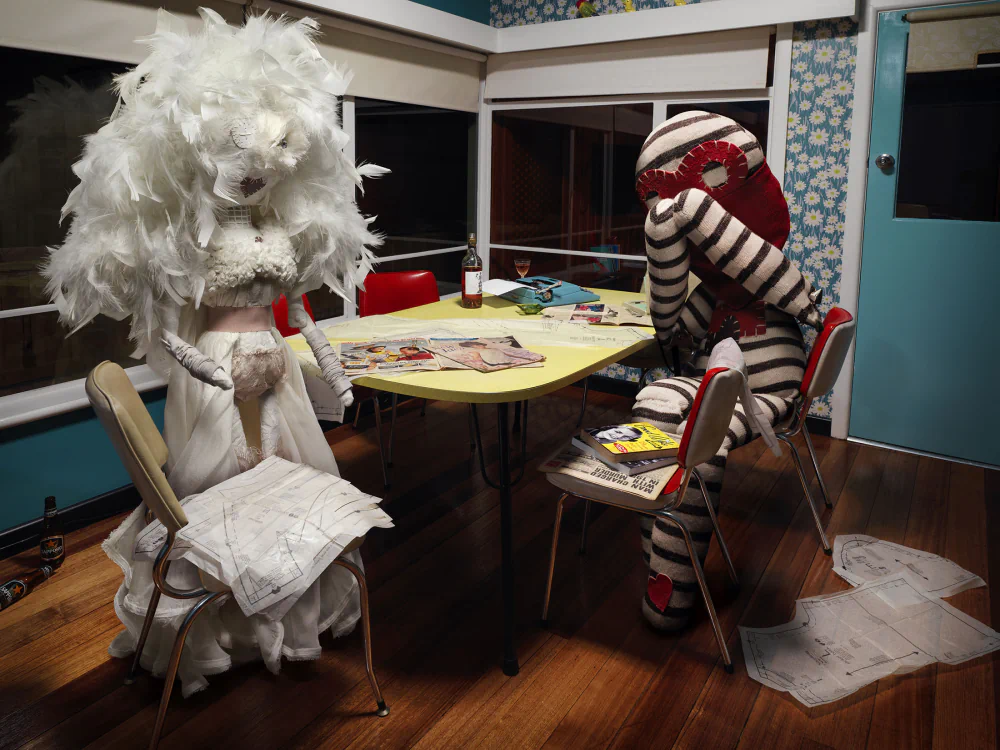
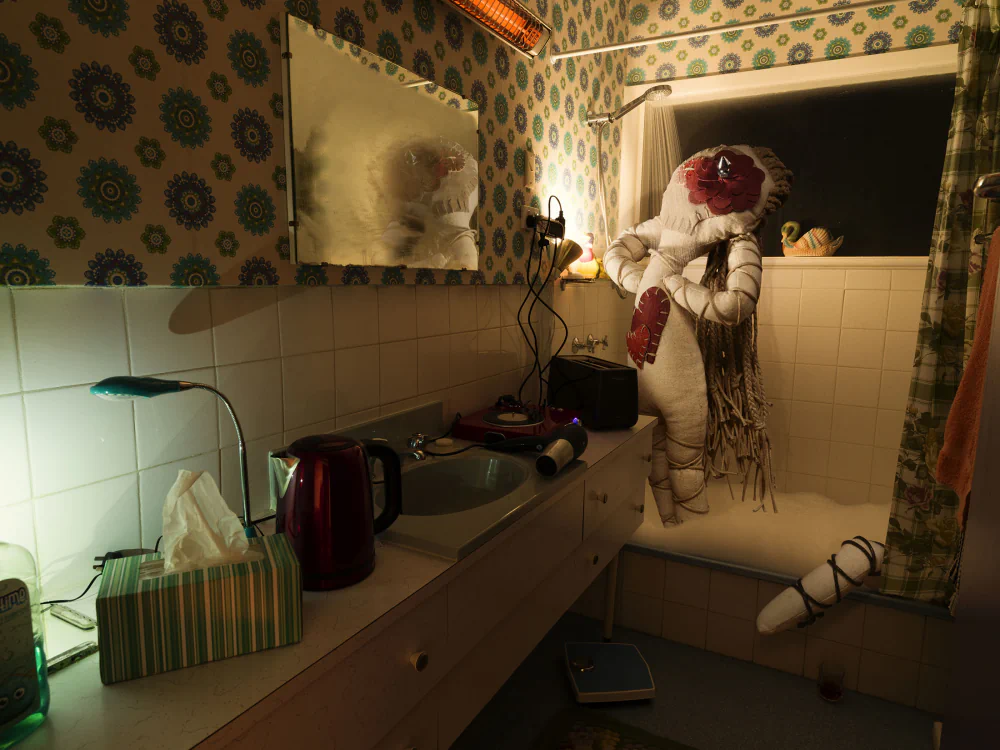
The figures are fabric dolls—inanimate, yet strangely charged. Through gesture, positioning, and proximity, they begin to suggest human behaviors without ever fully becoming human. They occupy domestic interiors that feel familiar but slightly off—rooms drawn from memory, spaces that echo the kinds of homes the artist grew up in, reconstructed and reimagined as digital dioramas.
There is no clear narrative. Instead, the images invite speculation. The viewer is positioned as an observer, looking in but never fully understanding what is being seen. The work leans into that discomfort—the instinct to make sense of things that resist explanation.
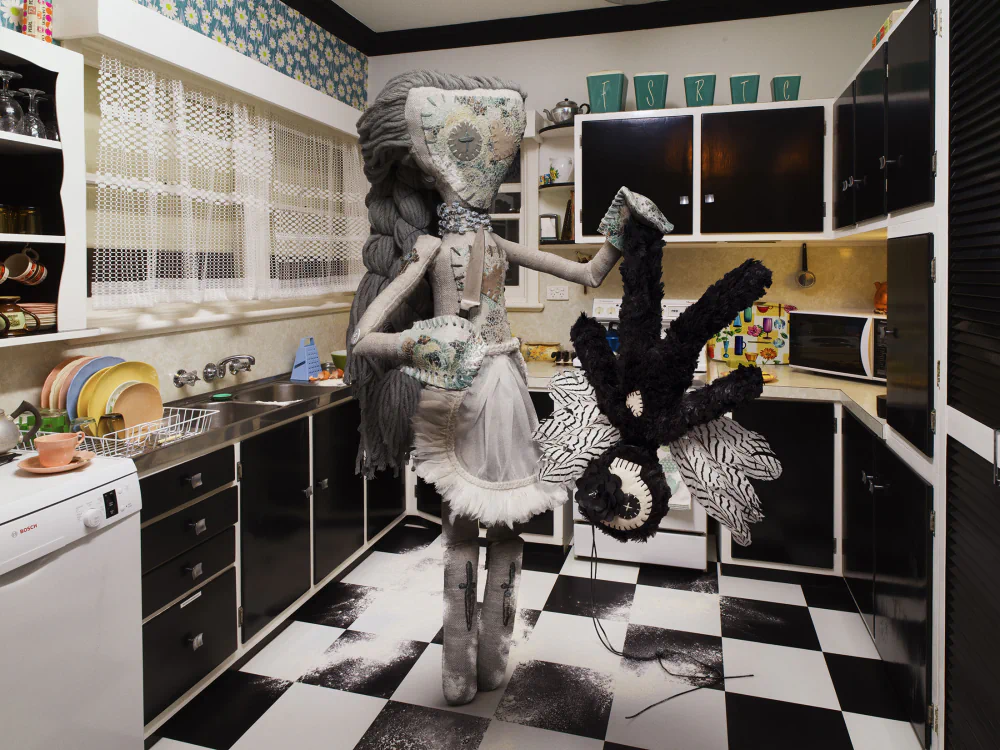
Growing up, the artist was often told not to get involved in other people’s business—that one never truly knows what happens behind closed doors. That idea has remained. Hugger Mugger inhabits that space, drawing on a long-standing fascination with the tension between normality and unease, between humor and something darker.
As these constructed worlds become more complex, they begin to slip from control. Small details accumulate. Gestures take on weight. The search for order begins to reveal its own fractures.
What emerges is not a fixed idea of identity, but something fluid, fragmented, and performed—particularly in moments of isolation, when the structures that usually define a person begin to fall away.
These works do not offer answers. They circle around a question:
Who are we when no one is watching?