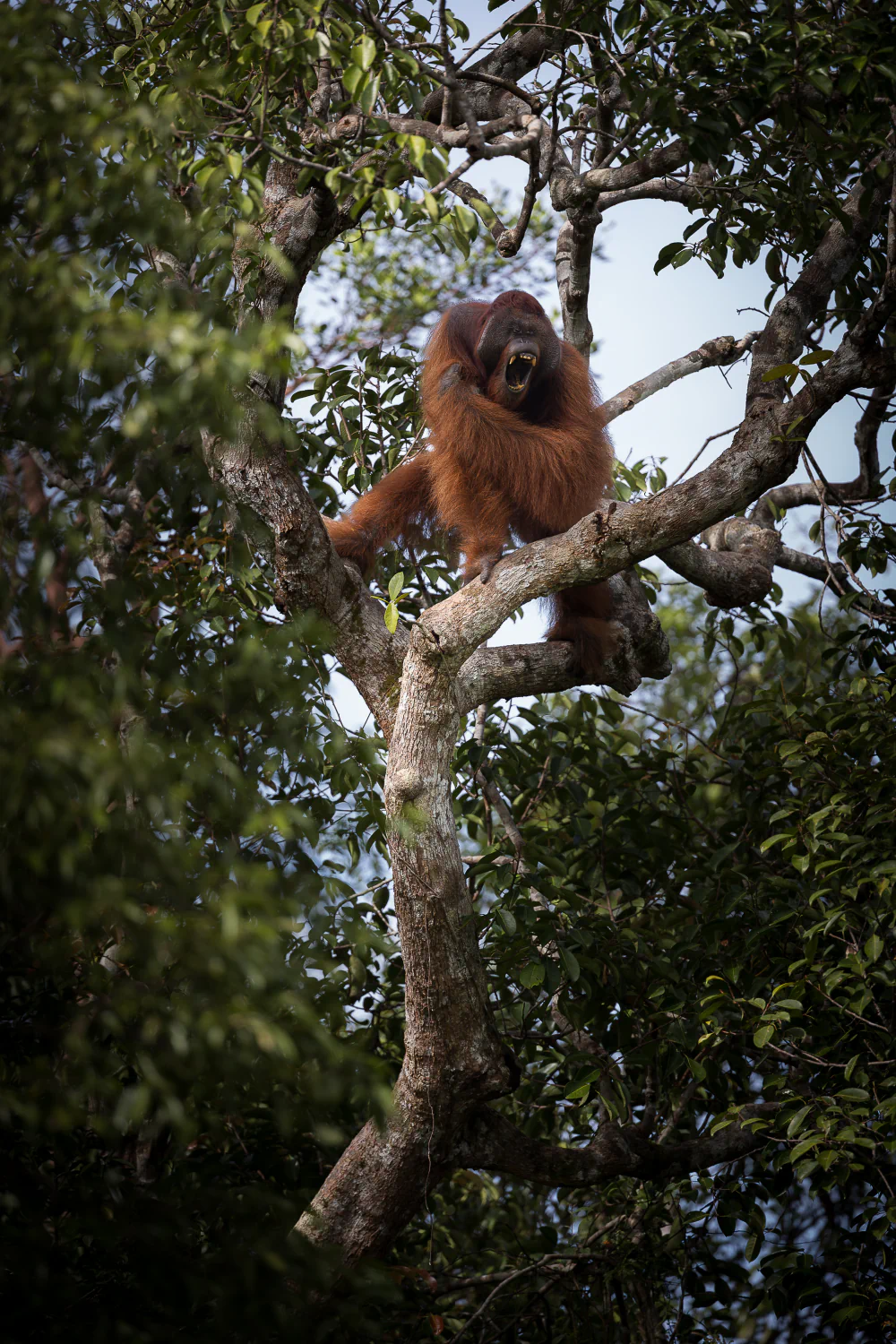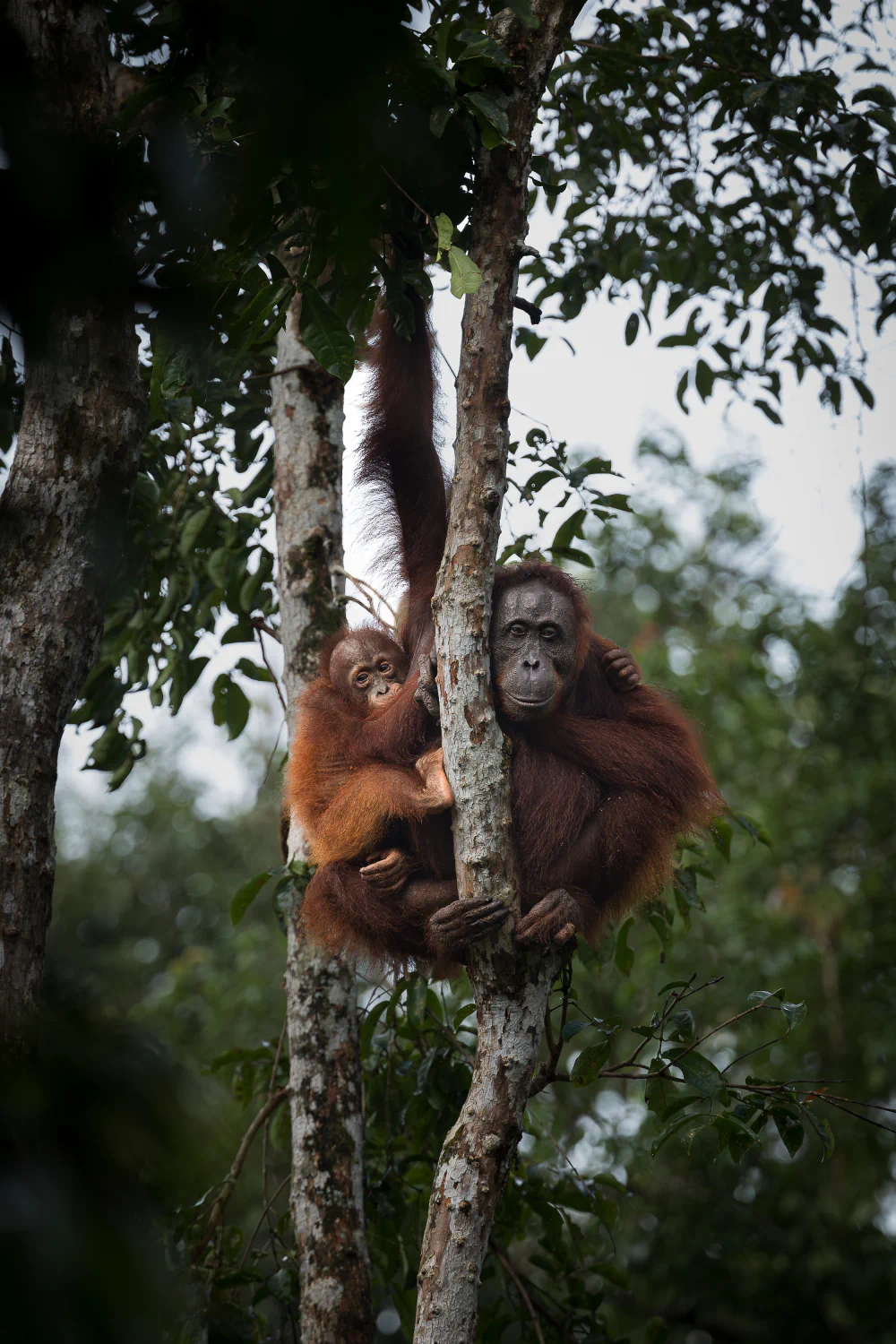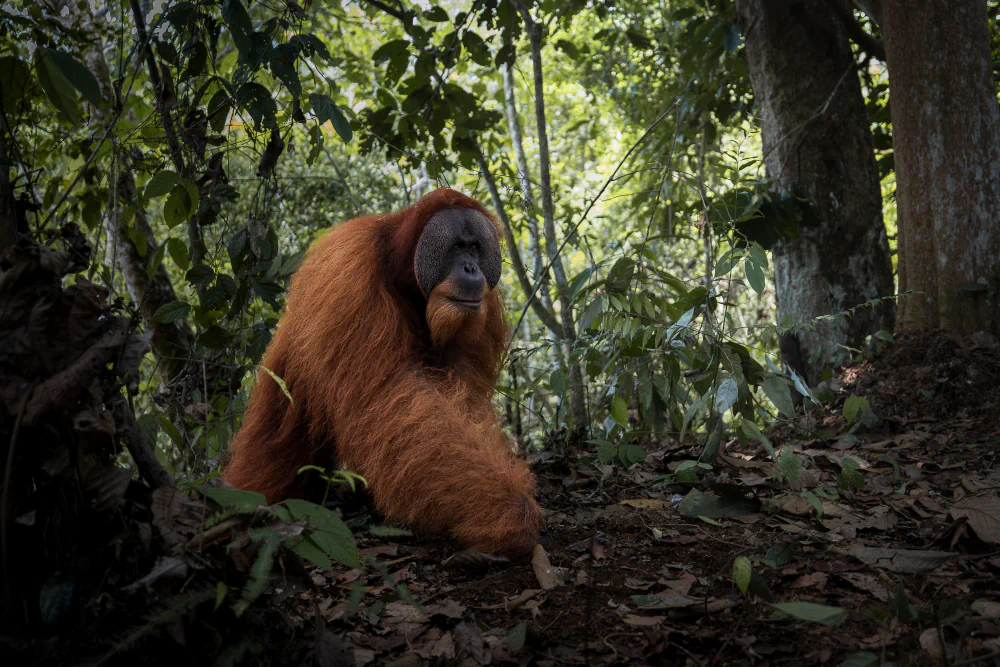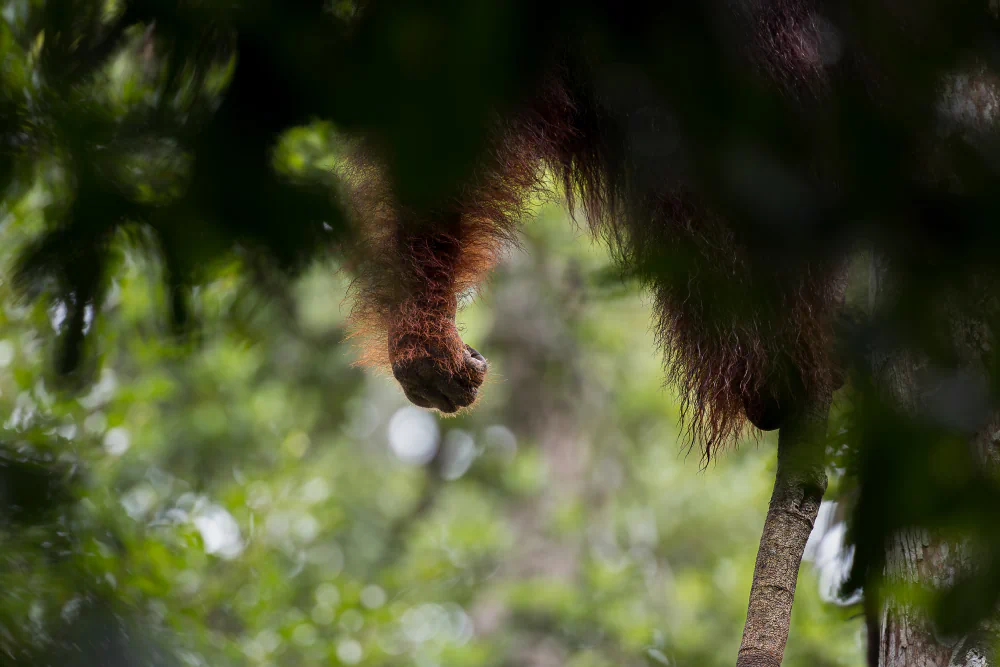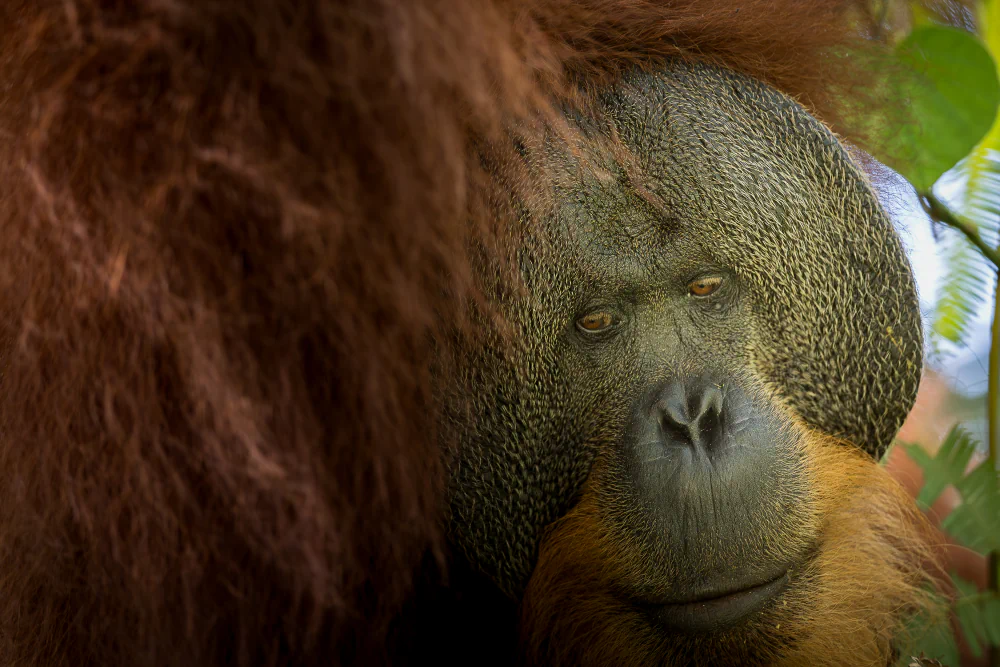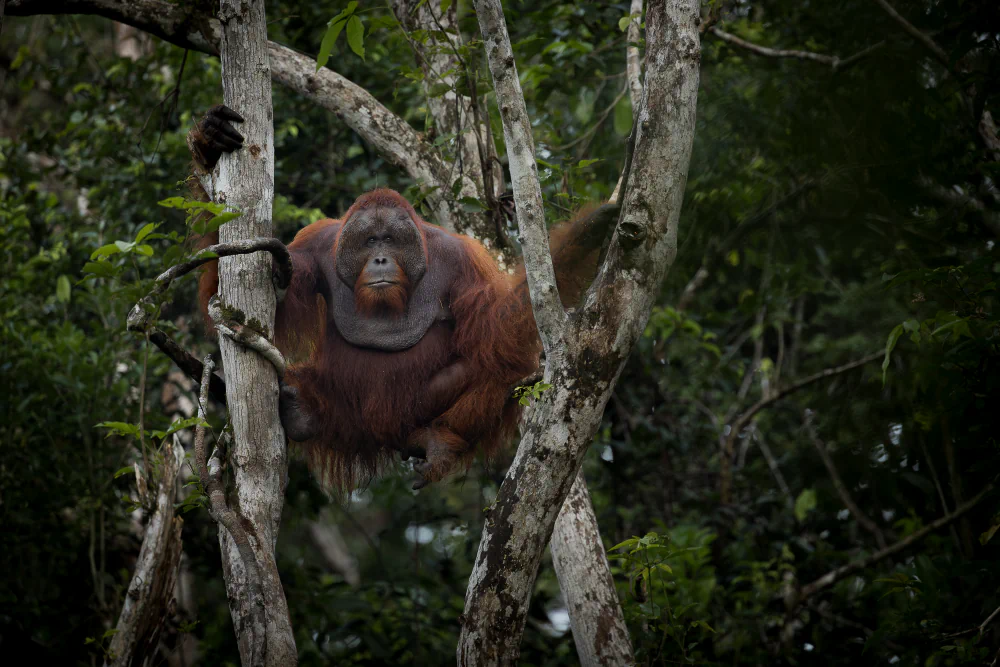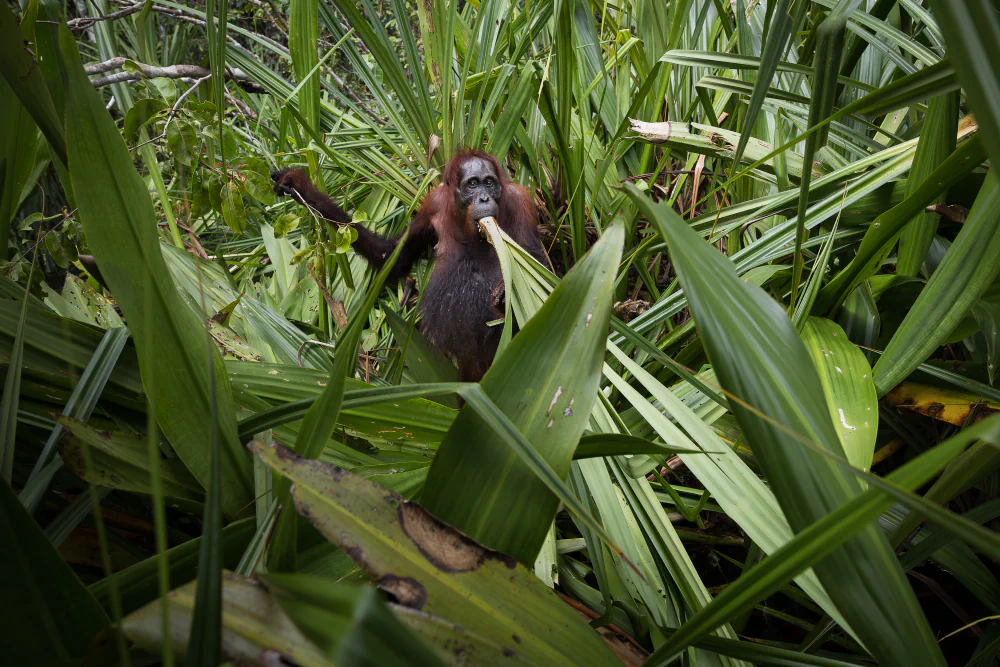

This project is rooted in a simple yet profound recognition: the relationship between humans and great apes extends far beyond genetic proximity.
Chimpanzees, bonobos, gorillas, and orangutans share with humans not only more than 98 percent of their DNA, but also sensitivity, social intelligence, and a complex cultural understanding of the world.
In them, one encounters the foundations of what is called humanity. Yet, paradoxically, it is this very humanity that is now placing them at risk.
Rather than merely documenting these animals, the project is conceived as an attempt to connect. The photographs operate as bridges between visible and invisible realities, between science and faith, between human consciousness and the natural world. Through these images, life is not reduced to an object of observation but restored to its dignity, while the viewer is confronted with their own share of responsibility.
The urgency of this work is grounded in an undeniable reality. The rate of species extinction has reached levels estimated to be a thousand times higher than natural rates, driven almost entirely by human activity. Deforestation, agricultural expansion, overexploitation of resources, climate change, pollution, and disease are rapidly dismantling ecosystems that took millions of years to evolve. Every day, forest areas equivalent to one and a half times the size of Paris disappear from the planet. These forests are not only habitats; they are complex living systems in which great apes play a crucial role.
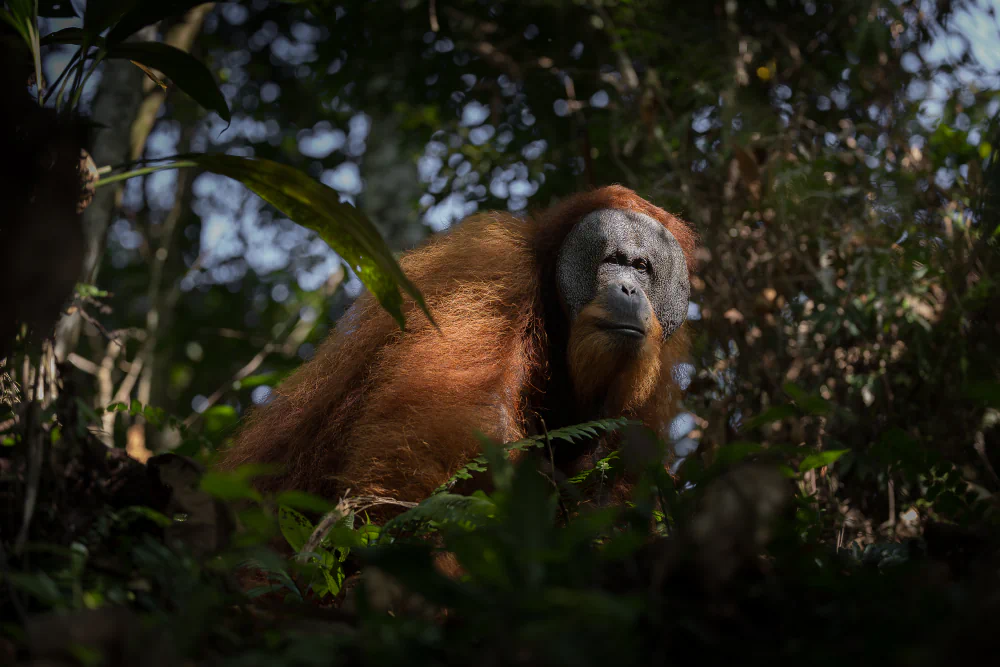
As highly frugivorous animals with significant mobility, great apes act as essential agents in seed dispersal, contributing directly to the regeneration and balance of tropical forests. They are, in ecological terms, keystone species, true “guardians of the rainforest.” The survival of these ecosystems is intimately tied to their presence. At the same time, their biological characteristics make them particularly vulnerable. Their slow reproduction rates, long weaning periods, and extended learning phases—necessary for navigating complex social structures and unstable forest environments—mean that population losses are difficult to recover. Added to this are pressures from poaching, mining, and armed conflict, all of which accelerate their decline.
The situation is critical. According to the International Union for Conservation of Nature, nearly all great ape species are now threatened with extinction, with several classified as critically endangered. Orangutans, whose name literally means “man of the forest,” offer a striking example. Living primarily in the treetops of Southeast Asian forests, they play an essential ecological role; yet, in just two decades, they have lost 80 percent of their habitat, and their populations have been reduced by half.
In response to this crisis, international efforts have emerged, such as the United Nations Great Ape Survival Partnership, which coordinates actions between governments, researchers, NGOs, and local communities. These initiatives highlight a key principle: conservation cannot succeed without inclusion. Local populations must be recognized not as obstacles but as essential partners. Legal frameworks such as CITES and the Convention on Biological Diversity provide necessary tools, but their effectiveness depends on political will, financial commitment, and genuine transnational cooperation.
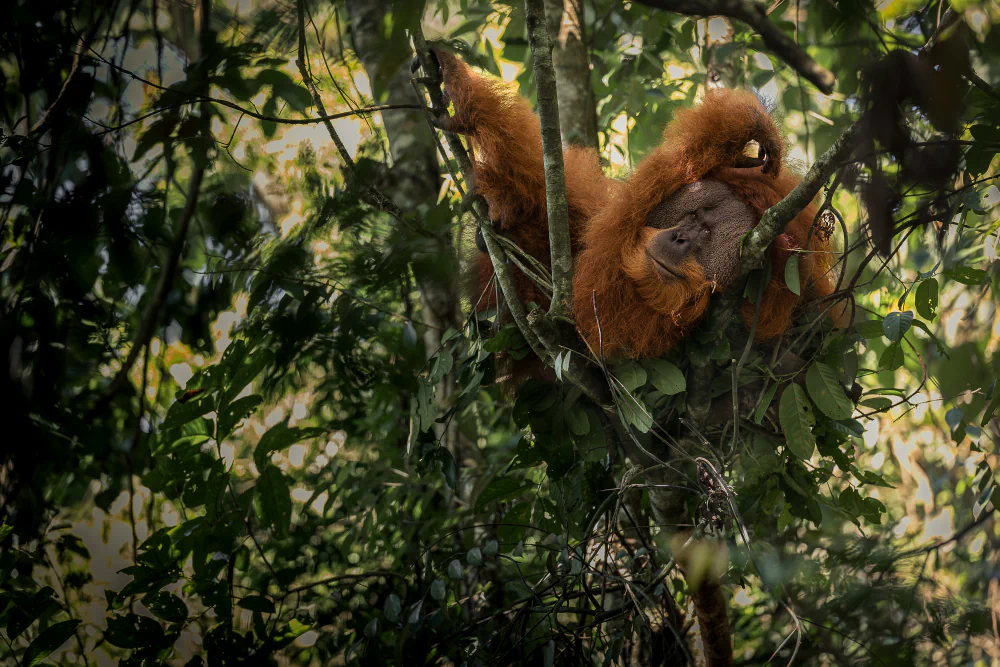
Protecting great apes ultimately means protecting entire ecosystems. As umbrella species, their conservation ensures the preservation of broader environmental networks. This requires concrete measures: halting deforestation linked to industries such as palm oil, soy, and timber; establishing and managing protected areas; supporting scientific monitoring; and ensuring long-term funding. Equally important is the need to address the human dimension. Conservation is inseparable from issues of social justice, education, healthcare, and economic alternatives for communities living within these environments.
Beyond policy and infrastructure, the project insists on a deeper transformation. It calls for a shift in economic and cultural models, questioning the systems of production and consumption that silently drive environmental destruction. Every object consumed carries consequences that extend far beyond immediate surroundings. Recognizing this interconnectedness is not optional; it is essential.
At its core, this work is a call to conscience. It affirms that protecting great apes is not merely an environmental responsibility but an ethical and civilizational imperative. It challenges the viewer to reject a diminished world, stripped of diversity and reduced to silence, and to embrace a vision of humanity grounded in empathy, responsibility, and continuity.
Rondelet’s photographs operate at a deeper, almost imperceptible level. They remind viewers that nature is not a backdrop but a presence, and that to look at it attentively is to rediscover something within themselves. In defending great apes, humanity ultimately defends the possibility of a humanity capable of care, awareness, and transmission. Because if one day the forests fall silent, it will not only be their voices that disappear, but a part of humanity itself.
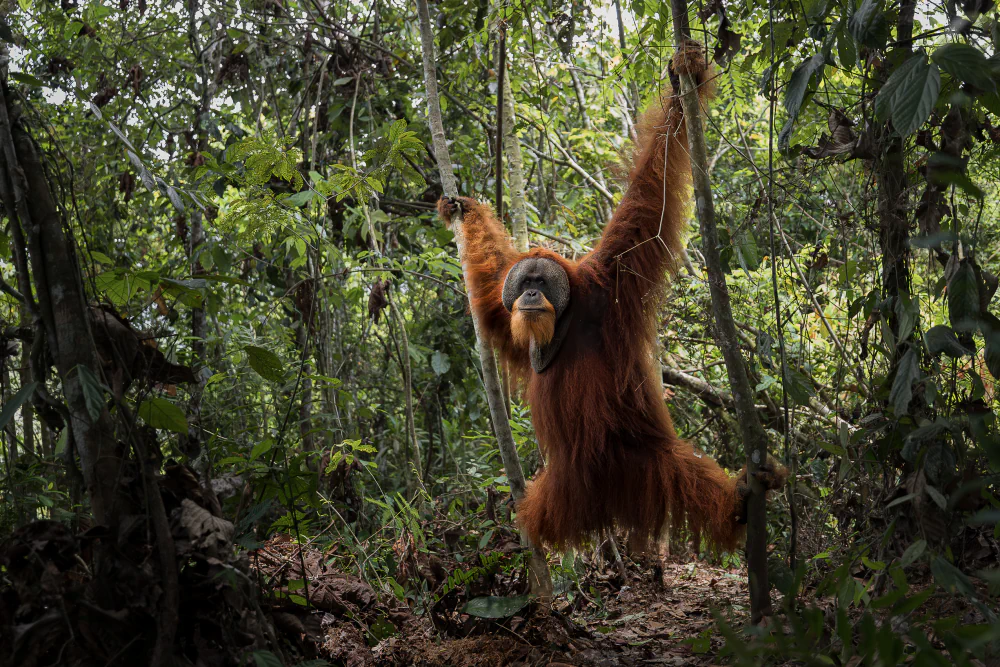
About Benoît Rondelet
Benoît Rondelet approaches photography as an act of witnessing, a way of listening to life as one might listen to a whispered confidence. His images emerge as fragments of silence, spaces where the beauty and fragility of the world converge with an almost tactile intensity. Before dedicating himself fully to photography, he built a career as a thoracic surgeon and lung transplant specialist, devoting years to restoring one of the most essential elements of existence: human breath. This long engagement with life at its most vulnerable shaped a way of seeing that now defines his visual language.
A decisive shift occurred during the COVID-19 pandemic, when, as Medical Director of the UCL Namur University Hospital Group in Belgium, he found himself at the epicenter of an unprecedented confrontation between life and its limits. This experience did not simply mark a professional turning point; it triggered an urgent inner necessity to bear witness to life in all its forms. Photography became a continuation of that commitment, redirected toward the natural world, toward what he describes as the “breath of nature.”
Rondelet’s images do not aim to capture moments in a conventional sense. They reveal presences. They propose a silent communion between humankind and the wild, where light, textures, and gazes construct a space of encounter rather than observation. His work is grounded in the search for a fundamental truth: that all forms of life, from the most humble to the most majestic, participate in the same shared breath. This idea dissolves hierarchies and reframes existence as a continuous, interconnected field.
For Rondelet, photography becomes an act of faith, though not one rooted in dogma. It is a faith informed by science, guided by ethics, and open to spirituality, where nature is understood as a living whole, whether one names it the cosmos, creation, or simply the miracle of reality. His work consistently returns to a central question: what remains of humanity if it loses the capacity to love that which gave it birth?
Positioned at the crossroads of sight and breath, his photographic approach asserts itself as a humanism of the living. Each image functions as a meditation, almost as a secular prayer, attempting to reconcile the rigor of knowledge with the emotional force of beauty. To engage with his photographs is not a passive act; it implies accepting a reversal of roles, an awareness that in looking at the world, one is also being looked at. In this exchange, his work opens a space for reflection, responsibility, and a renewed sense of belonging within the living world. [Official Website]