
Dante is considered the greatest Italian poet. Divina Commedia is the apotheosis of his genius and the nightmare for many students.
I was lucky when I was 15 years old that my teacher was able to make me understand Dante through a language that facilitated the visualization of what the verses were telling. Gustave Doré’s illustrations played a fundamental role in this process.
Divina Commedia can be read from different perspectives: the literal, which focuses on the pure narrative of Dante’s journey; the allegorical, which symbolizes humanity’s redemption from sin; the moral, which focuses on how man must conduct himself in life to avoid damnation and achieve bliss; and the anagogical, which elevates the interpretation to a spiritual and transcendent plane.
The masterpiece is divided into three books: Hell (Inferno), Purgatory (Purgatorio) and Paradise (Paradiso) and each of them is structured in “Canti”; in Inferno there are visually powerful scenes that depict the most bestial part of Humanity and for this reason, it is certainly the book in which the visualization of the scenes is certainly the most captivating.
In her book “We Are All in Hell,” psychologist Giorgia Ditta offers a magnificent interpretation and a very interesting key to understanding the alchemical dimension of the Divine Comedy. The author views Dante’s journey through Hell, Purgatory, and Paradise as a journey of self-purification that necessarily involves an awareness of the most bestial side of humanity before we can aspire to harmony.
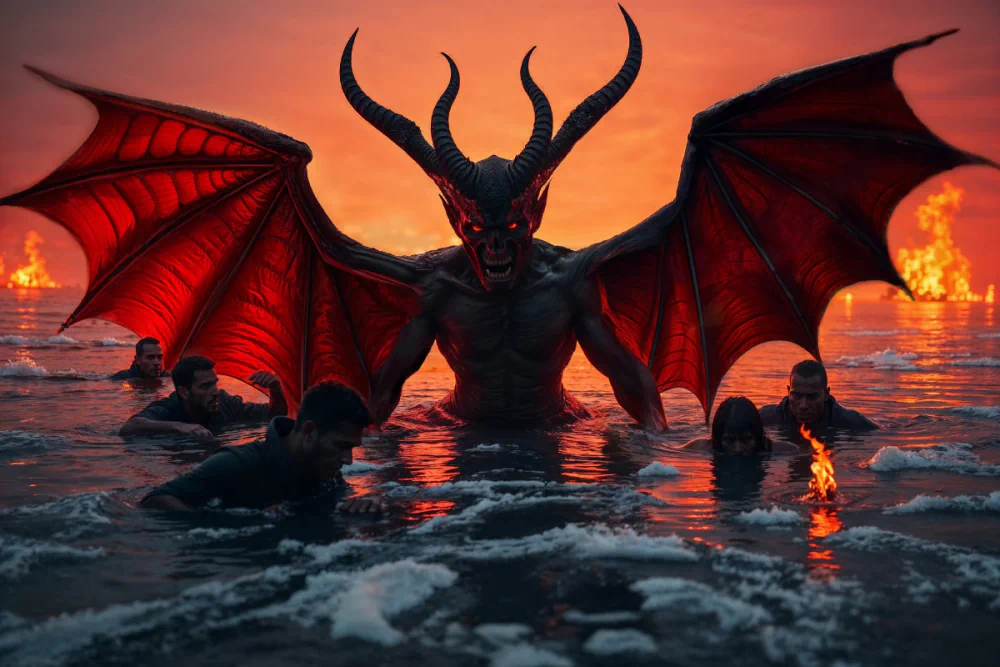
As Giorgia Ditta said, we are all in the Hell because Hell represents the normal human condition in which each of us tend not to assume responsibility for one’s actions and decisions. And it is also the starting point for those few who undertake the tortuous path of searching in the unconscious of their own soul for their talents and cultivating them with love and perseverance until they become masters of their own lives.
Since I was a teenager I have always had the desire to represent what Inferno evoked in me and only now, with the help of AI, I have been able to realize what my mind has been imagining for so long. The result is this series of images I share in this article, which imagine scenes associated with some of Inferno Dante’s Canti. Inferno is divided into circles that overlap in a spiral: the lower levels contain the less serious sins, and the more serious sins descend, until Lucifer, the omnipotent lord of the underworld, is found immersed in ice. To access to Inferno, one must pass through a Dark Forest whose guardians are three ferocious beasts. To complete his path of purification, Dante must first pass through the underworld, and for this purpose he has Virgil at his side, acting as a spiritual guide.
For each of the images I propose in this article, I offer a literal explanation of the scene, but I also offer interpretative insights into the esoteric vision of each of the songs I have illustrated.
But first of all, I would like to tell you how I generated the images because, due to their visual and conceptual complexity, I couldn’t obtain them using AI alone, but also required some patient compositing work.
The starting point was the prompt preparation. I prepared one or two prompts for each Canto of the Inferno that I illustrated, trying to be descriptive but also adding keywords used by Dante text as well as the sensations and emotions that those images, Dante’s verses and the reading and commentary of the Divine Comedy made by Roberto Begnini had transmitted to me.
When I got a “style” that I was happy with, I used the reference image obtained by IA as input for subsequent generations, while at the same time calibrating the keywords related to emotions.
I never got everything I wanted to represent in a single generation, so I took pieces from different generations to make the final composite in Photoshop, working with brushes and layers… and here is the result of this work
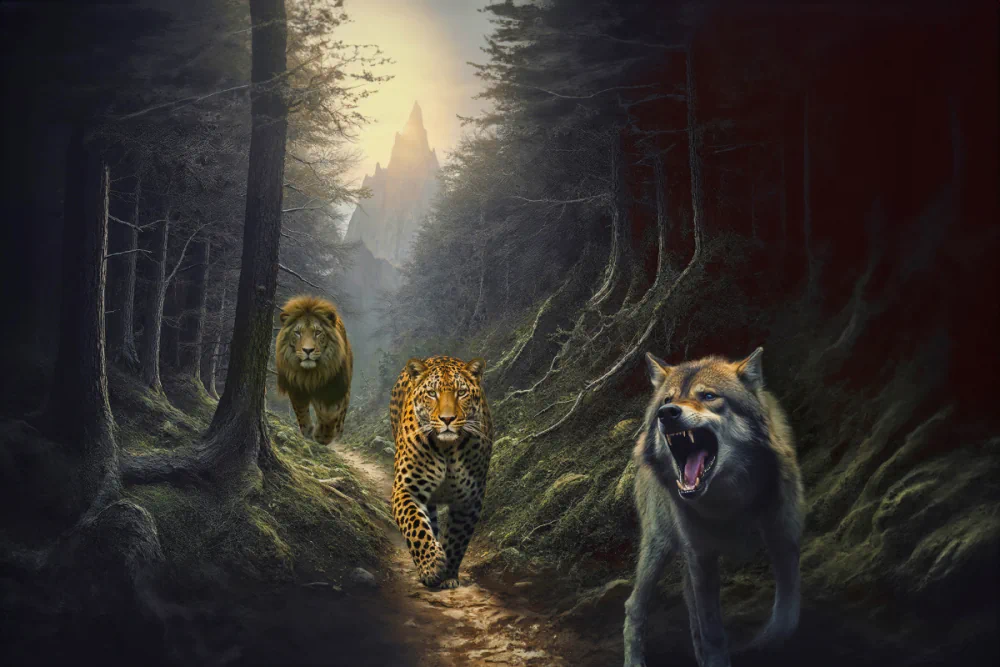
THE THREE BEASTS: Dante finds himself lost (in a dark forest) after leaving the main road and there he encounters a Lion, a Leopard, and a Wolf. Dante wishes to continue his journey, but the three beasts block his path. Embarking on a journey of honest self-knowledge is by no means easy. We all know this. Instincts, impulses, and the rational mind, represented by these three beasts, are the first and greatest obstacle for redeption
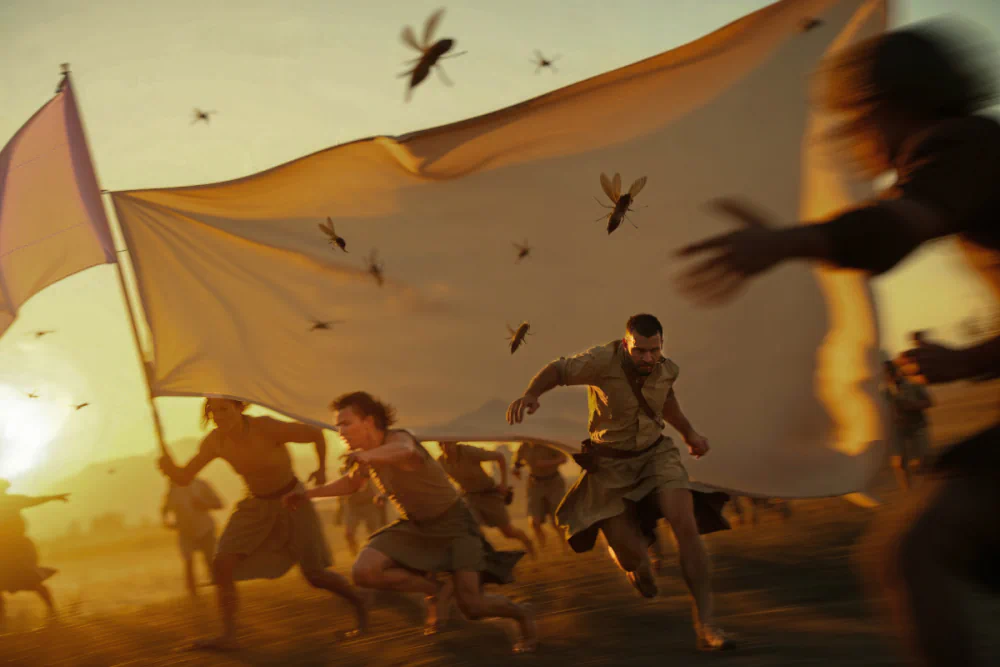
IGNAVI and the Ante-Hell: After defeating the three beasts, Dante finds himself in the Ante-Hell, the undisputed realm of those who have never had a clear stance on any issue in life. People who simply drifted with the current. The ignavi are indolent, lazy people who lack active willpower, who in life avoid responsibility and moral choices, often out of cowardice. Now, they are condemned to perpetually chase empty banners while being stung by voracious insects. How easy it is to never take responsibility; how easy it is to always blame others or bad luck for the things that happen in our lives!
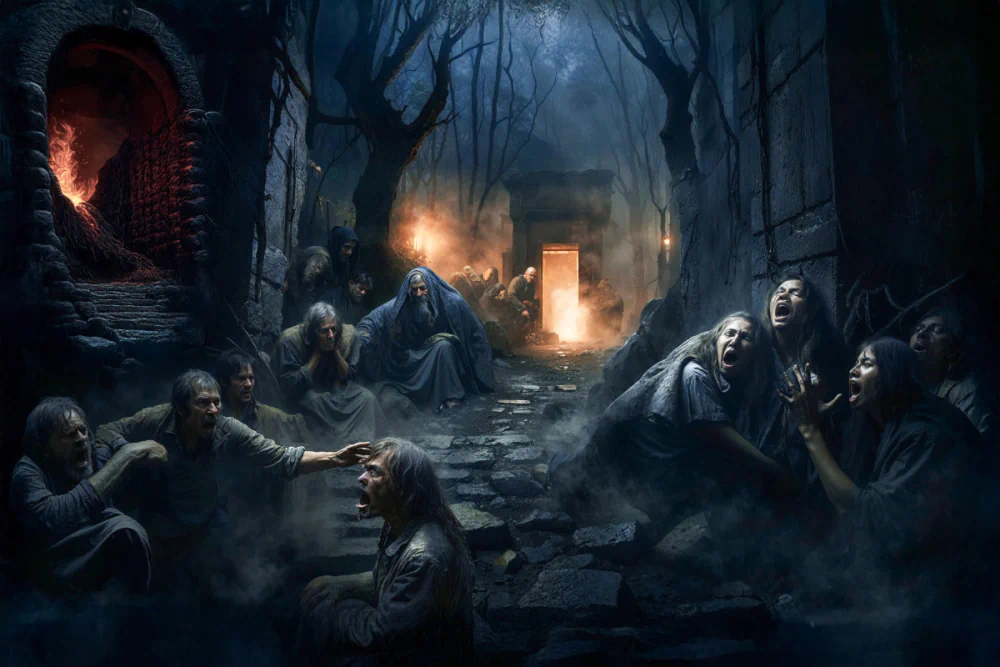
GATE OF HELL: Dante finally reaches the gate that leads to Hell. Hell is seductive and comfortable because it’s so easy to fall into temptation and then blame others for our inability to resist! Whoever approaches its door perceives the suffering that he will have to endure for not having been able to overcome the most bestial nature.
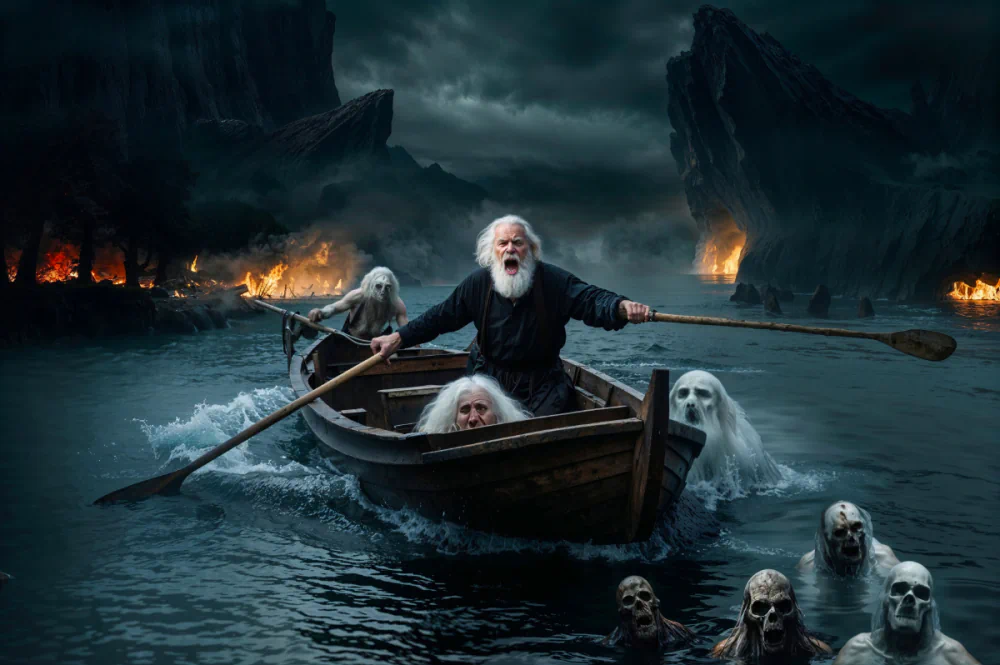
CARONTE: Once inside, Dante finds himself facing the river Acheron. On one bank are the recently deceased souls waiting to reach their appointed destiny. On the other bank, the infernal pits begin. Charon is the ferryman of souls.
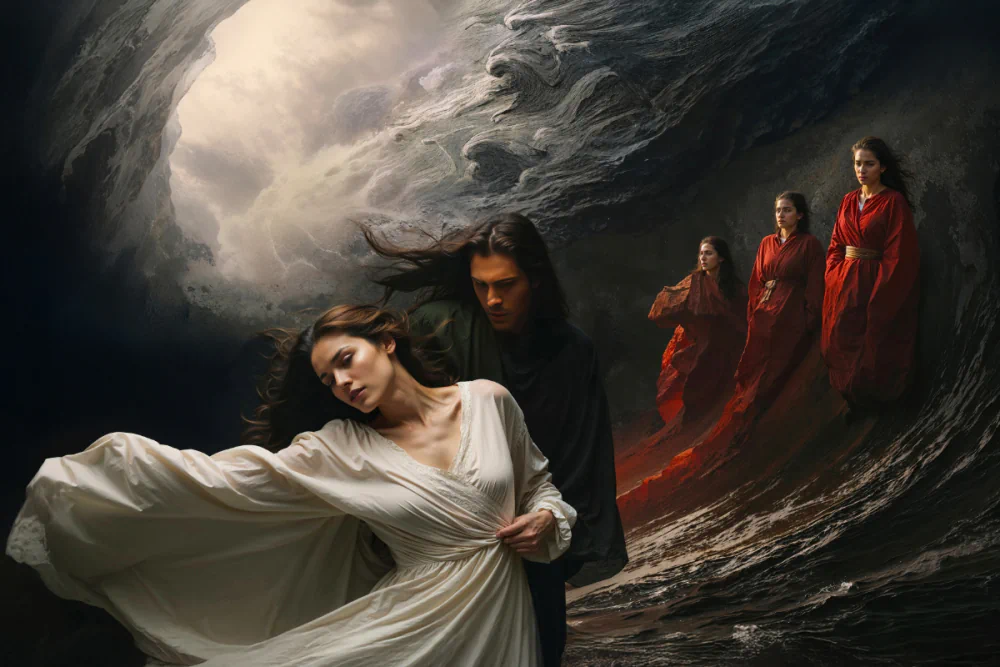
LUST: In the circle of the lustful are those who have been guided by lust throughout their lives and have never admitted it, blaming their behavior on the circumstances surrounding them, not on their own will. Sinners are condemned to be perpetually transported and tossed by cold, violent winds. Here Dante encounters Paolo and Francesca, who were killed by her husband (and his brother) after discovering her betrayal.
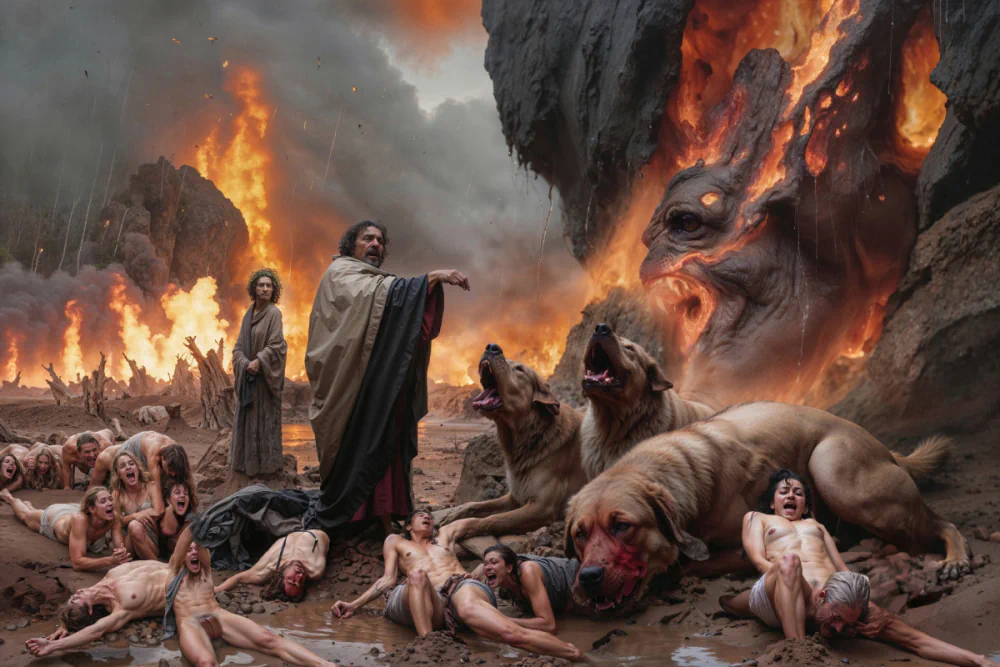
GOLOSI: The circle of gluttons includes those who have given in to gluttony in life and have been unable to control their urge to gorge themselves on food for pleasure or to hide the true nature of their desires. Gluttons are condemned to live in the mud, under incessant rain, and under the watchful eye of Cerberus, a ferocious three-headed dog.
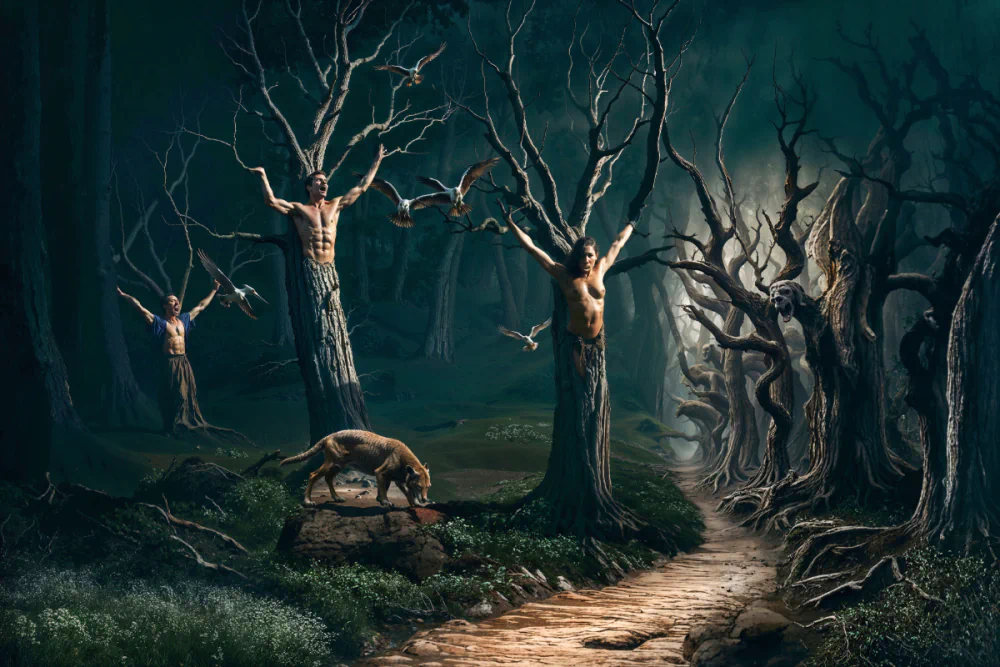
SUICIDES: The circle of suicides includes those who, in life, chose to punish their own bodies, either because they failed to listen deeply to their souls and act accordingly, or because they refused to allow others to help them in that endeavor. The bodies of these sinners are embedded in tree trunks, unable to escape the tortures inflicted on them by the harpies, creatures with the bodies of birds and the faces of women.
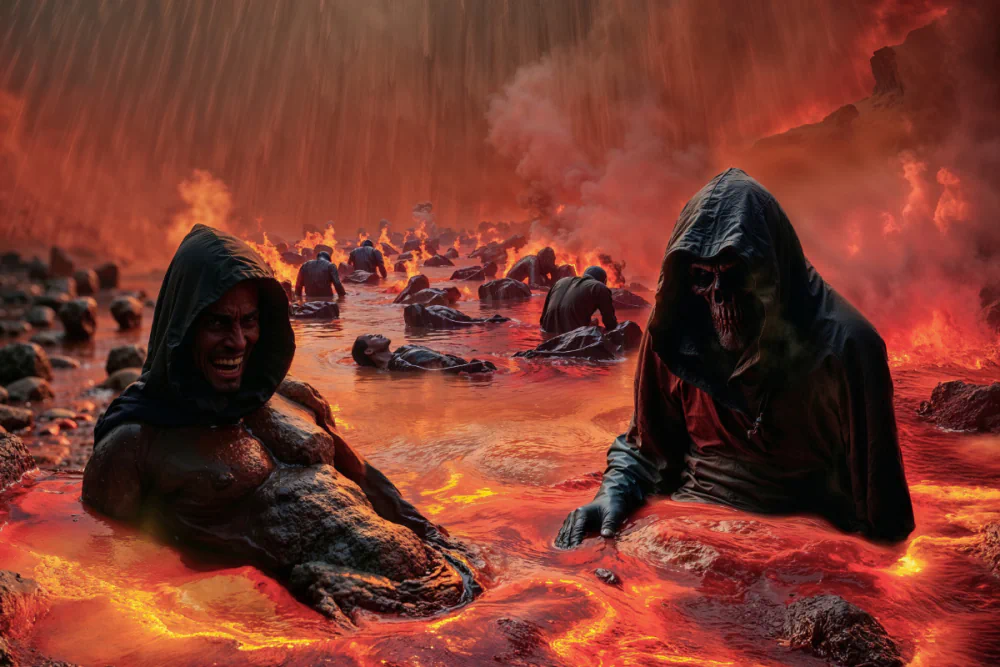
USURERS: condemned to remain under a rain of pouring fire, they are those who in life have exploited the economic and emotional fragility of others for personal gain and enrichment. A loan shark can also be one who demands affection or recognition to gain a position of power over another.
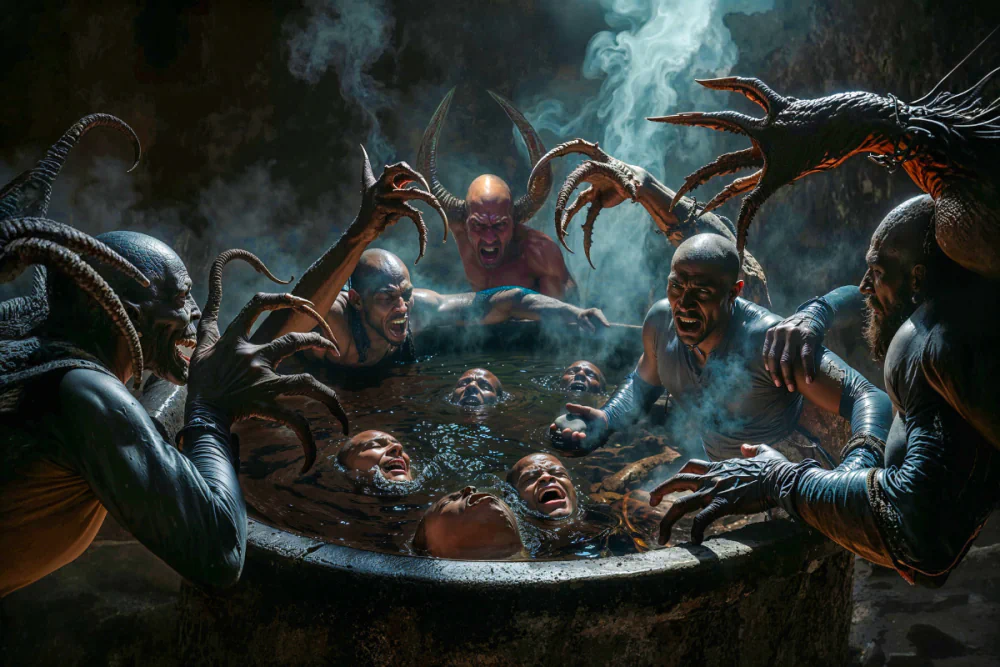
THIEVES: Thieves are those who have stolen from others for personal gain; they are condemned to be burned alive in pitch, tortured by devils.
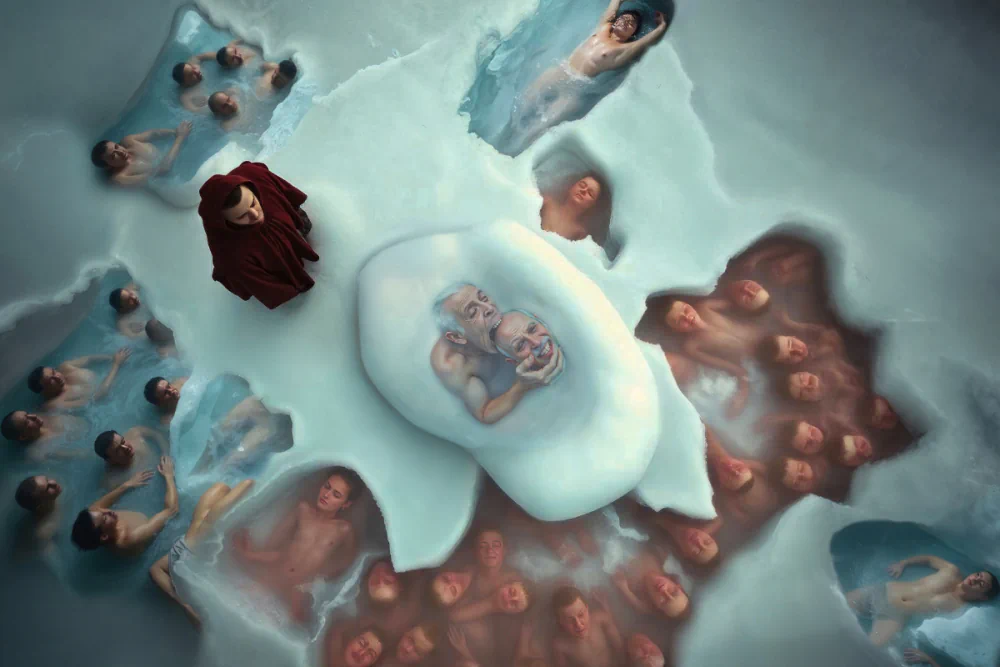
TRAITORS: For Dante, betrayal is the worst of sins, and that is why traitors are in the depths of Hell, in the presence of Lucifer and trapped in ice. Among these condemned, two men stand out: Conte Ugolino, who bites the skull of Cardinal Ruggieri, who in life betrayed him and locked him in a tower with his children, leaving them to starve to death.

Photosatriani
I am a curious of life with idealistic tendencies and a fighter. I believe that shadows are the necessary contrast to enhance the light. I am a lover of nature, of silence and of the inner beauty. The history of my visual creations is quite silent publicly but very rich personally, illuminated by a series of satisfactions and recognitions, such as: gold and silver winner in MUSE Awards 2023; Commended and Highly Commended in IGPOTY 2022/19/18, honorable mention in Pollux Award 2019; selected for Descubrimientos PhotoEspaña (2014), Photosaloon in Torino Fotografia (1995) and in VIPHOTO (2014). Winner of Fotonostrum AI Visual Awards 2024. Group exhibitions in: Atlántica Colectivas FotoNoviembre 2015/13; selected for the Popular Participation section GetxoPhoto 2022/20/15. Exhibitions in ”PhotoVernissage (San Petersburgo, 2012); DeARTE 2012/13 (Medinaceli); Taverna de los Mundos (Bilbao); selected works in ArtDoc, Dodho, 1X. A set of my images belongs to the funds of Tecnalia company in Bilbao, to the collection of the "Isla de Tenerife" Photography Center and to the Medicos sin Fronteras collection in Madrid. Collaborator and interviewer for Dodho platform and in Sineresi magazine [Website]