

The history of street photography cannot be separated from the evolution of the Leica camera.
From the moment the Leica I appeared in 1925, photography ceased to be tied to preparation and became an activity embedded in movement. What followed over the next four decades was not simply a sequence of new models, but a gradual refinement of a single idea: the camera should interfere as little as possible between perception and action.
This period, stretching from the Leica I to the Leica M4, represents the foundational era in which the visual language of modern street photography was formed. Each model addressed a practical limitation encountered by photographers working in real environments, and each solution subtly altered how images could be made.
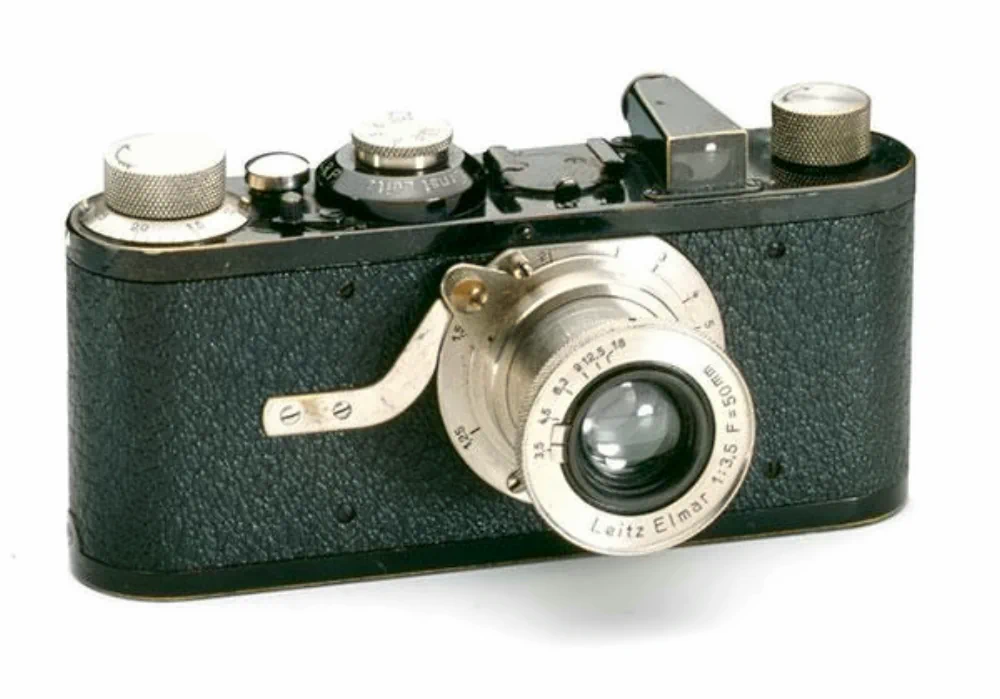
Portability as the Beginning of Modern Photography
The Leica I introduced a radical proposition: a camera small enough to be carried at all times yet capable of producing professional-quality images. Its use of 35 mm cine film in a horizontal 24×36 mm format established a new technical standard that allowed photographers to work quickly and without elaborate setups.
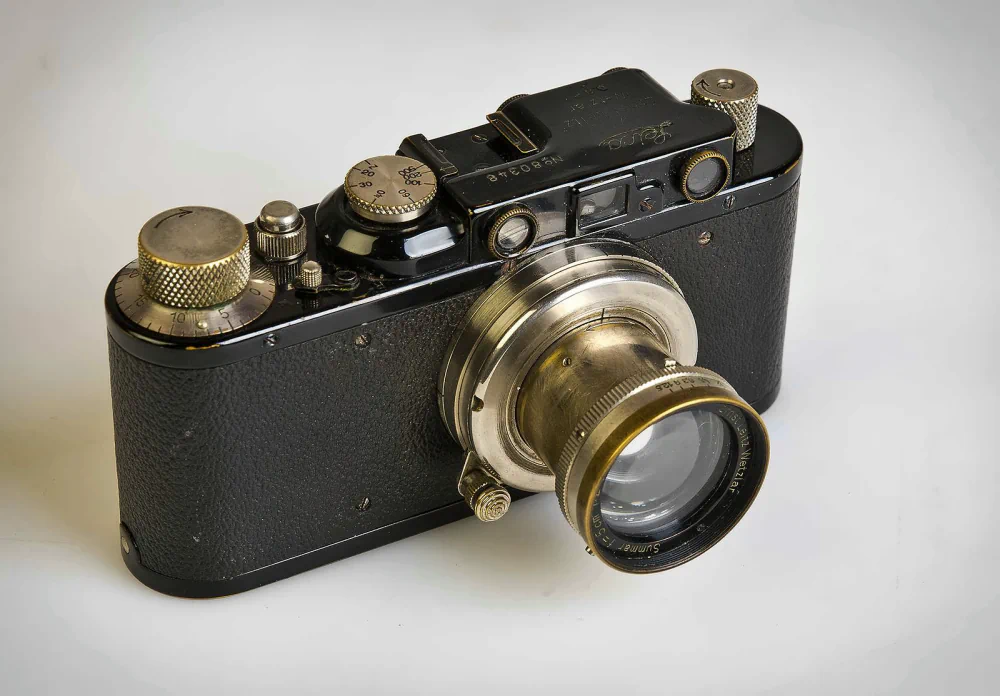
The Leica II advanced this idea by incorporating a coupled rangefinder, making precise focusing possible without slowing down the act of observation. Photography became not only portable, but responsive. The camera could now keep pace with the unpredictability of public life.
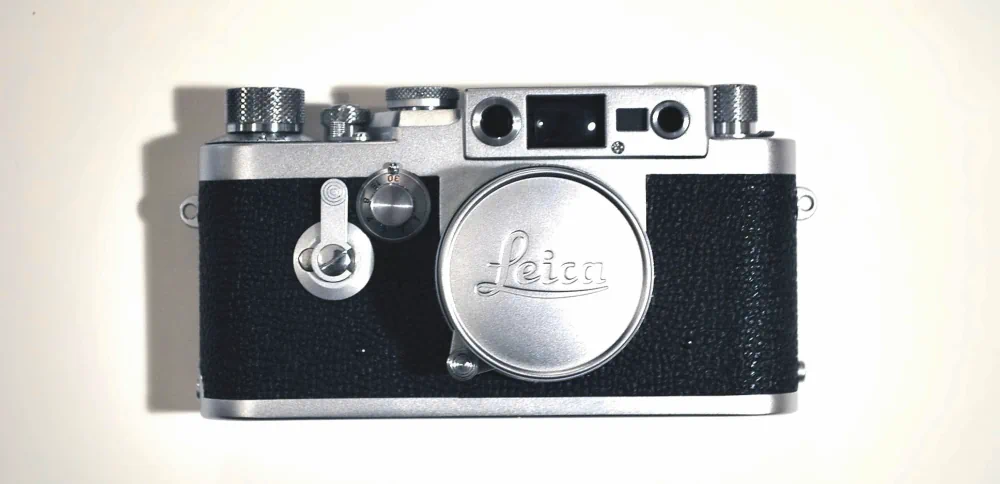
By the time of the Leica IIIg, the original Barnack concept had reached its most refined mechanical form. Decades of incremental improvement had produced a compact instrument that embodied reliability and precision, closing the first chapter of Leica’s development while the photographic world was already moving toward new ergonomic solutions.
These early cameras did more than shrink equipment. They transformed photography into an activity based on anticipation rather than construction.
The M System and the Redefinition of Usability
The introduction of the Leica M3 in 1954 marked a decisive shift from miniaturization to operational clarity. With its integrated bright-line viewfinder and redesigned ergonomics, the M3 allowed photographers to frame, focus, and shoot within a single continuous gesture. The camera became less of a device and more of an extension of the photographer’s body.
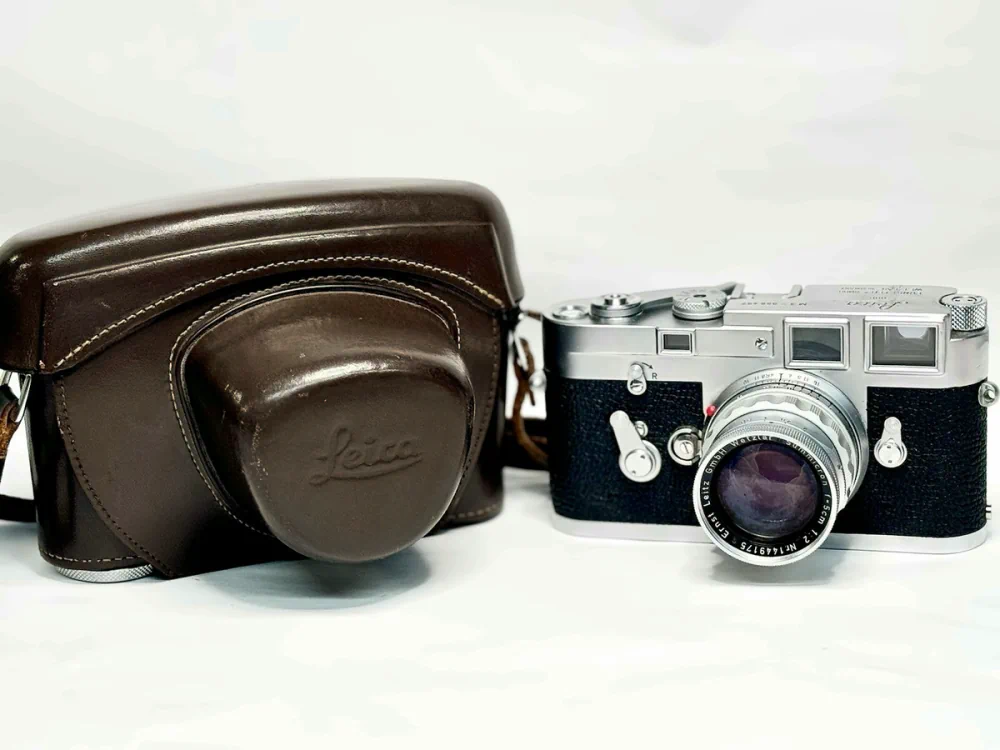
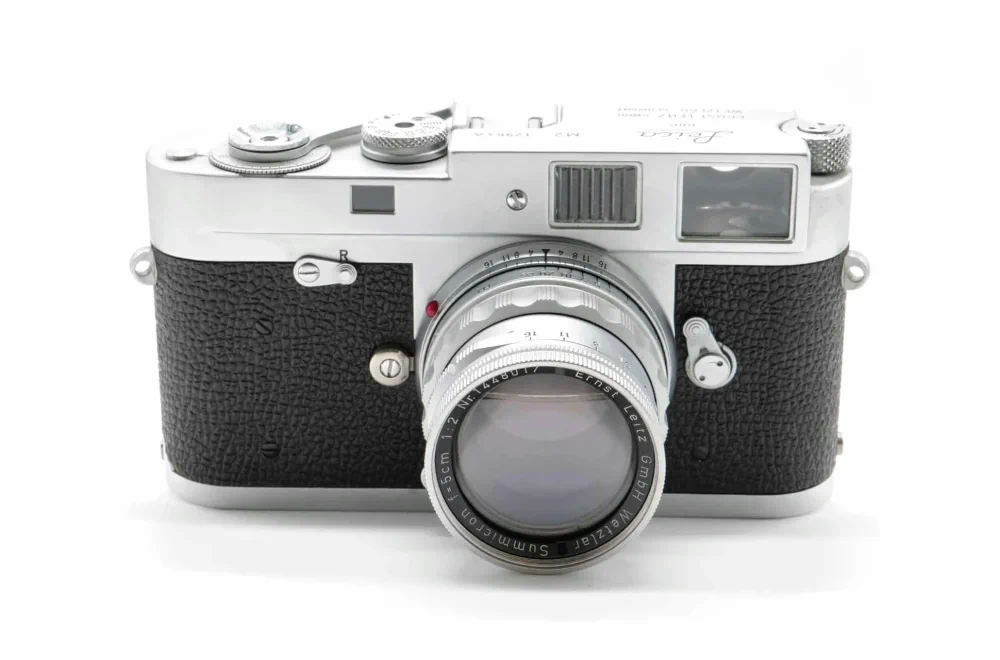
The Leica M2 followed by adapting the system to the growing importance of the 35 mm focal length. This adjustment reflected a broader transformation in photographic practice. Street photography was no longer centered solely on isolated moments but increasingly on spatial relationships, context, and visual layering. The M2 made this wider perspective intuitive.
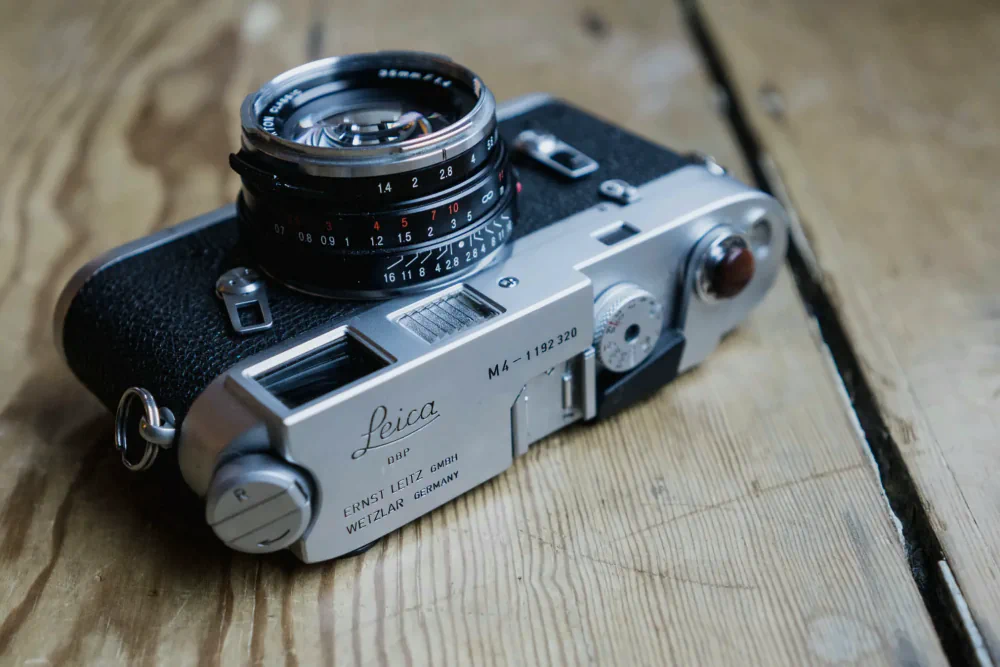
The Leica M4, introduced in 1967, consolidated decades of experience into a refined working tool. Improvements to film handling and mechanical efficiency did not alter the philosophy of the system, but they reduced operational friction. By this point, Leica cameras were no longer redefining photography; they were stabilizing a mature method of working.
A Continuous Philosophy Rather Than a Series of Innovations
Unlike many technological histories defined by abrupt breakthroughs, the Leica story from the I to the M4 is characterized by continuity. Each model removed small obstacles rather than introducing entirely new concepts. The essential premise remained unchanged: a camera should be compact, quiet, reliable, and fast enough to respond to life as it unfolds.
This continuity explains why the visual identity of street photography remained remarkably coherent across decades. The tools encouraged attentiveness, mobility, and proximity. They allowed photographers to remain inside the environment they were documenting rather than observing from a distance.
The Formation of a Photographic Method
Between 1925 and the late 1960s, Leica cameras helped establish a working method that continues to influence photographers today. That method is defined not by equipment specifications but by behavioral principles:
- Carry the camera constantly.
- Work with minimal delay between seeing and photographing.
- Engage physically with the environment rather than observing from afar.
- Allow the flow of public life to determine the image.
The Leica cameras of this era were uniquely suited to these demands because they prioritized mechanical immediacy over technological complexity.
The End of the Foundational Era
By the time the Leica M4 appeared, the essential relationship between photographer, camera, and street had already been established. Later cameras would introduce new materials, electronics, and eventually digital sensors, but they would not fundamentally change the method forged during these earlier decades.
The journey from the Leica I to the Leica M4 is therefore not just a history of cameras. It is the story of how a tool gradually aligned itself with human perception, making it possible to photograph the city with the same fluidity with which it is experienced.
Understanding this progression is key to understanding street photography itself, because the genre did not merely adopt Leica cameras. It evolved alongside them.