
Dhobis of Lucknow behind the threads of Chikankar
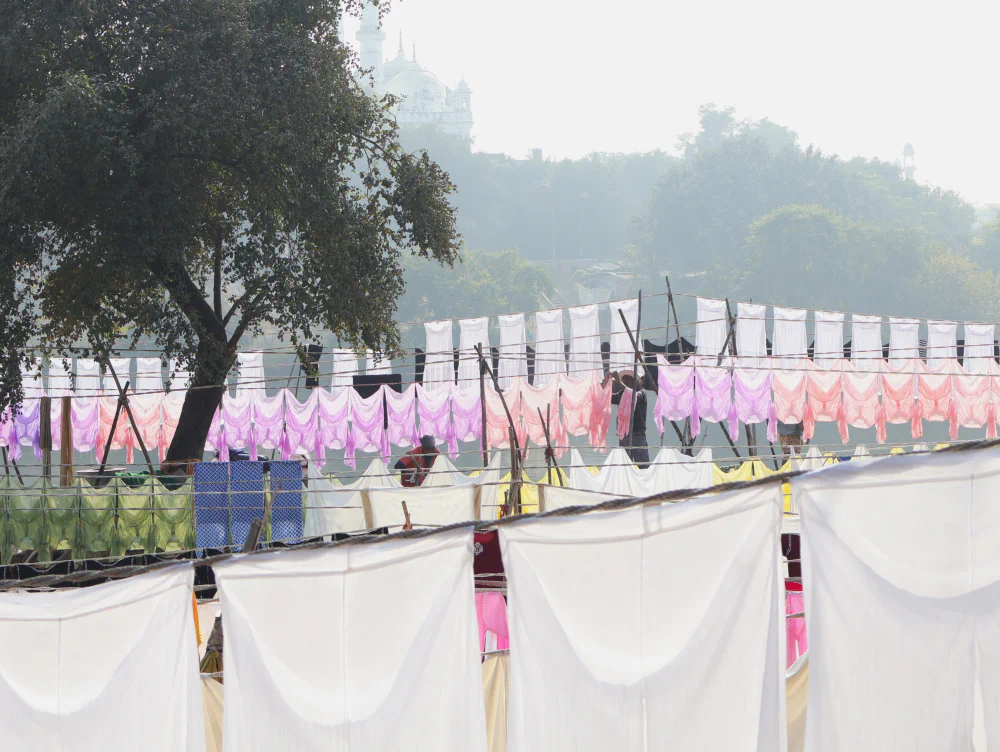
Originating in Lucknow, Chikankari embroidery stands as the city’s signature craft and cultural hallmark. It has created a strong appeal in the Indian market. Apart from the labor of the artisans that goes into the making of Chikankari kurtas, there is a crucial step in its production carried out by the Dhobi community.
Lucknow’s Dhobi Ghat stretches along the Gomti River in the Kandra area, where the charm of its heritage resides, with landmarks such as Bada Imambara, Rumi Darwaza, and the Husainabad Clock Tower. Since 1914, the Hardinge Bridge, also known as Pucca Pul, has been used to cross the Gomti. In 2024, more than a century later, engineers declared it unfit for heavy traffic, and the bridge was restricted to lighter vehicles only.
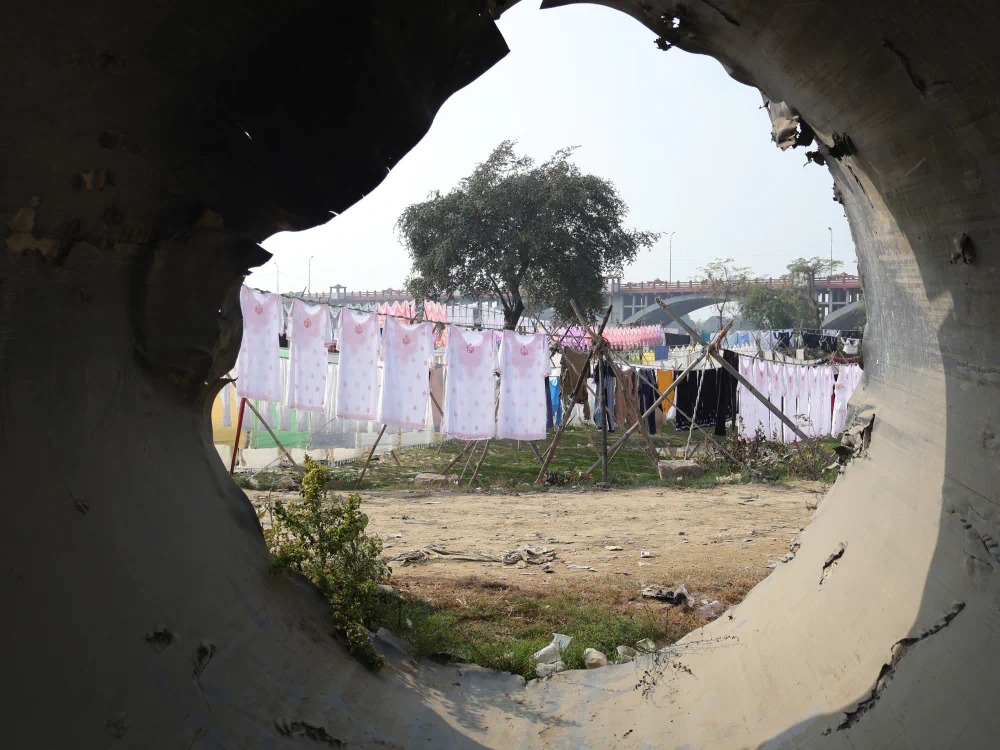
To meet traffic demands, two new bridges were built on either side, matching the design of the Hardinge Bridge. The project is estimated at around ₹92 crores and is expected to be completed by June 2027.
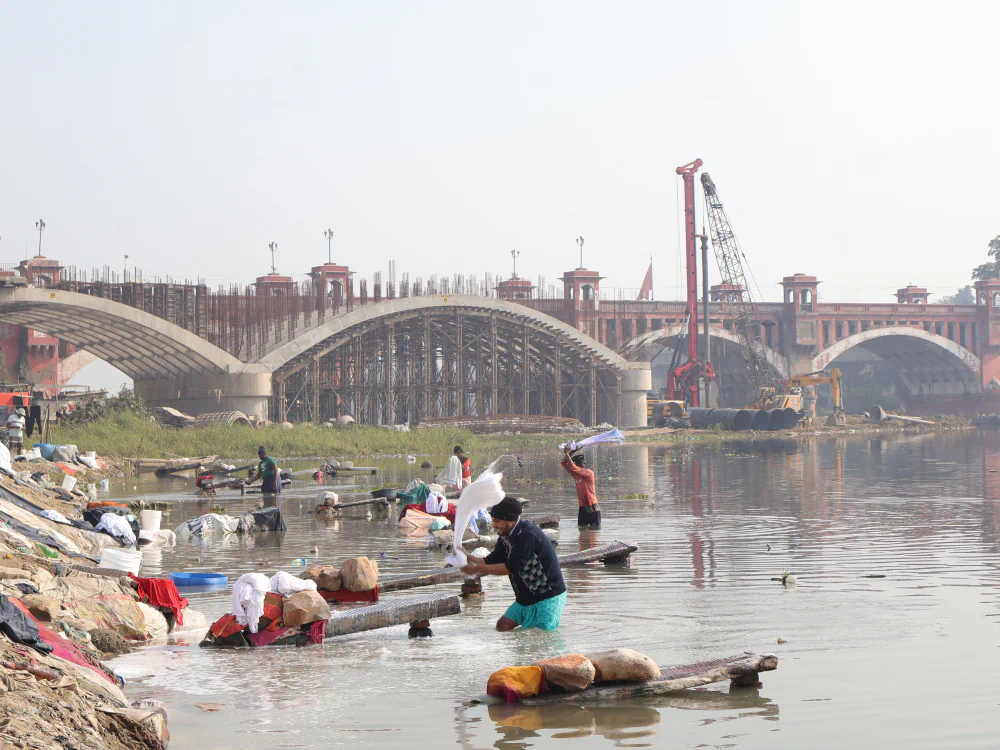
A large section of the washers working at the Dhobi Ghat belongs to the Dhobi Kannaujia community and lives near the bridge itself. Members of the Dhobi community reported that the Gomti River was dry for around five months last year due to the construction of the bridges, which forced them to move in search of the remaining water.
Rajkumar, 50, a washer at Kandra’s Dhobi Ghat, said, “There were around 300 washers at the ghat before the construction started.” As the water level declined, it became increasingly difficult for them to continue their work, forcing many to take up other jobs. Currently, there are around 30 washers working at the ghat.
Rishi Kannaujia is the chairperson of the Dhobi Vikaas Kalyaan Samiti, which was established after the Gomti’s water levels remained low for months. On October 25, in a letter to the SHO of Hasanganj, Amar Nath Verma, he requested that the issue be investigated and that a Dhobi Ghat be established near Pucca Pul.
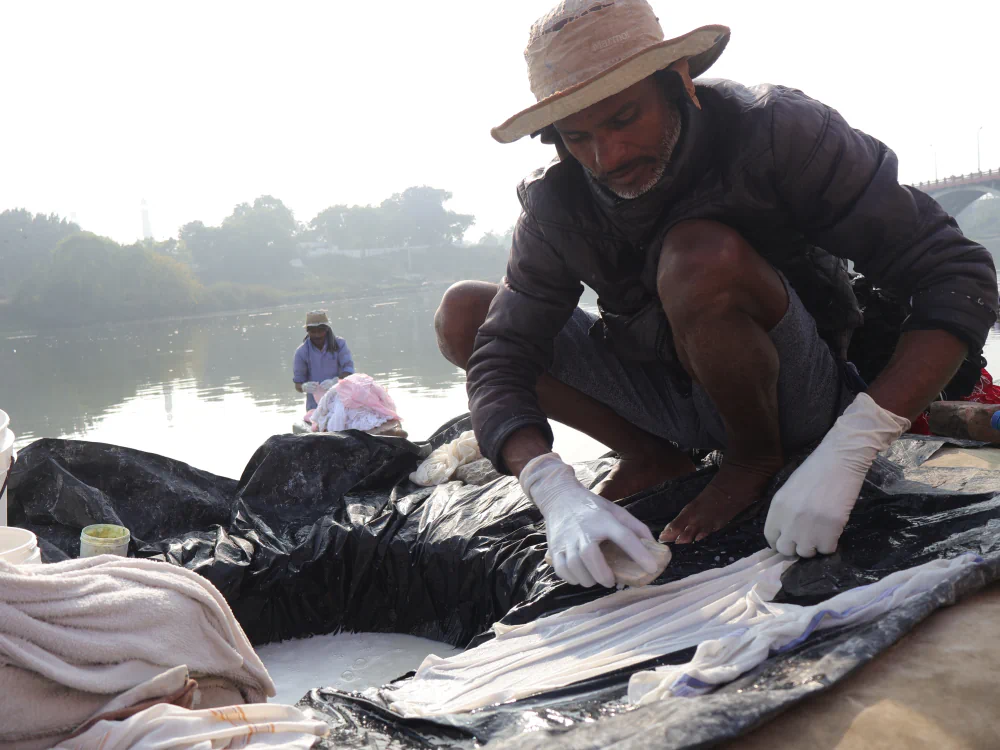
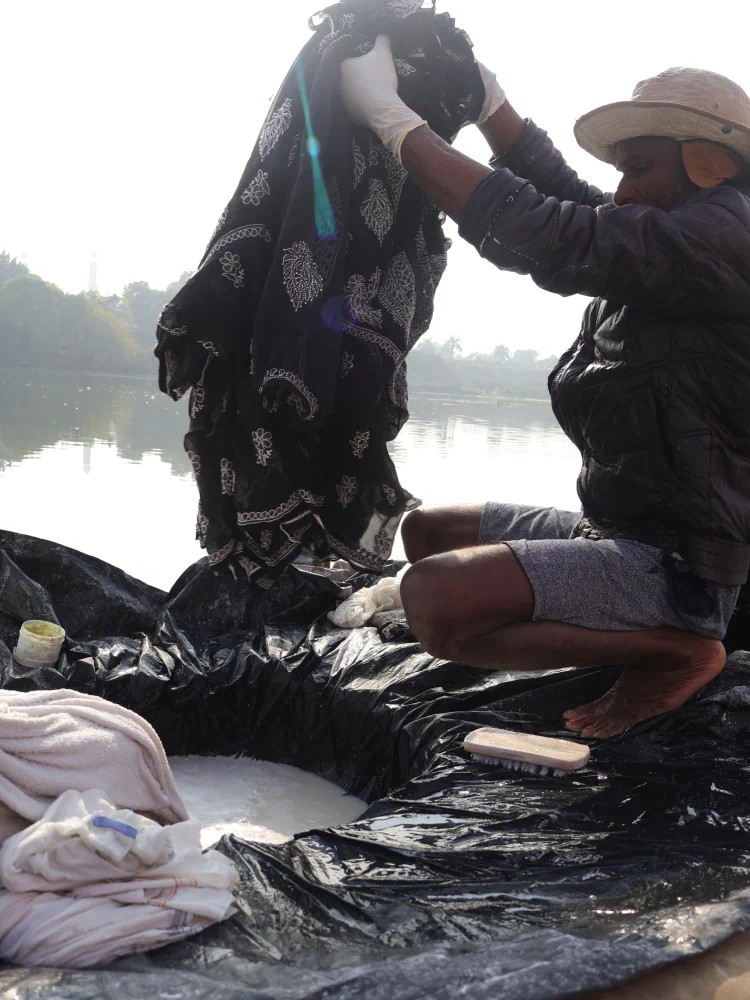
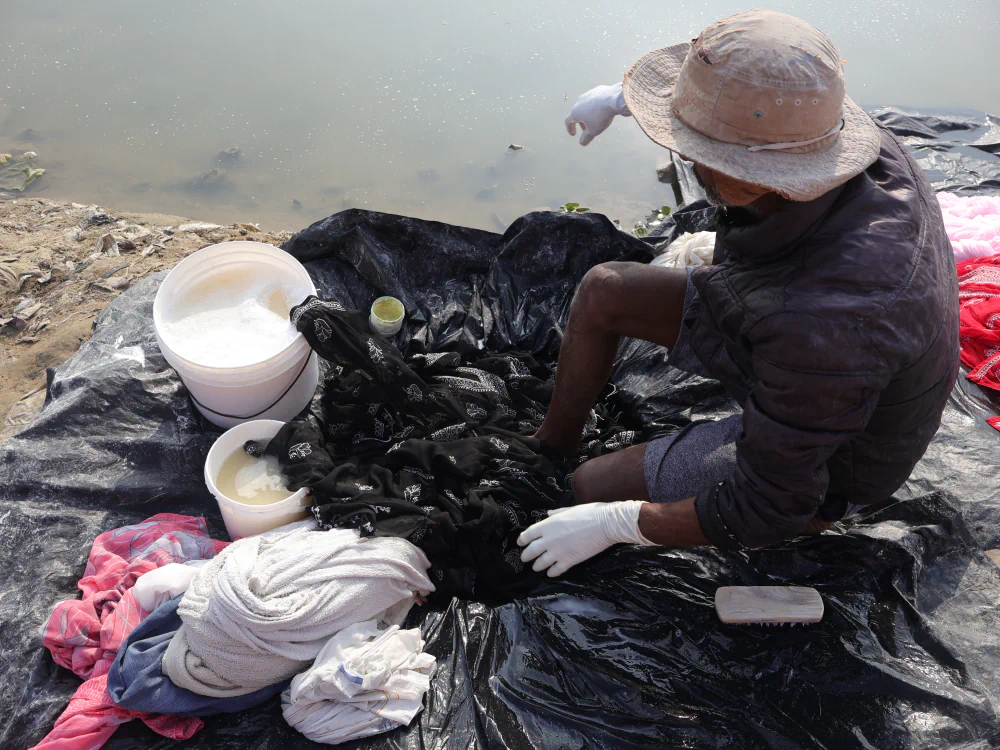
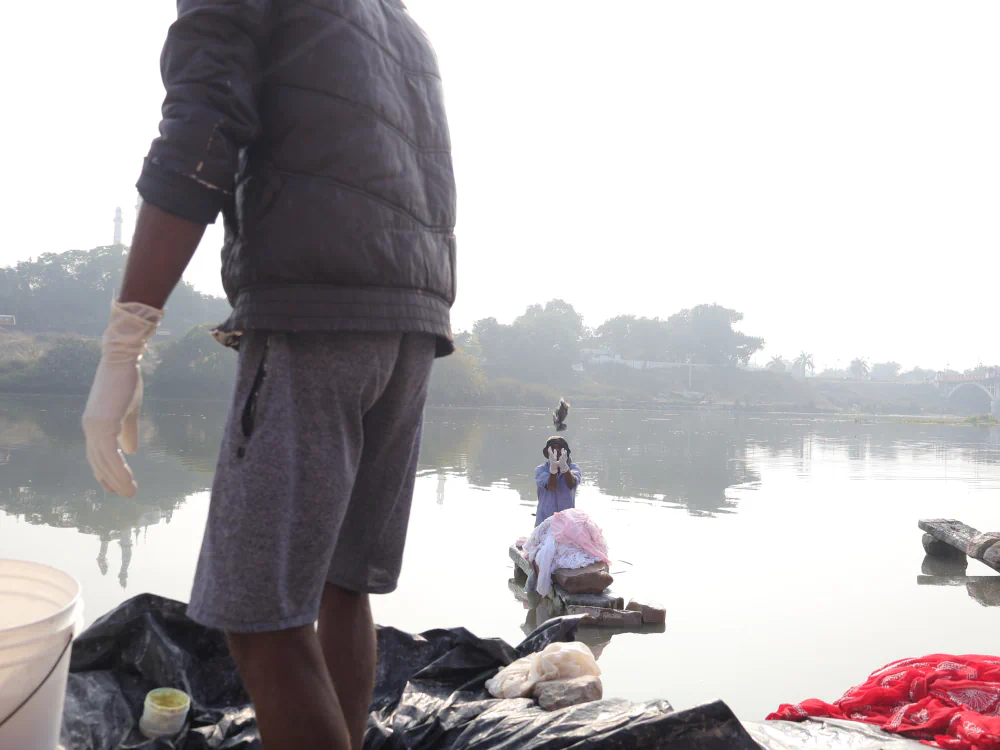
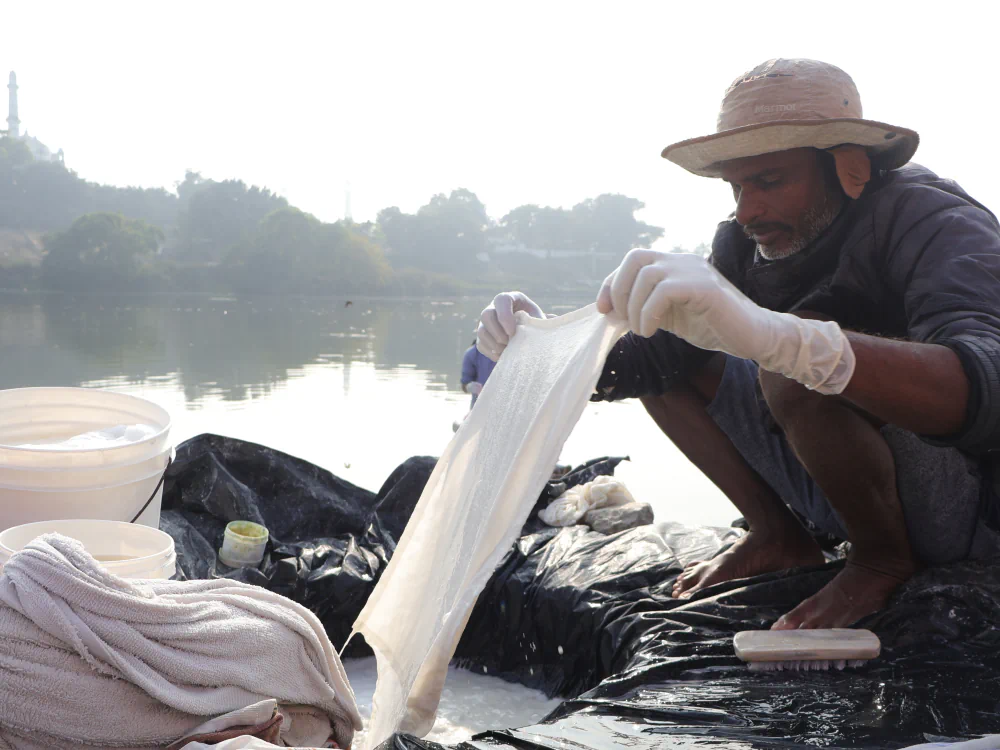
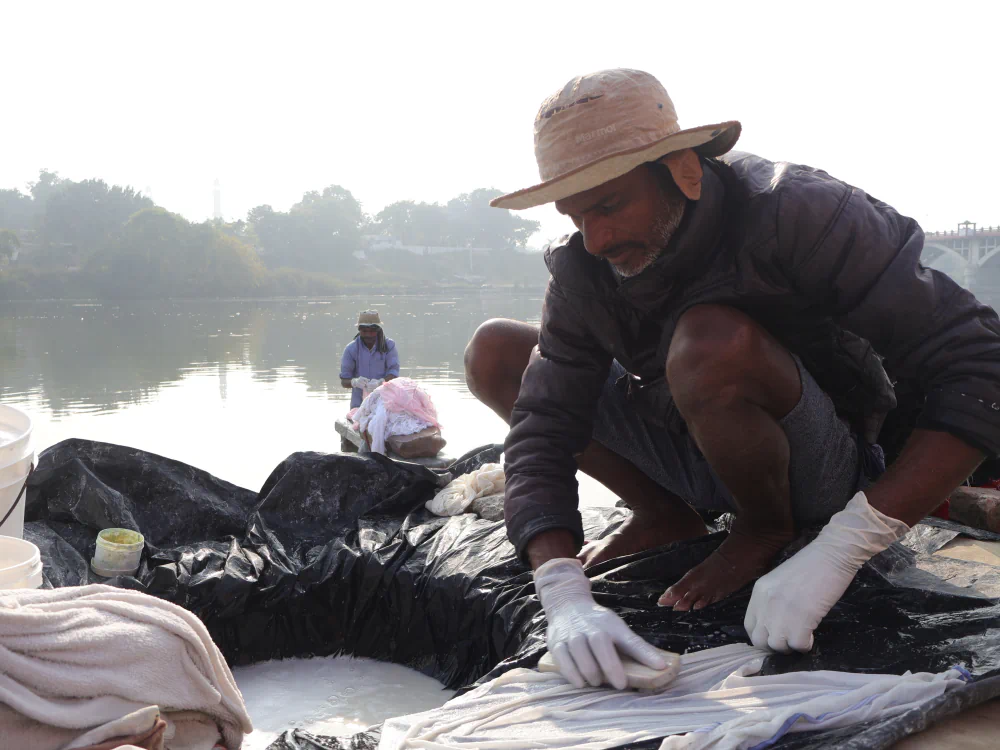
The final phase of Chikankari embroidery includes washing the garments once the handicraft work is complete. A shallow pit is dug where the clothes are first washed by hand and foot.
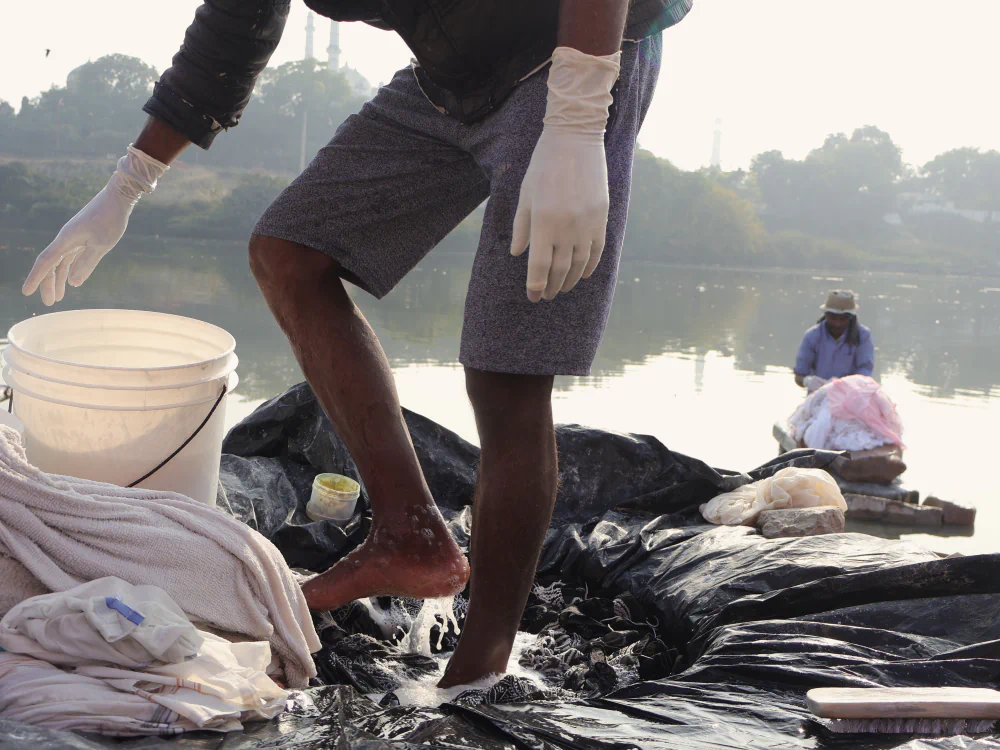
The clothes are then carried to the river, where they are beaten against teak wood.
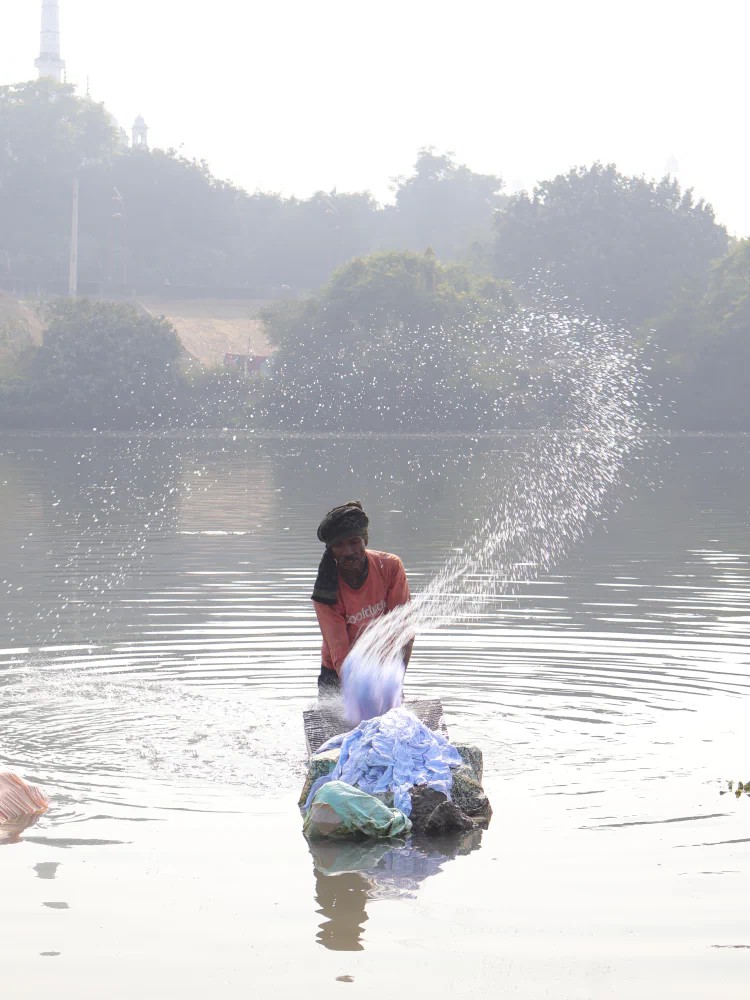
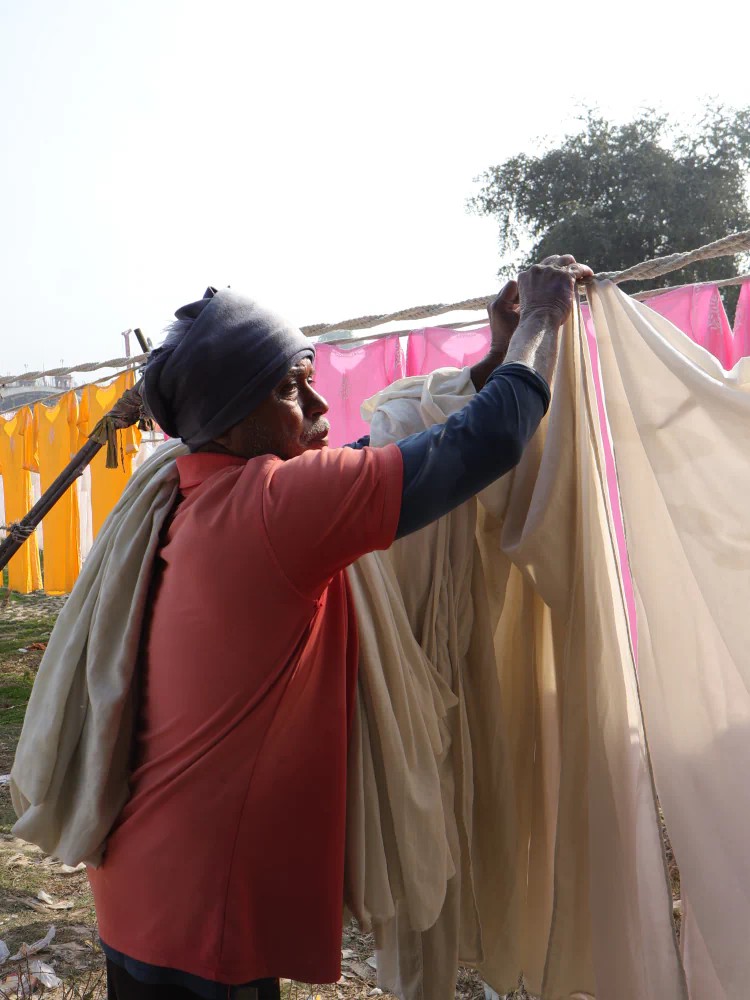
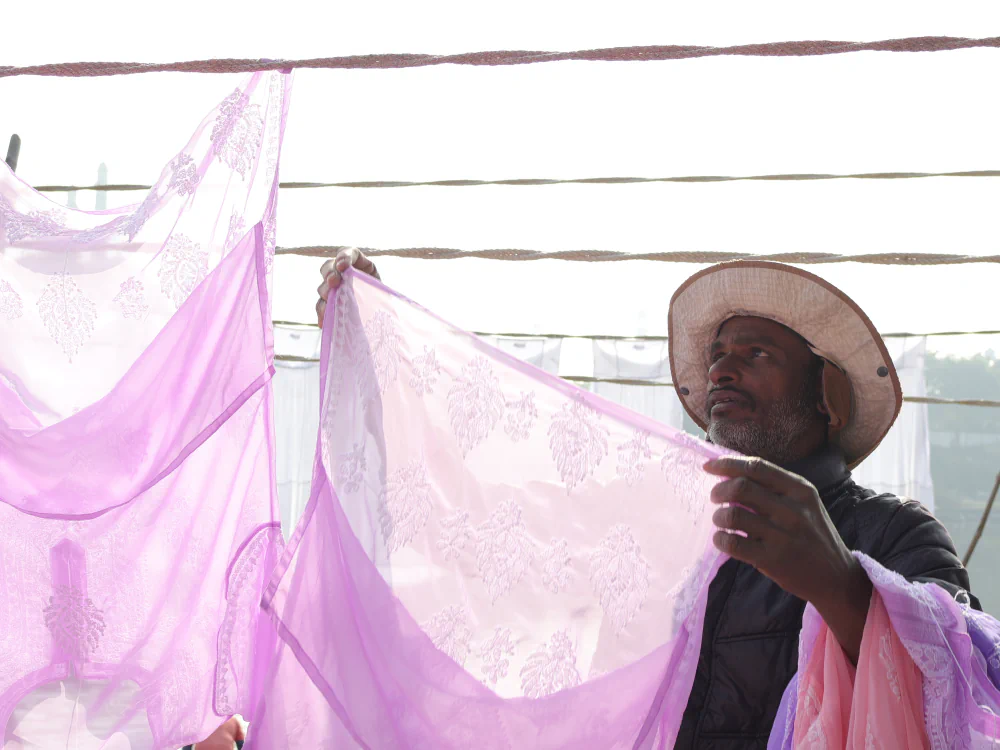
Once washed, the wet garments are placed in a manually operated machine to remove excess water. Long ropes are intertwined and secured to the ground with bamboo sticks, allowing the washers to tuck the clothes between the strands so they can dry evenly before being sent to markets.
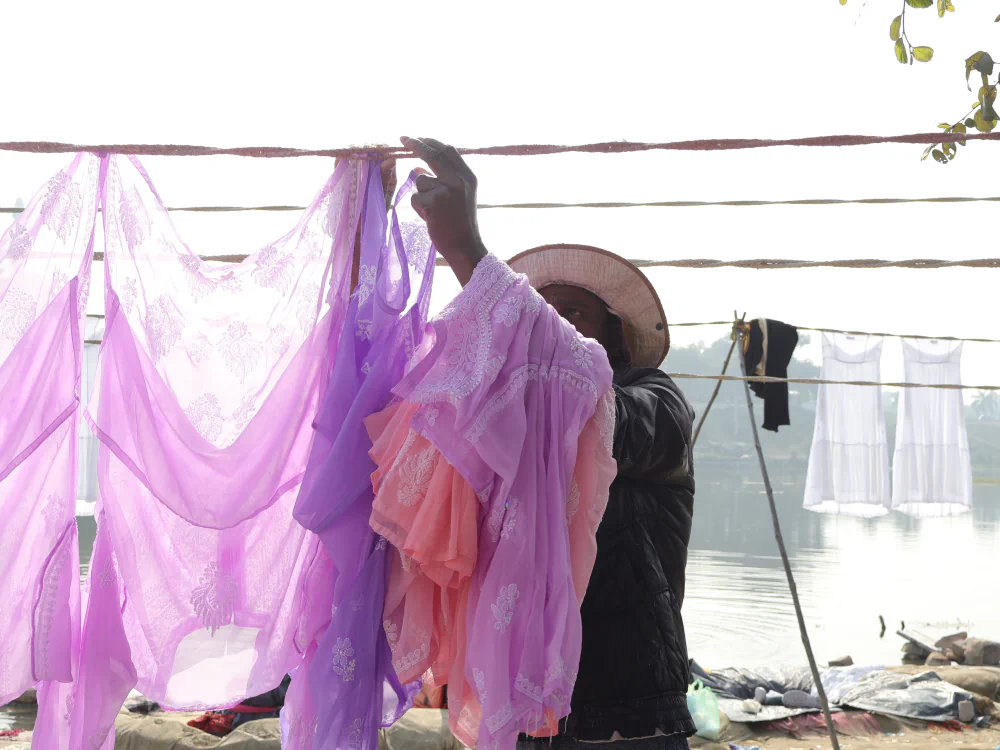
Generations of families have worked at the Dhobi Ghat for decades. They continue to seek a dedicated space that can support their labor-intensive craft.
About Ishita Yadav
Ishita Yadav is a freelance journalist and photographer based in Delhi. She is currently pursuing her Master’s degree in Convergent Journalism at AJK MCRC, Jamia Millia Islamia. Her work focuses on human rights and gender. [Official Website]