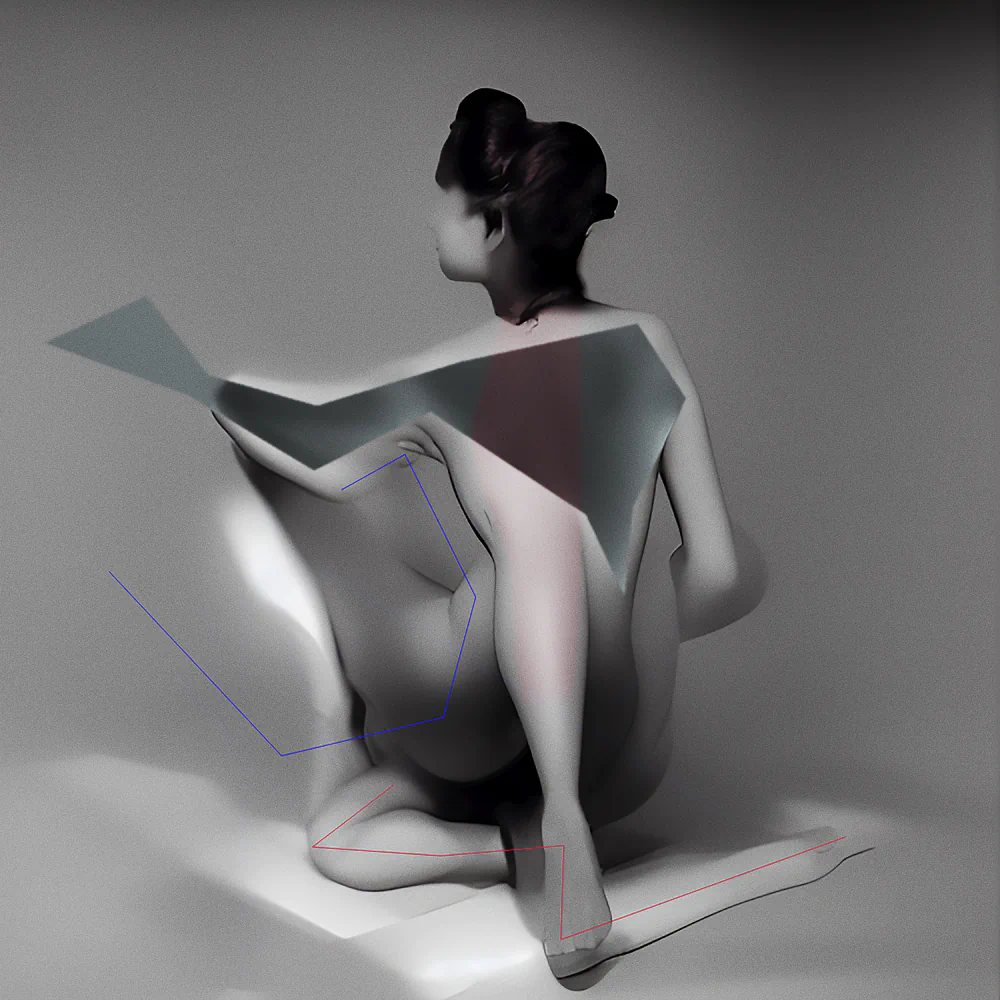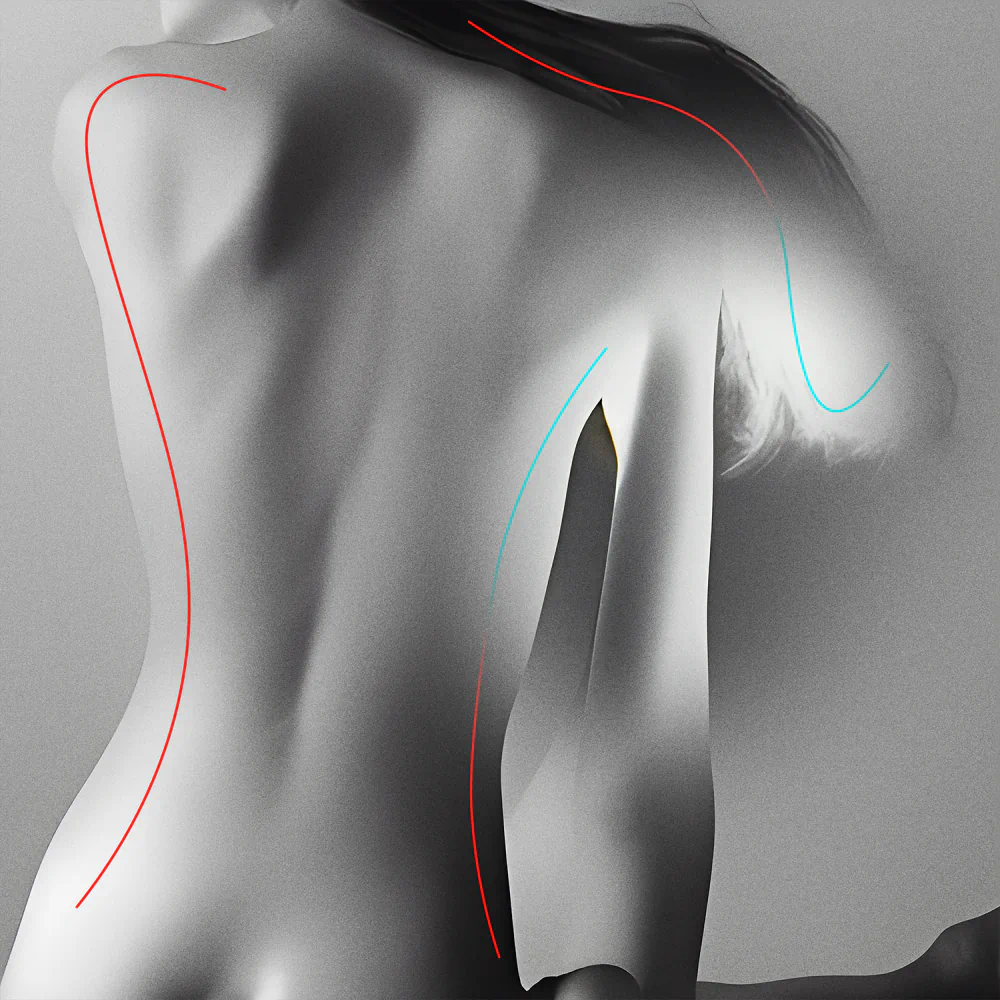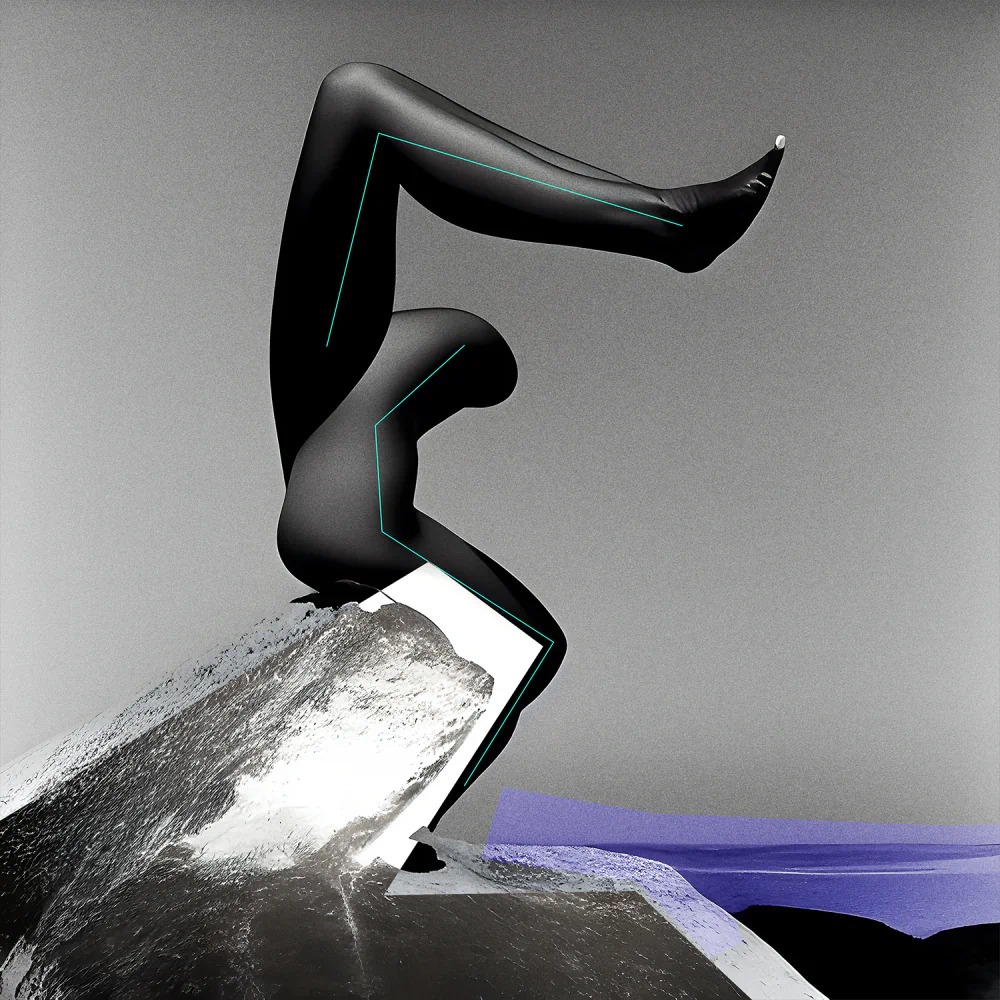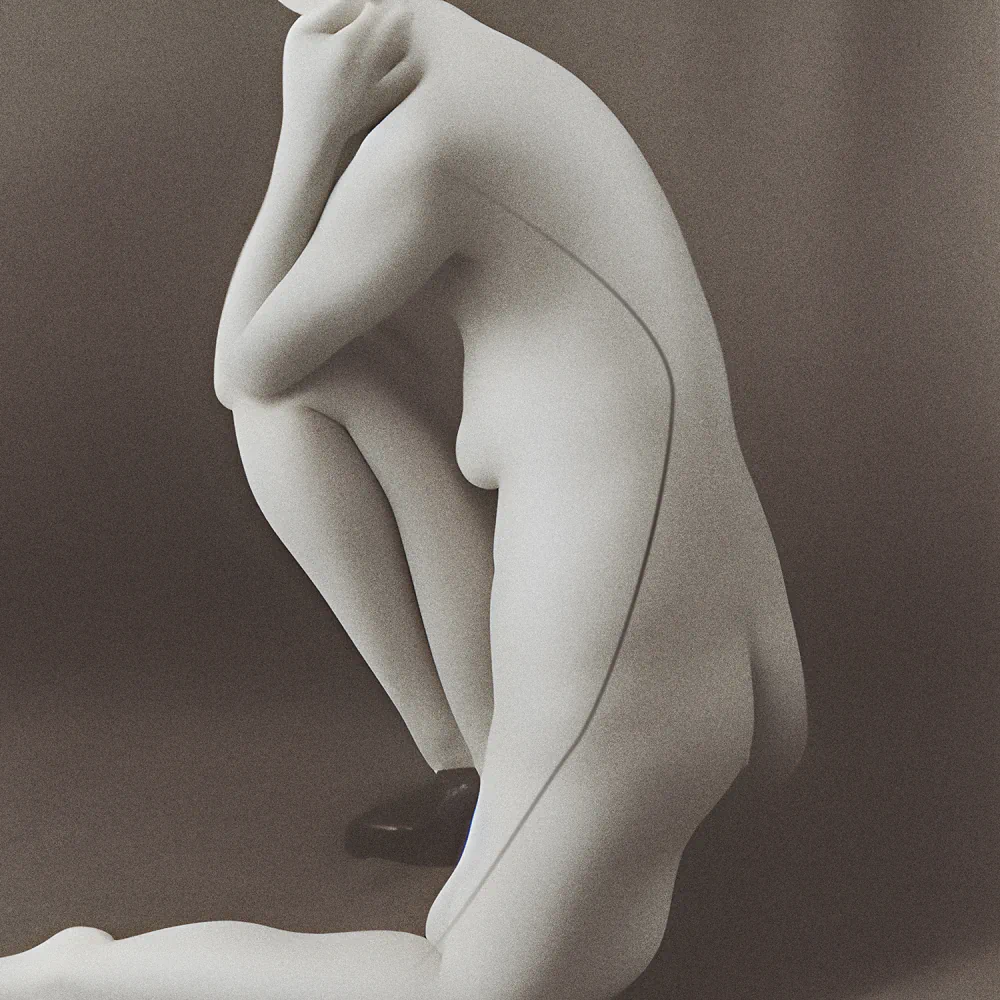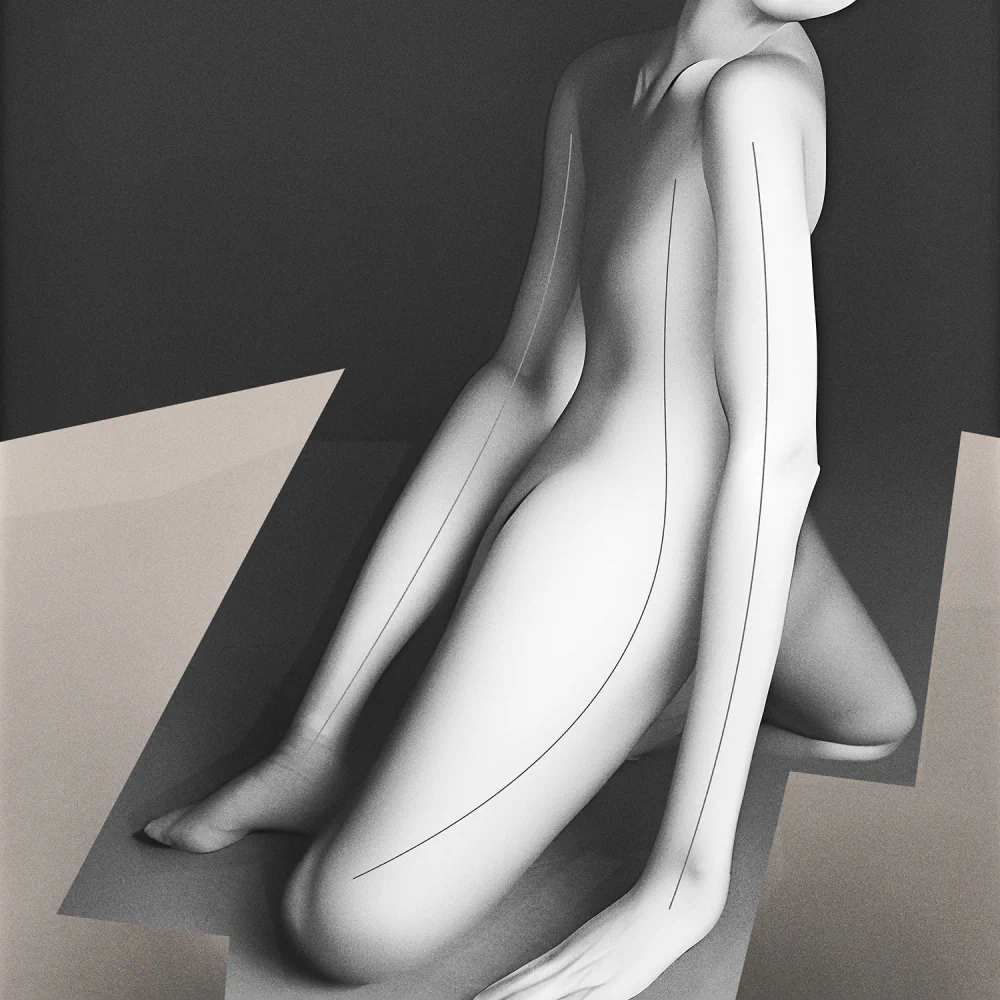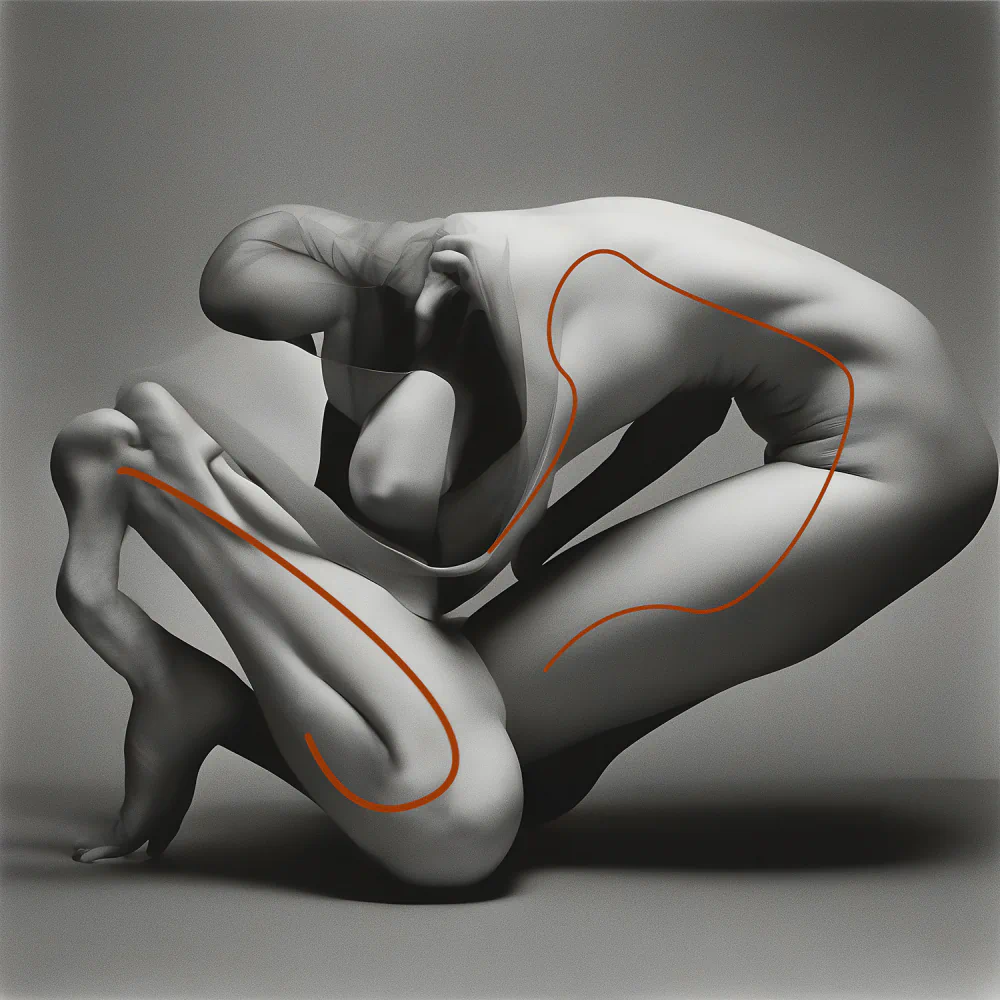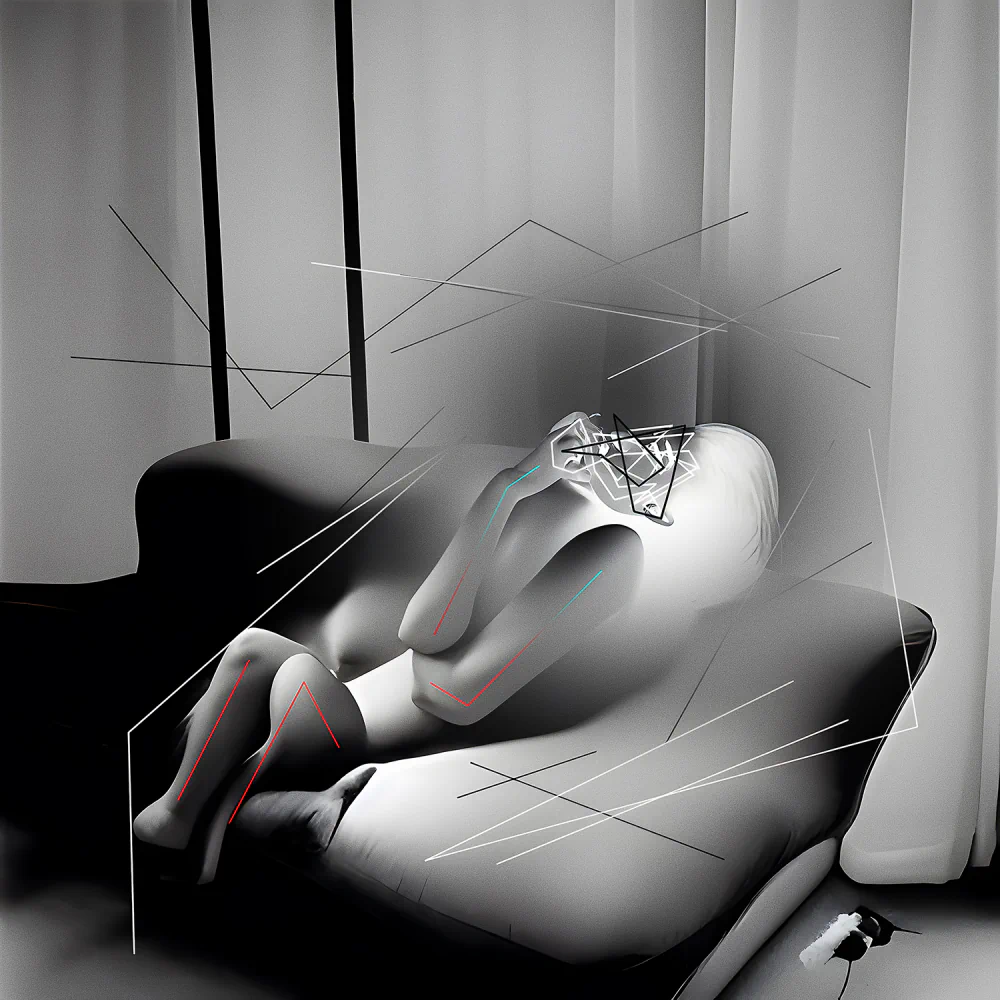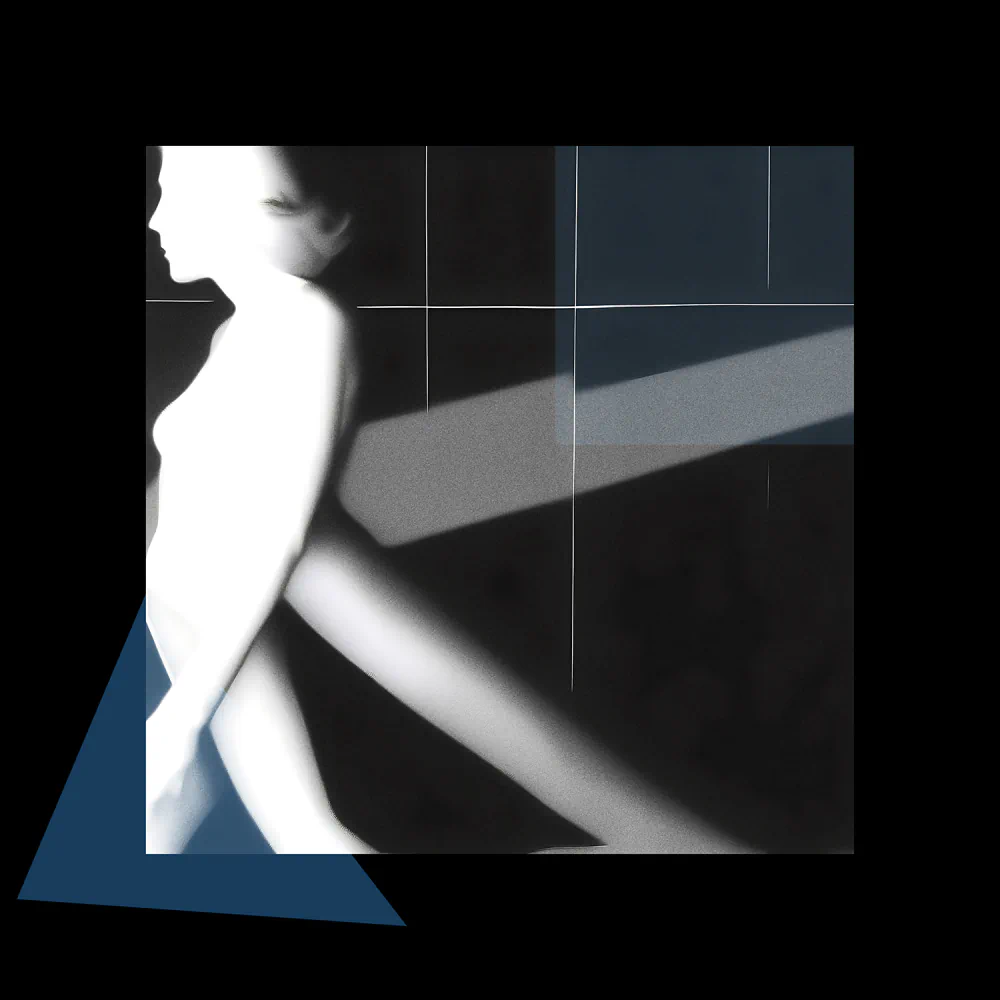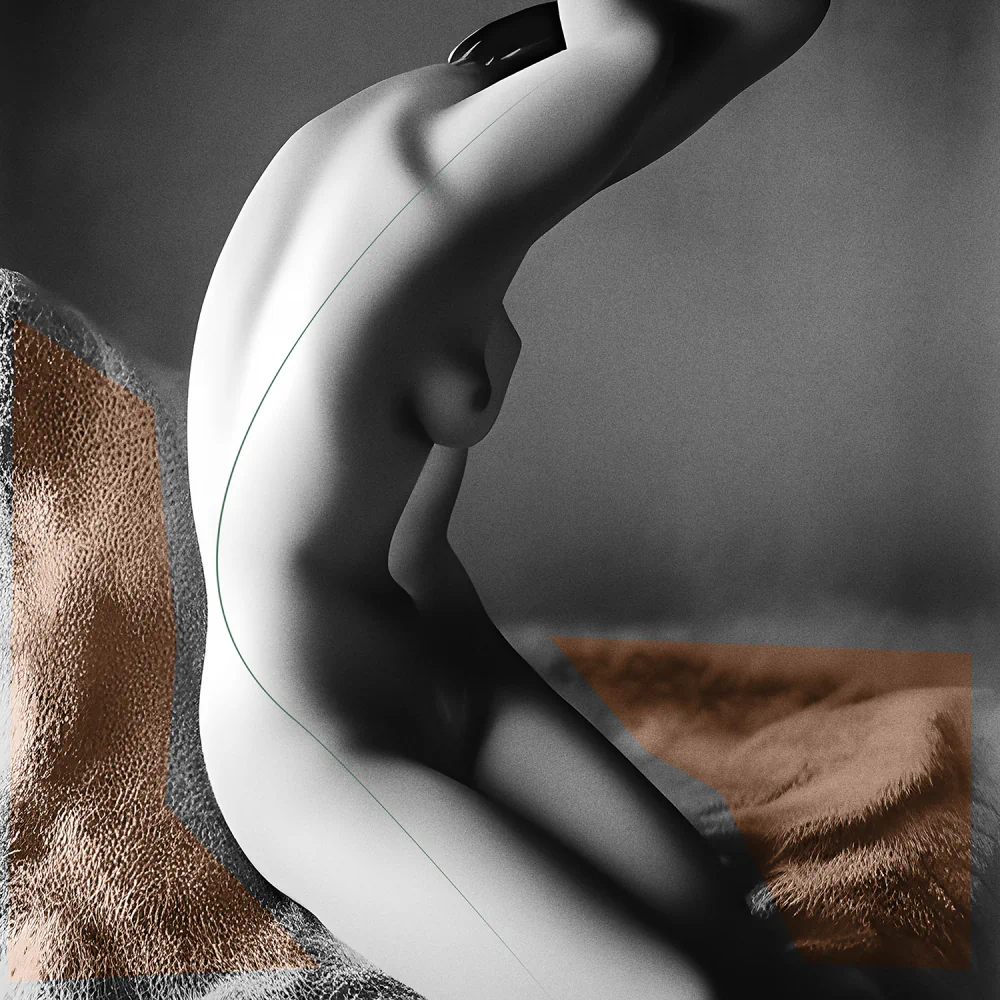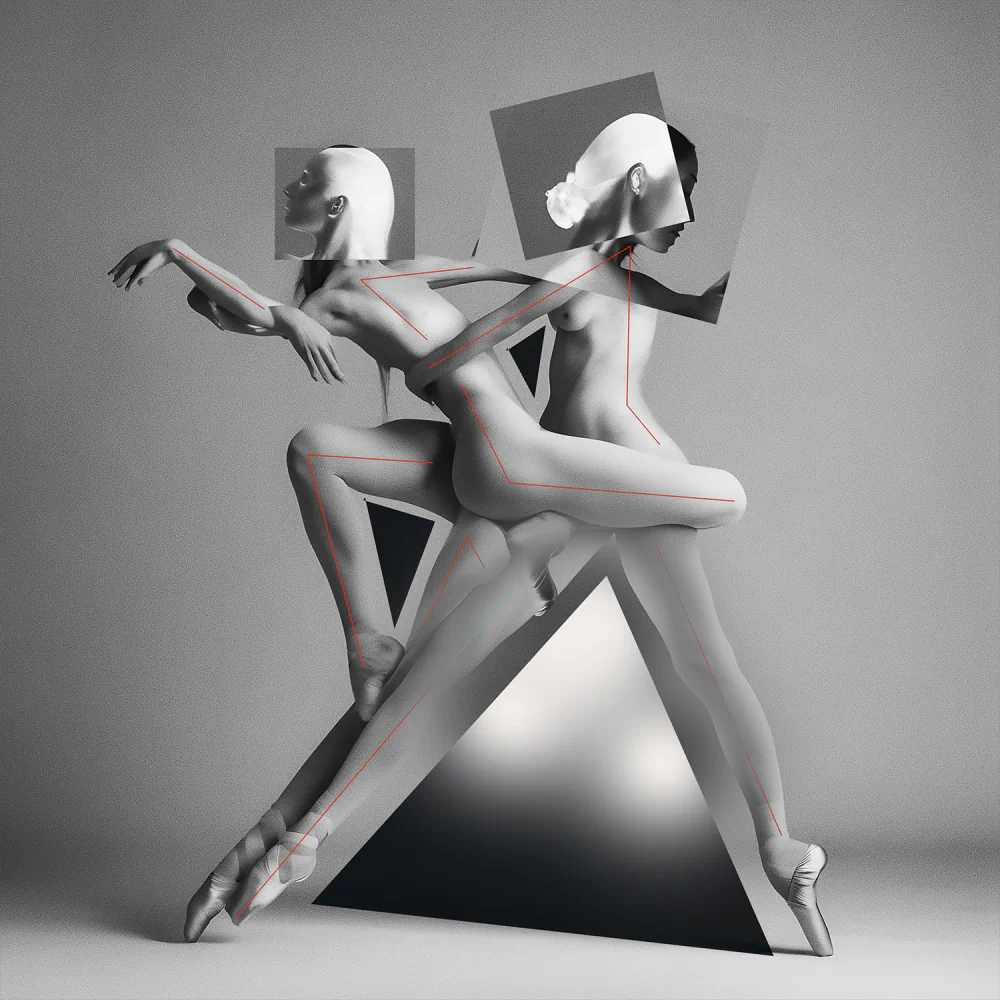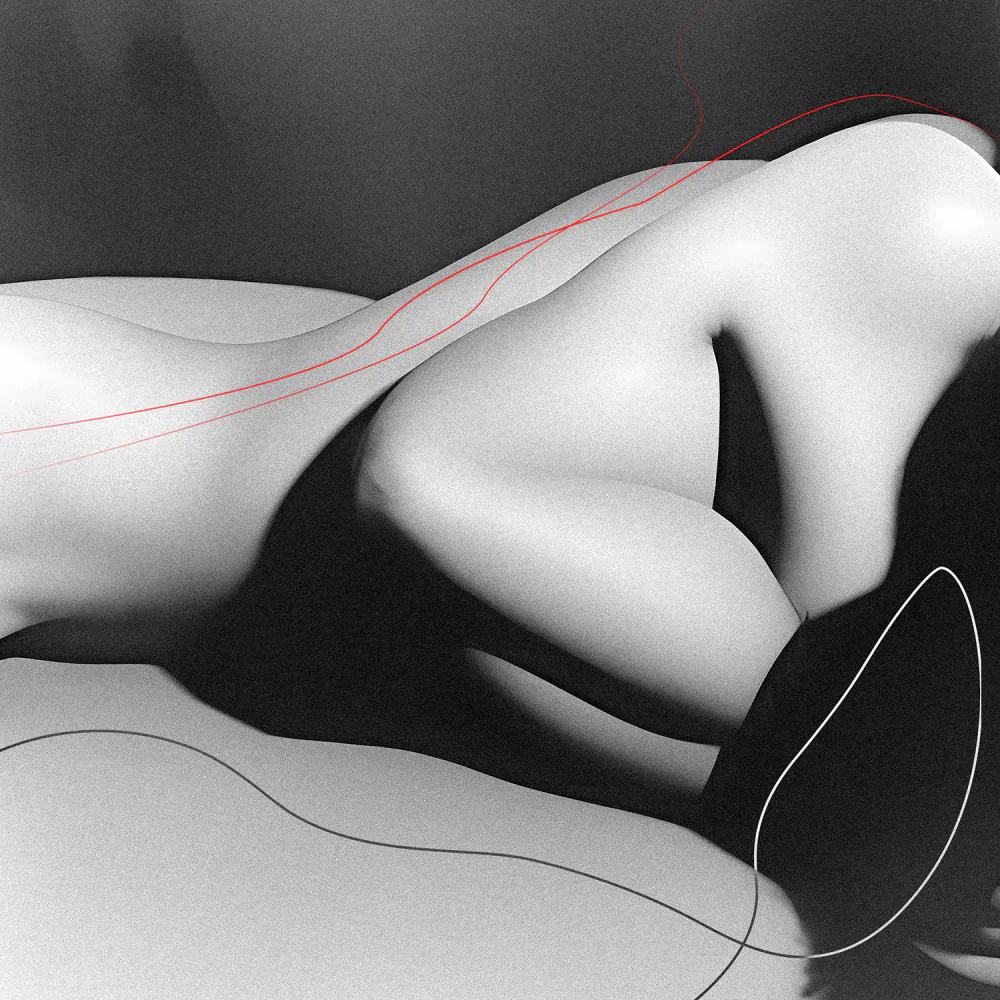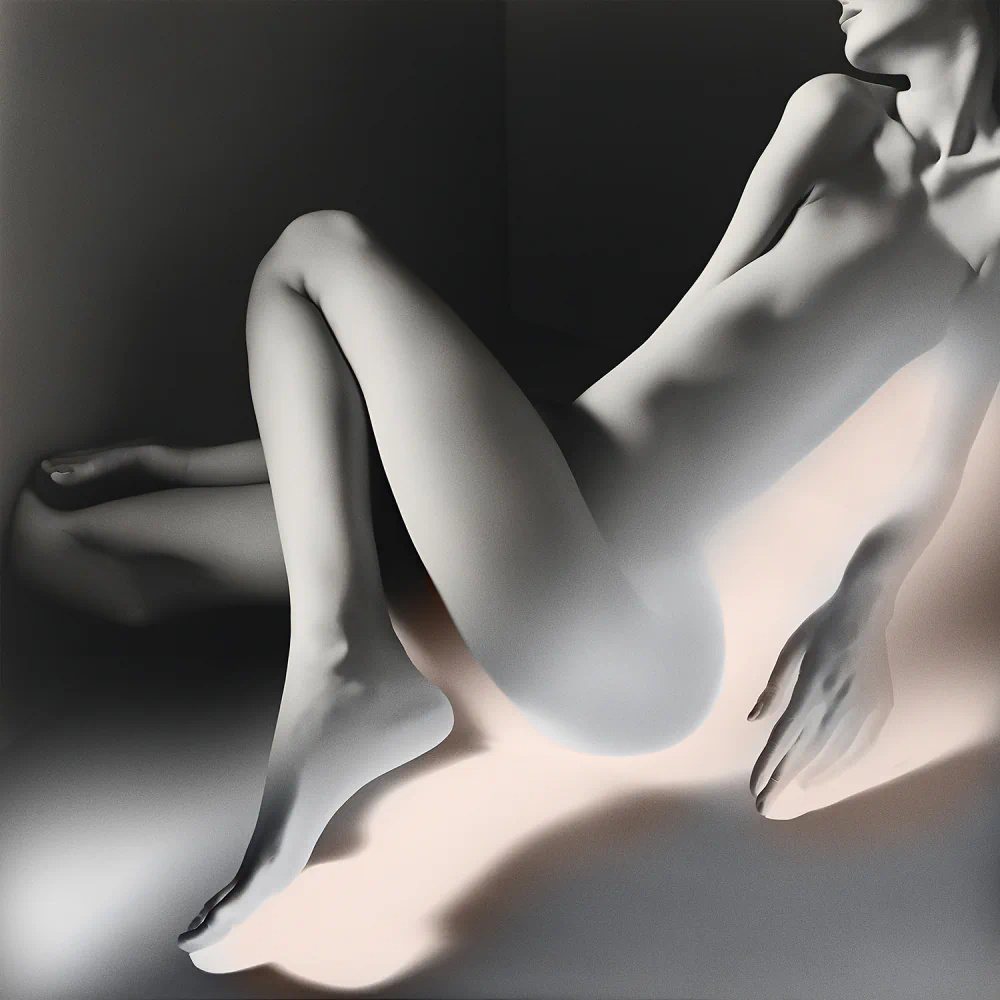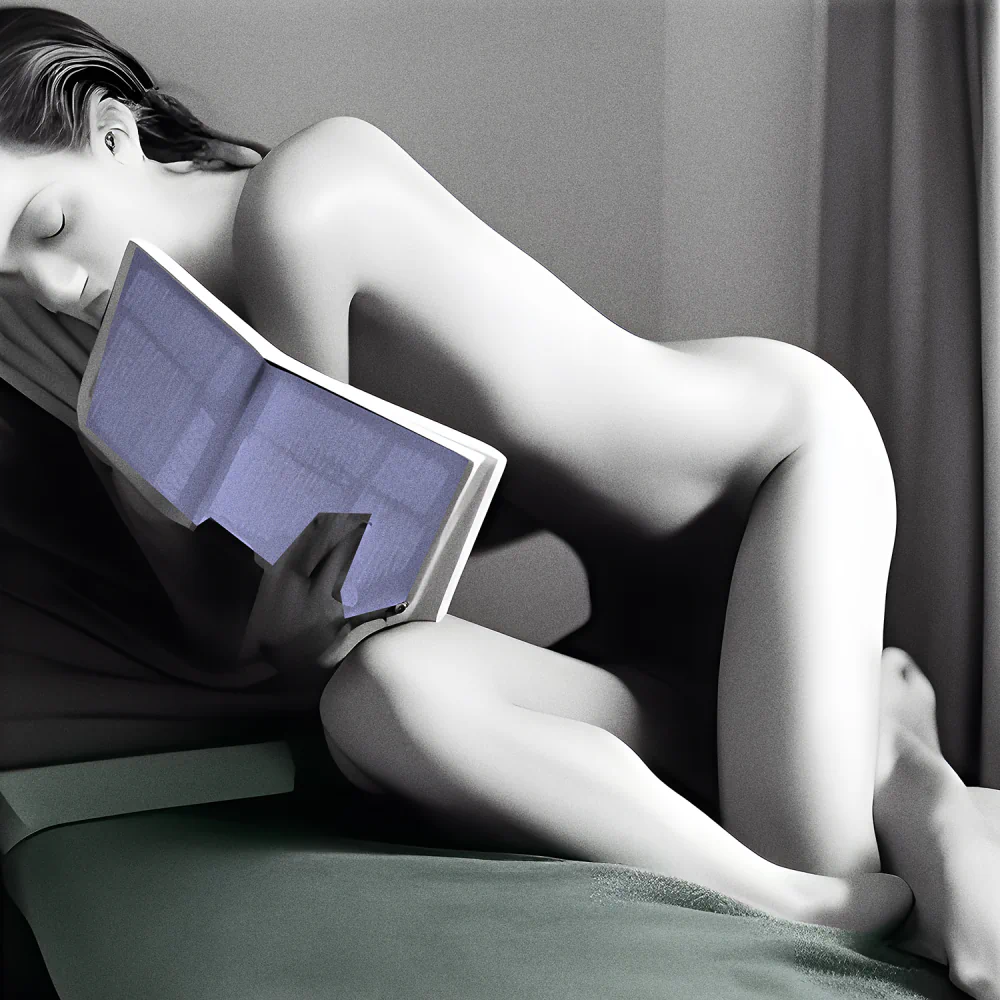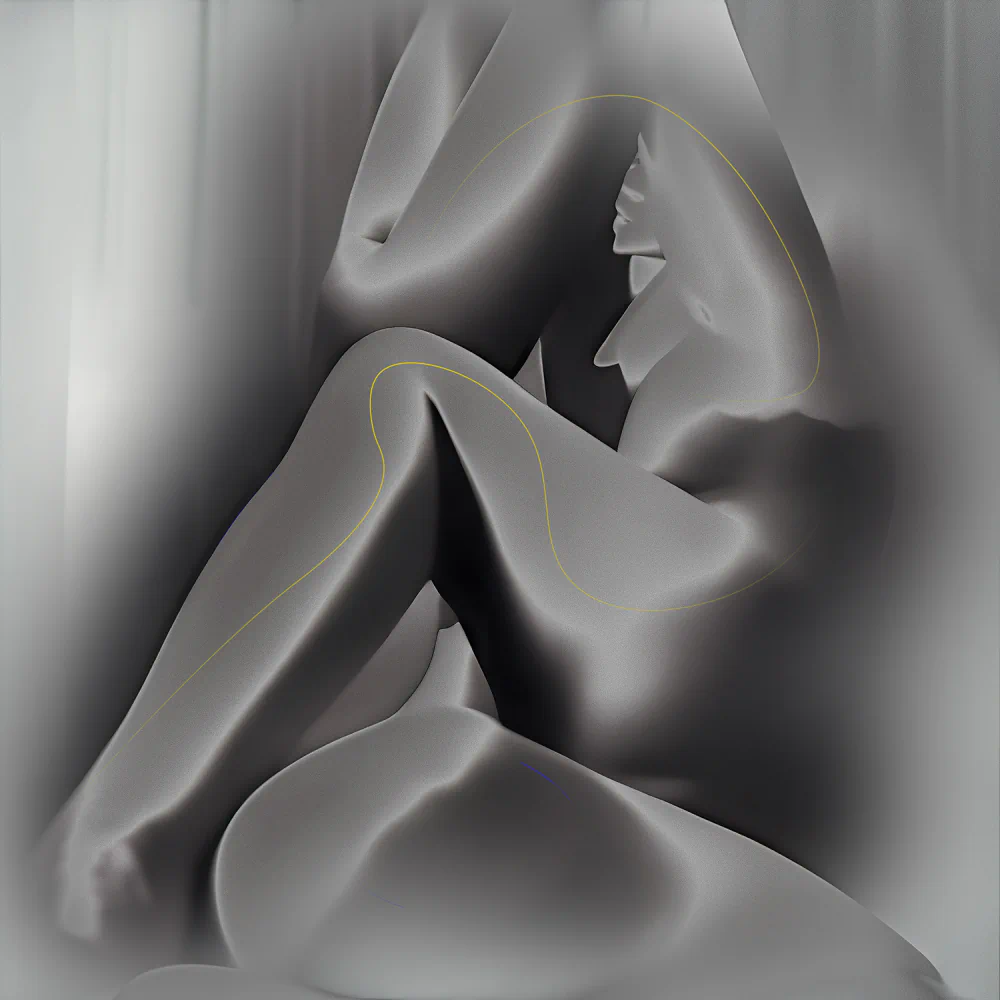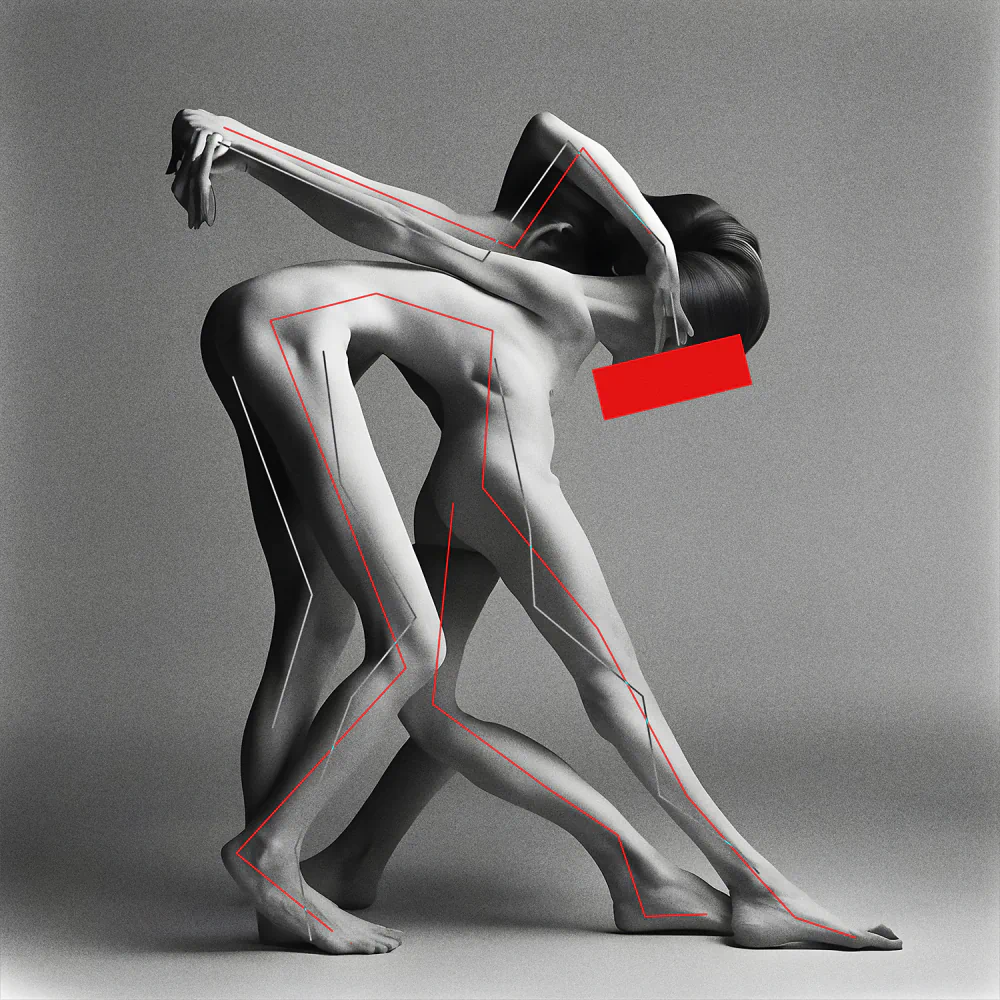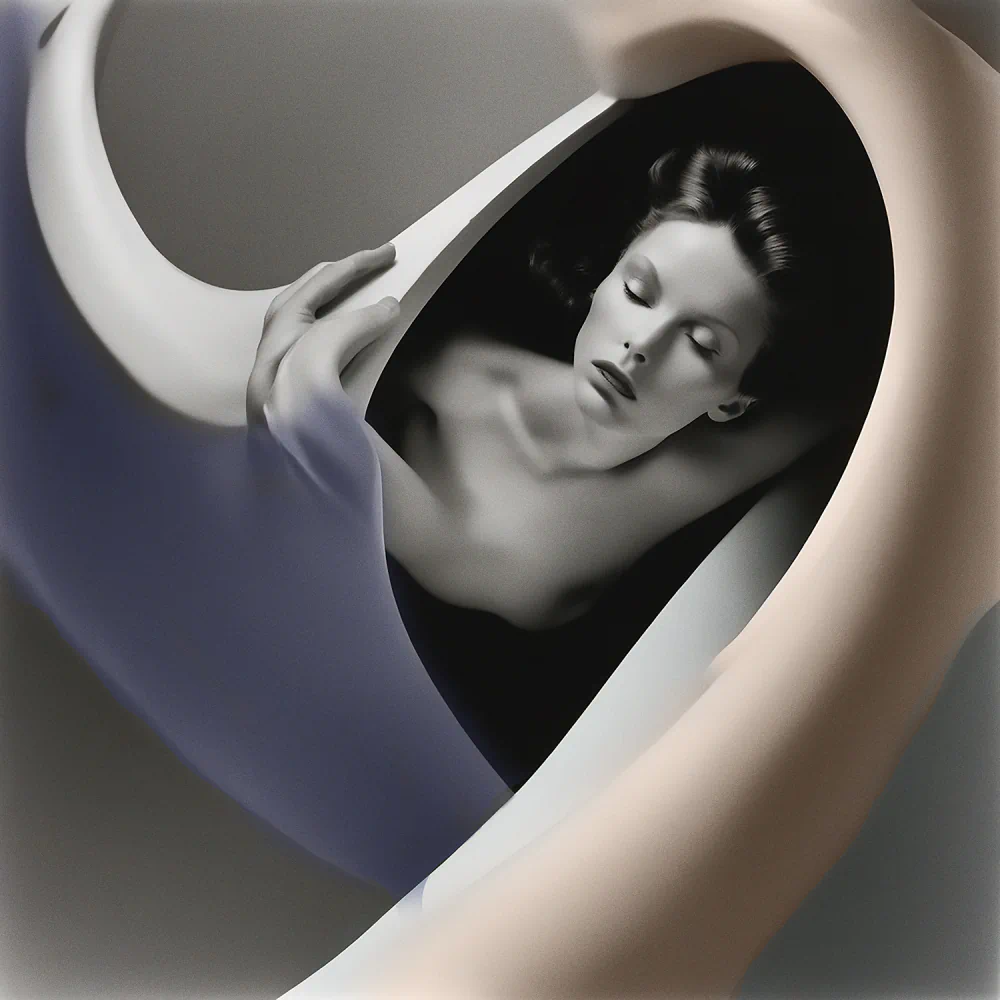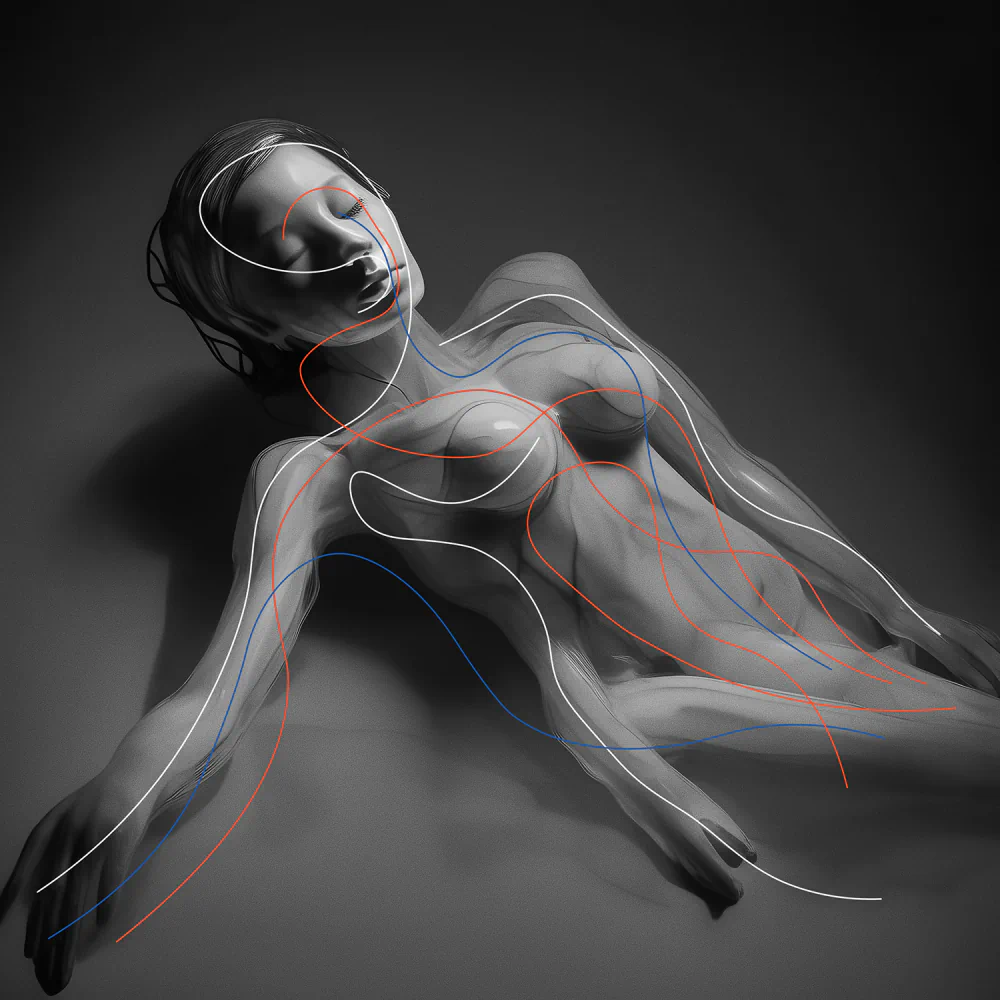
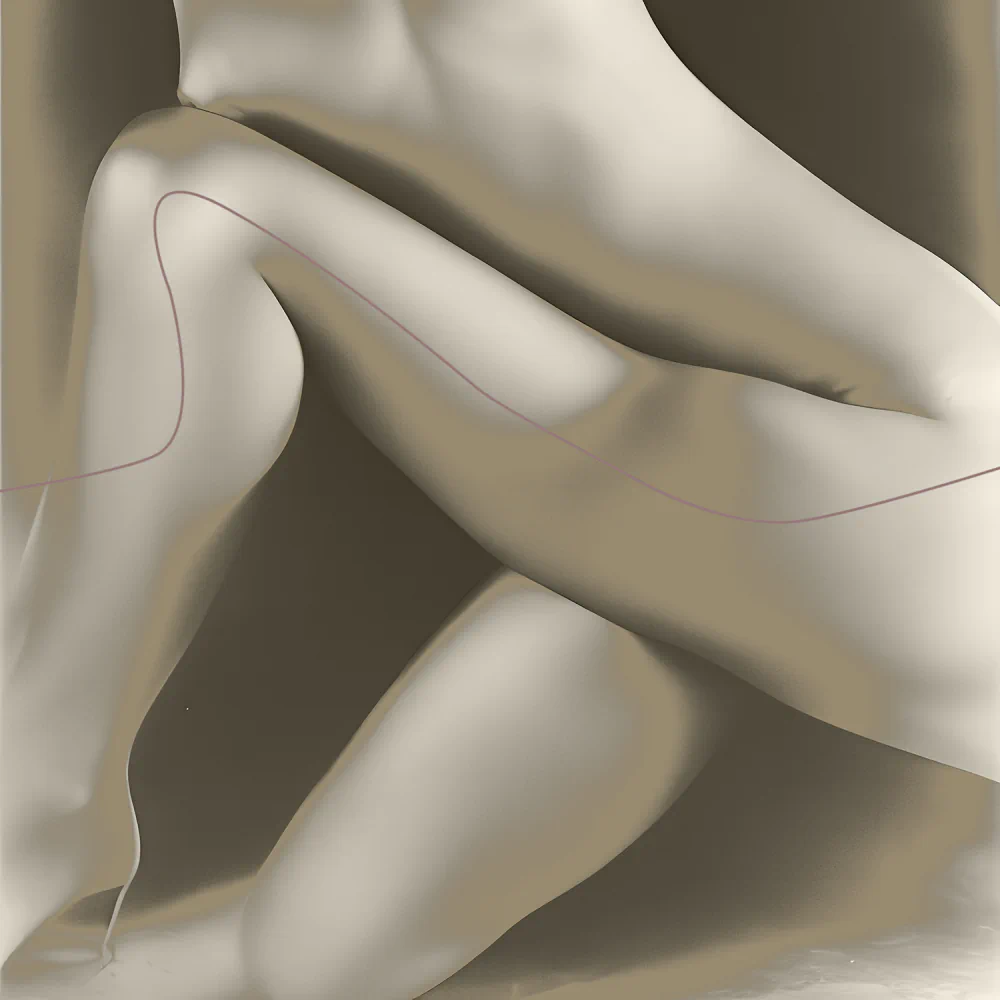
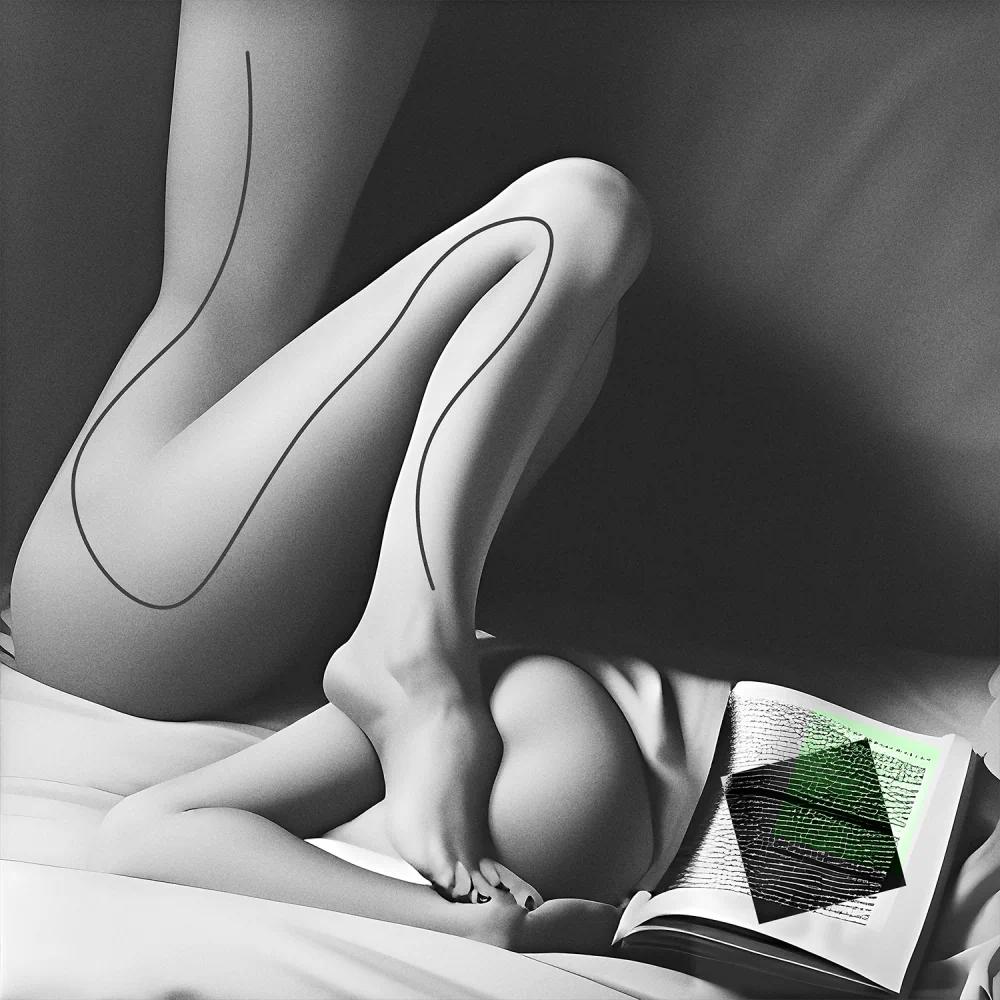
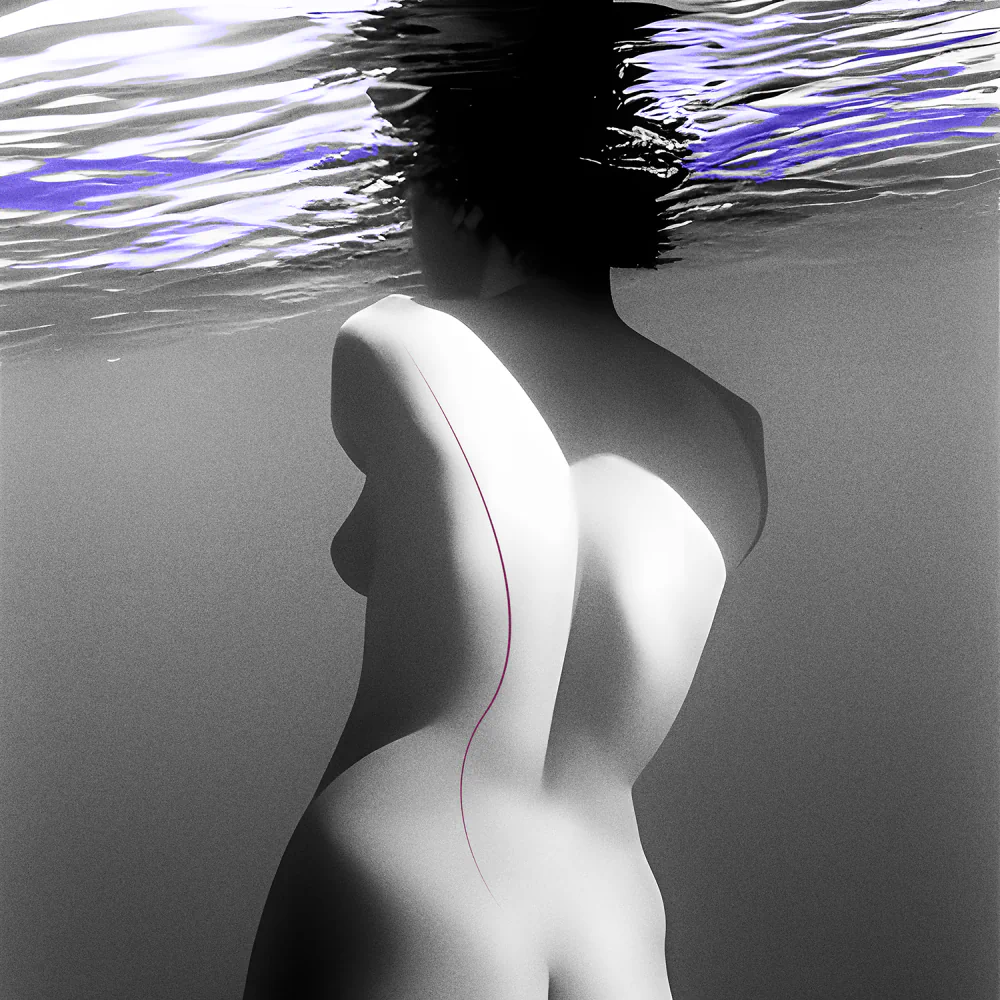
“Creatures from Nothingness”. Technique: digital painting and drawing over promptography (according to Boris Eldagsen). AI procedure.
I am interested in the sinuous lines we find in nature: eroded pebbles, pieces of smooth-skinned fruit or vegetables—recalling here Edward Weston.
Or in the female body, considered a path to beauty and abstraction.
In “Creatures from Nothingness”, the result is of a purely visual nature, without any inherent message directed at the observer.
Perhaps my professional activity as an architect, and my practice as a painter, led me to the present project, among many others in photography.
Promptography versus photography is something like a relative coming from afar: it is no more than photography, nor is it less. It is simply very, very different.
Promptography is no longer a novelty. However, I believe it is still worthwhile to reflect on the differences between these two visual arts.
As the term itself indicates, promptographs originate from a stimulus—a prompt that can be a text, an image, or a combination of both—provided to an algorithm, which generates a new image.
In contrast, by its etymology, “photography” refers to the incidence of light on a material sensitive to it, resulting in a lens-based image (a photograph).
So… there is nothing in common between photography and promptography.
What leads to promptography is conjecture, reasoning, theory, fantasy—a concept without any intervention of light or photosensitive material. The data, or input, is refined several times until it reaches a result very close to what the artist has in mind.
The refinement or balancing of prompts generates many promptographs. The author selects and edits them, sometimes refining further with more precise prompts or through digital editing, resulting in a hybrid image. That is the procedure.
Promptography refers to a pseudo-alternative reality. It responds to reasoning and can even lead to the falsification of memory, generating a lie. Thus, it can be used maliciously, disguised as photography. This is a reality we must always consider.
In the end, everything depends on honesty.
Promptography and photography both have their place in art and communication. They are not “enemy” techniques and do not compete with each other. Many photography artists will continue to exist. Others will embrace promptography, knowing little about photographic technique, and treating promptography appropriately as an independent technique and art form.
Photography and promptography can only be confused when there is dishonesty in authorship or within a commercial context.
In fact, promptography negates itself when it does nothing more than resemble a photograph, imitating a probable reality. A promptograph may have the graphic characteristics of a photograph, but not its content. It is futile—almost absurd—to present promptography depicting common objects or simulations of anonymous human beings, such as a perfect close-up photograph of a young woman with blue eyes (although this may have applications in industry or fashion, particularly in advertising).
Promptography theorizes about the impossible or the highly improbable. It is, first and foremost, a technique. Photography is as well.
It can also be an art; this always depends on the author, just as it does with photography.
From a dialectical point of view, photography and promptography are like two sides of the same coin. Although they are closely related practices, they are also opposites, like antipodes. Promptography is suitable for producing all kinds of images, but it cannot replace photography in its connection to reality and memory.
It is evident that promptography can also be used in mixed media, combined with all kinds of techniques such as painting, collage, or sculpture, as well as digital painting and drawing. This is what happens in my project. The result is a hybrid promptograph.
To think, to conjecture, to anticipate what can be seen, to see with closed eyes, to be persistent—to create extensively, creating and destroying, elaborating an infinite number of increasingly detailed, descriptive, or even narrative prompts—this is the attitude of the promptographer.
About Jorge Pedra
Jorge Pedra (Porto, 1960) is a Portuguese artist whose practice operates on the margins of conventional photography, exploring a hybrid territory between image, painting, and object. Trained in Medicine and Architecture, his photographic career dates back to the mid-1970s, developing in a largely self-taught manner and consistently outside classical conventions.
His work is characterized by a continuous manipulation of the medium: he intervenes in negatives, paints over photographs, constructs collages, and experiments with both analogue and digital processes. Rather than defining himself strictly as a photographer, he identifies as a “paraphotographer,” in line with the concept introduced by Robert Heinecken, using photography as raw material to create artistic objects in which abstraction and aesthetic emotion play a central role.
Throughout his career, he has developed a multidisciplinary practice that includes solo and group exhibitions from the 1980s to the present, with notable presence in venues such as the Cooperativa Árvore in Porto and BC Gallery. His work has evolved from early experiments with expanded photography to recent projects that incorporate promptography and new forms of contemporary creation.
In parallel, he has developed a teaching and curatorial practice, as well as a literary activity that includes novels and short story collections. His work has been published in specialized magazines and forms part of private collections, consolidating a coherent trajectory marked by the constant exploration of the limits of the image. [Official Website]