I can hear David Hockney screaming, “PHOTOGRAPHY IS DEAD!”
The end of one thing opens the door to something new. The social media platforms let everyone be a hero in their own life for the day. The portrait photographer’s eye and opinion was removed as the subject took control of how they showed themselves to the world.
I was once on the set for a shoot with Yoko Ono. With her finances she could afford to bring her own makeup and lighting crew. She created her own image and the photographer’s signature lighting was gone, she had control of how the world would see her.
Failures invites one to alter their original course – to reflect, explore, and experience new and uncharted adventures. In the 90s, I dove into the digital age. At first, I loved the snapping power without cost and the delete button so available. But soon the sophistication of this technology stole the creative mojo and without effort we were all shooting that Hallmark card. That is when I started taking the cameras apart, so that I could own my own image.
By 2014, I returned to the analogue processes, drawn back to their material uncertainty and the alchemical transformation that occurs beyond my control.
Rather than treating the negative as a sacred artifact, I subjected it to chemical bleaching, sometimes to the point of erasure. I cut and chopped my negatives into angles. I even started rolling and reshaping my prints into three-dimensional forms, extending photography into sculptural space and emphasizing its dual existence as image and object in the same sentence.
Even the political air was fogged between Antonio’s film “Blow Up” and Goddard’s film “Sympathy for the Devil.” The modern day leaders twisted our visuals and knowledge into some sort of LSD experience. All that happens around wether we are too conscience or unconscience of it, it influences what comes out of us. When we sit down to create, we have a blank sheet with an unknown objective, with only the knowledge to trust ones self.
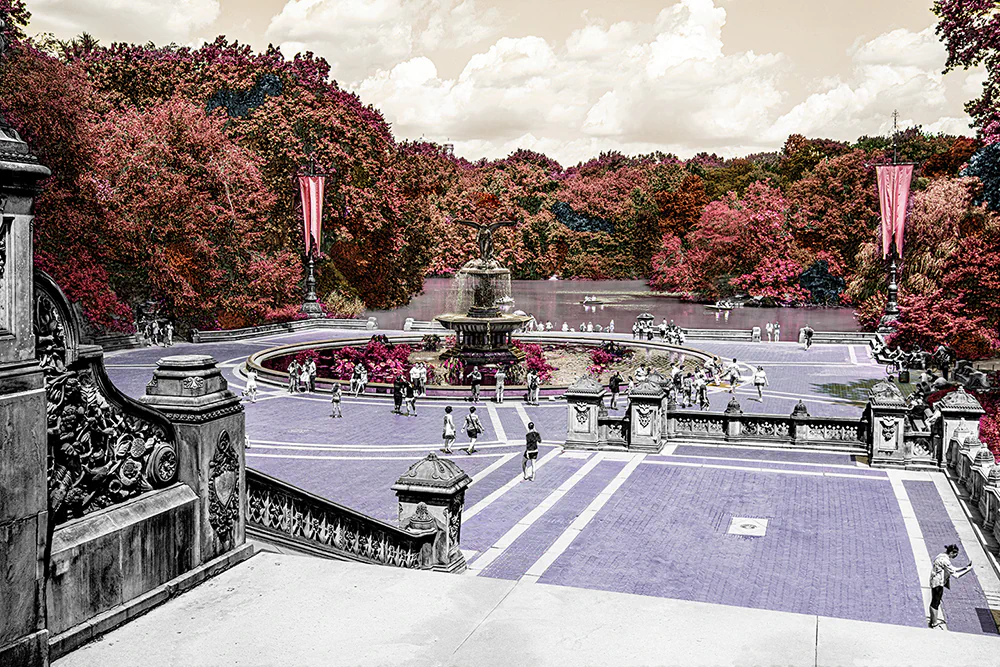
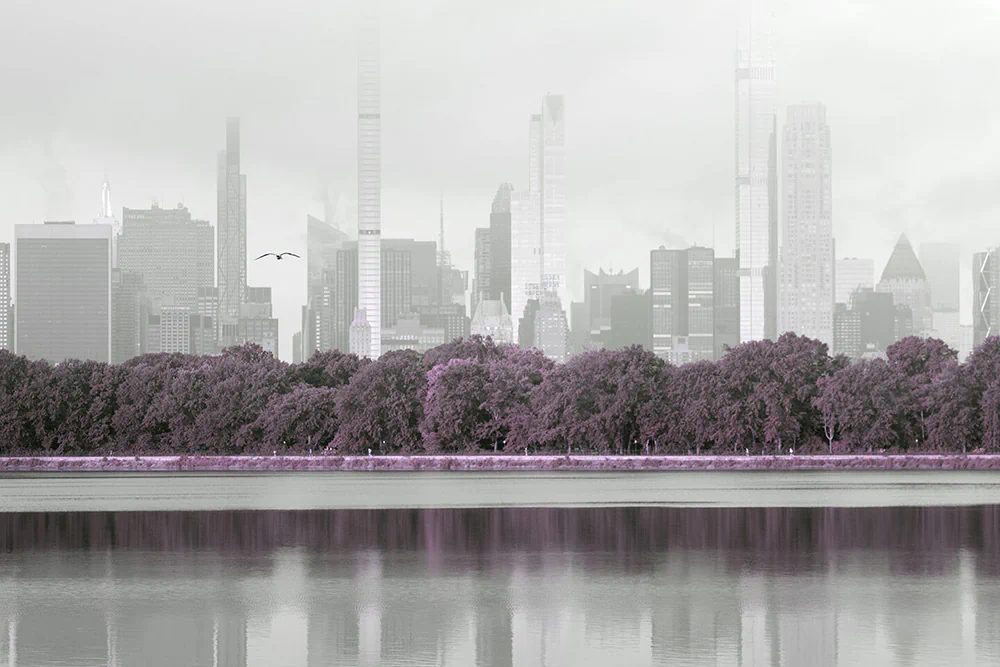
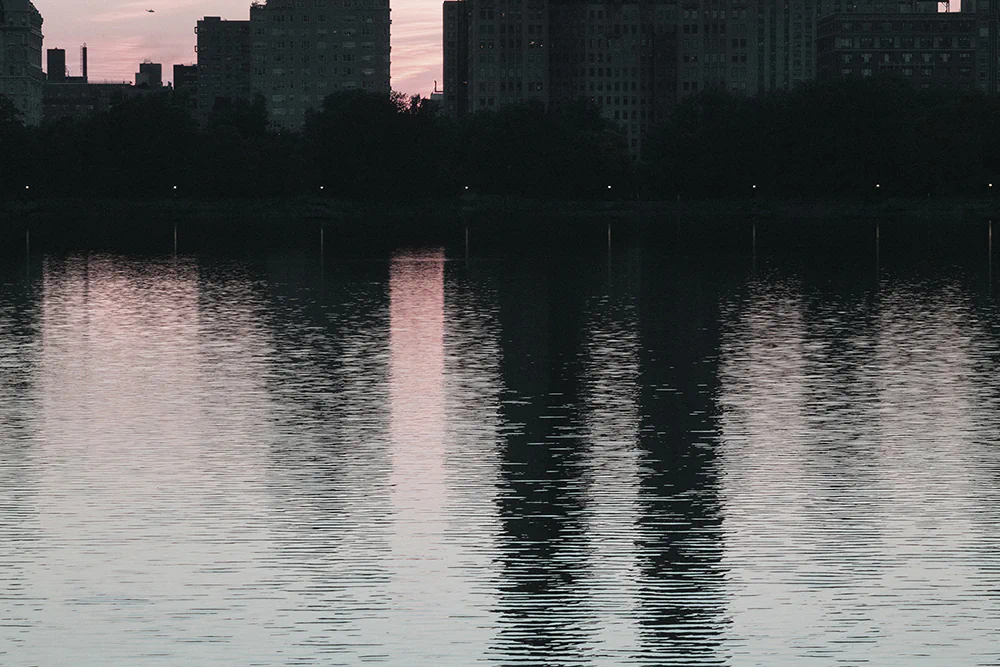
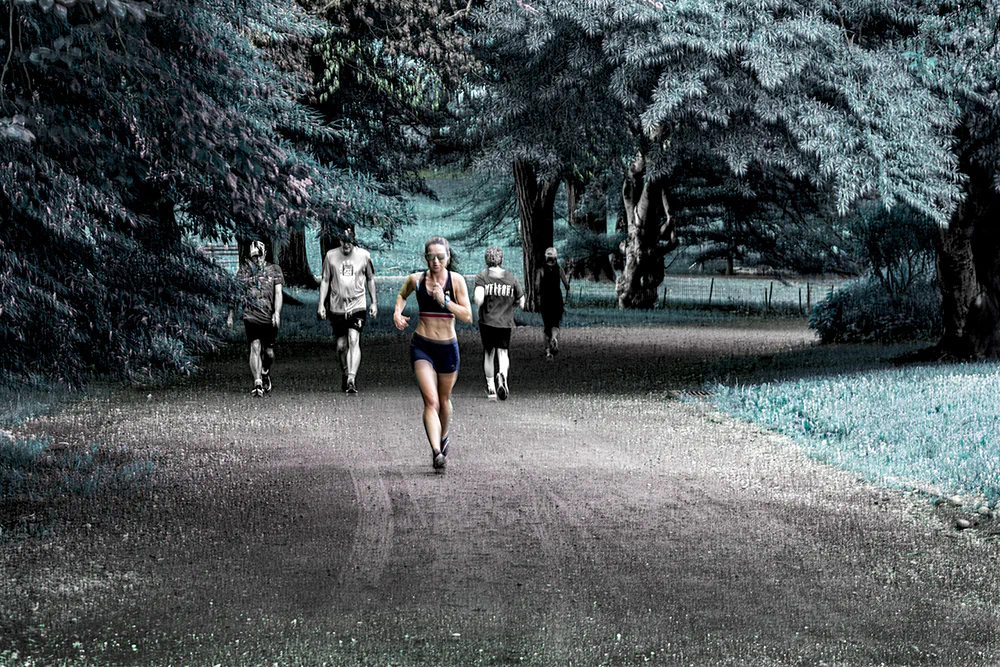
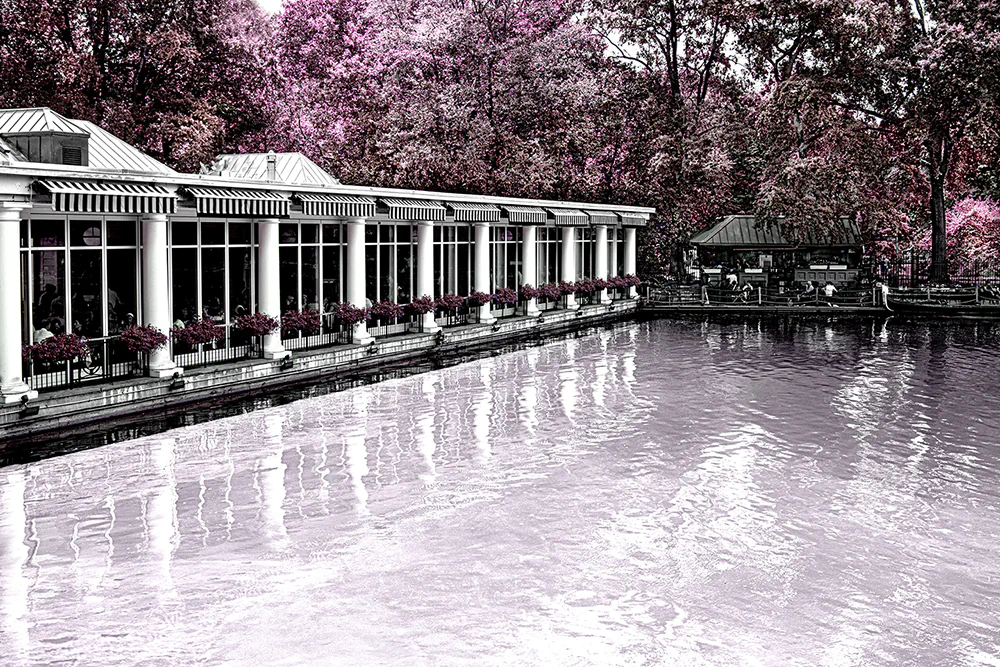
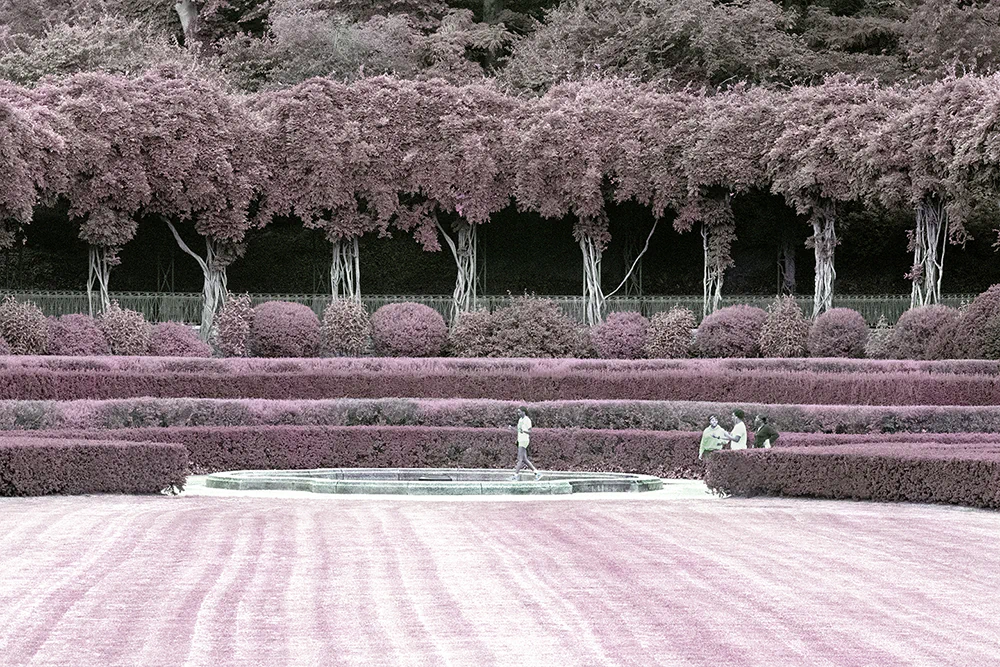
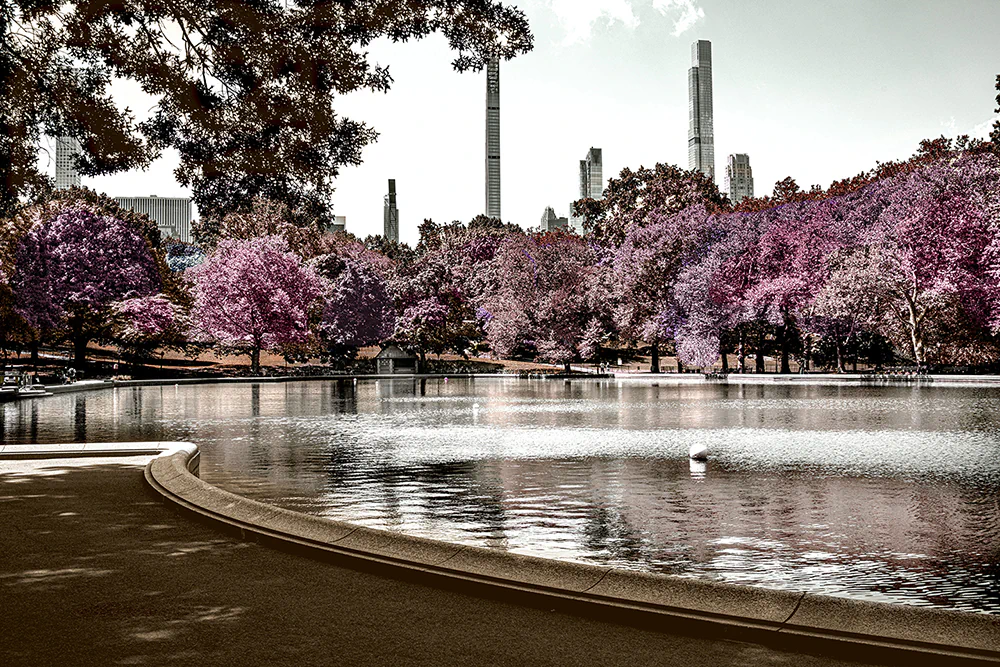
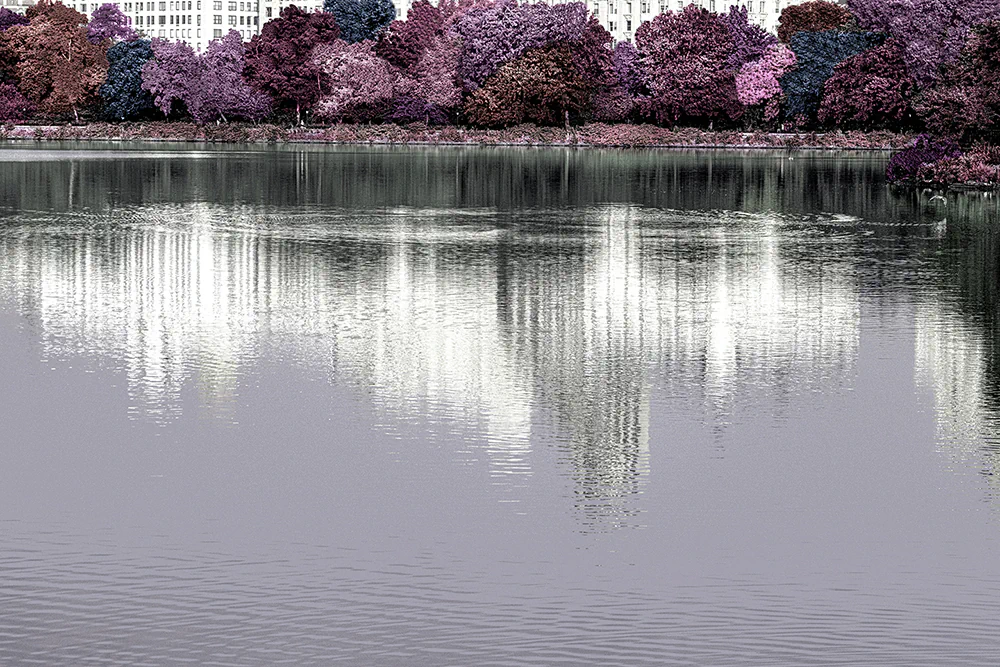
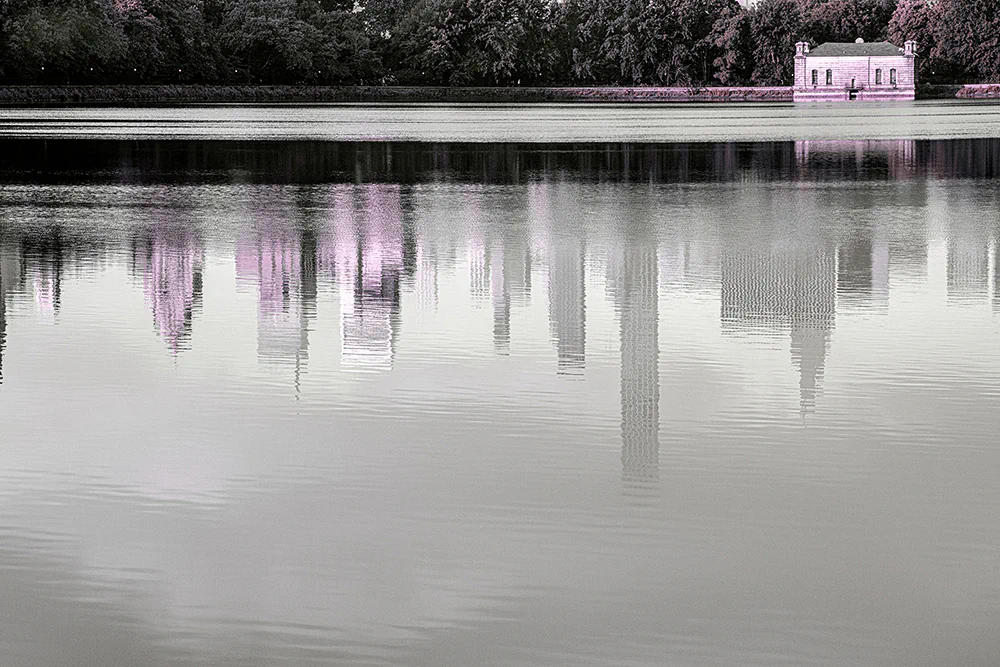
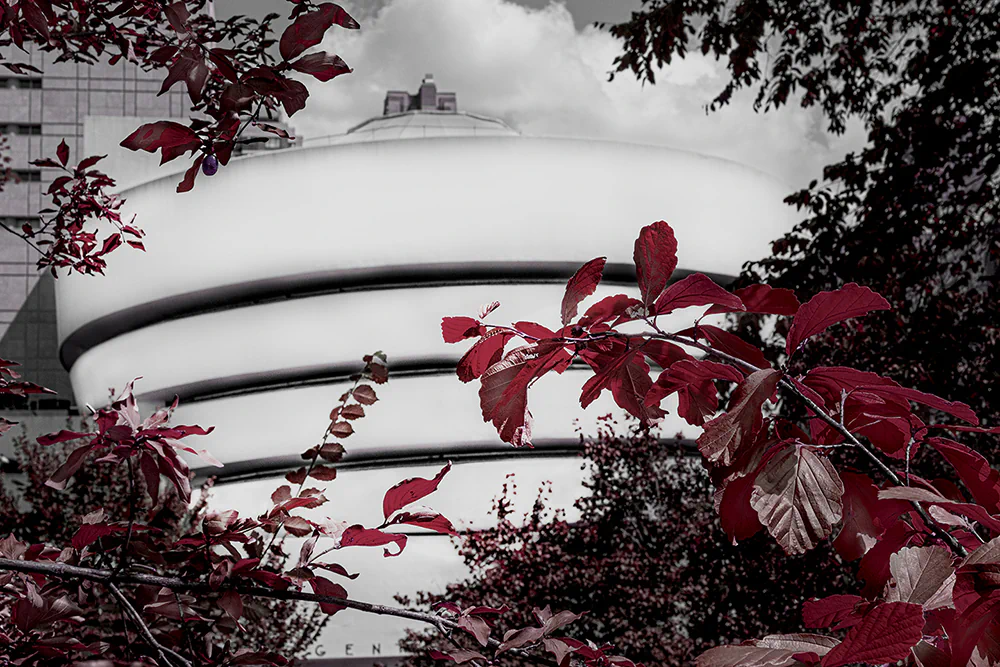
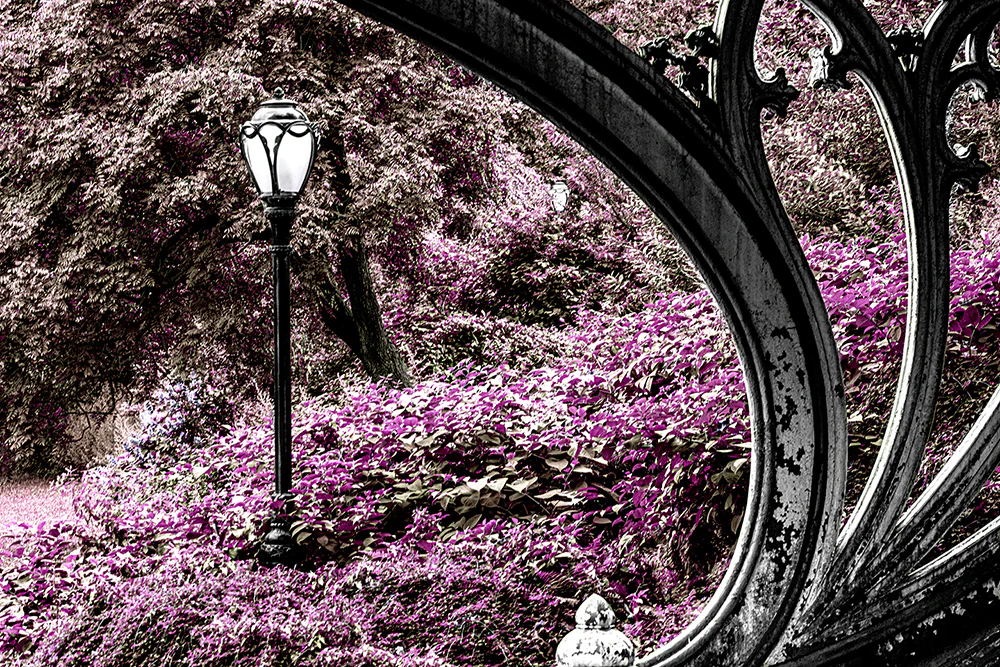
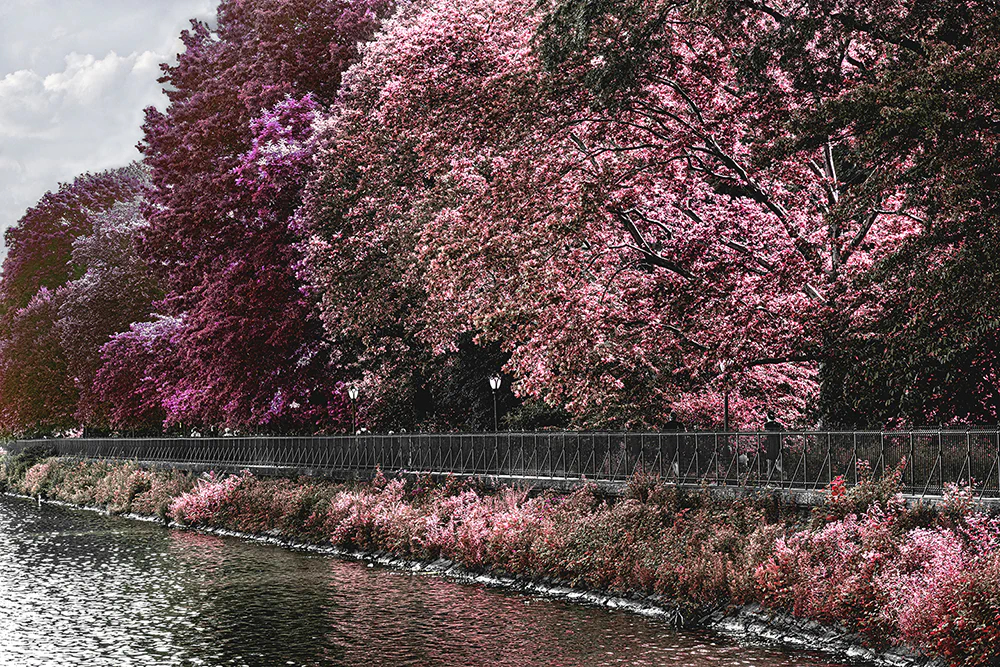
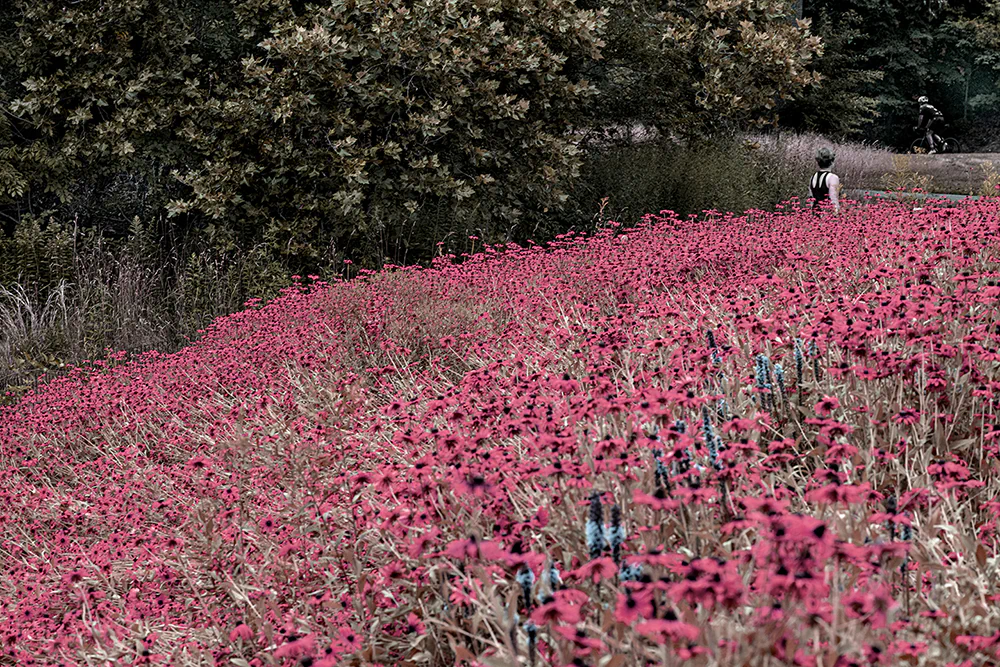
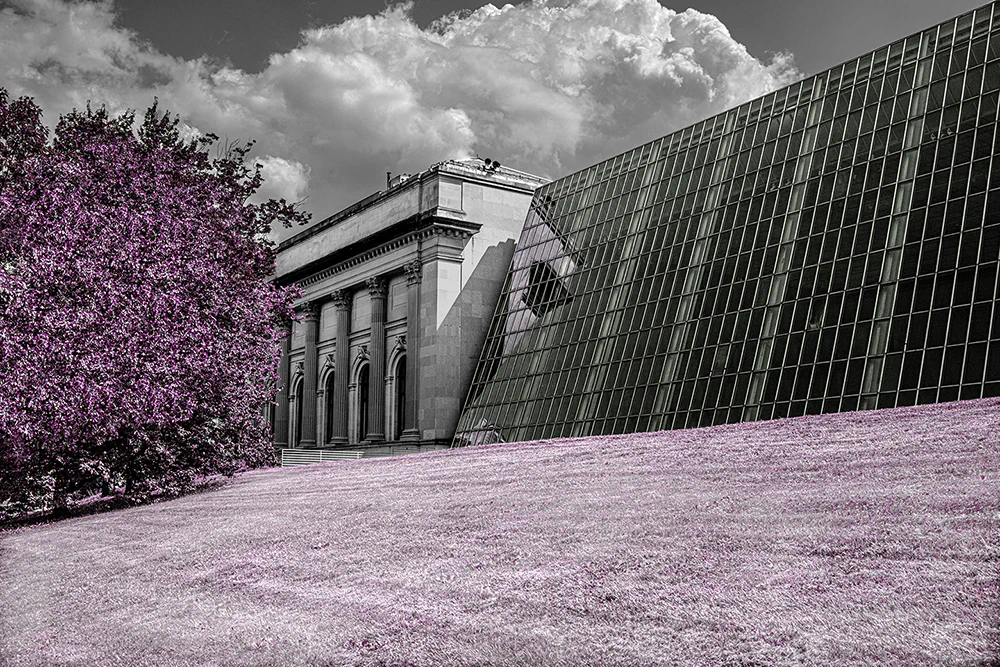
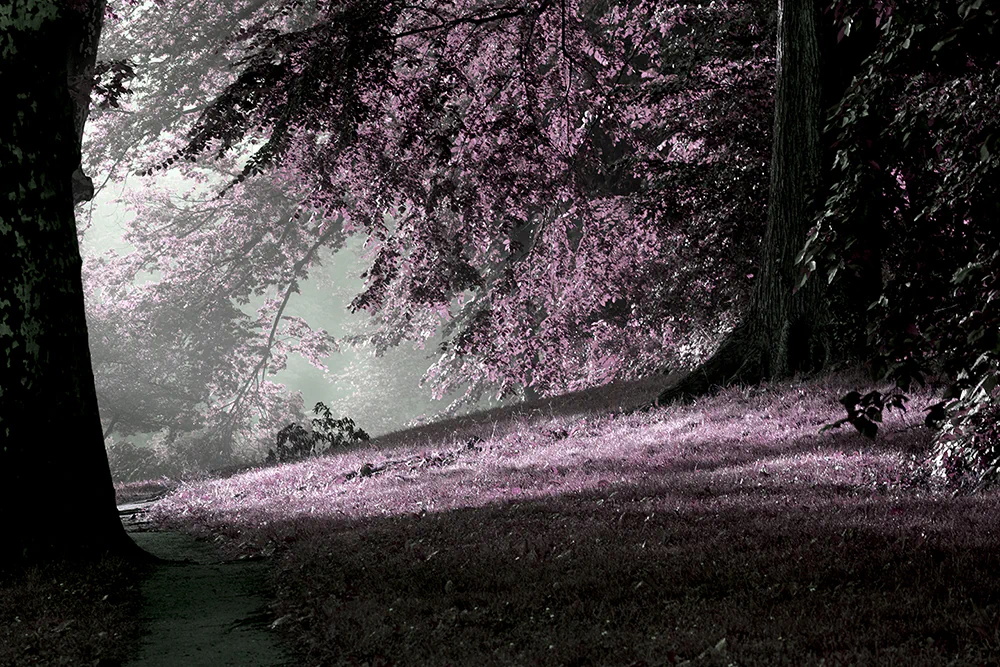
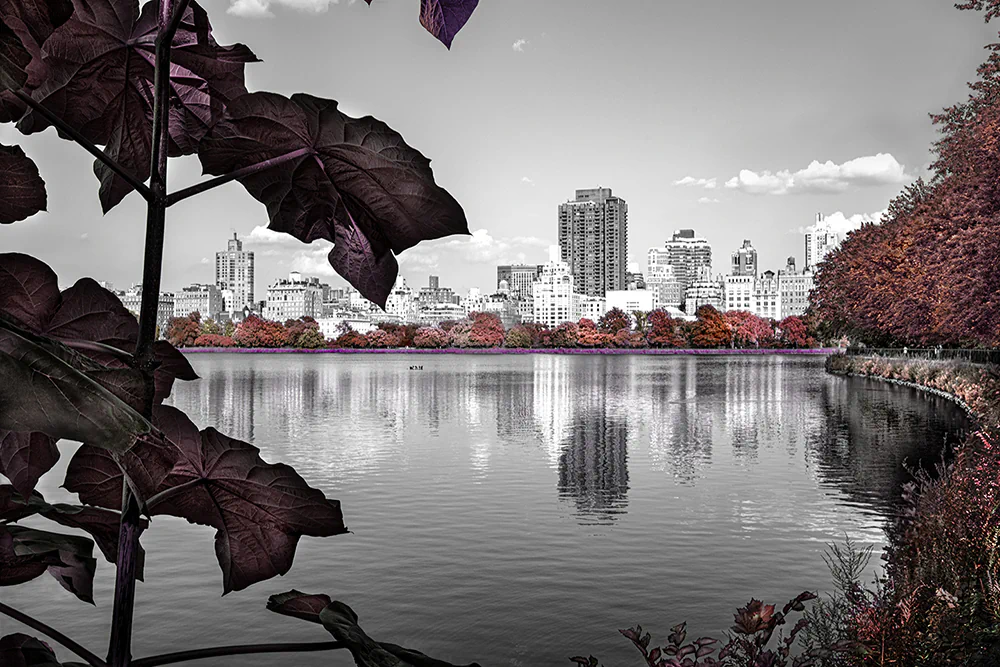
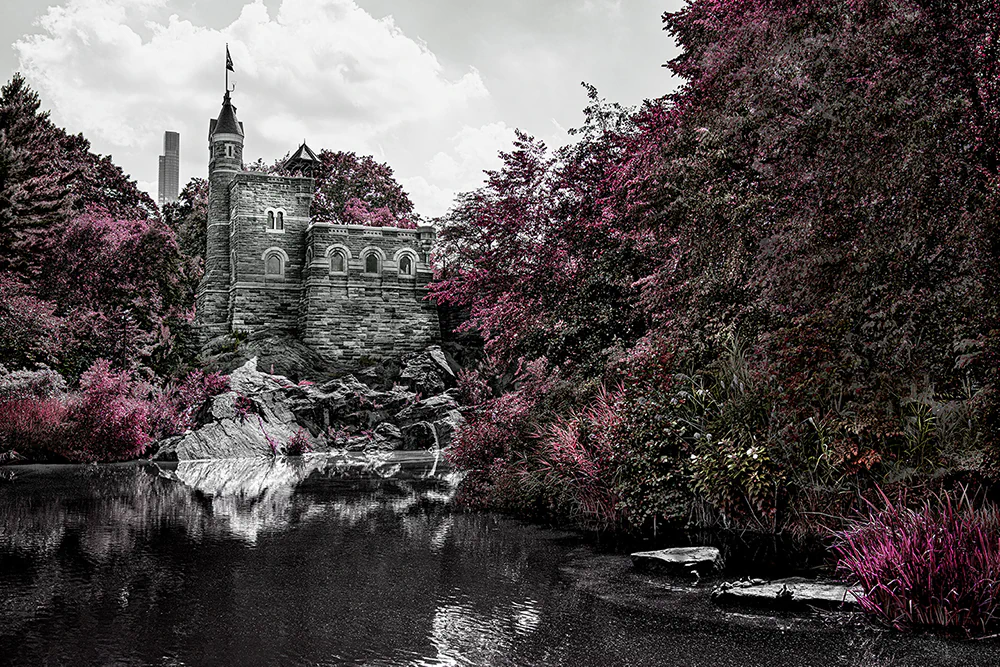
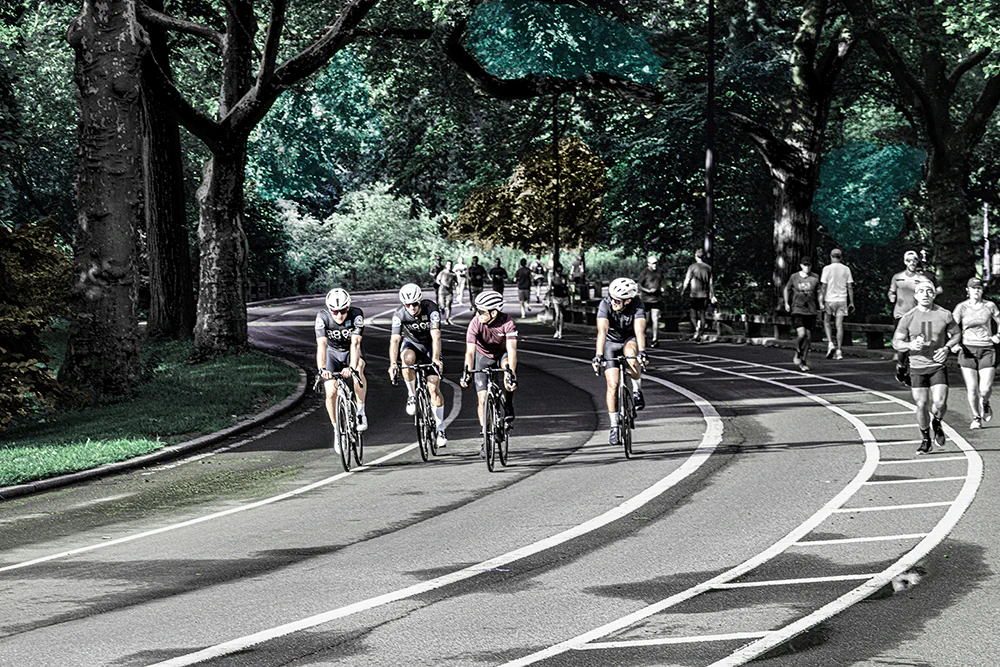
Central Park took to the theme to question our realities as to fact or fiction. Color was gradually destabilized—erased, submerged, and reintroduced at the threshold of recognition—producing images that hover between documentation and invention. The resulting palette resists temporal certainty, inviting viewers to question both season and authenticity.
The Central Park series does not seek to redefine the landscape, but to too gently dislocate it. It proposes photography not as a record of what is seen, but as a catalyst for how seeing itself might shift—reminding us that the medium remains very much alive, but most important as to wonder if what we see is the truth or the manipulation of facts.
About Cynthia Karalla
“In order to understand all that lies outside of us, we must look within ourselves.” (Arthur Rimbaud)
Alchemist, activist, and experimental artist Cynthia Karalla moves her practice along the edges of contemporary reality, spilling into the metaverse and bending linear time. Beginning as an architect turned photographer and later trained in fine arts, Karalla’s work is best understood as a process of turning negatives into positives, of shifting perception and reorienting the way life’s events are seen, much like the act of developing film itself. What is photography, if not a tool to redirect vision and reframe our sight of the sensible?
In the chaotic thrown-togetherness of the post-digital reality we inhabit, the process of developing film becomes a means of navigating relationships, the city, and the larger and smaller experiences of everyday life. At the same time, hermetic philosophy has taught Karalla to welcome the elements of unpredictability introduced by the chemical magic of alchemical transformation.
She first applied this knowledge to her artistic practice by transfiguring the everyday individual into one of the most entrancing icons of Renaissance art history. In Untitled, Mono Lisa, 3,500 shots taken over the course of eight days demonstrated the mind’s power to activate inner metamorphoses and sublimate material reality. Continuing this line of inquiry, in the projects Fat Lands and Intelligent Design, Karalla decomposed and reconfigured rotting flesh, food, insects, and the multitude of objects surrounding us, exposing the futility of material possessions. Even child-rearing, when projected as an asset or as an architectural element of an orderly life structure that elevates the status of the caregiver, becomes a commodity that enchains individuals to the prison of normativity. Through this analysis, Karalla gained awareness of her own condition as a female subject and artist and embarked on a journey toward deeper self-understanding and self-transformation.
For The Baby Grand Piano, she investigated the discursive taboo surrounding the penis, discovering that it could be transformed into a form of positive thinking when large numbers of women encouraged the men in their lives to confront their insecurities and volunteer for an unconventional photoshoot. As a result, the negatively perceived icon of the penis was reimagined as playful candy, colorful music, and all that is whimsical in life. This provocative project once again demonstrated that it is possible to arrive at positive outcomes from a negative point of departure by shifting perception and reframing reality.
Karalla’s experimentation eventually led her to recognize that unpredictability and contingency are ever-present elements in the transformative processes shaping both her life and her work. Chance permeates her practice throughout. The works in the I Ching series, inspired by the ancient Chinese tradition of divination, epitomize this realization and pay homage to John Cage by manifesting a visual explosion in which unknown negatives dissolve into incidentally harmonious chaos.
An awareness of the mind’s capacity to reshape reality, combined with the inescapable presence of fortuity, converges in experimental projects such as Seconds, Developer Sketches, and Cracked Ribs. In Seconds, Karalla processes the most adverse experiences of her life by photographing the fragmented reflections of Los Angeles homes in water, redirecting her gaze and transforming turbulence and sorrow into glossy abstractions reminiscent of the brushstrokes of Picasso, Miró, Monet, and Basquiat. Developer Sketches emerged from an unfortunate Craigslist scam that opened space for experimentation, evolved into transcendental thought, and by chance assumed the alchemical circular form of the Ouroboros, symbolizing eternal renewal, perpetual destruction, and rebirth. Cracked Ribs resulted from a banal accident that caused a debilitating physical injury while simultaneously giving rise to an open shutter that captured the poetics of time, breath, and movement during a hot Italian summer.
Ultimately, Karalla’s experiments affirm that transformation from within is a necessary prerequisite for changing external reality. As she states, “The process of developing is one of the mind, the ability to take the negatives in life and turn them into positives.” Like an alchemist transforming lead into gold, Karalla applies these processes to both her daily life and artistic practice, delving into her interiority and evolving continuously, within and without, while tracing a path for others to explore. The resulting works are not merely beautiful or moving images; they are recorded testimonies of a transformed vision and of a new way of living life—and living through it. [Official Website]