
It was eleven o’clock at night, and I was working silently in the attic, sitting at my desk.
It felt like being in an anechoic chamber; only the slow, monotonous hum of the scanner filled the silence. My children were asleep in their rooms, and my wife was on the sofa in front of the television, two floors below.
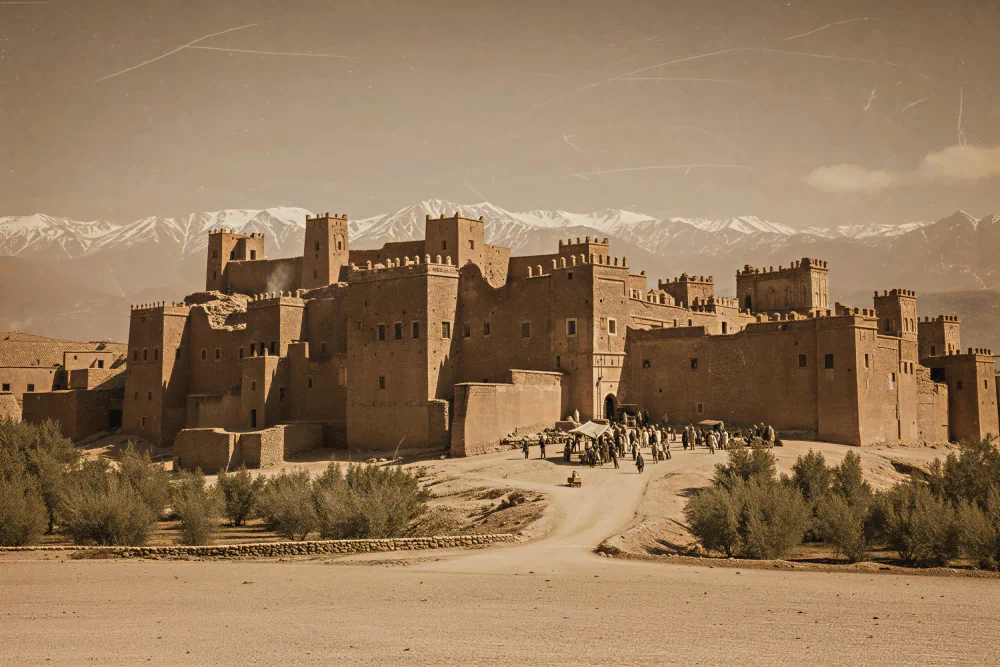
Since the COVID-19 lockdown had brought the world to a standstill, there were no more opportunities to go out and take photos. To overcome this nostalgia, I had decided to scan old slides. That night, I was going to scan the slides from a trip I had taken fifteen years earlier to the imperial cities of the Moroccan Atlas Mountains.
Each time the scanner finished reading the twenty slides in the plastic holder, I opened each scanned image one by one to enlarge it and then carefully examine it to remove any traces of dust or scratches. I was about to do this with the image saved as IT8.jpg, starting with a section of the perimeter wall of the El Glaoui kasbah, when… I SAW HIM!!!!
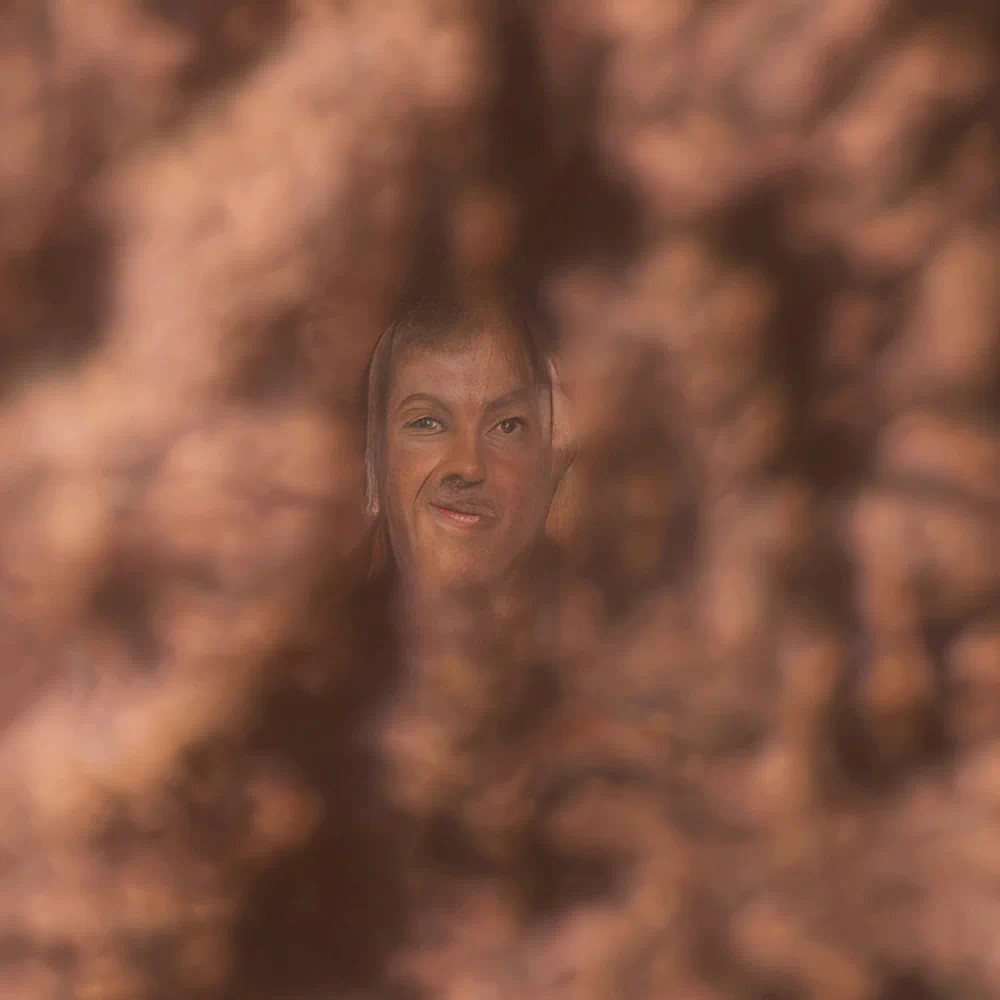
A small but very well-defined face, a face with Arab features that seemed to be laughing at me. I jumped out of my chair and barely stifled a laugh! I immediately closed my computer and went to sleep…the next day, when I opened the same file again…the face was still there!!! At that time, generative AI had not yet entered our lives
Whose face was that? Why did it want to reveal itself to me? Was it there when I took the photo? What was the connection between the face and that kasbah? All these questions and many more swirled in my mind. I longed to drop everything and travel to Télouet, where the El Glaoui kasbah stood, to find the answers, but that was impossible. So I had to make do and conduct research from home, using the digital tools at my disposal to gather information about the kasbah and try to understand the story behind that face.
That face became the central topic of conversation in the many “virtual coffees” we held with friends and relatives back then to alleviate the enforced isolation. When I recounted what had happened, everyone had their own opinion about that face and each suggested investigating it in a particular direction. In the end, two main lines of inquiry emerged: the historical and the esoteric.
In the Berber Encyclopedia and on the Internet I found a lot of material about the kasbah of Télouet that allowed me to reconstruct events that occurred there from 1682 to 1956, the year in which El Glaoui, lord of the kasbah, mysteriously committed suicide after having to ask forgiveness from the king of Morocco whom he had betrayed years before
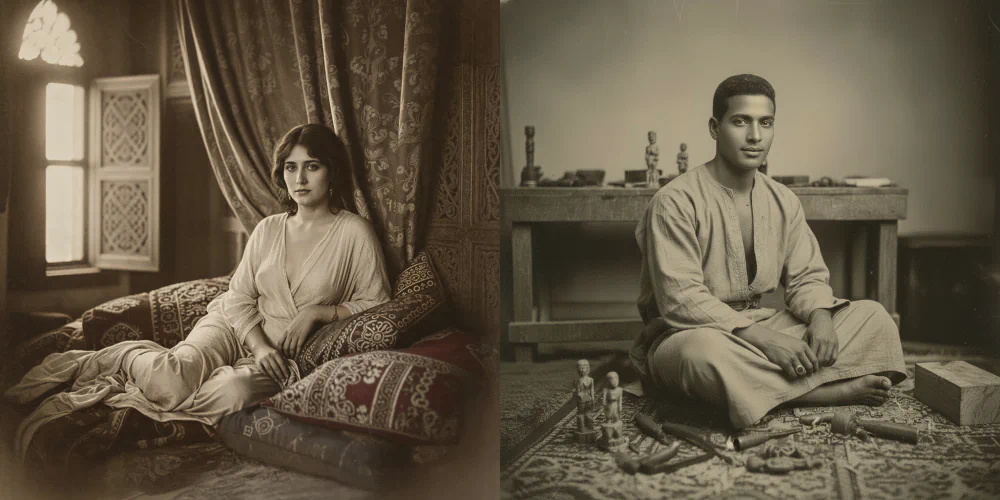
The esoteric line of inquiry was initiated by a friend of mine who proposed the hypothesis that the face that appeared was mine in a past life, when I was a woodworker working in the kasbah, and that I had suffered a violent death. This hypothesis fit with historical records stating that in 1912 the lord of the kasbah began extensive renovations of the palace, sparing no expense, and that more than three hundred artisans from all over Morocco worked on the project.
Thus, combining the two lines of research, I have written a novel whose protagonists are Alessandro (a travel photographer), Hamza the son of the man whose face appeared in the slide, Khalid: the Berber craftsman who met a violent death and whose face was forever imprinted on the perimeter wall of the kasbah, Zahira his lover and one of the women in El Galoui’s harem.
Here is the synopsis of the novel: Alessandro, an Italian photographer, discovers the inexplicable appearance of a human face on the perimeter wall of the Kasbah El Glaoui, a slide taken year earlier in the Moroccan Atlas Mountains. After a conversation with a parapsychologist friend, the image becomes an obsession. Alessandro begins an investigation that leads him to contact a professor at the University of Paris, curator of the Berber Encyclopedia, who reveals the history of the place: a kasbah marked by the absolute exercise of power and by episodes of violence that have been systematically silenced.
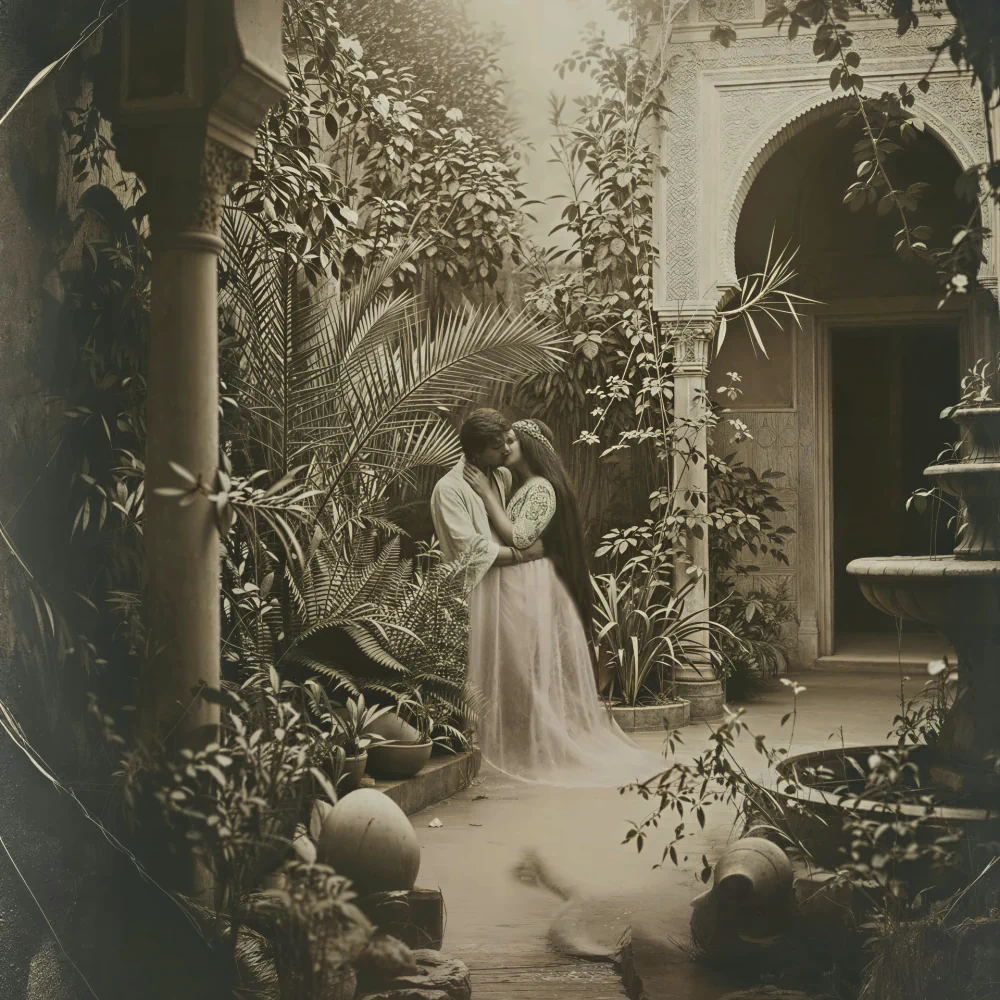
Alessandro realizes that the face in the slide belongs to Khalid, a woodworker who worked at the kasbah and had a passionate love affair with Zahira, one of the women in El Glaoui’s harem. As you can imagine, that love story was doomed to end badly, and so it did…
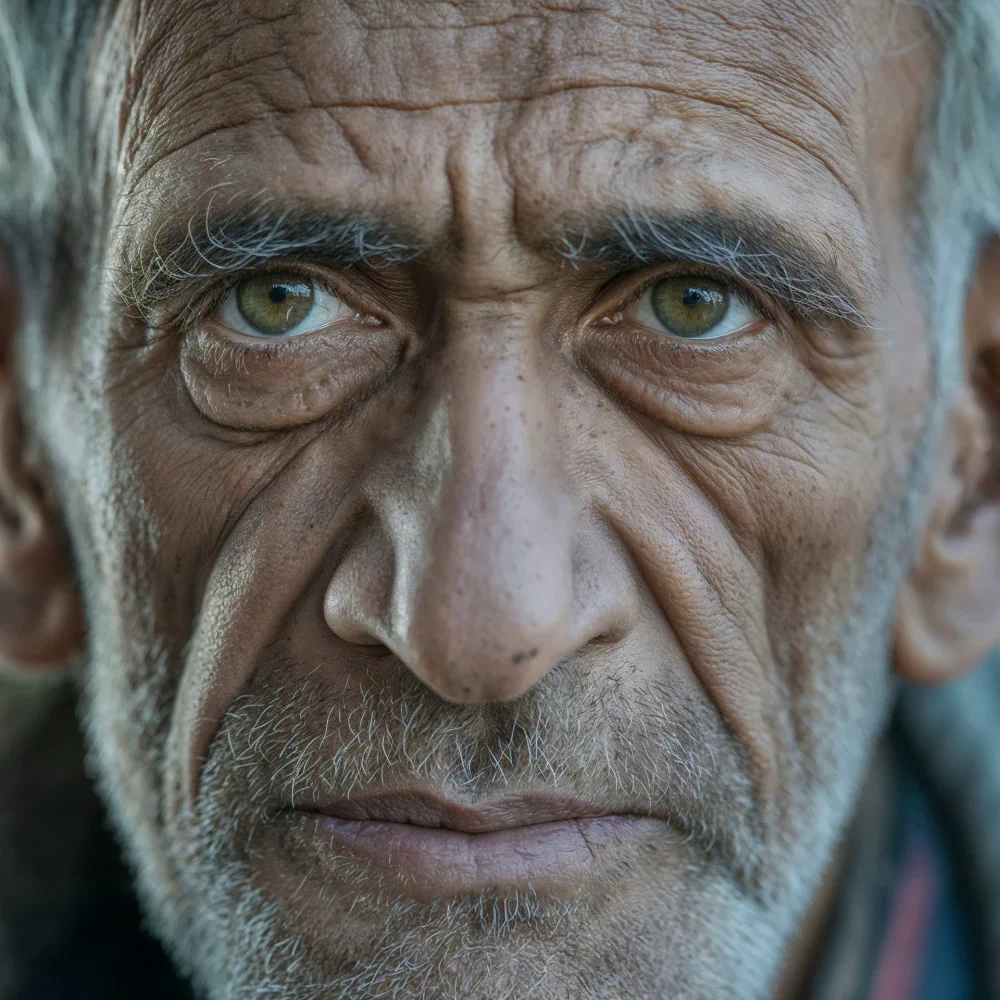
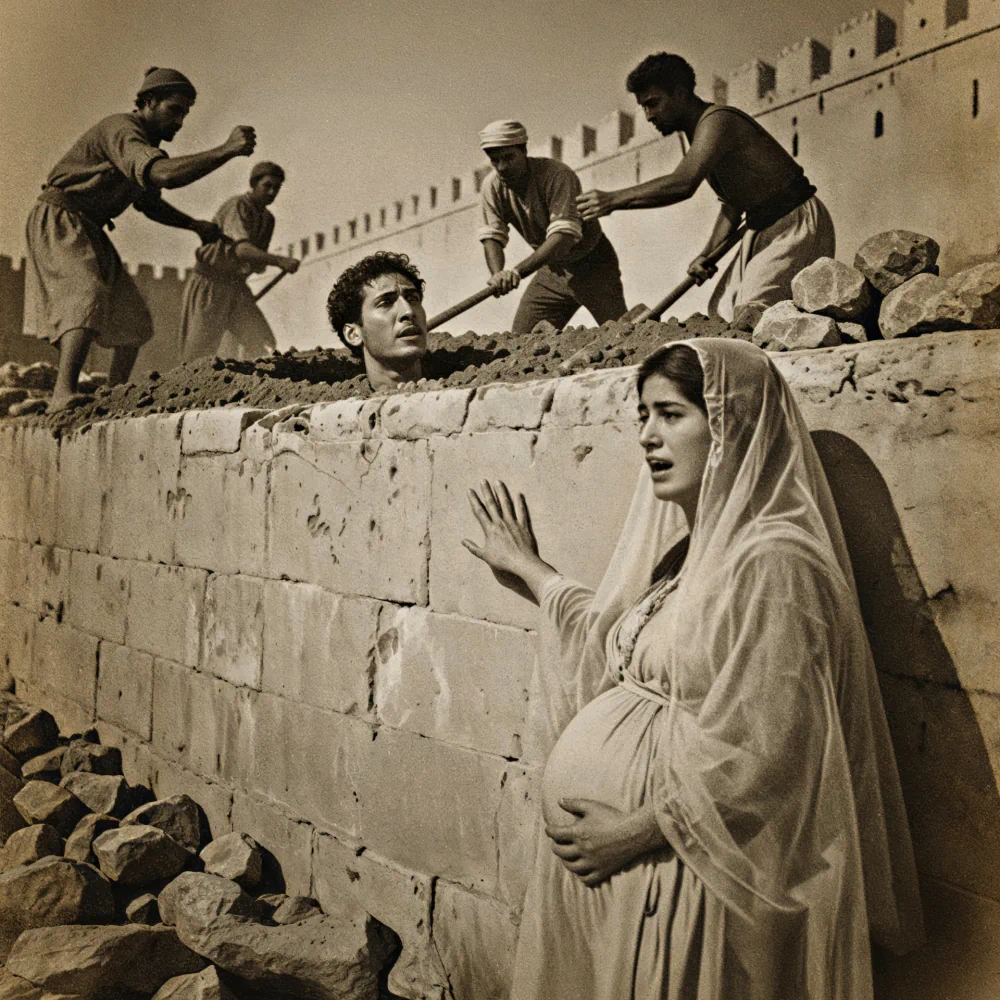
I have transformed this novel into a hybrid book in which historical text, fiction, and images generated by artificial intelligence are interwoven. These images visualize the events that occurred in the kasbah and engage with the text to reconstruct a possible past.
Since the images are AI-generated, they do not function as evidence, archives, or testimony, but rather clearly reinforce the fictional nature of the whole. These images do not serve an illustrative or documentary purpose. They function as visual hypotheses of a possible past, reinforcing the fictional status of the work and avoiding the simulation of a nonexistent archive. The book thus aligns with a contemporary trend in literary fiction that explores the relationship between archive, memory, and imagination, and that uses research as a narrative engine rather than an explanatory end in itself. [Official Website]

Photosatriani
I am a curious of life with idealistic tendencies and a fighter. I believe that shadows are the necessary contrast to enhance the light. I am a lover of nature, of silence and of the inner beauty. The history of my visual creations is quite silent publicly but very rich personally, illuminated by a series of satisfactions and recognitions, such as: gold and silver winner in MUSE Awards 2023; Commended and Highly Commended in IGPOTY 2022/19/18, honorable mention in Pollux Award 2019; selected for Descubrimientos PhotoEspaña (2014), Photosaloon in Torino Fotografia (1995) and in VIPHOTO (2014). Winner of Fotonostrum AI Visual Awards 2024. Group exhibitions in: Atlántica Colectivas FotoNoviembre 2015/13; selected for the Popular Participation section GetxoPhoto 2022/20/15. Exhibitions in ”PhotoVernissage (San Petersburgo, 2012); DeARTE 2012/13 (Medinaceli); Taverna de los Mundos (Bilbao); selected works in ArtDoc, Dodho, 1X. A set of my images belongs to the funds of Tecnalia company in Bilbao, to the collection of the "Isla de Tenerife" Photography Center and to the Medicos sin Fronteras collection in Madrid. Collaborator and interviewer for Dodho platform and in Sineresi magazine [Website]