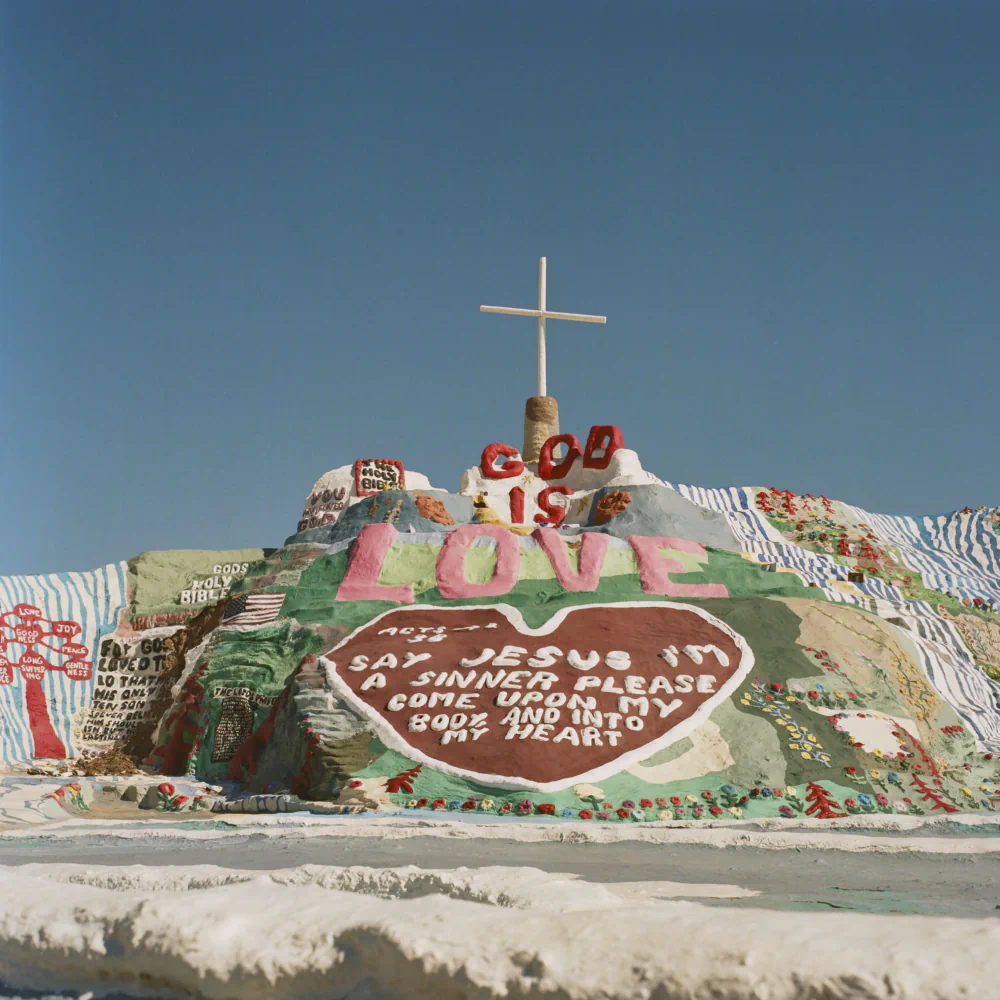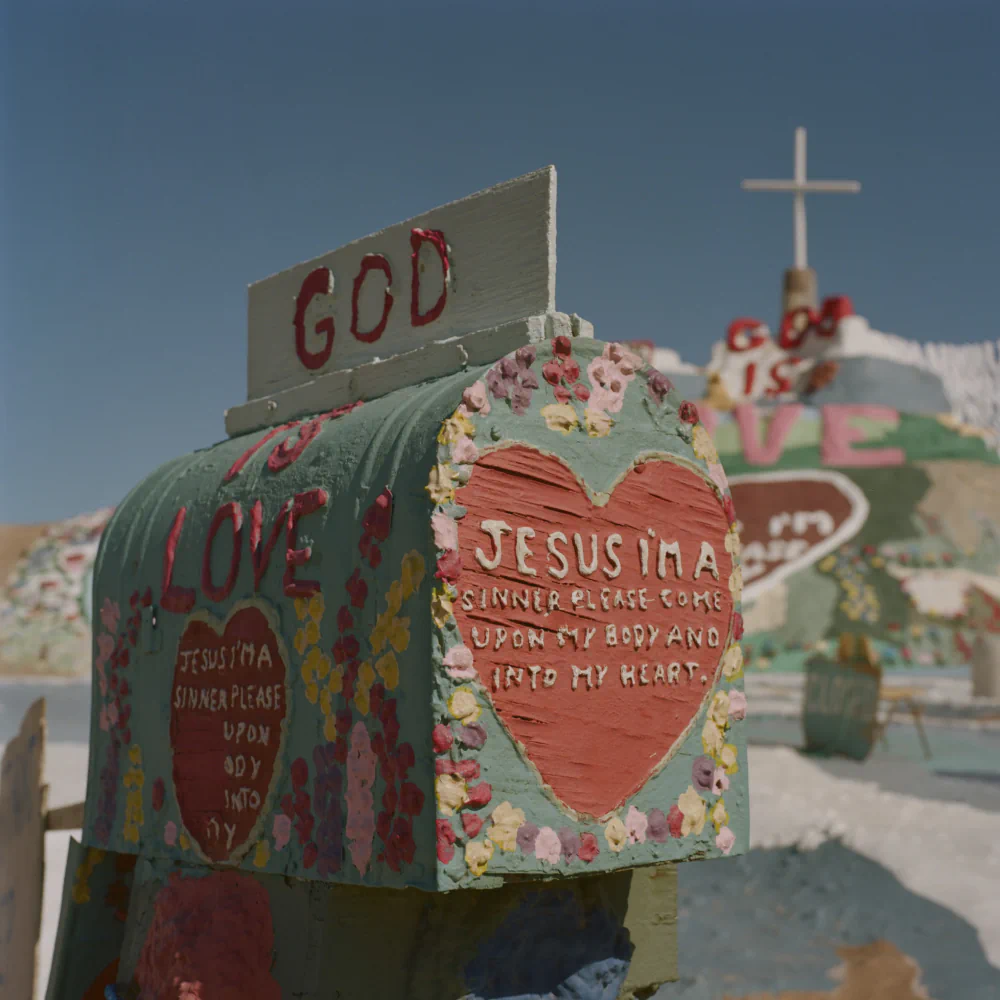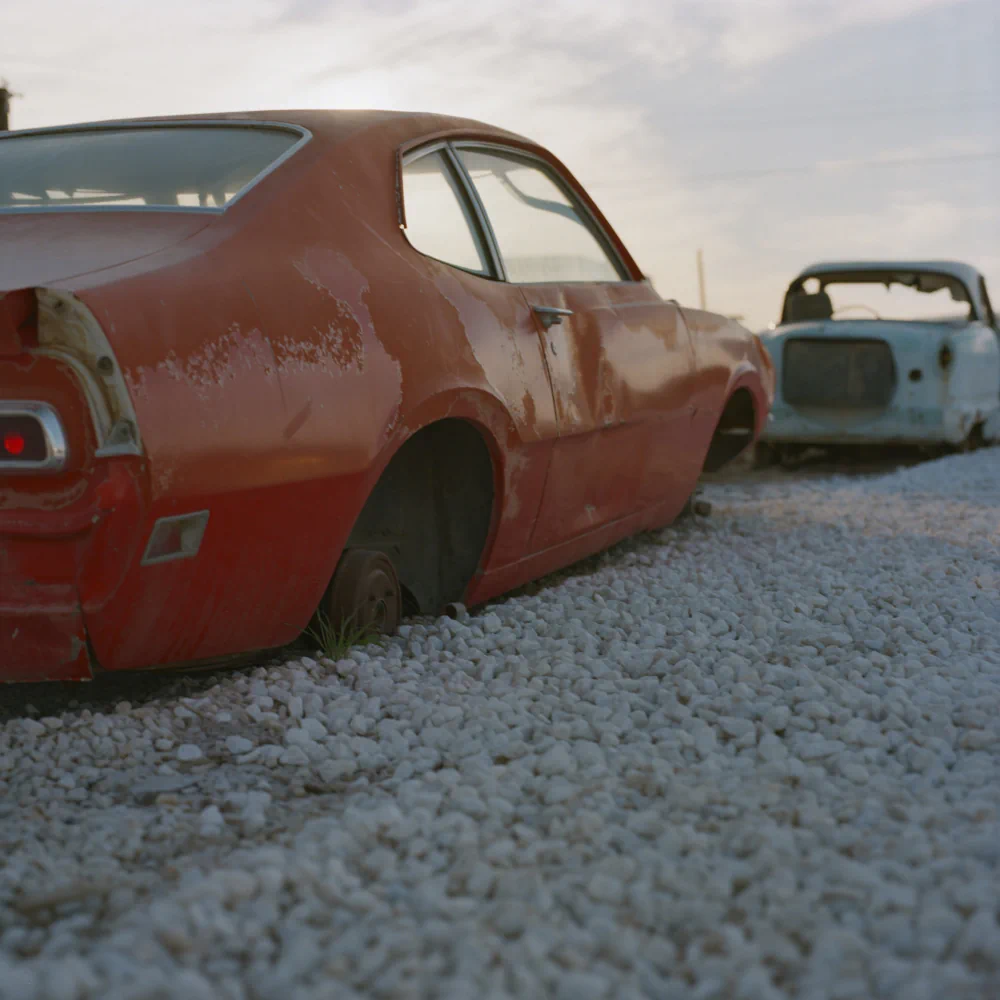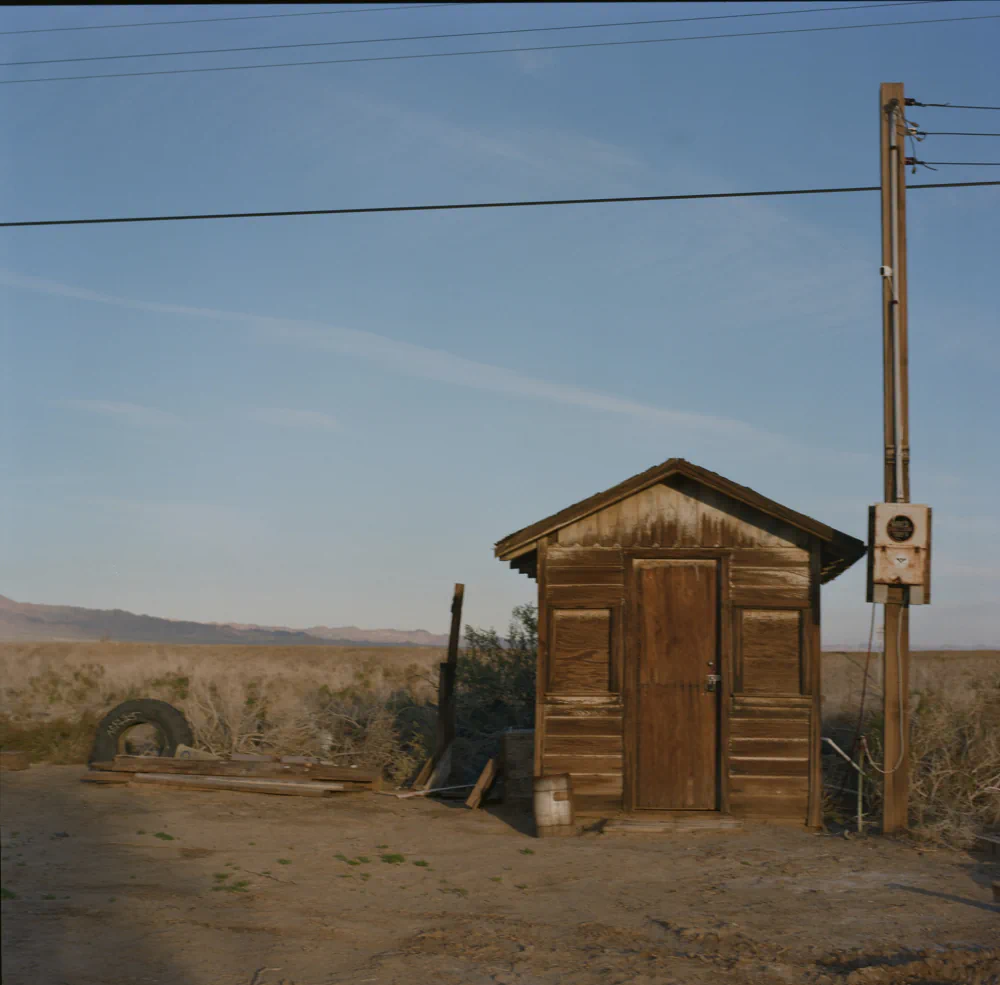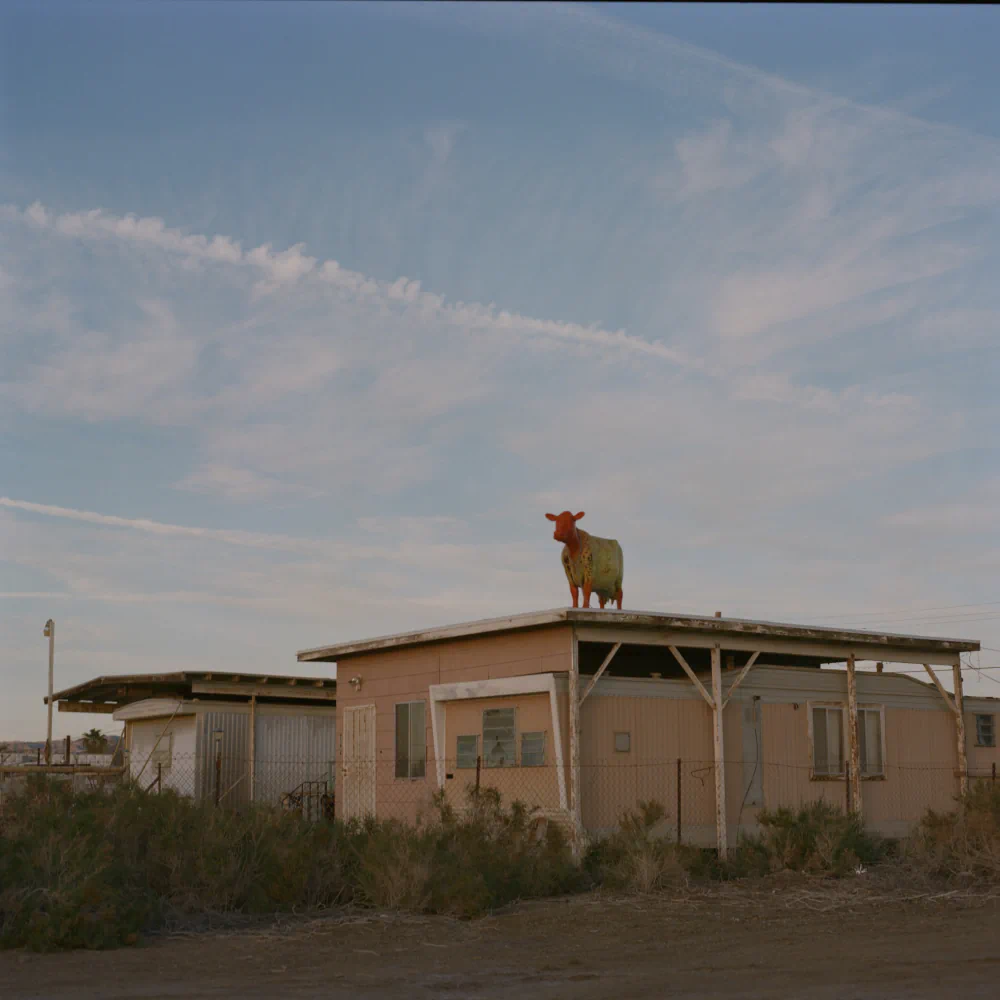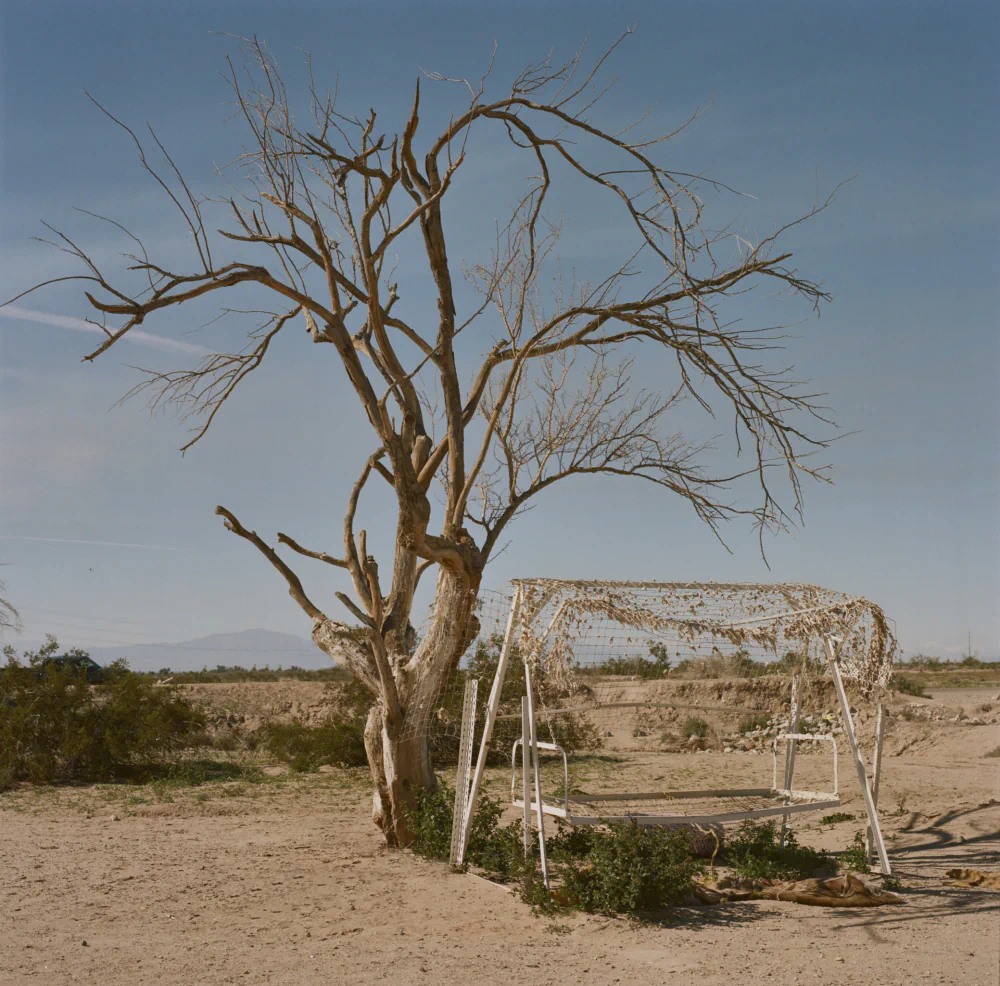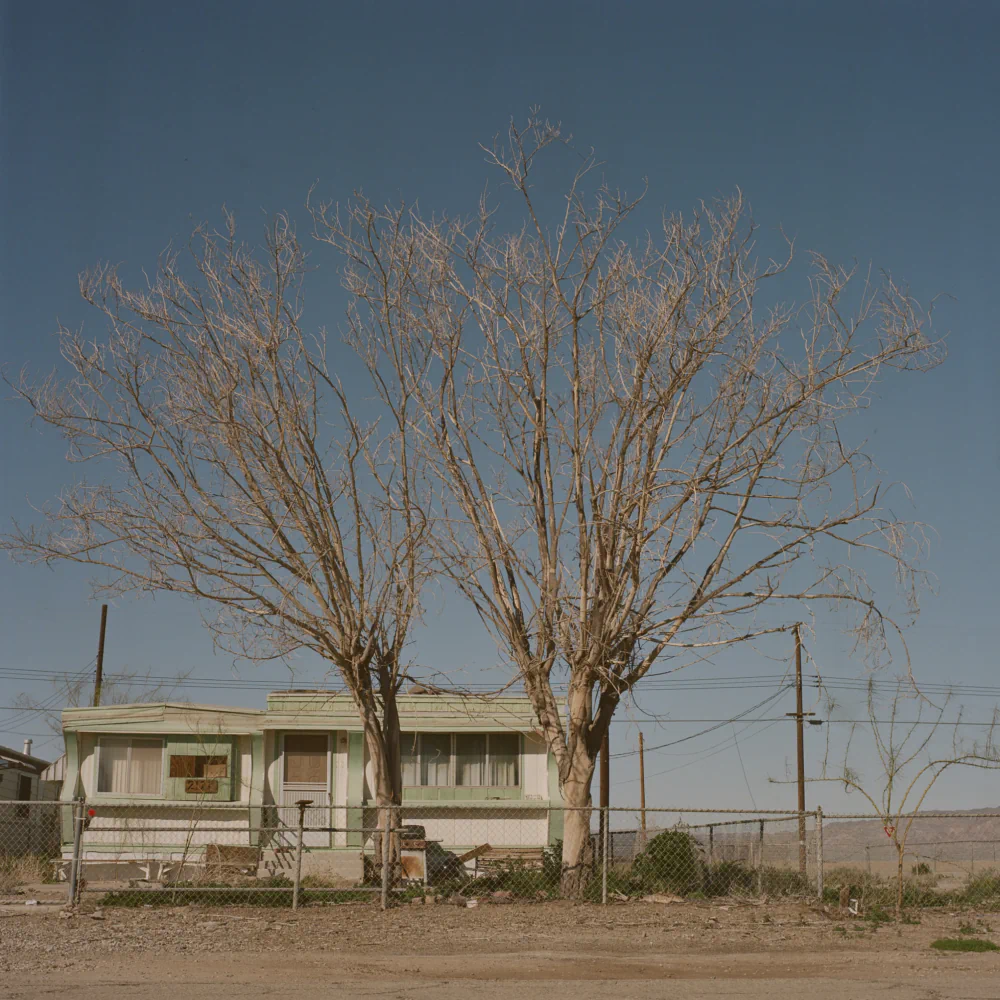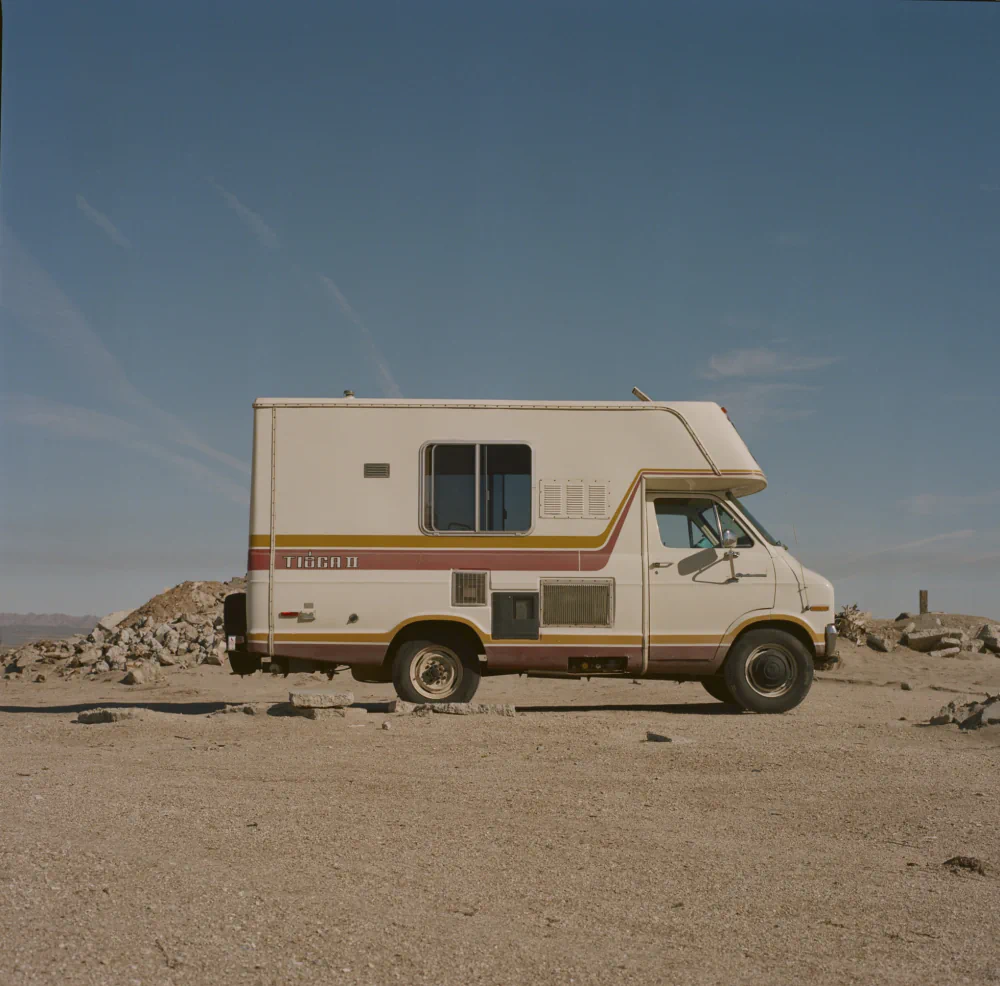

Bombay Beach was once a popular getaway for beachgoers until the 1980s, when the draining of the Salton Sea and rising salinity destroyed the lake’s ecosystem and drove businesses and private landowners out of the area, rendering Bombay Beach a ghost town.
Despite this, by 2018 it was experiencing a kind of rebirth, with an influx of artists, intellectuals, and hipsters who transformed it into a bohemian playground.
When the water retreated and the salinity rose, when the lake turned hostile and the tourists vanished, Bombay Beach should have quietly faded away. Yet what emerged was not a town reborn, but an off-grid constellation: a loose, defiant community where art did not decorate life but replaced infrastructure.
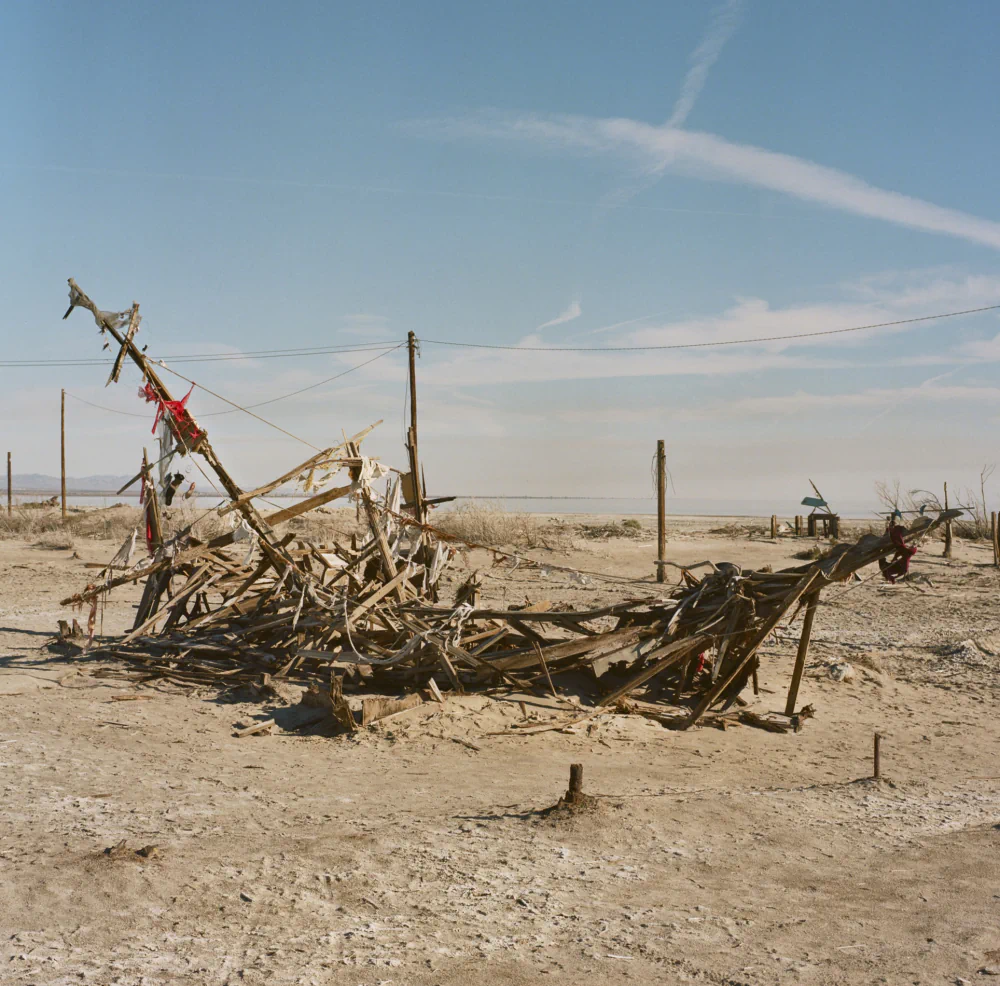
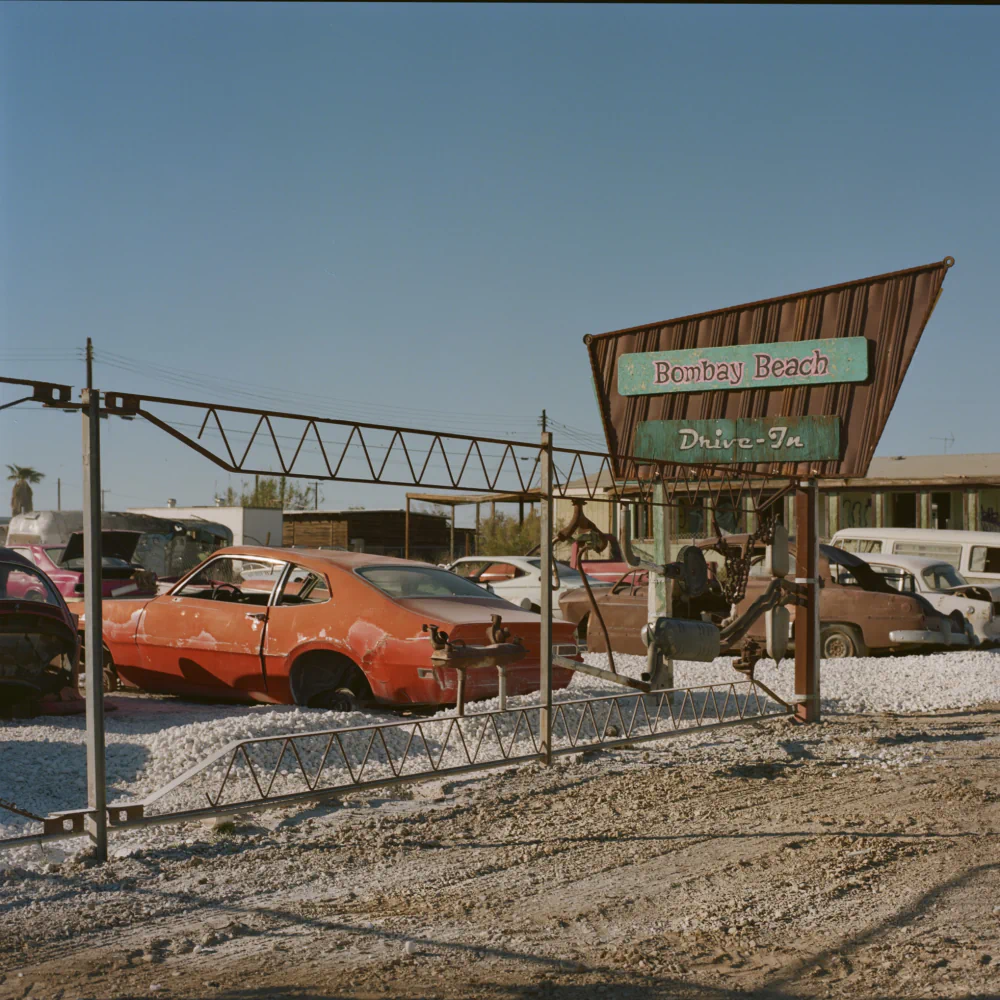
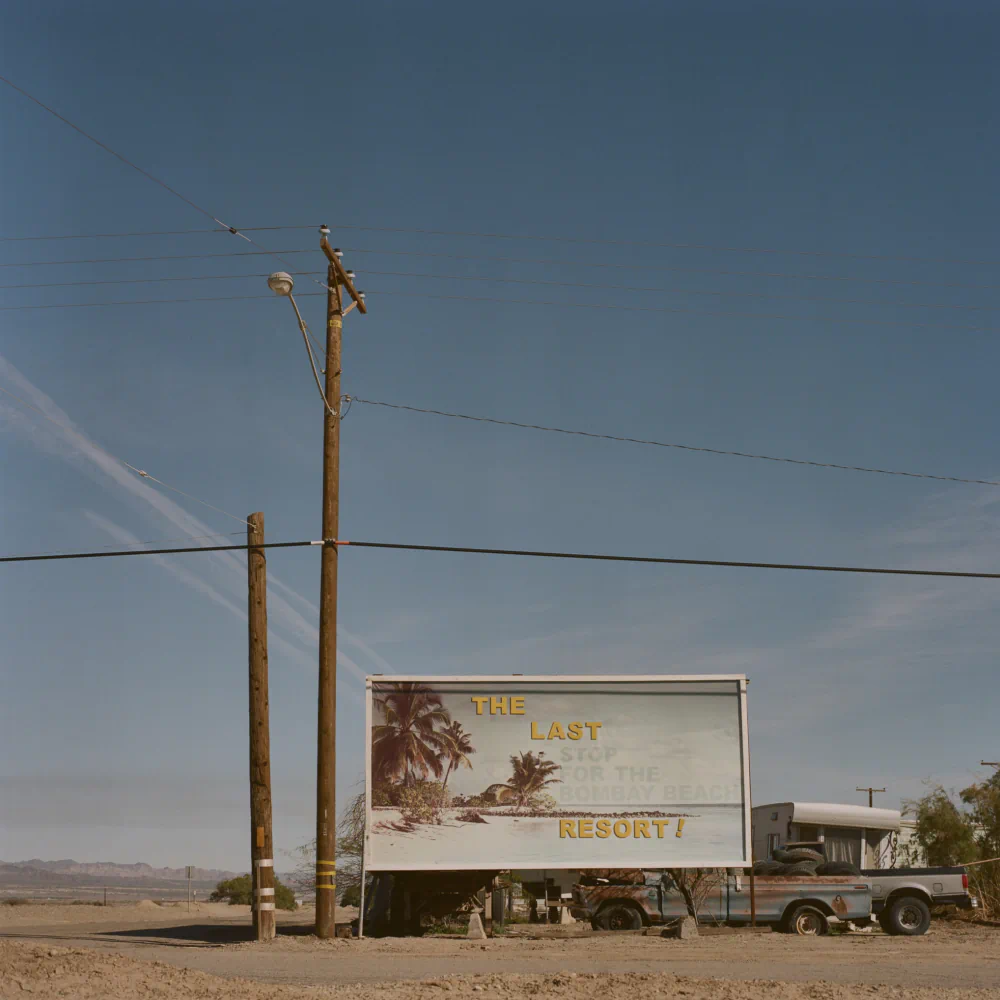
Walking through Bombay Beach now feels like entering a future that arrived early and wore itself out. Installations rise from the dust like messages left behind for someone who never came. A billboard still stands, bleached and skeletal, radiating a sense of a “used future.” It speaks in the visual language of abandoned promises, where optimism has cracked but not disappeared.
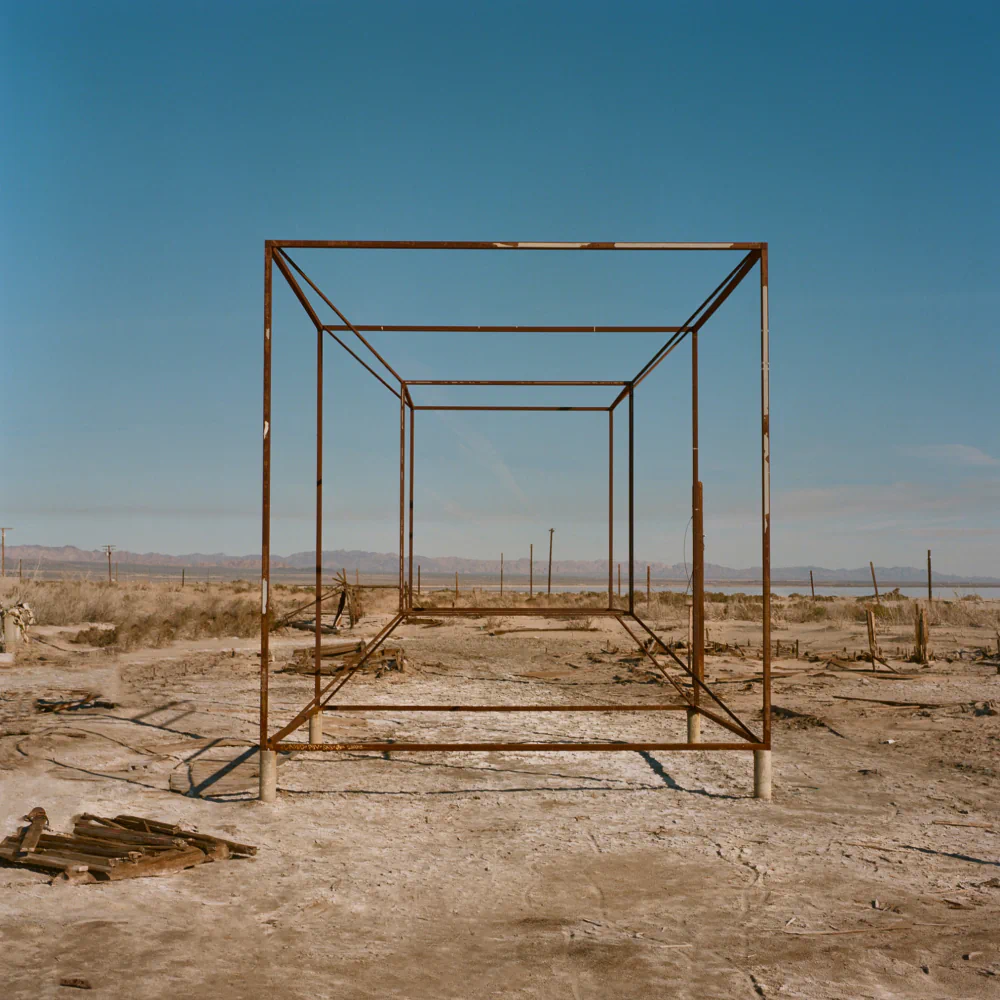
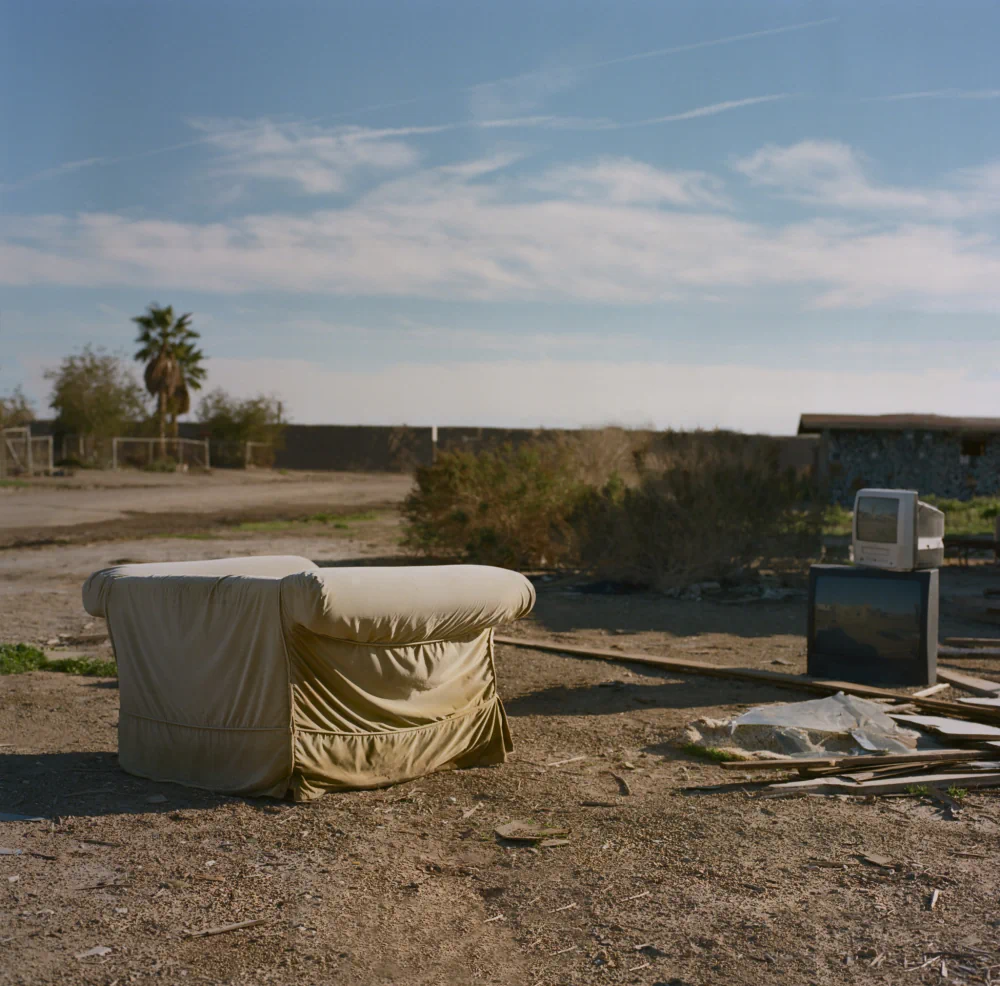
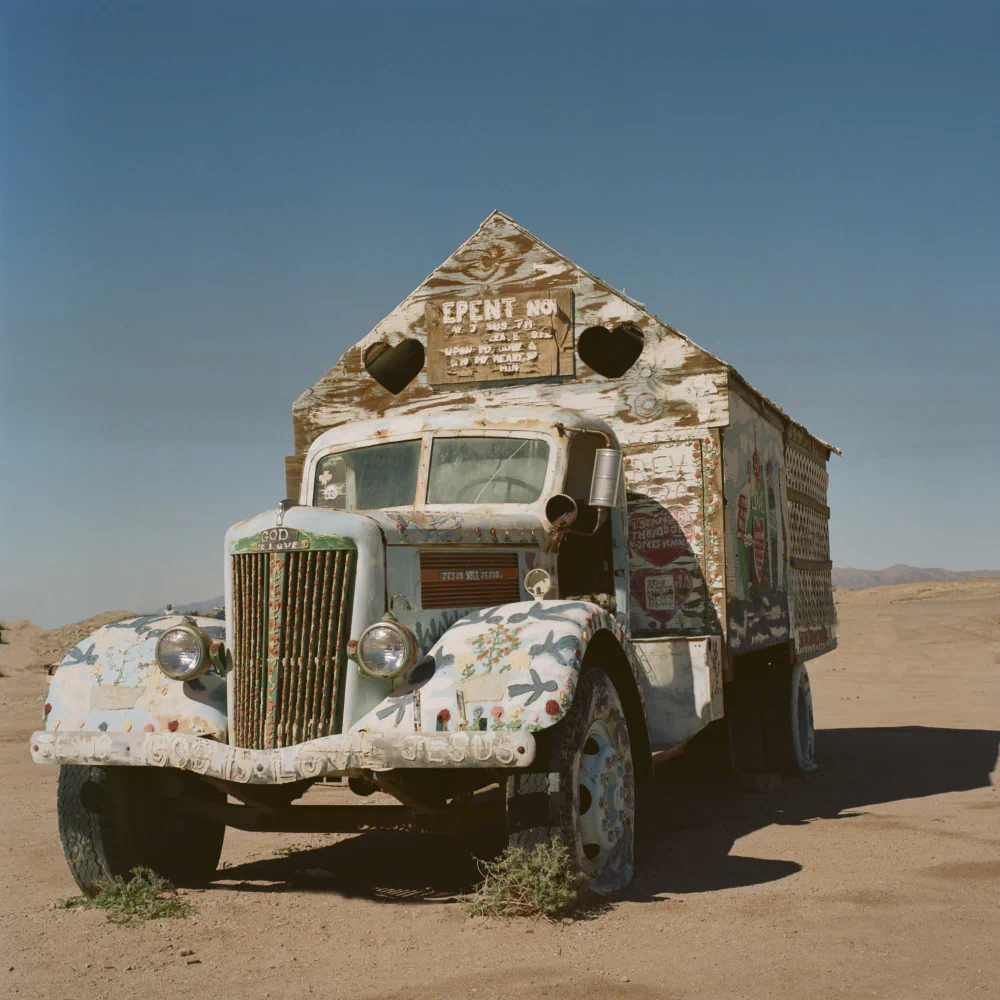
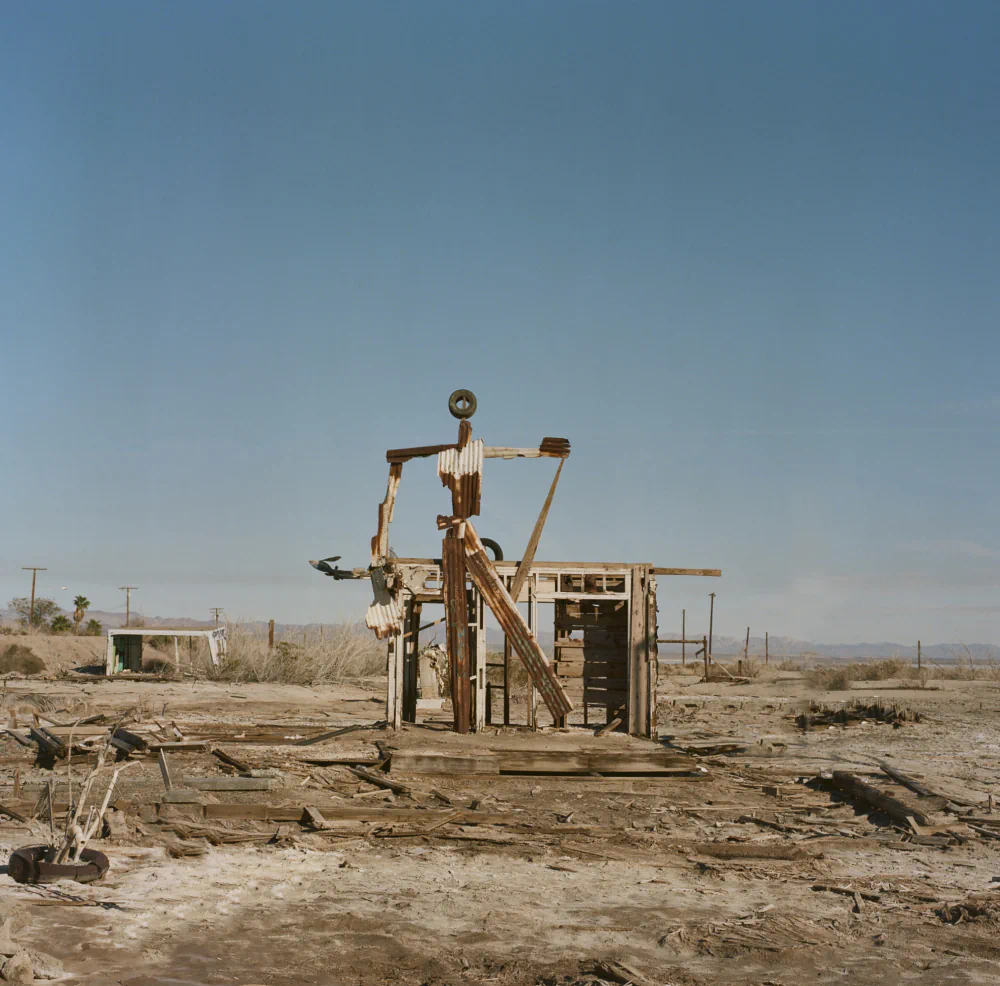
There is intention here, but also surrender. Nothing is polished. Nothing asks for permission. The art does not explain itself; it simply exists, exposed to heat, wind, and corrosion, collaborating with time rather than resisting it.
The author was drawn less to the individual works than to the atmosphere binding them together. Off-grid life is not romanticized here. Its edges are palpable. Isolation presses in. Electricity is optional. Comfort is negotiated daily. Yet this roughness is precisely what sharpens the authenticity. People are not performing escape; they are inhabiting it. The art feels inseparable from that decision. Sculptures lean, rust spreads, paint fades. Entropy is not a threat; it is part of the composition.
Documenting the place meant resisting the urge to beautify it. The intention was to hold on to the desolation without turning it into spectacle. The future imagined here is not sleek or efficient. It is patched together, sunburned, and stubbornly human, a future that looks back with tired eyes and asks what we thought progress would feel like. In Bombay Beach, the answer lingers in the dust, in the silence between structures, and in the quiet confidence of a community that chose to live at the edge of disappearance and make something honest there.
Bombay Beach was shot on analogue 6×6 Kodak Portra negative film using a Hasselblad 500C/M camera.
About Bram Coppens
Bram matured as a filmmaker and photographer in the commercial world, artfully combining the gritty grain of closely observed humanity with his own distinctive storytelling sensibility. His technical versatility encompasses vintage analogue film as well as the most cutting-edge digital techniques. Drawing on his extensive years of experience in Hollywood, he produces strikingly unique work that has been celebrated at the Clios, Cannes, and beyond. [Official Website]