
Bill Brandt’s photography is often described through its extremes: harsh contrasts, exaggerated perspectives, bodies stretched and bent by wide-angle lenses, interiors pressed into claustrophobic darkness.
Yet to read Brandt as a photographer of distortion is to miss the point. Distortion, in his work, is not a stylistic excess. It is a method. A way of forcing the image to speak beyond appearances, to reveal structures of power, class, and psychological tension that a neutral depiction would conceal.
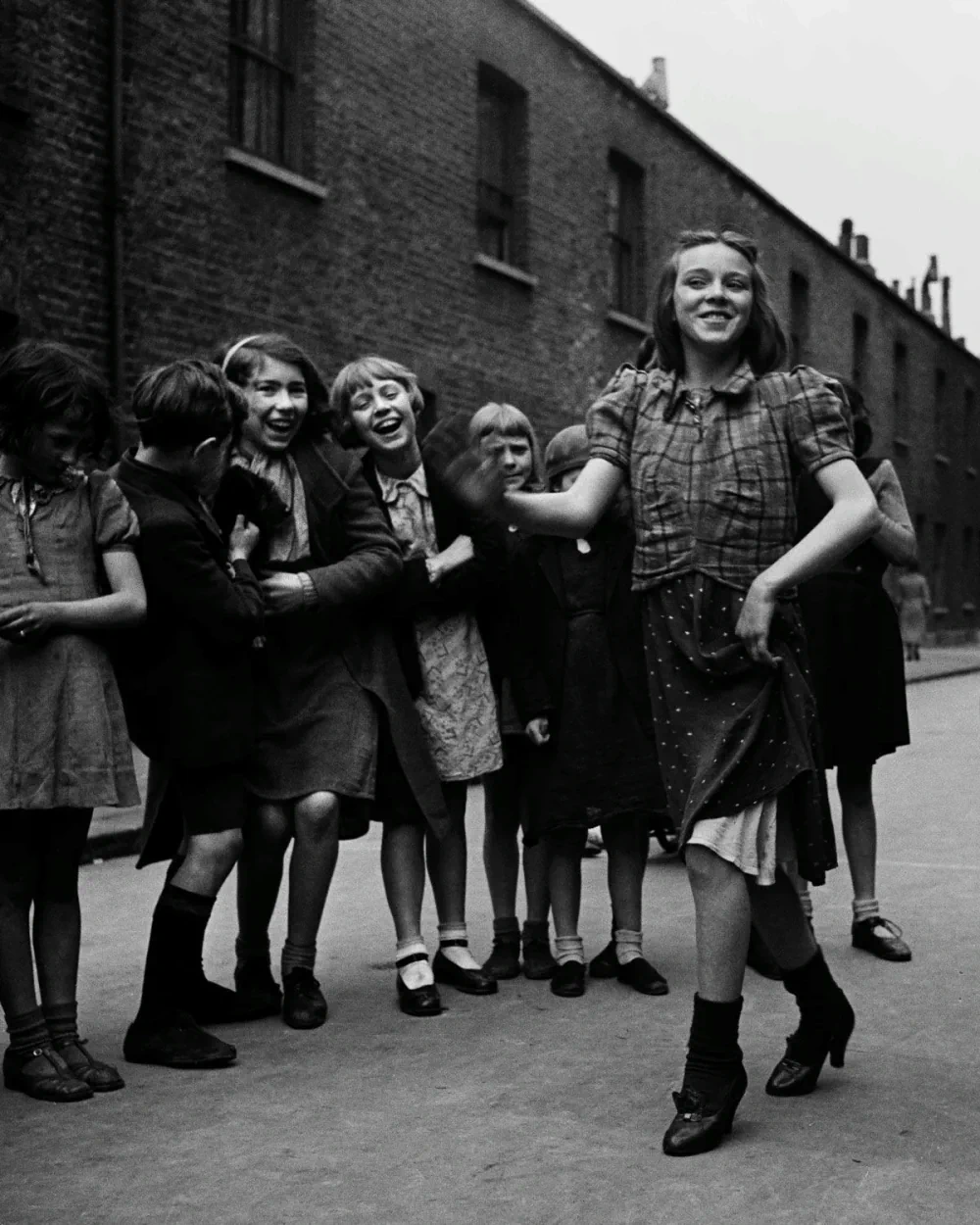
Brandt never believed that truth resided in faithful description. For him, the literal image was insufficient. The world he photographed, particularly Britain between the 1930s and the postwar years, was deeply stratified, rigid, and unequal. To photograph it “correctly” would have meant reproducing its surface order. Brandt chose instead to fracture that surface.His early documentary work already hints at this approach. In The English at Home and A Night in London, social divisions are not merely shown; they are intensified. Servants appear compressed by architecture, while upper-class interiors stretch outward with space and light. These are not objective observations. They are visual arguments. Brandt bends perspective to make inequality visible.
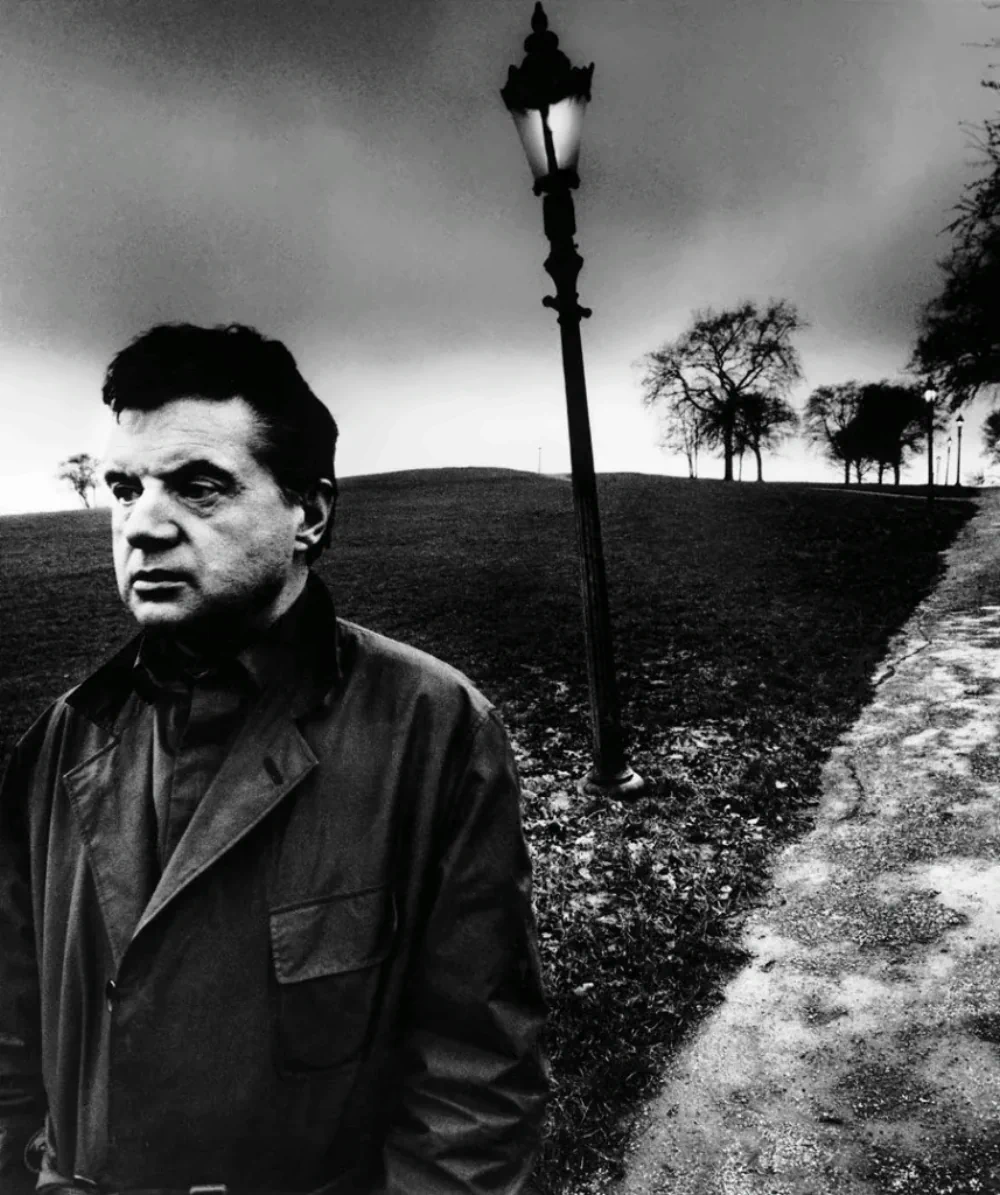
As his work evolved, distortion became more explicit. His use of extreme wide-angle lenses transformed bodies and spaces into psychological landscapes. Limbs elongate, rooms warp, walls press inward. The human figure is no longer stable or proportional. It becomes a site of tension, vulnerability, and confrontation.
In Brandt’s nudes, this strategy reaches its most radical form. Bodies dissolve into fragments: hips become landscapes, torsos turn into sculptural masses, faces disappear altogether. These images are often described as abstract, but they are deeply physical. The distortion does not distance the body; it intensifies it. The nude is no longer an object of desire, but a terrain of force.
What Brandt understood is that distortion can be more truthful than accuracy. By exaggerating form, he exposes relationships that realism smooths over. Power, intimacy, alienation, and confinement emerge not through narrative, but through spatial pressure and scale.
This approach owes much to Brandt’s complex influences. He absorbed Surrealism’s interest in the uncanny, German Expressionism’s psychological intensity, and the shadow-heavy language of film noir. Yet his work never collapses into fantasy. The distortion always remains anchored to lived reality. These images feel unsettling because they are recognizably human.
Brandt’s manipulation of light reinforces this effect. His blacks are deep and unforgiving. Shadows erase detail, deny comfort, and compress space. Light does not clarify; it interrogates. The photograph becomes a site of struggle rather than revelation. Crucially, Brandt’s distortions are never decorative. They are directed. He does not distort everything equally. He distorts where pressure exists. Where bodies are constrained. Where class divides space. Where intimacy becomes exposure. The image bends where reality already bends. In this sense, Brandt reverses a common assumption about photographic ethics. Fidelity to appearance is often mistaken for honesty. Brandt shows that honesty may require intervention. That telling the truth sometimes means breaking the image.
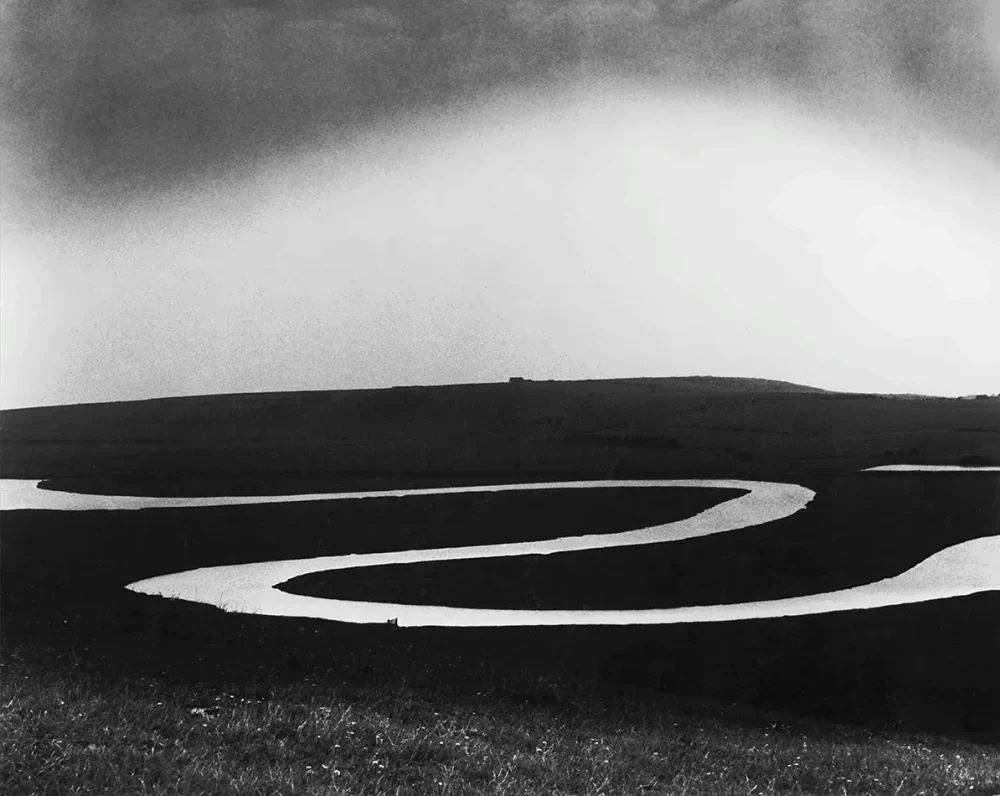
His photographs refuse balance. They lean, stretch, and compress until the viewer feels the tension physically. Looking becomes an embodied experience. One does not simply see a Brandt photograph; one enters it uneasily.This is why Brandt’s work remains resistant to easy consumption. It does not flatter the eye. It does not reassure. It confronts. The distortion demands effort from the viewer, forcing a reconsideration of what photography is supposed to do.
Brandt reminds us that photography is not bound to reproduce the world as it appears. It can reconfigure it to make its underlying forces visible. Distortion, in his hands, is not a betrayal of truth, but a tool for reaching it. To distort in order to tell the truth is to accept that reality is not neutral, balanced, or proportionate. Brandt’s photographs do not offer solutions or clarity. They offer pressure, imbalance, and unease. And through that unease, they reveal something precise about the world they inhabit.