

Today I present an autobiographical book of hybrid fiction (text and images) that fits perfectly into the category of contemporary literary fiction based on documentary evidence.
This is the story of a teenager from a small town in southern Italy and his budding passion for aquariums during the darkest years of Italy’s postwar history.
Between 1969 and 1980, events took place in Italy that shook society to its core. There were deaths, many deaths, too many deaths (if there ever is such a thing as an acceptable number of deaths). Those years of violent rebellion, armed struggle, and terrorism were later called “Anni di Piombo” (which we could translate into English as Years of Lead), a name that reveals the gloomy and mournful atmosphere of that period in Italian history.
It all began with the Student Movement which, in the wake of the Paris protests of 1968, called for a break with the paradigms of the past. Then the Workers’ Movement joined in, demanding radical improvements in labor relations. Together, combining youthful hope, aversion to unbreakable rules, and dignity in the workplace, they shook up a society that had been navigating the rigid rules of respectability for centuries. Added to all this was the degeneration of those legitimate demands into a more violent strategy that bordered on terrorism. Although it is still unclear who was behind those terrorist acts, the fact is that many people died and many were injured.
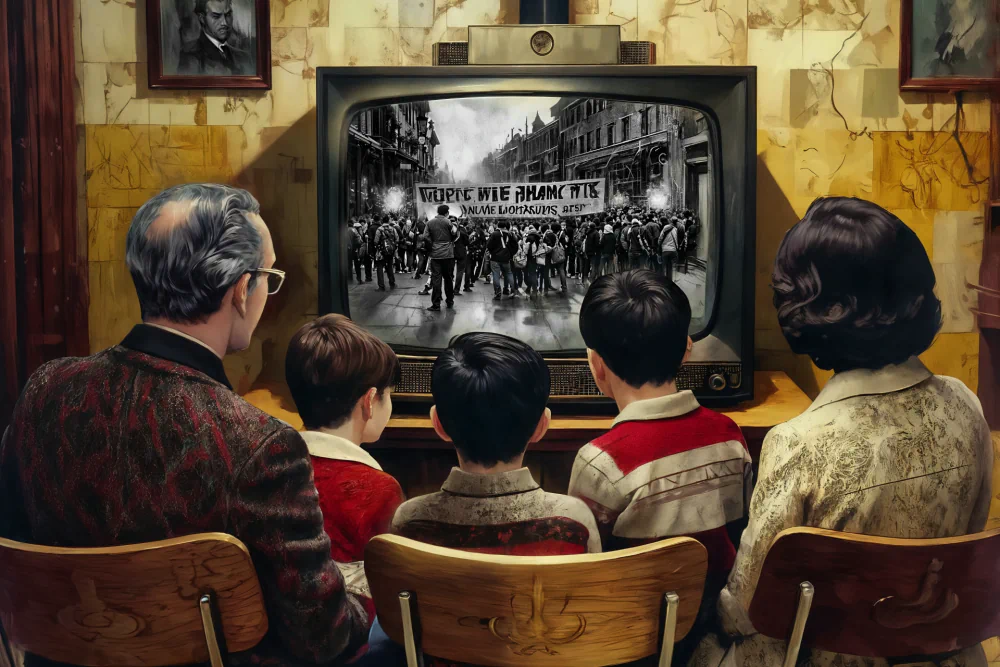
The most important events of that social revolution took place mainly in northern Italy, where the country’s major industrial companies were concentrated, or in Rome, the city of politics. In Basilicata, a region that was almost nonexistent in the eyes of many Italians at the time, and in Potenza (the regional capital of Basilicata), the provincial town where I was born and lived, all this was experienced as a distant echo. In Potenza, life continued at the same pace and with the same habits as always. Only in the evening, watching the news on TV, did we learn about the violent events taking place in the north or in Rome. I was nine years old at the time of the first attack that formally marked the beginning of the Years of Lead, and when it all ended, I was 20.
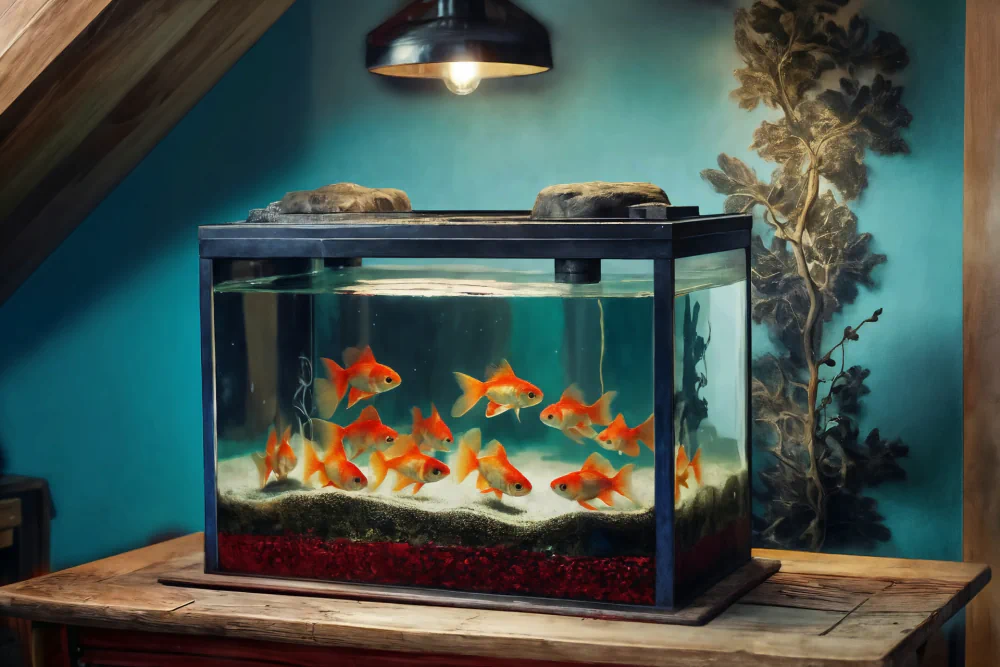
During those years, I developed a passion for aquariums thanks to an uncle of mine who lived in Milan and gave his father (my grandfather) an aquarium filled to the brim with Carassius auratus (commonly known as goldfish). I was 13 years old. My infatuation was so obvious that, after a few years, an aunt who was always keen to encourage her nephews’ passions gave me my grandfather’s aquarium, now completely empty, to see how persistent my passion was or how much of a “flash in the pan” it was. The strength of that infatuation increased even more when I discovered that a neighbor of mine had a tropical freshwater aquarium in his home and, through him, I learned of the existence of Aquarium magazine, published in Milan, to which I immediately subscribed. I remember how, at the beginning of the month, I checked the mailbox every day, hoping to see the new issue of that legendary magazine.
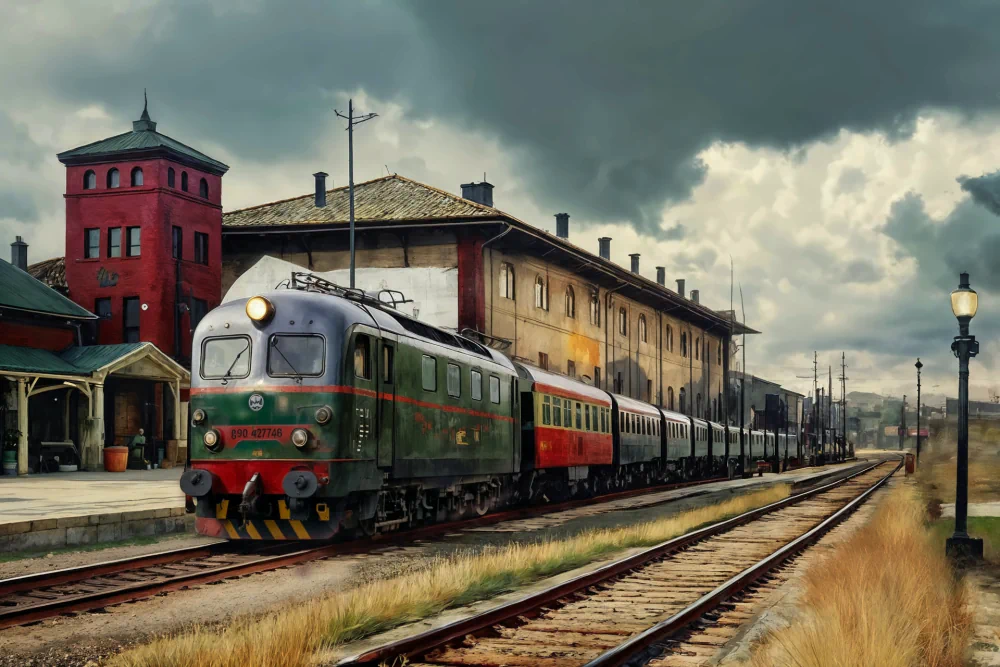
In Potenza, there was only one pet shop, which devoted just a small corner of its cluttered, cramped space to fish. This was not enough for a teenager eager to explore the world and who knew that things were very different in Milan. I had uncles and cousins who lived in Milan. I considered Milan to be “the Mecca” one had to aspire to in order to be considered a true aquarist. And I wanted to go to Milan, whatever the cost, not caring about the dangers that lurked there. And how could it be otherwise? In the end, I went to Milan. I went there alone at the age of 17, after saving up enough money to buy a tropical freshwater aquarium. I left Potenza station with the illusion of a novice and the curiosity of an explorer.
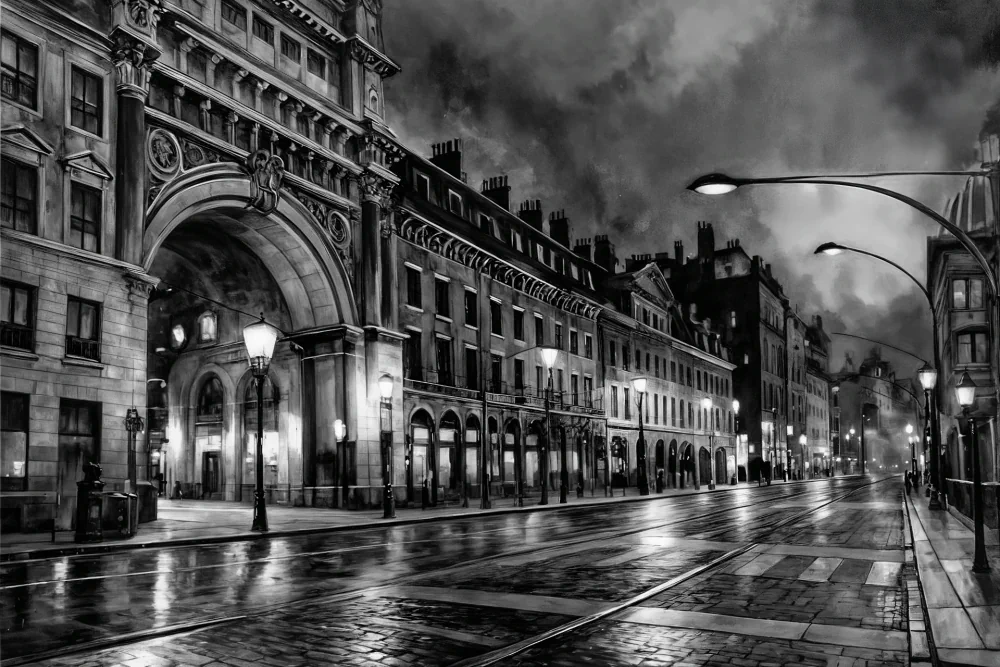
When the train arrived at Milan Central Station, I realized I had entered another dimension. My first impression of Milan was shocking; apart from the size of the city and the frenzy of daytime life, I was struck by the completely deserted streets at night, lit only by the blue lights of the police. They were frightening as I drove through them in my uncle’s car: a curfew that was not imposed but tacitly accepted.
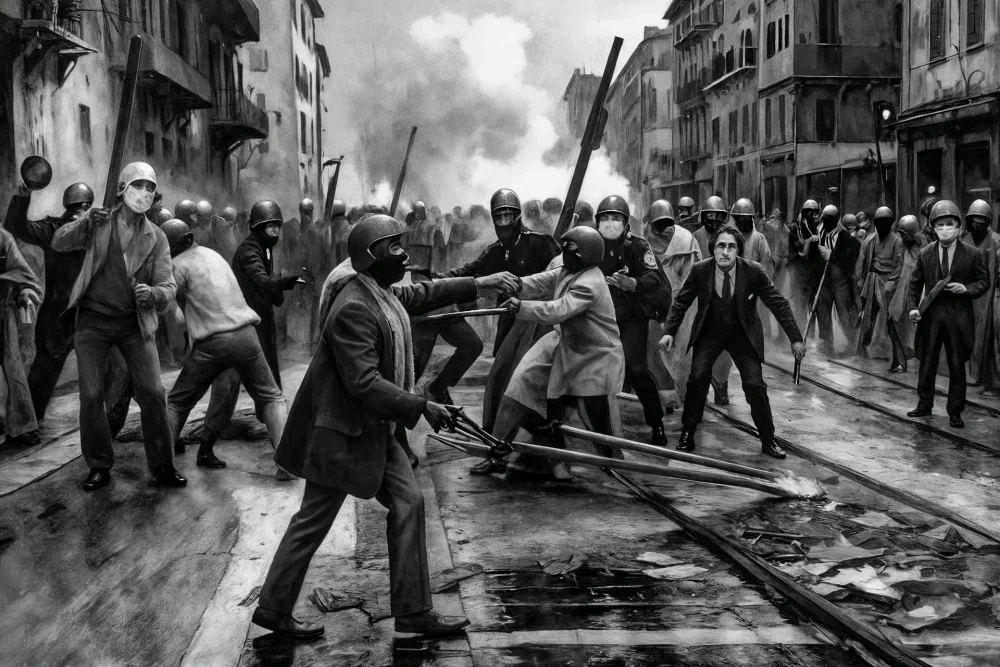
In Milan, I found everything I had seen on television for years: demonstrations, shouting, smoke, police, balaclavas, tear gas, charges, posters, roadblocks… and I was incredulous, stunned, frightened, but above all determined to take advantage of everything I could to become an aquarist recognized by the community. In the aquarium shop in Via Broletto, which I had dreamed about so many times while reading the pages of Aquarium magazine, I learned the secrets and tricks of successfully managing a tropical aquarium.
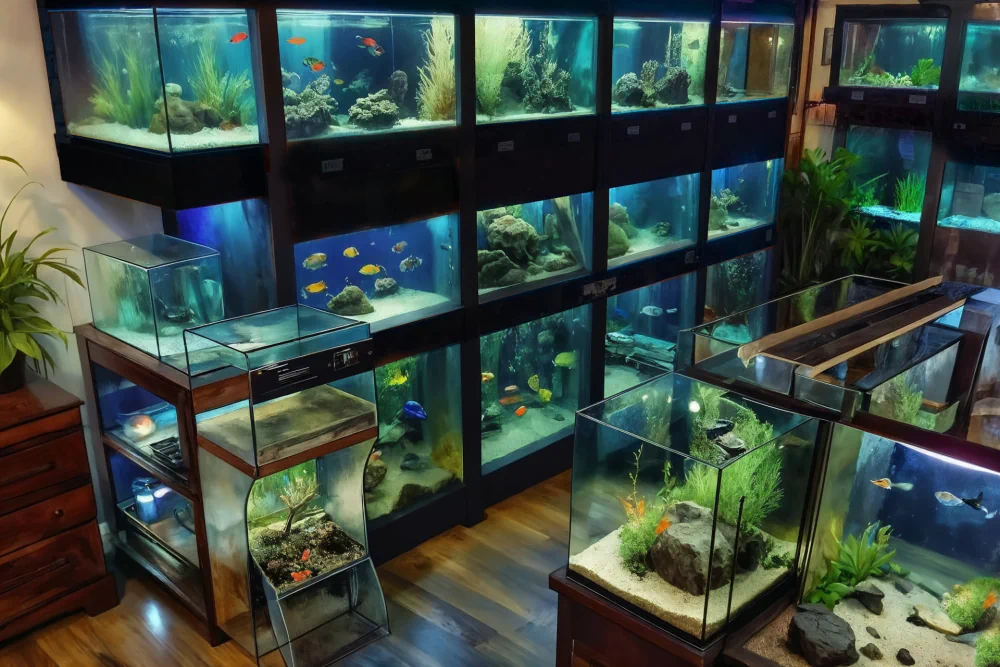
I don’t remember how long I stayed in Milan as a guest of my dear aunt and uncle, but it certainly wasn’t long. However, for me, that time was worth more than many years. When I took the train back to Potenza with an 80-liter aquarium, with much more knowledge about aquariums than when I arrived and with lots of first-hand experience, I felt as if I had been baptized into adulthood.
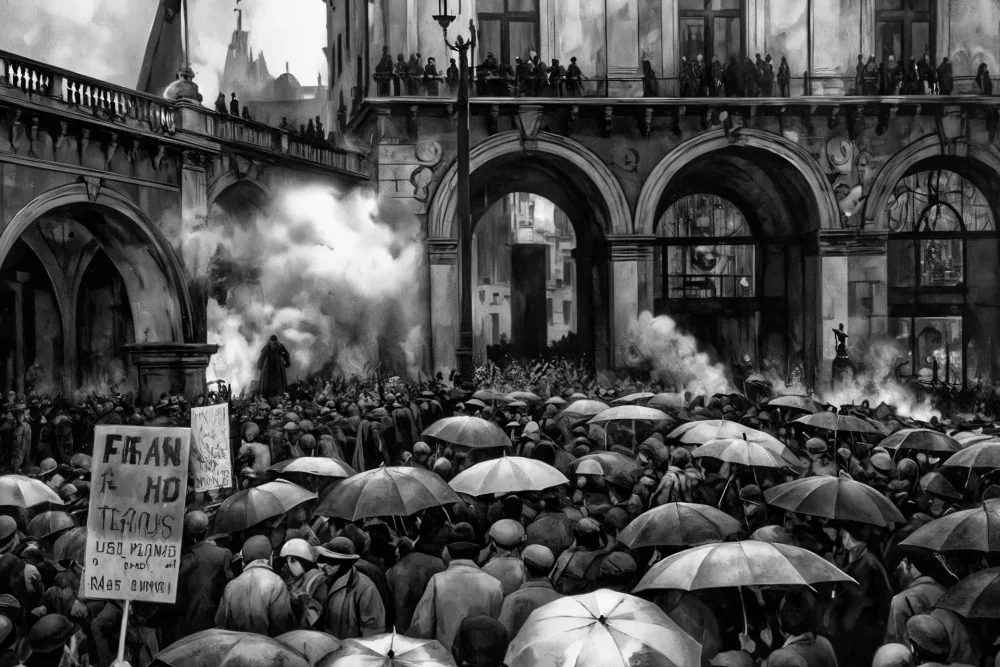
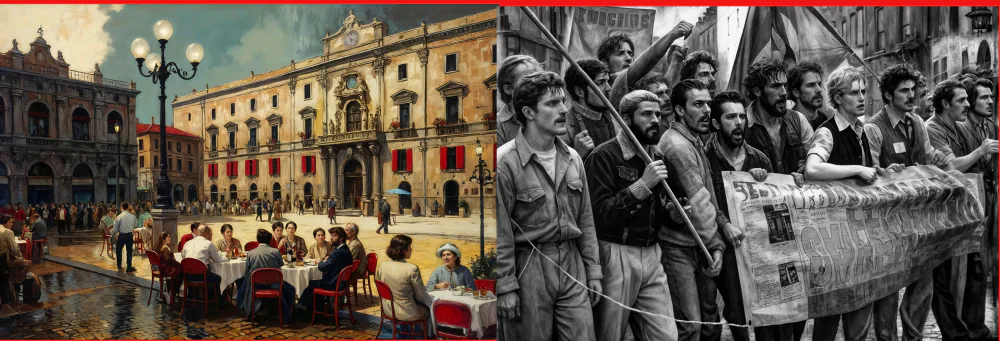
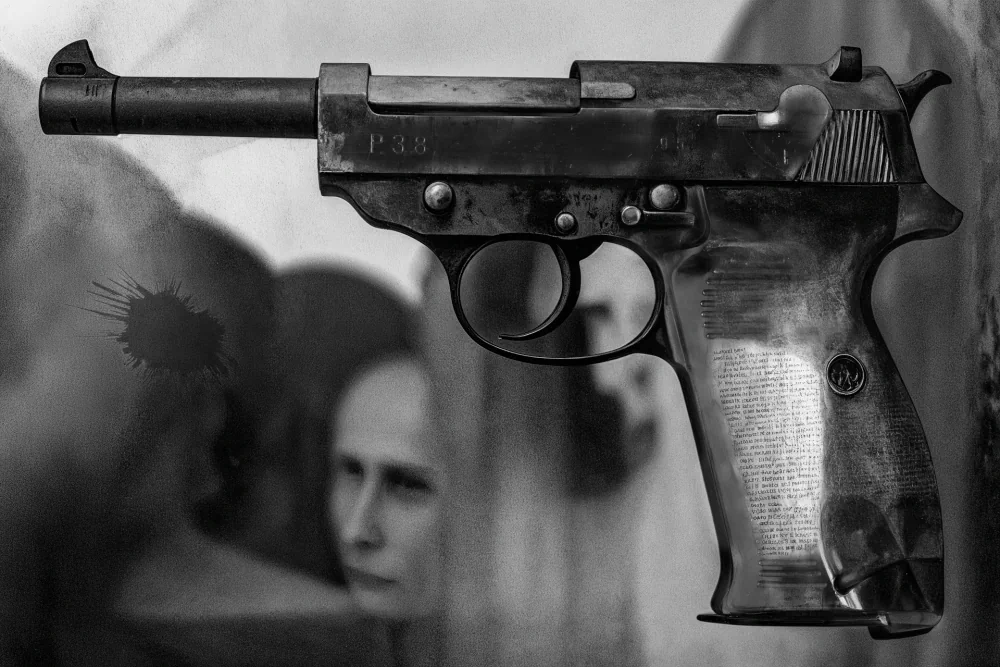
The book (written in Italian, 74 pages) provides a deeper insight into the teenager’s story and the events that took place during those years. The text is accompanied by AI-generated images that do not serve as evidence or testimony but rather reinforce the narrative purpose of the whole. I deliberately used AI and a style halfway between painting and photography because my intention was not to feign a truth that I do not have. AI allows me to show the distance between reality and representation. The images I propose are visual hypotheses which, in the case of life in Potenza, are in color and have a decidedly painterly style, even if they have one foot in reality. In the case of Milan, the images are in black and white and have a style much closer to photography. With this choice, I wanted to accentuate the contrast between the quiet, provincial life of Potenza and the bloody events that were taking place in Milan and changing the DNA of Italian society. [Official Website]
Anni di Piombo
Project format: Standard horizontal, 25 × 20 cm
Number of pages: 74
Publication date: Nov 08, 2025
Language: Italian

Photosatriani
I am a curious of life with idealistic tendencies and a fighter. I believe that shadows are the necessary contrast to enhance the light. I am a lover of nature, of silence and of the inner beauty. The history of my visual creations is quite silent publicly but very rich personally, illuminated by a series of satisfactions and recognitions, such as: gold and silver winner in MUSE Awards 2023; Commended and Highly Commended in IGPOTY 2022/19/18, honorable mention in Pollux Award 2019; selected for Descubrimientos PhotoEspaña (2014), Photosaloon in Torino Fotografia (1995) and in VIPHOTO (2014). Winner of Fotonostrum AI Visual Awards 2024. Group exhibitions in: Atlántica Colectivas FotoNoviembre 2015/13; selected for the Popular Participation section GetxoPhoto 2022/20/15. Exhibitions in ”PhotoVernissage (San Petersburgo, 2012); DeARTE 2012/13 (Medinaceli); Taverna de los Mundos (Bilbao); selected works in ArtDoc, Dodho, 1X. A set of my images belongs to the funds of Tecnalia company in Bilbao, to the collection of the "Isla de Tenerife" Photography Center and to the Medicos sin Fronteras collection in Madrid. Collaborator and interviewer for Dodho platform and in Sineresi magazine [Website]