

You don’t really arrive in the mountains. You ease into them.
The road from Rishikesh takes its time. Rivers appear and disappear, sometimes running beside him, sometimes far below.
At places like Rudraprayag and Karnaprayag, two rivers meet without any sense of urgency. He slows down without deciding to.
Somewhere along the way, he stops thinking about reaching.
He remembers stepping out once, where the road allowed it. The water is cold enough to sting. Later, a roadside stall—fresh lemon soda, slightly too sharp, exactly what was needed. Small things, but they stay.
By the time he reaches Sari Village, it is already evening.
The village feels still, but not empty—quiet in a way that doesn’t ask for attention.
He is hungry and considers ordering something quick. Instead, he is handed a cup of tea and bun maska. Nothing elaborate—just warm, simple, and unexpectedly perfect in the cold.
He mentions why he has come.
The answer is short.
“If you’re lucky.”
It doesn’t feel like advice, more like a reminder.
The alarm at 5:00 a.m. feels unnecessary. For a few seconds, he considers ignoring it. The cold makes that an easy decision. But stepping out changes that.
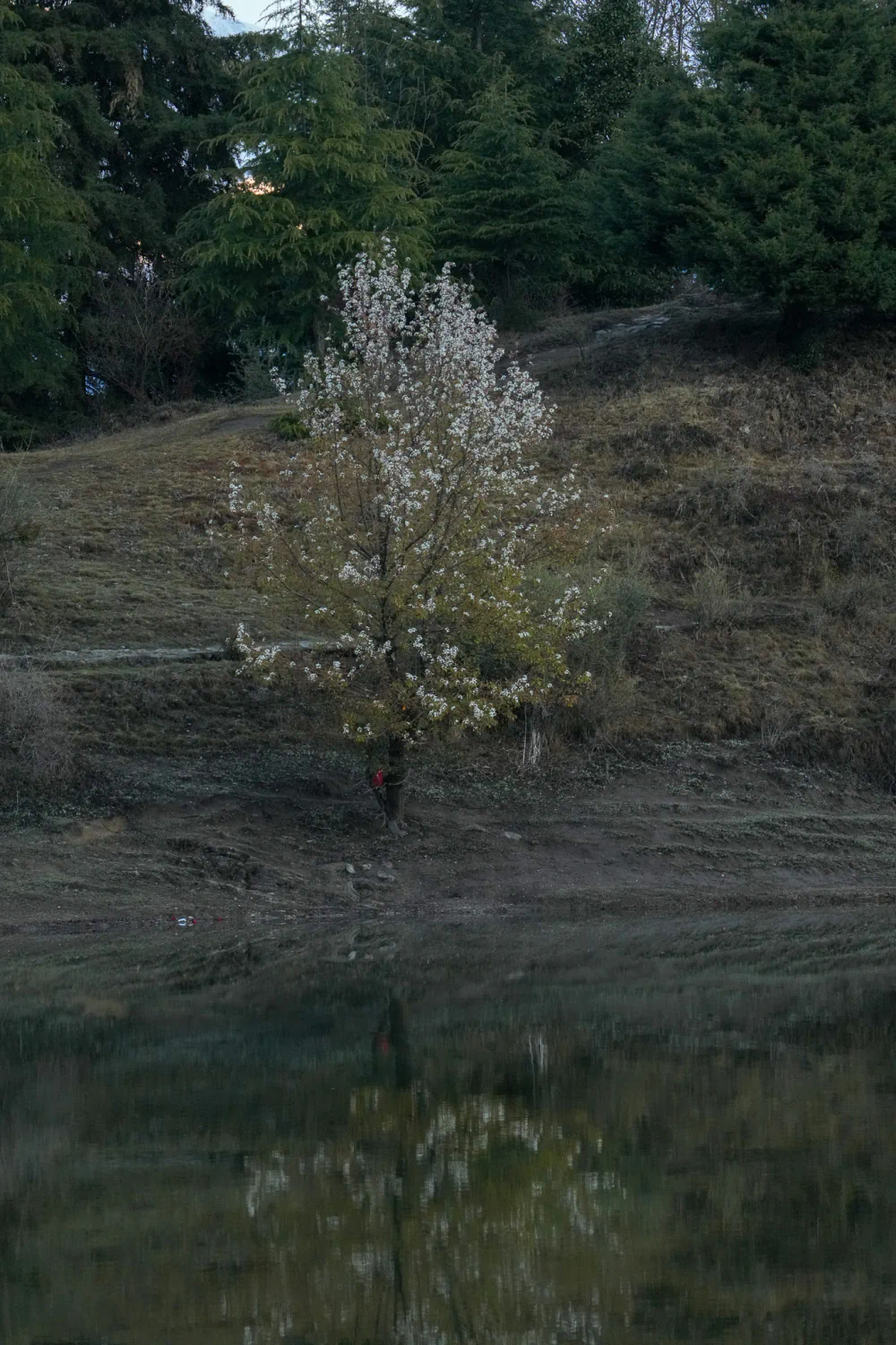
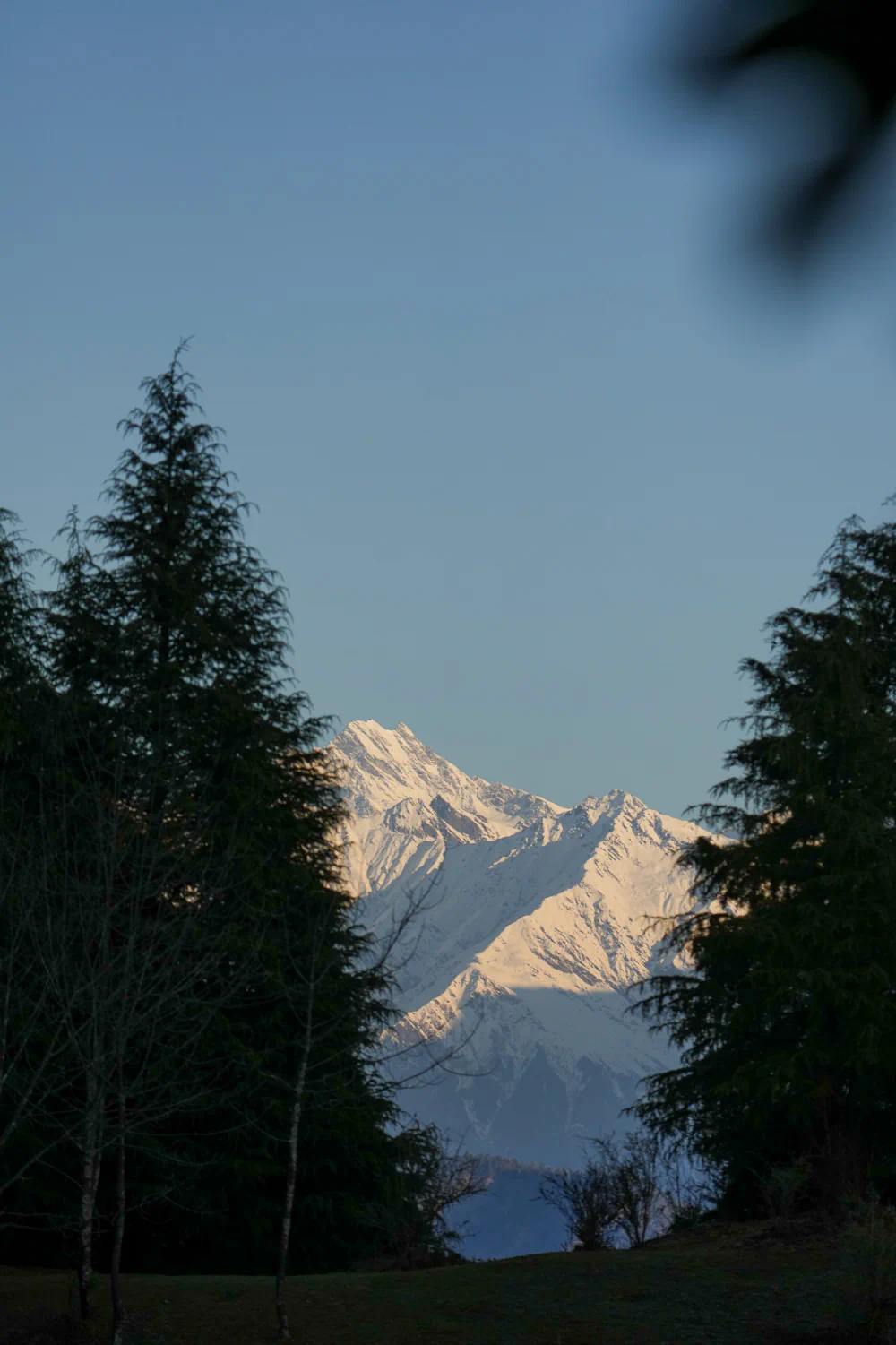
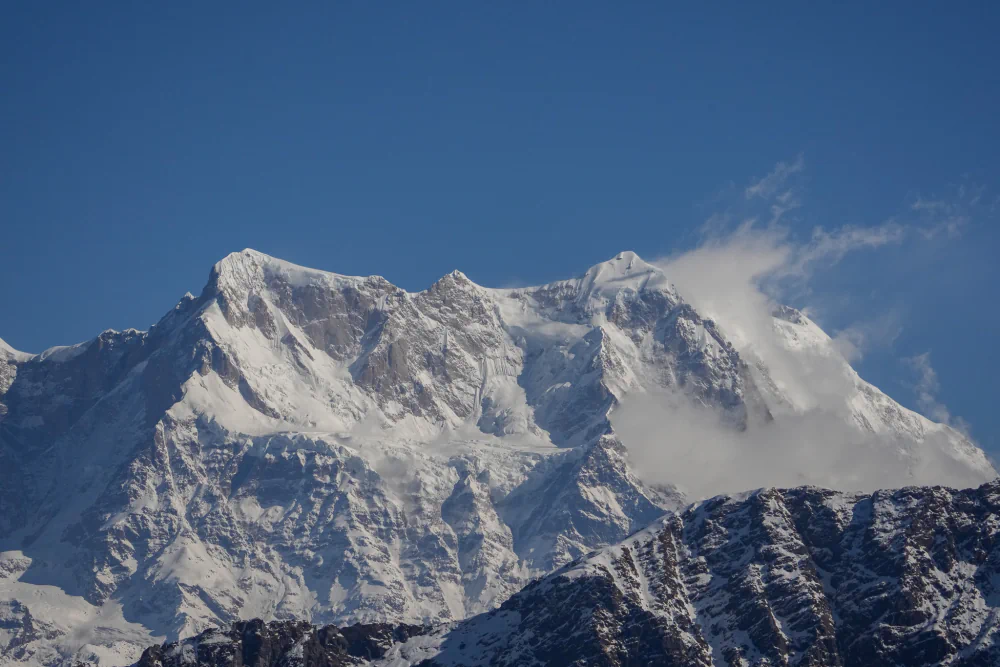
The path to Deoriatal Lake is quiet. No rush, no real sound except footsteps. At the lake, everything is still, waiting. Then the light arrives slowly. It touches Chaukhamba Peak first. The reflection follows, almost as if the lake needs a moment to understand what is happening.
There is a story about this place—from the Mahabharata—about questions being asked and answers revealing something deeper. Standing there, it does not feel out of place.
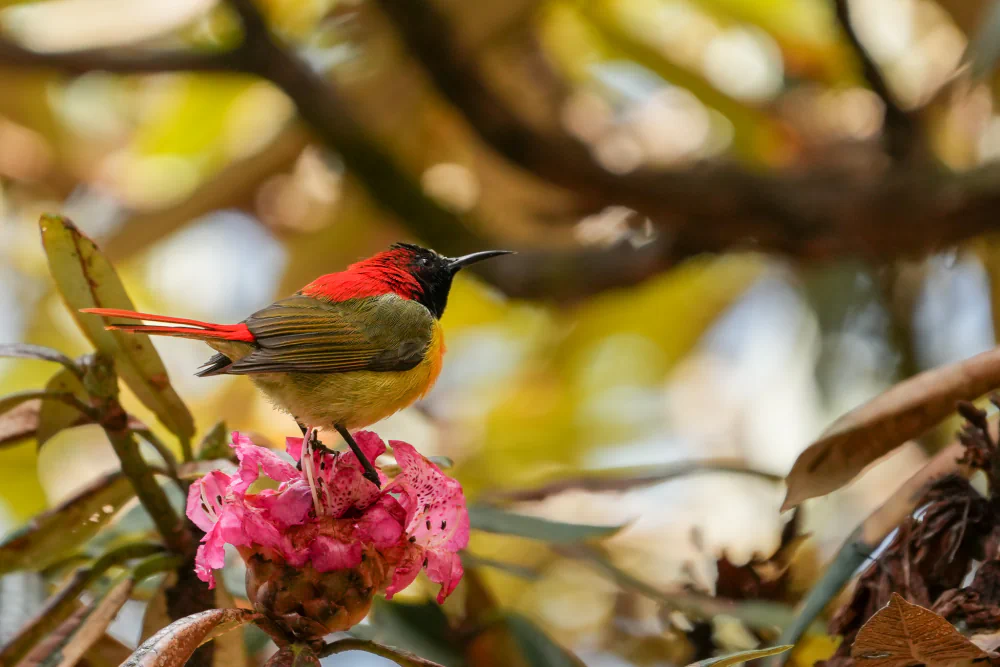
The bird is not there.
In Chopta, the rhythm changes again. He walks a little. Then stops. Then waits. Nothing happens. Then he repeats.
The first day passes like that. The second day does not feel very different. After a point, he stops expecting anything specific. He simply stays.
And then something shifts.
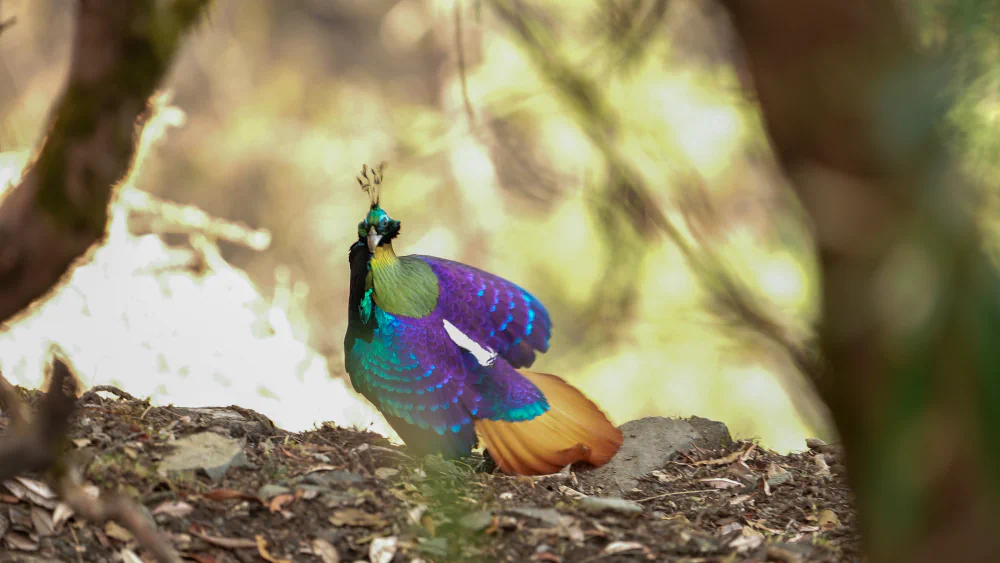
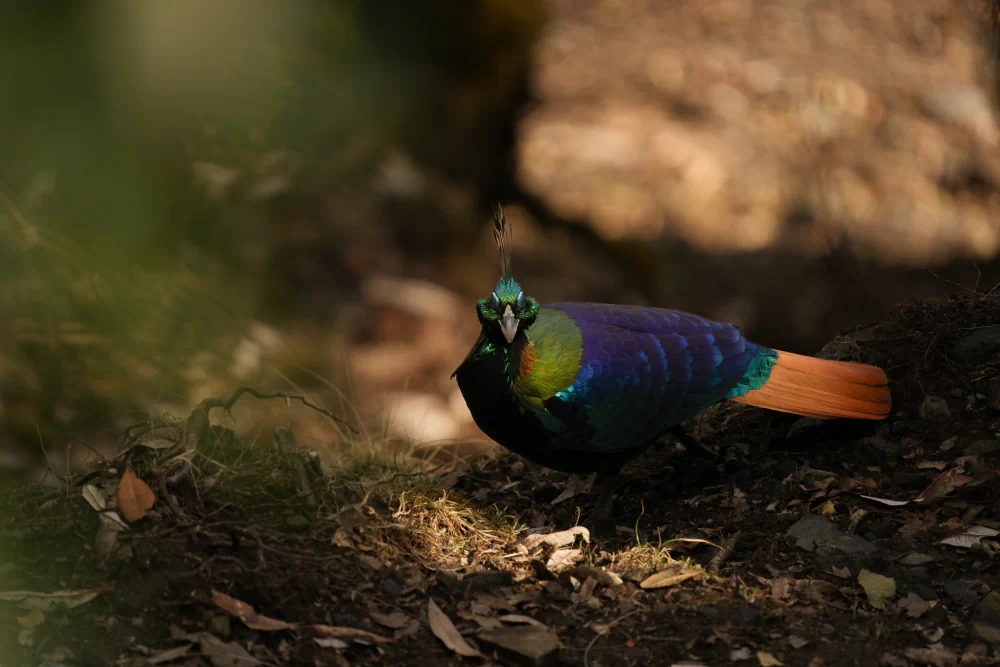
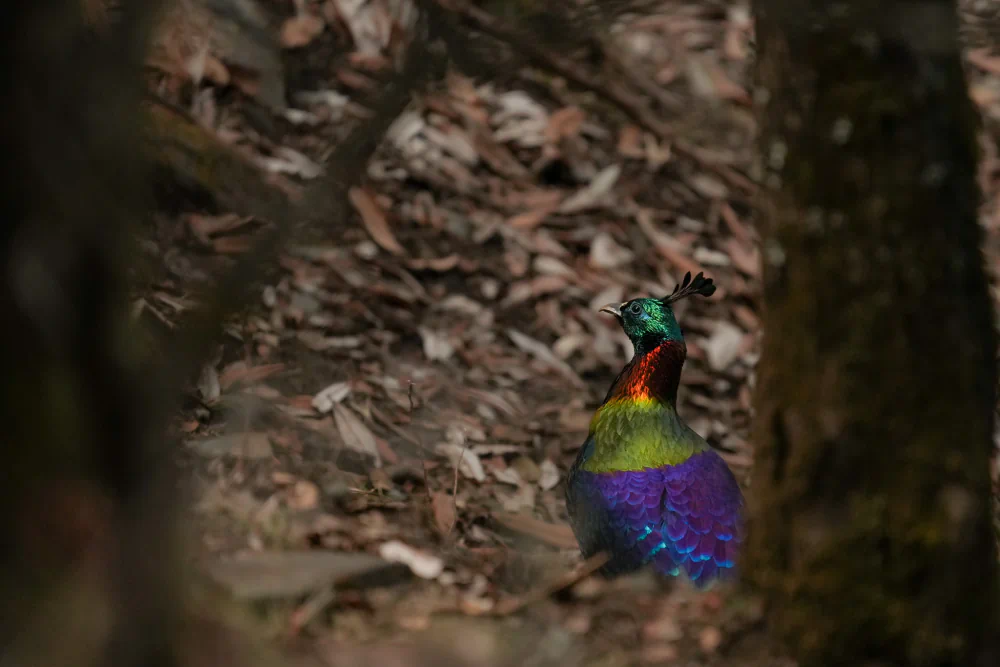
It begins with a small movement—easy to miss if one is walking. Then a flicker of color—too quick to hold, but enough to register. Blue, green, something metallic in between.
And then nothing again.
But that brief moment stays. It changes how he stands, how he looks, how long he is willing to wait.
He does not move much after that.
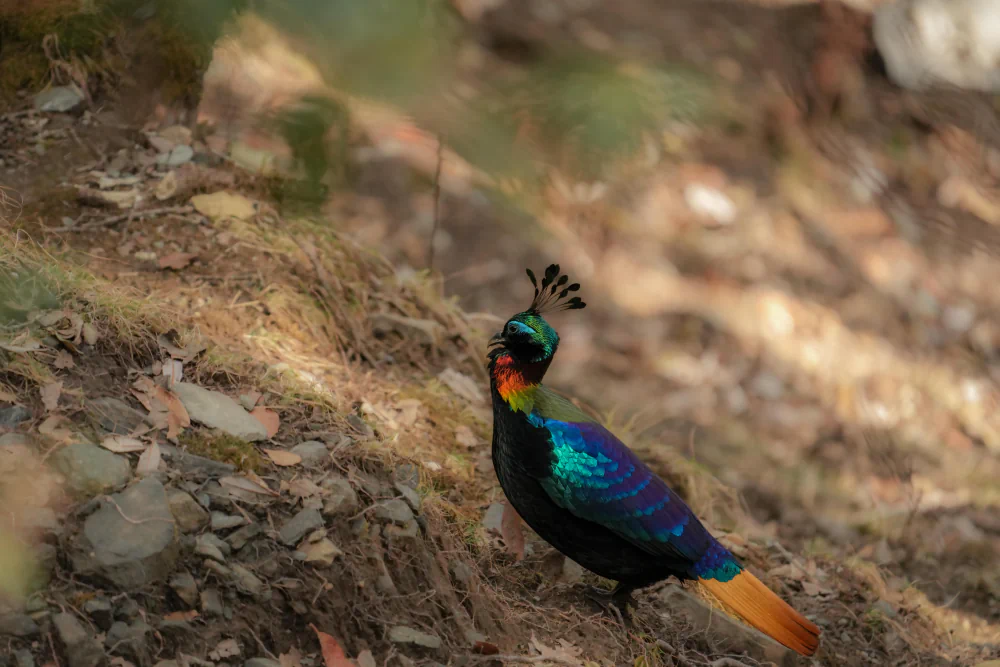
Time stretches in a way that only happens when waiting without knowing for what. Then, again, a slight movement. This time, it does not disappear.
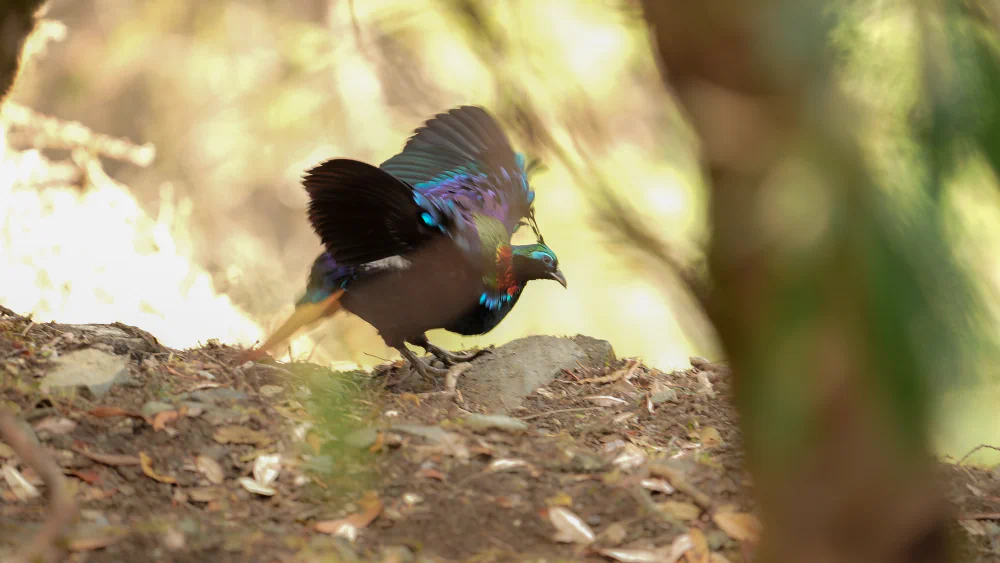
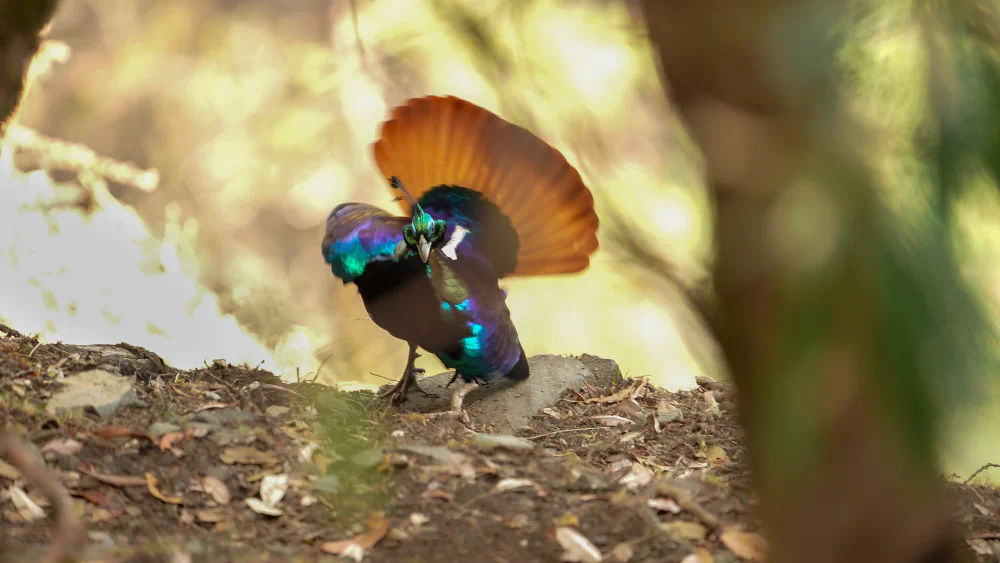
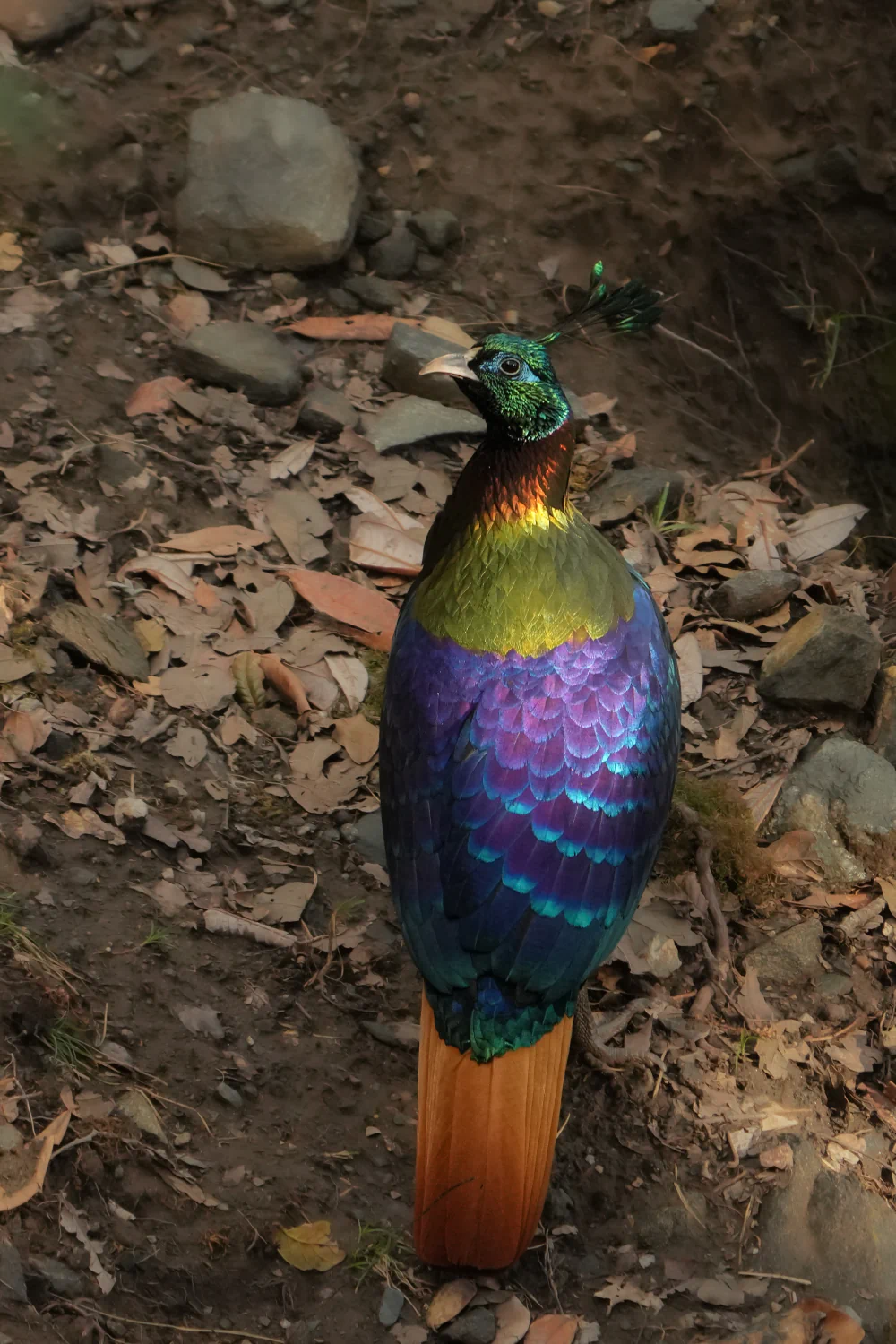
The male. The colors are not static. They shift with the light—green becoming blue, blue catching something warmer. Hard to describe, harder to look away from.
Then the movement changes.
No longer walking. A kind of turning. Wings slightly open. A measured display—unhurried, almost indifferent to being seen.
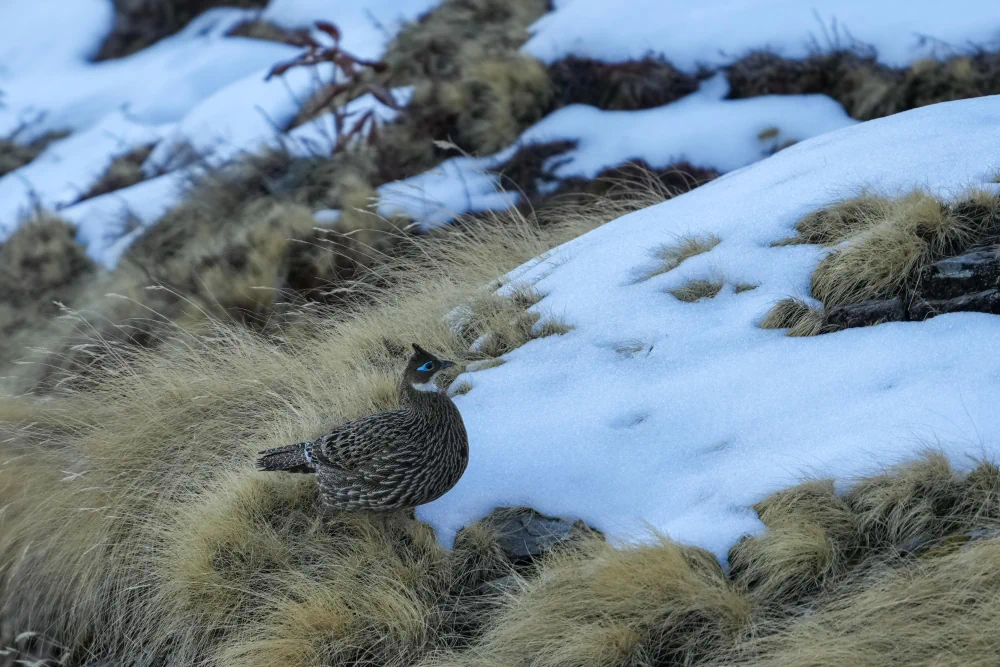
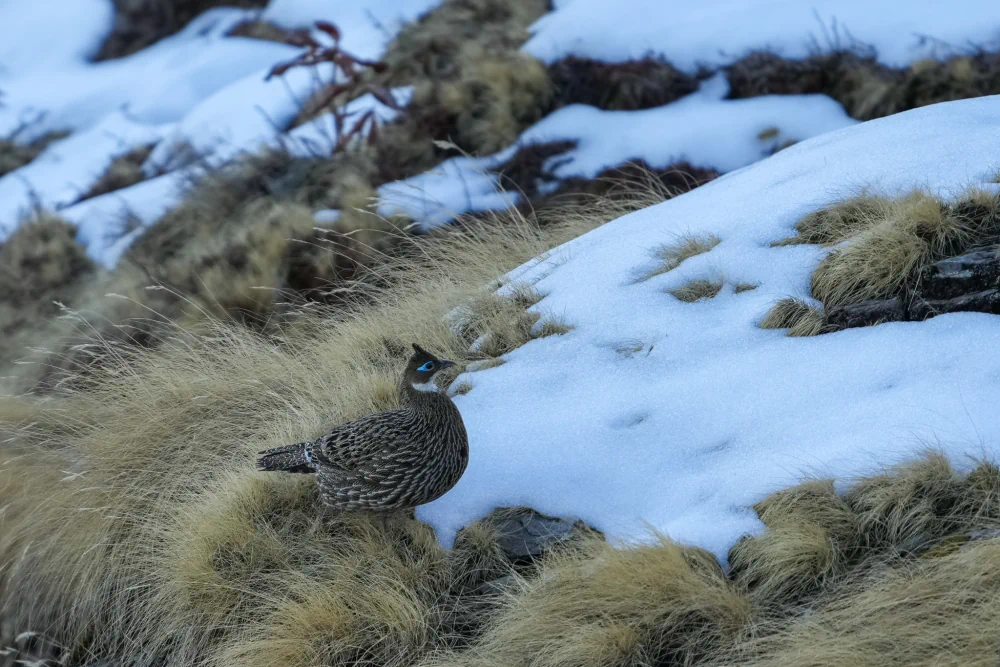
The female never appears. She rarely does. She blends into the ground so completely that even when she is there, it is hard to be sure. Browns, greys, stillness—everything about her is designed to disappear. While the male moves, she watches. Quiet, patient, choosing not to be noticed.
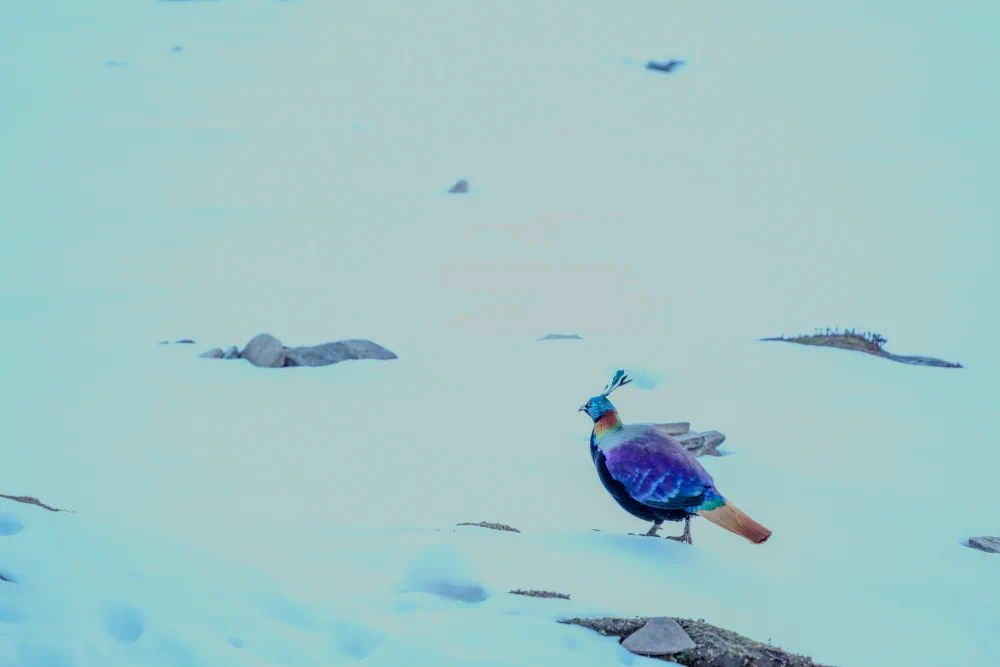
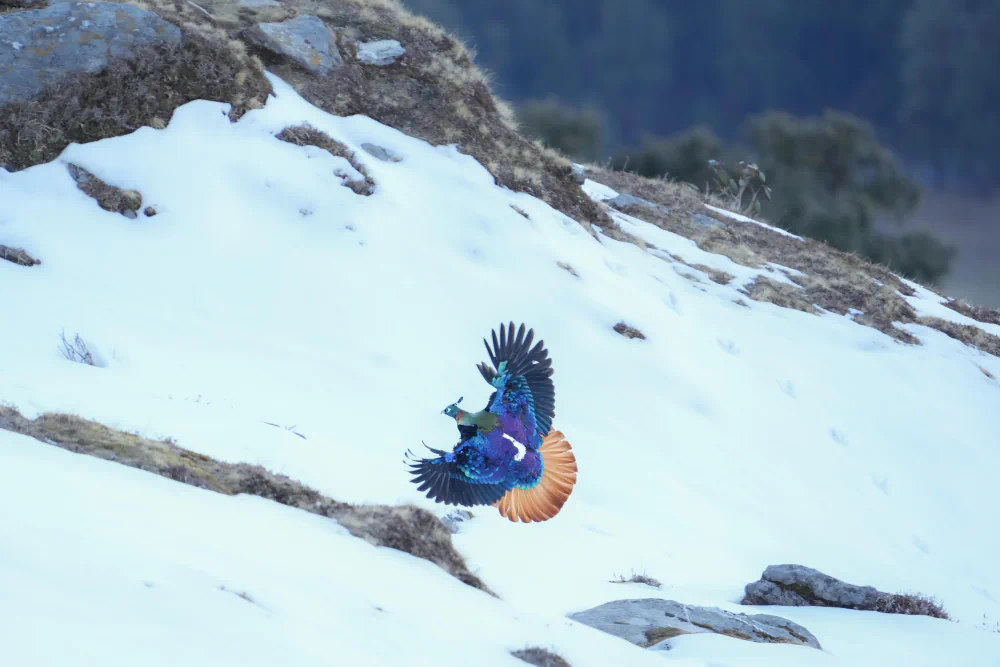
He tries to step away. Slowly. Carefully. It feels right not to stay any longer than needed. But just as he begins to leave, it happens. The bird lifts. No warning.
Behind it, snow. Clean, white, still.
And then that sudden burst of color moving across it. It lasts a second. Maybe less. No time to think. Barely enough time to react. And then it is gone. He stands there a little longer. Not really expecting anything more. And not needing it either.
The Himalayan Monal is often described in terms of its color, but that is only part of it.
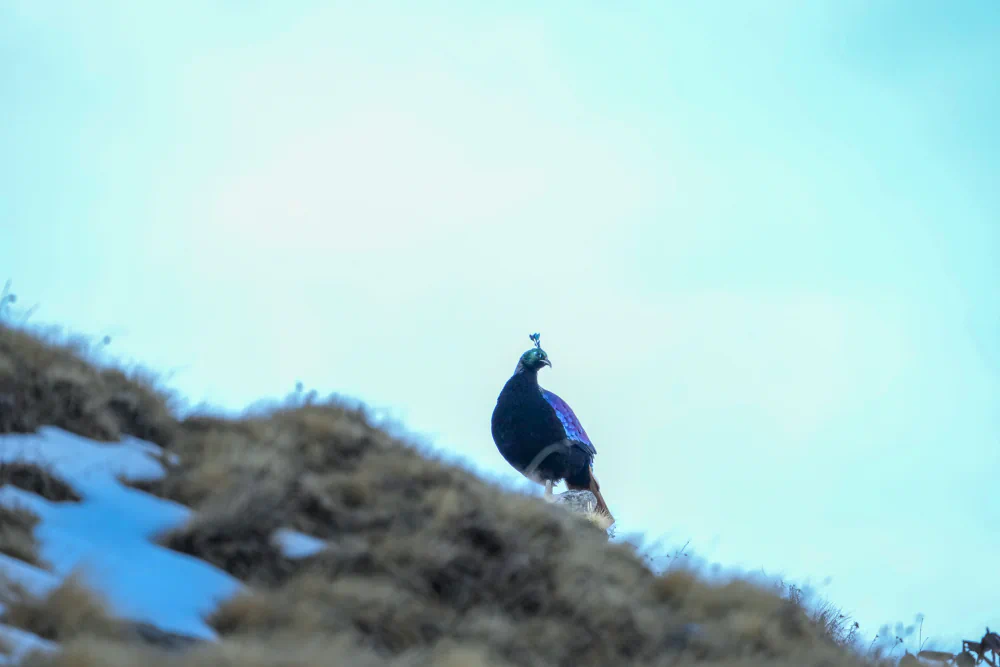
It lives in these forests for a reason—between roughly 2,400 and 4,500 meters, where oak and rhododendron hold the slopes together. It moves with the seasons, descending slightly when the snow begins to soften, disappearing again as the landscape changes.
It can be searched for. But it cannot be expected. Some images stay on a camera. Others stay somewhere else. This one is both.