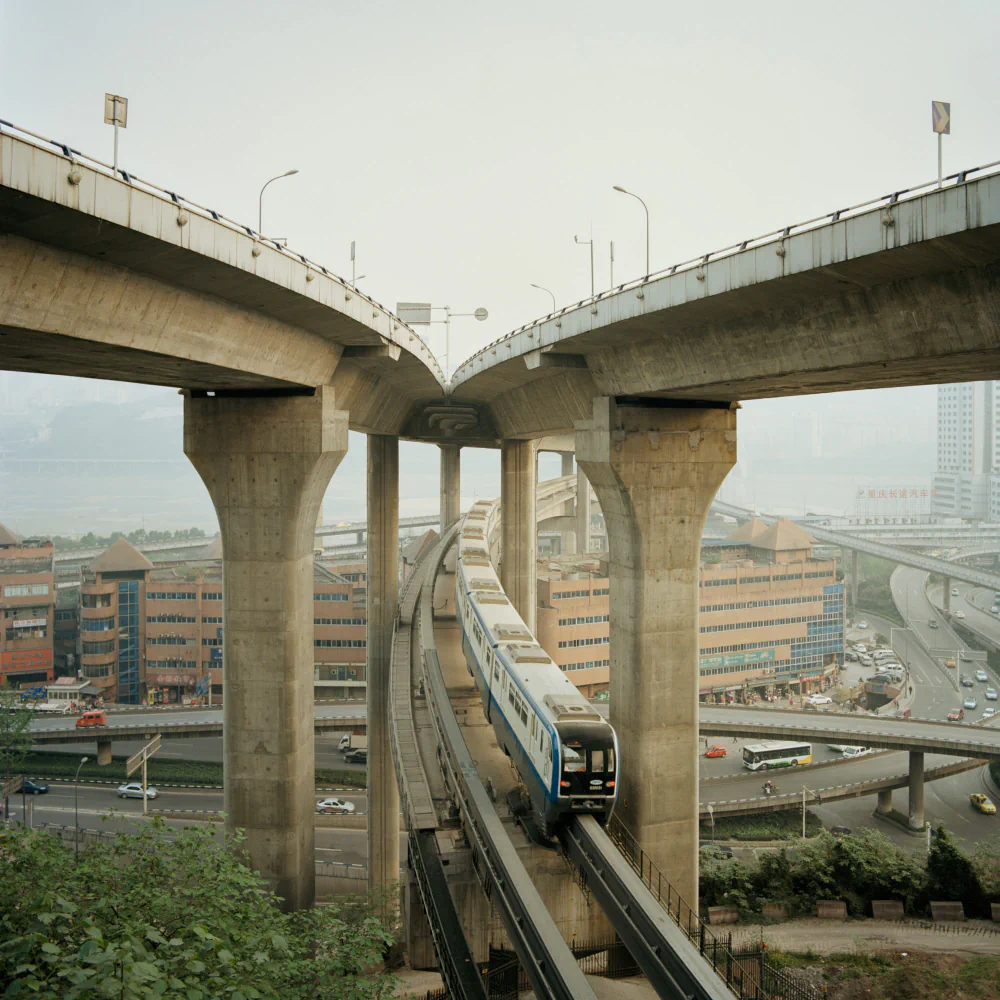

Chances are you have seen the video. A monorail train threads directly through the middle of a residential tower block, passengers sitting calmly as it glides between floors.
The clip went viral, shared millions of times, and Chongqing — the city where it happens every day — suddenly became one of the most talked-about destinations on social media. Influencers now flock there by the hundreds, chasing its surreal geometry, stacked hillside architecture, and cyberpunk atmosphere. Travel demand from Southeast Asia alone surged more than twelvefold in 2025. The world, it seems, has finally noticed Chongqing.
Photographer Tim Franco noticed it in 2009. Back then, almost nobody outside China had heard of it.
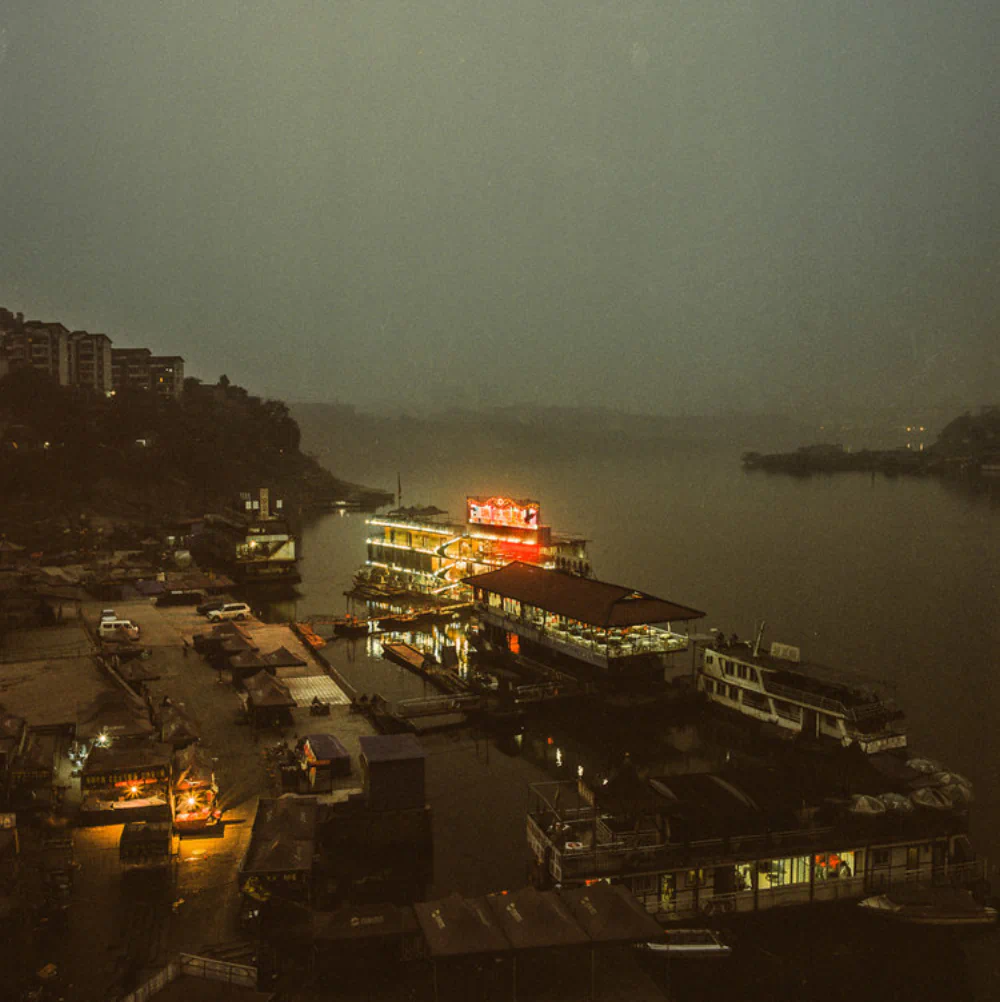
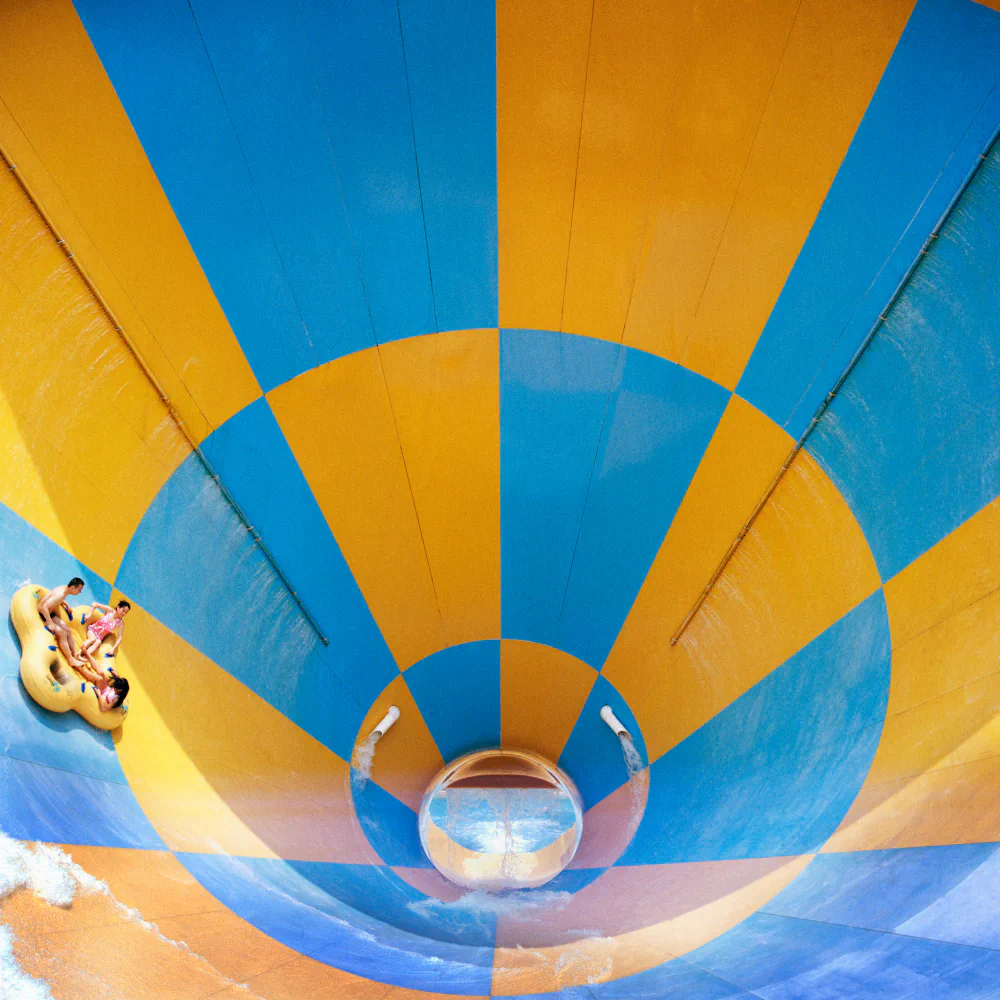
That early attention, and the five years of sustained documentary work that followed, became Metamorpolis — a photographic project and monograph that attempted to reckon with Chongqing not as a spectacle, but as the site of one of the most significant and least-reported social transformations of the twenty-first century.
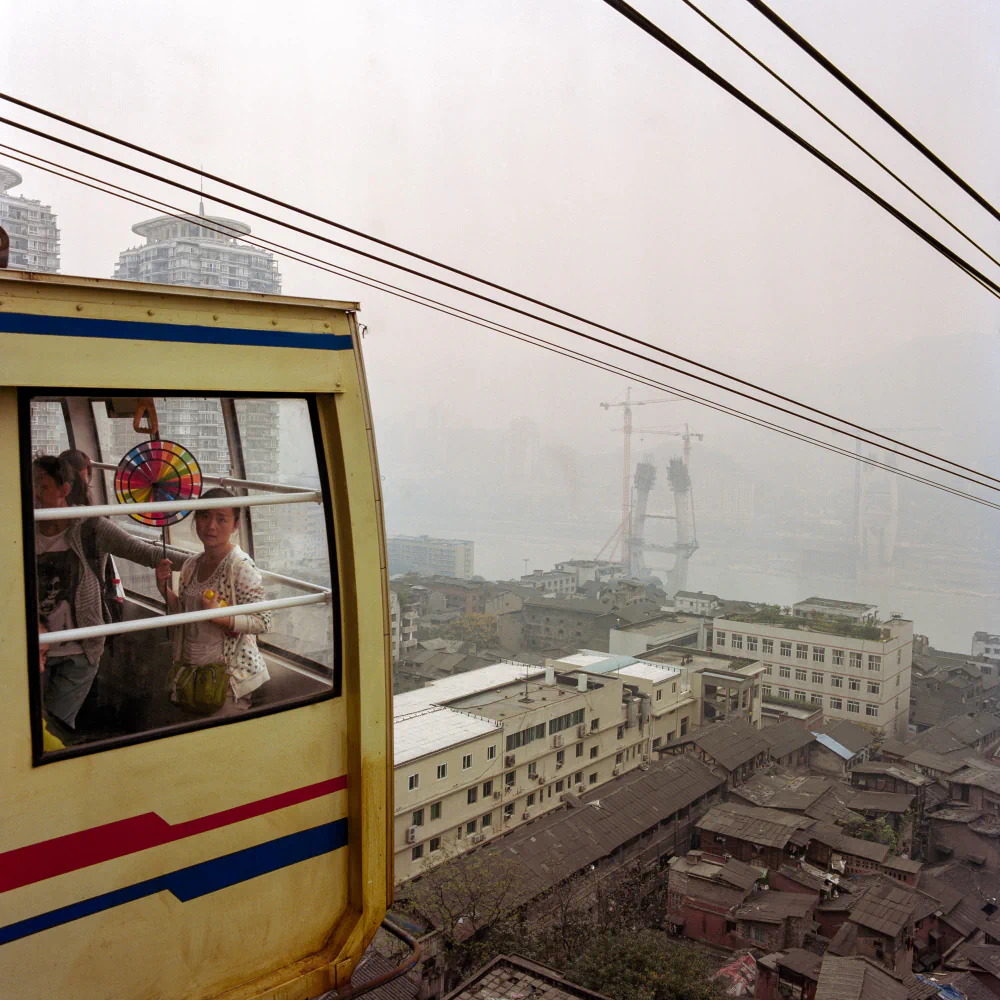
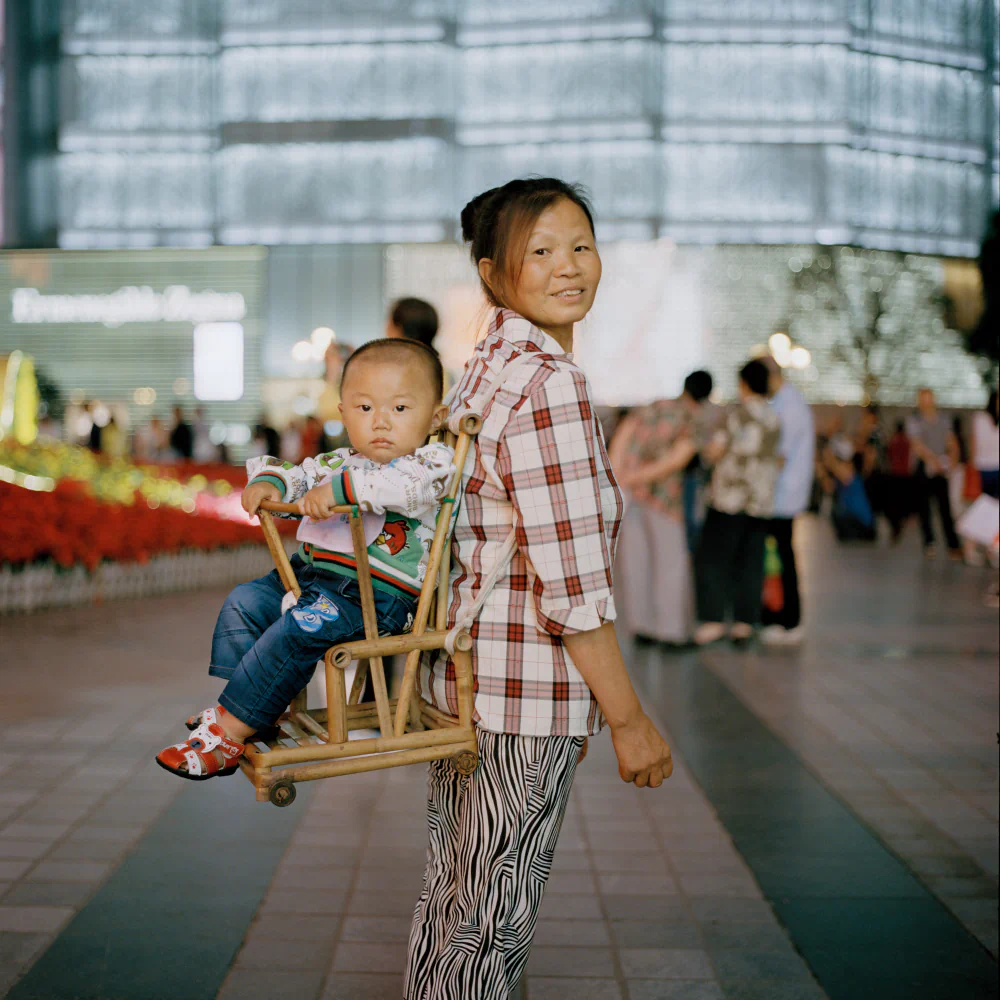
The story behind the city’s extraordinary scale begins with the Three Gorges Dam. The largest hydroelectric power station ever built, its construction required the relocation of more than a million people as rising reservoir waters consumed the land they had lived on for generations. A great number of those farmers, villagers, and small-town residents were funnelled into Chongqing — an inland megacity already carved up by rivers and mountains, already a heaving industrial giant. Hundreds of thousands of people, young and old, suddenly had to learn how to exist in a city when many of them had never lived in one before. Chongqing’s population surged past 30 million, making it one of the most rapidly urbanising places on Earth.
While China’s coastal cities were drawing the world’s cameras, Chongqing was undergoing something arguably more consequential — and doing so almost entirely out of frame. Franco, then based in Shanghai and working for publications including The Wall Street Journal, The New York Times, and Le Monde, felt he had already missed the window on Shanghai’s transformation. Chongqing, vast and largely unknown, was a different proposition. He started visiting in 2009 and kept going back, making dozens of trips over the following five years, working primarily on medium-format film.
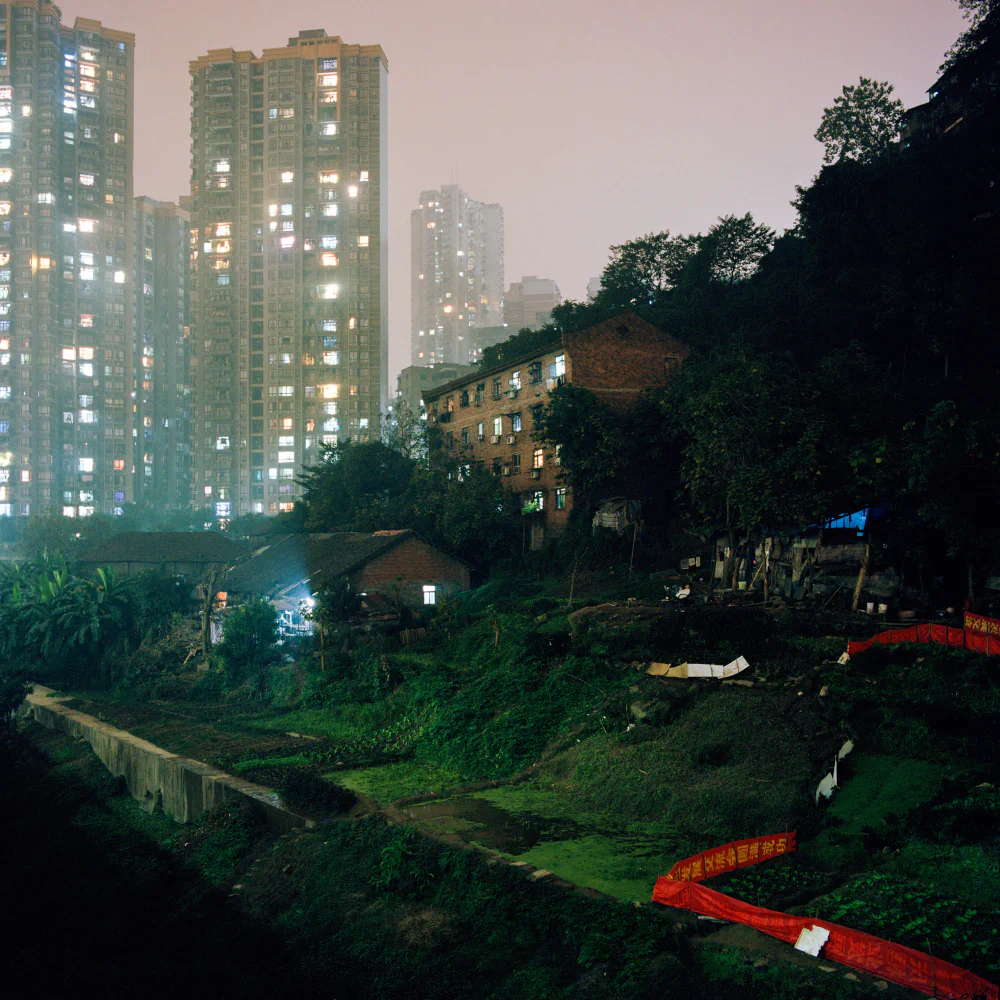
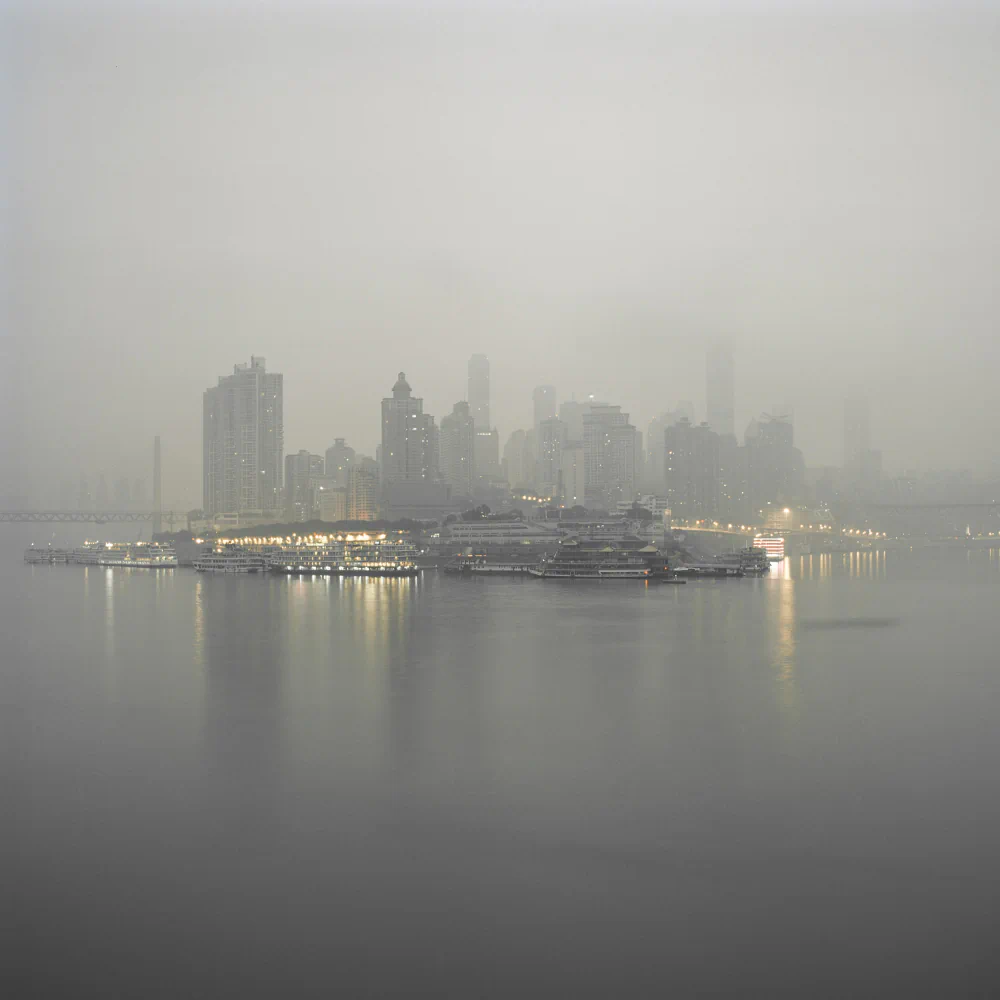
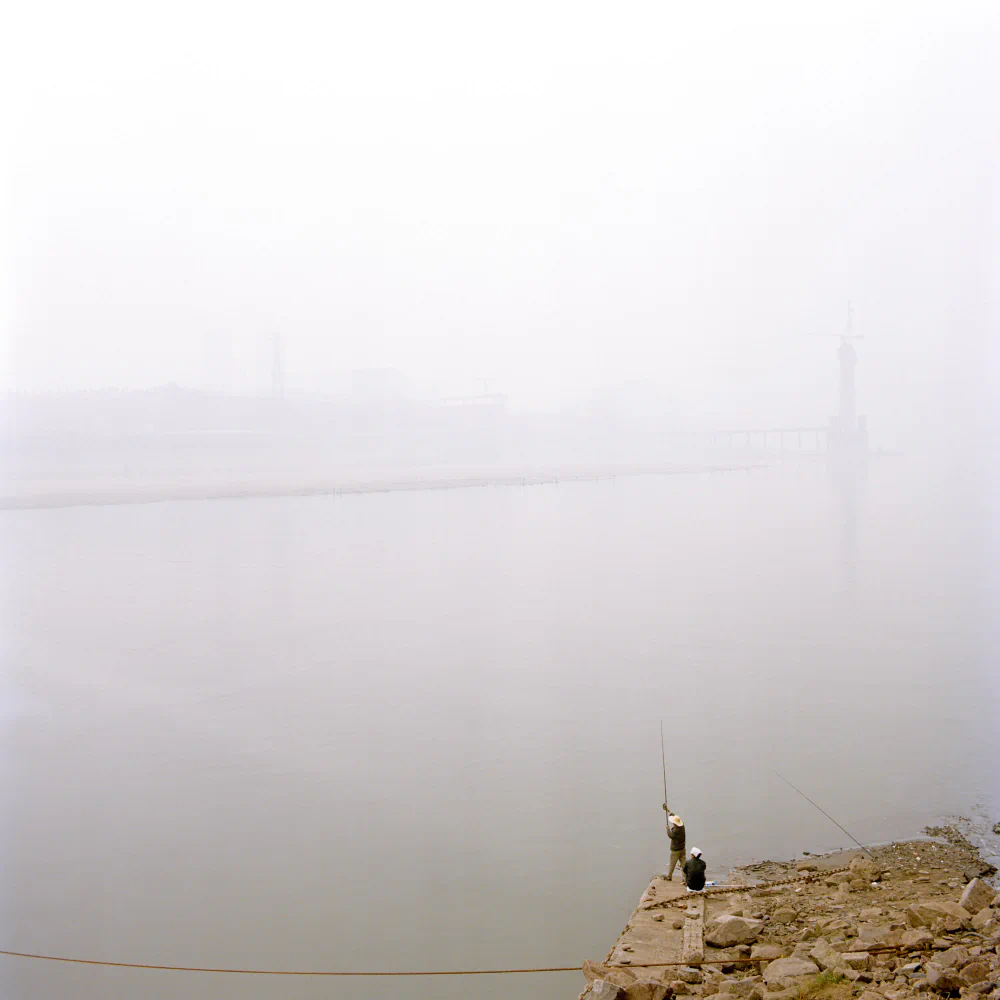
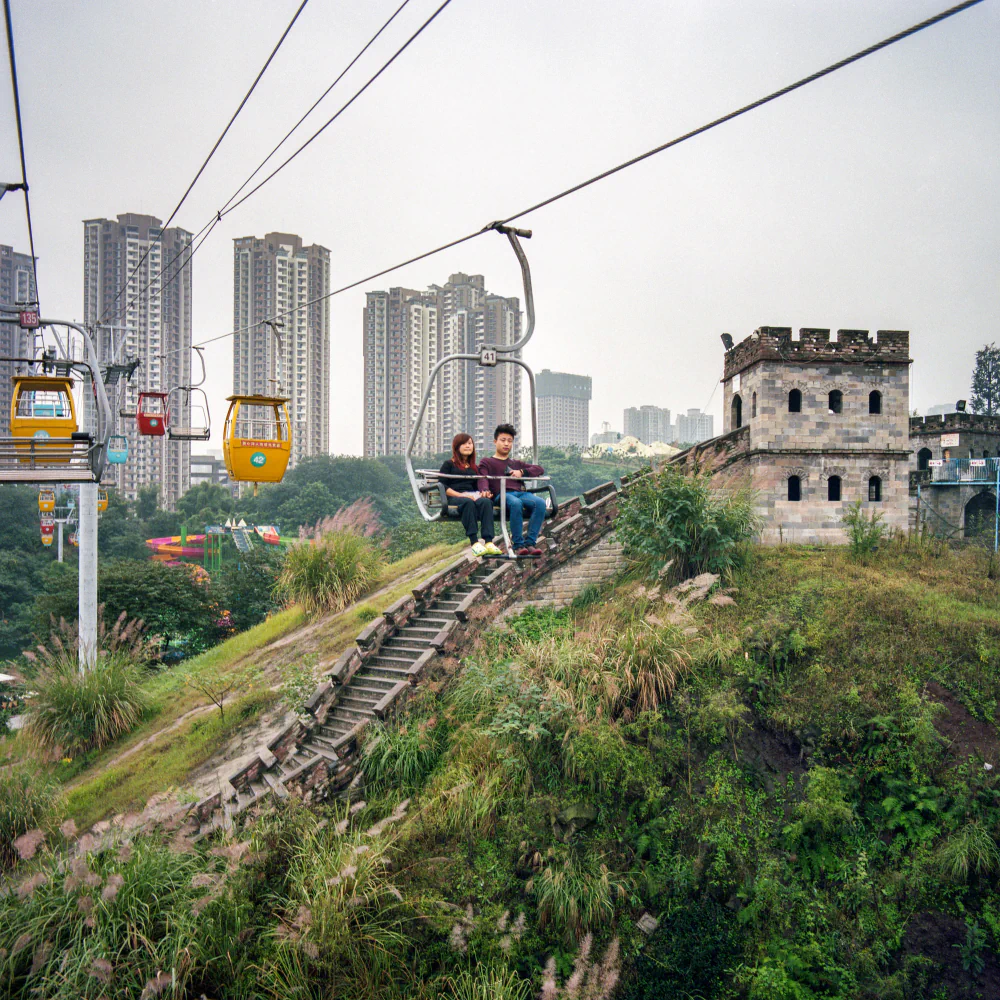
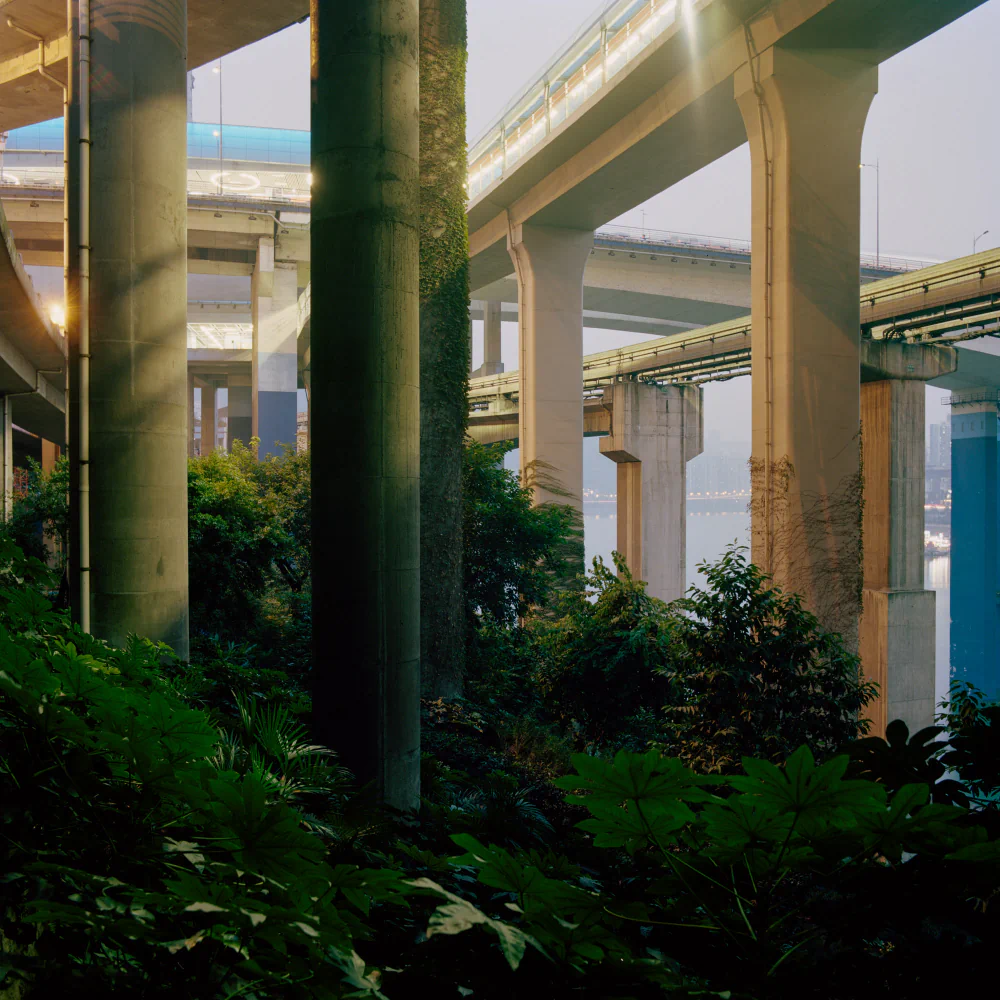
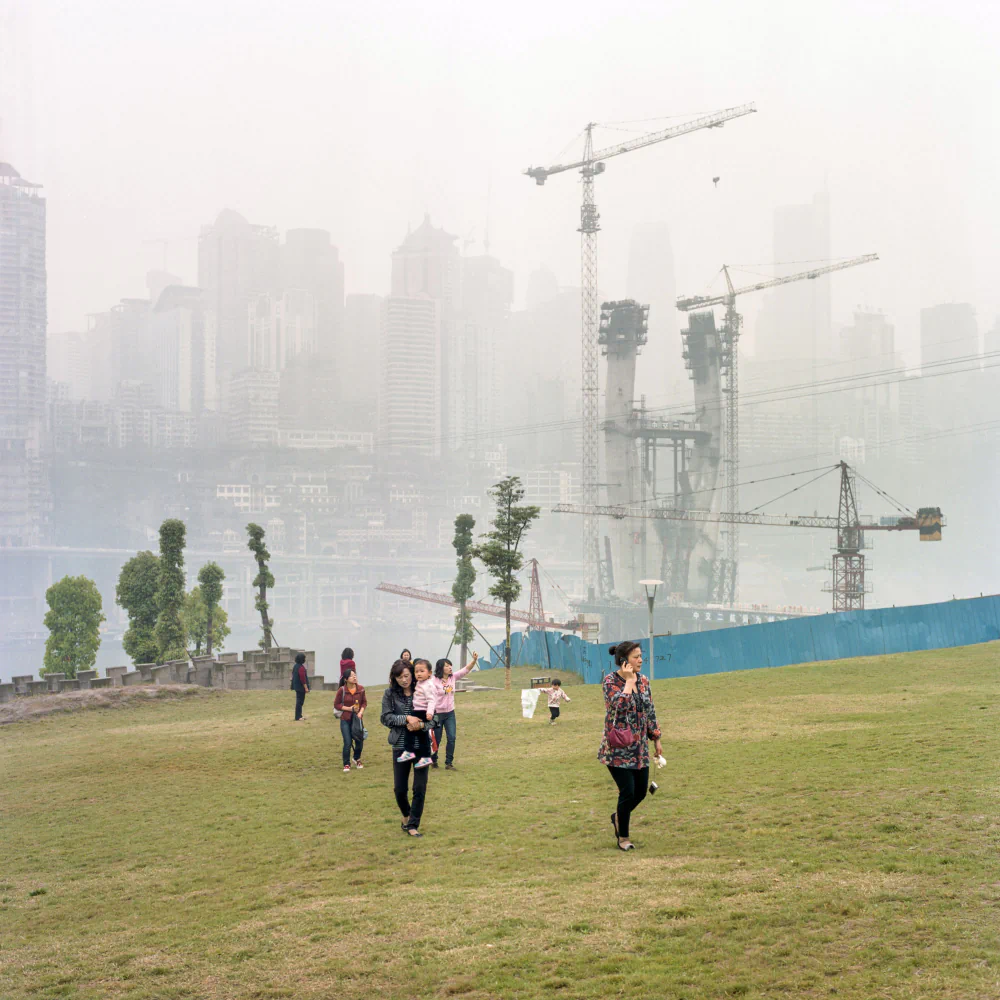
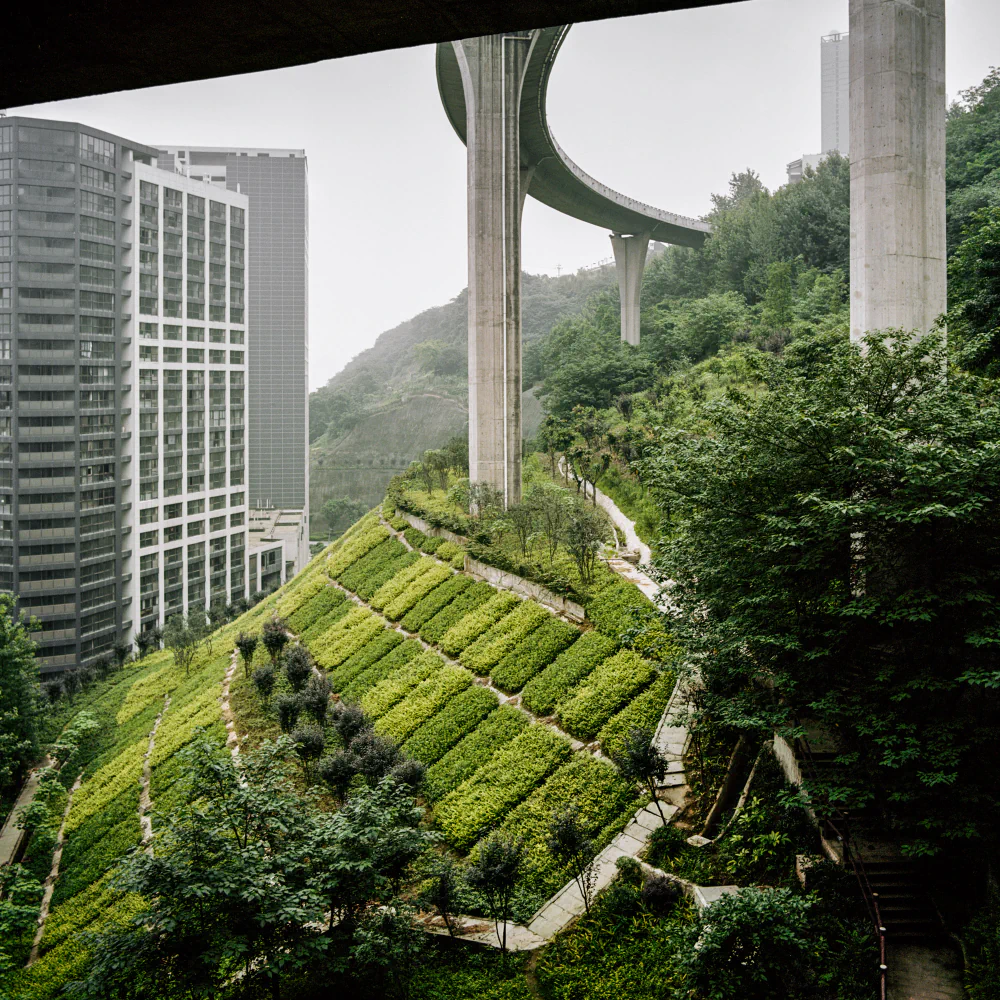
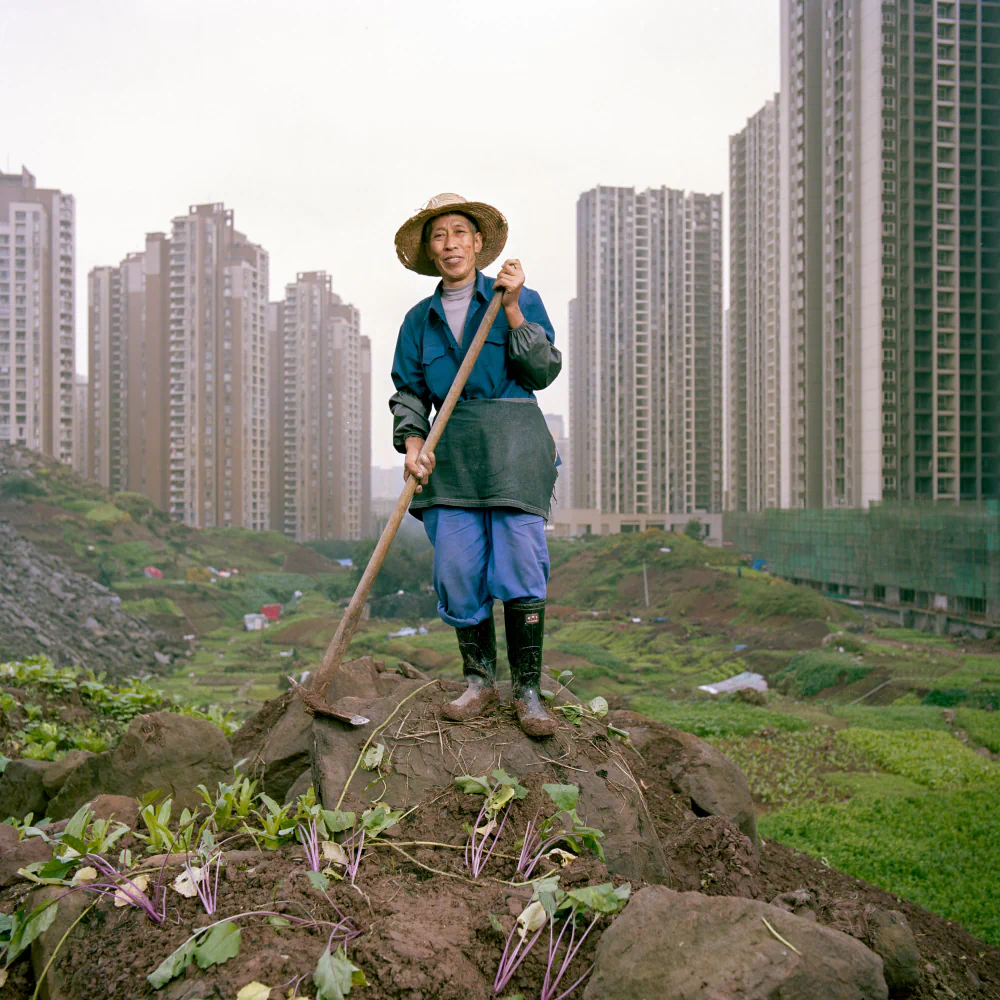
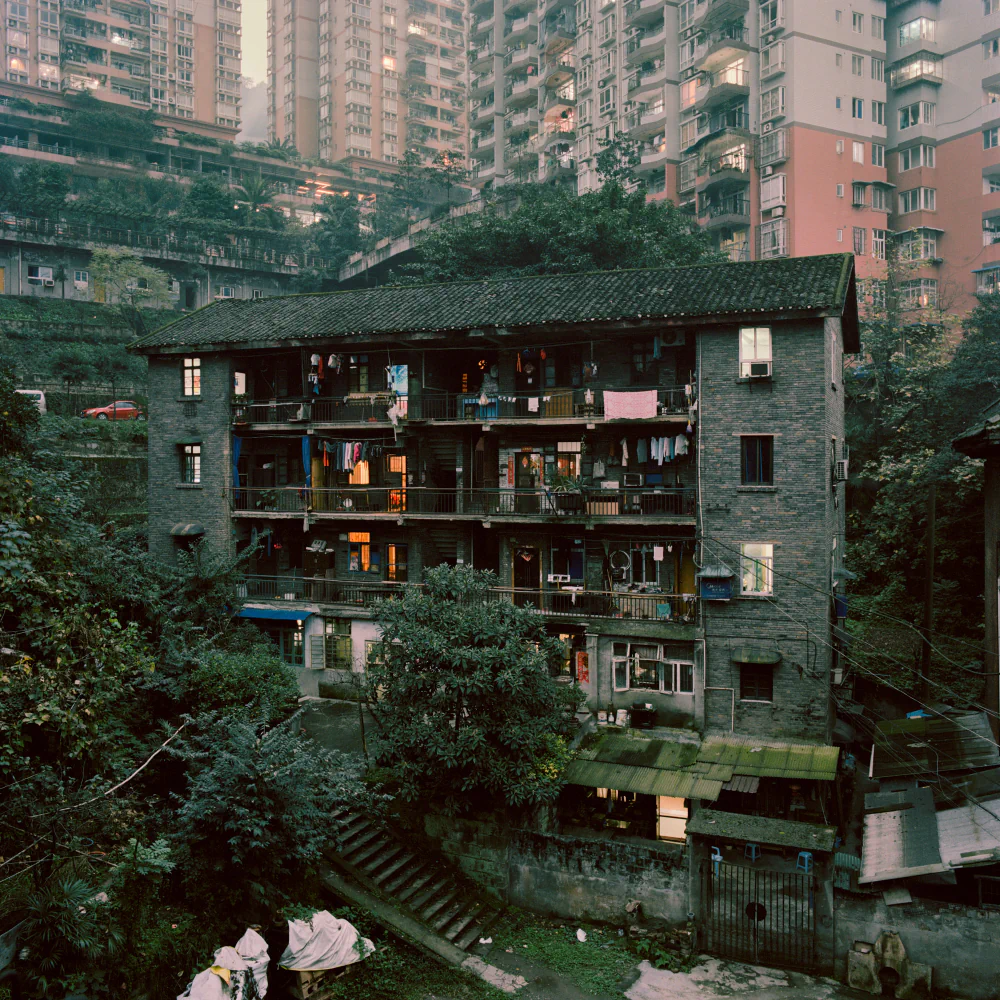
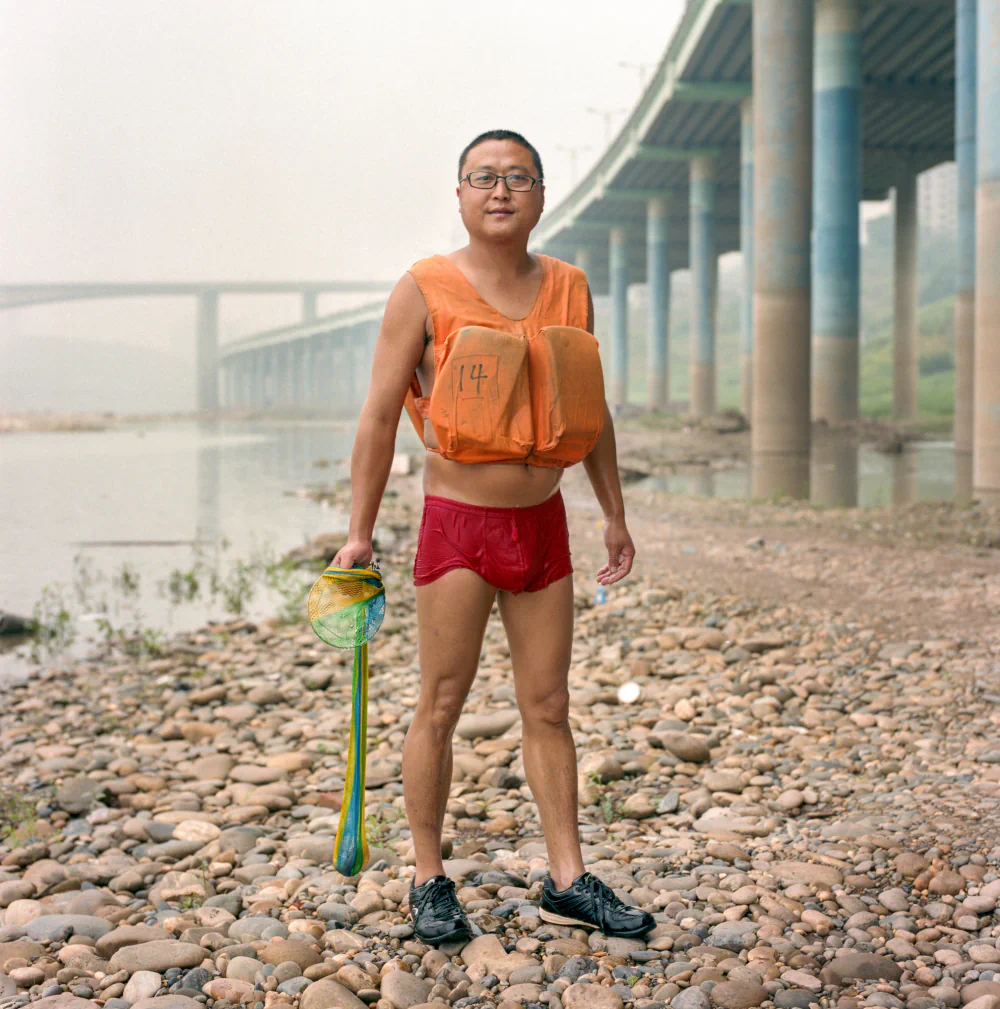
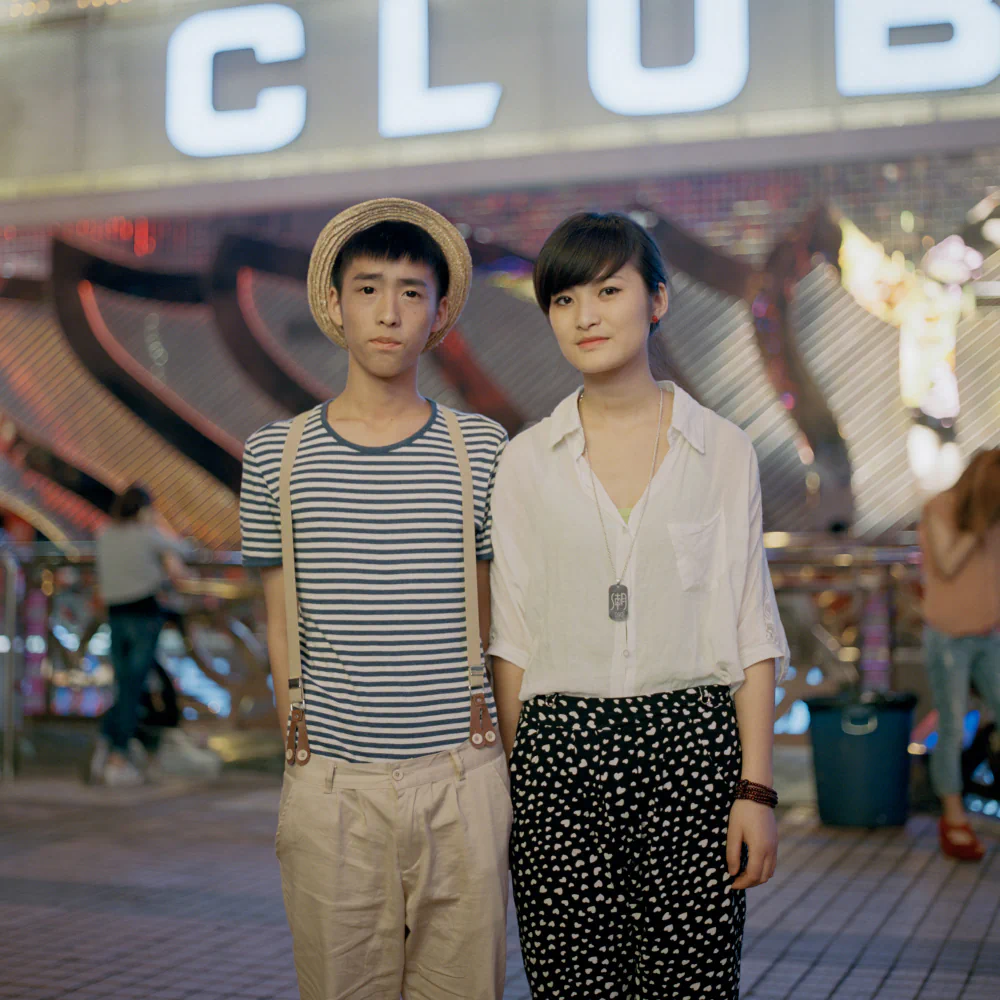
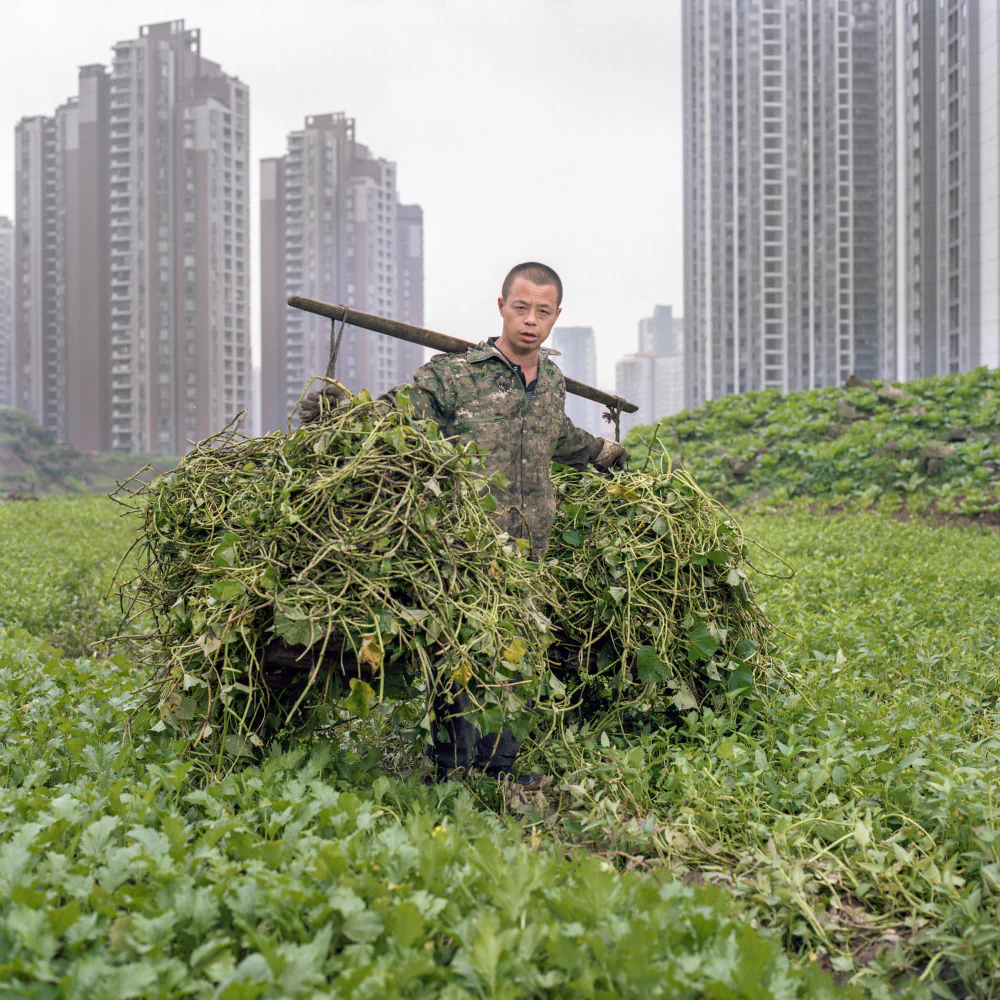
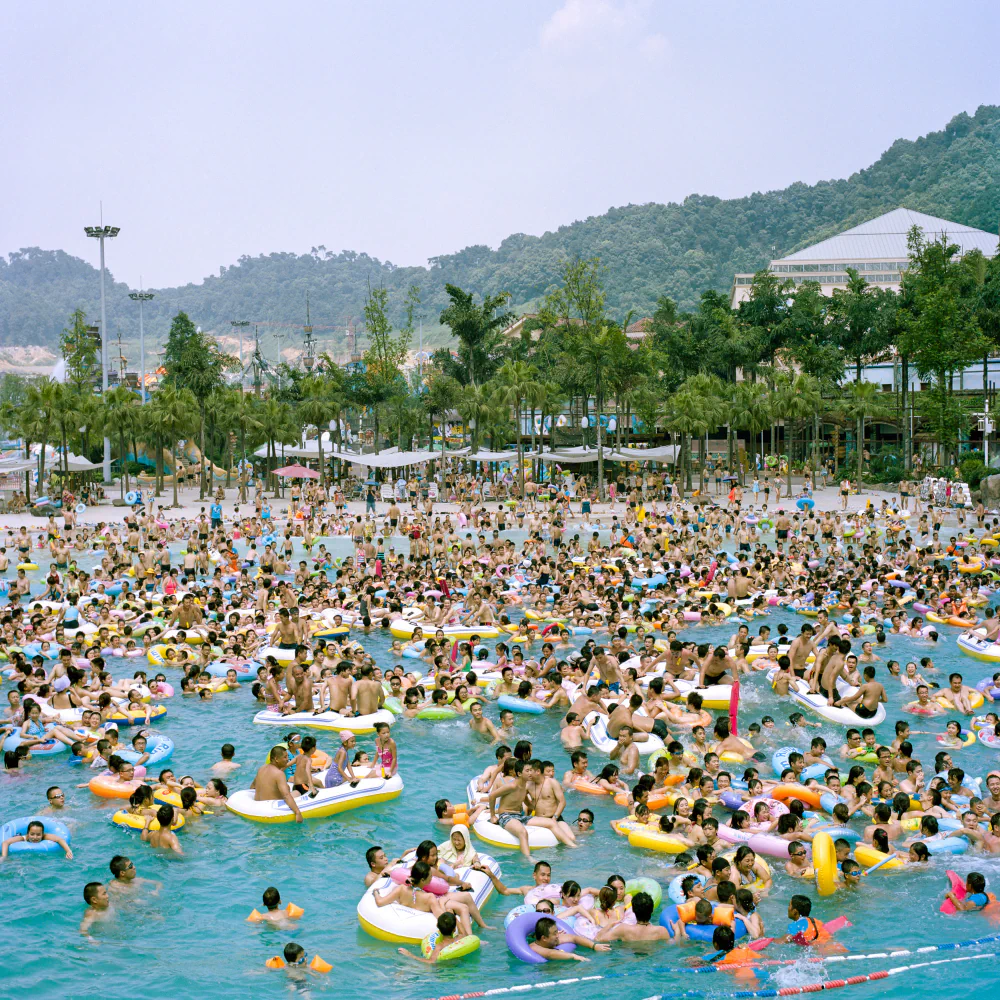
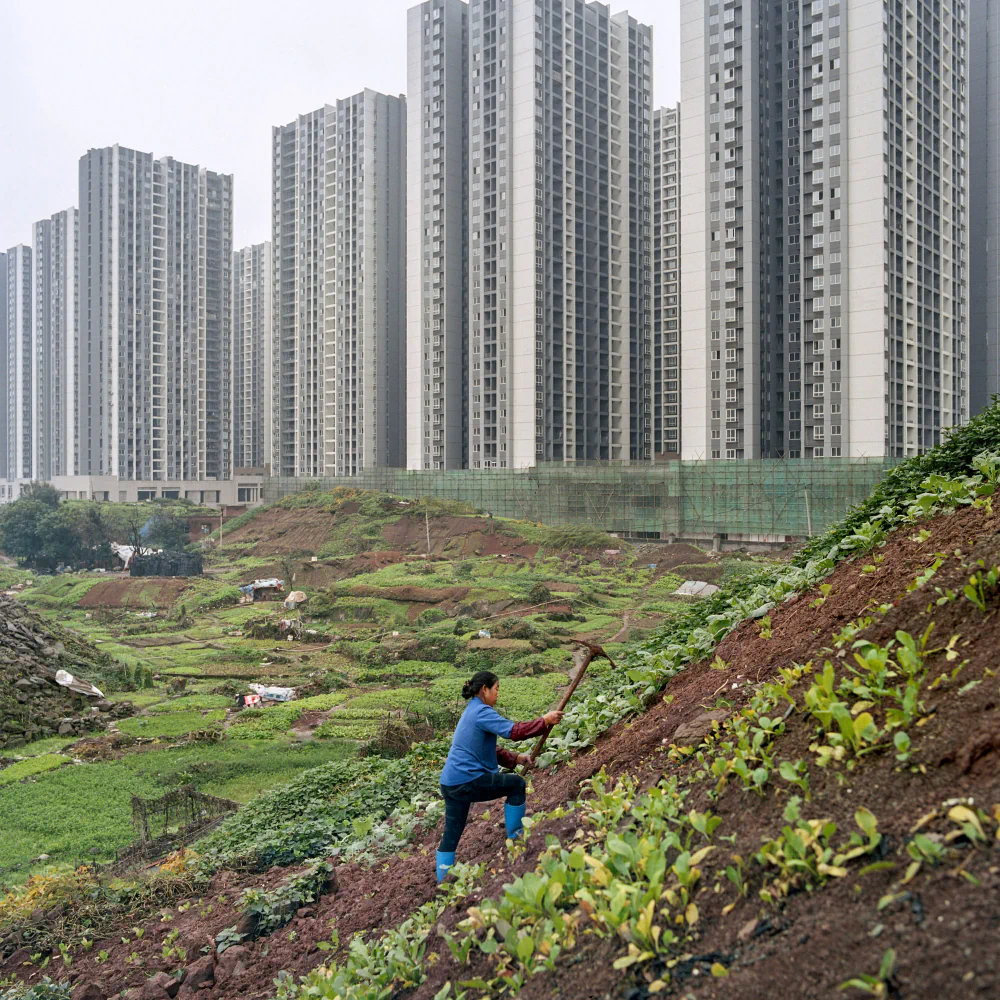
What the photographs reveal is a city in profound negotiation with itself — something the viral clips, inevitably, do not. Concrete towers rise at extraordinary speed while, at their base, newly arrived residents improvise ways of living that have little to do with the urban plan surrounding them. Farmers grow vegetables on the margins of construction sites, doing the only thing they know how to do. Fishermen cast lines from riverbanks thick with industrial haze. The city’s vertical ambition and the horizontal intimacy of daily life exist in constant, unresolved tension — and it is in that tension that the project finds its subject.
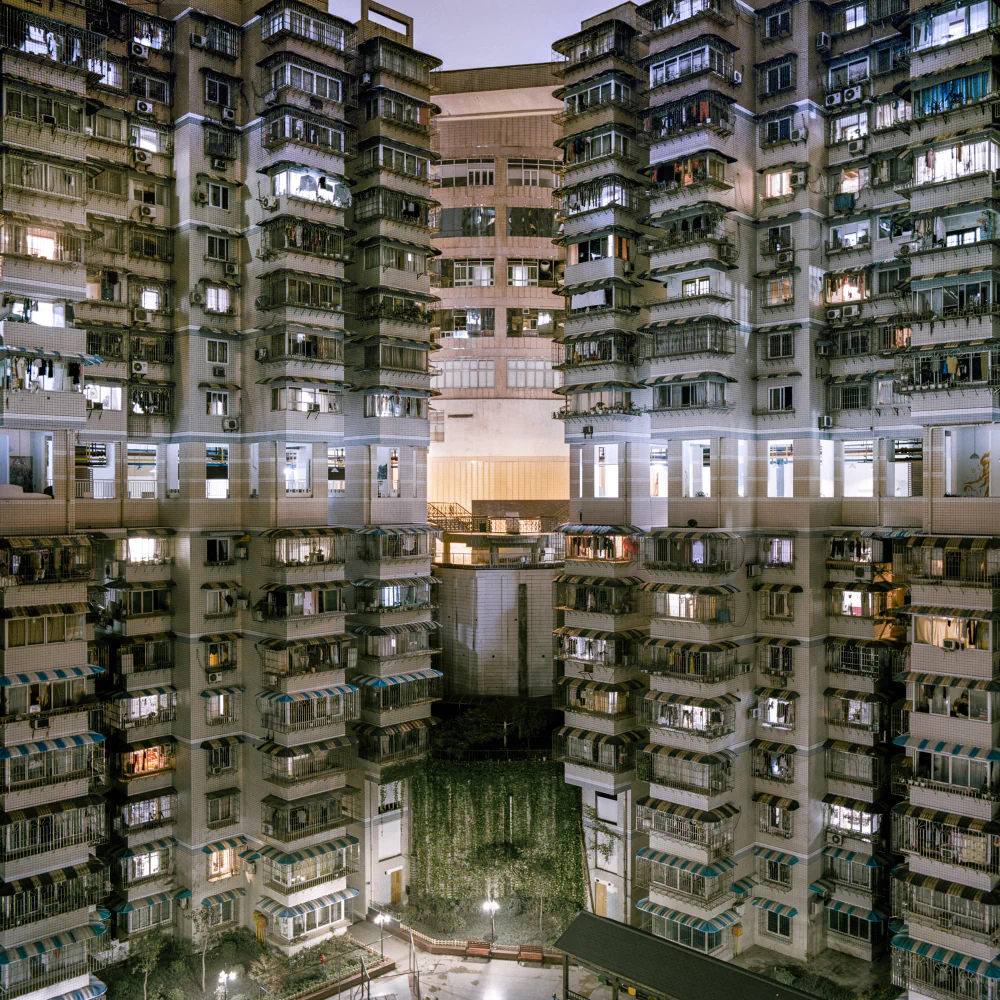
Metamorpolis is as much about space as it is about people: about who gets to inhabit a city, and on what terms. Chongqing’s displaced population was handed modernity without instruction. The photographs document how they carved out meaning in the gaps the urban plan left behind — the unbuilt edges, the borrowed land between towers, the riverbanks that no development brief had yet claimed.
Published in 2015, the Metamorpolis monograph is a 112-page hardcover containing more than 60 photographs, printed on deluxe semi-matte paper, with a foreword by architecture critic Frédéric Edelmann and an essay by British journalist Richard Macauley. The texts appear in English, French, and Chinese.
More than a decade on, the work reads differently against the backdrop of Chongqing’s newfound fame. The city influencers are discovering — its impossible topography, layers, and scale — is visible in these images too. But what Metamorpolis captured, and what the social media wave cannot, is the human cost of building a place of that size, at that speed, and what it asks of the people who have no choice but to call it home.
The book remains available for purchase at: https://www.pendantcetemps.fr/en/books/metamorpolis/