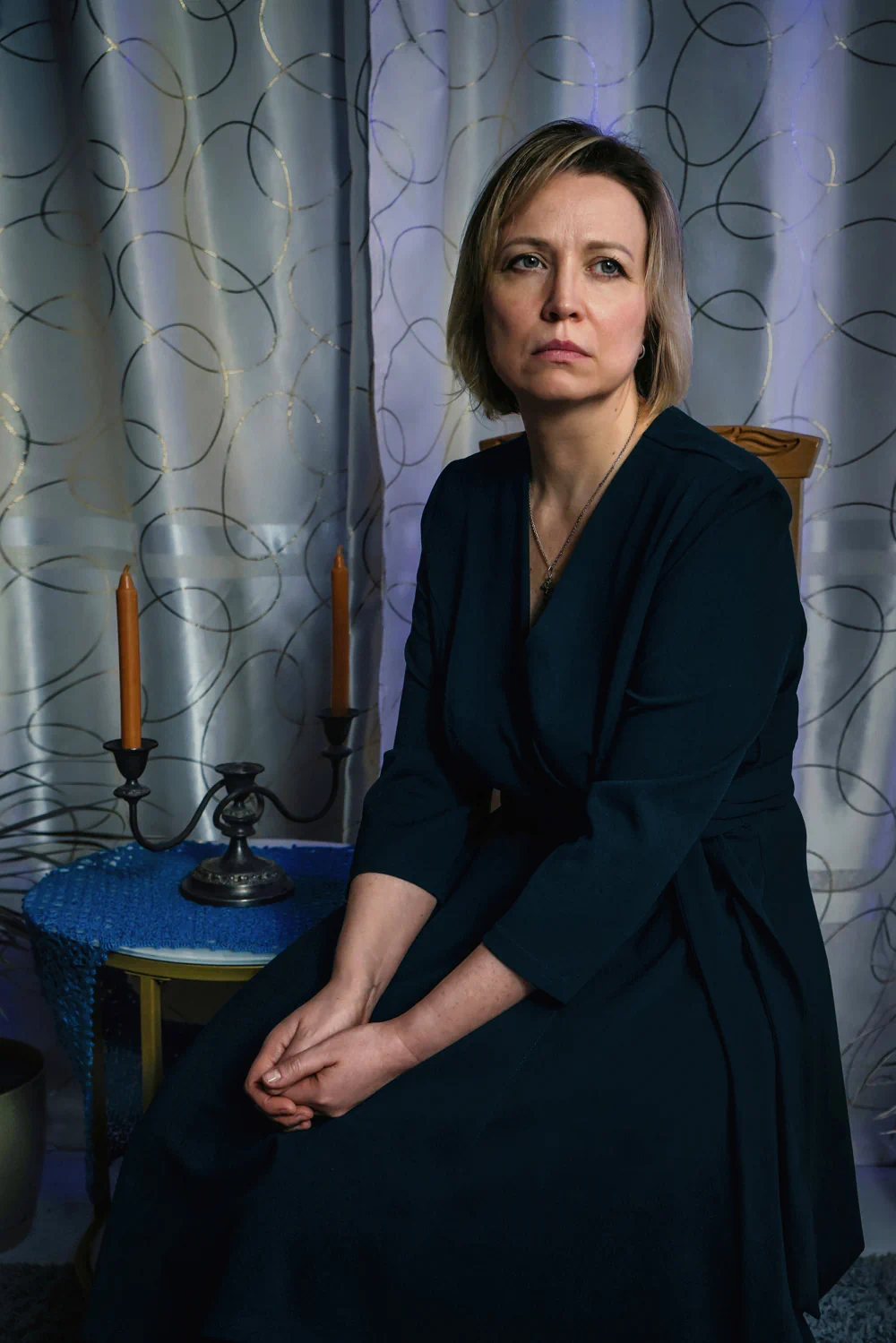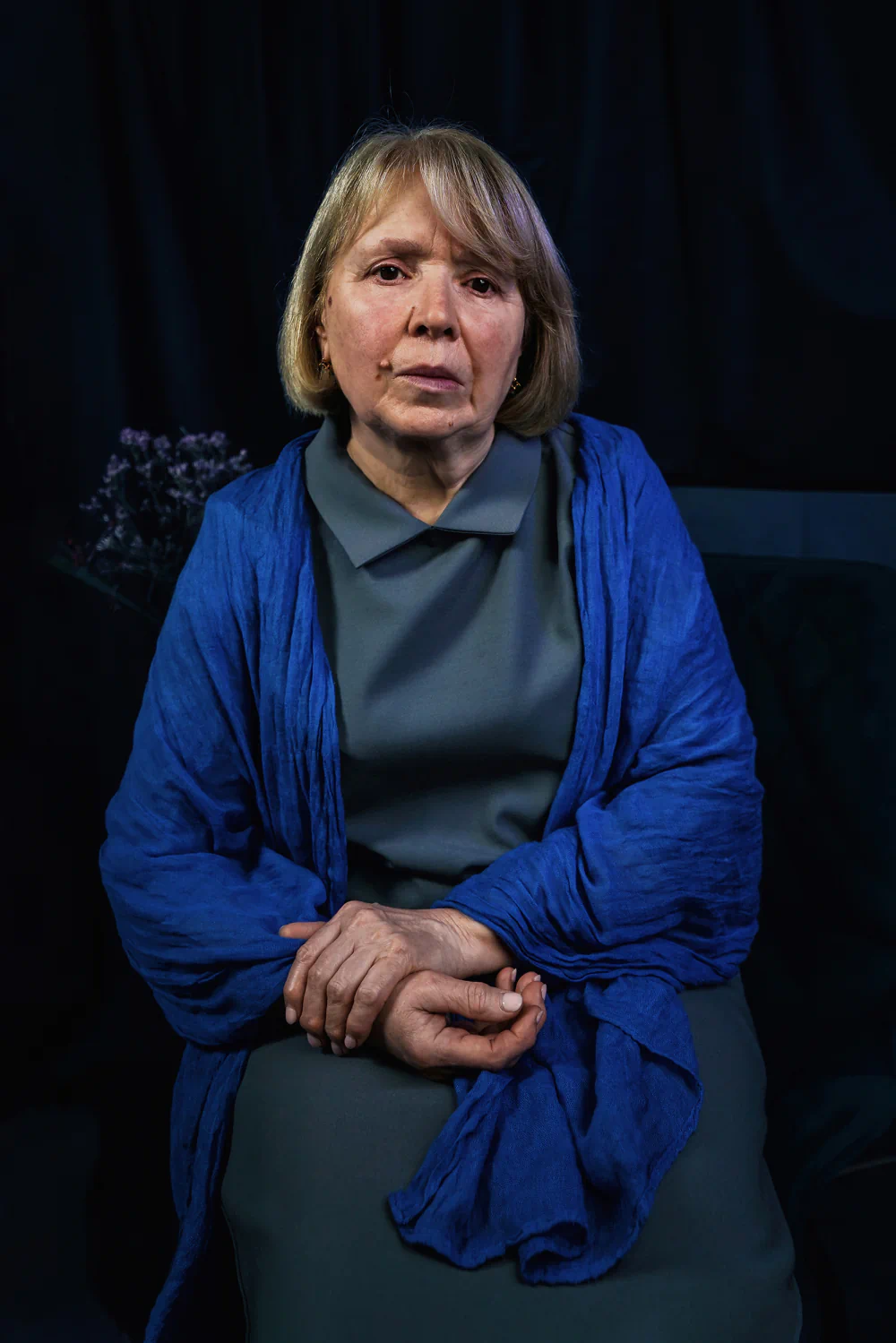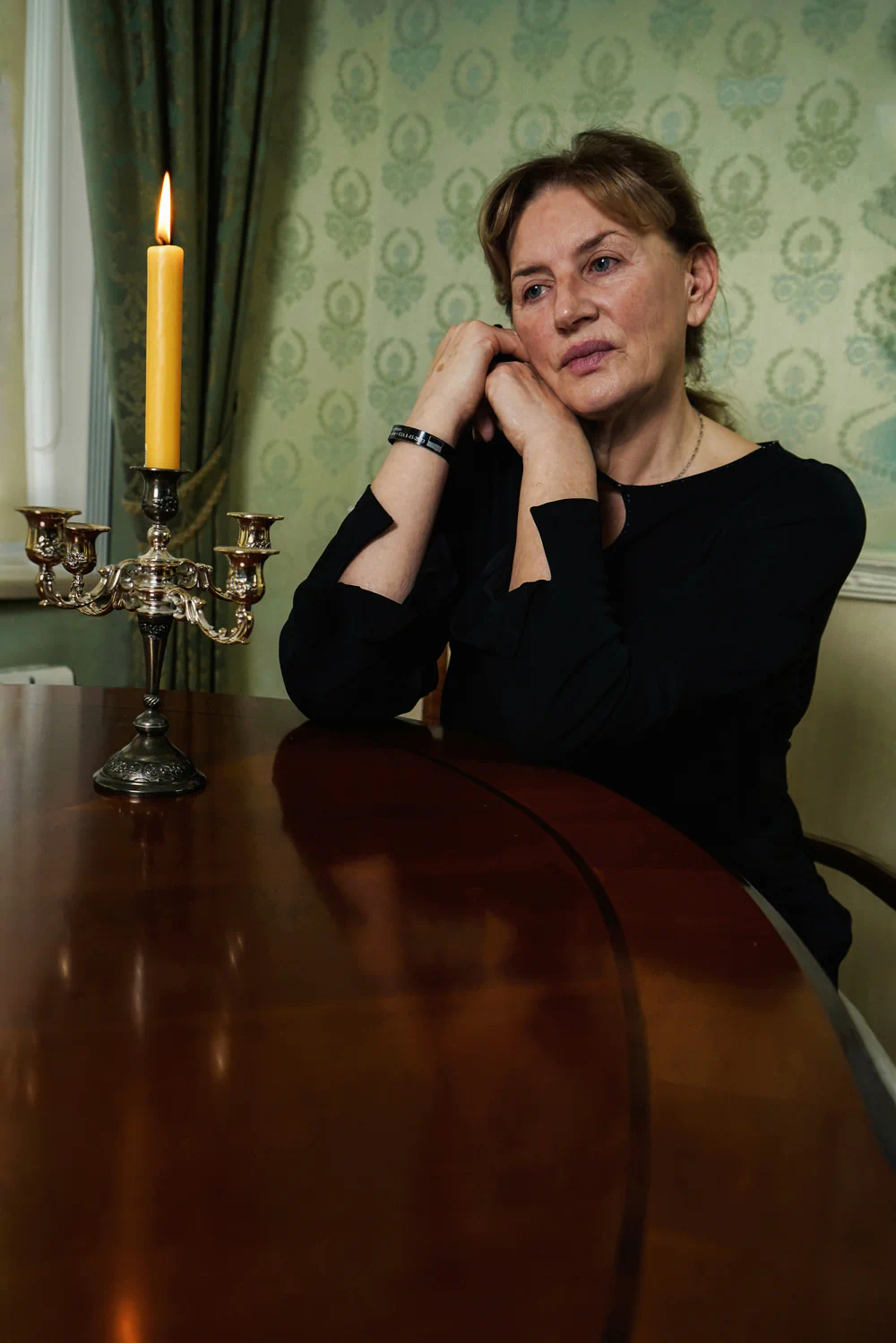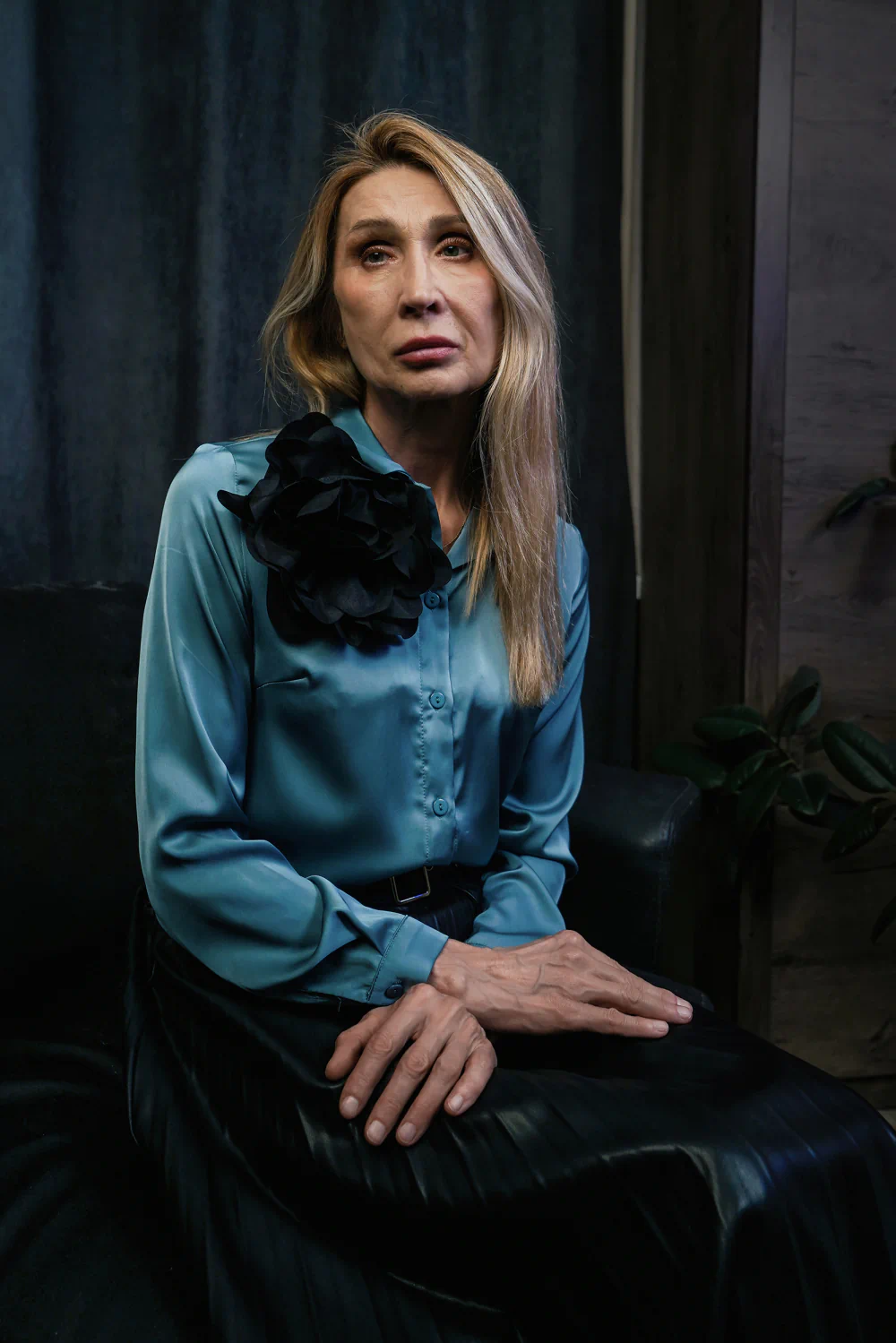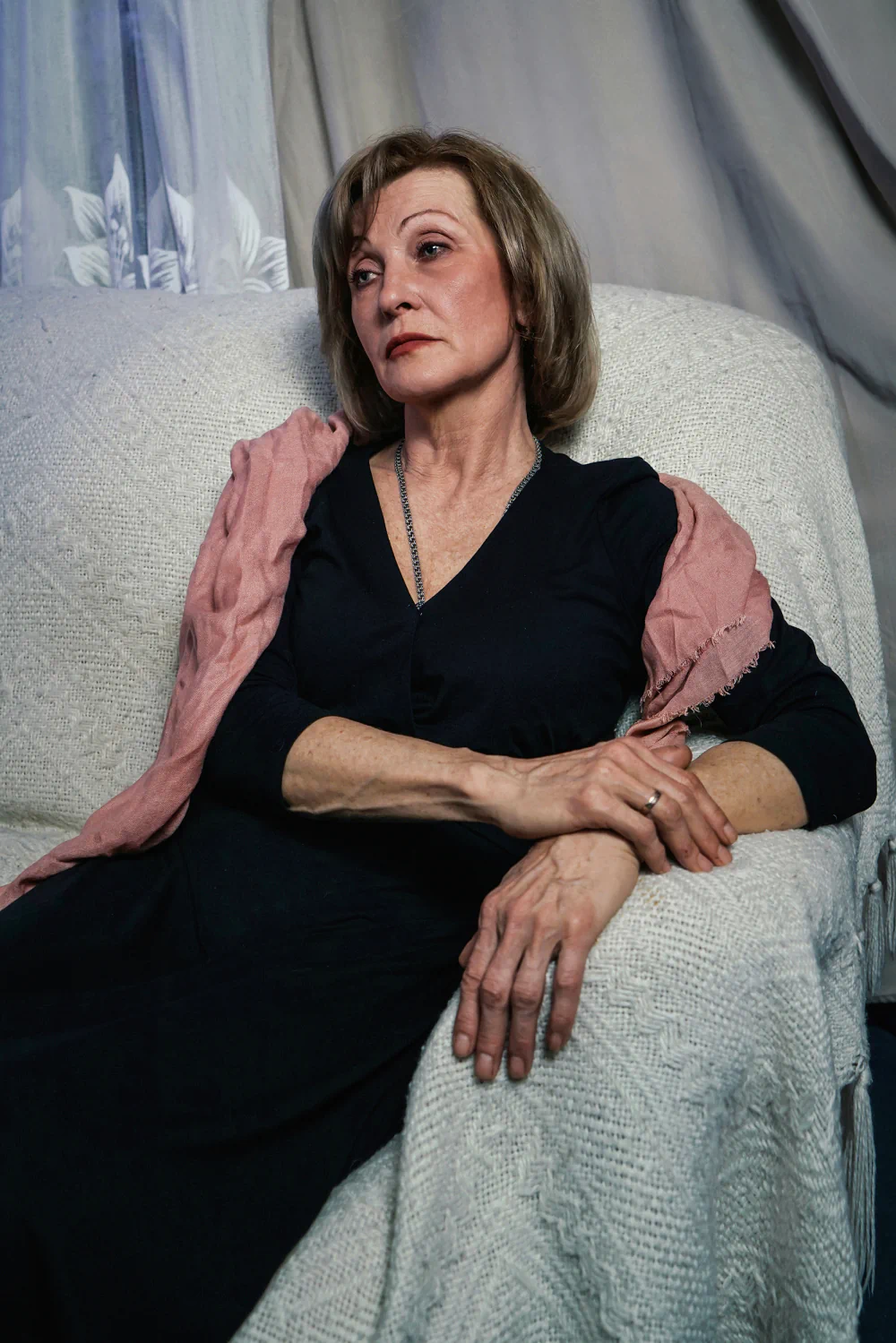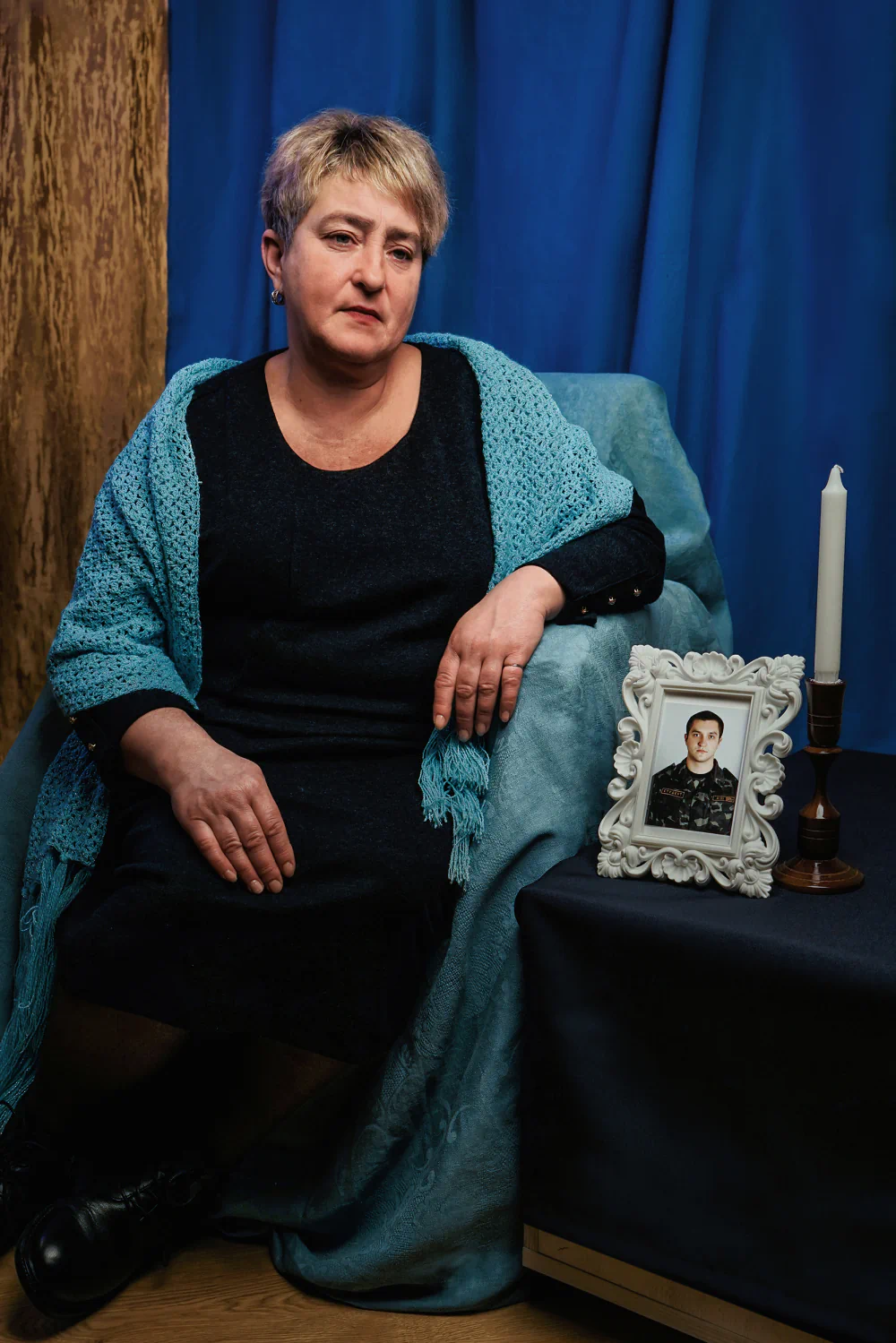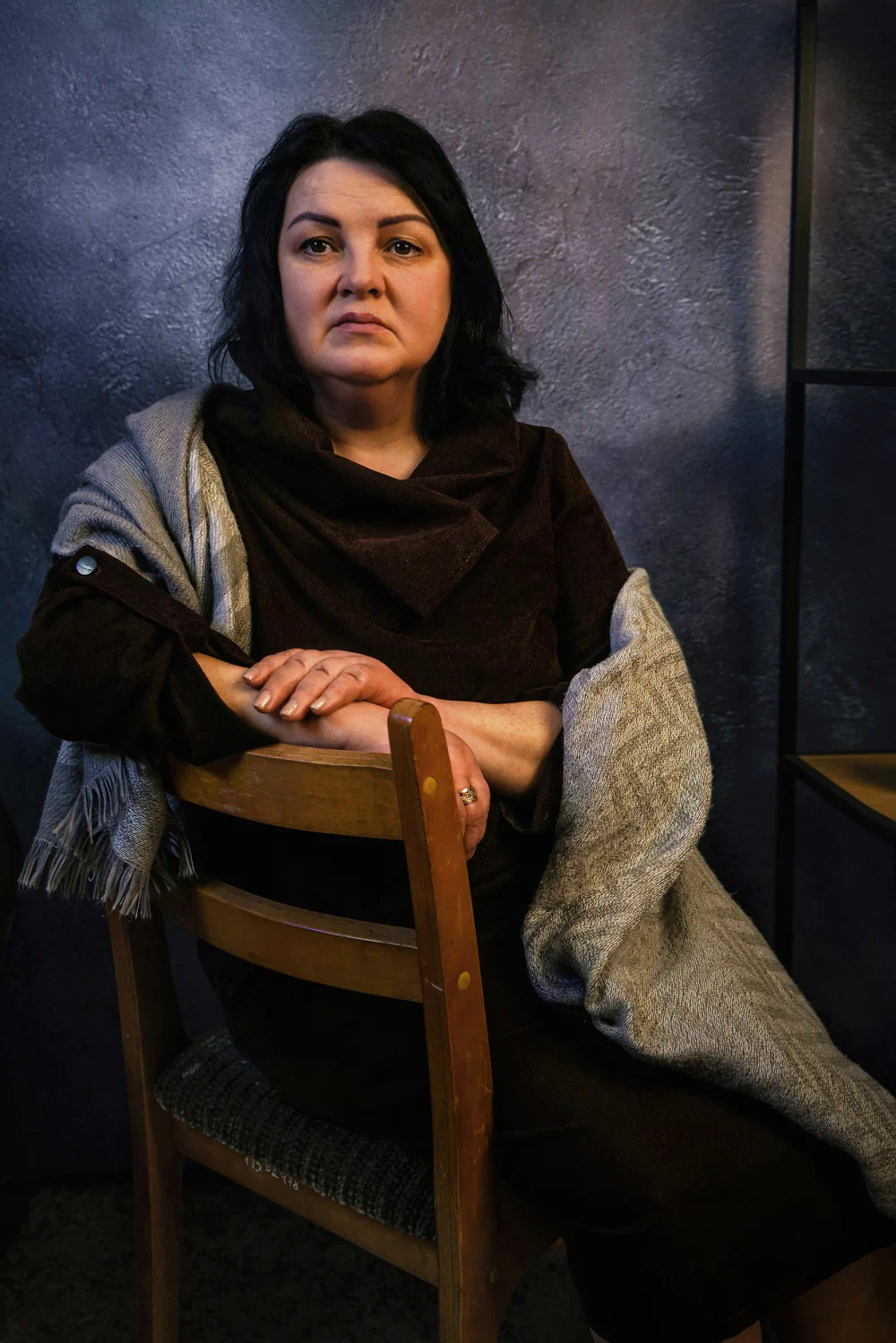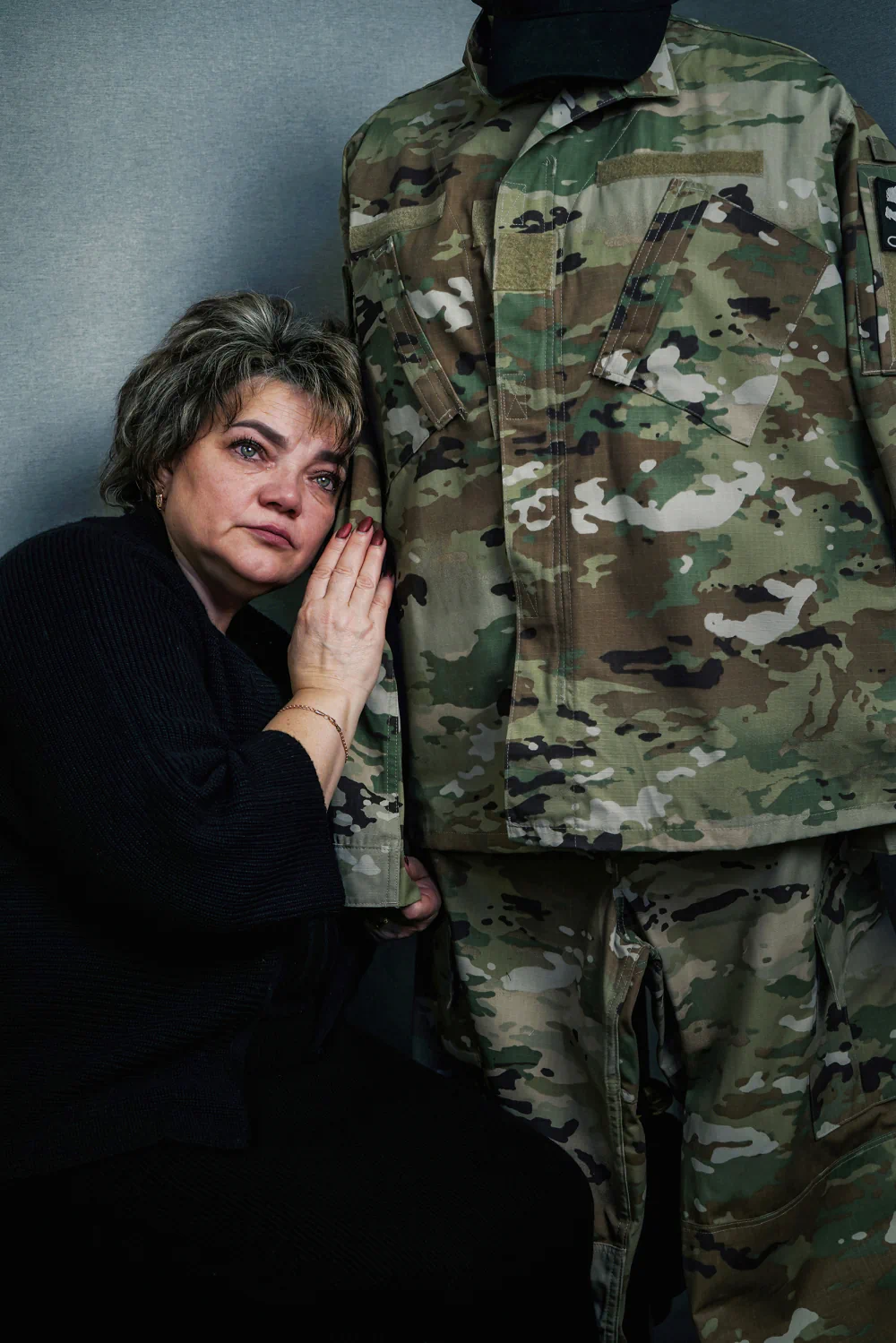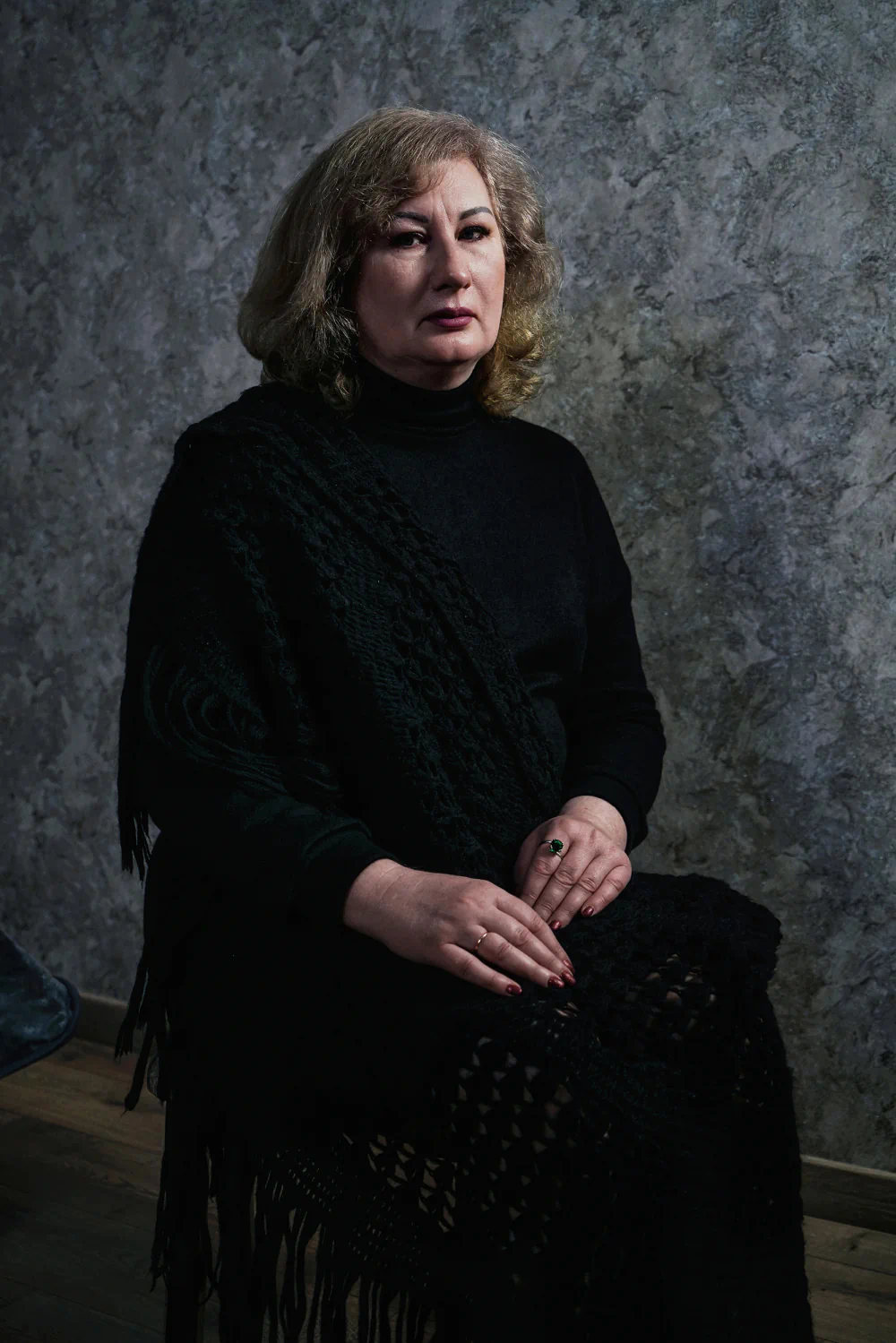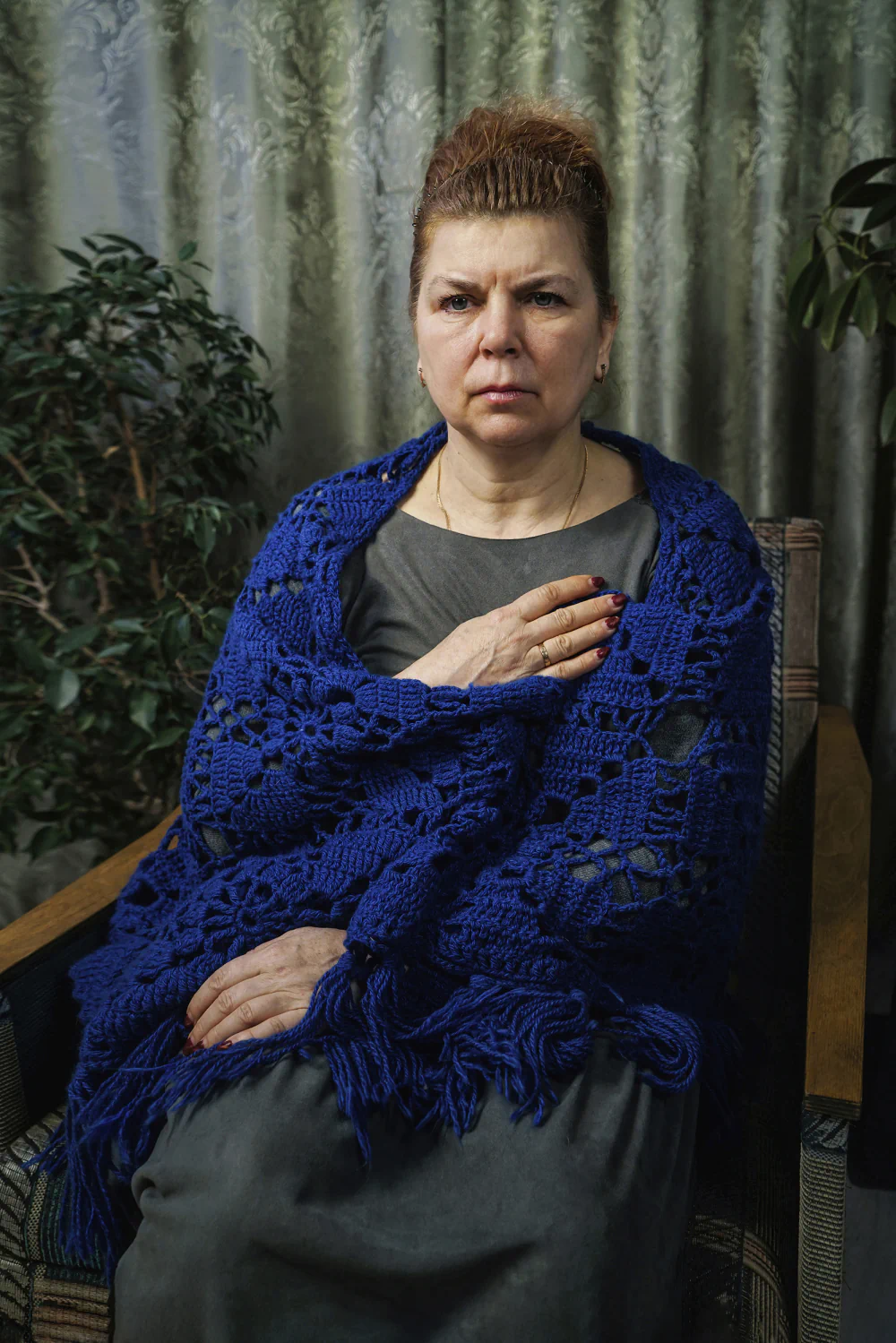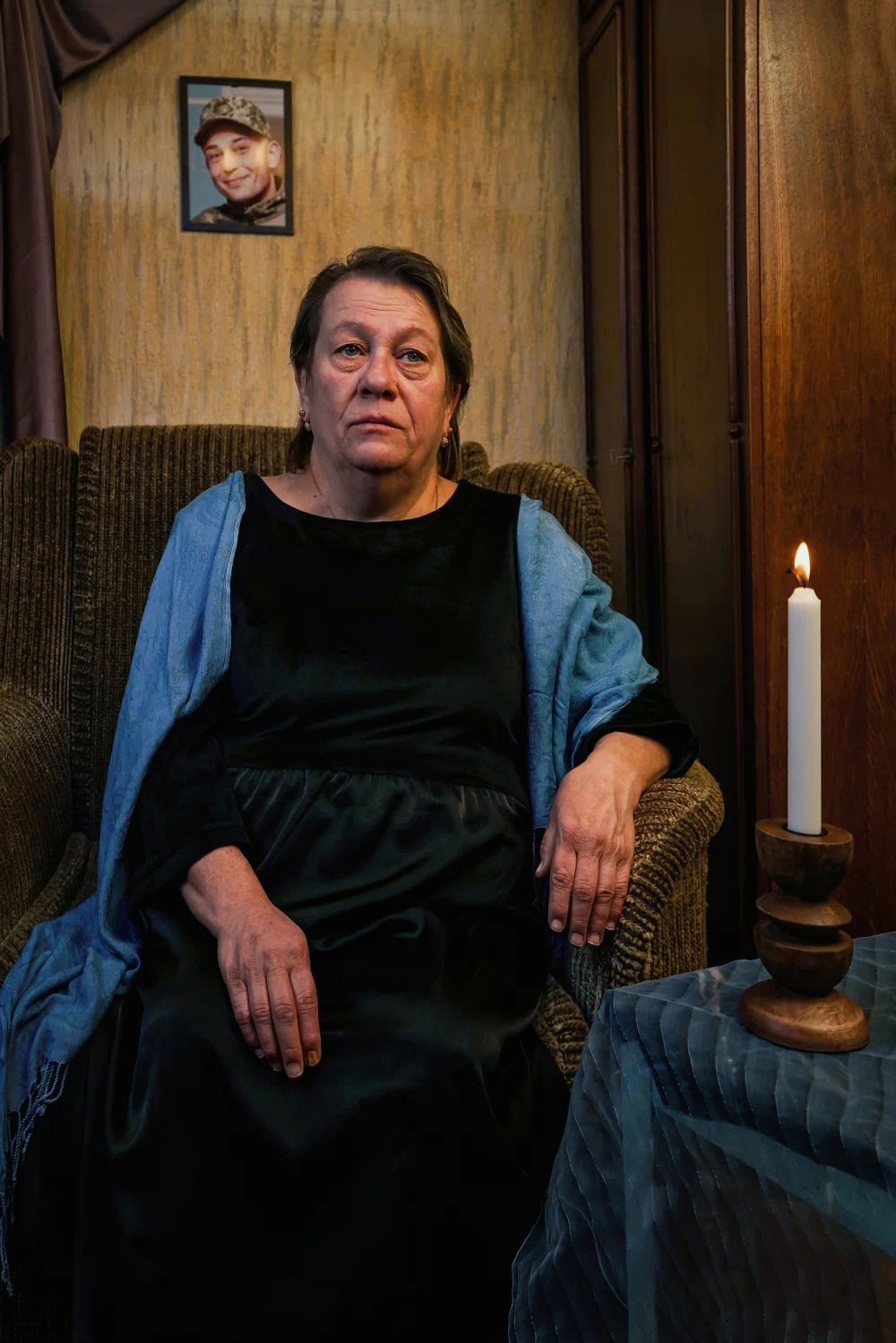
Pietà is a long-term documentary photography project by Alena Grom focusing on mothers who have lost their sons in the war in Ukraine.
The project explores a form of grief that neither ends nor can be fully resolved, because the death of a child does not sever the emotional bond between mother and son — it transforms it.
Absence continues to exist within everyday life: through memory, preserved belongings, rituals of remembrance, and the impossibility of final closure.
The title refers to the classical Christian image of the Pietà, in which the Virgin Mary holds the body of Christ after the Crucifixion. For centuries, this image has symbolized maternal love, sacrifice, and mourning. In Grom’s project, this archetype is reinterpreted within the contemporary Ukrainian context. The mothers do not hold the physical bodies of their sons, but continue to carry their presence through memory, language, and the lived experience of loss.
The project’s visual language is also shaped through dialogue with art history. Grom references depictions of mourning mothers in painting, particularly the emotional restraint and psychological silence present in the Blue Period works of Pablo Picasso, where themes of motherhood and loss are rendered in an extremely stripped and vulnerable form. These references are not direct quotations, but emotional and visual resonances that connect contemporary documentary photography with a broader artistic tradition of representing pain, loss, and human fragility.
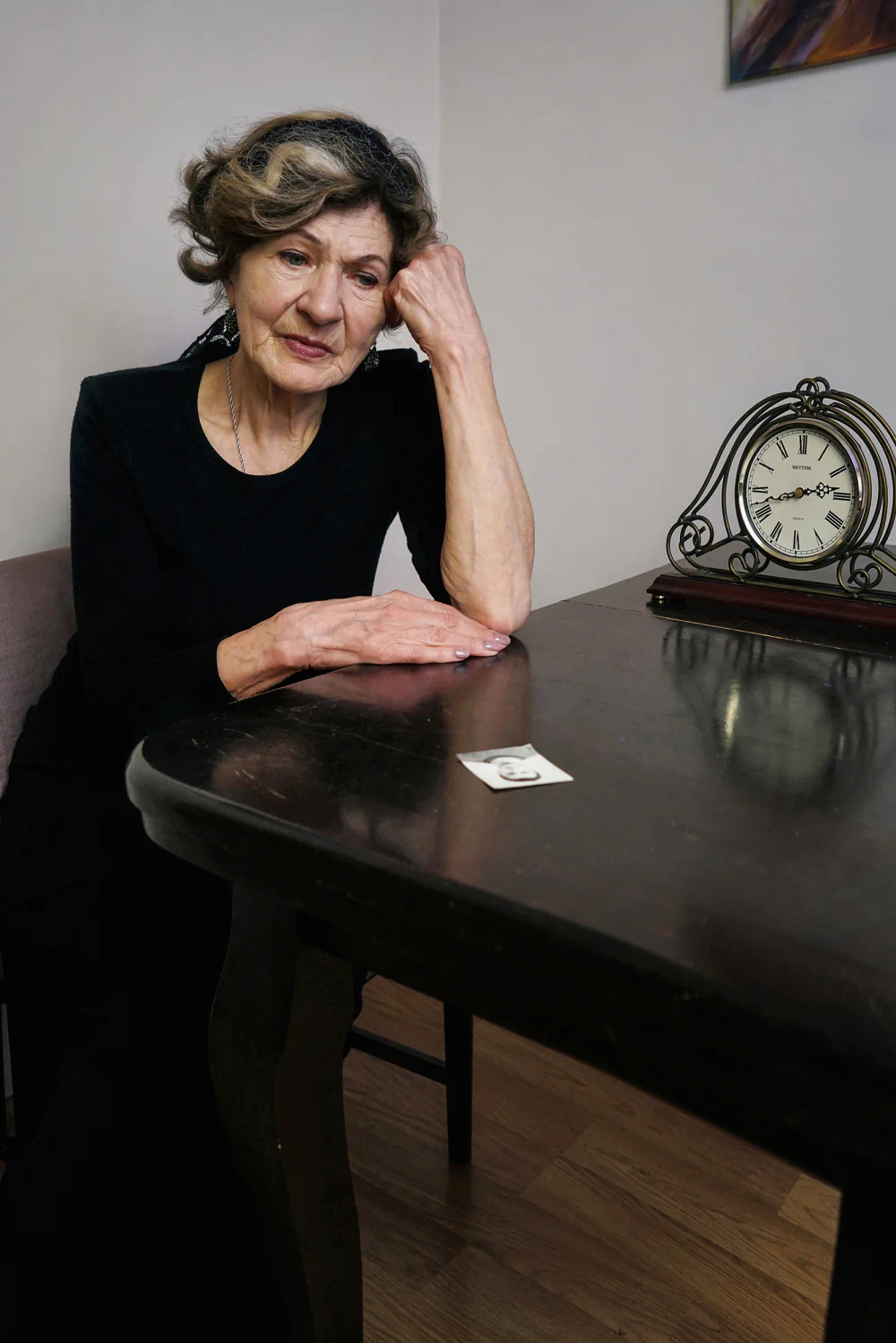
From a photographic perspective, Grom’s practice exists within the field of expanded documentary photography and post-documentary approaches, where the image extends beyond the direct recording of events and instead operates within structures of memory, testimony, and lived experience. Her work combines photography with text and voice, constructing a hybrid form in which image, language, and testimony coexist as equal layers of narration and evidence.
Since 2016, Grom has consistently worked with the subject of war and its consequences, documenting destroyed cities, children living near the frontline, and people whose lives have been irreversibly altered by violence. For many years, however, she found herself unable to approach the subject of mothers who had lost their children. The theme remained almost inaccessible to her, not only emotionally but also ethically. She searched for a way to address this experience without reducing it to spectacle or transforming suffering into mere visual testimony.
At the center of the project are her extended conversations with mothers. Grom records their testimonies, spends time with them, listens to their memories, and observes how loss continues to inhabit their everyday lives. These texts are not conventional journalistic interviews, but acts of listening — attempts to preserve another person’s voice and give it space to exist. Through fragments of memory — childhood stories, habits, humor, daily routines, rituals, fears, and final conversations — the mothers reconstruct the continued presence of their sons. Memory, in this context, no longer belongs solely to the past; it becomes a form of survival and a means of sustaining a relationship where physical presence is no longer possible.
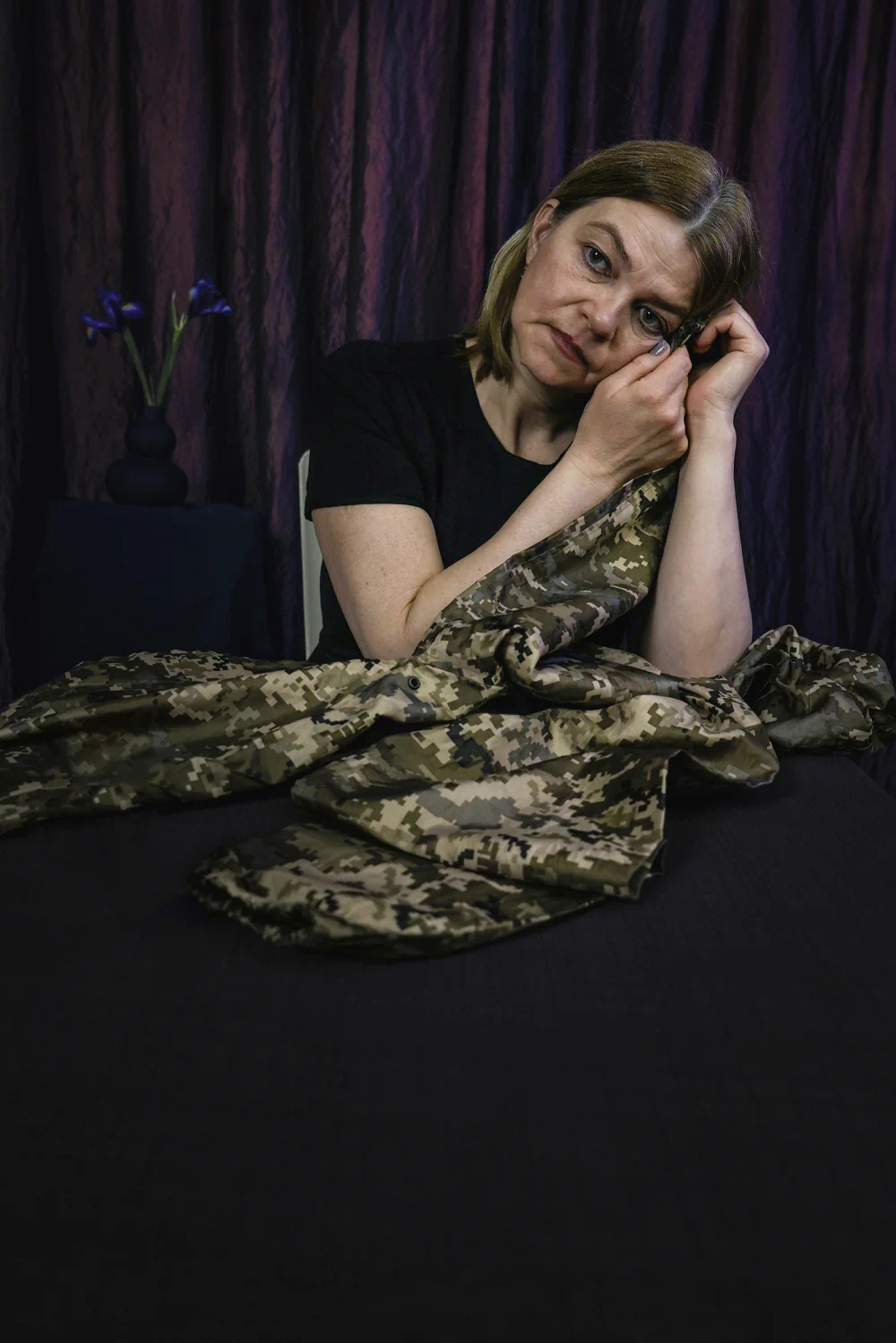
Within Grom’s understanding, grief is not a moment but a prolonged condition. It does not remain confined to the past; it reorganizes the present. Mothers do not simply “move on” from loss — they learn to continue living within it. Their lives persist, but are permanently structured around absence.
Throughout her work on the project, Grom repeatedly encountered the social invisibility of maternal grief. Society often struggles to confront such pain over extended periods of time. War is typically described through the language of heroism, statistics, political decisions, and military reports. Yet behind every number exists another reality: the life of a mother who continues to exist after the death of her child.
This grief is frequently confined to the private sphere, becoming an intimate and almost hidden experience that lacks a shared public language. Even when surrounded by others, mothers often remain isolated within their loss. This loneliness is not only external, but also internal and structural, shaped by the difficulty of fully sharing or comprehending such an experience.
For Grom, Pietà is an attempt to restore visibility and voice to this form of grief. The project functions as a work of memory and as a form of resistance against oblivion — an effort to preserve presence where it has been destroyed. Love that continues beyond death becomes the emotional and conceptual core of the work.
Gradually, the figure of the mother within the project moves beyond individual biography and becomes a broader metaphor for a country living through war. Within this image, vulnerability, exhaustion, pain, and endurance coexist. For Grom, it is not a symbol of suffering alone, but a complex and living representation of survival.
Pietà ultimately exists not only as a photographic project, but also as a form of collective testimony.