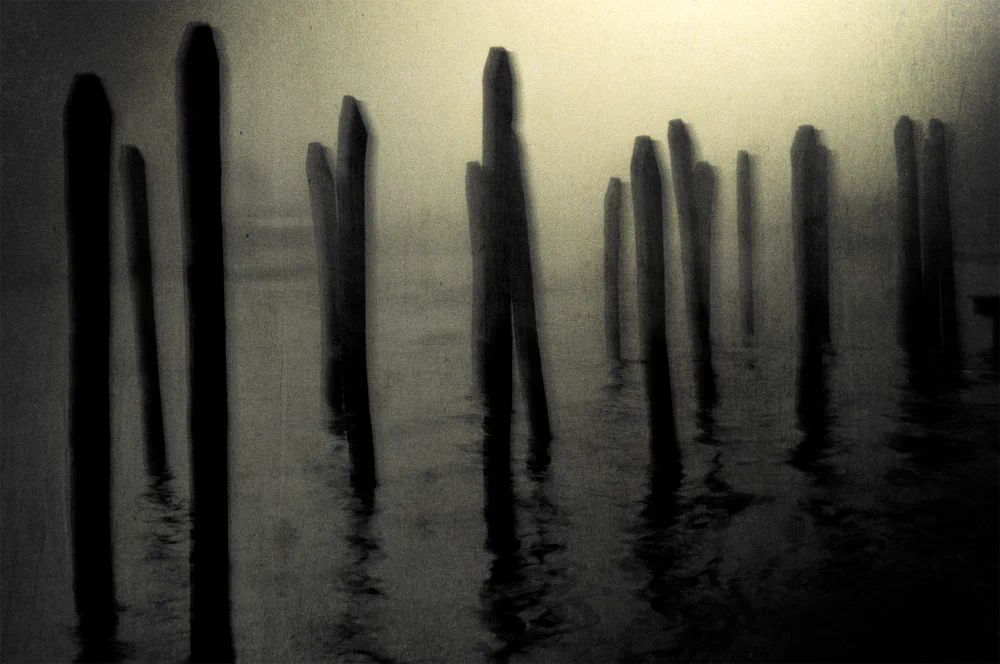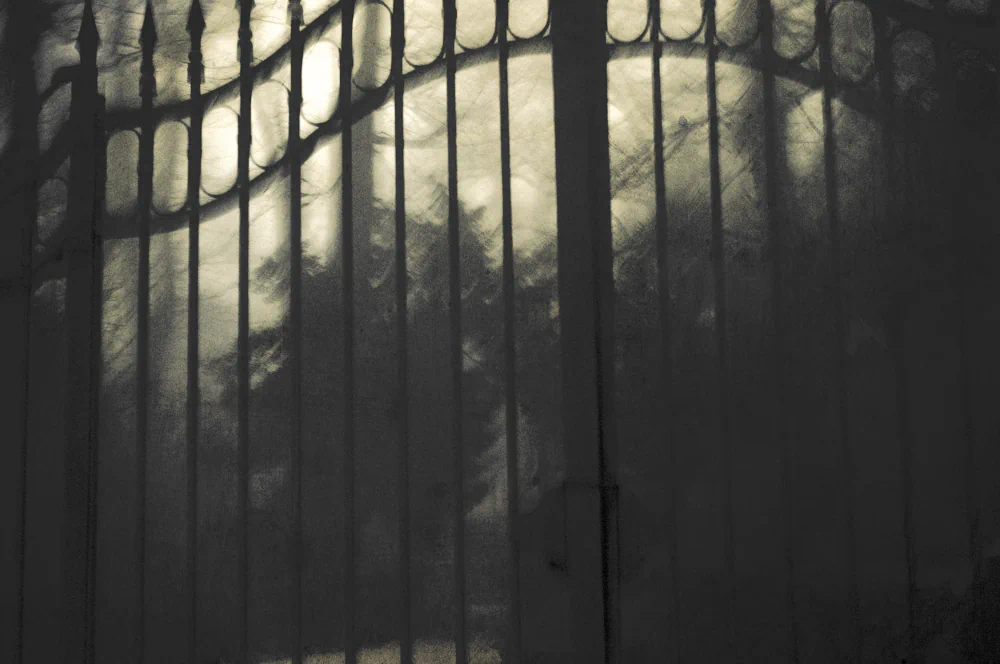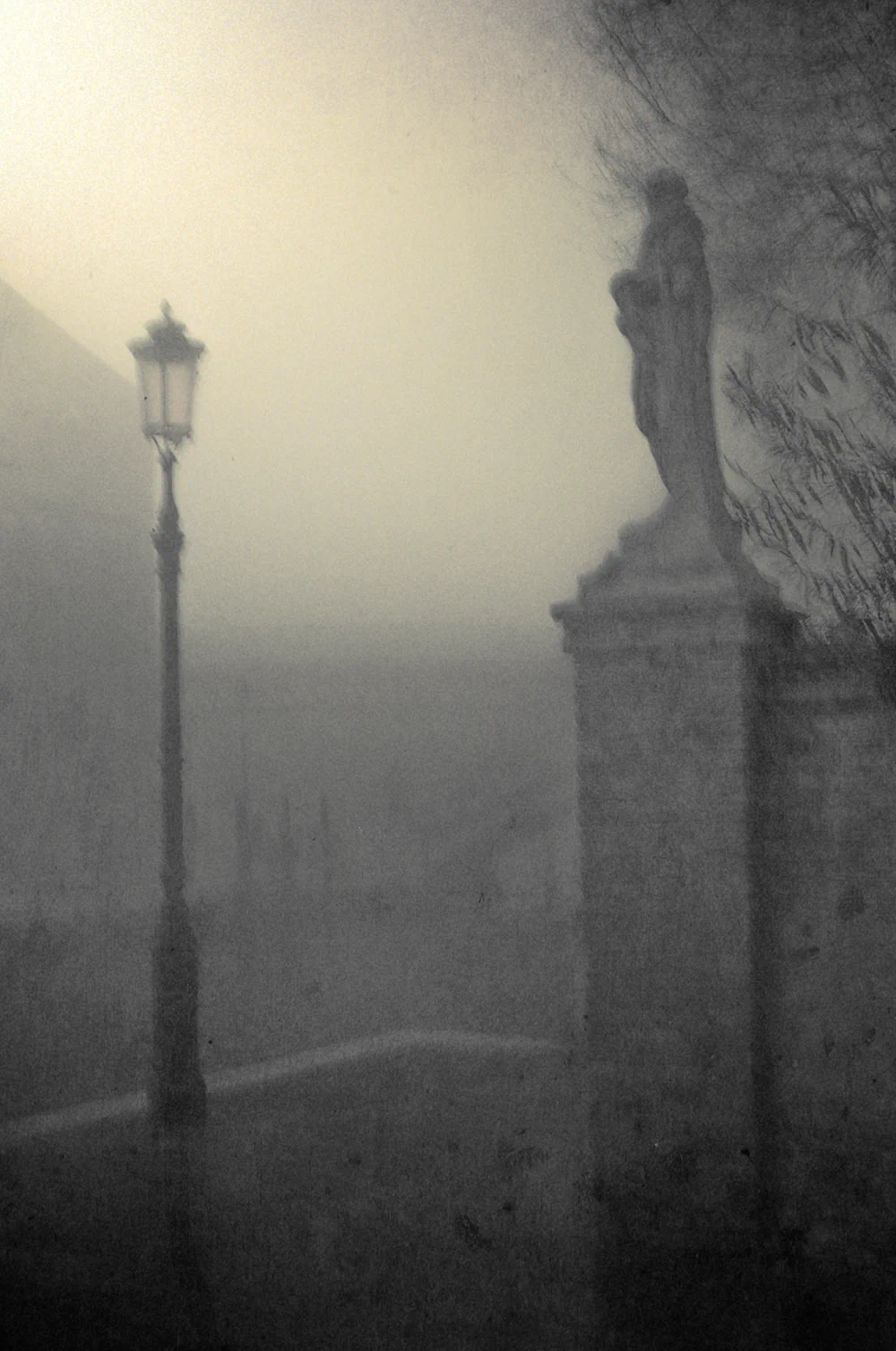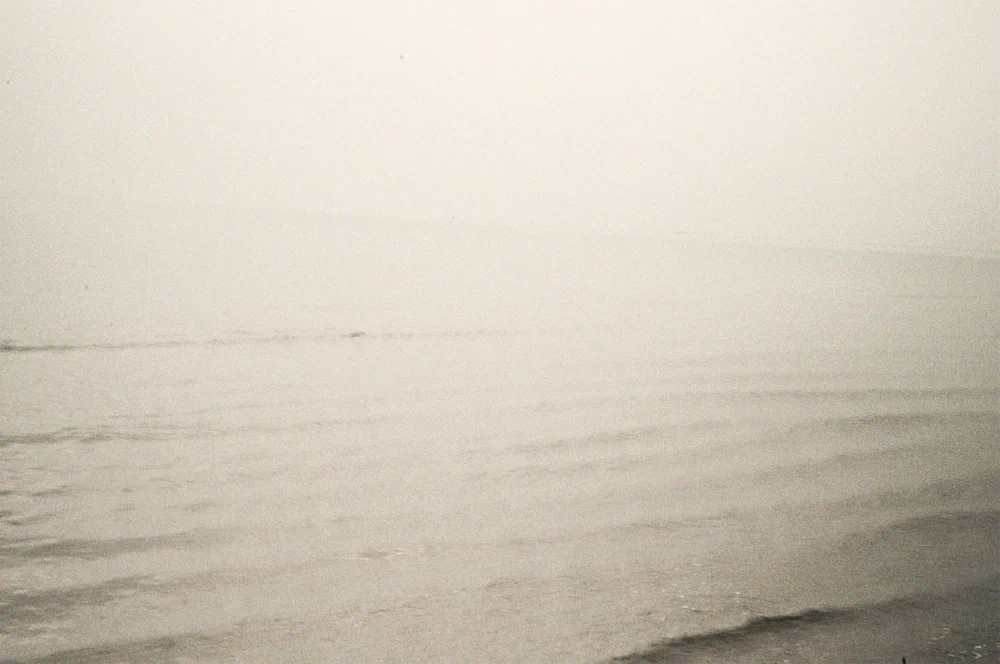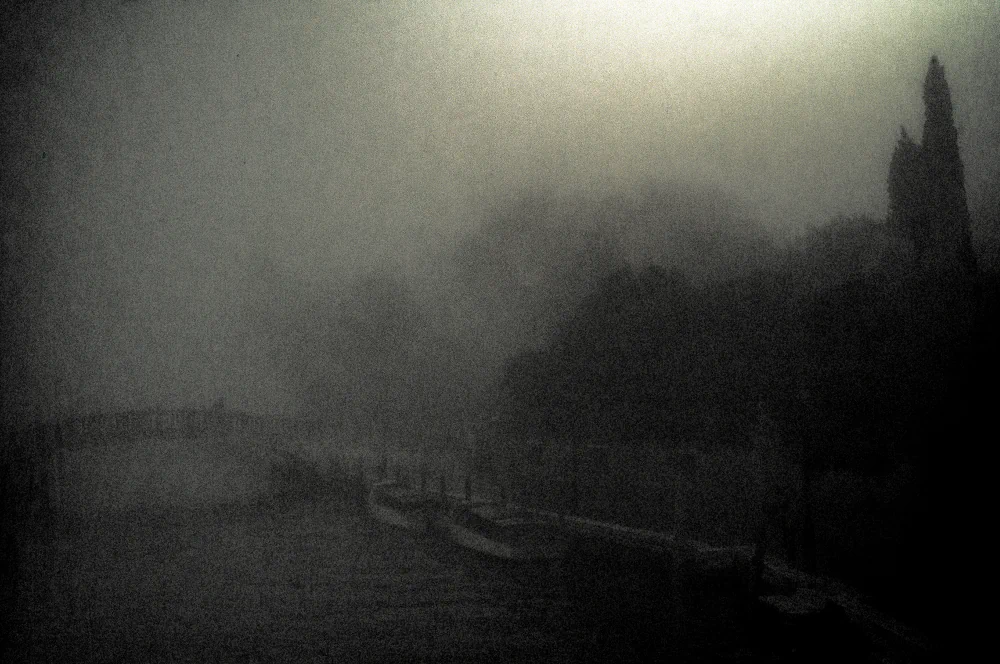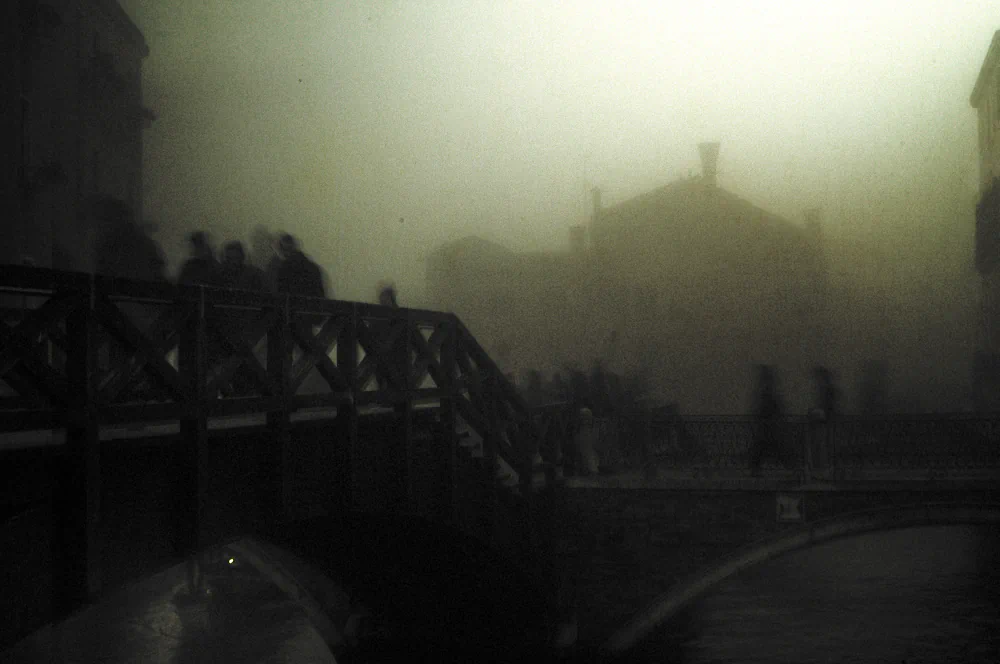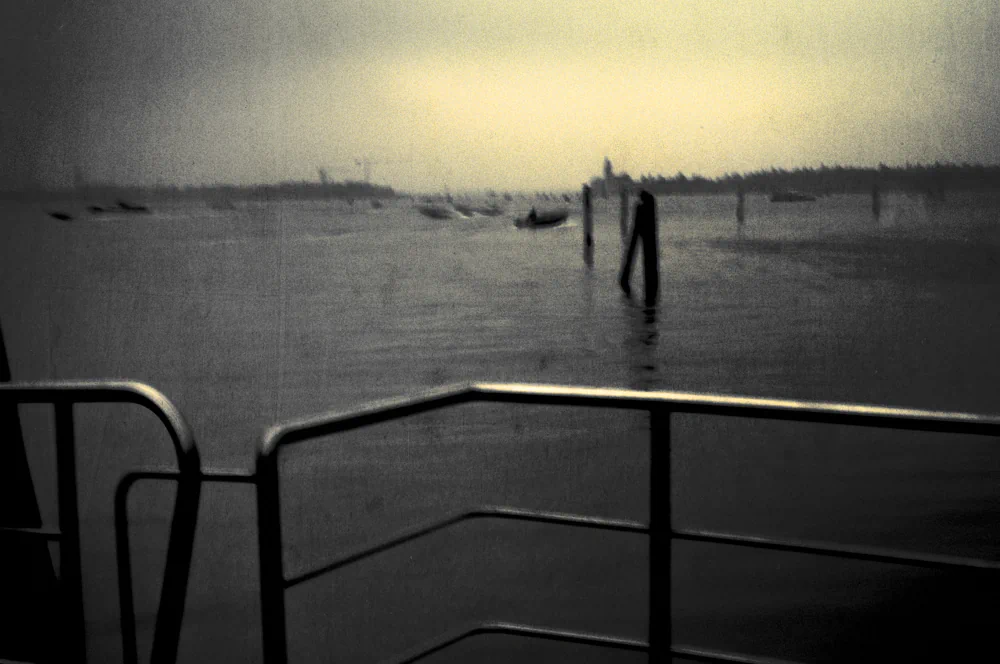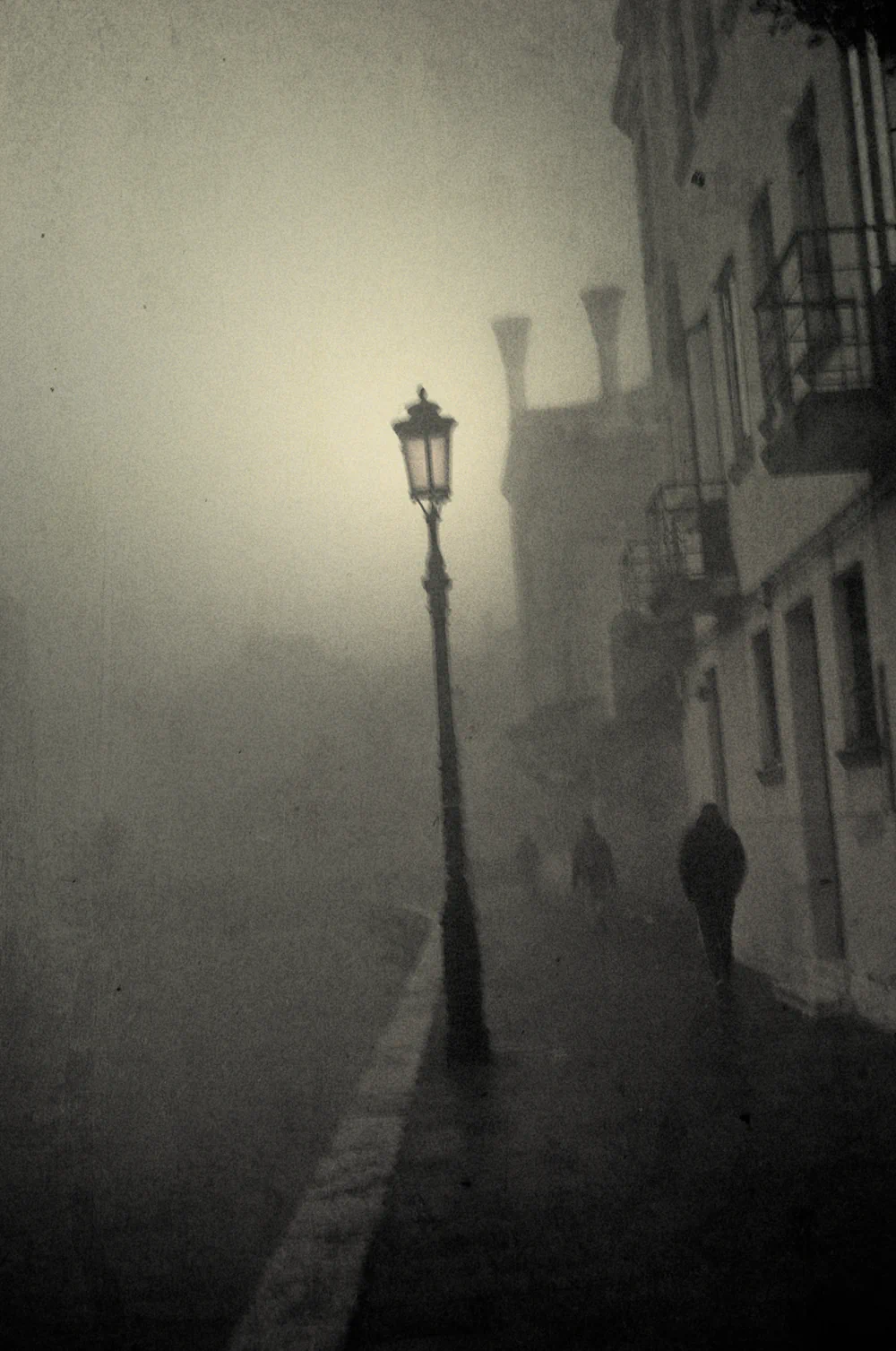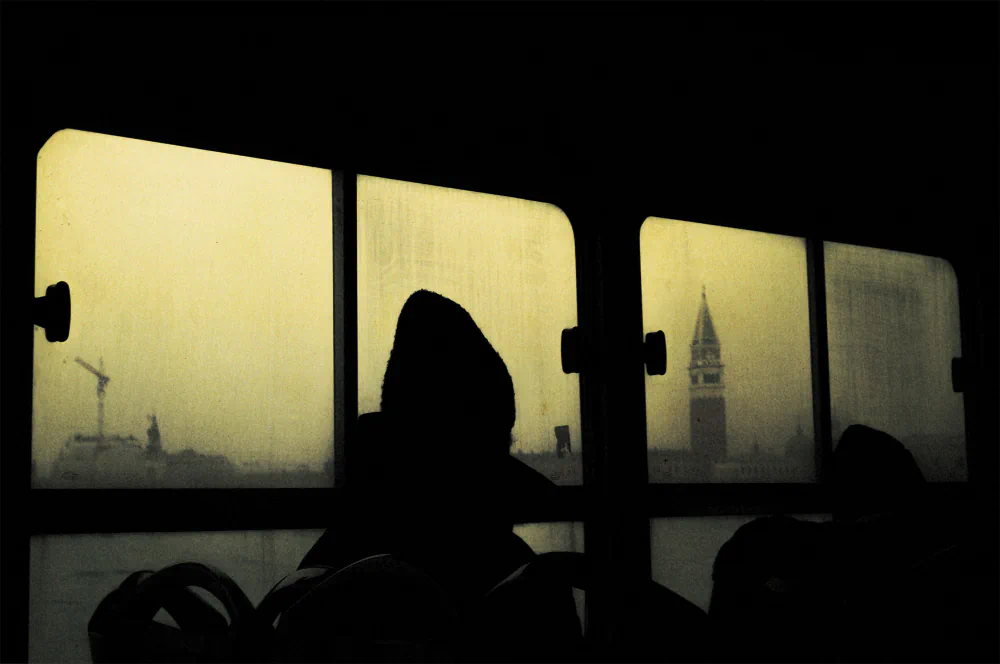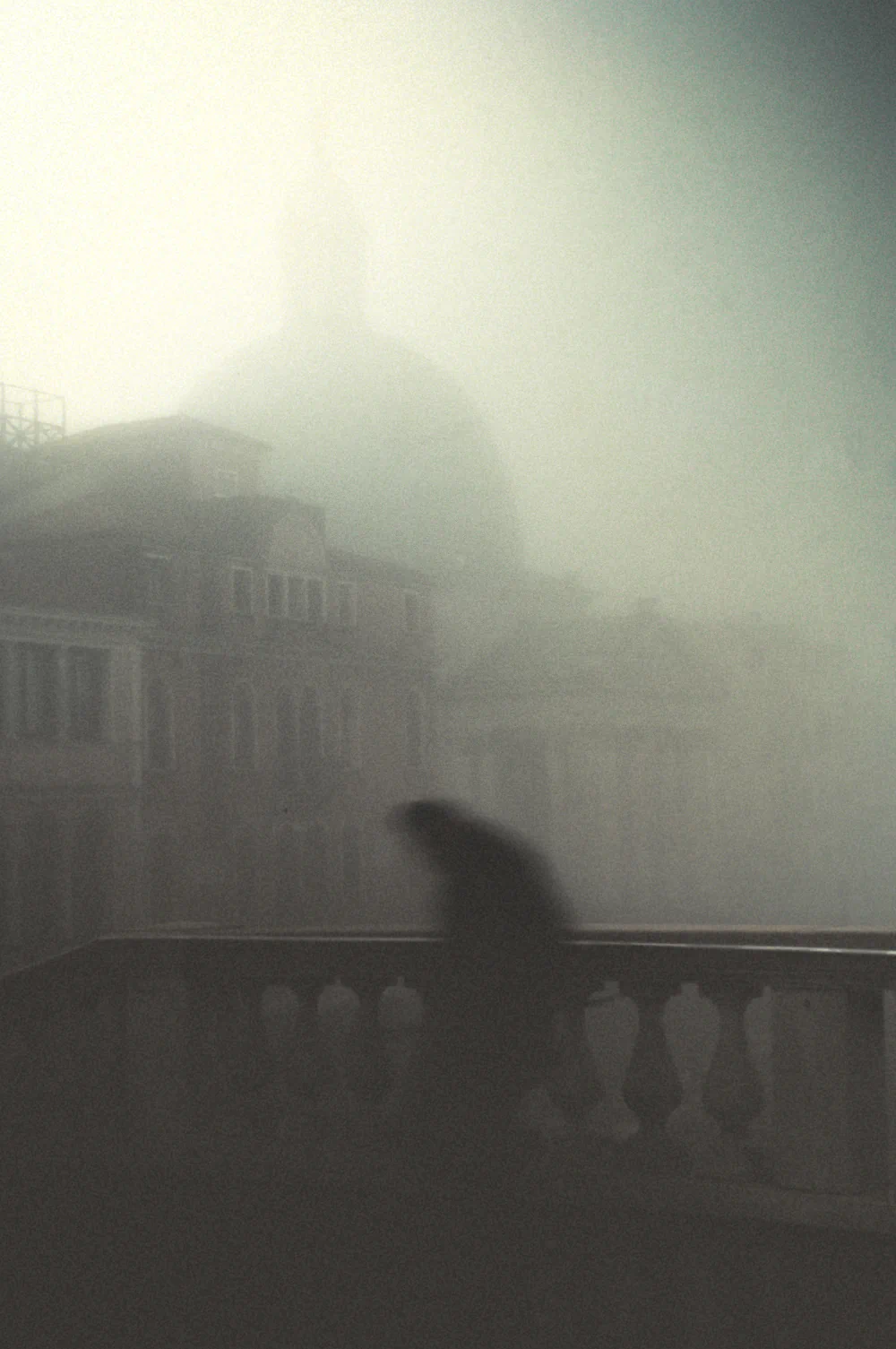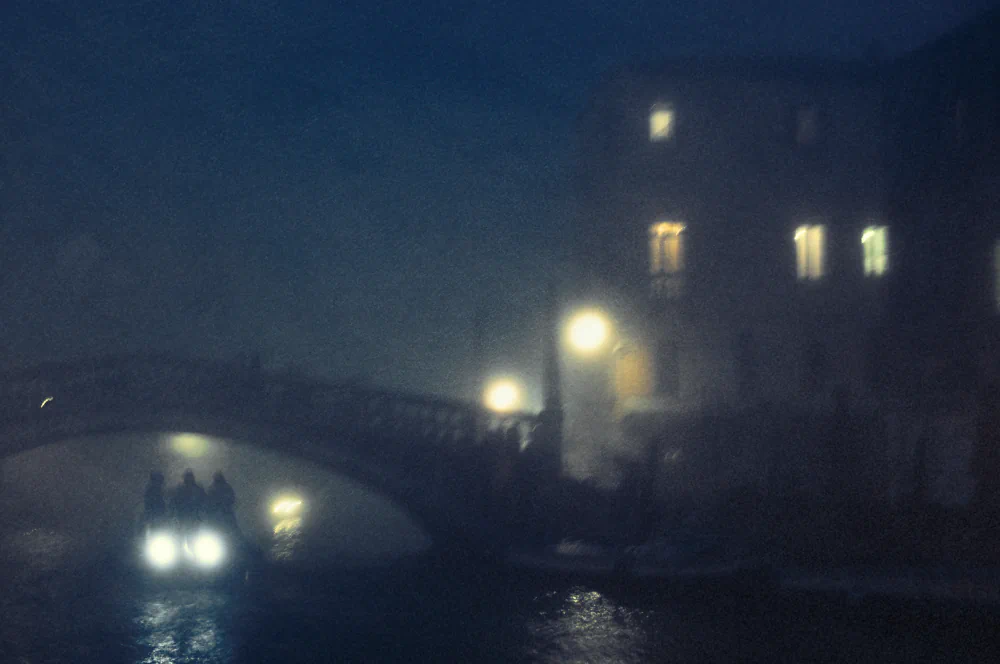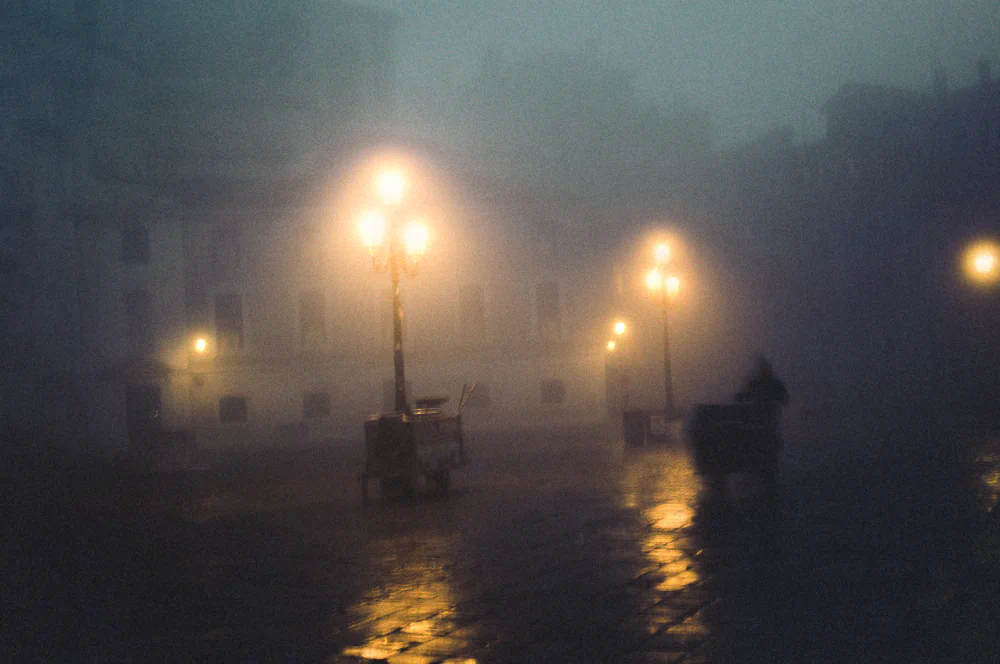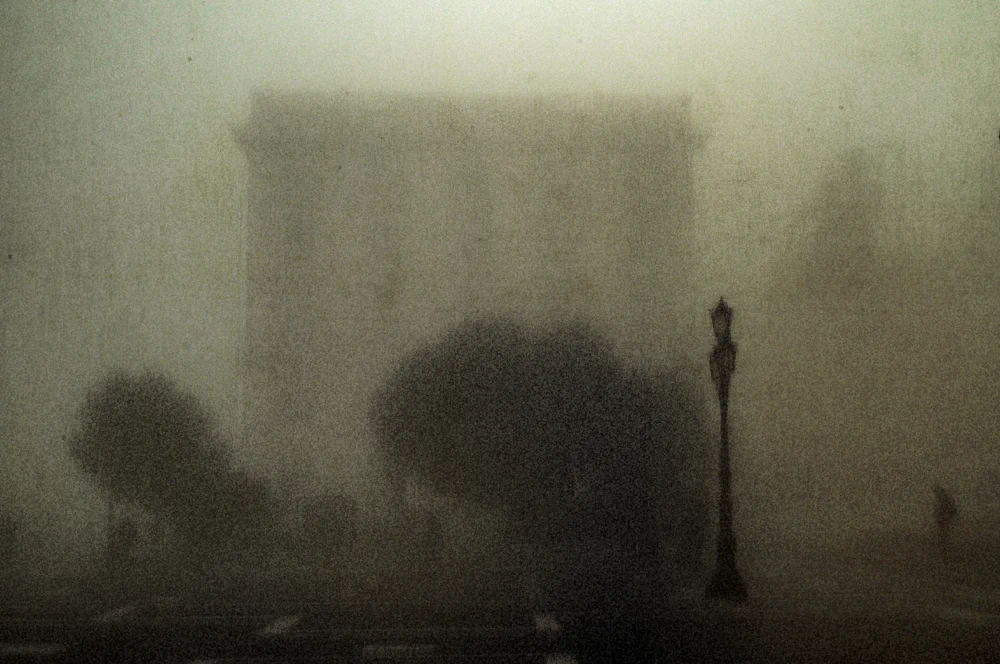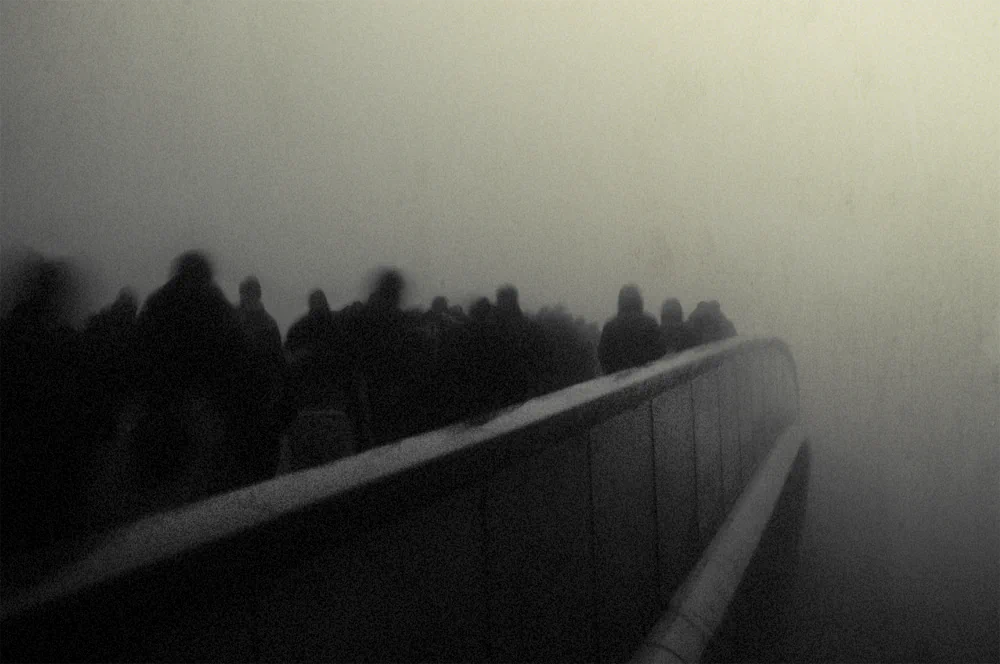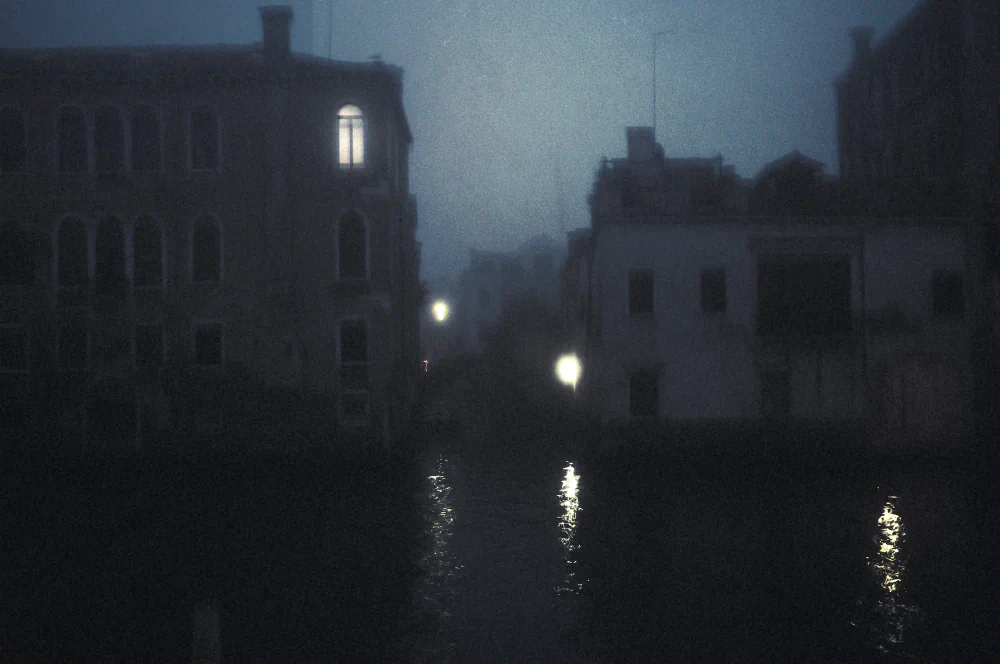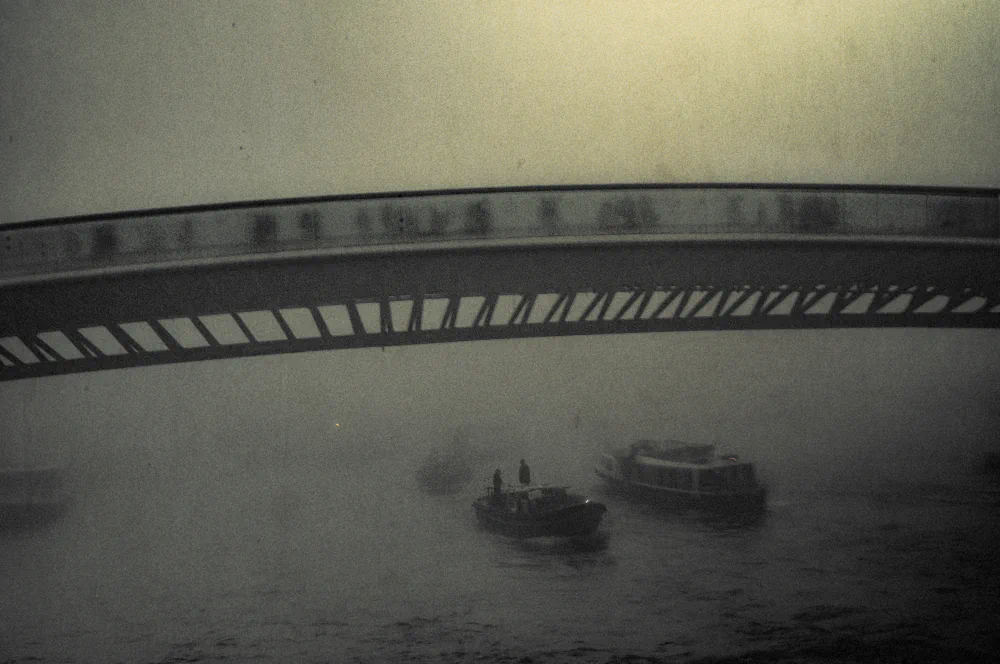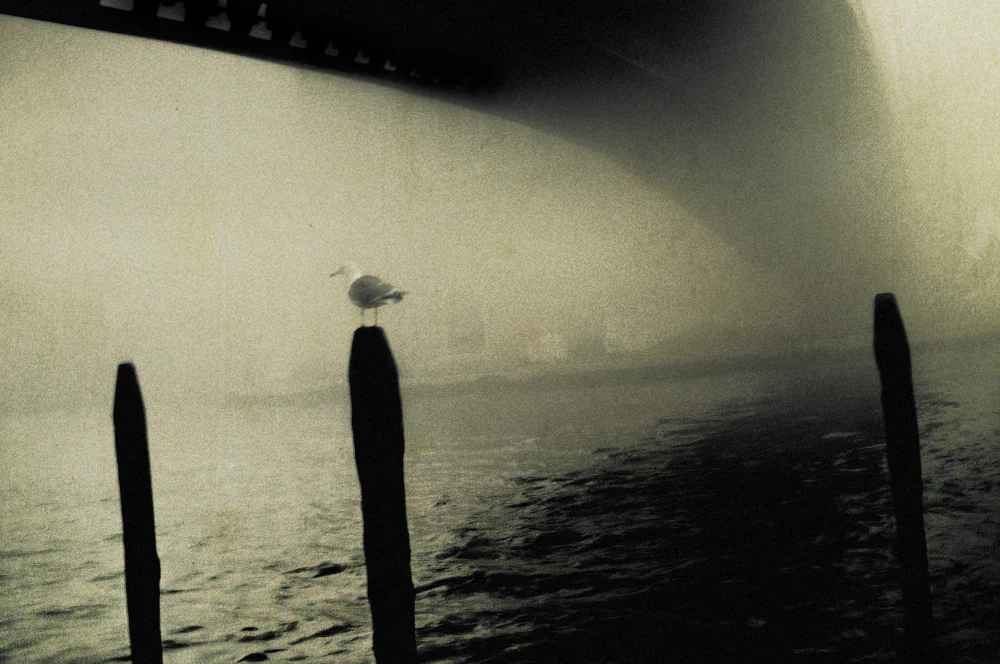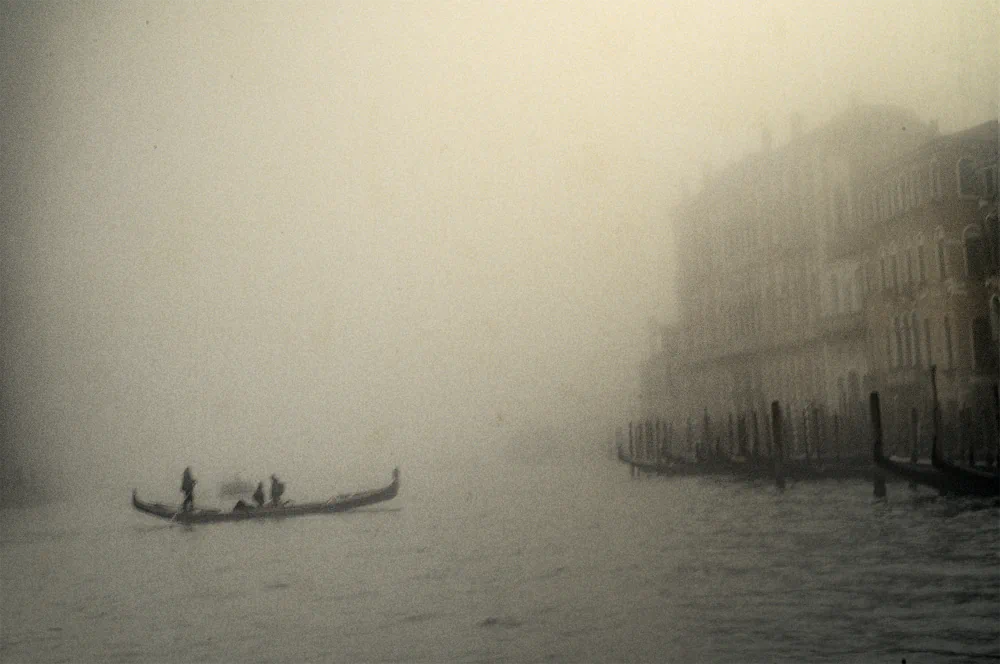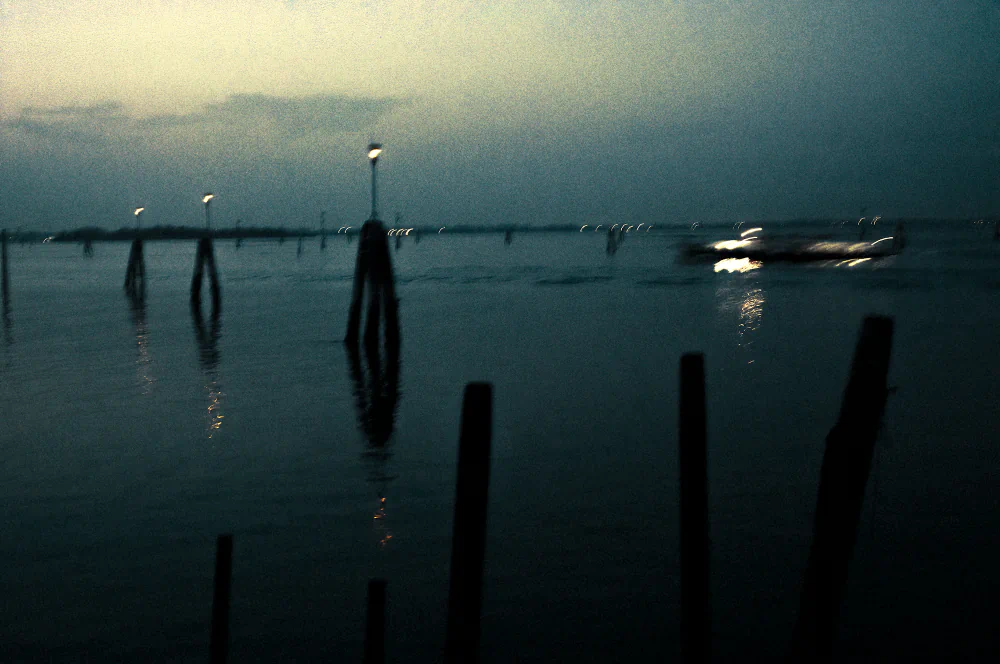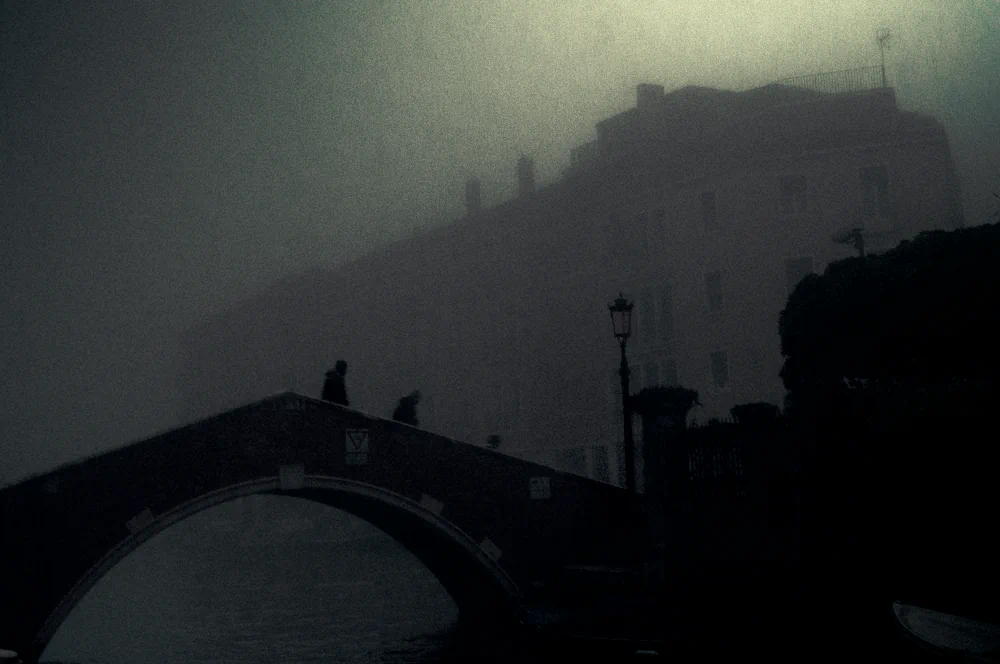


Nebbia comes in the off-season, when tourists are washed away by rain and wind, leaving the city empty for a while.
It settles quietly over Venice, taking hold of what remains. The city slows down, almost withdrawing into itself.
Summer wears the city down, as people come, take the same images, and move on, leaving Venice worn and empty. After this, the city turns inward and begins to heal in silence. Those who truly love it come during this quiet time, when Venice slowly spreads across the misty lagoon like a lone ship, drifting without a clear direction.
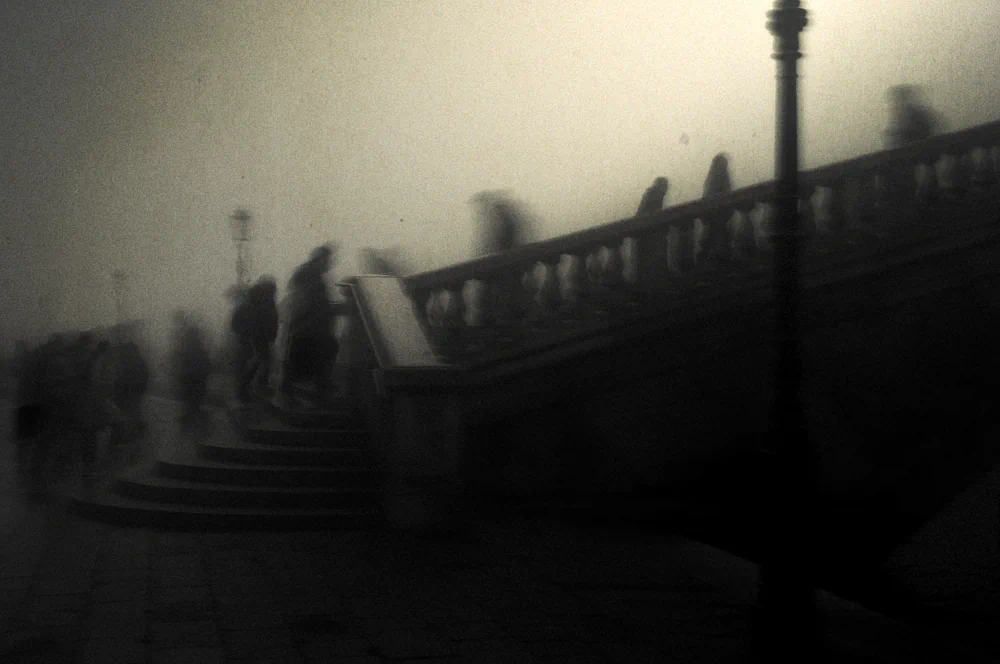
Fog moves slowly through the canals and streets, dissolving everything it touches. Edges fade. Distances collapse. Connections disappear, human-made shells fade, and people remain alone, drifting in time and empty space. What once felt stable becomes uncertain. The city loses its clarity, as if the ground beneath it can no longer be fully trusted.
For more than a thousand years, this fog has returned. It rises from the lagoon and the open sea, enclosing the city from the outside, as it always has. Venice was not built against the water, but within it. The lagoon gave both connection and protection, hiding the city from the world beyond. Channels became paths, and water became a shield.
This work continues a longer path. In my book Under Sodom Mountain, I turned to a landscape shaped by the absence of water, where human actions slowly drained what once sustained life. Here, the condition is reversed. Water is no longer missing, but rising. Yet the cause is the same.
Different places, different forms, but one pattern: a failure to understand limits. A belief that the environment can absorb everything without consequence. In one place, the land breaks under dryness. In another, it yields under pressure.
My work moves between these states. It looks at landscapes where the balance has shifted, where beauty remains, but carries a quiet tension. These are not distant problems. They are visible, present, and unfolding.
The Nebbia project continues in this direction. I hope to shape it into a book, where the images can be seen together, allowing a slow, more personal experience of the place, held between presence and disappearance.
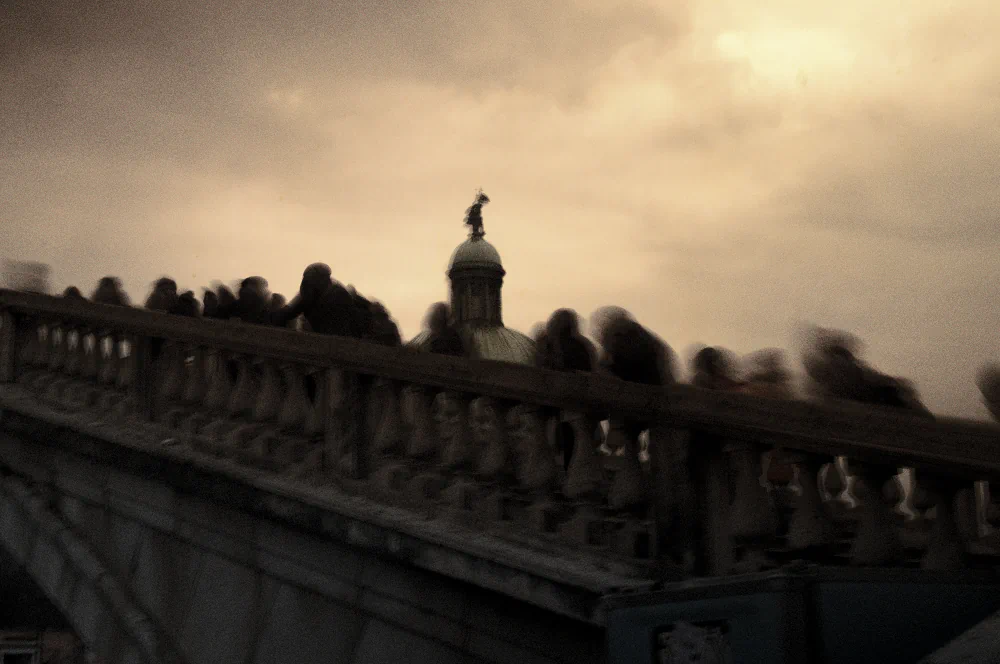
To do this here is not simple. Venice has been seen and recorded countless times. Its image is known, repeated, almost fixed. To look at it again requires distance. I tried to move away from the familiar view, to see the city in a different state. Not as a symbol, but as something fragile, almost abandoned, existing between presence and disappearance.
It is a reminder of how fragile the ground beneath us is, even when it feels stable. Of how easily protection can turn into exposure. And of how what we take for granted can slowly begin to disappear.
About Alexander Bronfer
Alexander Bronfer is a photographer and educator, the author of Under Sodom Mountain, an instructor at Leica Akademie Italy, and a member of Burn Magazine. He was born in Ukraine.
Driven by an interest in aesthetics, his work moves between documentary, street, and art photography, seeking a shared aesthetic experience in the Kantian sense, rather than simply describing a place or event.
His current work explores the interaction between human presence and nature. His images often place beauty and disruption side by side, revealing how we relate to what we see. [Official Website]