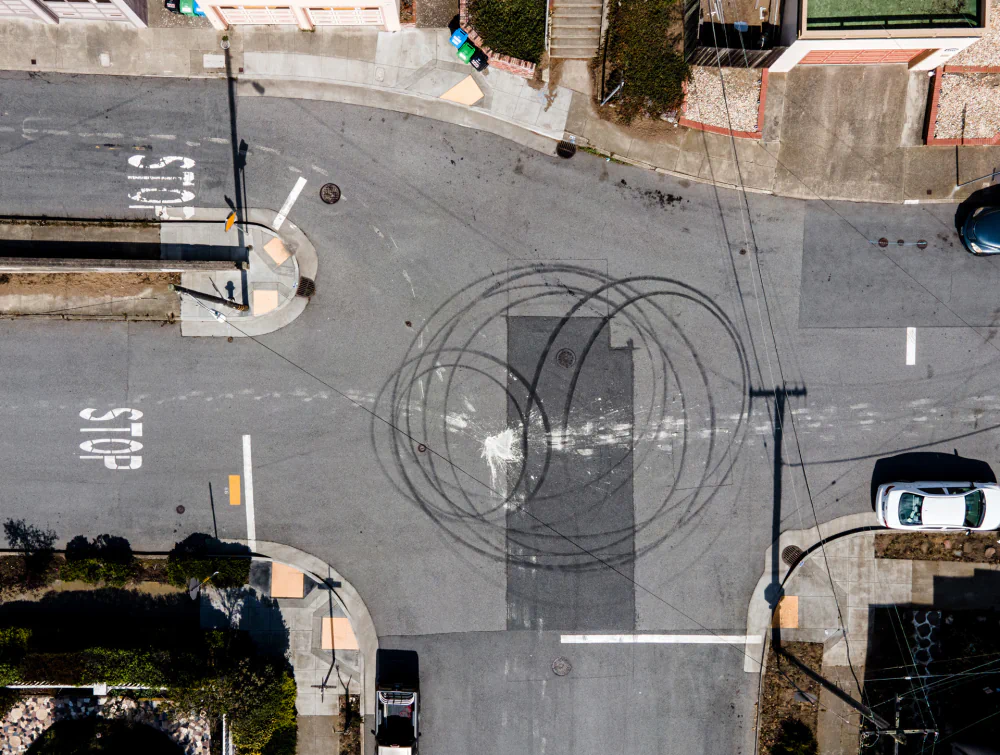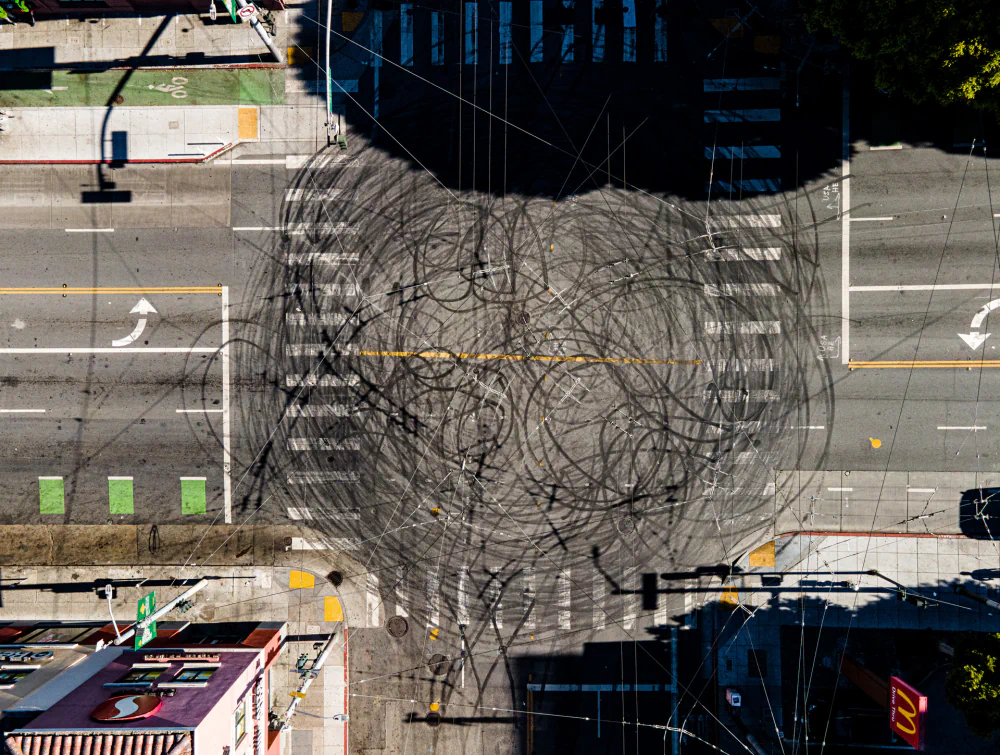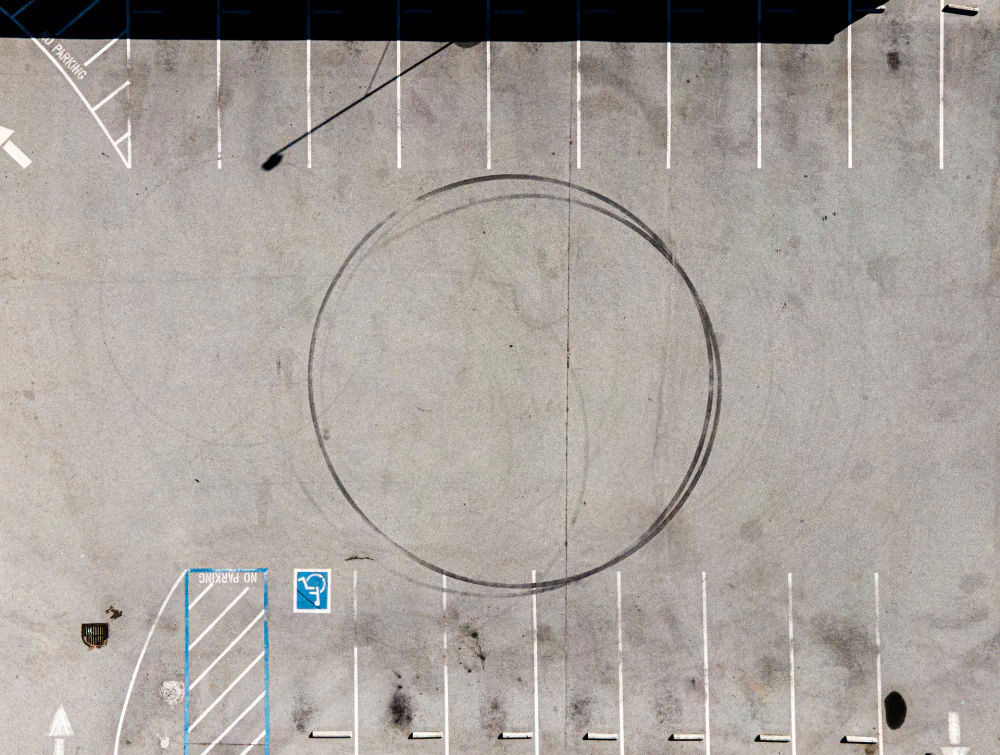


I’ve always been drawn to the unintentional marks we leave behind. For years, I found myself captivated by tire tracks left on the asphalt.
Walking around the city, I would point my camera down at the street, photographing hundreds of these marks from ground level.
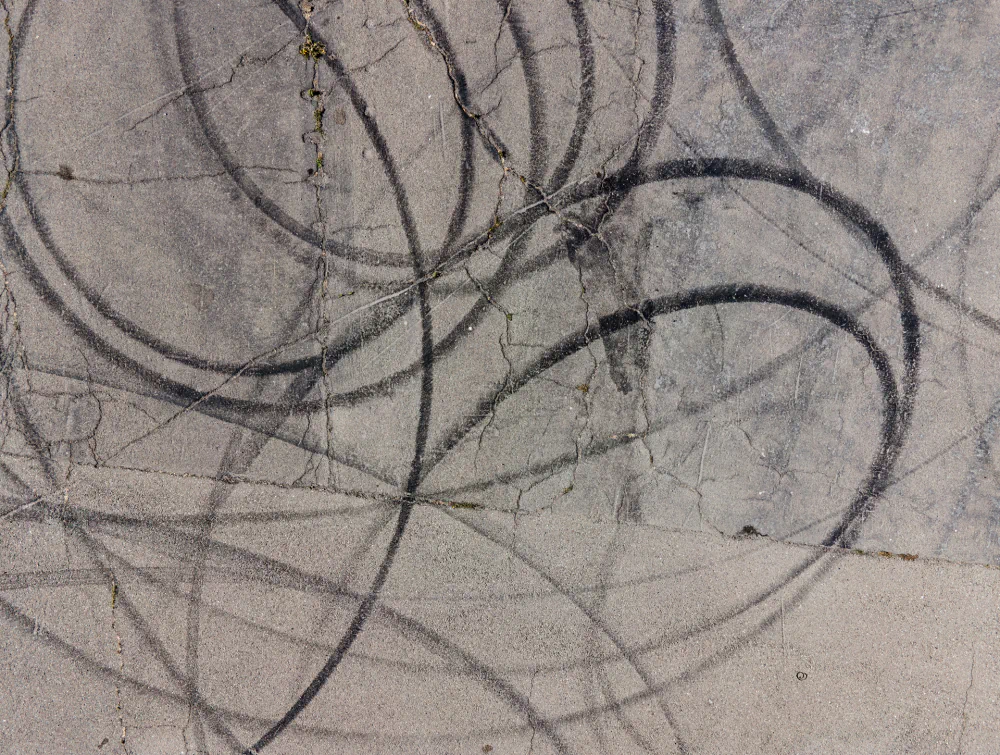
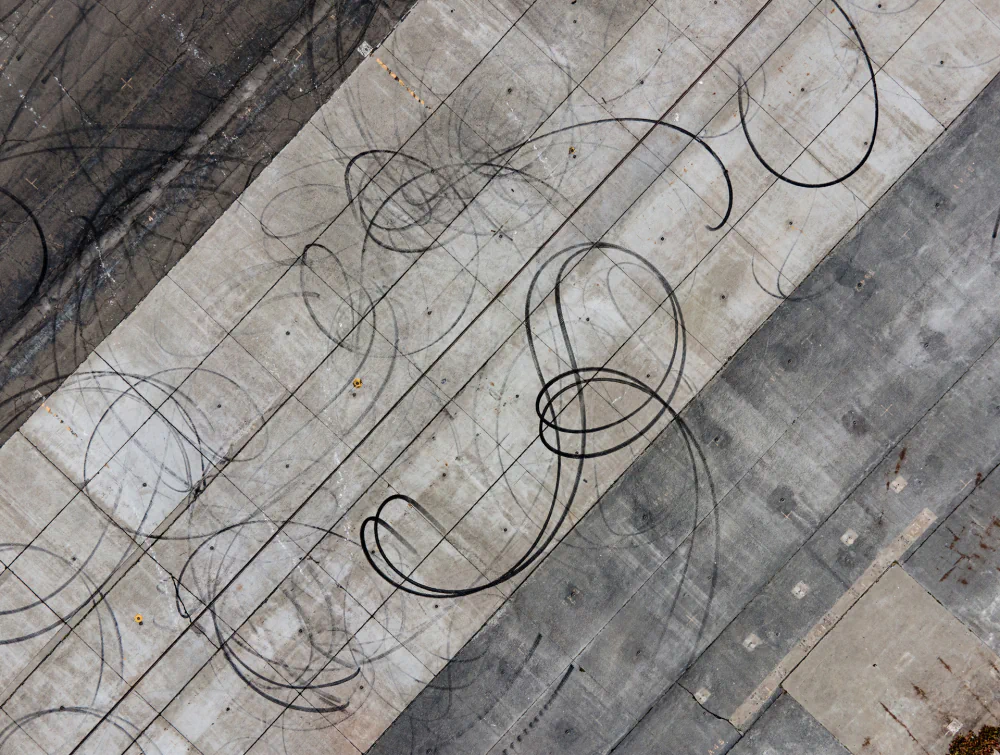
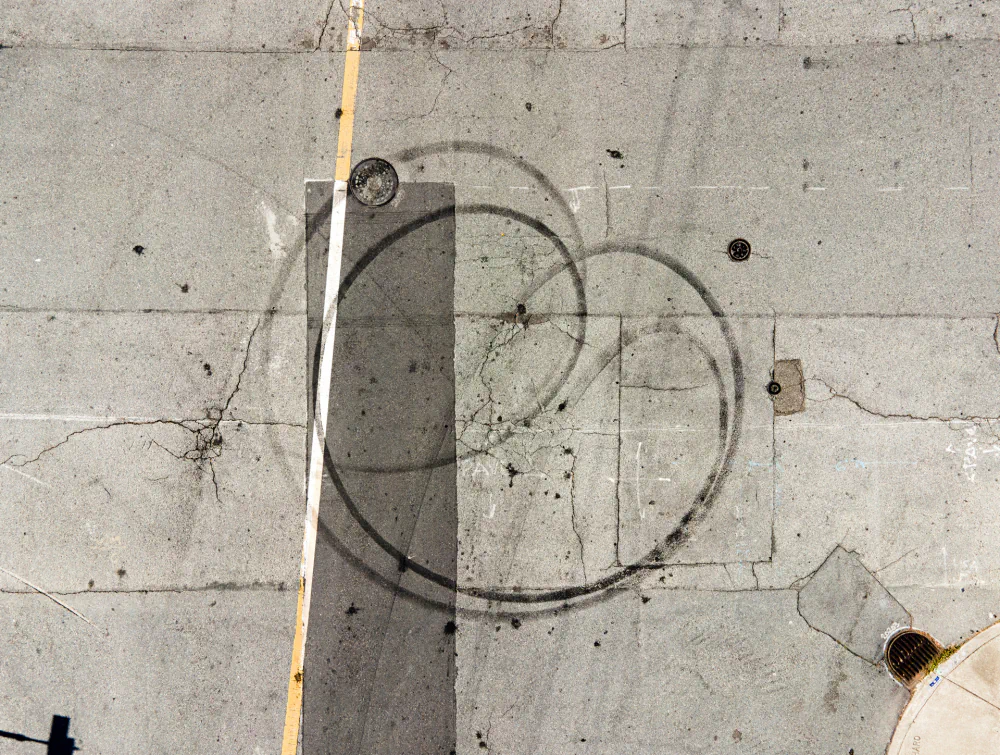
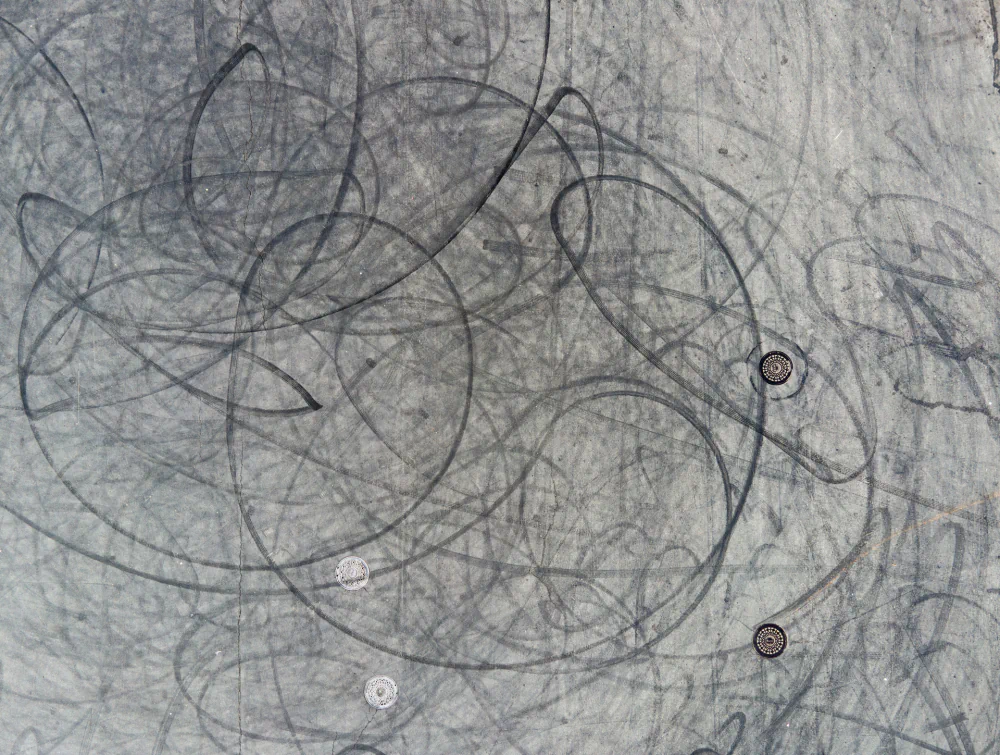
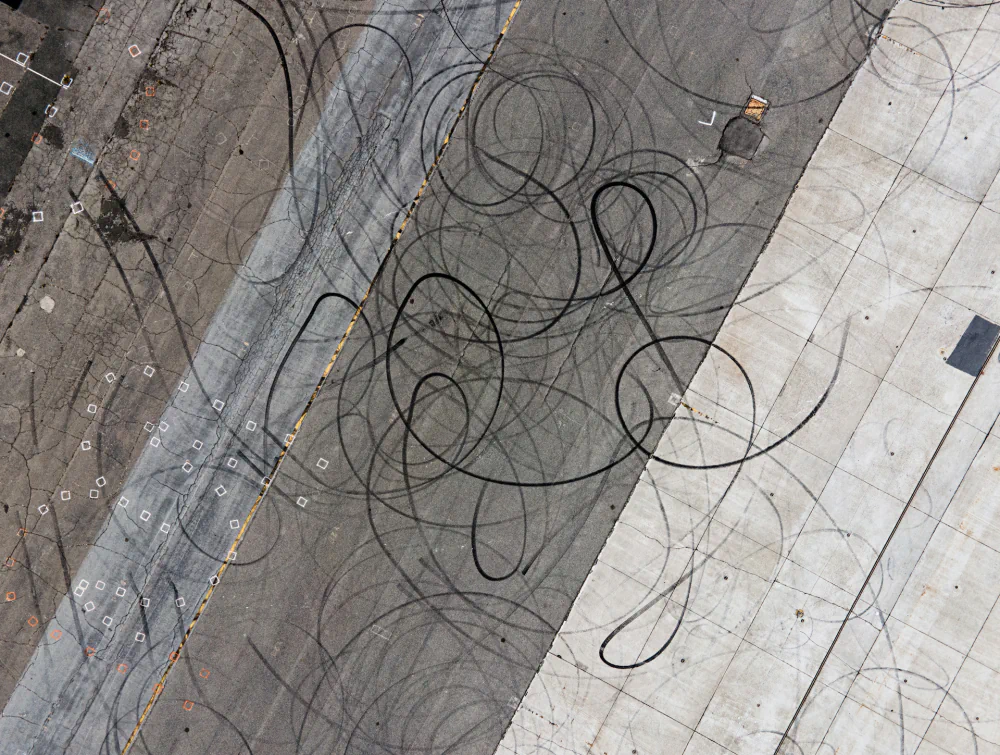
To me, the rubber left behind on the pavement always looked like brushstrokes layered onto a canvas. They reminded me of abstract paintings, sweeping calligraphy, or something out of a Cy Twombly piece. It is accidental art, created by the chaotic, heavy movement of cars, completely devoid of artistic intention, yet resulting in something undeniably beautiful.
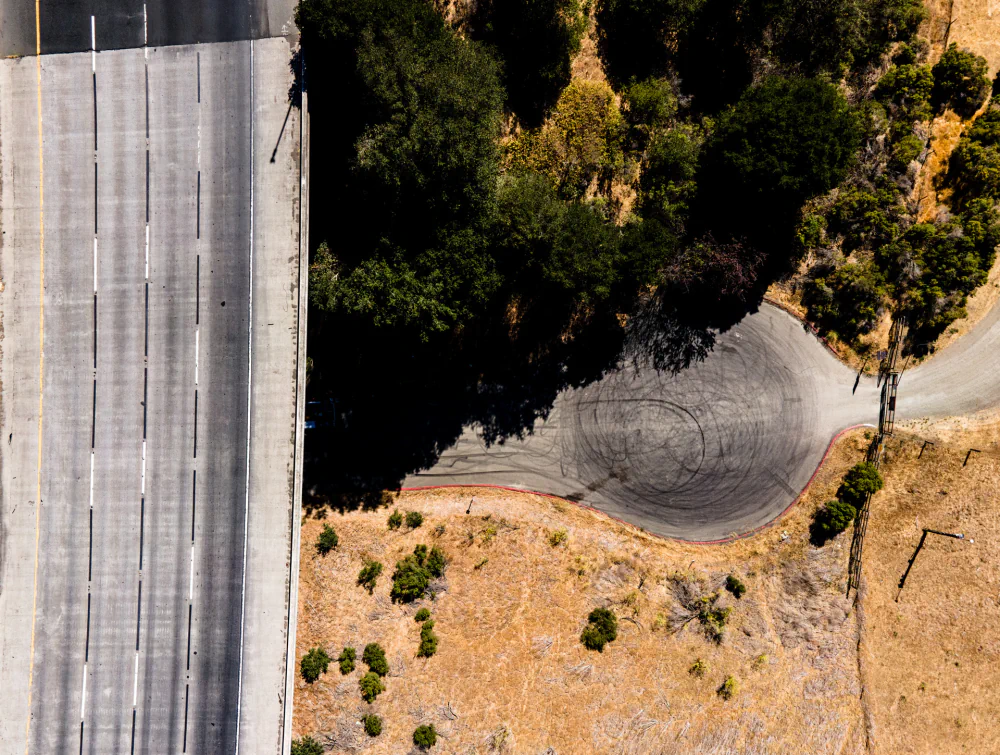
With the tire marks, I always knew I wanted to capture them from above. I’ve always enjoyed a bird’s-eye view from tall buildings or hillsides, and I realized that to truly appreciate the scale and shape of these marks, I needed to look straight down at them. Taking an almost analytical, surveyor-like approach made the most sense in order to capture the entire scene in one frame. Years ago, I actually played around with the idea of using a cherry picker, but it all sounded too cumbersome and expensive.
Then the technology caught up. Consumer drones became good enough to make still photographs that didn’t feel like a compromise. It was the perfect timing, and Intersect became my first project using one.
San Francisco, like most of America, is incredibly car-centric, though our city is not really built to accommodate so many automobiles. There is absolutely no shortage of tire marks here. “Sideshows” are hugely popular in the Bay Area, but I specifically made a point of avoiding those obvious hotspots. I was much more interested in finding simple lines on the asphalt that create a sharp, graphic contrast.
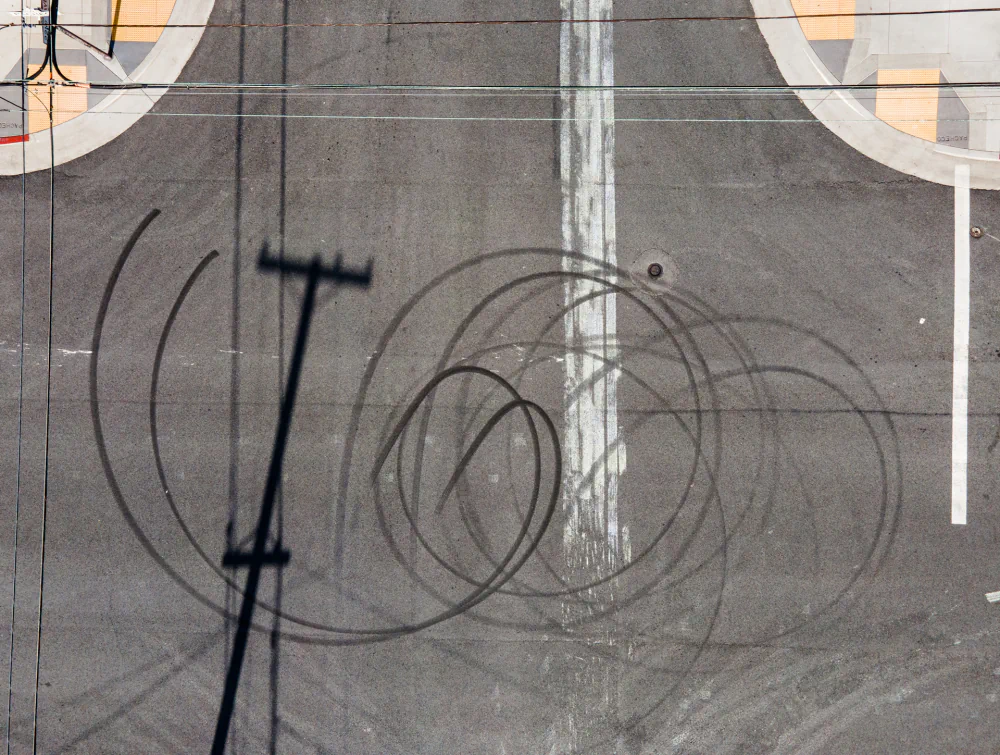
I live in a relatively quiet part of town. Sometimes, late at night, I’ll hear a lonesome car spinning donuts or drifting through the neighborhood. I can literally hear them moving through the streets from my bedroom. The next morning, I’ll just step outside and find this incredibly fresh rubber stamped onto the ground. Whenever I find a mark that catches my eye, I launch the drone. I capture the scene from different heights, sometimes hovering for a few minutes, just waiting for the cars and people to pass by so the street is completely empty.
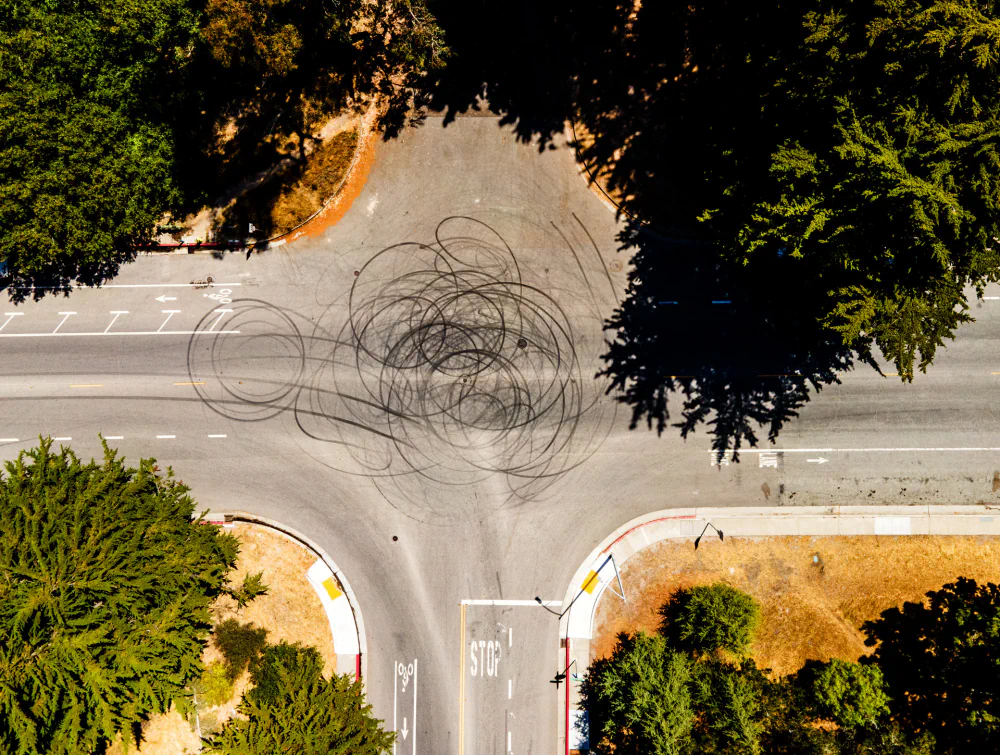
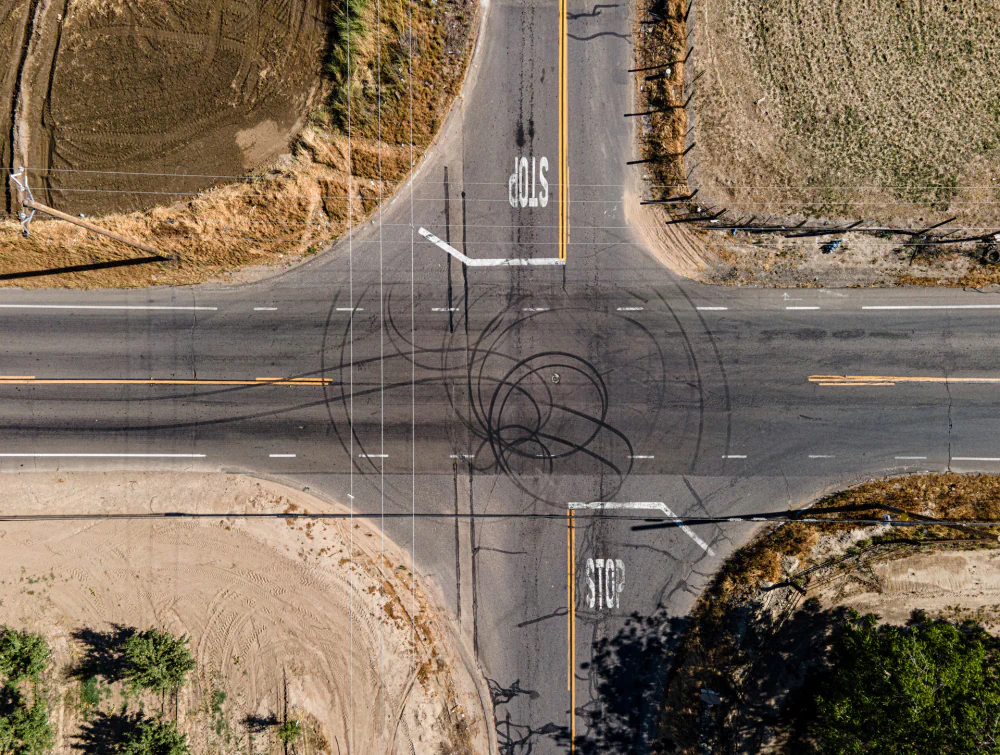
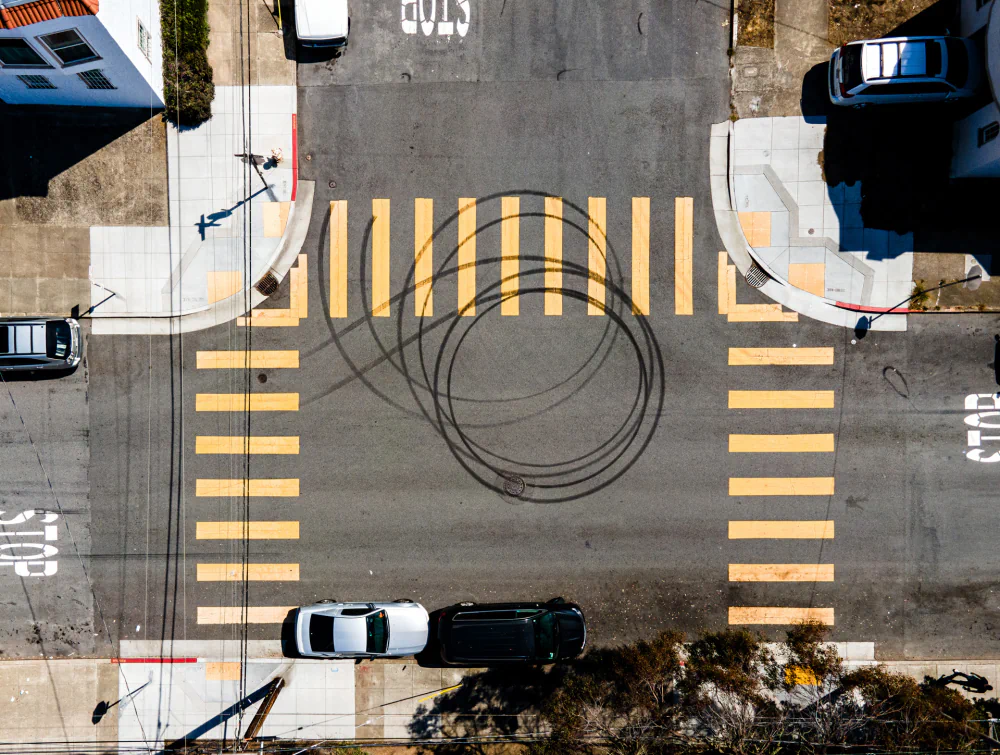
When I first started flying the drone, my intention was to shoot very tight, cropping out everything but the tire marks and the asphalt so they looked like a painting. But on my very first flight, I started pulling the drone higher and higher, zooming out to include the crosswalks, the sidewalks, and the surrounding environment. It added a completely new layer to the work that changed everything for me.
By pulling back, you suddenly see this incredible tension. You see the fluid, spontaneous, playful loops of the tire marks set completely against the rigid, painted, geometric structures of the urban landscape. It almost illustrates a deliberate effort by the drivers to break out of the strict confines of society and city planning. The streets and intersections become canvases framed by the city block, recording the stories of how these spaces are being passed through.
Using the drone revealed a whole new perspective on the place I’ve lived in for decades. Ultimately, this series is simply an invitation: look around you, observe the mundane details of your surroundings, and find beauty in the most unexpected places.
About Winni Wintermeyer
Winni Wintermeyer is a German-born photographer based in San Francisco, where he has lived since the early 1990s. Born in the industrial town of Bochum, Germany, his introduction to photography came through an old Zeiss camera inherited from his father. After discovering a darkroom at his school, he fell in love with the process of black-and-white photography, initially documenting the punk scene and photographing live bands for his own zine.
In his twenties, he moved to San Francisco and immersed himself in the music world, designing album covers for artists ranging from A Minor Forest to Tom Waits, while continuing to photograph musicians and artists. This work eventually led him to editorial photography, and he has since built a distinguished practice shooting portraits for major magazines around the world.
His personal work takes a broader, more exploratory approach, examining how human beings inhabit, shape, and leave their mark on the physical world. Whether documenting the accidental abstractions of urban life or the traces of human activity on the landscape, his projects reveal his ability to find unexpected beauty in everyday environments. His approach is rooted in observation and discovery: being out in the world, investigating, and interacting. [Official Website]