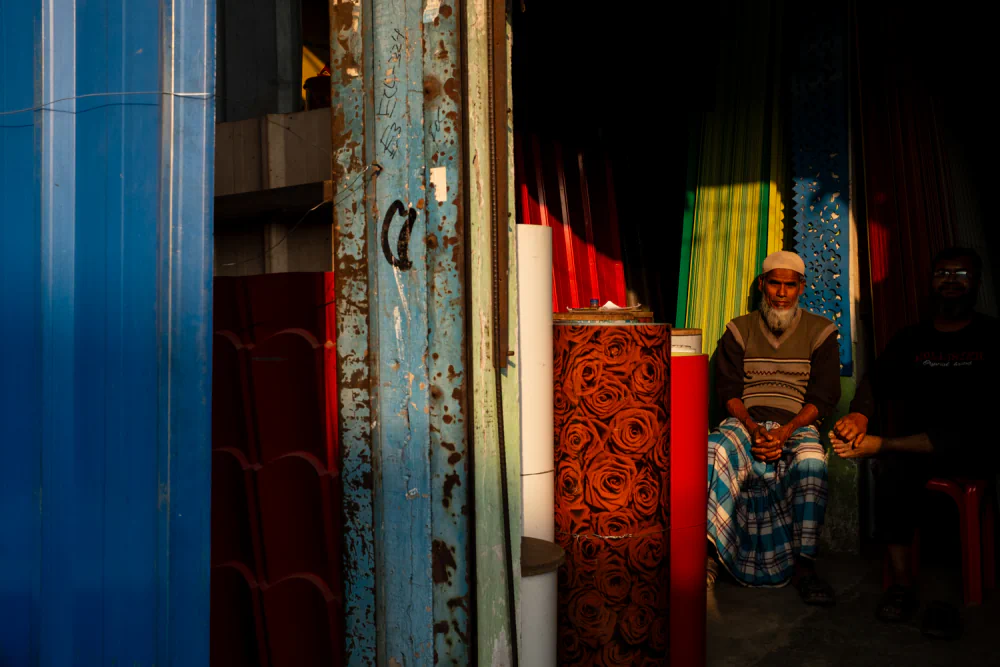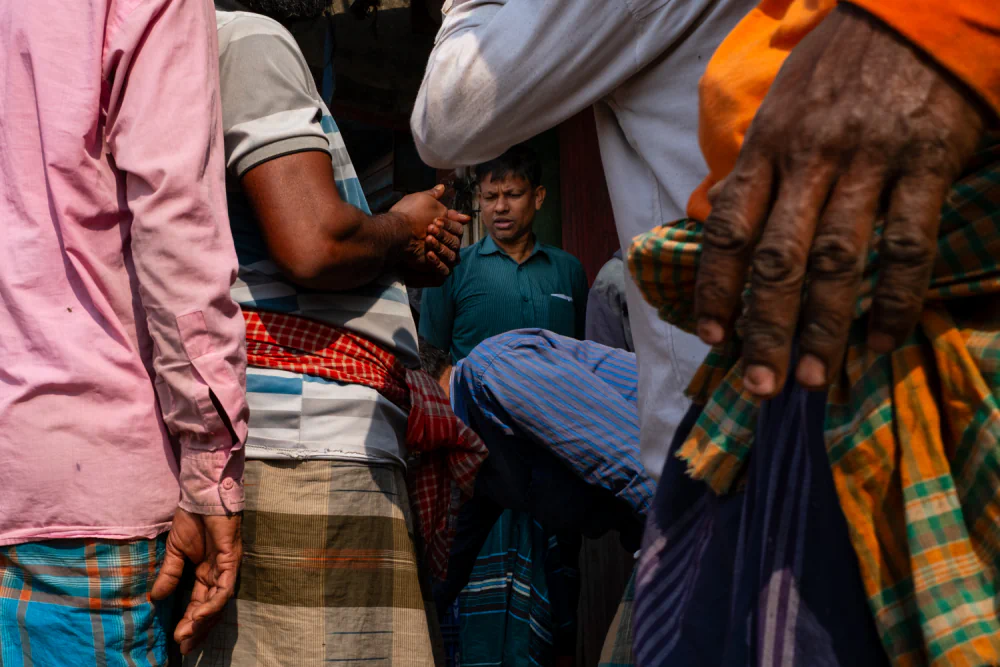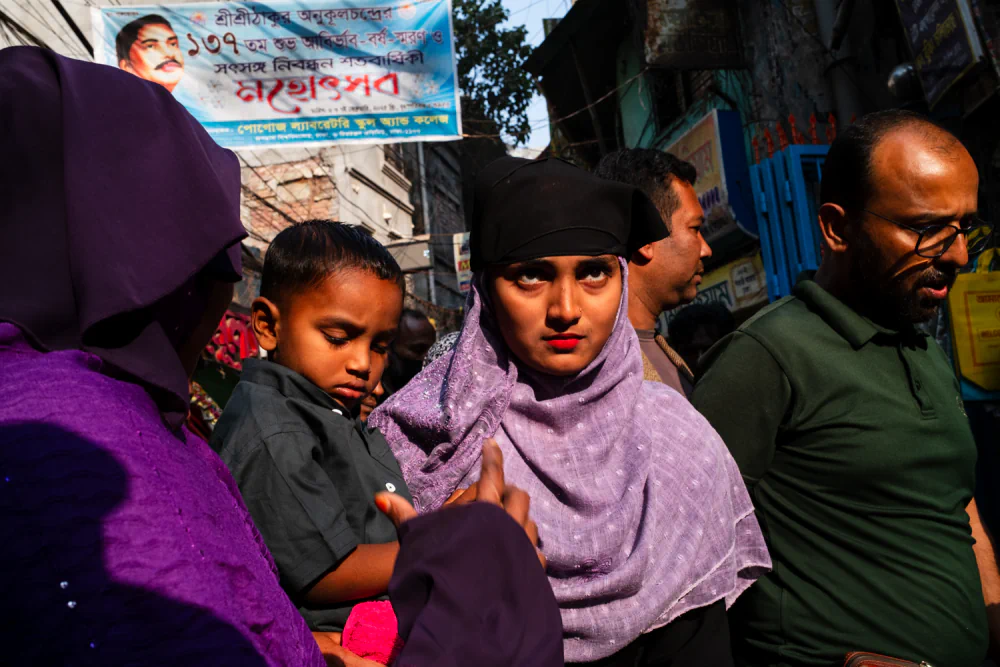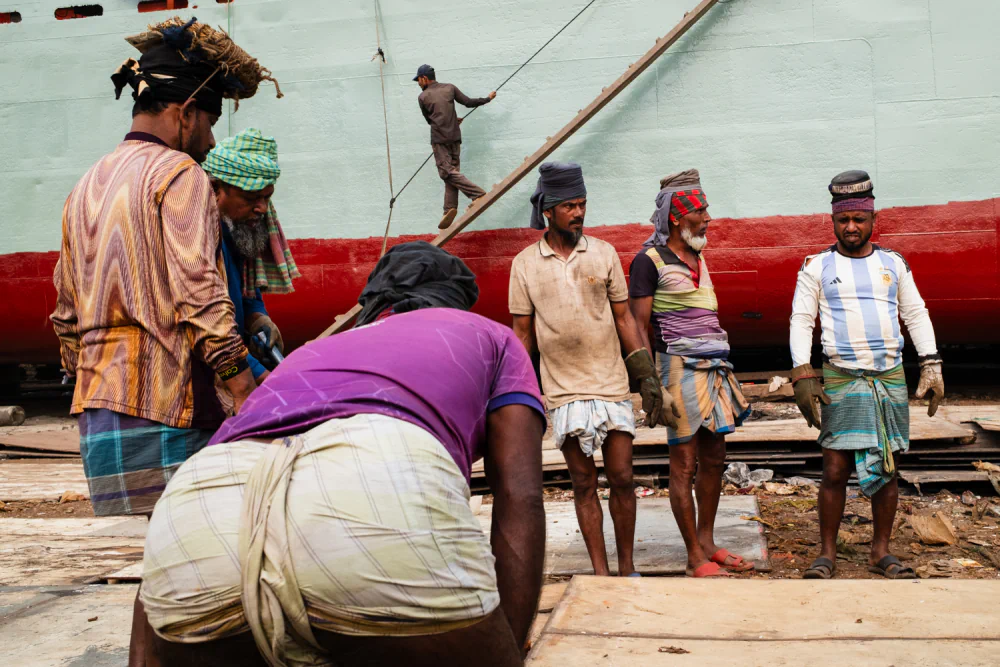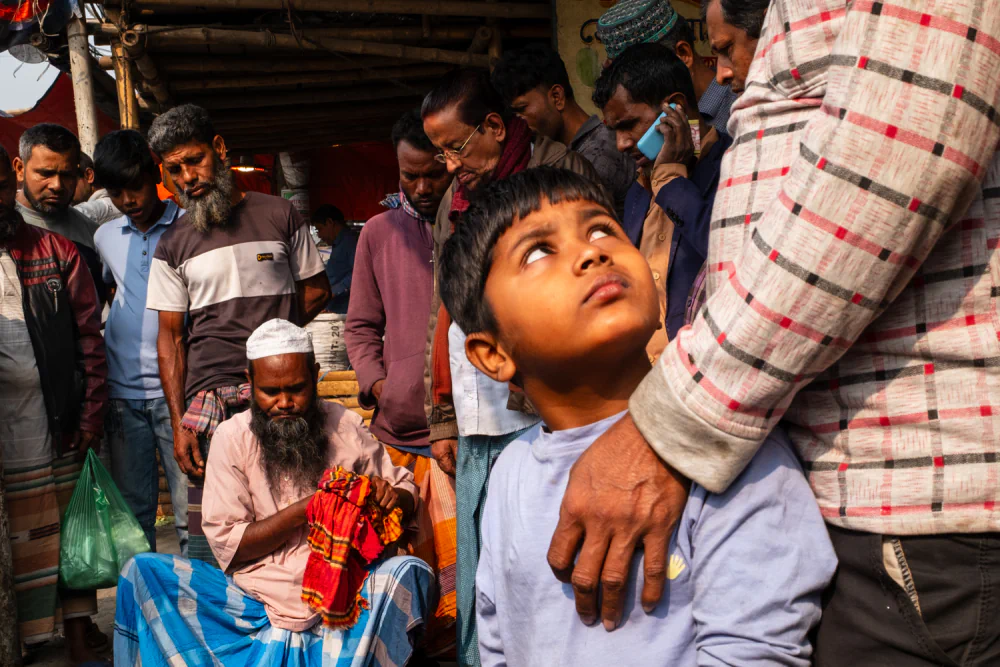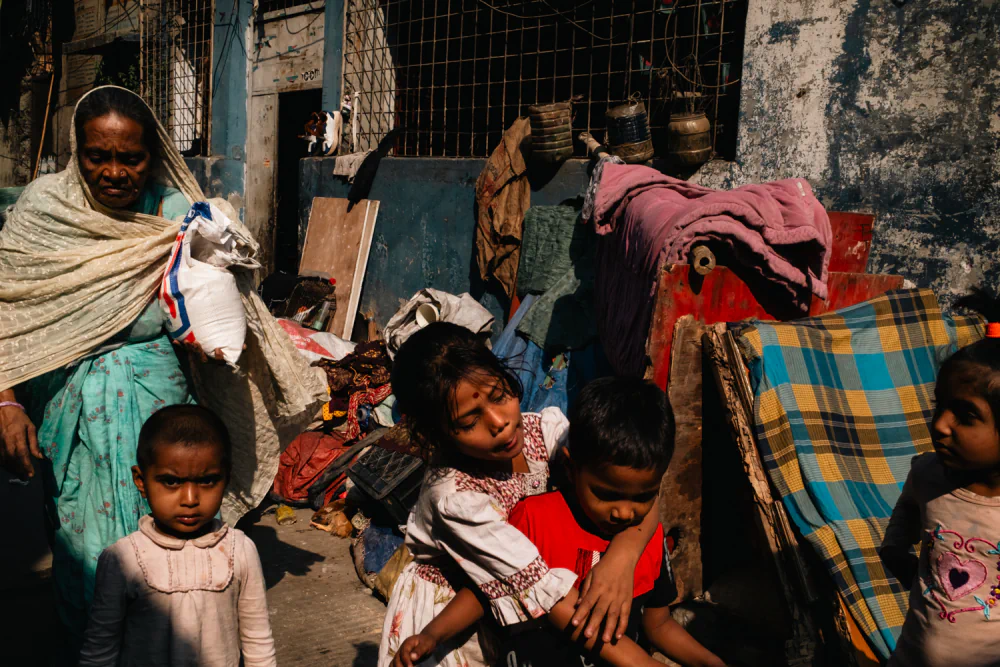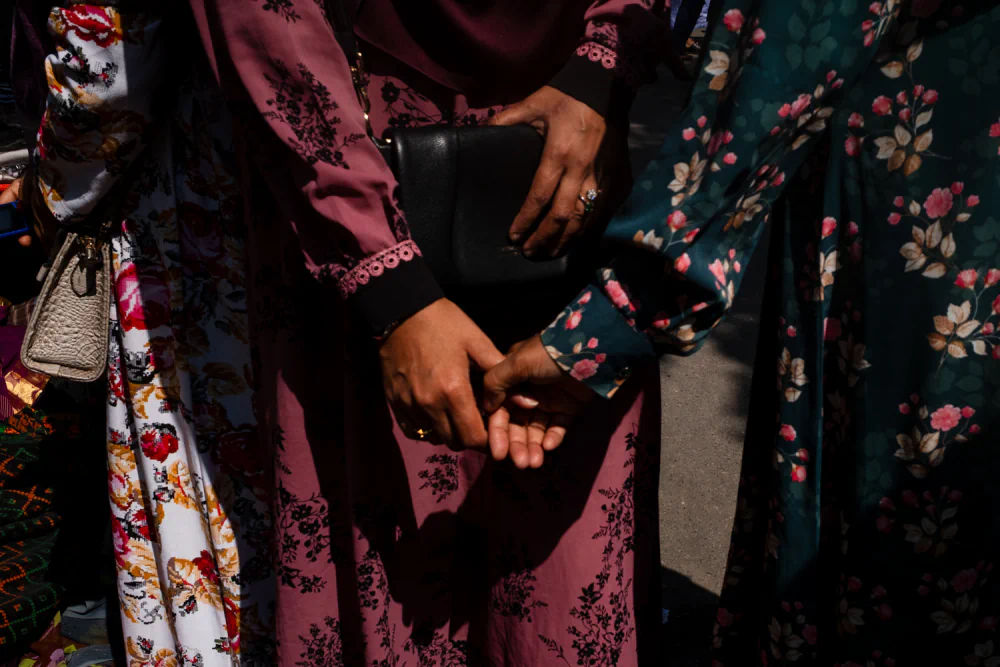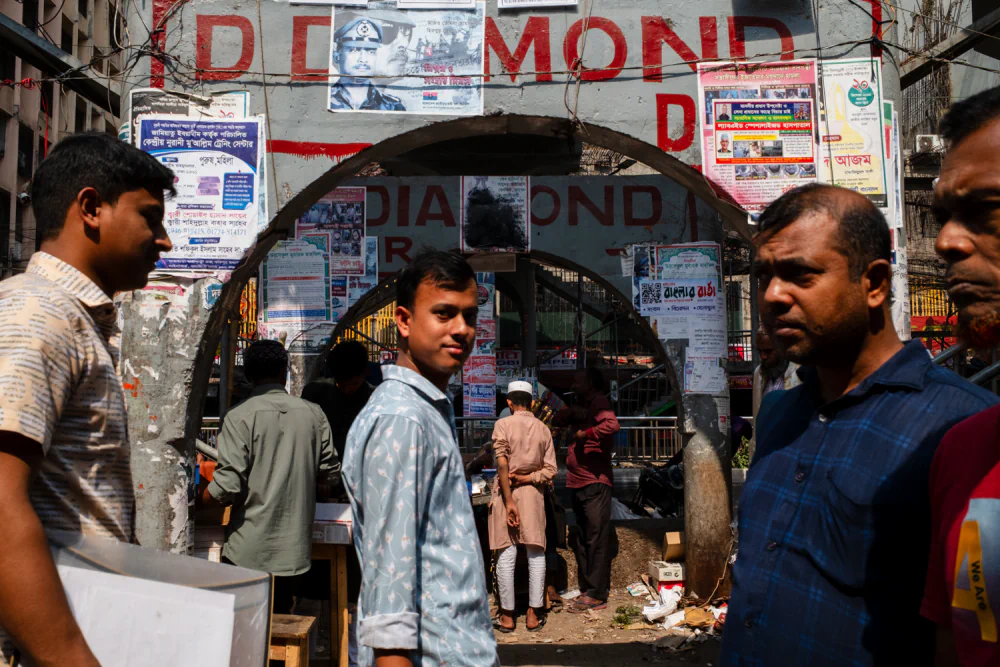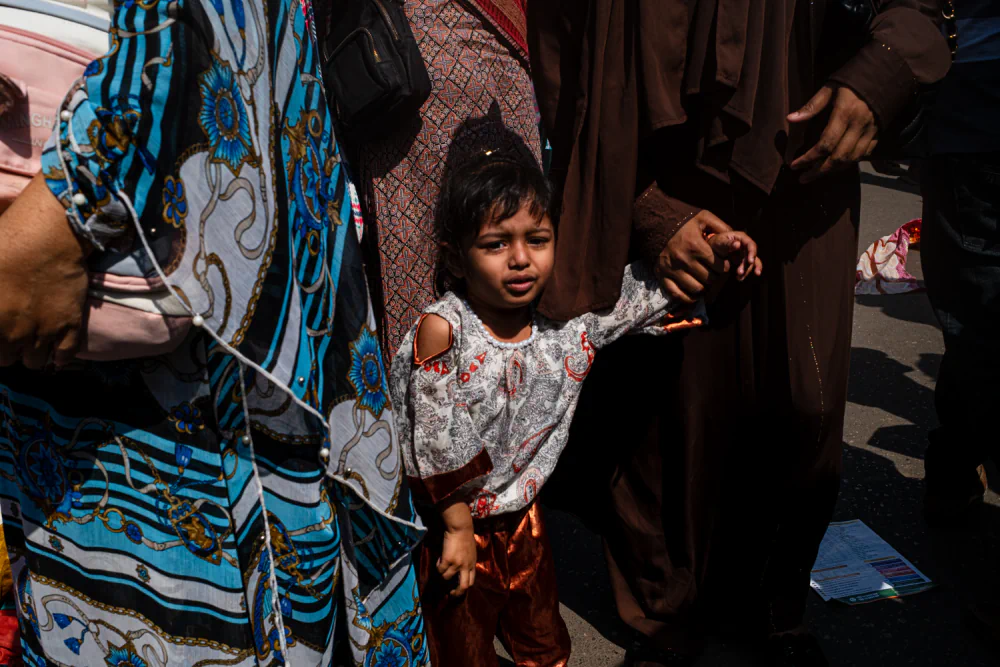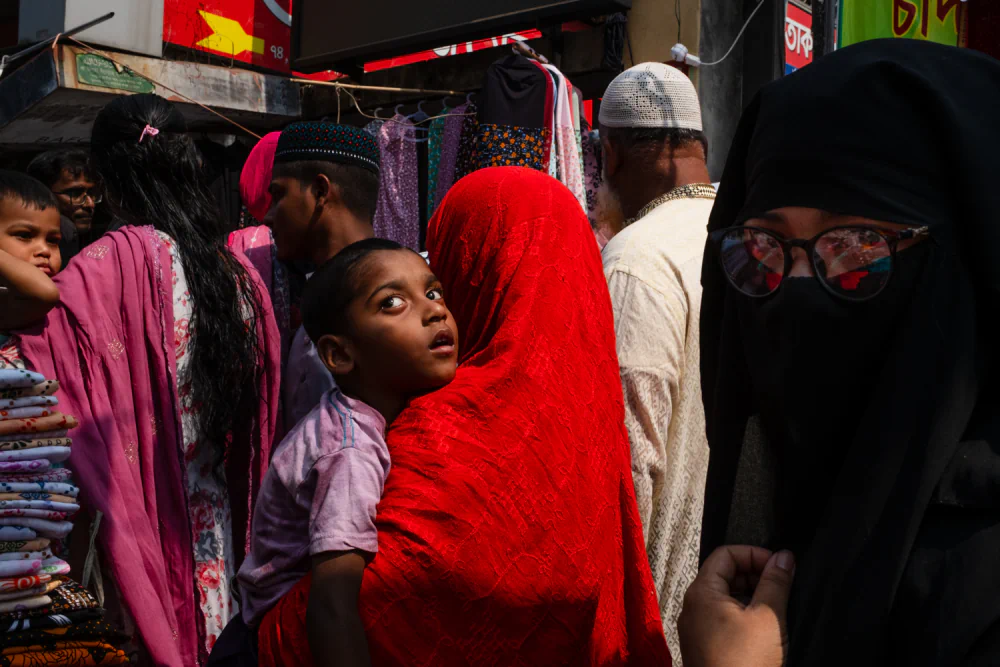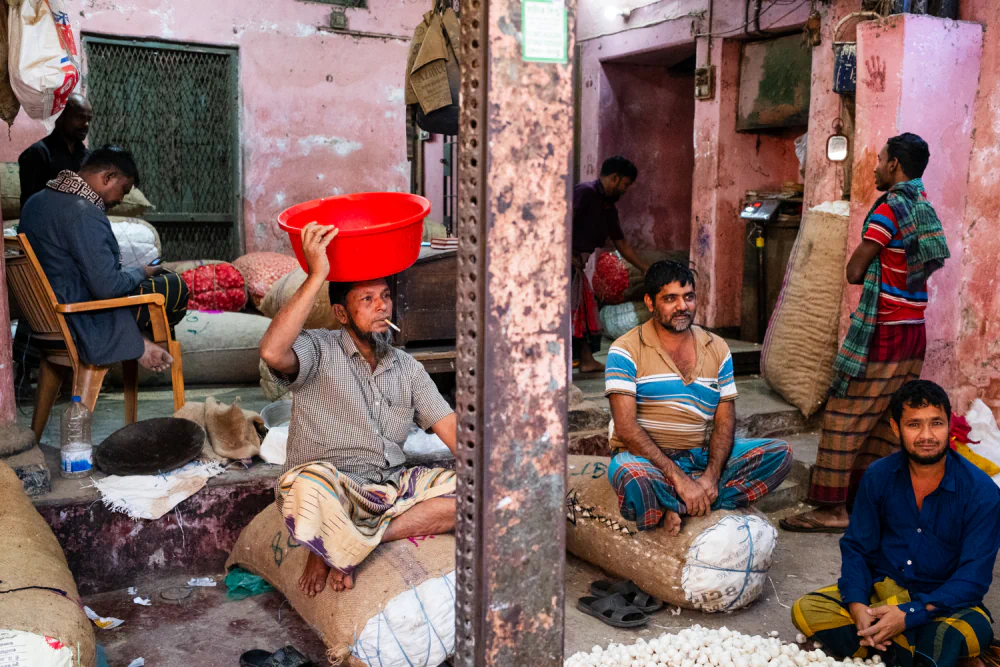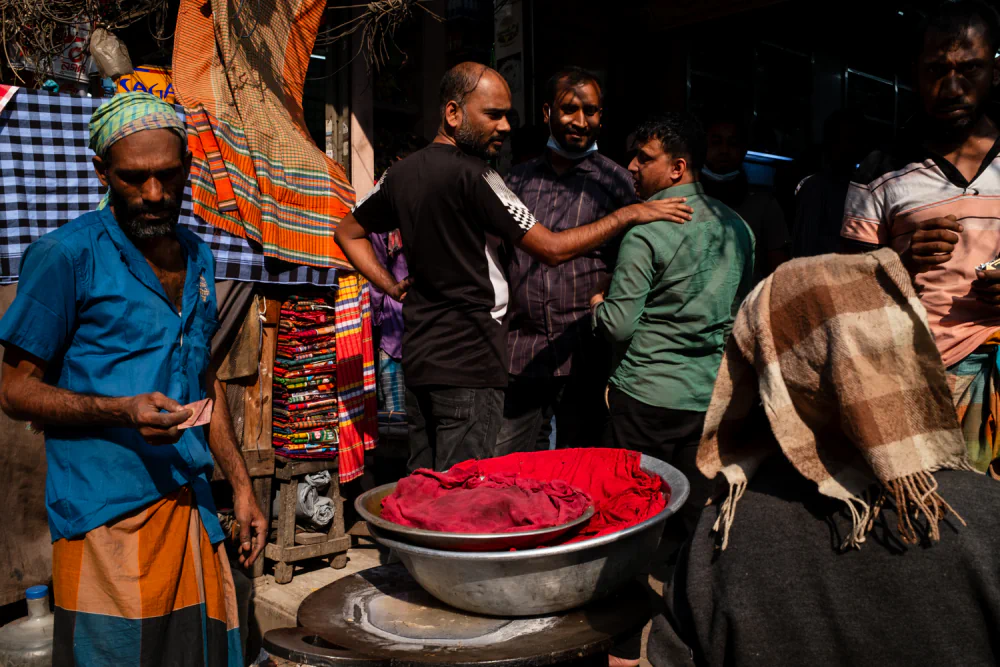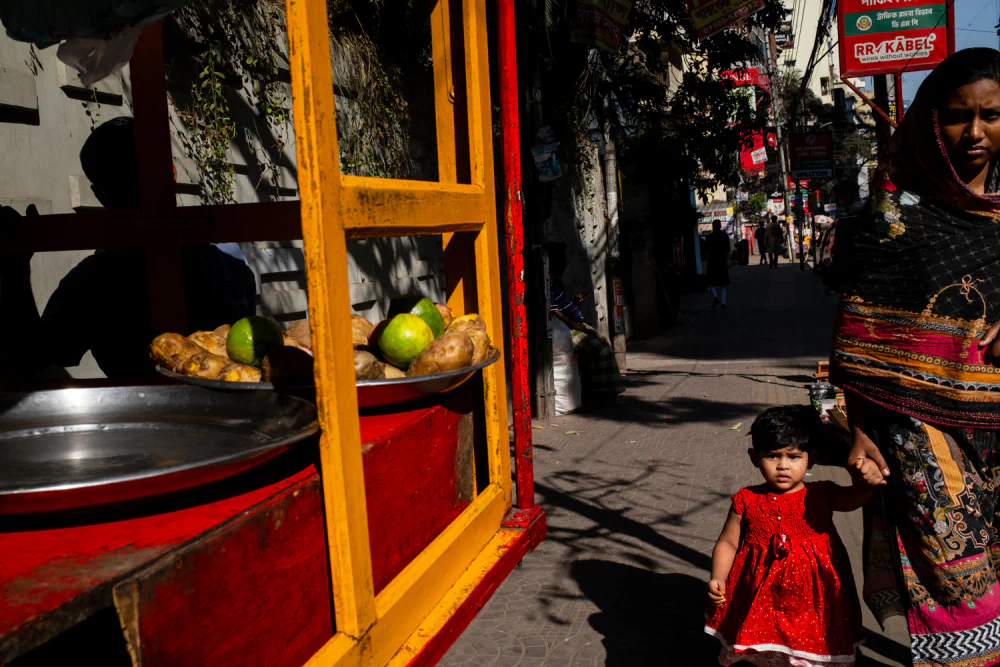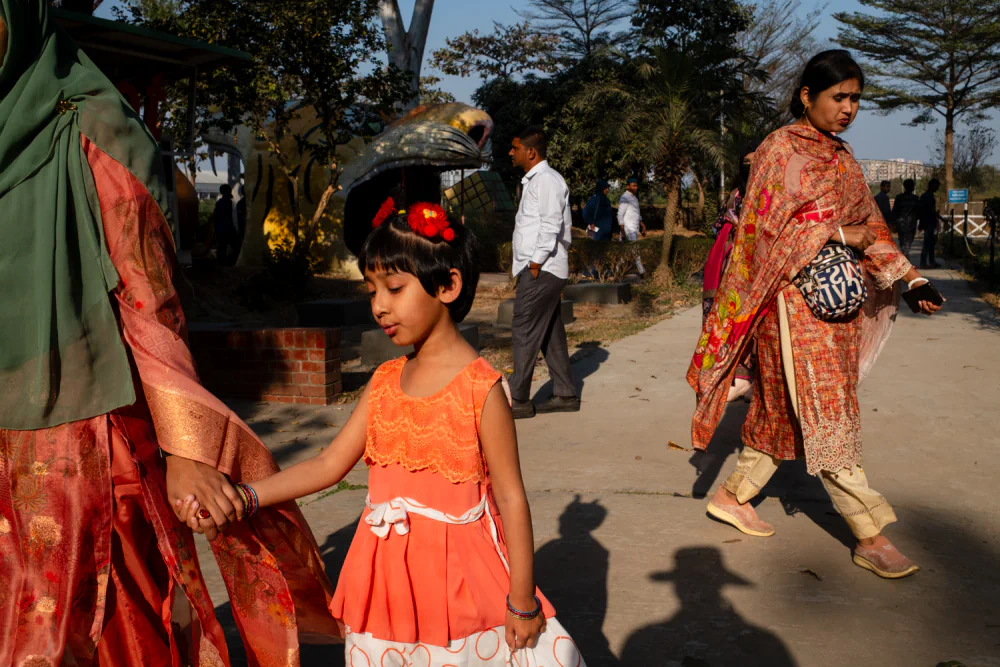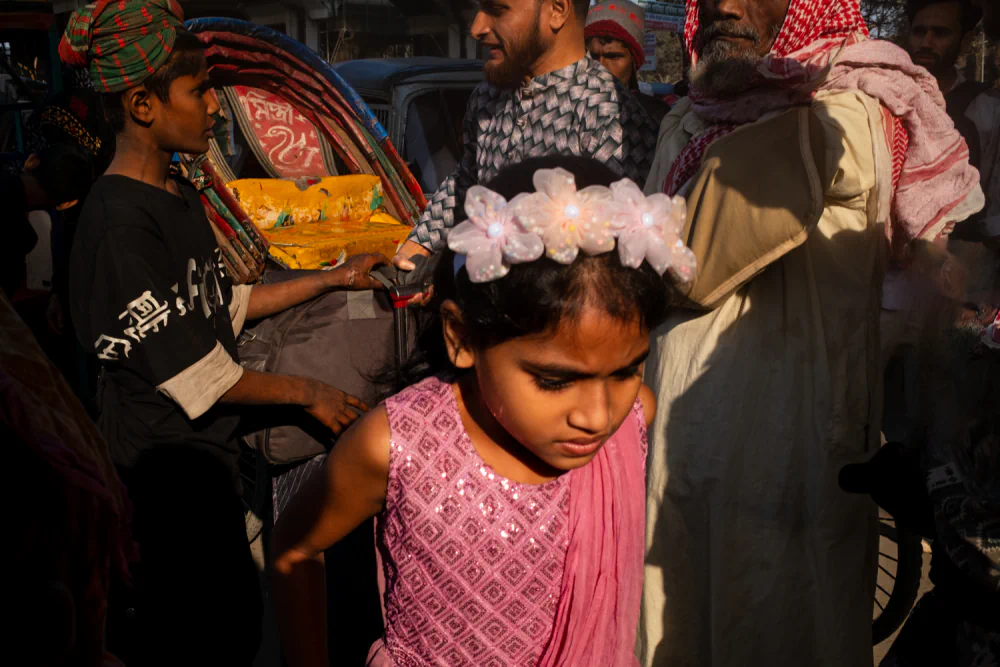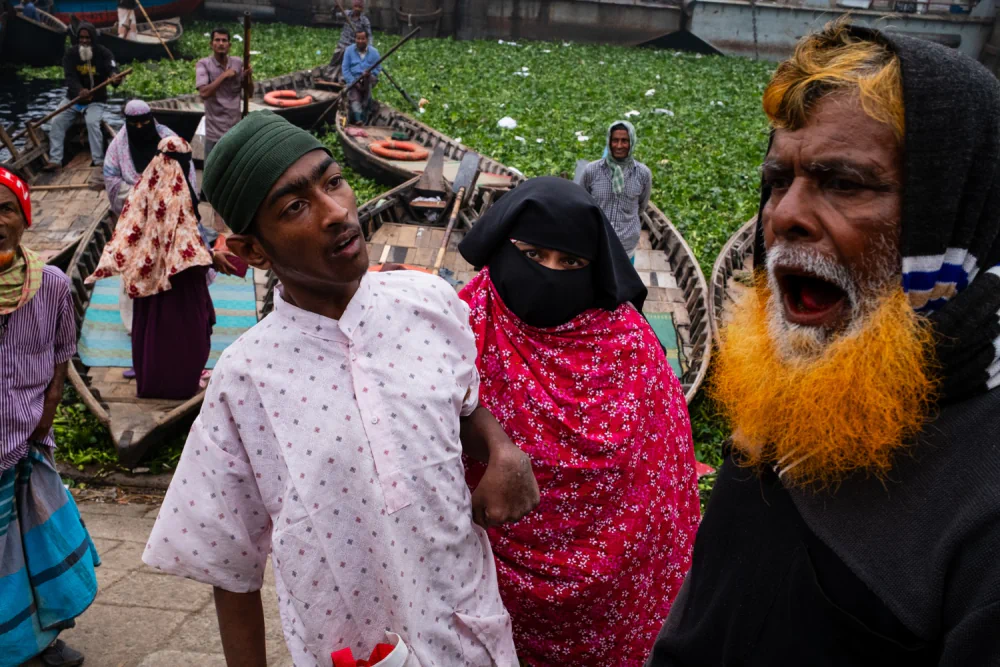


This series is a personal response to the overwhelming sensory experience of Dhaka, a city that both assaults and captivates.
What draws the artist most is the raw intensity of color, not only in the physical landscape but also in the atmosphere, in faces, and in the surrounding chaos.
Color acts as a unifying thread, highlighting contrasts between stillness and motion, individuality and crowd, the inhabitant and their surroundings. It functions as both a visual and cultural language, not merely aesthetic, but embedded in everyday life.
“Rang er Shokor” is a Bengali phrase that translates to “City of Colors.” The expression is often used poetically to describe a city known for its vibrant ambiance and colorful streets. Rather than presenting broad, descriptive views or postcard-like images, the artist focuses on isolating fragments—quiet frames drawn from the noise—to express the emotional weight of a fleeting scene.
These fragments function as interruptions within the visual flow of the street. A gesture, a glance, a collision of color and light—each becomes a contained space of attention, detached from the surrounding rush yet shaped by it. By narrowing the frame, ambiguity is allowed to emerge. Context is reduced, but not erased; what remains invites the viewer to linger, to question what came before and what follows after.
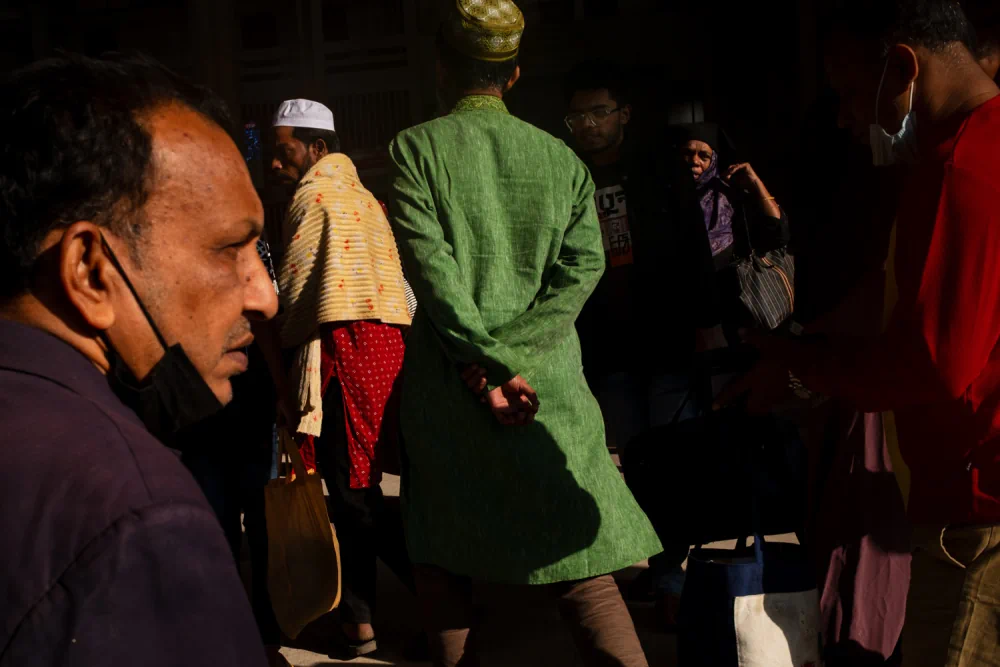
This process resists the idea of the city as a fixed narrative or a singular identity. Instead, it proposes a more intimate way of seeing, one that privileges sensation over explanation and presence over clarity. In Dhaka, everything competes for attention: the thick scent of spices and exhaust, the dense crowds pulsing through narrow alleys, the constant honking of traffic caught in perpetual congestion. Yet within that chaos, the artist finds timeless scenes that blur the boundaries between past and present—a kind of visual poetry where time folds in on itself.
Dhaka can feel overwhelming in its scale and intensity, yet it holds a persistent sense of intimacy within its streets. This tension informs the way the artist observes and photographs. There is a clear attraction to moments where this duality becomes visible—where a solitary figure emerges within a crowd, or where stillness interrupts motion.
Through this work, themes of human presence, vulnerability, and resilience are explored in spaces where survival often depends on improvisation. It is not documentary in a traditional sense; it is emotional, sensory, and intuitive.
Working in this way requires accepting what cannot be fully articulated. The city resists being neatly framed or summarized, and the act of photographing becomes less about clarity and more about proximity—being close enough to register a shift, a hesitation, a presence that cannot be held for long. What is felt within the frame is partial, sometimes unresolved, but deliberately so. These images do not attempt to complete a story; they remain open, carrying traces rather than conclusions. In doing so, the work seeks to convey not how Dhaka looks, but how it feels.