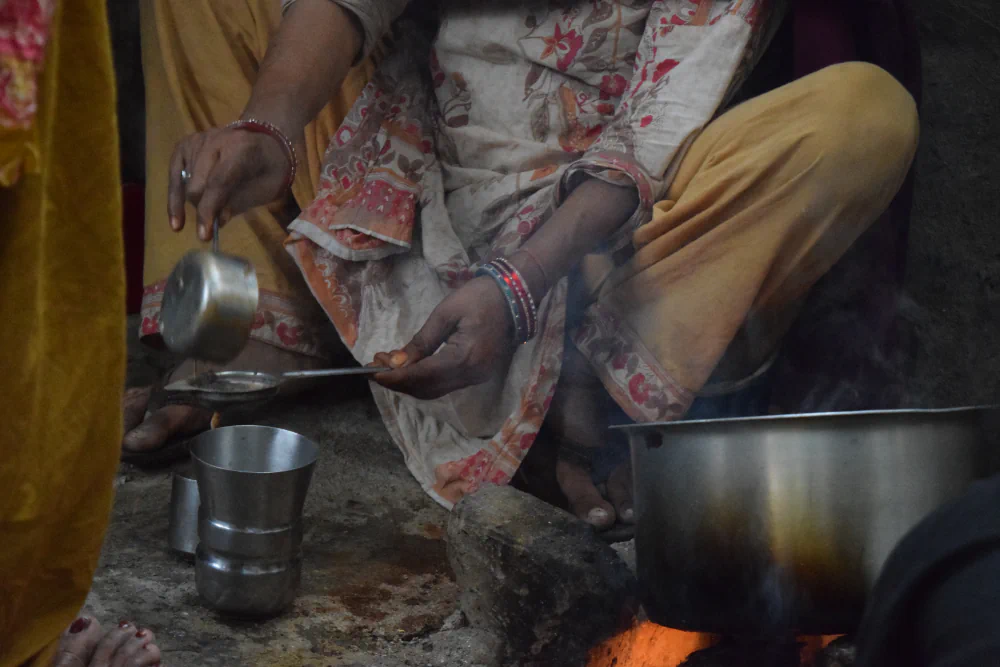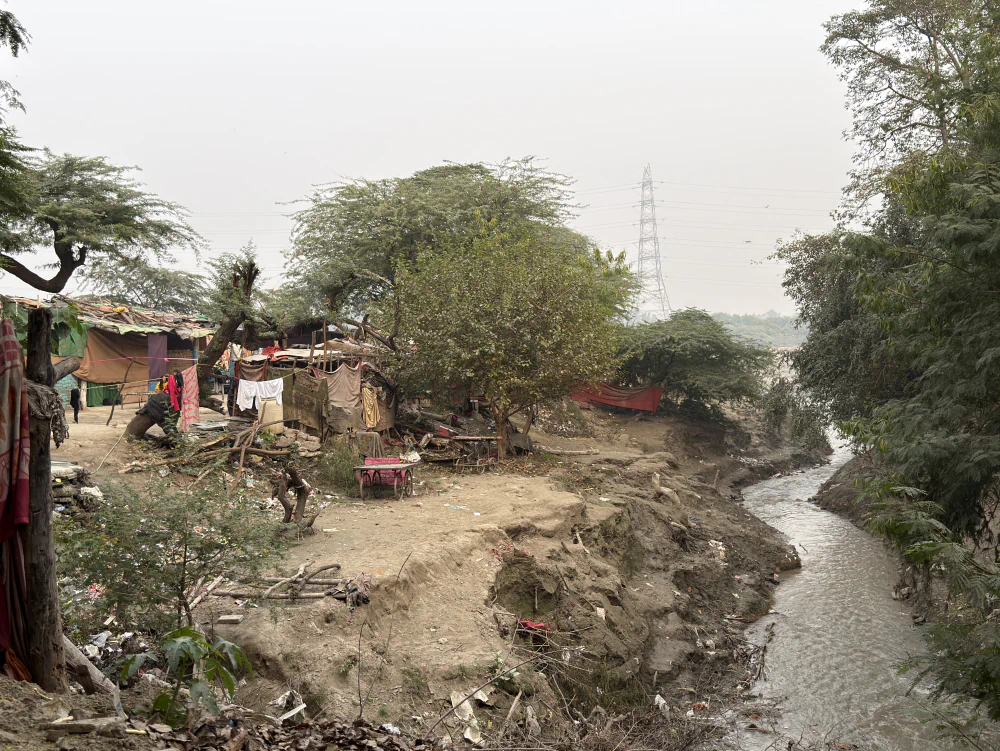


In the narrow lanes of Majnu ka Tila, where Pakistani Hindu refugees from Sindh have carved out a fragile home along the Yamuna’s edge in North Delhi, the air fills with the sharp, comforting bite of wood smoke laced with cardamom.
Against a soot-streaked brick wall, an older woman in a deep maroon shawl squats beside her chulha, tilting a dented aluminium pot so that steaming golden tea pours into waiting steel cups.
Her bangles chime softly with every movement. Beside her, a younger woman in bright saffron, her head covered with modest grace, gestures with henna-tinted hands, her smile warm and knowing. This is how celebrations begin here, not with loud announcements, but with the steady rhythm of shared labour and quiet joy.
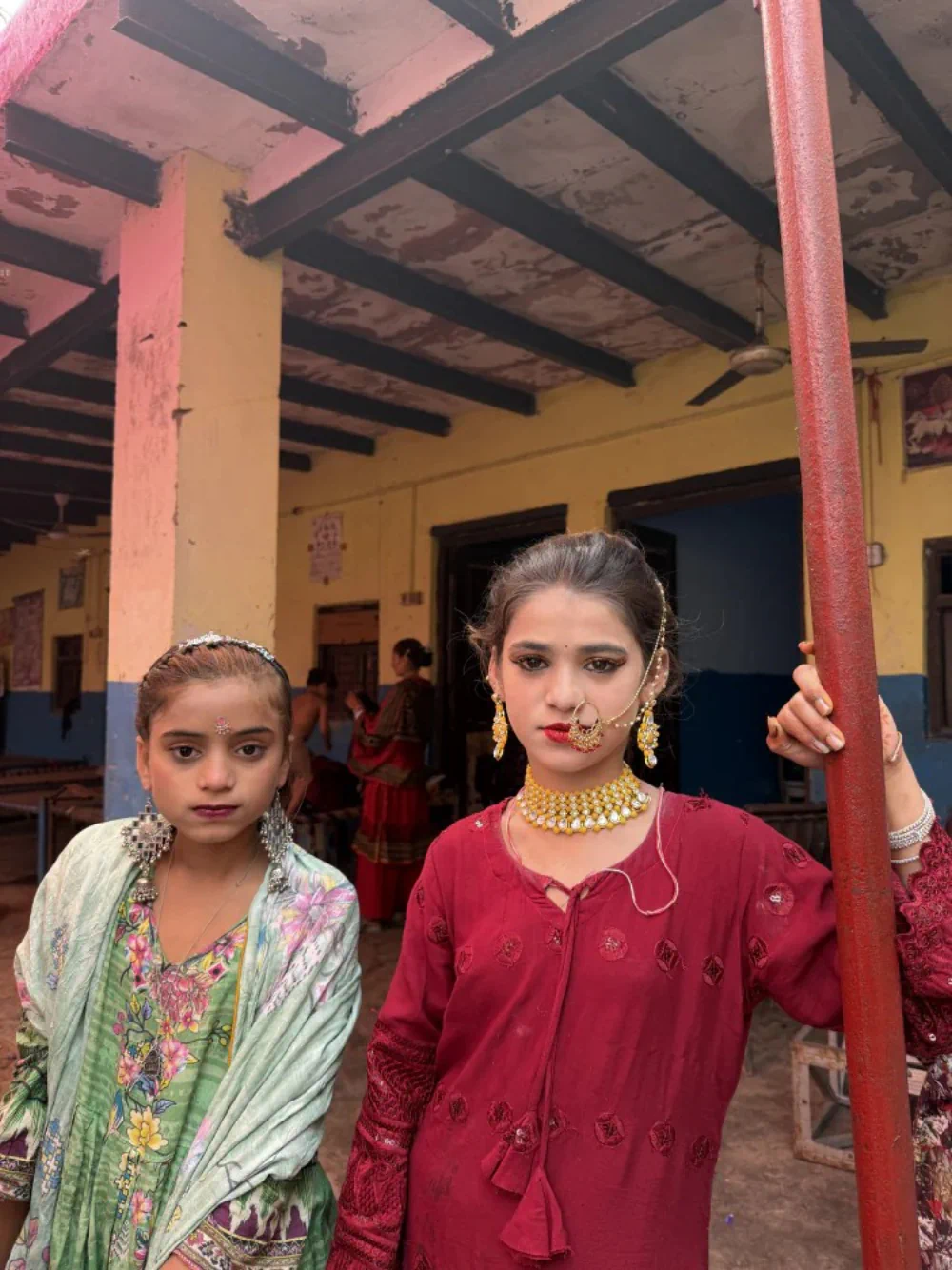
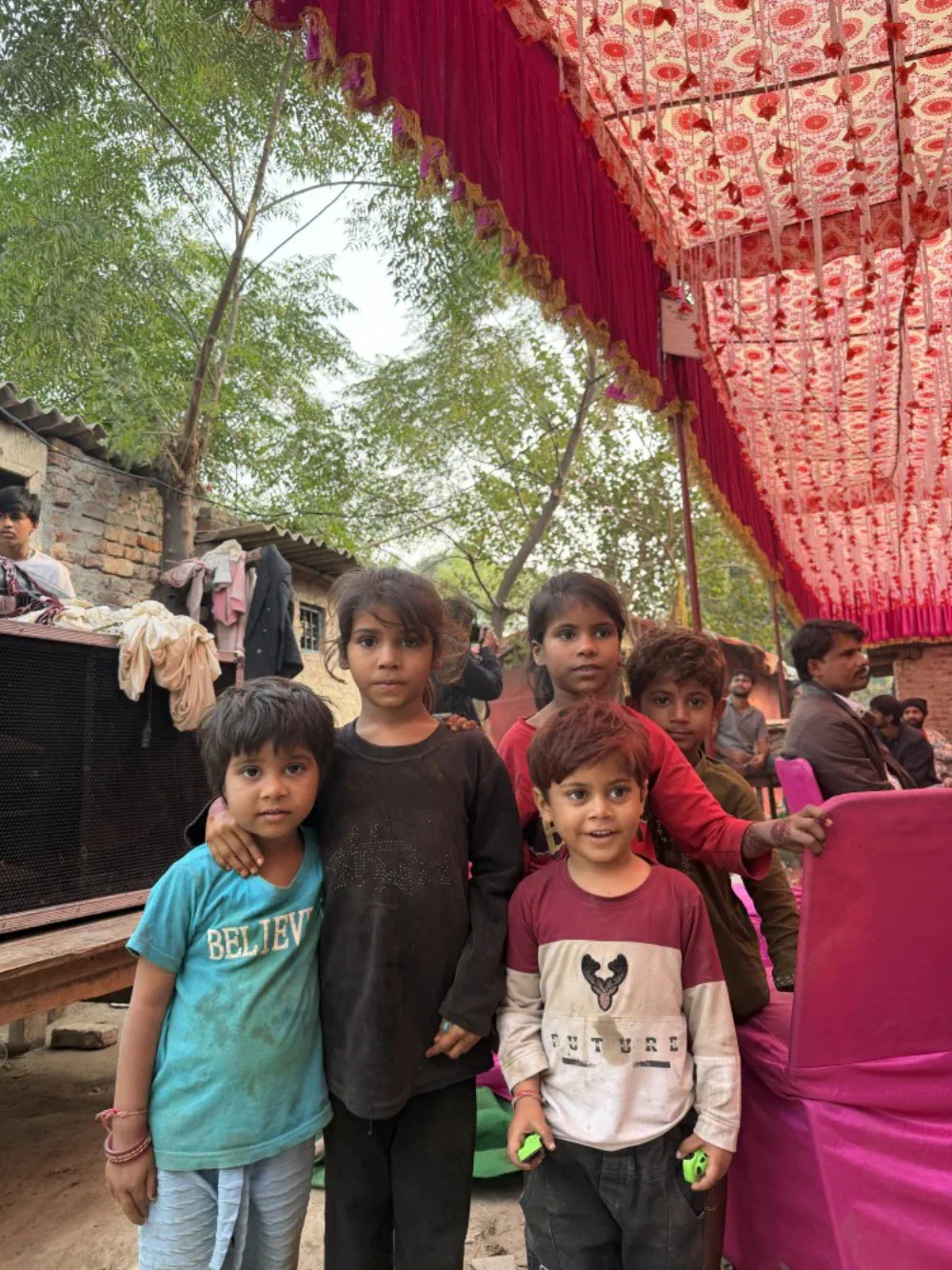
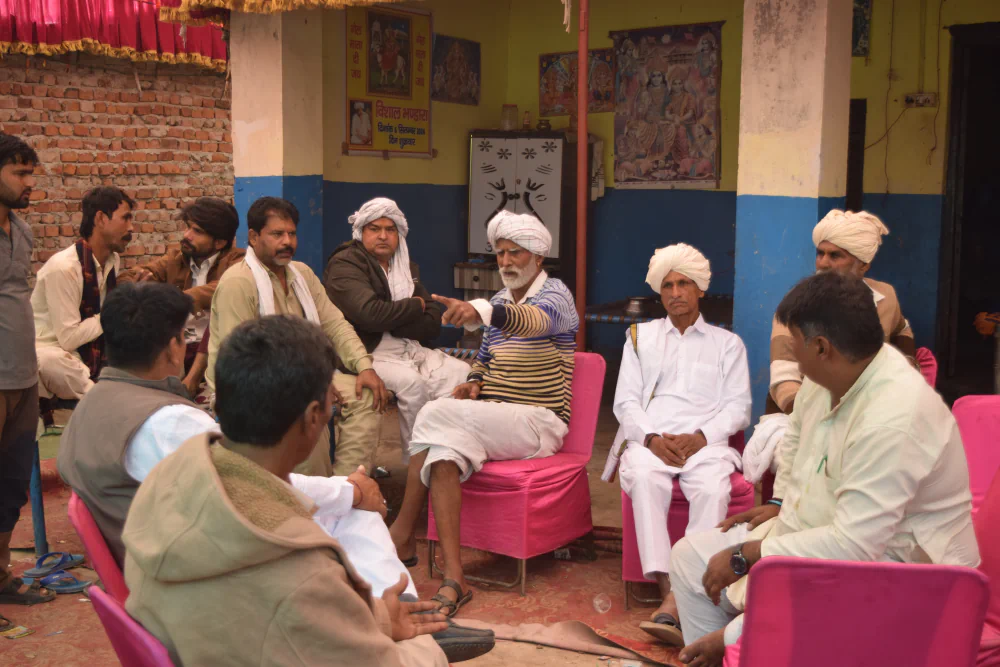
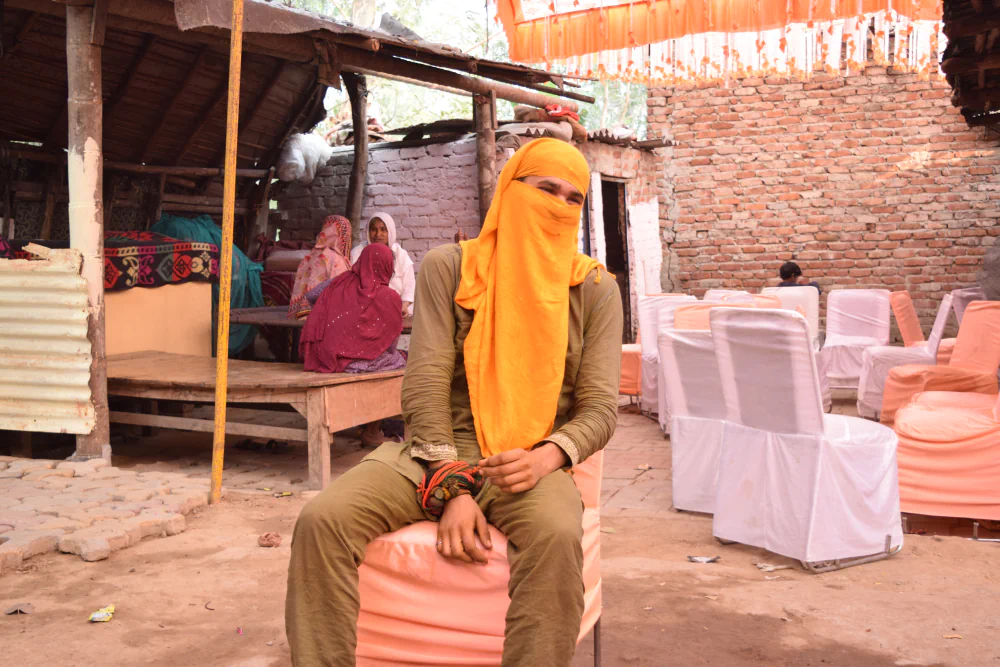
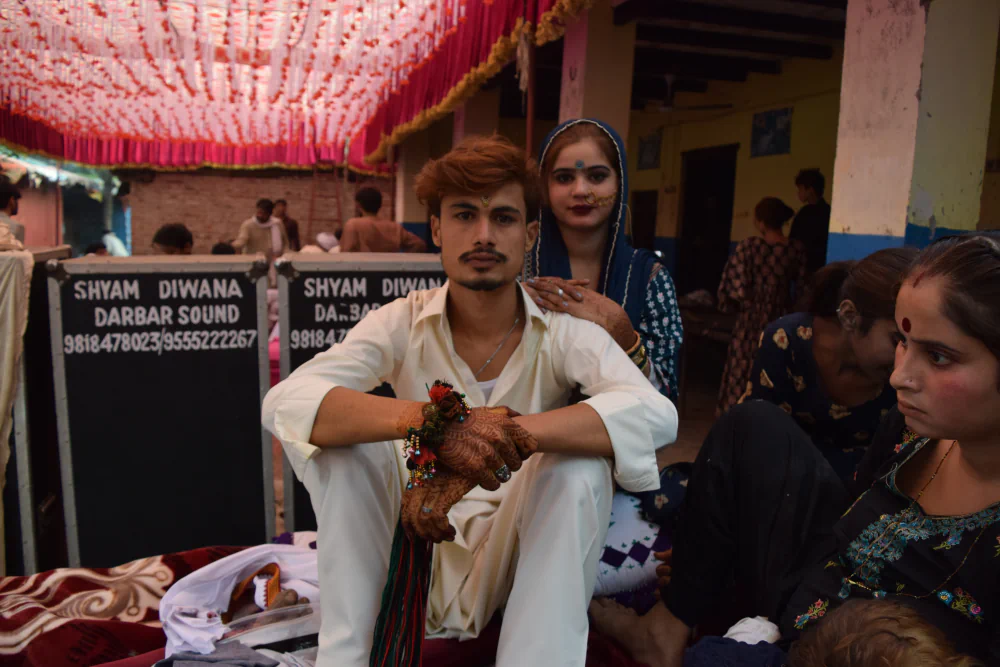
On this day, that joy multiplies. Two separate weddings unfold side by side in the settlement. Dharamraj and Raghuveer, both twenty-one, each stand at the threshold of new lives with their own brides. The pink shamiana stretched across the groom’s courtyard glows like a banner of hope, sheltering families who have carried traditions across borders to take part in these unions. Under its canopy, men gather on bright plastic chairs, some in crisp white dhotis and neatly wrapped pagdis, others in Pathani suits that still echo their Sindhi roots. They lean in close, voices rising in easy laughter and pointed advice, as one elder gestures firmly while guiding the day’s arrangements.
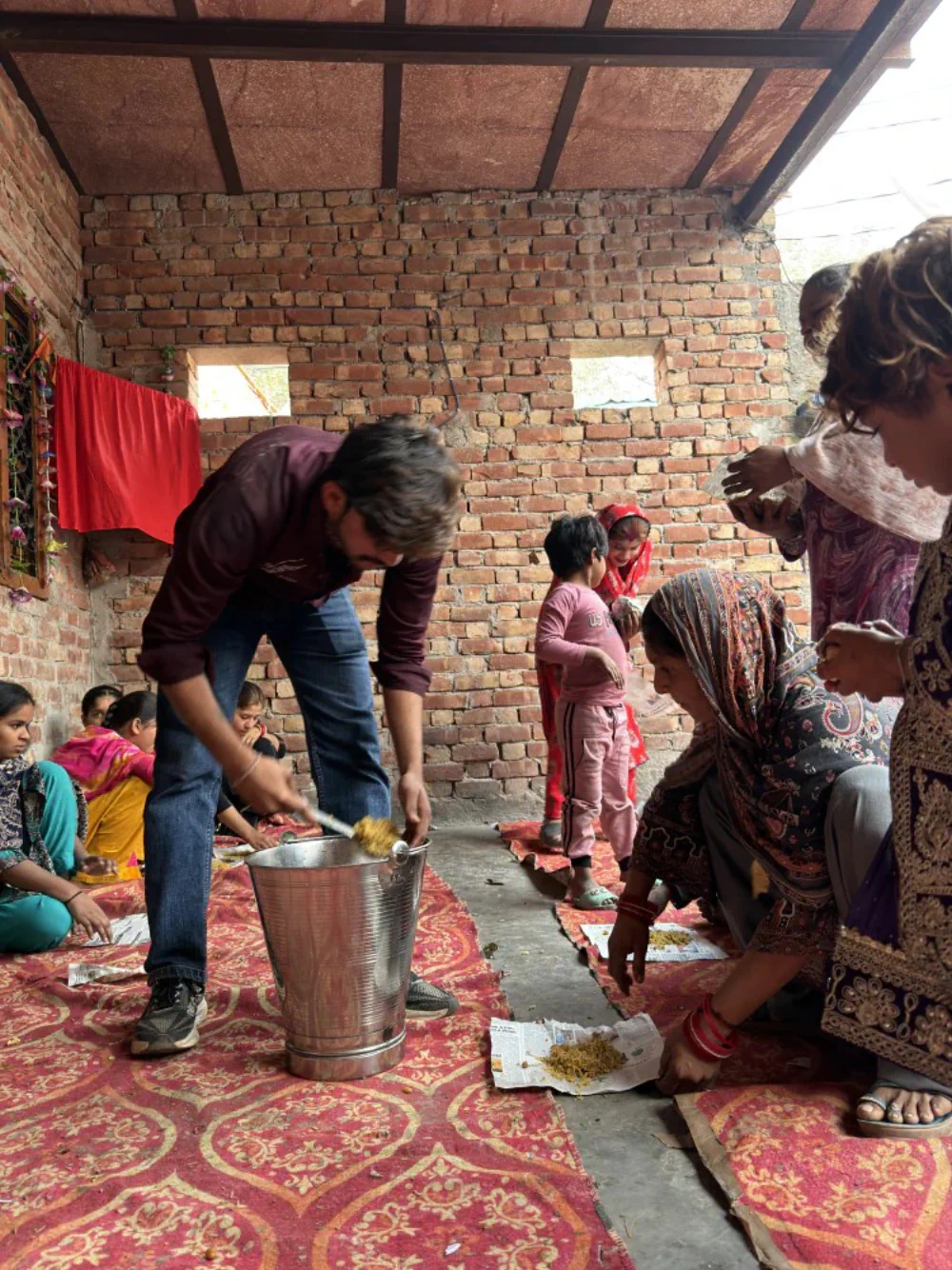
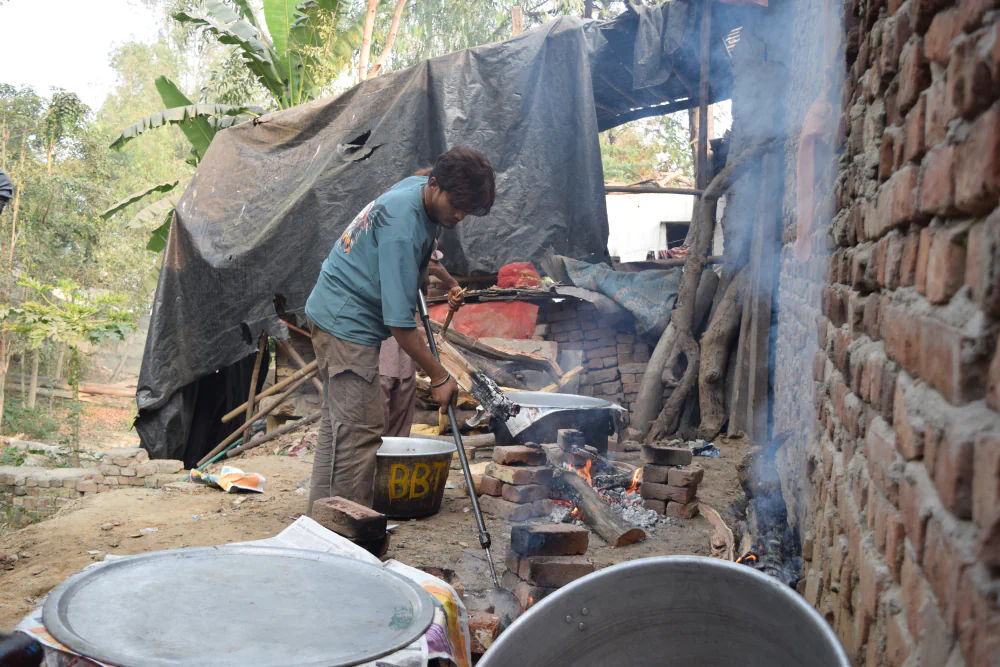
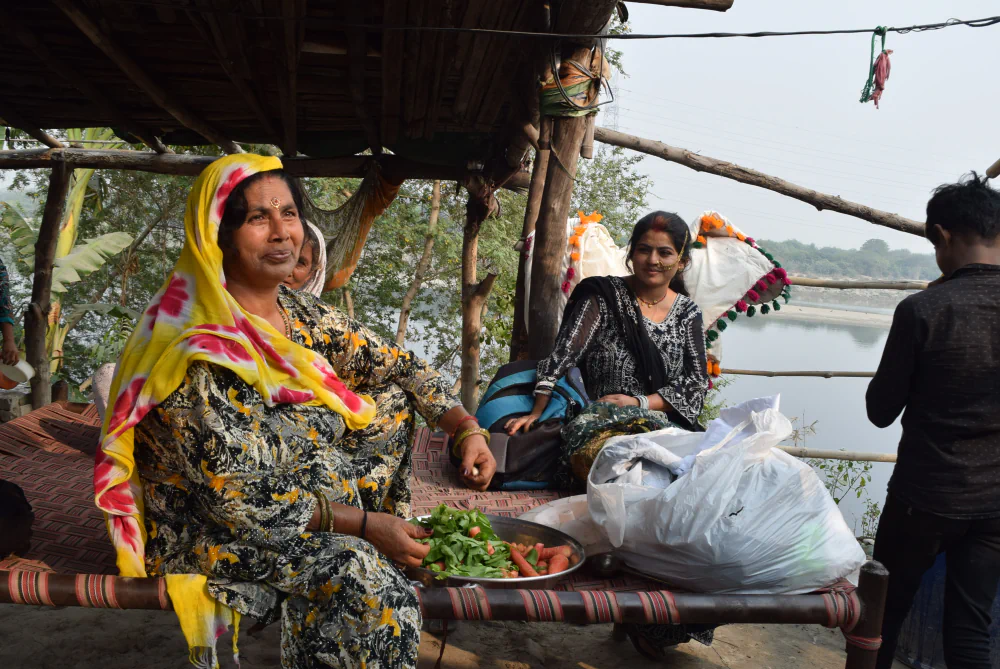
A short walk away, the real magic unfolds outdoors. A man in a simple grey shirt bends over a massive steel cauldron balanced on bricks, flames licking its base as he scatters handfuls of fresh coriander and chillies into bubbling chicken biryani. Nearby pots simmer with spicy chole and sweet gud rice, a jaggery-laced delicacy that recalls fertile Sindhi fields. Women move between the fires, chopping vegetables with swift, confident hands, their salwar kameez sleeves rolled high. There are no gas stoves here; everything is cooked the traditional way, on open chulhas fed with gathered wood, the smoke rising like an offering to the sky.
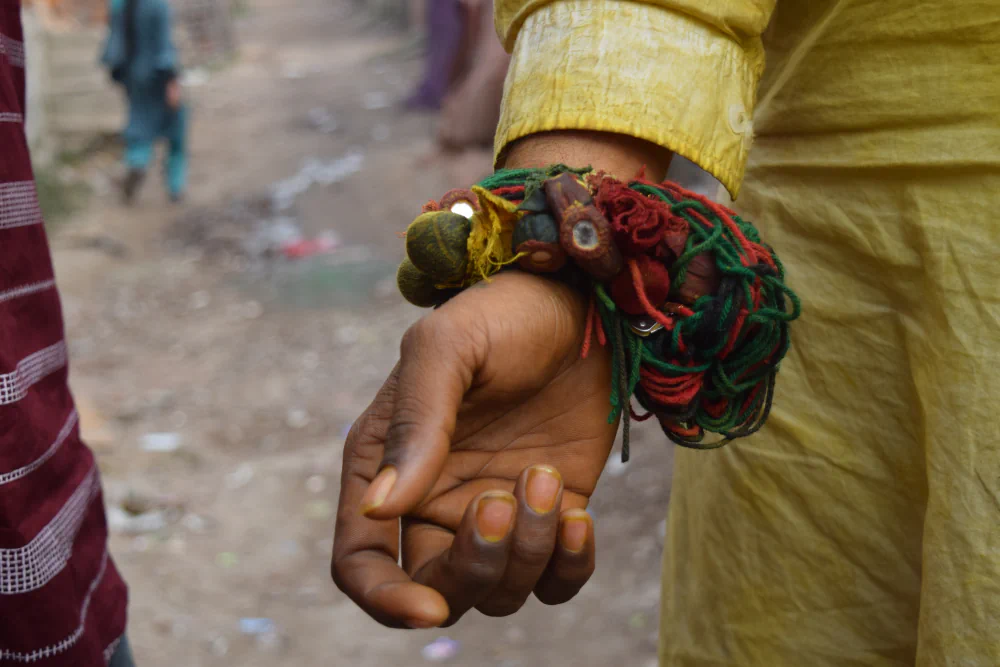
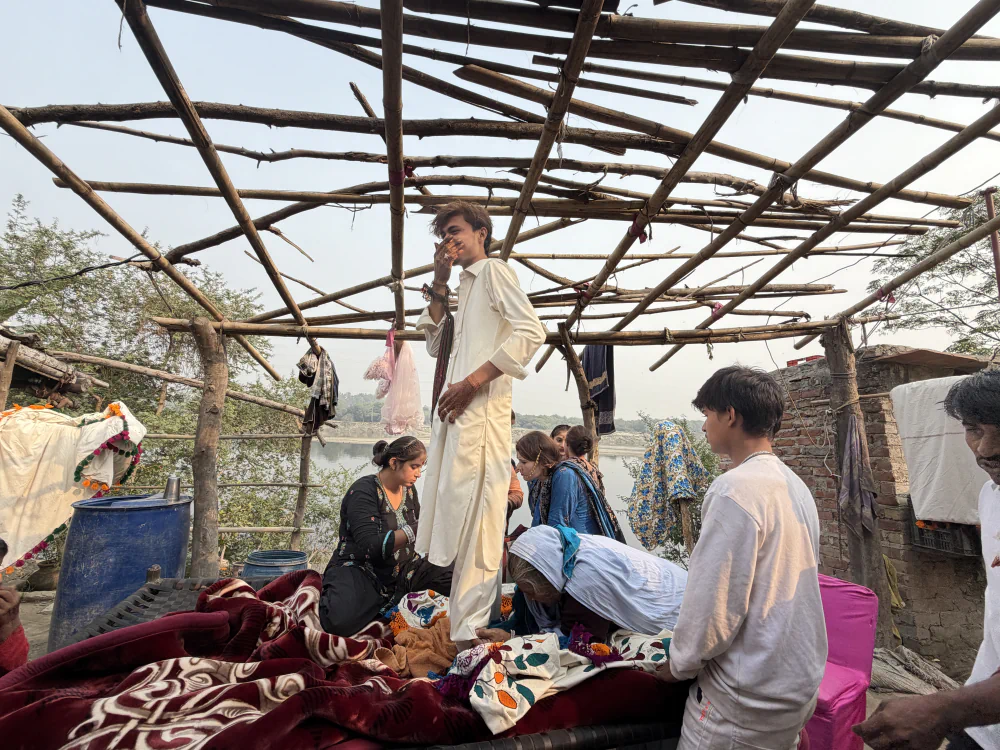
Inside the groom’s modest room, anticipation builds. Dharamraj stands tall in spotless white, his wrists and ankles bound with the sacred kangna, green threads that carry centuries of protection and blessing. His sister and bua kneel at his feet, adjusting the folds of his dhoti and tying the final knots with gentle fingers still stained from earlier henna rituals. His face remains veiled for now, hidden from the bride’s side until the right moment, a custom that keeps tradition alive even in these borrowed lanes.
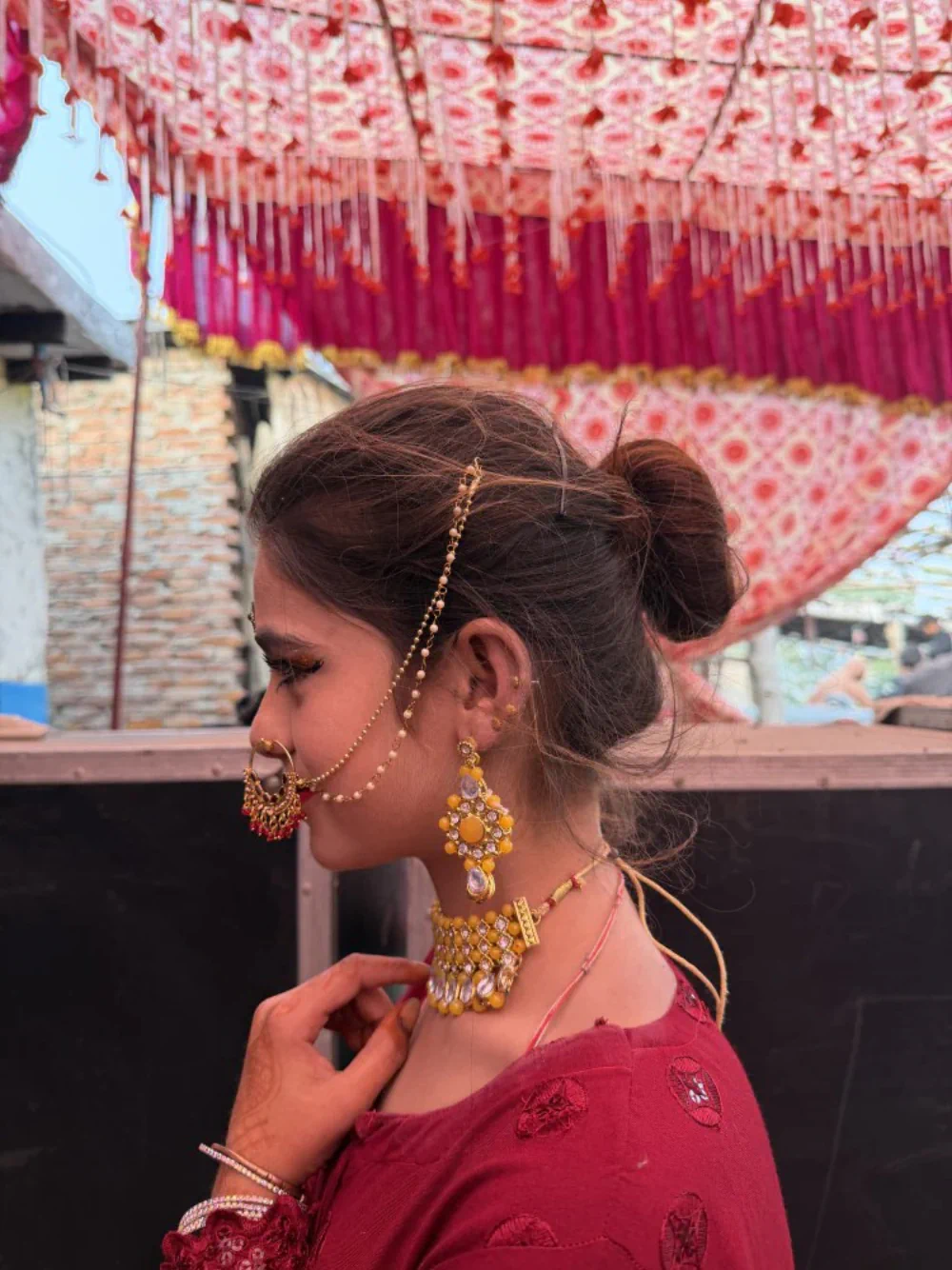
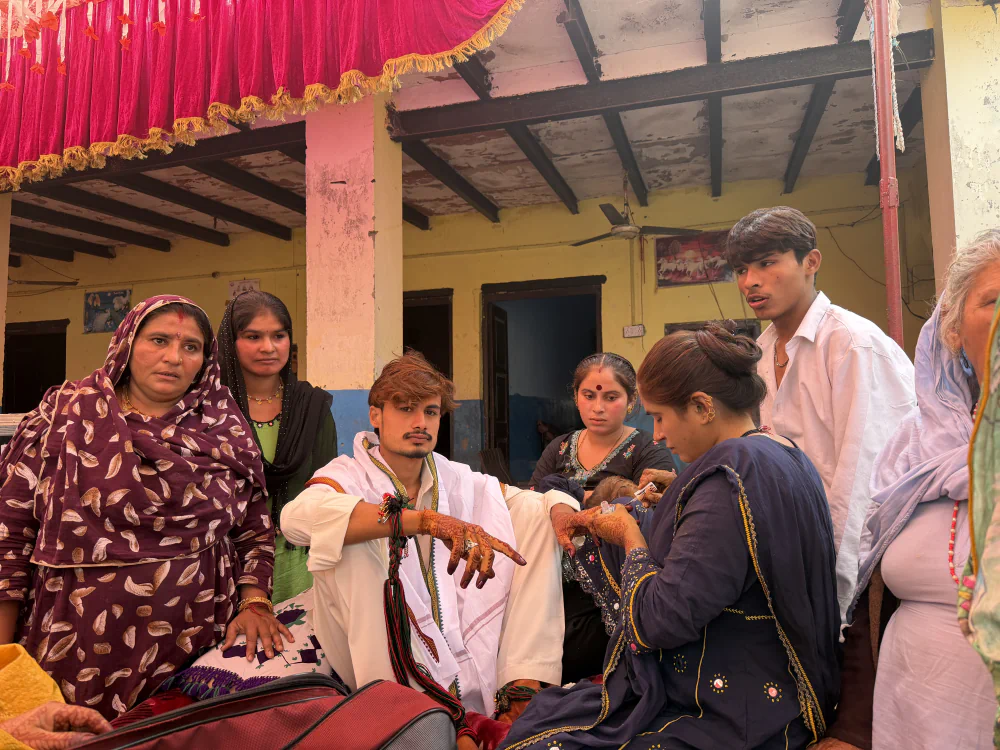
Across the settlement, Raghuveer prepares within his own circle of family. He sits surrounded by aunts and cousins, his arms already adorned with intricate henna patterns that climb like vines of good fortune. One young woman leans in to add the final details while his mother watches with quiet pride. The air fills with the soft clink of bangles and the rustle of heavy jewellery, nathanis looping delicately from nose to ear, catching what little light filters through the shamiana.
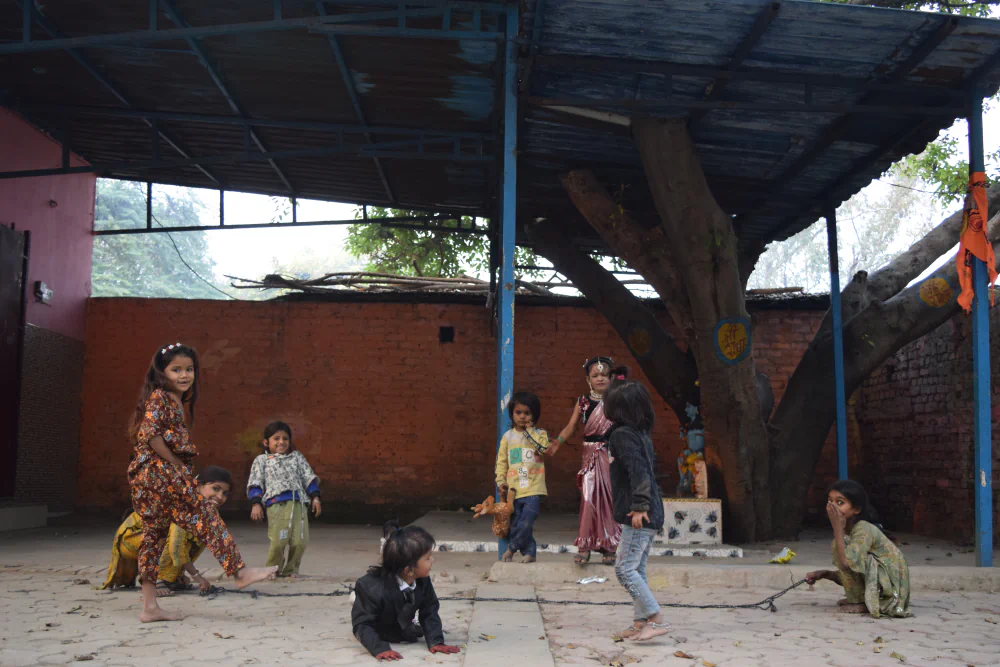
Children dart everywhere, barefoot and laughing, weaving between the pink chairs and cooking fires. Women in jewel-toned dupattas adjust veils, carry trays of sweets, and exchange knowing glances. This is no distant hotel affair with hired staff and artificial lights. It is intimate and communal, stitched together by the same hands that built these homes from whatever the city would allow.
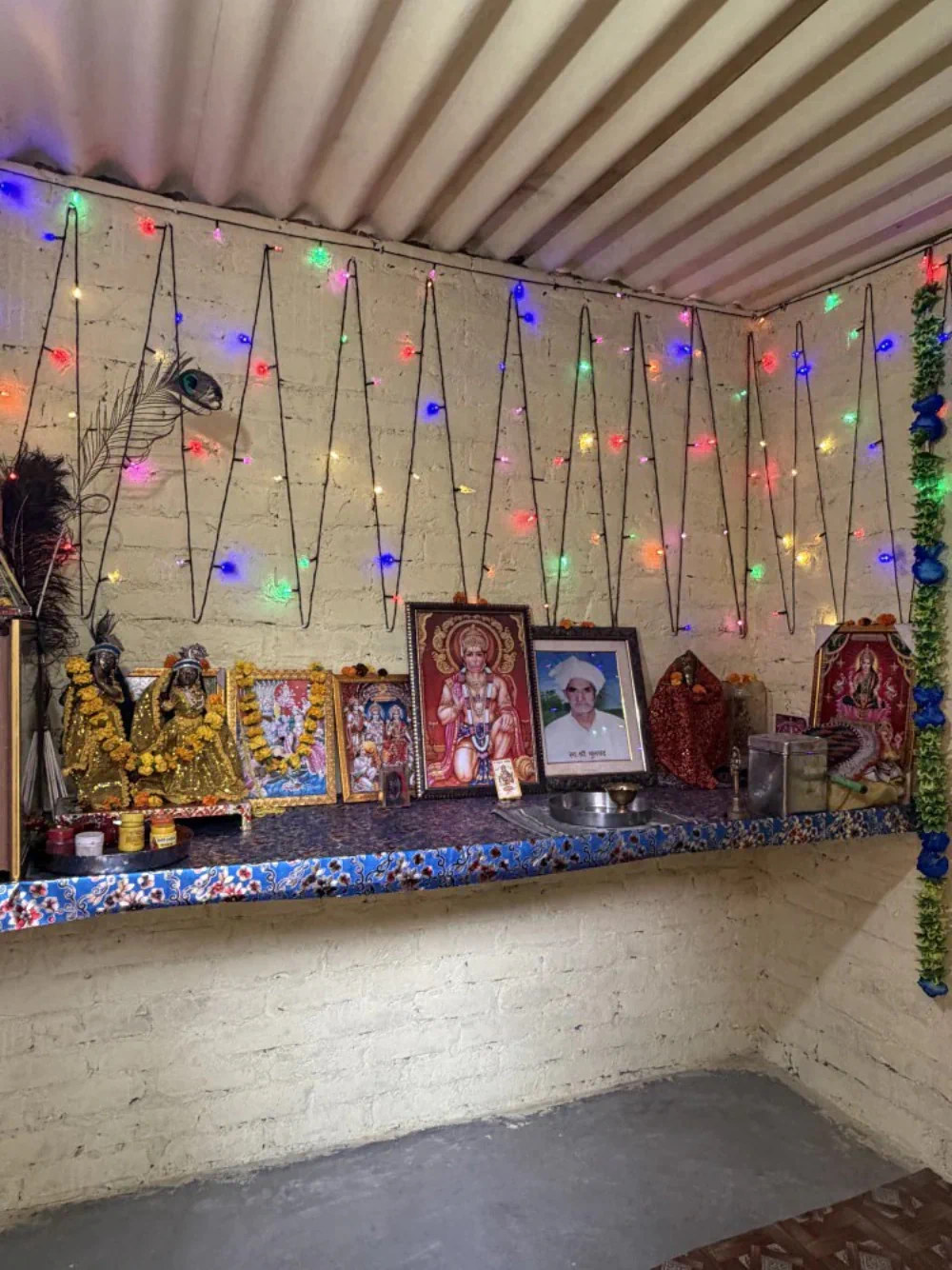
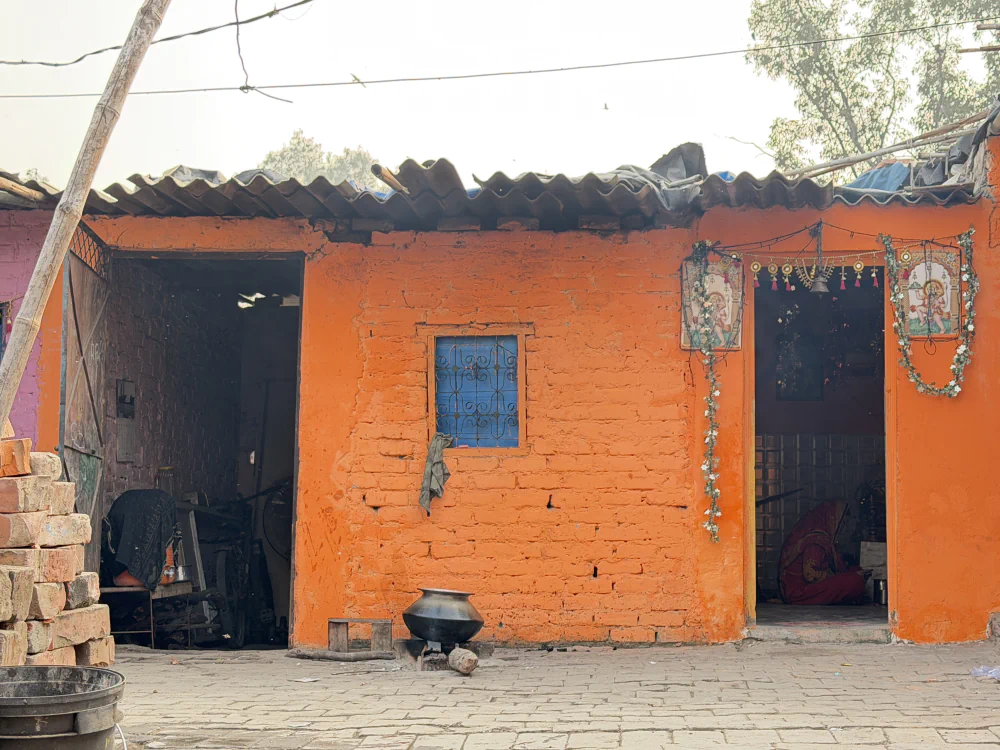
As the day deepens, the small temple at the centre of Majnu ka Tila opens its doors. Idols of Shiva, Durga, and Krishna watch from their simple shrine, marigolds fresh at their feet. The pandit arrives, his chants steady and clear. Each couple, in turn, takes their place for the sacred rites. Vows are spoken, hands are joined, and families bear witness as tradition binds new lives together, fire and mantra weaving the old world into the new.
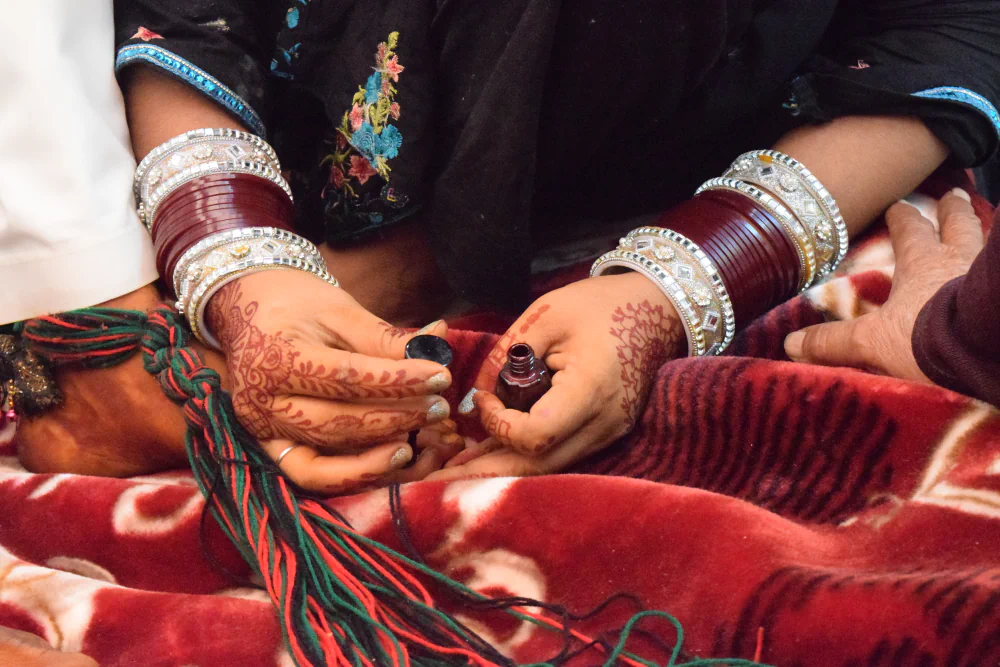
The feast that follows is as generous as the hearts behind it. Steel thalis overflow with fragrant biryani, chole, sweet gud rice, and fresh rotis, all cooked over the same open flames that sustain daily life. Women’s nathanis sway as they serve; men’s pagdis tilt with laughter. For a few hours, the settlement feels less like a place of waiting and more like a village reborn.
Most of the roughly eight hundred residents trace their roots to Sindh in Pakistan. They arrived as Hindu refugees fleeing persecution, many over a decade ago, carrying long-term visas and little else. Some, like community elder Sona Das, now hold Indian citizenship under the Citizenship Amendment Act. In a quiet corner, he and his wife sit against a brick wall, holding their certificates with steady hands, their faces calm with the knowledge that some battles have been won. Their children and grandchildren were born here; some attend nearby government schools. Yet for many others, documentation remains unresolved. Work is uncertain, often limited to daily wage labour or small-scale street trade. Basic amenities are scarce, with no piped gas and unreliable electricity; only the chulha and gathered wood sustain daily life.
The settlement stands on contested land, part of the Yamuna floodplains, where the Delhi Development Authority has issued notices and courts have debated eviction. Yet on this day, those uncertainties feel distant. The weddings bring everyone together, transforming instability into something shared and meaningful.
By evening, the shamiana still stands, now illuminated by improvised fairy lights. The scent of wood smoke lingers, blending with spices and incense. Two new couples begin their lives in lanes that once felt temporary. Dharamraj and Raghuveer, each with his bride, step into the future surrounded by a community that has refused to disappear.
In Majnu ka Tila, life does not wait for paperwork or permission. It continues, it celebrates. Tea is poured from worn pots, kangna threads are tied with care, and meals are cooked over open flames. These weddings are more than unions. They are a quiet assertion that roots can take hold even in shifting ground, that joy can rise steadily like smoke from a chulha, carrying stories across borders and into uncertain tomorrows.
About Madhav Singh Sodhi
Madhav Singh Sodhi is a Delhi-based freelance journalist and a Master’s student in Convergent Journalism at AJK MCRC, Jamia Millia Islamia. With prior experience as a news reporter at Assam First Digital and published contributions to Feminism in India, he brings a sharp critical perspective to stories at the intersection of politics, political economy, philosophy, ideology, and sociological themes such as caste, gender, and class. His work often explores power structures, social justice, and the ideological currents shaping the contemporary world.
Passionate about visual storytelling, he also works with photography and documentary filmmaking, aiming to combine rigorous analysis with compelling narratives that illuminate complex societal realities.
About Mysha Rizvi
Mysha Rizvi is a postgraduate journalism student interested in exploring the complex intersections of culture, identity, mental health, human rights, and the evolving digital landscape. Her work often focuses on how policy affects society in real time, moving beyond theory to document the tangible consequences for marginalised groups. Through dedicated on-the-ground reporting, she aims to bring the lived experiences of underrepresented communities to the forefront, offering a nuanced perspective on the human stories that define the modern social landscape.