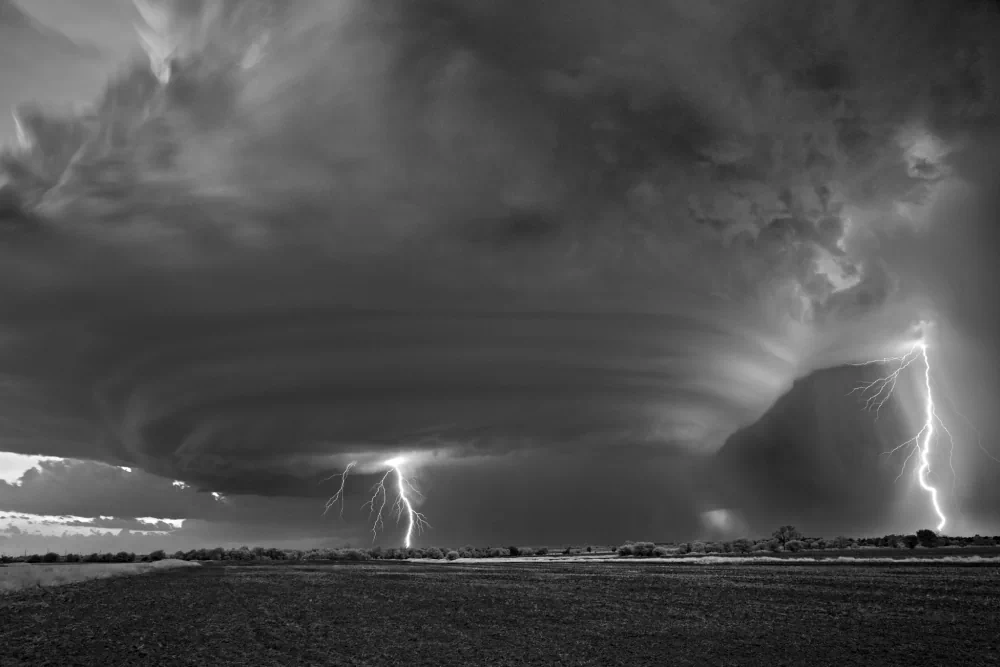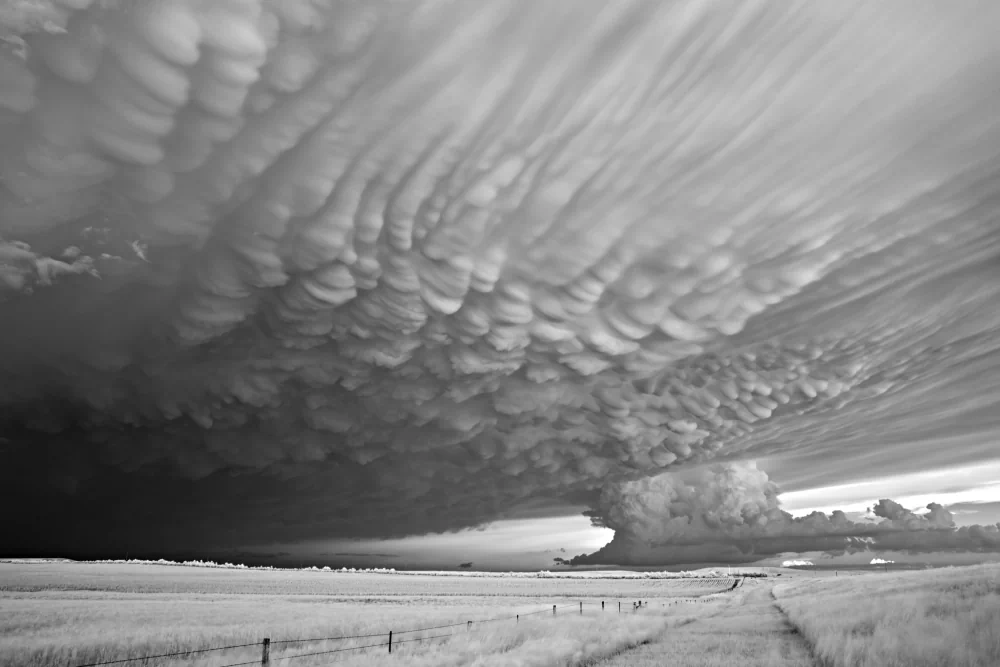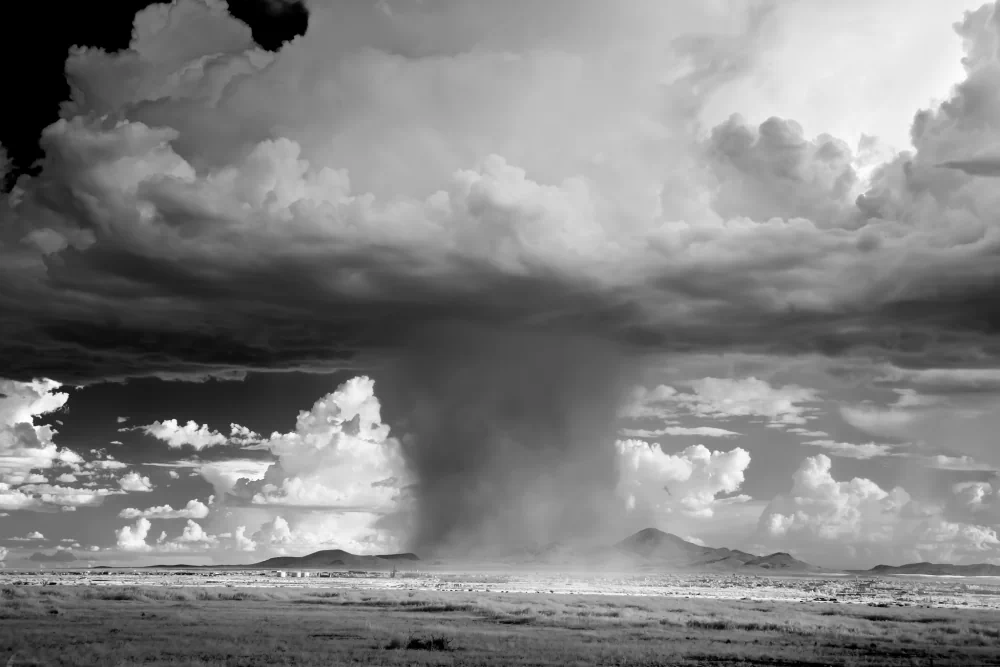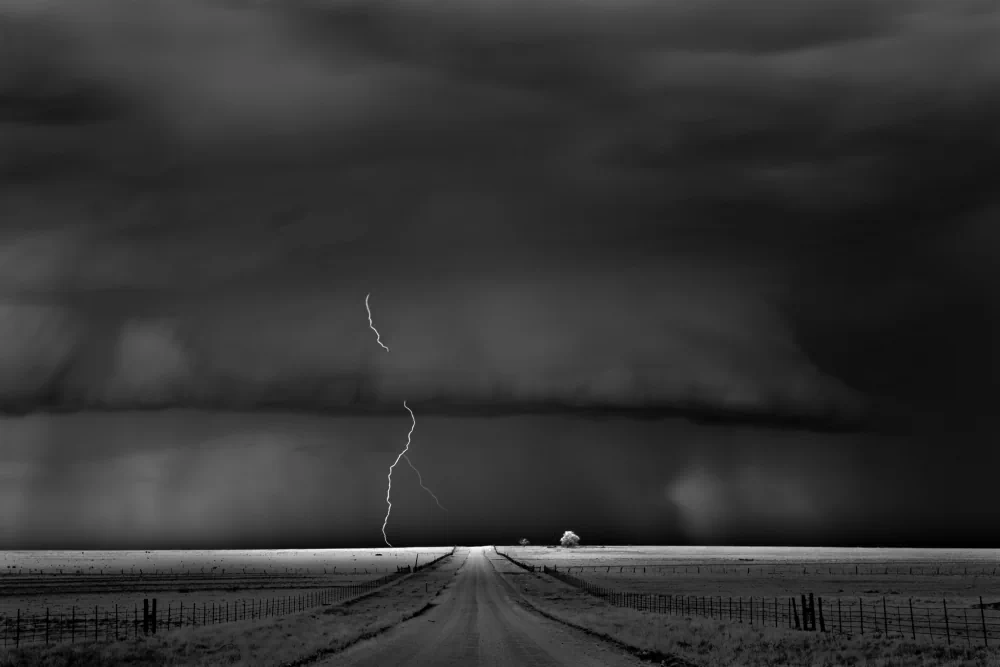


“Our job is to record, each in his own way, this world of light and shadow and time that will never come again exactly as it is today.”
Edward Abbey (1927–1989)
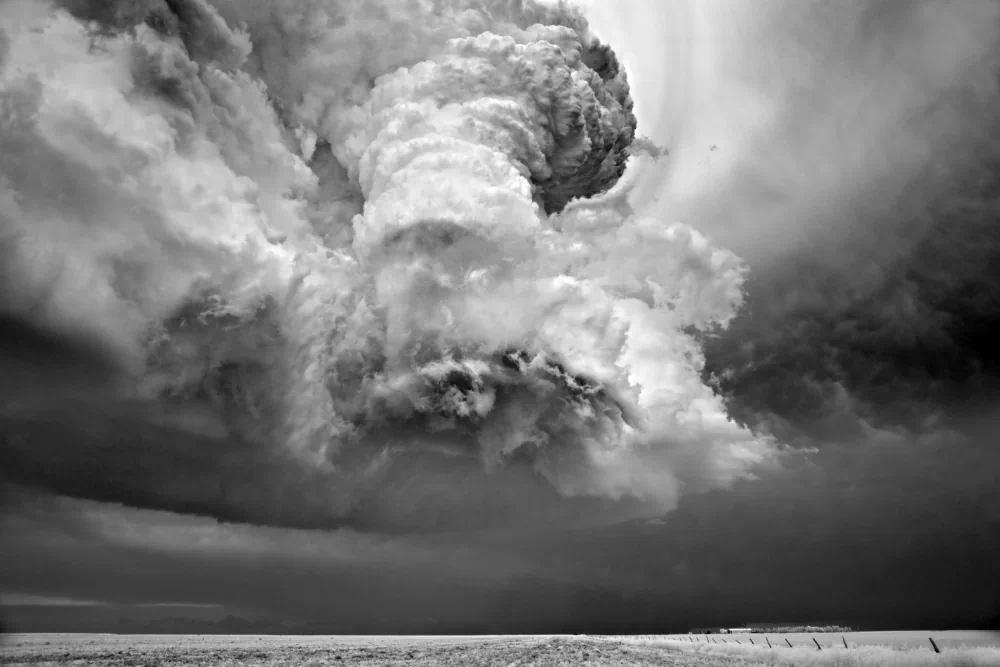
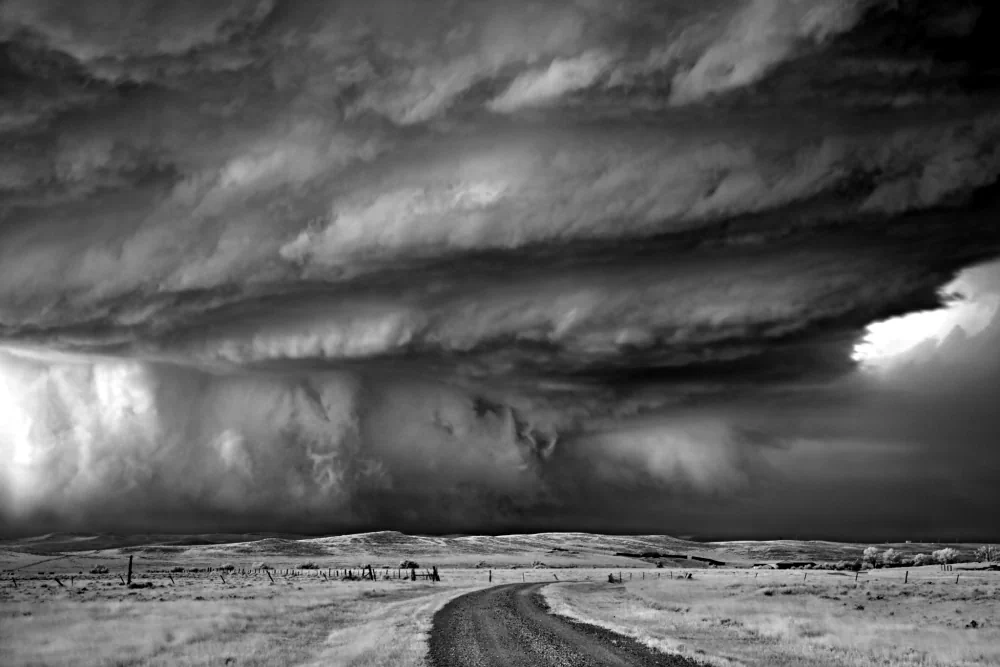
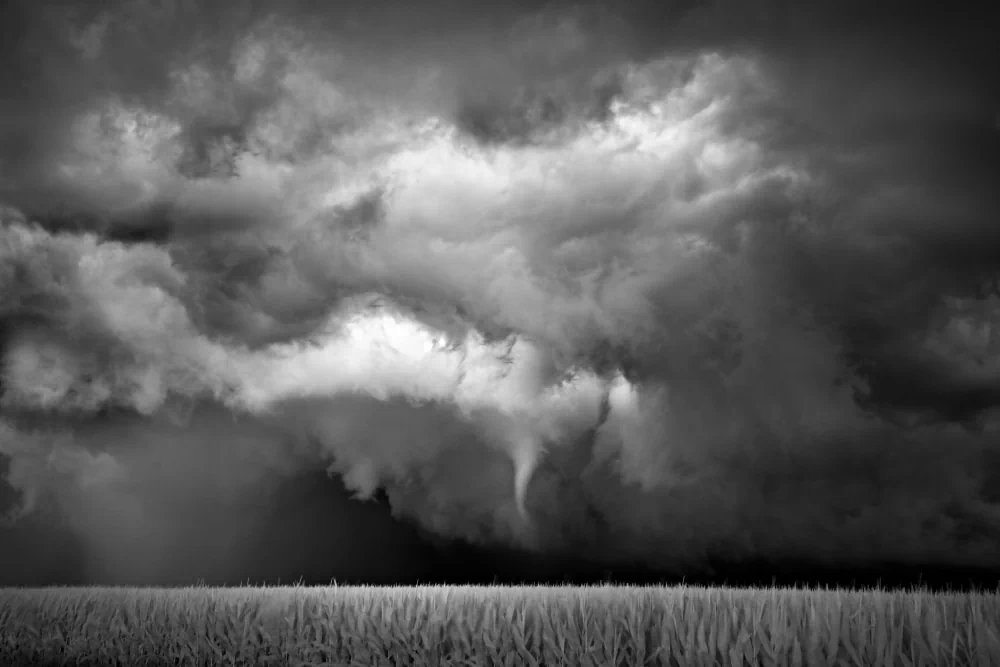
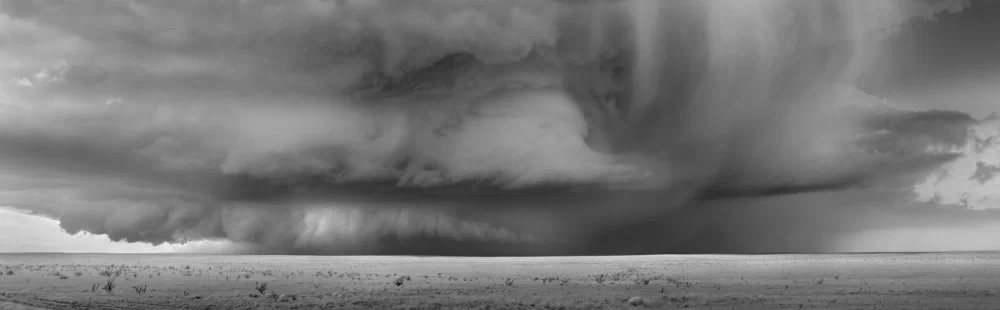
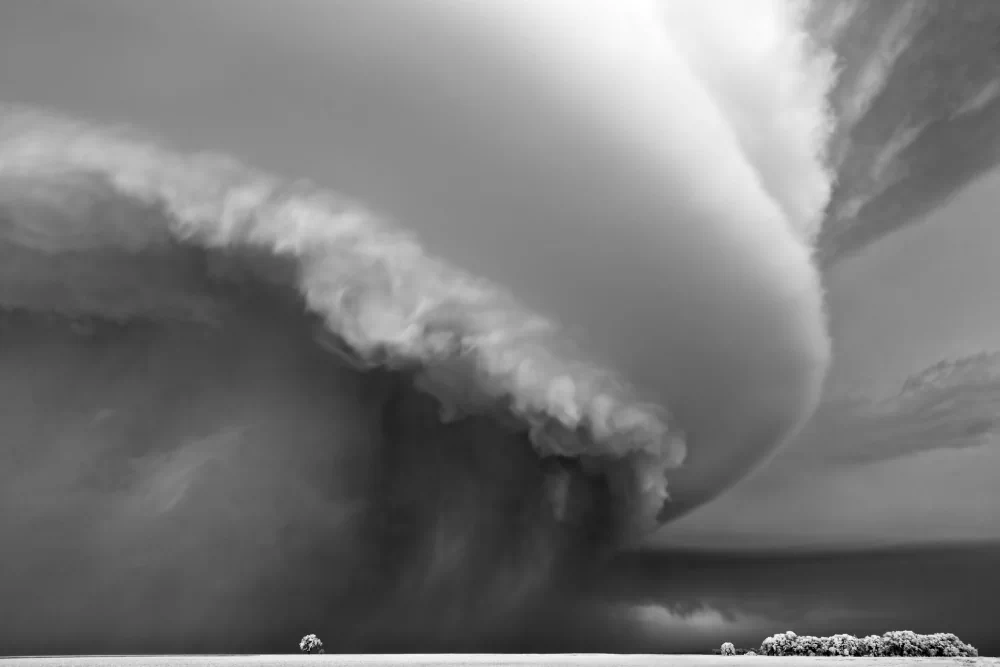
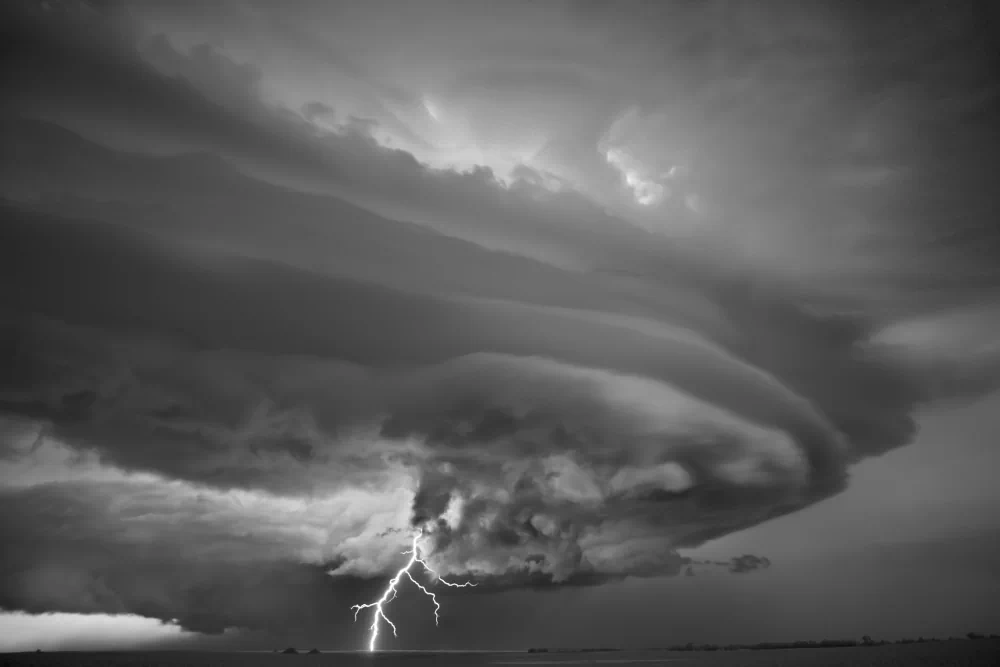
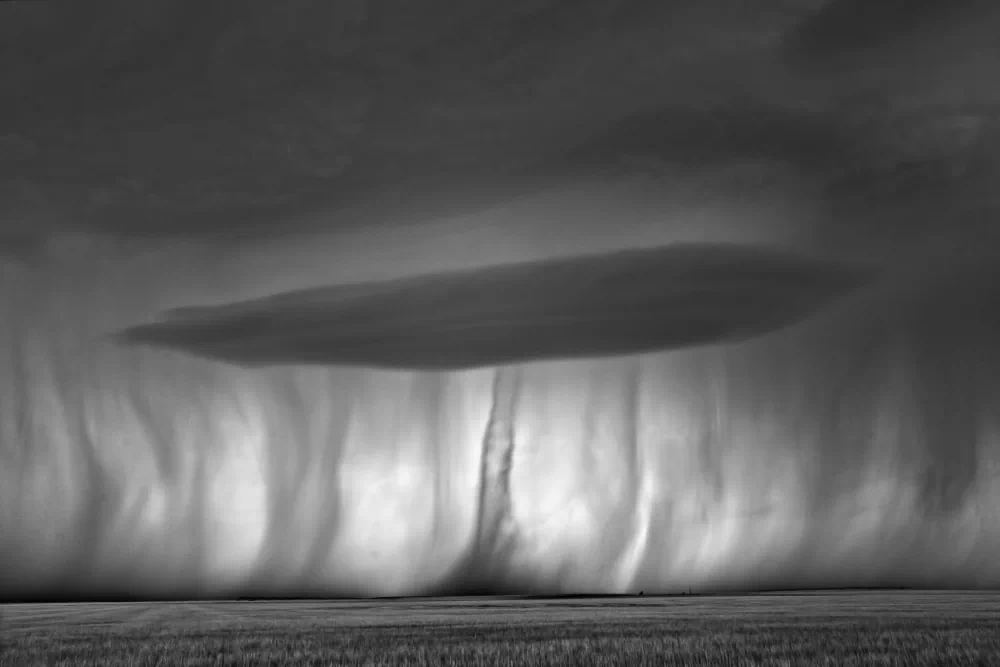
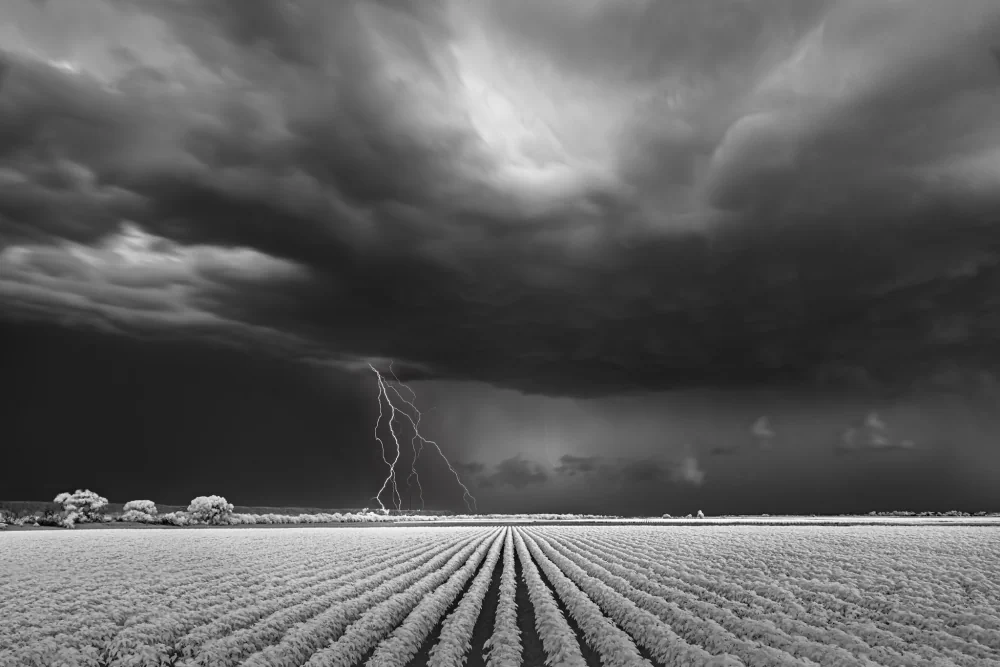
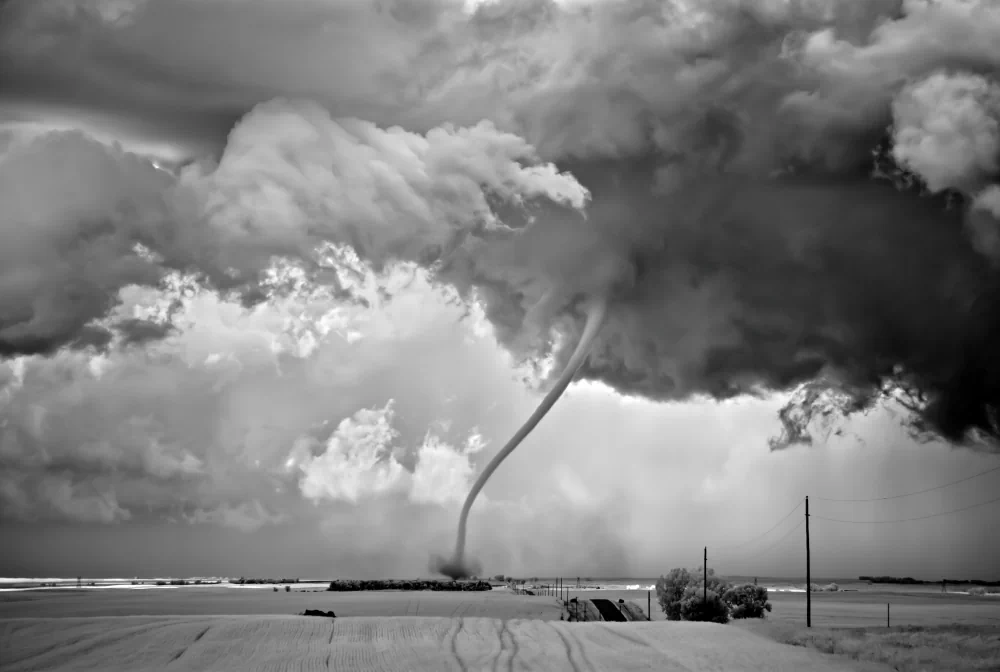
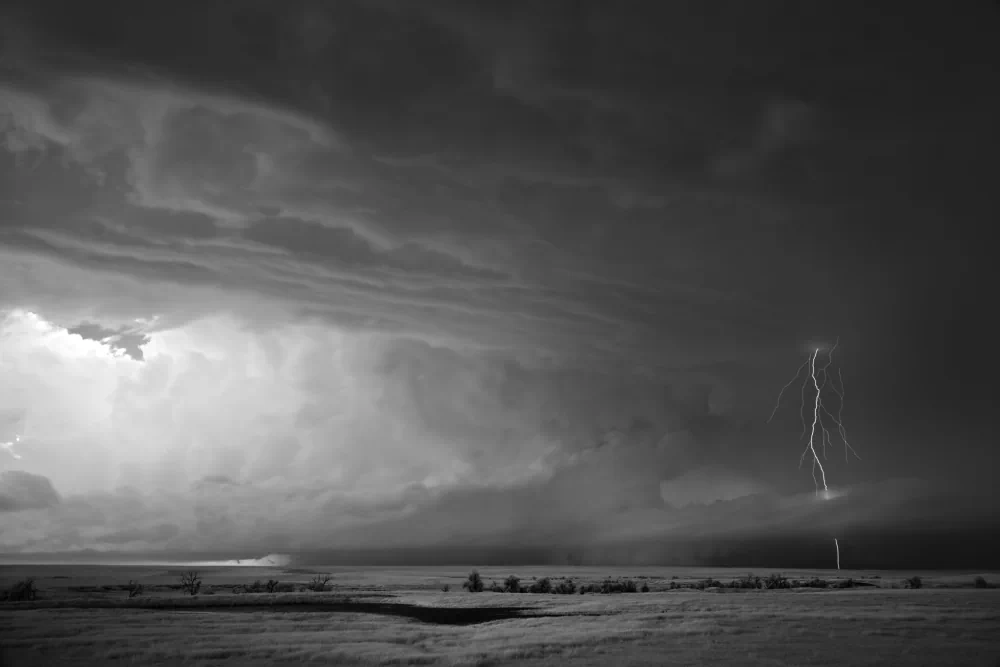
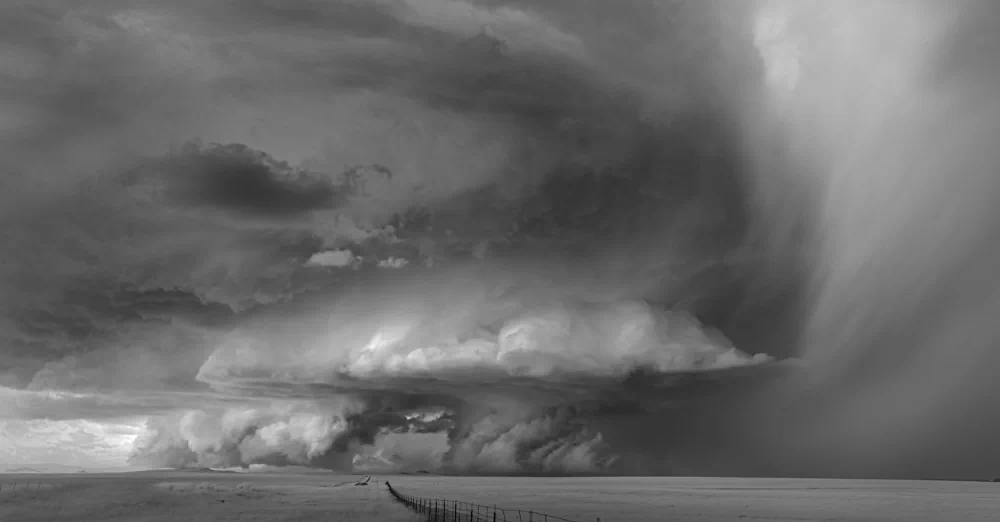
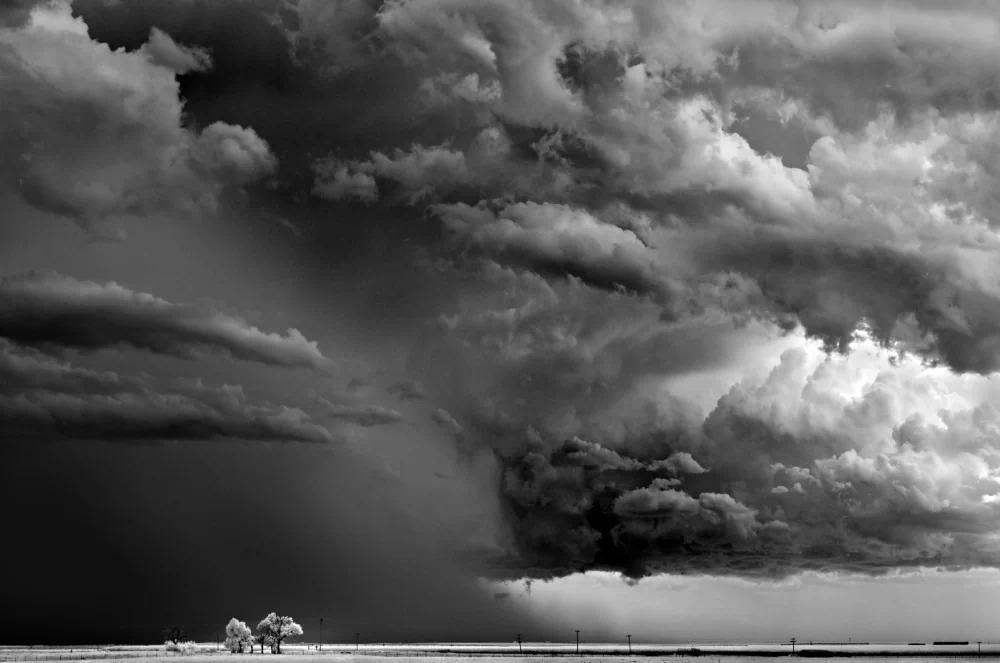
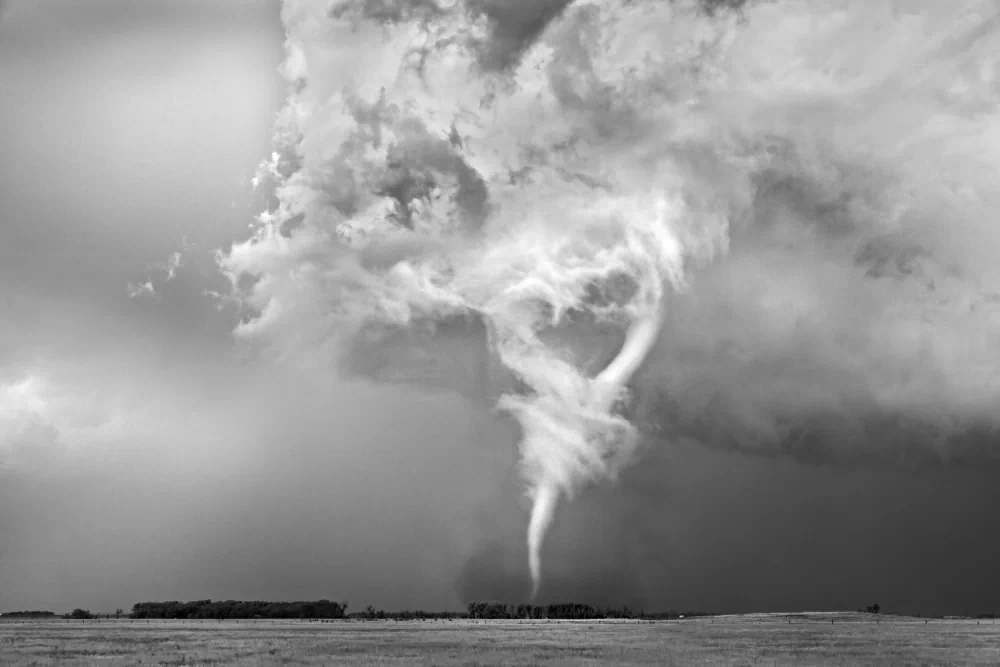
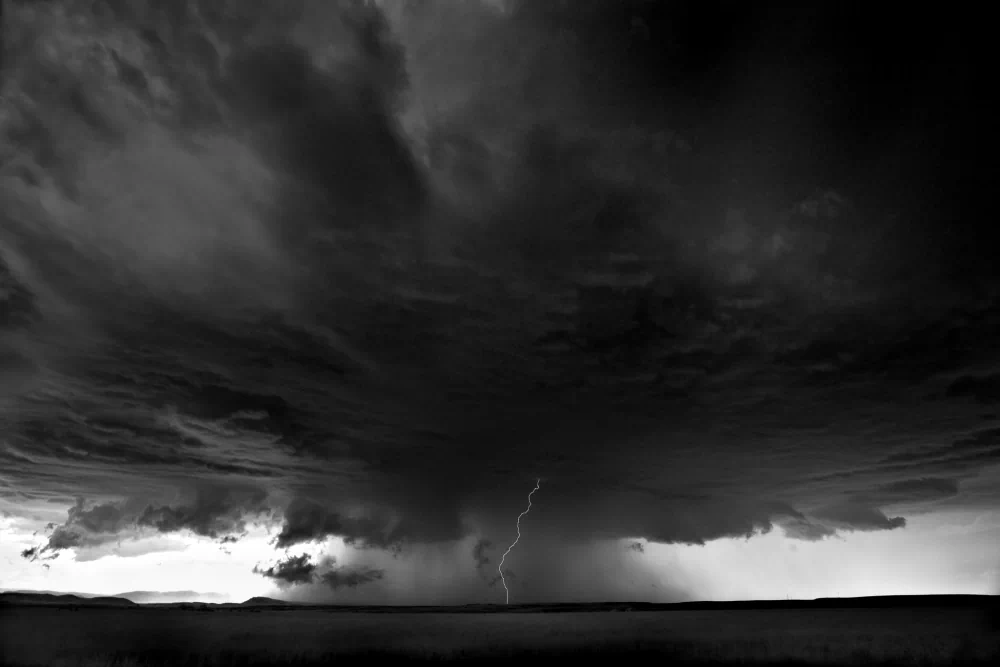
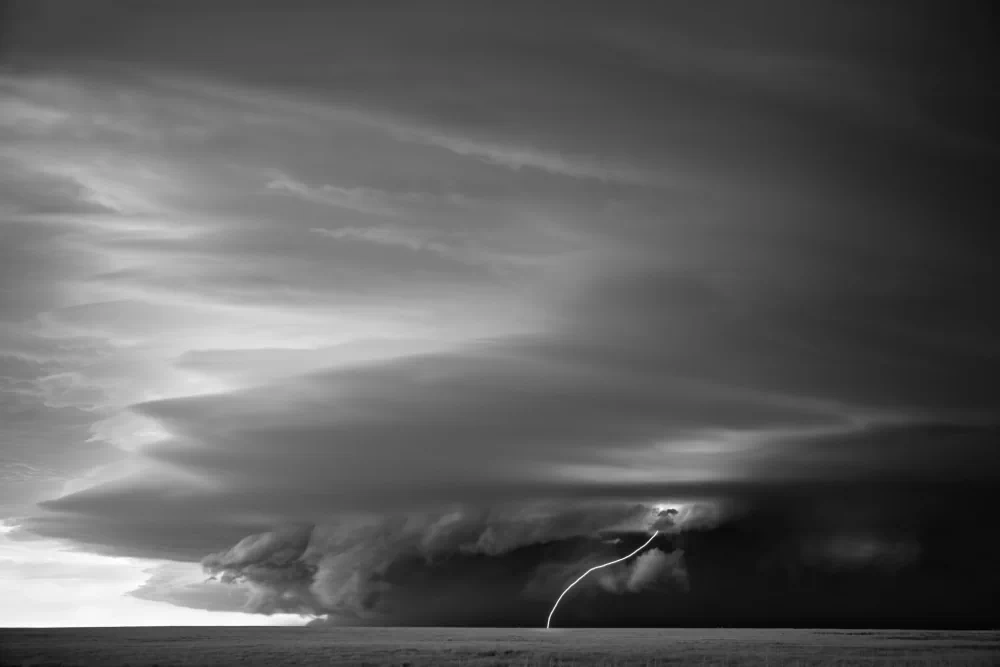
The images produced in this series are inspired by his love and respect for the Earth. He has always been drawn to inclement weather.
The energy and electricity in the skies are majestic. Watching a storm being born from a small, unstable weather system, developing into a towering, powerful, and majestic supercell, is a sight to behold. Standing in a field as an inflow of cold air feeds into the storm, driving through the core of the system, electricity, rain, hail, and wind, along with the smell of crops being pounded in the fields, is all very difficult to describe in words.
Seeing small towns, with their tight-knit communities holding the history and culture of farmlands, reminded him of how vast and diverse the country is. Despite the challenges these communities face, including poverty and years of drought, their relentless dedication, love, and respect for the land put everything into perspective during his travels.
His hope is that the images presented help communicate these aspects, as well as the power and beauty of these storm systems. They are remarkable forces of nature.
About Mitch Dobrowner
Mitch Dobrowner grew up on Long Island (Bethpage), New York. In his late teens, he felt uncertain about his future direction. Recognising this, his father gave him an old Argus rangefinder camera to experiment with, a gesture that would prove to be pivotal.
After researching photography and discovering the work of Minor White and Ansel Adams, he quickly became deeply engaged with the medium.
At the age of 21, he left home, quitting his job and leaving behind friends and family to explore the American Southwest. While in California, he met his wife, and together they had three children and founded a design studio. During this period, the demands of running a business and raising a family took precedence, and he stepped away from photography.
Years later, in early 2005, inspired by his wife, children, and friends, he returned to photography.
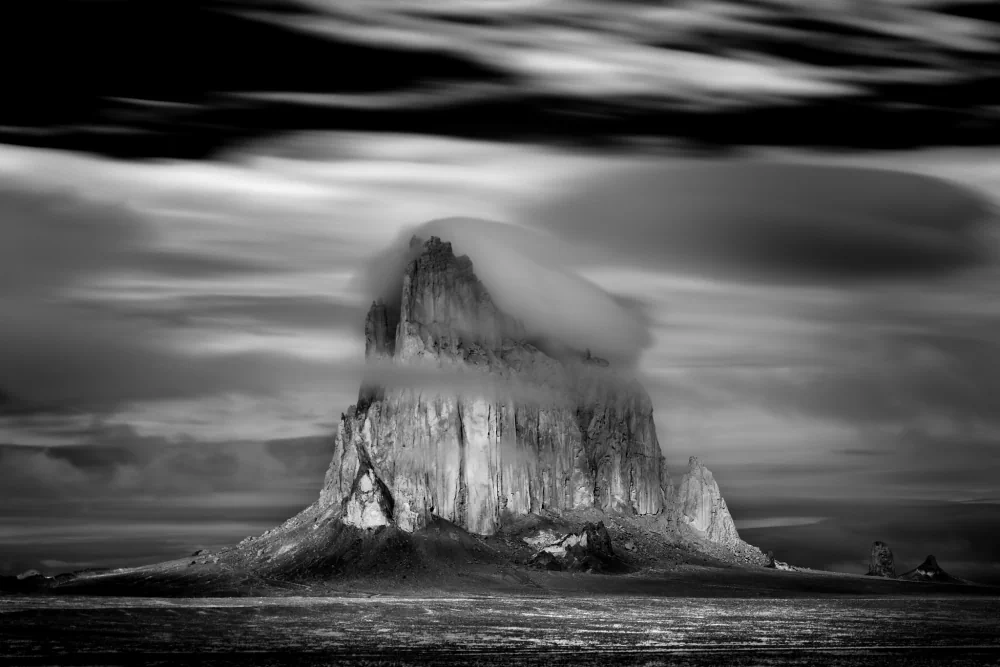
Today, photography has helped him grow both as an artist and as a person, teaching him how to quiet his mind and concentrate more deeply. Working in the deserts of the American Southwest places significant physical demands on him, requiring long periods outdoors, hiking, camping, and enduring a lack of sleep. However, the greatest challenge has always been clearing his mind from the constant flow of daily distractions that interfere with his ability to truly see.
It often takes several days in the field before he can even begin photographing. As his mind settles and he reconnects with his subject, whether storms or desert landscapes, his perception sharpens. He compares this process to stepping from bright sunlight into a dark room: at first, nothing is visible, but gradually, as the eyes adjust, vision returns. For him, this ability to see is the most essential aspect of photography.
He acknowledges a deep debt to the great photographers of the past, particularly Ansel Adams, whose dedication to the craft and influence during his formative years helped shape the course of his life. [Official Website]