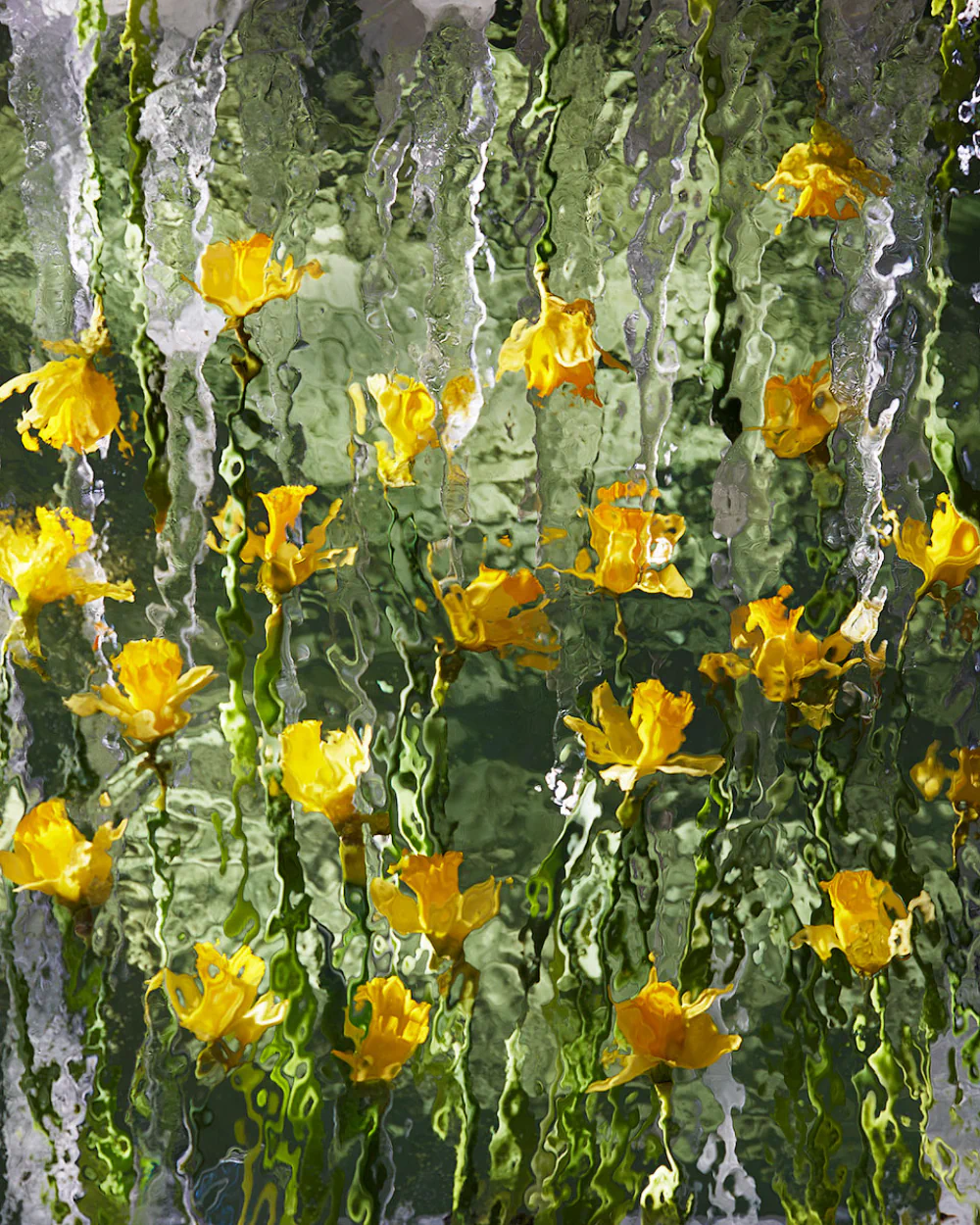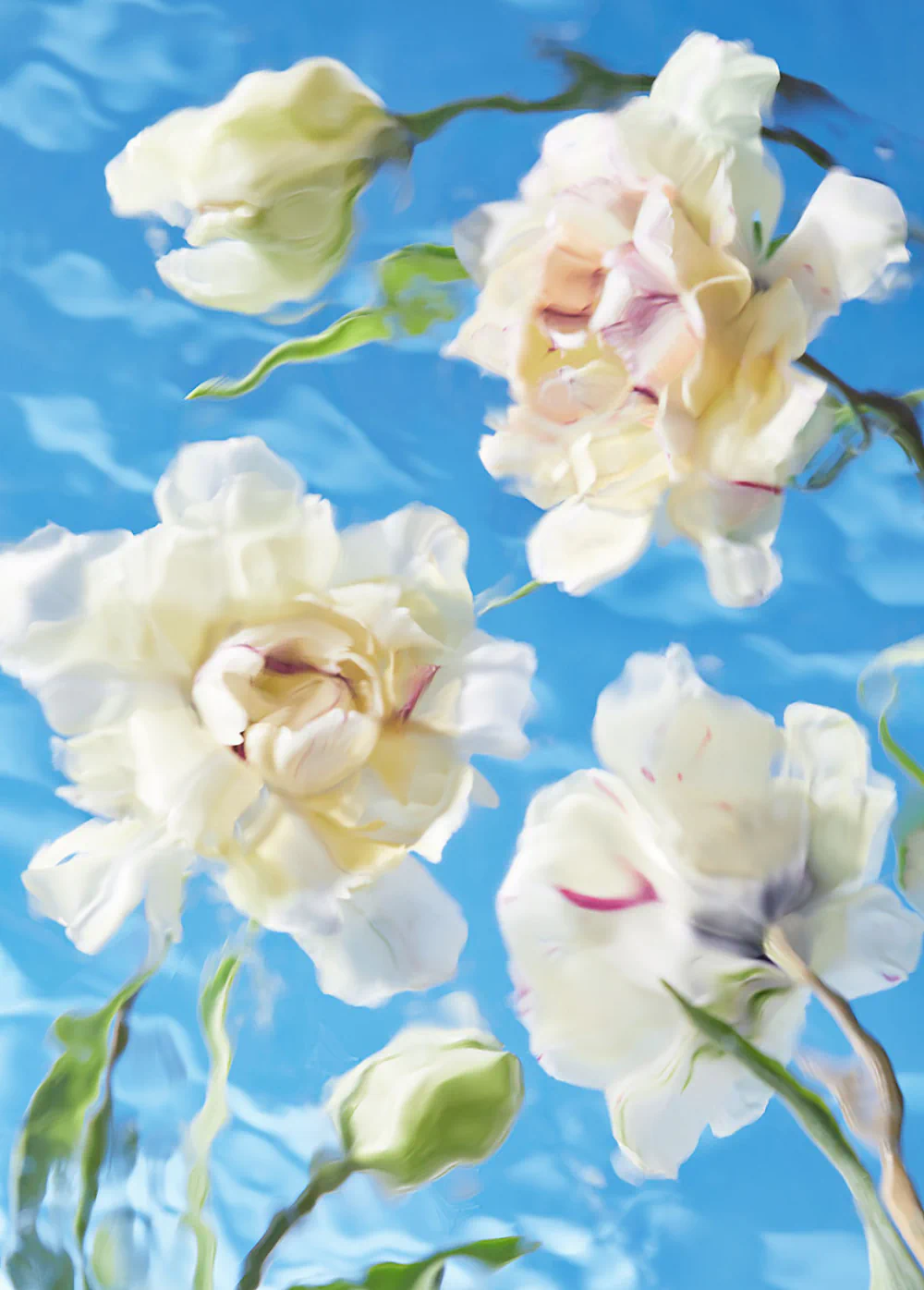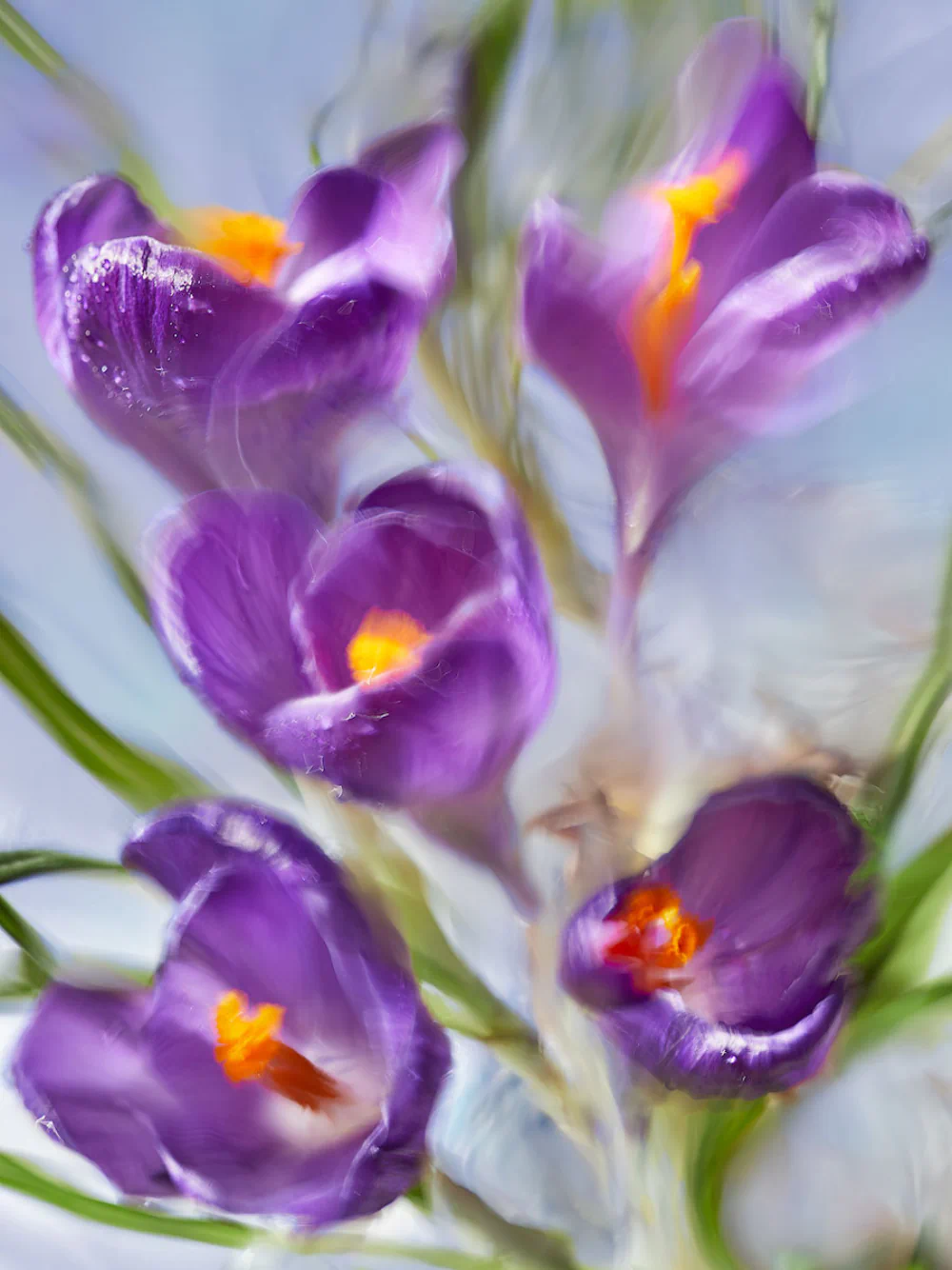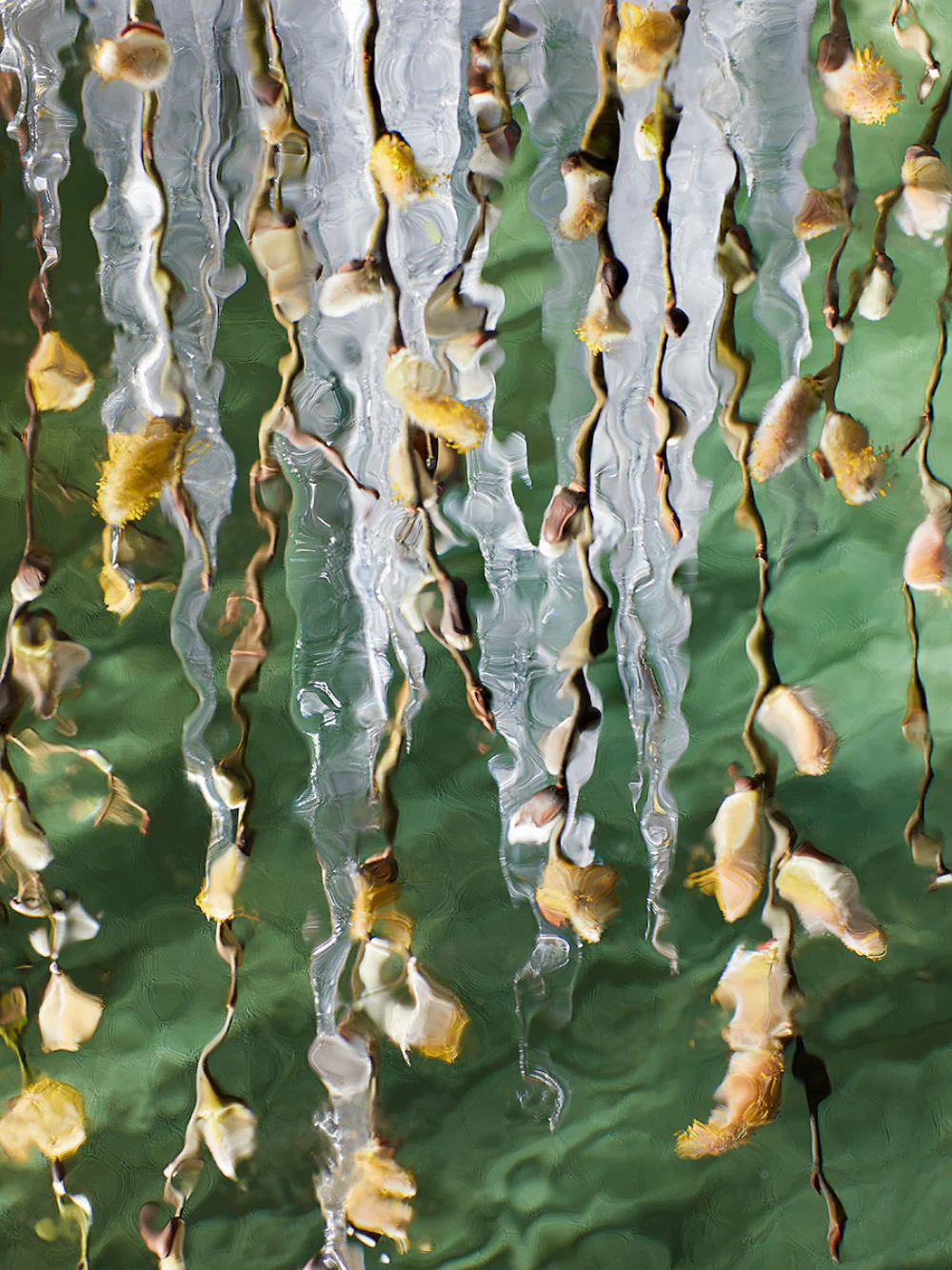


The idea for the “Spring Is Coming!” series was born last winter—the snowiest and longest she could remember.
Endless snowdrifts, crisp air, and short, dull days created a sense of frozen time; it seemed that winter would never end. It was then that she felt the need to find a foothold within this cold—a visual argument in favor of change.
The project became a kind of beacon of hope: each frame reaffirmed that no matter how long the frost lasted, warmth would inevitably follow.
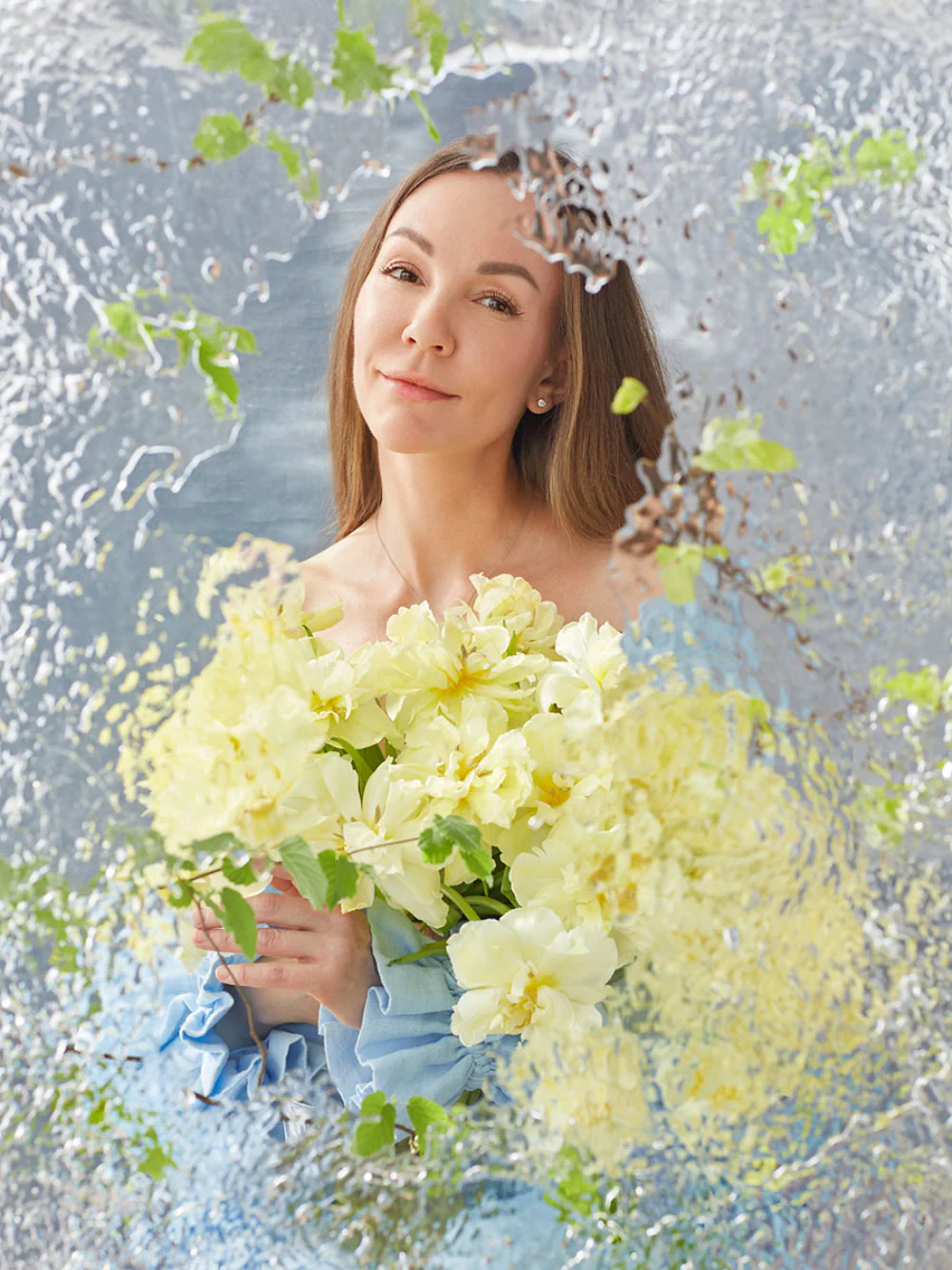
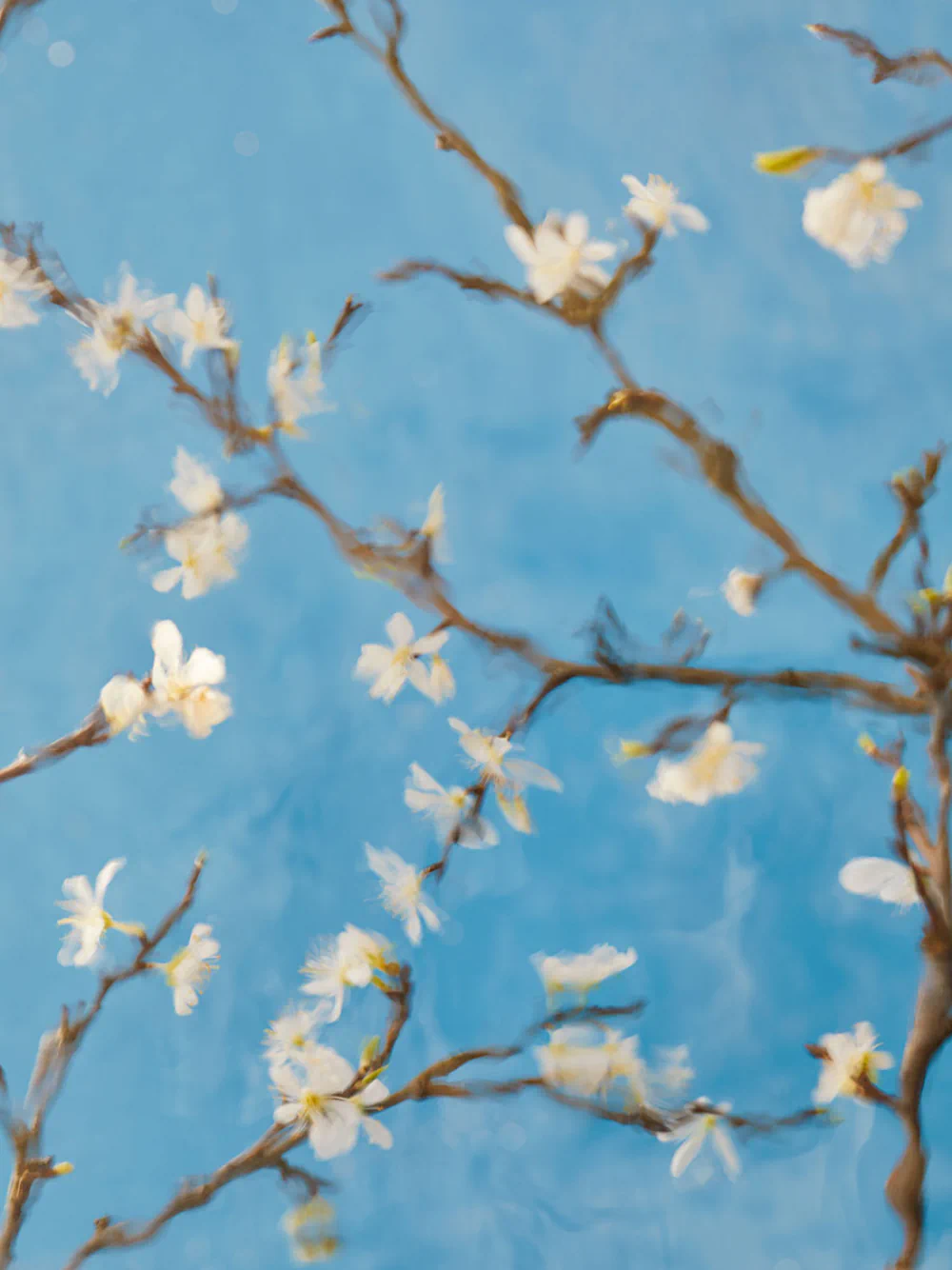
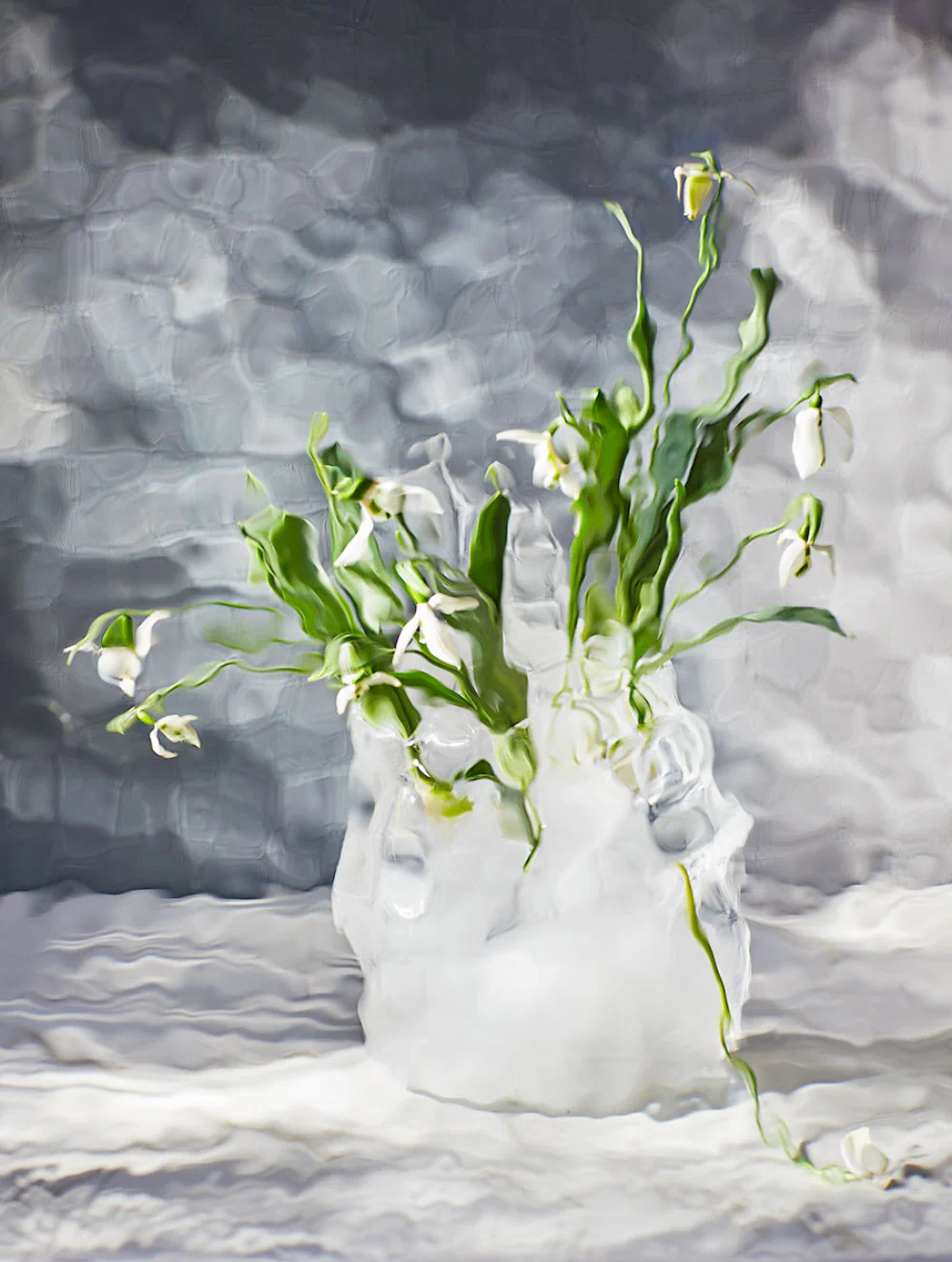
In the series, spring is not presented as a fact, but as a premonition. She photographed primroses through thin sheets of ice, which she created specifically for the shoot. The water turns into “ice glass”—a unique optical filter whose patterns cannot be replicated. After just a few minutes, the ice begins to melt, with rivulets flowing across its surface, forming ever-changing optical patterns. Light refracts and fragments, lines tremble, and the flowers appear to pulse, restrained by the cold. The outcome of each image is shaped by multiple factors that she can only partially control. This dialogue between control and randomness defines the character of the series.
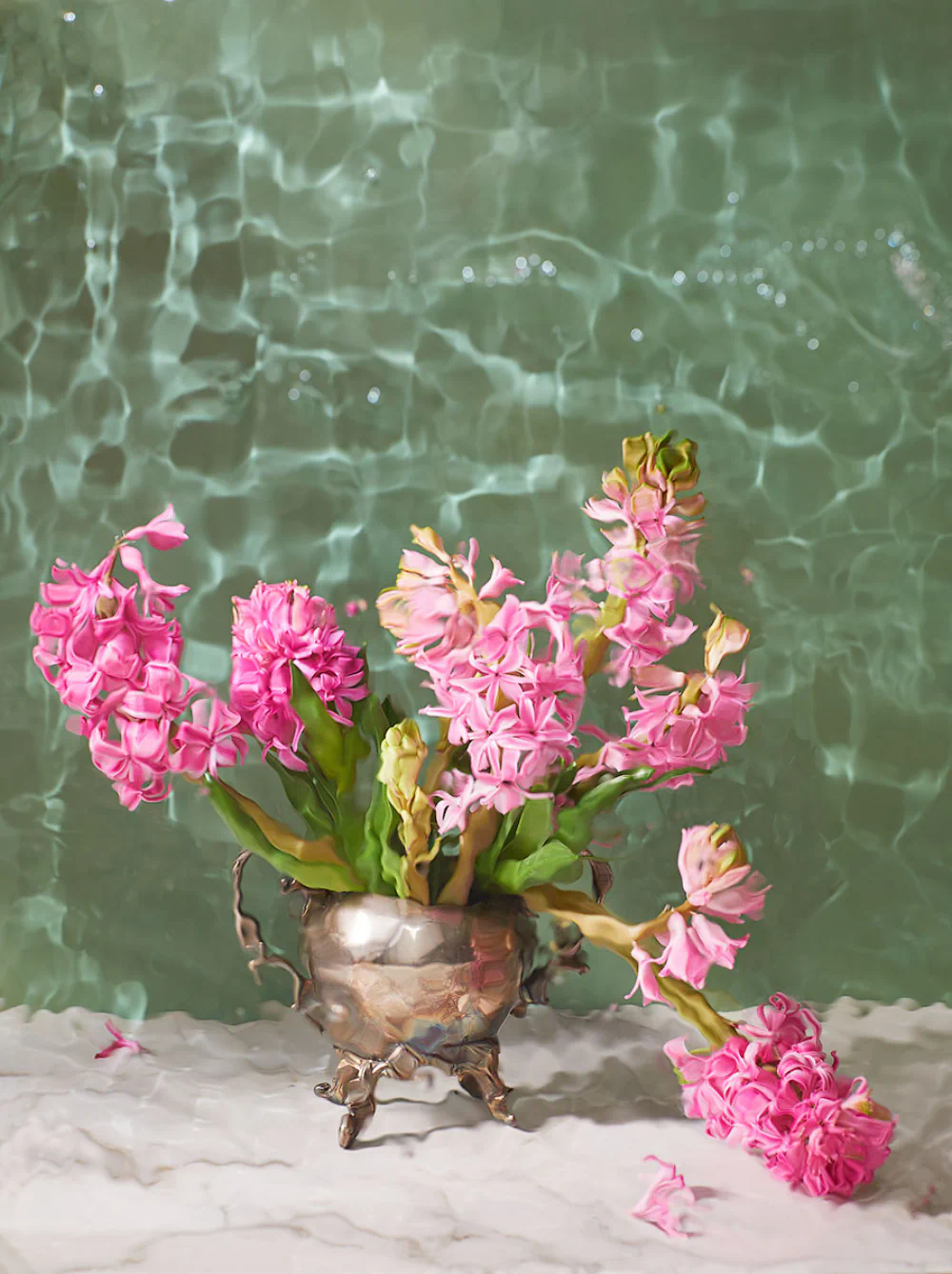
The technical process was far from comfortable. Much of the preparation took place at subzero temperatures, at times as low as -20°C. The ice plates are extremely fragile and highly sensitive to temperature changes—they can crack and crumble in her hands. They must be carefully transported and precisely positioned, anticipating how they will shift as they melt. Yet it is precisely this fragility that gives the process its acuity. Each work exists only as long as the ice remains intact. Within minutes, it melts and loses its original form, making the photograph the sole document of a fleeting transitional state.
The resulting visual language subtly references the paintings of the French Impressionists. Blurred contours, translucent layers, and flickering light evoke the sensation of a brushstroke within the photograph. Like the Impressionists, who sought to capture an impression rather than a fixed object, she does not photograph the flower itself, but the inner feeling of early spring—the moment when the world remains frozen, yet begins to glow from within. By avoiding heavy post-processing, she intentionally leaves space for unpredictability, allowing nature to act as a co-author. In a time when images are produced faster and with greater technical ease, she seeks to slow the process down and let natural elements shape the work, giving them equal agency.
The final image in the series is a self-portrait, a deliberate choice. It reflects a parallel transformation: she, too, “thaws” and is renewed. As the ice disappears, it releases her, allowing her to breathe deeply and look toward the future with hope and love. The project stands as a quiet affirmation—change is inevitable, and life will overcome the cold. Through these images, she hopes the viewer experiences the same calm yet persistent certainty that once emerged within her: spring will come.
Aboout Alena Kutnikova
Alena Kutnikova (Moscow, Russia) is a photographer with more than 15 years of experience. She received her foundational education at the Academy of Classical Photography in Moscow and has since developed her practice through continuous self-education.
The starting point of her journey into the art of photographic still life came in March 2020, when a global regime of self-isolation was declared due to the COVID-19 pandemic. She turned to still life as the only form of creative expression available to her at that moment. Immersing herself in its history, she explored 17th-century European painting and later expanded her research to include art from the Renaissance to the present day. A dialogue with the great masters plays an important role in her work: at times she creates direct homages, while at others she allows their “invisible presence” to enter the frame through color, the gesture of the brushstroke, or the rhythm of composition.
Her work seeks to establish a subtle connection between past and present, reminding the viewer that still life remains a living and relevant visual language. Her images are intended for slow, contemplative viewing; she aims to decelerate the viewer, restore a natural rhythm, and reveal the beauty of the everyday, encouraging a pause within the moment. [Official Website]