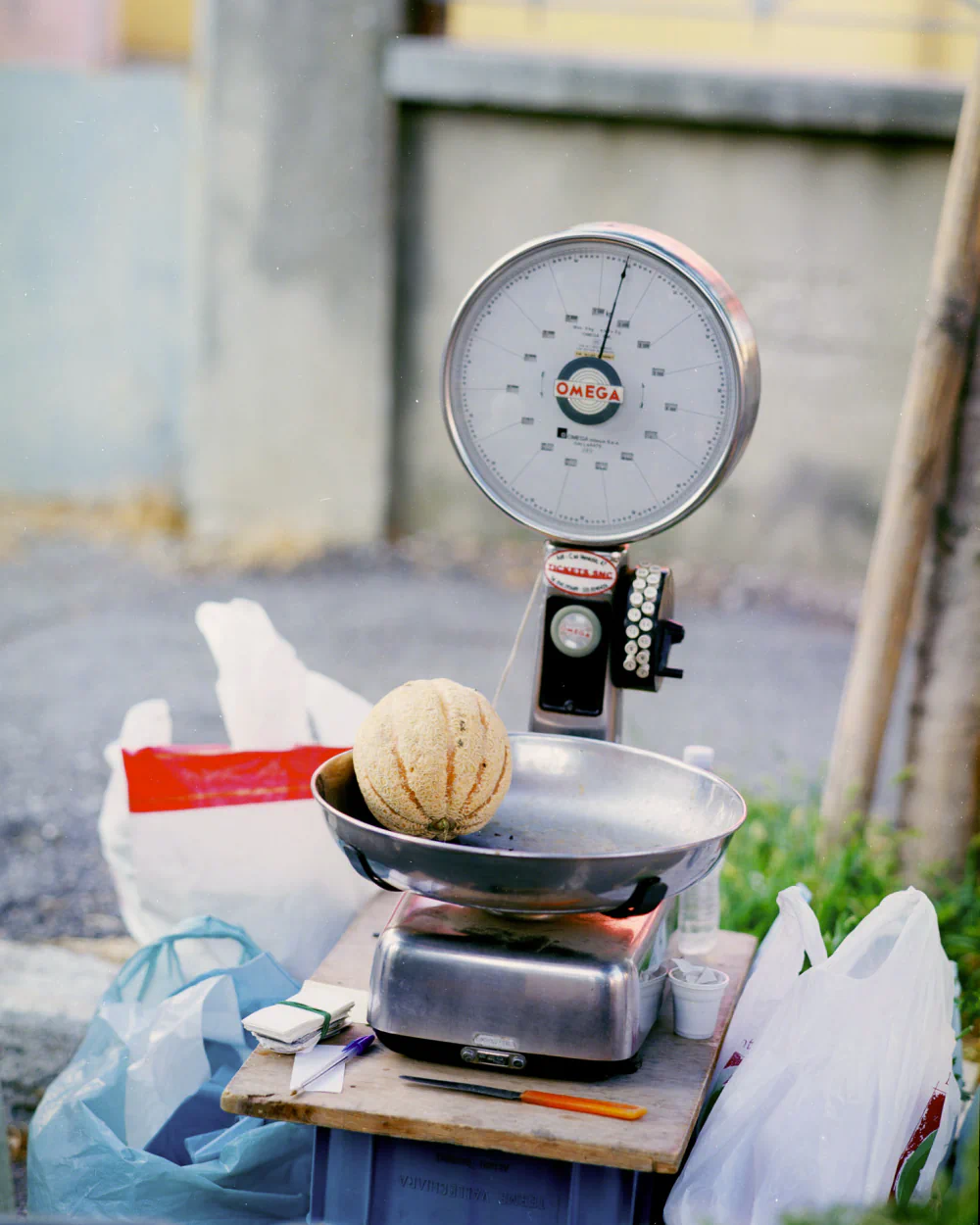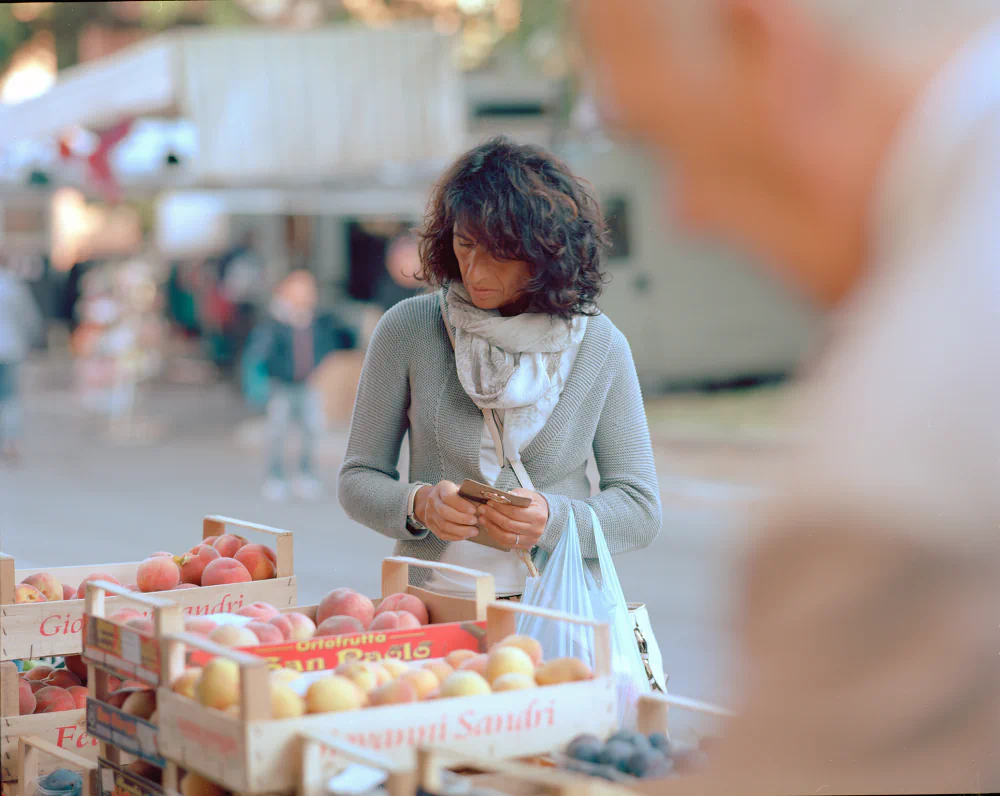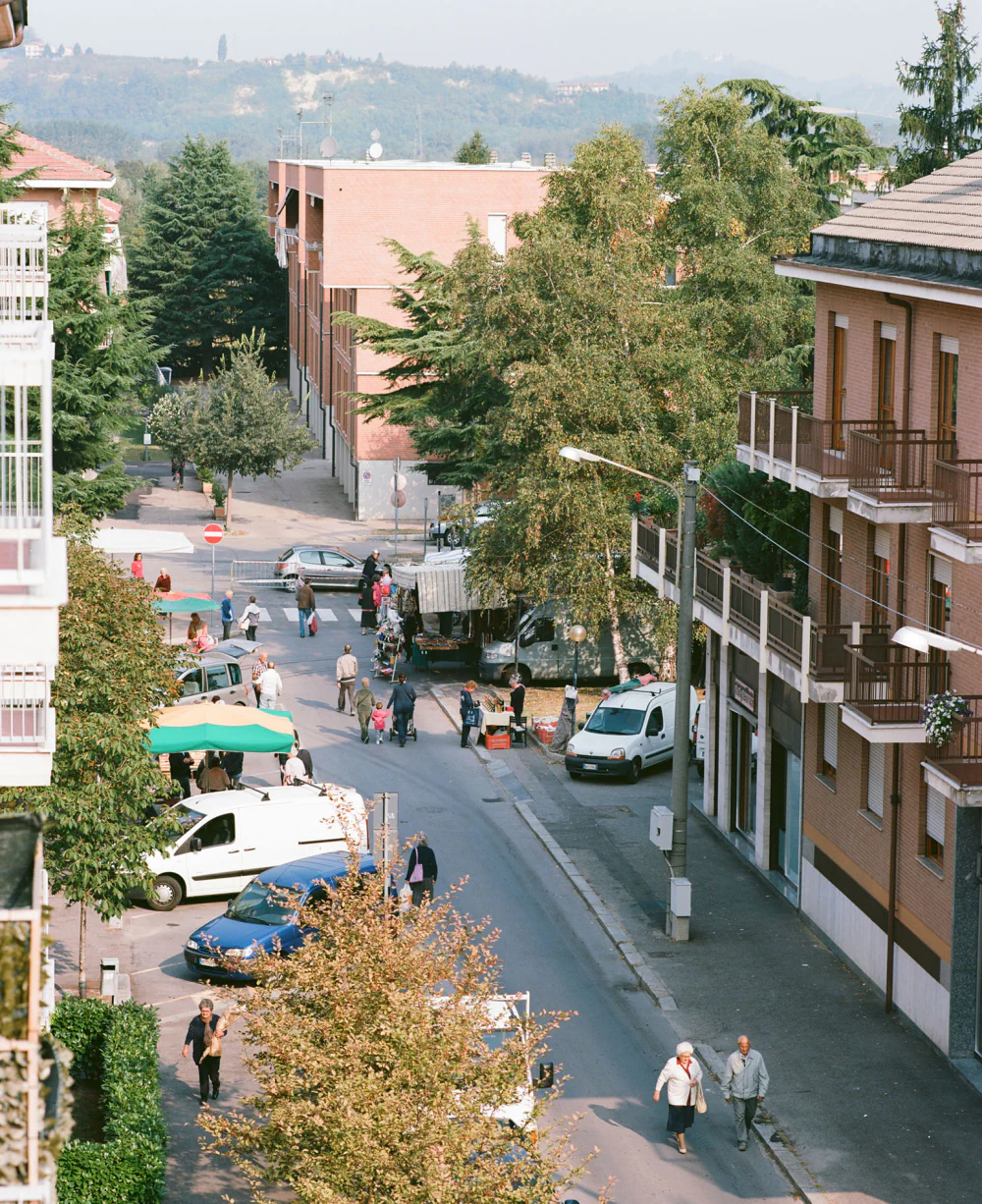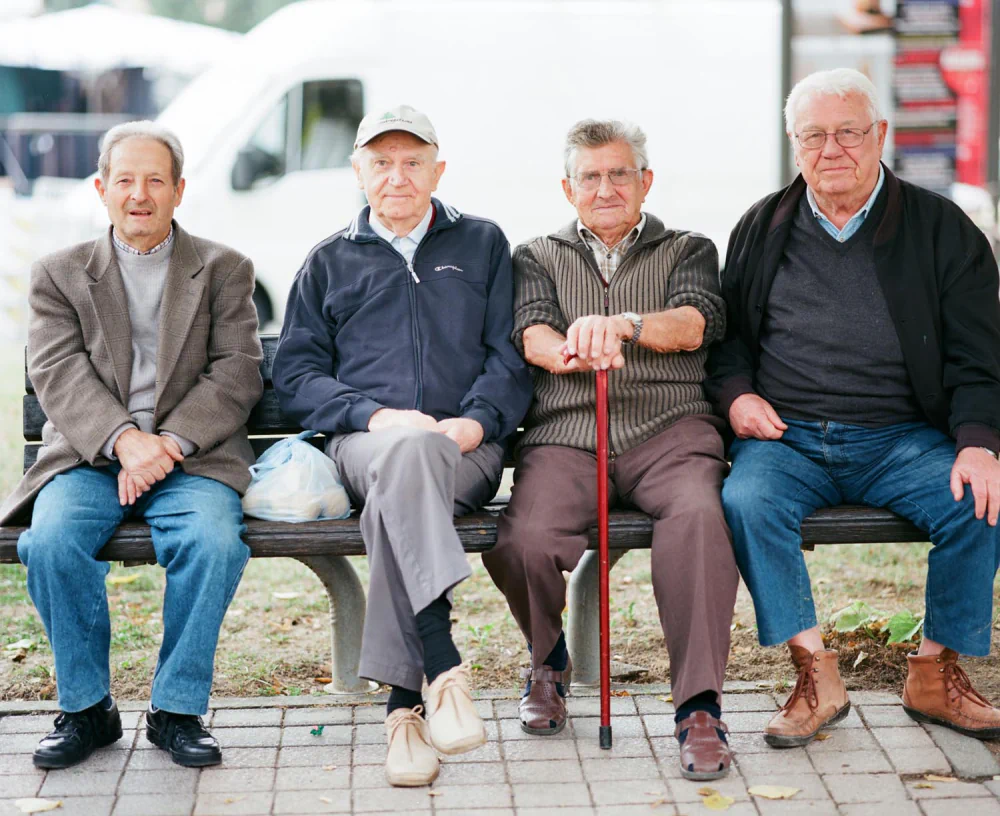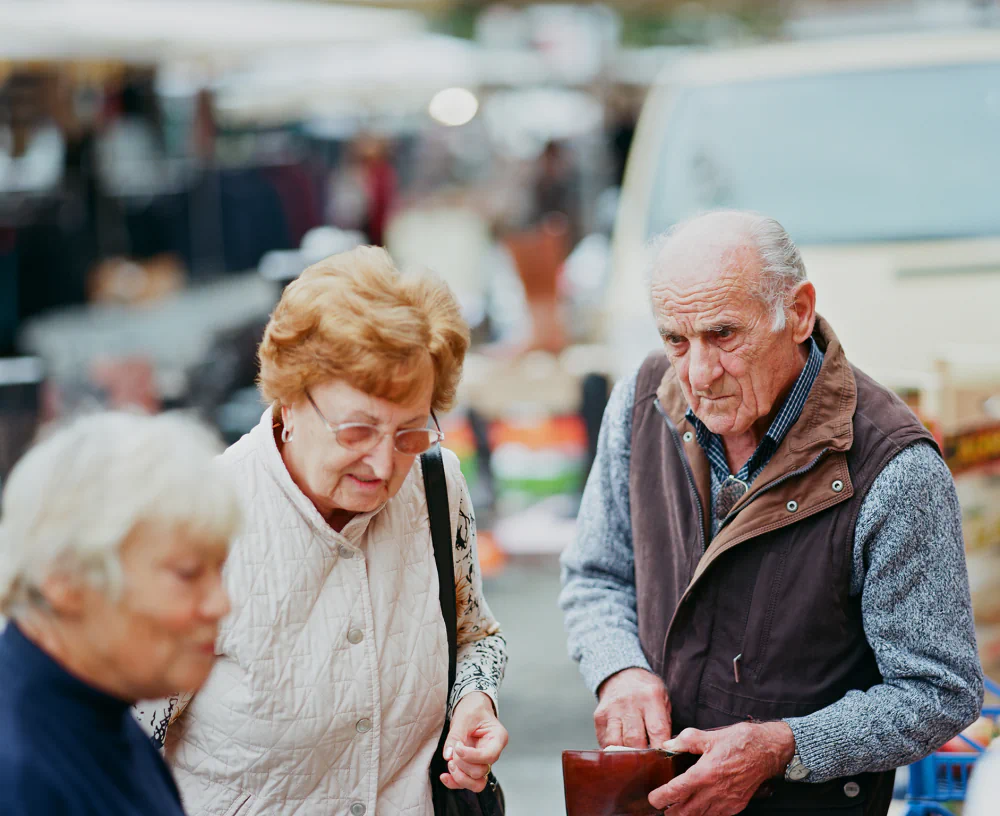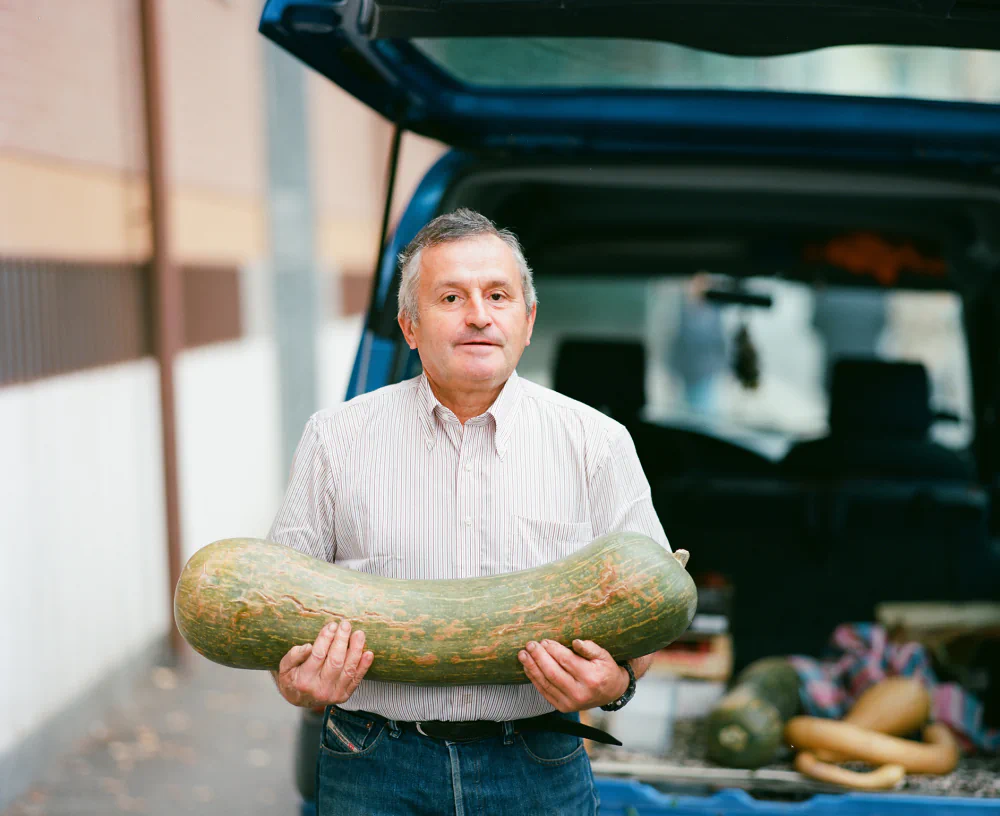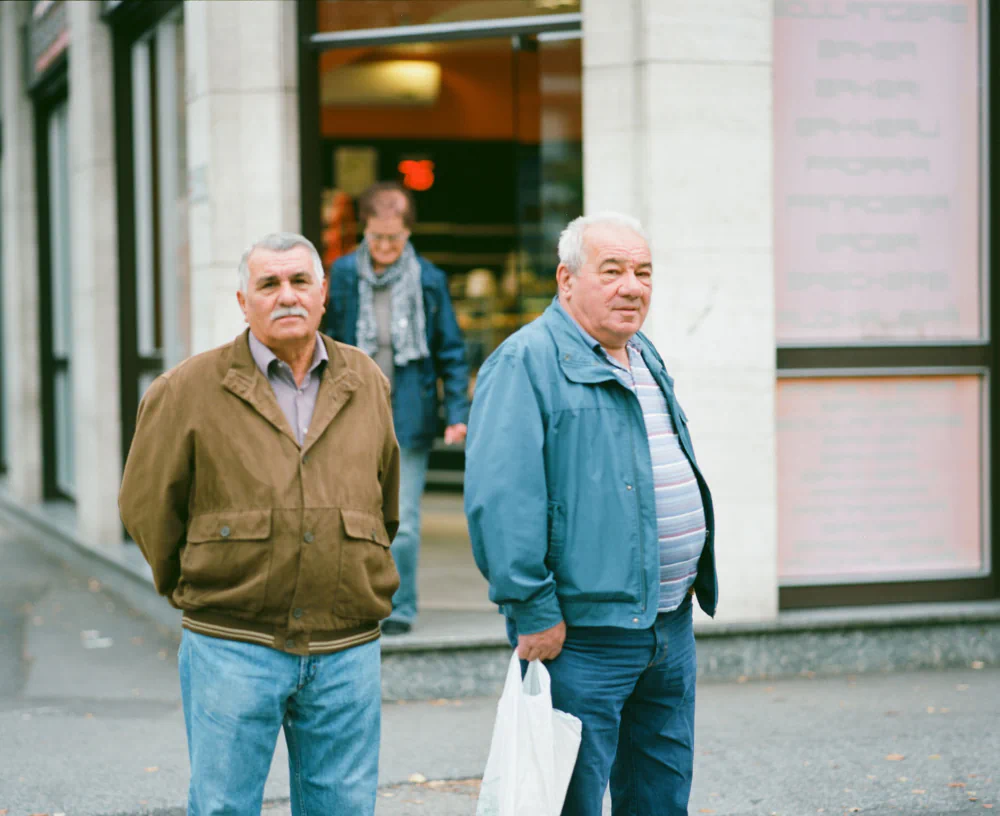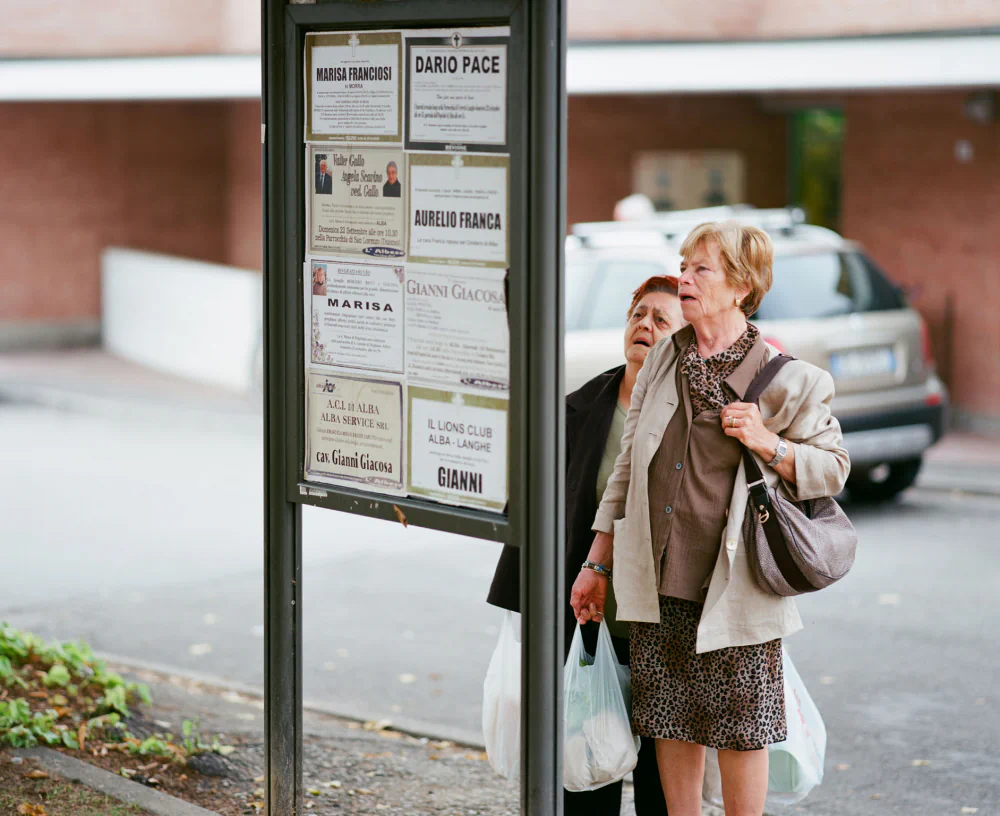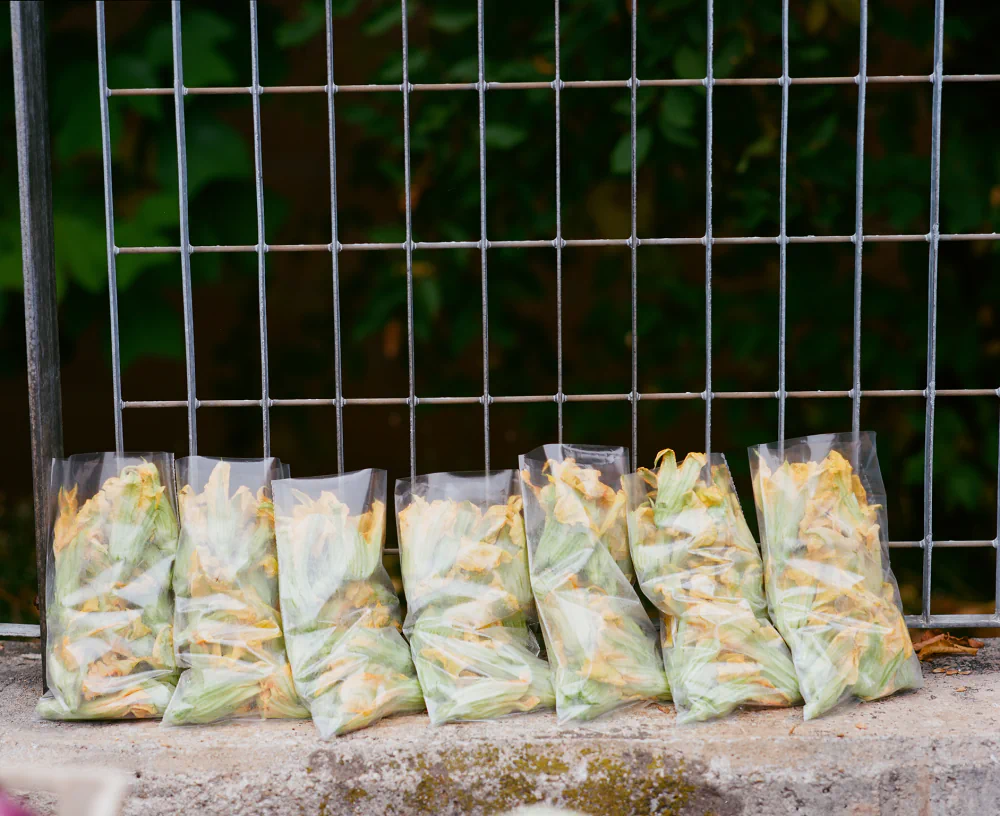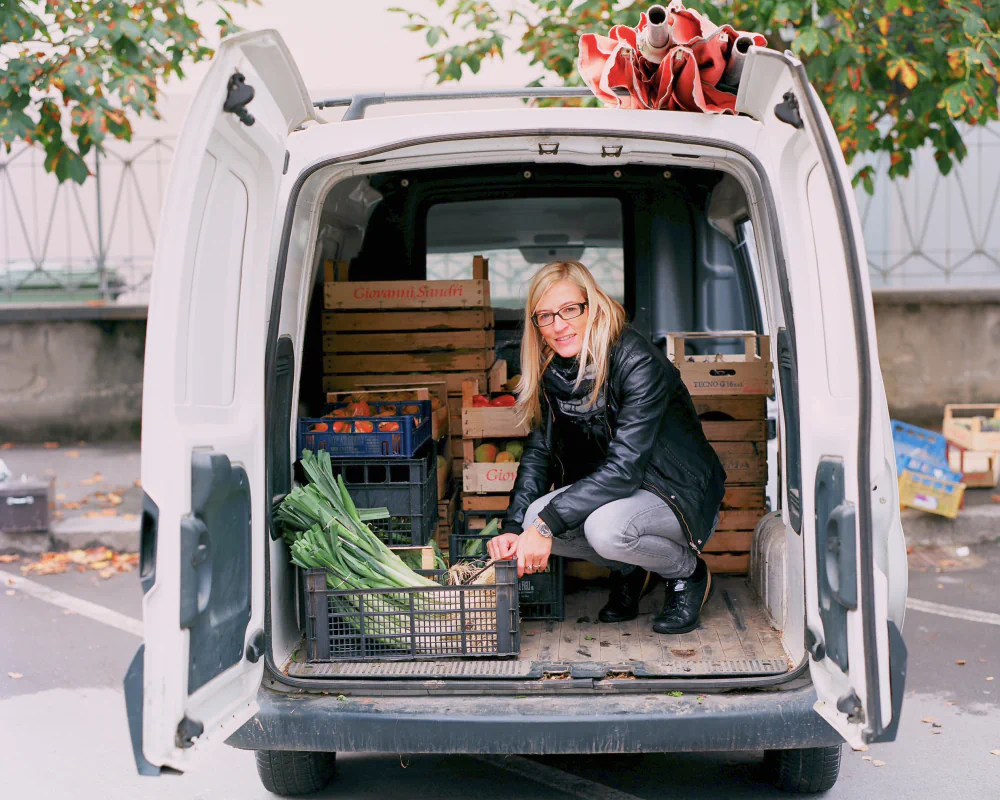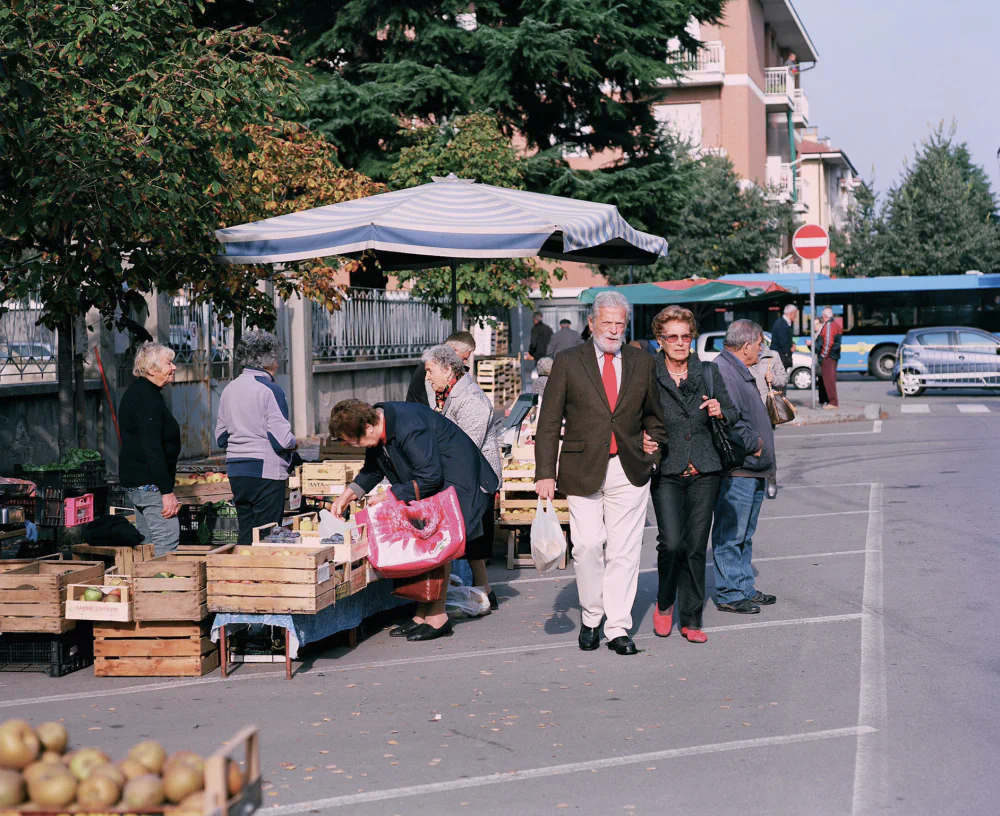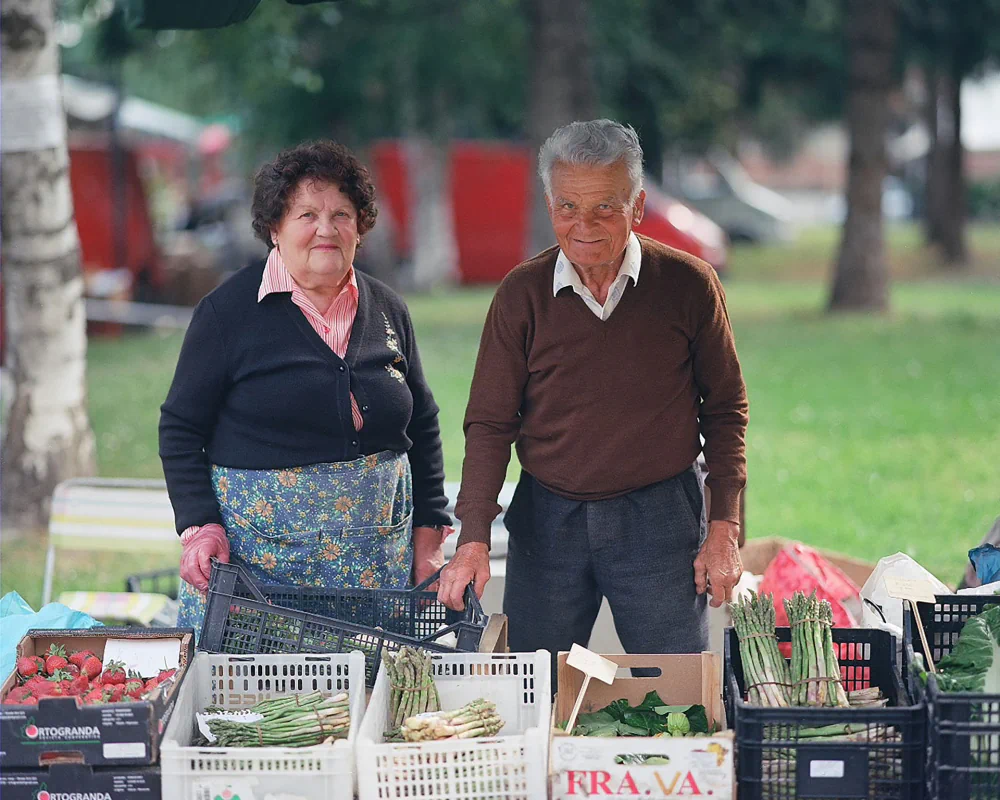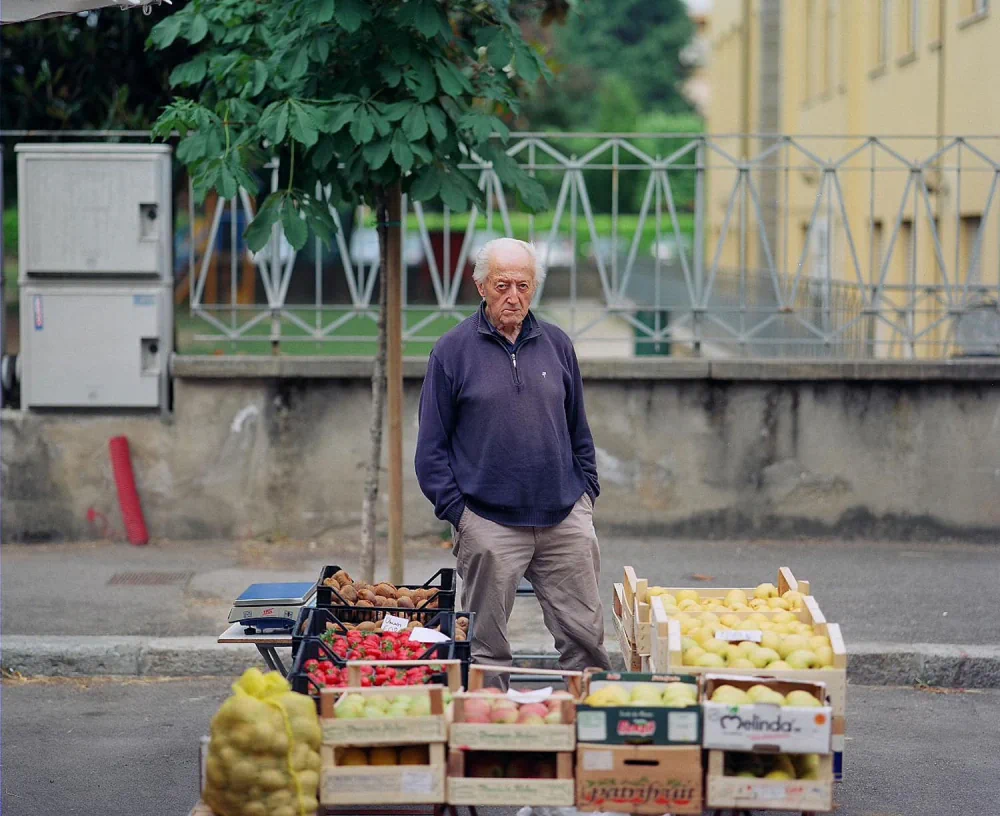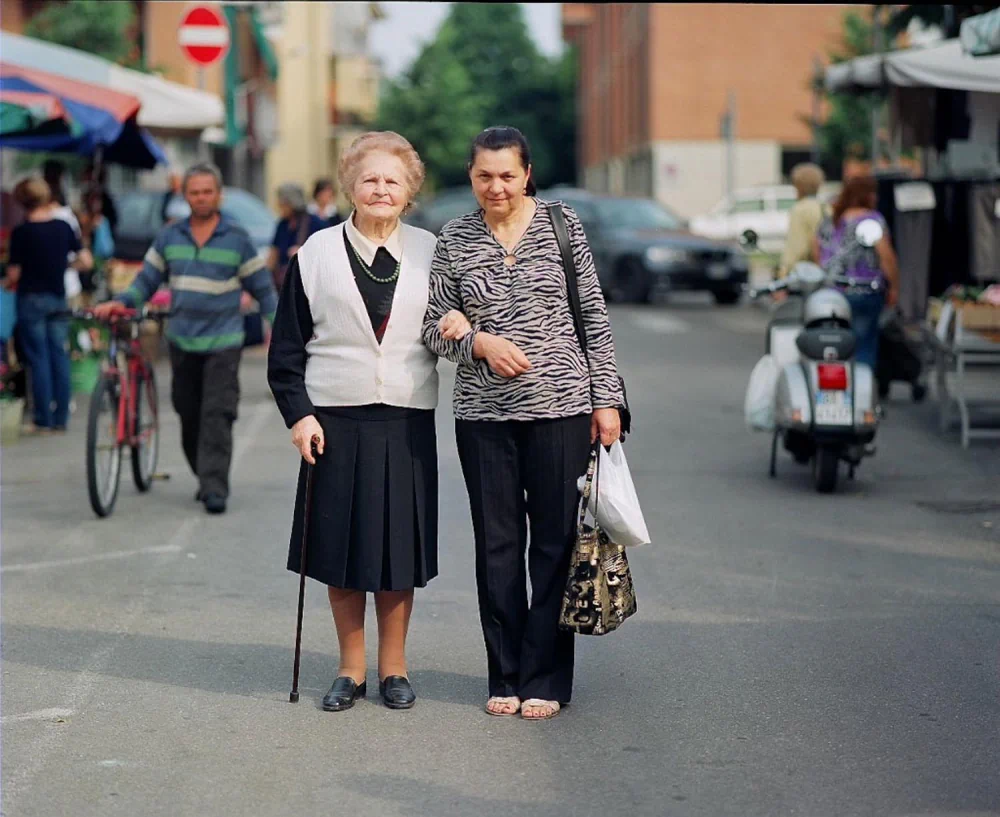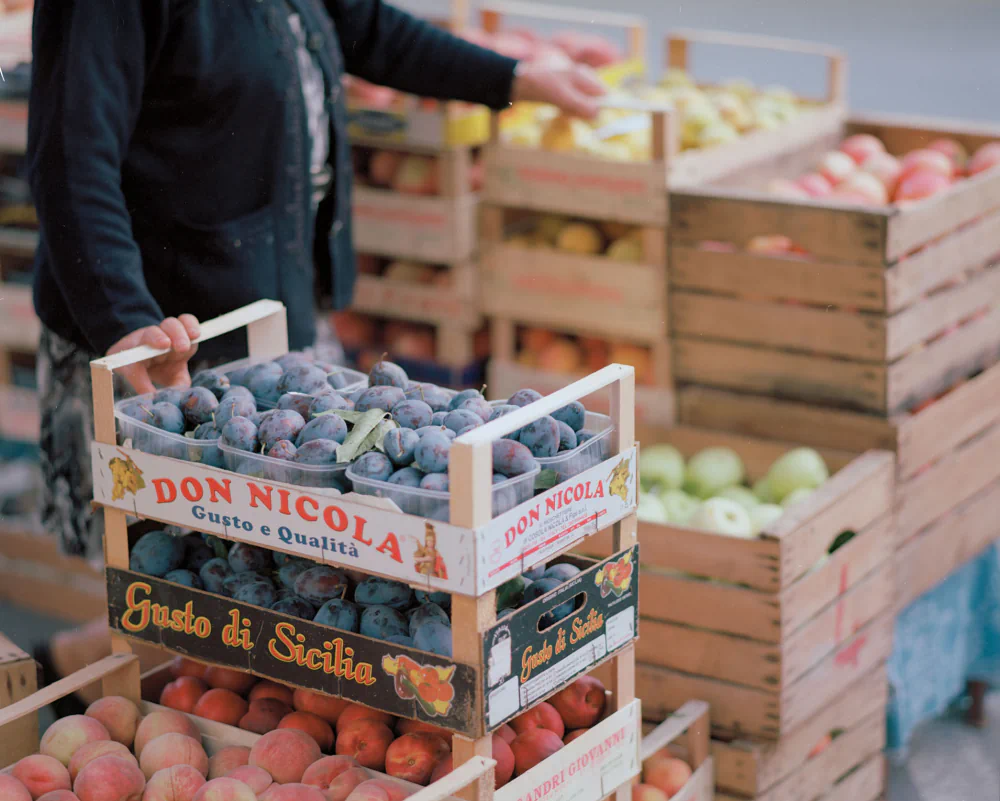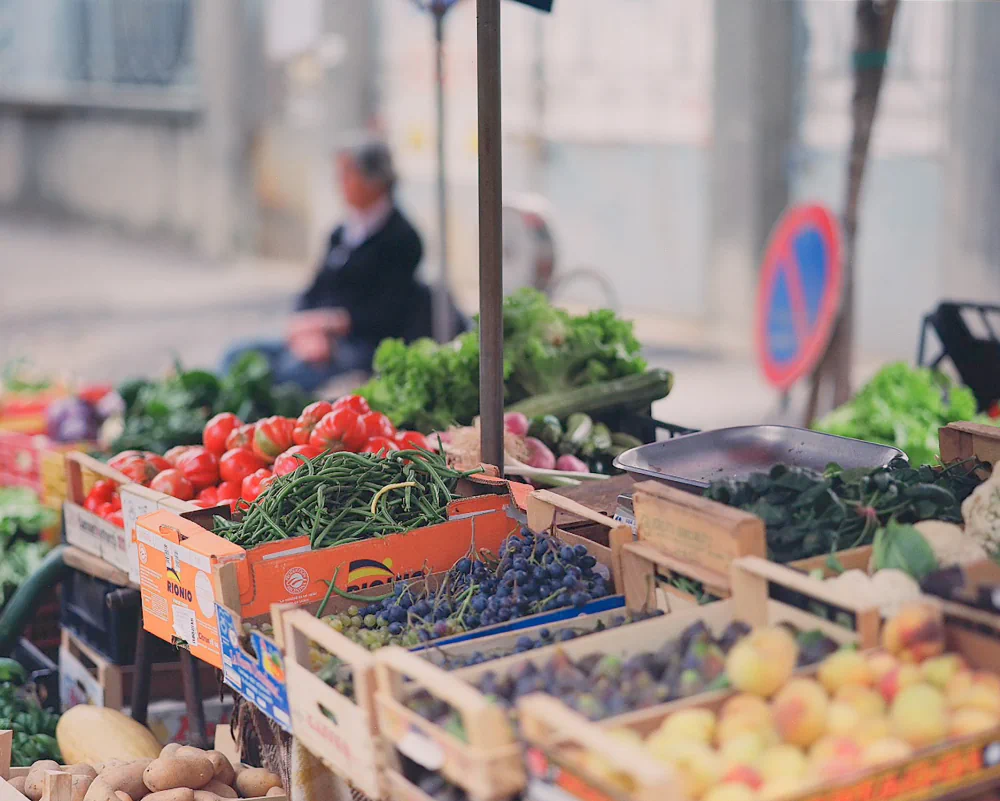
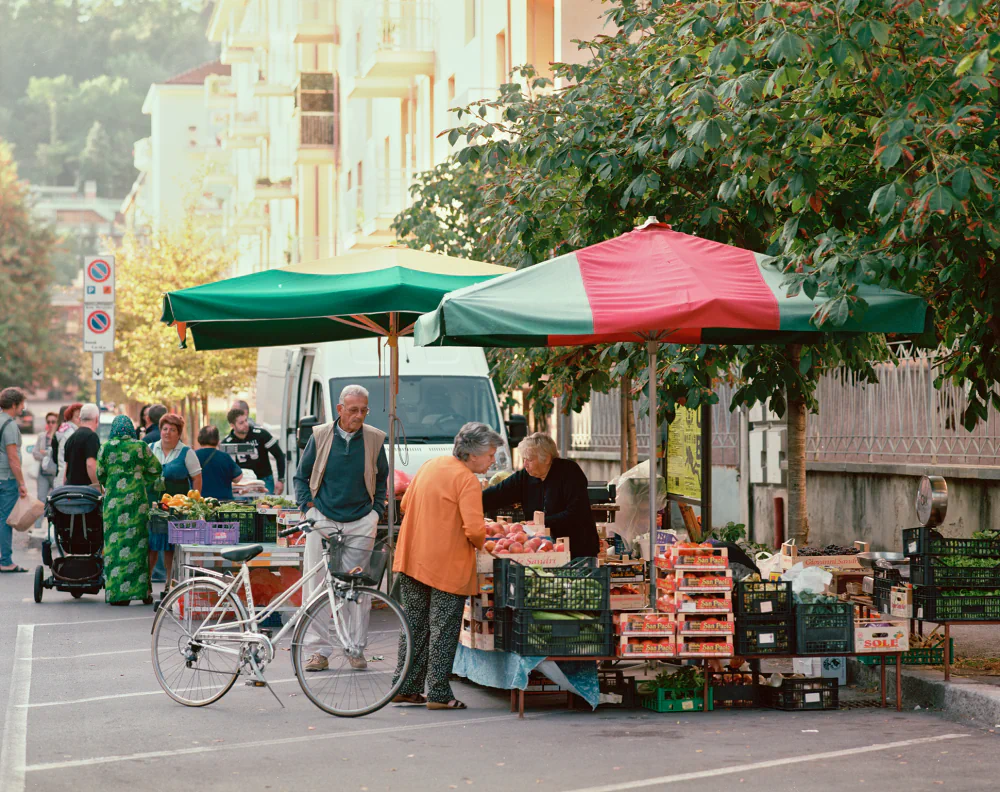
The market takes place at the end of his street every Friday morning.
It is small, with no more than seven farmers, all of whom are local, selling produce grown on their farms just a few kilometers from town.
Very quickly, he realized the importance of this market and how something he had sought for years as a photographer was happening right at his doorstep. Most importantly, he had the opportunity to document something he is deeply passionate about.
The images are part of a larger body of work that began casually during his first year living on Via San Pio Quinto. At first, he was simply a visitor taking pictures of a European market. By the second spring, he decided to take out his long-stored 6×7 film camera and his sturdy Gitzo tripod. He began exercising patience, observing more, and engaging in conversations with the farmers and his neighbors. The presence of the large camera and tripod, often resting off to the side while he shopped, with grocery bags hanging from the tripod’s column, gradually changed the dynamic.
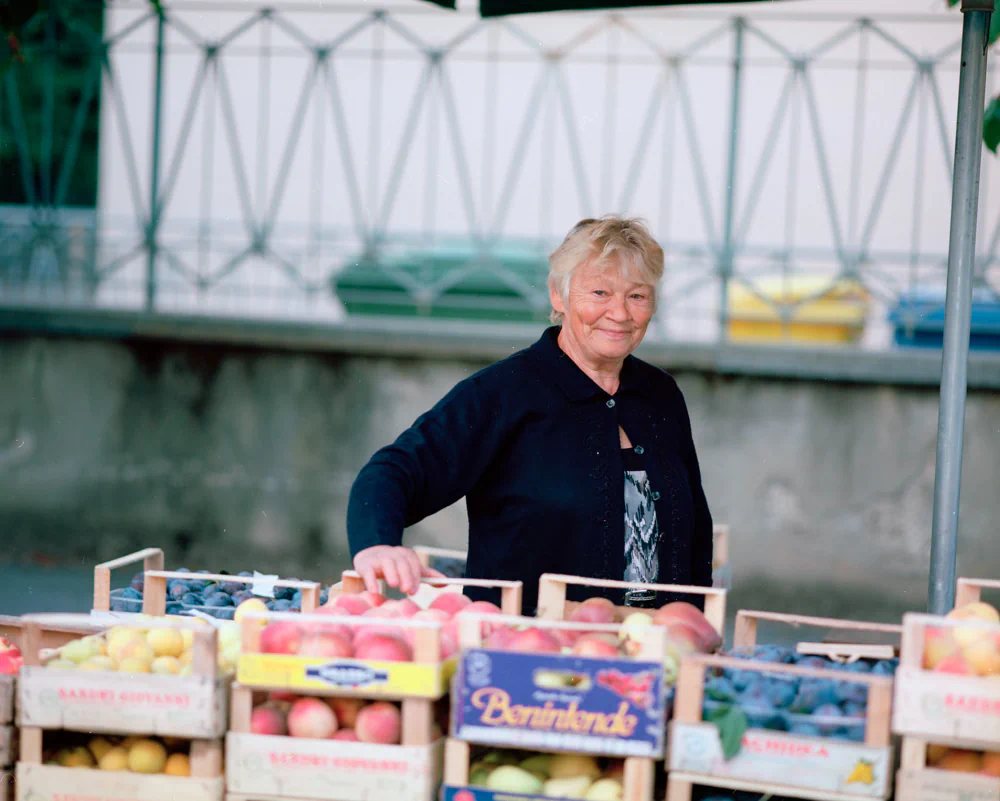
He was “the American,” a curious and enthusiastic man with an Italian name who lived there. “What are you doing? Is this for TV? What do you do with the pictures?” people would ask. He would explain, in halting Italian and imperfect English, that he wanted to document something special and meaningful—something that might not exist for the next generation. Over time, he became part of the community, as if he had lived there all his life. He became part of the market, expected to take photographs every Friday, shop, and, most importantly, socialize. “How is your wife? Is she working today? How is your mom in the USA?” Many, now less timid, began speaking to him in increasingly confident English—the English they had studied in school decades earlier. Photography, in a way, became secondary to maintaining these relationships and staying connected to the rhythm of daily life. He felt part of this close-knit community and privileged by the experience. Once again, he found that photography enriched his life.
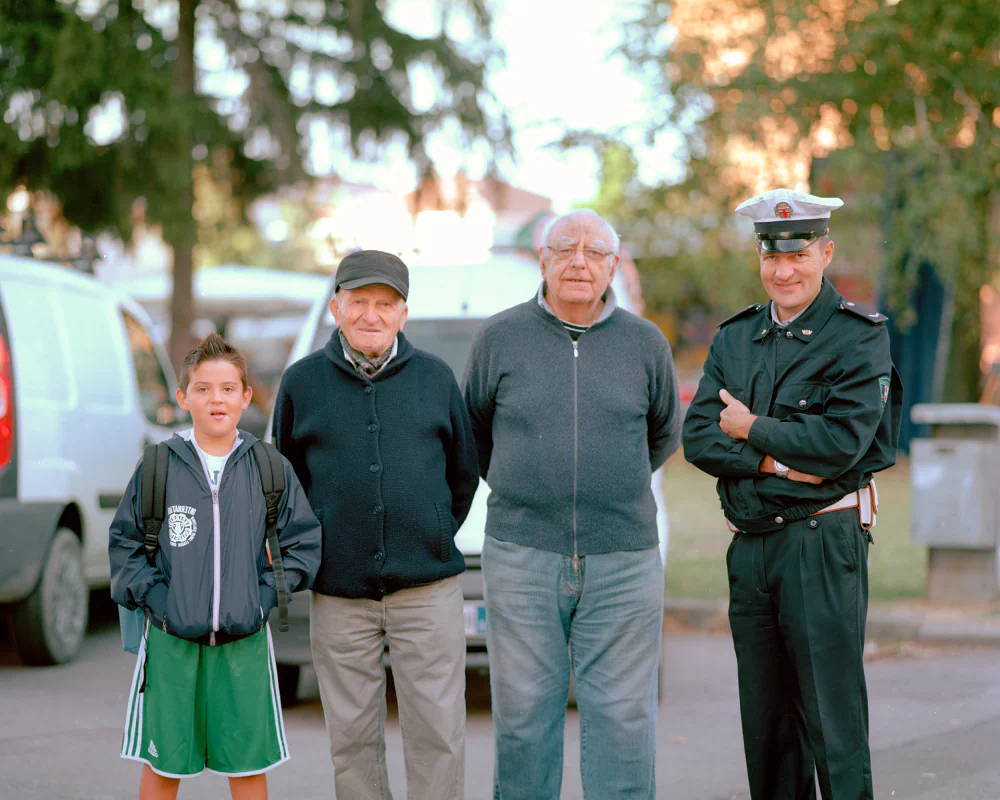
He values these photographs for their honesty and warmth, their intimacy and energy, and the sense of satisfaction and hard work reflected on people’s faces, as well as for the simplicity of a life lived locally.
A return visit to his old neighborhood, San Pio Quinto, reinforced his long-held belief that food is an essential and universal bridge to community. The processes of growing, harvesting, raising, preparing, and sharing food bring people together, fostering connection, family, and joy. Through food, cultural and ideological boundaries can be crossed, uniting people around the shared experience of the table.
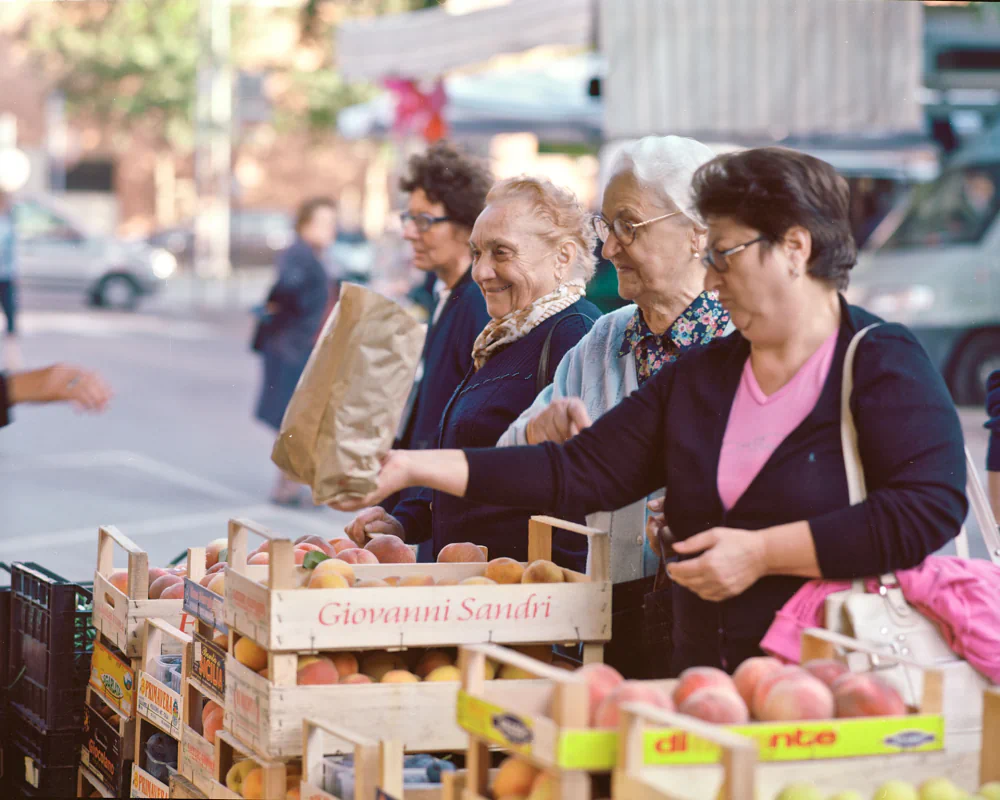
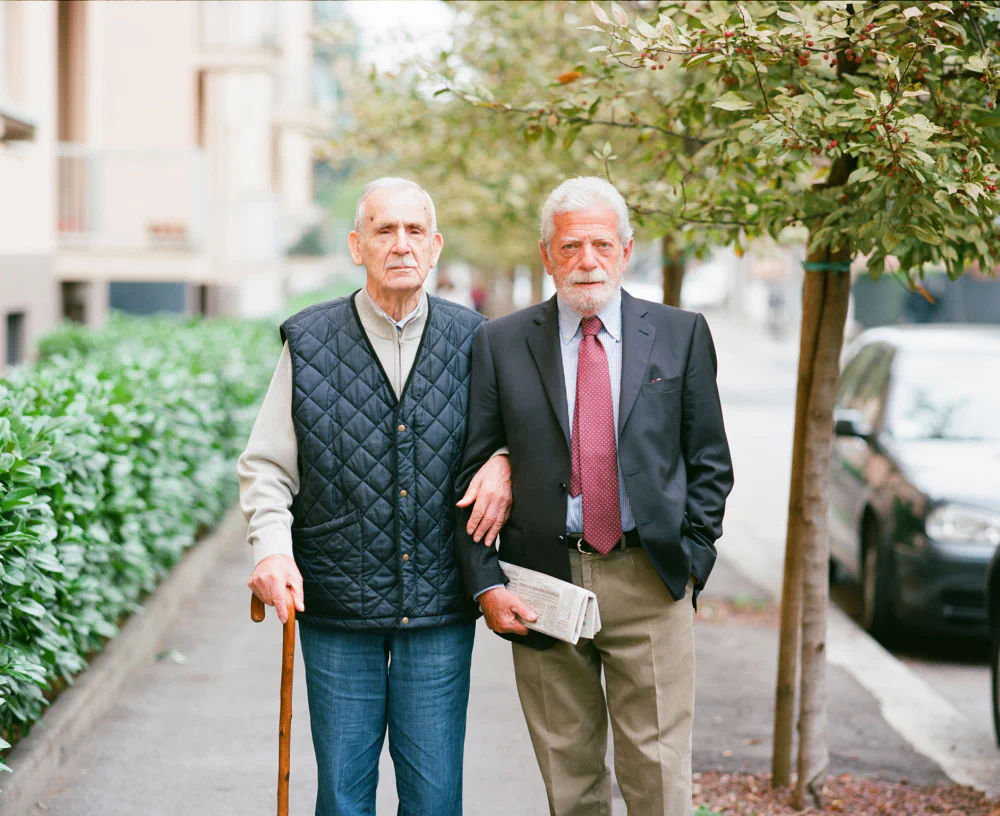
In March of that year, he returned for a short visit to the San Pio Quinto neighborhood of Alba, Italy. Prior to this, he had shared some of the portraits from this body of work on Instagram, where they were seen by his friend Anna, who grew up on Via San Pio Quinto. A portrait of Aldo and Pinanccio—her downstairs neighbors and often her tata (babysitter)—sparked memories, and they decided to visit together.
He arrived early at the Friday market and began walking through it, searching for familiar faces and old friends. Then, emerging from a group gathered at one of the stalls, Aldo and his wife appeared. The joy on all their faces was immediate and unmistakable. They resumed conversation as if no time had passed, sharing the same questions, laughter, and exchanges that had once filled their Friday mornings a decade earlier.
In that moment, his belief in food as a foundation of friendship, community, and family was not only reaffirmed—it was lived.
On his first visit to any new village or city, he continues the practice of going first to the local market. It is there that understanding begins—through making connections, learning, and discovering good food.
About John Anthony Rizzo
John Anthony Rizzo is a fine art and documentary photographer whose work explores everyday life through a distinctly personal visual style. He is the recipient of a Massachusetts Council for the Arts and Humanities Photography Fellowship and a National Endowment for the Arts Project Grant. Influenced by Garry Winogrand, Robert Frank, W. Eugene Smith, Eugène Atget, and Ray Metzker, he began his career in Boston, where he studied and taught photography.
After relocating to Portland, Oregon, he established a successful career as an advertising and editorial photographer, working with clients across the United States and Europe. His interest in the growing wine industry in Oregon and Washington, as well as in sustainable agriculture, led to a series of celebrated portraits of farmers and food producers. His work has appeared in major campaigns, books, and magazines, and he received the Award of Excellence in Photography from the International Association of Culinary Professionals.
He was commissioned by the Italian government to photograph two books on Italian wine producers and grape growers. He also dedicated time to pro bono work with Share Our Strength and the Oregon Food Bank, creating sensitive documentary work addressing hunger in America. Over the years, his documentary projects have covered a wide range of subjects, including the Merce Cunningham Dance Company’s Massachusetts Artist Residency and professional wrestling.
A key figure in Portland’s art scene, he founded Ars Nova Gallery and was co-founder and artistic director of Obscura Gallery, both recognized for their curatorial excellence. His photography has been exhibited at the Griffin Museum of Photography, 555 Gallery, Honeyjones Gallery, Black Box Gallery, Praxis Gallery, PhotoPlace Gallery, Vision Gallery, and N.E.S.O.P.’s Garner Center Gallery, among others. His work has recently been featured on the cover of the Berlin-based magazine Dummy, in F-Stop Magazine’s 2025 Portfolio Issue as a Featured Artist, and on Leica’s LFI Blog.
Today, he divides his time between Lincoln, Massachusetts, and Barbaresco, Italy, continuing to teach, lecture, jury exhibitions, and review portfolios. He travels widely with his wife Donna and his Leica, always seeking to frame the beauty and complexity of everyday life. [Official Website]