Before this series existed, he was chasing the life he was told to want: a bigger title, a higher paycheck, a larger house.
The kind of career that makes parents proud at dinner tables and impresses friends at parties.
He worked hard, climbing the corporate ladder during the day and freelancing at night. He pushed himself as a climber, as a photographer, as a partner, and as a friend. He became the person others turned to when their world was falling apart—the listening ear, the steady shoulder—absorbing their sadness, their desperation, and their weight on top of his own.
He was good at it, all of it, which became its own trap. When someone delivers at 200%, people do not marvel at the effort; they recalibrate their expectations. What was exceptional becomes the baseline. So he pushed harder, gave more, and performed louder.
Until he collapsed.
The weight of everything—the work, the relationships, the ambition, the constant outpouring with nothing flowing back—broke something in him. Not bent, but broken. He was burned out, depressed, and running on a battery that would not charge past 10%. The few things that still gave him energy—being in nature, moving through landscapes, creating images—could only restore him in fragments. Even those fragments, he kept giving away.
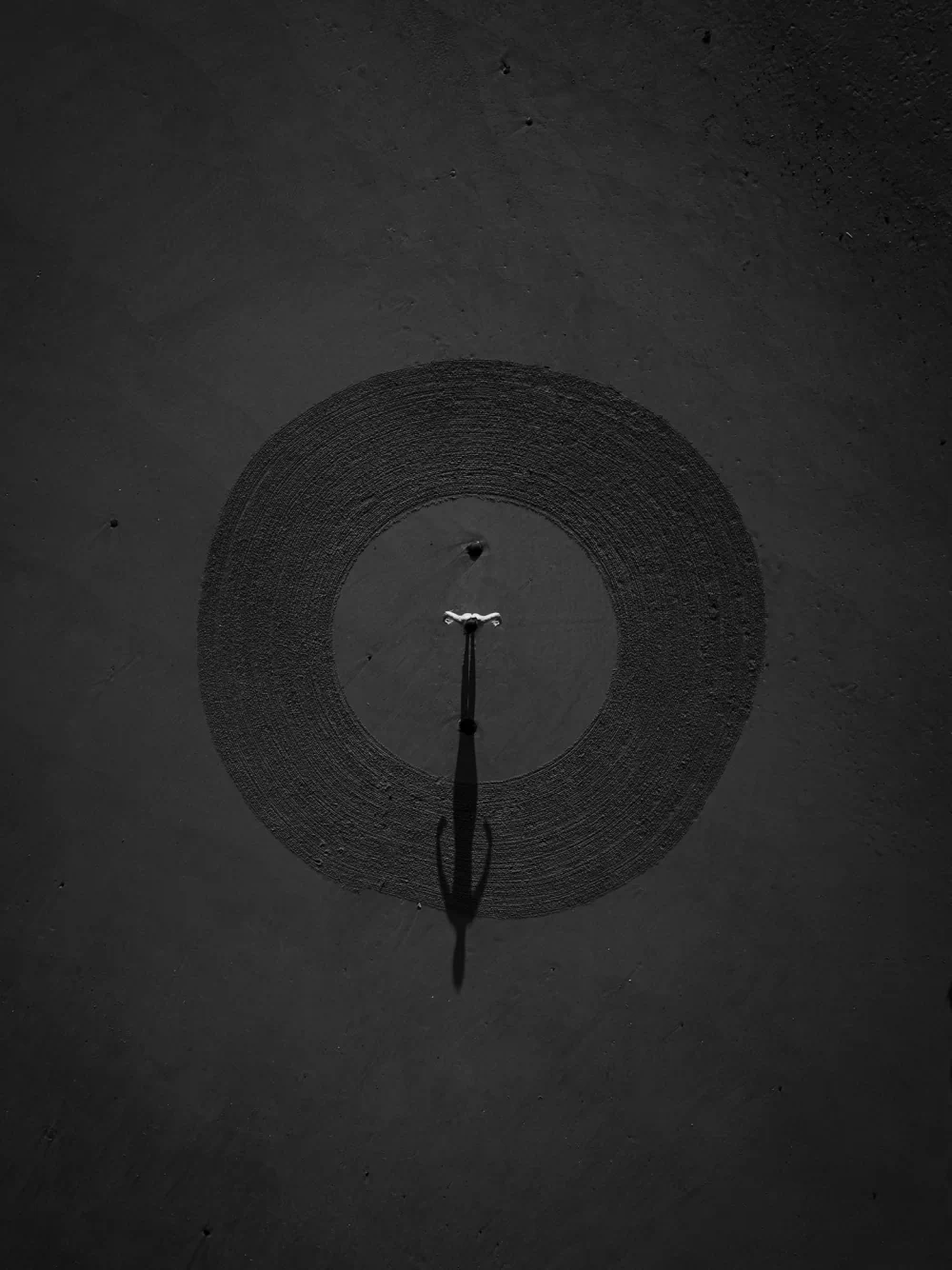
Aerial Bodies was born from that collapse. Not as a project or a career move, but as a way back to himself.
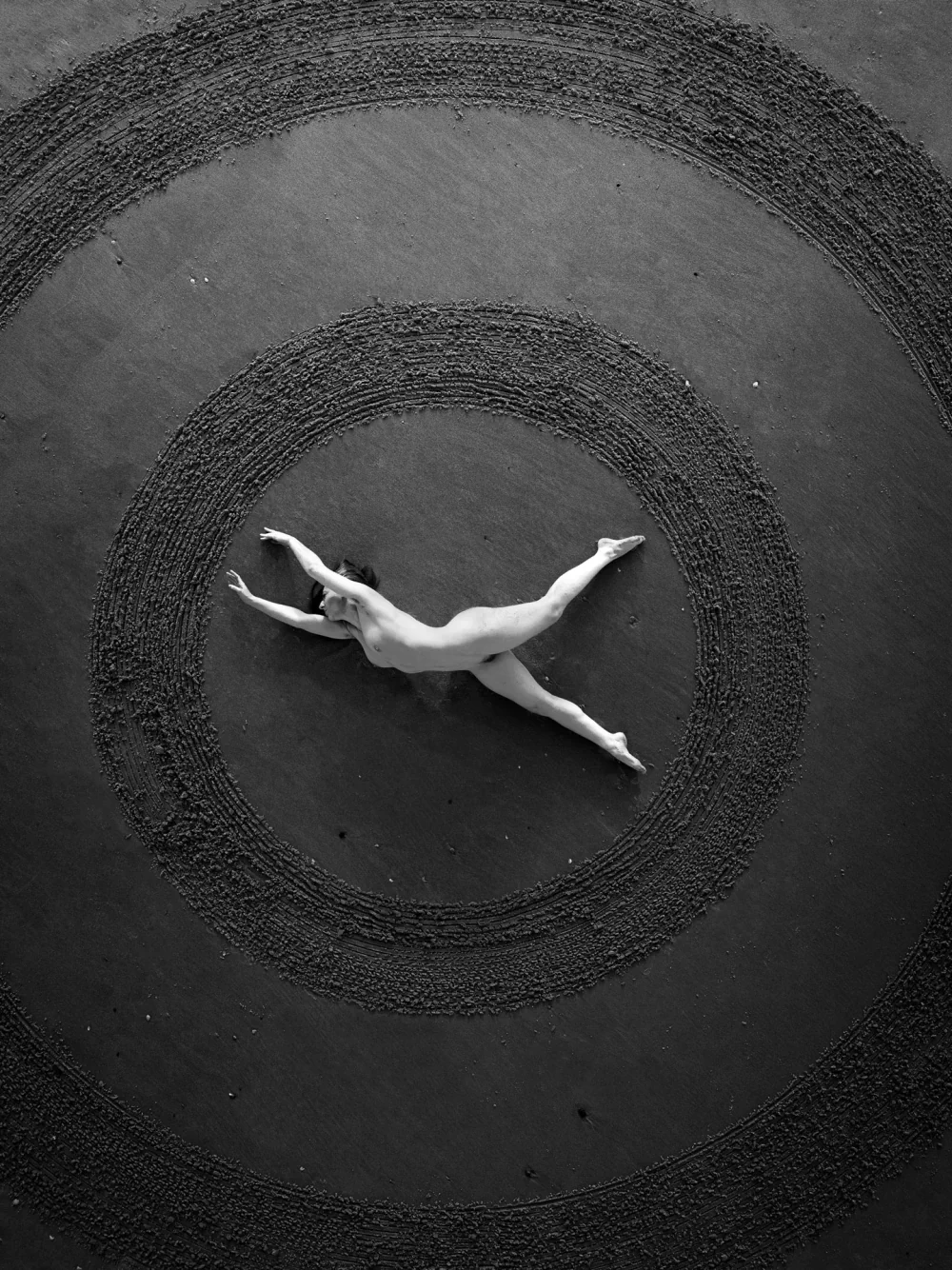
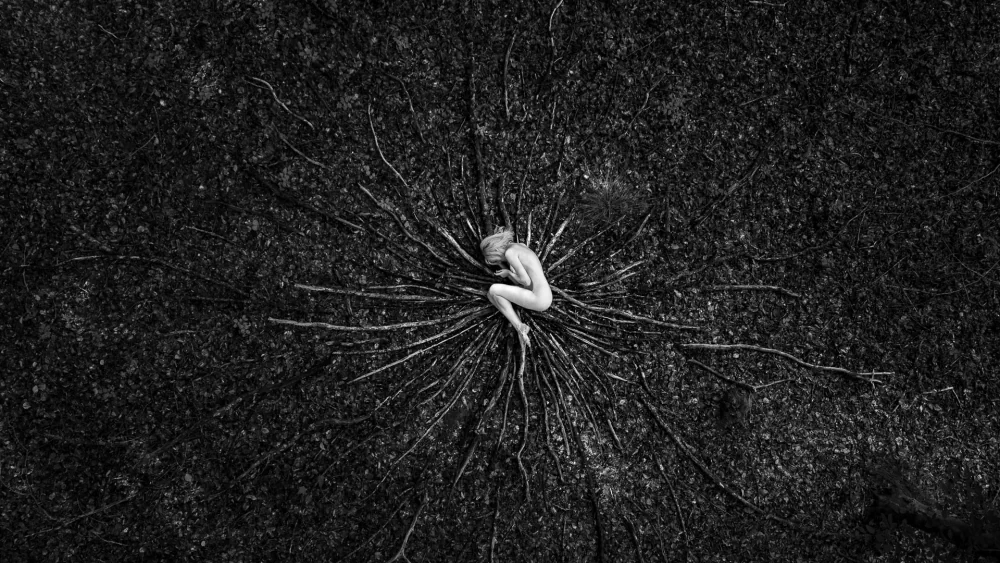
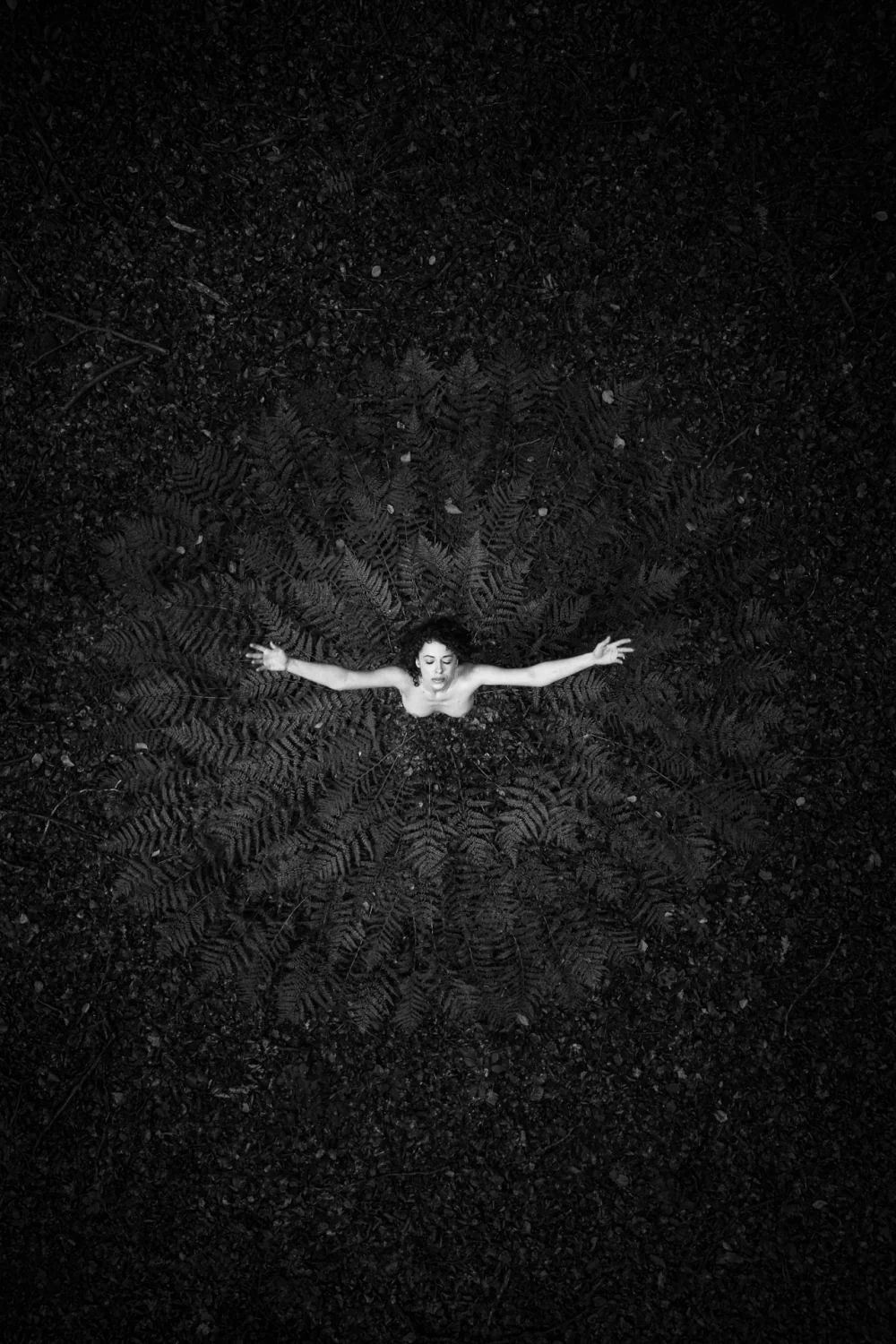
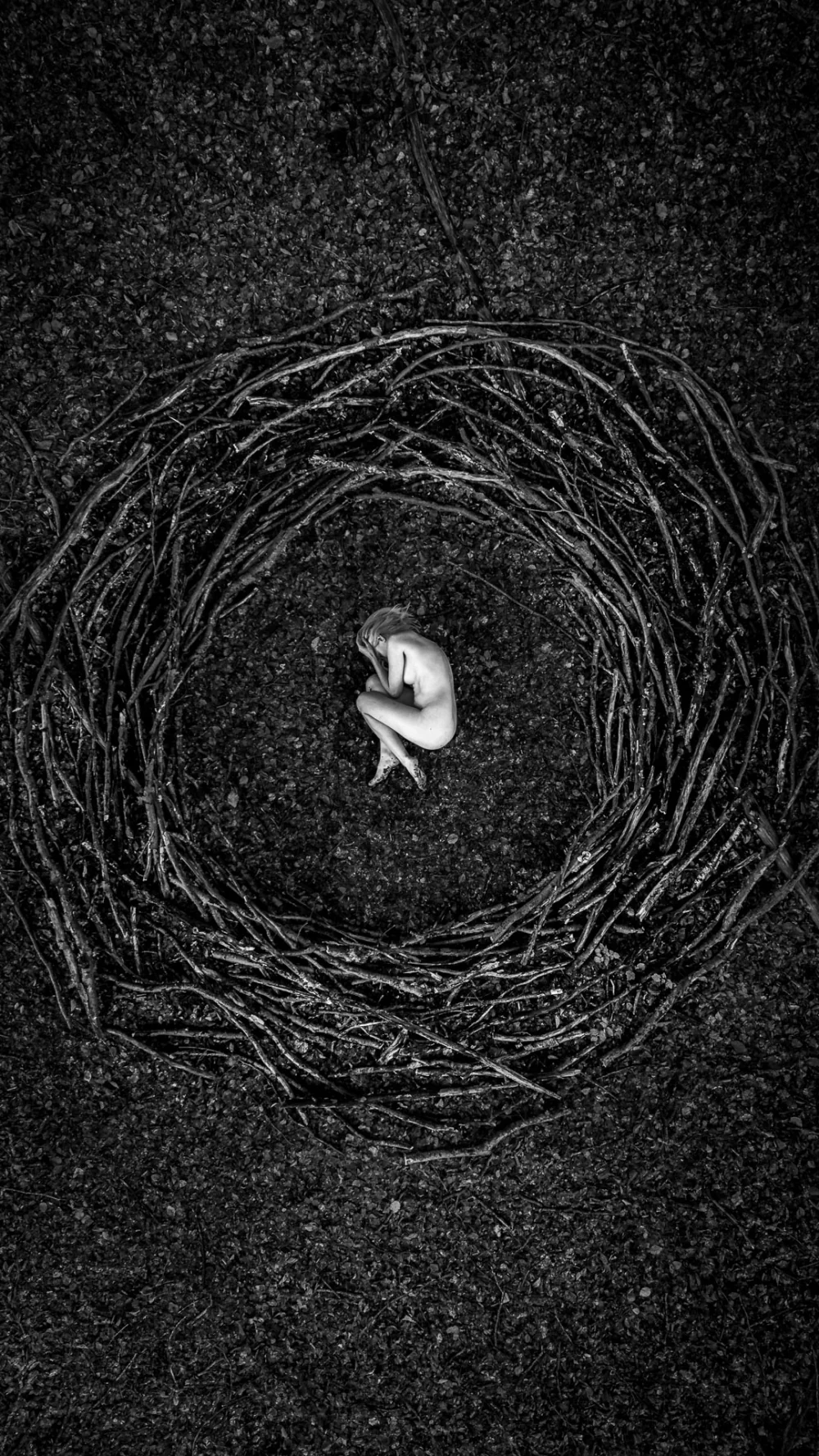
The series began as something he needed before it became something he could share. He started placing unretouched figures, including his own, into natural landscapes and photographing them from above. The aerial perspective was not initially an aesthetic choice; it was an instinct. He needed distance. He needed to see the human body the way nature sees it: small, temporary, unhurried. Not performing, not producing, just present.
From above, something shifts. The body becomes a shape among shapes, no more important than the curve of a river or the texture of sand. The ego dissolves. Titles, achievements, and expectations disappear. What remains is the raw, quiet truth of a human being resting on the earth, held by it, returned to it.
The figures in this work, as in all of his work, are unretouched, not as a statement, but as a conviction. He works in a world where bodies have become another arena for performance. Magazines airbrush, social media filters reshape, and AI generates faces that never existed and calls them beautiful. People are surrounded by images of individuals who do not look like real people, yet are expected to chase those impossible standards. He rejects that pursuit. The natural human body is an artwork in itself. It does not need artificial beautification. Skin, scars, softness, and asymmetry do not require correction, because none of them were ever wrong. Attempting to be more “beautiful” by artificial standards becomes another form of performance, and this work exists where performance ends.
Sometimes the figures are accompanied by land art created on site—forms shaped from branches, stones, and natural materials that carry specific meaning. These constructions act as visual stories: symbols of safety, belonging, origin, growth, and nourishment. They give the body a context beyond the landscape, transforming each image into a narrative that can be felt before it is articulated. The land art does not decorate the scene; it deepens it, offering a doorway into the relationship between the human form and the natural world from which it originates.
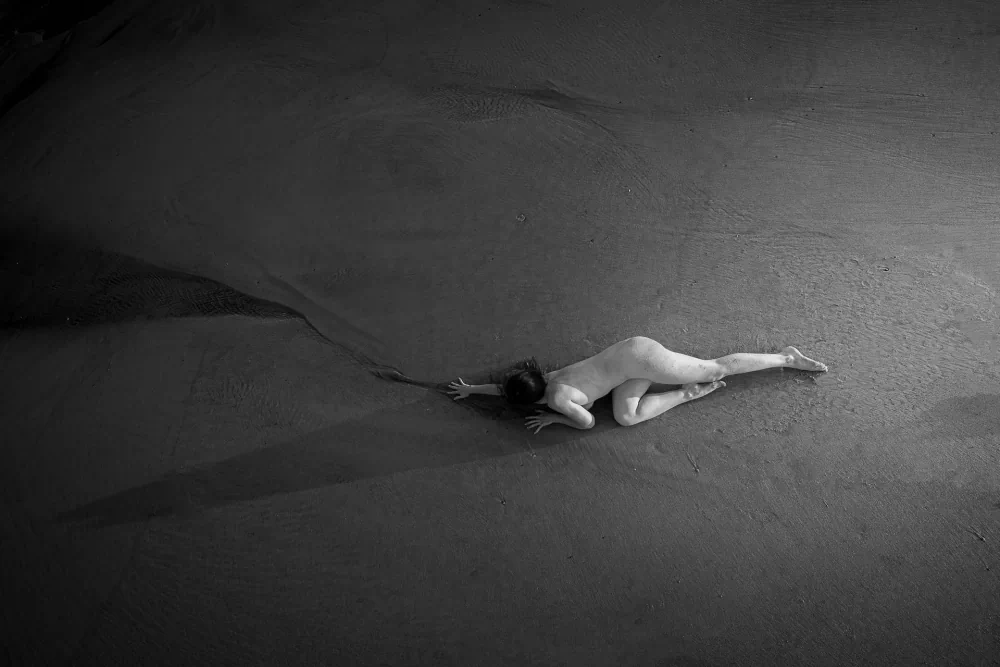
The nudity in this work is not the destination; it is a doorway—a path to vulnerability, presence, and the recognition that beneath everything performed, there is a self that existed before titles and will exist after them. The body in nature is not exposed; it is returned.
Aerial Bodies is more than a photographic series. It is an act of resistance against a culture that treats bodies as tools for productivity and attention as currency to be harvested. It is a refusal to continue running on a broken battery. It is also an invitation—not to abandon modern life, but to remember what lies beneath it.
He creates this work for the person he was three years ago: the one who could not stop, who believed rest was laziness and stillness was failure, whose body was always a vehicle for achievement and never a place to simply be.
For those who recognize themselves in that description, for those for whom the noise has become so constant that silence has been forgotten, these images are for them. They are not an escape; they are a reminder that they were not made to rush, not made to perform, and that somewhere beneath the exhaustion, there is a version of themselves that the earth still knows by name.