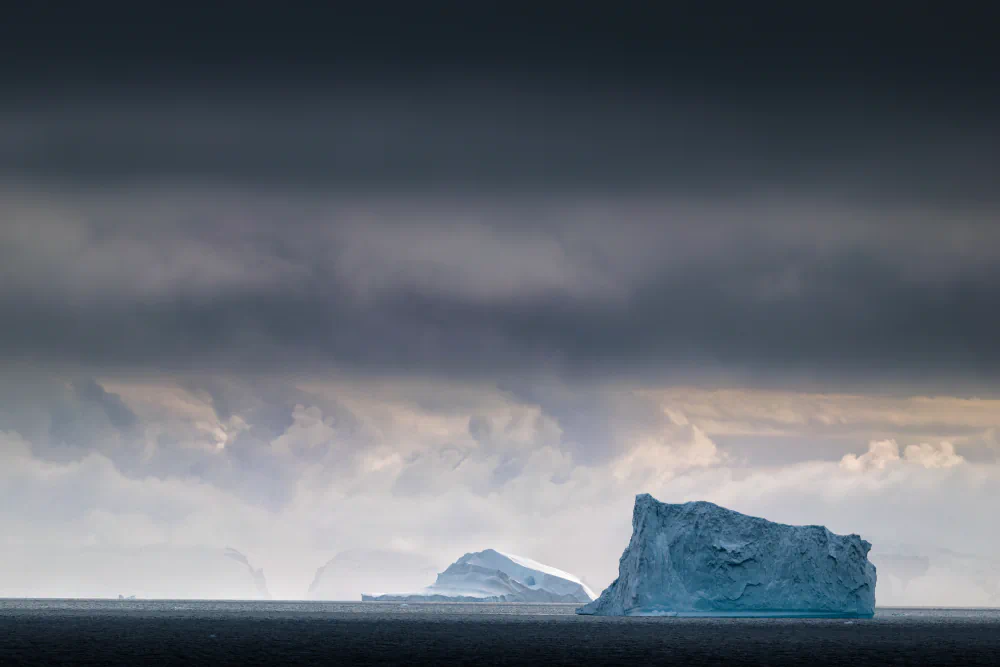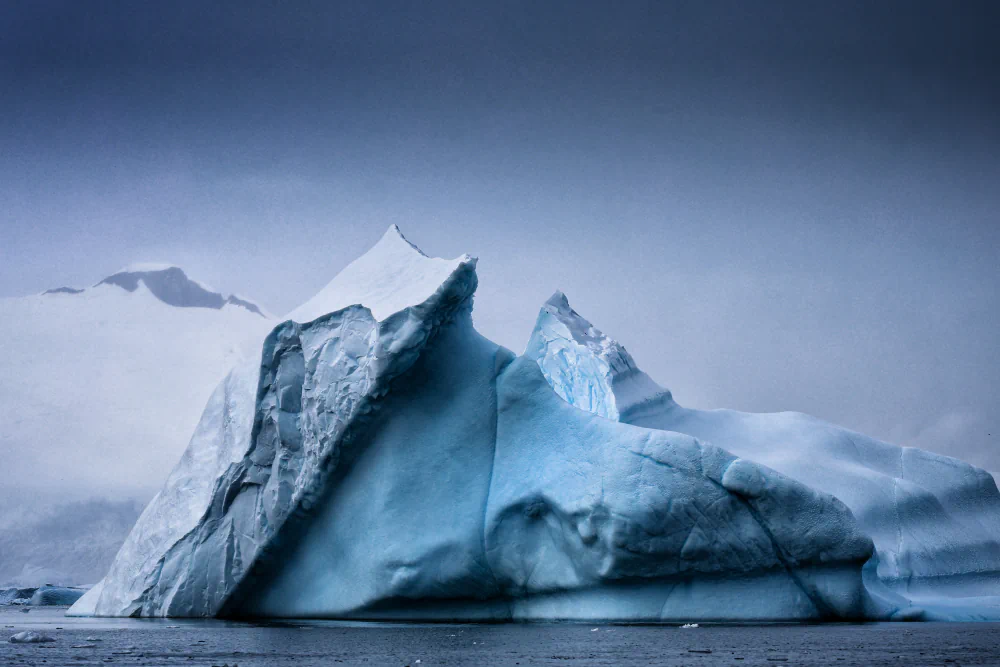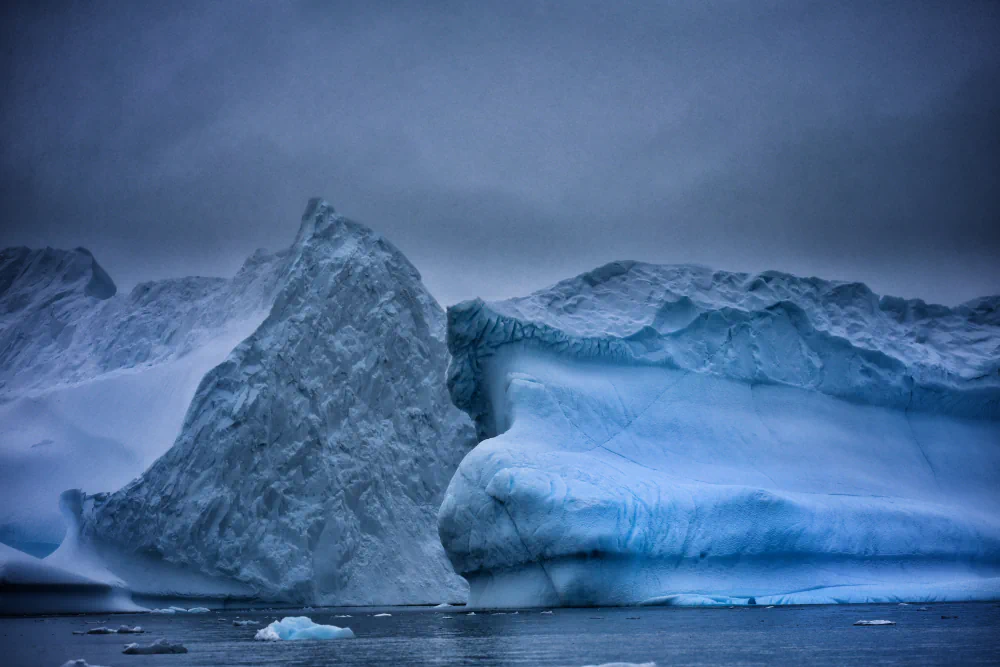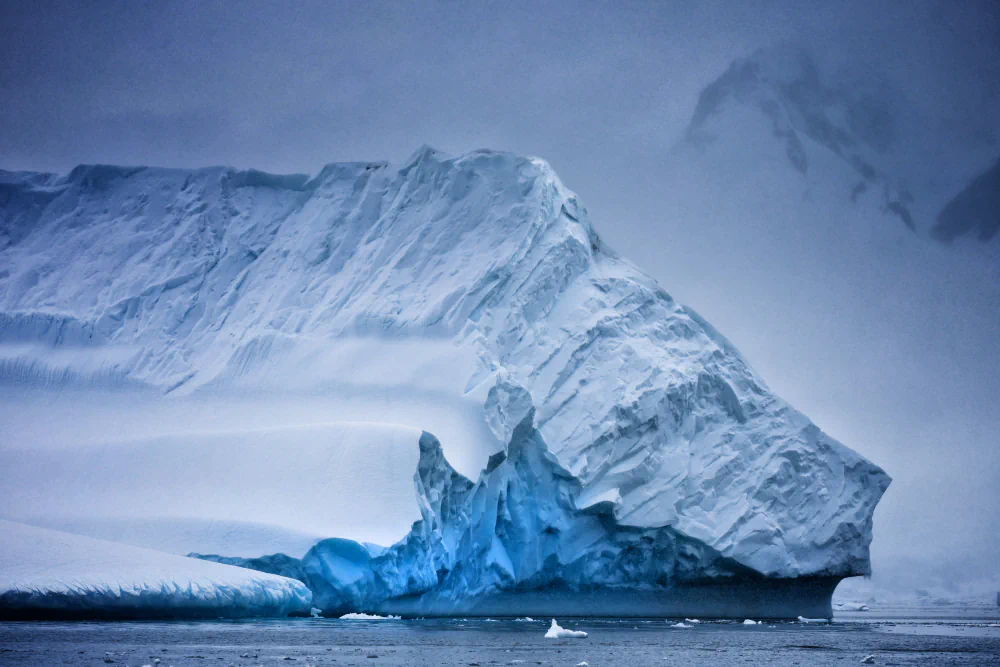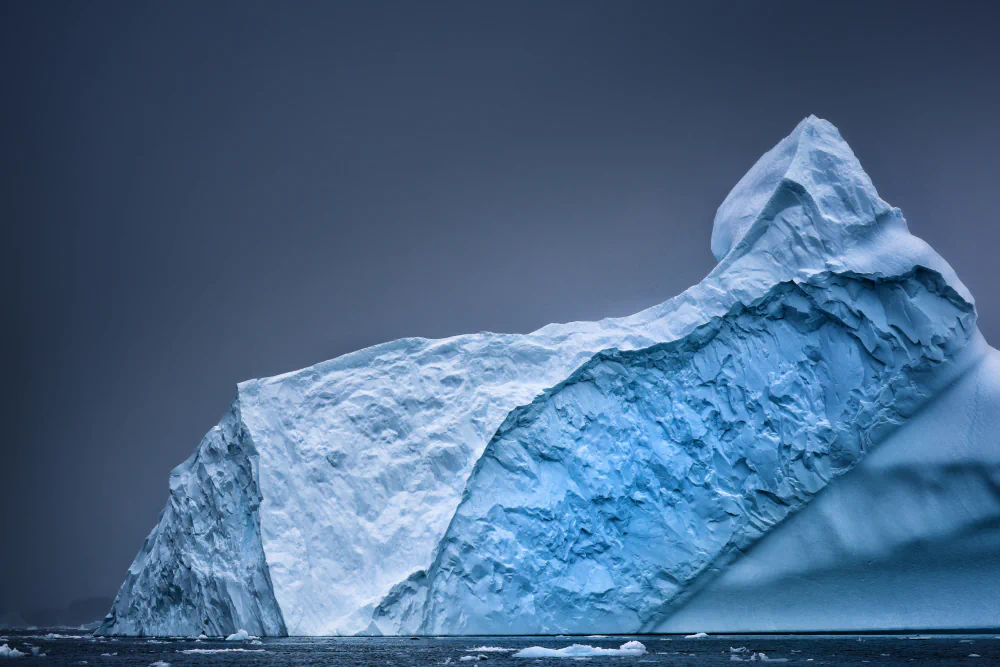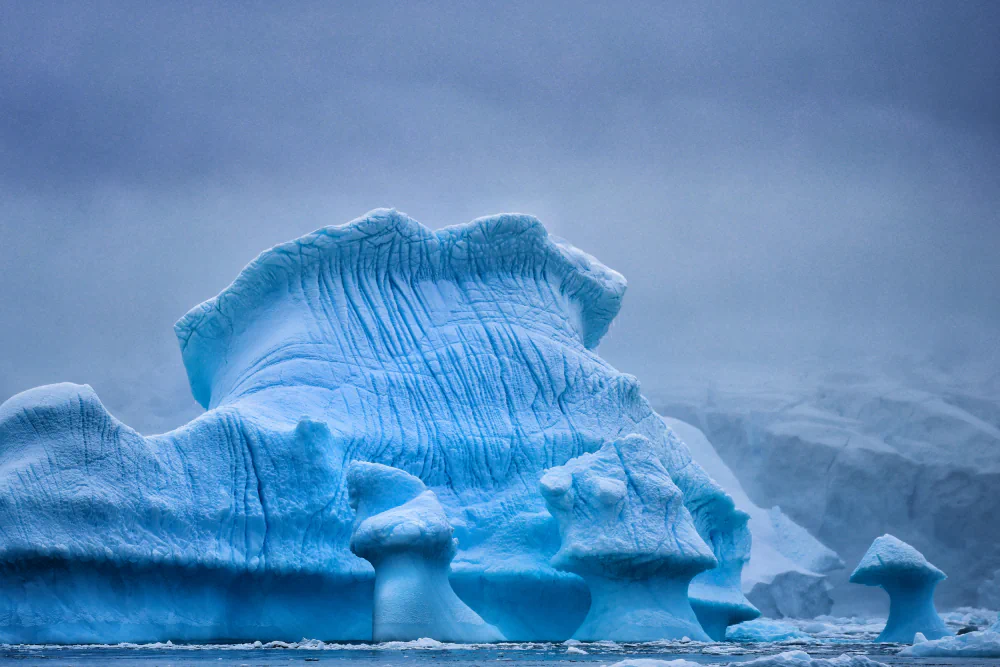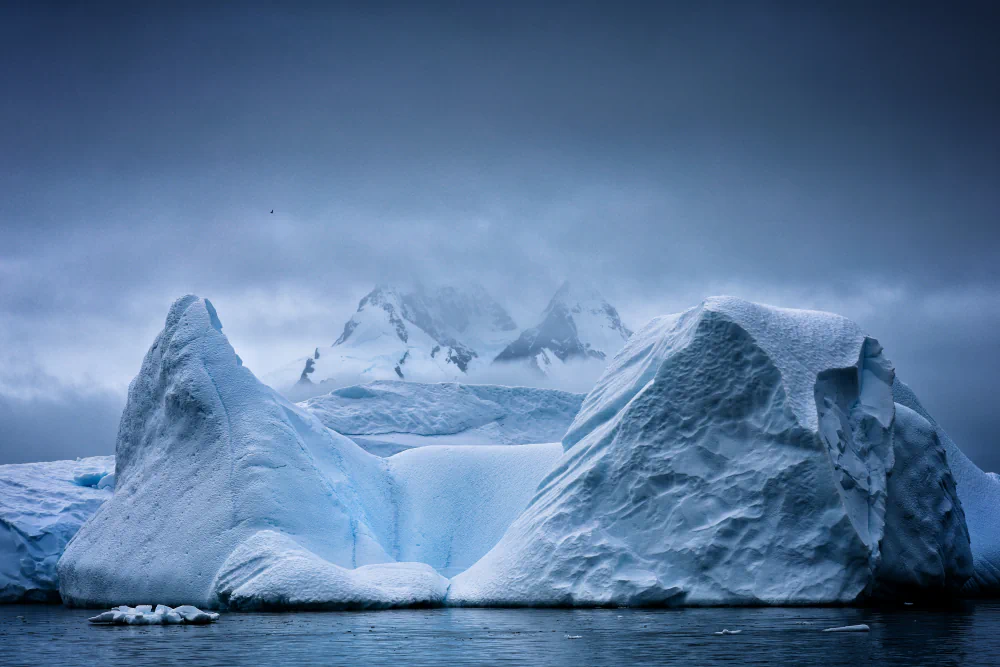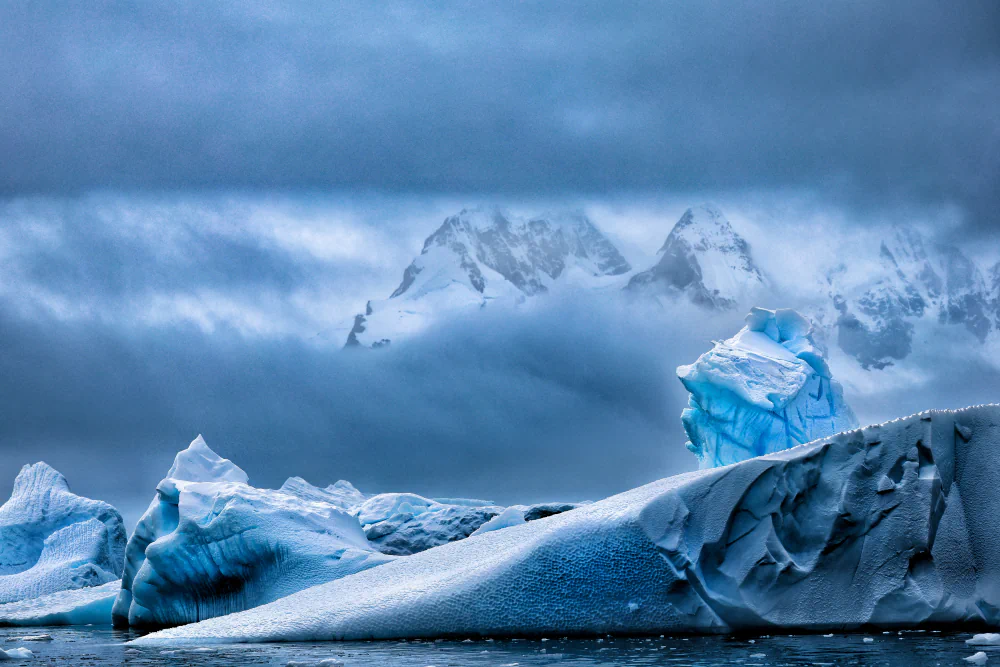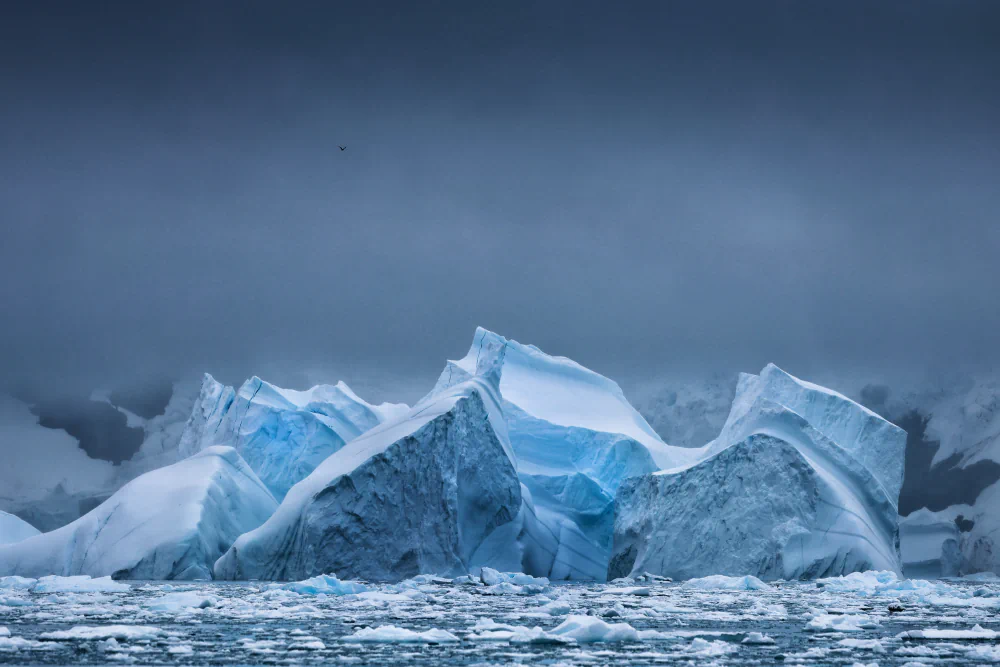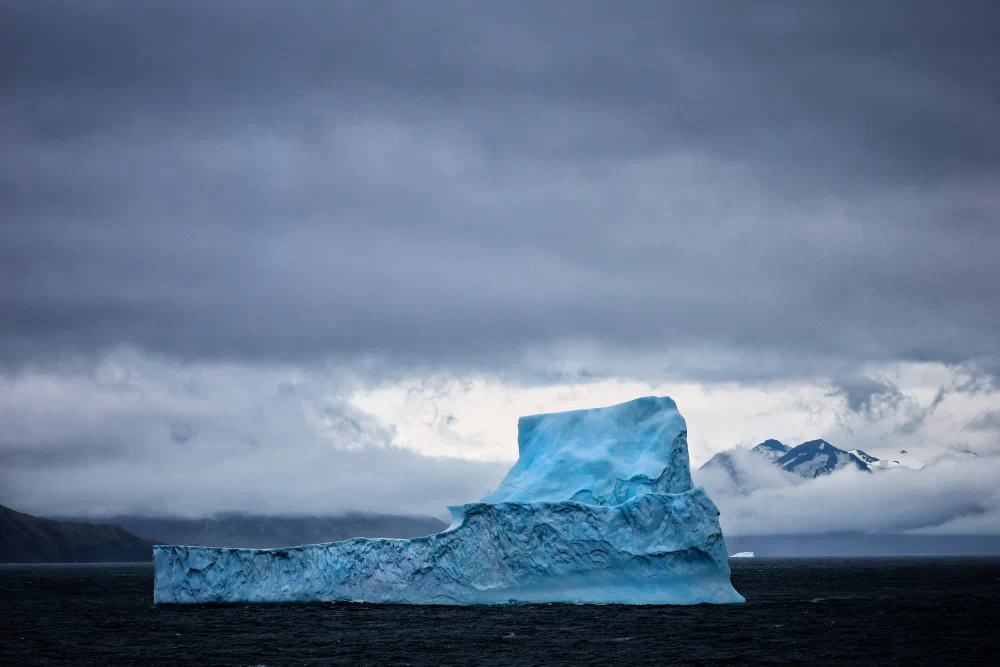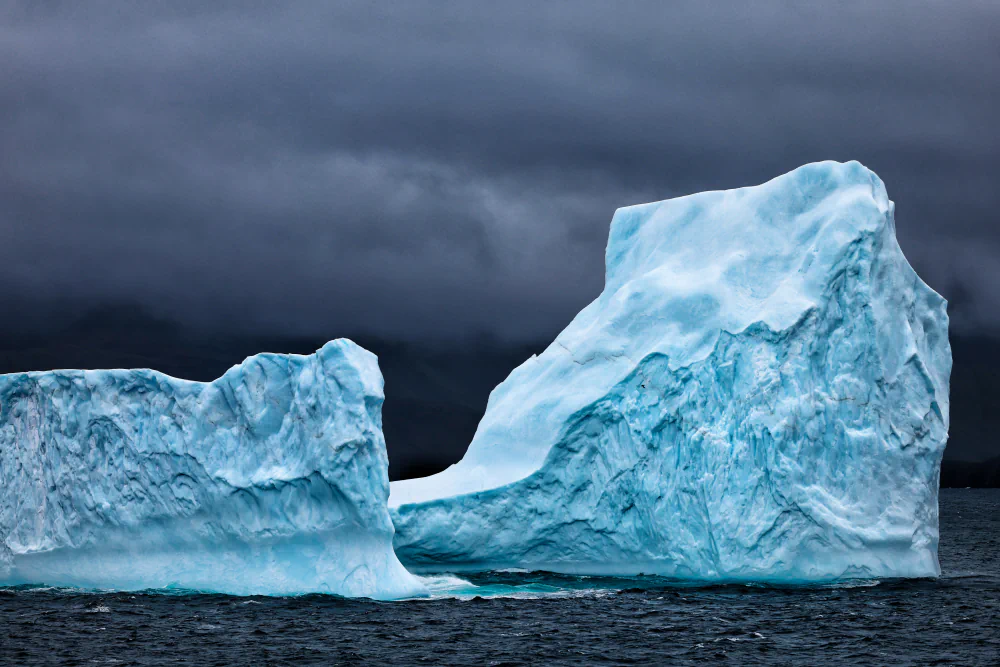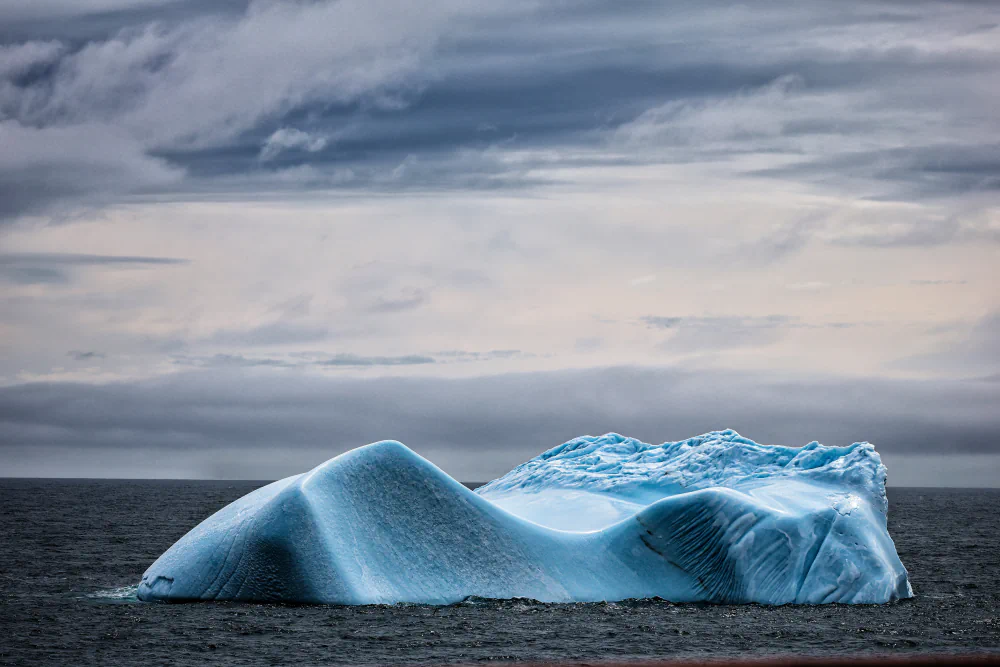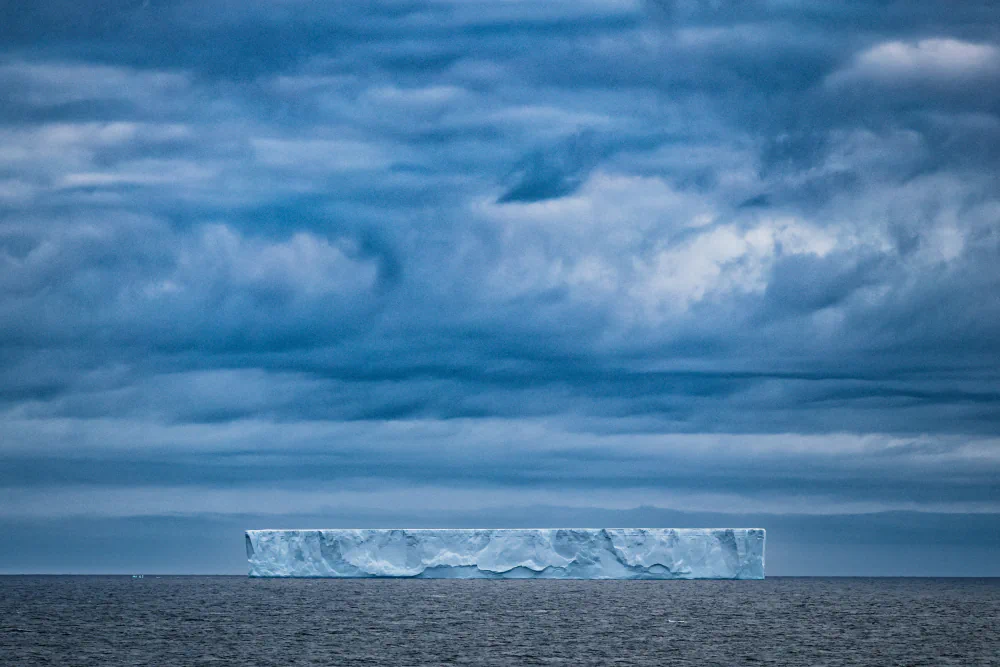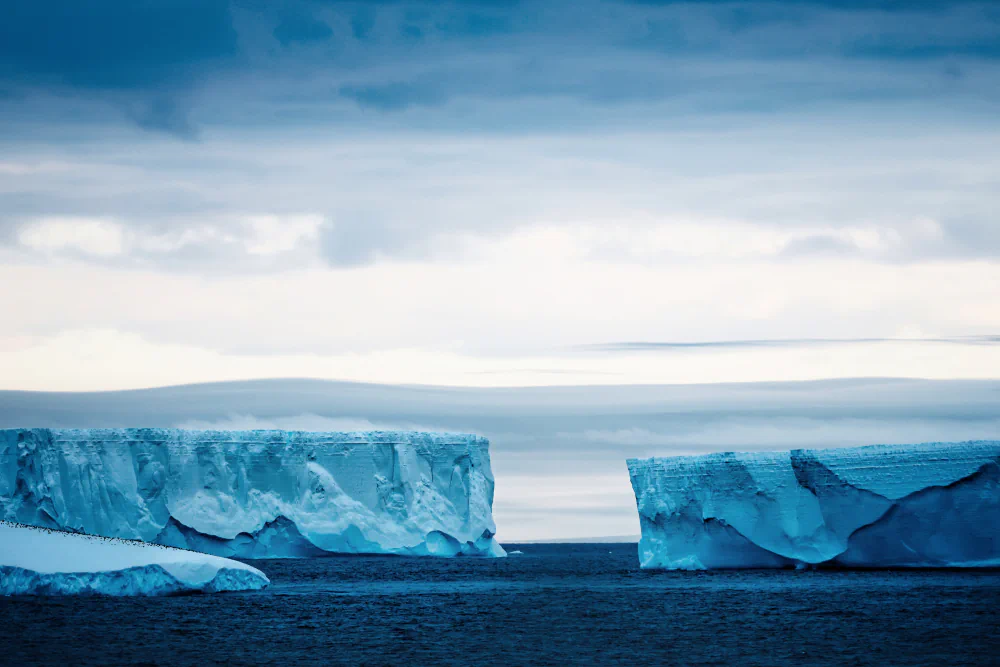


The Frozen Gallery of the Southern Ocean. Antarctica serves as the world’s most exclusive open-air gallery, where the art is sculpted by the relentless forces of gravity, wind, and tide.
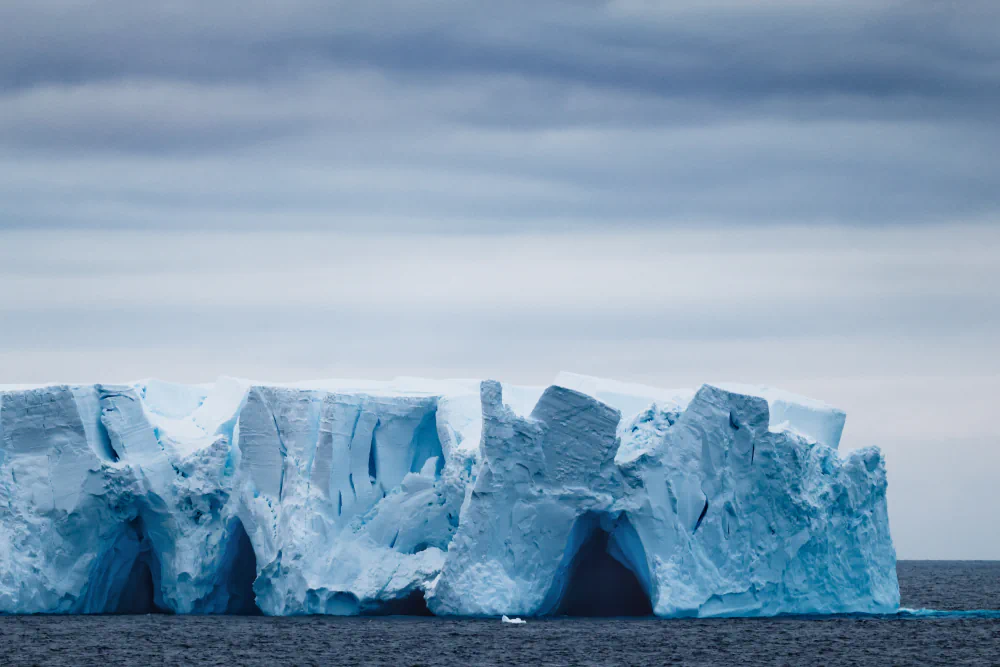
These floating cathedrals are not merely blocks of frozen water; they are ephemeral sculptures that defy human imagination. Each monolith tells a story of compression and time, standing as a testament to the raw power of the polar elements.
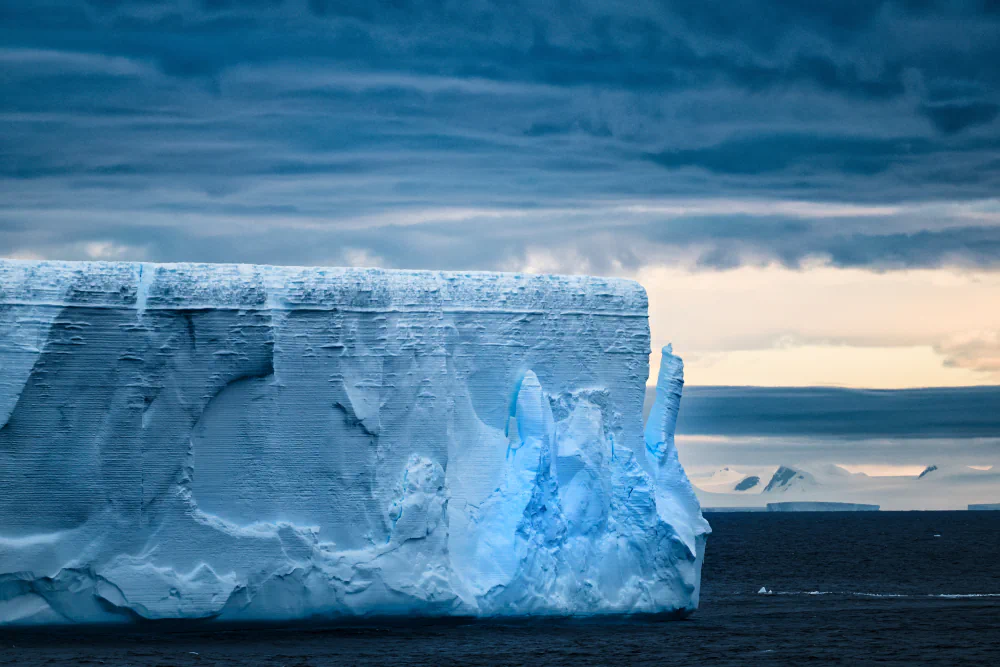
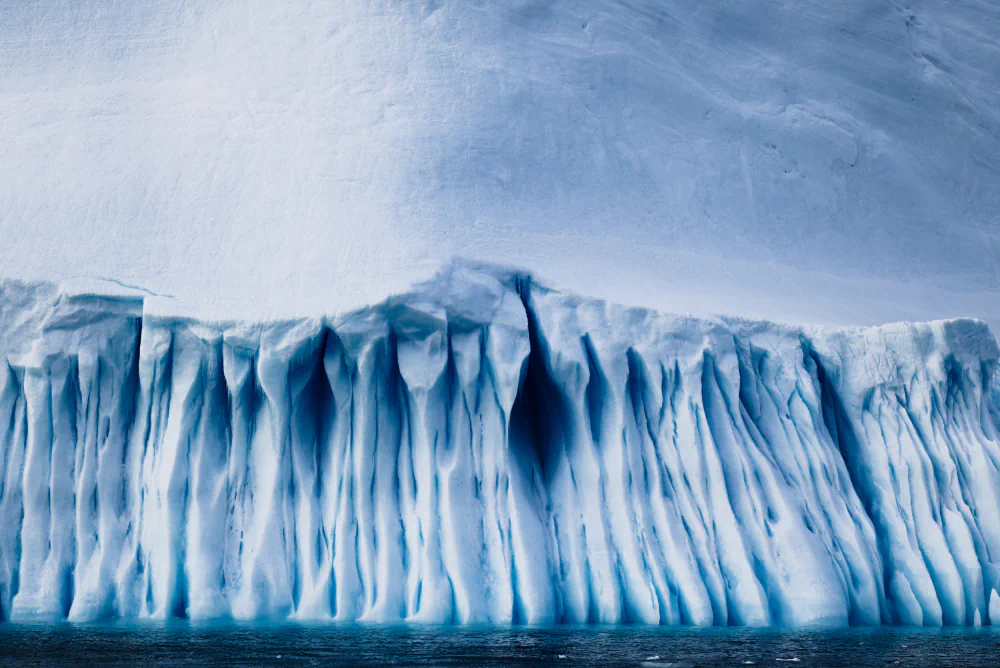
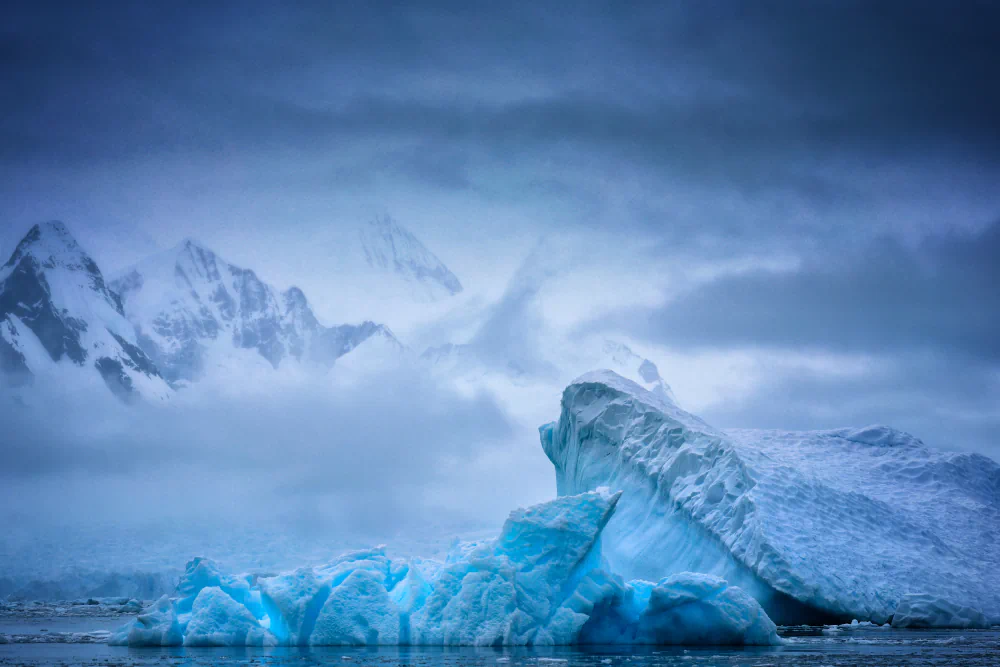
The Physics of Polar Light. The most striking feature of an Antarctic iceberg is its haunting palette. While the surface may appear as a blinding, crystalline white, the deep fissures and underbellies often glow with a surreal, deep blue. This phenomenon occurs because the ice is so incredibly dense that it absorbs the longer wavelengths of light, such as red and yellow, reflecting only the shorter blue wavelengths back to the observer with a neon-like radiance. This “blue ice” is often the result of centuries of snow being compacted into solid ice, squeezing out the tiny air bubbles that would otherwise scatter all colours of light and make the ice appear white.
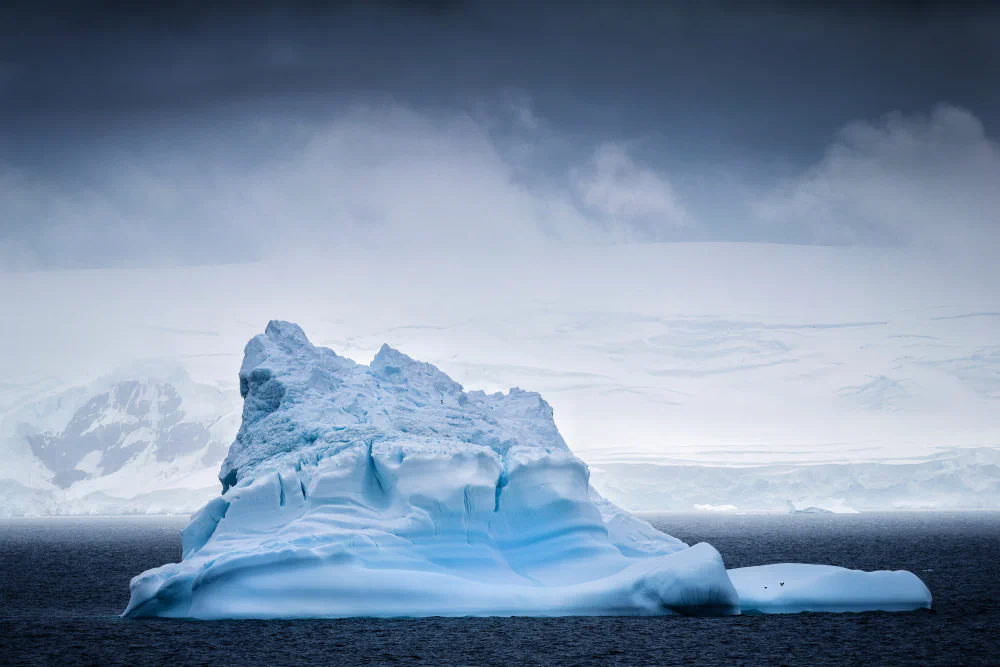
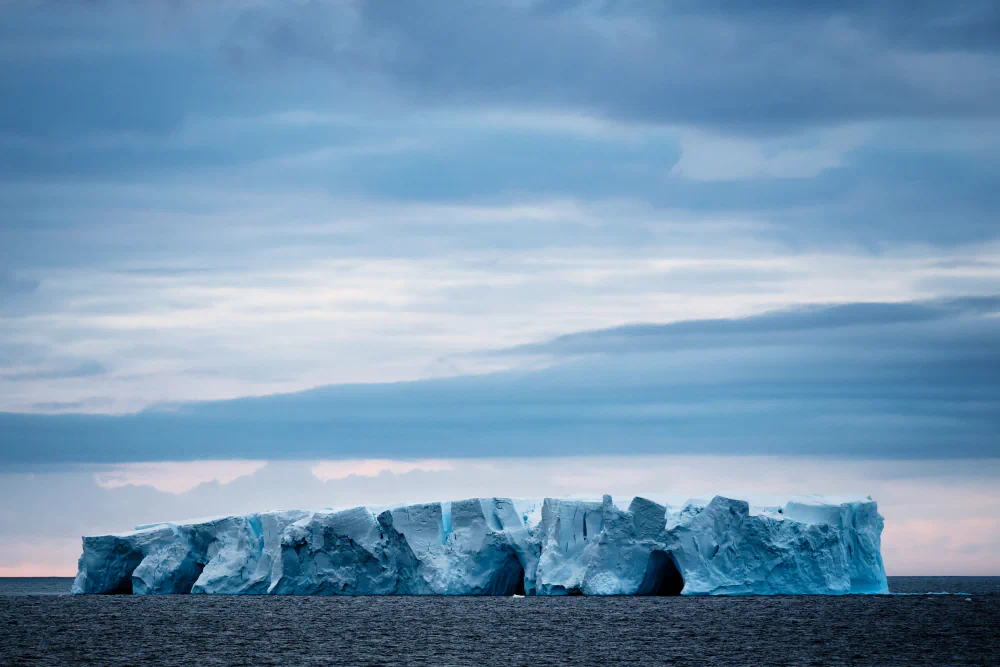
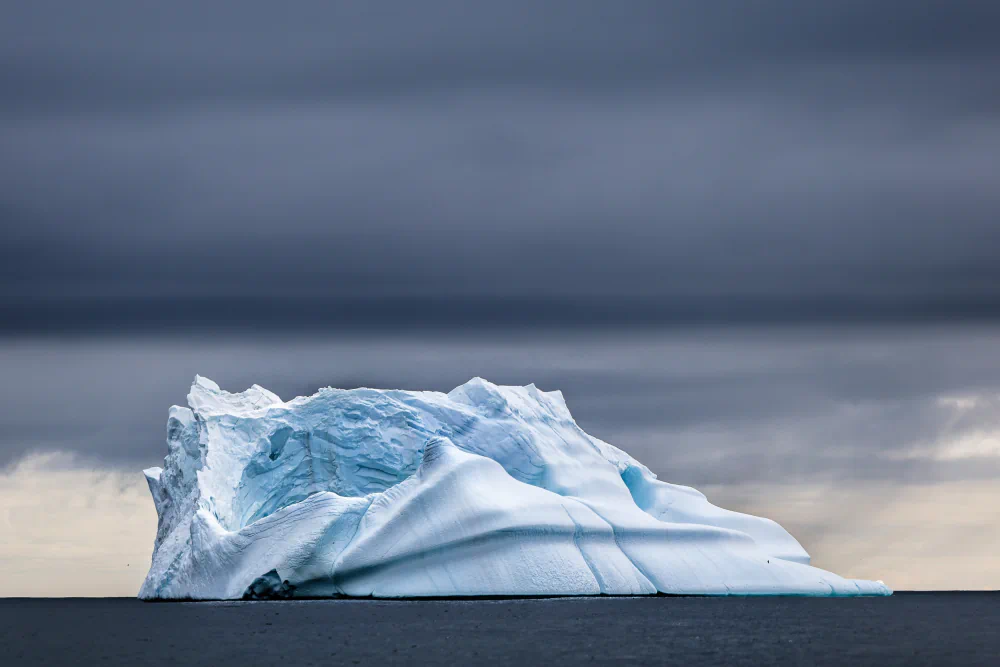
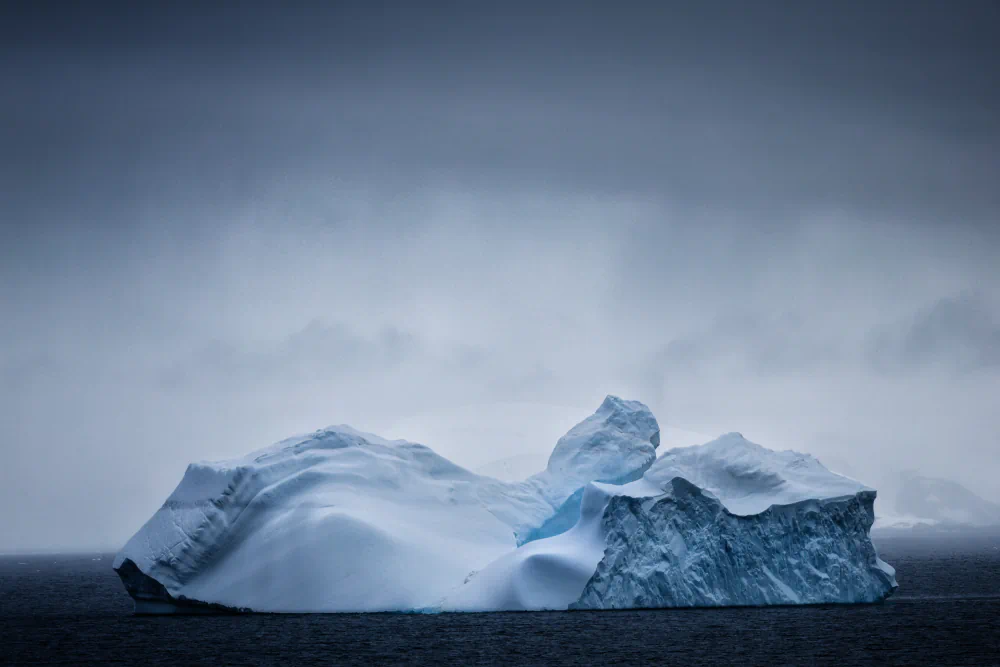
Nature’s Master Mason. As these giants drift through the Southern Ocean, the elements carve them into intricate forms, ranging from jagged spires to hollowed arches that resemble the work of a master mason. Salt water laps at the waterline, creating smooth, polished curves, while freezing winds sculpt the summits into sharp, dramatic peaks. Some icebergs, known as tabular bergs, remain flat and massive like frozen plateaus, while others capsize, revealing “basal ice” that has been smoothed by friction with the ocean floor over decades.
A Vertical Timeline of Earth. Within their walls, one can observe distinct layers of history. Each band represents a different era of snowfall or a trapped air pocket from centuries past, creating a vertical timeline of the Earth’s climate. Scientists often view these bergs as drifting time capsules; the air bubbles trapped inside are actual samples of the atmosphere from hundreds or even thousands of years ago. By studying these pockets, we can understand historical levels of carbon dioxide and other gases, providing a clear map of how our planet’s environment has shifted over time.
The Great Surrender. These masterpieces are fleeting; as they melt, they surrender their forms back to the sea, ensuring that no two observers ever witness the same gallery twice. As an iceberg travels north into warmer waters, it begins to “die”—a process marked by thunderous cracks and the gentle hiss of ancient air bubbles finally being released. This “ice sizzle” is the sound of the past merging with the present. The nutrients trapped within the ice, such as iron, are released into the ocean, fueling the growth of phytoplankton and supporting the entire Antarctic food web, from tiny krill to massive blue whales.
The journey of these frozen giants is a cycle of constant transformation. They begin as fallen snow in the interior of the continent, travel for millennia as part of a slow-moving glacier, and finally break free into the sea to live out their final months as art.
About Josef Buergi
Josef Buergi is a Swiss photographer and traveller who discovered his passion for photography in the 1990s. Originally trained as an engineer at the Basel Institute of Technology, he developed his photographic practice through workshops, self-instruction, and extensive travel.
After retiring in April 2025, he fully dedicated himself to photography, focusing on documenting cultures and remote landscapes around the world. Having visited nearly 70 countries, including regions such as South Sudan, Pakistan, China, and Ethiopia, his work reflects a deep curiosity about the world and its diversity.
His images have been featured in publications including National Geographic, Terra Mater, Lens Magazine, Dodho Magazine, and AAP Magazine. [Official Website]