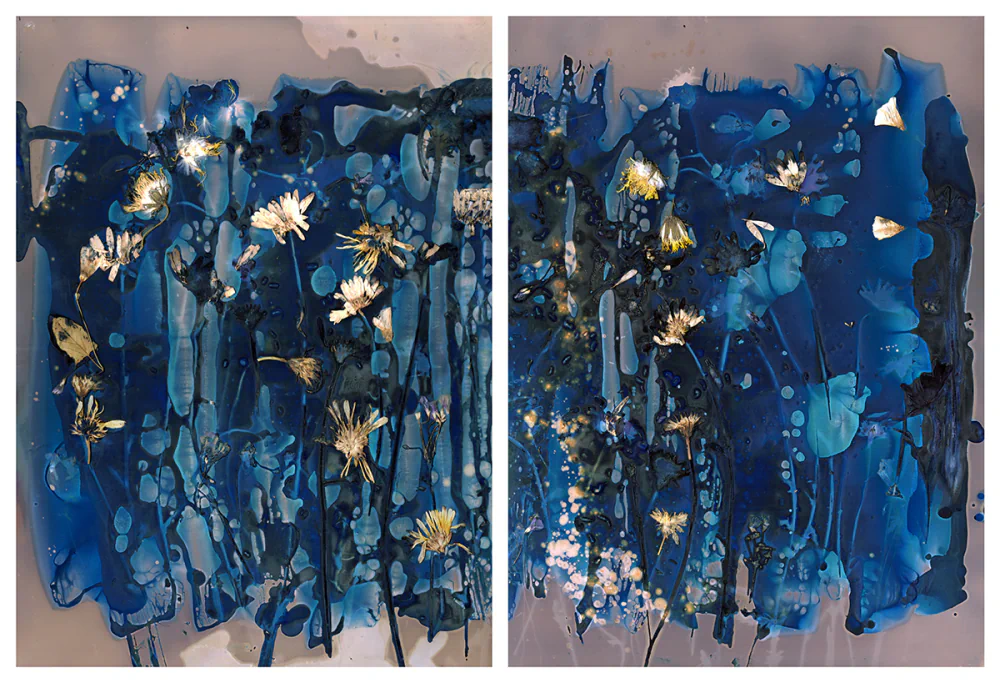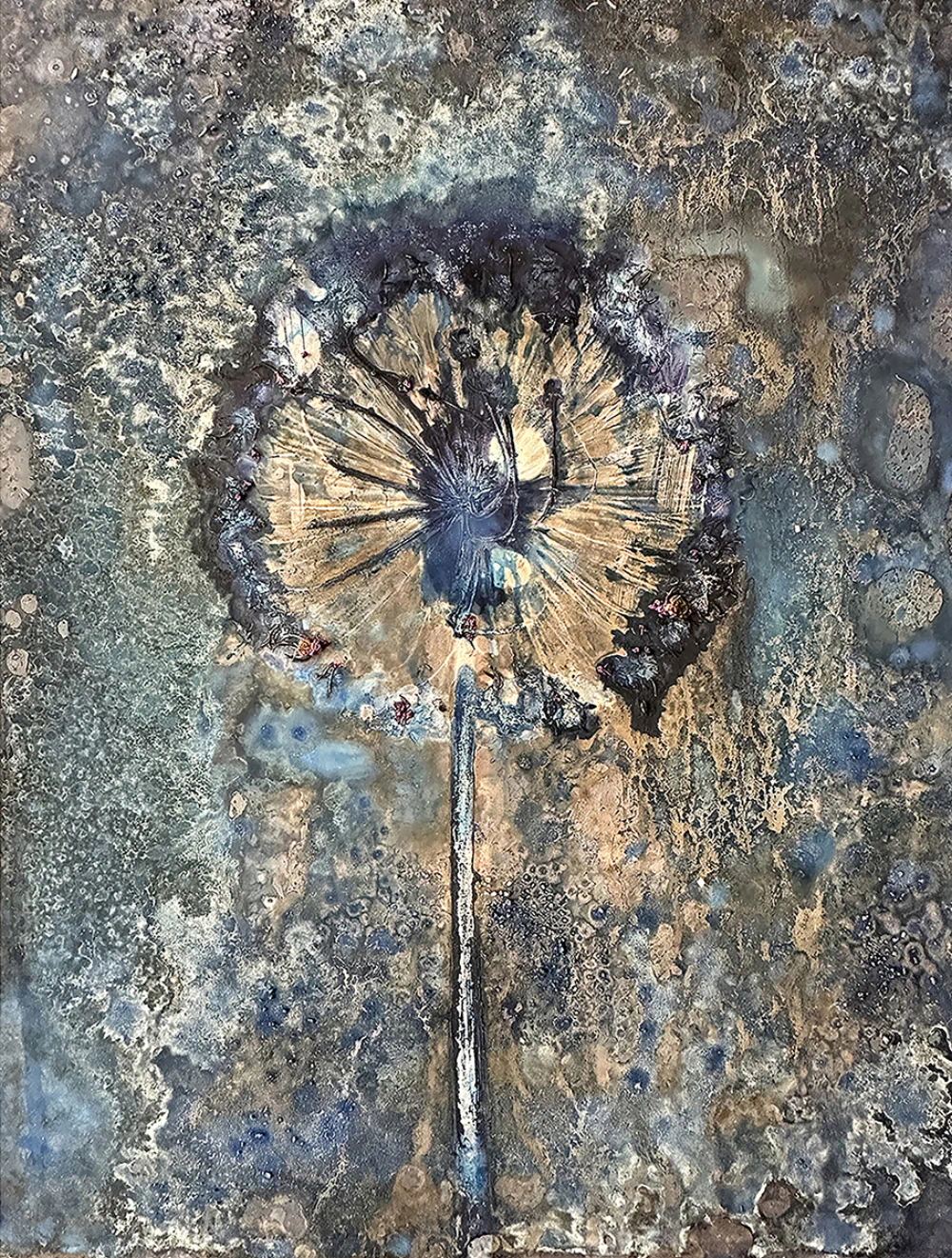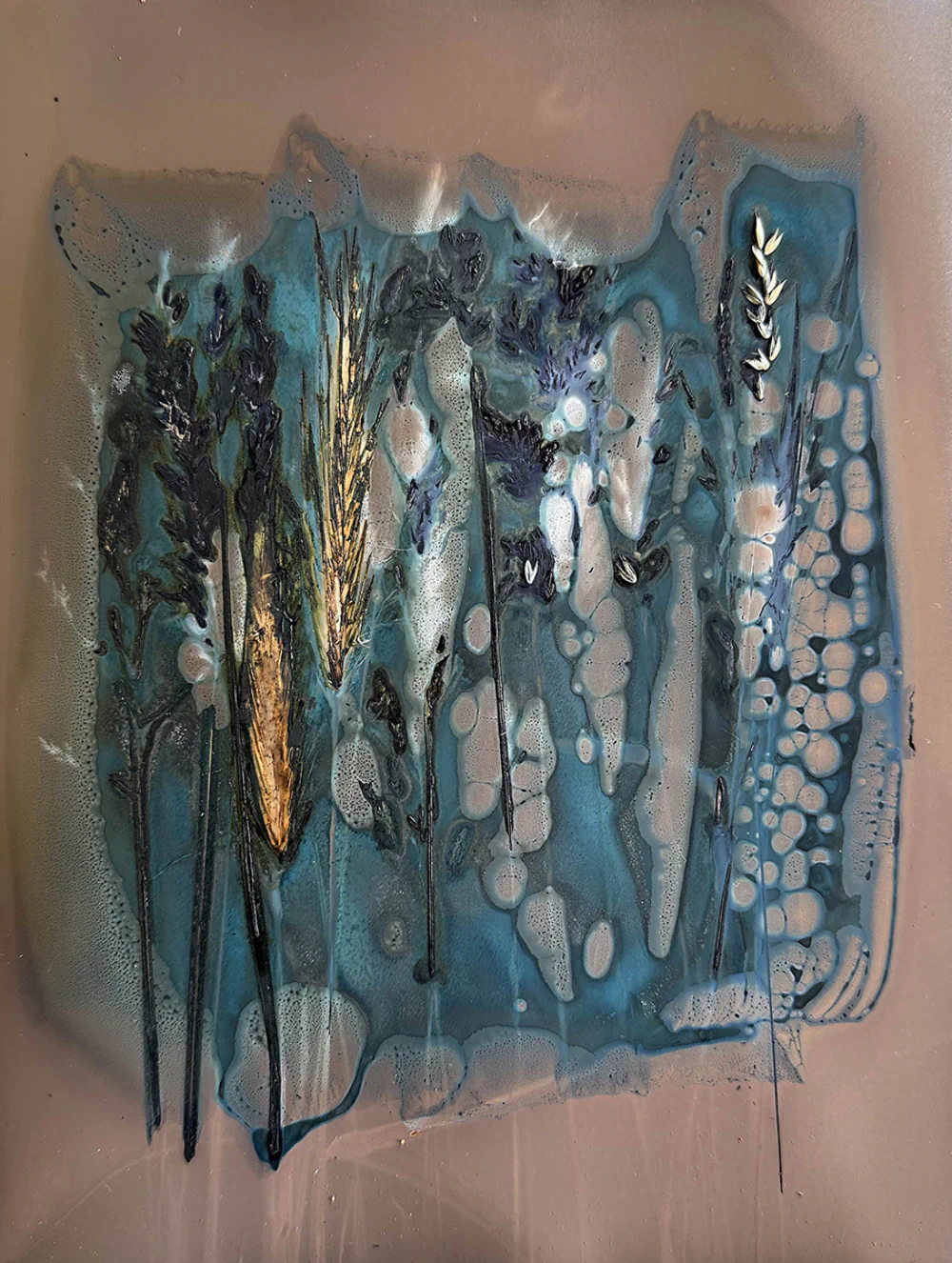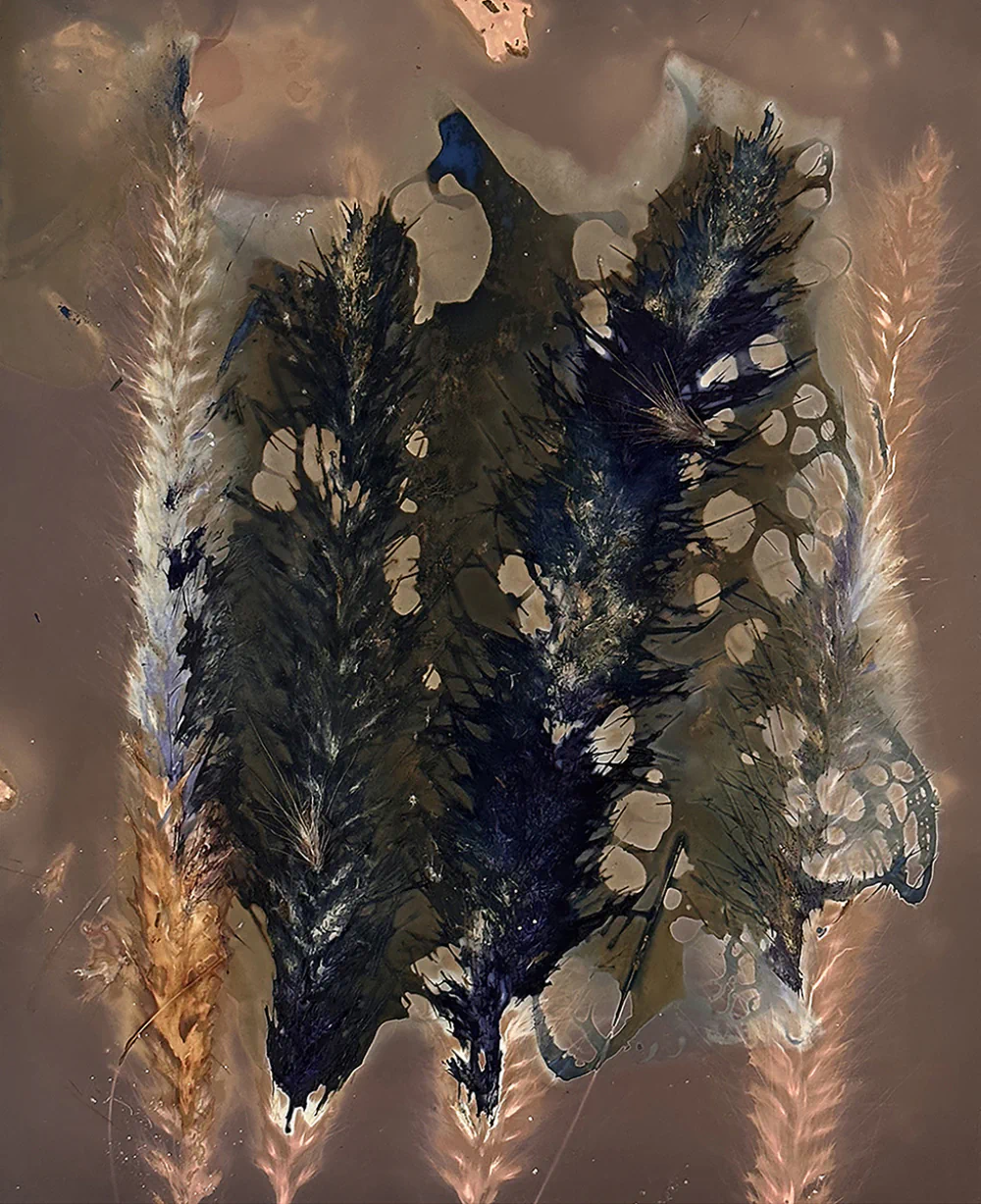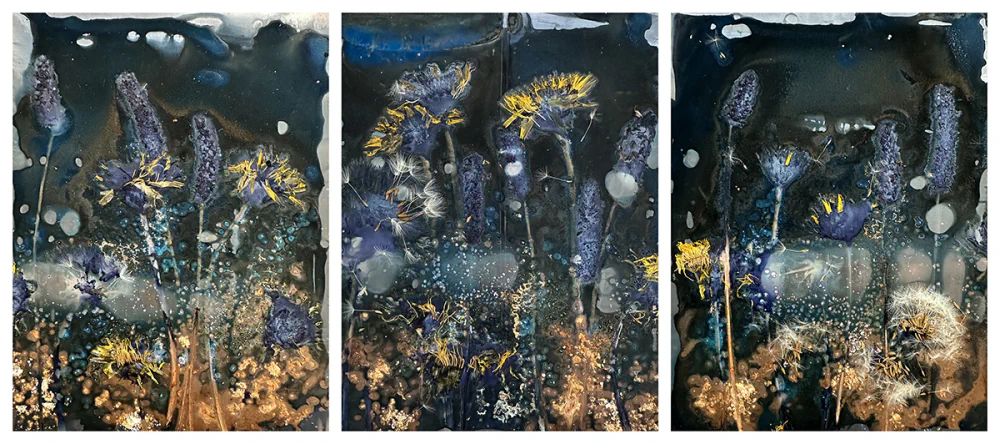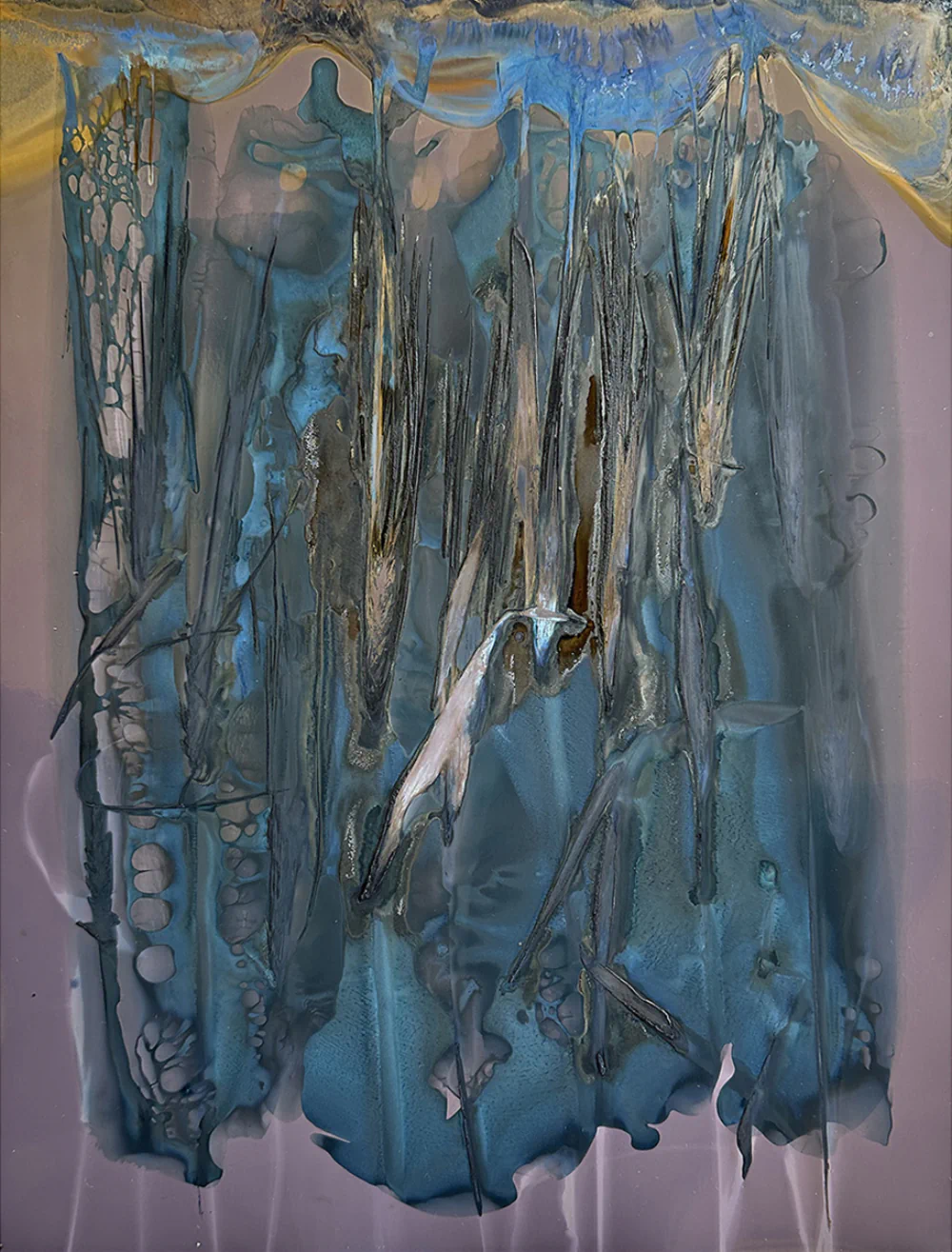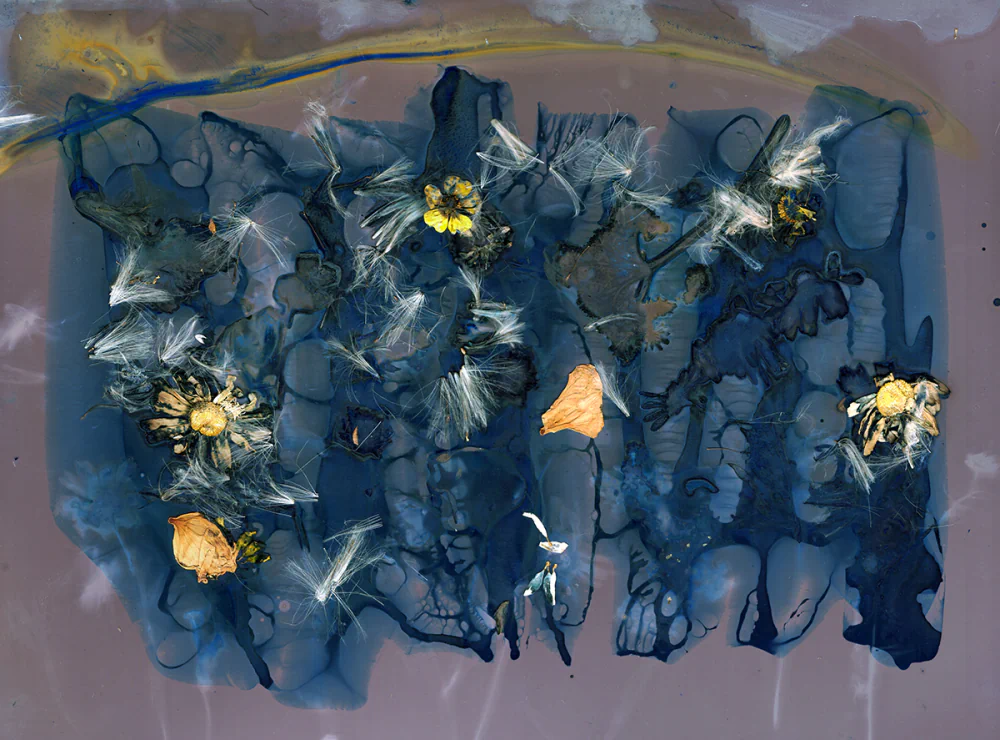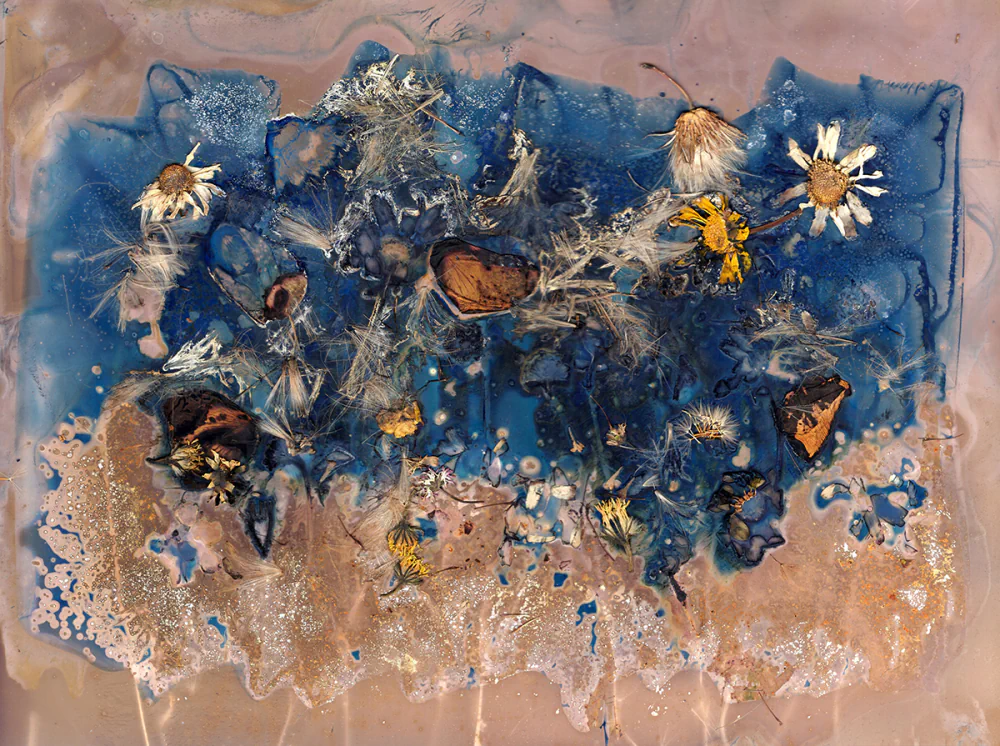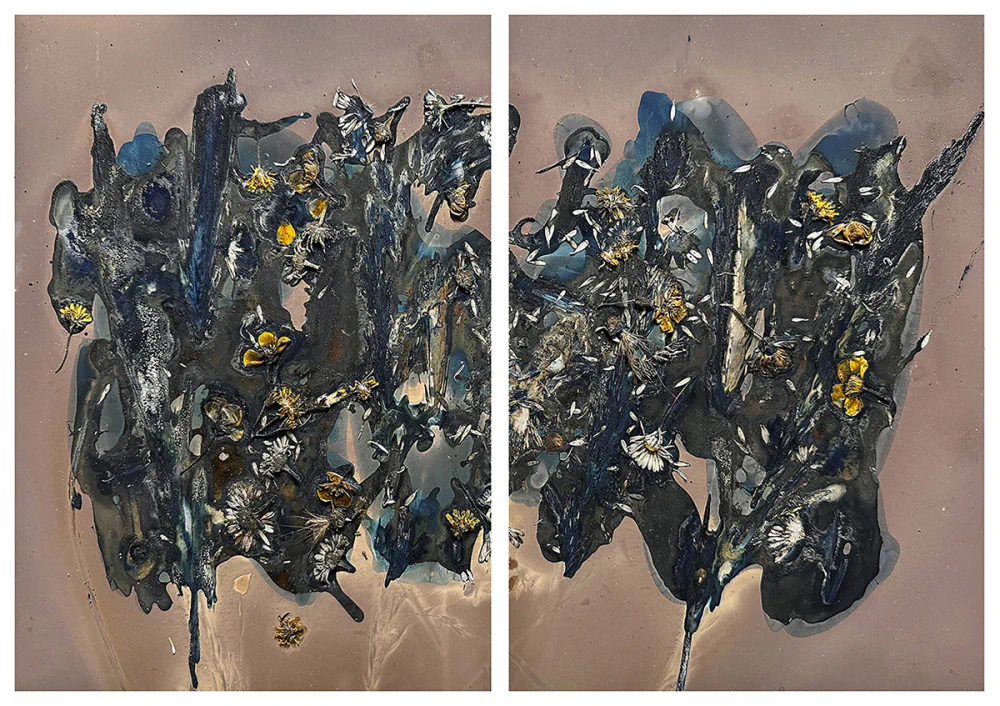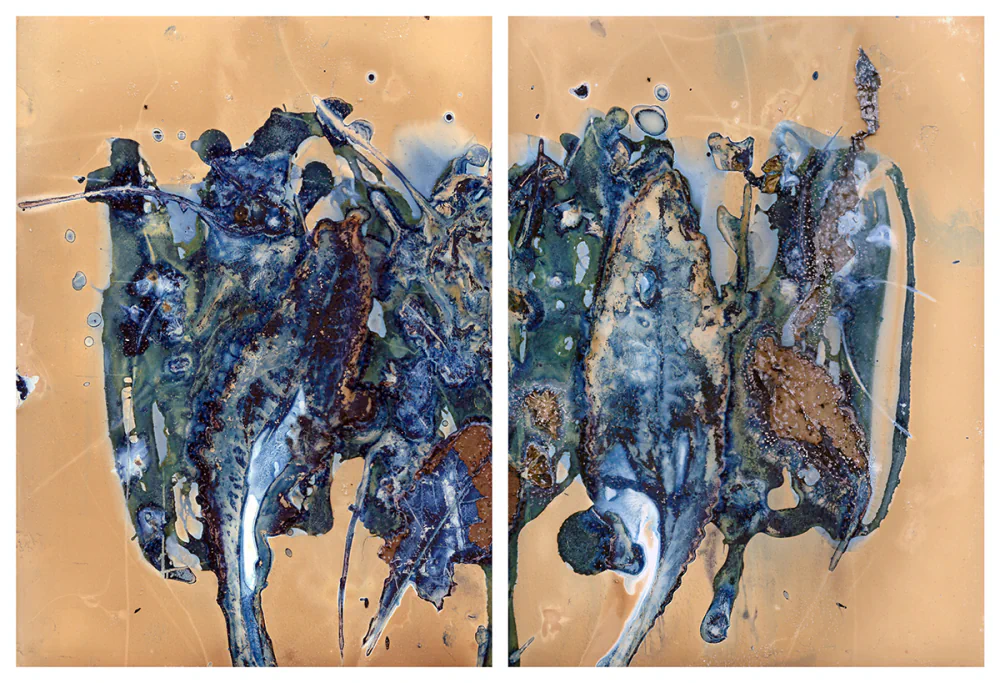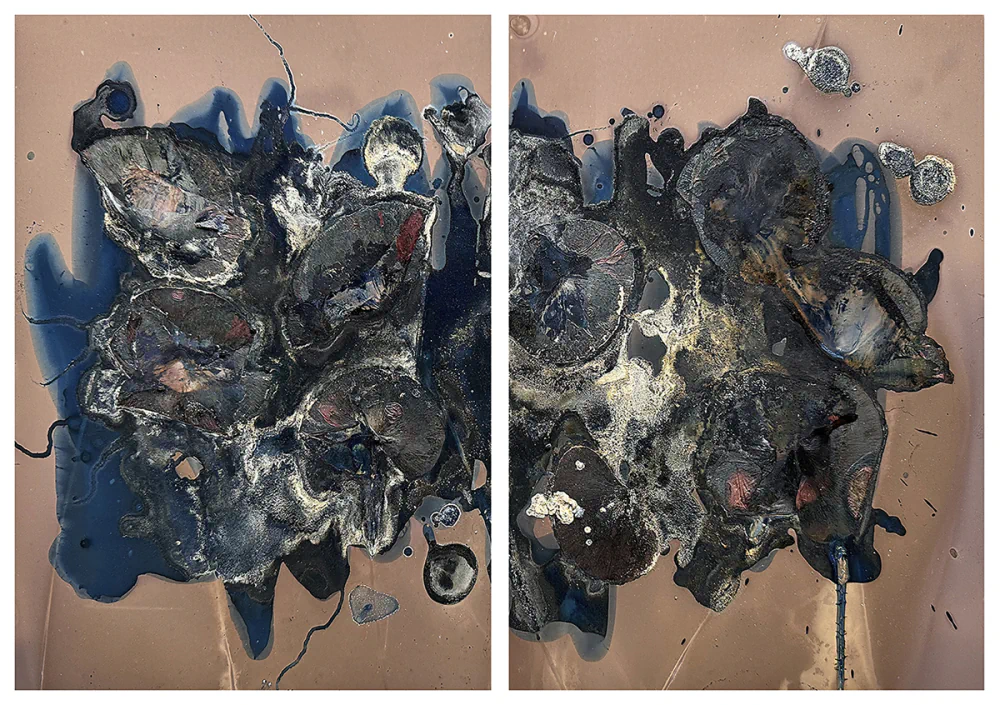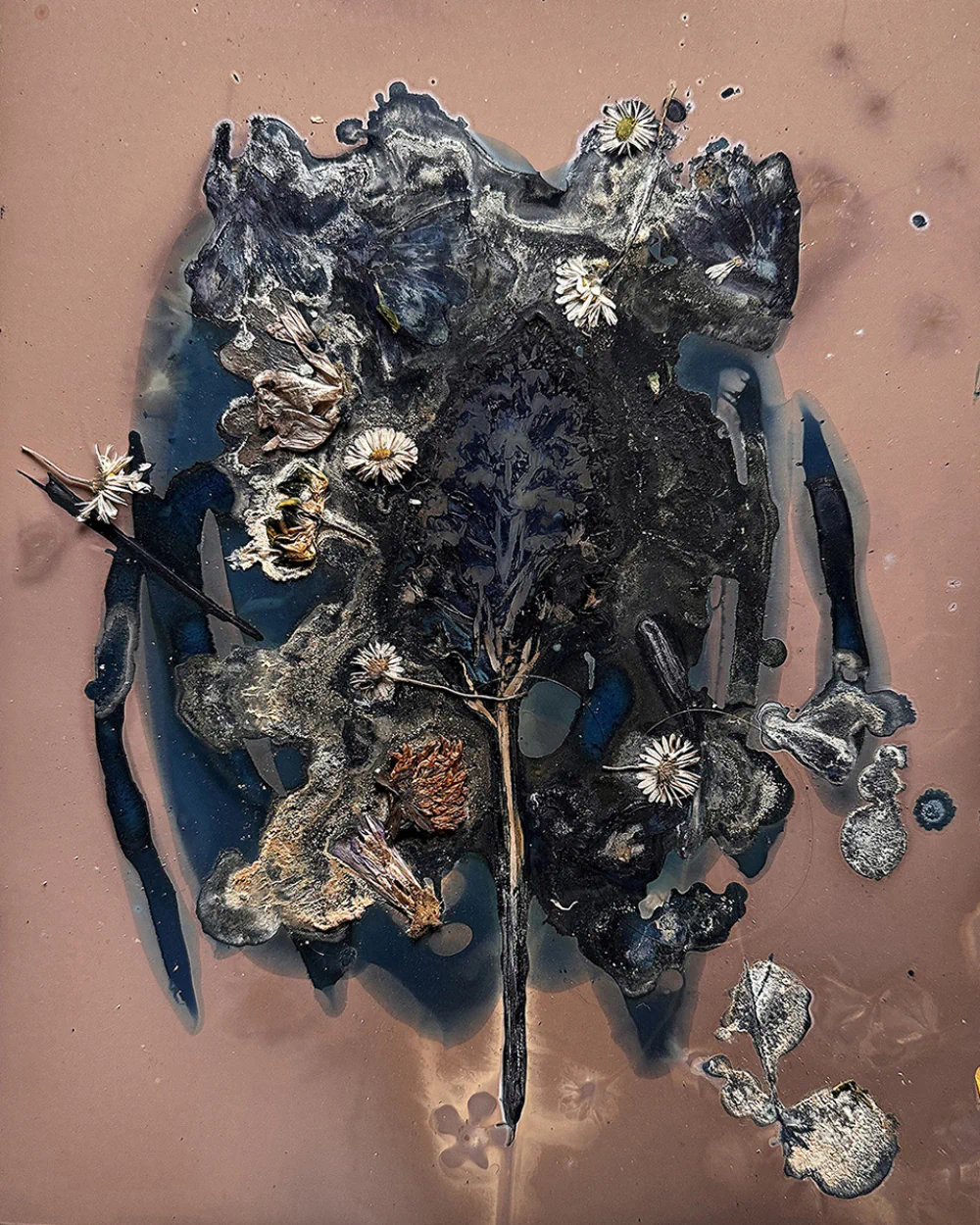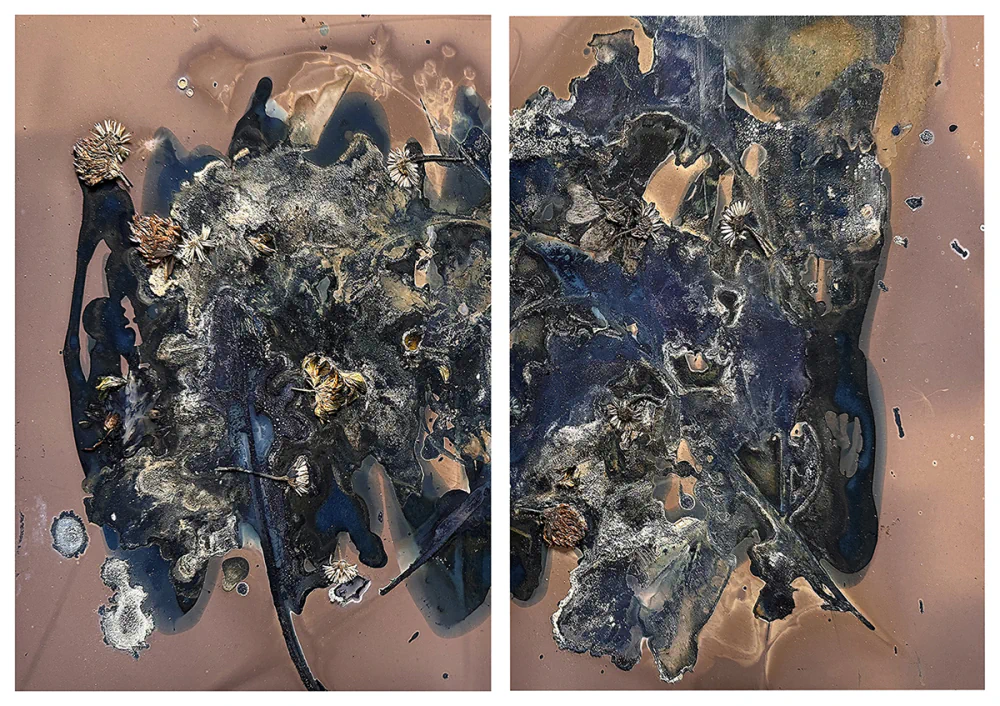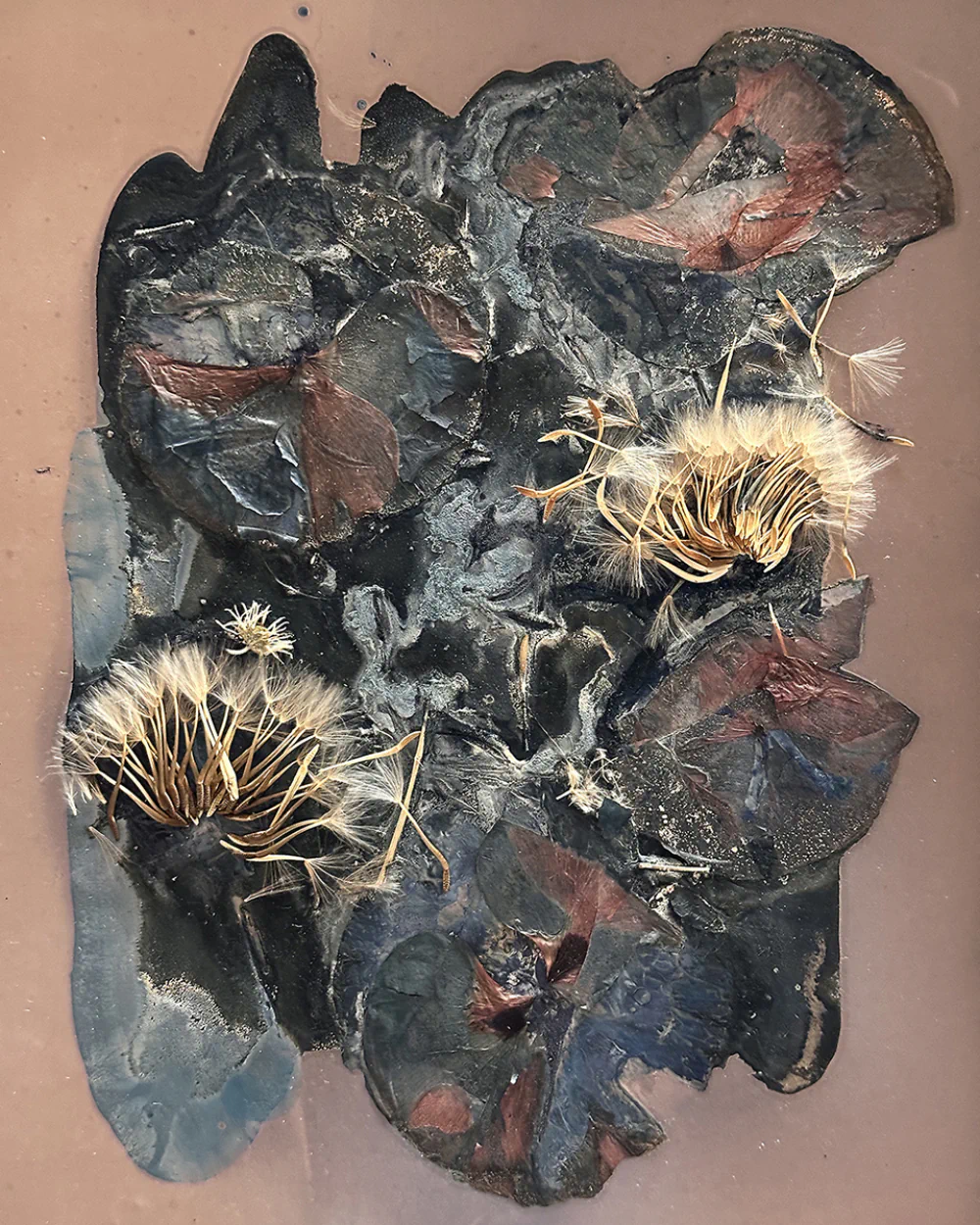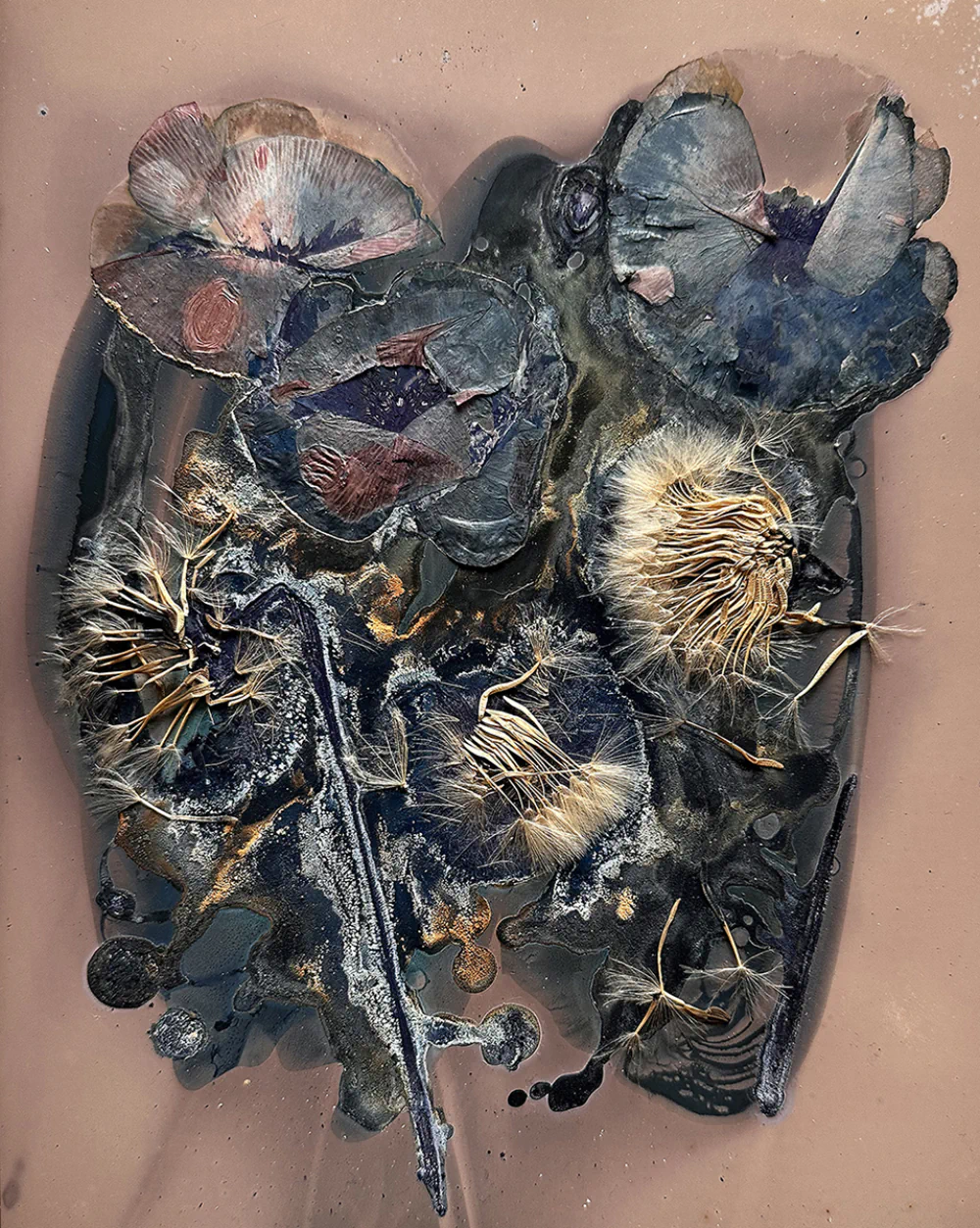

The Most Beautiful Anthropocene is a body of work in which nature itself becomes the author of the image.
Rather than photographing landscapes in a conventional sense, the project allows environmental forces to physically produce the photograph.
Sunlight, polluted seawater, acidic rain, and fragile plant matter are not treated as subjects or background elements but as active collaborators in the making of the image.
Using expired darkroom photographic paper and eco-friendly cyanotype chemistry, the works are created through exposure to the conditions of specific environments. The images are therefore less captured than grown. They emerge through processes of staining, bleaching, erosion, crystallization, and fading as the materials react to the surrounding landscape. Water chemistry, salinity, weather, and plant residues leave direct marks on the surface, turning the photograph into a physical record of environmental conditions.
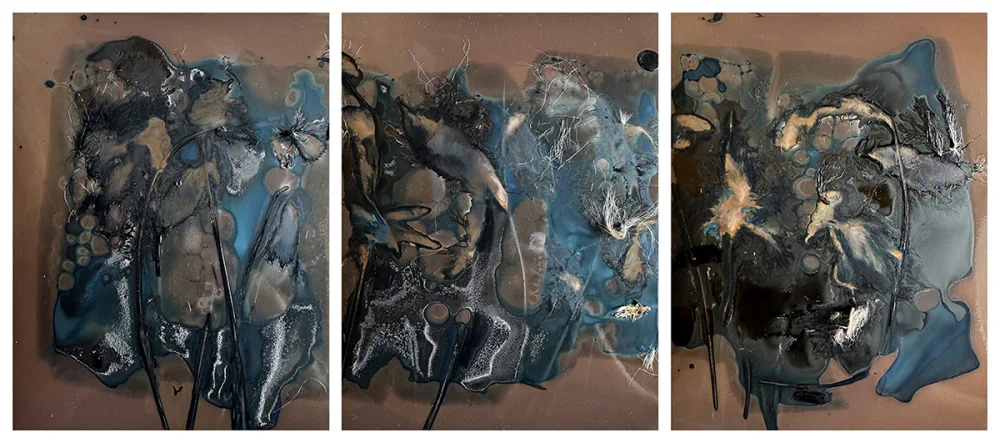
The project moves between Atlantic coastal areas and inland territories affected by drought. In these locations, the photographic surface becomes a register of climate pressure. Damage, rupture, and chemical alteration are not aesthetic effects but traces of environmental change. Through these transformations, the works reveal climate not as an abstract concept but as a tangible force that reshapes matter itself.
Although the images can appear visually seductive, their beauty is deliberately uneasy. They invite the viewer closer only to confront the disturbing reality of the processes that created them. When the same environmental forces responsible for ecological disruption also generate the image, questions of authorship arise. Who produces the photograph, and what exactly is the image attempting to reveal about the world we are inhabiting?