

Photography has always been more than a mechanical process for recording the visible world.
Since its invention in the nineteenth century, it has operated simultaneously as a technological device, a cultural language and a form of visual thinking. Cameras do not simply capture reality; they organize it, interpret it and ultimately transform the way we perceive it. Every photograph is therefore not only an image but also a gesture of interpretation that reveals how the photographer understands the world.
The contemporary situation of photography, however, differs radically from the historical conditions that shaped most of its development. Never before have human beings produced such an overwhelming quantity of images. Every day billions of photographs circulate across smartphones, digital archives and social networks. Images are created, shared and replaced at a speed that makes reflection increasingly difficult. The act of photographing has gradually shifted from a deliberate practice into an almost automatic gesture embedded within everyday life.
This transformation inevitably raises a fundamental question. When images have become practically infinite, what gives a photograph meaning? What distinguishes a thoughtful image from the immense flow of visual noise that surrounds us?
Answering these questions requires looking beyond technology itself and examining photography as a cultural practice shaped by perception, ethics and narrative structure. Cameras influence the way photographers see the world, the photographic gaze establishes complex relationships between observer and subject, and contemporary platforms often encourage speed at the expense of depth. At the same time, photographers must confront new challenges involving authorship, artificial intelligence and the fragile relationship between images and truth.
The reflections gathered here attempt to outline a broader framework for understanding photography in the present moment. They explore how technology educates perception, how ethical questions remain central to representation, how visual literacy becomes increasingly necessary in an image-saturated environment and how photographers can continue developing authentic voices in a culture dominated by visibility and algorithms.
Technology and the Formation of the Photographic Eye
How cameras shape perception and influence visual thinking
It is often assumed that cameras are neutral instruments designed simply to record what stands in front of them. In reality, every photographic technology subtly shapes the way photographers perceive and interpret the world. Cameras impose rhythms, limitations and possibilities that inevitably influence the act of seeing.
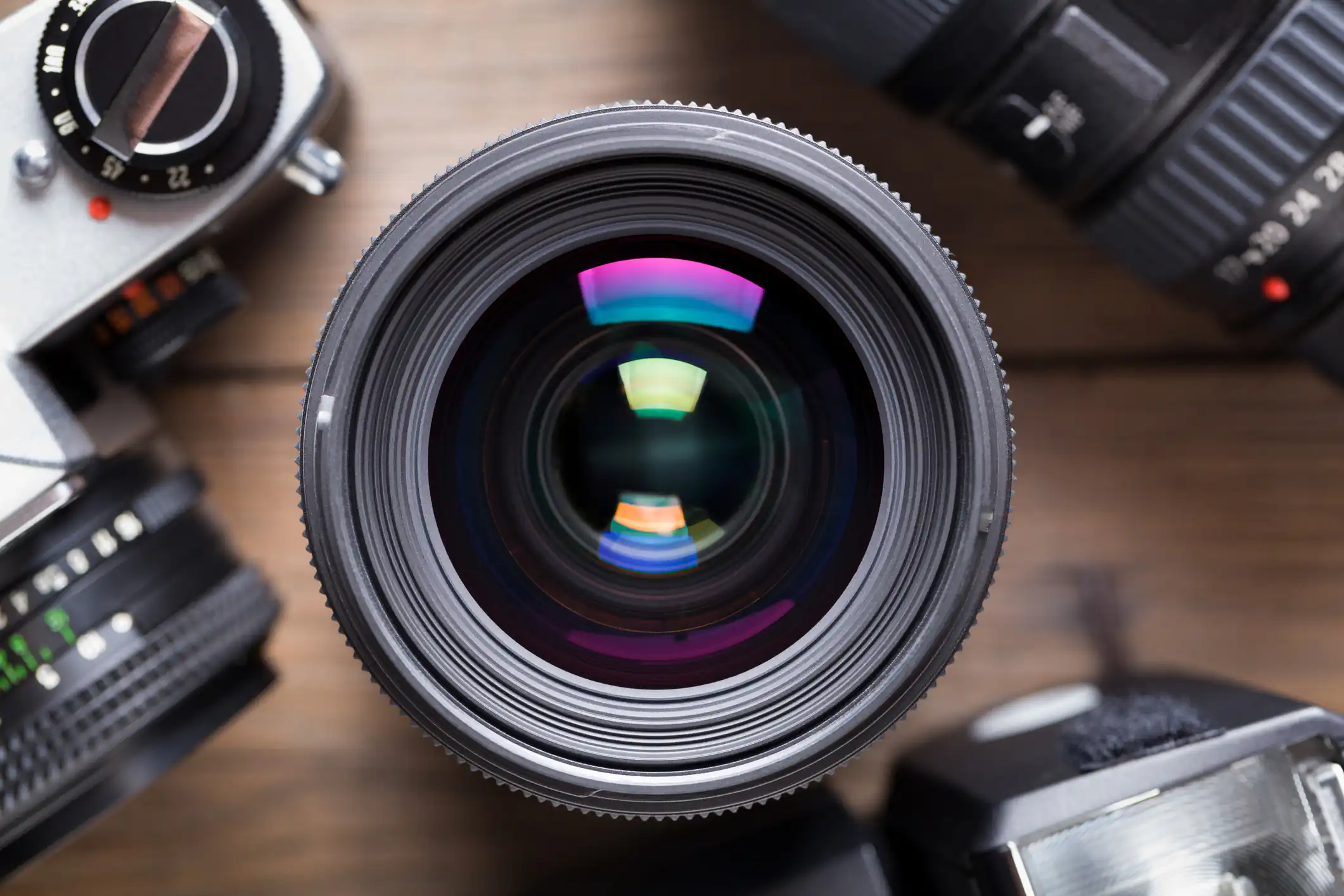
This idea is explored in Every Camera Educates the Photographer Differently, where the camera is described not merely as a tool but as a system that educates the photographer’s eye. Different devices encourage different forms of visual behavior. A smartphone promotes speed and experimentation, while large format cameras demand patience, precision and anticipation.
The relationship between technology and perception becomes particularly evident in Medium Format Taught Photography to Think Slowly. The slower workflow imposed by medium format cameras forces photographers to approach the act of photographing with greater deliberation. Each frame requires careful consideration, transforming the shutter into a moment of decision rather than an impulsive gesture.
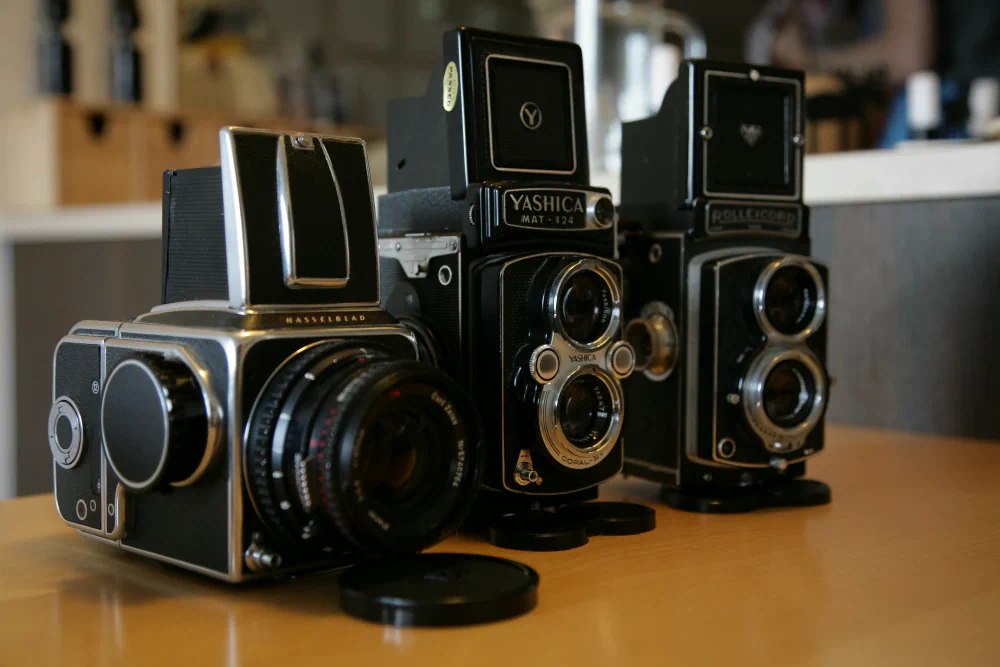
Historical technological shifts have also influenced the visual language of photography in unexpected ways. The introduction of waist level cameras, examined in The Waist Level Camera Changed Visual History, altered the relationship between photographer and subject by allowing images to be taken without raising the camera directly to the eye. This seemingly simple change encouraged a more discreet and observational form of photography.
Even technical limitations have historically played an important role in shaping photographic creativity. As discussed in When Technical Limitation Was a Creative Advantage, restrictions in early photographic equipment often forced photographers to invent new visual strategies and explore unconventional solutions.
In this sense, the history of photography cannot be understood solely as a history of images. It is equally a history of how technological tools influence perception and shape the way photographers learn to look.
The Ethics of the Photographic Gaze
Representation, power and the responsibility of looking
Photography is never a purely technical act. Every photograph involves an encounter between individuals, an interaction between the person who observes and the person who is being observed. Within this encounter, questions of power, representation and interpretation inevitably arise.
These issues are examined in The Ethics of the Gaze in Photography, which asks a deceptively simple question: who looks, and from where? The act of photographing always reflects the position of the photographer, shaping the way subjects are framed and understood.
In certain contexts photography can even function as a form of symbolic appropriation. Photography as Visual Appropriation of the Other explores how images may reproduce cultural hierarchies when photographers represent communities that do not control their own visual narratives.
Historically, photographic humanism attempted to respond to these tensions by emphasizing empathy and shared experience. The tradition is examined in Photographic Humanism as a Universal Truth, which reflects on the idea that photography might reveal universal aspects of human life.
Yet even within these traditions the ethical dilemma remains unresolved. Every photograph inevitably carries the perspective of the person who made it.
Seeing, Looking and Reading Photographs
The importance of visual literacy in contemporary culture
In the contemporary visual environment photographs appear continuously across screens and platforms. Images are consumed rapidly, often without sustained attention. This accelerated rhythm of viewing fundamentally alters the way photographs are experienced.
As explained in The Difference Between Seeing, Looking and Reading a Photograph, there are important distinctions between seeing, looking and reading images. Seeing is a physiological reaction, looking requires attention and reading a photograph involves interpreting its cultural and symbolic layers.
In a digital environment dominated by speed and quantity, this deeper level of interpretation becomes increasingly difficult to maintain. The consequences of visual saturation are explored in How Image Excess Reduces the Quality of Our Attention, which suggests that the excess of images may paradoxically reduce our capacity to understand them.
The challenge facing contemporary viewers is therefore not simply to see more images but to recover the ability to engage with them more carefully.
The Illusion of the Perfect Image
Technical excellence and the search for meaning
Modern photographic culture frequently equates quality with technical perfection. Cameras produce increasingly sharp images, editing software provides precise control over color and contrast and visual aesthetics can be refined almost endlessly.
However, technical precision does not necessarily produce meaningful images. This argument is developed in The Perfect Image Says Nothing, which suggests that visual perfection can sometimes conceal conceptual emptiness.
Many contemporary photographs are designed to produce immediate impact within social media environments where attention spans are extremely short. In such contexts the image becomes optimized for instant visibility rather than sustained reflection.
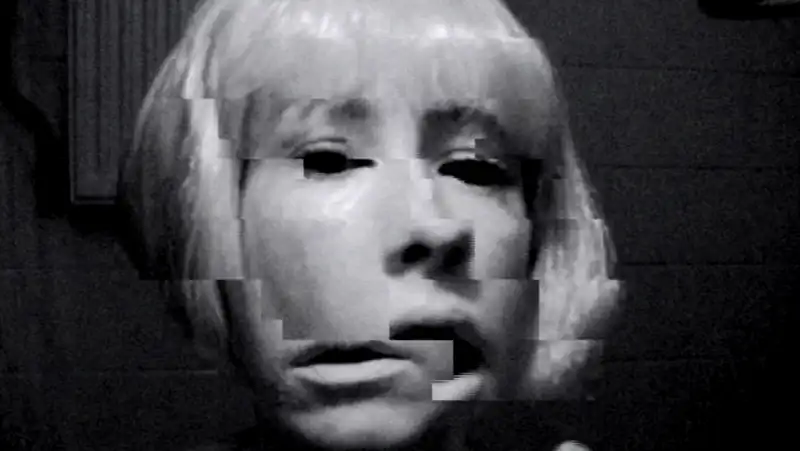
Interestingly, visual imperfection can sometimes generate more expressive forms of photographic language. In The Aesthetics of Error, digital glitches and distortions are explored as creative strategies capable of disrupting overly polished visual aesthetics.
The error, in this sense, can become a form of visual resistance within a culture obsessed with perfection.
Memory, Forgetting and Photographic Narrative
How selection and sequencing construct meaning
Photography has traditionally been associated with memory. Images are often described as tools that preserve moments that might otherwise disappear.
Yet photography also involves forgetting. As discussed in Forgetting as an Essential Part of Photographic Language, every photographic project requires the exclusion of images as much as their selection.
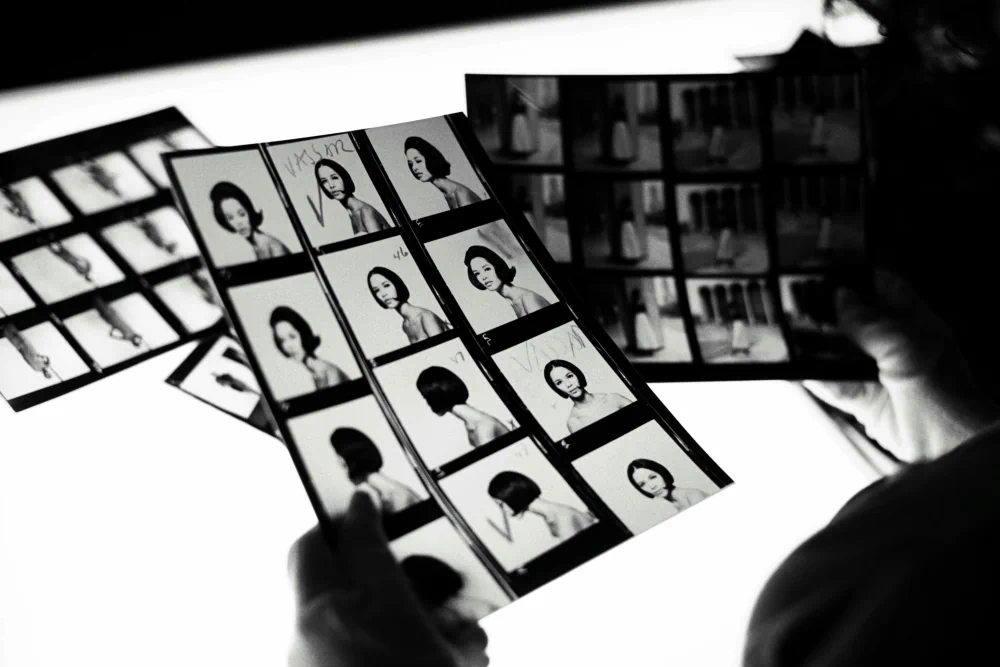
The narrative dimension of photography becomes particularly evident when photographs are organized into sequences. Sequencing Photographs demonstrates how the arrangement of images can generate rhythm, emotional progression and narrative coherence.
Through sequencing, individual photographs begin to function as elements within a broader visual story.
Photography in the Age of Algorithms
Social media, visibility and creative independence
The emergence of social media platforms has dramatically altered the circulation and perception of photographic images. Photographs now travel instantly across global networks, reaching audiences that were previously unimaginable.
However, as explored in Instagram and Photography, the problem is not necessarily the platform itself but the dependence it can create among photographers seeking validation through metrics such as likes and shares.
This dynamic often encourages repetition and stylistic conformity. Photographers may begin producing images designed primarily to satisfy algorithms rather than to pursue personal exploration.
A related phenomenon appears in Gear Syndrome in Photography, which examines how the obsession with acquiring new equipment can distract photographers from developing ideas.
Creative development rarely depends on equipment. It depends on perception, curiosity and commitment.
Photography Between Truth and Post Reality
The fragile relationship between images and evidence
For much of its history photography was widely regarded as a reliable form of visual evidence. Photographs were often interpreted as objective records of events.
Today this assumption has become increasingly fragile. Photography and Post Reality explores how digital manipulation and artificial intelligence complicate the relationship between photographs and truth.
This does not mean that photography has lost its documentary value. As discussed in Documentary Photography as Objective Testimony, documentary traditions continue to play an essential role in recording social realities.
Nevertheless, contemporary viewers must approach images with greater critical awareness of the conditions under which they are produced.
Developing a Personal Photographic Voice
Authenticity, long term projects and creative evolution
In the midst of these transformations photographers face a fundamental challenge: how to develop a personal voice capable of resisting visual uniformity.
According to How to Build an Authentic Personal Photography Project, meaningful work rarely emerges from imitation or trend following. Instead it develops through sustained engagement with subjects that genuinely matter to the photographer.
The process of creative evolution is explored in How to Know If You Are Evolving as a Photographer, which reflects on how photographers gradually refine their vision.
Even self portraiture can function as a powerful tool of introspection. The Shutter as a Mirror examines how self portraits historically served as explorations of identity rather than quick expressions of online visibility.
Emerging technologies introduce new possibilities and new dilemmas. How to Use Artificial Intelligence in Photography Without Losing Your Personal Voice reflects on how artificial intelligence might be integrated into photographic practice without erasing artistic authorship.
A Quiet Advantage for Photography
Why meaningful images rarely depend on virality
At first glance the contemporary photographic landscape may appear chaotic and overwhelming. Image saturation, algorithmic visibility and technological acceleration create constant pressure for attention.
Yet there is also an unexpected advantage hidden within this environment.
As argued in The Classics Would Not Go Viral Today, many of the most important photographs in history would probably not succeed in today’s social media ecosystem.
This observation reveals an essential truth about photography. The images that truly endure rarely depend on instant popularity or viral circulation. They require time, reflection and sustained attention in order to be understood.
Photography has always been more than the act of capturing images. At its most meaningful it remains a way of thinking about the world through visual language.
In an era defined by speed and visual excess, the most radical gesture a photographer can make may simply be to slow down and look carefully.