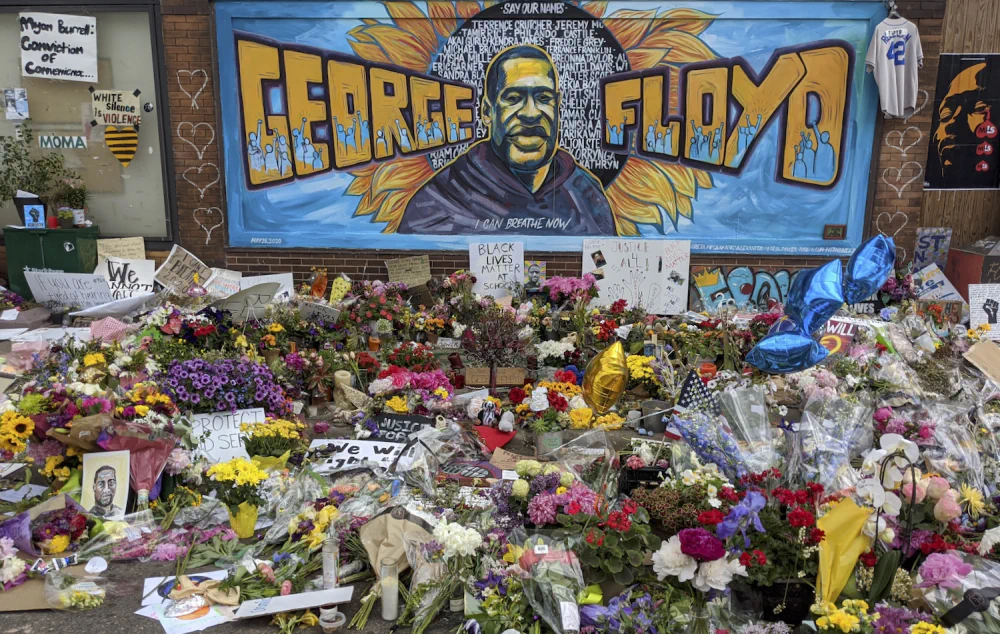
On May 25th, 2020, George Perry Floyd Jr., a Black man from Minneapolis, Minnesota, was murdered by Derek Chauvin, a White city police officer.
Captured on video by a bystander, the broad daylight image of George Floyd pleading for his life while officer Chauvin knelt on George’s neck spread across the nation and the world.
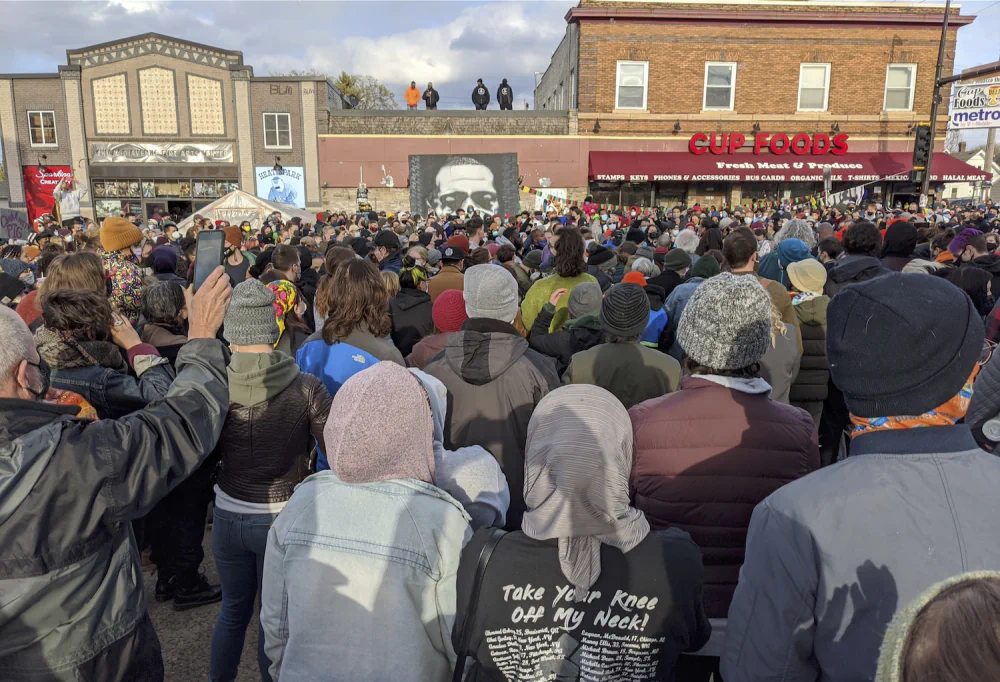
The Minneapolis intersection of 38th Street and Chicago Avenue, where this witnessed murder took place, quickly became a sanctuary for neighbors, friends, and concerned citizens to gather, protest, reflect, pray, and begin to think about how to make sure this would never happen again. Locals were quickly joined by thousands of people from across the nation, and over time from across the world, who needed to express their support and concern. Media immediately flooded into the city tracking the developing story, its immediate impact, and ultimately the trial of officer Chauvin.
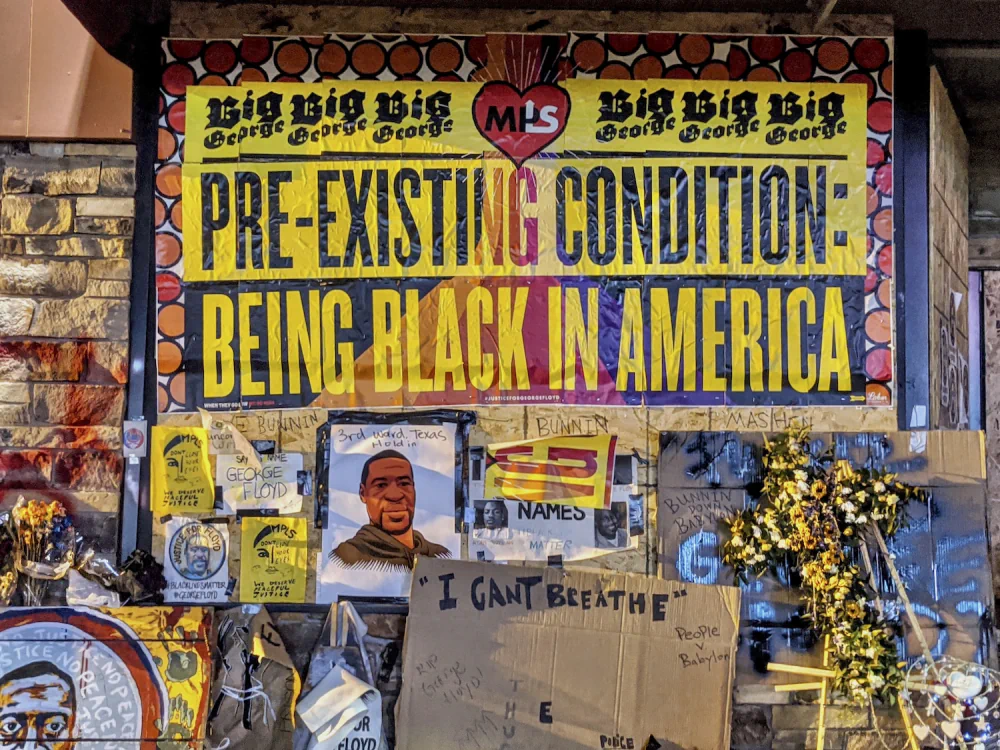
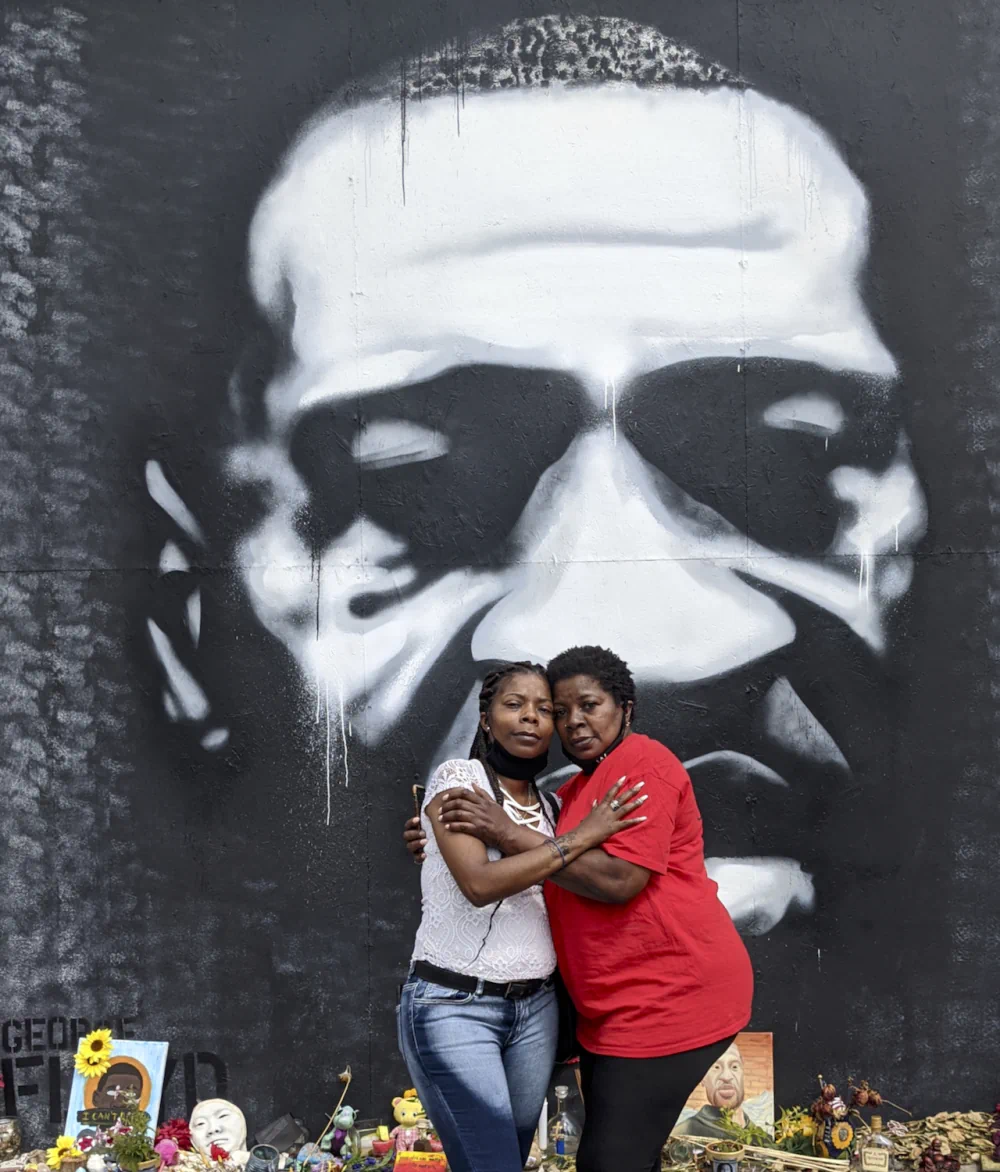
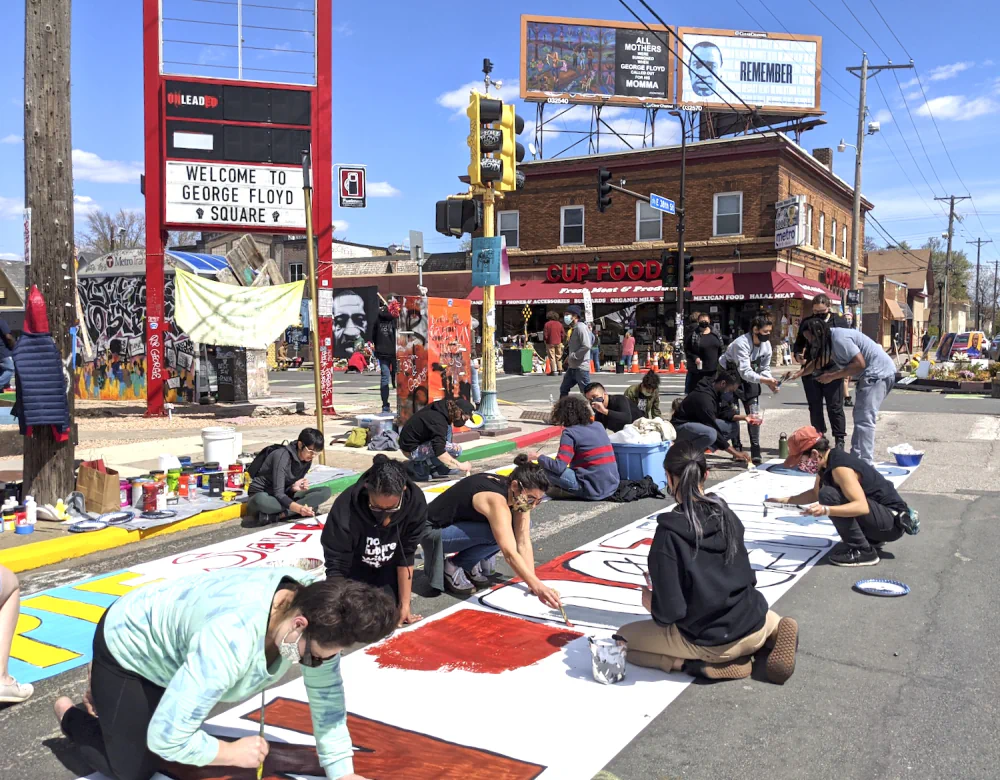
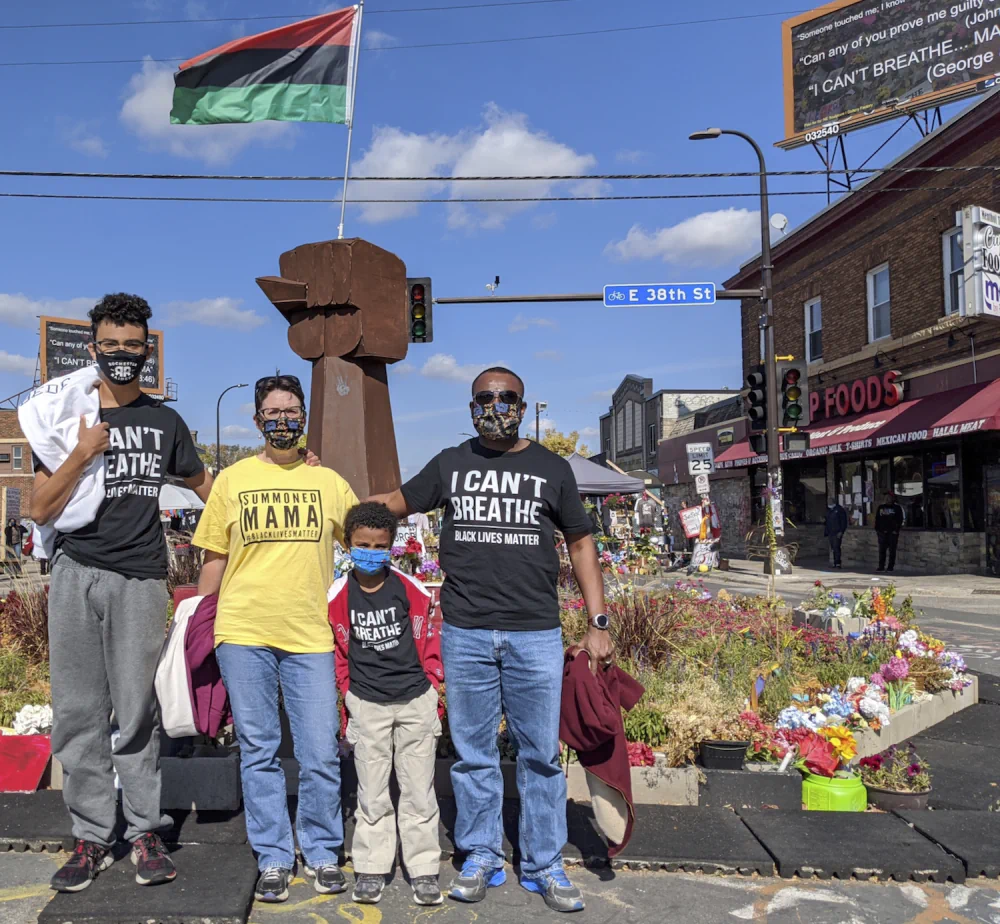
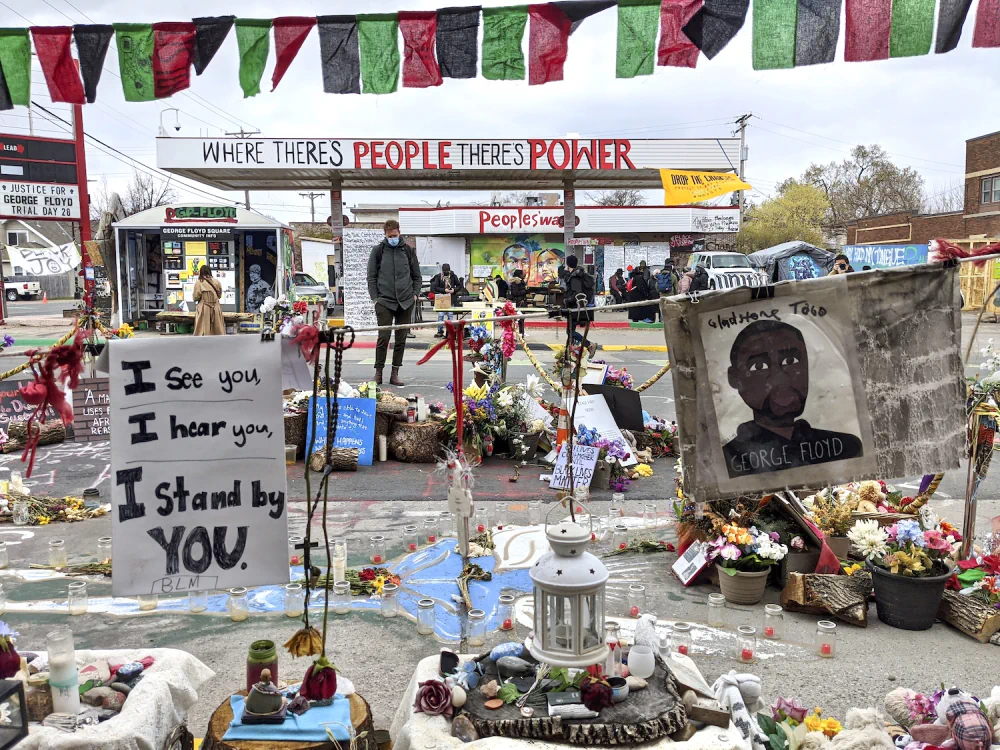
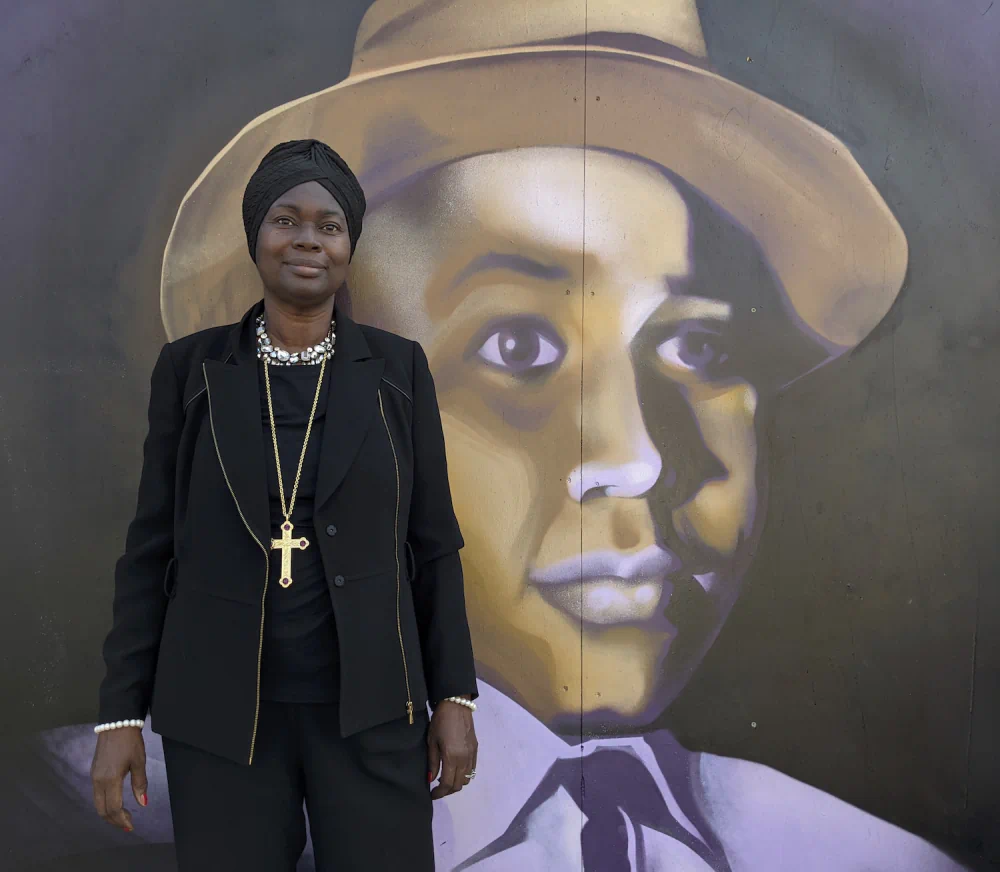
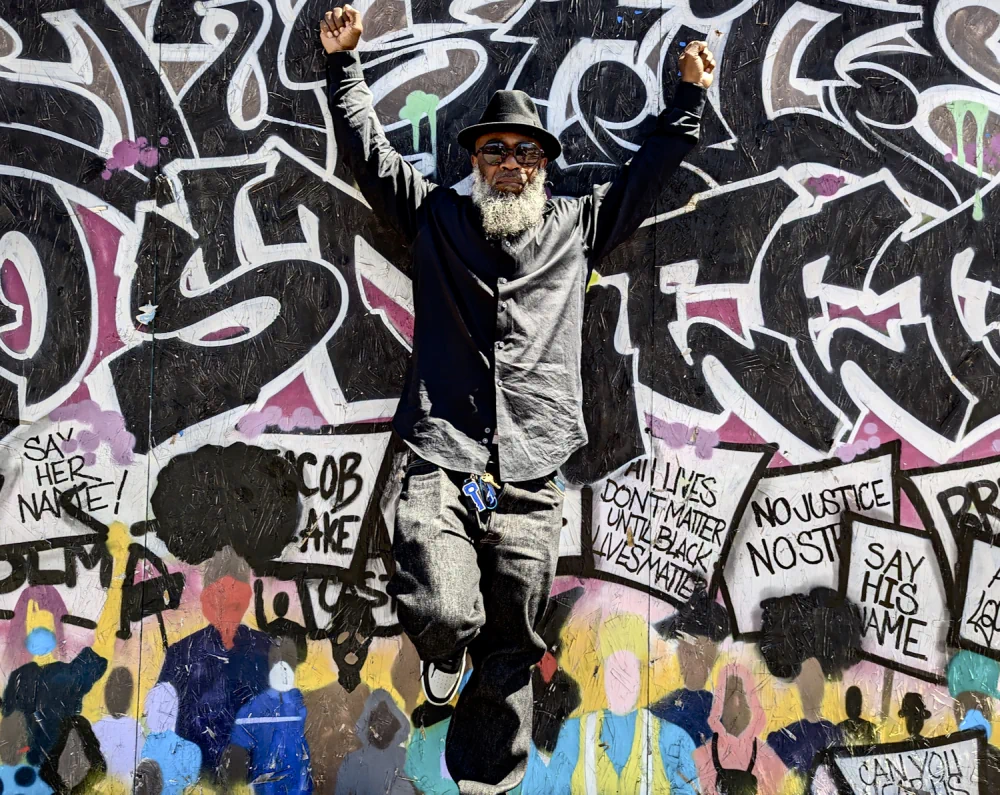
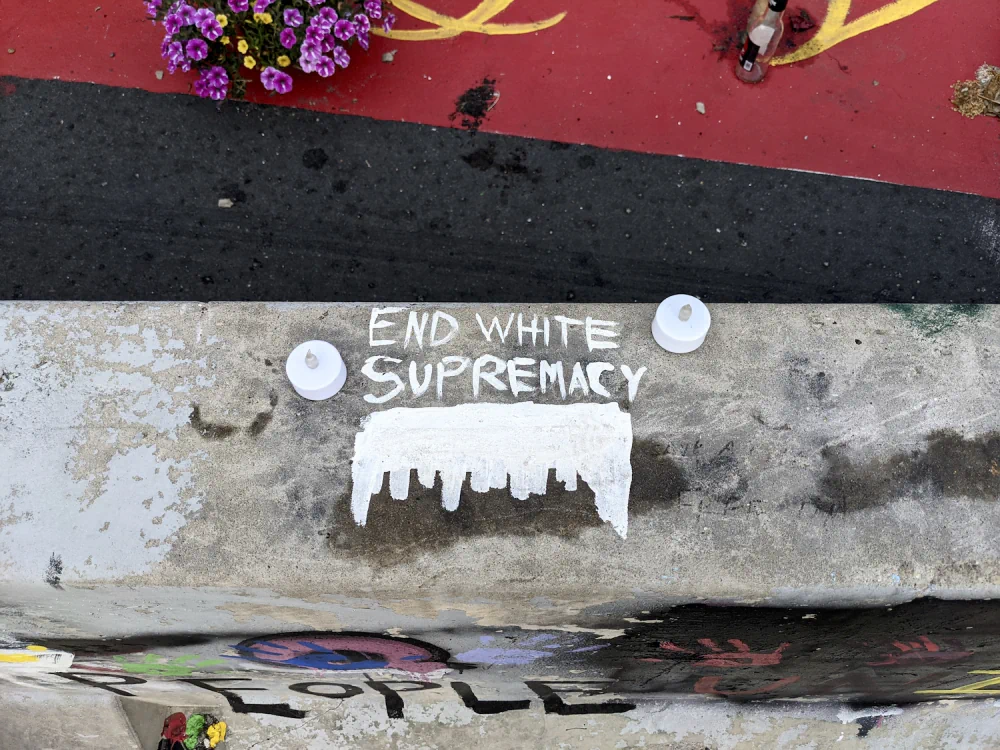
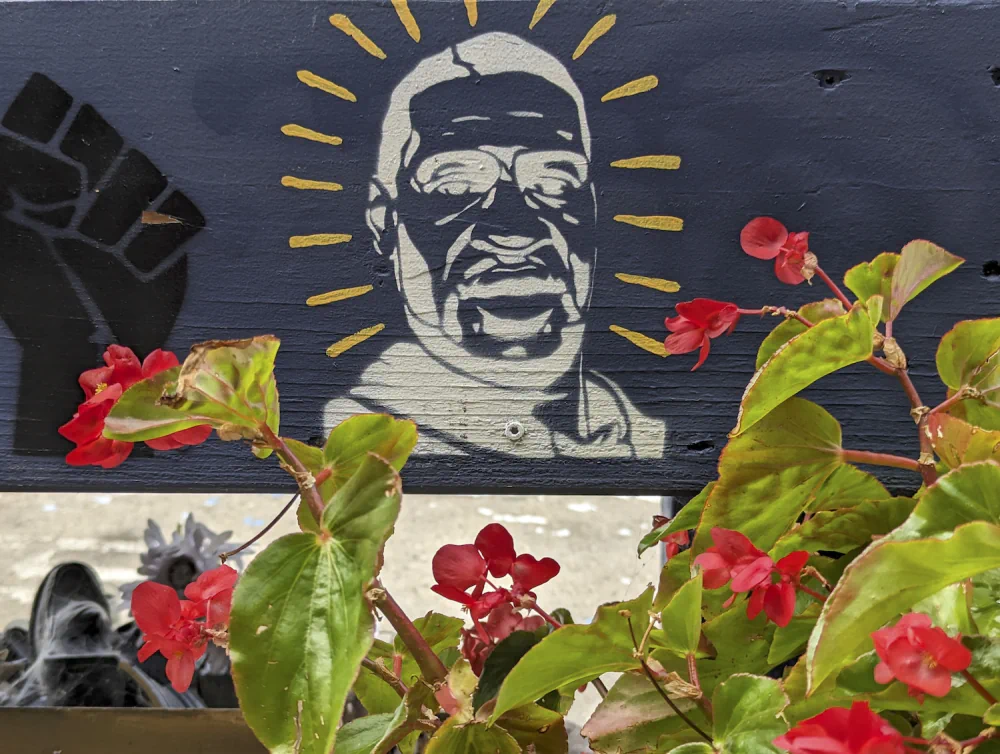
Even as Minneapolis erupted with protests and the city’s reaction to those protests, the community began to move forward, declaring the immediate area of the intersection “sacred ground” and not to be given back to the city. For over a year the four-block area of the intersection, which within days of the murder was declared an “autonomous zone” by the local community, was closed to traffic and slowly filled with wall paintings of Mr. Floyd and civil rights related messages. Pre-existing advertising billboards morphed into artists’ protest signs and George Floyd recognition posters. A permanent painted image of Mr. Floyd’s body in the exact spot on the street near the curb where he was murdered also appeared early. The Native community, within days of the killing, erected a large first aid tent on the street where they provided practical daily aid to visitors and the neighborhood. Others built a greenhouse on the street and tended additional gardens of herbs and flowers throughout the intersection. The “autonomous zone” slowly became known as George Floyd Square and by October 2020 neighbors and involved citizens established the “George Floyd Global Memorial,” a non-profit which was reorganized in 2022 as “Rise and Remember.”
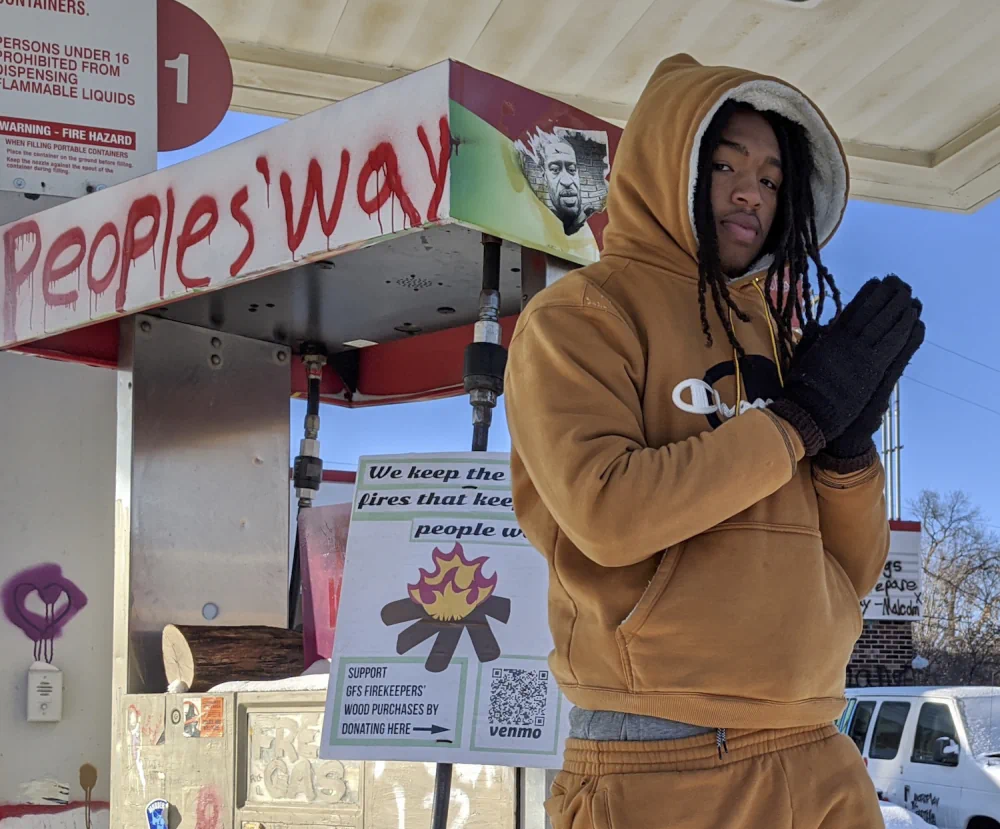
George Floyd Square (GFS) over the years has become a living memorial to George and the civil rights movement. GFS currently allows slow moving car and service truck traffic through the 38th and Chicago intersection, which is now a “roundabout,” circling a 12-foot steel Jordan Powell-Karis fist sculpture in quiet remembrance and protest of the never ending struggle. The Square also now officially includes the old Speedway gas station, re-named “People’s Way,” directly across the street from the murder. “People’s Way” over the last six years is where community members hold daily meetings to discuss issues about the Square and plan events. Brass Solidarity, a band founded in 2021 in response to the murder of George Floyd and the ongoing fight in the movement for Black lives, plays at the Square in People’s Way every Monday at 5:30 pm. Their tagline is “A Sonic Occupation for Black Liberation.” Also in People’s Way there is “The People’s Closet,” with free clothing and a children’s book house. And a block away from all this, but still in the old autonomous zone, is the permanent “Say Their Names” Cemetery, with gravestones for George Floyd and so many other slain victims.
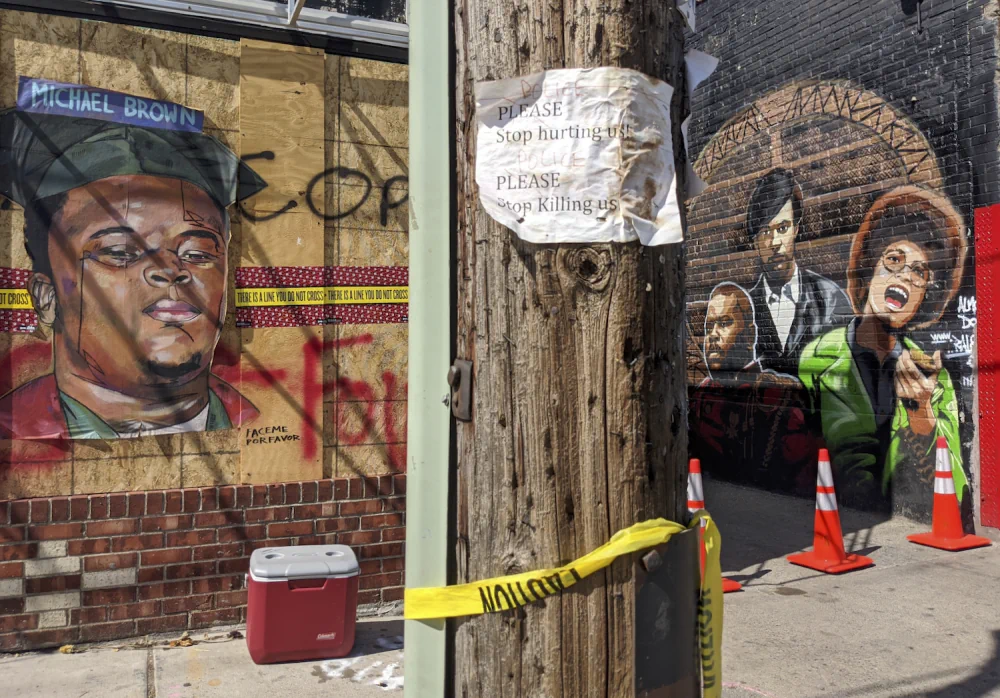
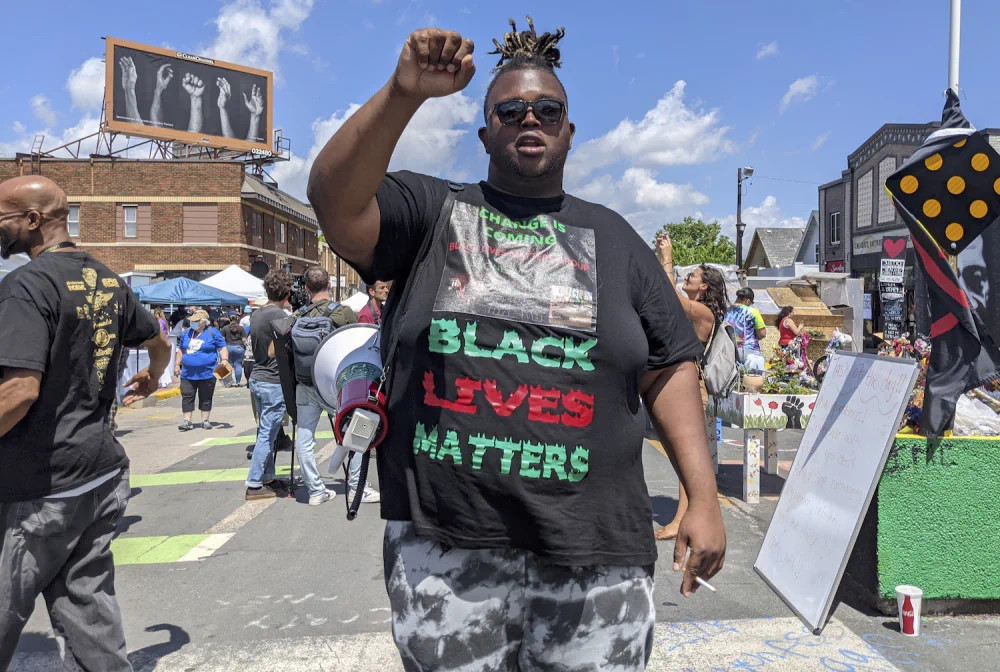
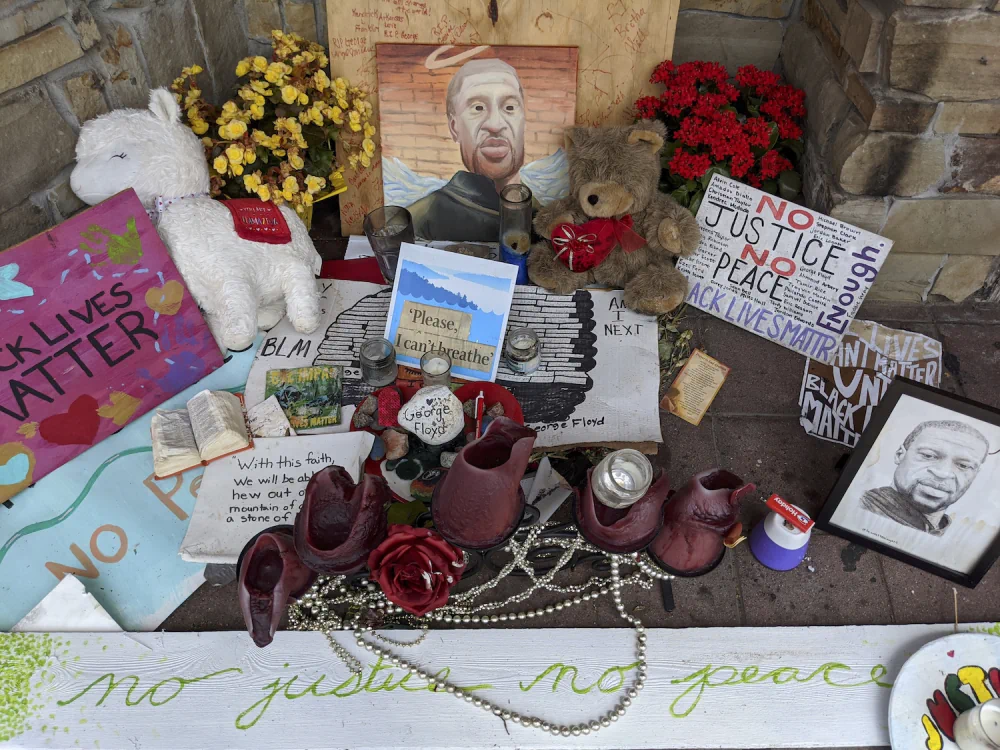
From the moment the video of George Floyd went viral, the nation and the world were viscerally reminded that the fight for social justice is never done. Many referred to the murder as a public lynching. The image of George gasping for his last breaths made GFS a focal point for demonstrations, protest, community gatherings, personal expression, and a constant clarion call for racial justice. Thousands of people have and continue to visit the site, leaving flowers, paintings, treasured objects, and words of sadness, fear, anger, inspiration, and love. People come to remember, mourn, and bear witness. There is a spirit of reflection, contemplation, and collective mourning. Gifts, or “offerings,” are being gathered and archived in a nearby theatre with support from the Midwest Arts Conservation Center. They would fill a large museum.
GFS is a vital center of community action and engagement. It is seen by many as an example of how to peacefully keep the social justice movement alive and meaningful. It is a people’s response to one remarkable act of violence and a testament to resistance and resilience on the part of intersecting communities. Currently over thirty volunteer caretakers maintain and care for GFS. They bring their polished skills of healing and building and cooking and gardening and art making and nursing and project management to maintain and share the Square. Perhaps “Rise & Remember,” in its mission statement, says it best: “We exist to preserve stories of resistance to racial injustice and to curate spaces for all people to grieve, pay respect and be a voice for justice. Our vision is to bring community development to Minneapolis and to inspire people to pursue racial justice around the world.”
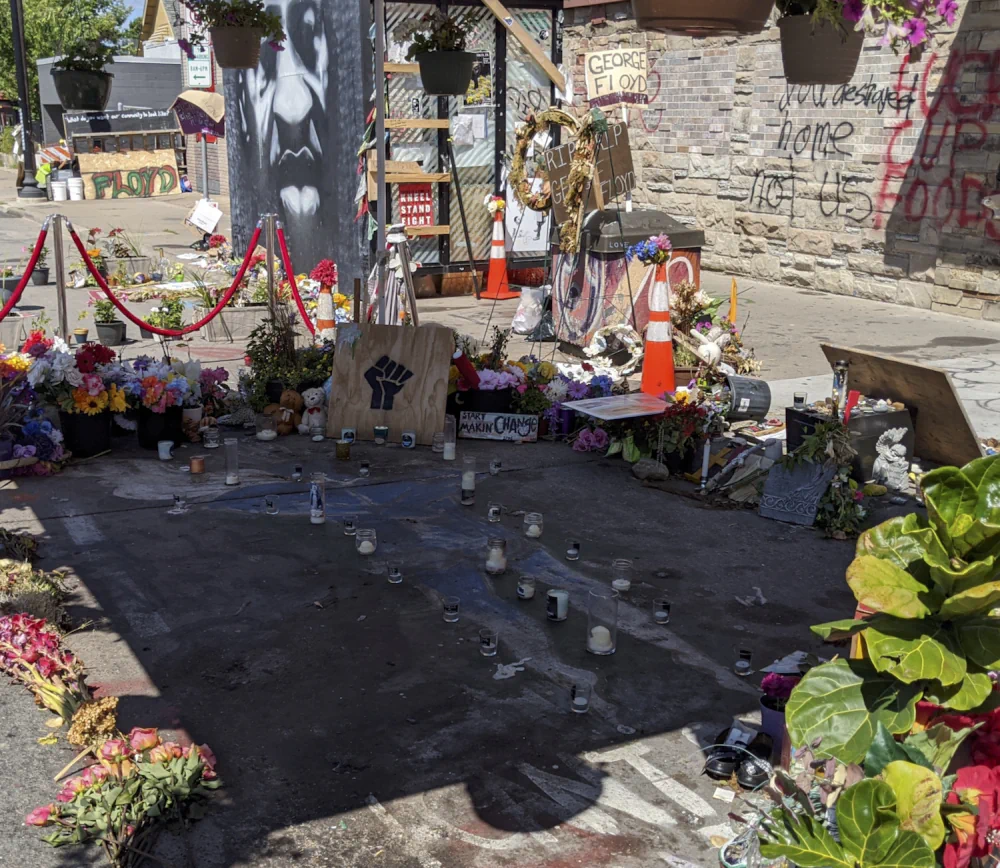
At this time the greater community of and around GFS and the City of Minneapolis are in the planning stages for a permanent memorial. The negotiations have been long in the making and complex. The intersection of 38th and Chicago is a major south Minneapolis crossroads with differing demographics of race, ethnicity, age, orientation, occupation, income, and entitlement. So exactly what the permanent memorial will be remains contested and unclear.
I began to photograph at the Square two days after the killing and have returned hundreds of times and will continue. My purpose is to document this deep well of generosity and communal desire to give, to make change happen, to connect to one another. For the first two years I posted daily on Instagram. Currently I am working on a book of my photographs. Millions of people know the story of George Floyd’s murder. But most people are not at all aware of what the community has created there. The goal of my book is to reveal the multifaceted and evolving scene that George Floyd Square is and is becoming. 38th Street and Chicago Avenue in Minneapolis is the scene of a murder. It has now also become a living memorial to celebrate our collective spirit and shared humanity.
I have been a street photographer for many years. The street is where I feel most inspired and engaged. It is where I find pictures for ongoing projects and discover new ones. [Official Website]